I’ve seen advice in a variety of places to open champagne bottles 1-2 hours (or more) before drinking, stopper and re-chill to let the wine get some oxygen and the flavors to open up. It seems to work well sometimes.
But what do folks do with 35+ year old champagne that may be pretty low on remaining carbonation (or more fragile to oxidation)? Do folks find opening early causes too much of the remaining bubbles to dissipate? Pop and pour for first glass then wait an hour or two?
If specific examples help, I’m interested to know what folks would recommend with e.g. 1982 (disgorged in 90s), 1983 (disgorged in 2020s), 1952 (disgorged in 2012) and 1947 (disgorged in 80s). Thanks.
A few moons ago we were at @alan_weinberg ’s house and @Jeremy_Holmes opened a 73 Krug. It was flat and boring on open. 2 hrs later I had wandered by the kitchen to try it again and it completely blossomed. Tends to happen often for Krug to me.
I’m team give em air. It’s like any other old wine - if well stored it needs some air to stretch its legs
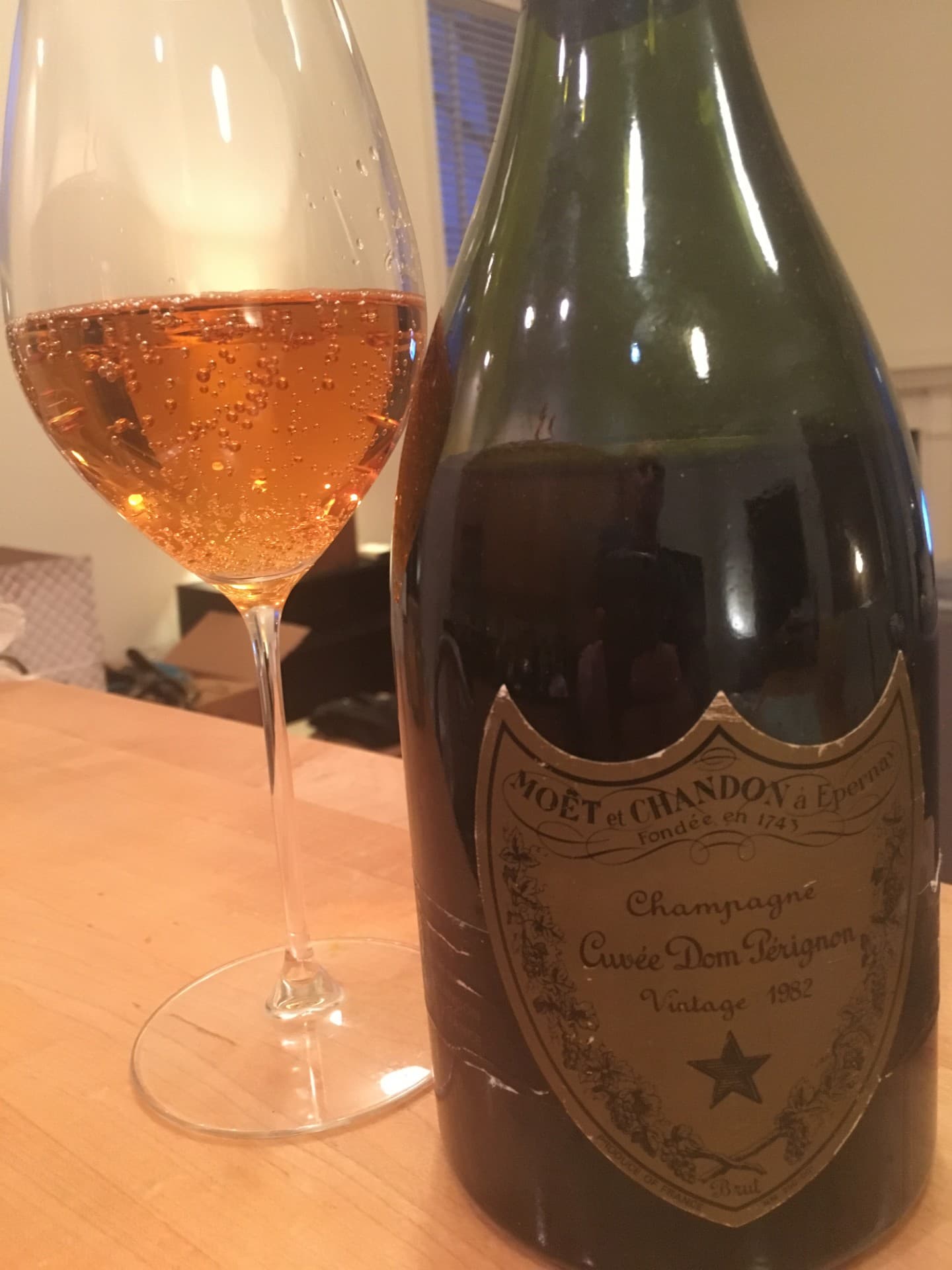
82 I had a few years ago still had a fair amount of fizz as you can see. Just great. As long as you take your time draining the bottle, I don’t think a decant is necessary although air won’t hurt it.
67 Cristal didn’t have much gas left in it but was up there with the best of any wine I’ve had. Again, no decant necessary but air was good for it.
I don’t decant or open early older bubbles but my total number of experiences is low. On the other hand I’m a huge fan of many hours of air for younger bubbles.