My reports for days 3 and 4 are up now! Don’t miss either one since both were highlights of my trip!!!
My day 4 report is now complete… For those of you who saw the bolded warning earlier that I wasn’t finished, I am now 
My reports for days 3 and 4 are up now! Don’t miss either one since both were highlights of my trip!!!
My day 4 report is now complete… For those of you who saw the bolded warning earlier that I wasn’t finished, I am now
Thanks for your report from days three and four. I had a late lunch at Yong Yong yesterday.
I will hopefully be writing up my final full day today in the Mosel as soon as possible… It is a bit sad now that I am already packing my bags to get ready for tomorrow.
You had fabulous weather on day three in Trier and Saarburg. It was hot hoeing in Ober Schäfershaus in Krettnach.
I hope to finally publish my updated notes on “Some Important Saar and Ruwer Vineyards” in the next week or so.
My notes were first published on pages 67–74 of Mosel Wine in 2022.
Enjoy your final day in the Mosel!
@andyt77 It is worth noting that Willi Schaefer is a very small domain and they are always sold out and could sell their wine 20x over yet they still take the time to do tastings. It is one of my favorite tastings in the Mosel.
And wow you got to meet Manfred! That is also rare.
Thanks for the amazing reports. I am dying too get back to the Mosel (it is only been 4 months!).
Great report, thanks for posting. Regarding Waldhotel Sonnora, I would contact them as soon as you have your travel dates next time. Even a few months out it can take some luck to get your desired date.
Yes! I was very lucky to taste with Manfred and Carine together.
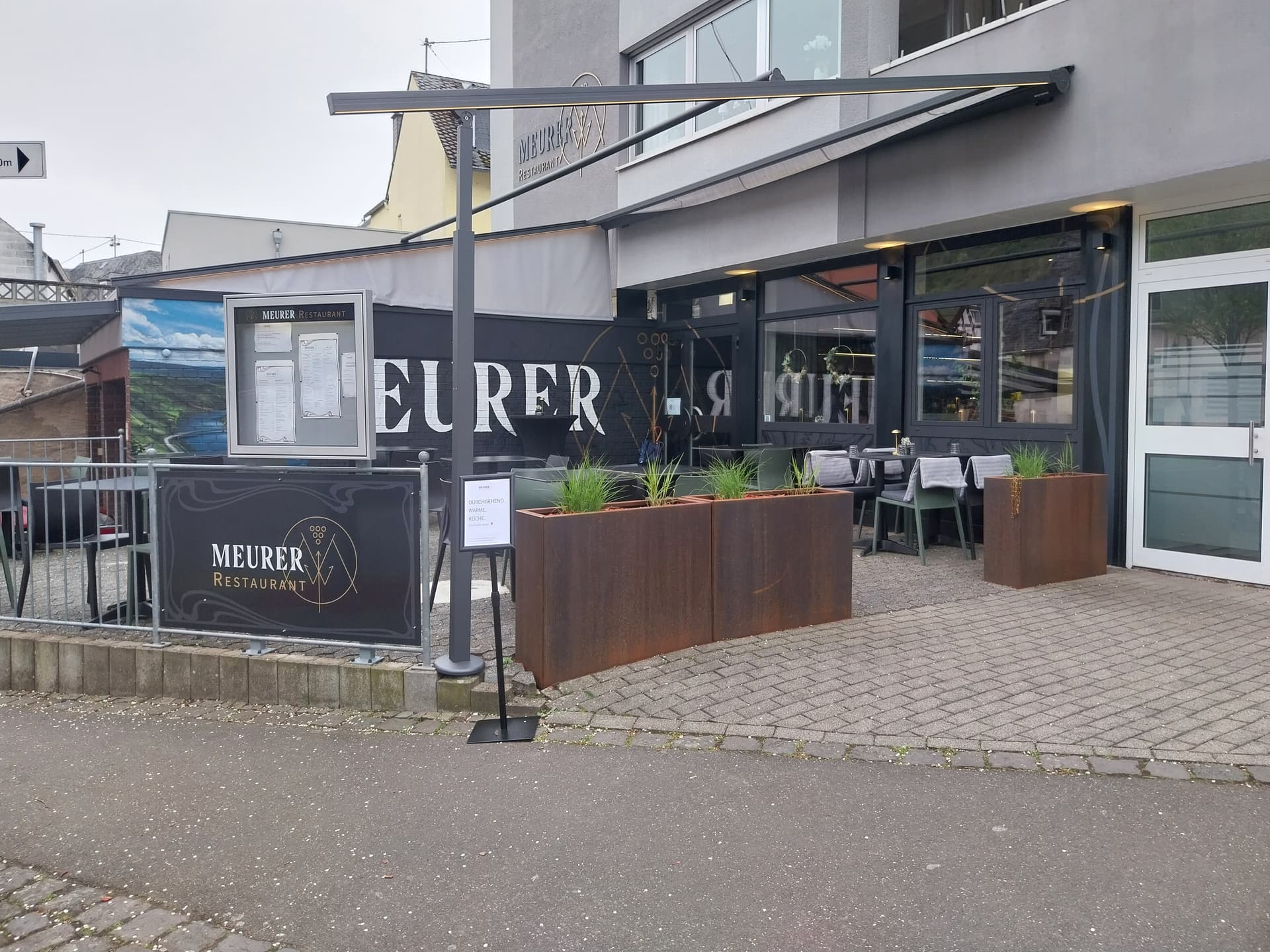
Apologies for hijacking the thread slightly, but I wanted to give a shout-out to Meurer Restaurant, which has recently opened in Reil.
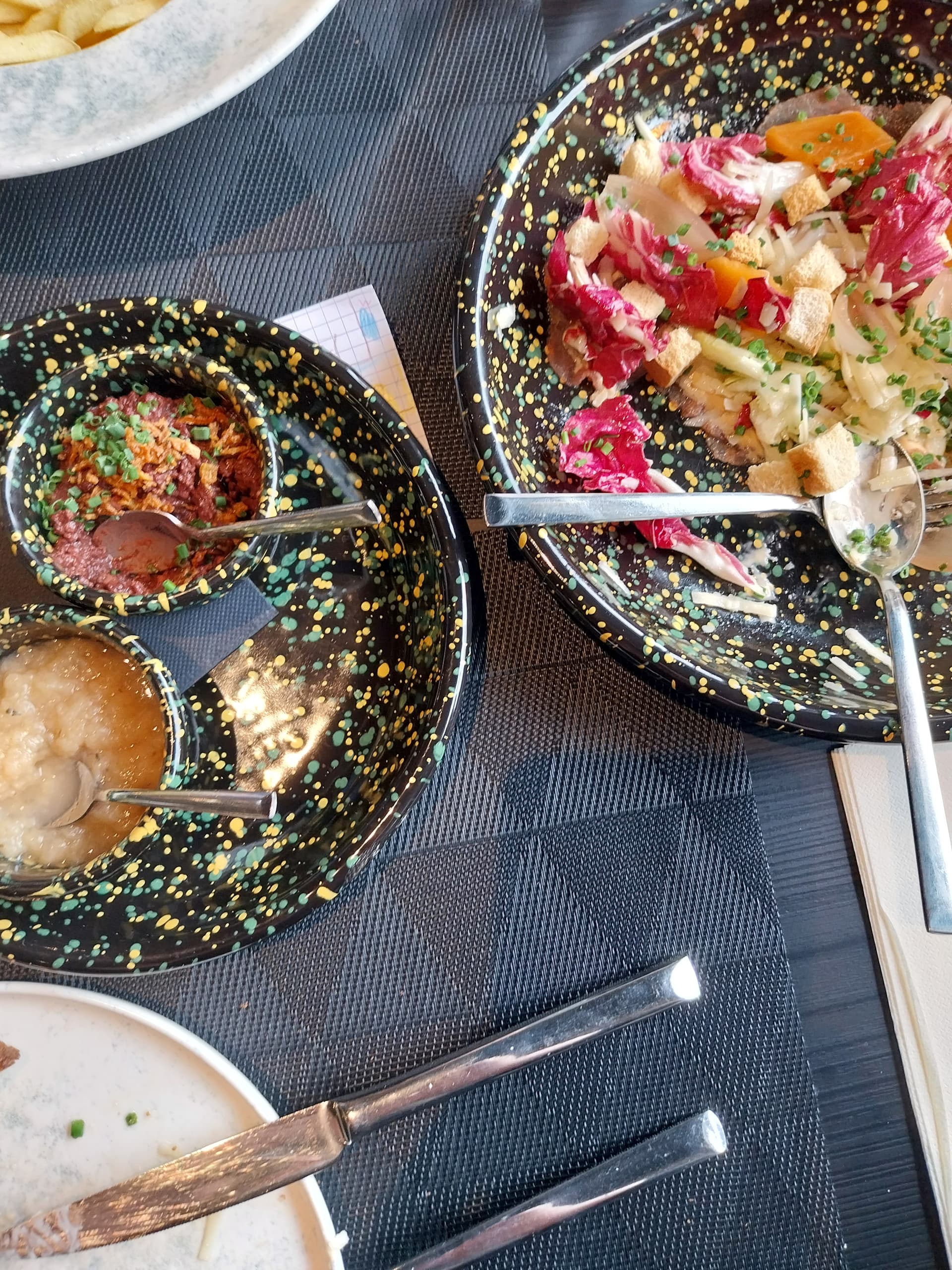
There’s already a strong line-up of restaurants in the village with Reiler Hof and Villa Melsheimer, but Meurer is right up there with them. It feels a little inspired by Die Mosel, with some small plates in a similar vein. The food is beautifully presented, really tasty, and pairs very well with the wines.
The atmosphere is lovely too, very relaxed and family, oriented.
I’m a big fan of the Meurer wines, especially their In Der Kall Kabinett; all the Rieslings are strong, a good producer. There’s also an interesting Chardonnay and a selection from other younger winemakers, and some older bottles from around Reil, which is decent if not quite as exciting as the list at Die Mosel.
All in all, definitely one to put on the radar if you’re visiting this part of the Mosel.
We really enjoyed our meal at Meurer. The Chef grew up in Reil and left home to become a very successful two Michelin star Chef. He recently returned home to take over the family winery and to open a casual restaurant.
I am currently writing this final report for Saturday in the UK… There is an immense sadness that my trip has ended, but I really look forward to visiting again next year.
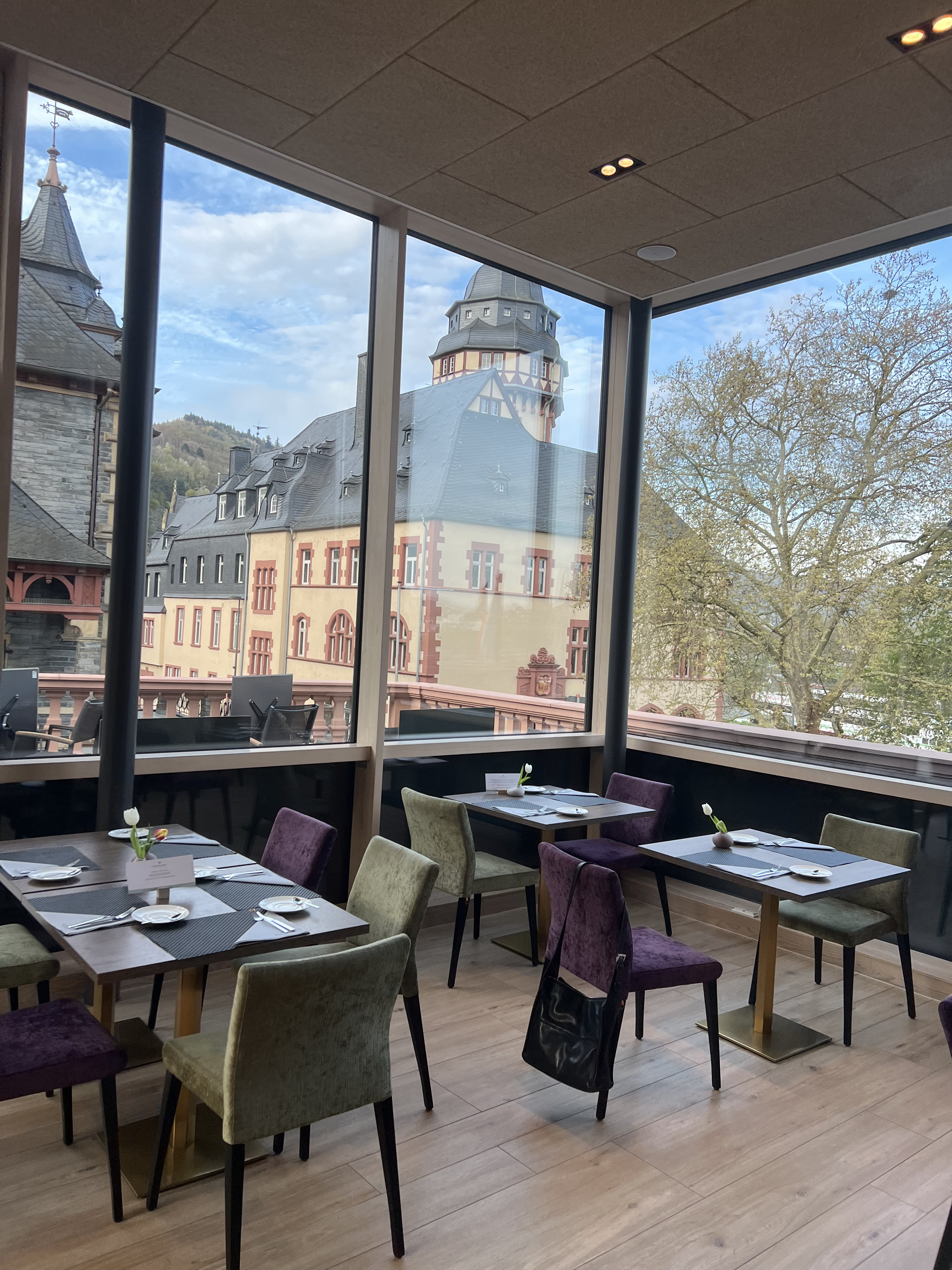
I woke up early to get breakfast at Deinhard’s. I heard that they have a very nice breakfast at their Restaurant Flora, and so I had booked this in advance for 28 Euros. The restaurant really is quite beautiful, and there is an area surrounded by glass windows where you can see the Bernkasteler Graben and the river on opposite sides of the room. In terms of food, there is slightly more variety than at Burgblickhotel, and I am especially happy that they were able to make omelettes for me.
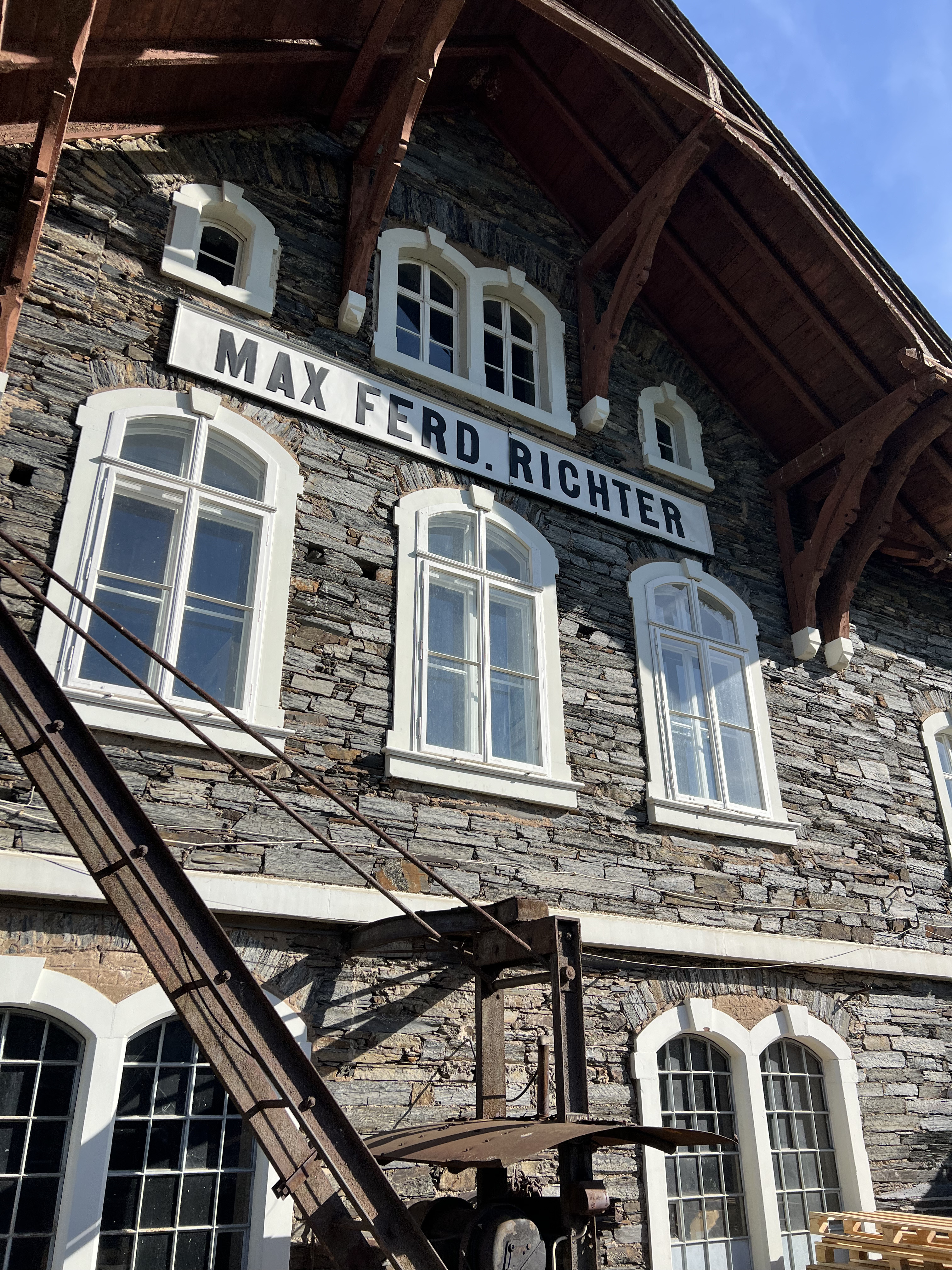
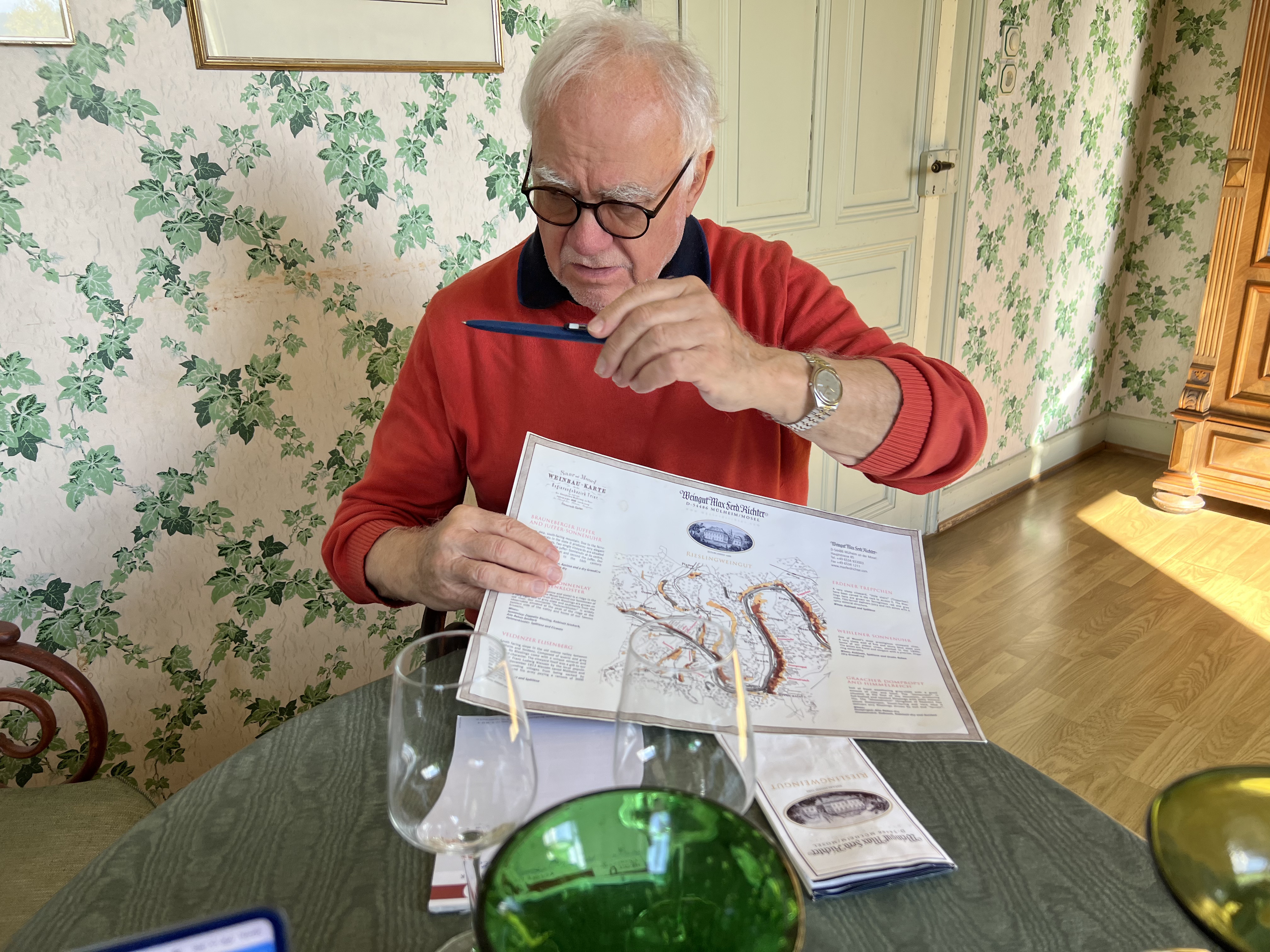
I then biked to Mulheim to visit Max Ferd. Richter, where I had a wonderful tasting with Dr Dirk Richter. This tasting lasted for 3 hours, and would have gone on much longer had I not been late at my appointment with Schloss Lieser. Dirk tells me that 85-90% of his wines are exported, which really surprises me! He has not been too hard hit by the tariffs since he has had increased exports to customers in northern Europe.
The estate owns approximately 21 hectares and leases another 20 hectares. Holdings are from Brauneberg to Erden, with the largest parcels being in the Mulheimer Helenekloster and Mulheimer Sonnenlay.
We tasted from the humble estate wines all the way up to Trockenbeerenauslese.
2024 Alter Satz
This is a traditional field blend from 7 indigenous grape varieties, some of which are exceedingly rare. Dirk tells me that the phenomenon of making varietal wines is actually quite recent, a “trend” which has mostly emerged in the past 2-3 centuries. This wine immediately smells like it is from a cool climate. A bit flinty. Some gooseberries and grapefruit. Very salty. I could mistake this for a Sancerre in blind tasting.
2025 Richter Dry Riesling
Classic Mosel Riesling. Very salty as well. A daily wine.
2024 Brauneberger Juffer Alte Reben Trocken
From ungrafted vines planted in the 1930s. Dirk tells me that Brauneberg means “brown mountain” in German. This is basically a Spatlese Trocken. Extraordinarily mineral and salty. Tight and compact.
At this point, I mentioned TDN to Dirk and his opinion was completely different to some of the other winemakers I have visited. Dirk doesn’t mind at all high concentrations of TDN–he says that many people in the UK really like the petrol aromas!
2024 Graacher Domprobst Alte Reben Trocken
Dirk says that this is a much more opulent wine than the Brauneberger Juffer. I agree, but I do think this is very restrained in its fruit expression. Super salty yet again… There seems to be something going on with this. And I don’t mean salty as in it feels or smells mineral. I mean that it literally tastes like salt was mixed into the wine. A very bizarre expression of minerality, and one I remain quite neutral about.
Dirk says that he makes GGs only from the best vineyards, and GG equivalents from other vineyards are labelled as Alte Reben Trocken.
2024 Brauneberger Juffer-Sonnenuhr GG
Very high acid and very, very salty.
2024 Wehlener Sonnenuhr Uralte Reben GG
Uralte Reben means “very old vines”. It is the French equivalent of Tres Vielles Vignes. From vines planted between 1890 and 1910. A bit more fruit forward than the Juffer Sonnenuhr, but even saltier on the palate.
2025 Richter Estate Riesling
This is the off-dry equivalent of Richter Dry Riesling. Quite nice and aromatic. Very convincing for an entry level wine and one of the easiest to drink today.
2024 Mulheimer Helenekloster Kabinett feinherb
This is a monopol of the estate. There is something herbaceous here. Also a bit of petrol. And very, very acidic. This one hurt my teeth.
2022 Mulheimer Sonnenlay Alte Reben feinherb
From vines planted in the 1940s. Something a bit herbal. Quite intense. Salty as well.
I stop mentioning the saltiness at this point since I realised that almost all of the wines have it. The higher the quality, the more intense the saltiness. Though it seems that starting from Auslese it beomes no longer noticeable.
2024 Veldenzer Elisenberg Kabinett
This is another monopol of the estate. Since it is further away from the Mosel, Dirk said that this has characteristics of a Ruwer wine. He said that when this wine was added into a blind tasting flight of Ruwer wines, no one spotted that it came from the Mittelmosel! I jokingly asked him if the parcel suffered frost in 2024 just like the Ruwer, to which he replied yes… Classic Ruwer/Saar Kabinett. Citrus and white peach. Very high acid!
2024 Wehlener Sonnenuhr Kabinett
A bit herbal and riper than the Elisenberg. Juicy peaches. Very high acid as well.
2024 Veldenzer Elisenberg Spatlese
Quite Ruwer-like as well. Lime and lemon and rubber. Some of the others need a bit of time, but this is very drinkable now already!
2024 Brauneberger Juffer-Sonnenuhr Spatlese
Lots and lots of spices. Quite interesting and a style that I haven’t experienced before from this vineyard.
2023 Wehlener Sonnenuhr Auslese
A bit of botrytis. Harvested at 100 Oechsle. Very correct Auslese, though much creamier than some of the other producers making Wehlener Sonnenuhr.
2023 Wehlener Sonnenuhr Auslese*** Fass 42
A touch of botrytis. Harvested at 130 Oechsle. Very concentrated peaches, orange blossom, and elderflower. Almost a bit syrupy! Very pure and obvious now, but will definitely age for decades. This is my favourite wine from this tasting for drinking now.
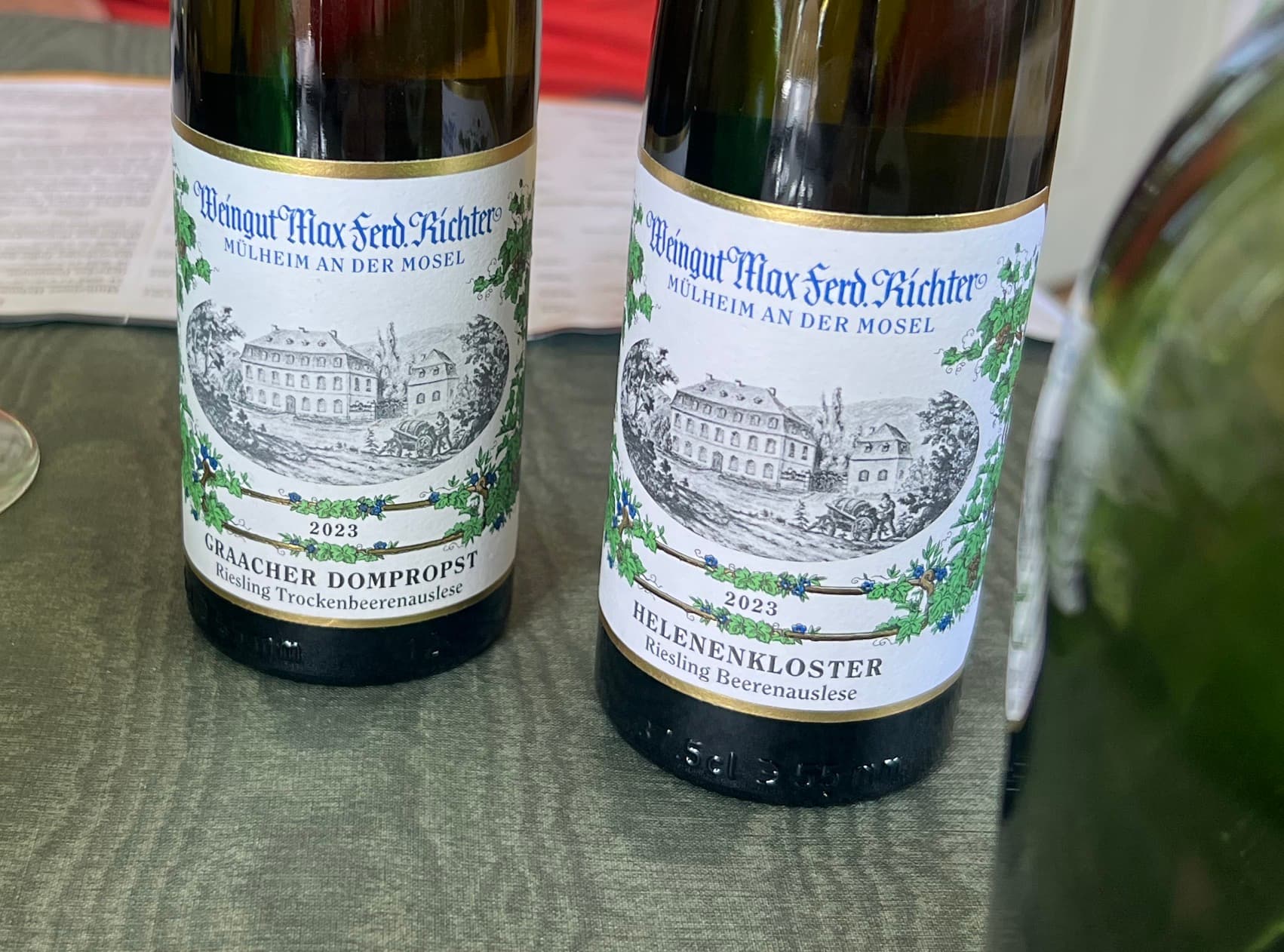
2023 Mulheimer Helenekloster Beerenauslese
Very pale for a botrytised Beerenauslese! Intensely sweet, but I clearly preferred the Fass 42 for its elegance.
2023 Graacher Domprobst Trockenbeerenauslese
6% ABV, 14.8g/L TA, 221g/L RS. Harvested at 150 Oechsle. For a TBA, this is surprisingly easy to drink now, especially compared to the TBAs following this. Extraordinarily concentrated.
2023 Brauneberger Juffer-Sonnenuhr Trockenbeerenauslese
6% ABV, 19.6g/L TA, 312g/L RS. Harvested at 200 Oechsle. There is something a bit lactic here. Not as clean and pure as the Domprobst TBA, but with an immense botrytic character. Extraordinarily sweet and extraordinarily high in acid. This is so concentrated that it is painful to drink now. It will become more integrated perhaps in another decade or two, then be drinking well for at least another half a century.
2023 Wehlener Sonnenuhr Trockenbeerenauslese
6% ABV, 19.7g/L TA, 338g/L RS. This is extremely tight and closed at the moment. Again, this is almost syrupy. It is painful to drink right now.
And we ended off with a Sekt. When I saw that it was made out of Pinot Blanc, I asked why Dirk would make a Sekt from a Champagne variety if he didn’t like Champagne. He playfully blames one of his employees in the 1960s for planting Pinot Blanc without him knowing. However, he says that he is happy with how his Sekt turned out, since it tastes nothing like Champagne.
2020 Pinot Blanc Sekt Brut Nature
56 months on lees, disgorged in December 2025. Extremely spicy on the nose, with a rather mellow autolytic character.
During the tasting, Dirk was constantly telling me about many interesting stories about the Mosel. If you want a lesson in history, go taste with him! He is super patient, nice, and knowledgeable. An excellent start of the day!
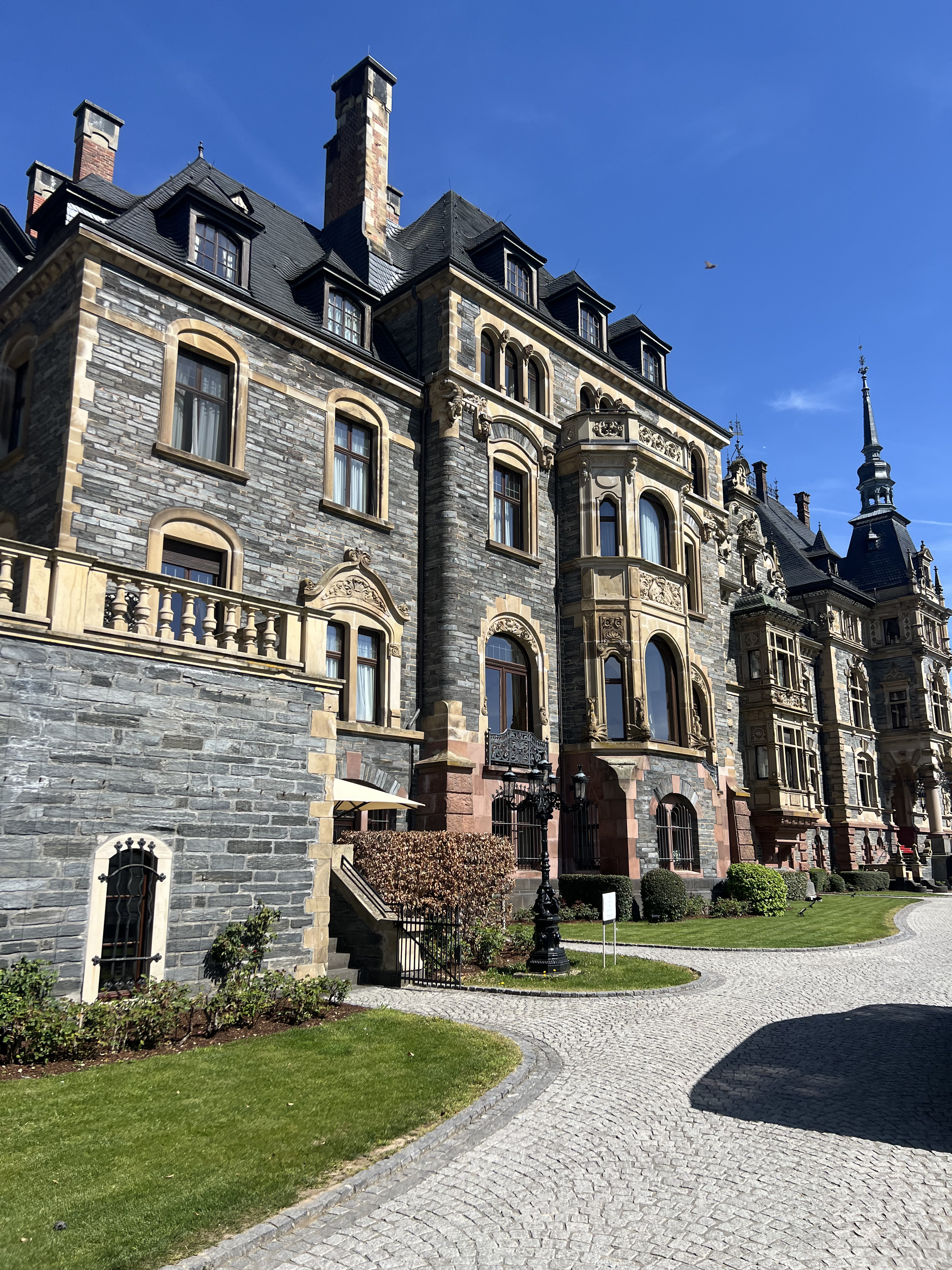
At this point I was already running late for my tasting at Schloss Lieser, so I quickly biked over. The winery is right next to the hotel, which is really beautiful from the outside. I might stay here for a night or two next time I am in the Mosel because of the good reviews that I’ve heard about it. (Reviews were previously mixed, but it seems that they have improved quite a bit recently)
The tasting was hosted by Thomas and Ute Haag. They are amazing and hardworking people with incredible knowledge of their vintages and a good sense of humour. When the sky became clouded, I remarked that the weather is a bit unfortunate, to which Thomas replied: You’re from England! You cannot complain about the weather here  I had so much fun talking to them that I forgot to take any pictures of them or the wines!
Lara Haag dropped in later during the tasting and we had a good conversation about the Weinakademiker program at Geisenheim/Rust/Brixen (which I will be doing alongside my undergraduate degree later this year). We also talked a bit about the VDP auctions, which are getting moved back to May next year.
When I initially came in, I got the impression that they were very commercial. But my goodness was I wrong!!! They are as intimate, kind, and welcoming as ever! Here is a rundown of the estate and the wines:
Thomas and Ute initially started working at the estate in 1992, when it was in a state of disrepair. After lots of financial trouble with the banks, they bought the winery in 1996, and have since turned it into one of the most successful in the Mittelmosel. They are the winery that made the Lieserer Niederberg Helden well known again.
2024 SL Trocken
Very juicy. Citrus and white peach. Quite nice for a basic estate wine!
2024 Schiefer Trocken
Mainly from Kestener Paulinshofberg. Riper and more mineral than the SL Trocken. Very slightly toasty.
2024 Heldenstuck
From 100 year old vines in Niederberg Helden. Essentially a downgraded GG. Even more ripe than the Schiefer Trocken.
2024 Wehlener Sonnenuhr GG
Super elegant and flora! Almost some delicate red berry aromas. Not super intense, but that is beside the point here. Thomas says that this is a very “feminine” wine.
2020 Lieserer Niederberg Helden GG
This one was opened quite a few days ago, and wasn’t so fresh when I tasted it.
At this point I started talking a lot more and writing a lot less… My trip was about to end and I think I lost focus a bit.
2023 Piesporter Goldtropfchen Feinherb
Extremely herbal and mineral.
2024 Brauneberger Juffer Feinherb
Aromatically quite closed. A bit rubbery. Super acidic.
2024 Wehlener Sonnenuhr Kabinett
Slight touch of VA. This has been opened for a while, so maybe it wasn’t so fresh when I tasted it.
2024 Brauneberger Juffer Kabinett
Very correct. Juicy fruit and perfectly drinkable now.
2021 Wehlener Sonnenuhr Kabinett
Quite similar vintage conditions to 24, this is what I imagine the 24 will be like in a few years. A bit toasty and rounded, but I think in its closed stage. Still super high acidity. This will open up in a few years.
2016 Lieserer Niederberg Helden Spatlese
Herbal. Lots of citrus. At 10 years old, this is in a good place to drink now. However, since it is so fresh and tertiary aromas have yet to develop, one can wait longer.
A quick note on white capsule vs GK vs LGK. At the normal Auslese level and below, no botrytis is included. With GK, the aim is to include 20-25% botrytised berries, depending on the vintage. For the LGK, this proportion rises to 40-50%.
2017 Lieserer Niederberg Helden Auslese
Still very young. From a high acid vintage.
2012 Lieserer Niederberg Helden Auslese
Very developed compared to the 17, which is just a few years younger. This could probably age for much longer, but for me now is a good time to enjoy it already.
2019 Lieserer Niederberg Helden Auslese Goldkapsel
Clear botrytis character and good to drink already. 2019 is a vintage that seems a bit overlooked. I quite like it for dry wines, though many of the sweet wines are just as good.
2018 Lieserer Niederberg Helden Auslese Goldkapsel
Less open than the 19, and slightly more linear? This seems to be in a closed phase, but even then I think the 19 has a bit higher potential since it is a bit longer and more intense.
2023 Lieserer Niederberg Helden Auslese Lange Goldkapsel
Very opulent wine with lots of marmalade and saffron. Very creamy and juicy. Good to either drink now or to put away in your cellar and forget about it.
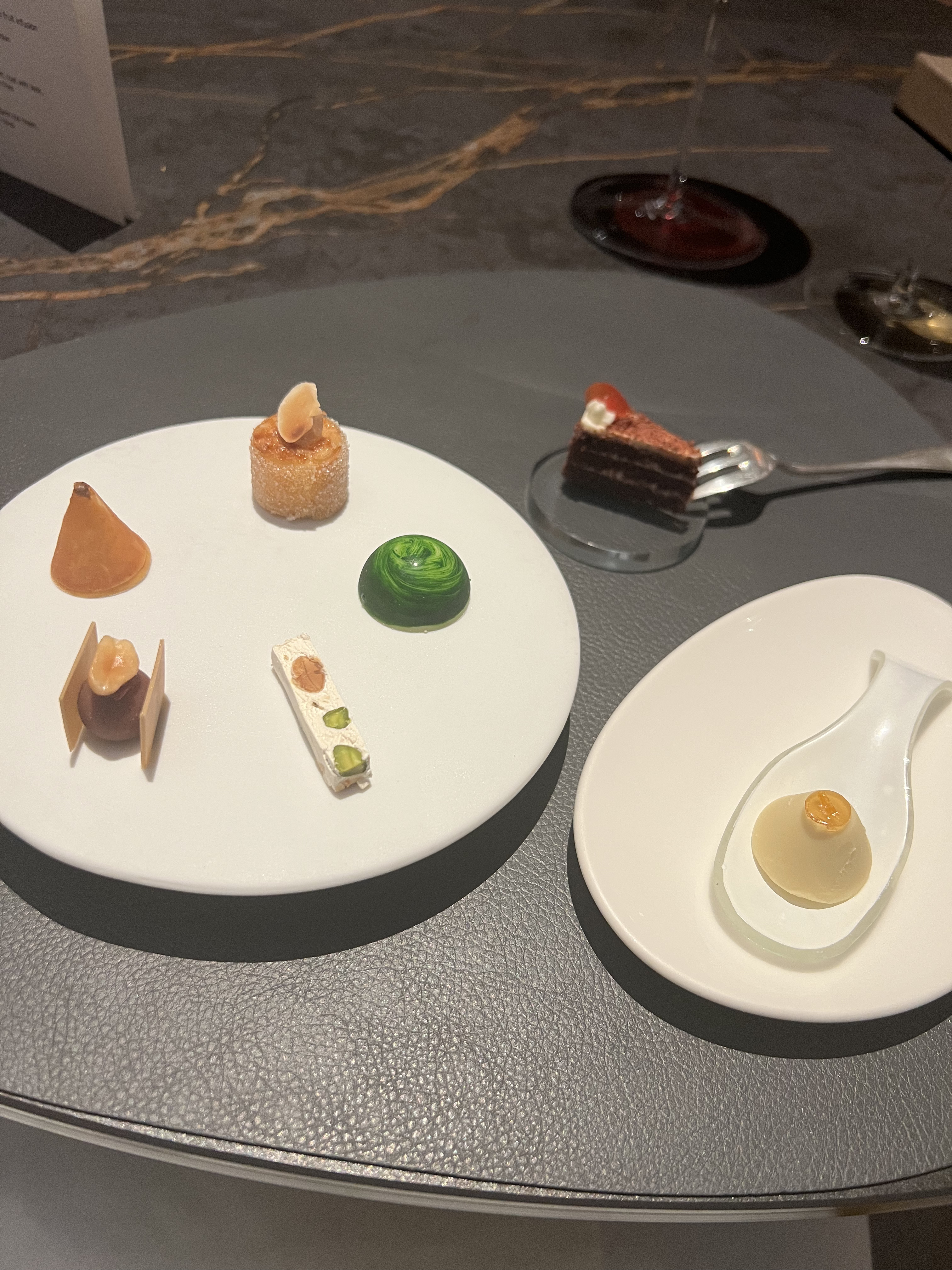
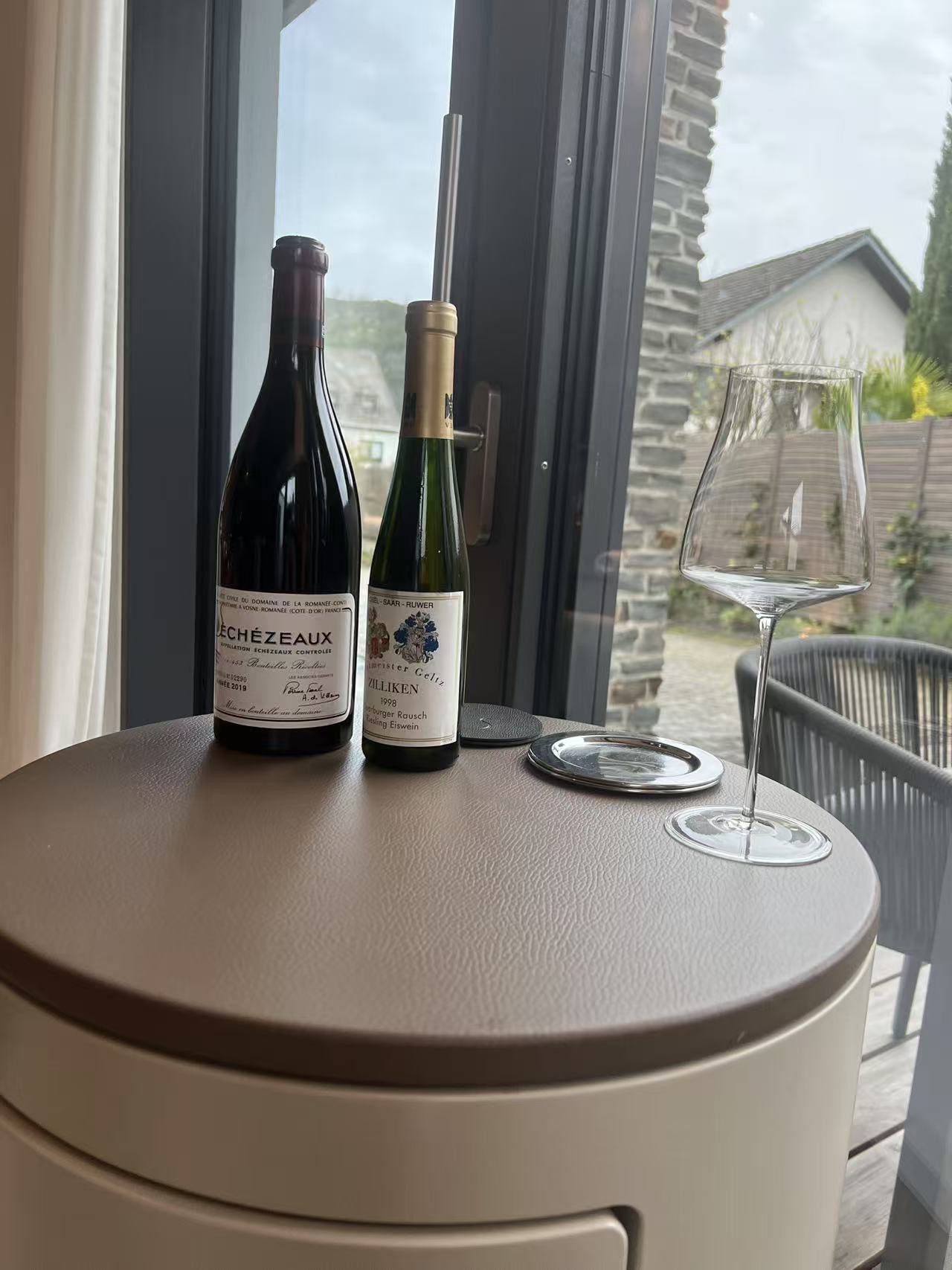
Finally, after Schloss Lieser, I went to Schanz for dinner. Thanks again to Carine for arranging this! Janine, the head sommelier at Schanz, welcomed me. She is super knowledgeable and curates a great list, which she calls her “bible”. I opened a 2019 DRC Echezeaux, which I think is a wine in an odd phase right now. Even then, its potential is not too high–DRC isn’t really the best producer for Echezeaux. I opened this knowing it wouldn’t be amazing, but I was curious how the 19s are doing, and the price was too good to resist–Janine says that she wants to make it an attractive option on the wine list, and she has succeeded!
In my opinion, Mugneret-Gibourg is perhaps the best producer of Echezeaux, but that is besides the point here.
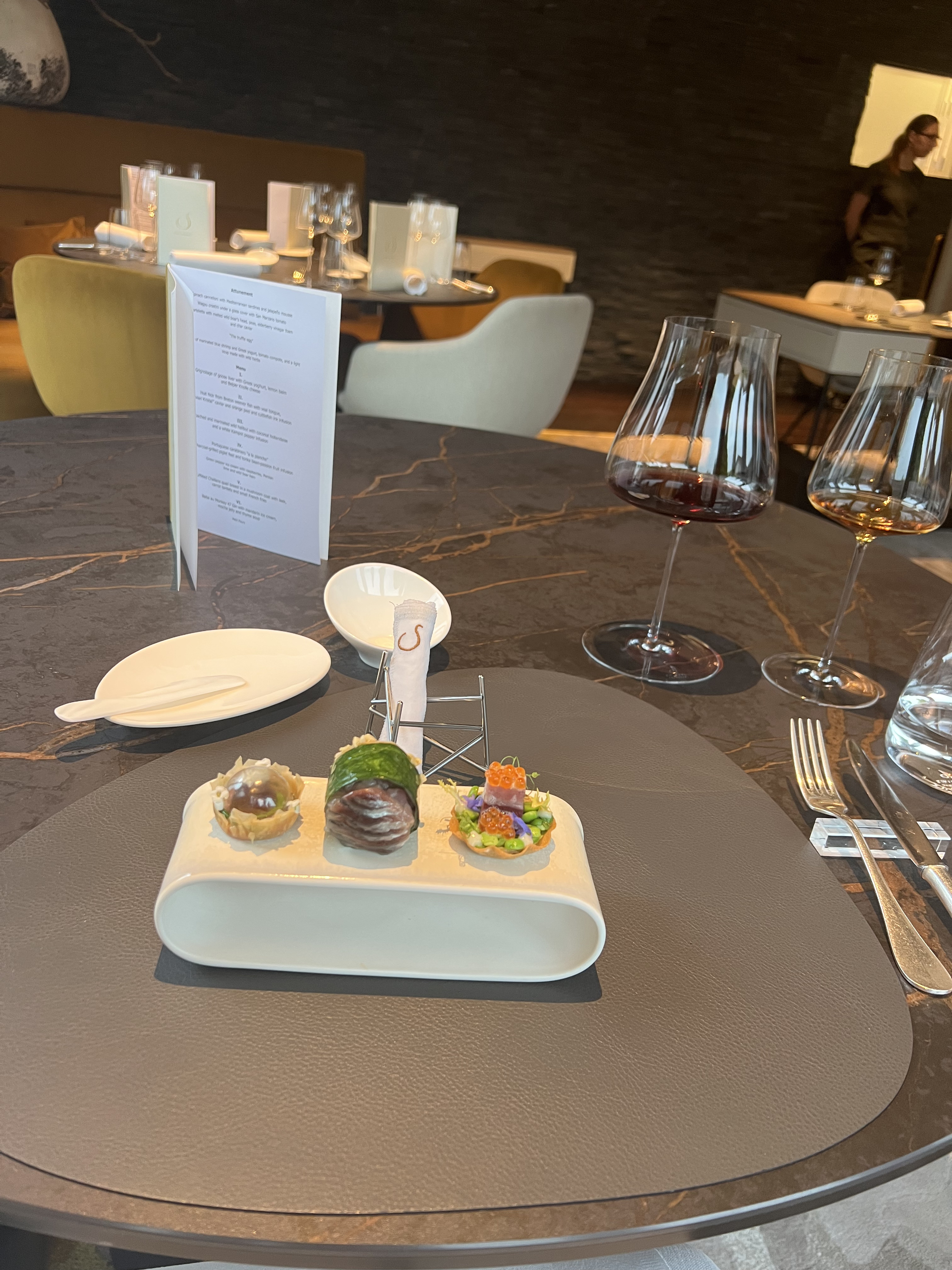
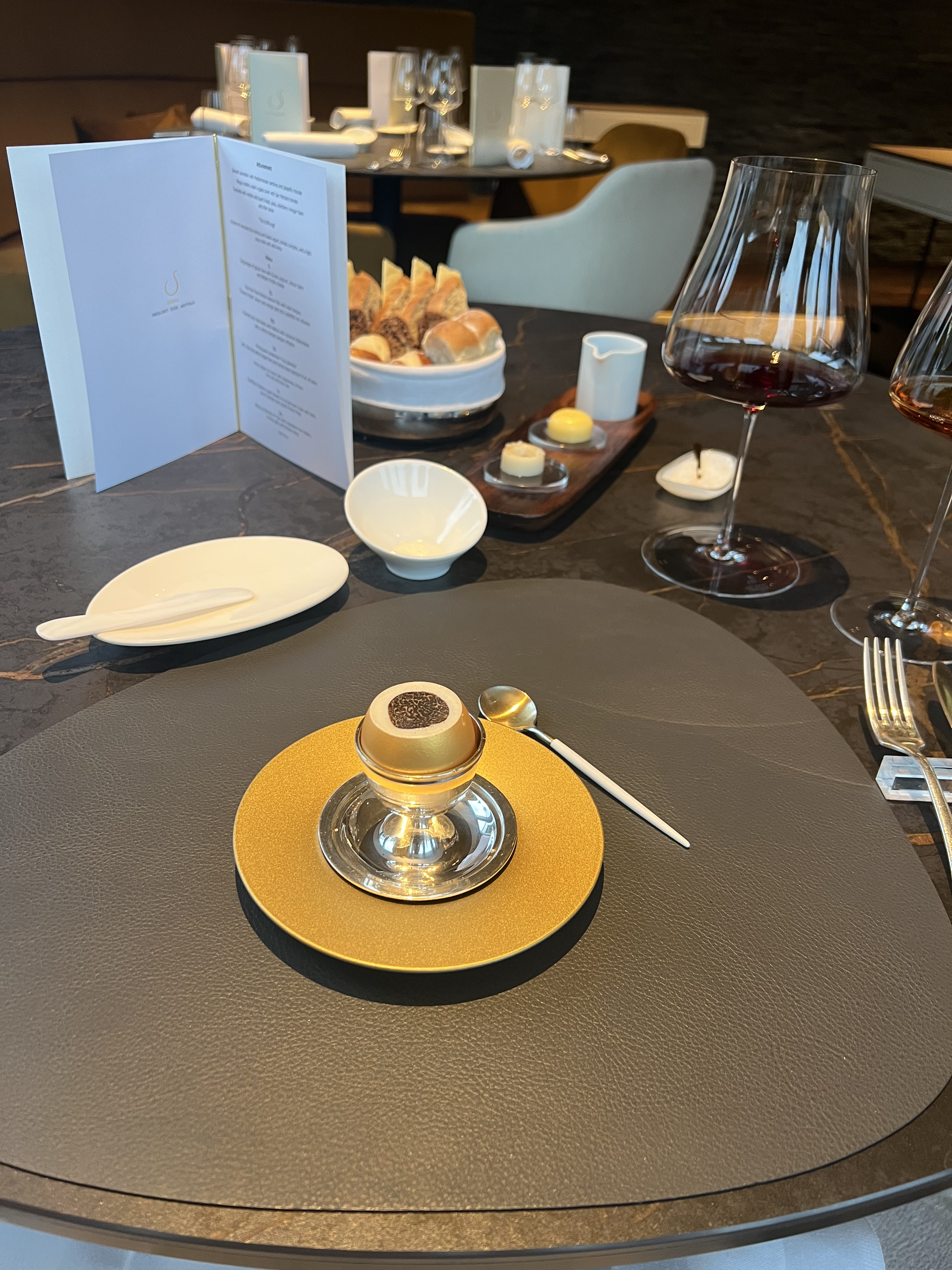
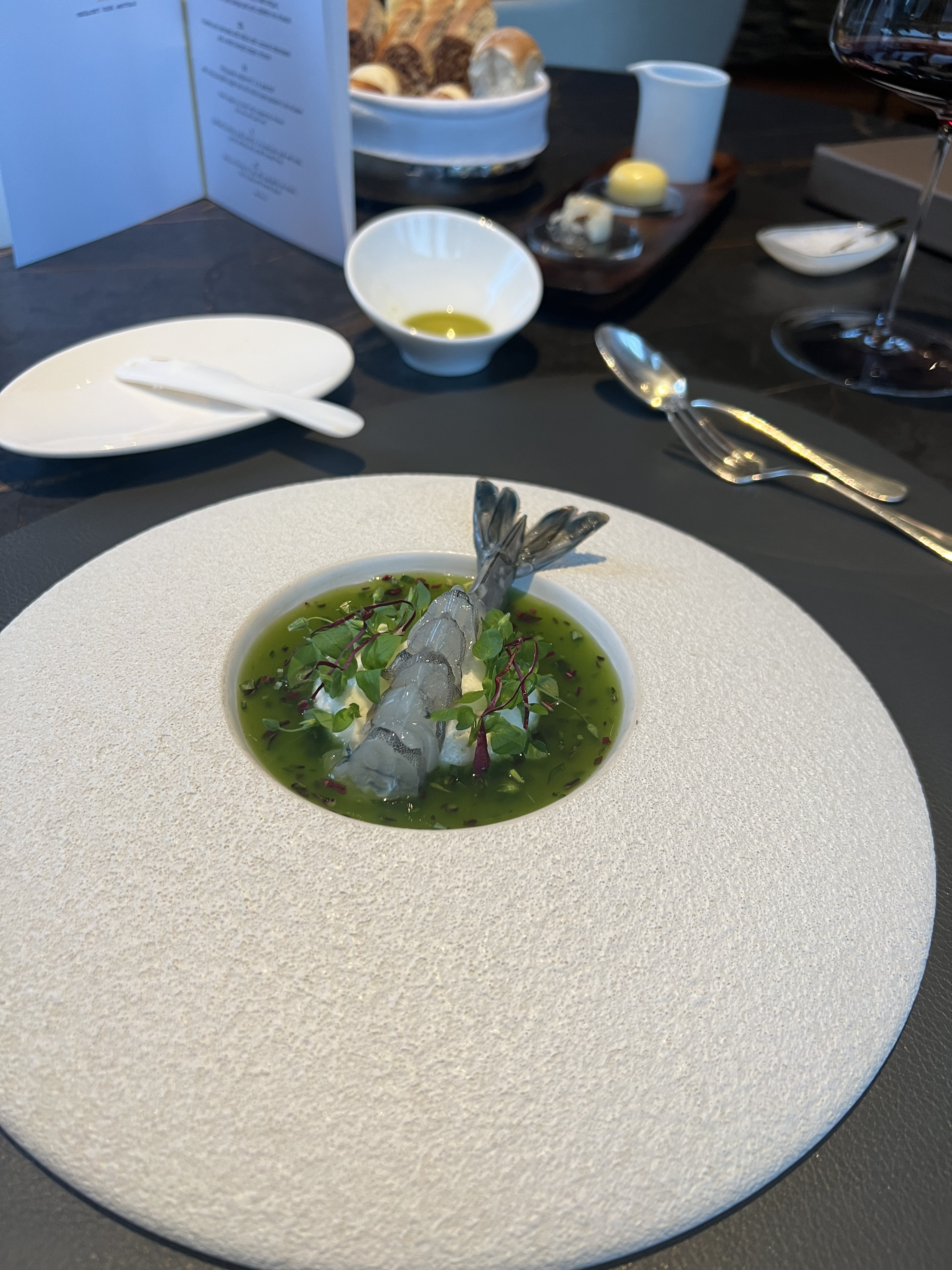
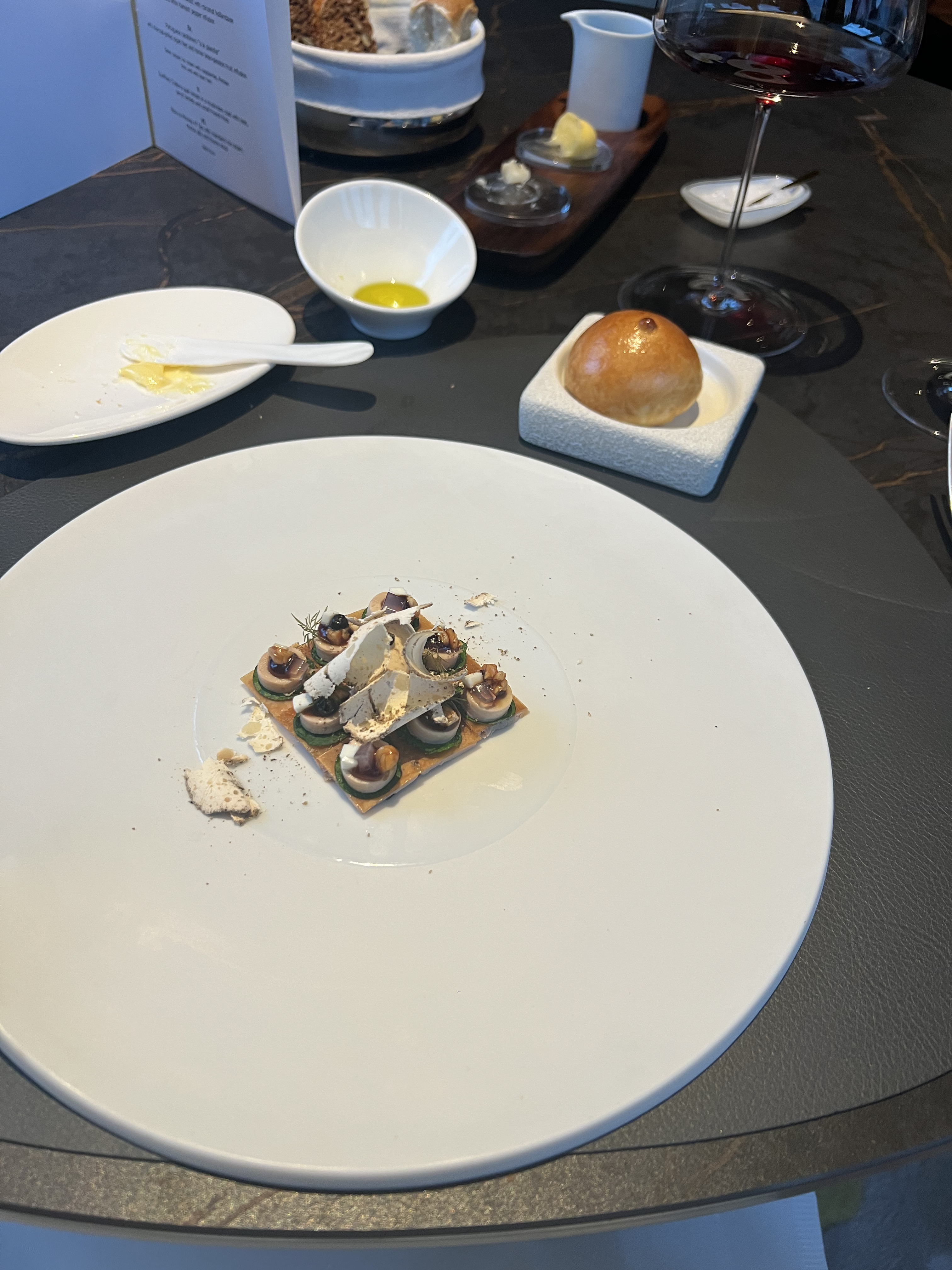
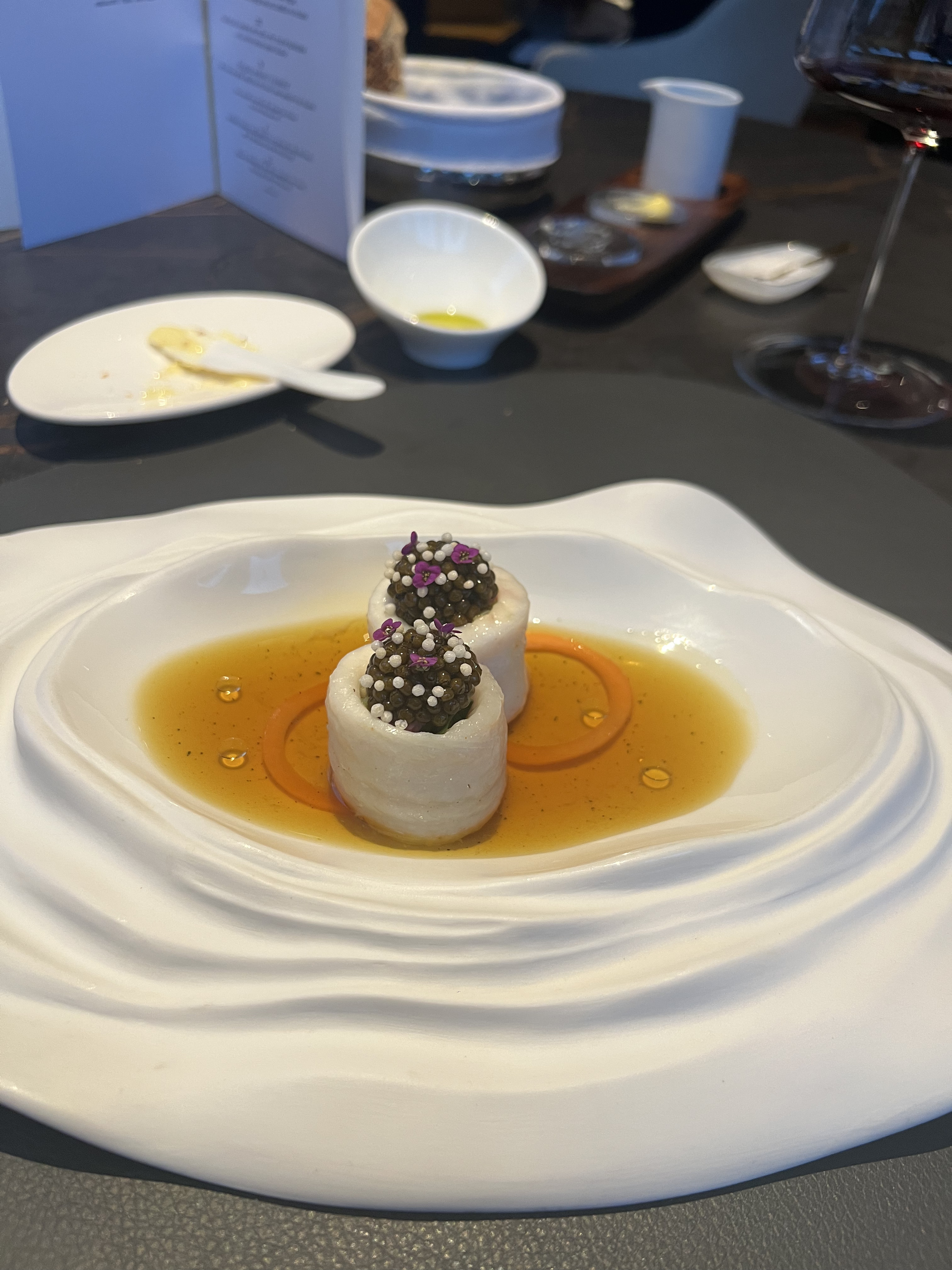
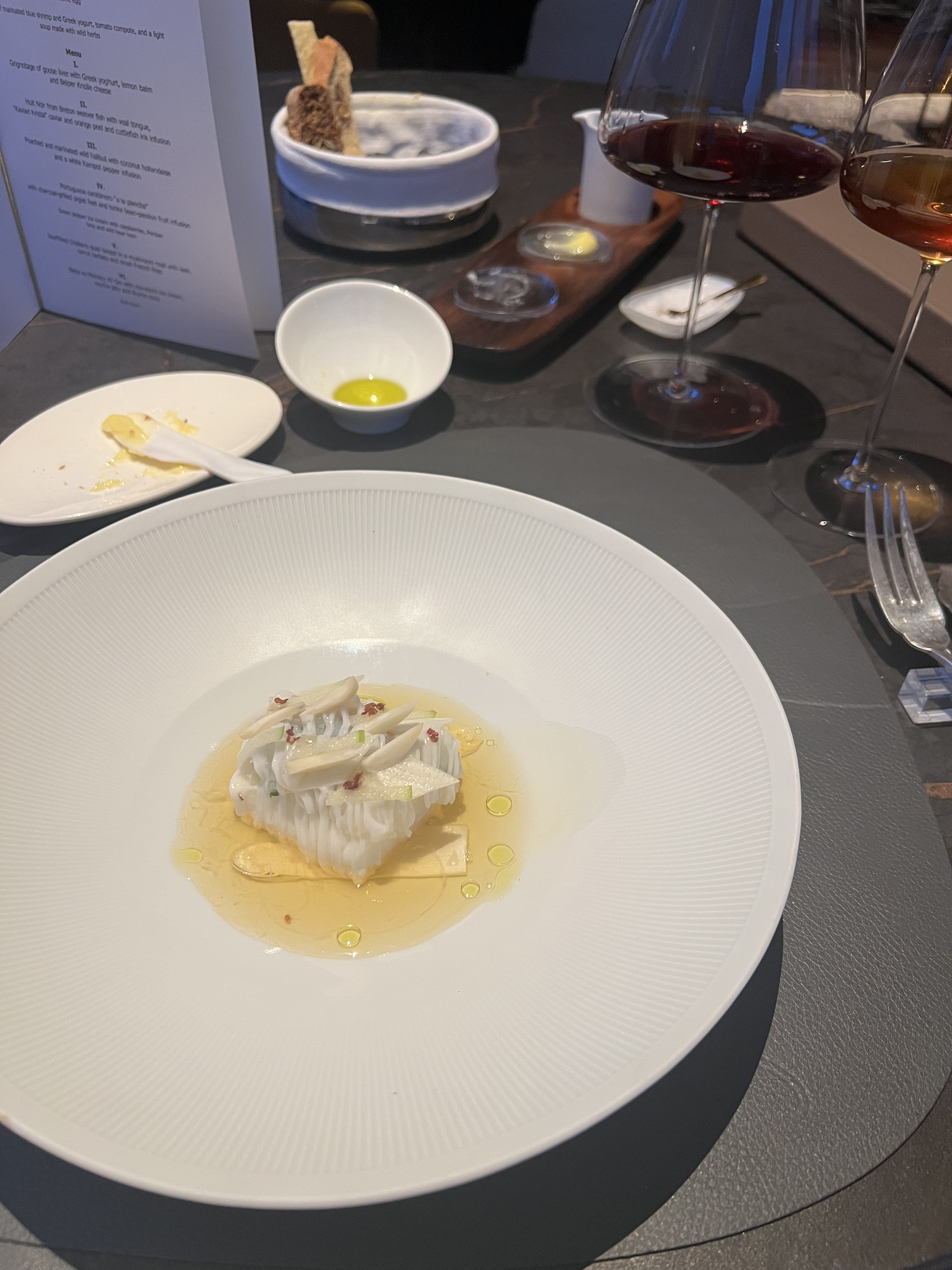
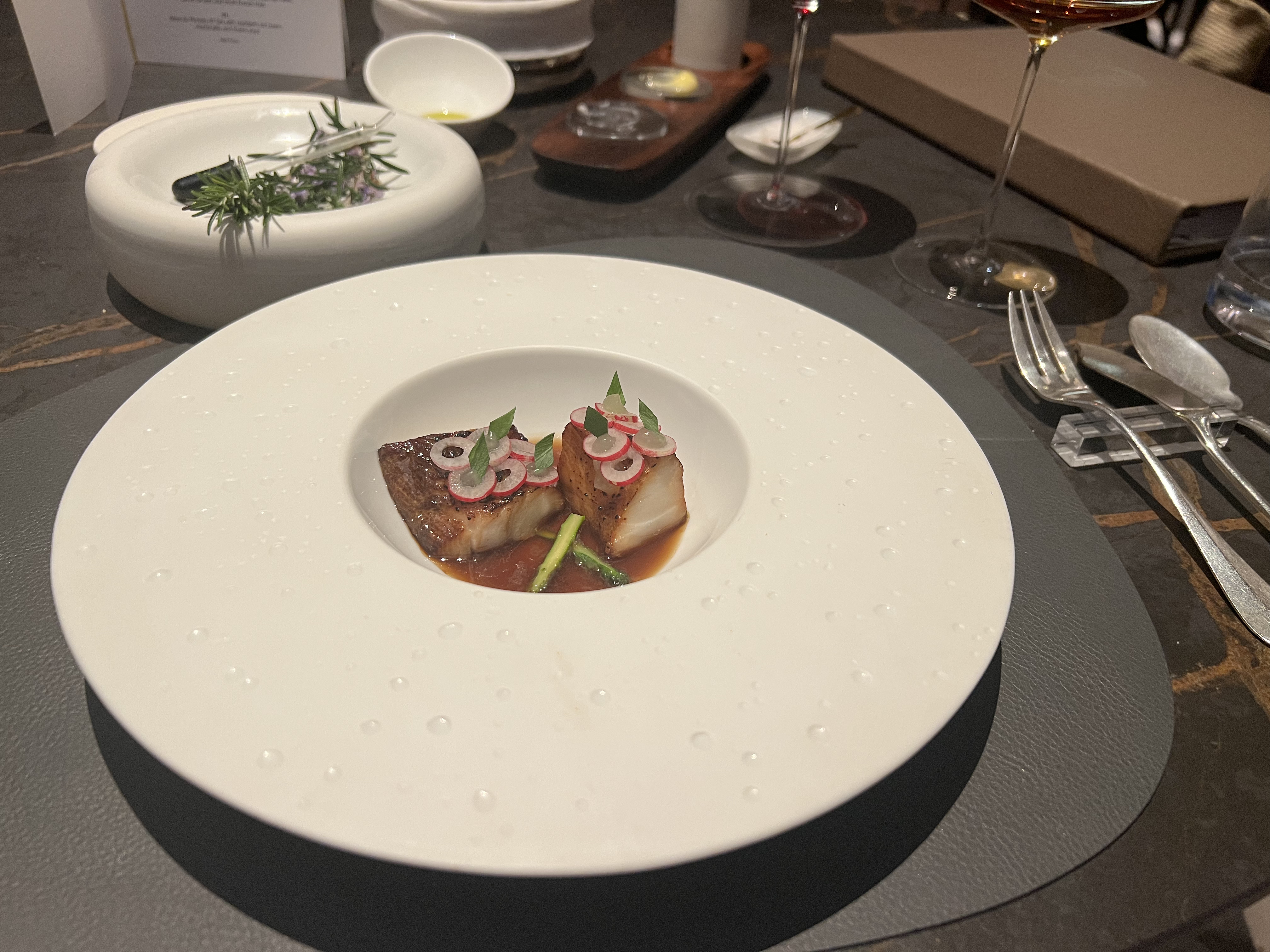
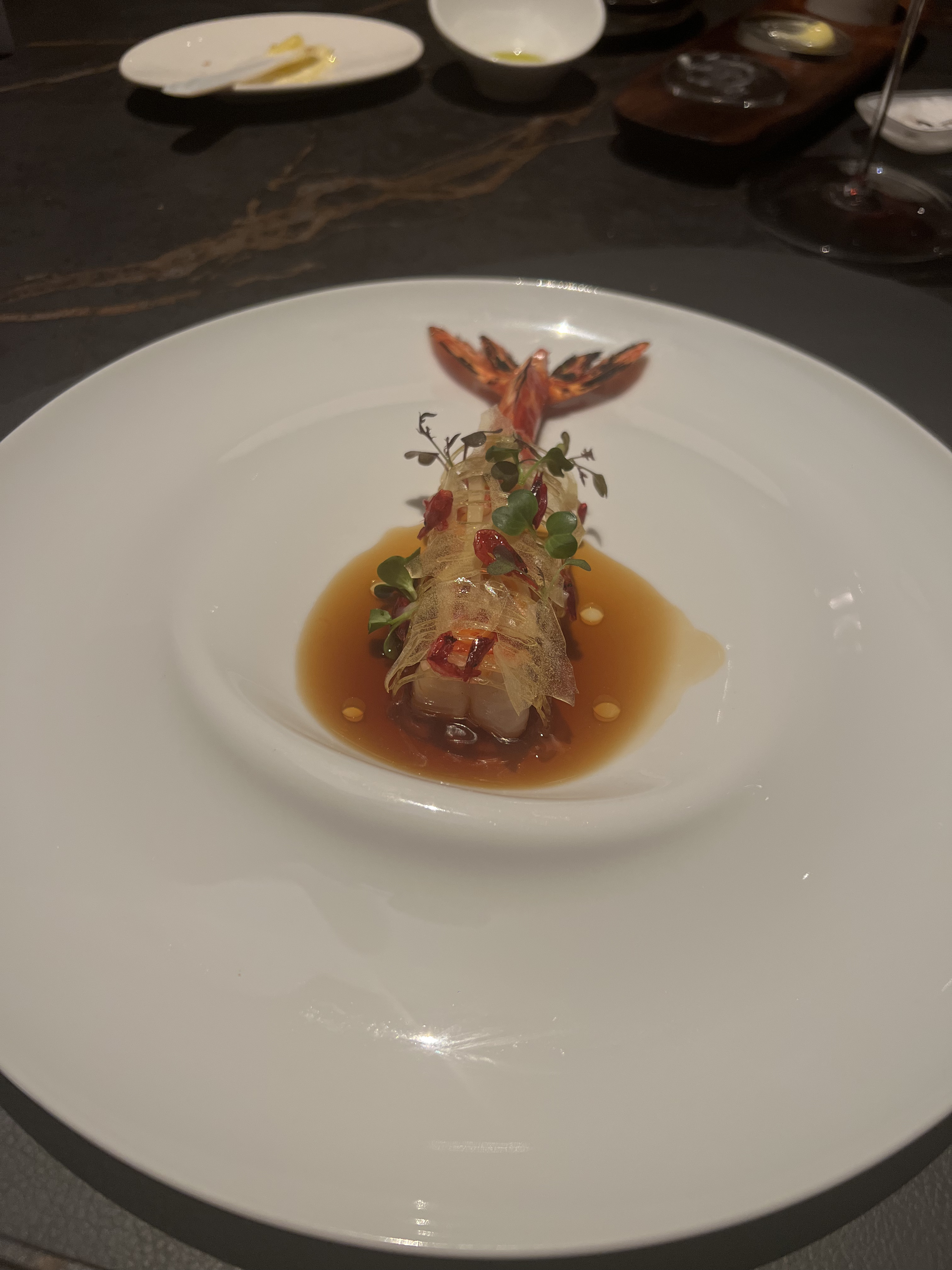
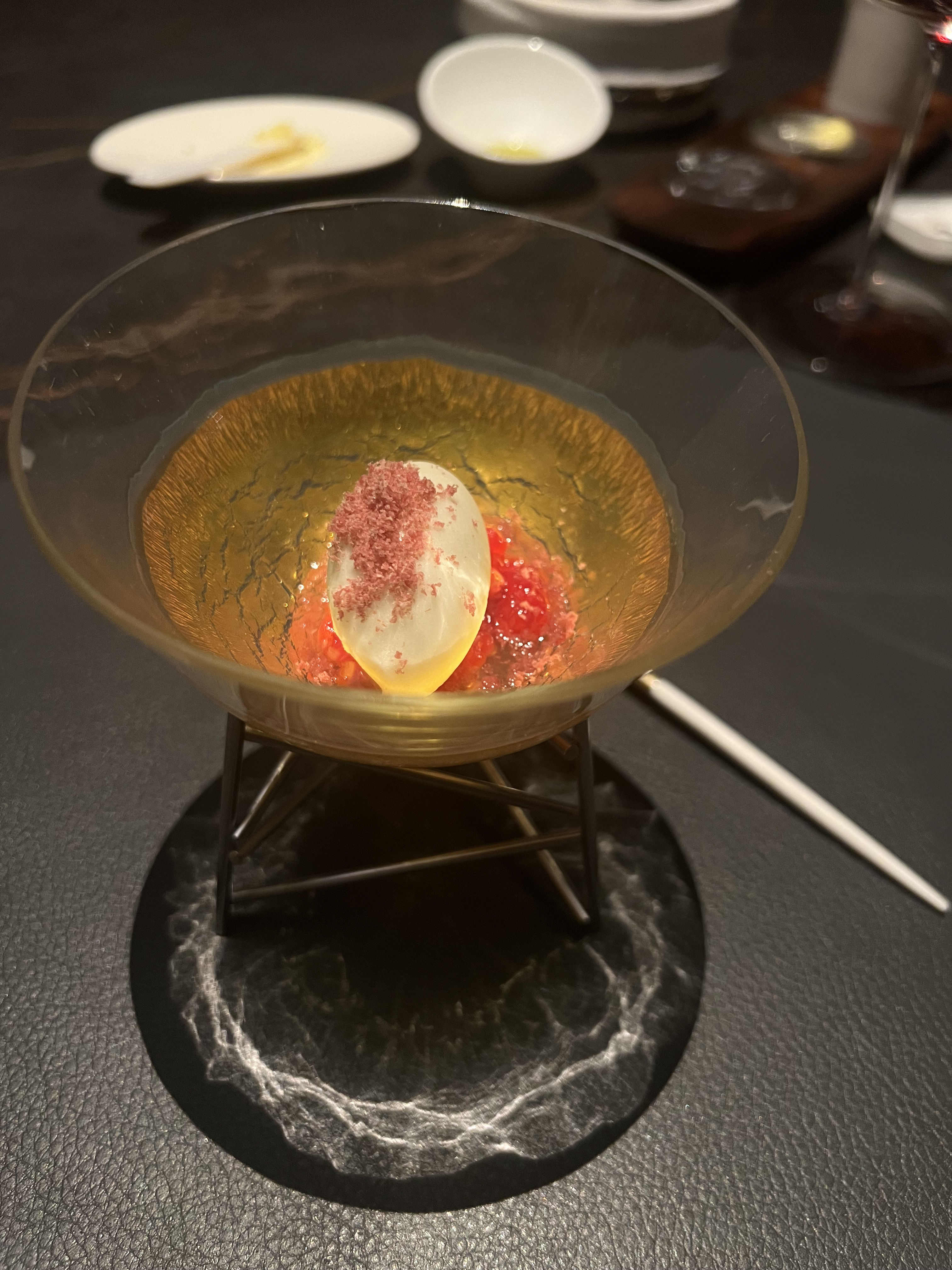
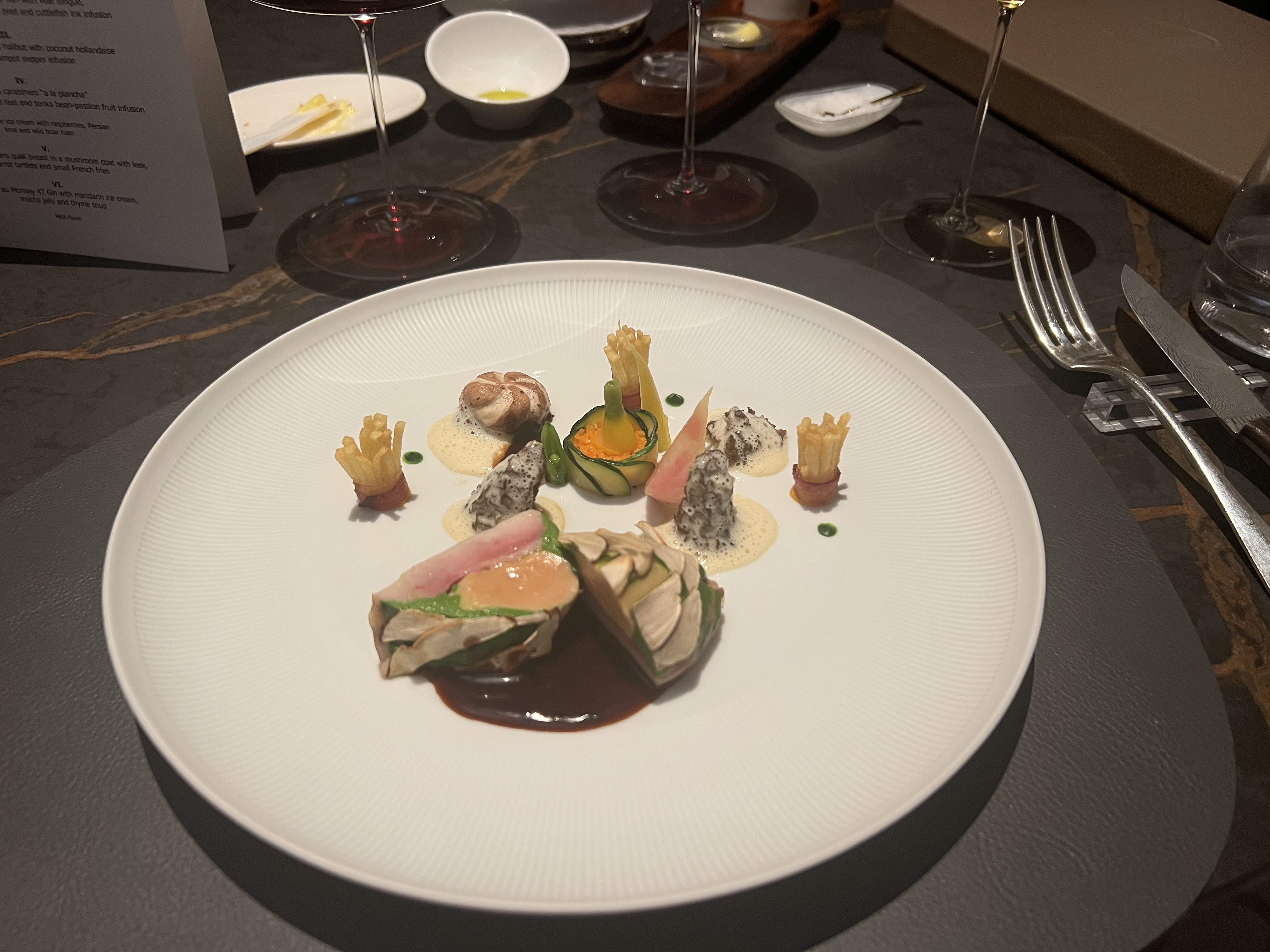
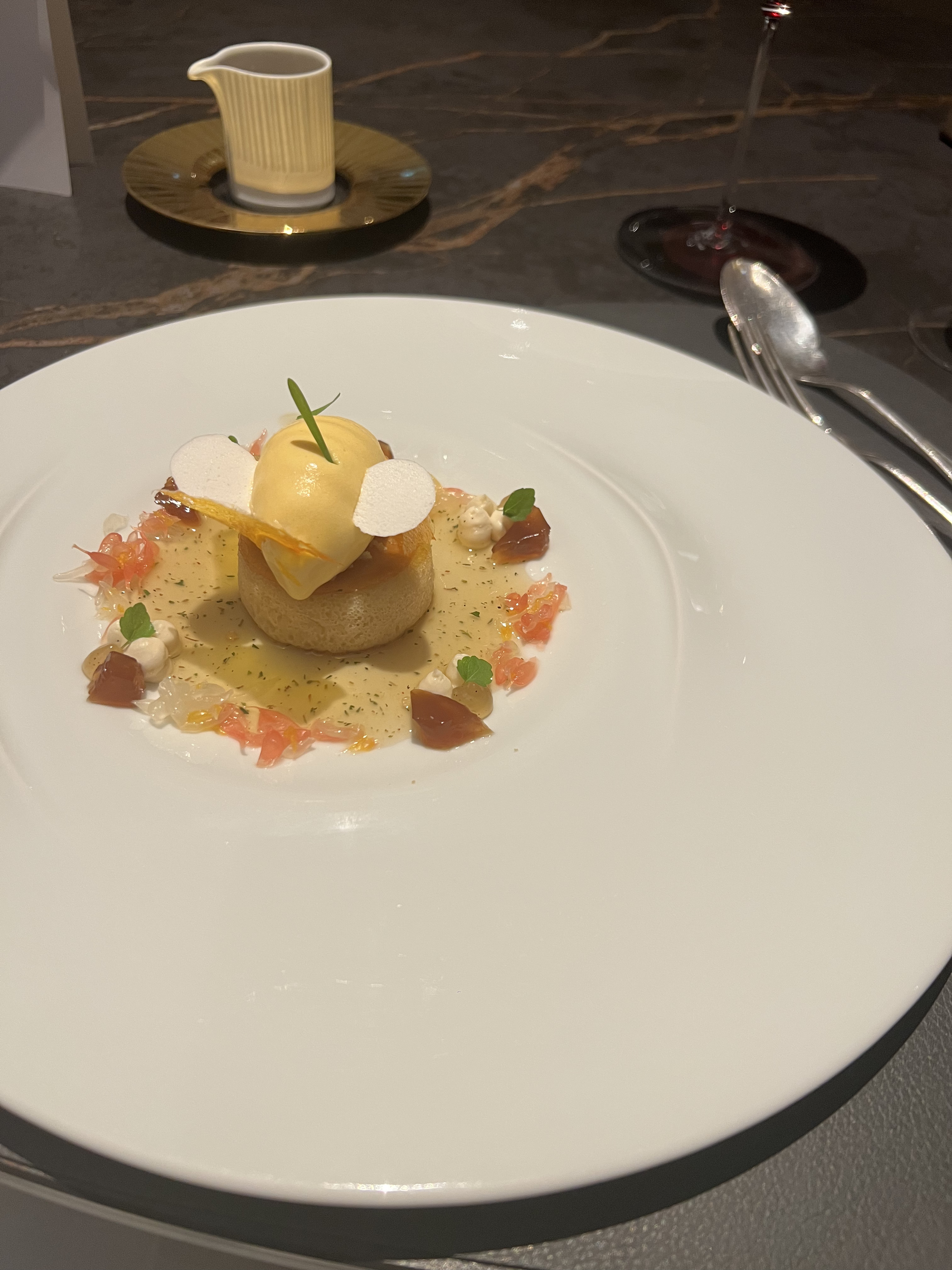
The head chef Thomas Schanz comes from a French culinary background, previously working as sous chef at Waldhotel Sonnora before 2012. However, his dishes don’t seem to be completely belonging to traditional French cuisine, and I can find some Asian and Nordic influences. His tasting menu is extremely innovative, with a very bold use of various different infusions and sauces, from tonka bean & passion fruit to cardamom to orange peel.
ONLY 10 PICTURES ARE ALLOWED PER POST, SO THIS IS INCOMPLETE AND I WILL CONTINUE WRITING ON THE NEXT POST
The 2019 DRC Echezeaux was extremely closed the entire night even after 4 hours of decanting. I will give detailed tasting notes about some special bottles in the next post.
Just as I finished my meal and was standing up to leave, Thomas Schanz came out of the kitchen to have a quick conversation with me. He is a lovely and very humble man with a venerable cooking background. He asked me what my thoughts were about some of the dishes, and invited me to come back on my next trip to the Mosel–I definitely will be back!
And this concludes my trip
DETAILED TASTING NOTES FOR SOME SPECIAL BOTTLES
In my daily reports, I haven’t really given any longer tasting notes nor scored anything. This is because I find it quite irresponsible for me to score a wine based on first impression. In the following I will give more detailed tasting notes for some special bottles and my scores for them. (Some of these wines were not mentioned in my daily reports)
2019 Domaine de la Romanee-Conti Echezeaux Grand Cru
Deep ruby. Very herbal and spicy. Easy to drink initially for a few minutes after opening, but then closes down harshly. Slight alcoholic heat in the end. Minty. Very brooding fruit. Probably needs lots and lots of time. With some air the fruit is quite sweet and juicy. There is also something vaguely floral about this wine that I can’t quite place. But even with hours in the decanter this wine never seems to open back up again. Rather tannic and drying. Not a very obvious wine at all, and disappointing even for a DRC Echezeaux. However, this is a very educational experience and Schanz has excellent prices (I know of very few restaurants with lower prices). If you are visiting Schanz in the recent future and still want to order DRC, maybe go for the 2015 Echezeaux. I am being generous with the score here. 90-91(++)/100 points
The next wine I had gotten from Hanno at the estate! Immensely grateful to him for this, since there was absolutely no way I would have been able to get this… After all even the 2005 TBA Auction is available for retail but this is not. I had told Hanno that this would stay put in my cellar for a long, long time before being drunk. But something very unfortunate happened when I got home with the bottle—there was already some seepage! This is common with many older German wines because producers back then insisted on very high fill levels when bottling. They wanted to get rid of any air gaps between the cork and the wine to minimise oxidation, and as Hanno told me, sometimes the wine splashed out when putting the cork in! I am sure that my bottle will probably still be able to age for much longer, but my cautious side just couldn’t risk it… So I opened it at Schanz together with the DRC Echezeaux. It was a mistake opening this wine so early in its evolution, but an educational mistake nonetheless.
1998 Zilliken Saarburger Rausch Eiswein Auction
Medium amber. Intensely acidic, even by Eiswein standards. Some caramel and toffee, but this wine seems to have quite a significant botrytic character as well. Not dense at all, but light and playful. Though it really carries a powerful punch! I think this is far too young and not at all ready yet. The acid makes it a bit painful to be drinking now. NR
I don’t really feel like scoring this since it is so backwards. I am finding it difficult to say this, but how can a wine be embryonic at almost 30 years old???
2002 Joh. Jos. Prüm Graacher Himmelreich Eiswein
Medium gold. This wine shows better when opened in advance. Ironically, it is most aromatic when served quite cold. There is clear development here with the toffee and caramel. There also seems to be a touch of botrytis with the marmalade. Rather opulent and big for a Mosel Eiswein, a bit more leaning to the Nahe/Rheingau in style. Not very floral or spicy, but the fruit here is immensely pure. I really quite like this wine, even if it is a bit young! I have some more in my cellar, so I will be able to see how it develops with time. NR
I don’t really feel like scoring this either because this wine was from my personal cellar and has been shipped quite a few times. I don’t think it is really representative of a perfectly stored bottle. The scores I gave this wine when tasted over a few days this week have been fairly inconsistent, ranging from 90-94. My impression is that a well-stored bottle which is showing well will probably earn 94-95(+)/100 points.
1997 Zilliken Saarburger Rausch Auslese Lange Goldkapsel Auction (AP 03 98)
Medium gold to amber. This is somehow already showing a bit old. Very tertiary (or perhaps are these aromas botrytis-induced?) It will probably still age forever but it is a bit simpler and the structure not as immense as the 05 or 15. This note sounds negative, but it is not. It is merely that after having experience with the great 05 and 15, I am searching for perfection. 93-94/100 points
2005 Zilliken Saarburger Rausch Auslese Lange Goldkapsel Auction (AP 05 06)
Medium gold. I was so mesmerised by the wine that I didn’t even take a picture of it. This is certainly one of the best wines that I have ever had. It towers above almost all else, and reaches heights unimaginable to man. It is difficult to describe with words because there is everything here. I cannot imagine how good the 2005 TBA Auction must be if the LGK Auction is this good. I should remark, however, that I liked the LGK Auction quite a bit more than the BA (Auction?) from the same vintage. I do not give closer to 100 points because I want to leave room for better wines in the future, but this is one of the highest scores I have given. 96-98(+)/100 points
2015 Zilliken Saarburger Rausch Auslese Lange Goldkapsel (AP 03 16)
Medium lemon. This is the wine that I enjoyed the most during my tasting at Zilliken. I think it is also the one that Hanno enjoyed the most. This is still very young and not showing much development. Best described as peach syrup infused with different floral extracts, but with an immense mineral saltiness. Great intensity and a never ending finish, but never at any moment heavy. This is exceptional, but somehow feels a bit lesser than the 2005. Perhaps the 2015 LGK Auction will be better. Or perhaps this wine will surpass the 05 with time. Who knows? But I am buying a few cases of this if I can find good prices. 95-97(++)/100 points
I think that is all from me! If anyone has any questions, please feel free to ask.
Wow what a great trip! Congrats and thank you for taking time to write. It makes me so happy to see a young, enthusiastic and clearly dedicated wine lover spending this much time in the Mosel! And doing it on bike no less…still blows my mind!
Just to be clear to the reader the Lieser hotel and winery are completely separate entities under separate ownership.
I have just added an extra tasting note to the DETAILED TASTING NOTES section which I forgot to put in!
Thank you Robert for the kind words! I hope that these trip notes inspires anyone who is thinking about going to the Mosel. As for myself, I will be back again and again…
Next time hopefully I will get around by car, but this trip is proof that it is completely doable only by bike (although you must get an E-Bike) and public transport.
Definitely try Sonnora on your next trip. It is excellent.
Great write up for what sounds like a great trip that you executed in style!
Not sure if it was covered in the report, but did you have lots of steep inclines? Or was it mostly going through the roads from village to village, closer to the river?
About 20 years ago (when I was in my late 20s), I worked the harvest for 2 weeks in the Loire (near Layon). On the weekend, all the pickers went home, but I was there and thirsty, so I borrowed a rusty old bike and cycled 10+ km to Savennières to visit several domaines and buy some wine that I somehow managed to cart back on that bike (because there wasn’t a handy clip on bag or anything…)
The distance was not enormous, but there were some inclines (e.g. up to Coulée de Serrant), and the biggest issue was that the bicycle was the opposite of a performance bike!
Regardless, good for you, the Mosel is obviously stunning, and you appreciate things differently when not trapped inside a vehicle…
Again great notes @andyt77 - thanks for the write up! A few questions:
Thanks in advance!