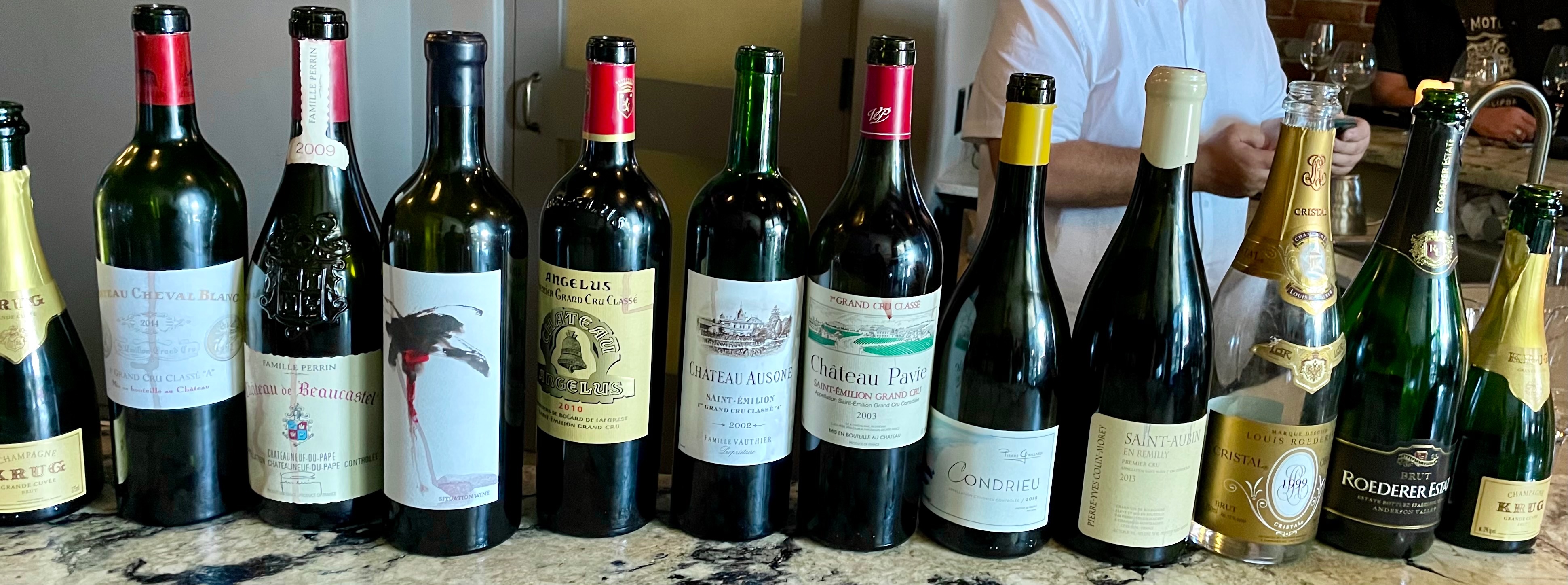
Thanks to one of our alert dinner group members, we became aware of a series of very interesting and informative luncheons being held at Somm`s Kitchen in Paso Robles late last year and I have already attended one with additional ones forthcoming.
Recently, 4 of us traveled from Santa Barbara to attend another one, this time featuring champagnes and top tier Right Bank Bordeaux {the first one I went to last October had a theme of Barolo vs. Barbaresco}
Fourteen in all sat at the Chefs Counter, a curved, granite topped counter, while tasting wines for this events theme. The host, Ian Adamo, discussed the 4 Premier Grand Crus Class A producers covering their place of origin, the varieties used and winemaking methods employed while finishing off and serving each of the courses.
Ian mentioned there are 4 areas he evaluates when tasting a wine: balance, length, intensity and complexity. I added texture/ mouthfeel and then he added age-ability.
It should be noted that the 4 Right Bank producers here were considered to be equivalent to the First Growths in the Medoc; however, all of that became moot, first in late 2021, when it was announced that Chateau Ausone and Chateau Cheval Blanc were leaving the classification. Soon after, Chateau Angelus also left the classification, leaving Pavie as the only Premier Grand Cru Classe A vineyard, until the reclassification takes place this year.
We started off with a small splash of NV Roederer Estate Brut sparkling wine to clean our palate as made possible by its bracing acidity before moving on to 2 exquisite champagnes:
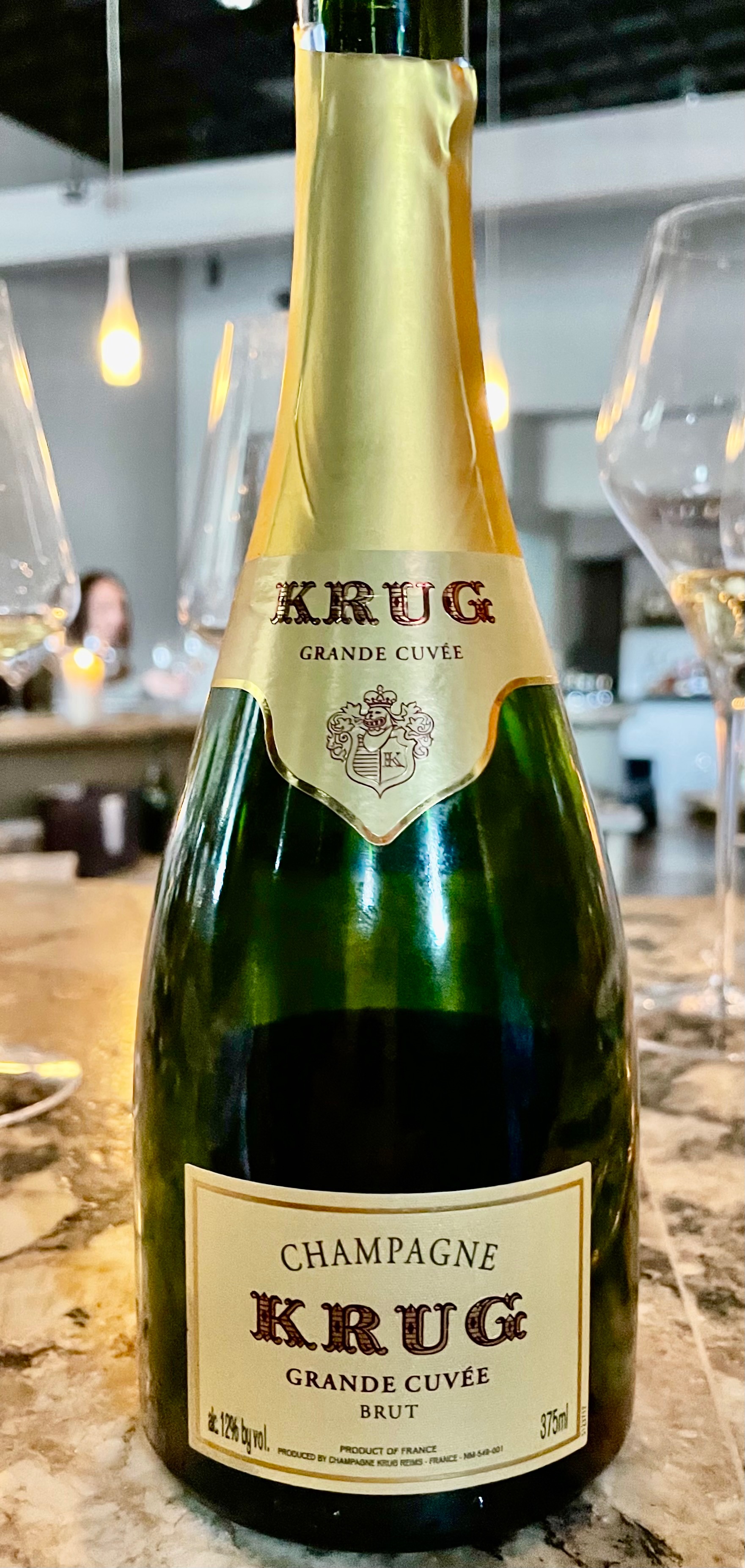
NV KRUG GRANDE CUVEE BRUT 169 eme- from 2- 375 ml bottles; this edition is a blend of 146 wines from 11 different years, the youngest coming from 2013, the base, and the oldest from 2000; it is comprised of 43% Pinot Noir, 35% Chardonnay and 22% Pinot Meunier; this was my 2nd bottle of this edition and if these have been typical, it`s one I will buy and cellar for a few years before revisiting as it has all of the stuffing to be stellar; it just needs some time to evolve and express; as with the first bottle, it had some richness and lots of finesse and charm with mild saline accented honey lemon notes; it was medium bodied, a clue about its infancy, and seemingly pretty mellow with everything in balance; there’s some bright acidity that supports quality aging before it reaches its apogee.
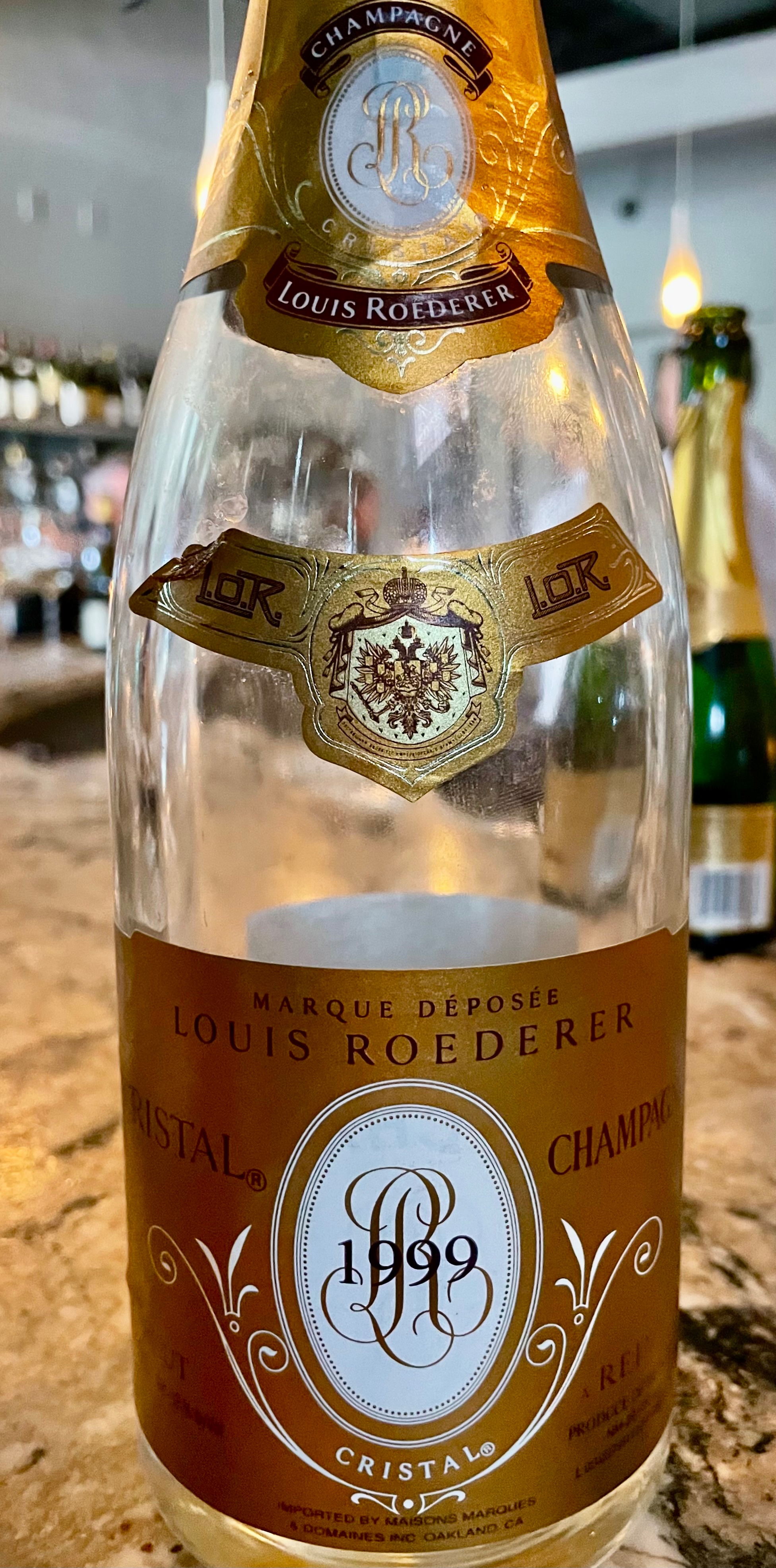
1999 LOUIS ROEDERER CRISTAL BRUT- 8 gpl; 57% Pinot Noir, 43% Chardonnay; Ive had a few 99s in the past and all have been marvelous so I was expecting marvelous here and fortunately got it; it had a light yellow gold color and a nice, inviting nose of spicy lemon zest; the taste profile had more of the same along with some honeysuckle and apple notes; it was medium bodied and textured and had nice acidity; this was simply beautiful, being in such a good place now and showcasing what a nice, relatively mature Cristal can offer.
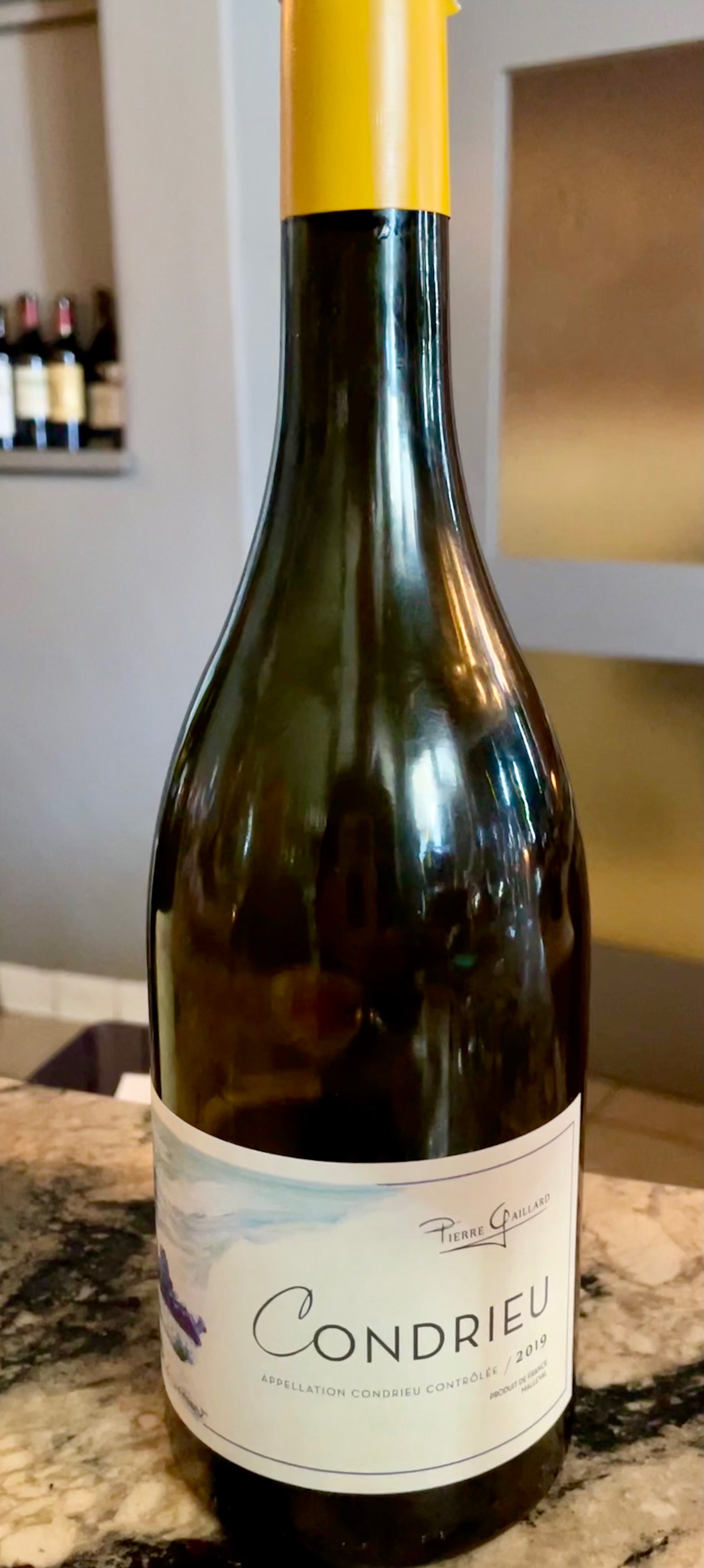
Next up, 2 white wines, the 2nd being a contribution from one of our foursome:
2019 PIERRE GAILLARD CONDRIEU- there’s some nice Viognier here with a serious streak of licorice starting it off and staying the course all the way through to compliment the very nice tropical fruit that prevailed throughout; it had glycerin like viscosity and a sweet undertone.
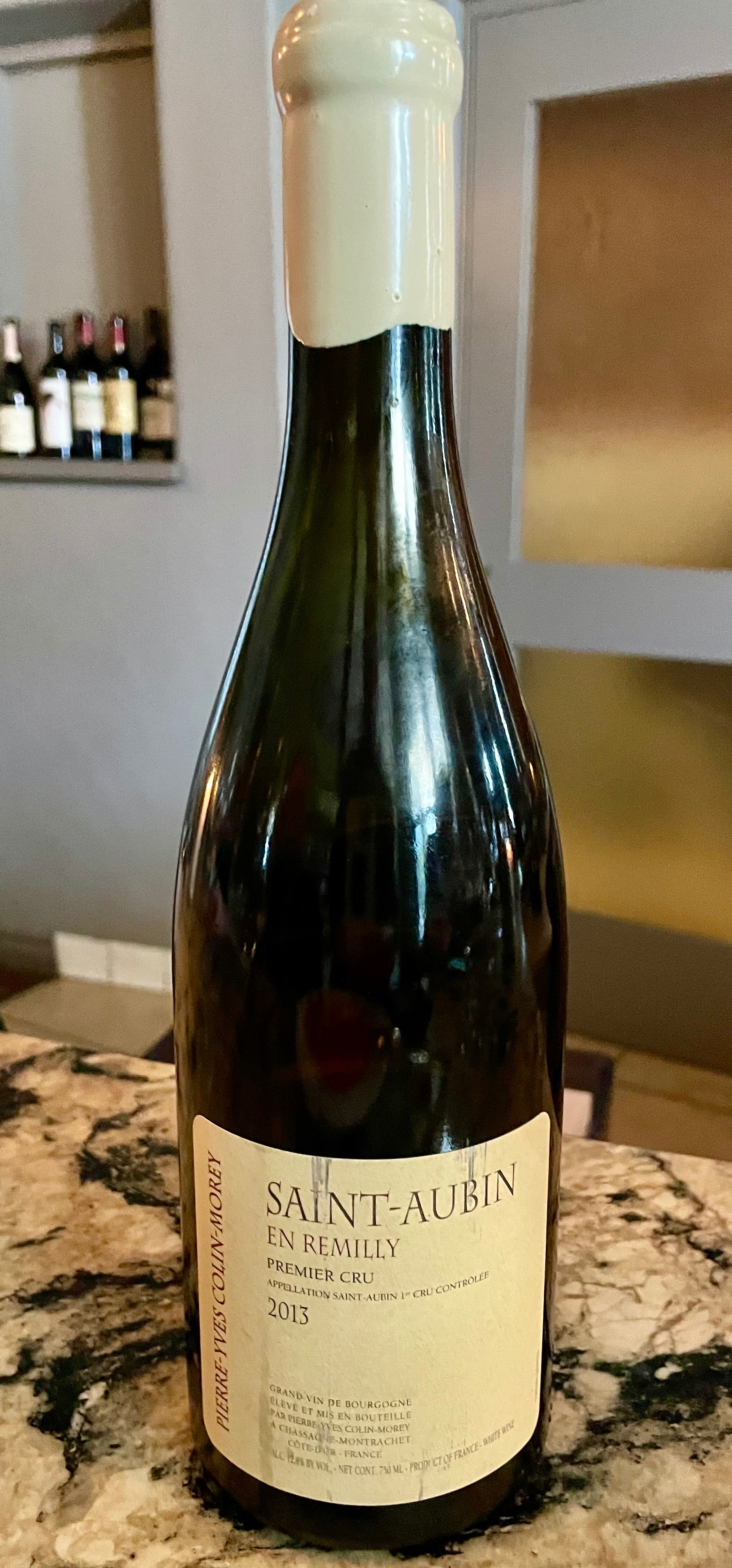
2013 PIERRE-YVES COLIN-MOREY EN REMILLY SAINT AUBIN 1er Cru- consistently wonderful, this treasure has lovely citrus notes throughout, especially lemon, with enhancement from the flint and minerals notes that arrive early and stay late.
And now for the big boys which were opened well in advance, but not decanted:
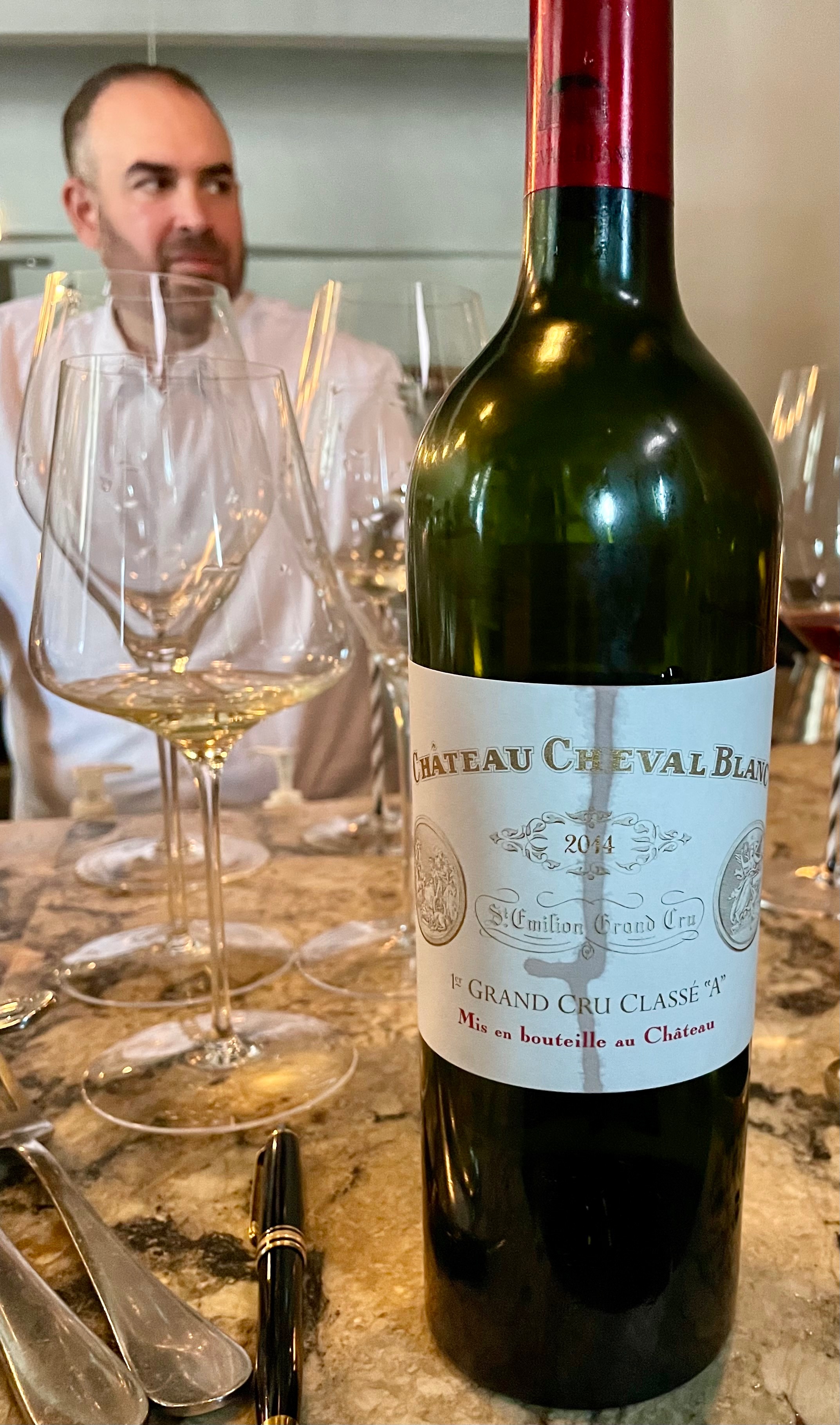
2014 CHATEAU CHEVAL BLANC ST. EMILION- 55% Merlot, 45% Cabernet Franc; following its lovely, deep ruby red color came aromas of milk chocolate laden red and dark fruit which translated into luscious black currant, red and black cherry and black raspberry on the palate; the hallmark of this bottle was its elegance; this is a gentle wine that exudes class without having to be big and boisterous and its soft, velvety mouthfeel supports it to be so even more; although it is still in an early phase, it already has marvelous balance; this is righteous juice and after moving through all of the wines, this was my fav of the day. I like elegance.
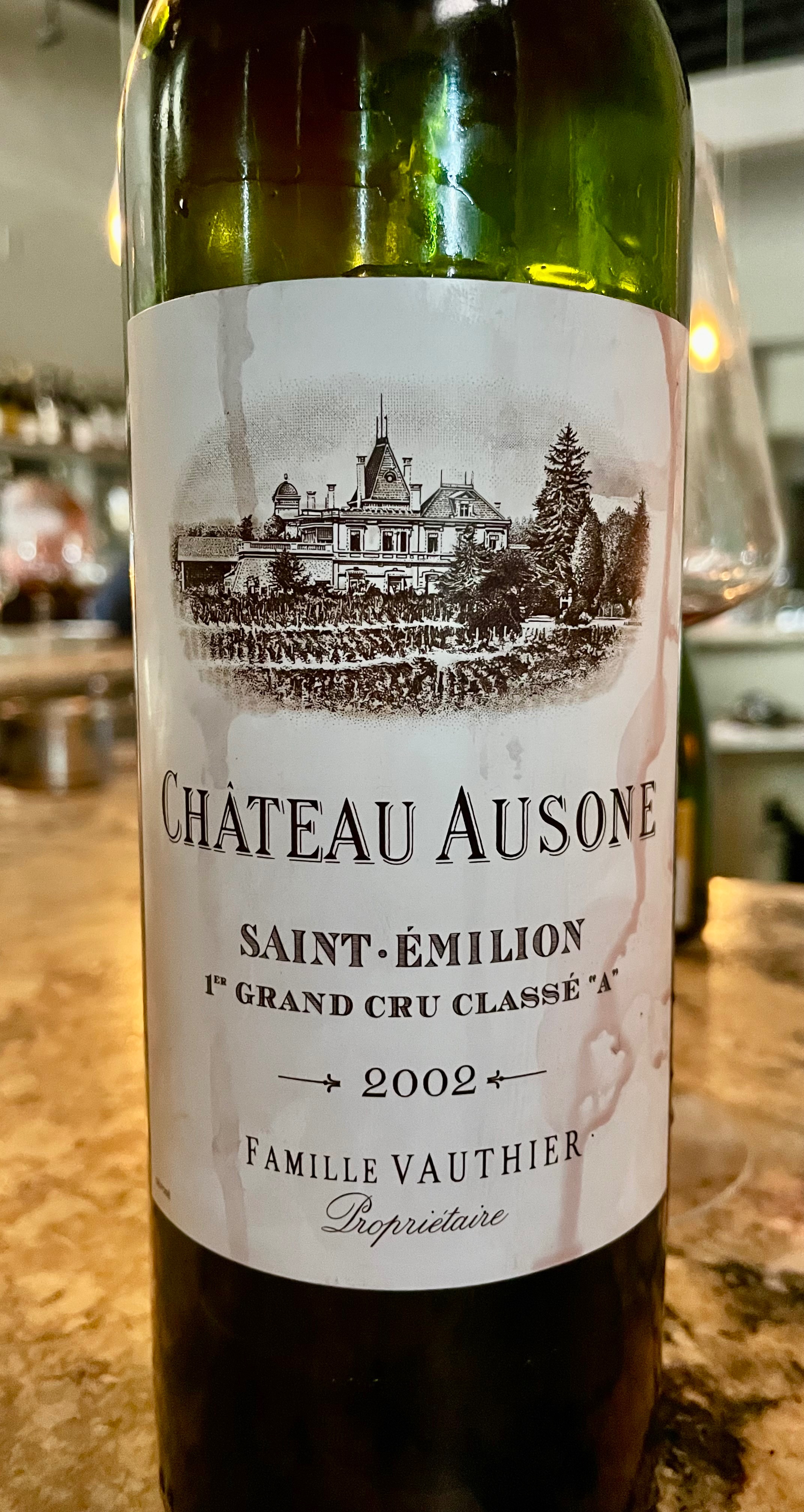
2002 CHATEAU AUSONE ST. EMILION- this Cabernet Franc, Merlot blend came on strong at the outset with some serious aromas of concentrated dark fruit along with accents of talc, leather and earth; once tasted, the fruit profile was more distinctly identified as having blueberry, plum, blackberry and black currant; in the background were some pretty stiff tannins that took over past mid palate and resulted in a dry finish.
Ian inserted another wine here “to demonstrate a contrast in style" and I kept searching for the rational and thought it was a curious selection in that there’s little similarity in a Southern Rhone made of Mourvèdre, Grenache, Syrah, Counoise, Cinsault and more; however, it’s always good to sample a Beaucastel:
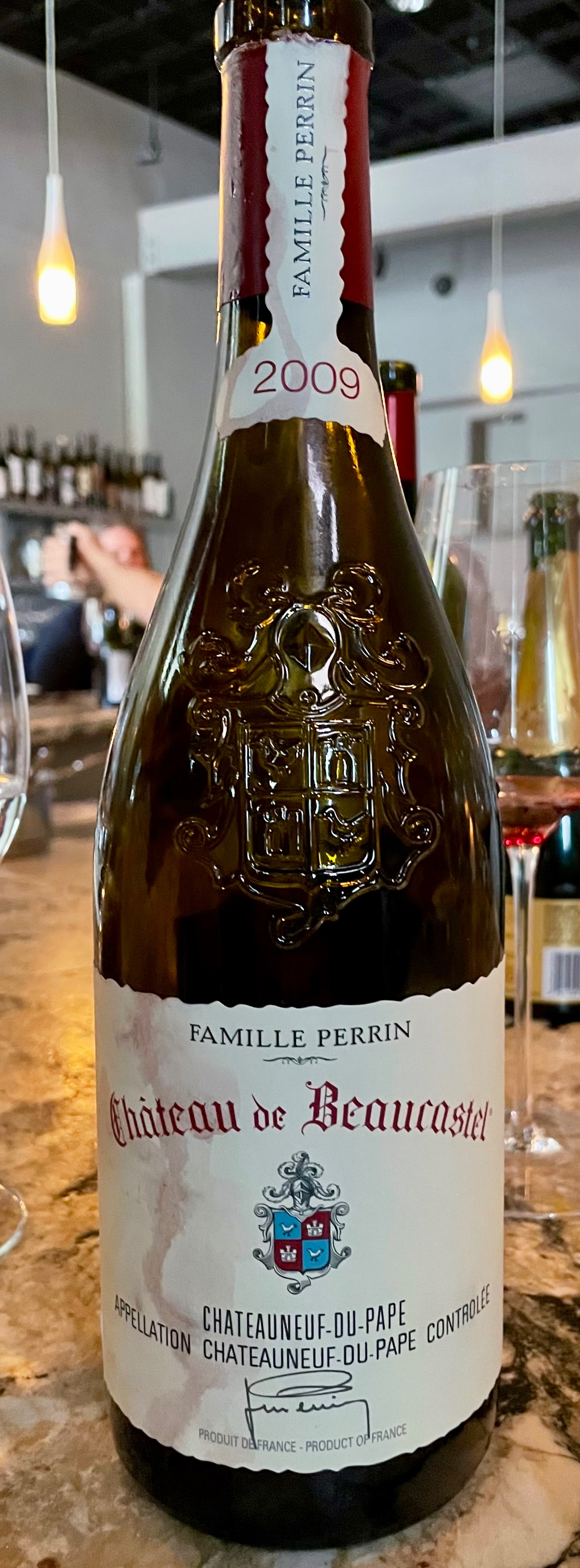
2009 CHATEAU BEAUCASTEL CHATEAUNEUF du PAPE- 30% Mourvèdre, 30% Grenache, 10% Syrah, 10% Counoise, 5% Cinsault and 15% comprised of other varieties; aromas of wild fruit were first noticed and then once tasted, it was clear the plum and black cherry fruit had a wild, briary accent along with some mint chocolate; it had a medium body and enough overall stuff to be pleasing
Back to the main theme:
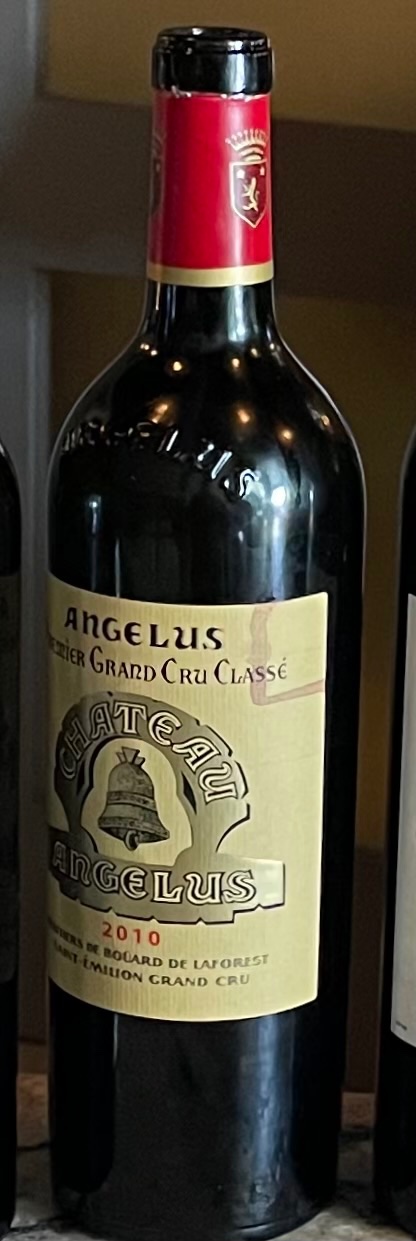
2010 CHATEAU ANGELUS ST. EMILION- 55% Merlot, 45% Cabernet Franc; following its deep, dark vibrant ruby color came subtle aromas that were more prominent on the palate with dark chocolate laced black currant, black cherry and black Mission figs most prevalent; underlying tannins suggested a strong backbone that supports longevity, but they still need some time to integrate; this has intensity with depth and complexity and if opened during this phase, it could benefit from a long decant.
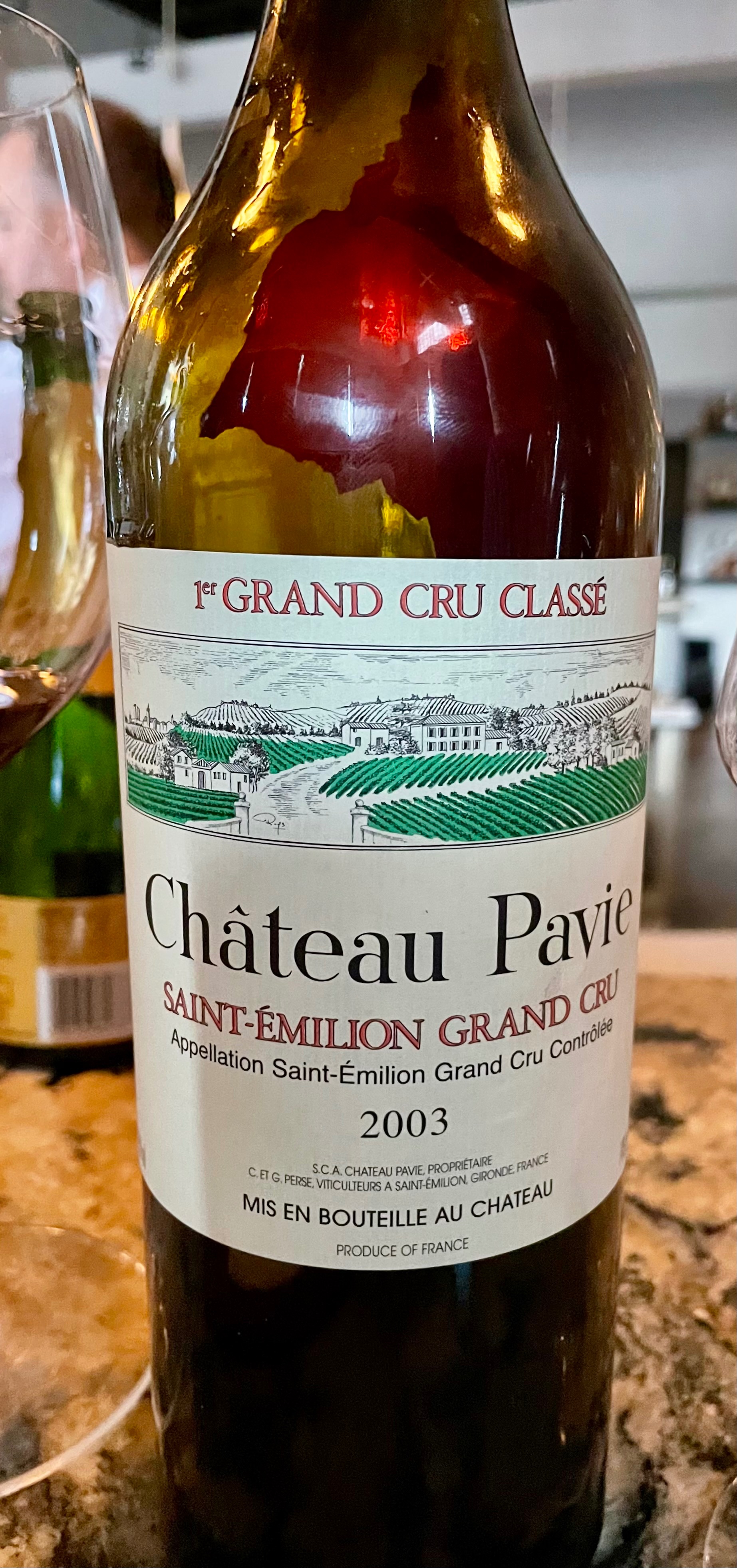
2003 CHATEAU PAVIE ST. EMILION- was the best saved for last? Well, the nose on this one was spectacular and strongly suggested something pretty serious is about to grace our palate; plum, black currant and blueberry are captured early on and all the way through in this stunning, powerful and concentrated wine; the fruit profile gets some embellishment from accents of graphite and licorice; this has some fairly stiff tannins that are noticeable more so at the end, but the journey to get there is worth it; the dry finish allowed me to pick the Cheval Blanc over this, but it’s obvious this one has the most power, depth and complexly.
This was a fun time and the commentary and reviews provided by our host was thoroughly entertaining, educational and enjoyable, enough so, many of us are returning in July for another enticing lunch featuring:
- 1990 Krug, 1996 Dom Perignon, 2002 Cristal
- A Winston Churchill" trio flight
- 1982” Bordeaux: Lafite-Rothschild, Latour, Margaux, Mouton-Rothschild, Haut-Brion and Cheval-Blanc
- 3 vintages of Y’quem.
It appears it is getting better.
Cheers,
Blake