I had opportunity to visit Chouilly in 2019, where we visited the same two wineries - Vazart Coquart and Legras et Haas.
One thing I remember of Vazart Coquart was the big investments they made in their facilities, which were very clean and equipped with new technologies (they test for TCA, they press for other wineries, they use a non-glycol method for chilling, etc). My impression of what we tasted was that this translated into the wines, which seemed quite precise and crisp.
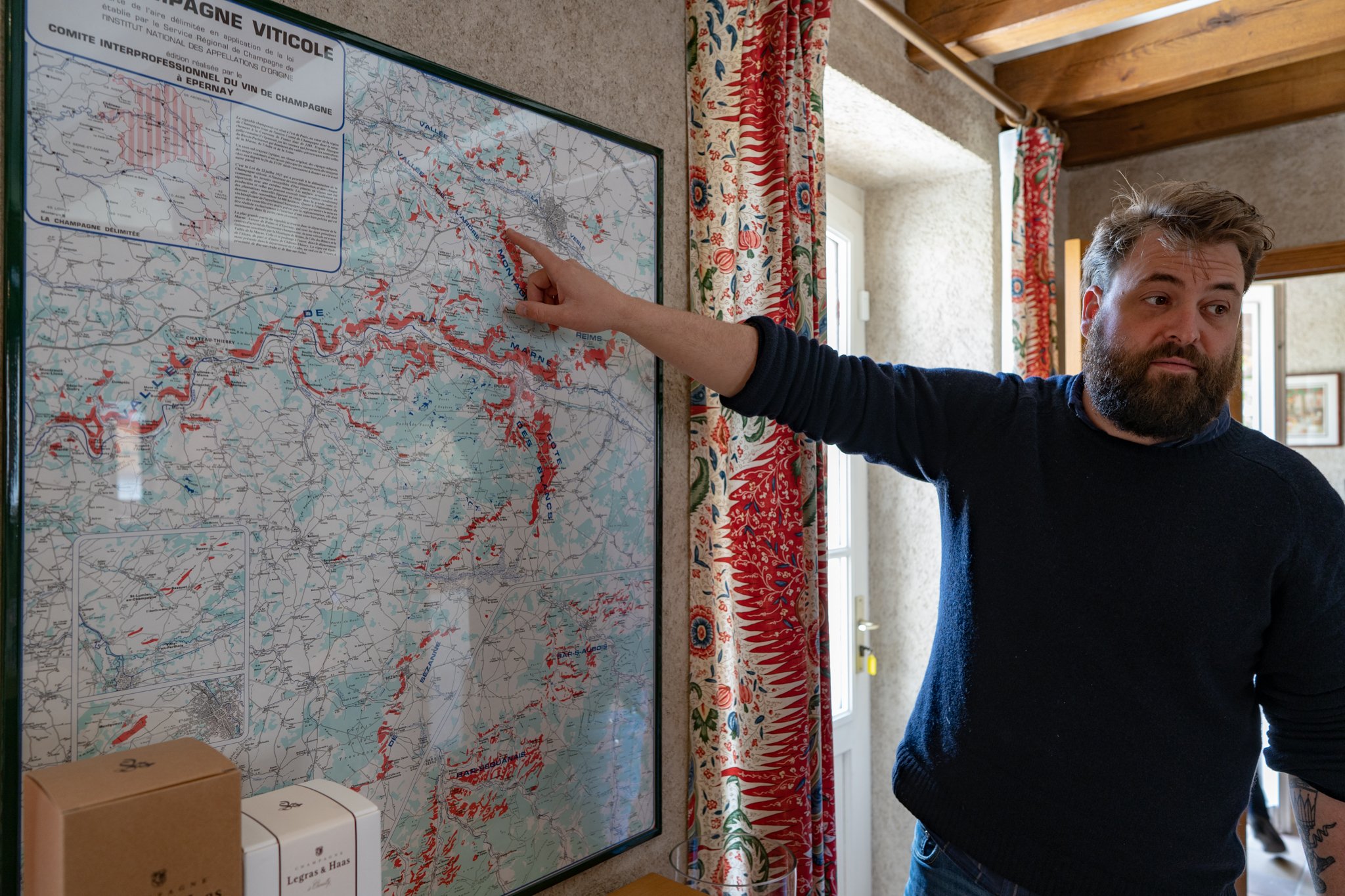
At Legras et Haas we met with Jerome Legras, who gave us an enthusiastic description of the terroir they used.
- Chouilly is situated on decomposing sea sediment, so you may find influences from sea salt, crushed seashell aromas
- Vineyards south of the town were not like the Cote de Blanc, giving a softer profile.
- Vineyards to the northwest of town were more like the Cote de Blanc.
My notes show we didn’t have a 2013 from Vazart Coquart, but we did have the Les Sillons 2013, alongside the Les Sillons 2012. As Stas mentions, this was made out into its own wine vs other vineyards of Legras et Haas. It was described as a strip of land in the northwest part of the village, which always offers high acidity and structure. They also customized the winemaking to suit the characteristics of this plot:
- 4 tons → 1800 liters
- Sedimentation is very long, to get as clear as possible
- Left alone for 9 months, could batonnage “if interesting”. 2013 had no batonnage, while the 2012 had one batonnage.
- Bottled as-is, no filtration
- During aging, they would shake it once per year to reintroduce the lees
- Then riddle, dosage, and back to cellar for another year
Goal is to make it as easy to drink as early as possible, yet also ageability can provide a benefit.
From our comparison, the 2013 had more obvious oak and was rounder, while the 2012 was more saline, some eucalyptus, and a touch of green. Both showed acidity and had long finishes. We liked both a lot, with a slight edge to the 2012.
Other notes from that visit… 2018 harvest was very long, about a month where typically a 2 week long harvest is already taxing. They had wines that were finished even before the last grapes were pressed. Coopers ran out of barrels, so wineries could end up with barrels of varying sizes, since that was all they could get. They found that barrels larger than they were used to actually worked out great.
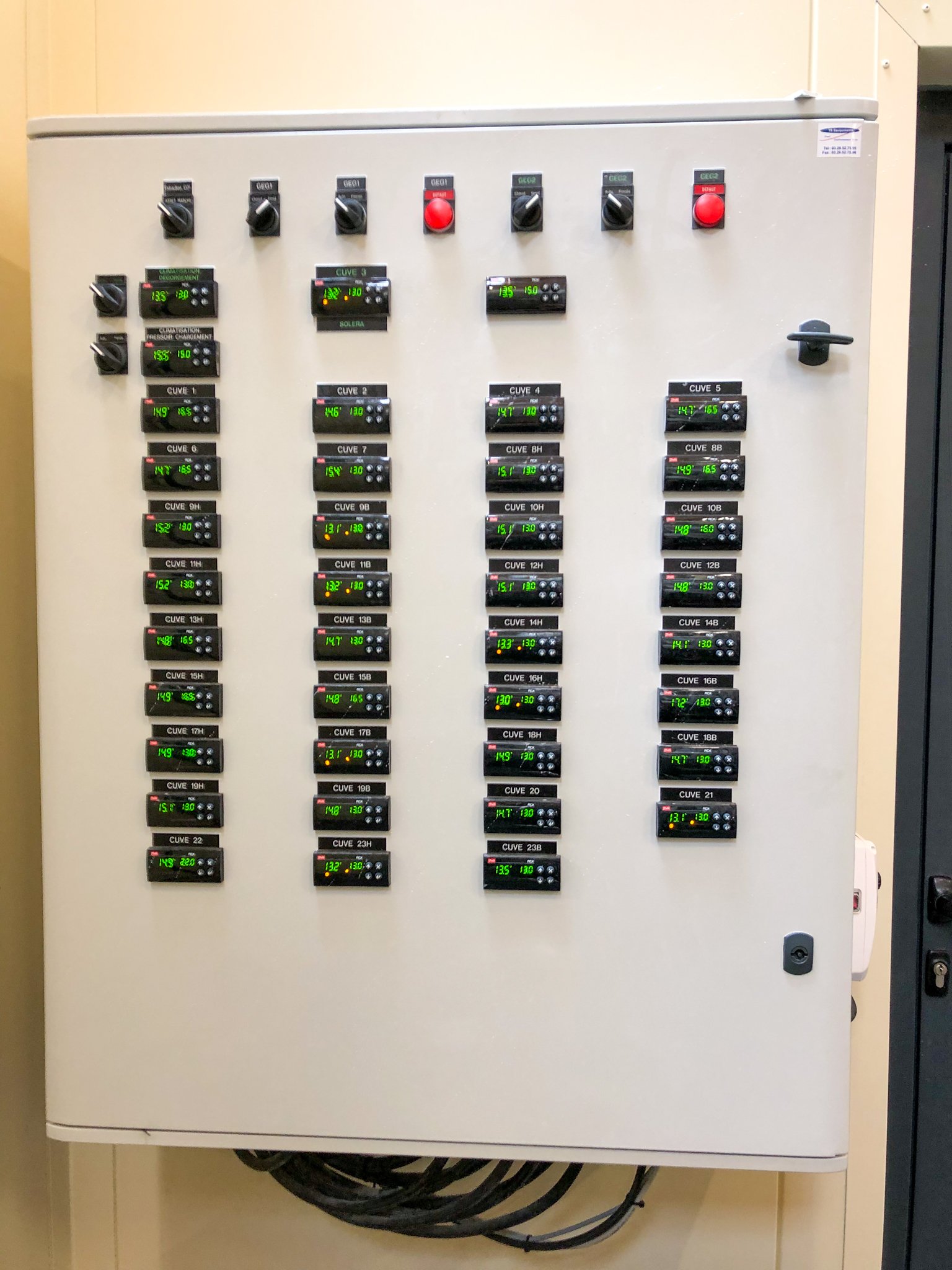
Panel at Vazart & Coquart. I think it is monitoring the temperatures of the different wines.
Here is Jerome Legras pointing out the different vineyards and terroir.
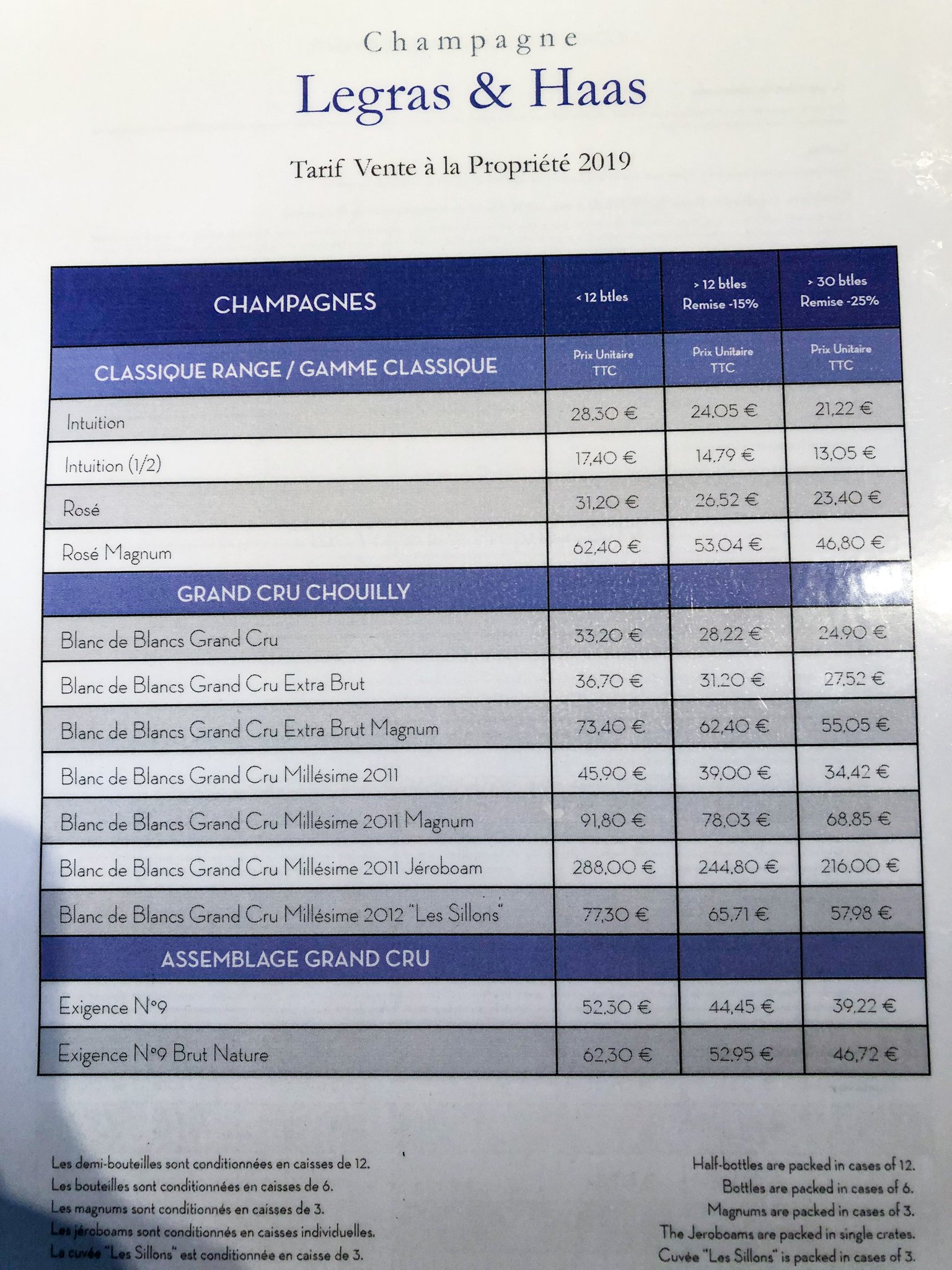
Price sheet at Legras et Haas. Amazingly priced.
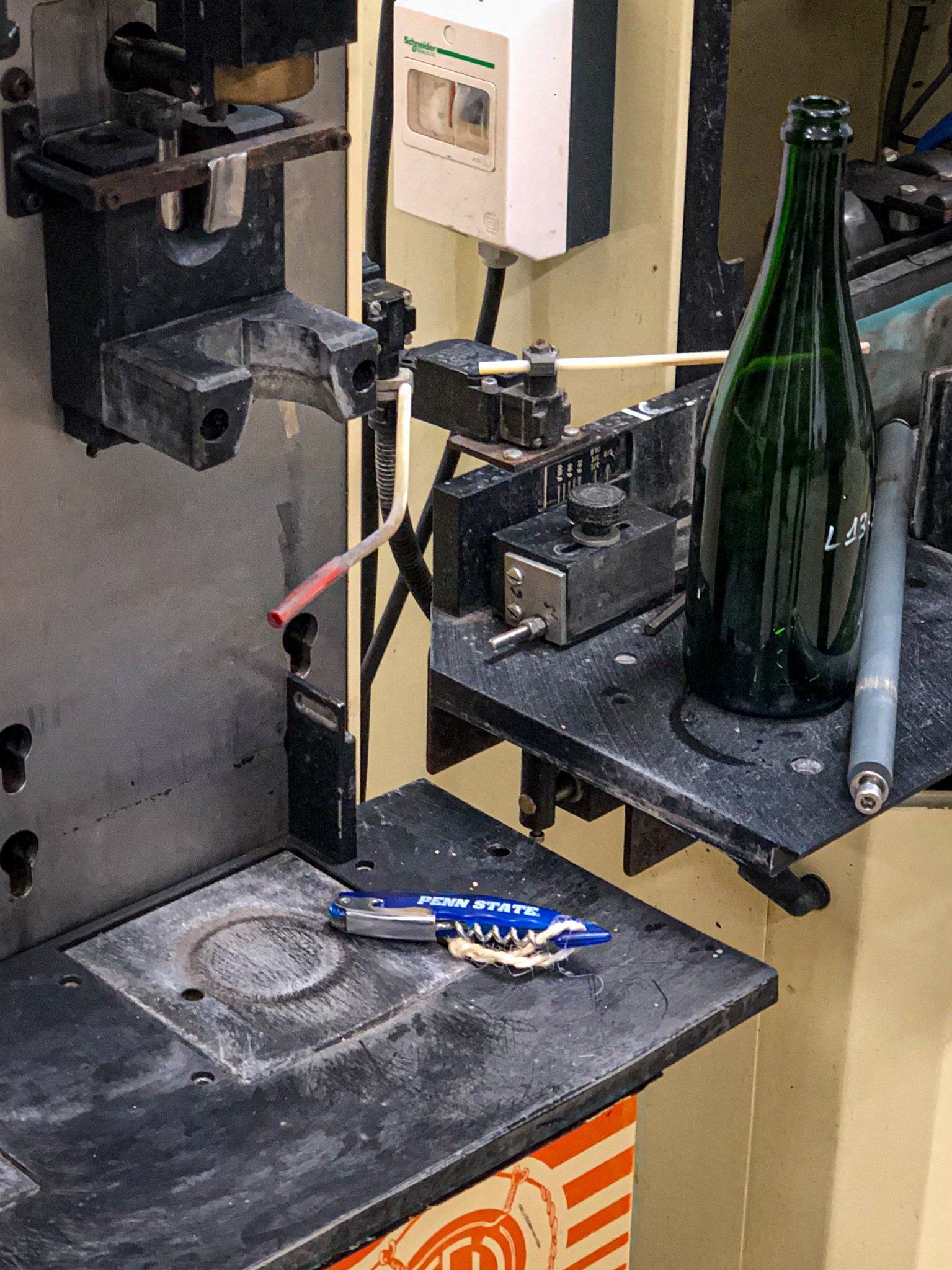
I thought this random Penn State wine opener at Vazart & Coquart was amusing.