Getting geeky about Chouilly

IMG_6033.jpg
Today I got really geeky about Chouilly terroir.

Chouilly is the first village East of Epernay at the northern frontier of Côte des Blancs. Simply take Avenue de Champagne and continue till you reach Chouilly.

Back in times of échelle des crus, the village was ranked Grand Cru for Chardonnay and Premier Cru (95%) for black grapes, meaning Pinot Noir. Chouilly first obtained its mixed Grand/Premier cru status in 1985 together with other Côte des Blancs neighbors of Oger, Oiry, Le Mesnil-sur-Oger, and Verzy. After the abolishment of échelle des crus in 2010, Chouilly now holds Grand Cru status disregarding the grape varieties.

Chouilly offers a great variety of vineyards, the majority of which are in the southern part and around Butte du Saran hill. The most praised vineyard has always been the East facing Mont Aigu with its gentle incline.

Champagnes Vazart Coquart and Legras & Haas are literally the neighbors. Maisons are on the same street less than 50 meters one from another.

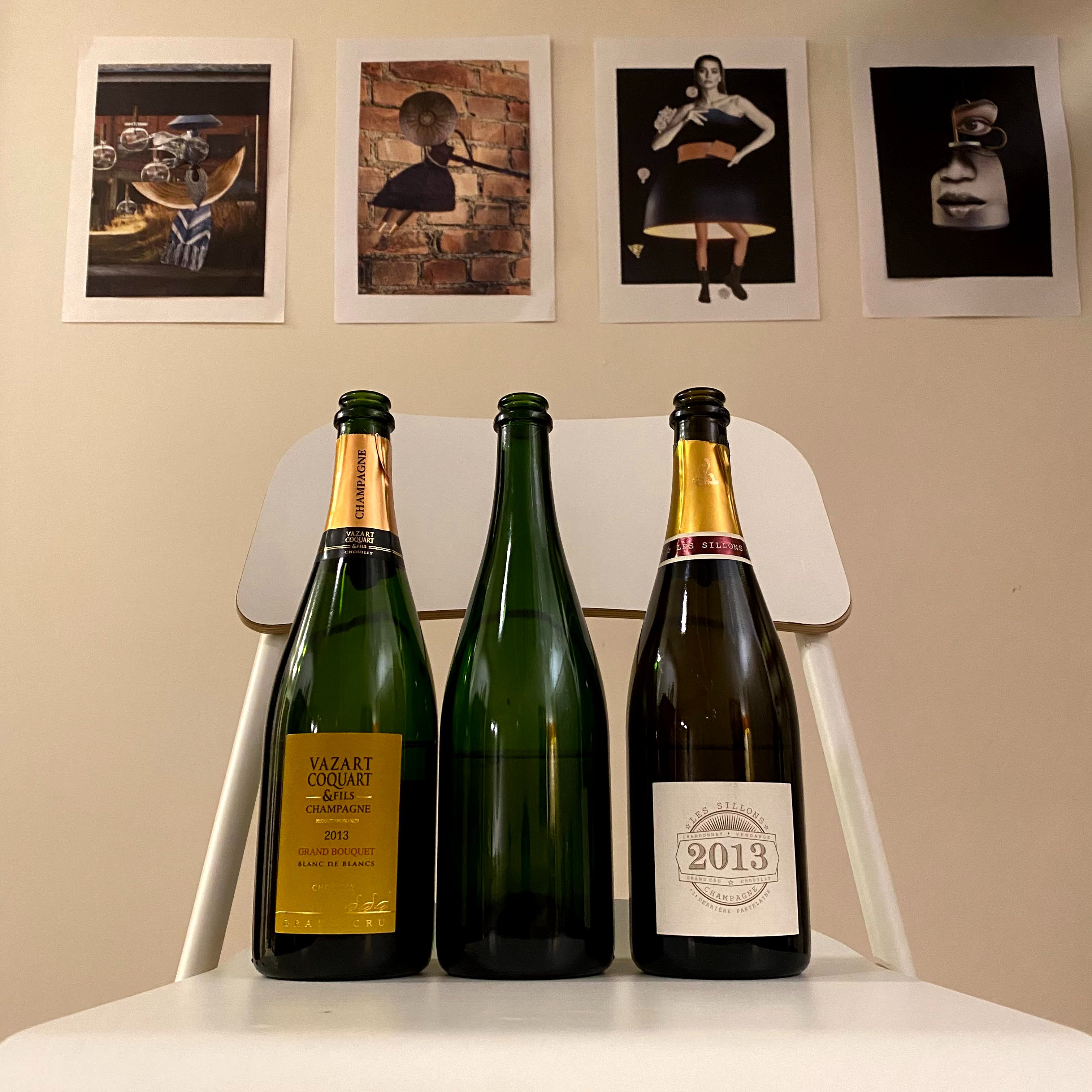
I picked both cuvees from one of my recent favourite vintages — 2013. Both champagnes have exactly the same dosage levels of 4 g/l.

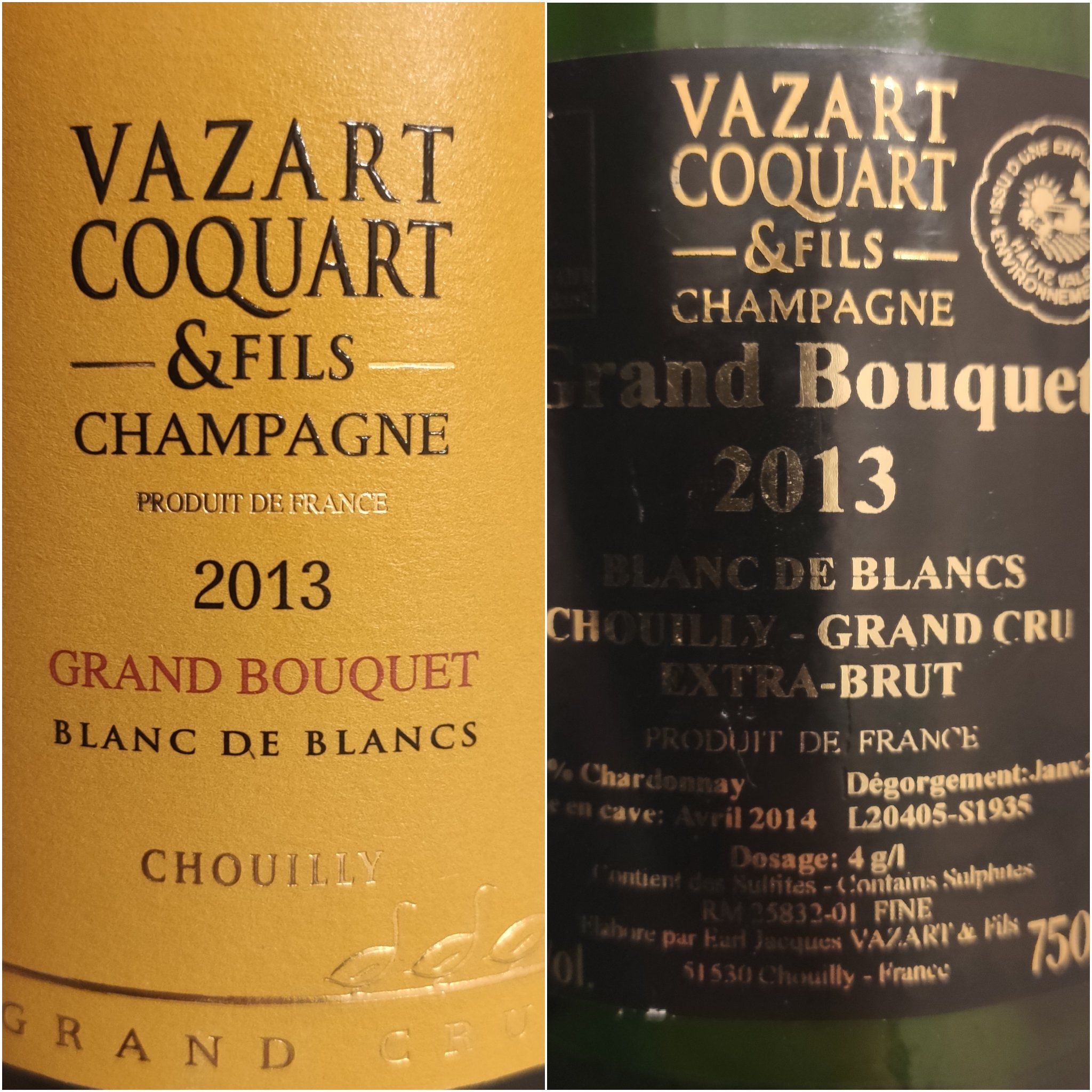
Grand Bouquet label as all the labels of Vazart-Coquart features three geese which Chouilly is often associated with. This cuvee is a blend of just two lieu-dits: Montaigu and La Cerisière. The latter is a small vineyard almost adjacent to the village in the south. Jean-Pierre, the owner of the domain, prefers neutral vessels. He vinifies and matures his wines in steel vats. Grand Bouquet 2013 spent almost 6 years on its lees before being disgorged in January 2020.

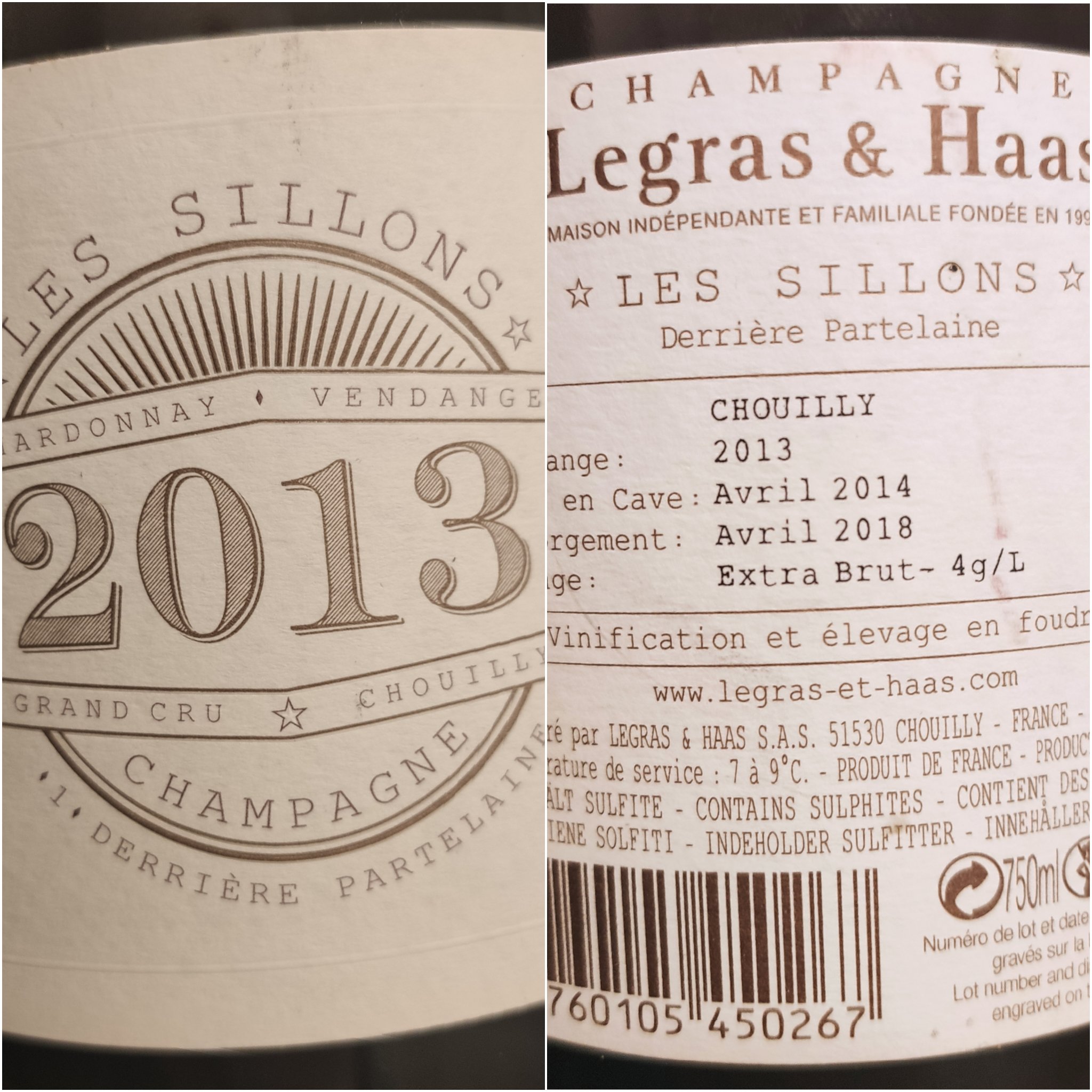
Legras & Haas Les Sillons comes from the single vineyard of Les Partelaines in the most Western part of Chouilly area. This is practically the extension of Epernay vineyards. Throughout the years it outperformed other parcels of L&H and thus deserved a separate bottling. This cuvee is elevated in medium-roasted oak barrels. 2013 spent exactly 4 years on lees in the bottle and was disgorged in April 2018.

When compared side by side, Grand Bouquet has a deeper golden-yellow color. Its intense aromatics show a bit more pastry notes and the bouquet is accentuated floral with violets. I find it a signature of the best of Chouilly character. I like the way it exposes the classic cool vintage of 2013.

Les Sillons’ color is pale yellow. I like how oak has integrated with some bottle aging. I tasted this cuvee several times and the first year after the disgorgement it demonstrated distinctive oak flavors which sometimes put me off. But now it’s gentle and charming.

Both champagnes share much in common yet reveal the difference. Chouilly is often described as a riper and richer style of Chardonnay possessing even tropical fruit flavours and creamy softer and round texture. It comes closer to Cramant rather than austere like the grands of Le Mesnil and Avize.

To make it even more geeky, I opened Les Sillons Vin clair 2019. That is a still base wine. It feels exactly like champagne with no bubbles. Floral with amplified and yet pleasant aromatics of oak and prominent acidity. It unmistakably is a wine from the northern climate. That’s fascinating how the second fermentation enriches the wine and preserves its terroir identity.
SquarePic_20210228_20562369.jpg
SquarePic_20210228_20573046.jpg

Cool post. It would be lots of fun to see more discussion of terroir in Champagne. It seems differences in Champagne are virtually always discussed in the context of winemaking decisions, as opposed to differences in terroir. Perhaps, due to the extreme intervention required to make sparkling wines, it’s too difficult to discuss differences in terroirs, as expressed in finished wines?

Stas - Can you post some maps?

I had opportunity to visit Chouilly in 2019, where we visited the same two wineries - Vazart Coquart and Legras et Haas.

One thing I remember of Vazart Coquart was the big investments they made in their facilities, which were very clean and equipped with new technologies (they test for TCA, they press for other wineries, they use a non-glycol method for chilling, etc). My impression of what we tasted was that this translated into the wines, which seemed quite precise and crisp.

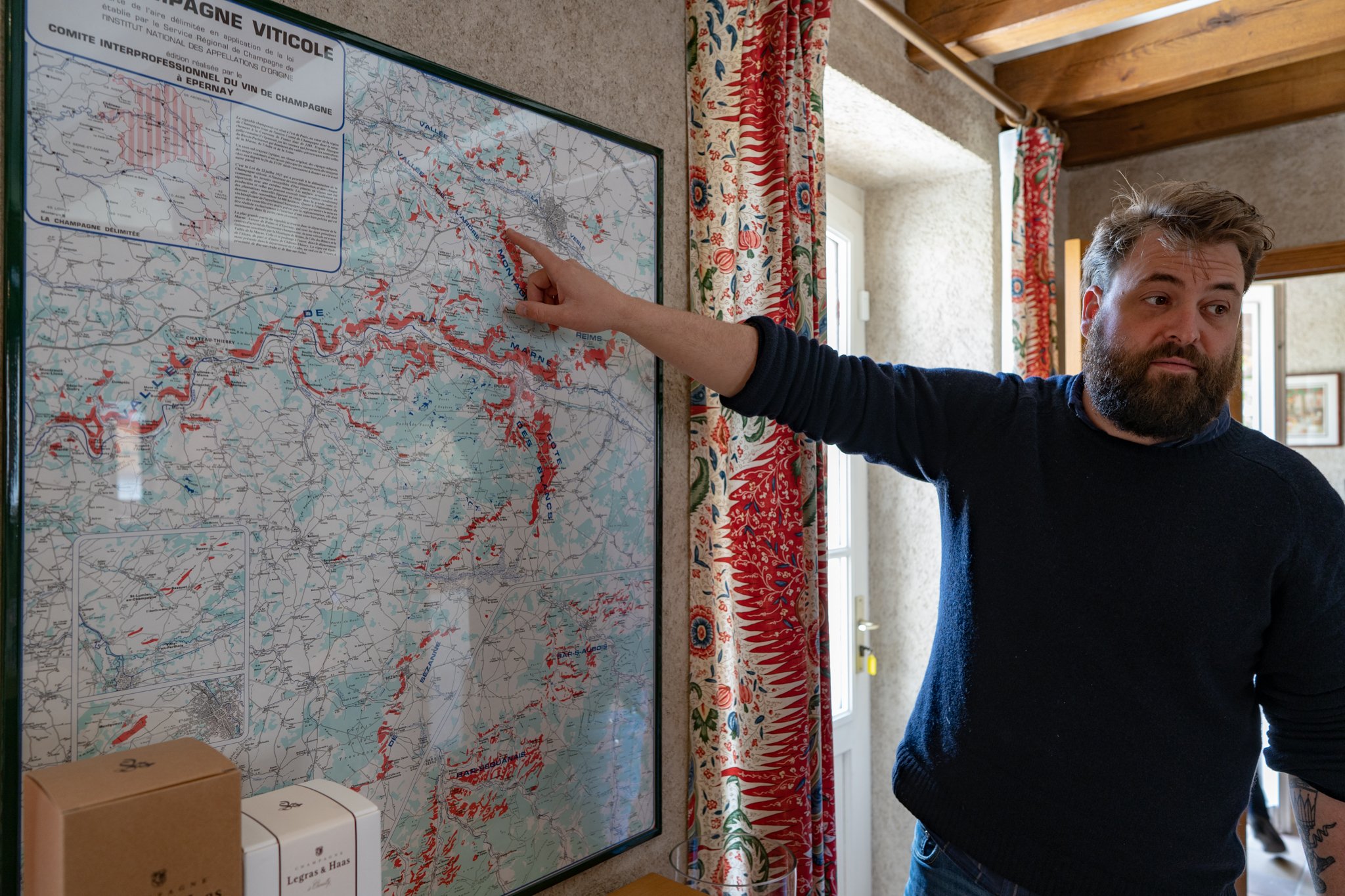
At Legras et Haas we met with Jerome Legras, who gave us an enthusiastic description of the terroir they used.

  • Chouilly is situated on decomposing sea sediment, so you may find influences from sea salt, crushed seashell aromas
  • Vineyards south of the town were not like the Cote de Blanc, giving a softer profile.
  • Vineyards to the northwest of town were more like the Cote de Blanc.

My notes show we didn’t have a 2013 from Vazart Coquart, but we did have the Les Sillons 2013, alongside the Les Sillons 2012. As Stas mentions, this was made out into its own wine vs other vineyards of Legras et Haas. It was described as a strip of land in the northwest part of the village, which always offers high acidity and structure. They also customized the winemaking to suit the characteristics of this plot:

  • 4 tons → 1800 liters
  • Sedimentation is very long, to get as clear as possible
  • Left alone for 9 months, could batonnage “if interesting”. 2013 had no batonnage, while the 2012 had one batonnage.
  • Bottled as-is, no filtration
  • During aging, they would shake it once per year to reintroduce the lees
  • Then riddle, dosage, and back to cellar for another year
    Goal is to make it as easy to drink as early as possible, yet also ageability can provide a benefit.

From our comparison, the 2013 had more obvious oak and was rounder, while the 2012 was more saline, some eucalyptus, and a touch of green. Both showed acidity and had long finishes. We liked both a lot, with a slight edge to the 2012.

Other notes from that visit… 2018 harvest was very long, about a month where typically a 2 week long harvest is already taxing. They had wines that were finished even before the last grapes were pressed. Coopers ran out of barrels, so wineries could end up with barrels of varying sizes, since that was all they could get. They found that barrels larger than they were used to actually worked out great.

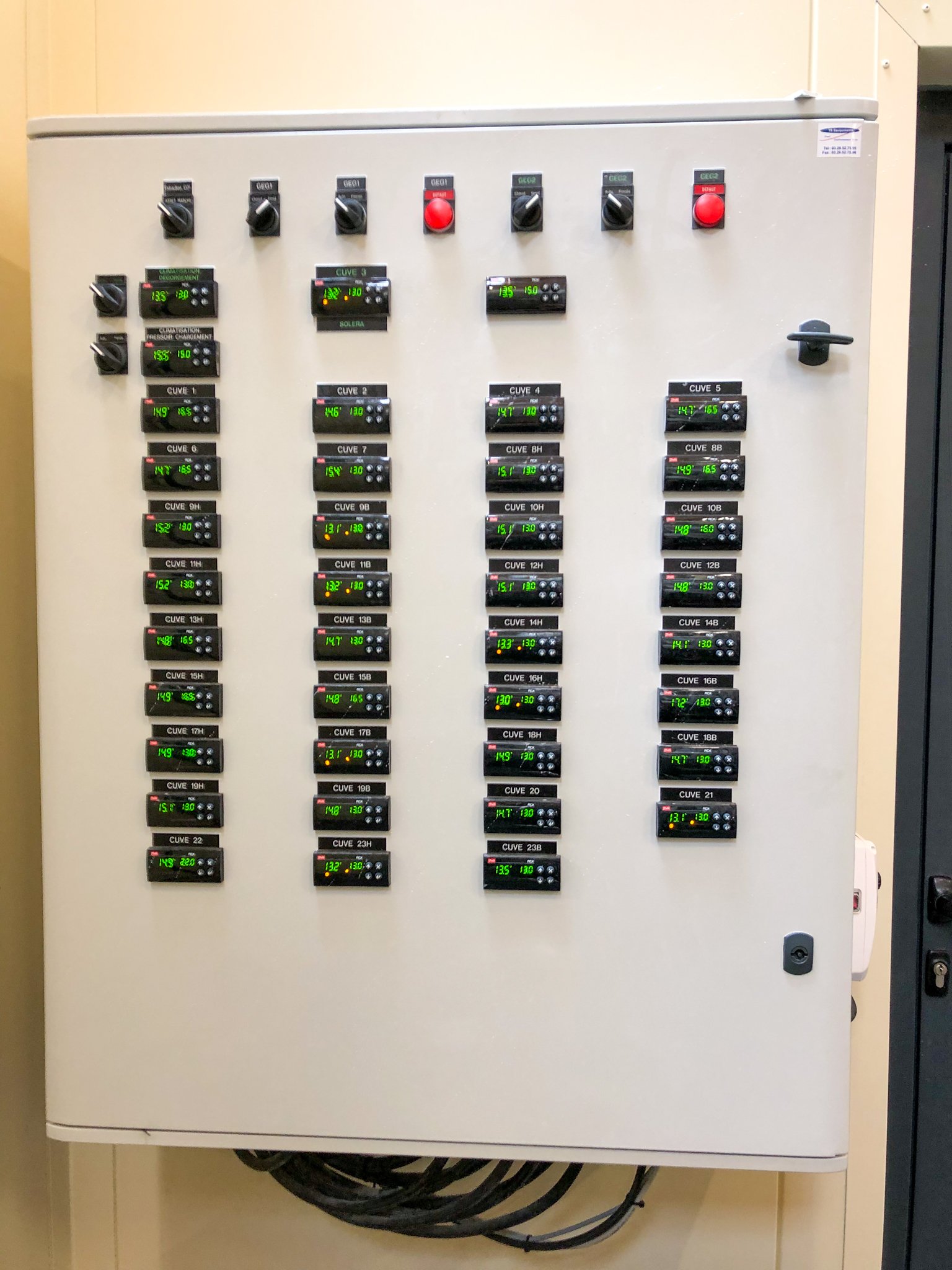
Panel at Vazart & Coquart. I think it is monitoring the temperatures of the different wines.
IMG_6682_XL.JPG
Here is Jerome Legras pointing out the different vineyards and terroir.
DSC01561_XL.JPG
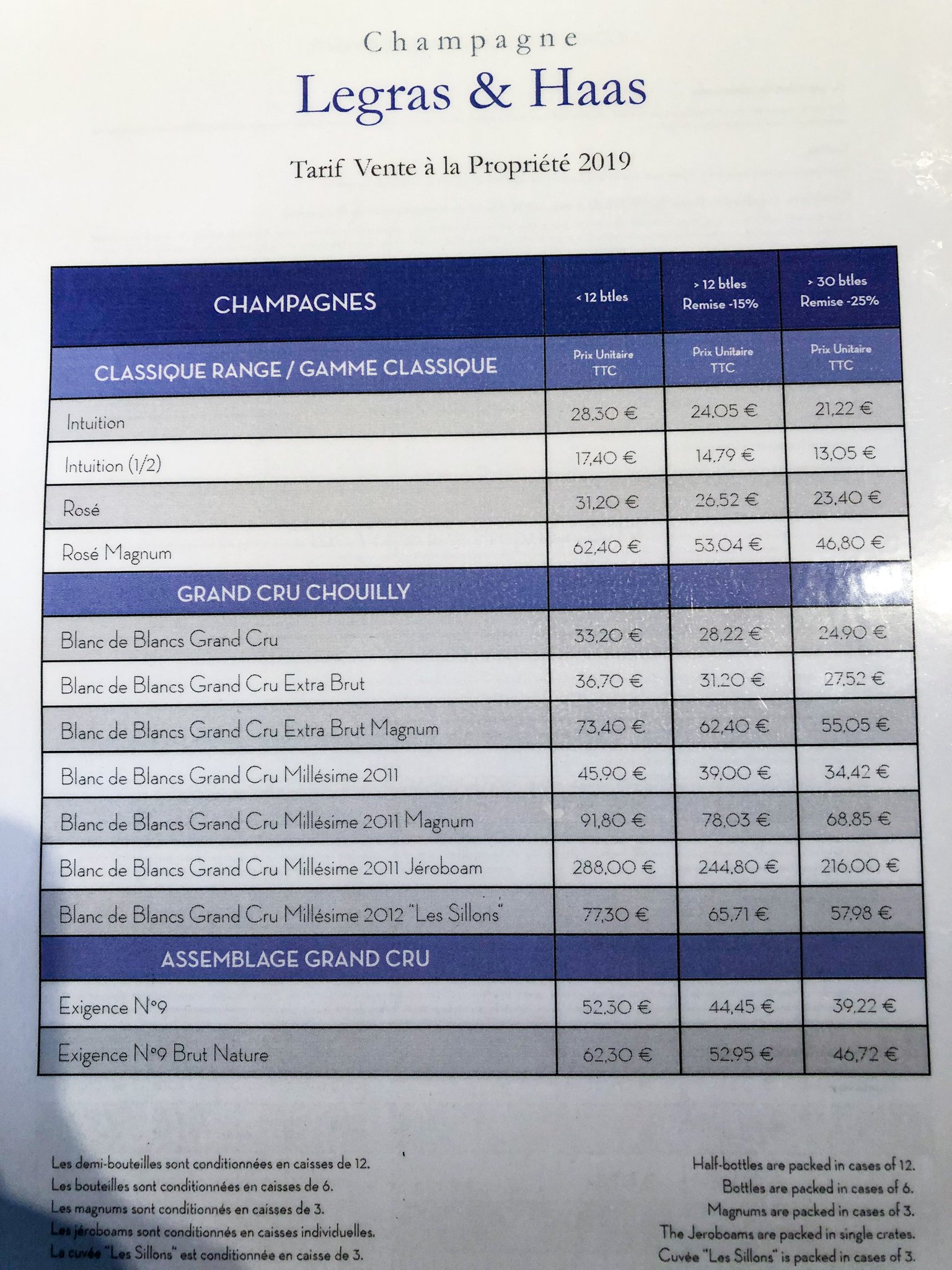
Price sheet at Legras et Haas. Amazingly priced.
IMG_6699_XL.JPG
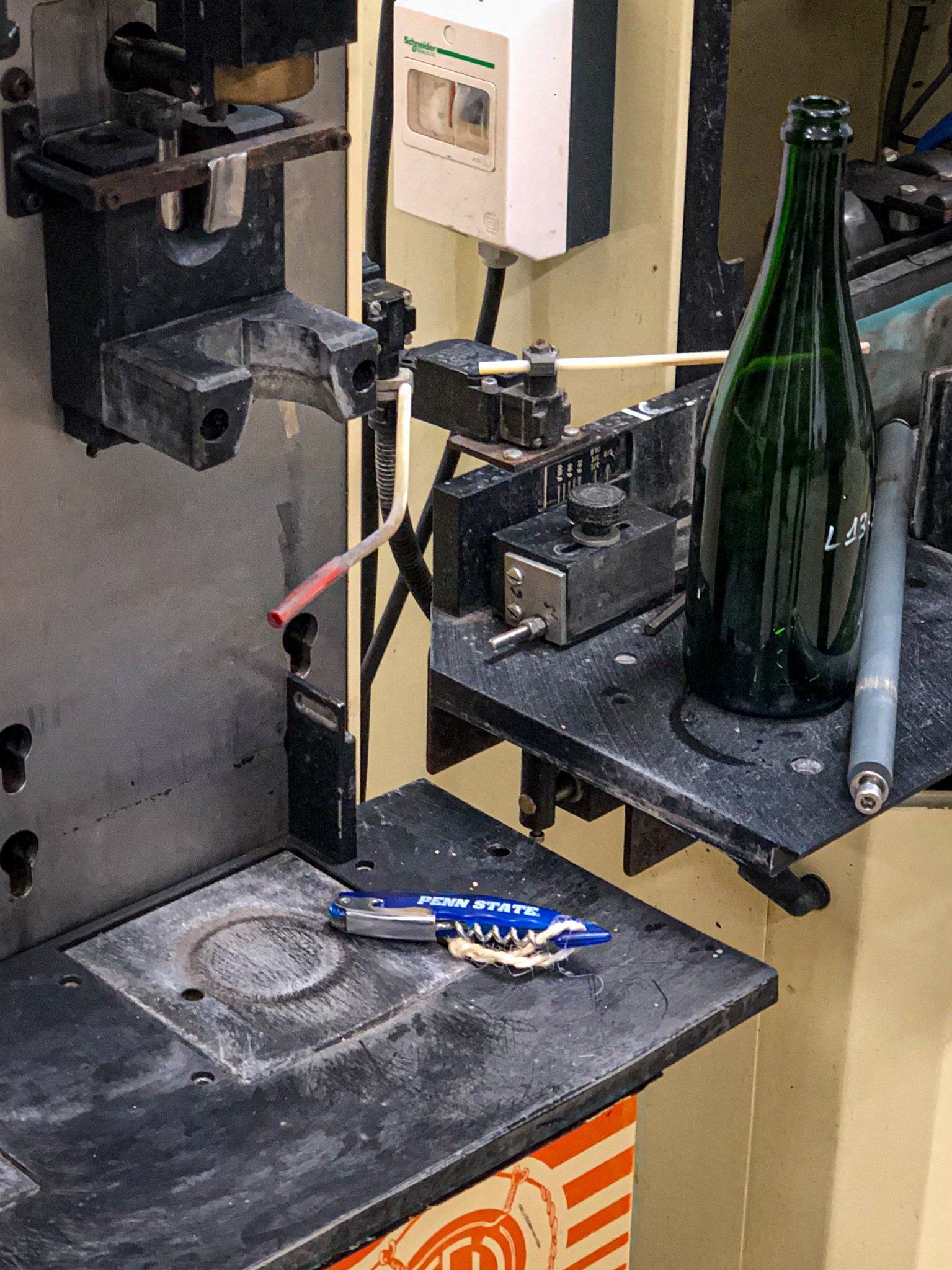
I thought this random Penn State wine opener at Vazart & Coquart was amusing.
IMG_6684_XL.JPG