We try to be transparent as it’s the only way to keep a level playing field. However, it is an unusual model vs a utility company that charges a different amount each month. But we do this to enable stores to budget up to 12 months ahead. For the first 3 months, we estimate the clicks, and from then forward, we use the actual count per month. If clicks go down then the price goes down at the next annual review. If clicks go up, then the price goes up at the next review. We can review earlier than every 12 months but, again it’s about helping to budget. There is no early exit fee if you decide to stop at any time.
hi - since you’re here, possible to explain how W-S handles, measures, and differentiates inbound clicks to W-S from search engines? Do you surface that info to your retail clients?
From where I sit, I don’t think it matters if it came from a search to W-S. I know that folks Google stuff and then go to W-S all the time. It’s kind of funny.
True story- one of my closest friends calls me all the time after he found something on W-S that we have. I say to him, why not just text me and ask me if I have it? He said that he’s never sure if we will and it helps simplify his search since he will inevitably find what he’s looking for there. So even he is reliant on W-S.
Which is why I suspect many (most?) retailers leave the URLs active for sold out wines - so it still shows up in searches and drives traffic to the site, even if the wine you were searching for is sold out.
absolutely. midly frustrating for the user, but crucial content for the store itself for this very reason. the way to make it not frustrating is to have a request function (i believe morrell does this for example). i think that’s super smart. i also notice that google will highlight sold out in the search results sometimes.
w-s purportedly punishes stores for doing this because obvious reasons, but it’s another example of a potential misalignment between a wine store and w-s that needs to be managed.
in the case of parcelle, they weren’t sold out of this item (that i can tell from a sold out product page), but they had other thiriet wines in stock and they do something to convince google that this info is relevant to me when i add “near me” - so, whatever seo they are doing is working.
I just took a look at Wine-Searcher and found an interesting “Best offer for you” box prominently highlighted at the top of my search for 2018 Palmer. The info hypertext says “The lowest per-bottle price based on your search and available to buy direct.”
This “best offer” ($782.99) is double that of the first 5 listings that were either local or could ship to me (some, not all, are pre-arrival). I don’t have a Pro subscription. Are jacked up prices like this typical of the “buy direct” offerings?
There is something to be said for frictionless direct purchase, but when your entire raison d’etre is listing wines available by order of the lowest price, it doesn’t make a whole lot of sense unless there’s a critical mass to make the direct prices competitive. And they are a long way away from that.
I consider my time valuable, but not to the point that saving a few mouse clicks to purchase at one of the listed retailers is worth almost $400 per bottle.
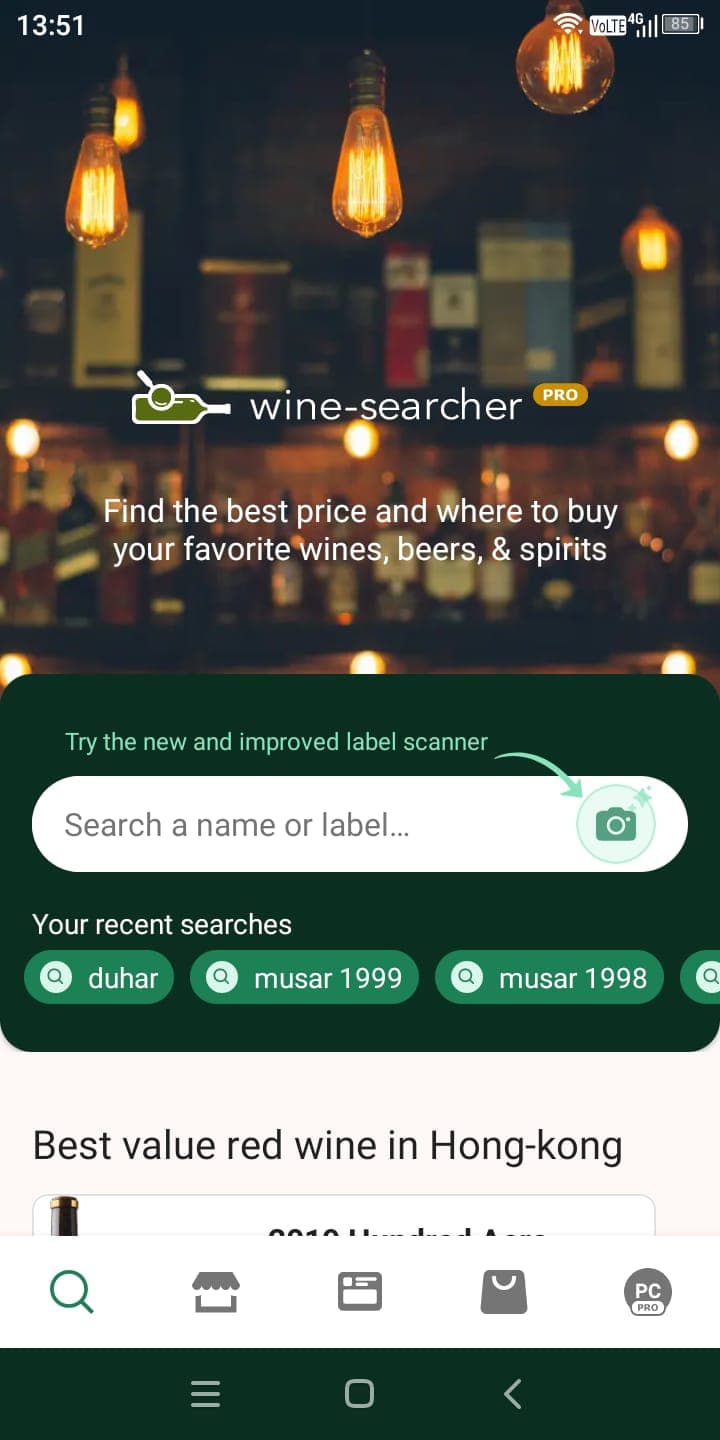
If anyone from wine searcher is reading here, the latest app version is hideous. First thing I want to see - frankly the only thing, which is how it was until recently - when I open the app is the search bar. Now it’s all the way at the bottom, with a page full of busy distractions I have no interest in. Yuck.
TL/DR; Flaviar’s business model for purchasing via Wine Searcher is…not good. I was browsing W-S the other night and came across a wine I had been kinda-sorta looking for. Placed the order and only noticed halfway through that it was via W-S Marketplace and not directly with the retailer. Figured, whatever, it’s a small order, let’s give this a try. This was Monday 4/13. Tuesday morning I get an email saying there’s an issue with my address. I check the confirmation email from the night before and the address is correct. I write back and ask ‘what’s the problem’? I’m told that they can only ship to a residential address because they don’t have a way to know what shipper the vendor will use (I had provided a FedEx Office that I have used for years with no issue). They also said that FedEx and UPS stores are disallowed anyway because they can’t verify that someone over 21 will sign for it.
This correspondence was drawn out over this entire week so they also don’t respond very quickly. At this point, I’m like, this is way too complicated for a small order and just requested to cancel. In their defense, they did so right away. I then called the vendor who it was meant to come from in the first place and ordered from them. It already has a shipping label and is going out today. Oh, and the vendor told me that they never even received the order from Flaviar. I guess because they deemed my address unacceptable, the order never made it over, so the wine could also have sold out from under me (it was their last two bottles).
I have no expectation of entitlement that they prioritize my tiny order, etc, but the model is just fundamentally bad.
Someone smarter than me (low bar) needs to explain the business model here, as it was not a small ($$) acquisition, and I can’t wrap my mind around how this will benefit Flaviar
They expect some % of customers will prefer simplicity and convenience of buy it now from a single entity, vs setting up accounts with multiple retailers
Once (if) the model gains traction they can try to commoditize the back-end to get the best margins for themselves, and/or charge additional fees/premiums/kickback to the retailers underneath.
If their goal is to be more like the Amazon of wine, they would still need all the independent sellers, but they take a cut of fulfillment, billing, listing commissions. Big assumption of course.
Yeah, that’s what I was thinking, as well. Perhaps with massive volume it won’t further drive up prices?
Also, is it really neccessary to have a one-stop-shop? Sheesh, as a (micro) small business owner, I sure don’t like to see this kind of consolidation. I know @pmabray was working on a competing Wine-Searcher model years ago that I was rooting for, as it had the ability to customize your searches toward either small local shops, those with temperature controlled shipping, etc., not just mega-box.