El Dorado County Visits to Quartz Vein, Cedarville, Edio, Starfield, and Cappelli – Part 2: Edio Vineyards at Delfino Farms
I’ve posted a portion of a report on early January wine visits with friends Jane and Larry to wineries in El Dorado County. We tasted with vintners from Quartz Vein, Cedarville, Edio, Starfield, and Cappelli. This portion covers the visit to Cedarville Vineyard, and I’ll post another portion of the write-up soon. The full report of all of the El Dorado County wine visits is on the Grape-Nutz.com website:
Sierra Foothills Visits - January 2025
Edio Vineyards at Delfino Farms
The first afternoon stop of the day for Jane, Larry, and me was at Edio Vineyards at Delfino Farms, located near the town of Camino at the eastern end of El Dorado County’s Apple Hill area. None of us had been to Edio or tried their wines before but we’re always interested in checking out wineries that are new to us so we were looking forward to the visit. As implied by the name, Edio Vineyards is just a part of Delfino Farms, a multi-generation business run by the Delfino family. Though the winery tasting room was not scheduled to re-open until the next day following a holiday break, Peter and Derek Delfino graciously arranged to meet us there. We had no trouble finding it, and made a quick dash through the rain from the car to the tasting room entrance, where Peter and Derek welcomed us inside.

Peter is the Edio winemaker while his brother Derek is the vineyard manager, and they introduced us to their sister Christine, who is the general manager and runs the hospitality end of the family business. They’re part of the third generation of the Delfino family to farm their Camino property. Their great-grandparents Frank and Secondina Delfino had emigrated from Italy in the early 1920s and settled near St. Helena in Napa Valley. Their son Edio grew up there and met his future wife Joan while he was attending college at Cal Poly San Luis Obispo, and following that, he worked in the Sonoma County Agricultural Department. In the early 1960s Edio took the position of El Dorado County Agricultural Commissioner, and he and Joan purchased the property near Camino and moved there in 1962, eventually planting over 2,000 apple trees there.
In addition to farming the property and his Agricultural Commissioner job, Edio was one of the co-founders of the Apple Hill Growers Association in 1964 – the area is now famed for its fresh apples, pies, ciders, and other apple products, as well as for pumpkin patches and Christmas tree farms. In the early 1970s, Edio and Joan let their seven children name the family business – they came up with “Kids Inc.” and that was the business name for many years. The bakery part of their business that was started around that time – now called Joan’s Apple Bakery – is still an integral part of Delfino Farms. In addition to apples, the family has grown pumpkins and gourds, blackberries, and other crops as well as raising some livestock. In 2002, the next generation of the family took over, with Chris and Robyn Delfino purchasing the farm and running the business.
Though Edio had planted some Cabernet Sauvignon vines on the property in the 1970s, wine didn’t become a focus of the family business for awhile. Chris and Robyn’s kids Peter, Derek, and Christine, who all followed in Edio’s footsteps and attended Cal Poly San Luis Obispo, returned to the family farm after working in the wine industry, mainly in the Central Coast area. Peter has mentioned Steve Dooley of Stephen Ross Wine Cellars as a particular mentor, while Derek worked at Law Estate and at Ridge’s Sonoma County vineyards, and Christine worked at Denner Wines and Chamisal Vineyards.
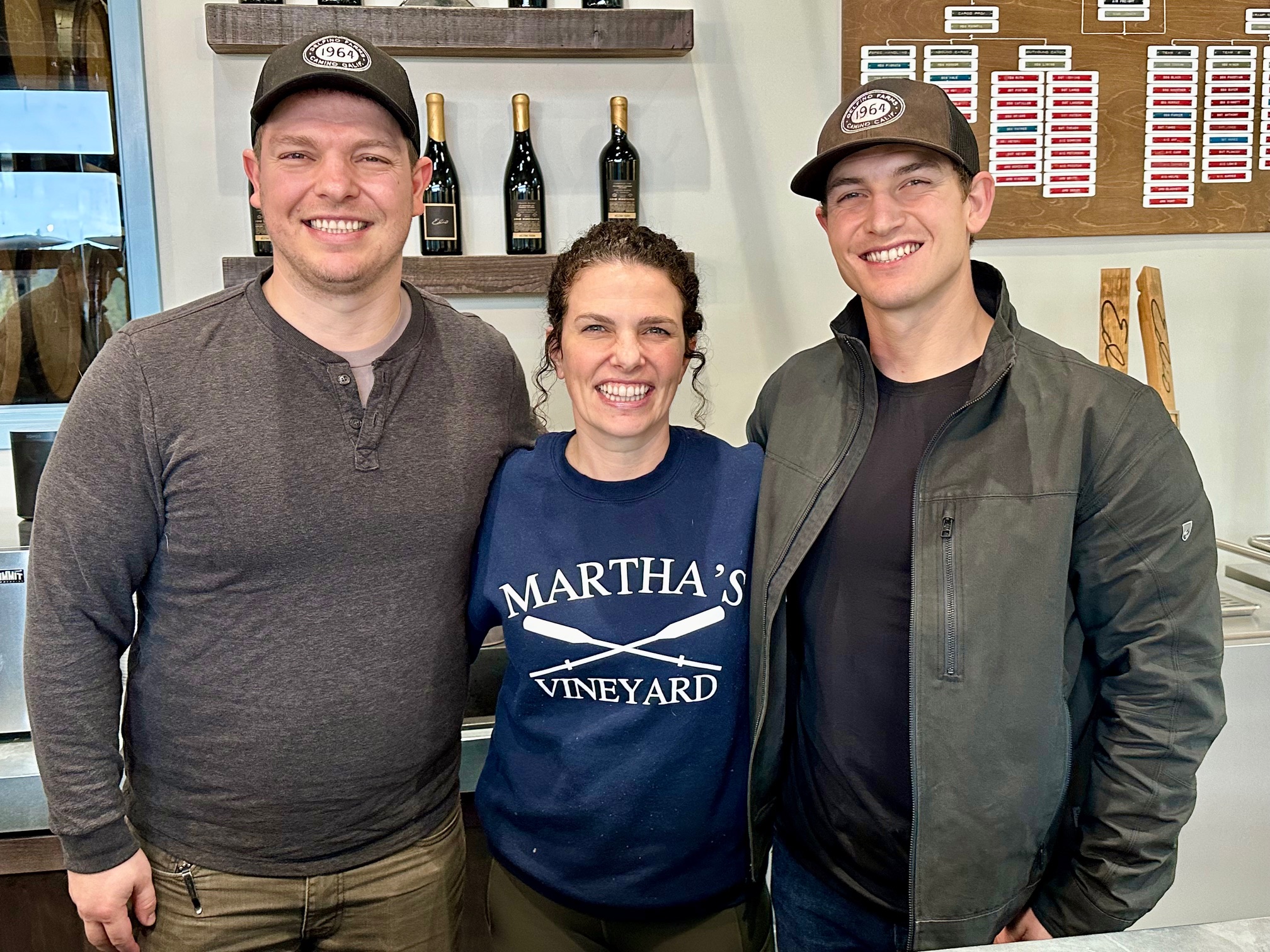
Peter, Christine, Derek
Peter and Derek told us that their family has been longtime friends with the people at pioneering El Dorado wineries Boeger and Lava Cap, and that they and Christine felt there was lots of potential for winegrapes at their property. Peter and Derek said that Christine was the one who felt most strongly that this was the future for their family’s farm and helped convince them of this direction. In 2017 the three established Edio Vineyards along with their parents and their brother Ben. The first vintage of Edio Vineyards wine came in 2018, and after initially making their wines at a couple of other local wineries they opened their own winery and tasting room in 2020. The Delfino Farms business, including the vineyards and winery, continue to be run entirely by the family. They honor Edio and Joan, who founded the family farm in Camino, with the names of the winery and the bakery.
The Edio tasting room offers a beautiful view across the vineyards, and the lower part of the tasting counter is made from old Delfino Farms wooden fruit crates. The vineyard site adjacent to the winery is about 22 acres at around 3,000-foot elevation. They also have a nearby 20-acre site at around 2,400-foot elevation plus a lower-elevation 10-acre site, as well as managing other vineyards in the area. Other than the older Cab vines, the estate vineyards were planted from 2010-2014 and are farmed using organic practices, and they typically dry-farm the vines though they may occasionally irrigate if needed during a heat spike. Peter and Derek credit the late El Dorado vineyard manager Ron Mansfield with steering them toward planting Rhône grape varieties, and they noted that they still work with Ron’s son Chuck.
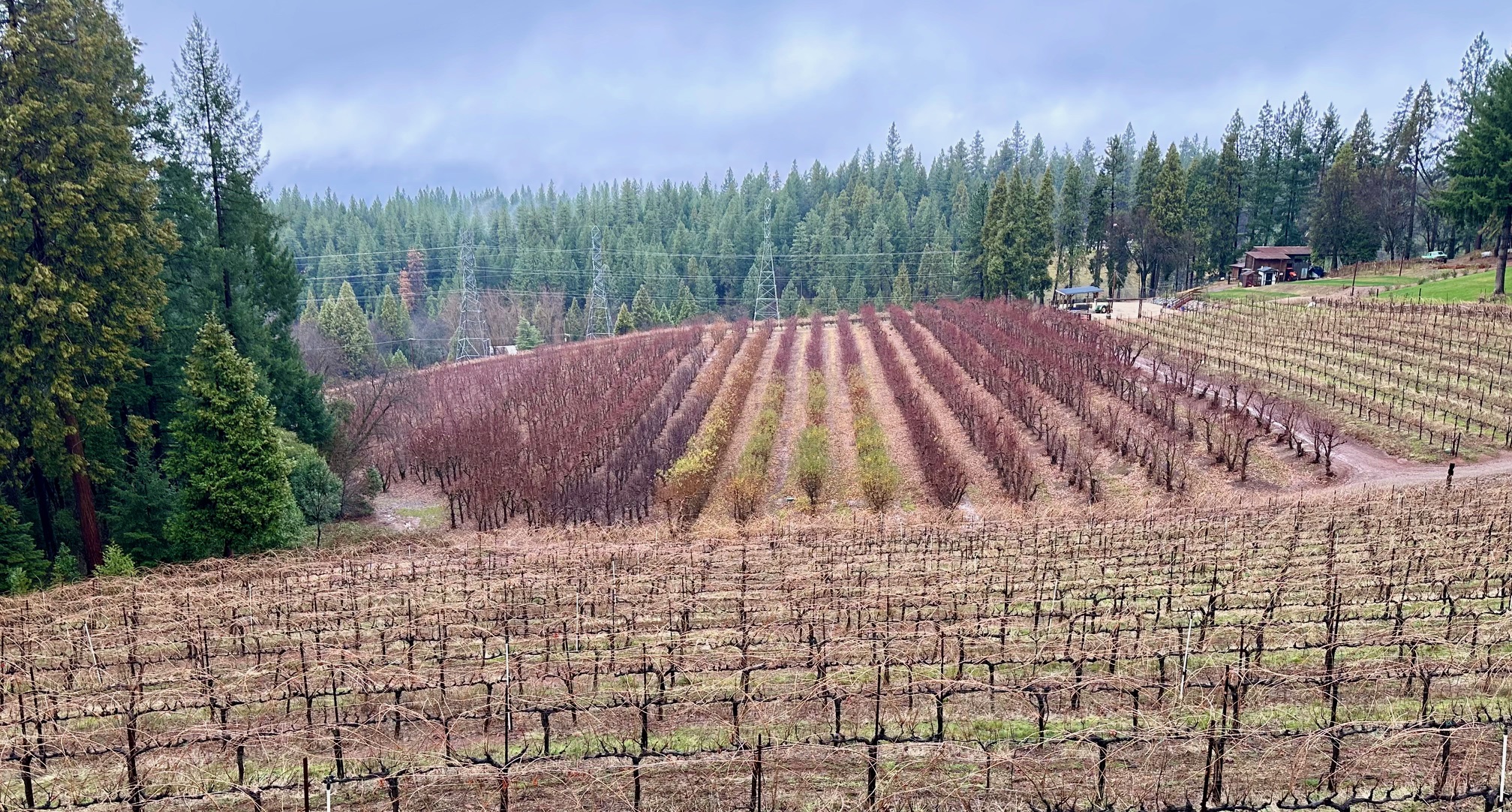
In terms of winemaking, they use minimal intervention, and they aim for higher acidity in their wines than many other producers in the region, so fruit is generally picked on the earlier side. Some white wines are made entirely in stainless steel tanks while others are barrel-fermented and aged, some all in neutral French oak barrels and some with a small percentage of new oak depending on the wine. For red wines, they’re all fermented with whole (not crushed) berries and sometimes with a percentage of whole clusters. Most reds are aged in some new French oak – the ones we tasted ranged from no new oak to 33% new. They typically spend 10-12 months in barrel, with some, such as the “Frank’s Rhône Blend” we tasted, getting longer aging. All of the wines are bottled unfined and unfiltered.
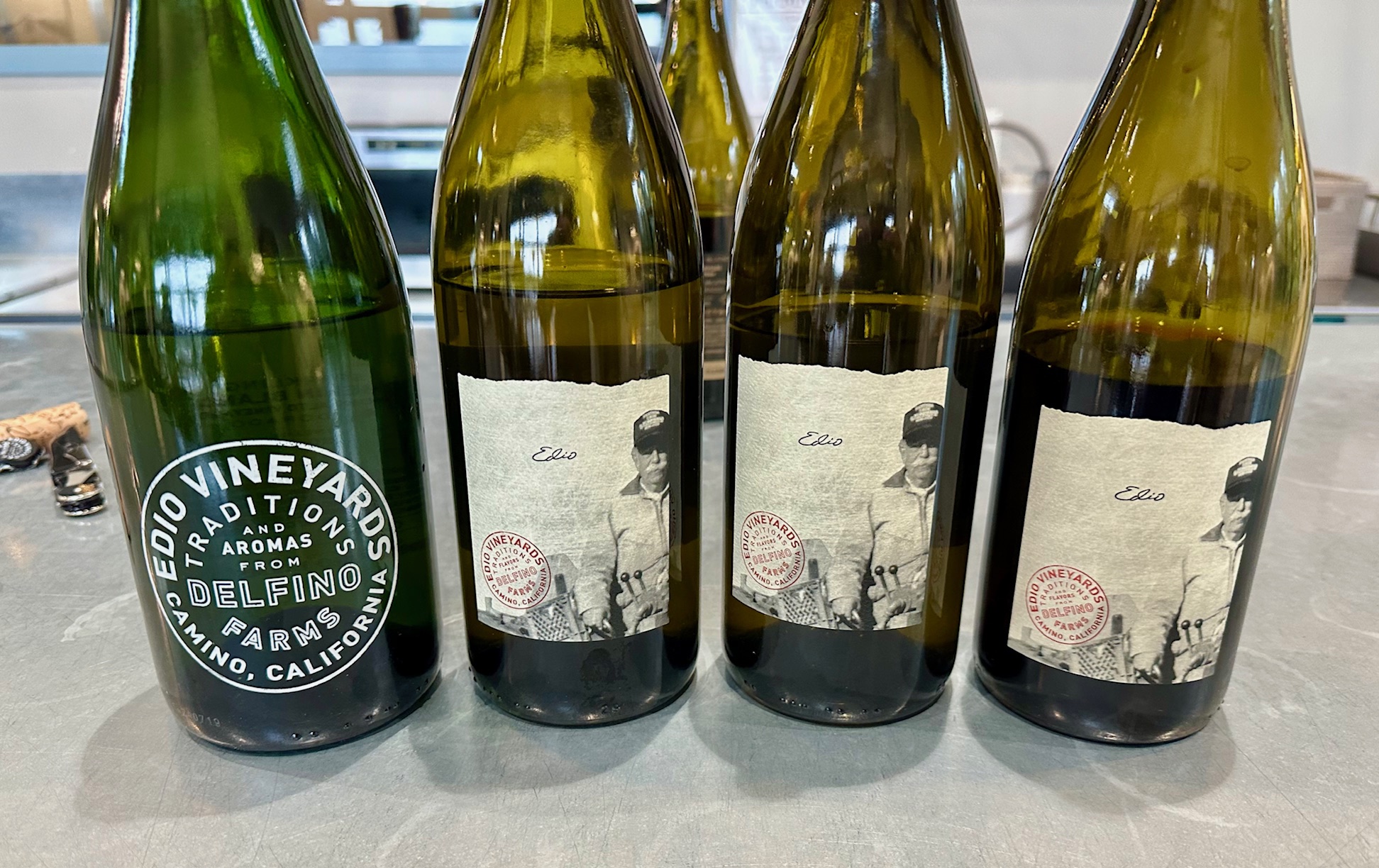
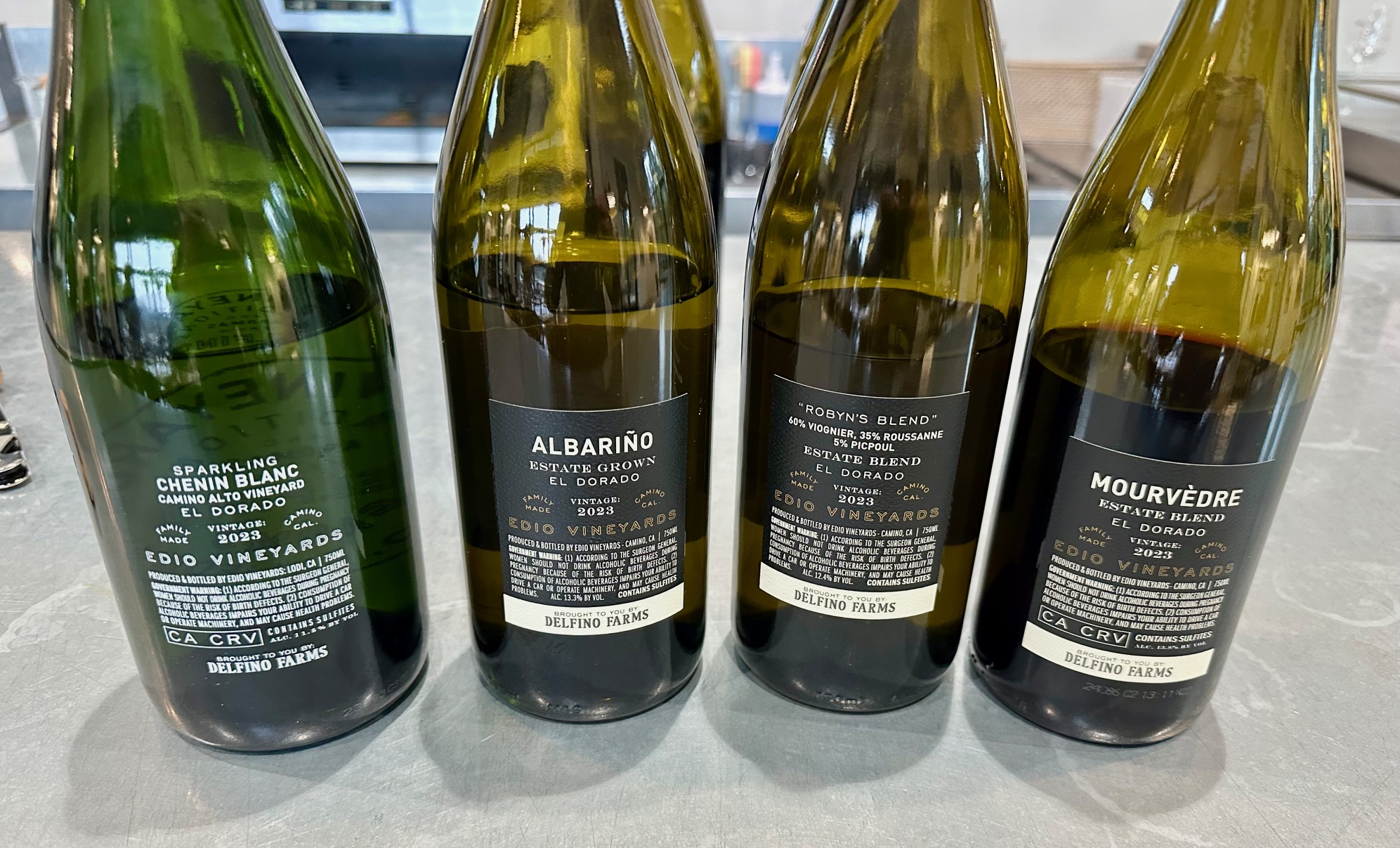
Peter and Derek had set up a very nice seated tasting of six of their current Edio wines for us to taste, and we started with their 2023 Sparkling Chenin Blanc. The fruit came from nearby Camino Alto Vineyard and the wine was aged for nearly a year in neutral French oak before undergoing a Charmat-style sparkling process in tank. This had bright citrus and toast aromas plus floral hints, with plenty of acidity and fine bubbles. Next up was the 2023 Estate Albariño, which was fermented and aged entirely in stainless steel. Peter and Derek mentioned that planting Albariño at their vineyard had been recommended by their friends at Boeger Winery. With upfront citrus and green apple aromas plus herbal undertones and a saline mineral note, this displayed a medium-light texture with vibrant acidity and a fresh finish – this might develop a bit more with short-term aging but it’s delicious right now. We tasted one more white wine, the 2023 “Robyn’s Blend,” with 60% Viognier, 35% Roussanne, and 5% Picpoul sourced from three El Dorado vineyards. This was barrel-fermented in 15% new French oak, and underwent bâtonnage (lees stirring in barrel) during fermentation. This featured stone fruit aromas with hints of orangepeel and spice, medium weight on the palate, and a long flavorful finish.
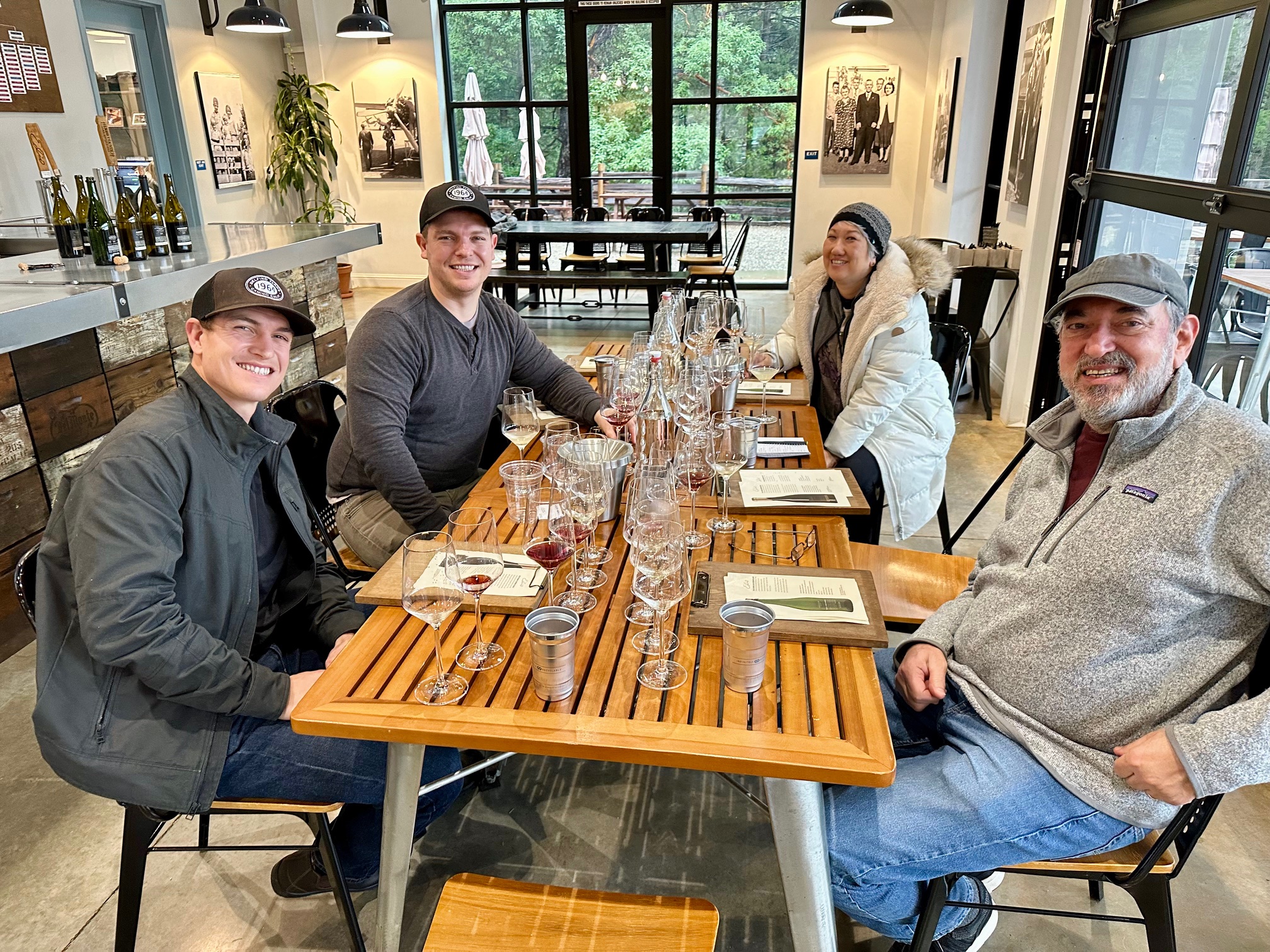
Our first red wine was the [b]2023 Estate Grenache.[b] The fruit was entirely destemmed before fermentation in bins, pressed early to help manage tannins and reduce astringency, and aged entirely in neutral French oak. This had intense red fruit, spice, and floral aromatics, a medium-light texture, and good structure with fine tannins. We followed that with the 2023 Mourvèdre, sourced from both estate fruit and organically-farmed David Girard Vineyard. This was bin-fermented with about 15% whole clusters and aged in 32% new French oak. Plum and black cherry on the nose along with iron and red meat and a peppery note, with medium body and moderate tannins – very intriguing now but worth cellaring to allow further development. Our final wine of the tasting was the 2022 “Frank’s Blend” – 54% estate Mourvèdre and 46% Syrah from David Girard Vineyard, aged for 22 months in 33% new French oak. Peter and Derek said that this blend usually includes Grenache but they didn’t have enough of that variety in 2022 due to the spring frosts in that vintage. Displaying a darker fruit profile along with spice and vanilla/oak notes, this had a bigger texture with plenty of structure and a firm tannic finish.
In addition to the wines we tasted, Edio also produces Picpoul from Camino Alto Vineyard, “Oliver’s” Chardonnay sourced from the Talley Oliver’s Vineyard in Edna Valley, and “Canavese Cab” Cabernet Sauvignon from Miller Vineyard in Alameda County. Annual production is about 4,000 cases and they’re currently selling everything direct to consumer. Peter noted that they’re working on adding a list of ingredients to their wine labels, to help consumers know more about their minimal-intervention winemaking.
In addition to the Edio wines, Delfino Farms also makes Henrietta Stich Cider, with two hard apple ciders and a blackberry cider, with a new co-fermented peach cider in the works. We tried the Heritage Hard Cider at the end of our tasting, and it was quite nice. And as mentioned above, there’s Joan’s Apple Bakery, with several kinds of apple pies, plus apple crisps, apple cheesecake, blackberry pie, and more. Delfino Farms also hosts outdoor live concerts in the vineyard during the summer months – their “Folk on the Farm” series features country, bluegrass, and folk music.
Our visit to Edio Vineyards at Delfino Farms was really enjoyable. Peter and Derek were great hosts – very animated and talkative, and obviously enthusiastic about what they’re doing, and it was fun to meet Christine if only briefly. The Sierra Foothills have been known for bigger, riper wines, and while this remains true in some places, the higher-elevation vineyards of the Camino area (and some other parts of El Dorado County) show that excellent wines can be produced with more modest ripeness and alcohol. All of the Edio white wines we tasted were no more than 13.3% alcohol and the reds were 14.2% or lower, and the wines showed a lighter, elegant touch throughout. All of the wines we tasted with Peter and Derek were very good – favorites included the 2023 Albariño, 2023 Grenache, and 2023 Mourvèdre, and I liked the 2023 “Robyn’s Blend quite a bit too. Edio Vineyards at Delfino Farms was a real discovery for me, and our visit with Peter, Derek, and Christine made it clear that family and farming are foremost for them. A stop here should definitely be on your itinerary when touring El Dorado County wineries.