Our Too Many Fine Wines Wednesday Night Dinner Group enjoyed another fine evening, this time at Toma Restaurant featuring Italian-inspired Mediterranean cuisine paired with a wine theme for wines from Piedmont plus the usual request for champagne and white Burgundy.
Nine of us were snuggled at a table for 6 and 8 of us brought 13 wines with 2 champagnes, 4 white Burgundy and 7 Piedmont reds. Here’s some notes:
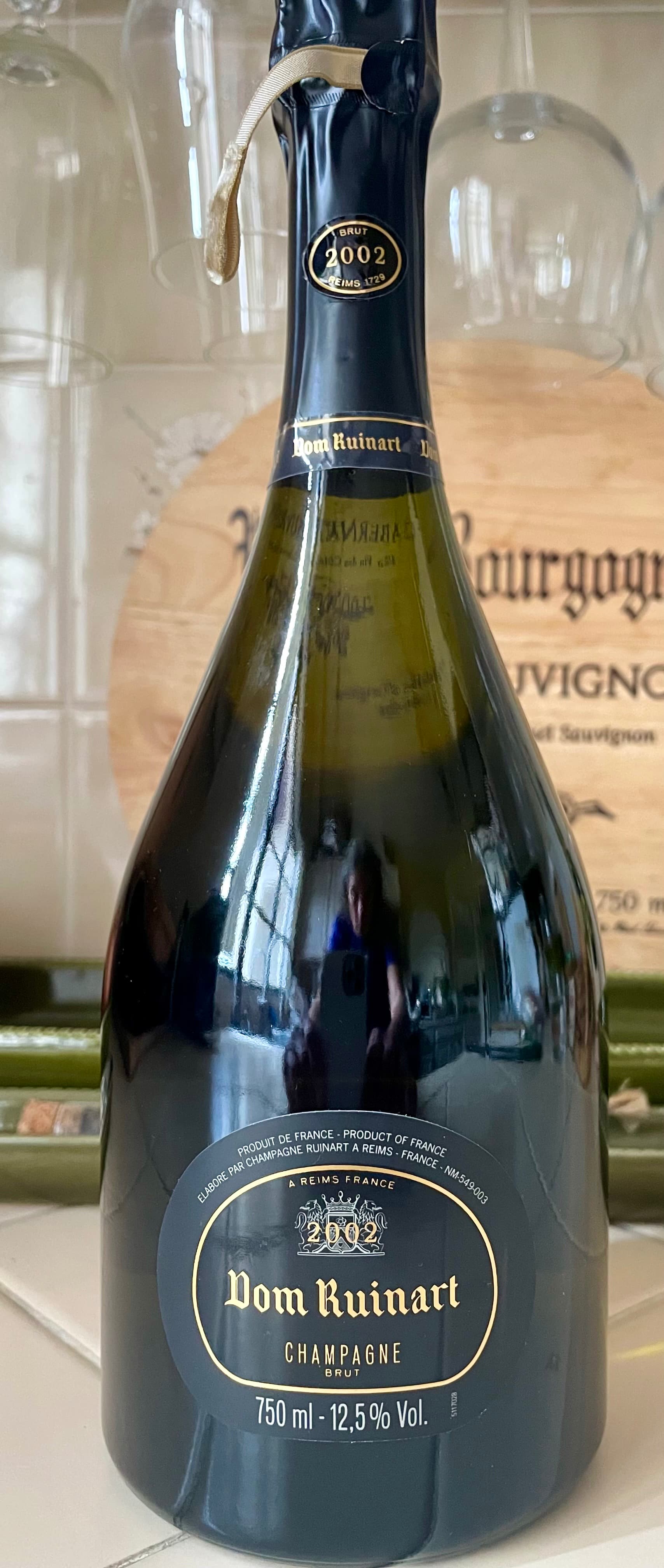
2002 DOM RUINART BRUT- this was comprised of fruit from 72% Avize and Chouilly and more surprisingly 28% Chardonnay from Pinot villages like Sillery and Puisieulx; this was the last bottle from a 6 pack and all have been extra stellar although a couple of recent bottles from another source were oxidative; this bottle was mindful of some of the early, more youthful ones and no where near advanced in any way; following its amazing light yellow color, it featured loads of fresh citrus fruit and attending bright acidity with lemon, lime and grapefruit most prevalent; it was super rich, crisp and refreshing and sported a mellow, creamy mousse and a palate cleansing finish that sealed the deal. My fav of the champagnes and white Burgs.
2014 LOUIS ROEDERER BRUT- 71% Pinot Noir and 29% Chardonnay, Verzy and Chouilly fruit, 1/3 vinified in 90hl casks; dosed at 8 gpl; true to all of my experiences with this house’s vintage Brut, this bottle was stupendous and held its own against the ’02 Ruinart which had just a little bit more of everything plus the benefits of maturation; there were aromas of red cherry/ berry fruit plus slightly ginger accented pear and green apple, all of which continued on to be joined by chalk and mineral laced grapefruit and white peach on the palate; it had a creamy mousse contributing to an impressive finish.

2018 PIERRE-YVES COLIN-MOREY LES COMBOTTES PERNAND-VERGELESSES- light yellow color; this lovely wine had all of the attributes of this producer’s star release, En Remilly, in mild form, with its mineral and flint driven citrus fruit and oily mouthfeel.

2010 LOUIS JADOT CORTON CHARLEMAGNE GRAND CRU DOMAINE des HERITIERS LOUIS JADOT- this was fabulous; it had a light straw yellow color, but a nose that got my attention with wonderful aromas of honeysuckle and mineral accent citrus and yellow apple with a hint of licorice coming in past mid palate; it was full bodied with a bit of power and lots of finesse.

2016 J.M. BOILLOT MONTIGNY 1er Cru- we have another winner here with its wondrous honeyed lemon and grapefruit notes that prevailed throughout; it was somewhat a light weight medium bodied wine that was seemingly mellow and elegant and yet it had enough energy and pizzaz to get ones attention and appreciation.

2020 LOU DUMONT MEURSAULT- and we have one more delightful white Burg to make it 4 in a row as this rich and tasty wine gave generous amounts of mineral infused apple, lemon, lime and grapefruit with a light coating of honey; it had a lovely mouthfeel with just a bit of weight to add a more serious tactile note.

We then moved into the 7 reds from Piedmont:
1974 M. MASCARELLO e FIGLI BAROLO- I expected some aging signs in the color, but it was a vibrant red purple with no real signs of bricking or fading of the pigments; the taste profile definitely suggested some age here, but it was mellow and easily accepted for its earthy, saddle leather accented dried cranberry and cherry notes; it actually seemed to improve in the glass with more fruit and less earth and leather. Decanted 2 hours.

Next up, one of our members brought 2 wines from the same Northern Piedmont producer for comparison. It turns out the producer is a “co-op” now called Produttori di Carema, located in the small village of Carema which has less than 1,000 people.
Carema essentially marks the divide between Piemont and the Aosta Valley, about 50 km north of Turin. This historic village is surrounded by terraced vineyards that cover the steep rocky slopes up to an altitude of 600 meters. It is affectionally called “Mountain Nebbiolo” as it is planted on these terraces, trained over pergolas supported by the traditional pillars known as ‘pilun’, which are made of stone and lime. Due to the severity of the terrain, the vineyards are only hand farmed. In a good year, only 55,000 bottles are made.
The “co-op initially consisted of 10 members in 1960 that grew to 27 by 1969 when the winery was built and now is currently up to 101, 71 of which contribute grapes.
2016 PRODUTTORI di CAREMA RISERVA - this release is known as the “white label” as opposed to the “black label” which is a bigger and bolder version made possible by longer aging and more use of new oak; the hallmark for our bottle was its amazing softness and elegance; following its somewhat light red maple color, it offered super pleasant and rich notes of rose petals, violets, licorice and green mint accented red and black cherry throughout while being delivered in a silky smooth textured medium that carried all of the goodness to the back end where it just graced the palate with charm.
The Riserva is a selection of the best casks in the cellar, with the wine being aged for an added year in large oak or chestnut wood foudre or botti; therefore, it gets 3 years total in neutral oak. The “black label” iis aged in barriques.

2018 FERRANDO CAREMA WHITE LABEL {ETICHETTTA BIANCA}- the vineyard sourced for this was grafted over to a pair of local Nebbiolo clones called Picotendro (or Picutener) and Pugnet; the appellation rules require the wines be at least 85% Nebbiolo, though the Ferrandos use 100%; wild cranberry, black raspberry and red cherry made up a lot of this fine wine’s fruit profile, but it is the finesse and charm of these wines including this one that standout above and beyond; in fact, it is more about the subtle power these wines have along with the obvious ease they have in delivering it.

2009 SANDRONE LE VIGNE BAROLO- i was super stoked to see this come around as the producer has been one of my favs over the years, especially after enjoying a fabulous day at the winery with one of the family members many years ago; this bottle was fully loaded with ripe black and blue fruit accented by some tar and leather; it had firm, but soft tannins which will surely support longevity and an incredible structure along with immense depth to complete the package.

2010 PAOLO SCAVINO BRICCO AMBROGIO BAROLO- decanted 2 hours; this is a blend of Monvigliero and La Morra fruit, the latter of which comes from a 4-hectare, south-facing vineyard purchased in 2001 and as such, it is categorized as a rare cru; it was definitely in rare form as it shined every so brightly while giving generous amounts of fresh, ripe and rich pure blackberry fruit with nice accents of tar and leather; it was full bodied with layered depth and complexity and yet had so much finesse and charm; it finished with a touch of astringency, but later on, that faded and the finish was sublime. I’ve had 5 other bottles of this fine wine and although all have been really good, this one was the best probably because it has had more time to evolve.

2020 GAJA SITO MORESCO LANGHE- 60% Nebbiolo, 40% Barbera; this took some time to open up, strongly suggestive of it needing a lot more time before re-tasting it and to do a long decant when doing so; it had leather and oaky, talc notes that backed up the red cherry, blood orange and strawberry fruit with a touch of bell pepper coming in past mid palate; it was a challenge to get through it knowing it came from the almighty Gaja who is God in this group.

2008 DAL FORNO ROMANO VALPOLICELLA SUPERIORE MONTE LADOLETTA- decanted 3 hours; this was a wowzer and after the flight of Sandrone and Scavino, I thought one of those would be the red WOTN but no way, this was the bomb; it had it all, the inky dark, teeth staining purple color, the super inviting nose redolent of dark chocolate, leather, mint and eucalyptus accented blackberry, black cherry and plum, the layered depth and serious complexity while maintaining an easily approachable persona with its silky smooth tannins and yet, its hallmark may have been its ideal balance; this was truly righteous juice and just about everyone’s WOTN.

We had a total of 13 wines on this evening contrasted to last week’s 22 for almost the same number of people. As such, it was much more doable when it came to not only tasting, making notes and taking photos, but allowing many of them to stay in the glass longer and tracking them over time. What a concept!
Cheers,
Blake