10% off now for everyone through Sunday night!
I’m excited to be asked to return for BD17–I’ve stockpiled a bunch of turnings—bowls, platters, closed forms, and hollow forms. I’ve added last year’s info regarding woodturning with some revisions and additions.
Many of you have followed my blog on woodturning here on berserkers (https://www.wineberserkers.com/t/woodturning-thread/295130 ) over the last three years and I was asked to sell some of my turnings. Woodturning is a process where a lathe spins an attached piece of wood, called a blank, and it is then shaped with metal tools, hollowed, then sanded, and a finish applied, cracks and defects sometimes highlighted with wood inserts or colored epoxy. I have listed more than 60 turnings for sale, prices varying depending on the cost of the wood, the size and complexity of the turning, and the time involved in creating the piece. One piece will be auctioned. There are bowls and hollow forms, the latter a term for a turning with an opening too small to be used as a bowl. Closed forms is another term for a small opening, usually a bit bigger than a hollow form. Only the fruit bowls are functional; the other turnings are just “art” and can have a dried flower arrangement inserted or be left as is. The fruit bowls have a food safe finish that has cured or polymerized. Click on a picture to enlarge it.

I was asked how I got into this “hobby.” I did surgery for about 40 years, retired 2 years ago. I’ve collected artisan woodturnings for that 40 years and wanted to see if I could make them. So I took some classes, read over a dozen books, subscribed to woodturning magazines and associations, participated on woodturning forums, watched countless YouTube videos, found a mentor, joined a club, bought a used professional lathe that lets me make pieces up to 20 inches in diameter, and started turning almost full time. I’m relegated to turning on the side of the house, not the garage, so turning time is weather-dependent, but fortunately weather in southern California is usually pretty good. Woodturning is a lot like surgery–the lathe is my operating table and the wood is my patient. The only bleeding now is mine! Hope you enjoy seeing the pieces even if you don’t purchase one.
If you want to purchase a piece, PM me, first come first served. After I confirm, you can PayPal (Friends & Family please) or Zelle me at alancweinberg@gmail.com. I’ll then list the turning as SOLD. (FYI, Monopole Crü members have a special discount, so join up to see that!) Shipping is included in the price, continental United States, even for the less expensive pieces.
What’s new this year is that I’ve progressed to turning pieces with much smaller openings—technically much more difficult. I’ve also got several less expensive turnings priced under $100. And I’ve found some cool and rare woods. Take a peek.
The next two pictures are some of the wood to be turned for next year.
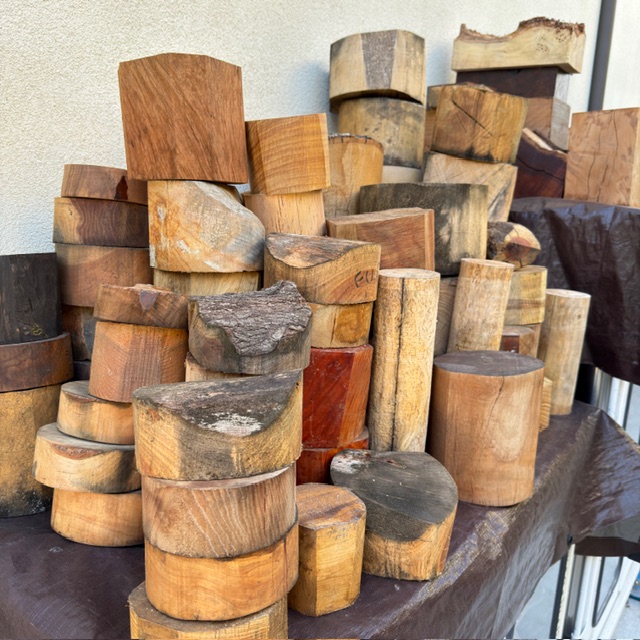
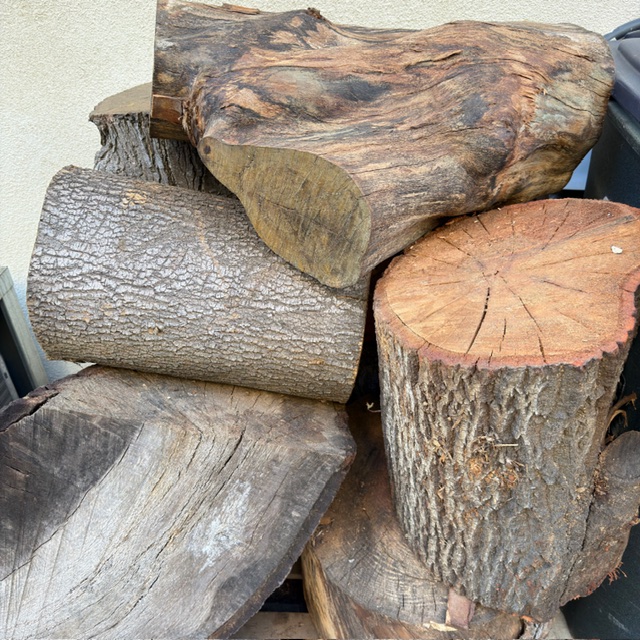
Woodturning pieces for sale: bowls, platters, closed forms, hollow forms
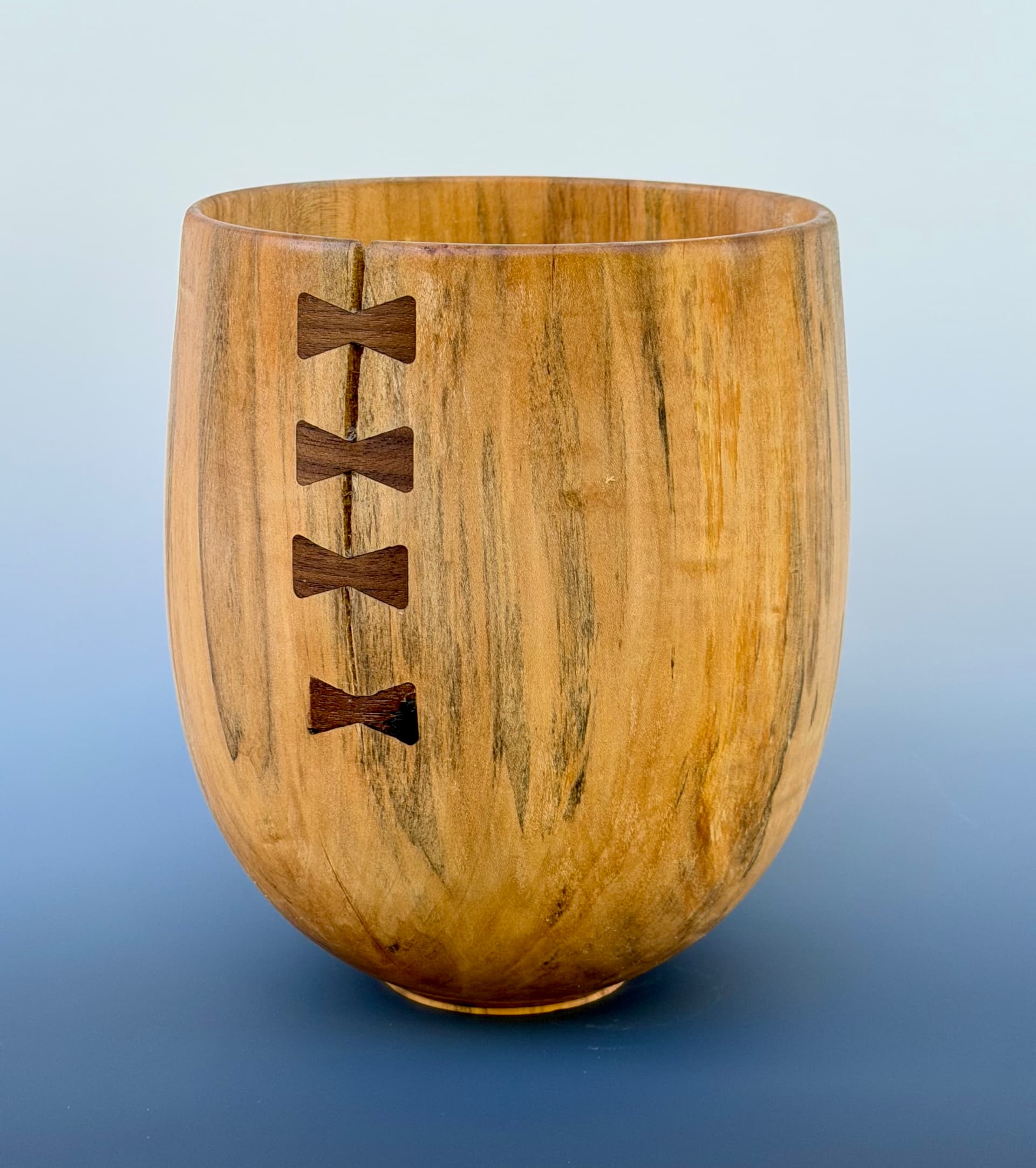
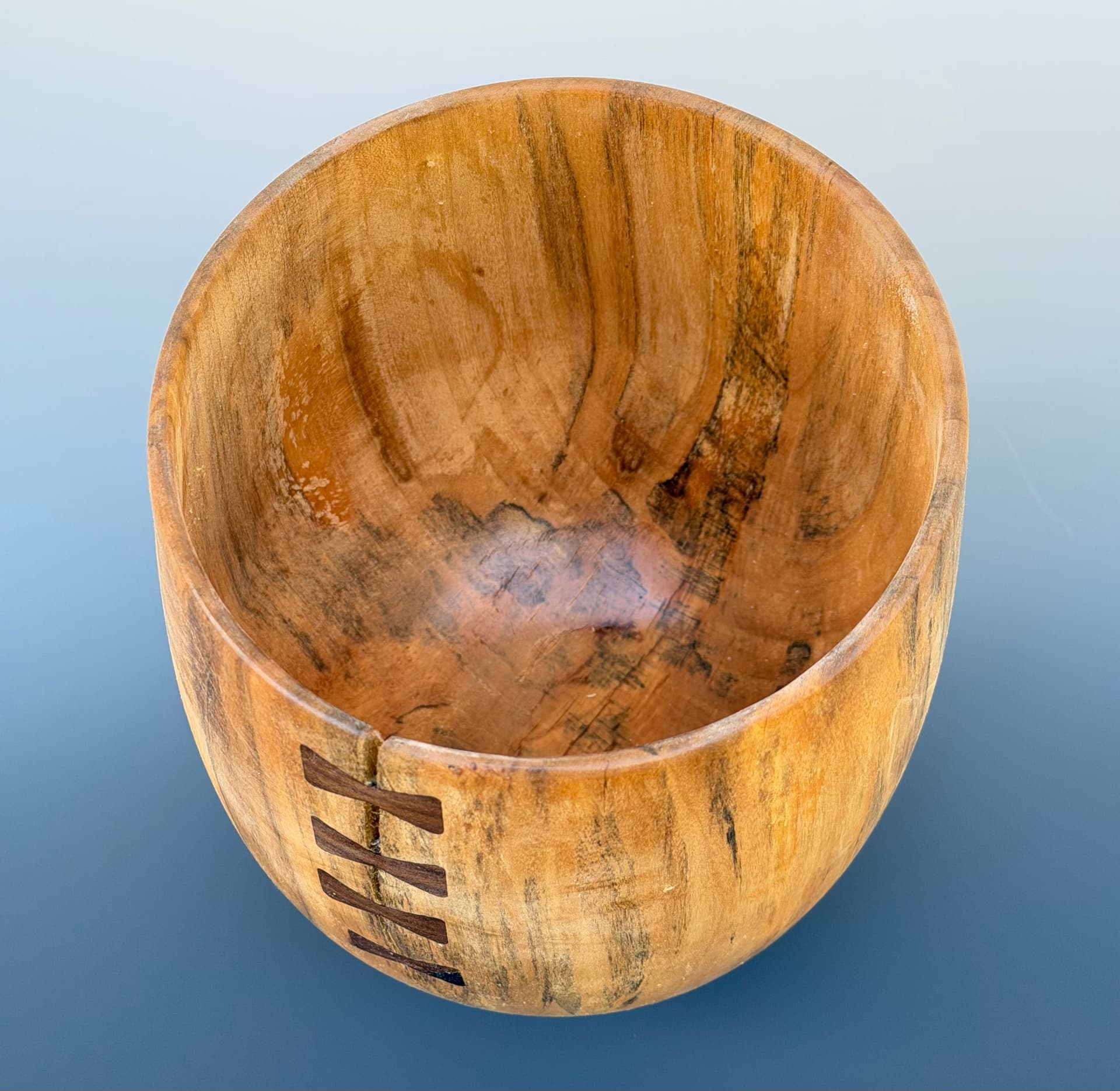
- $240 Norway maple bowl with koa pewa highlighting crack. Pewa are bowties, the word being both singular and plural, a Hawaiian technique to repair or highlight an imperfection or a damaged bowl (umeke). Interestingly, the value of the piece increases after such a repair compared to a piece without the “defect.” 6 1/4 inch diameter and 7 1/2 inch height.
- $190 Myrtle bowl, rim undercut. Blonde and chocolate colors are common in this Pacific coast wood. 10 inch diameter and 2 1/2 inch height.
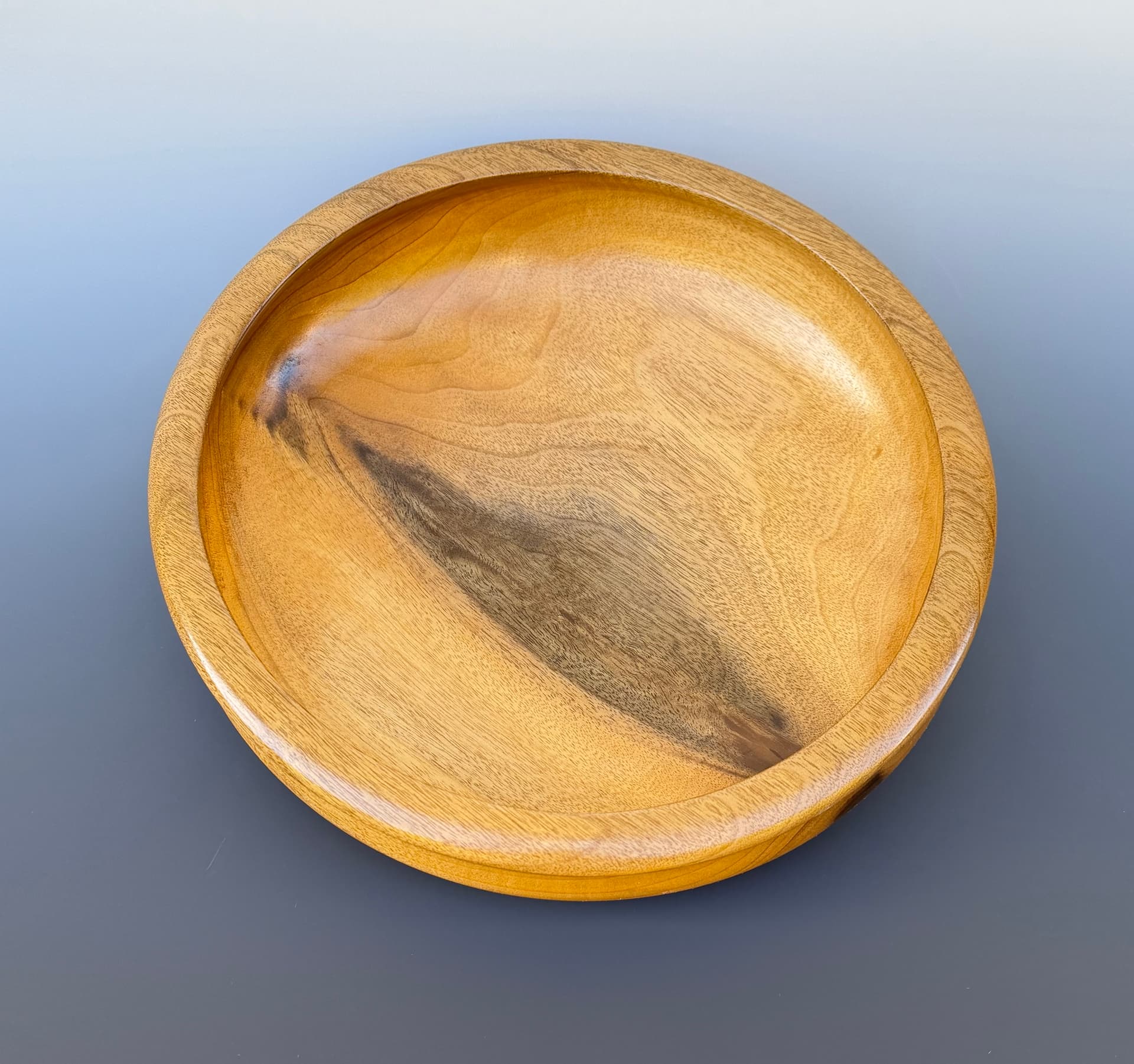
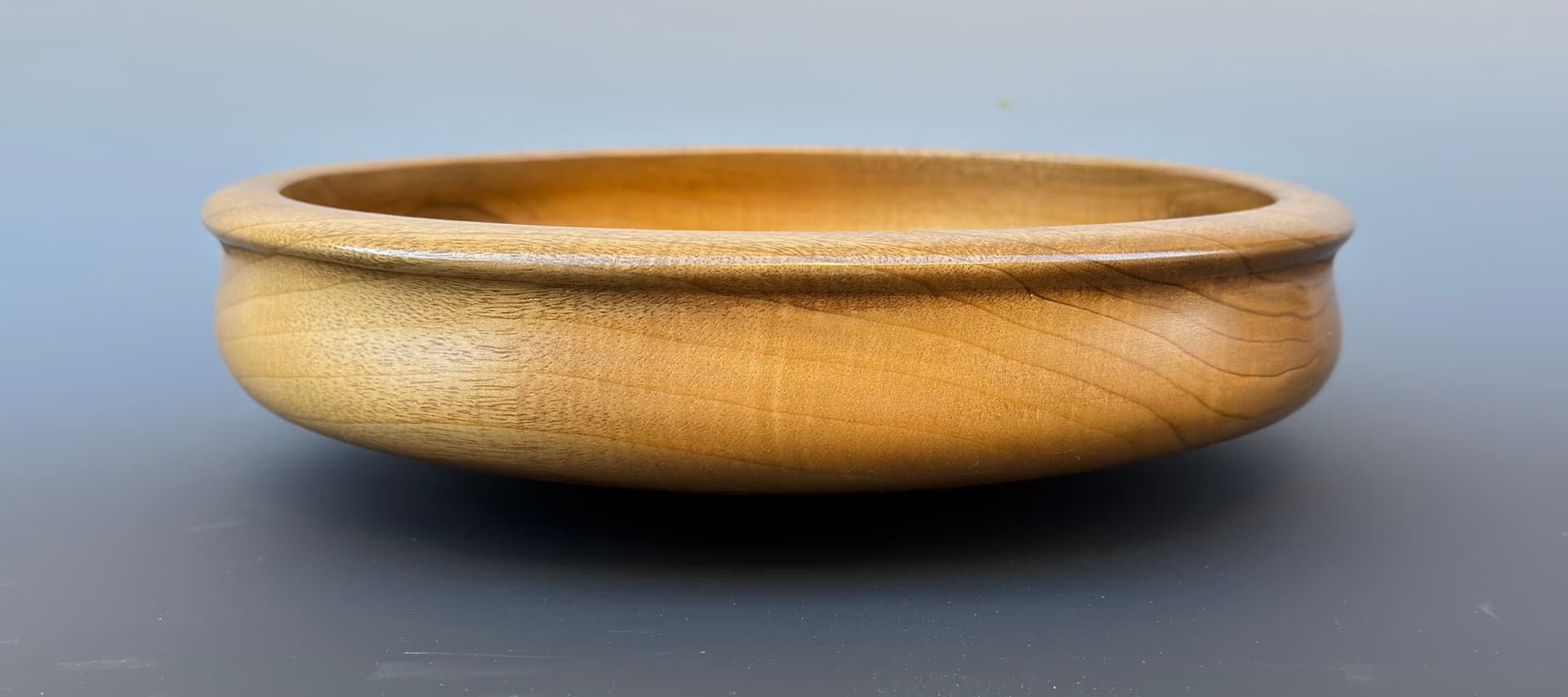
- $190 Osage Orange bowl with ring highlights and small cracks. Over time, the wood may darken. 9 1/2 inch diameter and 3 inch height.


4. Auction piece Walnut bowl with small cracks and wenge pewa highlights, inward sloping rim, valued at $240. 8 3/4 inch diameter and 2 1/2 inch height.
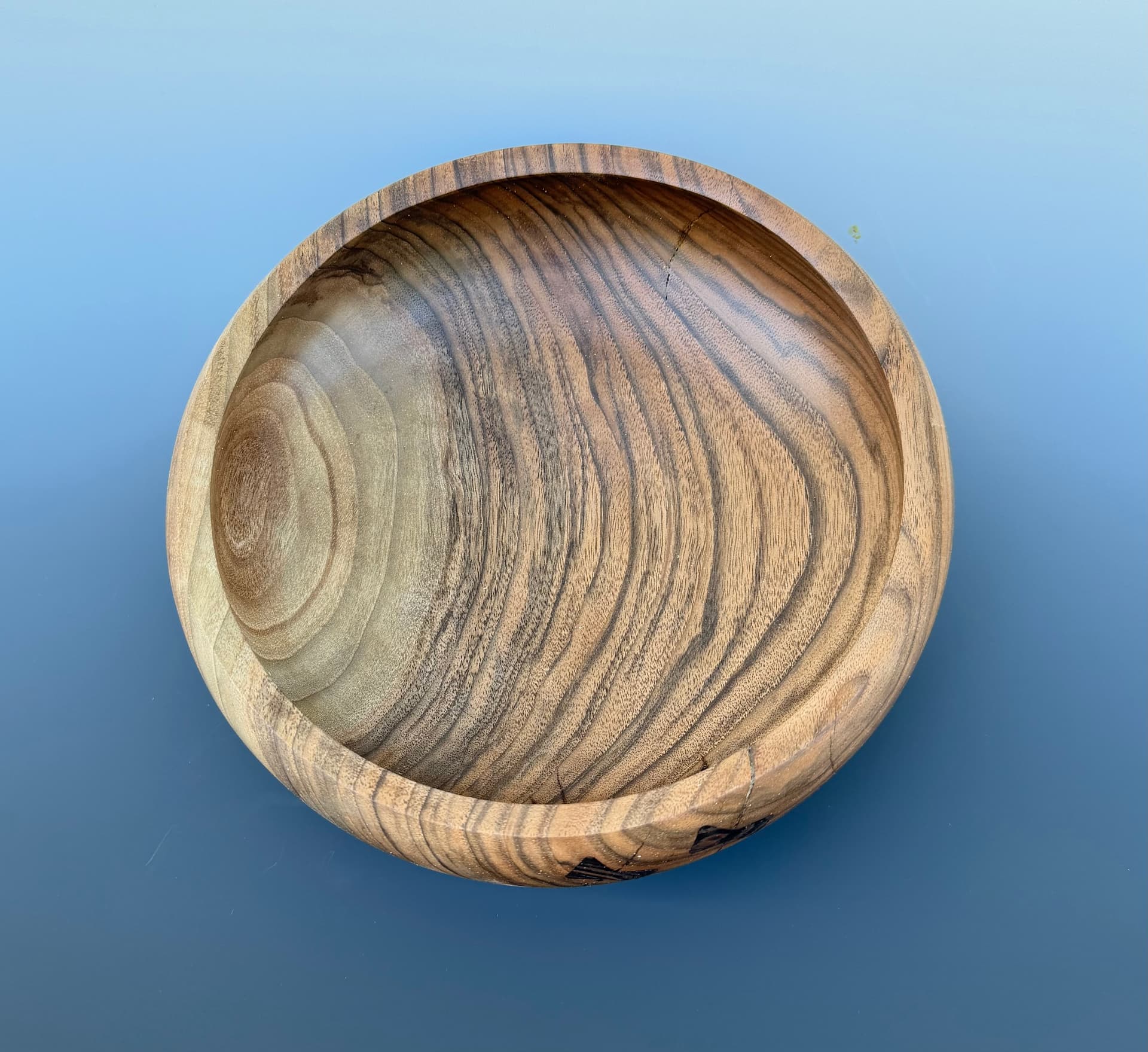
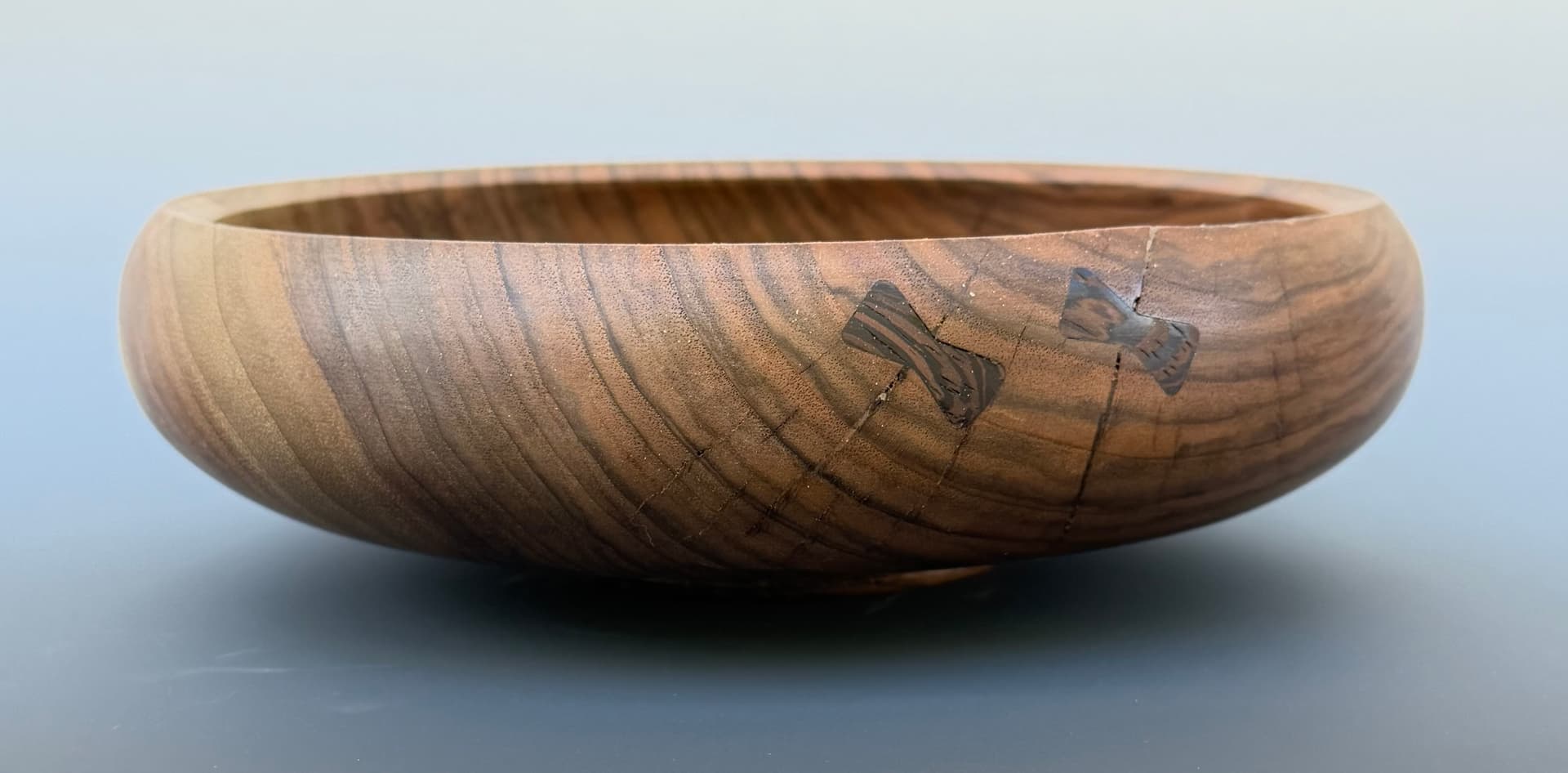
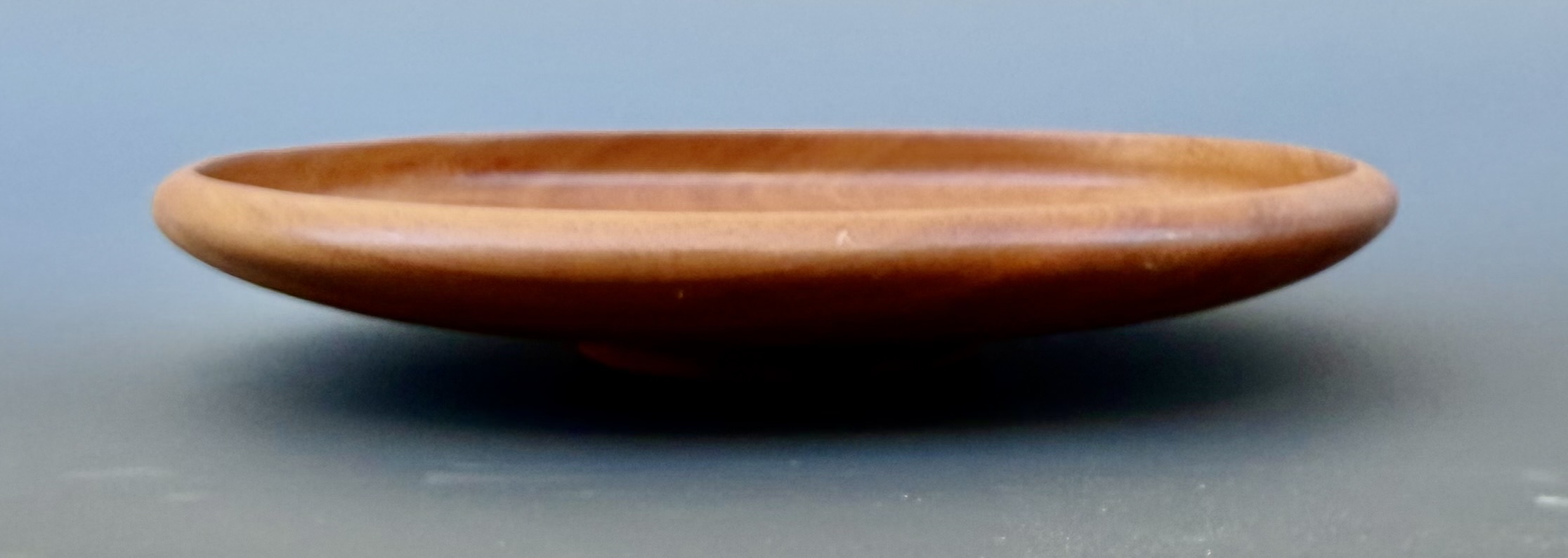
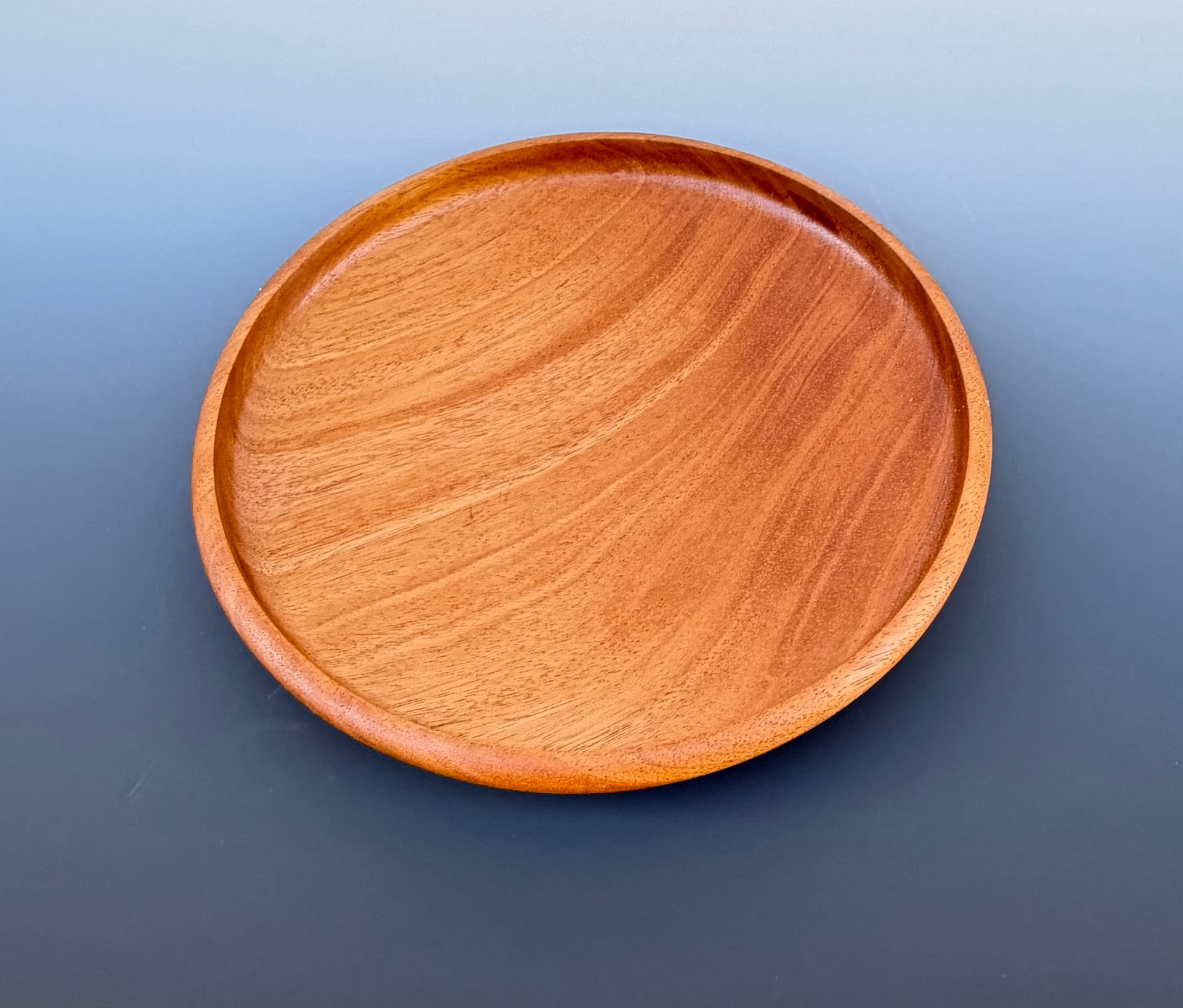
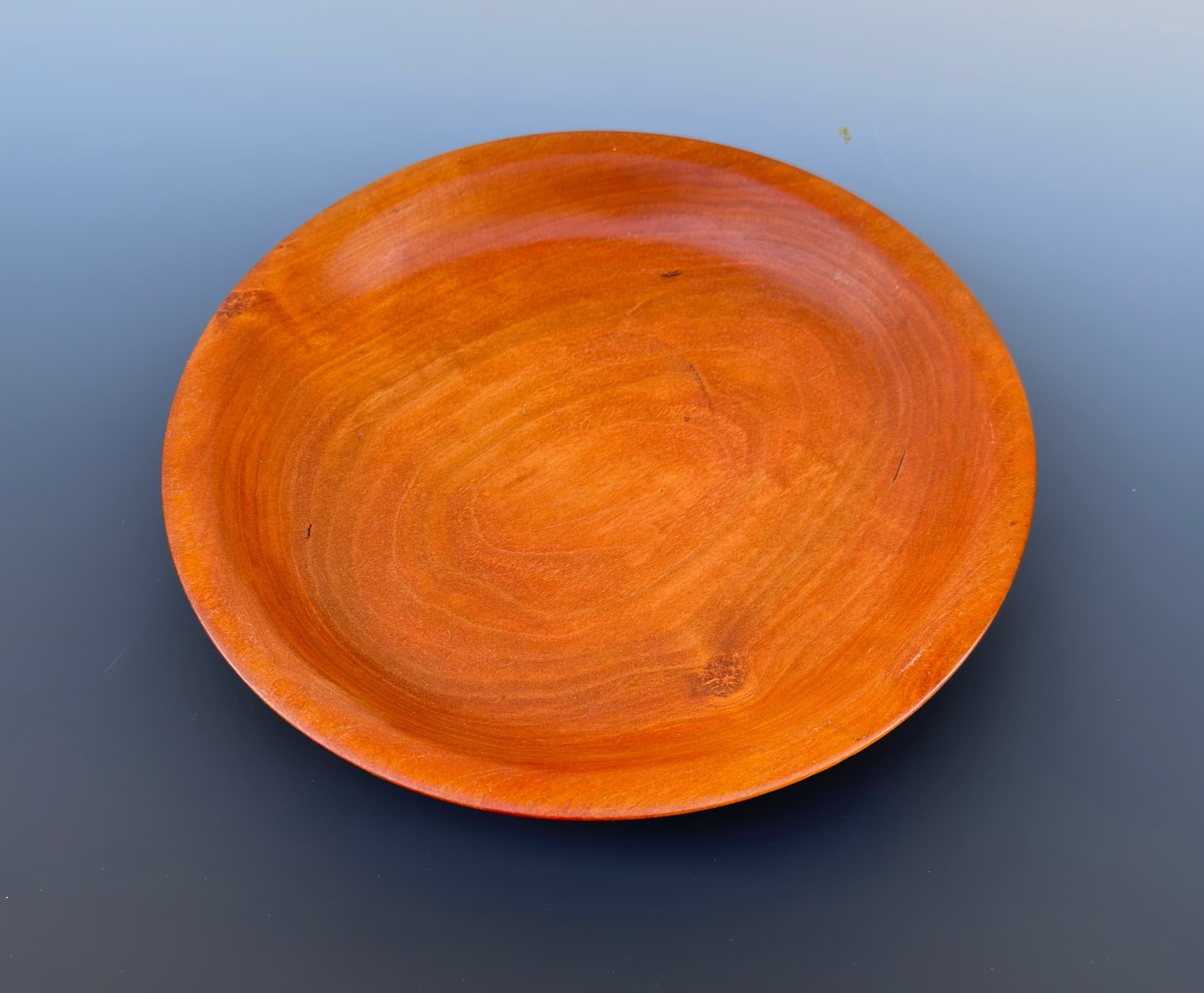
SOLD 5. $140 African mahogany platter, a reddish brown wood from West Africa. 9 1/4 inch diameter and 1 1/2 inch height.
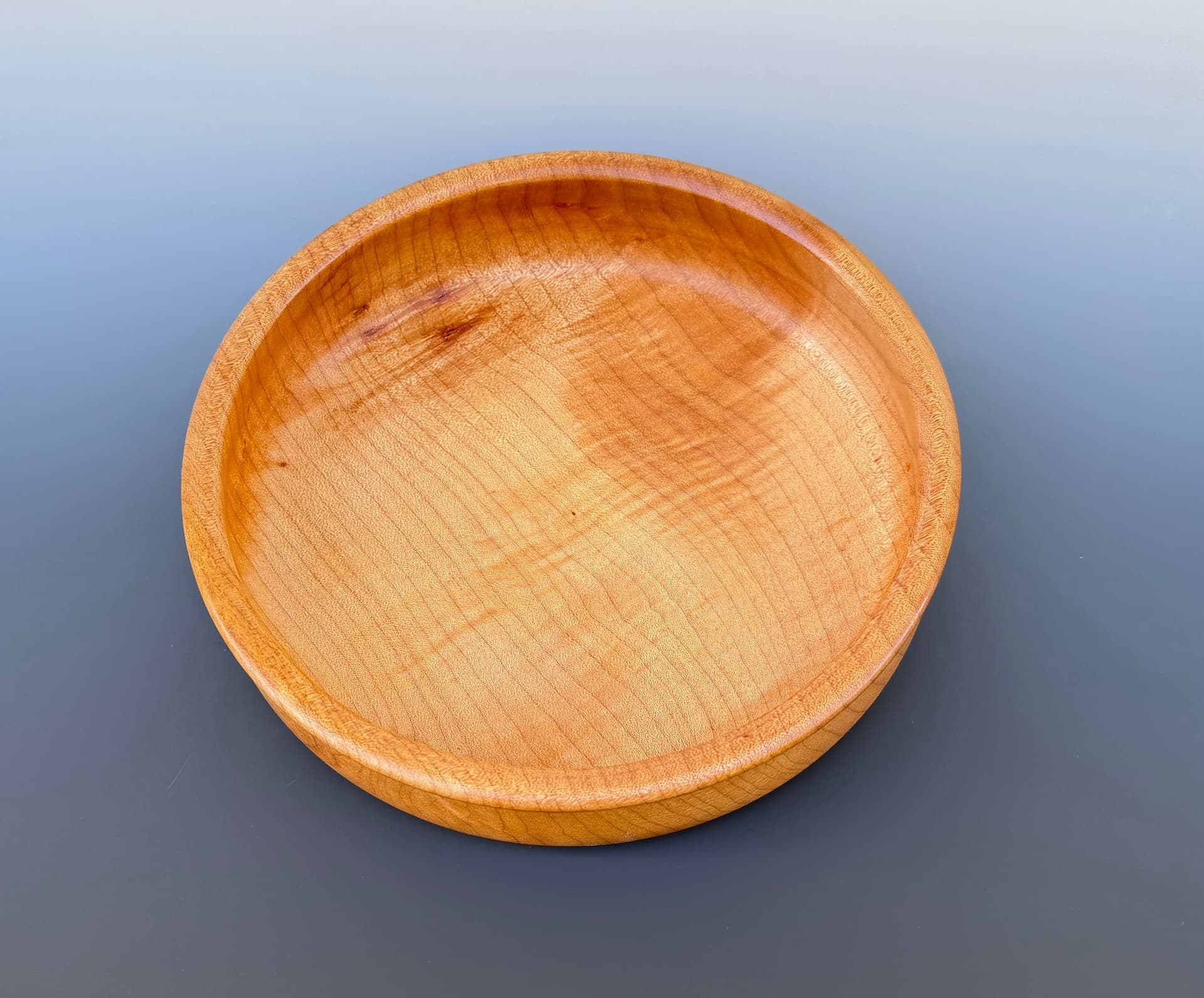
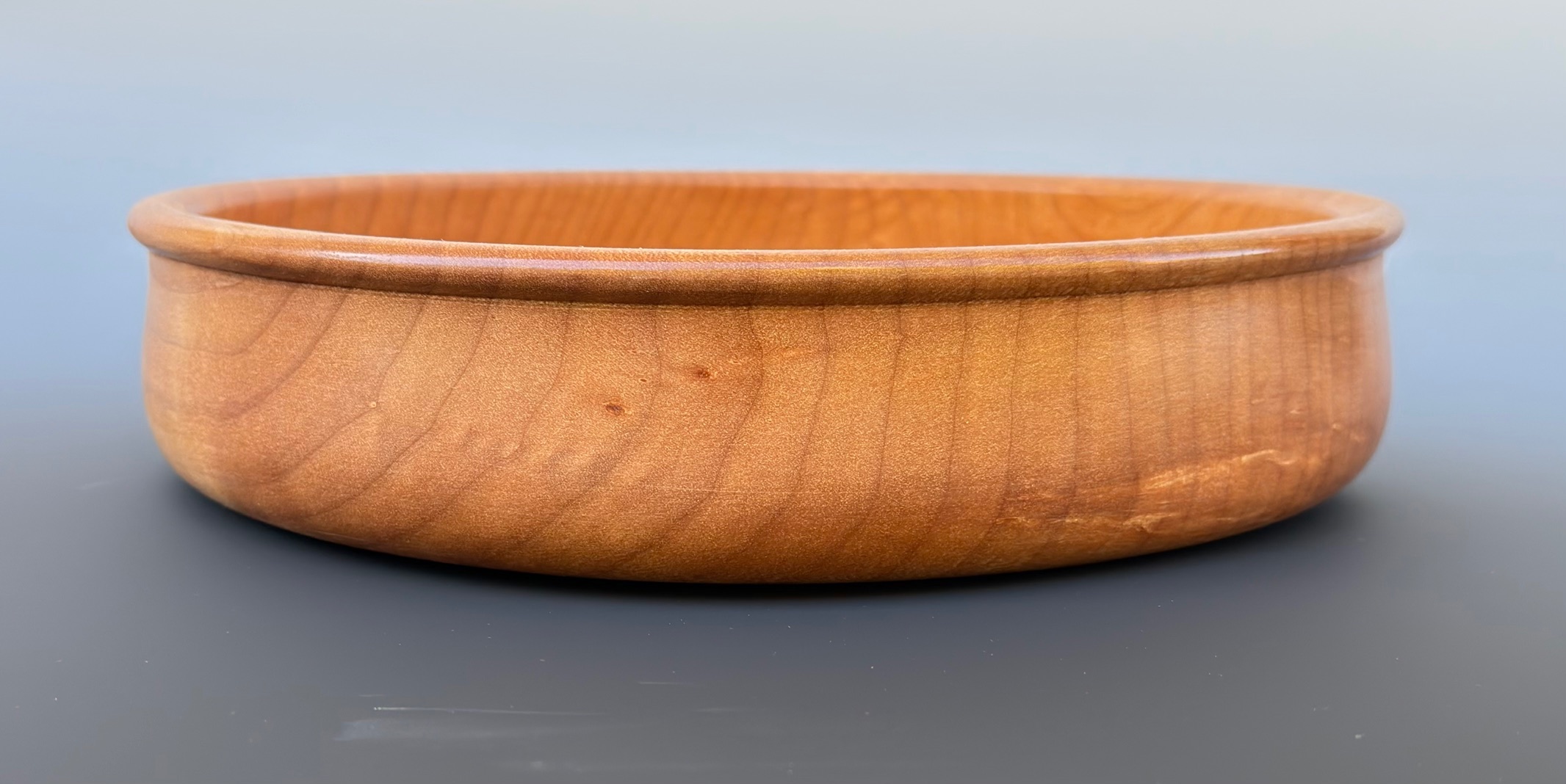
- $125 Maple bowl with figure and beaded rim. Figure in wood is a unique striking grain pattern with waviness, caused by stress as the tree grows. The stress can be from weather or fungus. 9 1/2 inch diameter and 2 inch height.
SOLD 7.$120 Shallow cherry bowl. Cherry will darken with time. 9 1/2 inch diameter and 1 3/4 inch height.

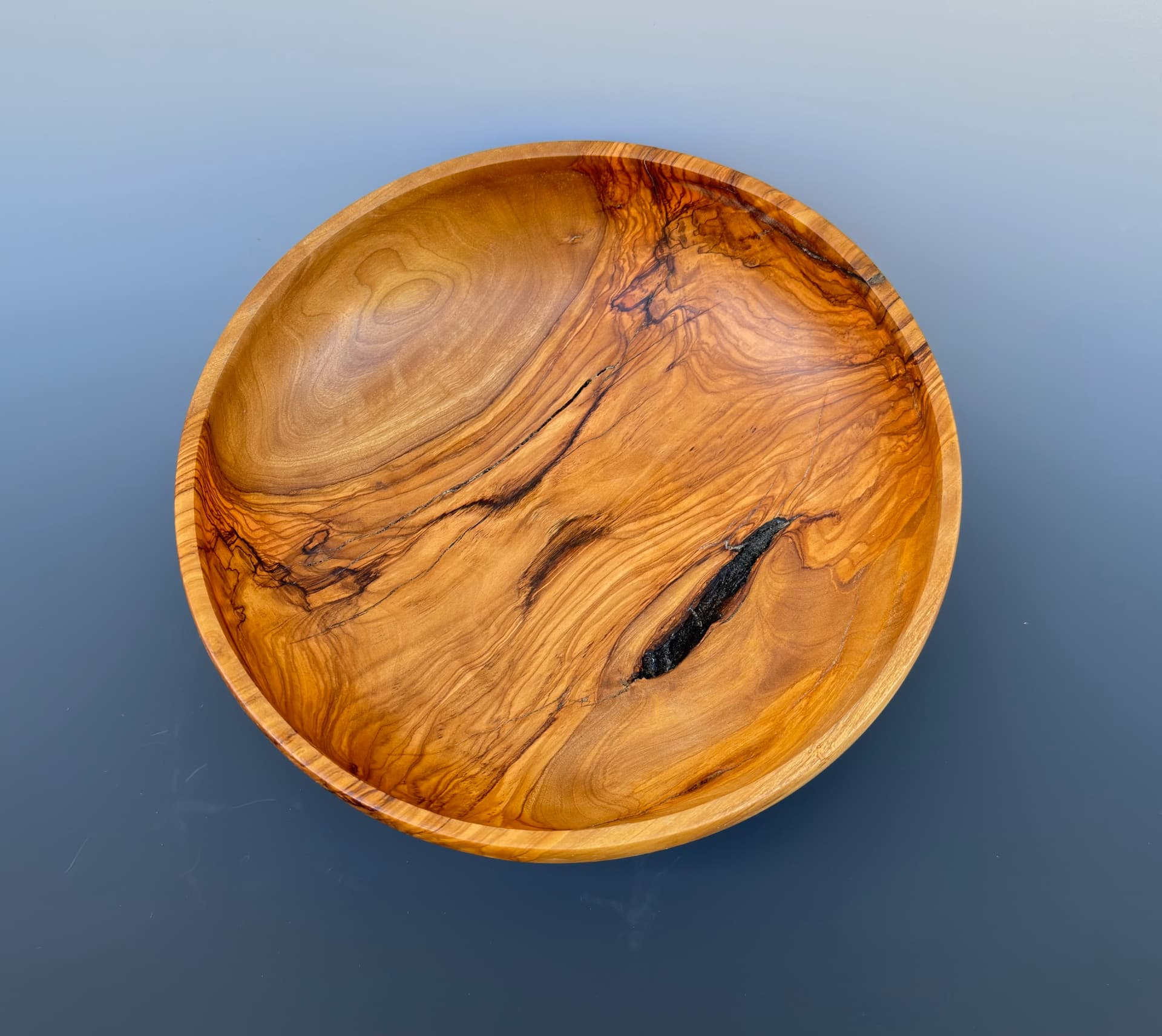
- $280 Olive bowl with cracks and bark inclusion that add character and uniqueness. Olive wood has wild haphazard grain. 8 7/8 inch diameter and2 3/4 inch height.

- $320 Manzanita burl bowl. I left some of the burl figure on the outside. Some of the cracks are full thickness so it could not be turned thin or it would have exploded on the lathe. Burl is a stress response causing a mass of abnormal growth much like a tumor or callus, prized for the random twists and swirls in the grain. The third picture shows the wood blank before putting it on the lathe. Manzanita is a shrub with dense wood and red/brown coloration, found mainly in California. 8 inch diameter and 4 1/4 inch height.
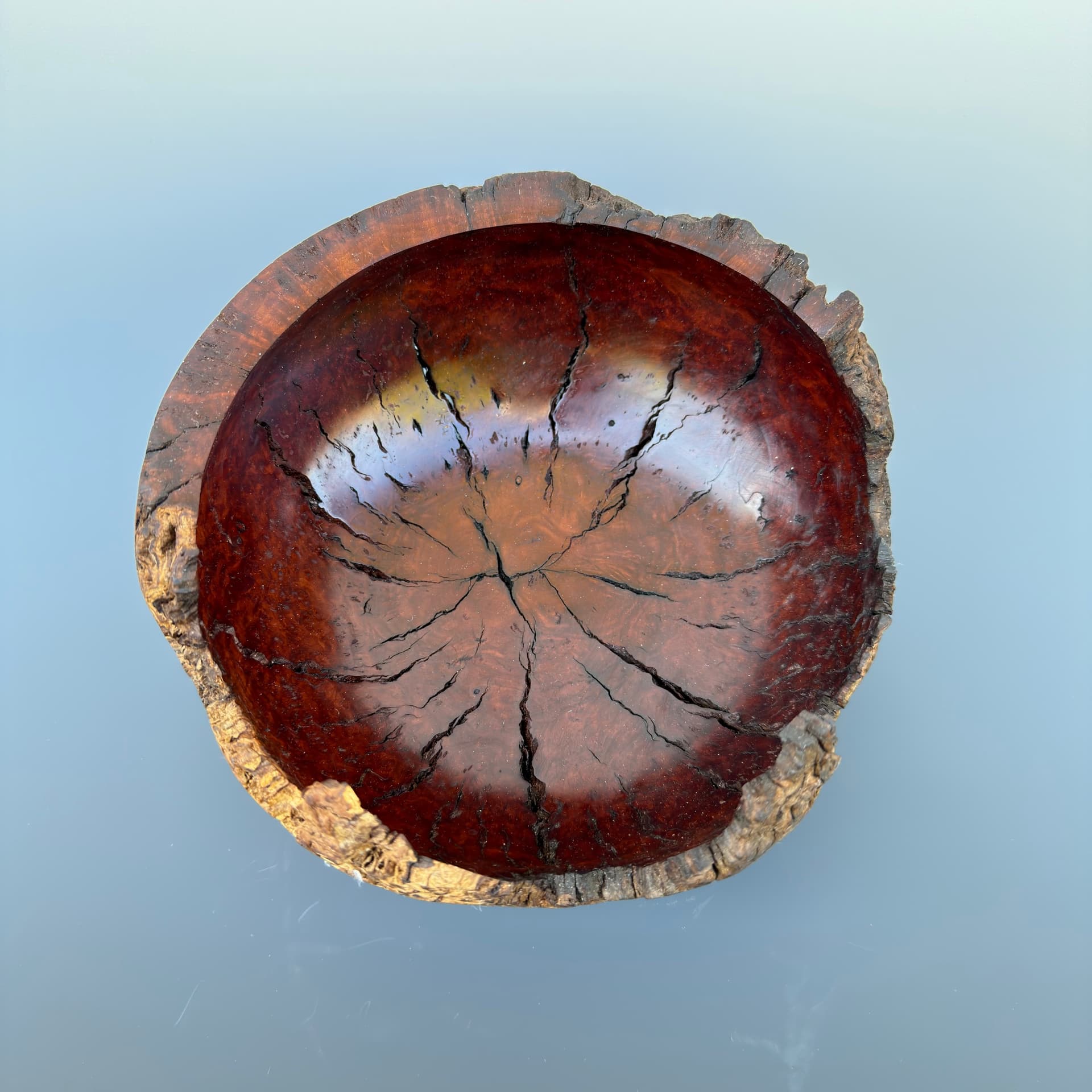
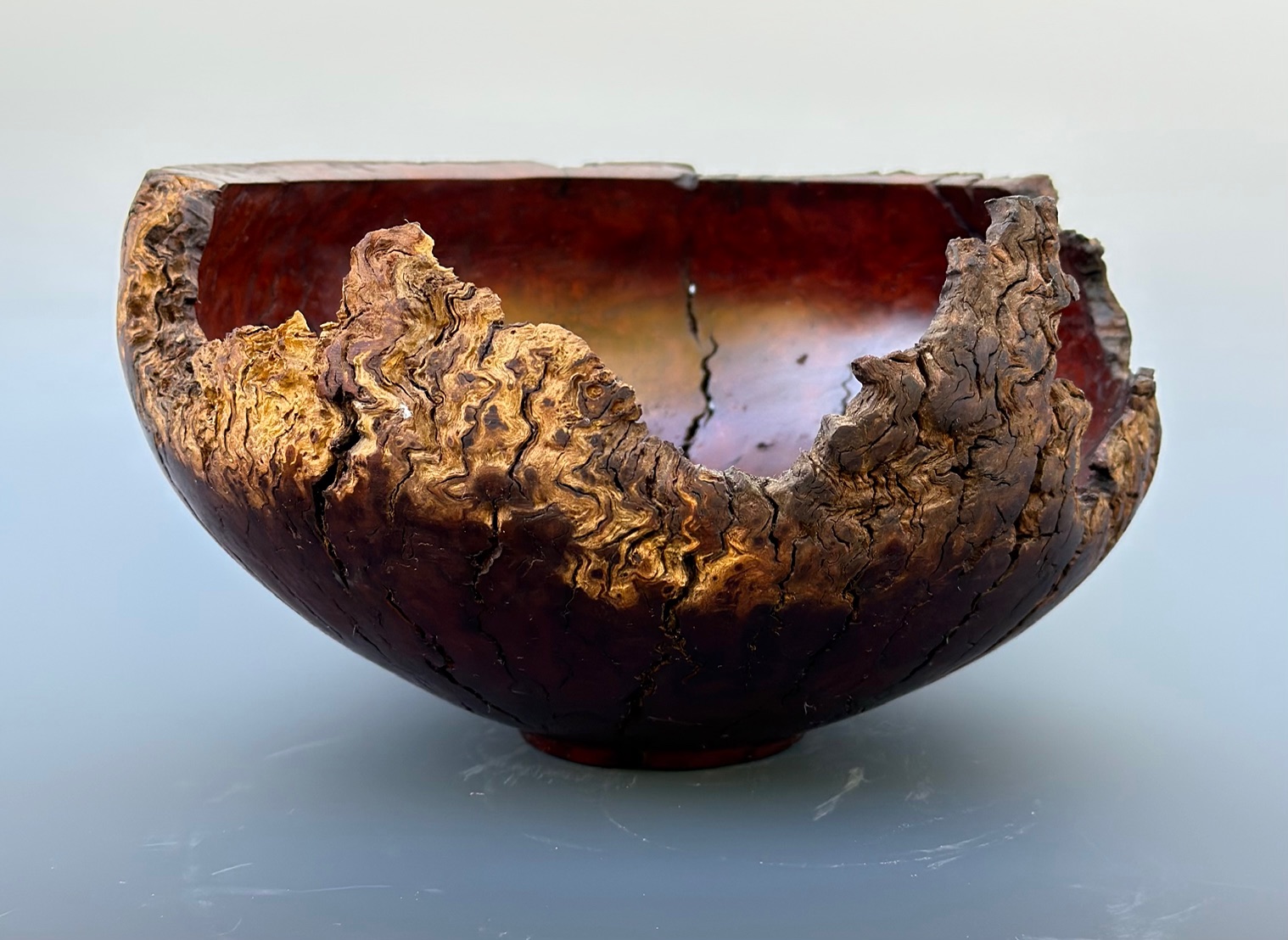

- $280 Madrone burl bowl–this expensive wood is found primarily in Northern California. I turned an unusual shape. Burl is a stress response causing a mass of abnormal growth much like a tumor or callus, prized for the twists and swirls in the grain. 8 1/4 inch diameter and 2 1/2 inch height.
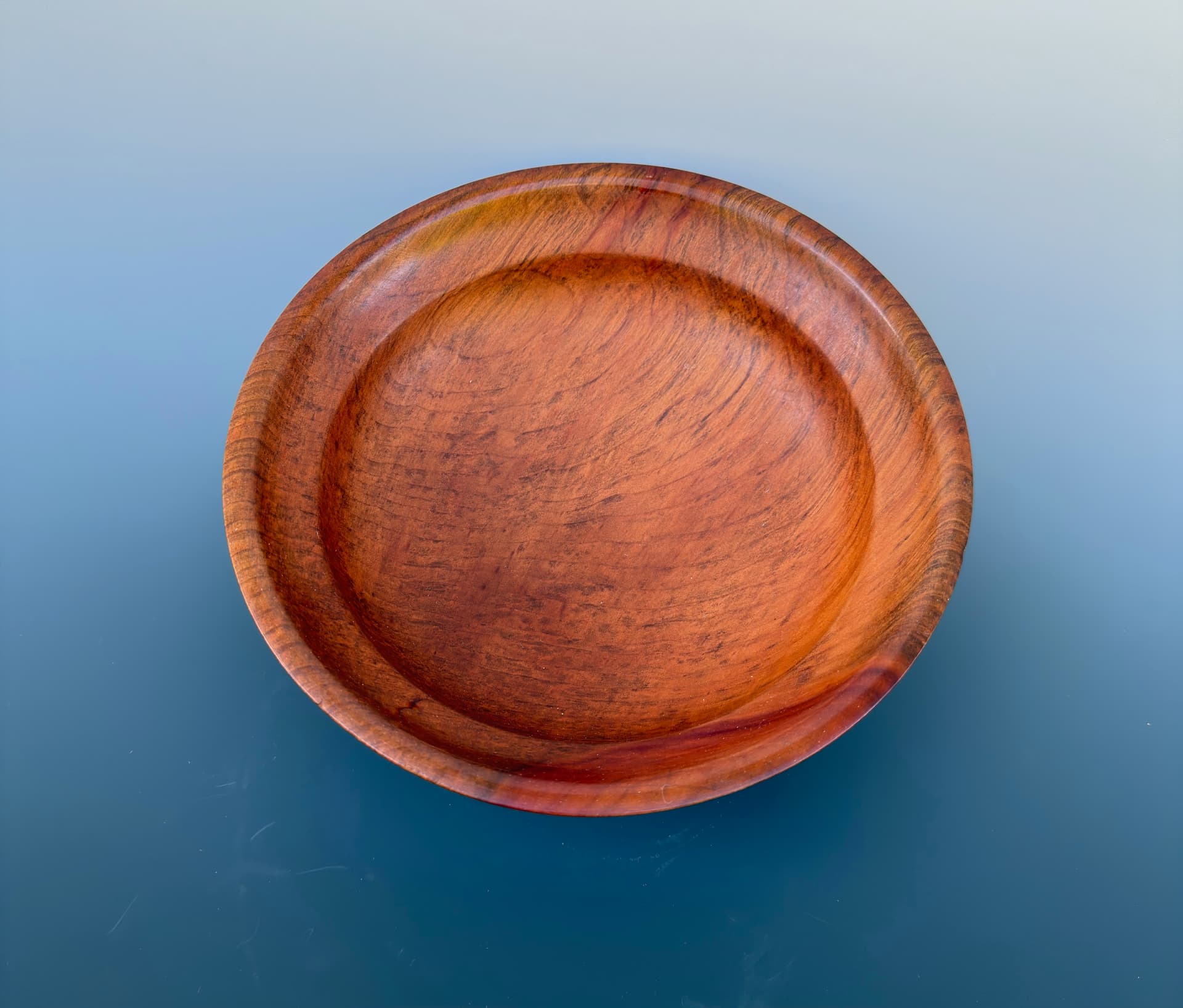
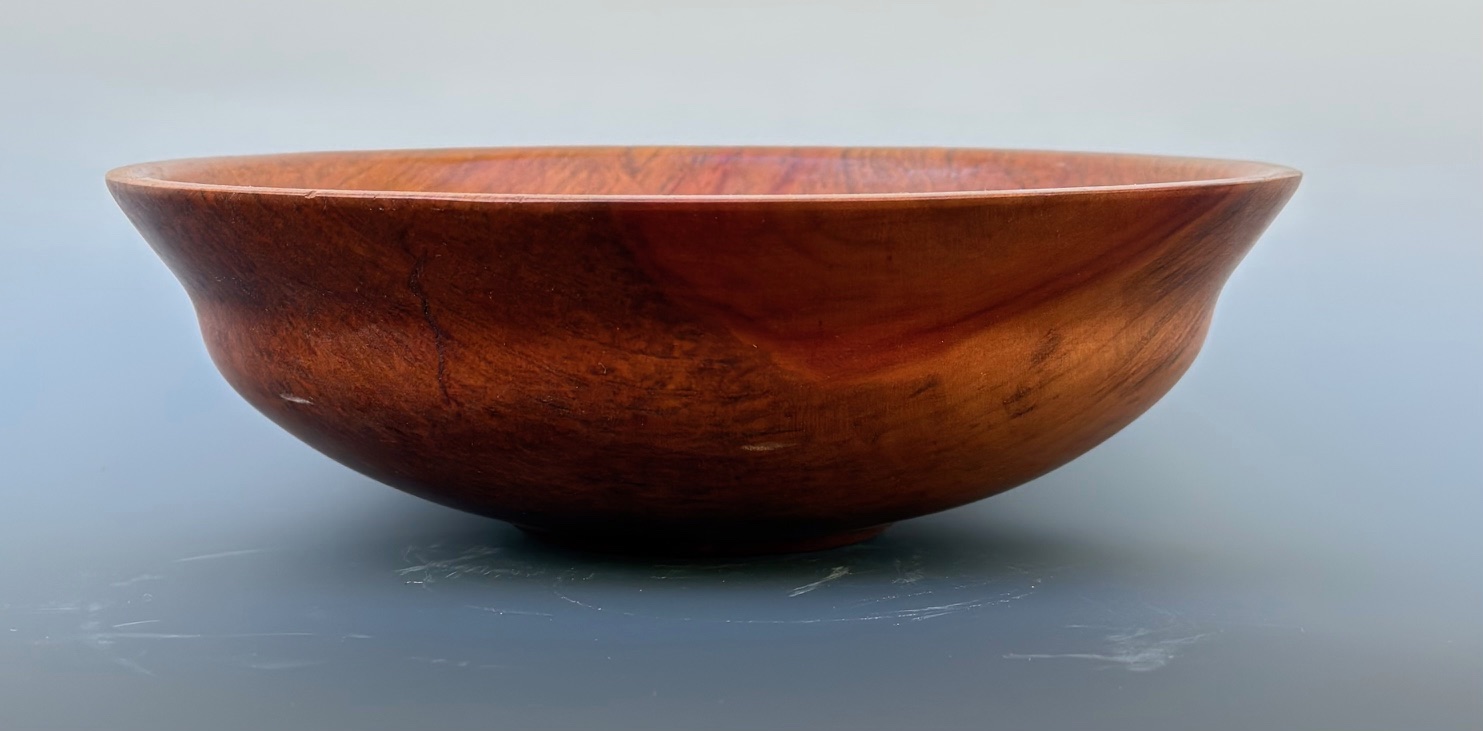
- $125 Spalted bowl–not sure of the wood but spalting is highly prized. Spalting is a fungal infection that leads to beautiful random black lines in the discolored wood. After turning, oiling, and sealing, the wood is safe for use, the wood is stabilized, and the fungus is gone. 8 1/8 inch diameter and 3 1/4 inch height.
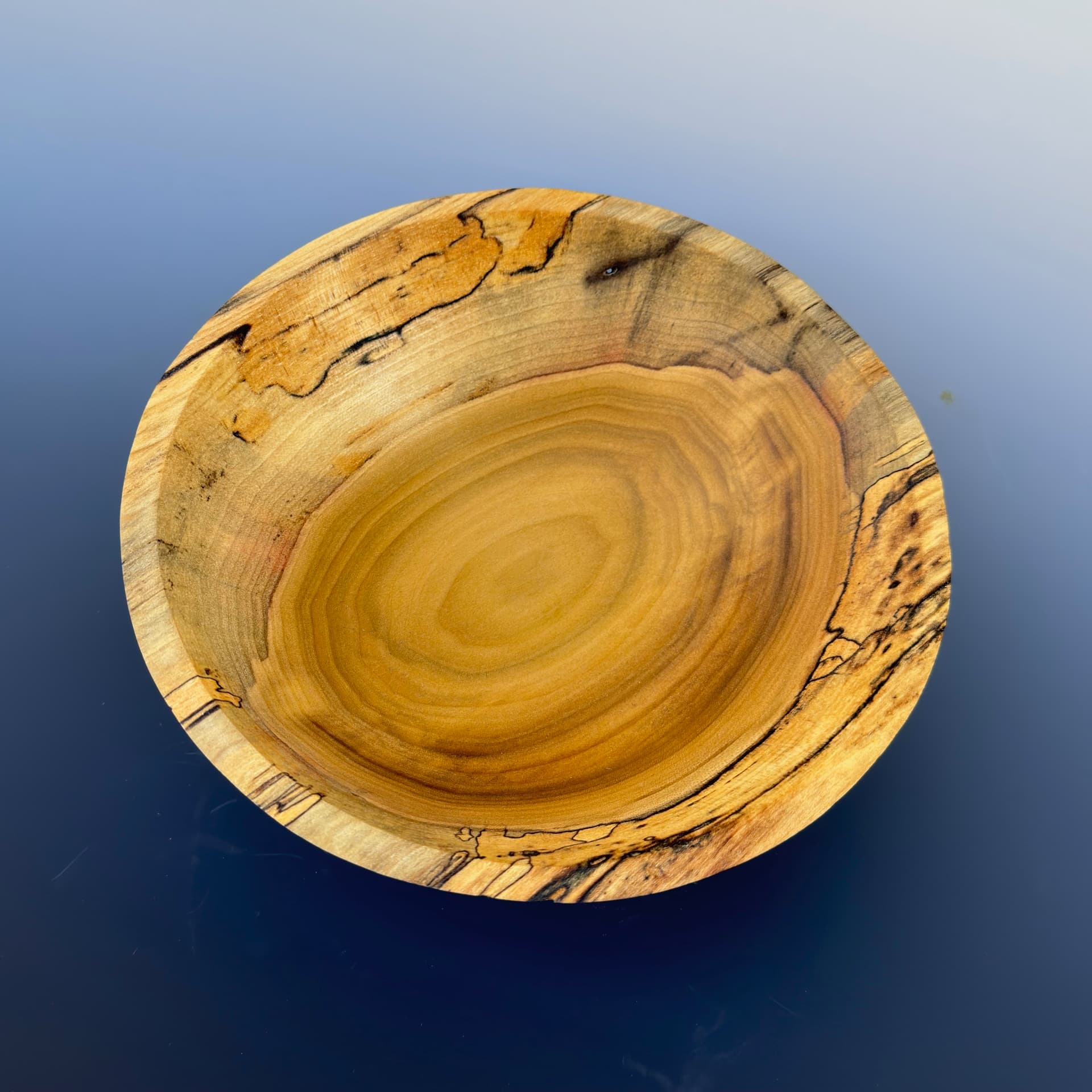

- $260 Iron bark eucalyptus, rim slopes inward slightly–the reddish color persists, though may darken somewhat. It is a very hard and durable wood with a lot of character. 8 1/2 inch diameter and 2 1/2 inch height.
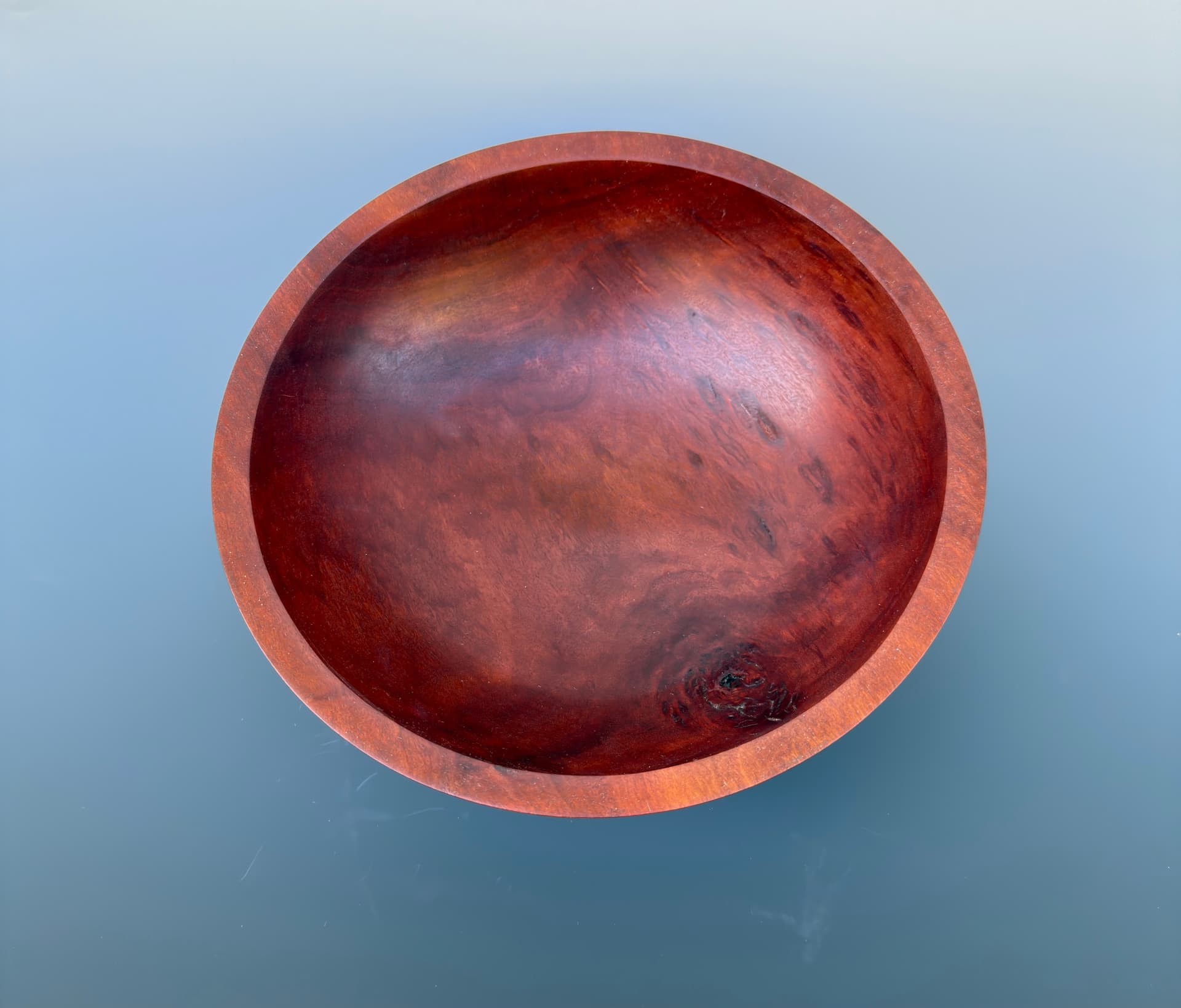
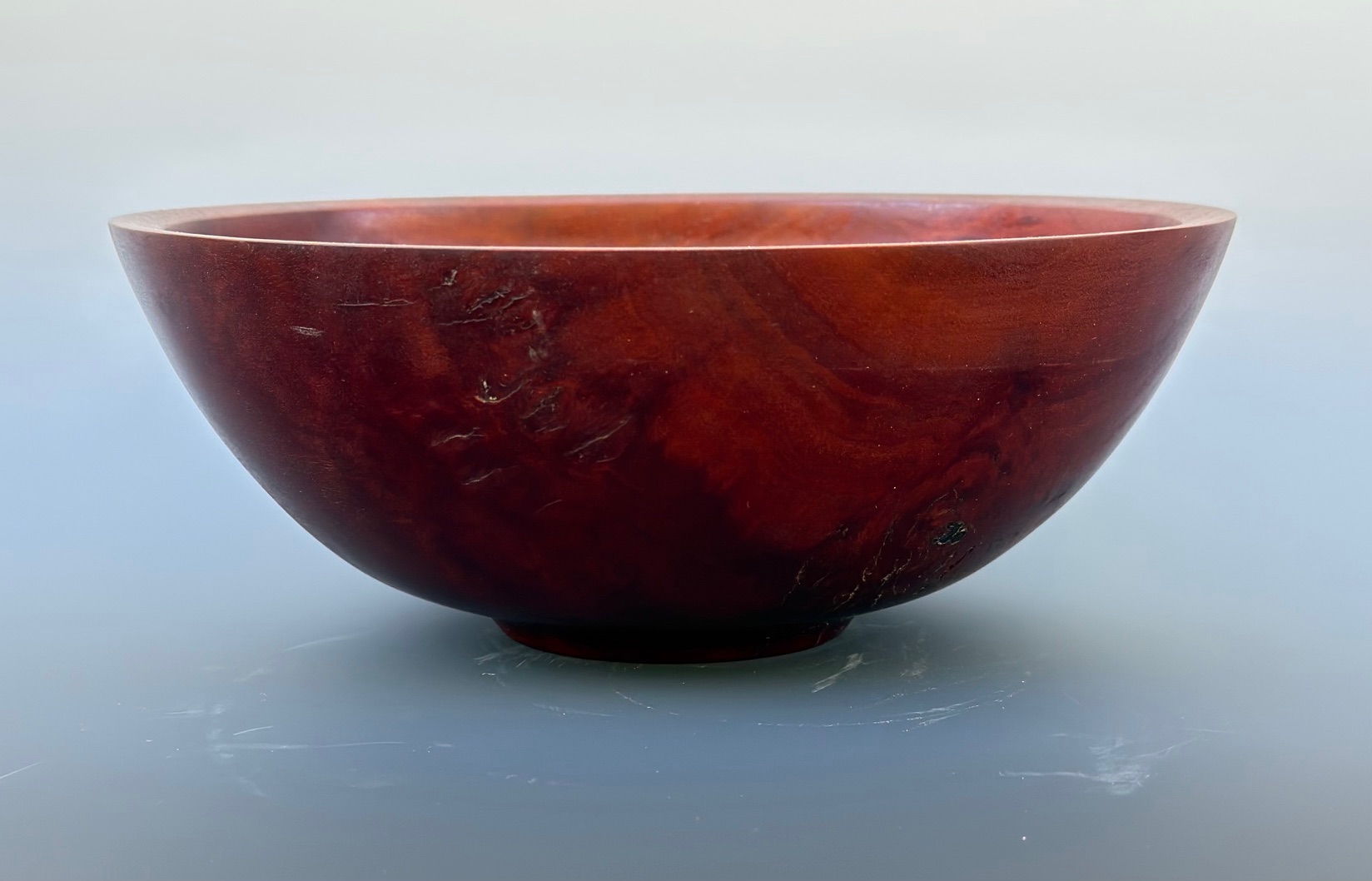
- $125 Unknown wood bowl. 8 1/2 inch diameter and 3 1/2 inch height, wall thickness 1/4 inch.
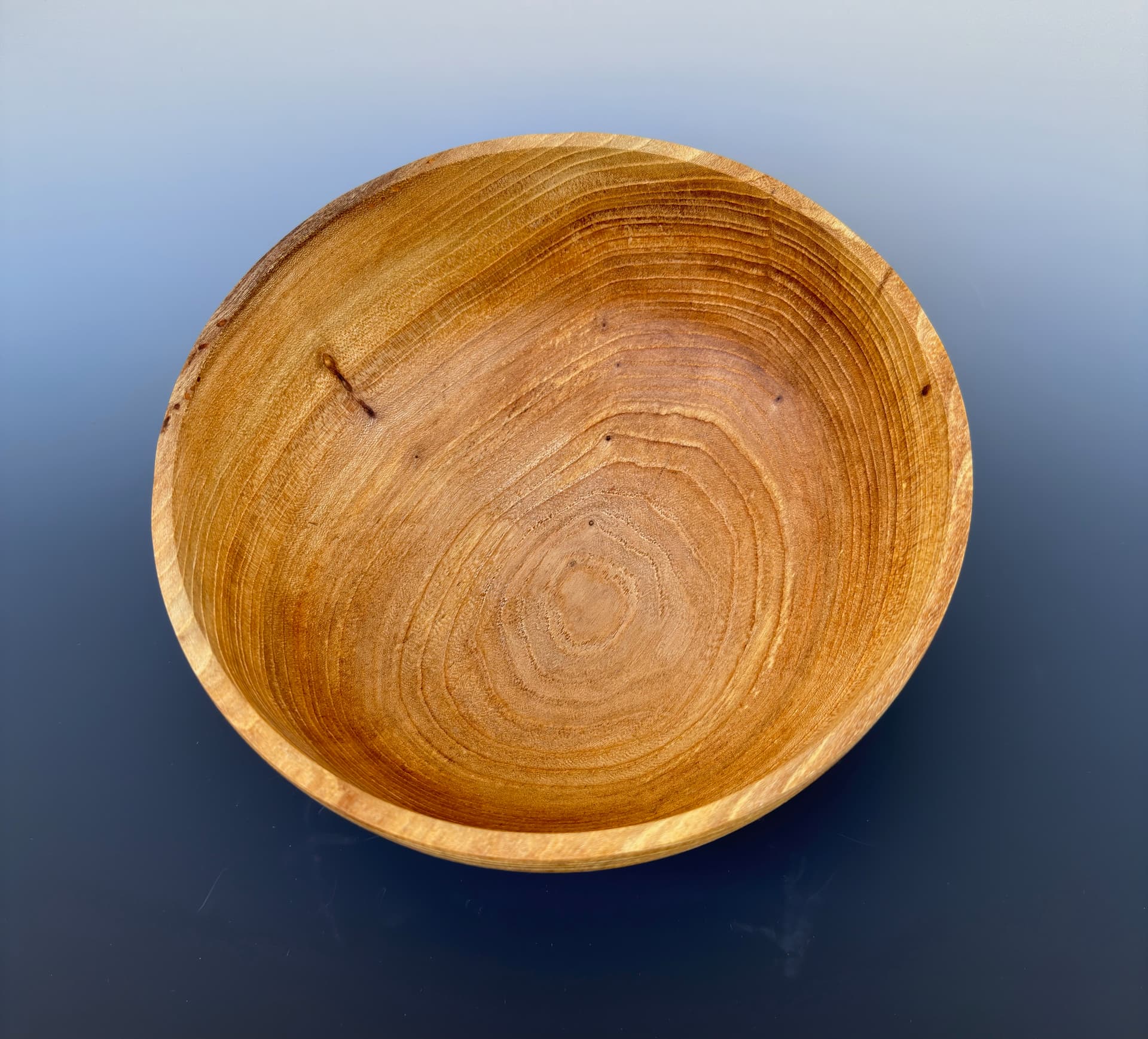
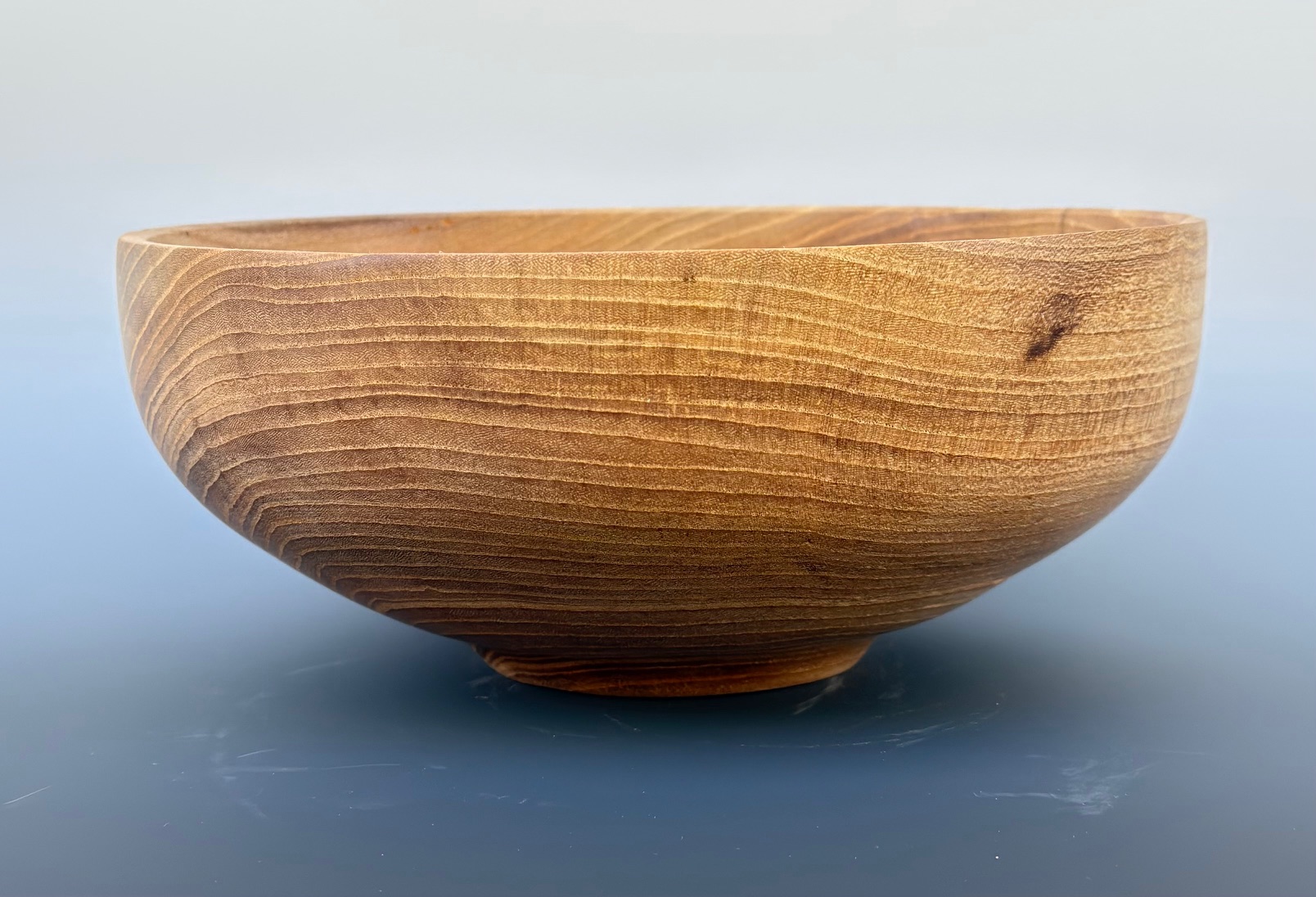
- $190 Manzanita burl–turned a bit thicker and more shallow since it might have exploded due to the cracks and voids that add character. Burl is a stress response causing a mass of abnormal growth much like a tumor or callus, prized for the twists and swirls in the grain. Manzanita is a shrub with dense wood and red/brown coloration, found mainly in California. 8 1/2 inch diameter and 1 1/2 inch height.
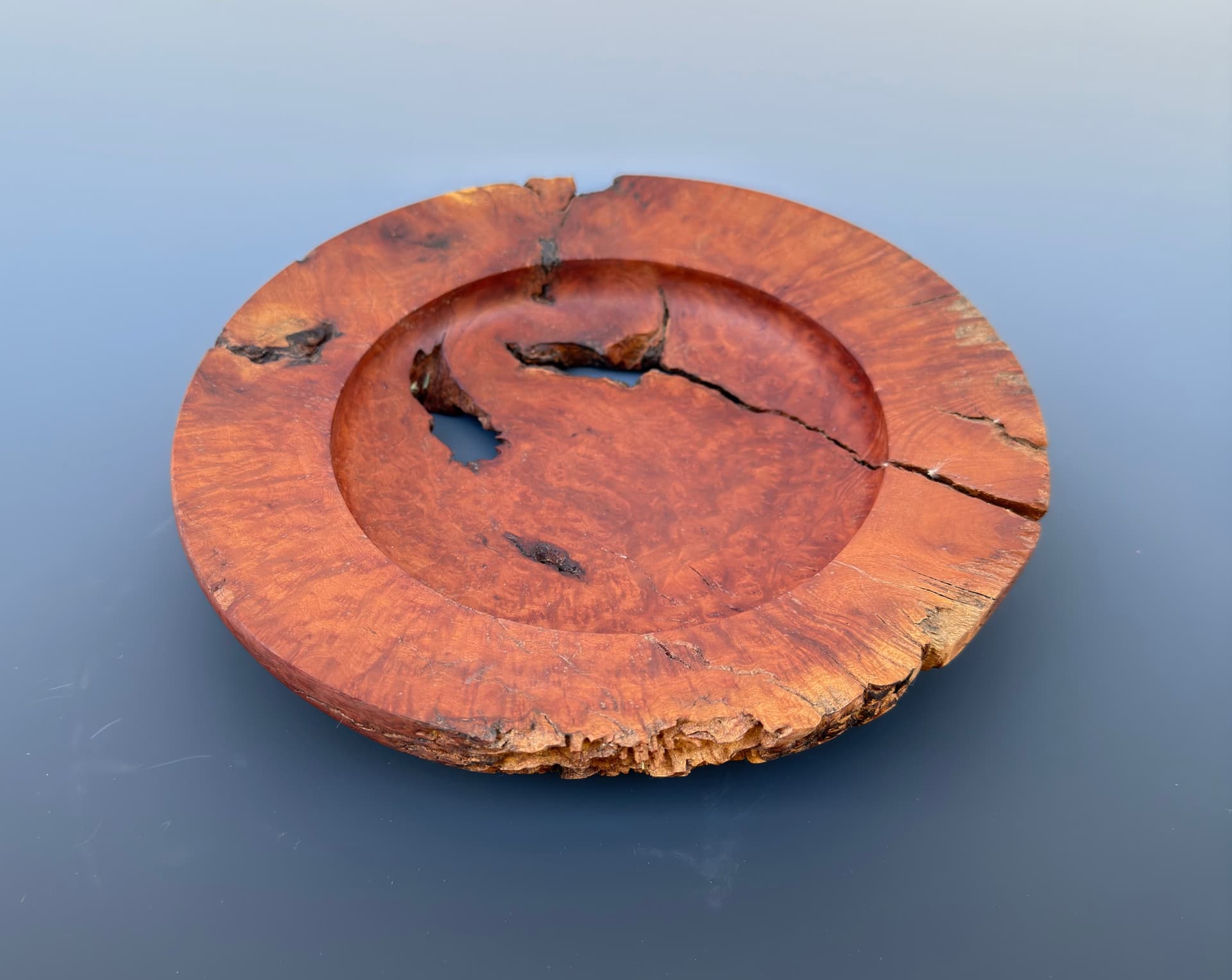
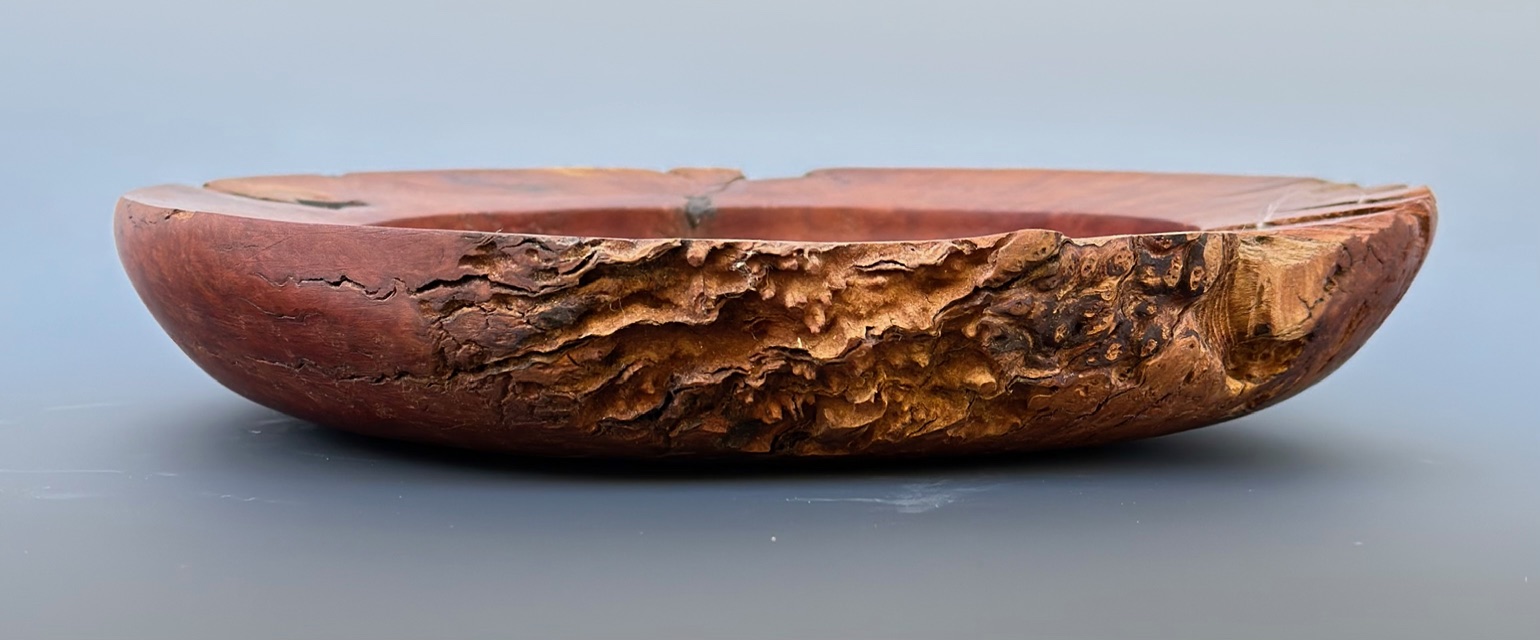
- $175 Australian red malee burl, another rare and expensive wood. Burl is a stress response causing a mass of abnormal growth much like a tumor or callus, prized for the twists and swirls in the grain. 6 1/8 inch diameter and2 inch height.
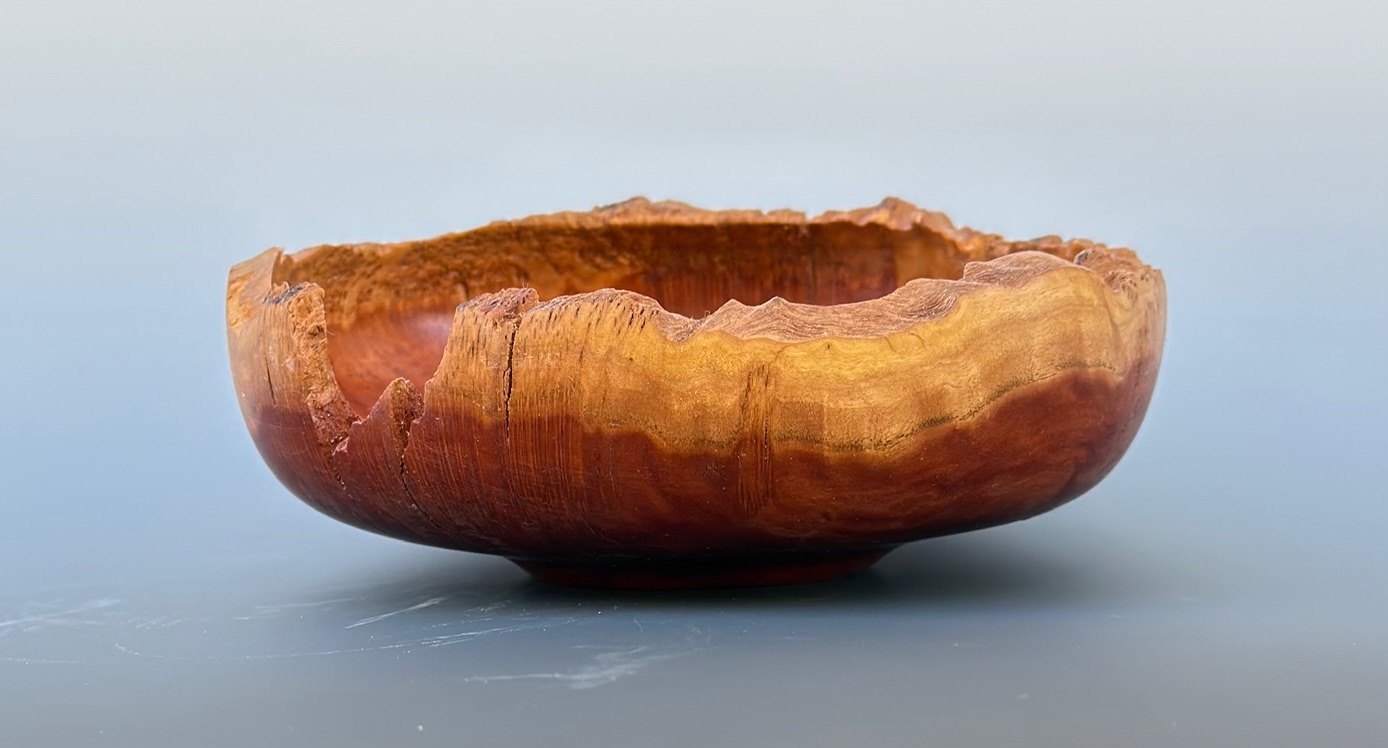
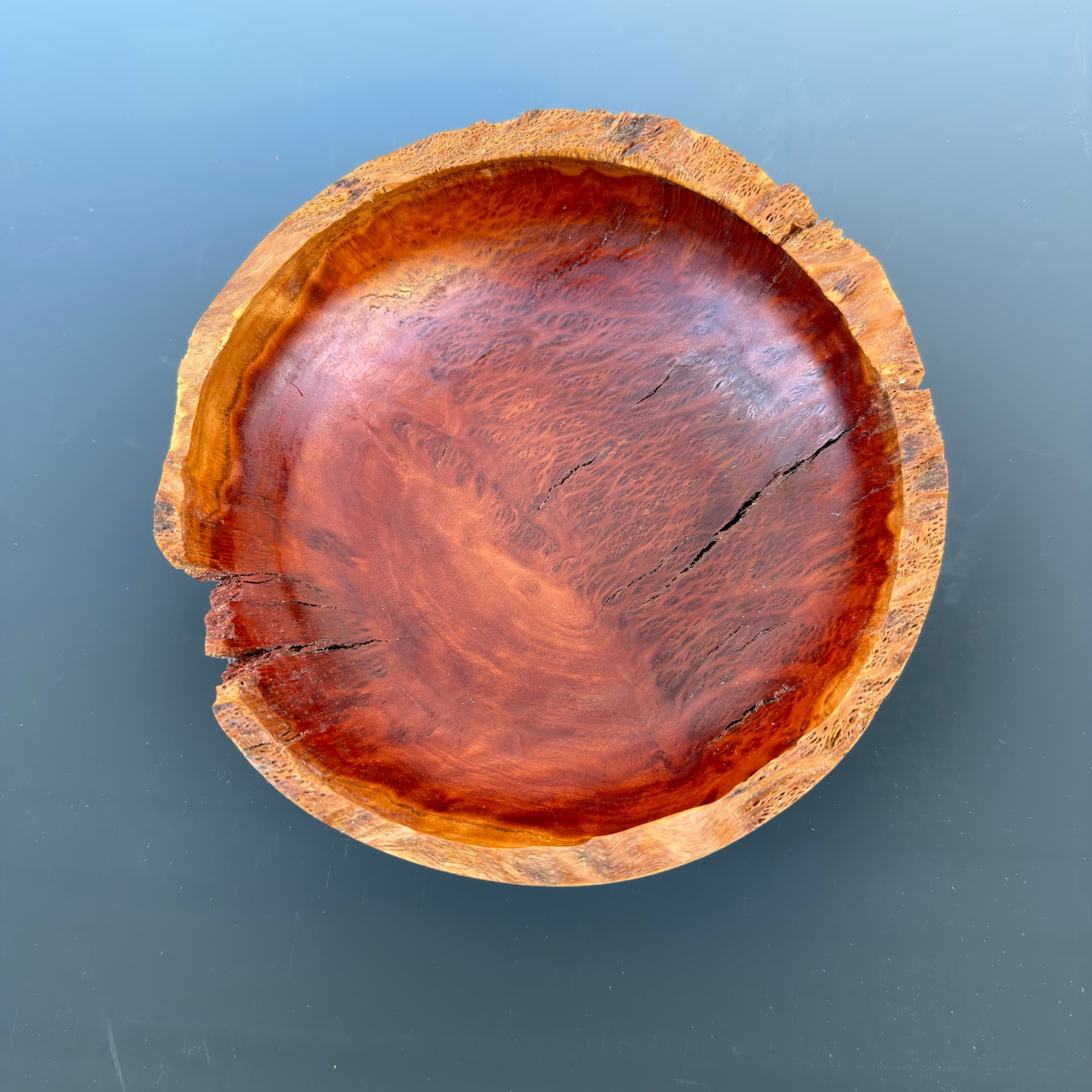
SOLD. 16. $90 Natural edge bowl–this is a bowl that has the original contour of the tree trunk, sometimes with bark present, though not in this case. The rim undulates. Wood type is unknown. diameter 5-6 inches, height 1 1/4 to 3 1/2 inches.
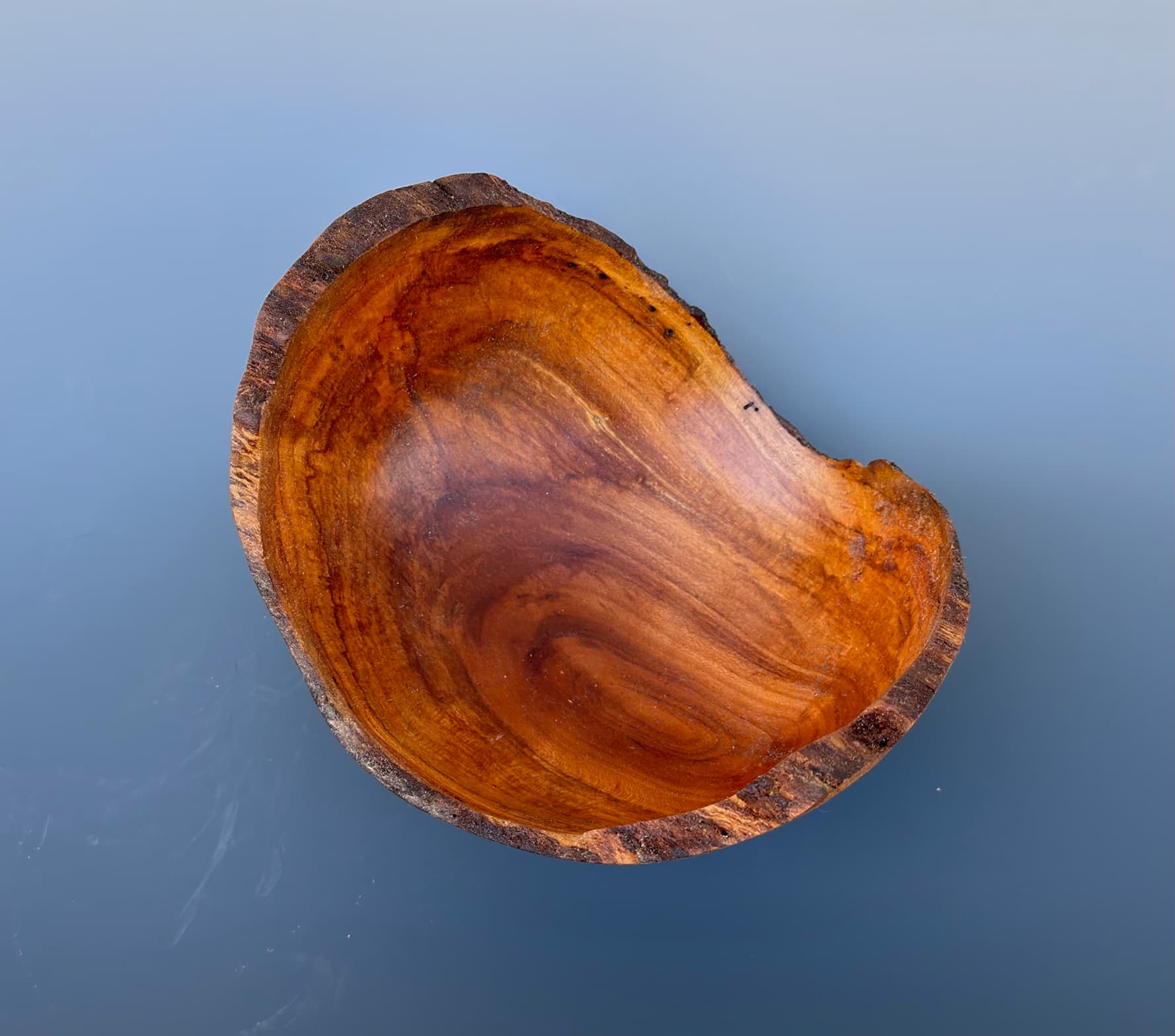
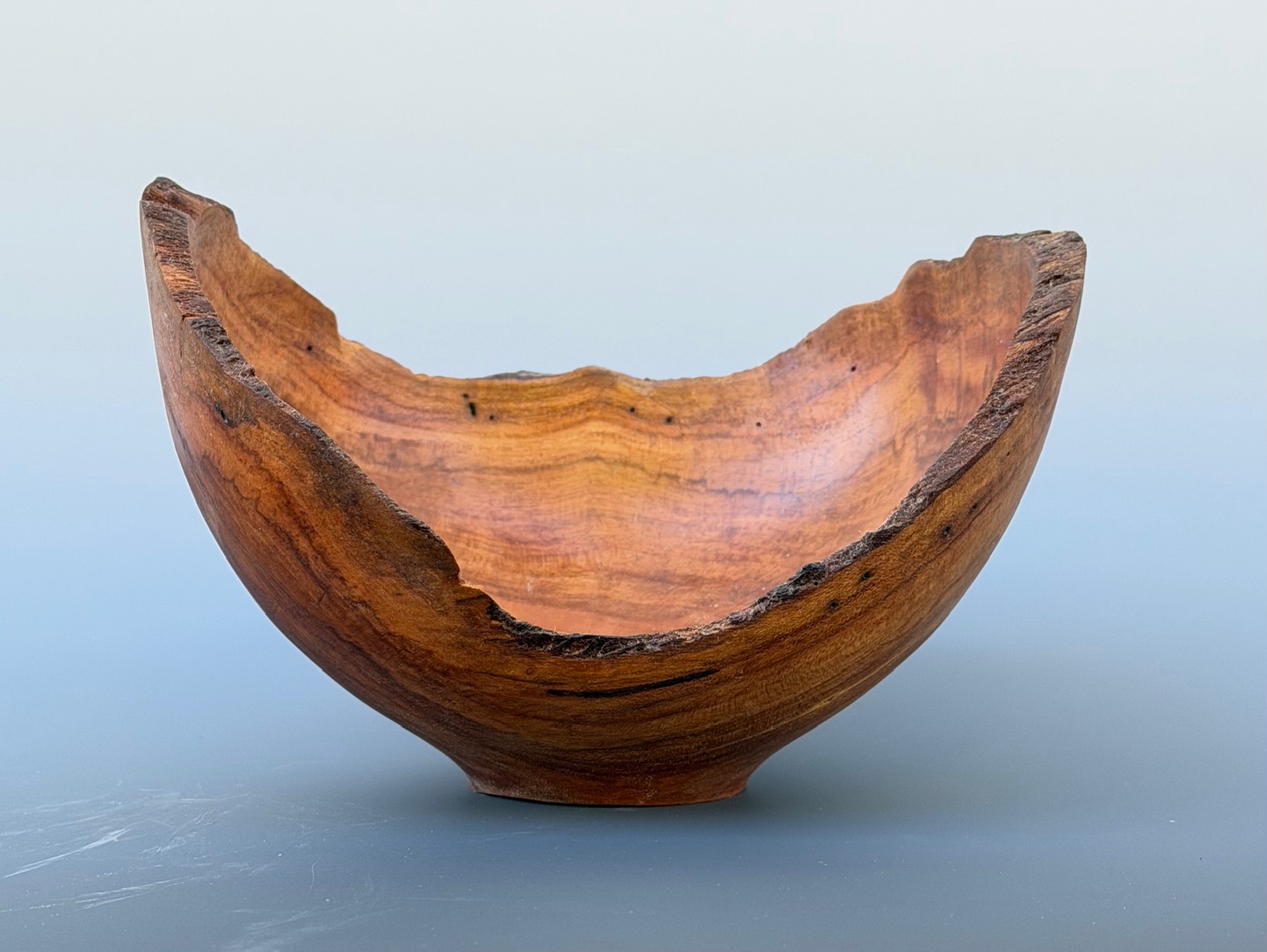
- $70 Small canarywood bowl 4 3/4 inch diameter and 2 1/4 inch height.
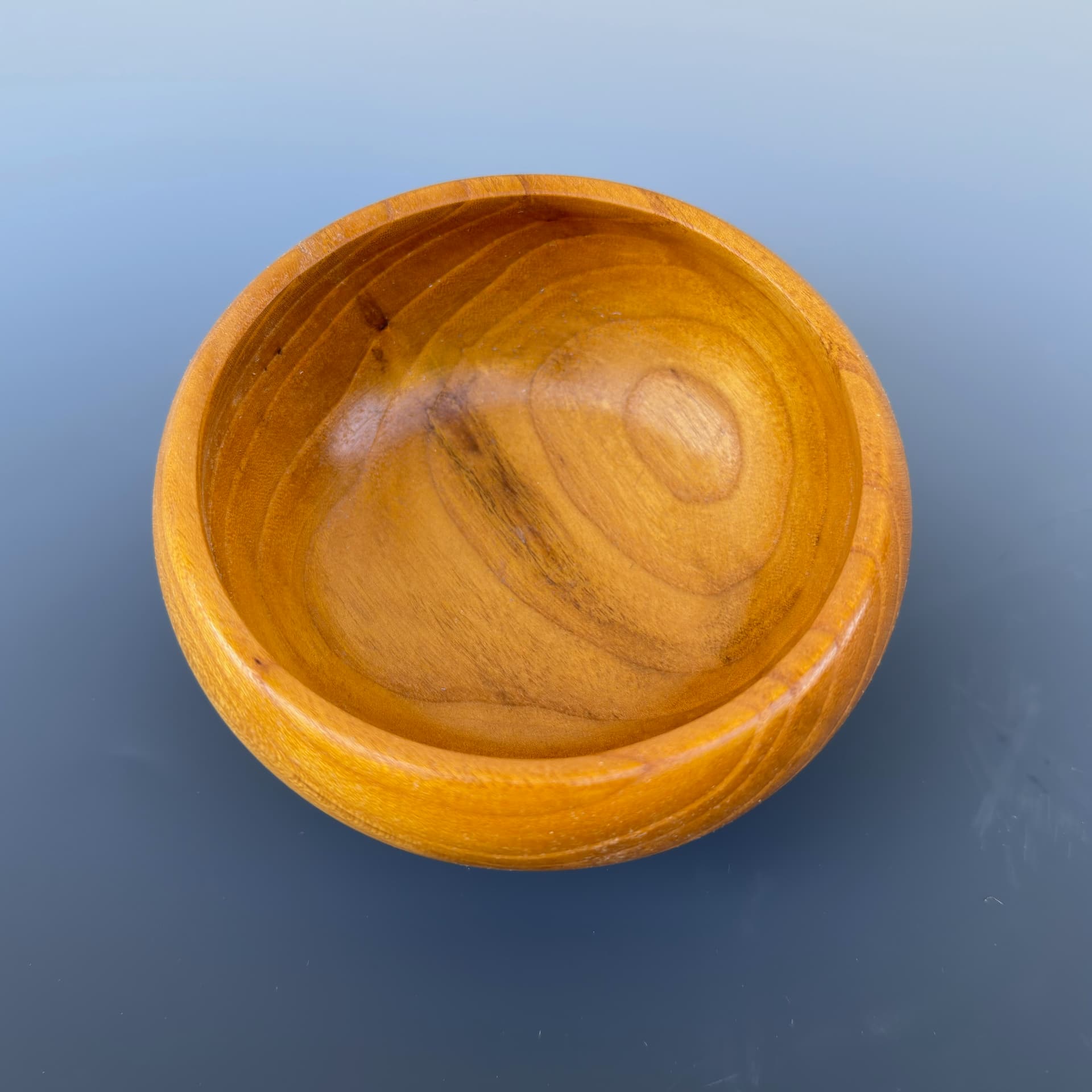
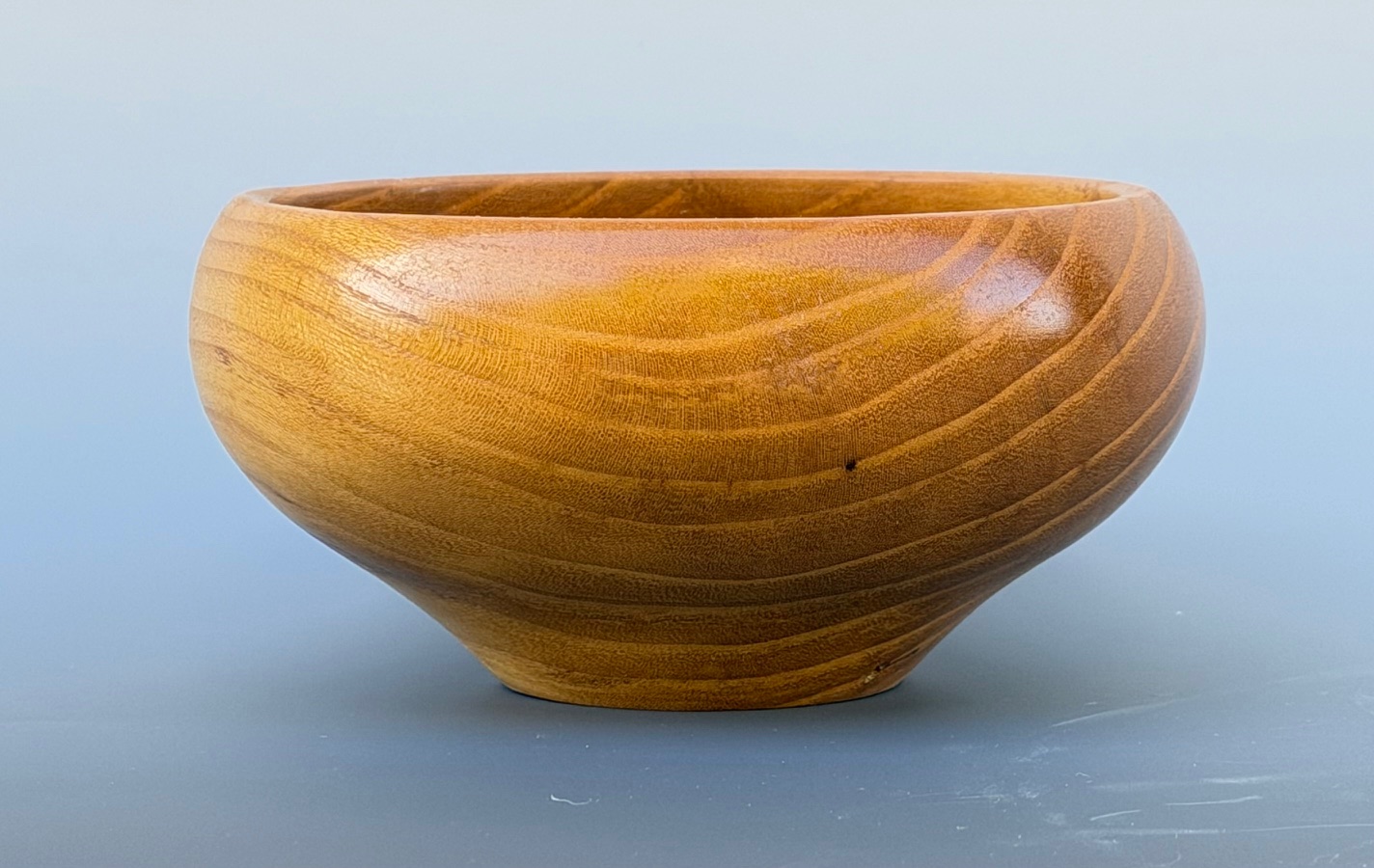
- $80 Small walnut bowl, thin wall. 6 1/2 inch diameter and 1 3/4 inch height.
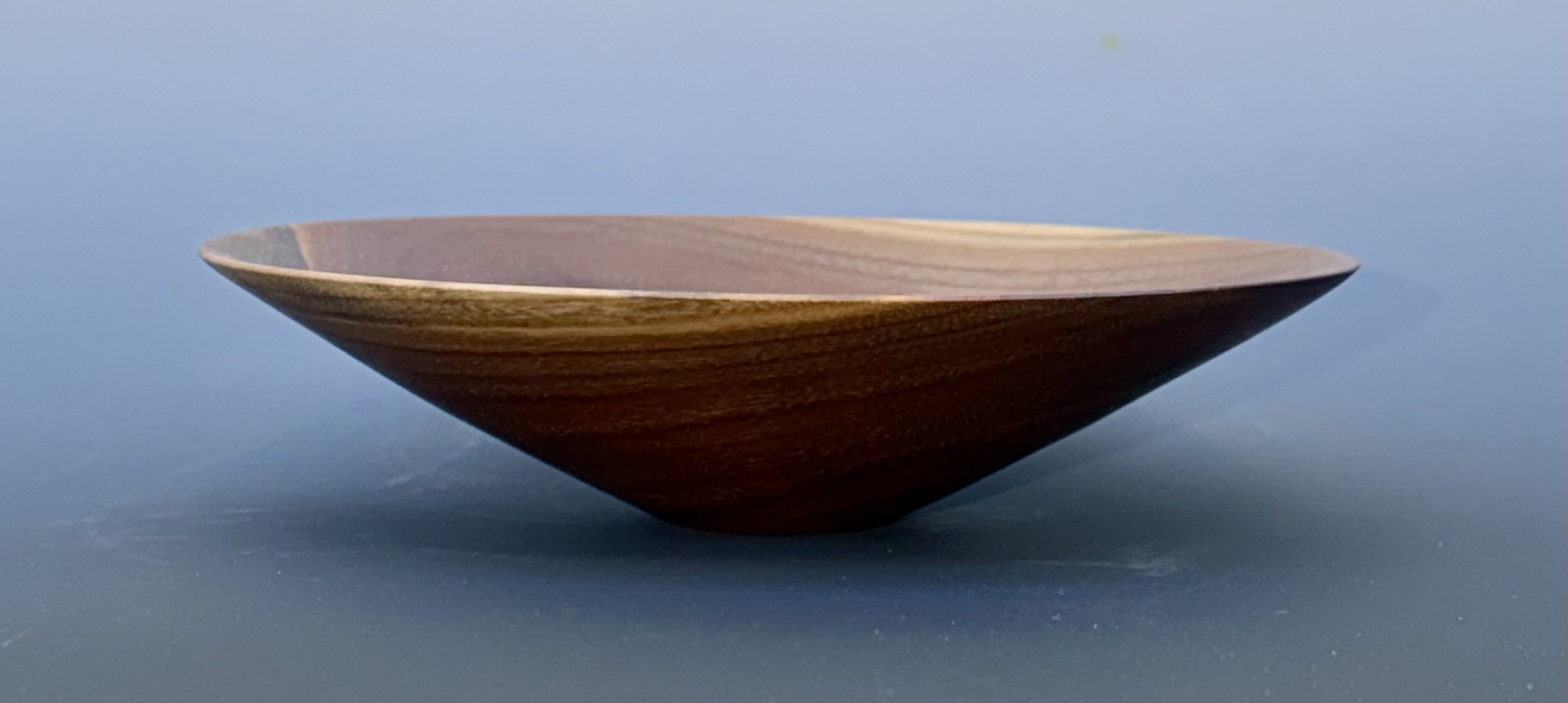
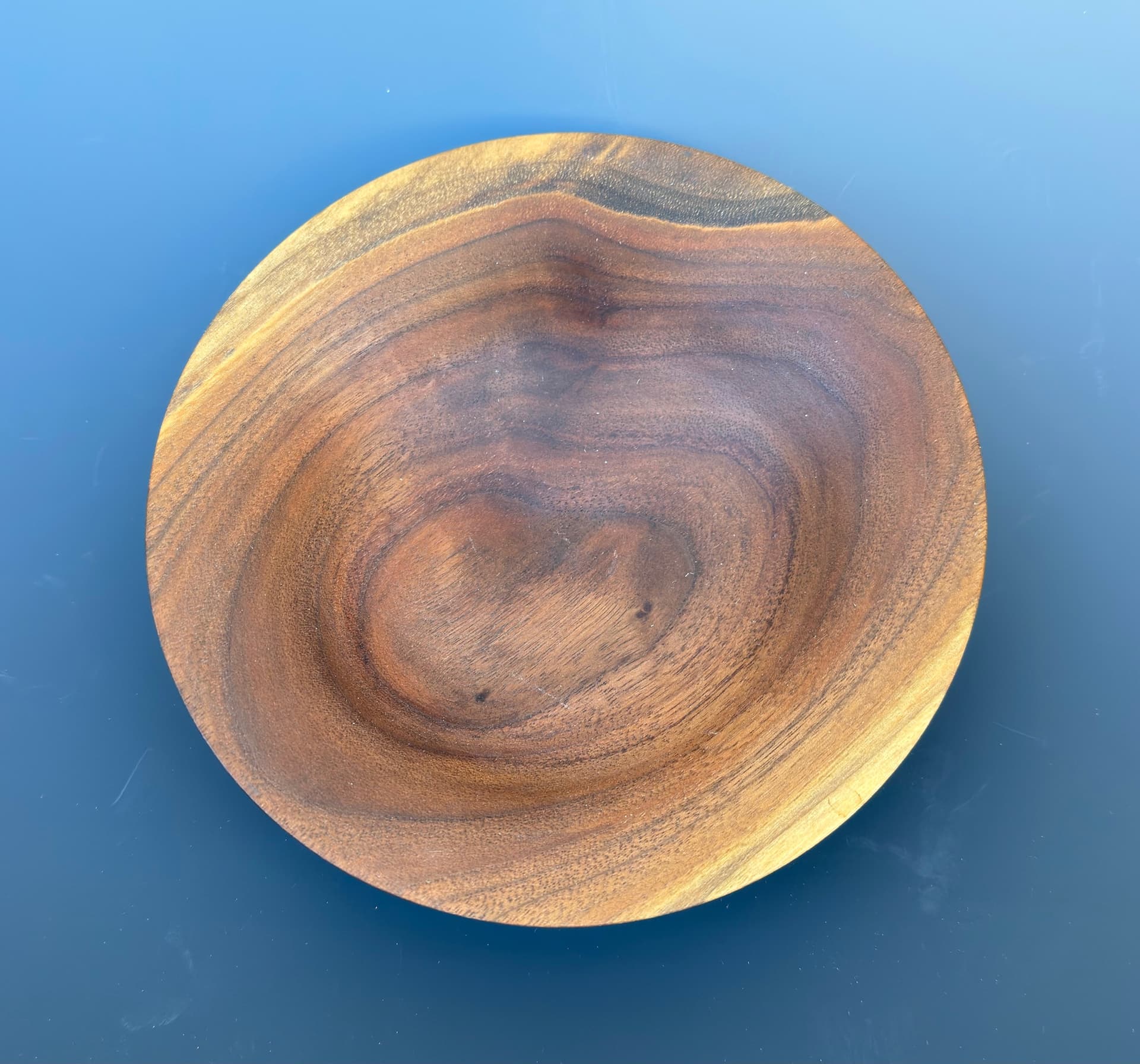
- $75 Small walnut bowl. 5 3/8 inch diameter and 2 1/2 inch height.
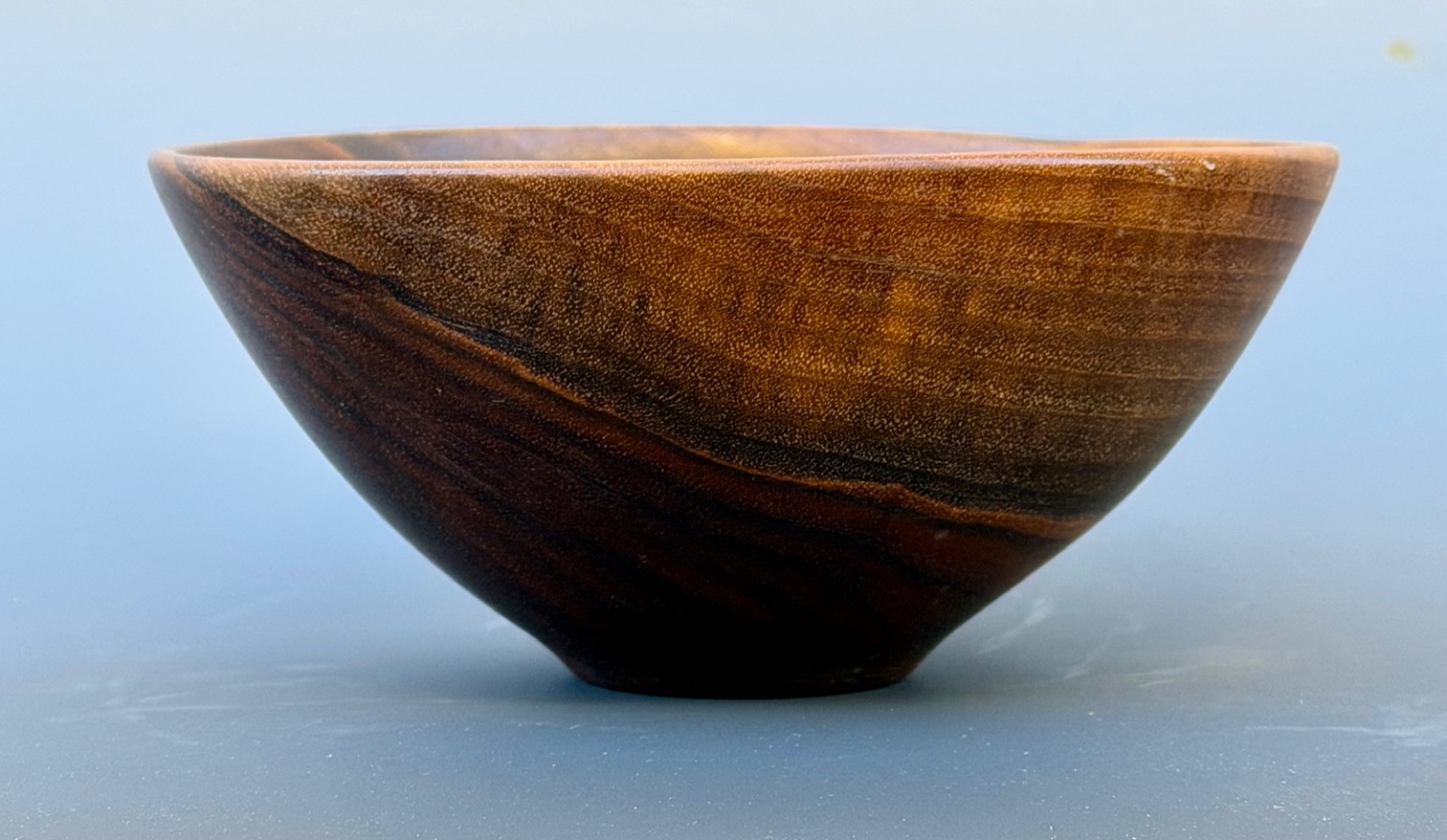
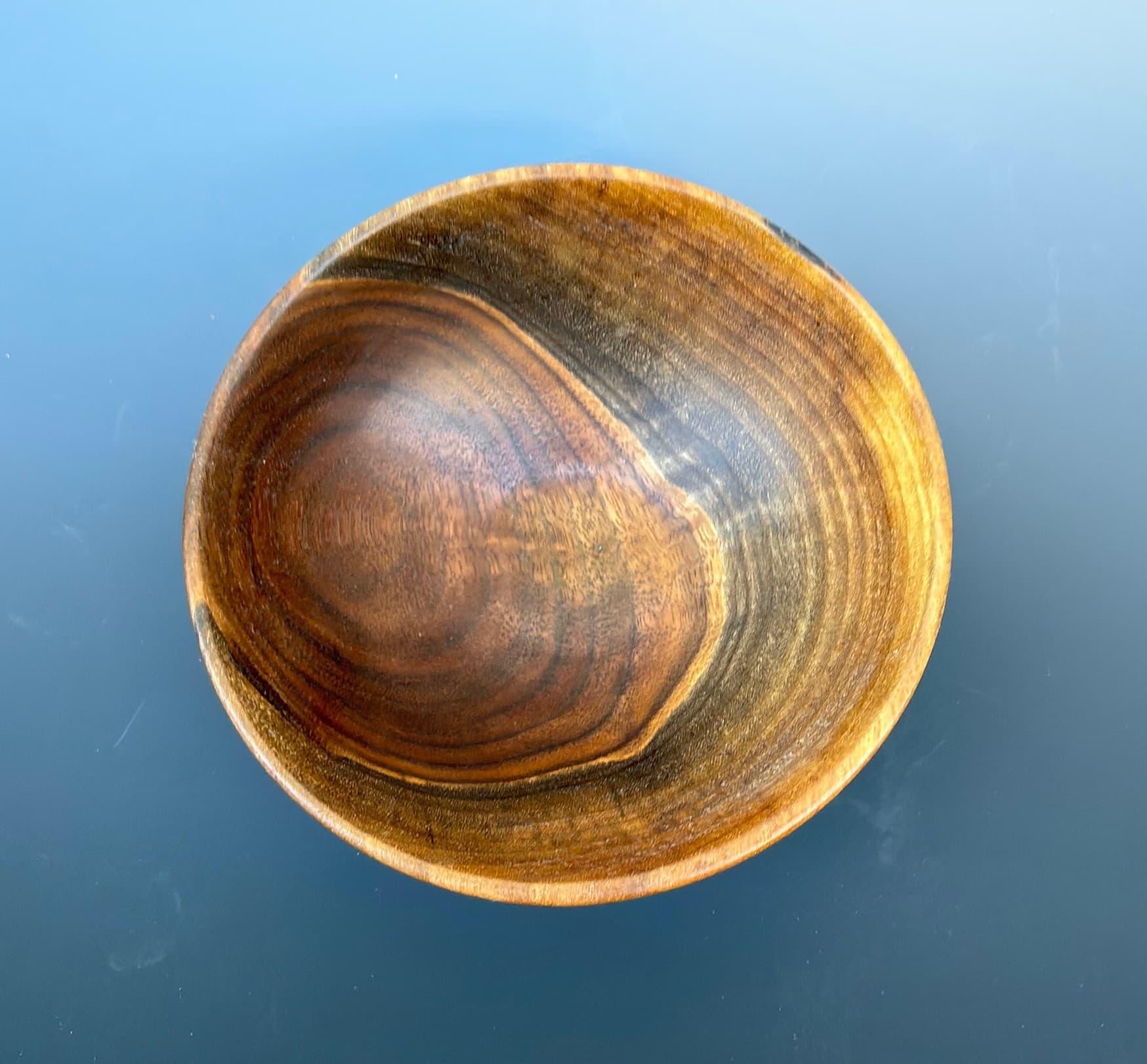
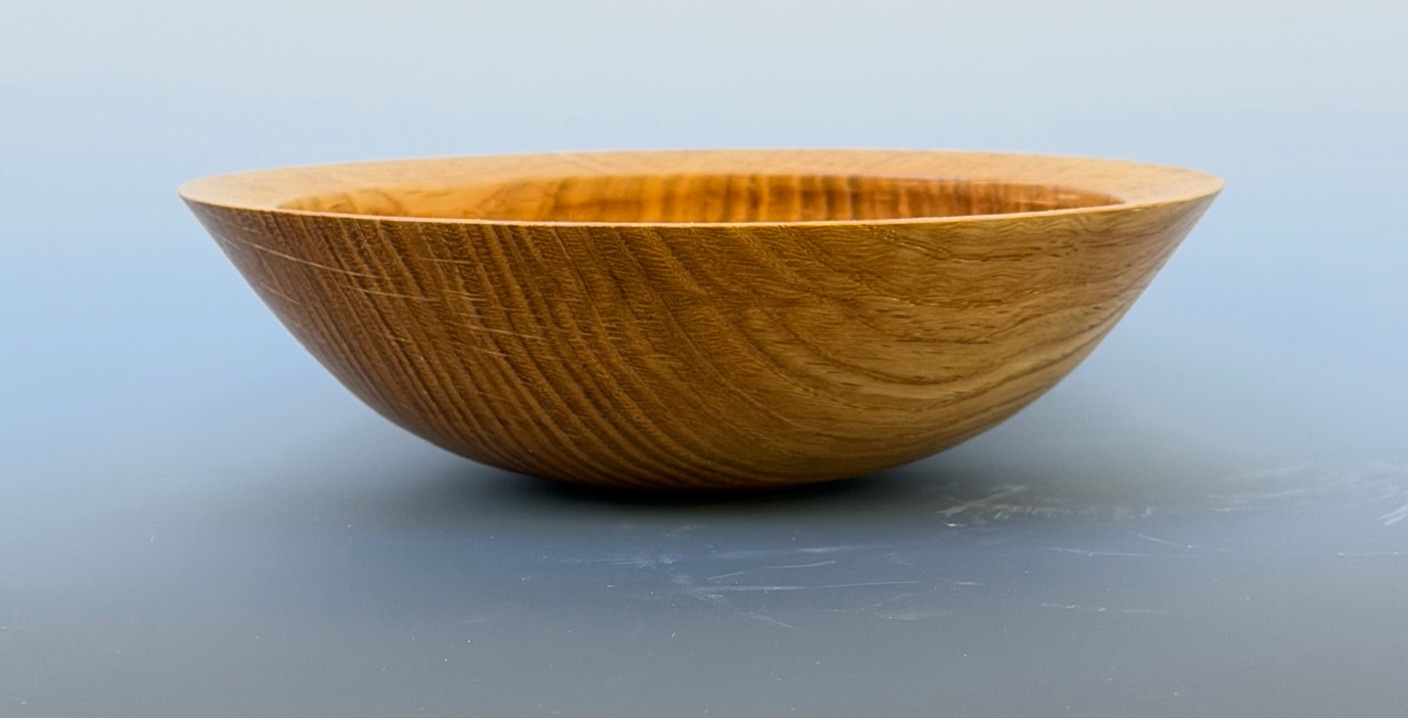
- $75 Small oak bowl with undercut rim. 6 1/2 inch diameter and 2 inch height.
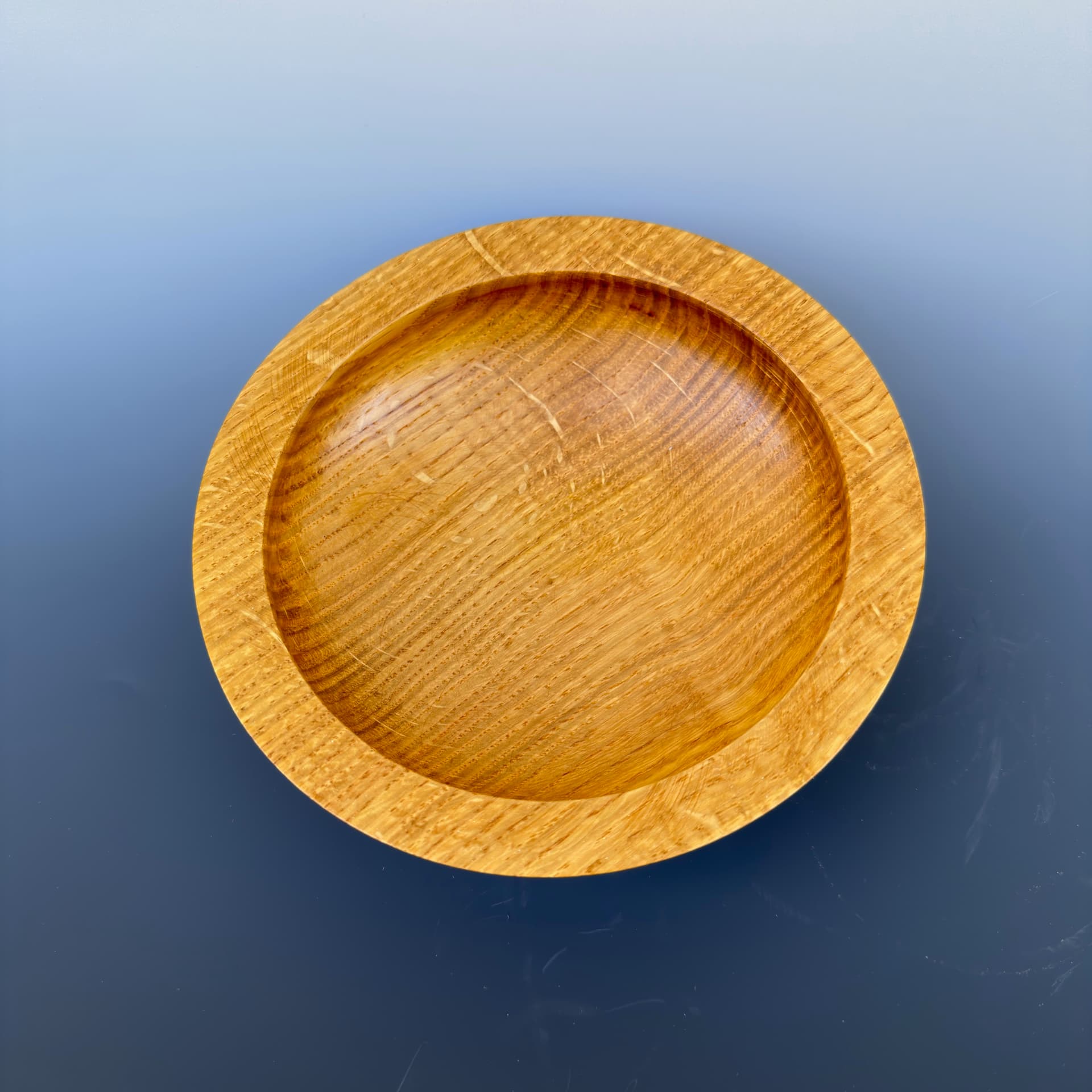
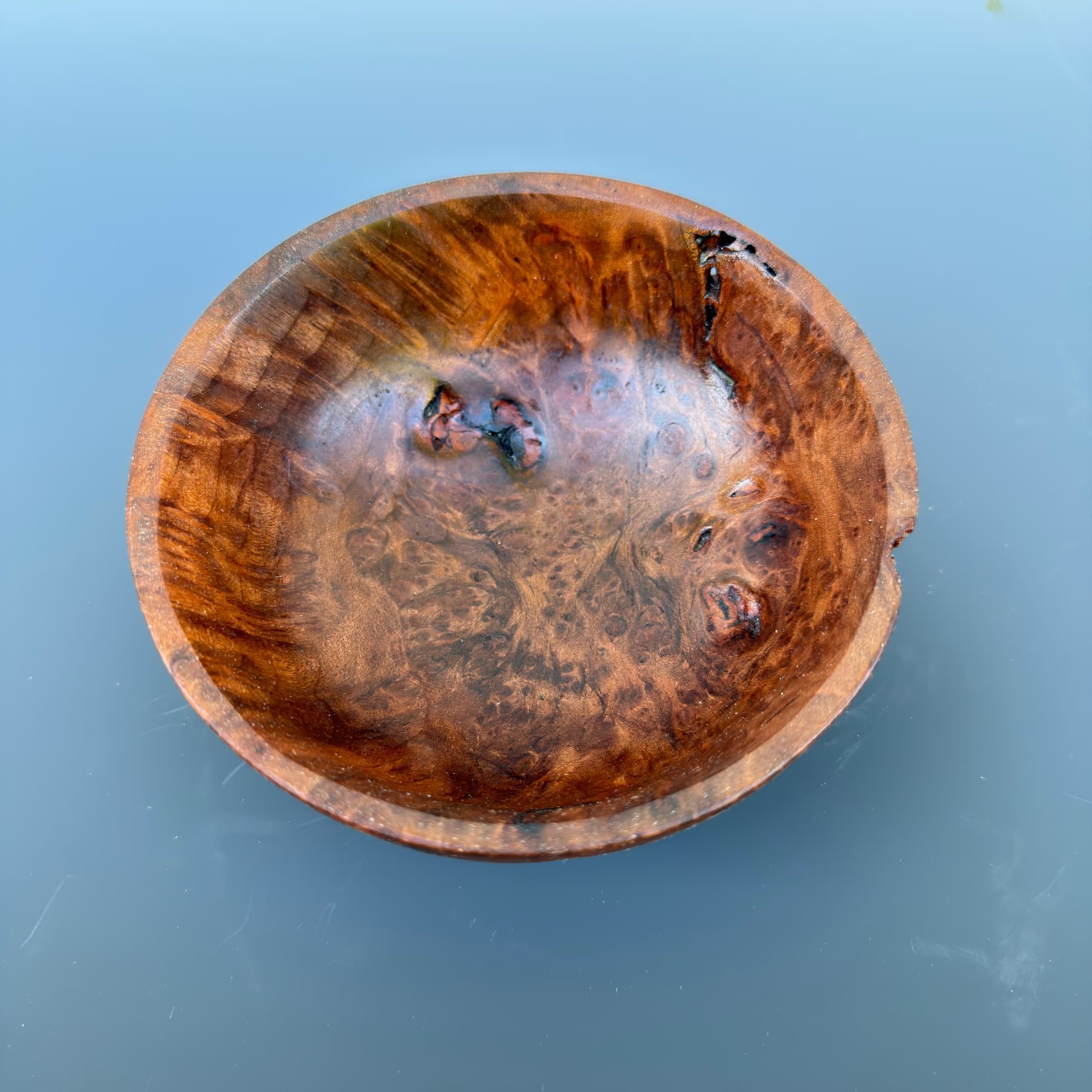
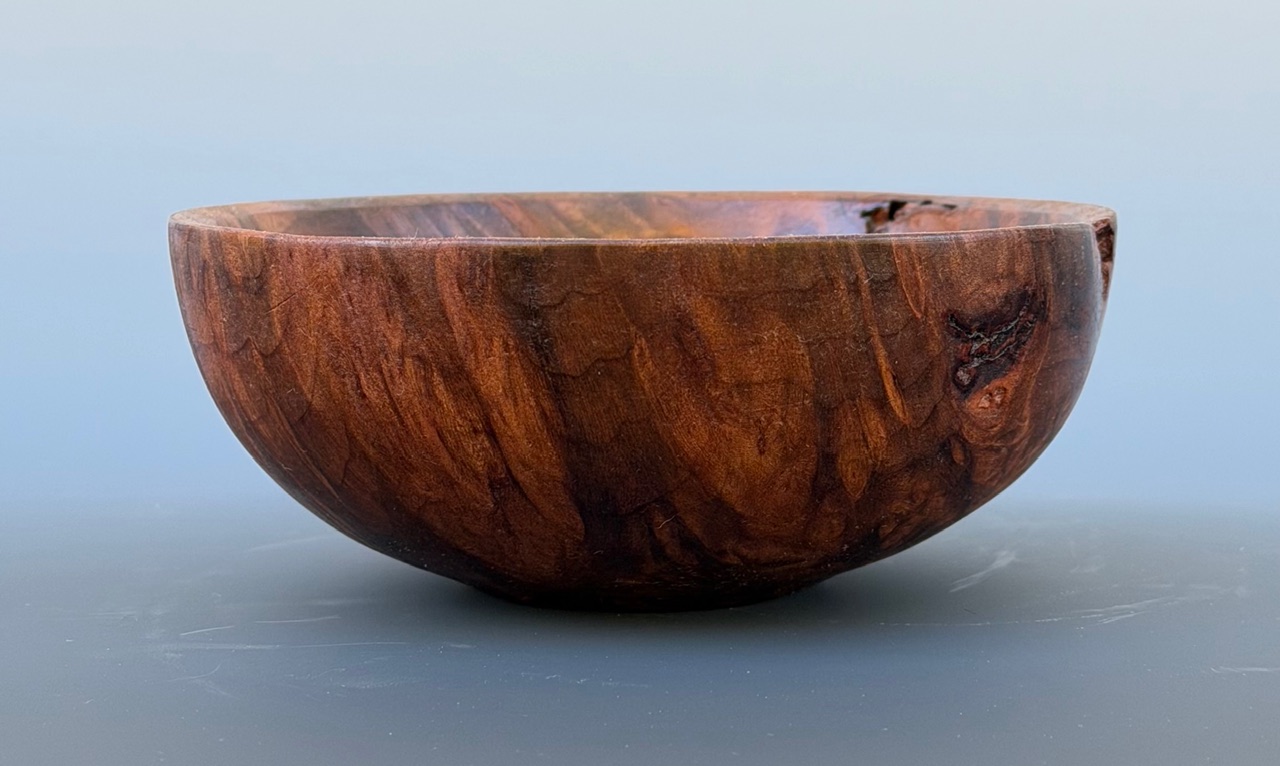
- $95 Small redwood burl bowl–the defects and cracks are present in burl and add to the character. Burl is a stress response causing a mass of abnormal growth much like a tumor or callus, prized for the twists and swirls in the grain. 5 inch diameter and 2 inch height.
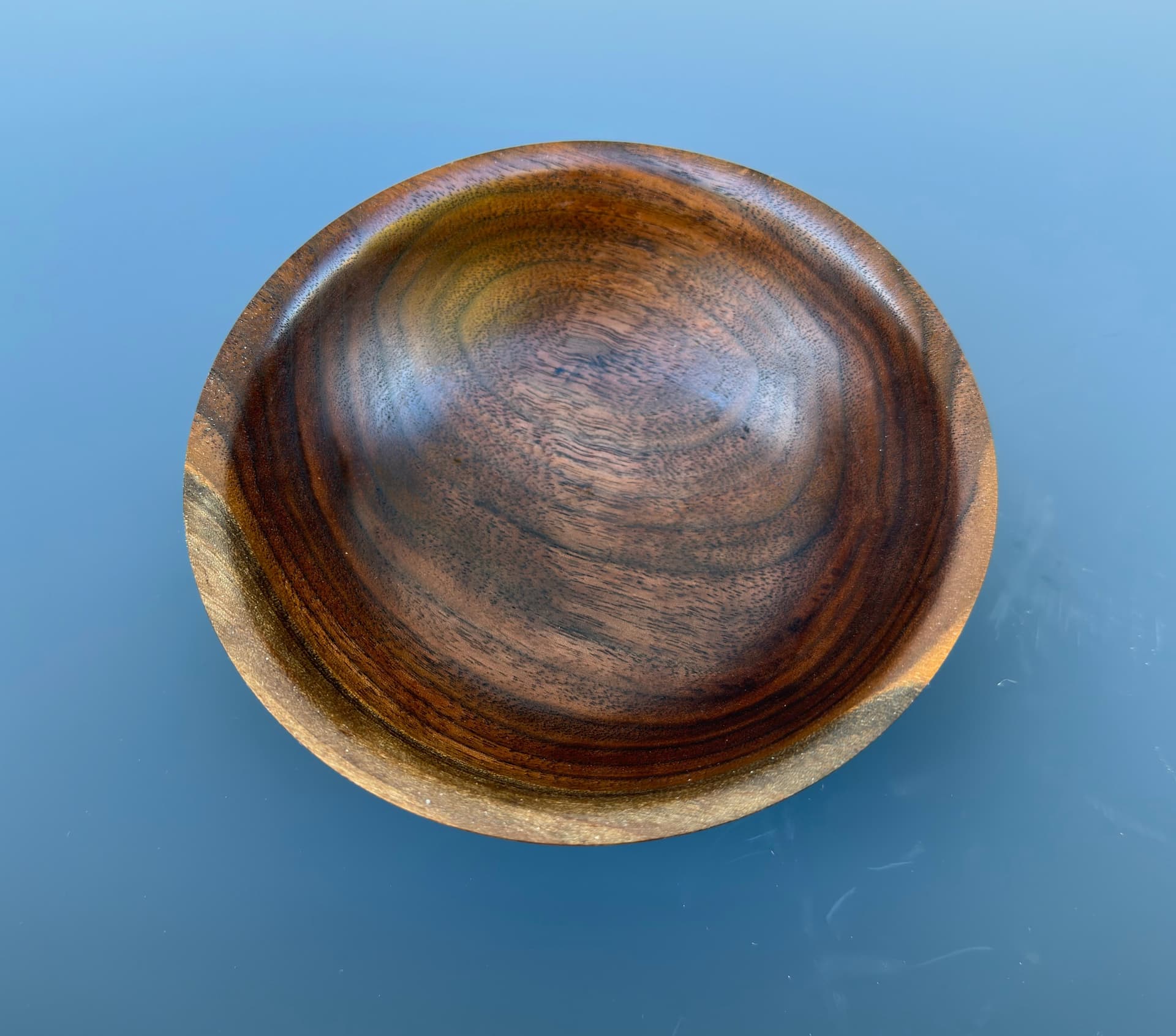
- $65 Small walnut bowl. 5 1/2 inch diameter and 1 3/4 inch height.
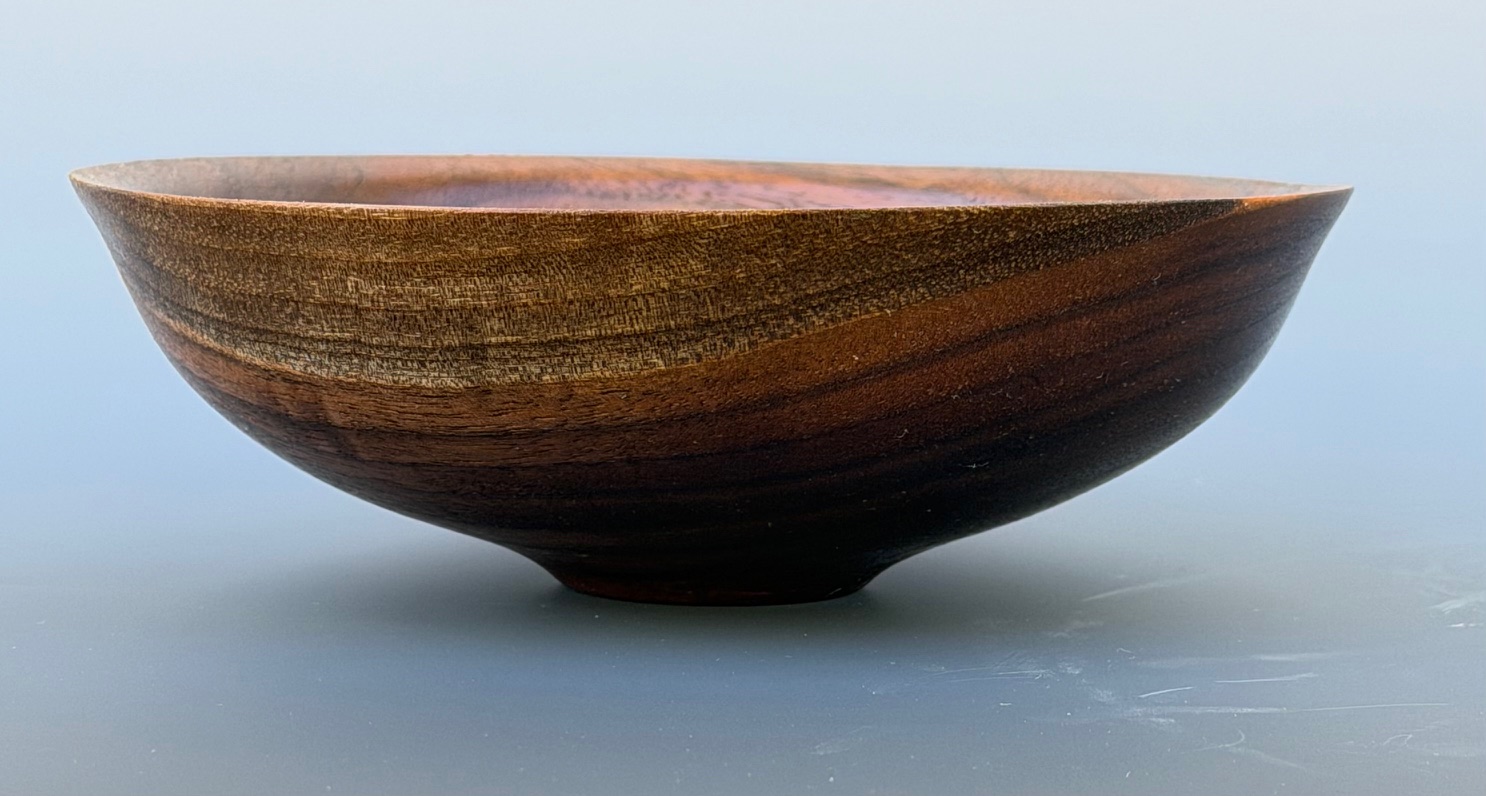
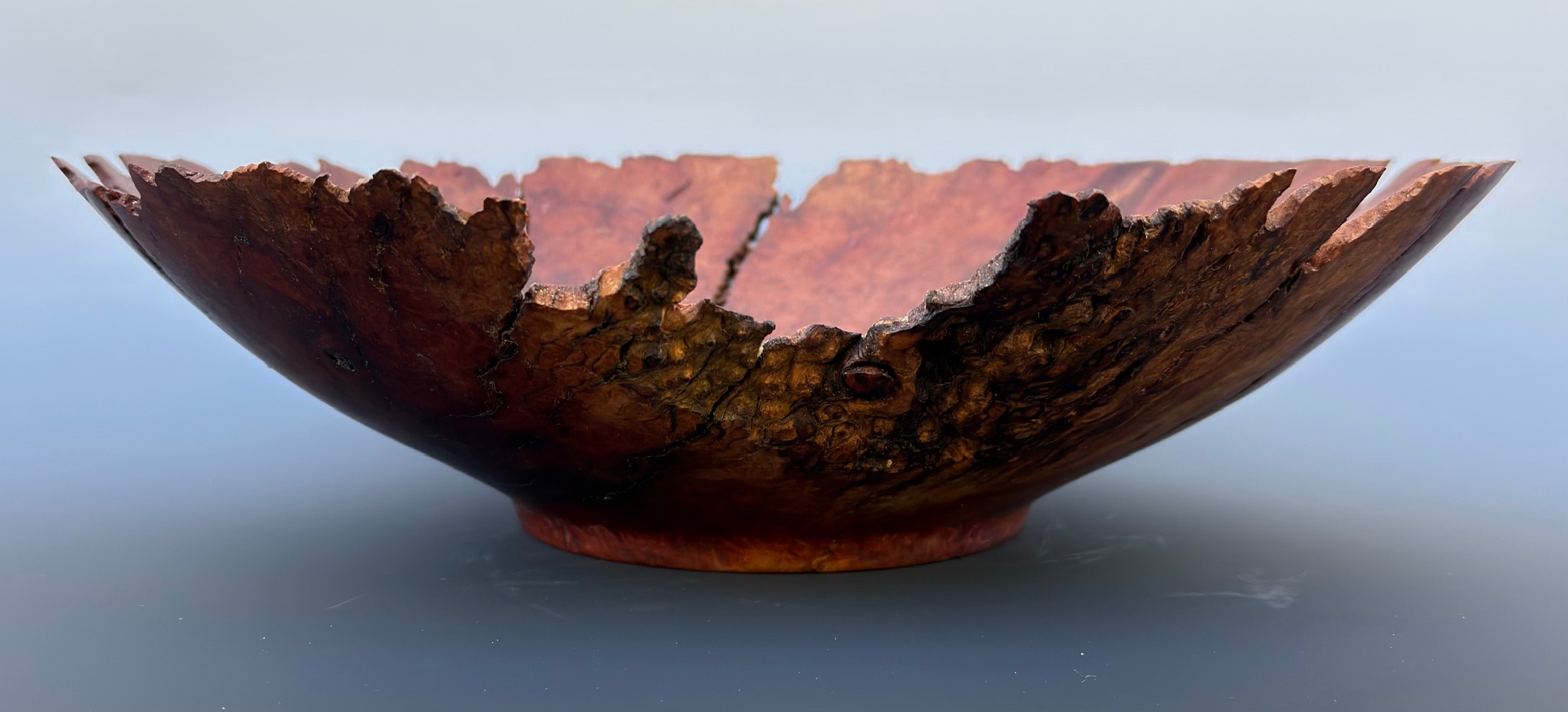
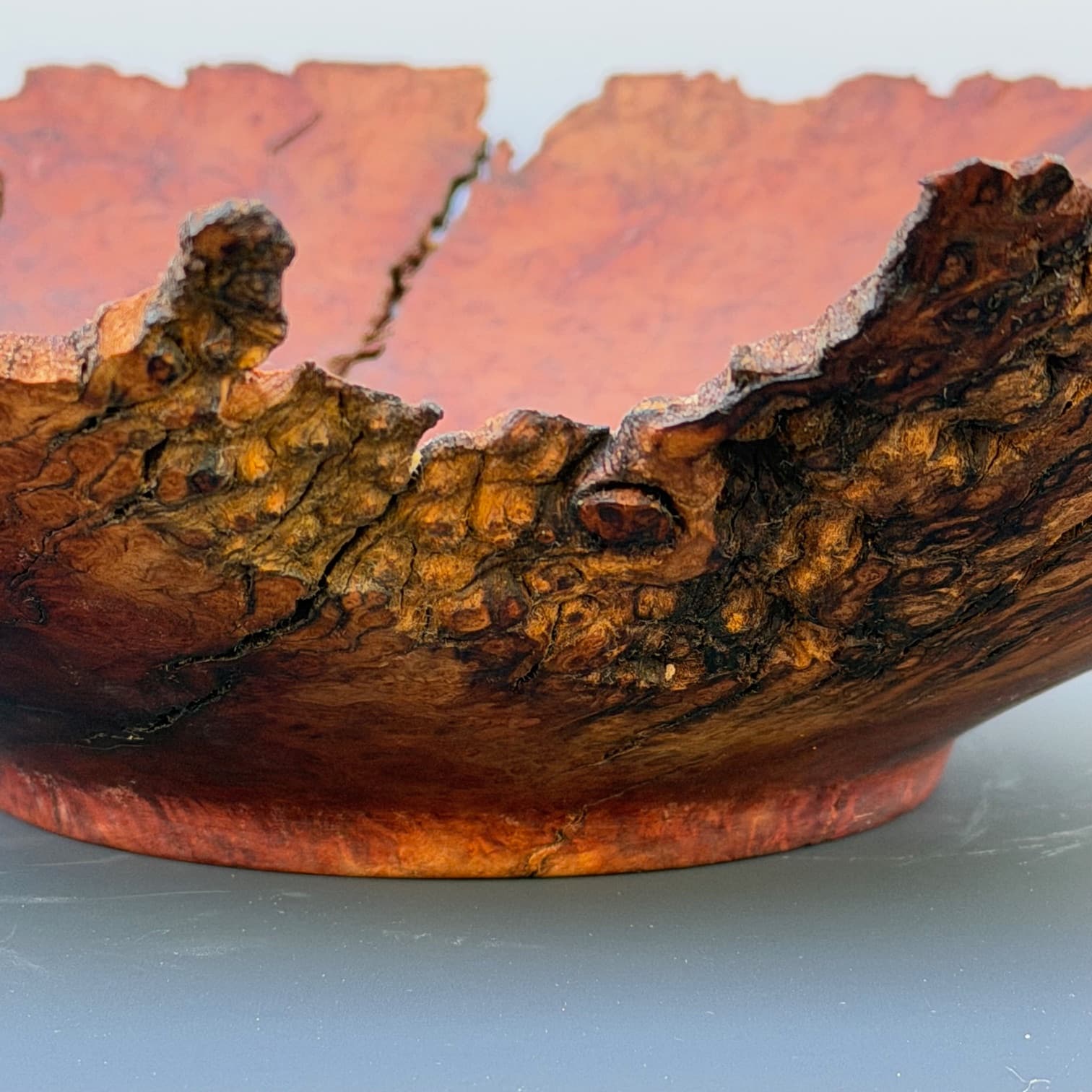
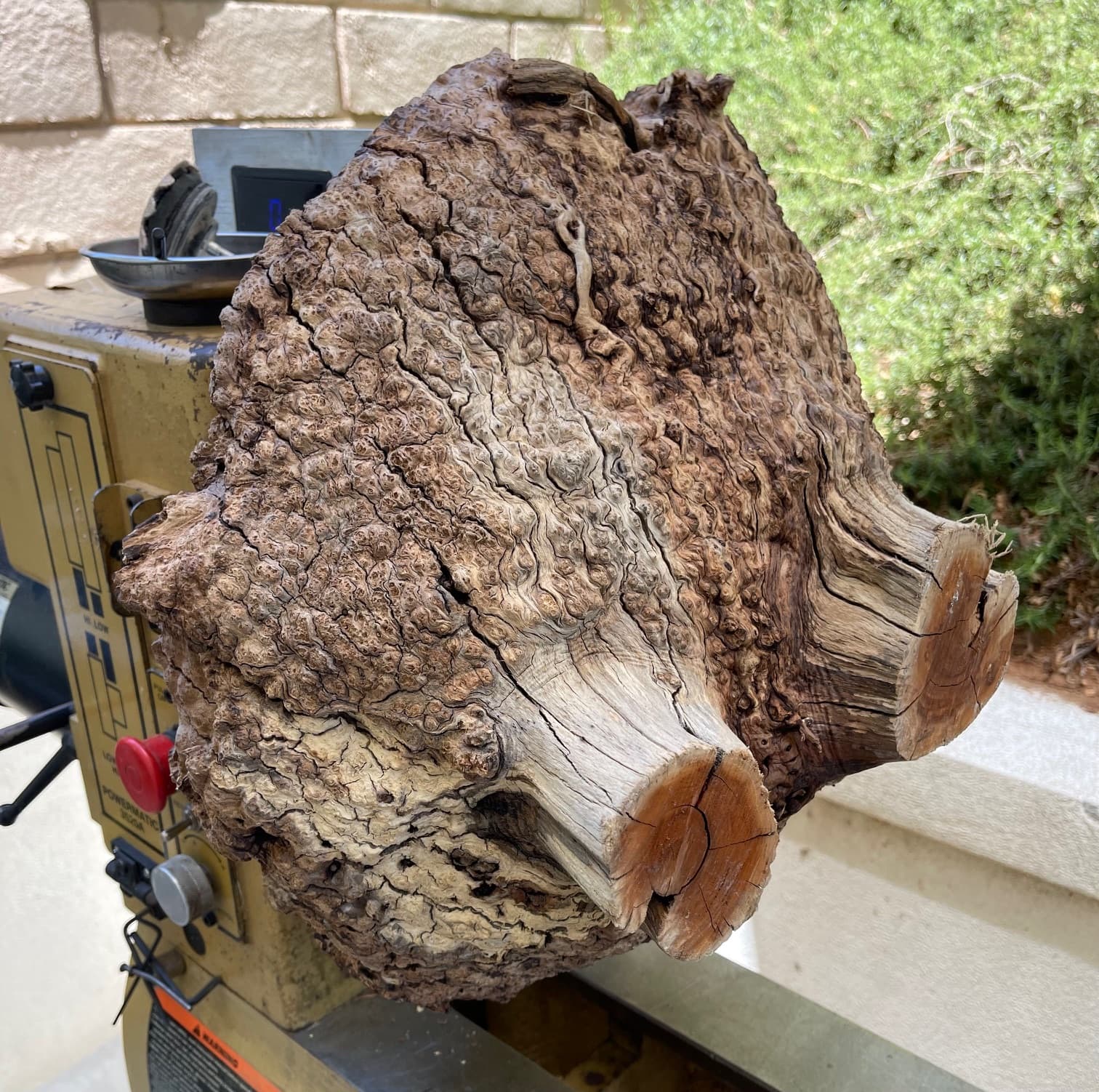
- $1200 Large manzanita burl bowl–12 inch diameter, closeup of burl in the third picture. Burl is a stress response causing a mass of abnormal growth much like a tumor or callus, prized for the twists and swirls in the grain. The final picture shows the wood blank attached to the lathe before turning the bowl. With the full thickness cracks, I was very lucky to keep this piece intact on the lathe. Manzanita is a shrub with dense wood and red/brown coloration, found mainly in California. A turning this size is quite rare. 12 inch diameter.

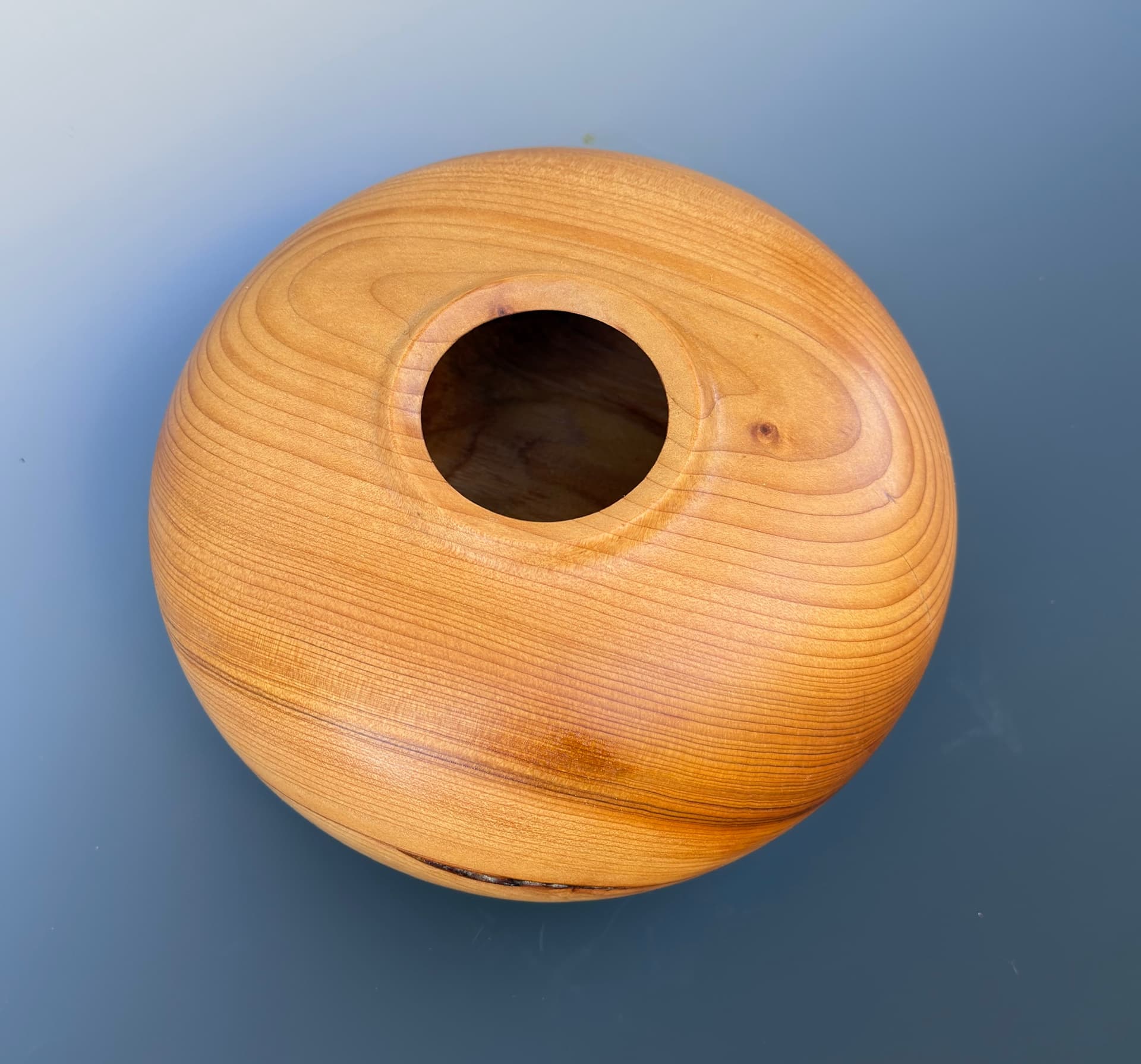
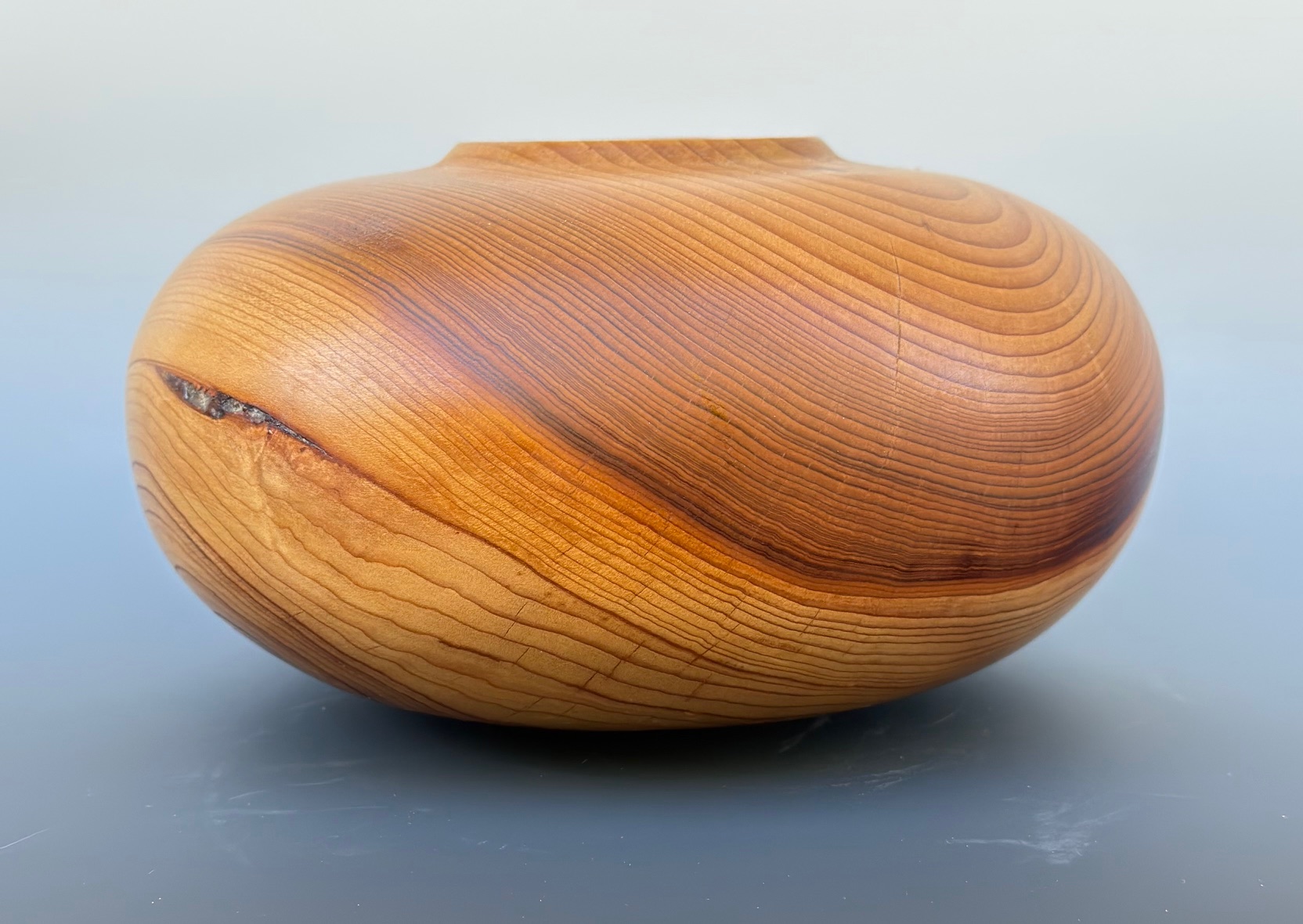
- $150 Cypress hollow form, inward sloping rim. 8 inch diameter and 4 inch height.
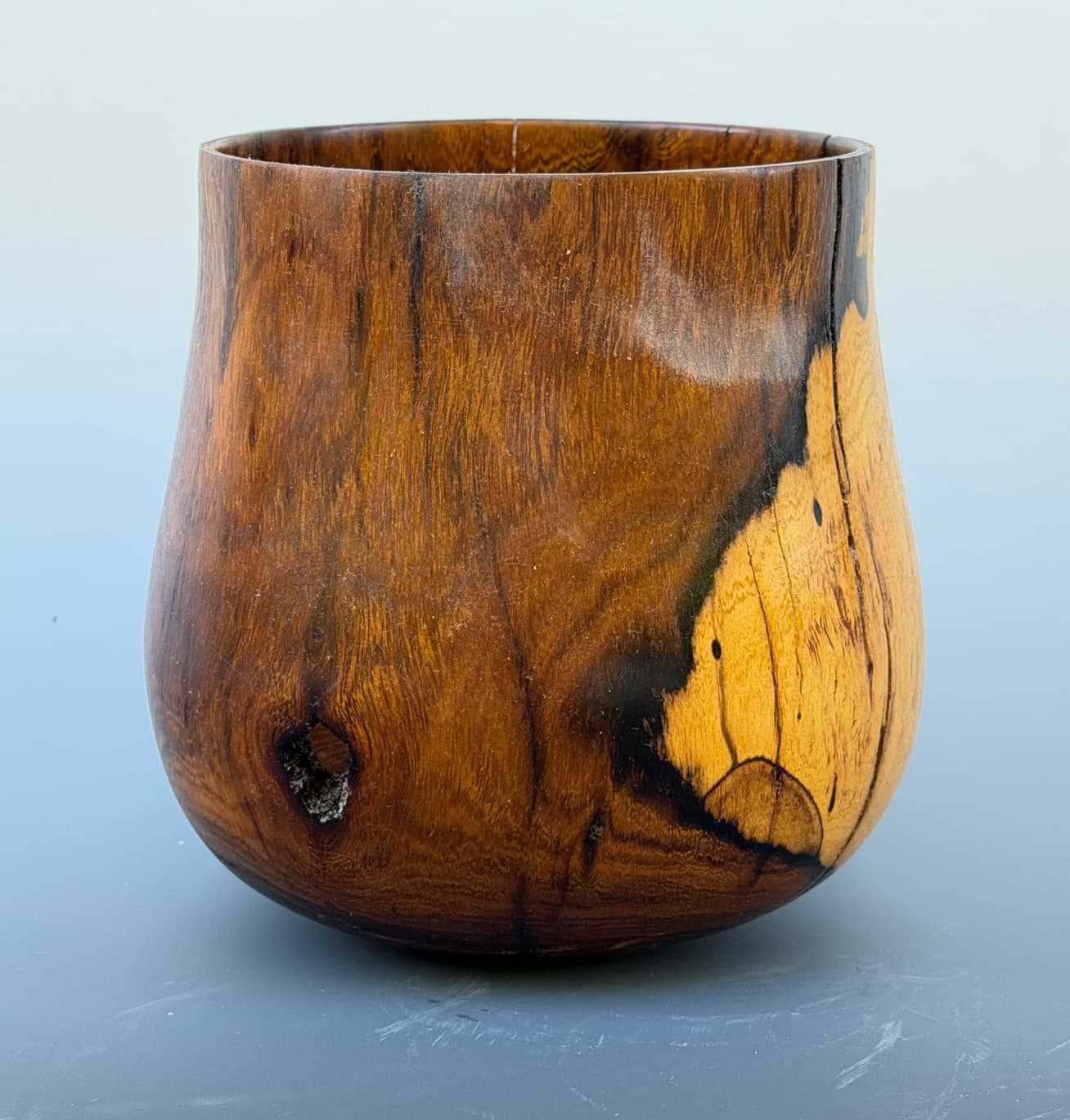
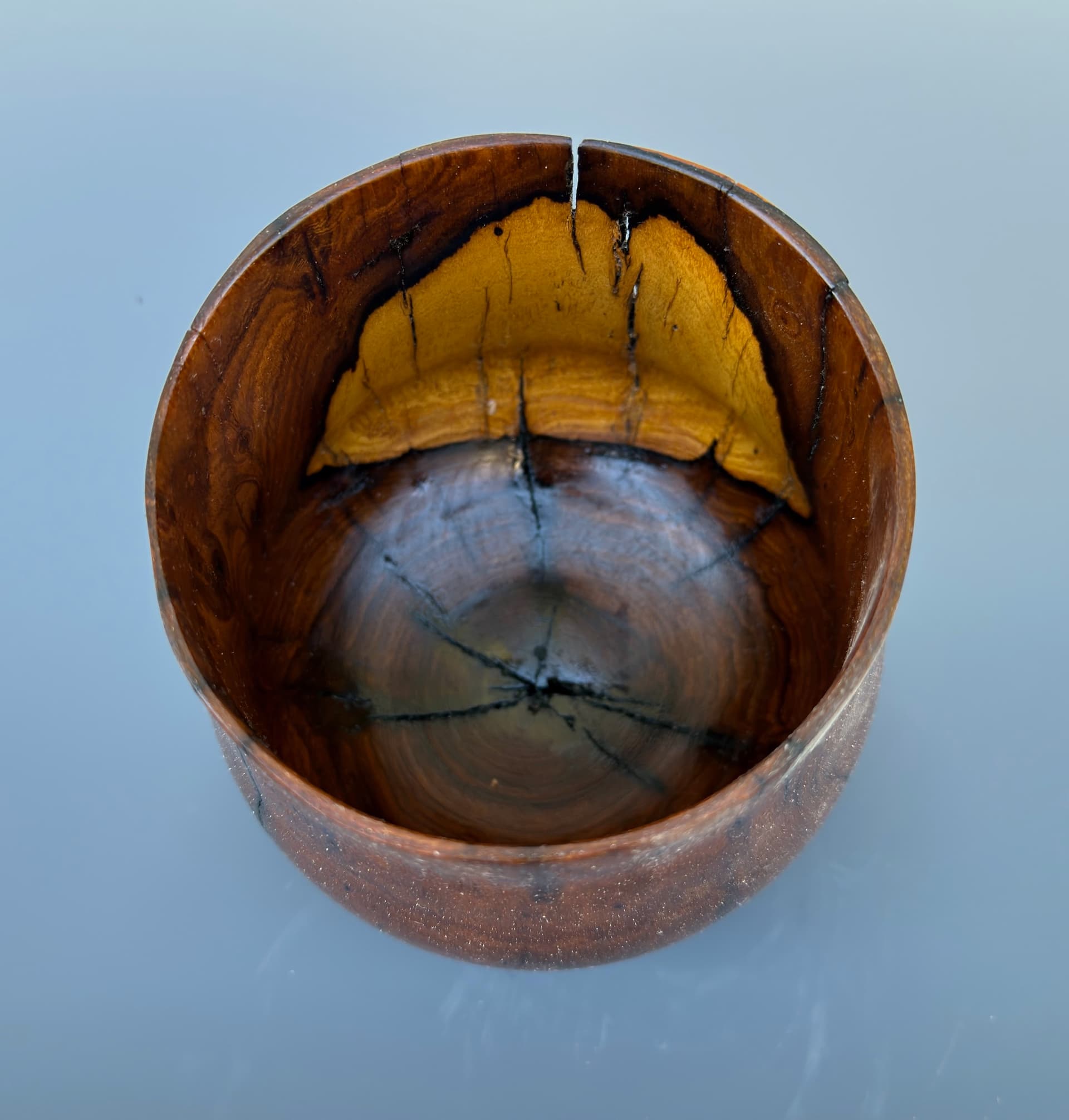
- $110 Desert ironwood calabash–a calabash is a particularly shaped bowl or “umeke,” traditional for Hawaiians, rounded bottom wider than the top. Desert ironwood always has cracks and “defects” and is a protected species, only allowing wood to be collected from fallen trees. This piece has sapwood and heartwood present. 4 inch diameter and 5 inch height.
- $90 Koa calabash with koa pewa (bowtie), cracks and voids. Koa is an expensive highly prized Hawaiian wood, now more rare. This piece has a very thin wall thickness. 3 1/4 inch diameter and 4 inch height.
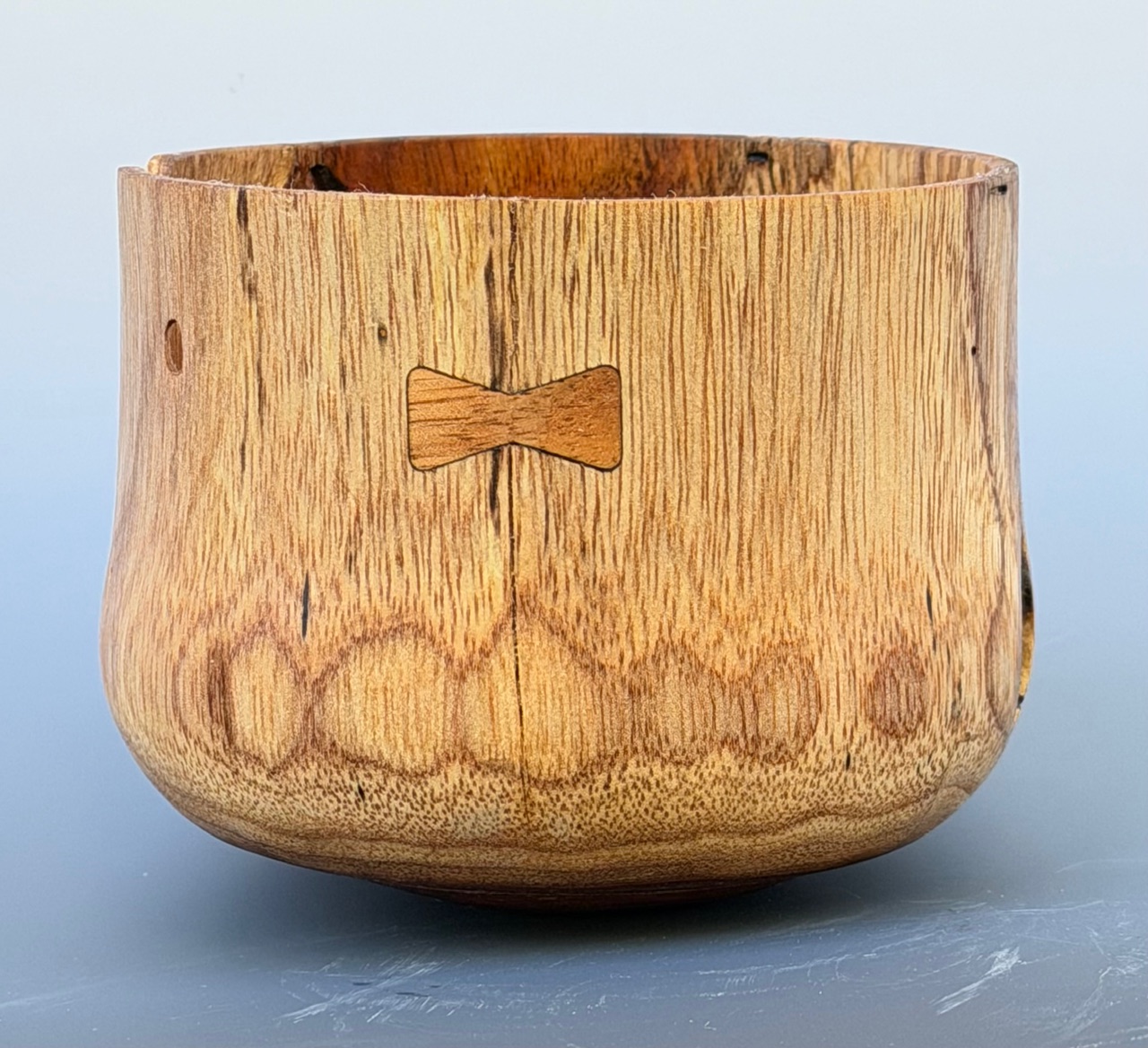
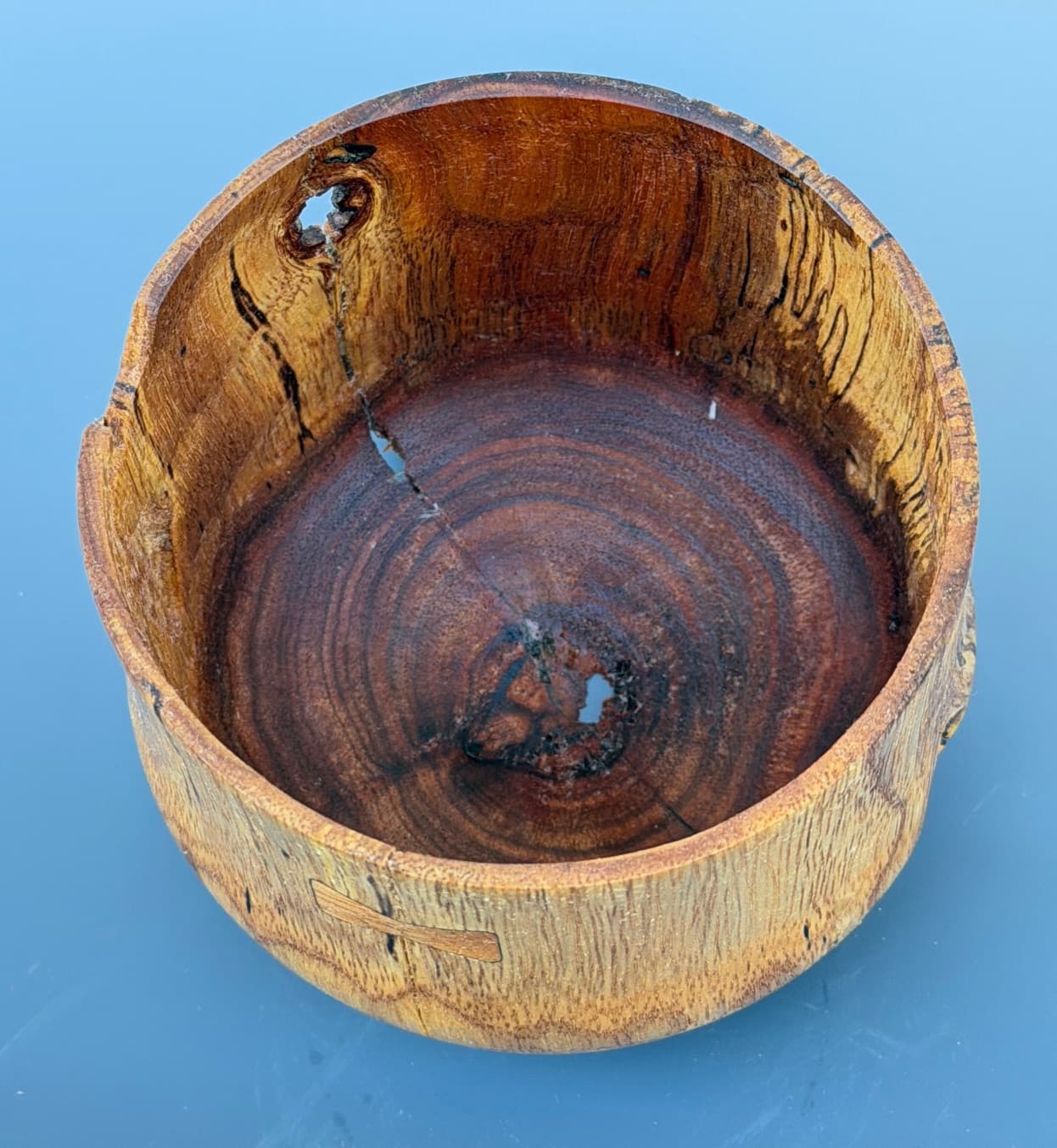
- $90 Small buckeye burl calabash. Burl is a stress response causing a mass of abnormal growth much like a tumor or callus, prized for the twists and swirls in the grain. A calabash is a specific shaped Hawaiian bowl with a rounded bottom. Small pieces are technically more difficult to turn than larger ones. 2 3/4 inch diameter and 2 1/2 inch height.
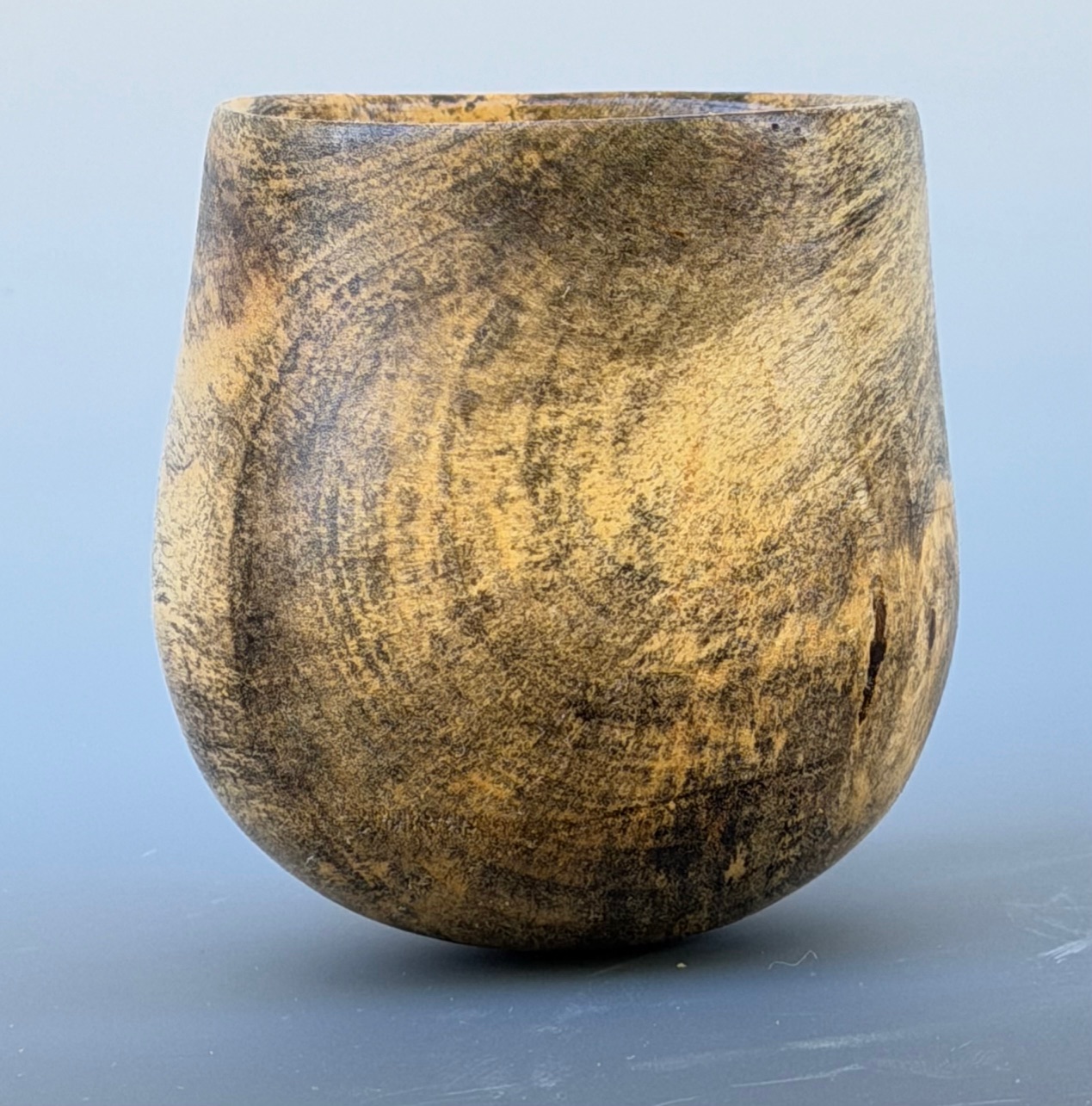
- $60 Small camphor bowl. Camphor has a wonderful smell like root beer as one is turning the piece. 4 1/4 inch diameter and 3 3/8 inch height.
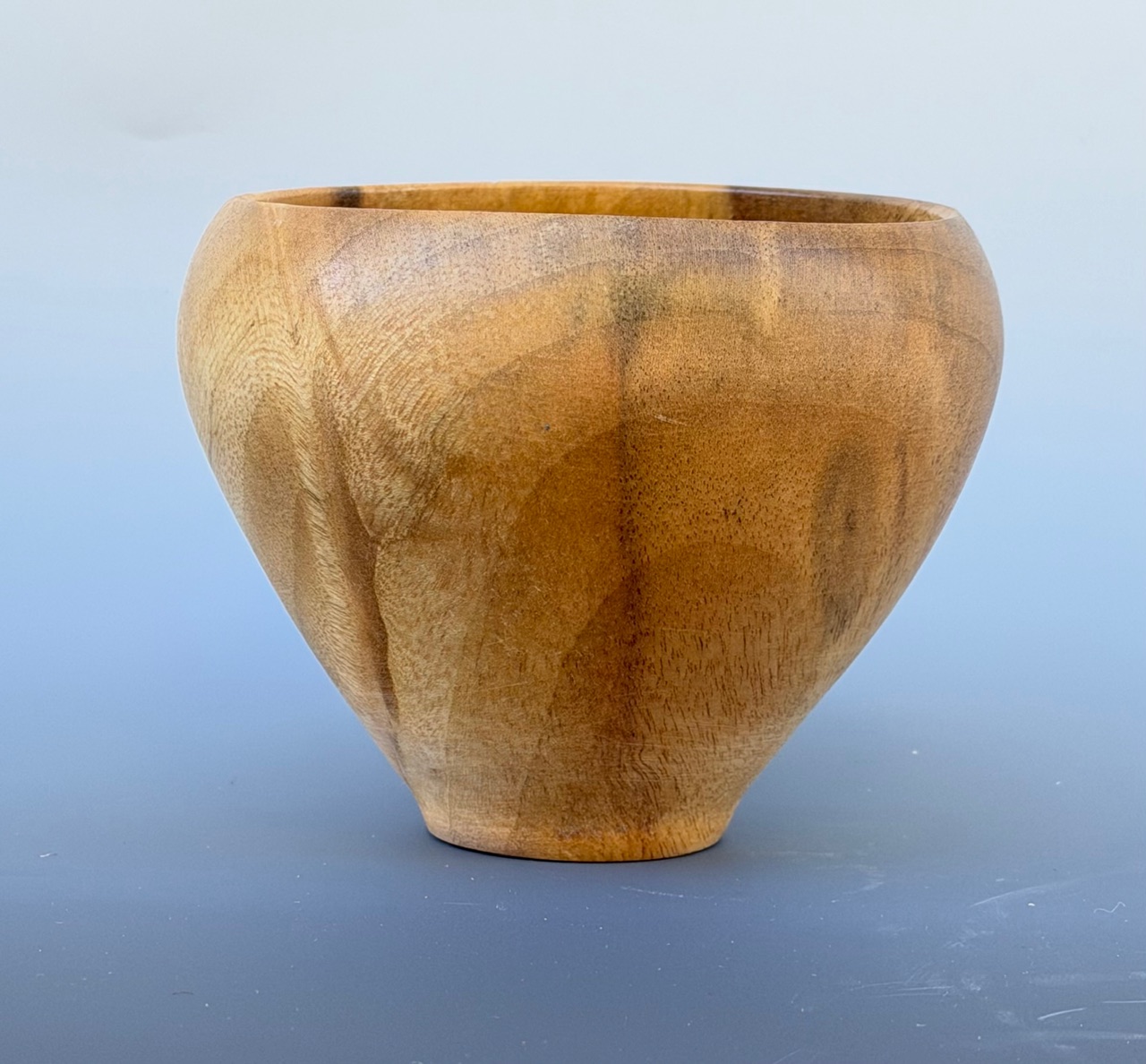
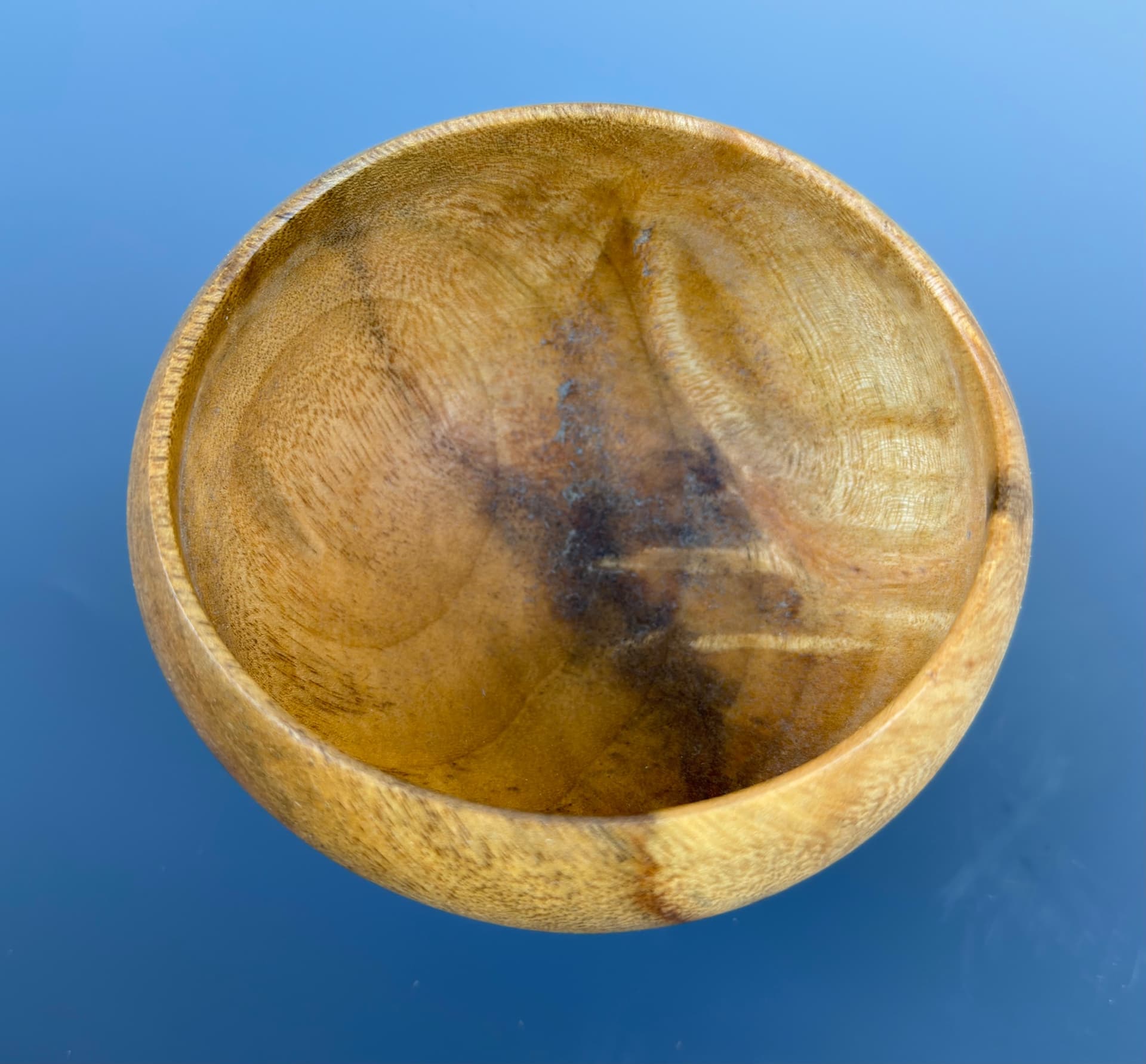
- $70 Small East Indian rosewood bowl. The color variation in the wood is amazing. 4 3/8 inch diameter and 1 1/2 inch height.
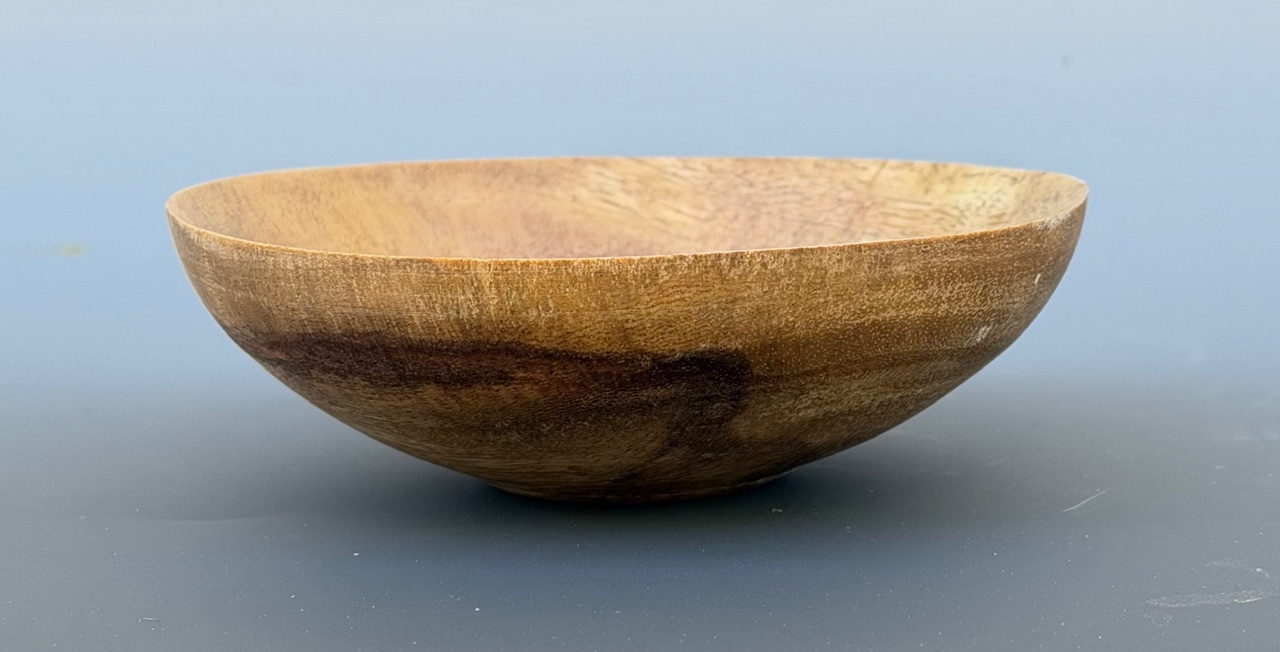
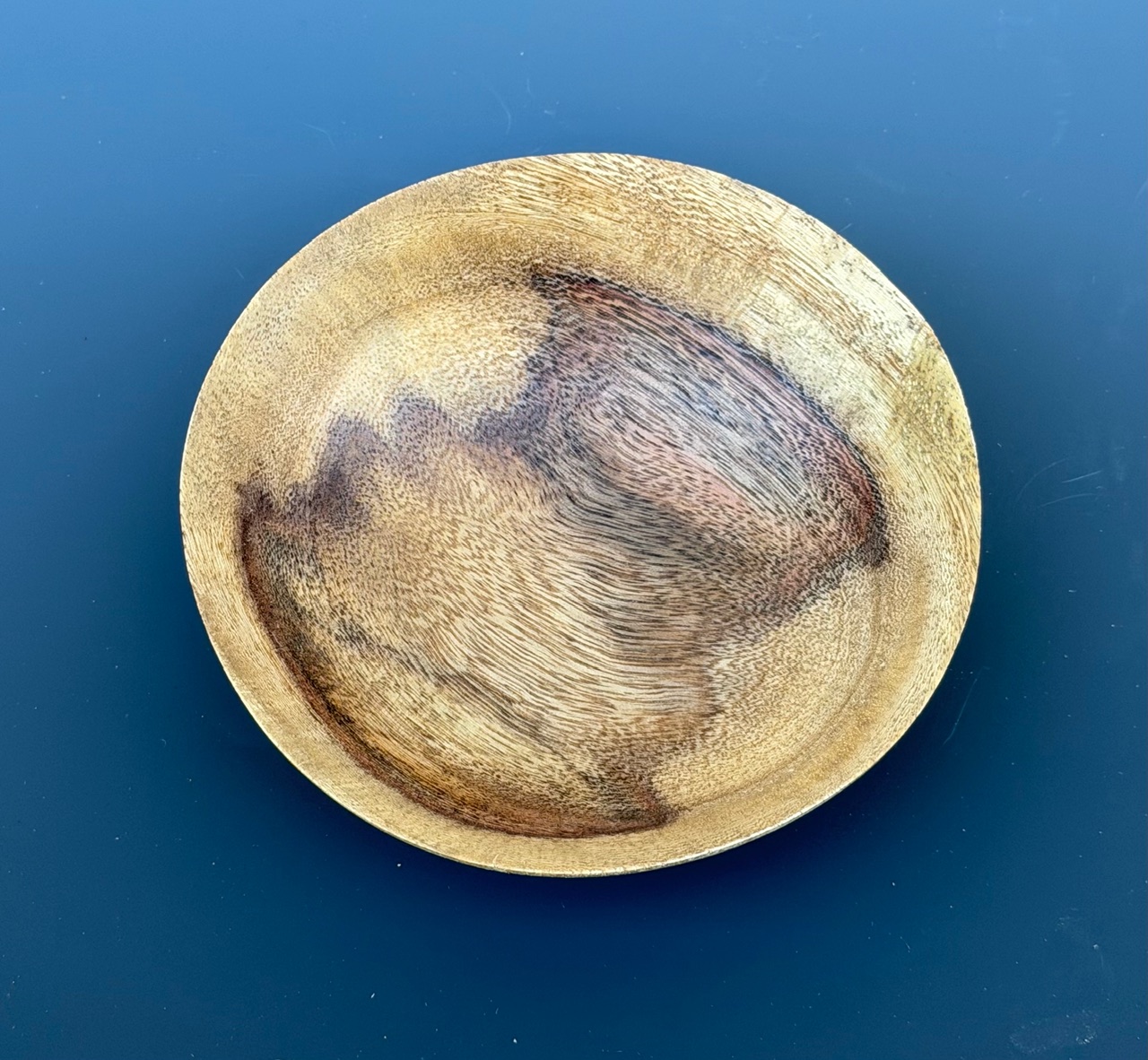
- $210 Unknown wood hollow form with walnut bars and sycamore coins, 6 1/2 inch diameter–this piece has an interesting history. I was finish turning the bottom on the lathe, one of the last steps in turning, when it popped off the lathe, hit the concrete, and split in two. So, with glue, epoxy, sawdust, and walnut wooden bars and coins, it was put back together and now has added character. Some natural edge is also present. It’s my Humpty Dumpty bowl with a happy story ending. 6 1/4 inch diameter and 4 3/4 inch height.
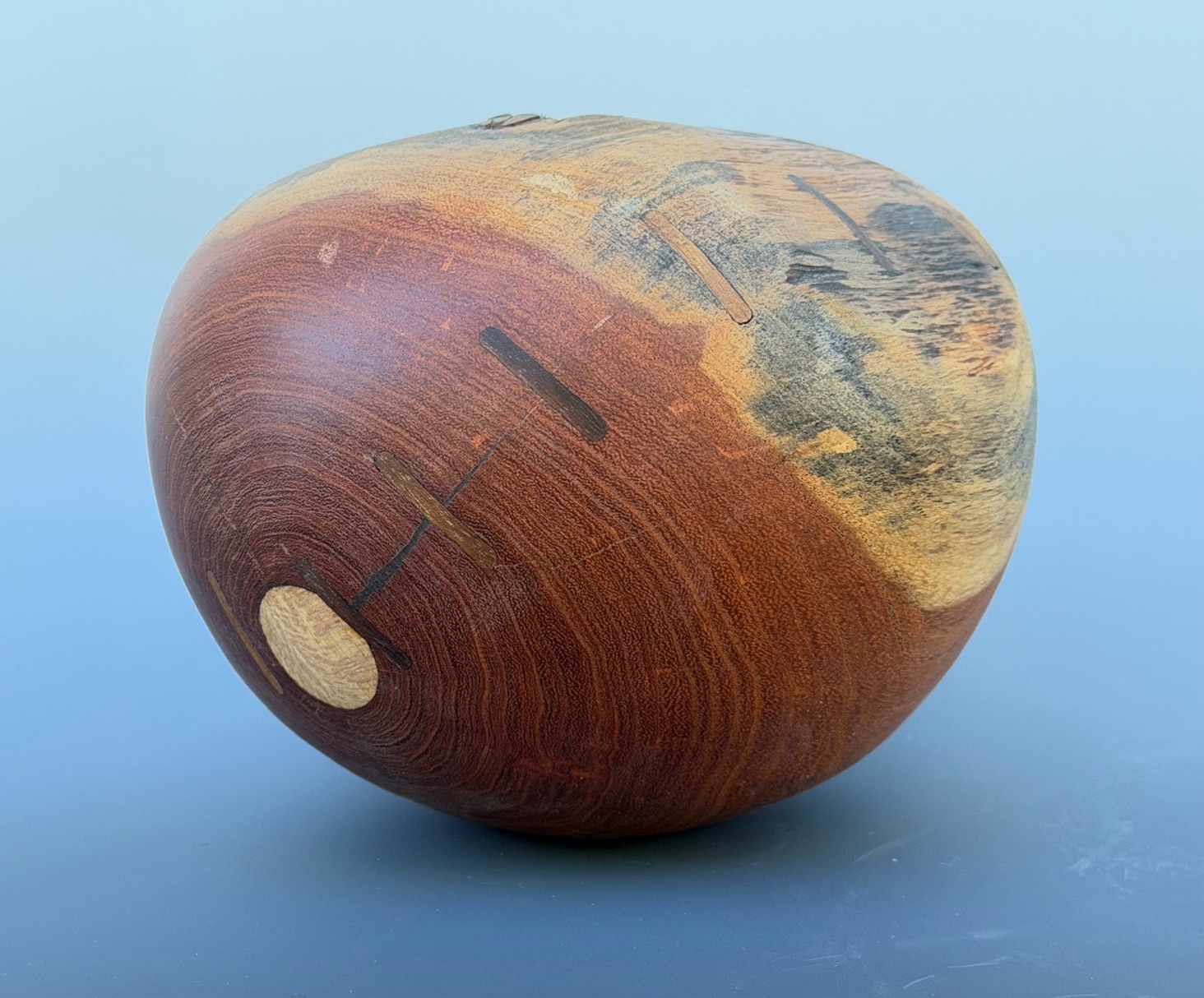
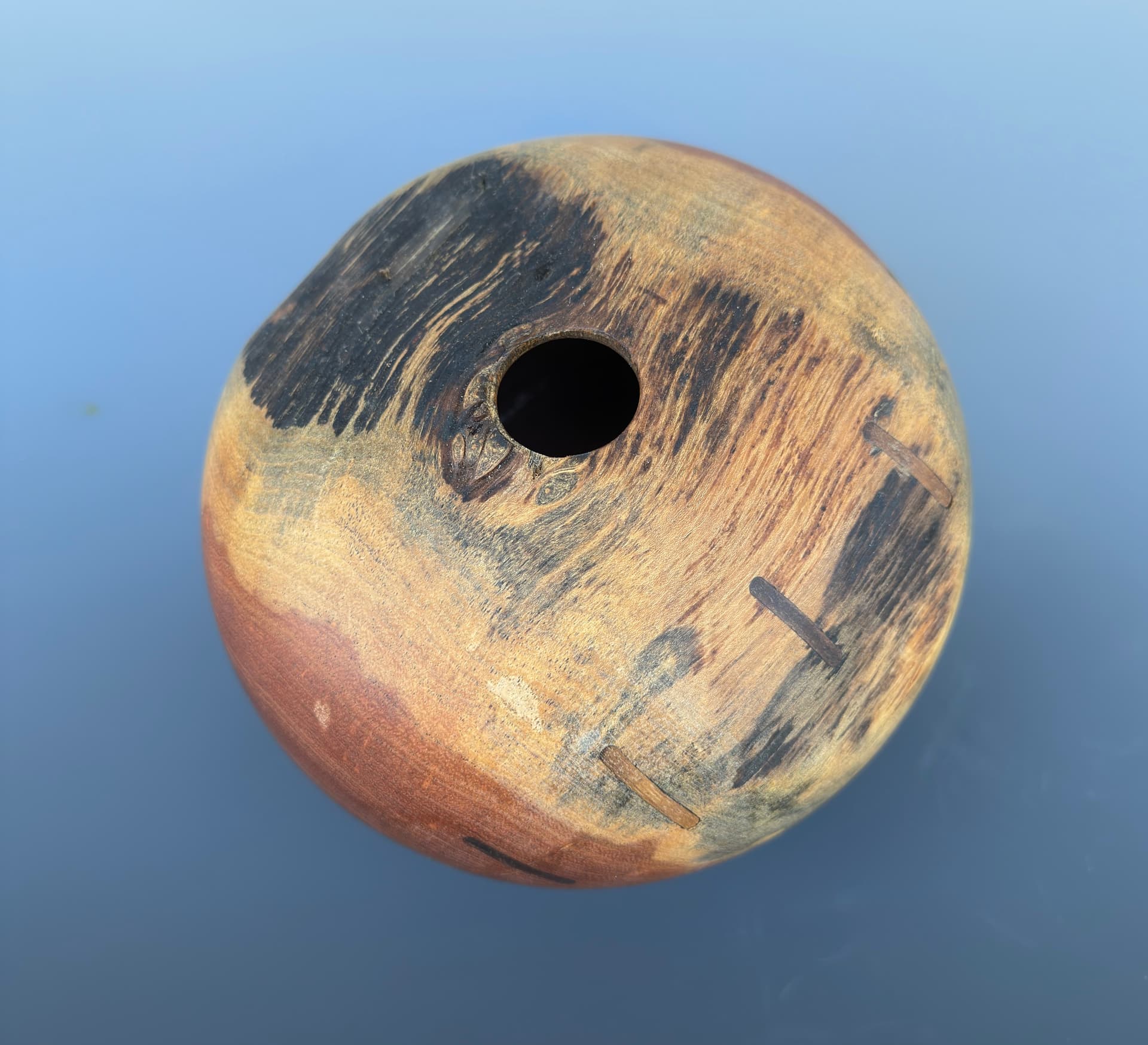
SOLD. 31. $180 Red iron bark hollow form. This is an Australian hardwood actually from a eucalyptus tree that polishes nicely. 4 3/4-5 inch diameter and 3 1/2 inch height.
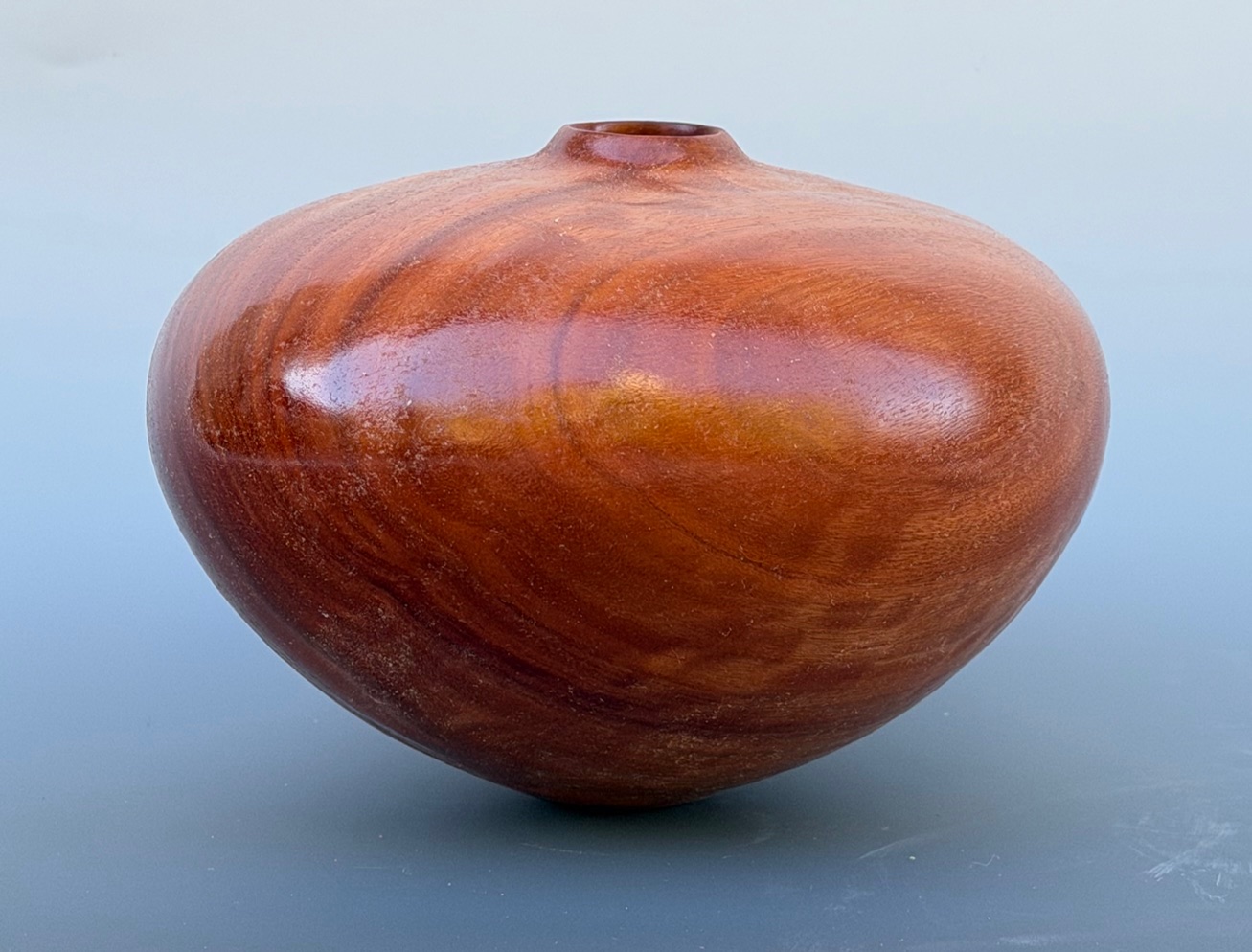
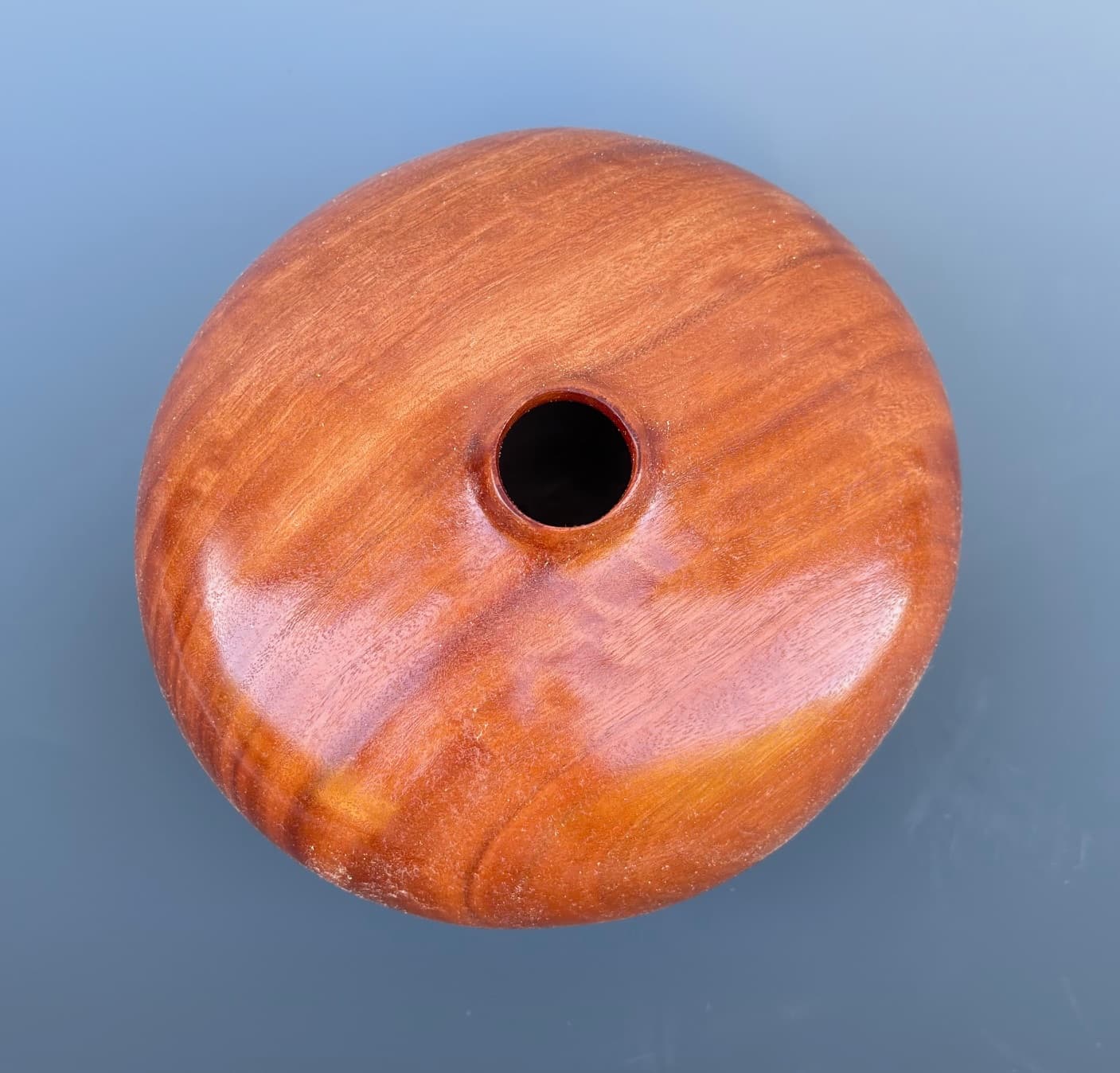
- $420 Maple ambrosia hollow form–a beetle with fungus on its feet bores into the maple tree and the fungus then causes the amazing coloration. Tiny holes from the beetle are in the wood and the color changes and patterns caused by the fungus are often wild. 5 1/2 inch diameter and 5 1/2 inch height.
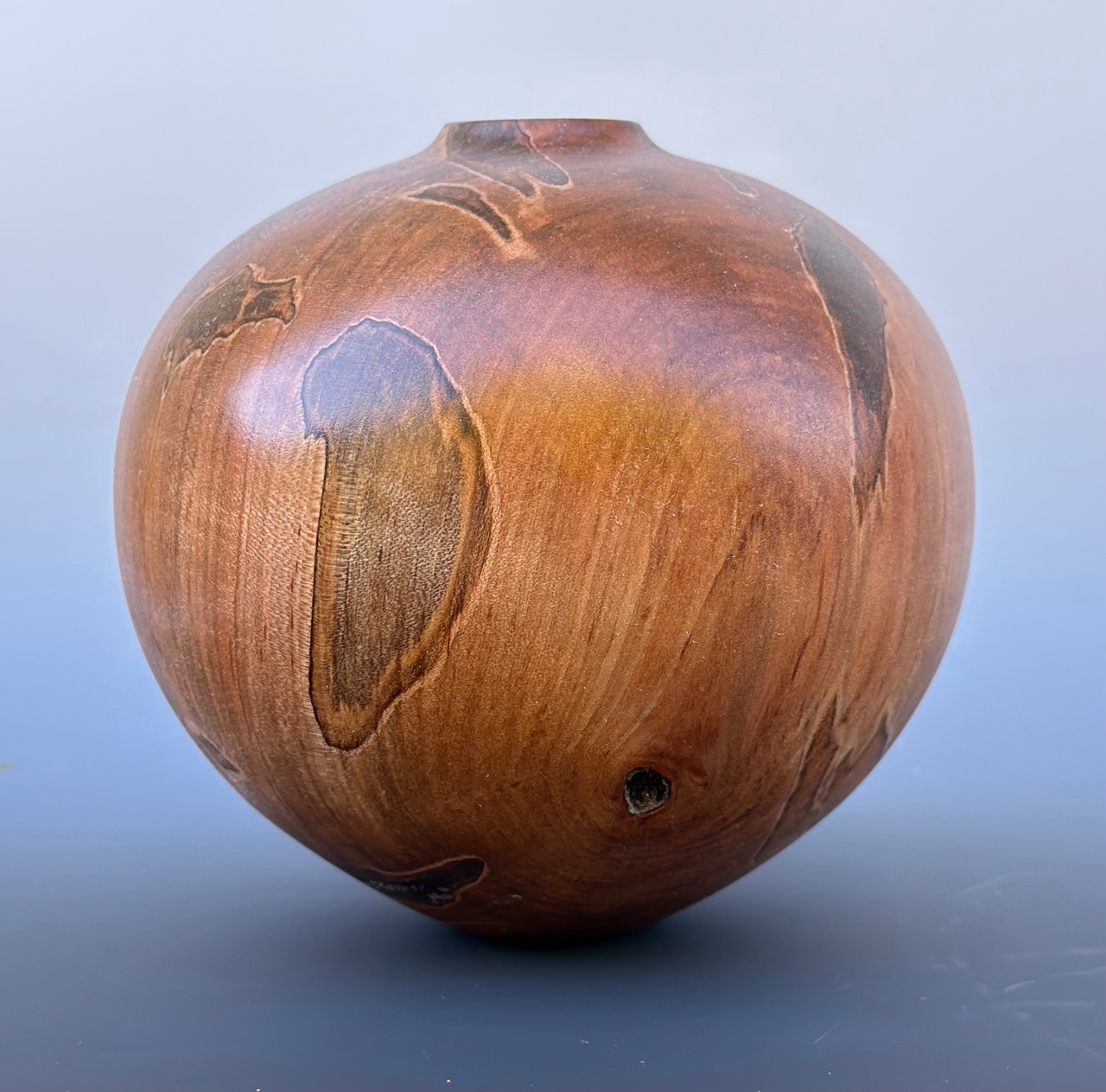
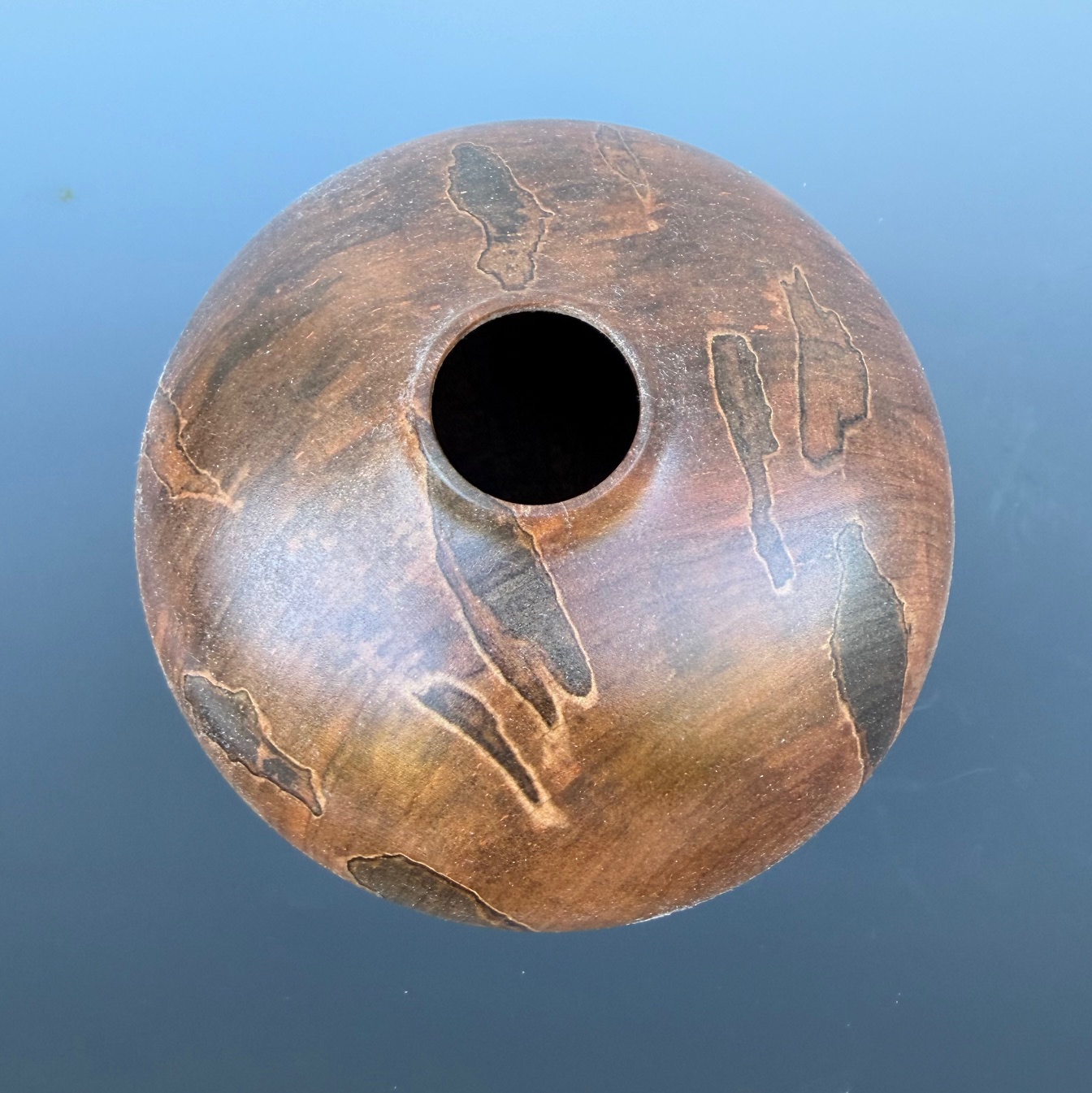
- $290 Jarrah burl hollow form with cracks filled with epoxy. Burl is a stress response (to weather or infection) causing a mass of abnormal growth much like a tumor or callus, prized for the twists and swirls in the grain. Cracks and defects are commonly present in this expensive wood. 5 inch diameter and 3 1/4 inch height, 3/4 inch opening.
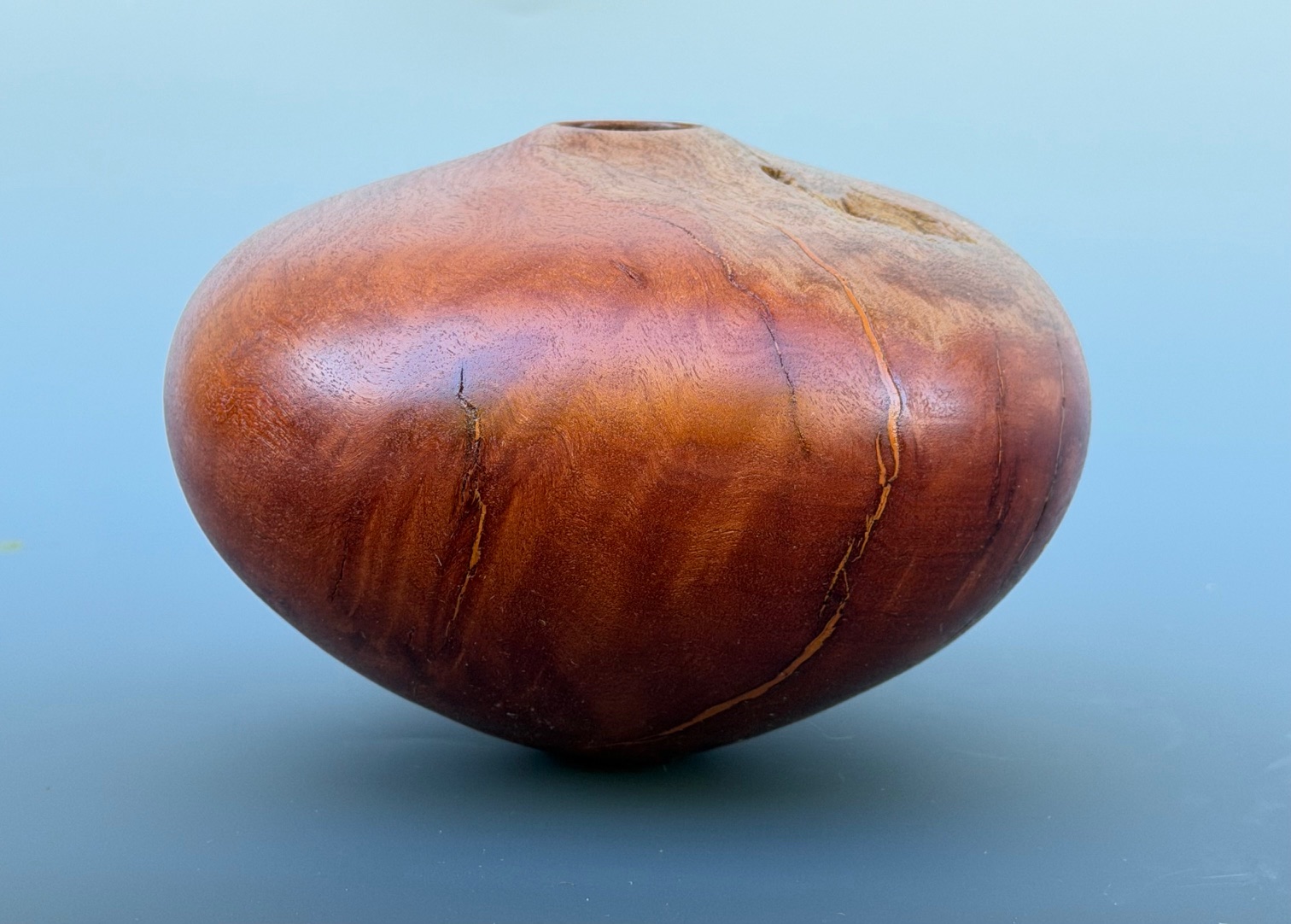
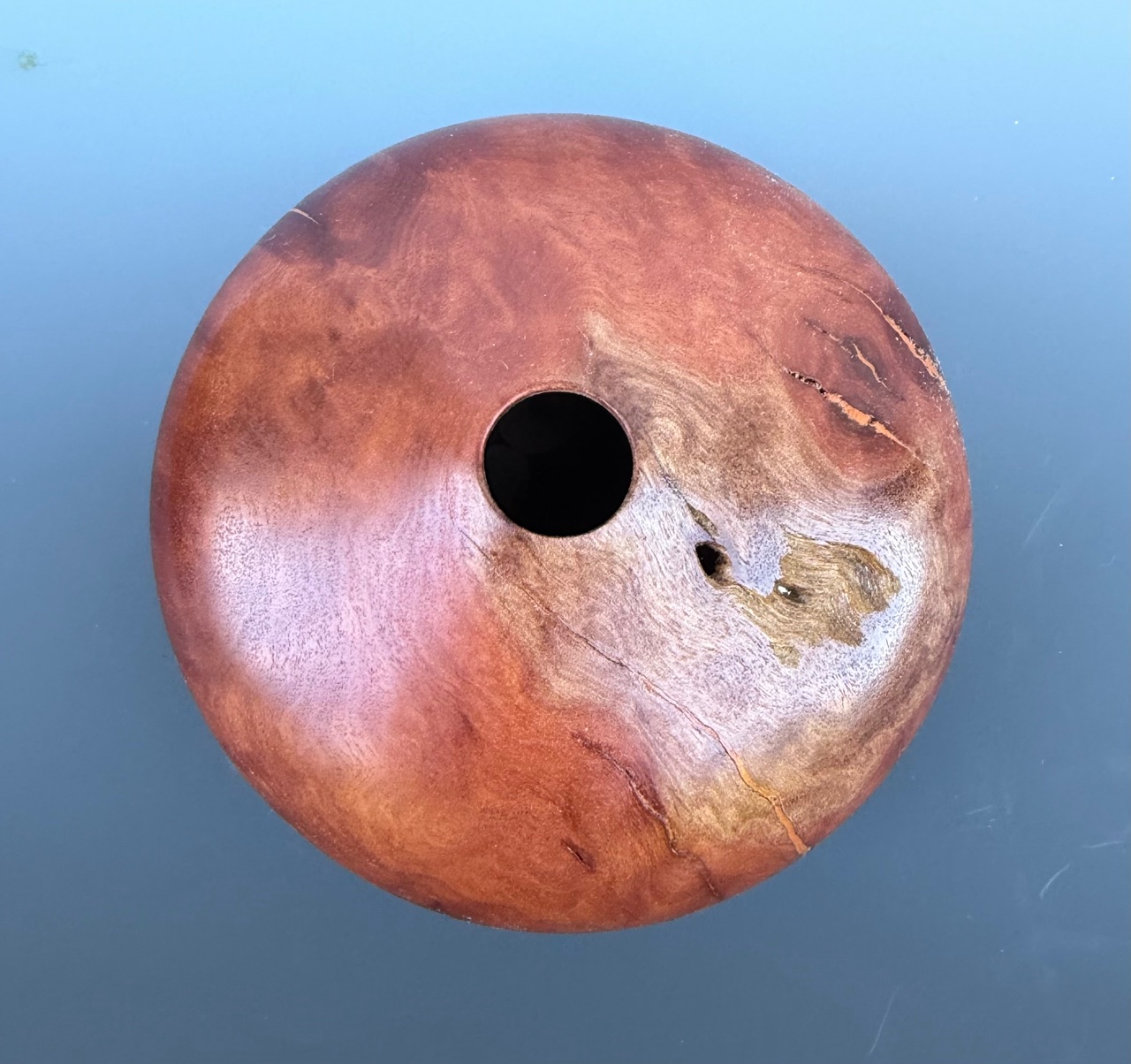
- $125 Unknown wood hollow form turned wet–when a tree is felled, the wood is wet. A woodturner can turn the piece roughly, let it warp as it dries, then re-turn it to round. Alternatively, the piece can be turned to completion at one time and then allowed to warp as the wood dries. The opening has become oval, as has the entire piece. Look at the top view to see this better. (The other choice is to dry the wood before turning, either naturally, or by microwave or kiln. But wood dries slowly, about an inch per year.) 4 1/4 inch diameter and 4 1/2 inch height.
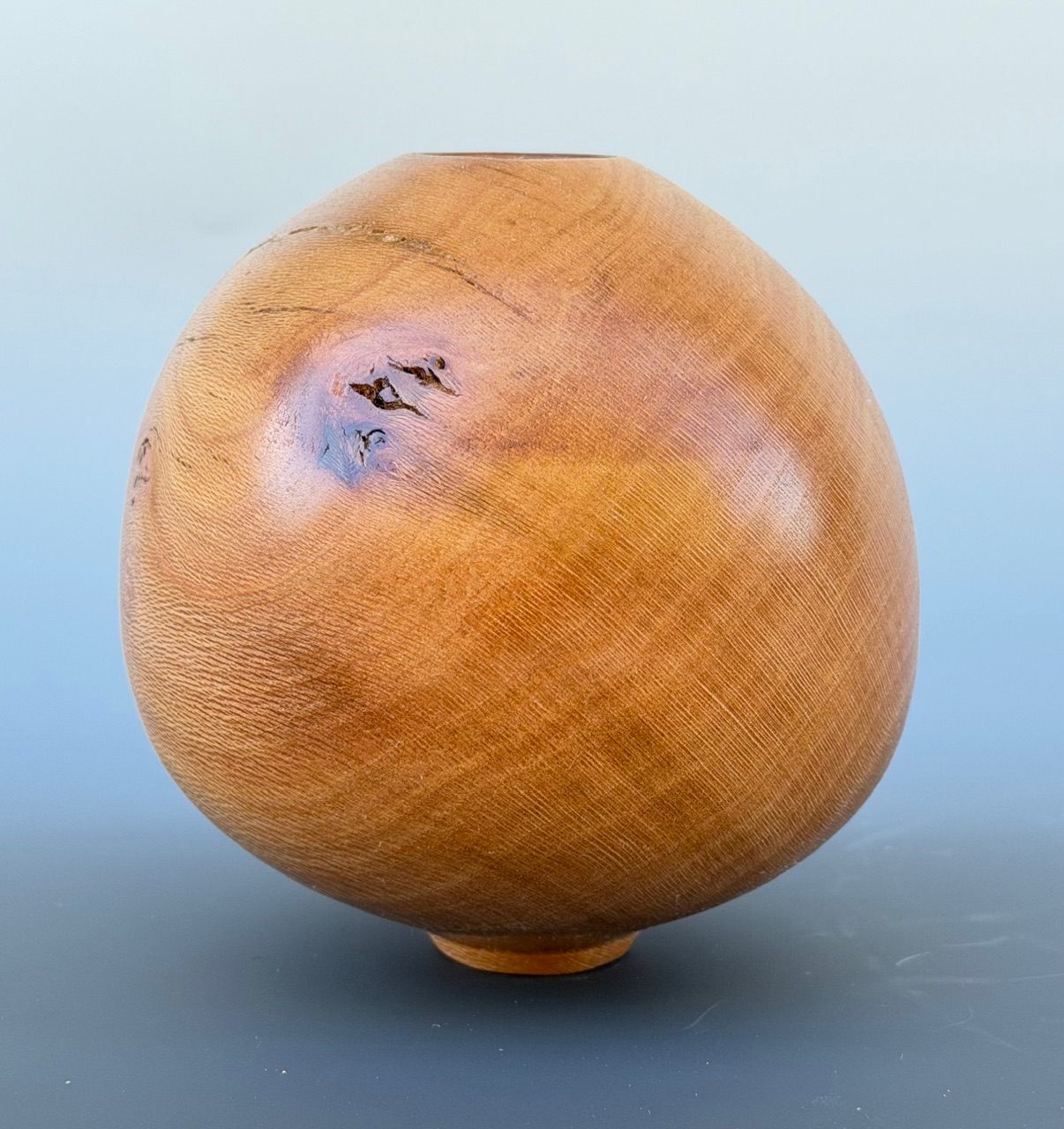
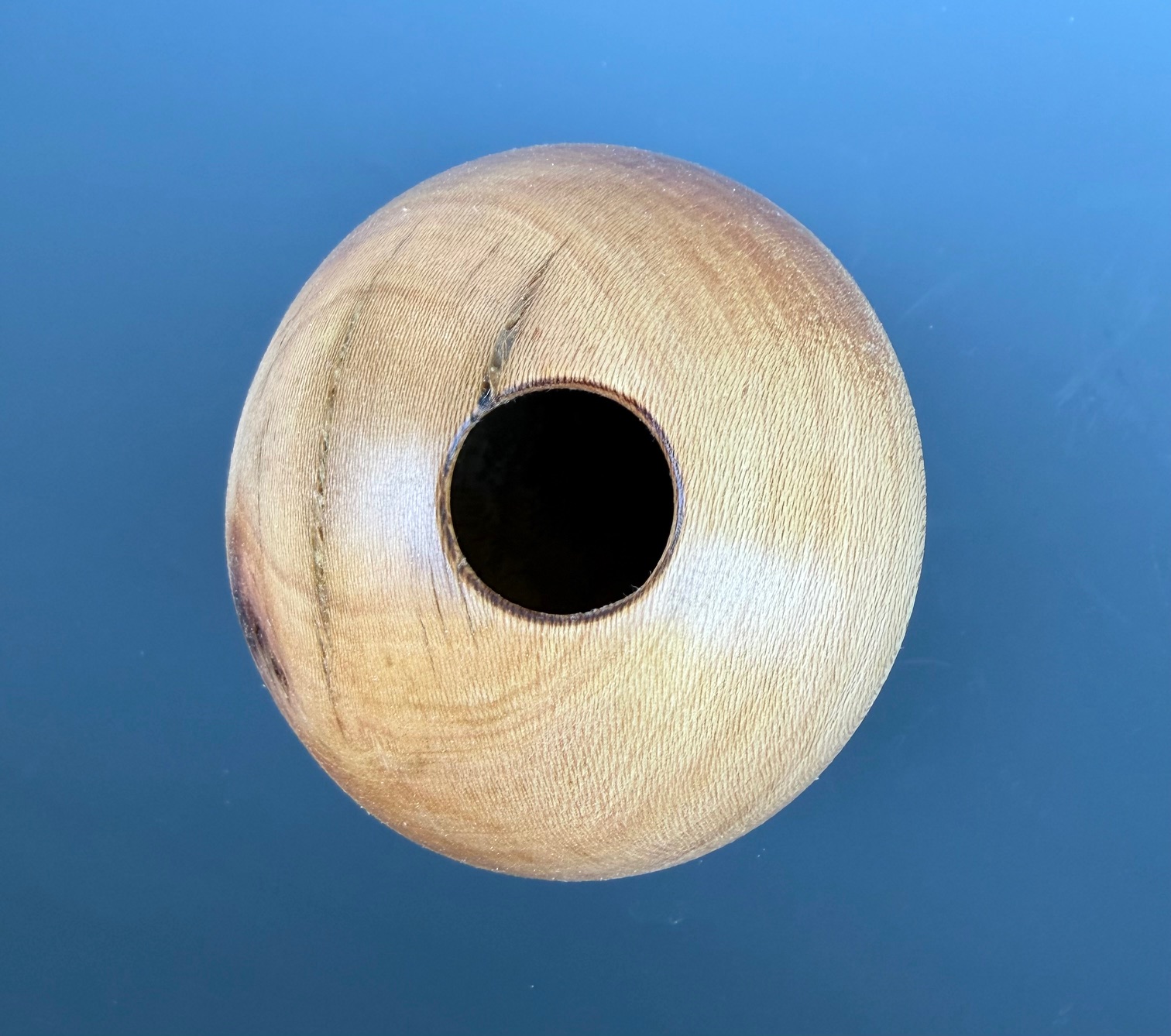
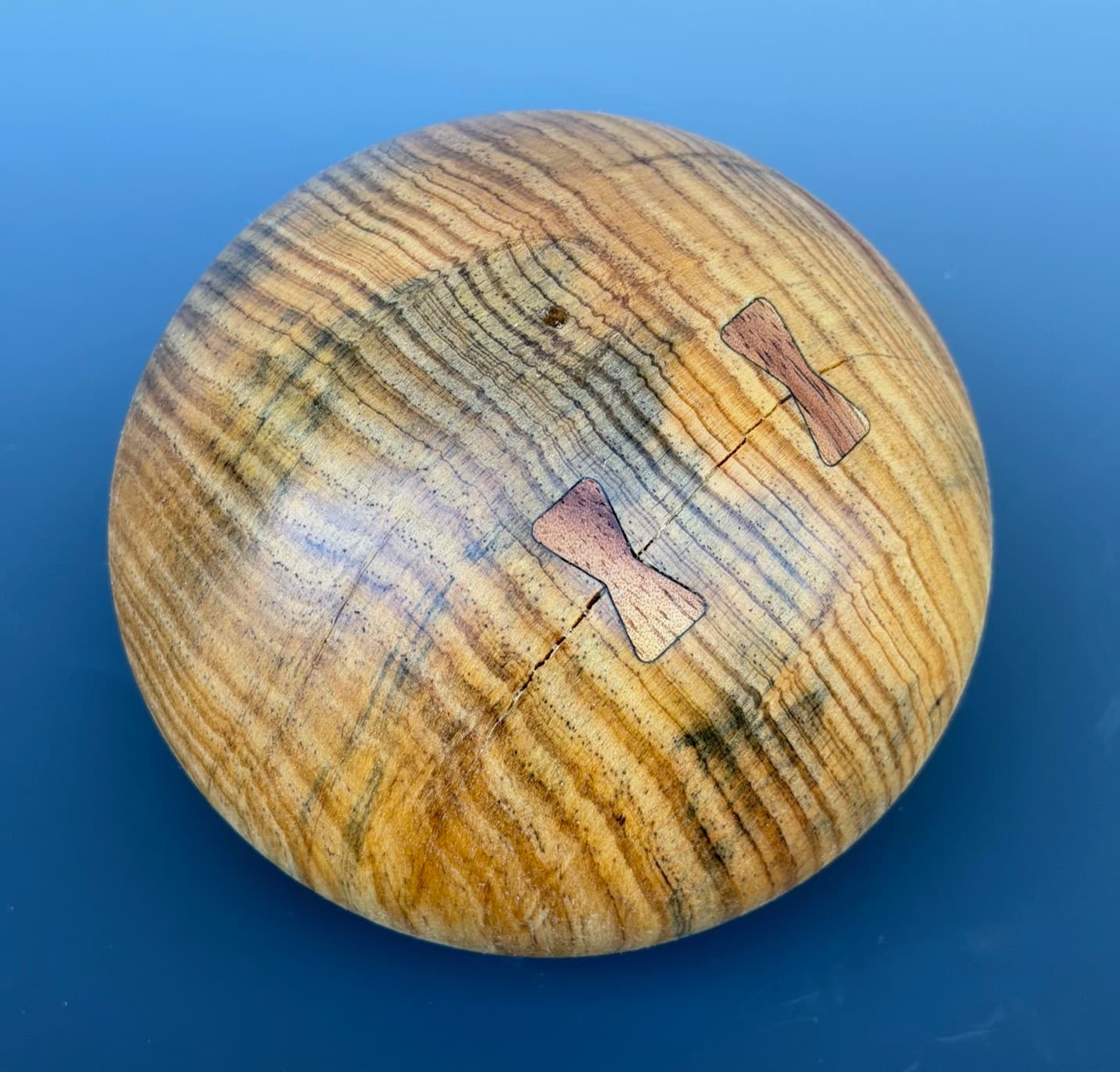
- $100 Hollow form, probably camphor–this piece developed cracks which were then repaired and koa pewa placed–it was too pretty to discard. Final of the three pictures shows the repair on the bottom. 4 3/4 inch diameter and 3 1/2 inch height.
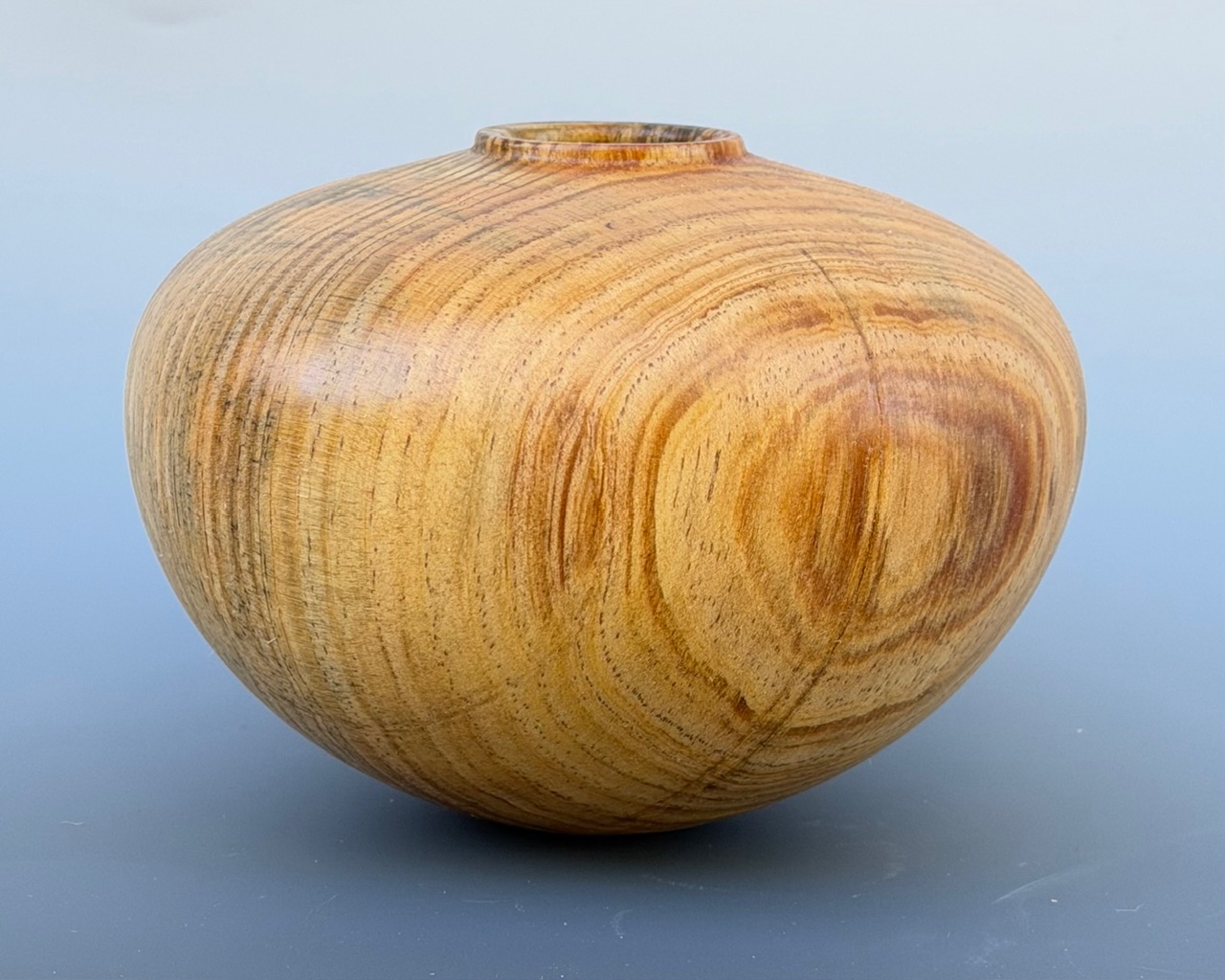
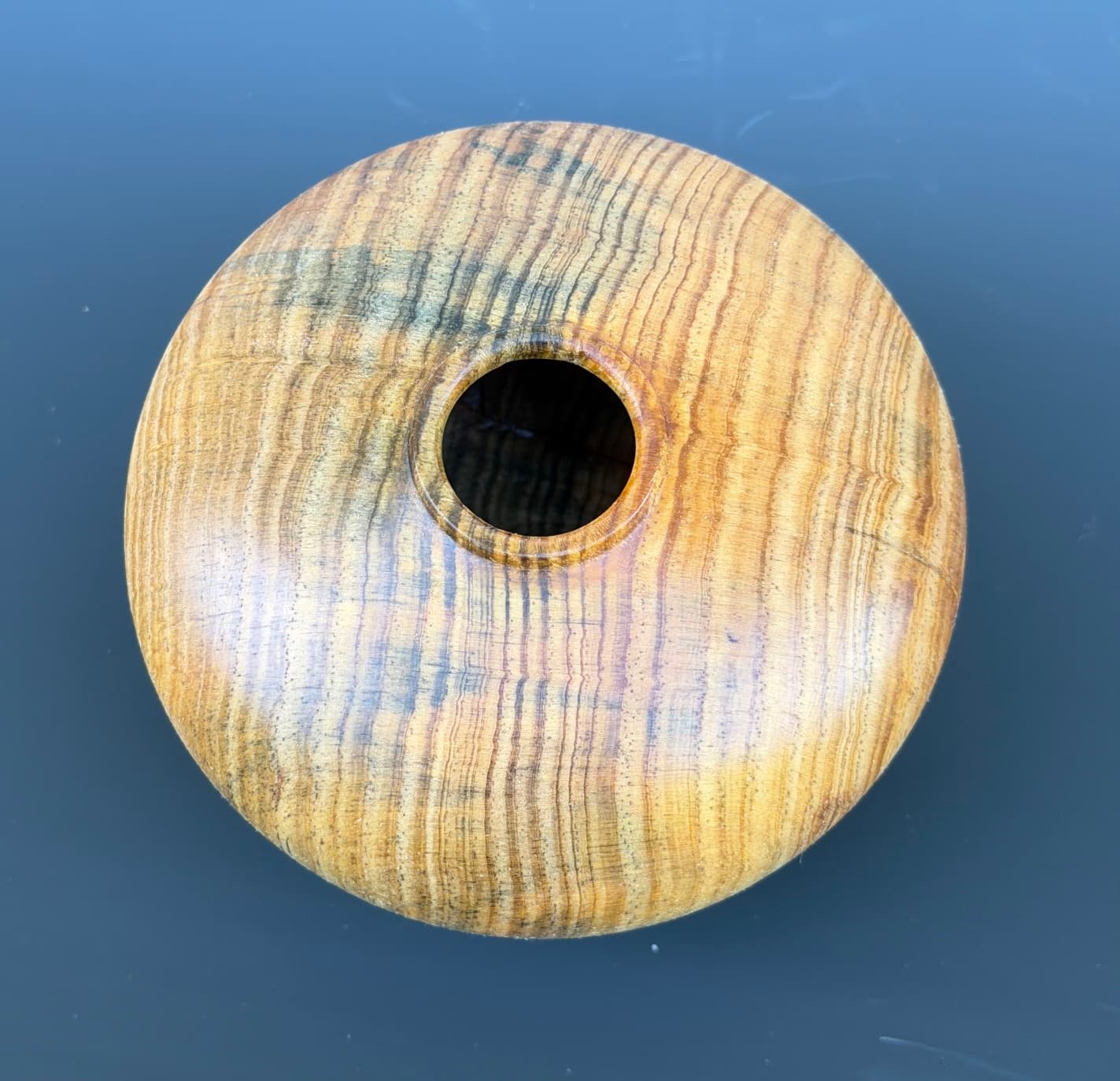
- $140 East Indian rosewood hollow form. This wood is a prized dense hardwood known for its color variation that darkens somewhat with age. 4 inch diameter and 2 7/8 inch height.
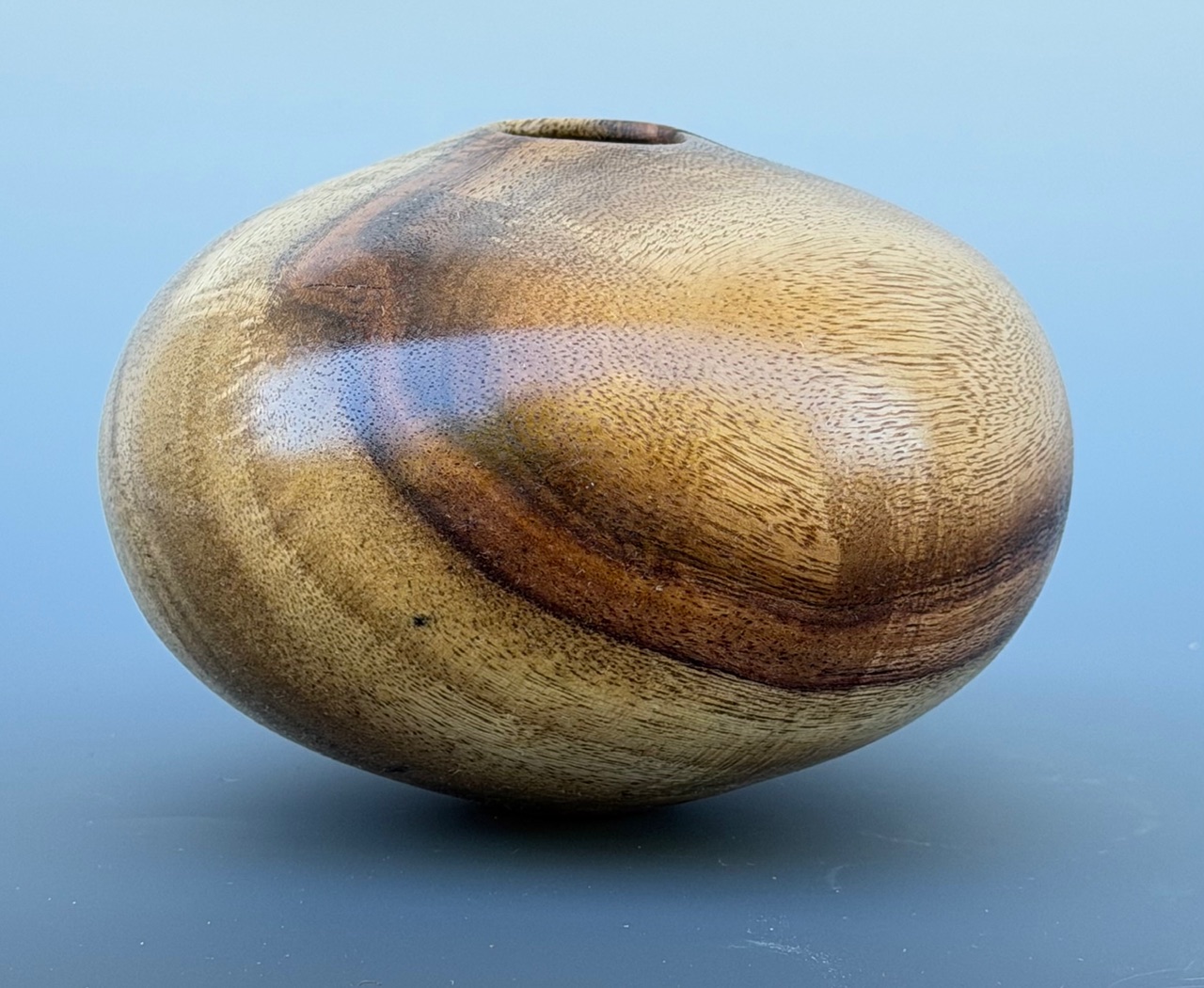
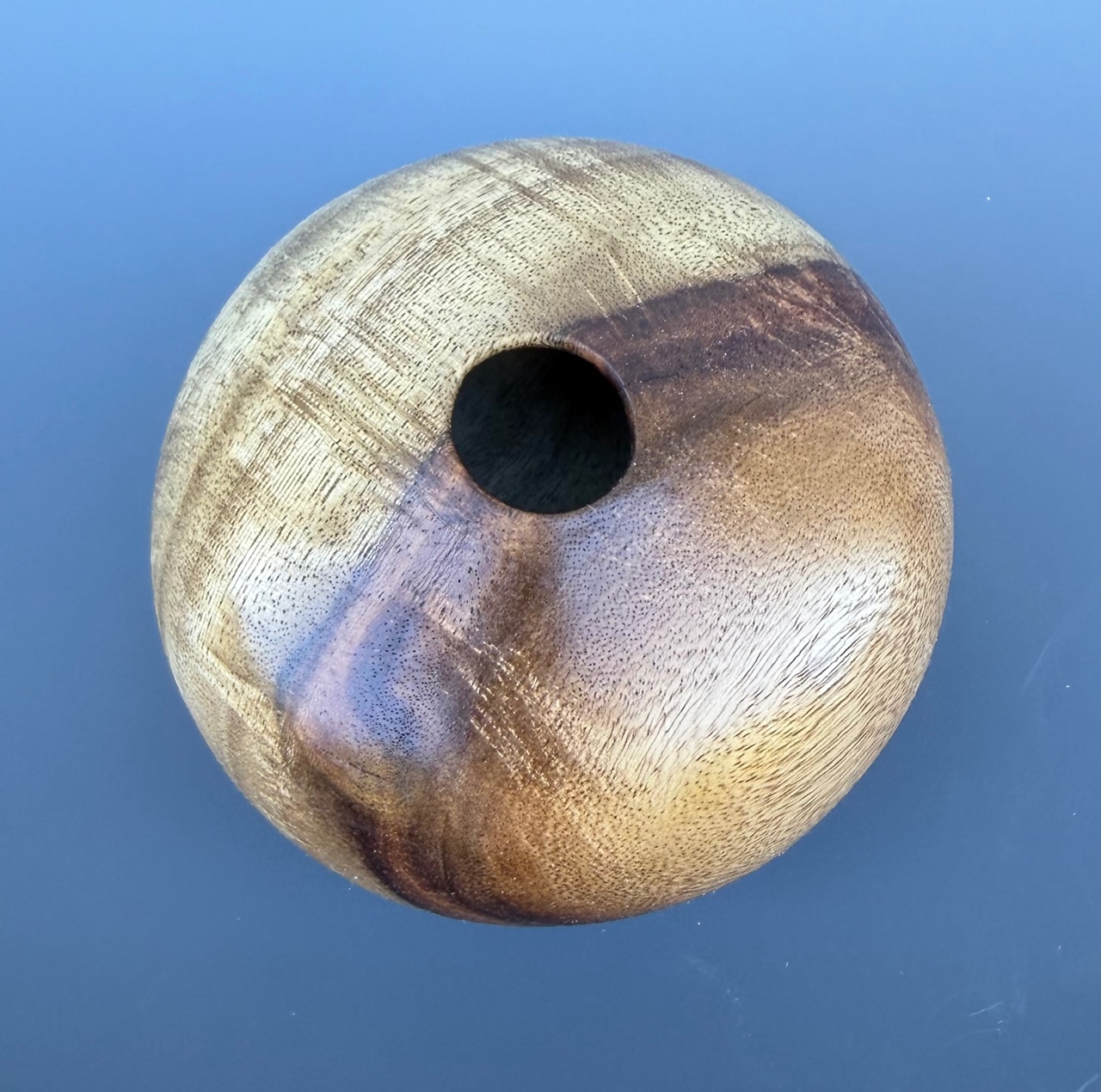
- $180 Walnut hollow form with cracks, 4 inch diameter and 3 1/2 inch height.
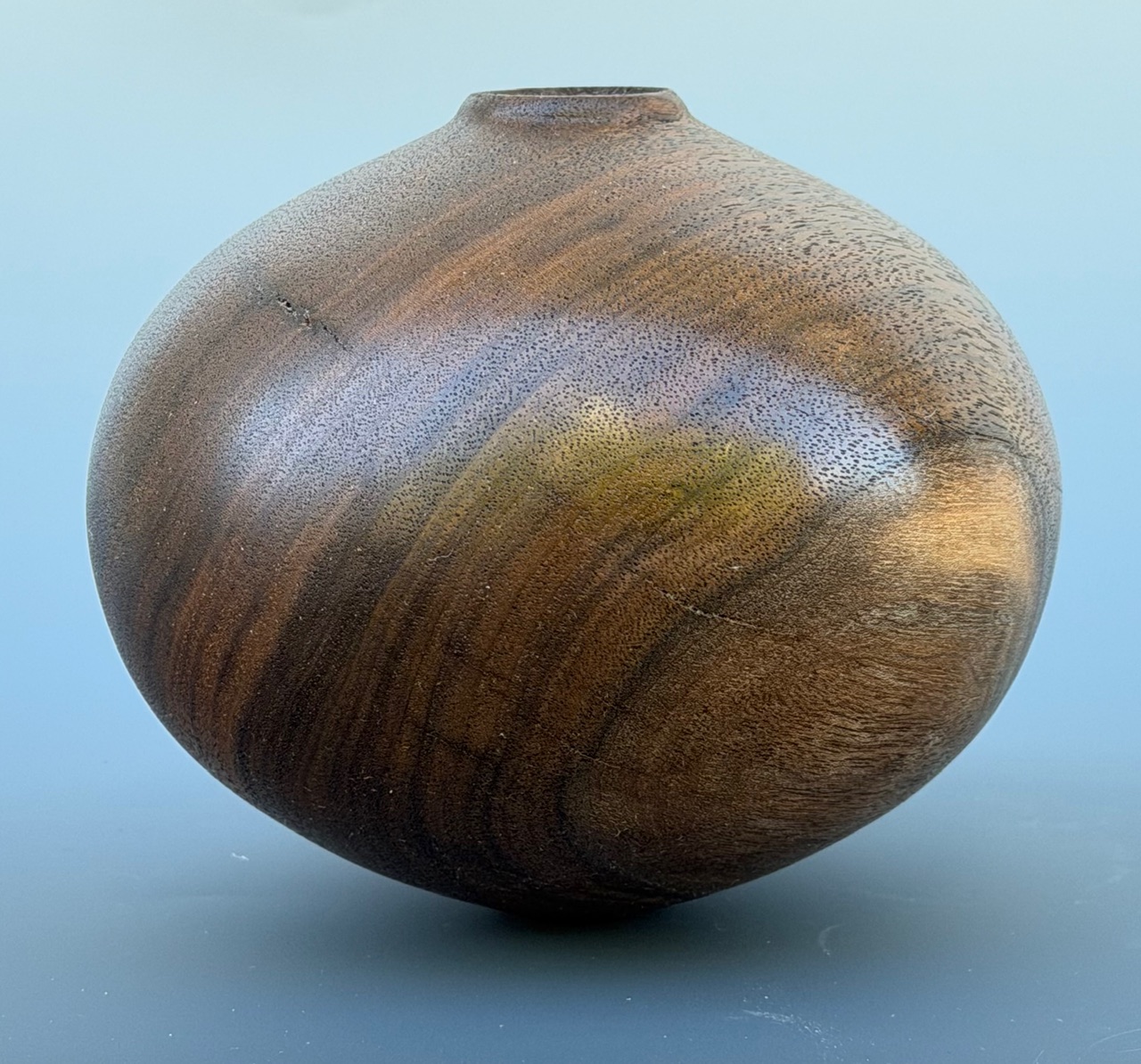

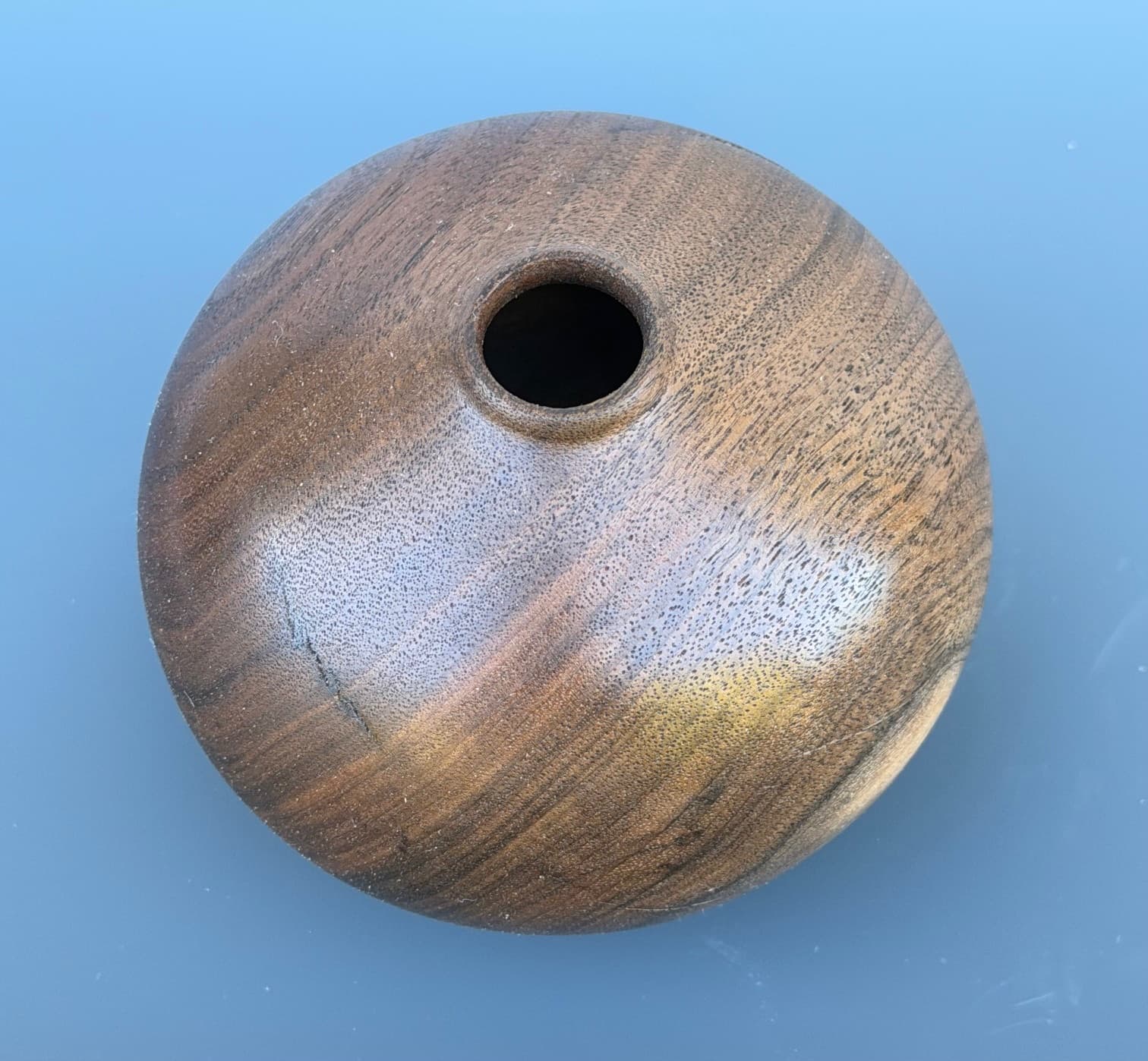
- $90 Small hollow form turned through a very small opening–the smallest I’ve done, about 1/2 inch. Wood was turned wet, so the piece and the opening are somewhat oval, as it warped as it dried. A tiny crack is present near the rim and the piece has a thicker wall than usual. 4/14 inch diameter and 2 3/4 inch height.
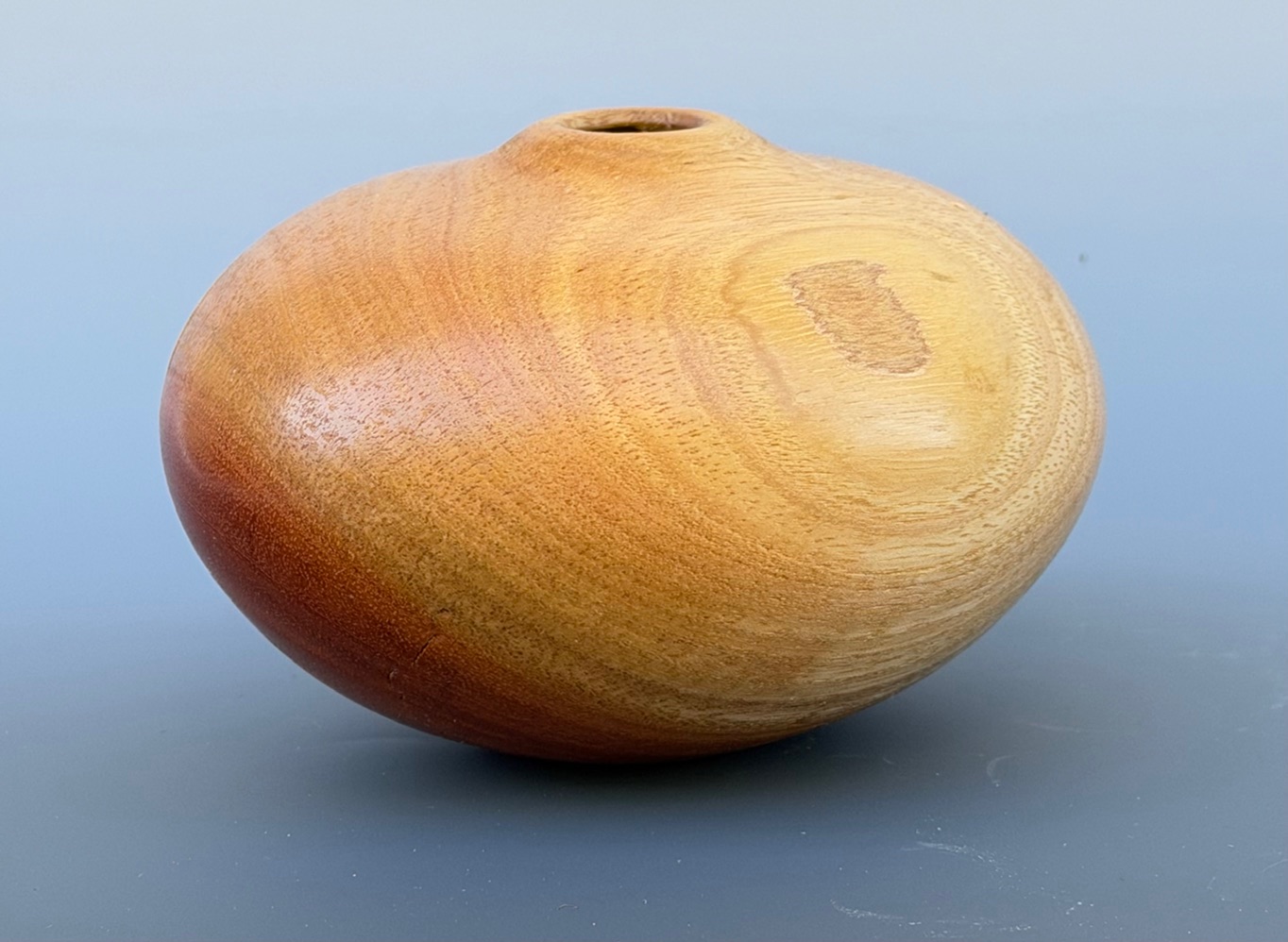
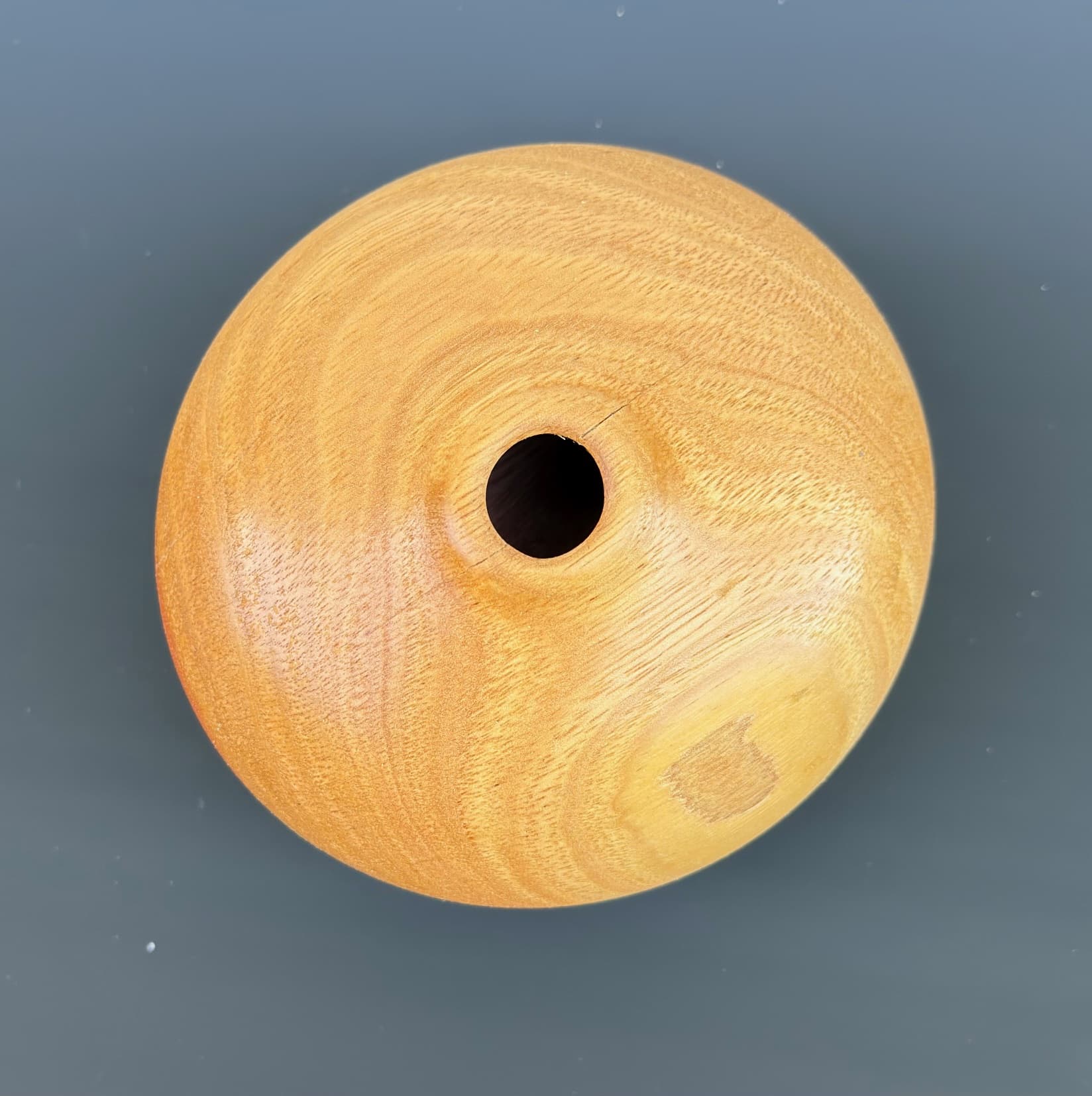
- $90 Small hollow form with scars, unknown wood, 4 1/2 inch diameter and 3 1/2 inch height
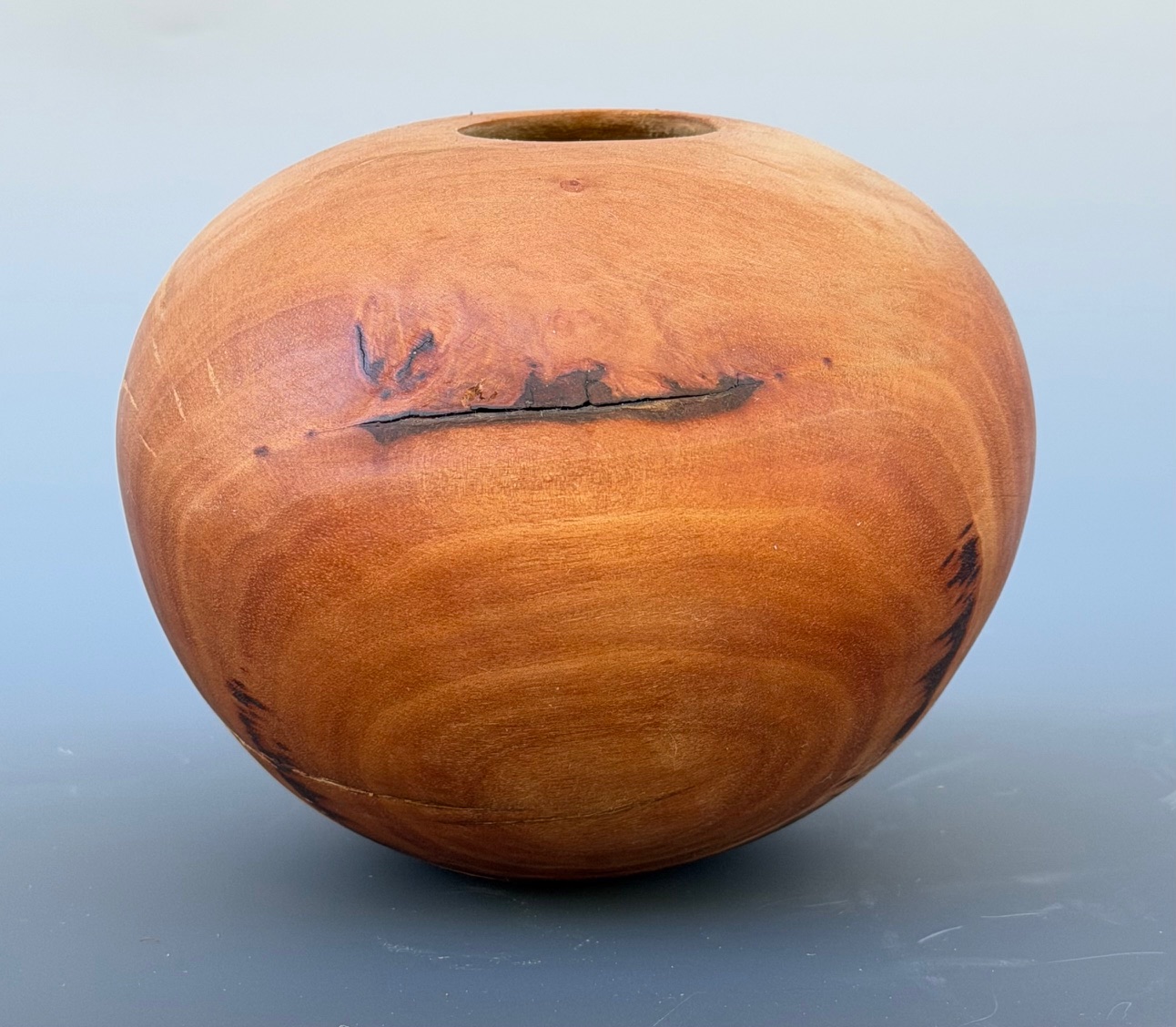

- $340 Small jarrah burl hollow form. This is an expensive Australian wood. Burls are like tumors on trees where the grain is wild and complex, a response to stress. The cracks are typical. This piece was turned through a very small opening. Last picture is what I started with. 4 1/4 inch diameter and 3 1/4 inch height, opening 9/16 inch.
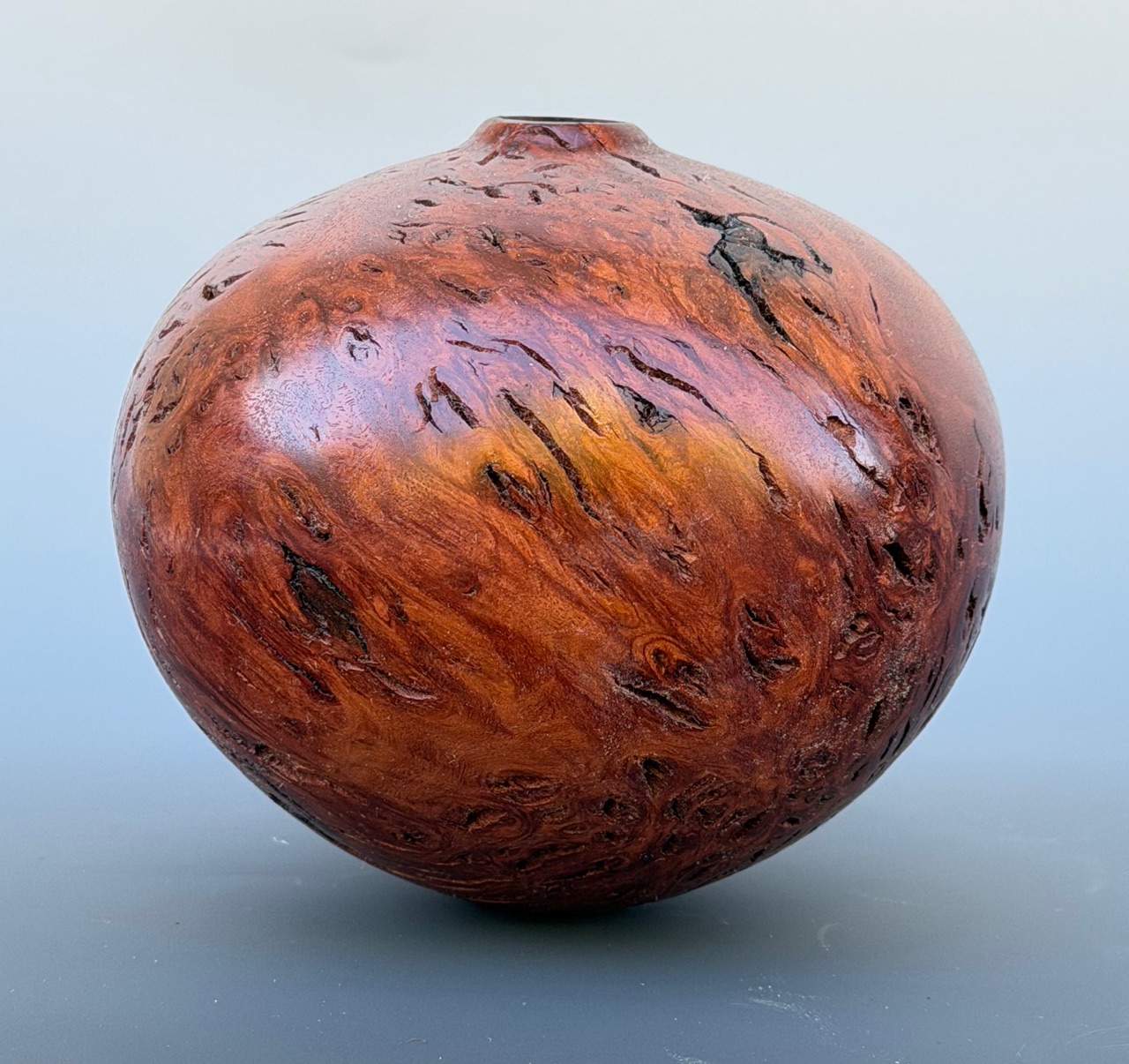

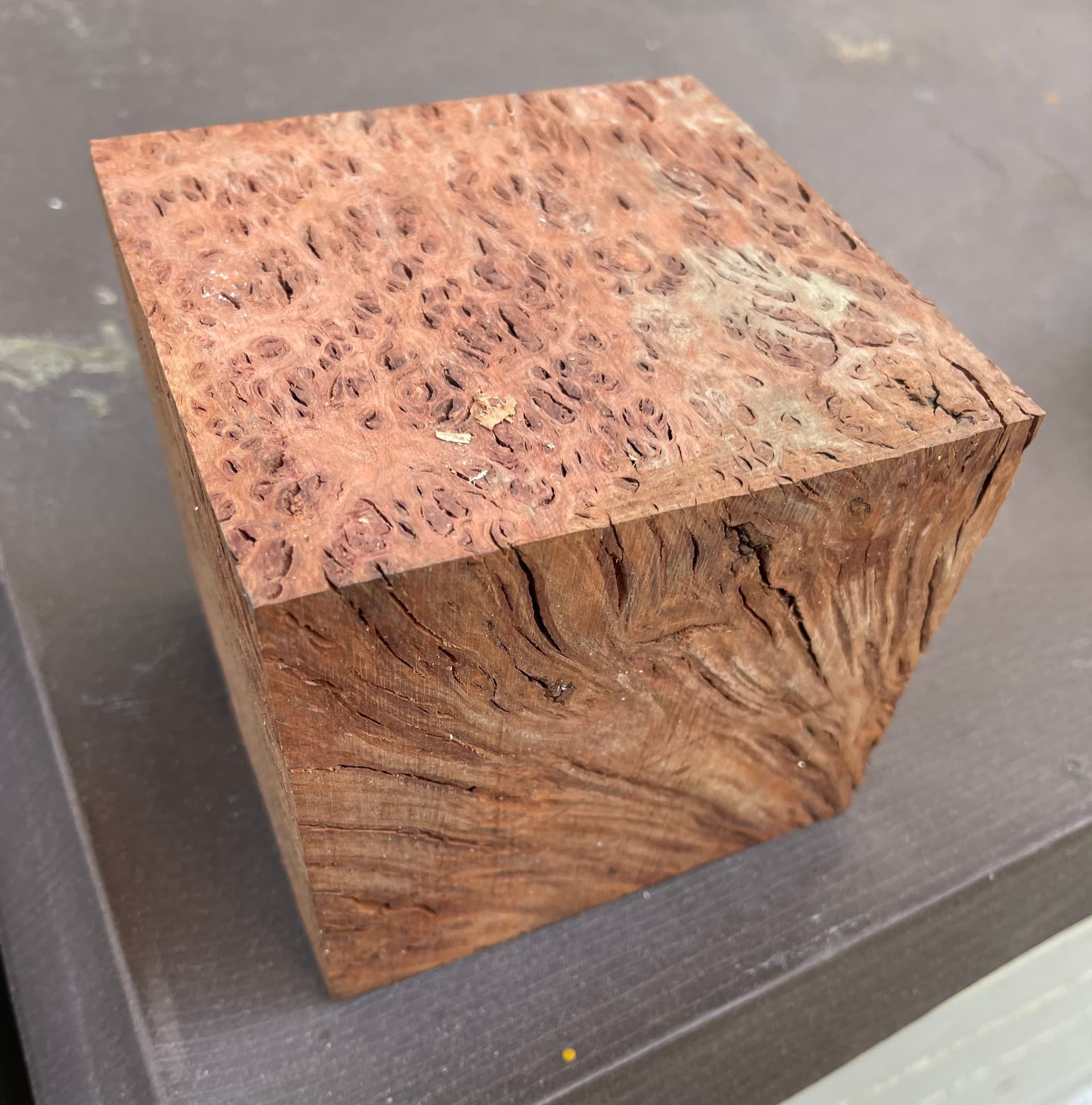
SOLD 41. $340 Small jarrah burl hollow form. Burl is a stress response causing a mass of abnormal growth much like a tumor or callus, prized for the random twists and swirls in the grain. The cracks and voids are common. 4 1/2 inch diameter and 3 1/2 inch height, opening 3/4 inch.
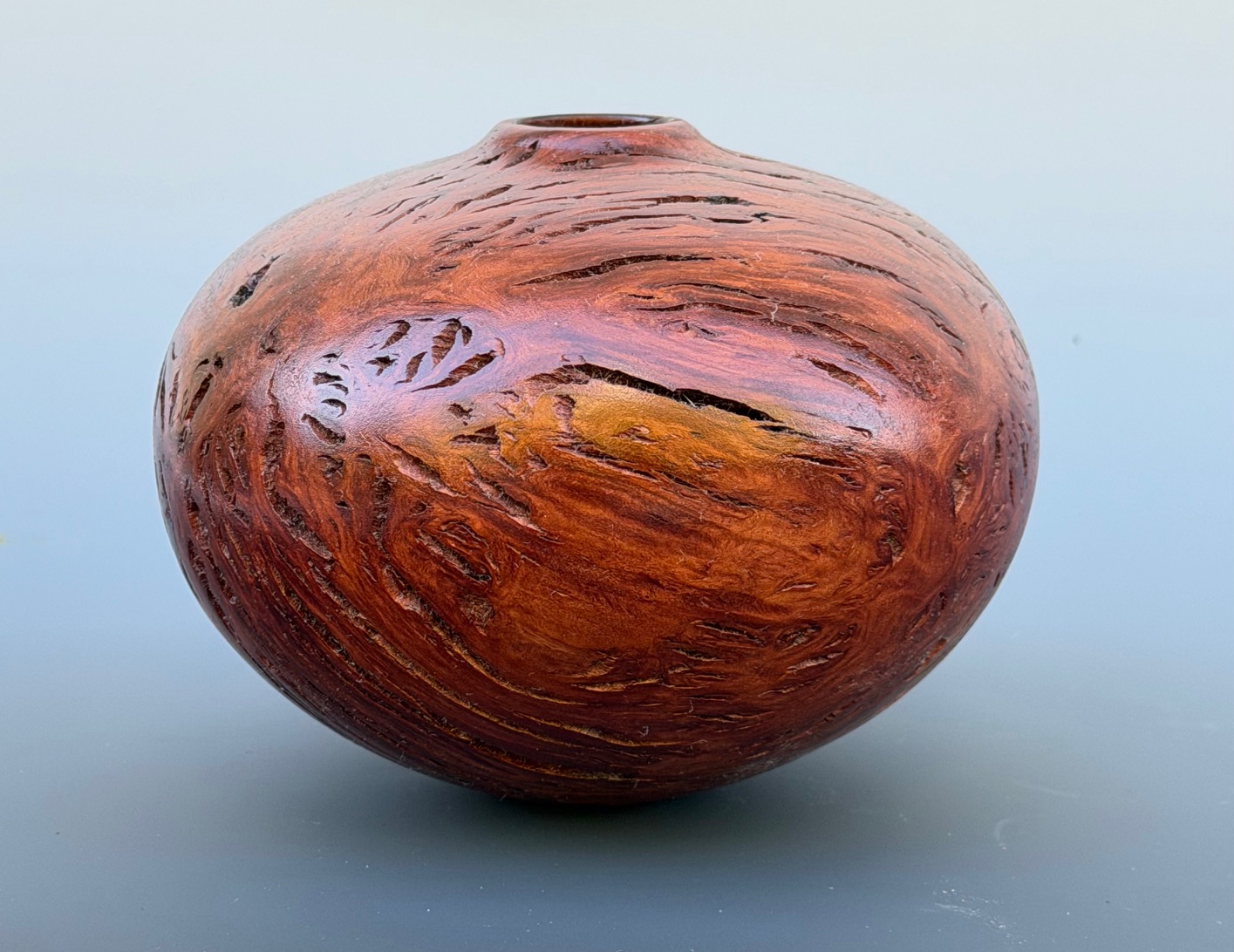
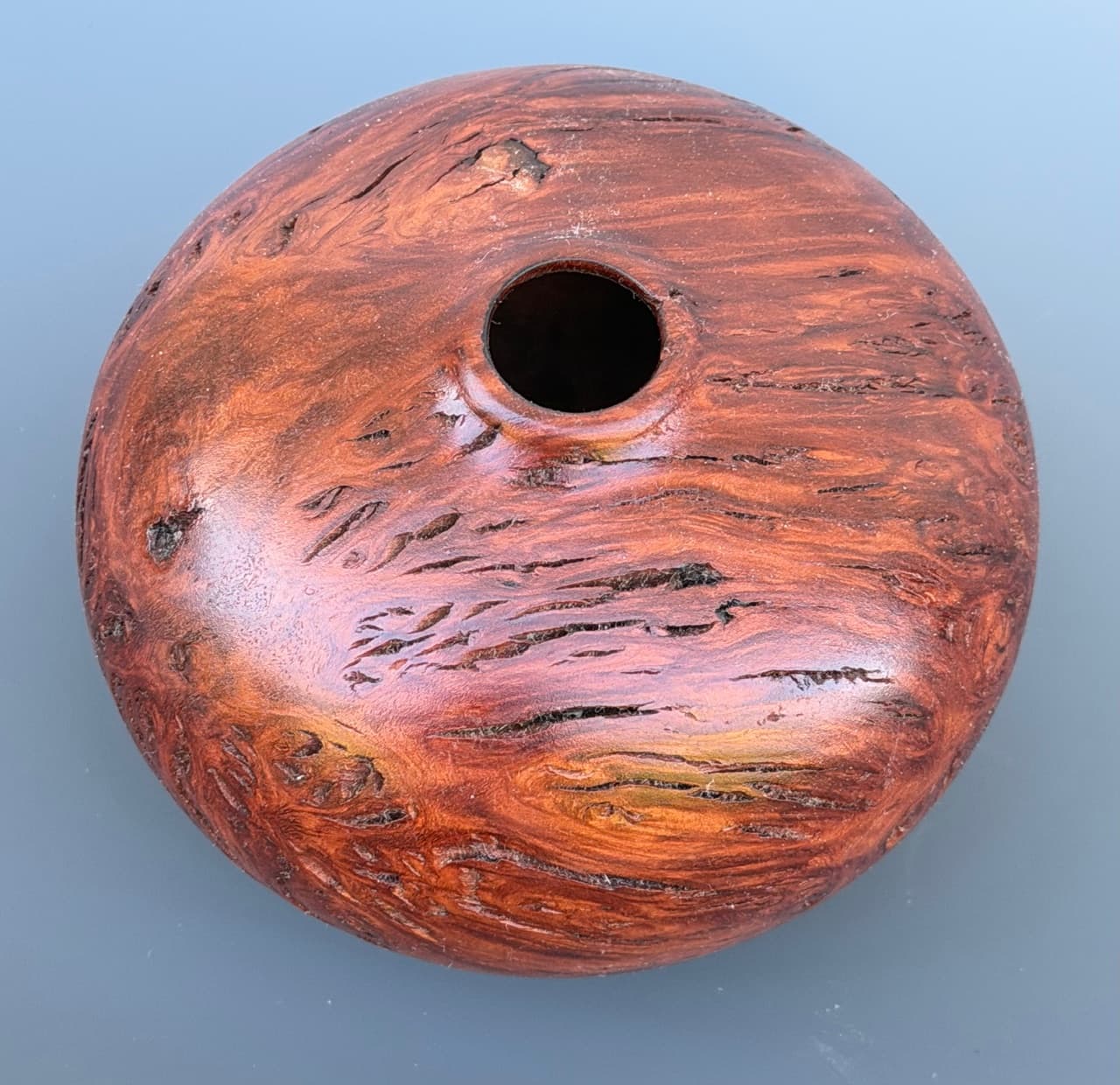
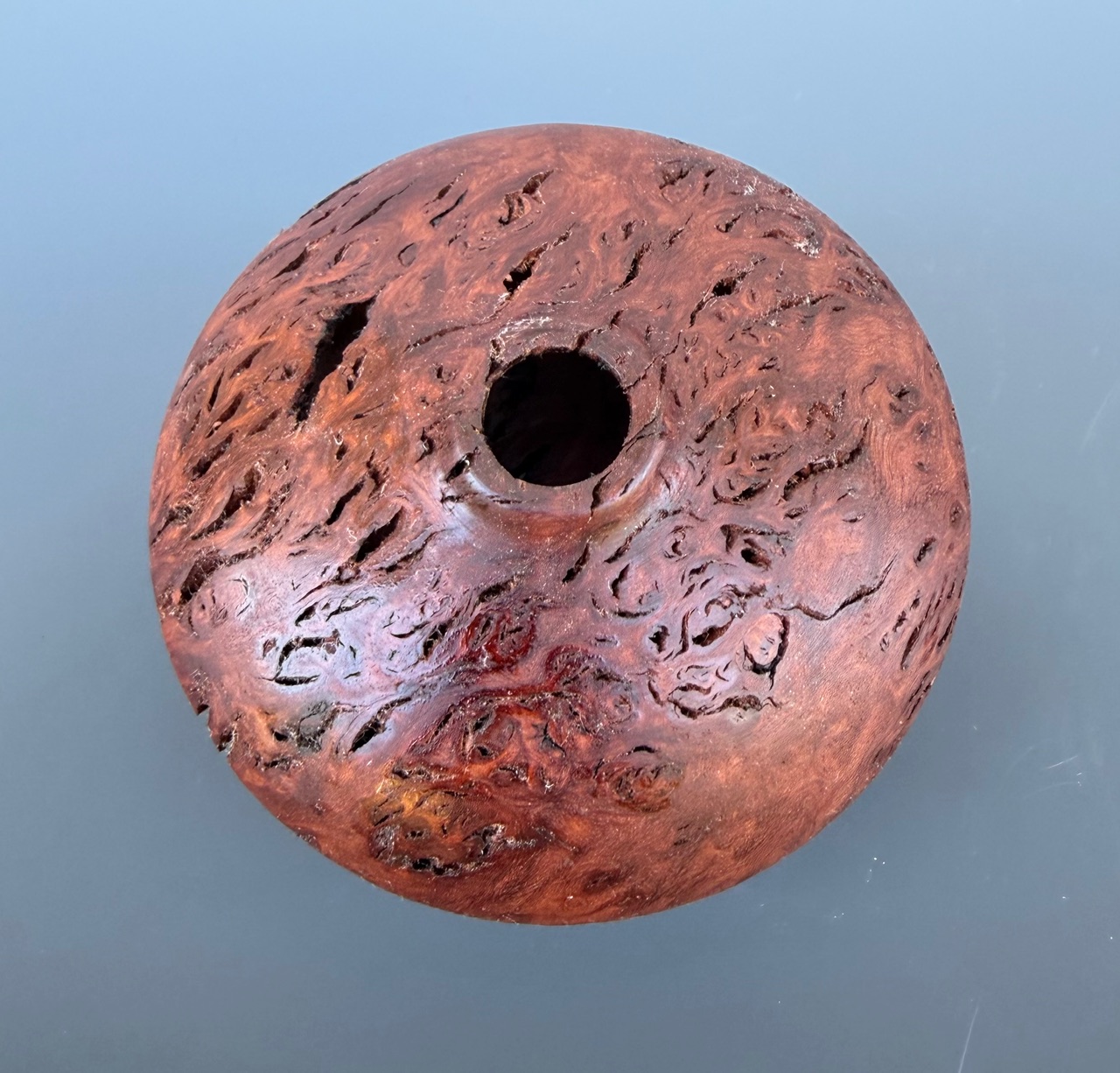
- $340 Small jarrah burl hollow form. Burl is a stress response causing a mass of abnormal growth much like a tumor or callus, prized for the random twists and swirls in the grain. Cracks and voids are common. The final picture is the wood blank I started with. 4 inch diameter and 2 3/4 inch height.

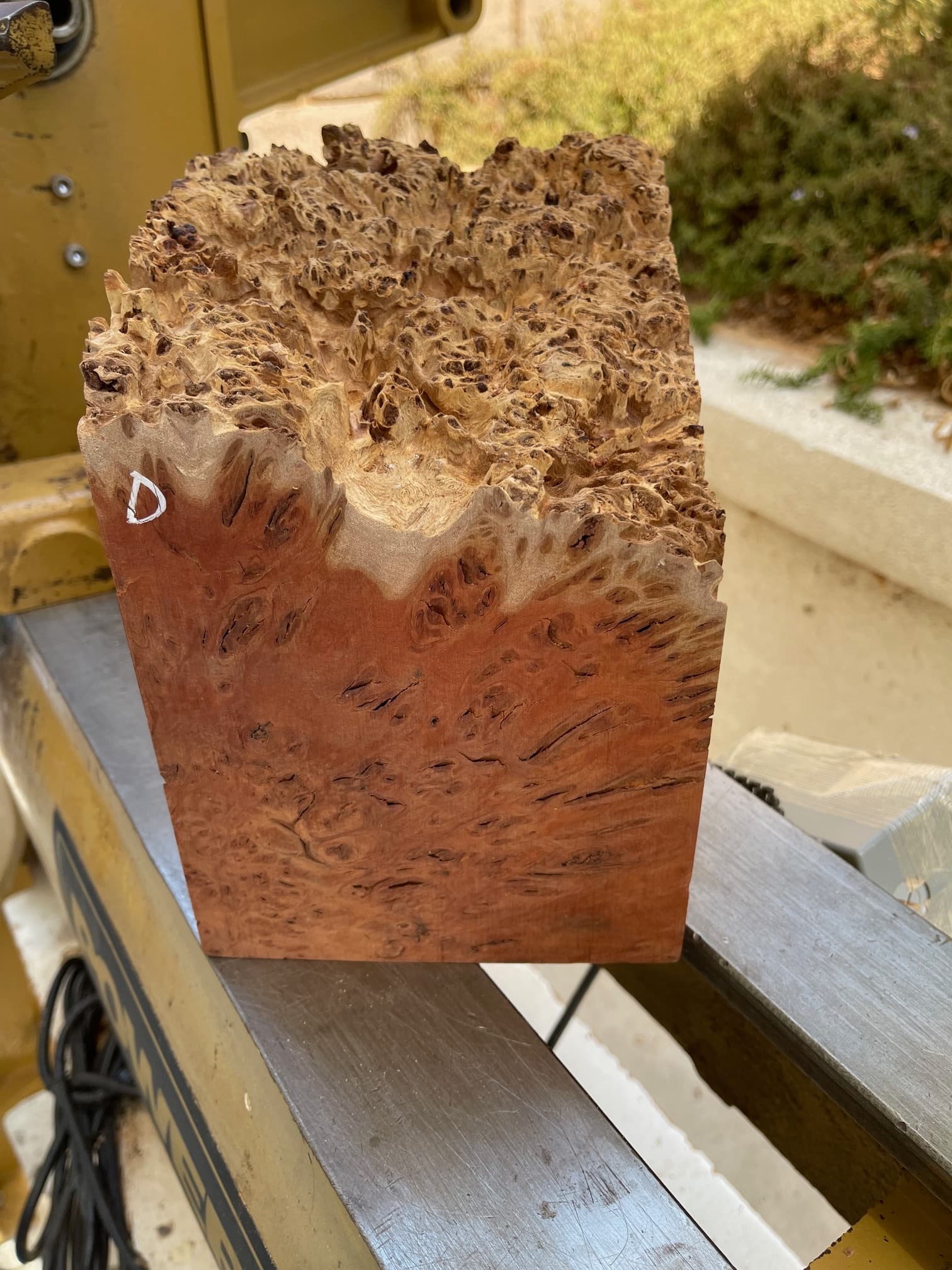
- $200 Small jarrah burl hollow form turned with a very thin wall. Burl is a stress response causing a mass of abnormal growth much like a tumor or callus, prized for the random twists and swirls in the grain. Cracks and voids are common. Last picture is the wood blank before turning.4 1/2 inch diameter and 2 1/2 inch height.

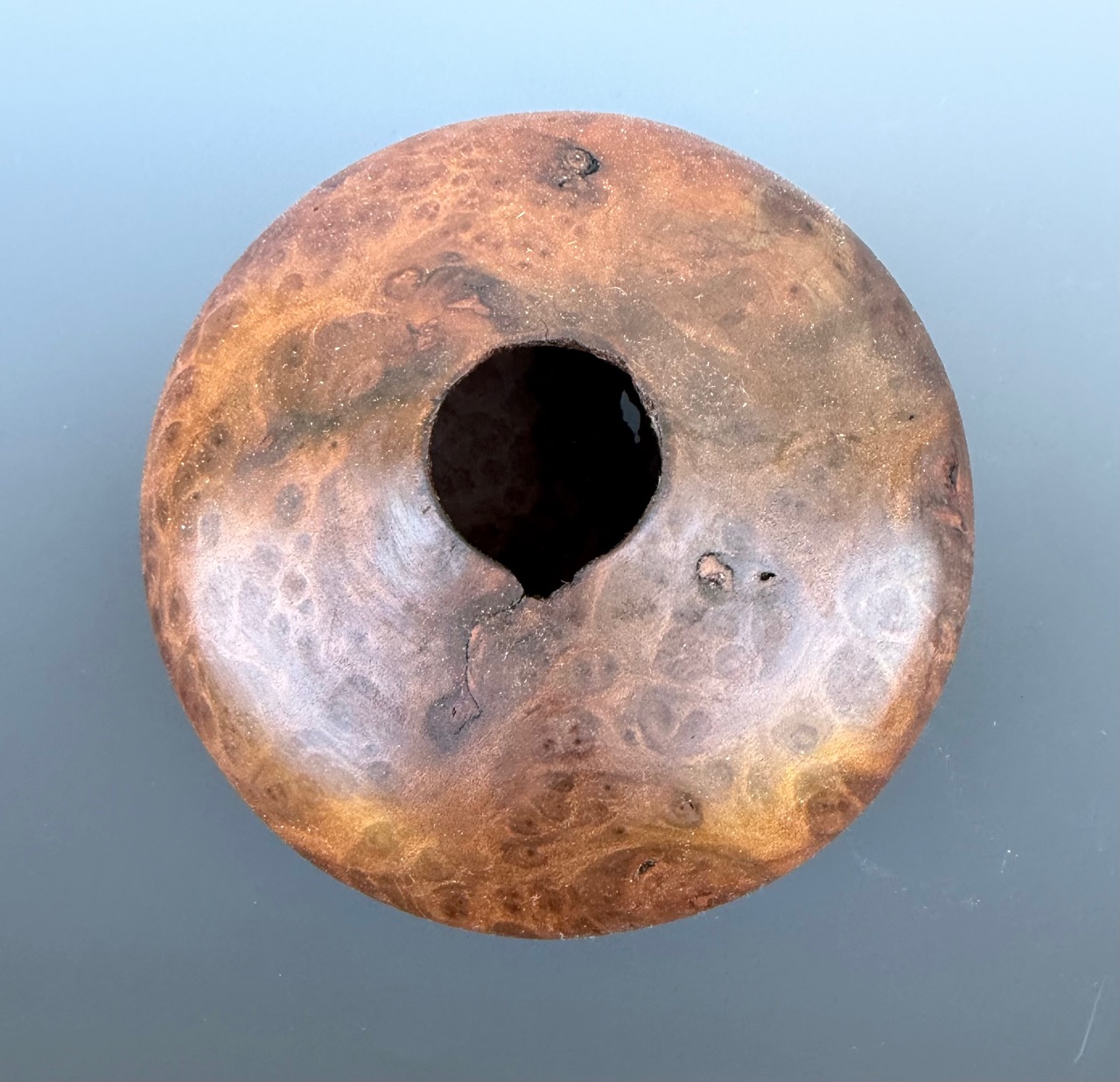
- $160 Small madrone hollow form turned through a small opening. This is a Pacific coast wood, very hard and challenging to turn. Madrone is often called arbutus. 4 1/8 inch diameter and 2 3/8 inch height.
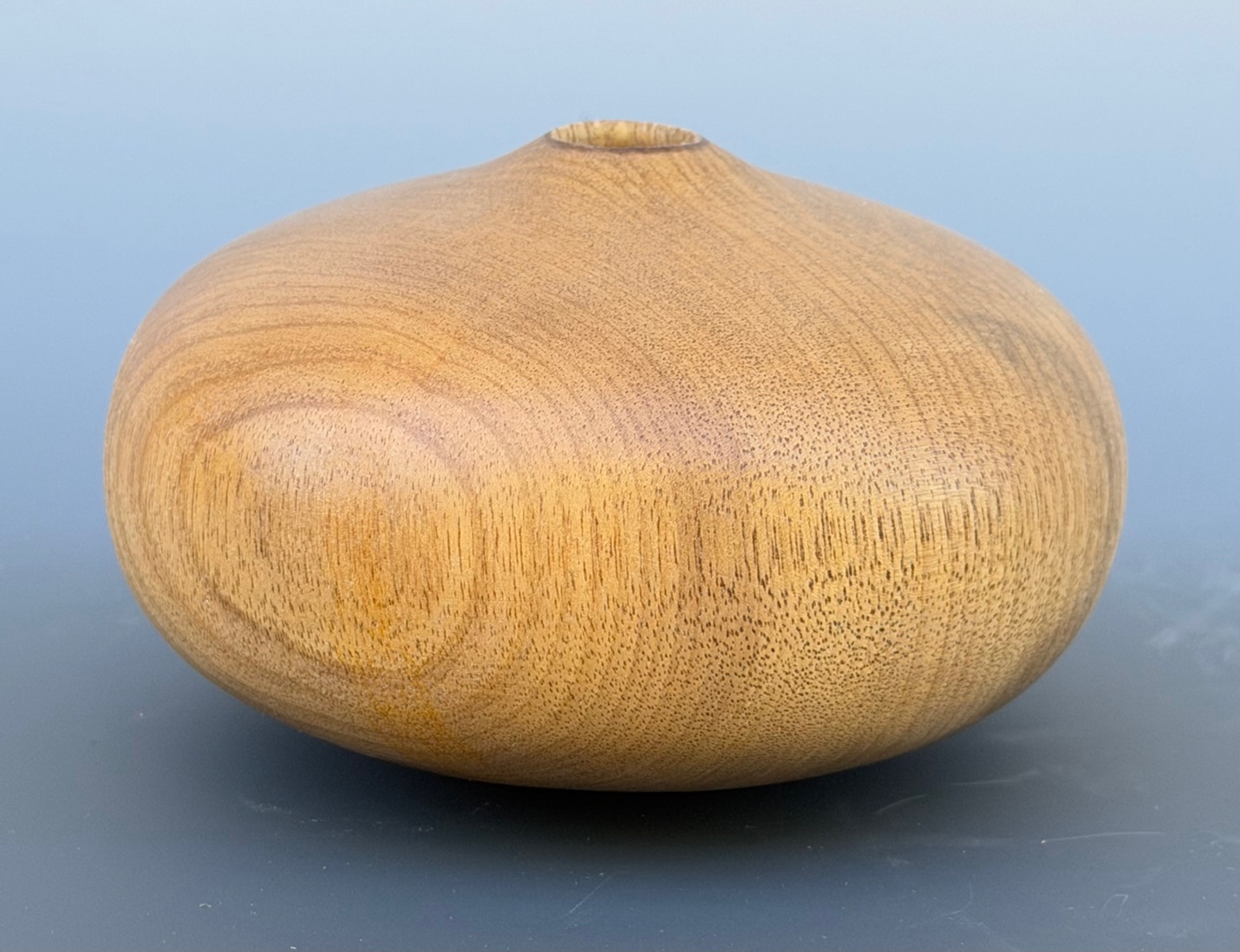
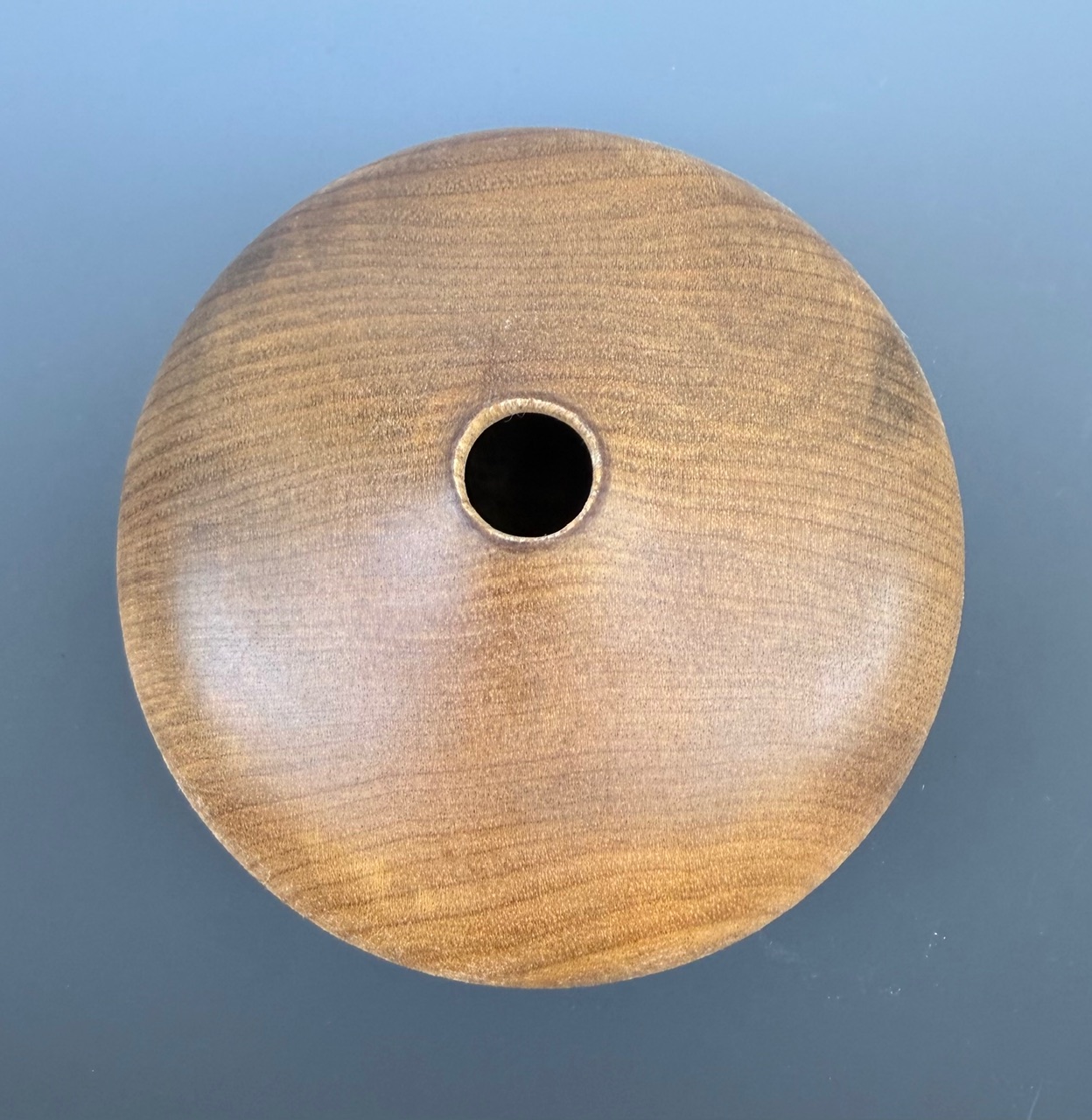
- $280 Small madrone hollow form turned through a very small opening. This piece won a prestigious “Cover of the Day” on the World of Woodturning site, a private woodturning site frequented mostly by professional turners. Madrone is often called arbutus. 4 1/2 inch diameter and 2 1/4 inch height.
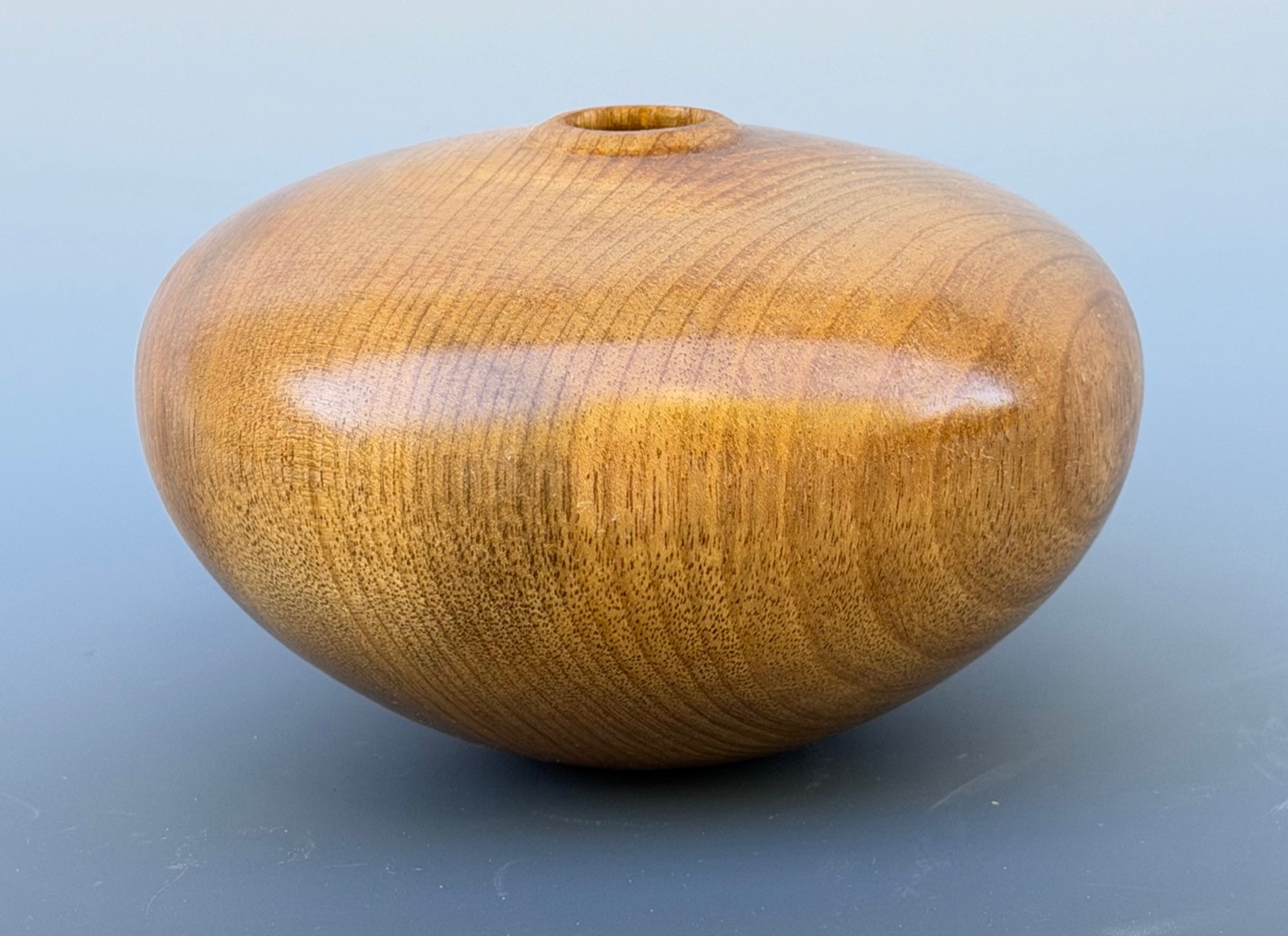
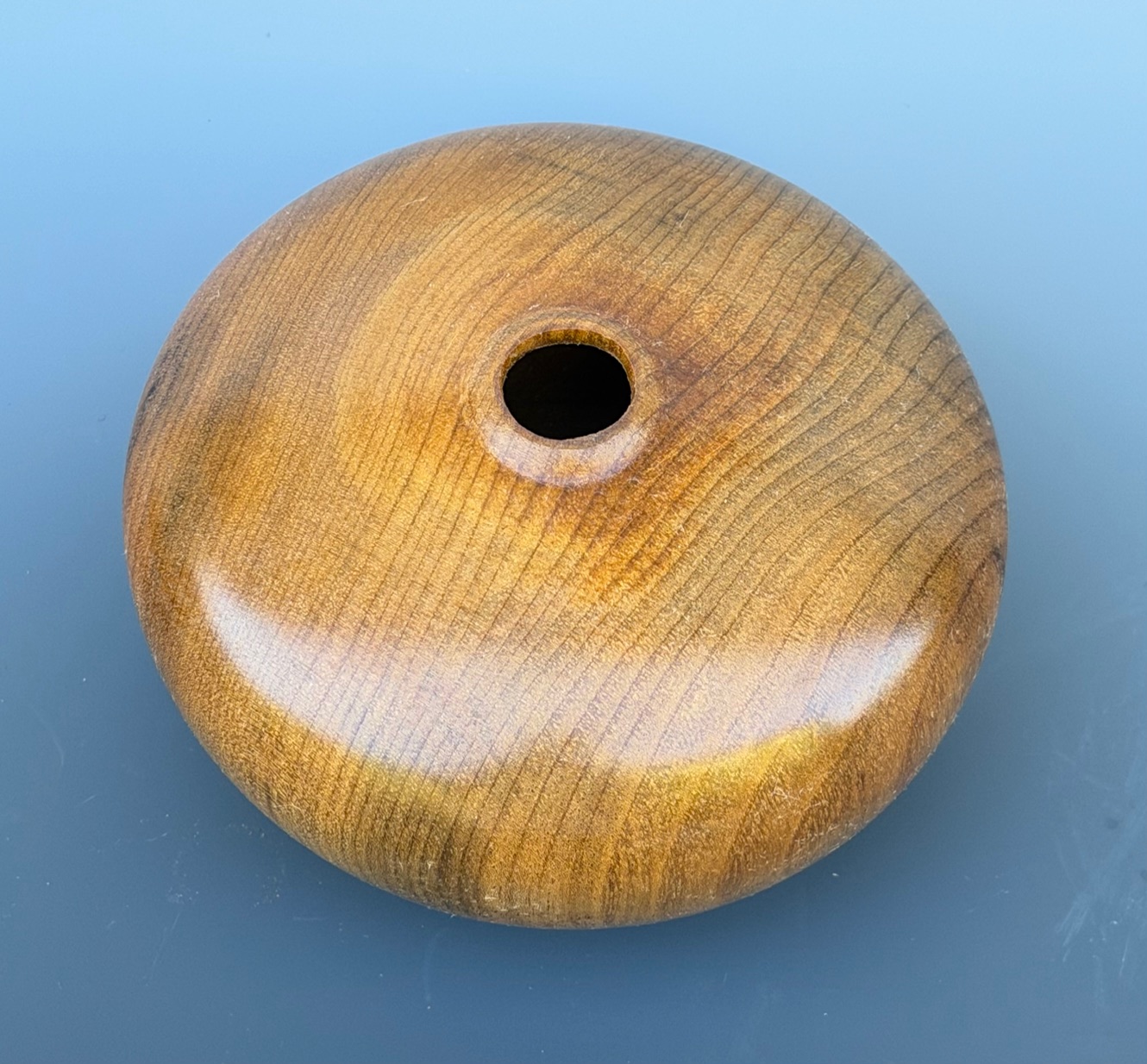
- $420 Soft maple hollow form turned with a very thin wall thickness and a small opening. The wood sands and polishes beautifully. This is one of my favorite works. 5 1/2 inch diameter and 4 7/8 inch height.
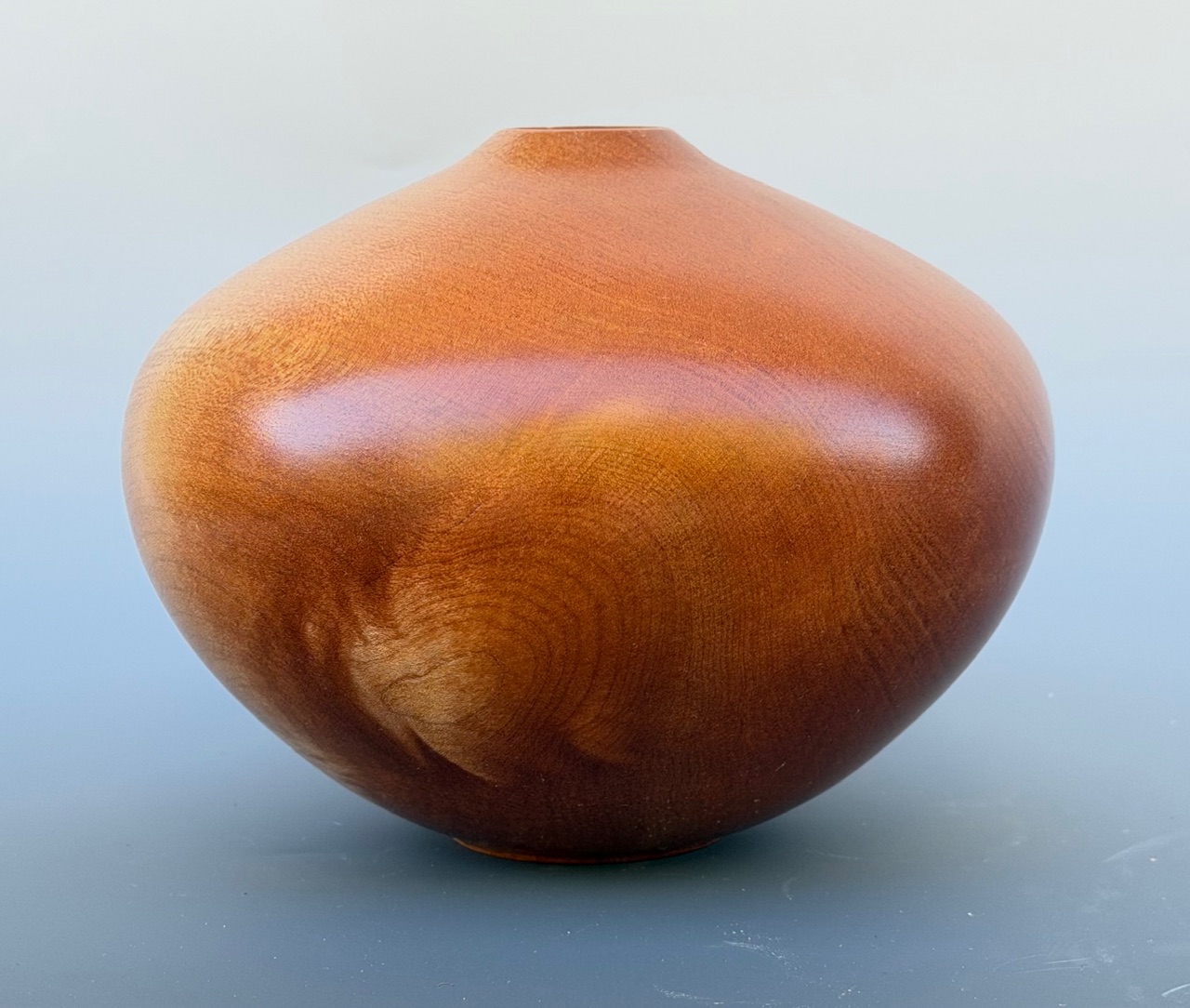
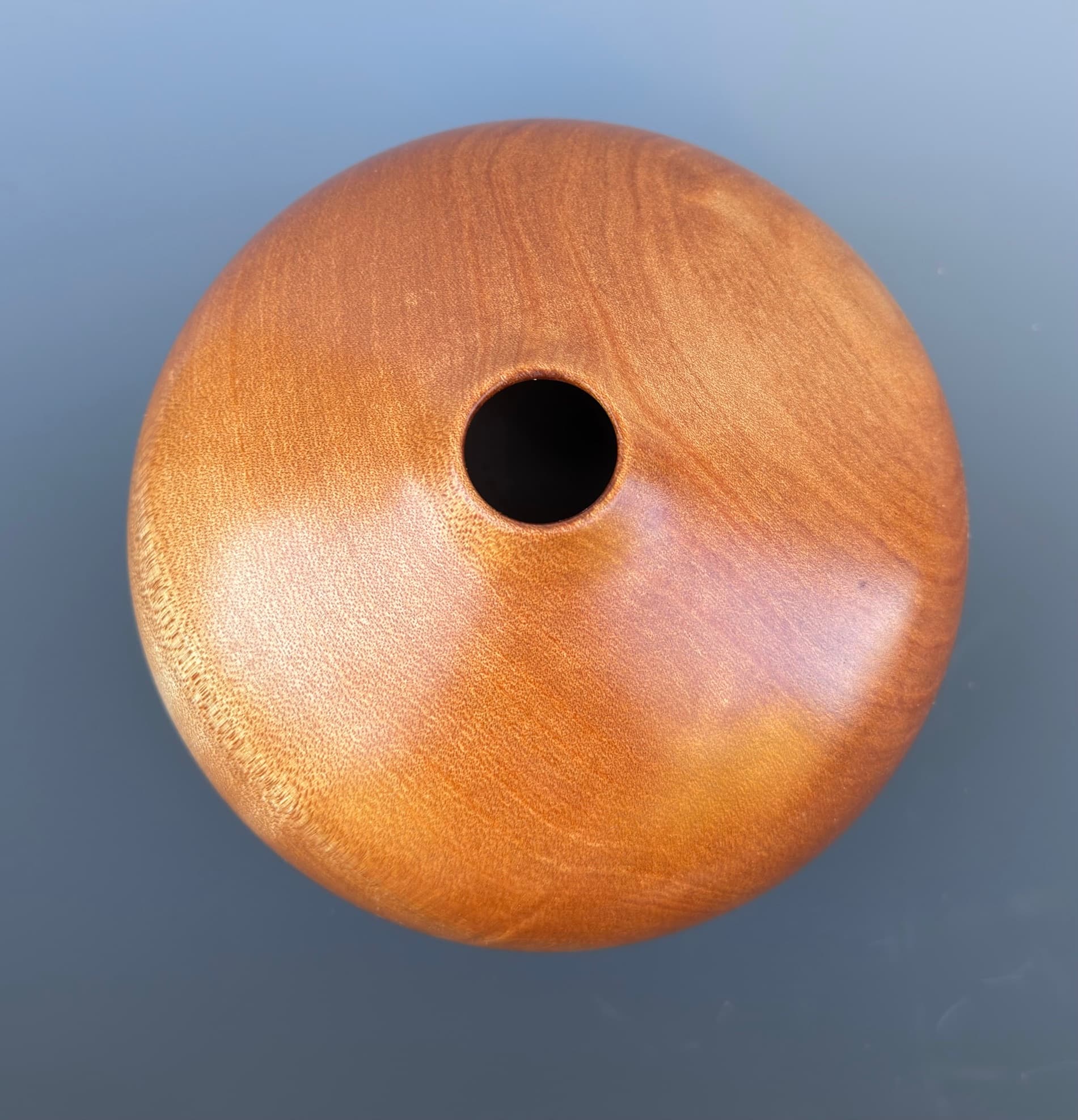
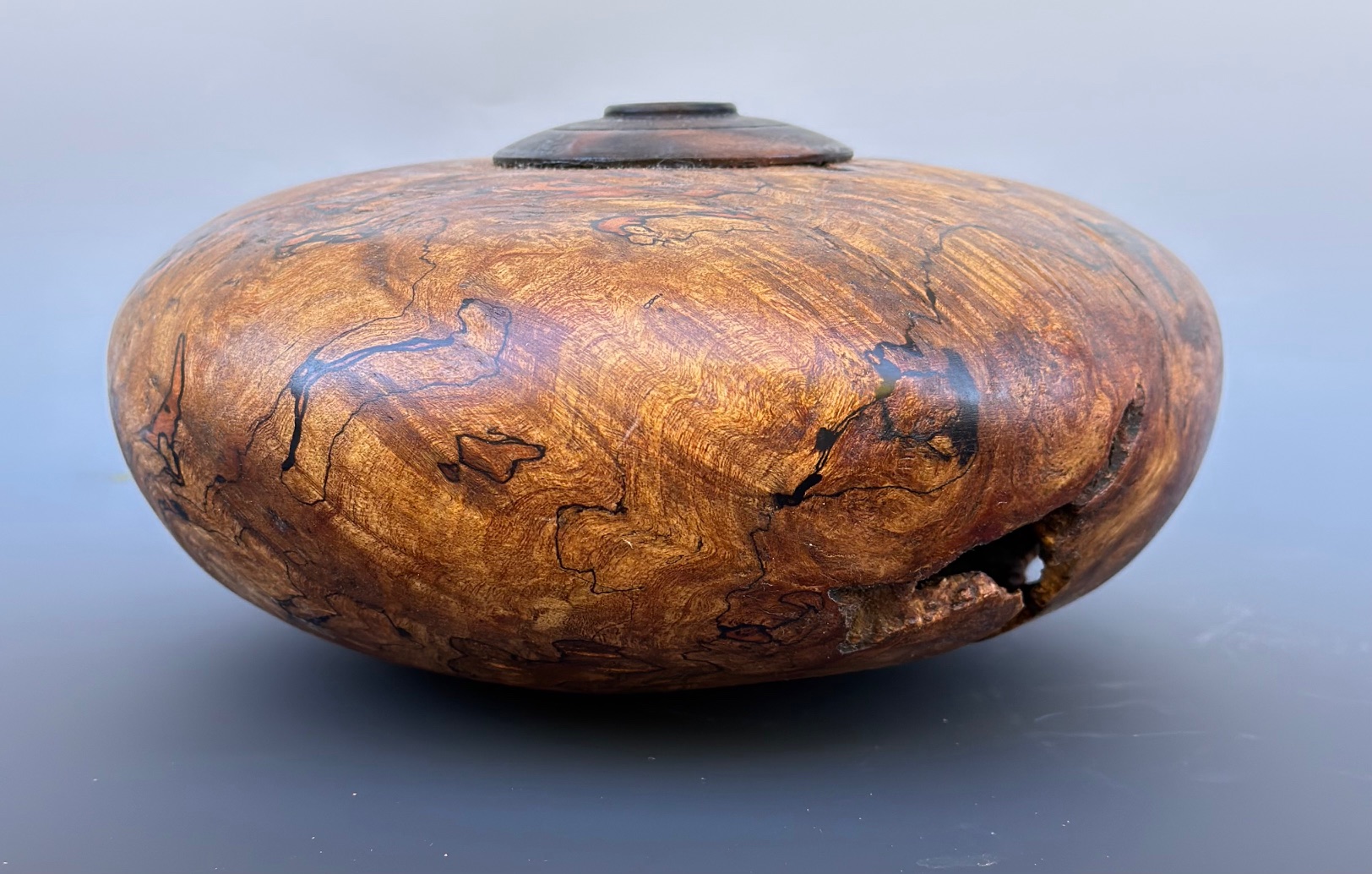
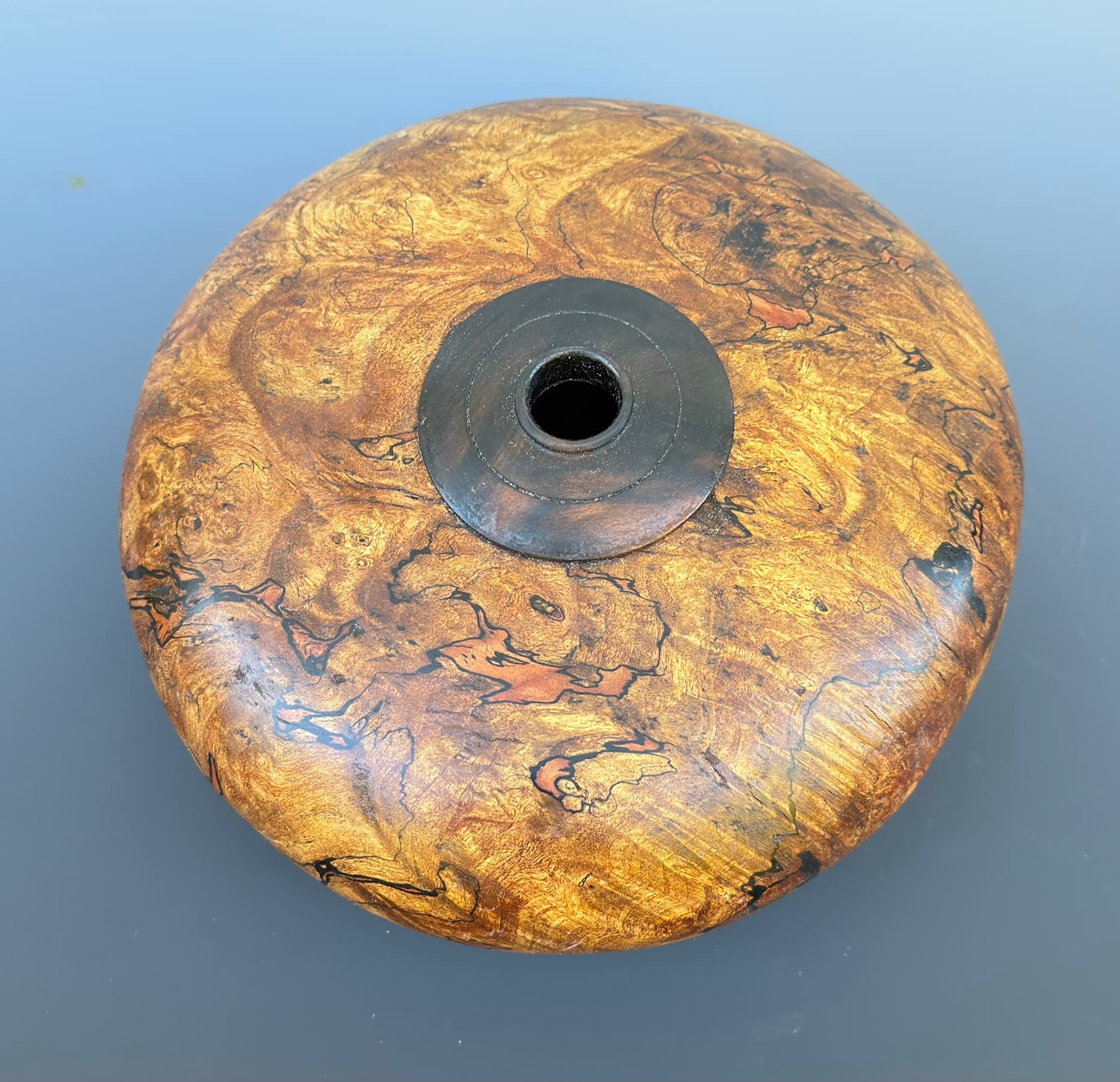
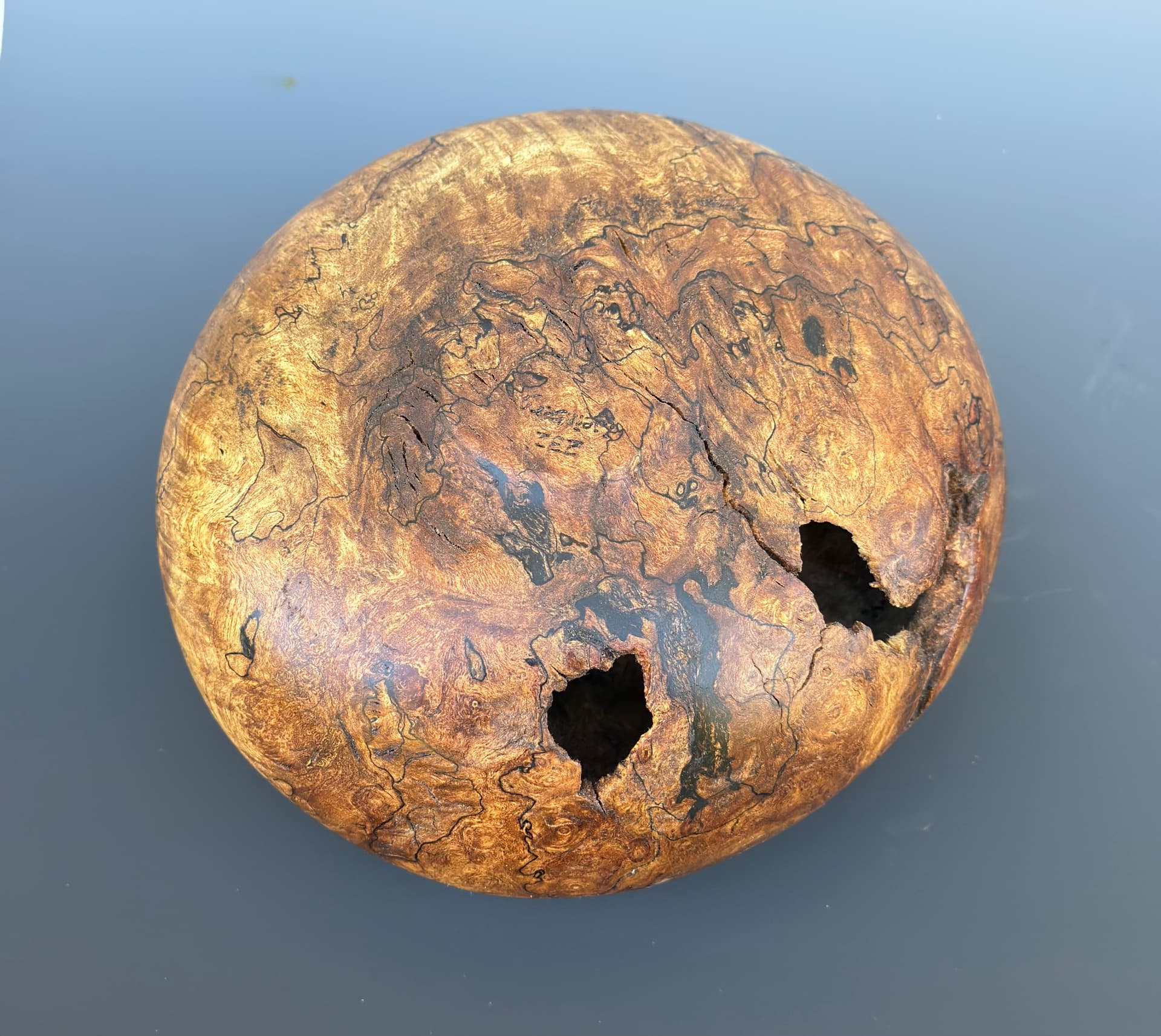
- $420 Maple burl hollow form with dark wood cap–this piece has cracks and voids. The voids are not considered defects but rather highlights in the woodturning world. It has warped somewhat as well. Third picture shows bottom view. Burl is a stress response causing a mass of abnormal growth much like a tumor or callus, prized for the random twists and swirls in the grain. 8 1/4 inch diameter and 3 3/4 inch height.
- $120 Small sycamore hollow form with figured grain pattern. 5 1/2 inch diameter and 4 inch height.
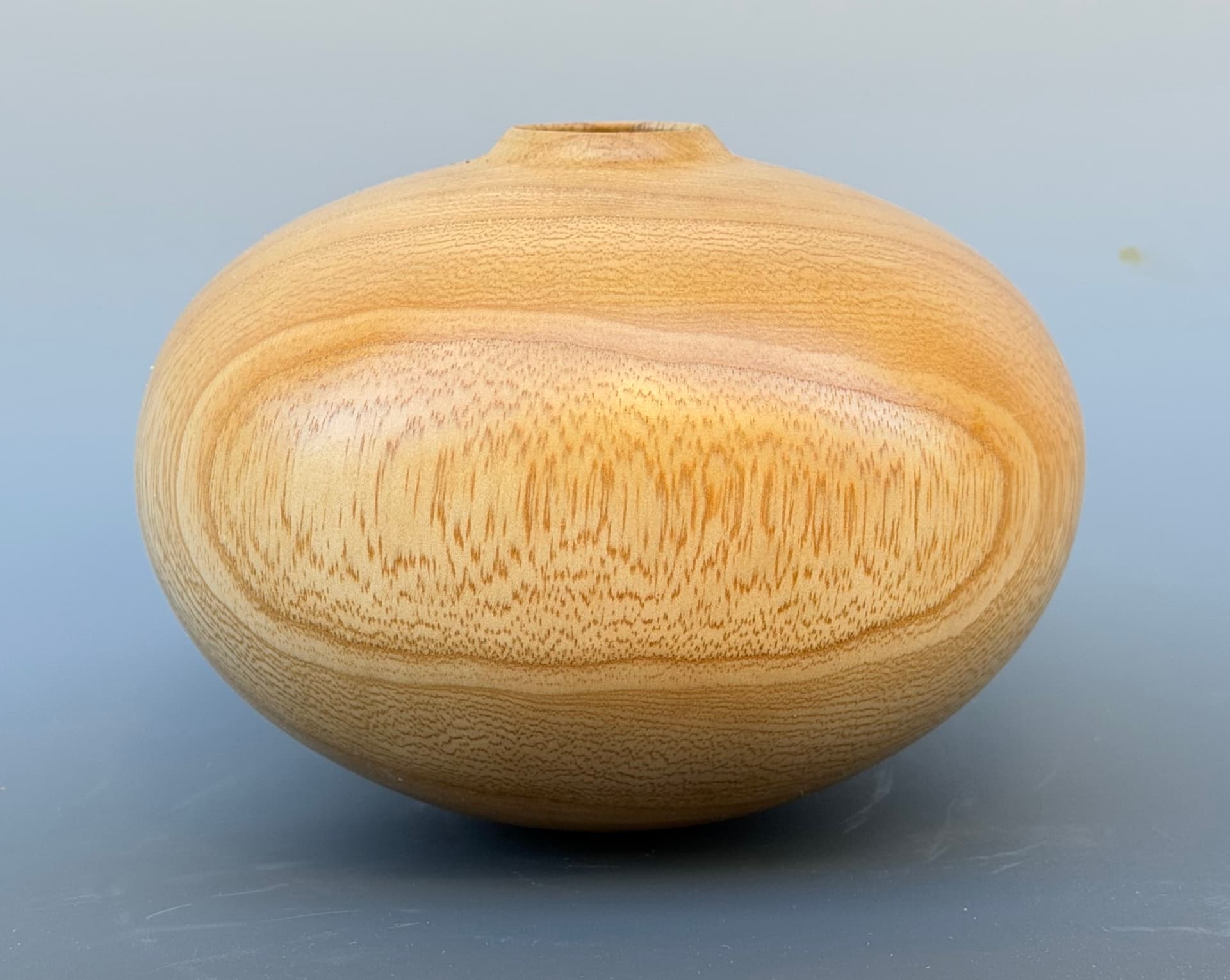
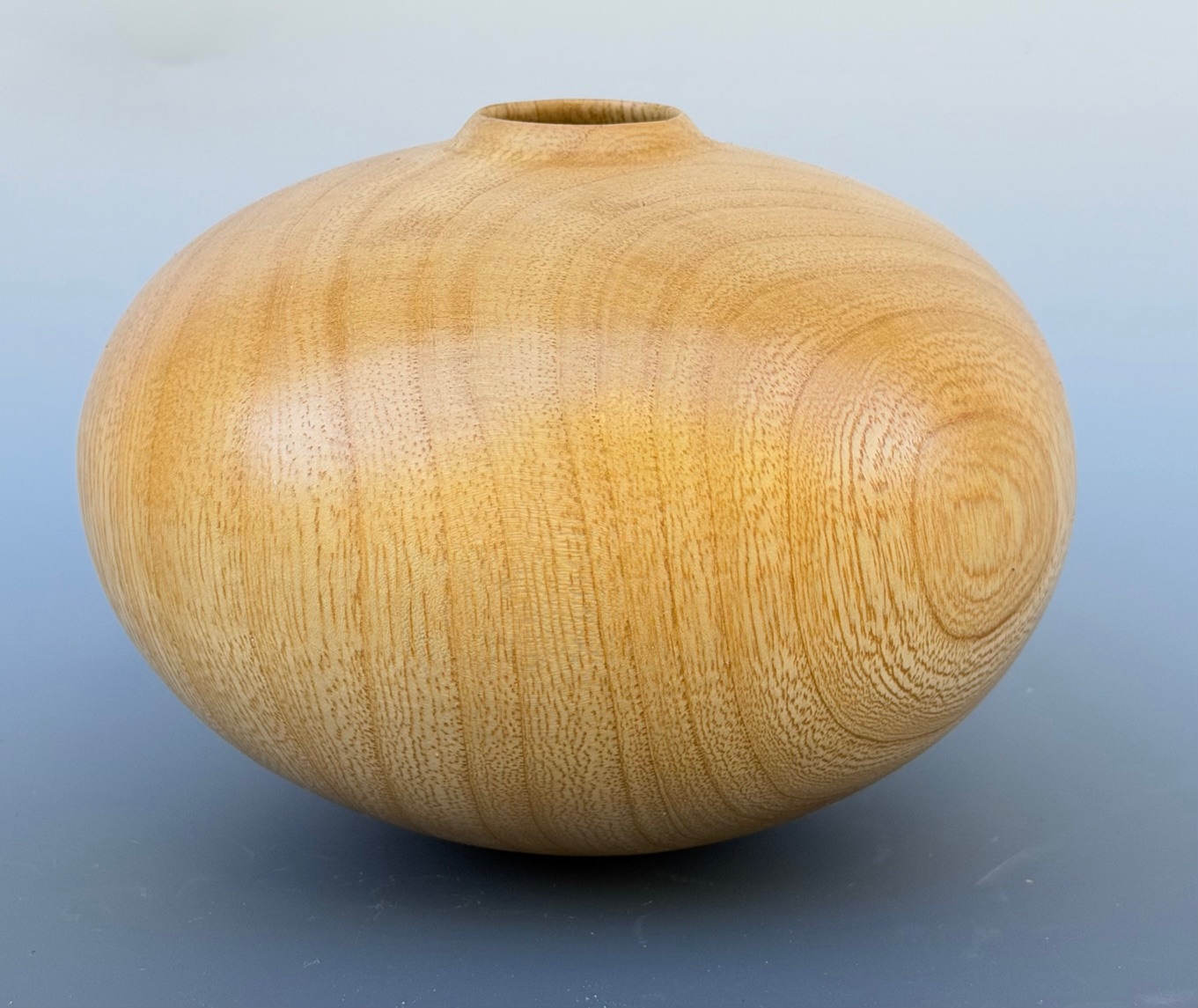
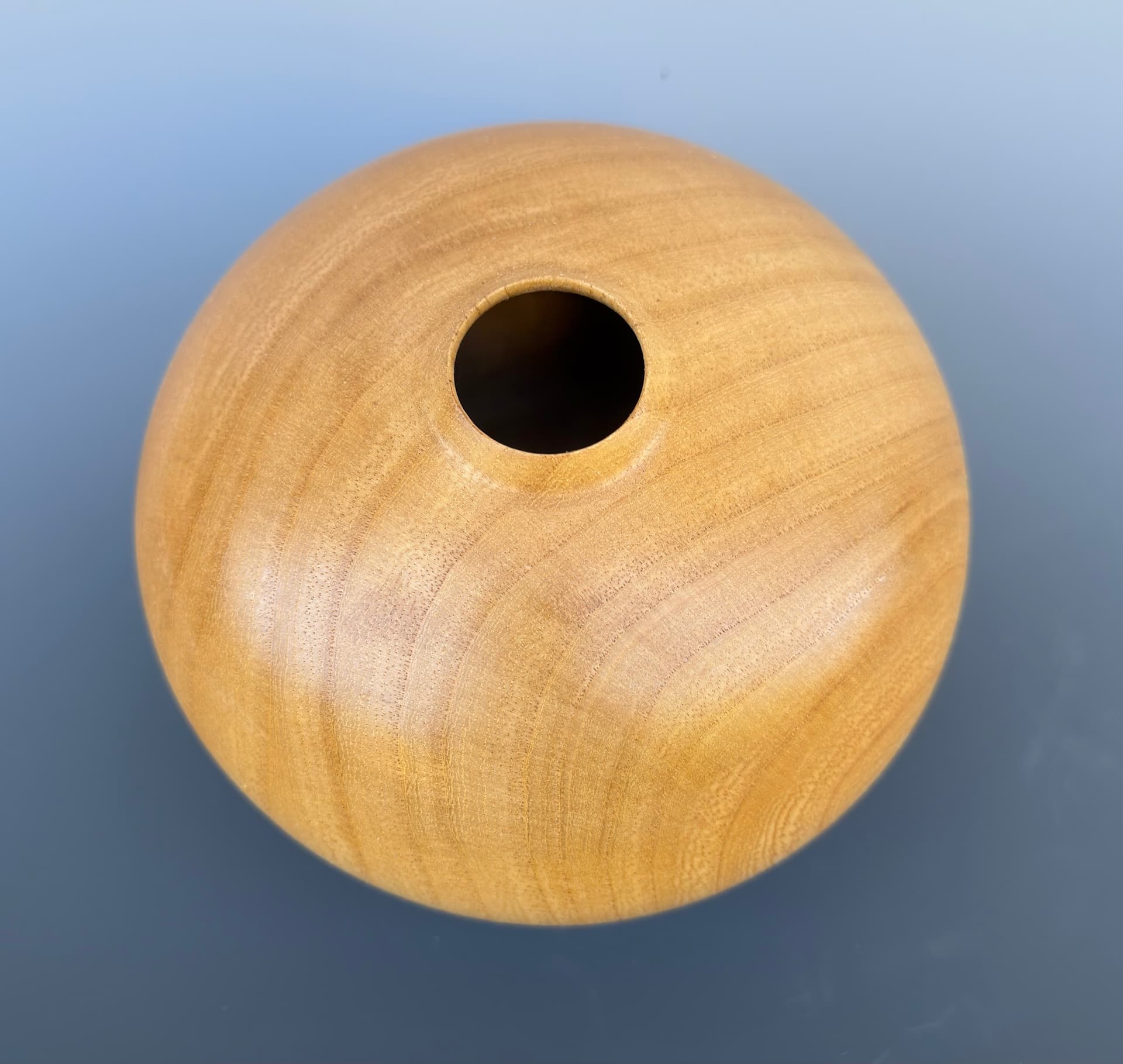
- $110 Small unknown wood hollow form with cracks. The color variation at the opening is natural. 4 1/2 inch diameter and 3 1/4 inch height.
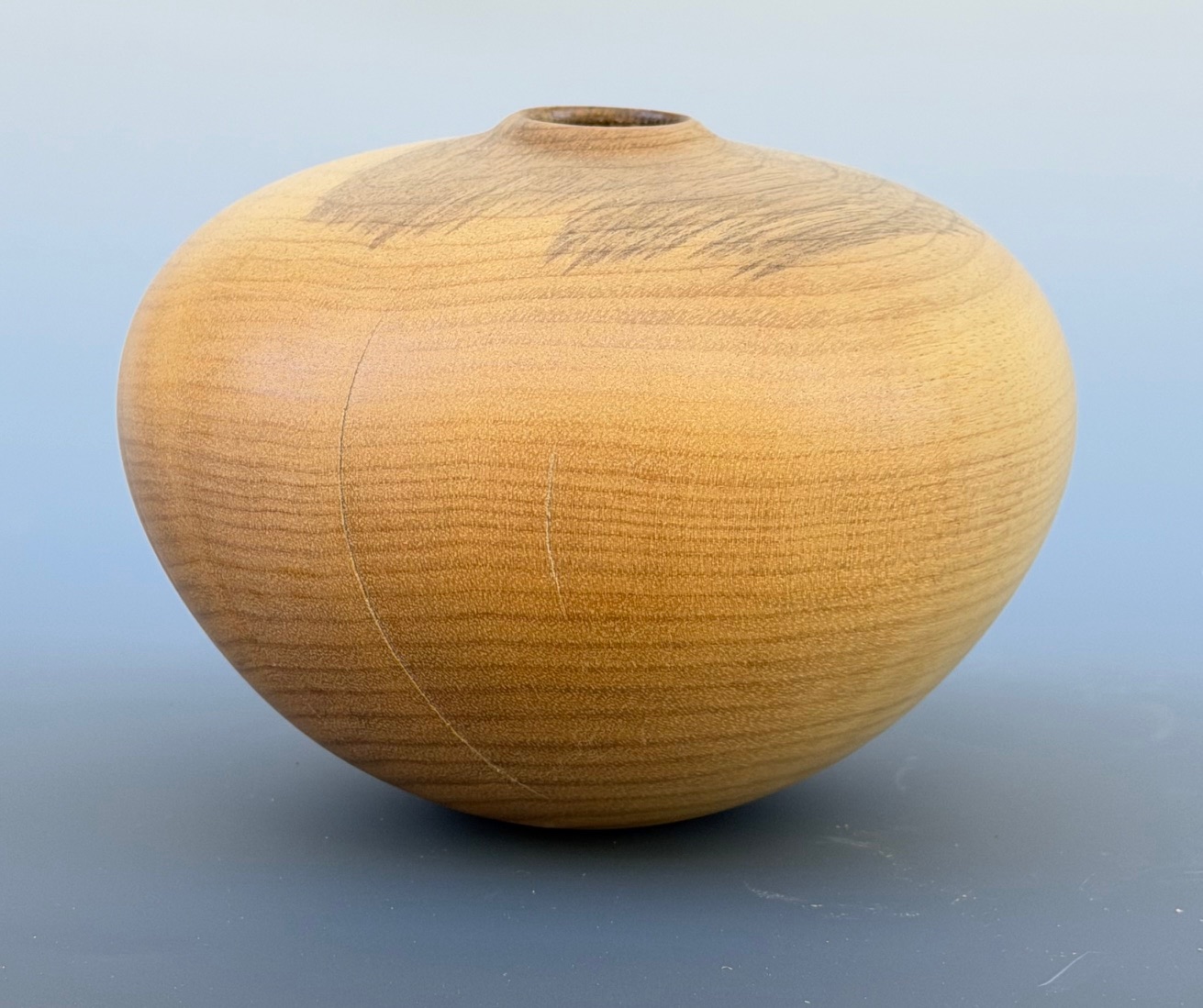
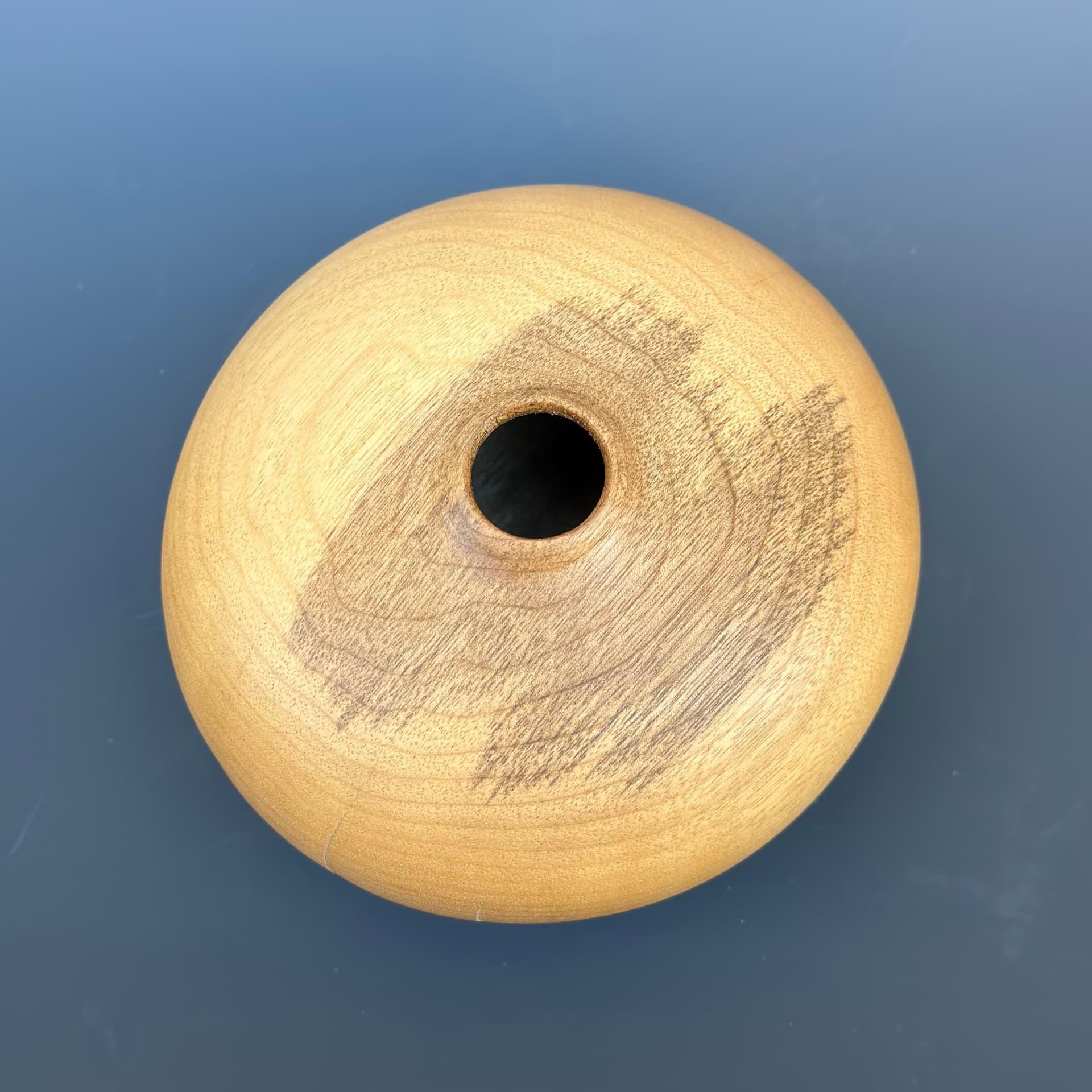
- $80 Small mesquite hollow form with cracks and voids, quite common in this wood. 4 inch diameter and 2 1/2 inch height.
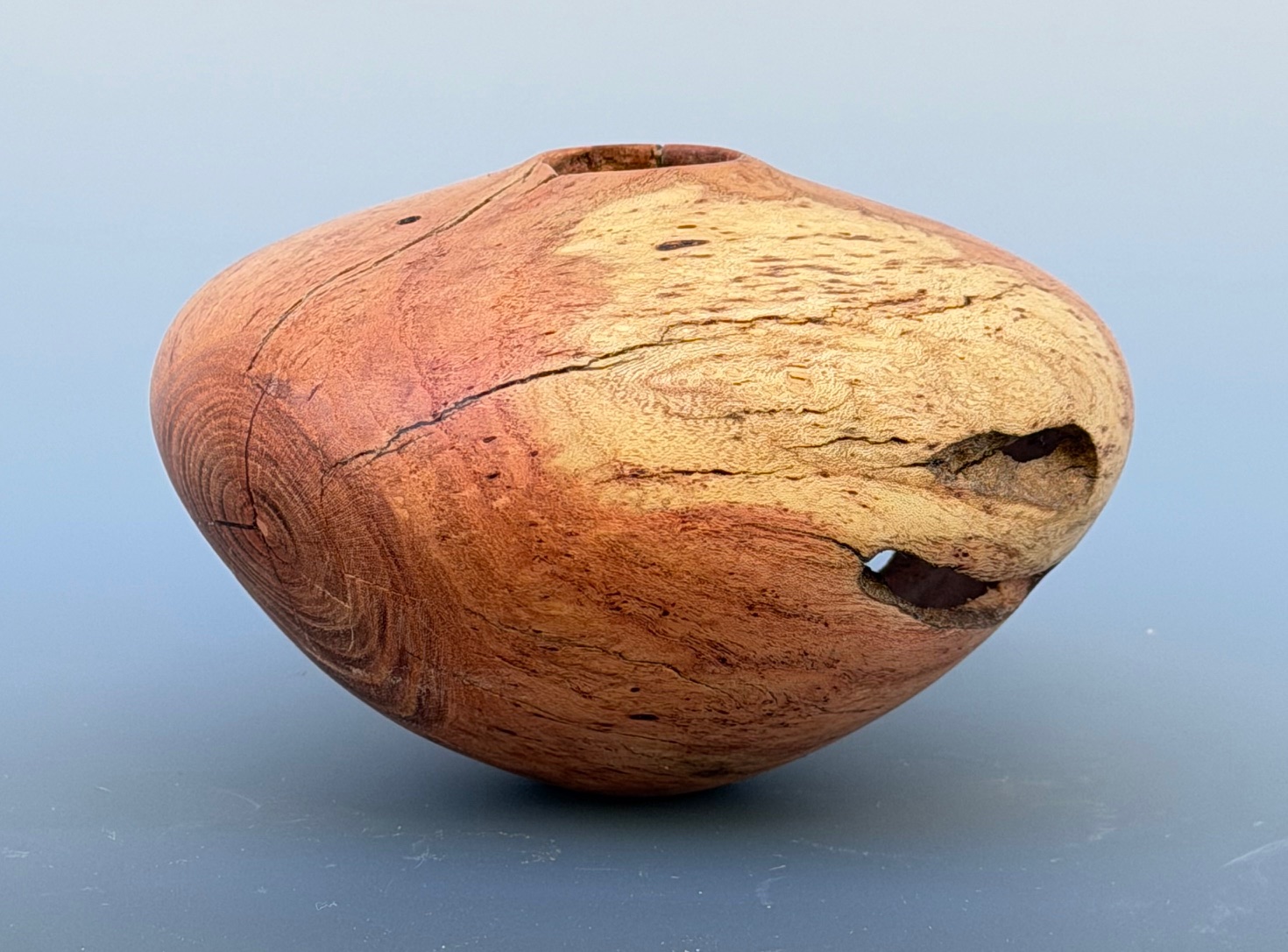
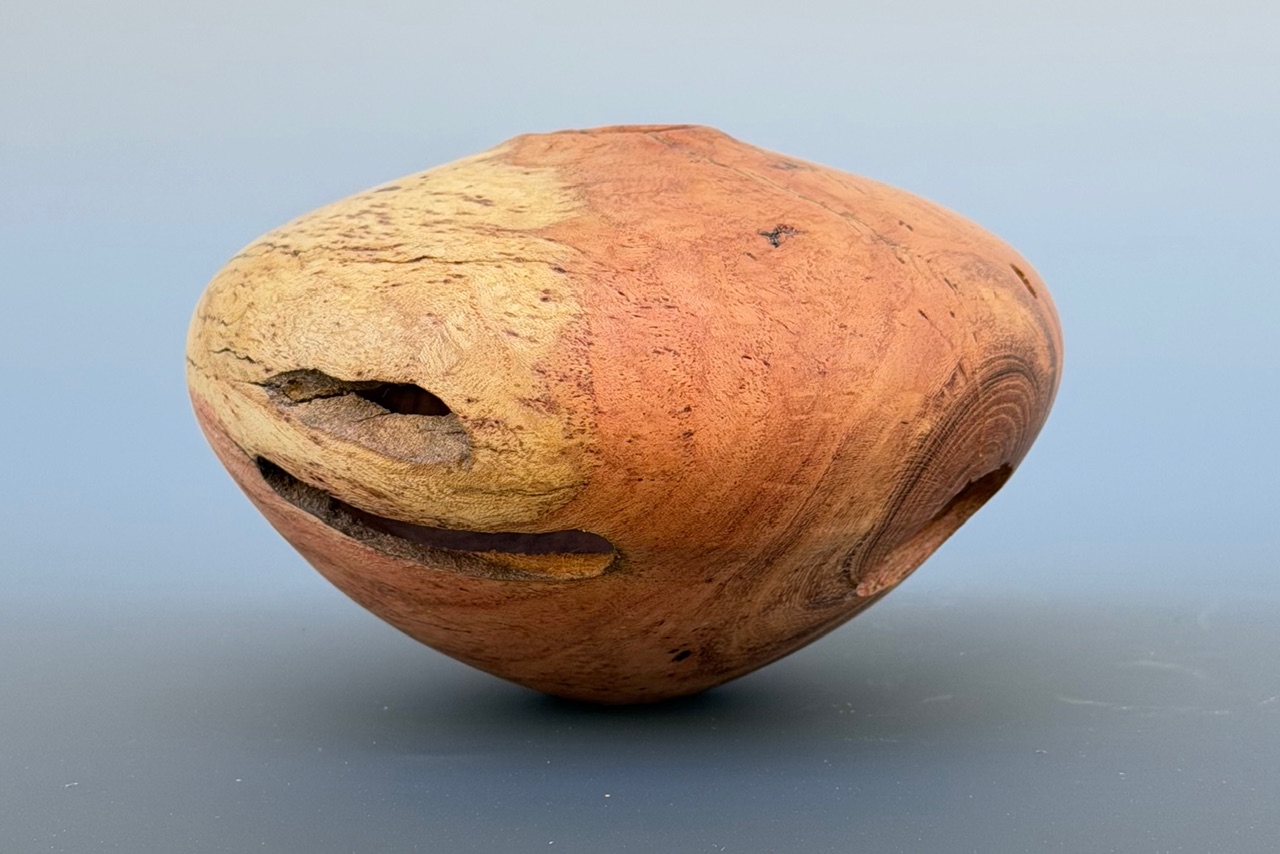
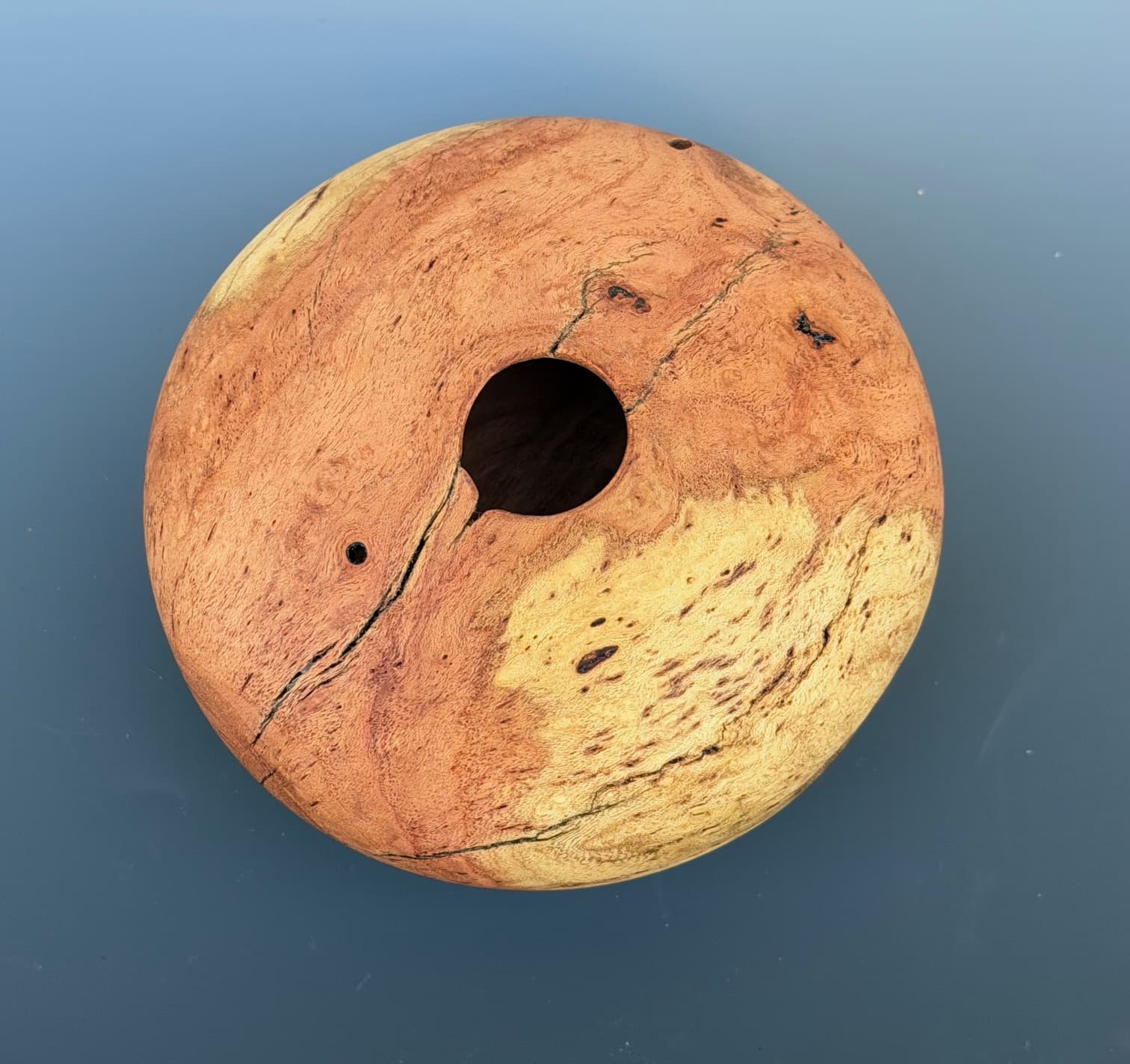
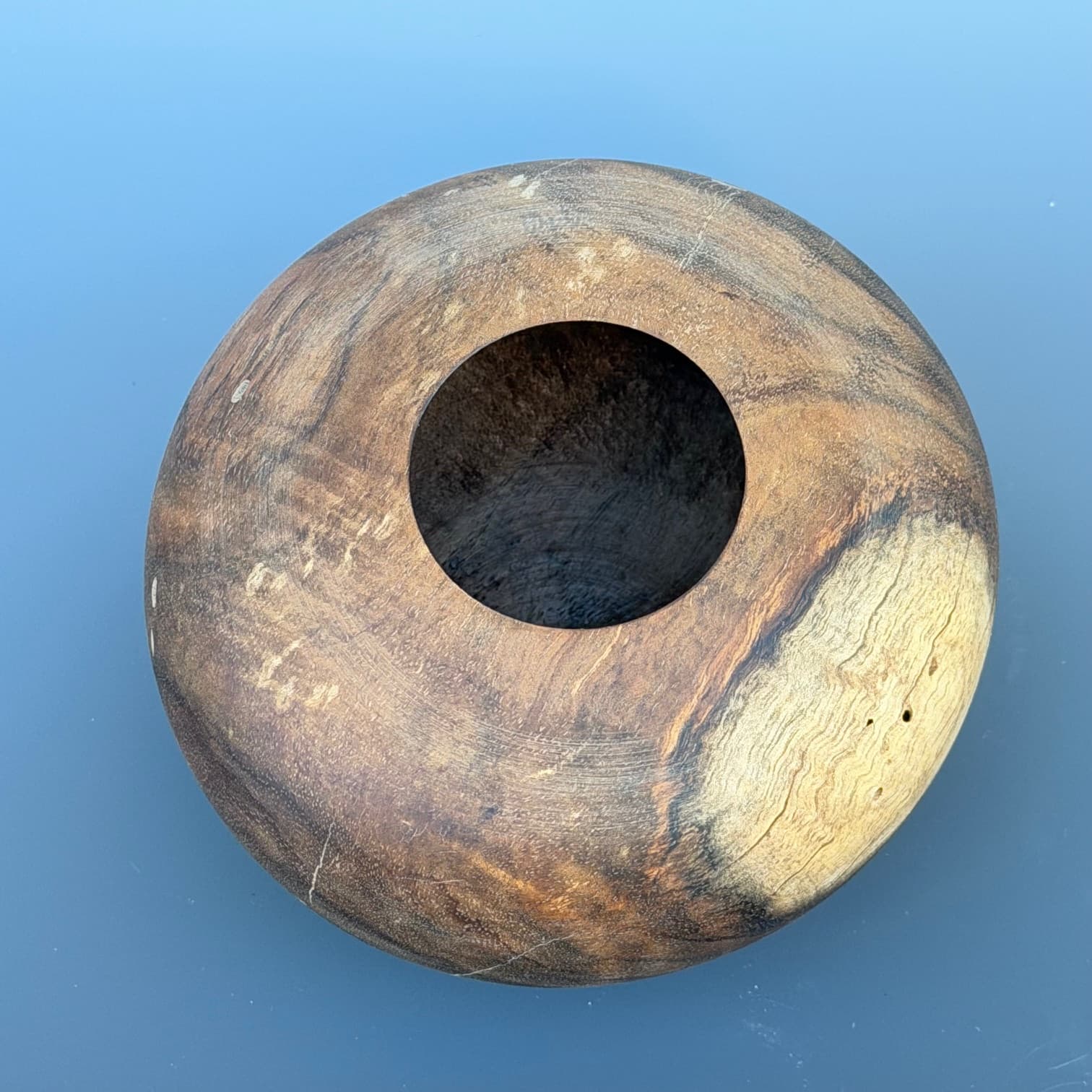
- $110 Small desert ironwood hollow form with cracks, commonly found in this expensive wood. Sapwood and heartwood are present. 4 1/2 inch diameter and 2 3/4 inch height.
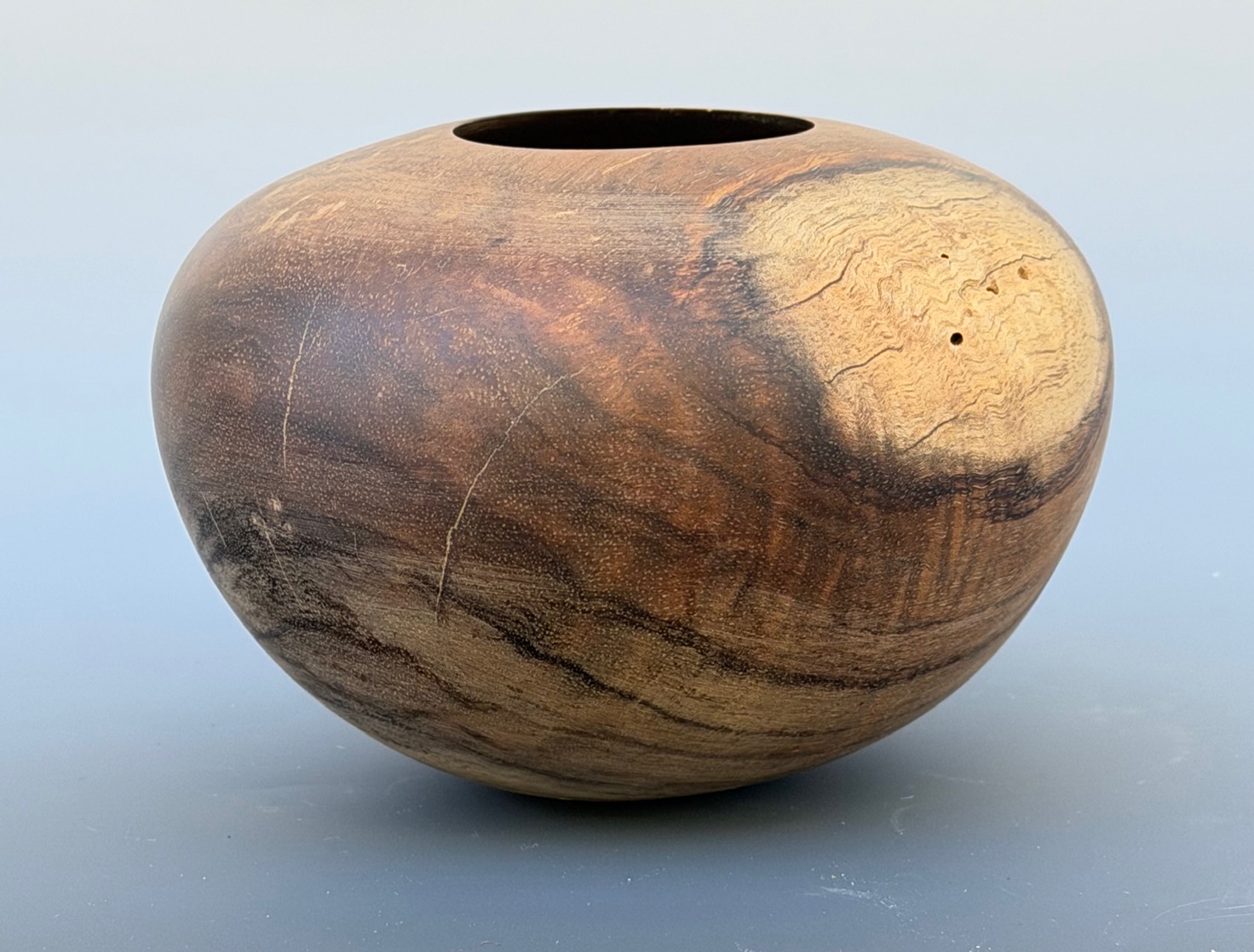
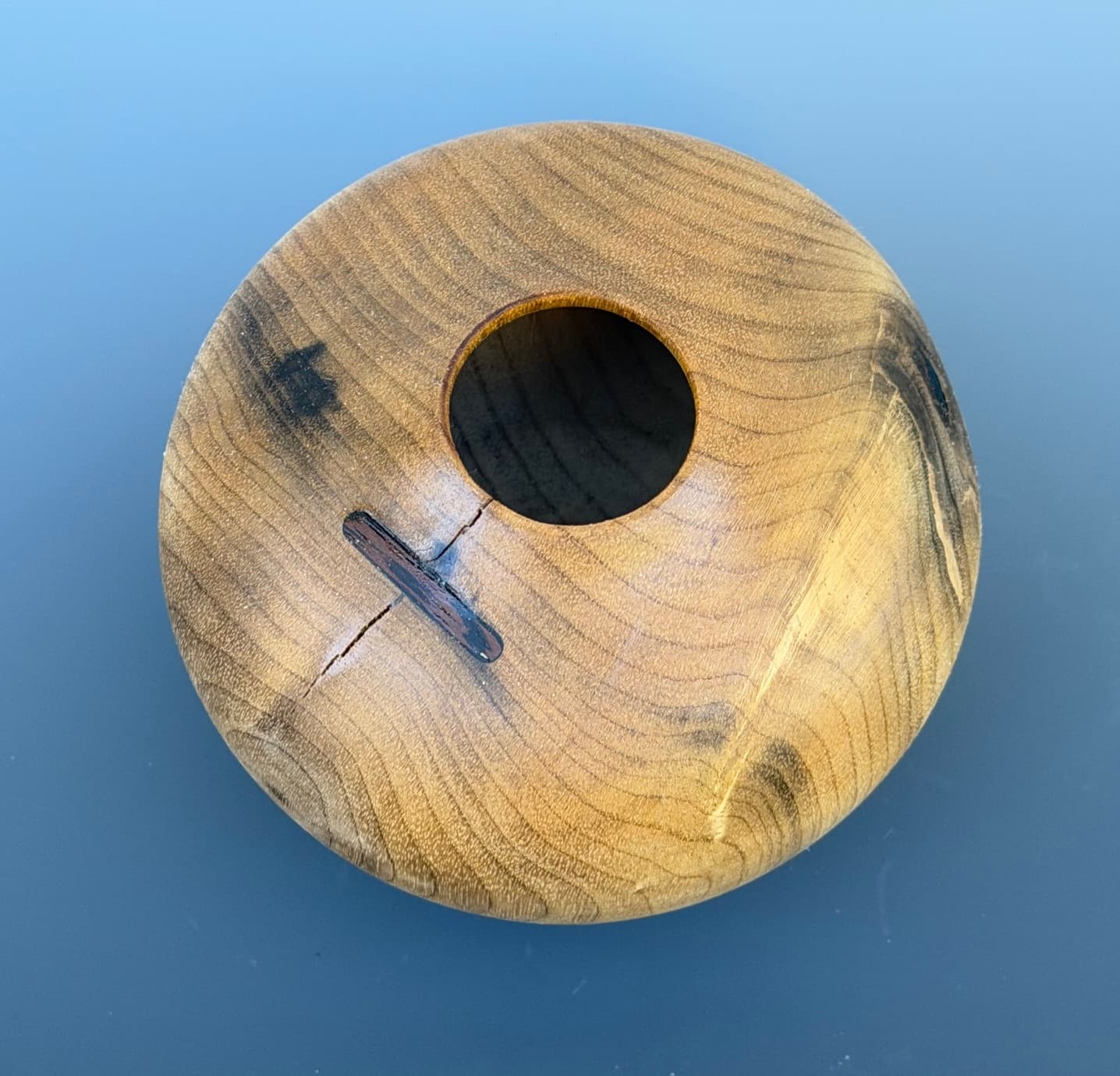
- $110 Small myrtle hollow form with cracks and wood bar. 4 inch diameter and 3 1/4 inch height.

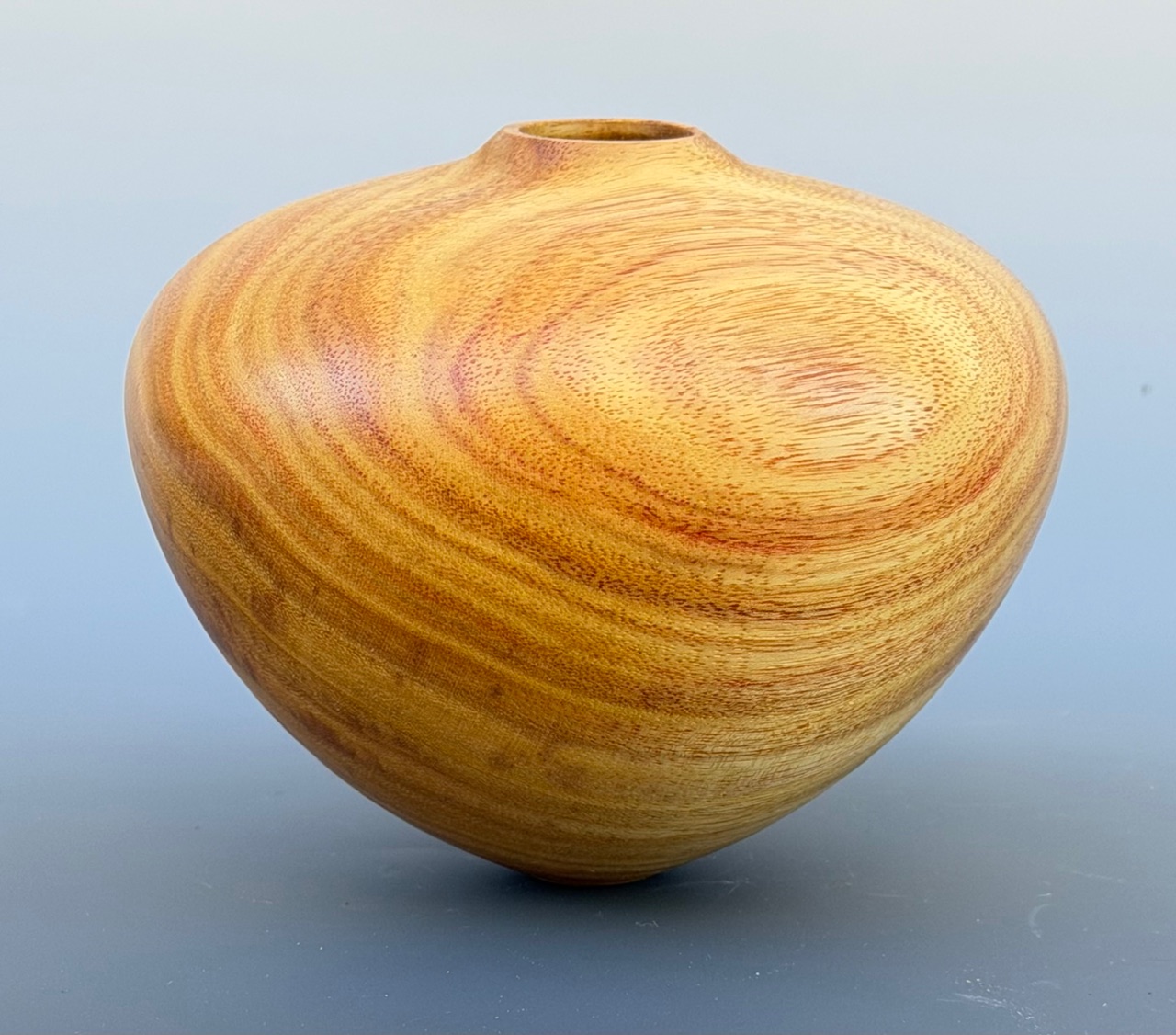
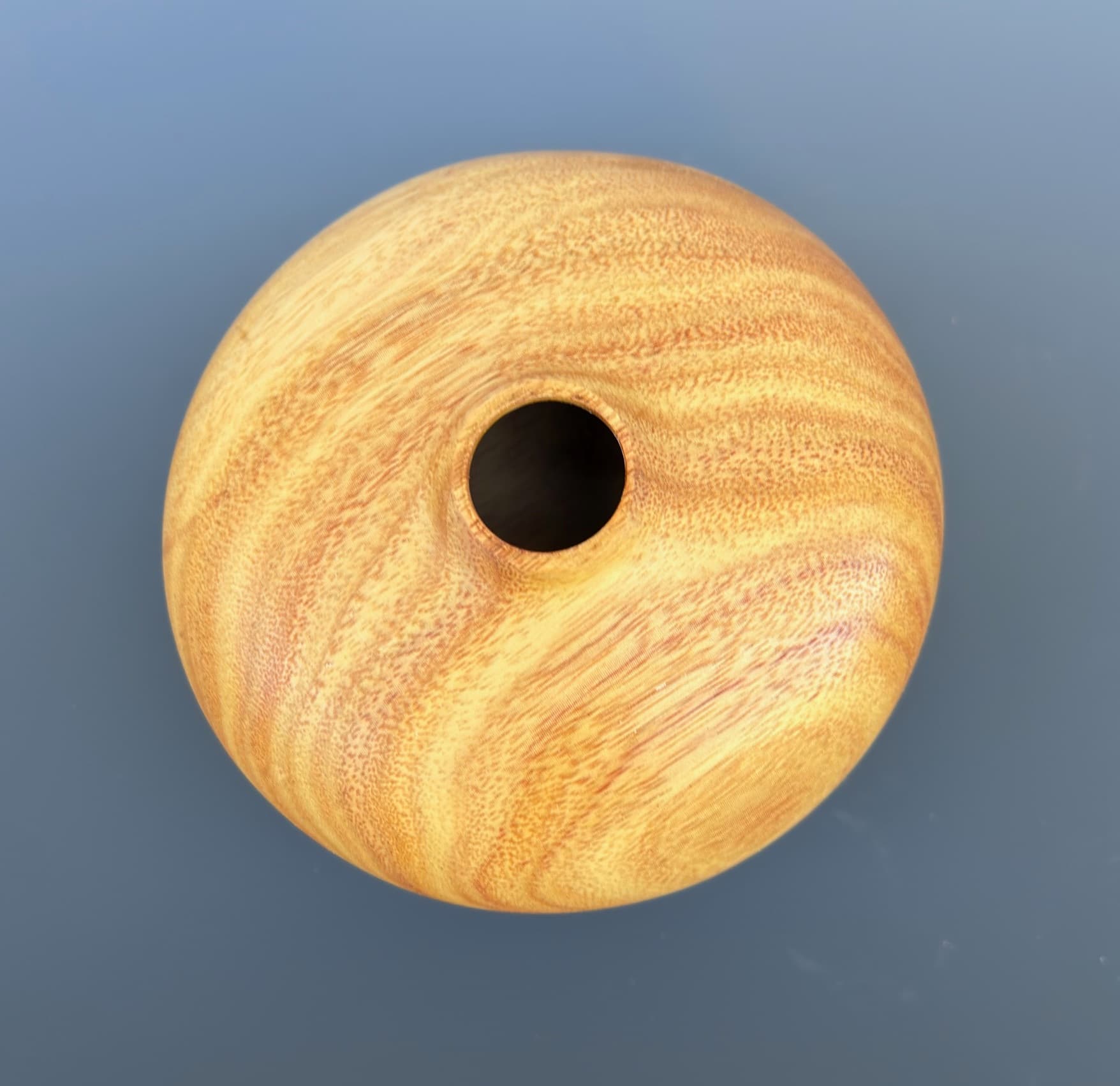
- $125 Small canarywood hollow form. The shape of the form is like a heart, one of my favorite forms to turn. 4 inch diameter and 3 1/4 inch height.
- $95 Small koa hollow form with cracks and koa bar repair. This Hawaiian wood is expensive and becoming more rare. 3 1/2 inch diameter and 2 1/2 inch height.

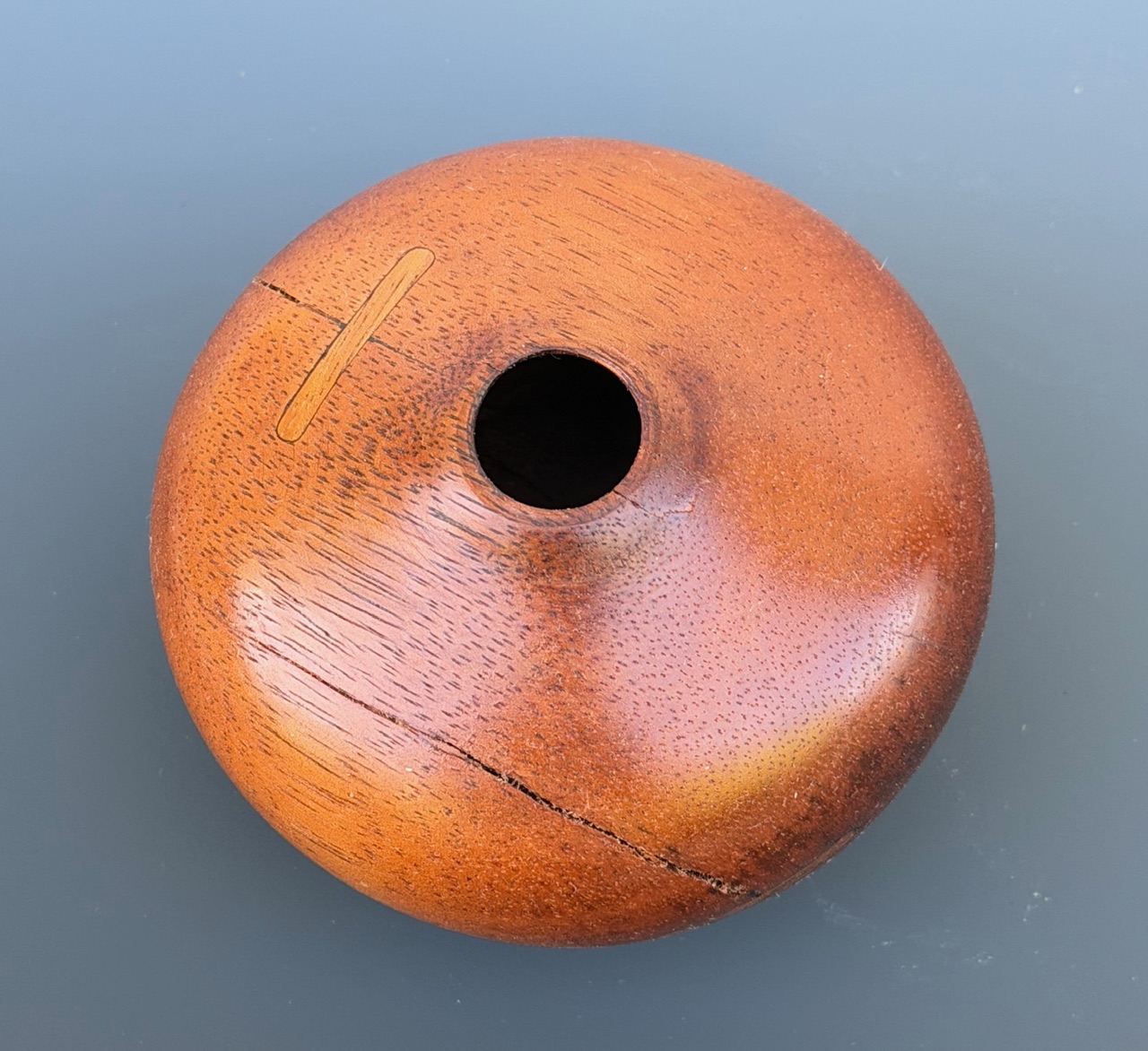
- $200 Small African blackwood hollow form. This is a very rare and expensive wood. It turns beautifully and there is no finish on this piece, though sanded to a very fine grit. This wood is often used in high end woodwind instruments such as clarinets. The wood is often called Mpingo or Grenadilla. 3 1/2 inch diameter and 2 1/2 inch height.
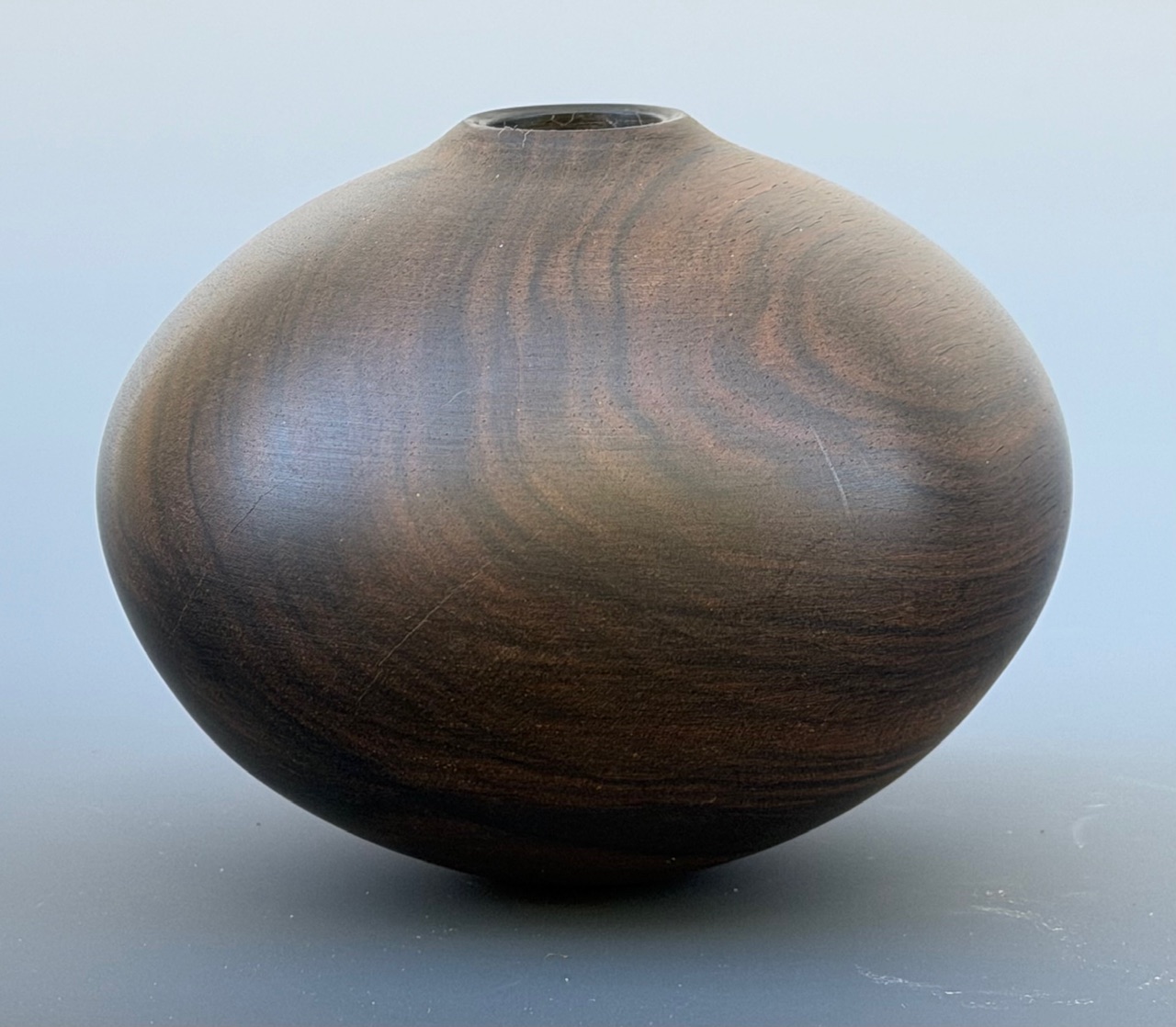

- $500 Redwood burl hollow form. This piece garnered an award as “Cover of the Day” on the prestigious World of Woodturners site. The piece is very light almost like balsa wood, turned with a very thin wall. Cracks and voids are common in burl and are considered highlights. Burl is a stress response causing a mass of abnormal growth much like a tumor or callus, prized for the random twists and swirls in the grain. 5 1/4 inch diameter and 4 1/2 inch height.
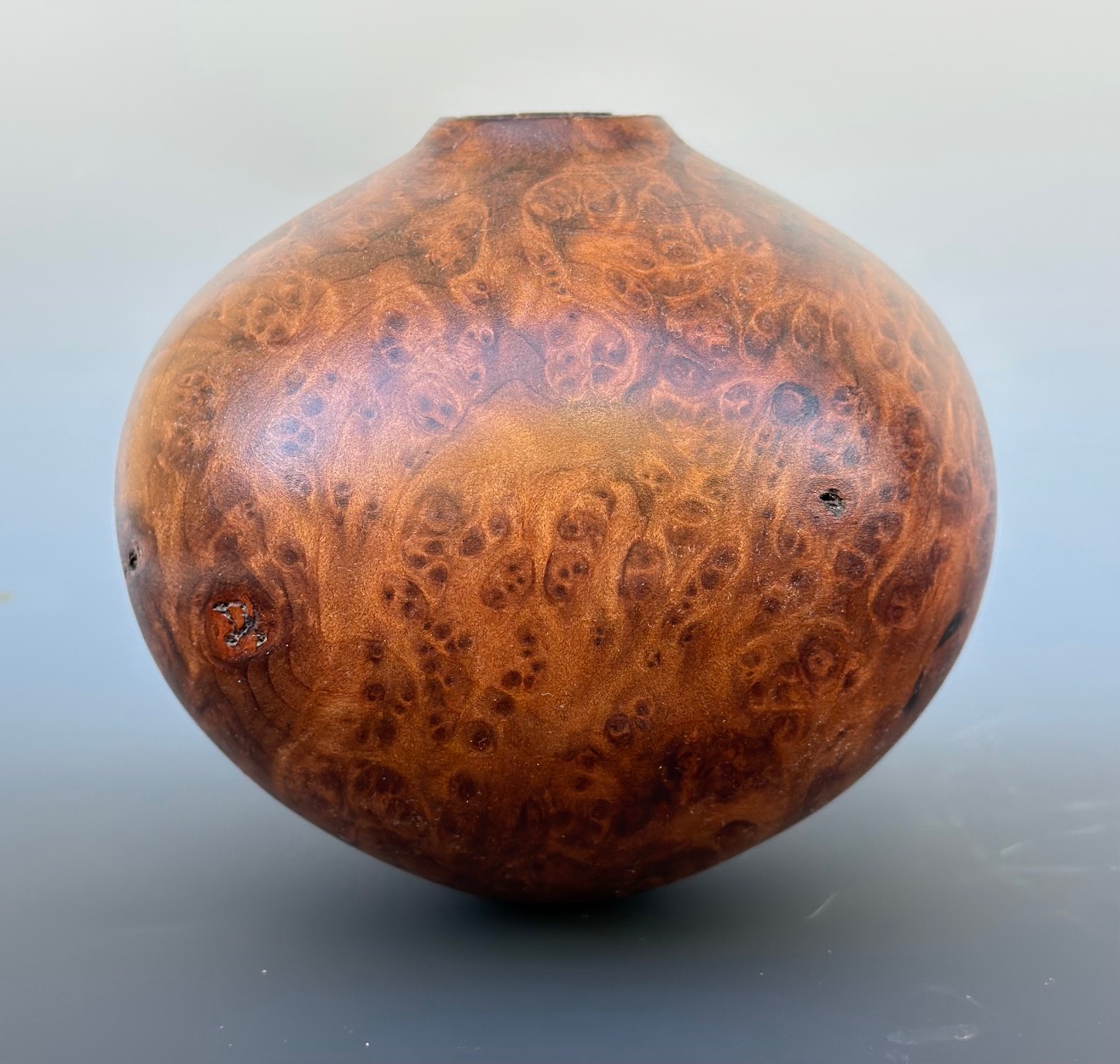
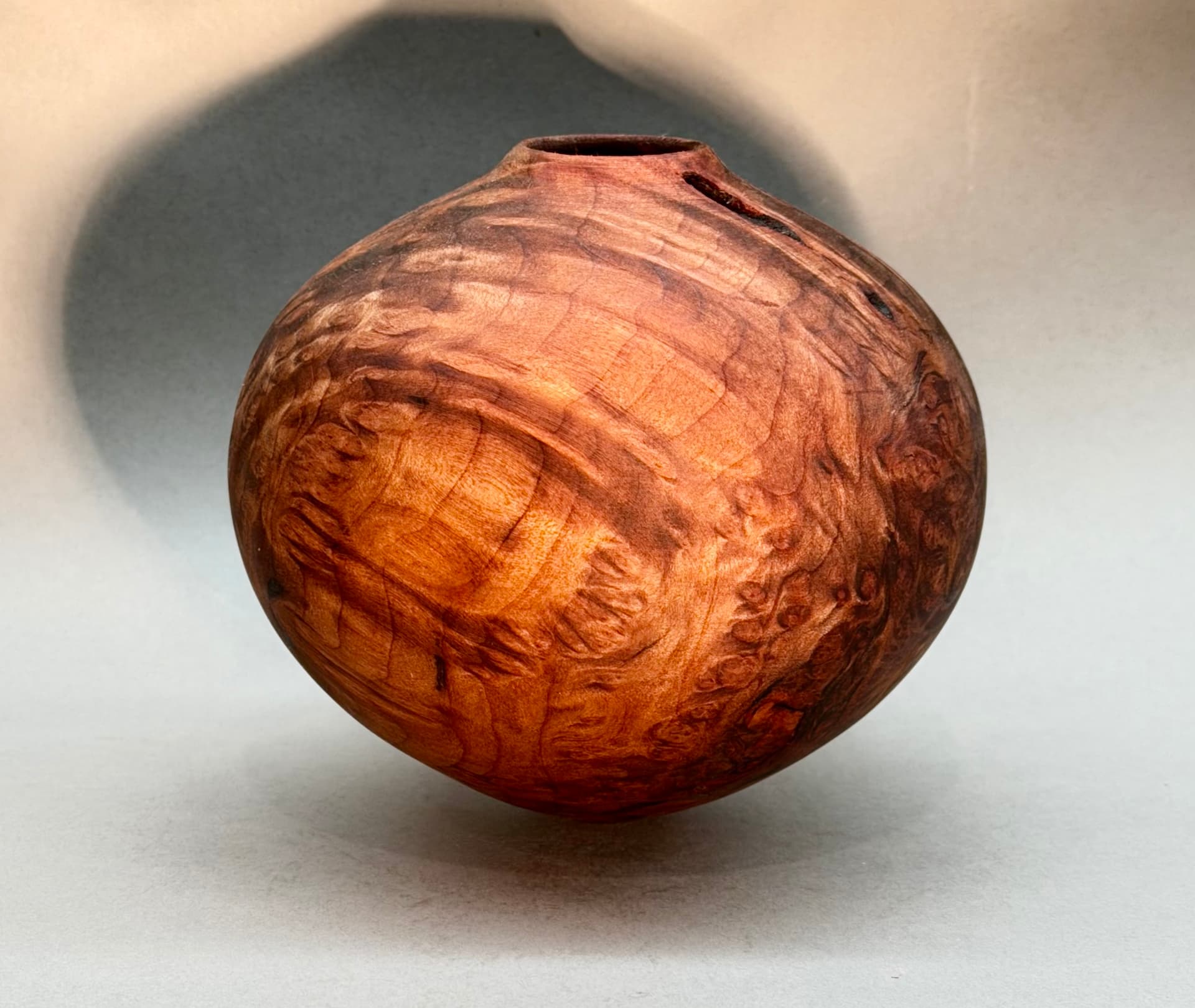
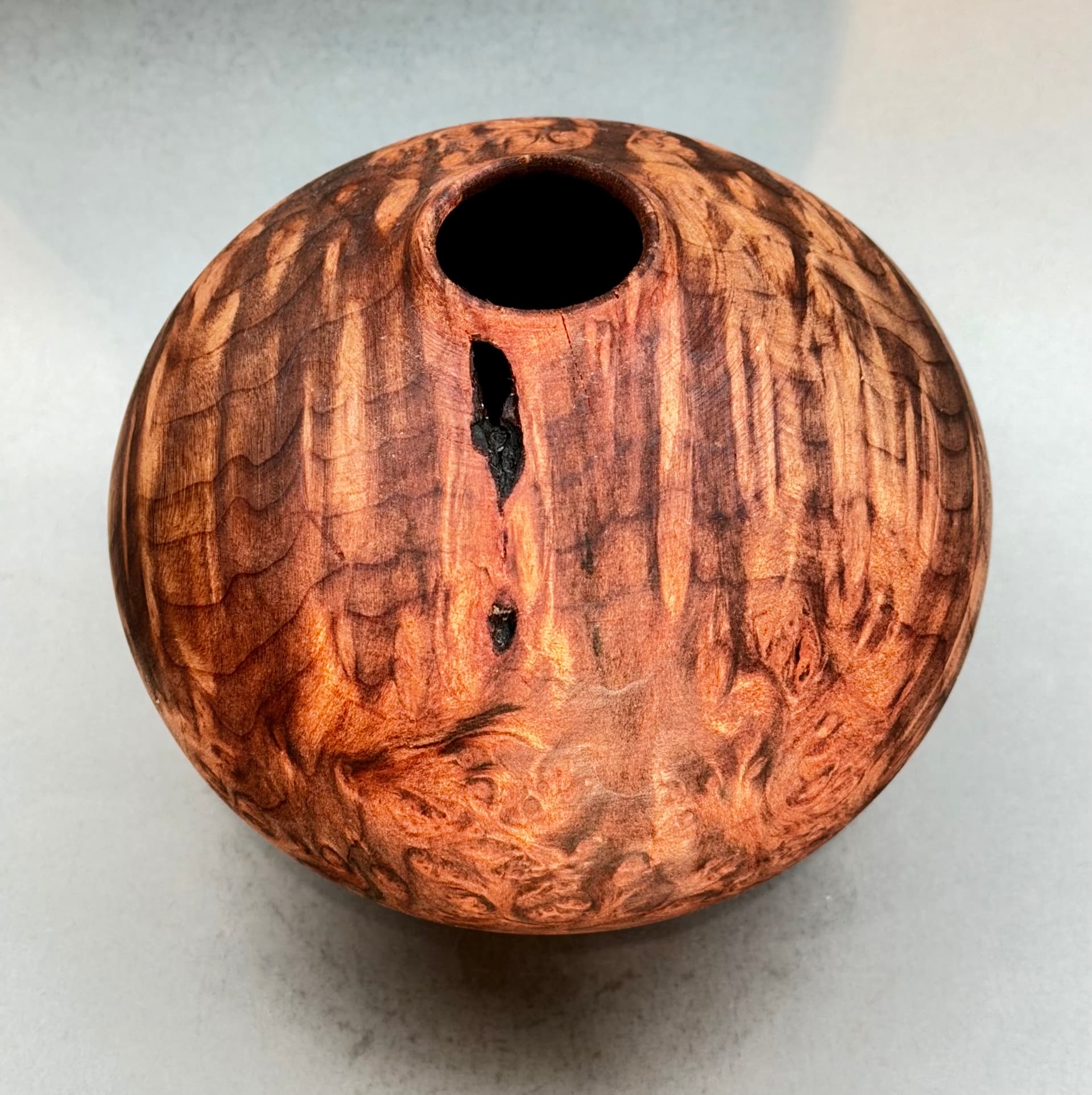
- $125 Maple burl hollow form with olive wood cap, turned wet, so the bowl surface is irregular though smooth. 6 1/2 inch diameter and 3 1/2 inch height.
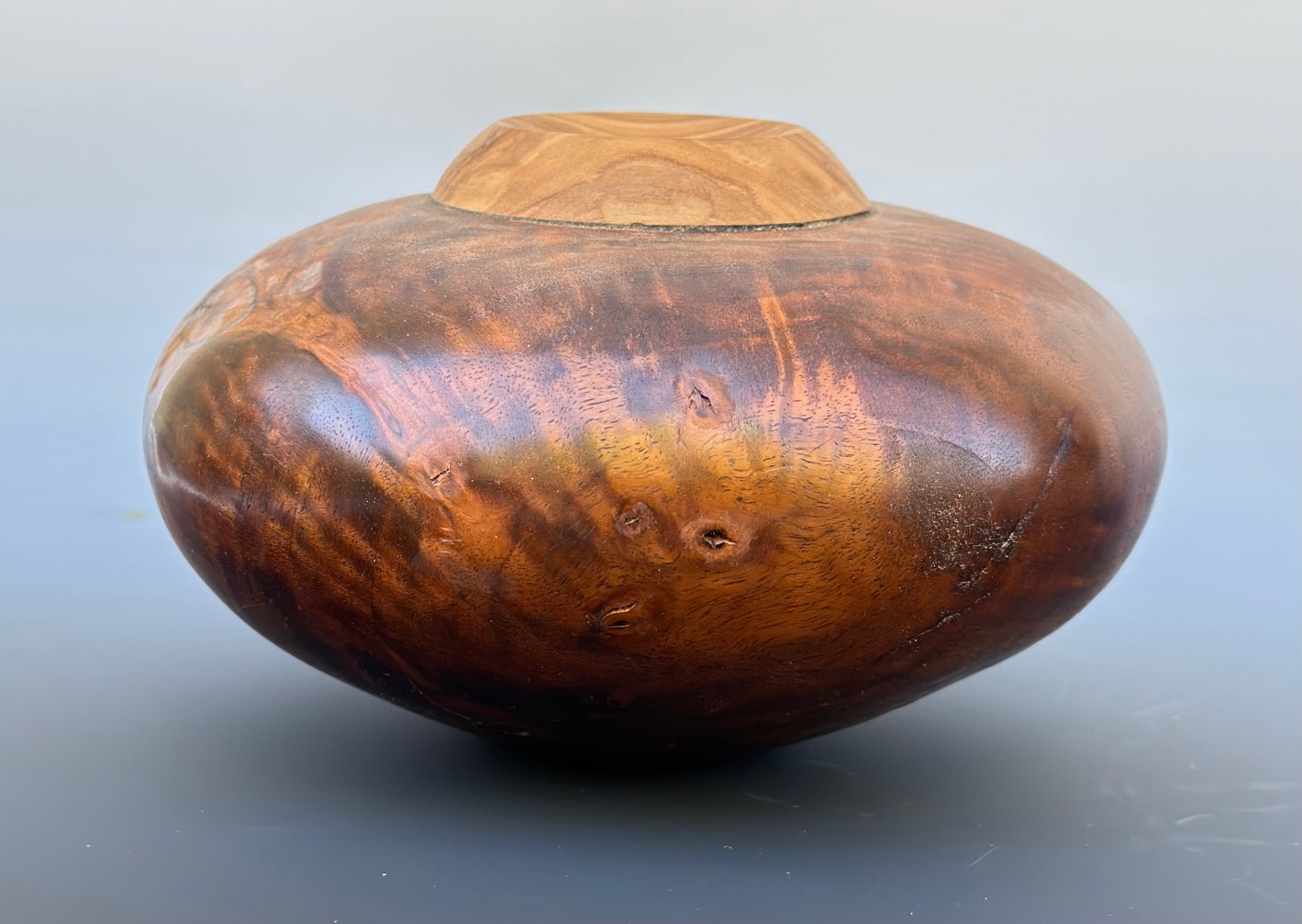
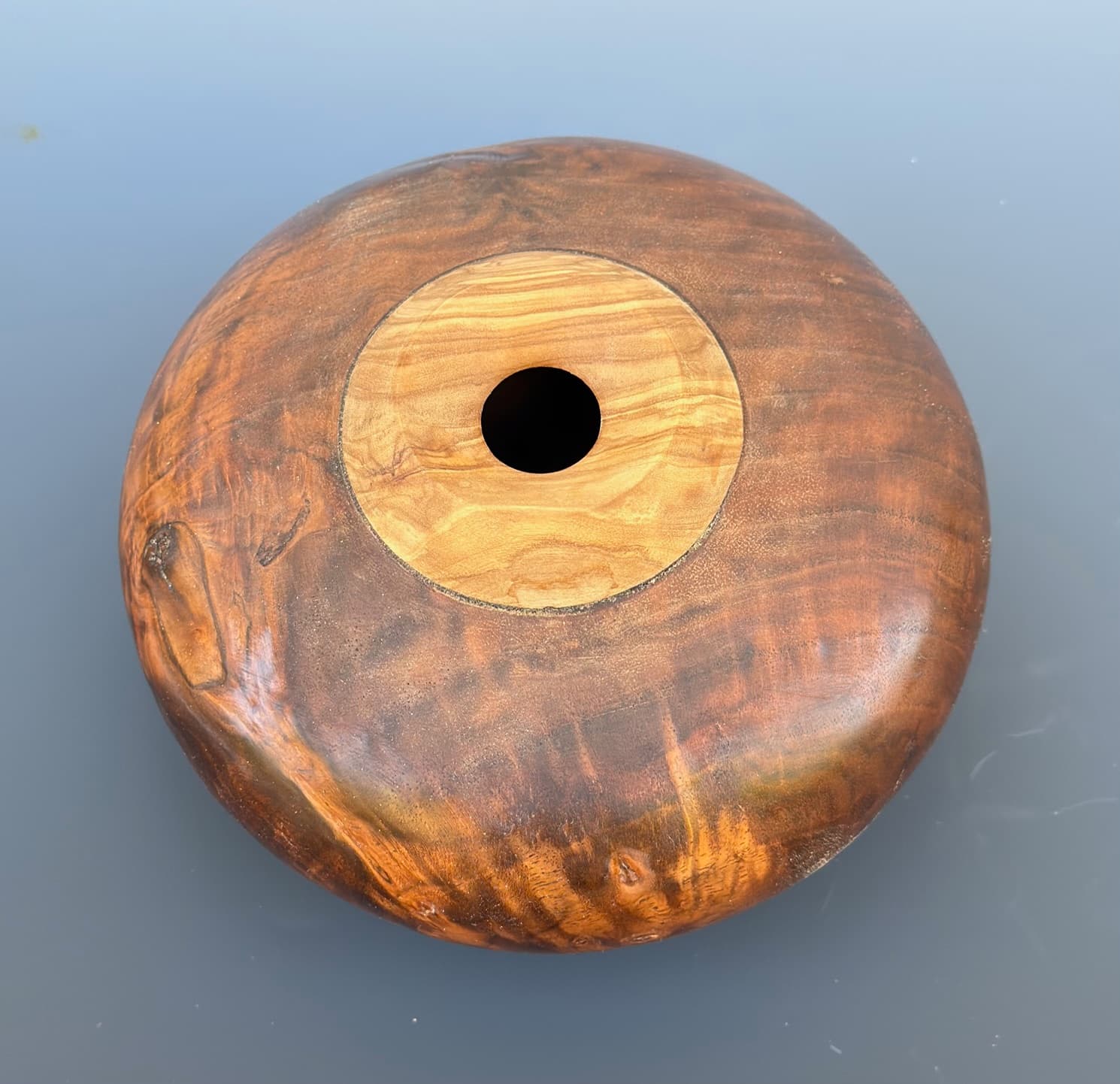
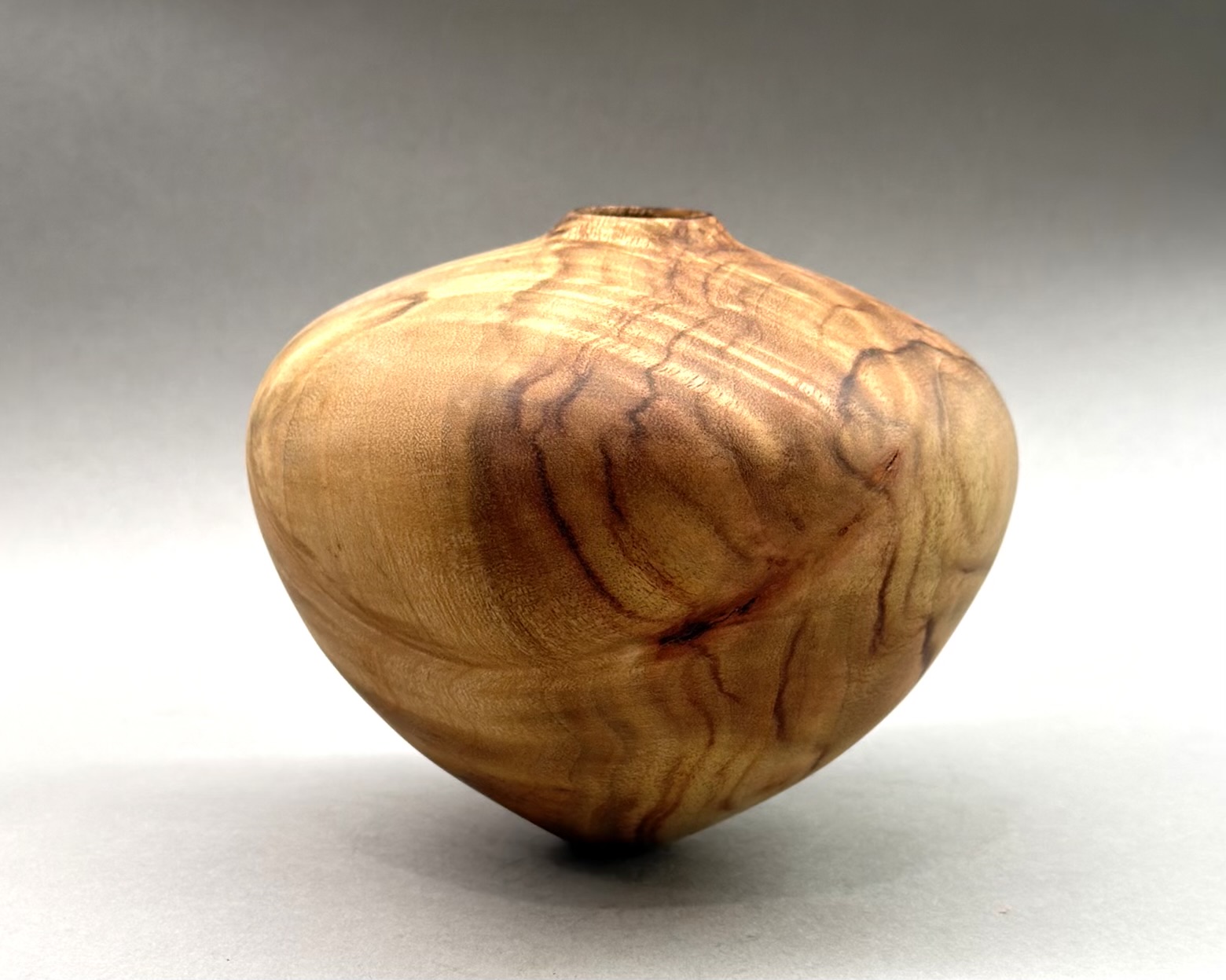
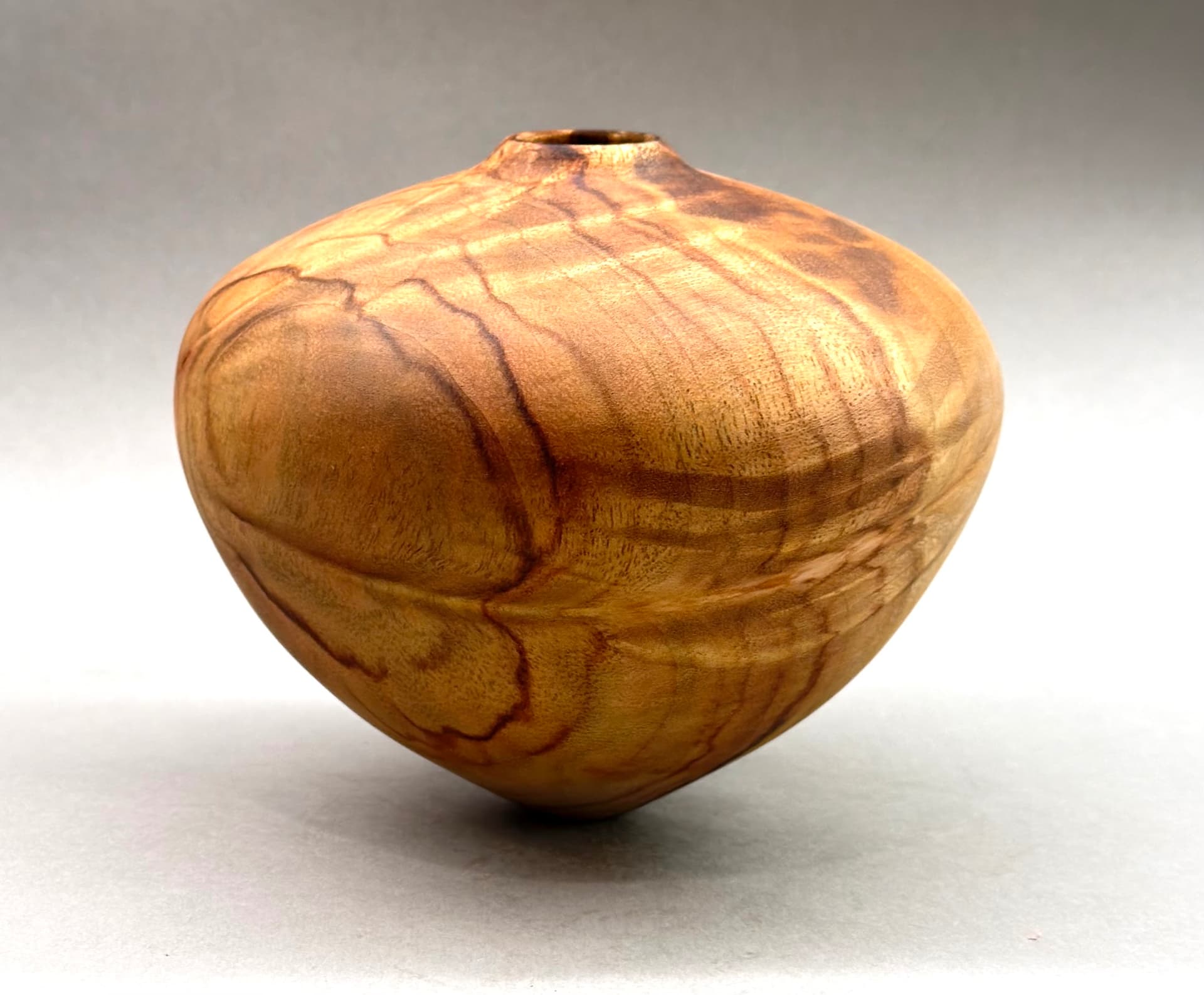
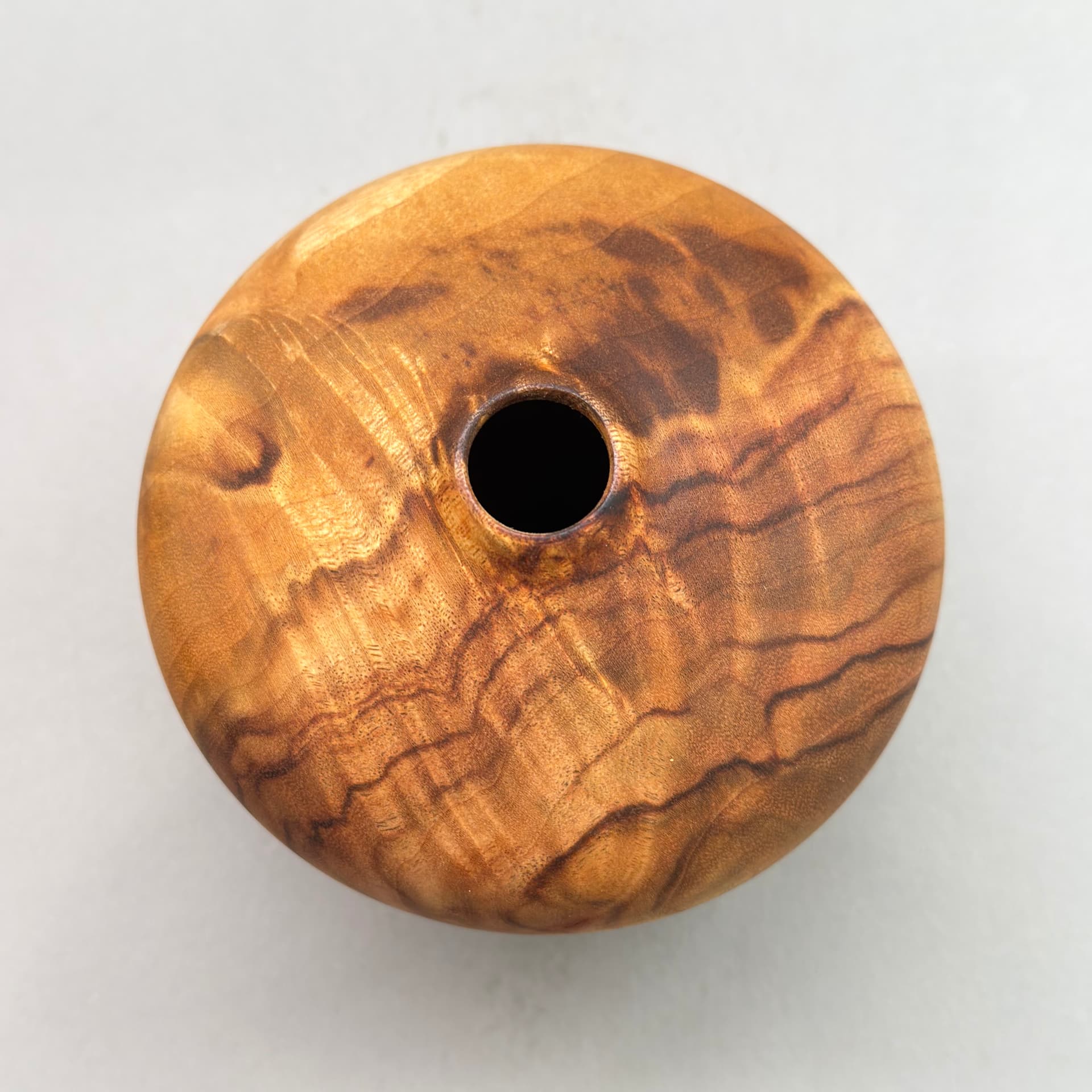
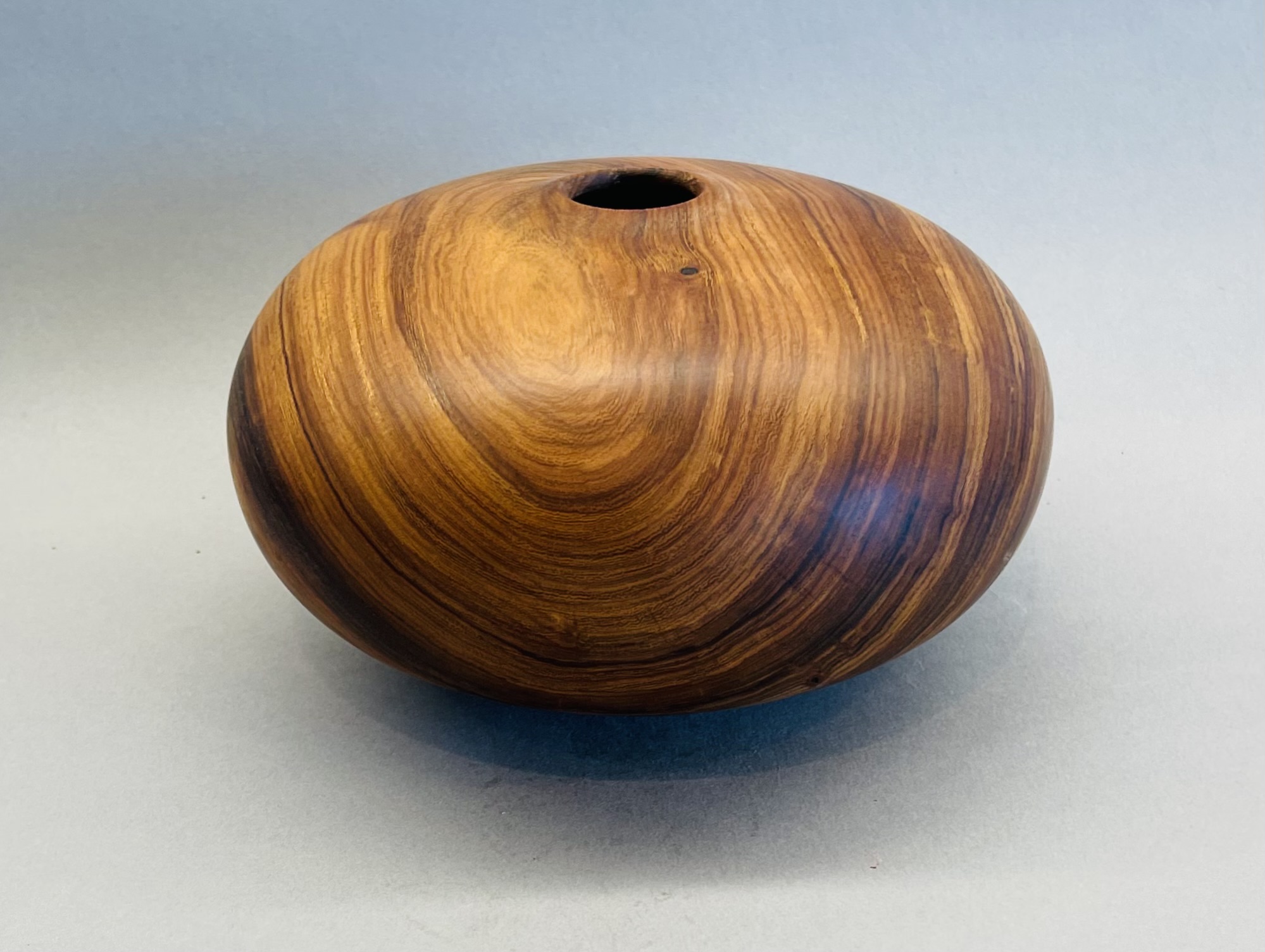
- $360 Sycamore hollow form. I was experimenting with a new shape that was well received on woodturner sites. The wood has a lot of figure, an irregular grain pattern that is prized. 5 1/4 inch diameter and 3 3/4 inch height.
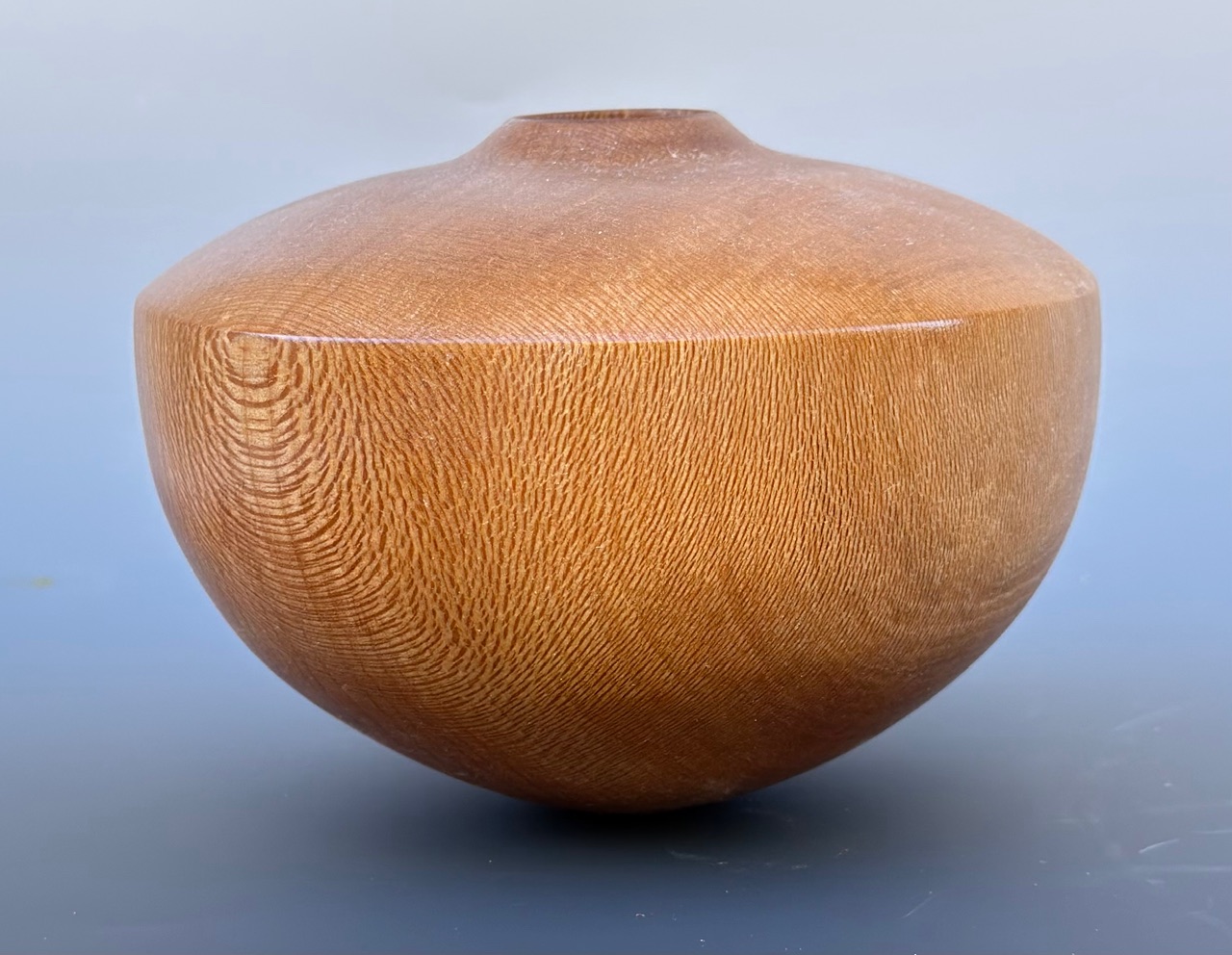

- $370 Masur birch hollow form. This is a very rare and expensive wood grown only in eastern Finland near the Russian border. Trees rarely reach a trunk diameter beyond 6 inches. This piece garnered second place in the annual Orange County Woodturner open bowl competition in 2025. The turning has lots of figure, a prized waviness in the grain. 4 1/4 inch diameter and 2 1/4 inch height, opening about 3/4 inch.
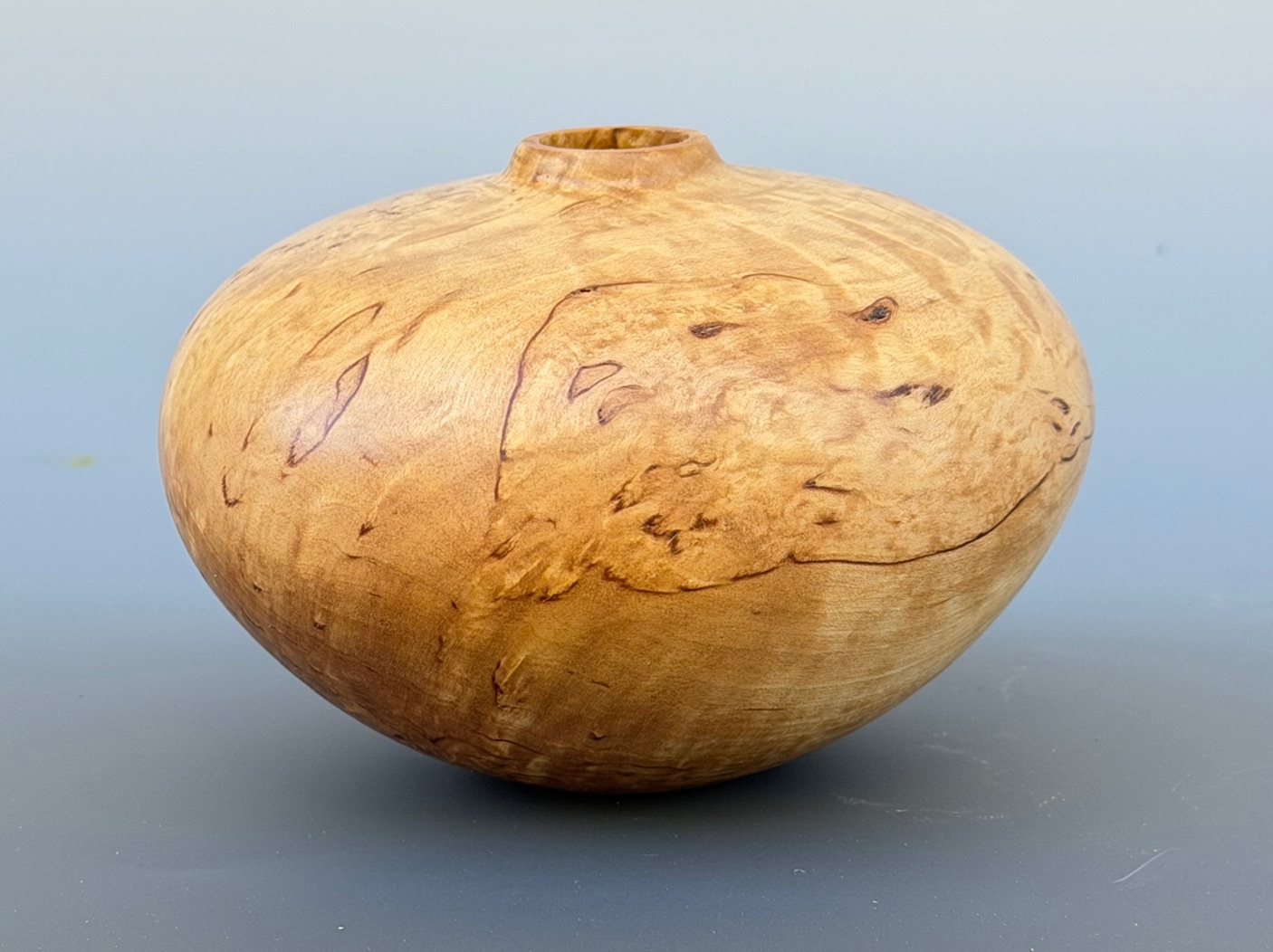
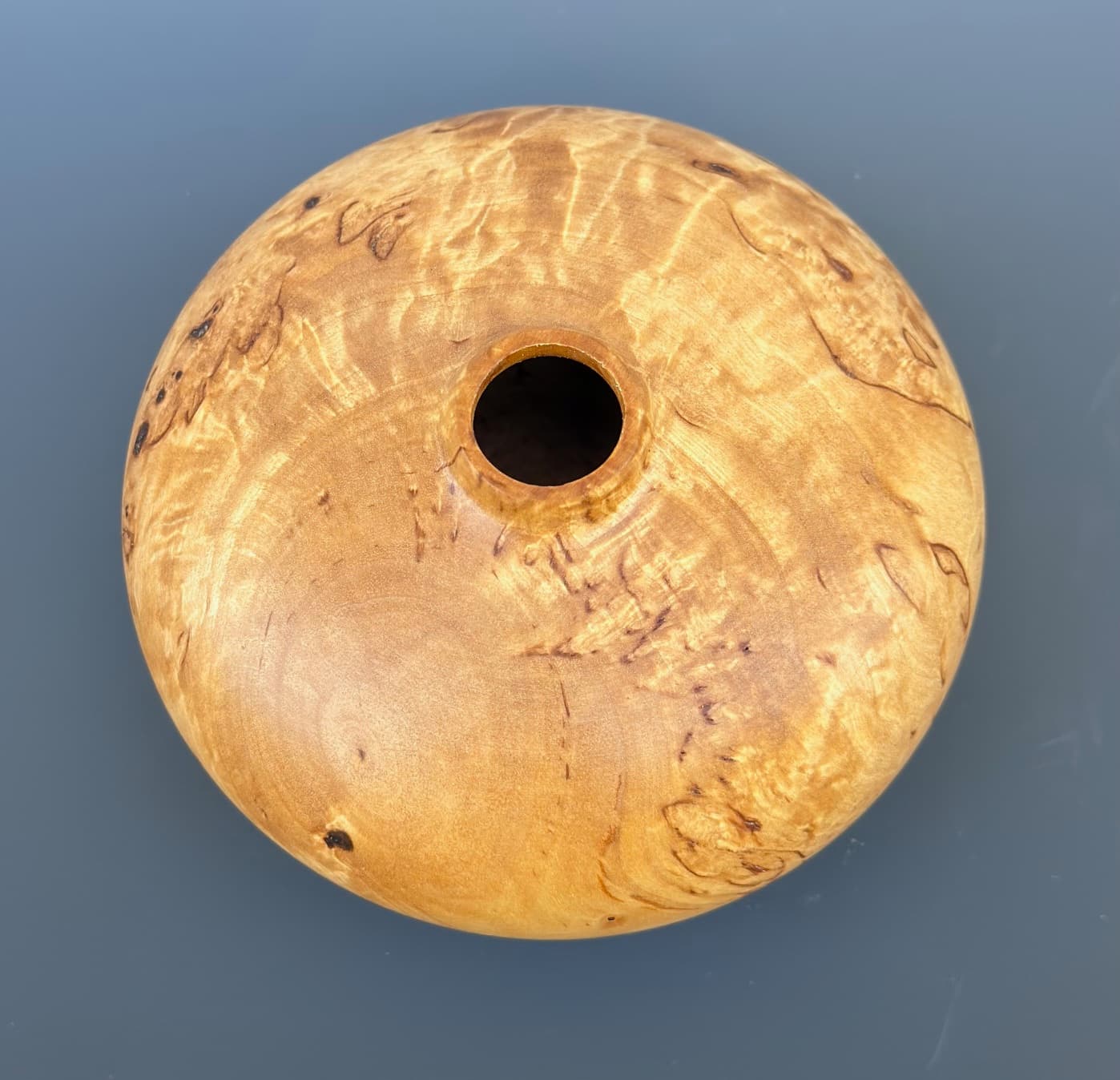
- $480 Masur birch hollow form. Aligning the wood blank properly on the lathe allows this “necklace” to be shown in its full beauty. This is a rare and expensive wood found only in eastern Finland. Large diameter pieces are rare. 5 inch diameter and 4 inch height.
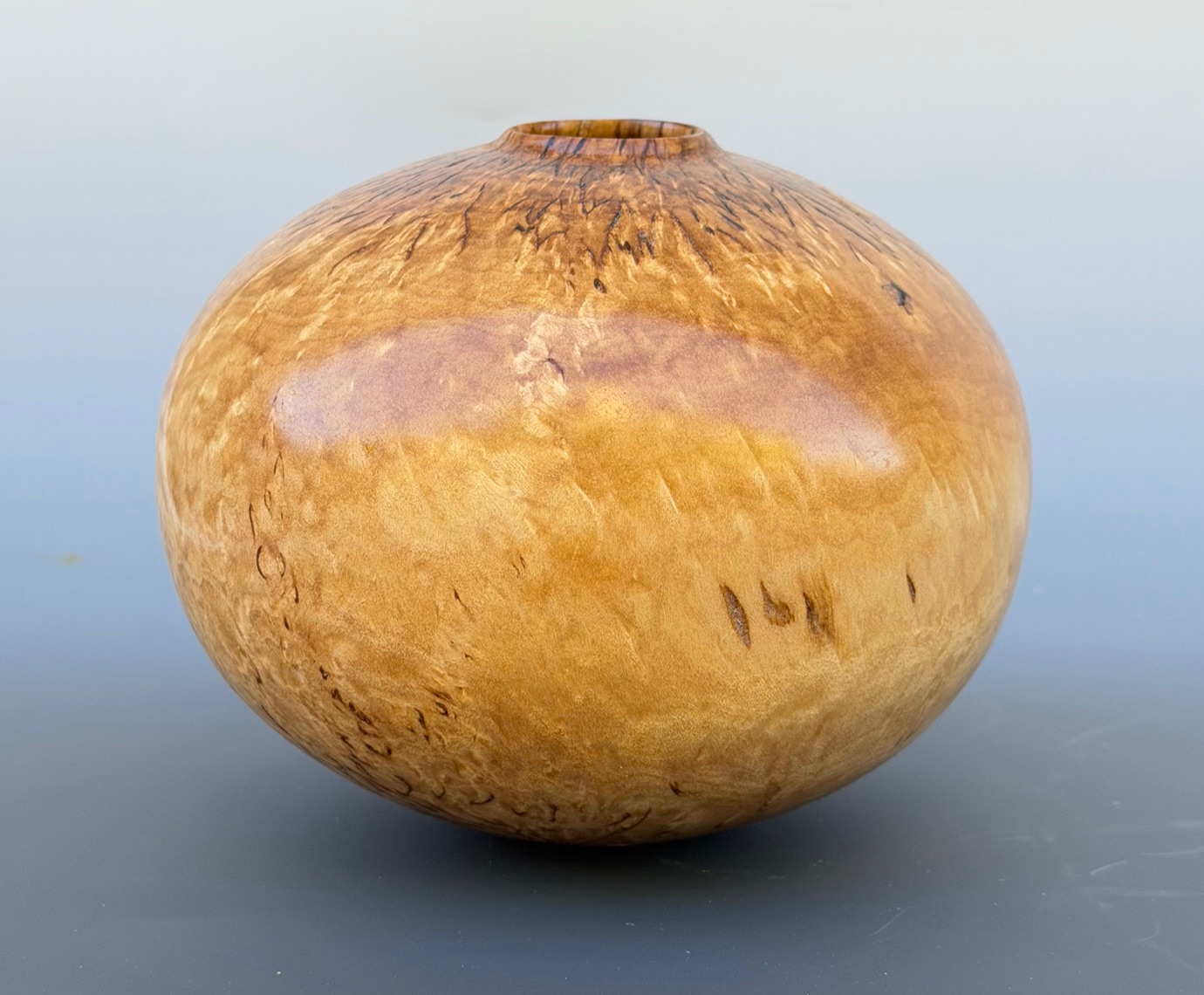

- $440 Masur birch hollow form. This turning won “Cover of the Day” on the prestigious World of Woodturning site. Careful orientation of the wood blank allows the “necklace” to be displayed in full when the piece is turned. It is a rare and expensive wood found only in eastern Finland. Large diameter pieces are rare. 5 1/4 inch diameter and 3 1/2 inch height
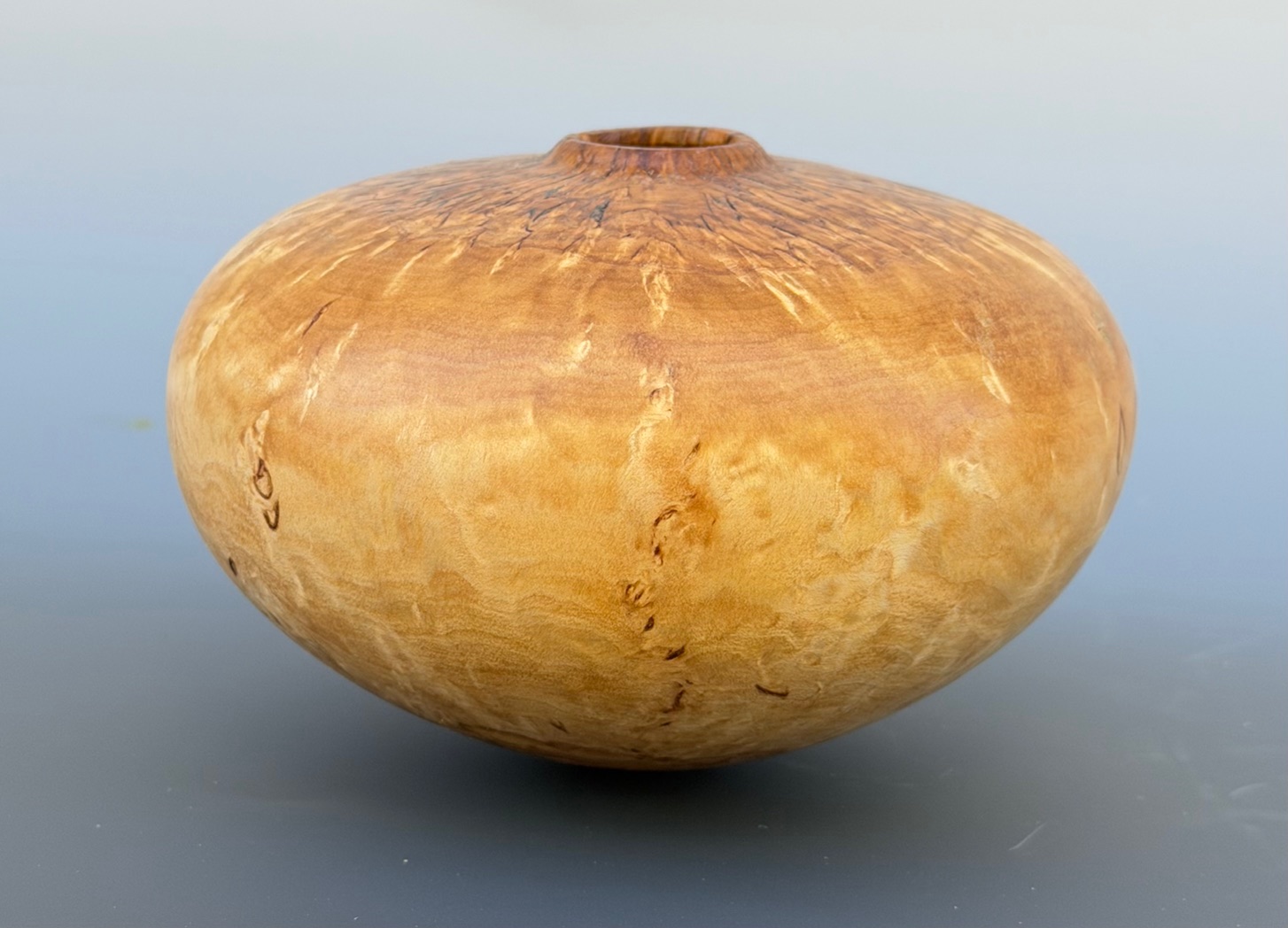
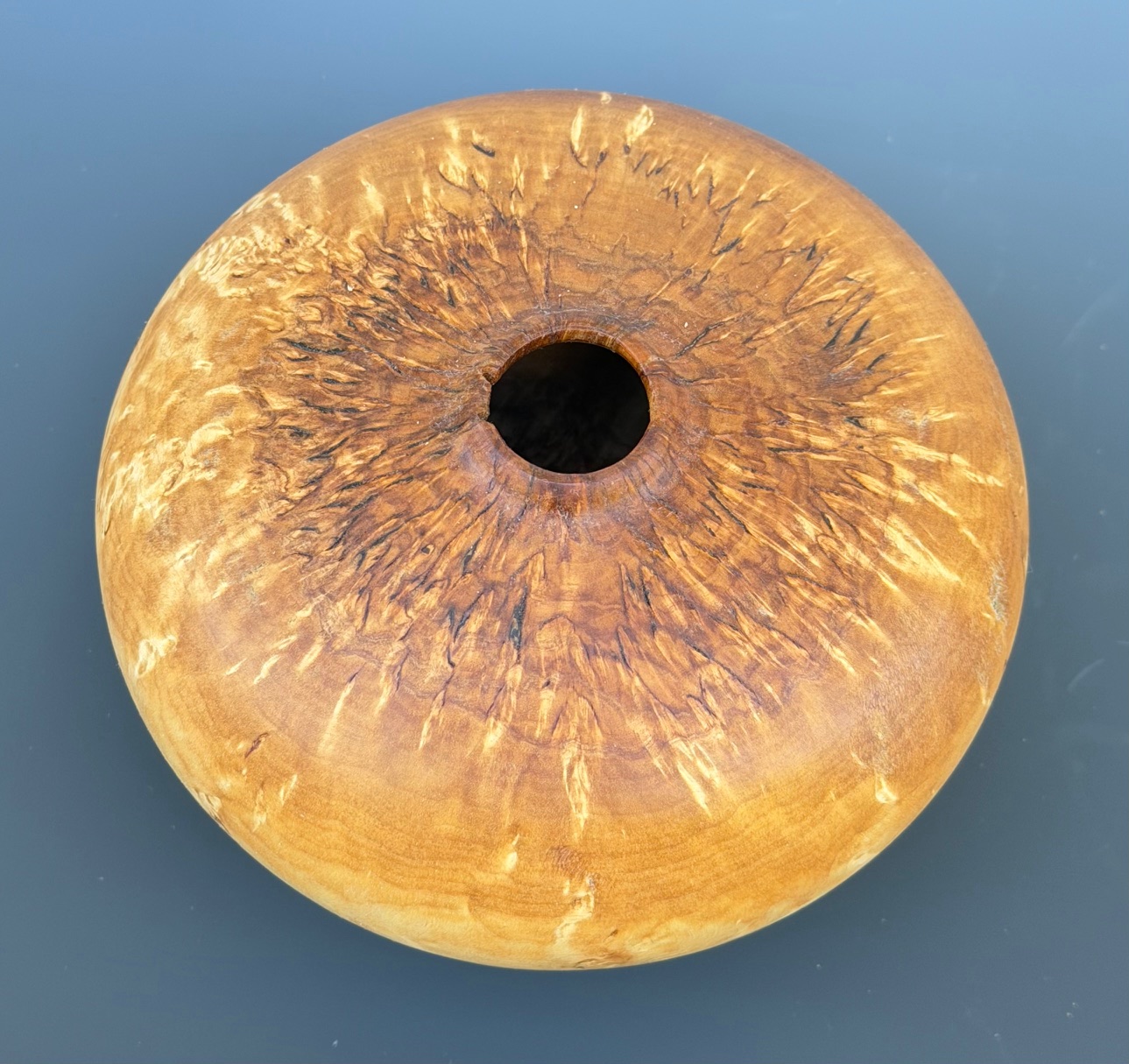
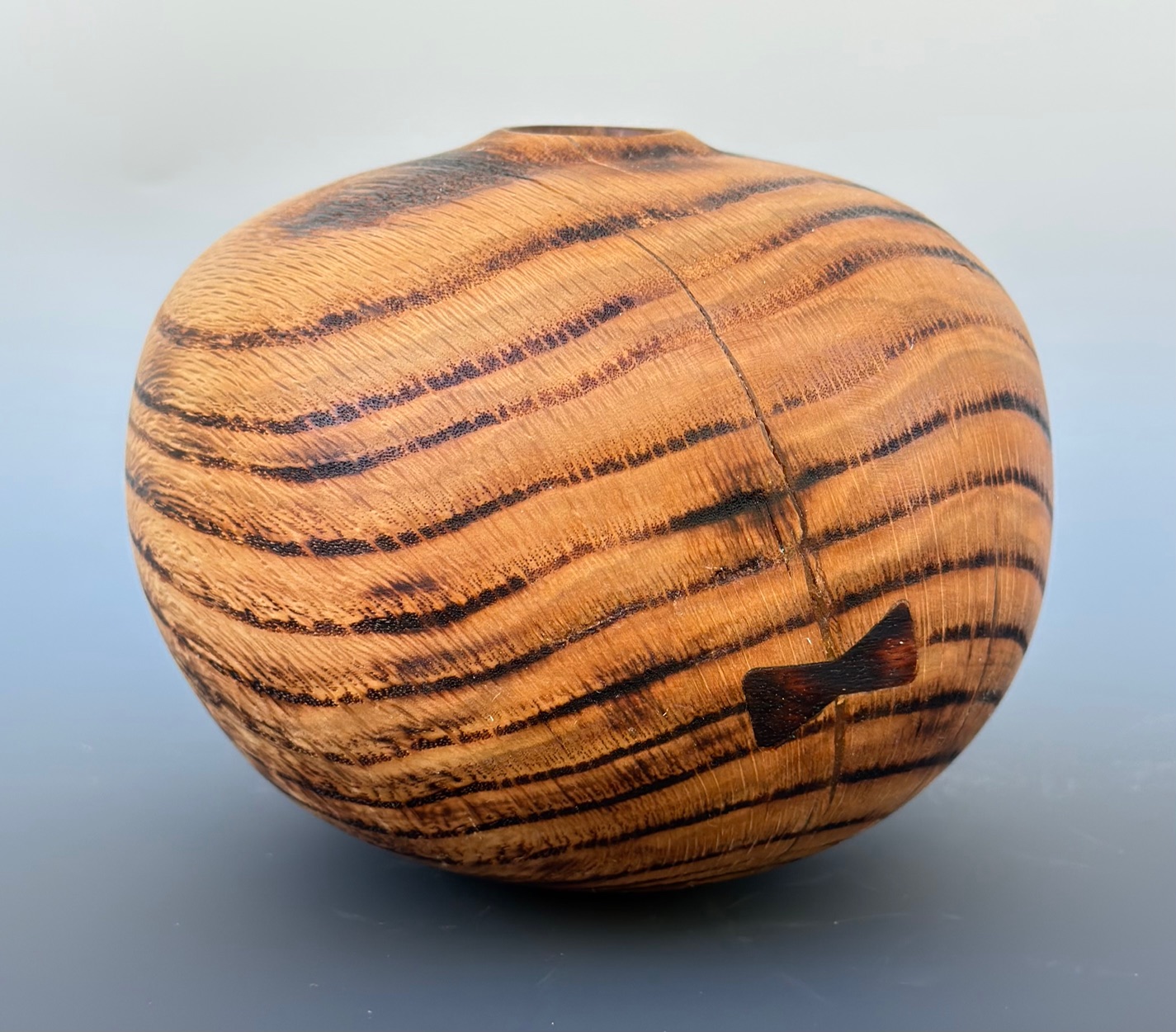
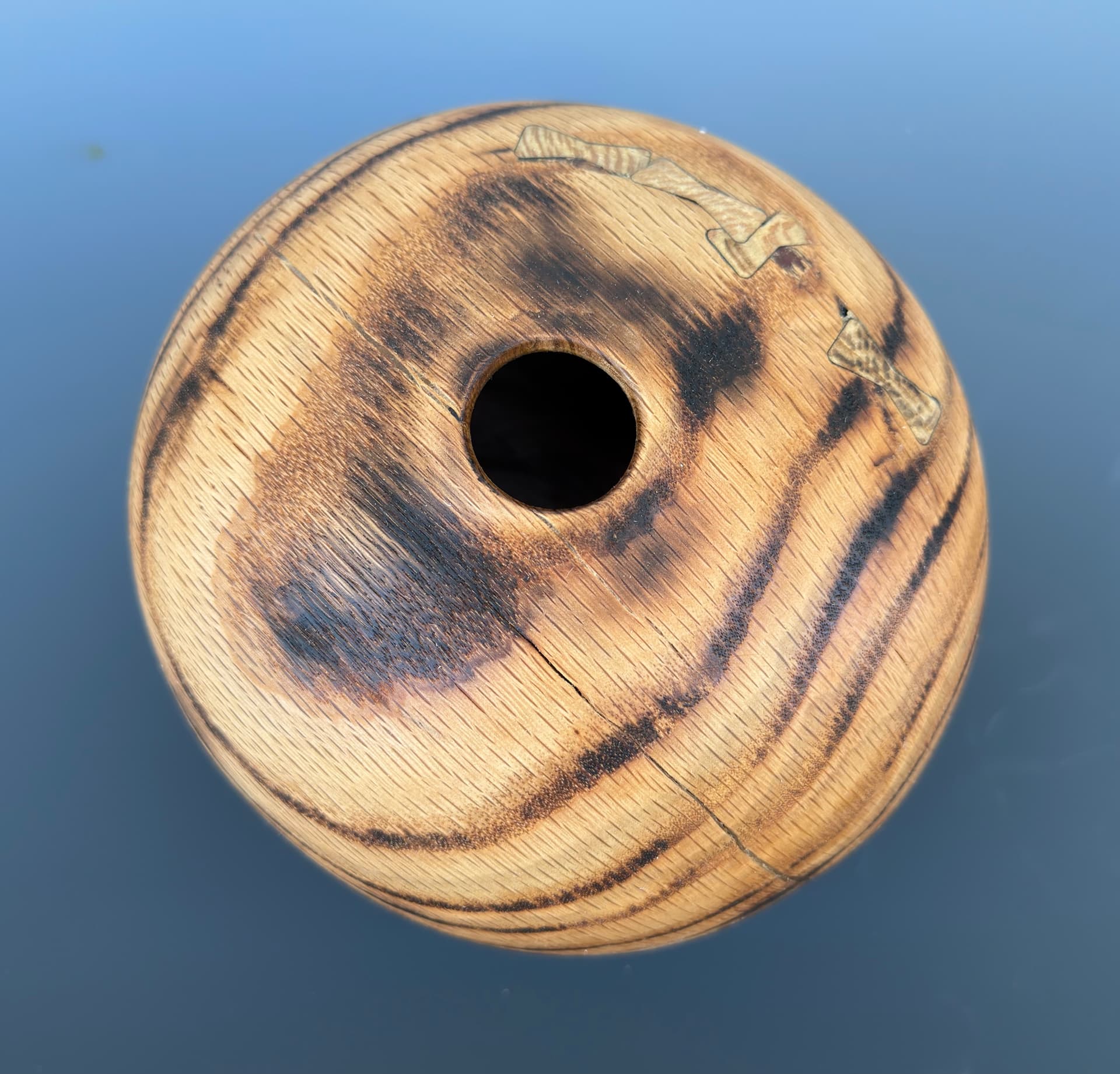
- $165 Red oak hollow form, cracks highlighted with koa and sycamore pewa, then torched, re-sanded, and finally oiled. 6 inch diameter and 4 3/4 inch height.
- $380 A camphor hollow form, about a 5 inch diameter.