I am curious from those in the know, whether Rolland becoming involved with these two wonderful estates - two of my five favorite right bank estates - has changed the wine stylistically in any way. And if so, how. Leve’s site says the following about 2012:
From a blend of blend of 40% Merlot, 40% Cabernet Franc and 20% Cabernet Sauvignon. This is a different style for Figeac. Much of the credit goes to the bringing in Michel Rolland and Valmy Nicolas from Chateau La Conseillante in Pomerol. This is the first vintage where Michel Rolland was involved in the blending.
So we have a comment of a style change, but not really an indication of in what way. It appears that 2012 has added more merlot to the blend, but not 2014.
This thread is not intended as a criticism, just a question of what stylistic changes or changes in winemaking have been made.
As far as I´m concerned it´s only about Figeac, nothing about La Conseillante. Valmy Nicolas will be kind of a director for marketing strategy for Figeac - strictly seperated from LC …
Rolland will have to do a lot with wine making/blending at Figeac - if this will have influences on Figeacs style has to be seen - I would say: Yes … but in which way …?
Seriously: I love Figeac when it´s on it´s prime … but this has rarely been the case … I can recall some 4 or 5 vintages before 2000 where I would say “great wine” … a few others that were “very good” - and many disapointments, among these my 1st Figeac (1988 - not worth the money, and it was not expensive then …)
Ok, we all know: high cabernet content … the goal is elegance, not power … but elegance needs intensity, otherwise it´s only lightness …
We all do not want Figeac to become another Bellevue Mondotte etc, but better ripeness, less austerity and better concentration wouldn´t be a fault at all …
I actually am curious about Conseillante, as I’ve always loved the more subtle and quasi-Burgundian approach of this wine. On their web site, it says that Rolland began consulting in 2013, but not sure if he started unofficially before that.
From review, their 2009 and 2010 wines (which I haven’t tried) seemed to be in a pretty rich style and in 2010 hit 14.5% alcohol, but that might be the vintages – certainly some previous Conseillantes like the 2005 and 1990 were pretty rich.
Have they changed their approach in recent years though? And why hire Rolland when critics were already raving about their recent wines?
Very few people on this board are going to be able to comment, as they have not tasted the wines. Opinions on wines, without tasting them happen far too often
FWIW, I liked 2012 from both estates, but 2015 really rocked at both houses. Those notes will be out next week from me.
Jeff, other than having liked it, do you perceive some stylistic or directional shift from Rolland’s involvement? I’m sure you’ve tasted young and old Figeac over many vintages and would be a great one to comment on that.
The key for Jeff is that he talks about a different style and then “much of the credit”. In my experience, Jeff tends to like bigger, richer wines and does not tend to appreciate more complex or elegant wines. And, given Rolland and given what Figeac has historically tasted like, my guess is that Jeff is say the wines are bigger and more modern.
I was at both château recently, tried recent vintages and have cellared their wines since the 80s.
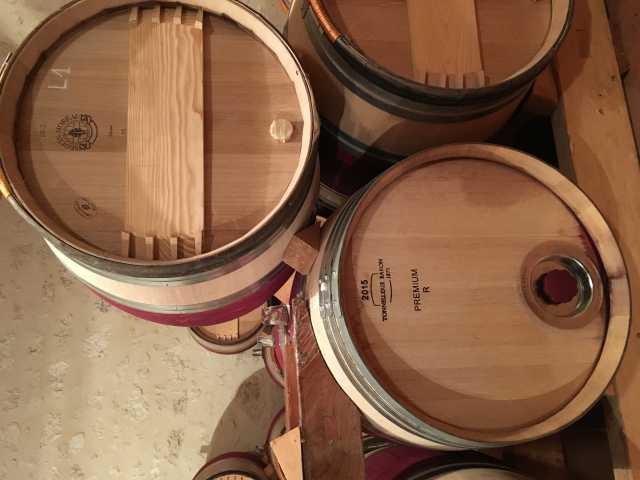
At Conseillante I think they are utilising their new facilities to experiment more with blending - where they have very different plots (inc some actually in St Emilion). There is increasing focus on cab franc, but otherwise I haven’t seen big stylistic changes. However they are innovating in some areas - in 2015 they bottled a separate barrel (pic below) to experiment with heat during maturation. They plan to install a heated room if successful.
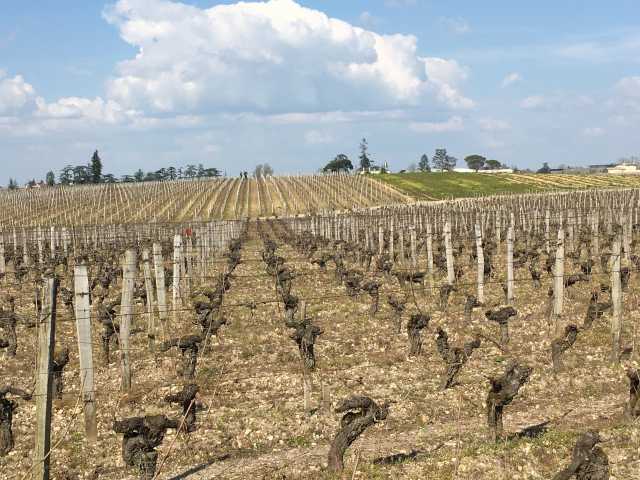
At Figeac there is a clear trend to replace some Cabernet with cab franc. See pic below, where a plot near Cheval Blanc is being replaced. I thought the 2009 was excellent and the 2010 outstanding. My favourite wines there since 1998. I didn’t try the 2015 but expect it to be excellent since he weather was much better than on left bank. Indeed one famous St Emilion property showed me a whole tank they produced of pure Cabernet Sauvignon since the grapes achieved such ripeness. I’d guess that 2015 is a year for Figeac to shine. My sense is that the style is changing there but we will see the biggest changes in years to come rather than recent vintages.
When did Rolland’s ascendancy into big Bordeaux houses begin? I ask because I can’t think of a mature Rolland wine I’ve drank. For me, mature Bordeaux tends to be ~25 years for left bank and ~15 years for right bank (lazy approximation).
My best experiences with Figeac, outside of the 1998, have all been mature examples. I worry that we won’t know what the effect truly is for decades to come. I find it hard for people to claim superiority/inferiority especially from barrel sample. Sure, there may be a primacy of fruit and a purity/delineation one can taste, but that is hardly indicative of great aging potential. There still is categorically 0 evidence that barrel sampling is frankly worth even reading about.
Maybe the best way is to try mature bottles of Bon Pasteur in Pomerol since he owned/managed it from the late 70s until recently… So should show his ‘style’ in similar mature wines. I’ve not tried any myself.
There are several Châteaux for which Michel Rolland has been consulting for a long time, e.g. Troplong-Mondot since the mid 1980s. Troplong-Mondot is a good example for me to see or not to see a “Rolland influence”. For example, the 1990 Troplong-Mondot (consulted by Rolland) is certainly over the top with its pruney character, it’s still a very good and impressive wine for me. On the other hand, the 1990 Ch. Fontenil (one of Rolland’s own properties before he sold them) is a classic wine, not at all overripe and it aged very well. The 2001 Troplong-Mondot (also consulted by Rolland) is totally different to the 1990 or vintages like 2005, rather classic St. Emilion. On the other hand, the 2001 Le Bon Pasteur (formerly owned by the Rolland family) is super rich and pruney again.
I haven’t found any “formula” that indicates that all or even most Michel Rolland consulted wines are made in a particular style. His involvement and what he actually consults on varies from property to property.
I’m not an expert, but always thought his approach was more on ensuring full ripeness of grapes in the vineyard first and blending/vinification second. No idea how/if his approaches to the former differs from others… e.g. whether his greatest impact has been through debudding, crop thinning or other changes in the vineyard more than changes to maceration times and tweaks in the cellar. Would love to find out!
Thanks for the history. That era of old Bon Pasteur can actually quite excellent. I wonder if it’s a matter of degree for phenolic ripeness. E.g., Cab Franc from Loire can satisfy Bordeaux heads in riper vintages (e.g., 2009). Perhaps the same for wines like BP versus Troplong…
Most of what Michel brings to the table is with his help in the blending. He is considered be a lot of people to be the best there is at that.
2015 Figeac is super. If you ask me, and you did It is the best wine they have produced in 50 years! That view seems to be shared by asters from both sides of the pond. I really liked 2015 La Conseillante. Perhaps it is a bit richer, with darker fruit than you find in many vintages, but it still retains the freshness, elegance and silky tannins the property is known for.
I found the Troplong Mondot wines I tasted within the last 3 years or so (90, 95, 2000) products of a very late harvest with clearly sur maturité aspects, very dark and extracted lacking charm. Impressive but not the style I prefer. Less would have been more IMO. But we can discuss this until the cows come home without any result. It´s all about personal preferences. I sat next to Monsieur Rolland during a Lunch in Bordeaux and thought he is a nice guy who loves to laugh, drink and eat. And I also think the wines he has/had varying influence are not uniform. I guess this is a myth because as others already said – his involvement in the wine making process is/was different. It would be interesting to see if those who think Rolland has a unique style are able to identify the wines he worked with in blind tastings. I doubt it. In example he worked with Chateau Le Gay and every taster and critic I know considered this as a traditional made Pomerol and not a so called modern monster. Figeacs of the past had often a pretty rustic personality. The best Figeac came from vintages with moderate weather because there was no fear of picking too late. In warm and dry vintages Figeac tended to pick too early with the result of green tannins. The 2000 vintage is the poster child for this theory. I think I can recall that even the Figeac team confirmed once they were to early with the harvest in 2000. I would add not only in 2000 but in other superb vintages as well. Freshness and a healthy acid is good. But if you “buy” this with vegetal fruit it´s not an advantage. You have to understand the vintage and not everything is possible in any year. The formula “pick early” is wrong as the advice pick as late as possible. The truth is in the middle. As always.
Ahhh yes. I recall that night where Panos had us each say a toast/speech . I recall quipping about how Figeac was the “white knight” that refused to give into the “dark side” of spoof right bank cashgrabbing. I wonder what Eric d’Aramon was thinking, let alone the late Mssr Manoncourt…
Nevertheless, let’s not be quick to judge. Let’s see how things unfold there.

![[bleh.gif]](/uploads/db3686/original/2X/c/cbb27a94fa73081862abf910a8bfa05e2ae2f5c3.gif "[bleh.gif]")

![[wow.gif]](/uploads/db3686/original/2X/7/7d450e9830889c8943b674446a21b7254cad657e.gif "wow") It is the best wine they have produced in 50 years! That view seems to be shared by asters from both sides of the pond. I really liked 2015 La Conseillante. Perhaps it is a bit richer, with darker fruit than you find in many vintages, but it still retains the freshness, elegance and silky tannins the property is known for.
It is the best wine they have produced in 50 years! That view seems to be shared by asters from both sides of the pond. I really liked 2015 La Conseillante. Perhaps it is a bit richer, with darker fruit than you find in many vintages, but it still retains the freshness, elegance and silky tannins the property is known for.![[soap.gif]](/uploads/db3686/original/2X/a/a7ea1fffd3ef237e8f19d17a83270ad8452218ca.gif "soap") . I recall quipping about how Figeac was the “white knight” that refused to give into the “dark side” of spoof right bank cashgrabbing. I wonder what Eric d’Aramon was thinking, let alone the late Mssr Manoncourt…
. I recall quipping about how Figeac was the “white knight” that refused to give into the “dark side” of spoof right bank cashgrabbing. I wonder what Eric d’Aramon was thinking, let alone the late Mssr Manoncourt…