Overview
Michael Chang organized a wonderful three days of wine adventures in Charleston over the weekend, culminating in this truly special Burgundy Study. It’s a privilege to have a serious wine examination with a focus on wines like these but also a treat to do so in a relaxed, happy atmosphere. He worked so hard on finding us the perfect space, and we benefited from his patience & determination (months of planning and re-planning). We had a beautiful, high-ceilinged private dining room with a square table arrangement. The food pairings were excellent, the pace was perfect, and the dinner featured some truly glorious showings. Many Wines of the Year on display.
I’m going to refer often to Michael’s excellent Day 3 summary, but I’m putting my creative writing in its own thread. I find it much easier to find all my essays at year’s end if they are in dedicated threads. And also Michael’s notes & the wonderful photos of the evening deserve their own space.
Each Burgundy flight had one overwhelming stand-out, so our best discussions were often about the other bottles in flight. We had some really cool conversations on the quirks of these wines. Meanwhile, the truly radiant bottles on the evening spoke for themselves. Having multiple bottles of high-level Burgundy showing prime Magic is always the dream. Transfixing.
Champagnes: 1996 Krug, 1996 Krug (2), and 2003 Krug (en Magnum)
I adored this Krug Flight. People were sort of chomping at the bit to get to the White Burgs waiting in the wings (understandable given what was coming), but I delayed moving as long as I could. This was a trio because we had two separate bottles of the 1996. What a treat.
In one of my more astute moments of wine set-up, I kept encouraging everyone to treat them as separate wines (such is the famous bottle variation on this vintage) even though they came from the same person with same provenance. My anticipation was rewarded :).
The first bottle was charming, but certainly showing more middle-aged flavors. Still some verve, but also plenty of sherry-soaked ginger in the mid-palate. On its own, a very good showing. I thought bottle number 2 was a clear step up in fulfilled potential. Not merely ‘fresher’ in texture & burst, but also in flavors. Meyer lemon candy exploding on front-entry, ginger toast in the middle, and a very long finish with prime viscosity. Marvelous wine. Best representation of 1996 Krug I have had to date.
The 2003 from Magnum was a very energized showing. So much youthful class from an otherwise maligned vintage. This has the reputation for being overly simplistic and somewhat ‘mid’ from 750ml size compared to its sibling vintages. I was hopeful Magnum would show this wine at its very best. And it did. Michael’s usual precision sums it up perfectly.
The comparison between the fresher 1996 & the 2003 was an actual ‘contest’ as it were. Many/most enthusiasts will prefer the unique complexities and flavor juxtapositions in the 1996. But we had some votes for the 2003 given its expression of harmonious, youthful joy. That lemon zest, brioche combination came out with tremendous intensity.
White Burgundies: 2014 Raveneau Butteaux, 2014 Raveneau Montee de Tonere, 2020 Leflaive Bienvenues-Batard Montrachet
A ‘contrast in styles’ shall we say 
Michael couldn’t help himself with adding the Leflaive to this flight. Such a crowd-pleasing edition. Harmonious, full-bodied, and with such personality. But also with enough finesse & restraint so as to be so immaculately pleasing.
All three wines were popped for an hour. I have had both of the Raveneau in France with 90+ minute full decants, and I think (particularly with the 20 Leflaive as a flight companion) I missed the extra roundness that comes with that extra Oxygen.
Still, these Raveneau are such powerfully unique wines. Particularly from the 2014 vintage. We had more votes for the Butteaux. I think the floral elements and extra tightly-coiled sophistication of the Butteaux in its structure elevates it. Certainly a more ‘classical’ Chablis presentation to the MdT’s rounder flavor & mouthfeel.
The Leflaive shown so brightly. I nursed my glass throughout the evening, and the wine was always harmonious. A very beautiful wine with minerality on display even with all its richer fruit bursting from the glass. A dominantly beautiful wine.
I mentioned this in our July Batard Dinner summaries, but I like pointing out areas of wine tasting where Michael & I diverge. Particularly since we overlap so often. In this flight, we are unanimous that the 20 Bienvenues-Batard was such a glorious step up in Harmony & Hedonistic completeness. But where we diverge is that Michael would take the primal joy & beautiful fruit of three newer Leflaive GCs we tasted over the three days (17 Chevalier, 17 Batard, and 20 BBM) in lieu of the older '01 versions of the Batard and BBM that we’ve previously had together. For me, as spellboundingly good as the three showed this weekend, I would pick the middle aged versions in a heartbeat.
Richebourgs: 2002 Grivot, 2007 Gros Frere
The 2007 Gros Frere Richebourg was outrageously good. Particularly on the aromatics. I know many of the Burgundy savants have had a much wider range of Richebourgs than I have, but this was the finest example of Richebourg I have yet to taste. Explosive burst of not only a mixture of spices, but also of finest graphite; a literal perfume firework of exotic variety matched with effortless structure. Haunting on the nose. Truly bewitching.
Texturally, this may not have the same velvet as other high profile wines, but for sheer joy and singularity I knew this landed on my shortlist of Red Burgundies of the Year within 30 seconds. When you know, you know.
Conversely, I found the Grivot quite curious. My favorite discussion of the night was about this wine, in fact. I asked/peppered Michael with a lot of questions about this wine and this era of Grivot. Aromatically, I thought the wine presented quite nicely, but overall I found it a quintessential example of a Wine in an Overcoat. Its potential curves & je ne sais quoi obscured past the entry. Michael stayed with this wine longer than I did.
Given the vintage & the vineyard I had enormous expectations for this wine. Not met by this example, but perhaps I’m simply an outlier. There are some serious palates on this board who have enthusiastic posts in the past about the 01 or 02 examples of this wine, and perhaps this bottle was much tighter than those. Or perhaps it simply doesn’t like me  .
.
Dujac: 2009 & 2010 Clos St. Denis, 2009 Clos de la Roche
My Dujac bona fides compare less mightily to so many of the tremendous Burgundy palates in our forum, but I have found that no vintage of Dujac since the changeover shows better than 2010. I adore them. And for my palate, I have found a somewhat sizeable gulf (at least at the Grand Cru level) between the 2010s and the surrounding vintages.
@robertl & I had the good fortune of having the 2010 Clos St. Denis this July in Seattle alongside @Chuck_Miller & @Wil_Raley as well as this past weekend. Both bottles were sensational. This October version has some subtle differences though. Seemingly recognizable by both Robert & I (as we both came up with this conclusion independently before conferring with each other).
The July version featured outstanding aromatics of rose petals & other dried flowers amidst the kaleidoscope of various spices. This October version was similarly explosive & leaping from the glass, but with more sauvage, more animal musk amidst the perfume. I thought this fairly substantial, as if an Elk walked through the rose garden.
Otherwise, the two showings were very similar in weight, structure, and simply showing effortless high class. A very clear wine of the flight. Fascinating to have the recent summer experience with my tablemate for comparison.
The two 2009s were more of an awkward showing. The Clos de la Roche did not release on the nose, whether with reduction or too much dominant whole cluster or what have you. Pleasant in mouthfeel, but without the early entry, it did not feel at all like the complete grand cru we know it to be. The 2010 Dujac Clos de la Roche was one of my Wines of last year.
The 2009 Clos St. Denis was peculiar in a different way. This has more viscosity, a touch of syrup in the texture, and needed awhile to wake up aromatically. When it did, I thought it actually had clos de la roche style aromatics of roast game-bird rather than plush red fruits or perfumed flower gardens.
I’d be curious for the thoughts of my friends with far more Dujac experience than me about the 2009s and whether they’ve had any notable experiences with them. Particularly in tastings across the same era of vintages… Maybe Chuck, or @Andrew_K @Mike_Evans @Matthew_King or @Alex_Valdes might have something to share? I welcome anyone’s thoughts/experiences.
2017 Chambertin: Rousseau, Trapet, Rossignol-Trapet
The Magic was on display, alright. And from whom we would expect.
A hedonistic wine of juicy velvet. The aromatics & mouthfeel blow you away. A few hours of resting after being opened, but otherwise no remarkable bottle prep. Rousseau has a way with Chambertin. And Michael has a way with Rousseau 
My top-3 Rousseau Chambertin experiences this year are with the 1989 vintage, the 2000, and this 2017. Each an embodiment of different steps in this wines evolution; each magnificent in their quality.
Between the other two, I thought the Rossignol-Trapet showed quite well. A very pretty wine, and certainly an impressive effort. Not as grand cru in texture, but I’m of the mind that I’d rather a grand cru wine resemble a high quality premier cru wine if that’s what it takes for elegance & balance. The Trapet seems in a quiet period. As was a bottle I had over the summer. I’d leave this vintage alone for 10 years and sees what reemerges then from these raw materials.
Conclusion
We closed with a lovely 2003 Yquem, which is a very pretty example of the wine. Its class belies the super hot vintage. Very restrained and floral rather than overly rich. Yquem understands balance incredibly well. We also had a Graham’s 1977 which was delicious but as I’m fairly old these days, I have a harder time moving to Port after a Burgundy Study. So, I stuck mostly with the Yquem and its lightness of foot.
This was my 2nd Burgundy Study in Charleston with Michael & Eileen. Two dinners that were magical & with memories of special permanence. M & E work very well in tandem. They foster evenings where one can be exceptionally focused on these brilliant wines while also looking up & participating in another conversation of playful irreverence across the table.
The Wines of The Flights compose a short-hand of brillance: 1996 Krug, 2020 Leflaive Bienvenues-Batard Montrachet, 2007 Gros Frere Richebourg, 2010 Dujac Clos St. Denis, and 2017 Rousseau Chambertin. A magical collection.
Personal Note
Separate from my wine writing, I also want to offer my deep thanks for everyone’s tender interactions with me all throughout the weekend. I am wearing the strain of some of my responsibilities & deep concerns more than usual this Fall.
Michael & Eileen have become very important people in my life. But it was not only them who looked for me. It is very touching to have people take their attention from something as glorious as a vintage Krug or a Rousseau Chambertin to ask lots of follow-up questions & reach out with real earnestness.
A weekend of wines focuses the mind; a weekend of tenderness reinvigorates the heart.
 ). I have to agree that 2010 is special for Dujac. I don’t have much experience with the earlier wines, but I have drank a lot of 2006 - 2016, and they have often failed to excite me (given the current market price of the wines). I would personally take MG or Fourrier most days over Dujac, but when Dujac is on Dujac is on!
 - too many experiences with the wines showing better the next day when they are under 15 years old.
 One of the best Leflaives I’ve had to date was a 1999 BBM. That said, I think the Pierre Vincent erah is special at Leflaive, and couple that with 2017 and 2020 - I’m not surpised that they showed so well. I really wish I had some in the cellar…
 . And yet… Still pretty tasty & alive. Rounded and gentle in lieu of coiled. Certainly pleasurable.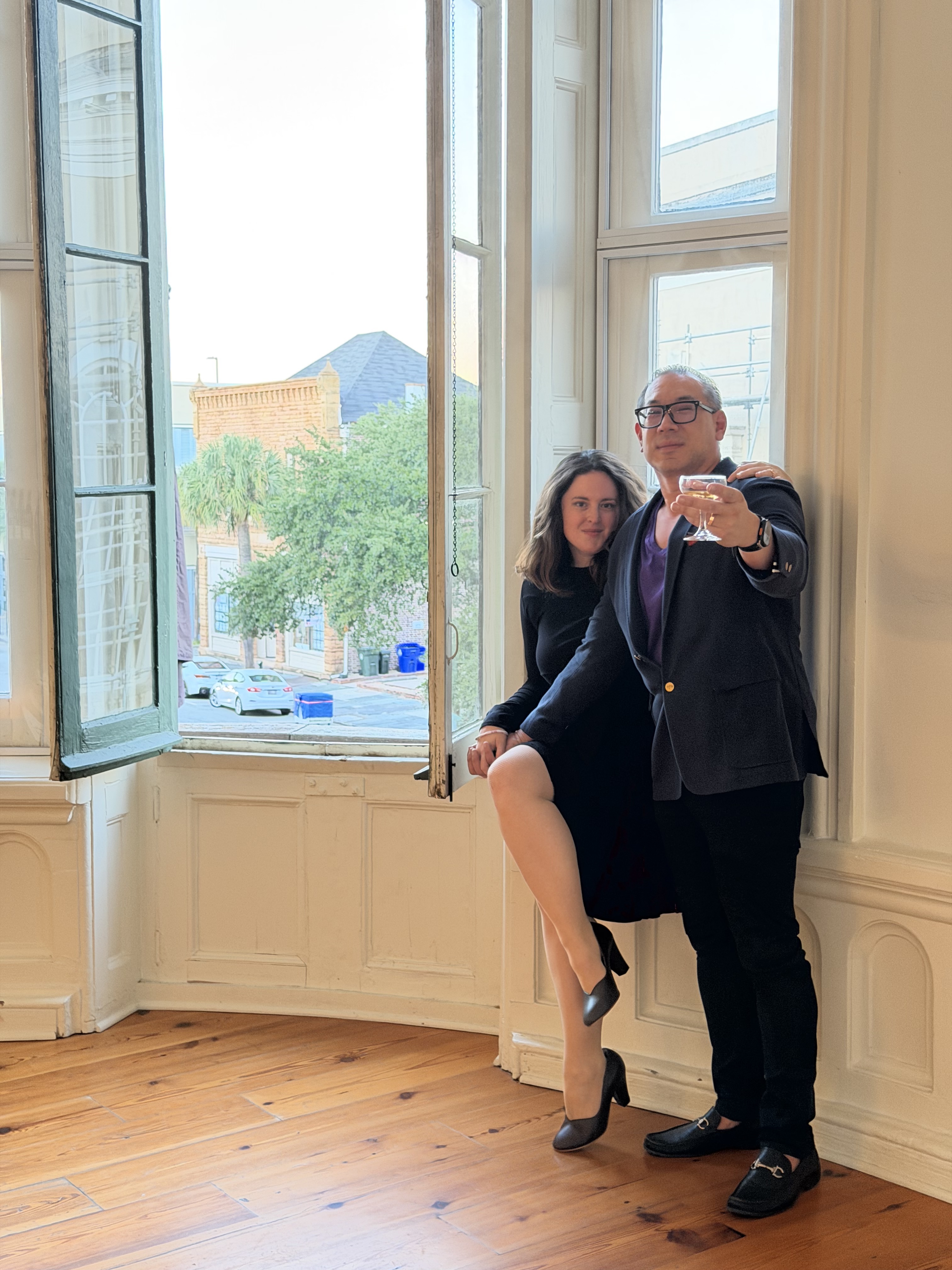

 . Very thought-provoking & utterly fantastic.