I also want to point out that my list is mostly focused on producers who have shown a good track record going back to at least the 1980s and most much, much further back than that. I’m sure there are many more producers that will prove themselves out over the coming decades.
Brad, just a teeny bit off topic. . .
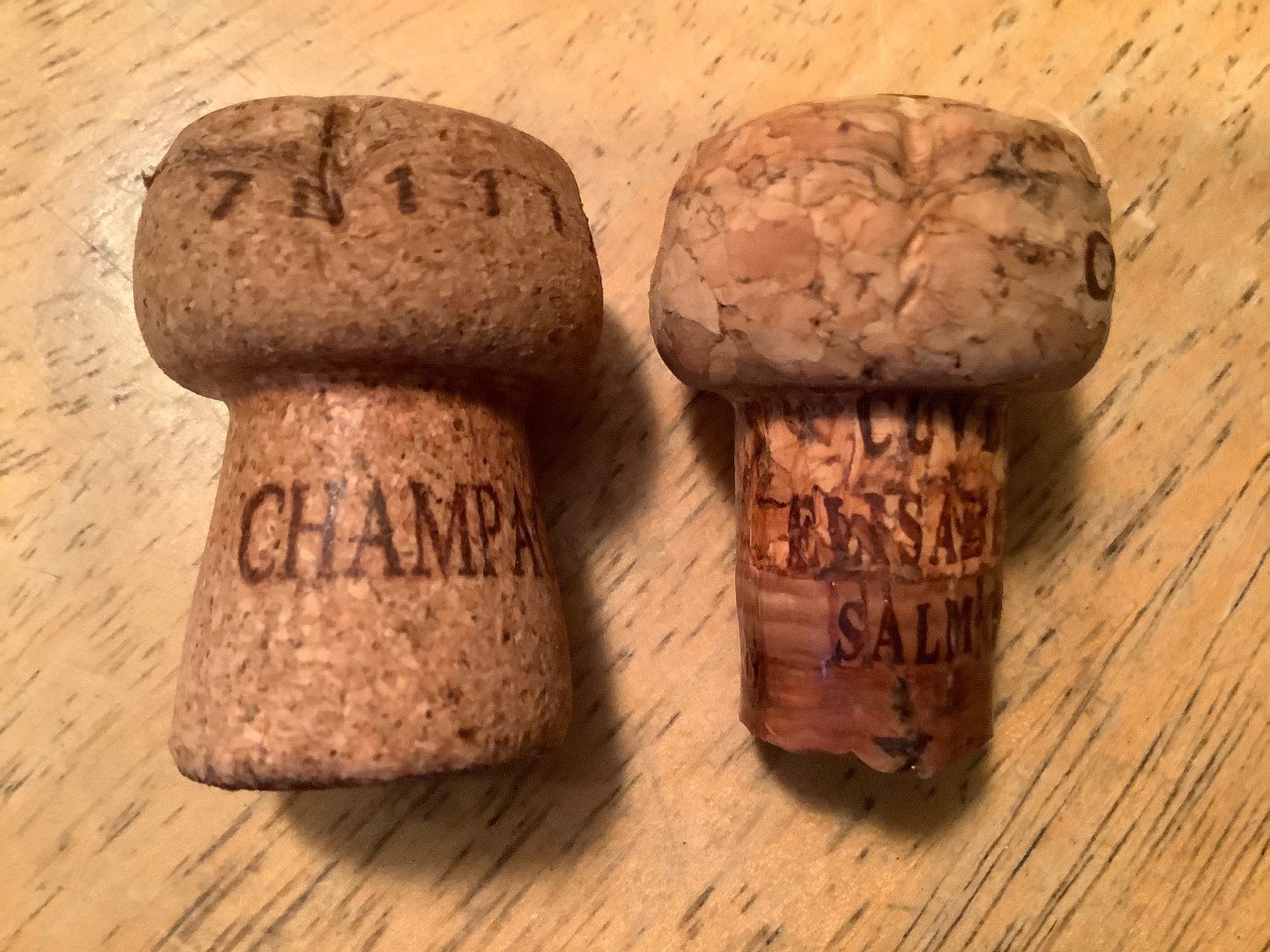
Is the expanded shape of the bottom of the champagne cork a fairly recent adoption? If not, does the expanded shape tend to shrink with age so that the cork appears almost straight? More specifically here are the corks for an NV BS Brut Rose and a 1999 BS Cuvee Elisabeth Brut Rose that were recently opened. Normal in your experience?
Thank you.
1 Like
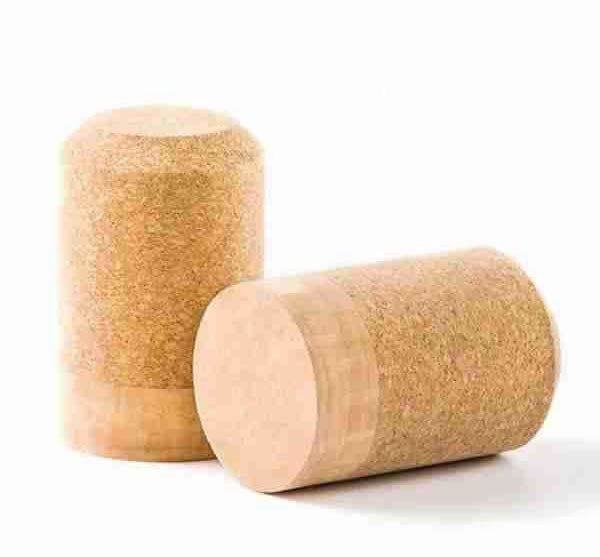
All sparkling wine corks are cylinders before they are pushed halfway down the bottle, making them mushroom-shaped. When the corks haven’t been in the bottle that long and retain their elasticity and try to return back to their original shape. Little by little the corks start to lose their elasticity and the oldest ones are tough as wood and won’t expand at all when removed from the bottle.
So those two corks are quite identical, the only difference there is their age.
Here are two sparkling wine corks before they are inserted into bottles.
What a fantastic thread, I am really enjoying this one. Thanks to William and Brad for such excellent input and advice. This thread represents the best of WB, detailed informative posts, a complete lack of snark.
Thanks Blake for kicking it off.
Brodie
1 Like
I opened the '96 Dom Oenotheque for my 40th birthday (in 2016) and it felt like there was another 20-30+ years of life left in it. However, the only other Champagnes that I’ve had that “seemed” like they had a long life ahead are the following:
Heidsieck Blanc des Millénaires
Taittinger Comtes
Roederer Cristal
I’ve been disappointed by the aging curve of:
Pol Roger SWC
Vilmart Coeur de Cuvée
Billecart-Salmon Cuvée Nicolas-François
In reference to Jim’s question on the cork and Otto’s comments, I would add the following:
-
On a traditional Champagne cork, aging normally compacts the cork down to the point where the bottom/neck of the cork doesn’t expand out much when you open the bottle. In general, the longer the cork is in the bottle, the less it expands out, but this is not always the case. As the traditional Champagne cork is made of an agglomerate top and (usually) two solid cork discs at the bottom you do have cases where one or two of the bottom discs do not expand out and they hold the rest of the cork in a state of compression and you kind of have a bowed shape for a good portion of the bottom/neck of the cork. If you were to cut off the bottom discs, the agglomerate portion would expand out as expected.
-
One of the corks in the image (NV Billecart-Salmon) is a Mytik or Mytik-like cork. These corks maintain their elasticity better than traditional Champagne corks and are one piece of agglomerate so they tend to expand out more and more uniformly than a traditional Champagne cork. With equal aging (10+ years), the Mytik cork is gonig to expand out more.
-
Since this thead is about aging, I thought I would also share my thoughts on wines released with Mytik vs. traditional cork. I find for the first 5-10 years after disgorgement that the wine under Mytik shows more freshness, brightness, and youth and can be more enjoyable than the same wine under traditional cork. At some time around the 10 year mark, however, my experience has been that the Mytik wines start to show some age, but it is quite different from wines aged under cork. The Mytik wines do not seem to gain the same level of complexity, but rather take on a bit of a boring or tired character vs. the traditional cork wines that start to show more complexity, texture, and a variety of flavors. This is not based on any controlled experiments, just my personal blind and non-blind tastings, but I still worry about Mytik wines for long term aging. In a way, traditional cork is an imperfect, yet perfect closure (when it works). Mytik is far more uniform in how wines show when sealed with it and traditional cork is more variable, but I don’t think we are yet able to recreate how traditional cork works in terms of the air exchange in and out of the bottle. If you could give the Mytik cork a brain and a control algorithm, you could probably recreate it, but the science isn’t quite there yet IMO. I know that the Mytik technology is still young and is always improving so I may be proven wrong one day. A number of top Champagne winemakers already think I am wrong so I may very well be.
****) As a side note, the reason that Chamagne corks were traditionally made from an agglomerate top with two or three cork disc bottoms is because the cork industry could not meet the region’s demand for pure corks that measured 31mm in diameter (the bottle opening is only 17-18mm in diameter) and 48mm in length. The reason for such a large sized cork is the requirement to withstand the 4-6atm pressure inside of the Champagne bottle.
In my initial post on this thread, I alluded to a recent purchase of 3 champagnes that had very questionable provenance, I had opened 2, the 85 Cristal Rose and the 86 Taittinger Comtes de Champagne Rose and they were way too advanced for my palate, the Comtes being undrinkable IMHO.
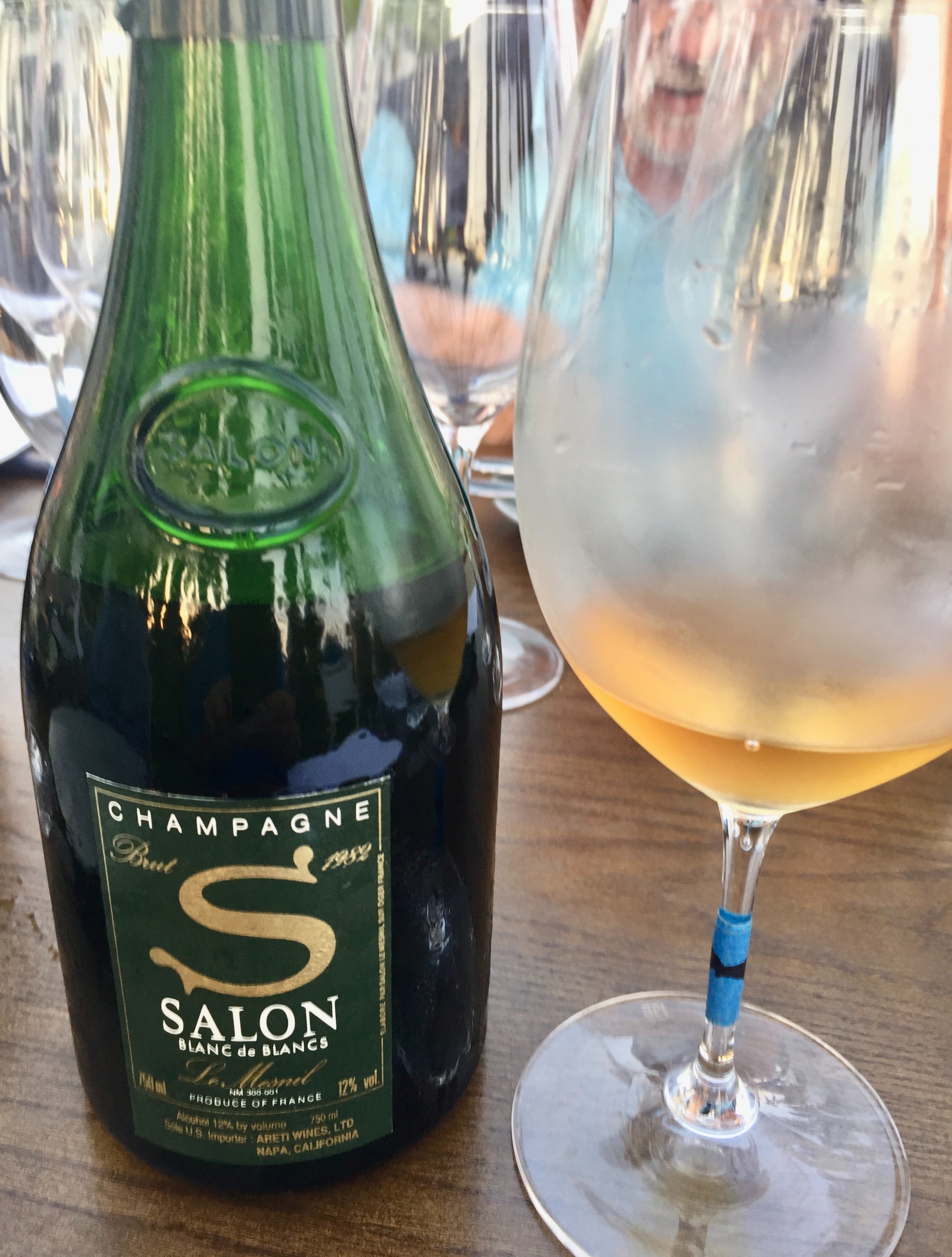
The 3rd champagne was an 82` Salon and I just opened it with fingers, eyes and legs crossed. Here’s an extract from a new thread going up soon:
"I took the 3rd of 3 potentially great champagnes I purchased recently in hopes of discovering some viable bottles and obtaining more, but the 85 Cristal Rose was severely oxidized and the 86 Taittinger Comtes de Champagne Rose was undrinkable thus my hopes for the 82` Salon was not all that high; nonetheless, in the wine bag. I took a dependable backup just in case.
1982 SALON CUVEE S LE MESNIL BLANC de BLANC- when I first looked at this bottle at the time of purchase, there was no sign of leakage, cork push or any indication that it was flawed or had been mishandled; however, the cork split in half when pulled and there were no bubbles, the first clues that is was not good; once poured, the browning amber color confirmed we had some issues; the nose and taste were proof this was severely oxidized to the point that it could be labeled an Amontallado with an emphasis on almonds and hazelnuts; for some, that may be pleasing, but I’m not a fan nor were the others at the table.
The dependable backup:
2006 DOM RUINART BLANC de BLANC BRUT- disgorged 12/ 2016 with 4.5 gpl dosage; comprised of Chardonnay Grands Crus: 63% from the Côte des Blancs (predominantly Chouilly, Le Mesnil and Avize) and 37% from the northern slope of the Montagne de Reims (predominantly Sillery and Puisieulx); this bottle was consistent with previous bottles from the same batch; there is a sense of royalty in the nose with inviting aromas of spicy citrus which on the palate turns out to include lemon, apple and white nectarine; it has body and a luscious mousse, amazing balance and bright acidity; it’s all I ever desire in a champagne and exudes class along with its charming elegance."
Cheers,
Blake
A fun party trick, especially with non-geeks, is to throw a champagne cork in the microwave and watch it return to its original cylindrical shape.
1 Like
I wonder if that would improve the Salon or maybe that was what happened, it got nuked.
1 Like
Hi William,
Based on older champagne bottles that i have had. I like the butterscotch, caramel notes that come across in aged Champagne 2002 and older. Champagne feels like Cabernets and Bordeaux and other reds where aged charcteristics generally do come across if aged properly.
Does grape composition (percent pinot, chardonnay, and meunier) have a factor in determining the outcome of seeing the aged notes? Probably the dosage of brut would be best? With less of these aged notes found in extra brut or brut nature champagnes?
Not looking for a scientific answer per se; only a share of your opinion based on your tasting experience. Thank you.
I would say that if you really like those sort of rich, confectionery, epuyrumatic aromas, you might try to find a stash of old Brut Impérial or Cliquot from the Péters era. Champagnes richer in Pinot will tend to get a bit more honeyed as they age, and those vinified in wood and/or blended with appreciable percentages of reserve wines will start out of the gates with a bit more nutty complexity, but the aromas you describe are predominately related to the addition of sugar at disgorgement.
4 Likes
William, thanks so much for this information. I never thought about what contributed to various oxidative notes, but it makes sense. Much appreciated.
What kind of magic is dis?
I just got some Charles Heidsieck Special Edition Rosé. Base 2005, laid down in 2006, and disgorged 2019. This will be the longest on the lees that I’ve ever tasted, and was curious if any recommendations on serving?
Broadly speaking, I’m curious to hear how you all typically prepare your bottles and if / how it differs based on NV / vintage / age etc…
Edit - this thread has been enlightening and I’m grateful to all who have shared!
2 Likes
One of my greatest wines ever was a mag of NV Bollinger from the sixties, drunk at about 20 years old. It still had plenty of fizz and was straddling the middle ground between zesty citrus and caramel with touches of minerals and a long, long finish. Perfection. A bottle of '64 Dom was also transformative…like a rich cream soda. For me, there has to be fizz and drink like a champagne, or if not then enough zest and minerality to drink like an old white burg. If the wine is flat and sweetish and caramelized, I drink it like sherry with soup. And any leftovers make excellent sauce wines. Also incredible French Onion Soup.
But always for me it’s the romance. Champagne is totally associated with celebrations both happy and sad (I remember more than a few funerals where champagne was served), and everything from an intimate dinner for two to grand communal celebrations like New Years. I submit that all of these wines (from Champagne) were created with at least this partially in mind, so when I drink old wines I think of the situations where they might have been consumed. Sometimes I buy old champagnes just based on the label…something all gold and glittery from the '60s that might have sat in a champagne bucket on a James Bond film. Or a Louis XIV style bottle of Grande Siecle with the large gold on black labels, or the simple script of Bollinger or old Roederer that would have appeared in a fancy restaurant along with flocked wallpaper and head waiters in tuxedos.
1 Like
This is an extremely interesting thread and I don’t think one can add much to the maillart/autolysis/dosage explanation but one key element I thing that is really necessary for the aging of champagne is good acidity. Acidity alongside carbon dioxides are preseratives and without them champagne is not going to age well. I am not going to start nit picking over vintages but I think it is pretty safe to say the vintages that go the distance have high acidity
I am deeply involved in the grower champagne scene and less so with the maisons. I think over the last decade the expressing of terroir has become an obsession for many grower producers, with this I mean, one grape sort, one site, one vintage and no or minimal dosage. And with this obsession with terroir a lot of producers have lost sight of the ageability of their champagnes.
Earlier this year at a visit to Pierre Legras, A bottle was disgorged and we were asked to taste, exquisite aromas of an aged Blanc de blancs, we were asked to guess the vintage, nobody came close. The champagne was from 1991, the famiy had given some bottles a dosage of 12 g/l and stored these for family use. The bottle then would have cost 15 francs. Legras wanted to make the point that dosage was the key element in aging and quiped that many of te champagnes being made today from his illustrious colleagues would or could not age reach such an age.
William Kelley touches upon the vinous element in champagne on his musings on Cedric Bouchard and how Bouchard’S champagnes will age like wine rather than champagne. I think we are going to see this wth a lot of grower producers. For me a really good example is Vouette et Sorbée, the Fidele vines come from Volnay, put simply aged Fidele tastes like aged Volnay with bubbles, I do not even think Vouette want their champagnes to develop the patisserie notes.
Coming back to Legras conjecture, I am not sure if he is correct. If the producer are going for low yields and low dosage, the champagne will not develop the classic aromas as described above, but will develop as a wine. The older these champagnes get the more they become territiory for specialists. The biggest problem I imagine will be the reduction in use of sulphur and I imagine the more these champagnes are transported the more drastic the effect on the ageability.
Francoise Bedel is a producer , who I personally believe does not get anywhere the amount of recognition she deserves outside of the producer community. For those wanting an introduction to older champagnes I recommend trying for instance the young versions Entre Ciel et Terre or Dis vin Secret and then taste the aged versions of these, the Autrefois or the L’ame de Terre. The similiarity of the aromatics in young and old is astounding and one has the chance to ask oneself, which do I prefer, the younger version with their pronounced freshness or the older versions which lack the freshness but have deeper, complex, mature aromas or naturally one can like them both.
Another factor which one cannot underestimate is the critical time after degorment until the Maillart is completed. Here we are talking roughly 18 months. a producer like Bedel holds her champagnes back and releases them once the Maillart is completed. This offers great stability. Examples in the opposite extreme are Laval, Leclapart and Savart, they all say they have no room to store and the champagnes are sold almost immediately after degorgement. This results in my opinion in massive bottle variation depending on how the bottles are stored in this critical post degrogement period.
I have had sublime bottles especially from Laval but also complete flops.
There are what I would call traditional grower producers Ledru foremostly but also H.Goutorbe, Camille Saves, Aubry and Pierre Moncuit where modern trends have no influence. In the grower scene I find these champagnes to have fantastic aging potential- Last year aroundabout this time H.Goutorbe released their 2008 vintage, at the time a champagne for under 50 €, on our initial tasting we were taking aback at teh substance/structure and acidity. These are dosaged champagnes that will have develop the classic aromas.
Saying all this I think the bulk of champagne being made today in the grower secne is meant to be drunk young, The 19s made in an oxidative style are so good, it is really difficult to keep ones hands of them.
8 Likes
Excellent. I agree on the presence of acidity being relative to longevity and appreciate you listing some producers going either way and why.
Many small growers are very transparent about blends, bottling and disgorgement dates, etc. and that is helpful in estimating when to open and how long one can expect a wine to be viable. It’s fun to track them over time.
1 Like
The Maillard Reaction, browning, has been mentioned many times in this thread and others and I’ve often tthought it to be more related to heat, time and air exposure, but an article I recent read attributes it in some cases to the toast on the barrels.
Here’s an extract and a link:
" Barrel toasting does more than cover up disagreeable flavors; it produces compounds in oak that add a whole slew of agreeable esters to wine.
The Maillard reaction produces vanilla-like esters known as lactones which coincidentally, was the name of my teenage acapella band. The lactones, while not overly sweet or cloying, do add faint impressions of sweetness to the finished wine. Much of the smoky, roasted qualities found in wine are a result of barrel toasting. Kiln drying oak should not be confused with toasting oak. One is the slow drying of oak in an oven; the other is raising a glass to oak in salute.
The degree of toasting affects the types of flavors generated, and as the toasting level increases, so does its impact on the developing wine. "
With all respect, I find acidity to be overrated when it comes to Champagne and using it to gauge aging or potential is a big mistake. Yes, it does contribute, but a 50 year old wine with bright cutting acidity and moldy, mature fruit is not a good wine. Dosage and properly ripe phenolics have more to do with aging than acidity. Handling of the juice and then wine in terms of reduction and oxidation also are more important. Look at years such as 1959, 1976 or 2003. Low acidity, higher pH, yet some of the slowest aging vintages. Heck, 2003 has not moved much in terms of aging (relatively speaking) since release. 2022 is the lowest acid year that has been recorded in Champagne and second highest pH, yet the wines are fresh, lively, energetic and appear to have excellent potential to age. Time will tell, but chasing acidity in 2022 was about the worst thing you could do. In general, I have concerns with those who chase acidity. To me, acidity is the result of ripe phenolics and it is this that should dictate the acidity.
1 Like
In 2022 the mantra was to go for phenolic ripeness, the young vin clairs may have energy etc but how will this translate into the champagnes after they undergo the next two phases, second fermentation and the maillart. Acidity on its own is not enough but it is a key element and I think if we look back at the vintages between 2000 and 2009, 2002 lags behind 2008 and especially 2006, a warmer year is showing signs of exhaustion, I have read with interest your summaries of the vintages from 2008+ on another thread about the vintages and personally I would not concur, my feeling is you are more for warmer vintages and place less value on the colder fresher vintages. Correct me if I am wrong. There is nothing wrong with this but is as Juhlin taste, one must know ones taste and seek out the vintages that correlate.
2012 and 2013 have always fascinated me, my feeling is the american/anglo saxon testers put a higher value on 12 and the french and the grower producers at least a higher emphasis on 13. William Kelley if I recall rightly wrote 2013 is somewhere between 2008 and 2012, an interesting summary which is a bit of an oversimplification but has an element of truth.
To me, acidity is the result of ripe phenolics and it is this that should dictate the acidity.
I find this statement quite fascinating, I think the biggest problem today is not losing the acidity,
, the days of indian summers are past where the grapes ripened slowly and complex and balanced wines or champagne were made .It seems to me, producers must be quick to adapt to the vagaries of climate change. In the Champagne I think the idea of complantation and the remergence of grapes like Petit Meslier and Arban are a real chance to add freshness and acidic grip naturally. A good example of this is Vouette et SorbéeS’ Blanc d’Argile 2018, the blend of Arbane and Pinot Blanc with the chardonnay makes this one of the most invigorating champagnes I have tasted in a vintage with a lot of flaccid champagnes.
1 Like