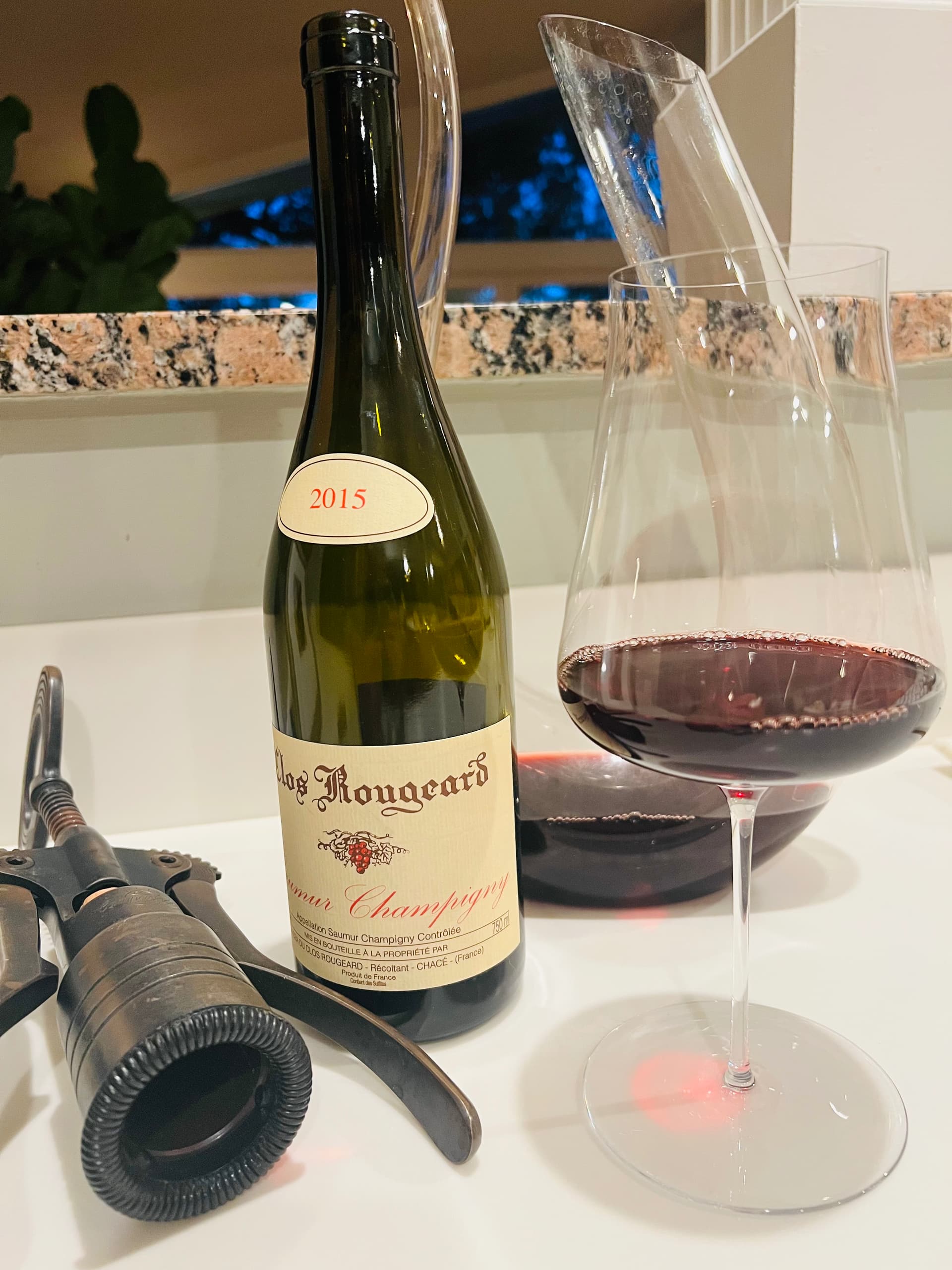
Theo Blet Saumur Le Corbin 2022
A second attempt.
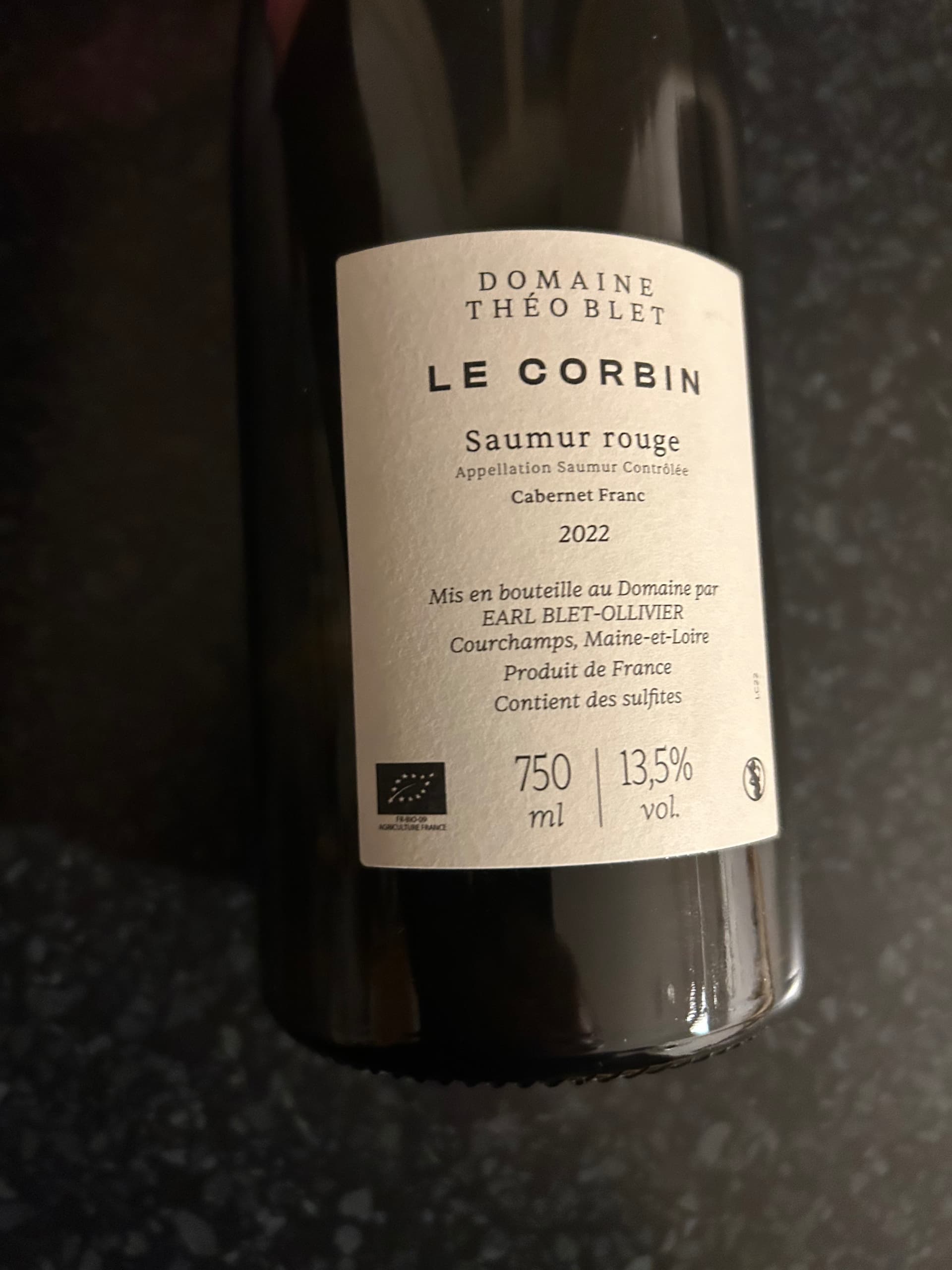

Lush, sapid, a bit of a crowd pleaser but in a good sense. Pure fruit, florals, a mild lactic note, with enough acidity and mineral backbone to keep things interesting.
Theo Blet Saumur Le Corbin 2022
A second attempt.
Lush, sapid, a bit of a crowd pleaser but in a good sense. Pure fruit, florals, a mild lactic note, with enough acidity and mineral backbone to keep things interesting.
Thanks - sounds good - one I’m going to look out for.
2017 Clos Rougeard (Foucault) Saumur-Champigny - France, Loire Valley, Anjou-Saumur, Saumur-Champigny (1/31/2026)
First taste of a wine under the new regime, and it doesn't disappoint. a little dusty, just slightly green-ish note on the nose, medium depth of somewhat reserved fruit, dried earth, moderate grippy tannins, fairly strong pyrazine notes, not a lot of complexity at this point, but the potential is there. I'd say this needs at least a decade in the bottle before I'll open another, when I expect it to be a lovely, classic Loire Cab Franc. (92 points)
Ain’t no way that can happen. If “bretty” means that there are phenolic compounds produced by brettanomyces, it doesn’t go anywhere with age. These phenolic compounds are quite persistent, as I’ve had wines +50 years old that have been bretty. If you get any of these phenolics in your wine, they are there for good!
Yes, I found that a bit curious too. I’ve had no such experiences so far. Anyway how can one tell if a « clean » bottle was once bretty ?! Sounds a bit like pixies at the bottom of the garden !
Sounds good - but I’m curious : would @Robert.A.Jr and you say that the 2015 or 2017 are worth the 100€ or so price difference with something like a Joguet or a Baudry ?
And thus the concept of the poopy pixie named Brett was born.
2015, yes, but after the sale I stopped buying.
“Worth” is difficult to judge, people overpay stupid amounts of money for wine (and many other things) all the time lol.
I guess my answer is yes, in small quantities, because I do that lol. I think Rougeard is, and still is, at the top of the list of Loire wines. Is it that much better on some absolute scale? No. It’s an exponential scale, as are all higher end wines: you pay a lot more to get a small increase in quality. Plus the added benefit of having to store their stupid oversized bottles lol.
As for the new regime, I did not find any noticeable drop in quality, or change in style between this 17 and earlier Foucault wines.
That’s great to hear Alan, thank you for that.
Well, your more sophisticated, discerning, elote palate may find nuances my laid back west coast palate is incapable of, so I look forward to your judgment should you get the chance to try this 
Thanks Alan for that thoughtful reply!
2019 Raffault Picasses
Off the bat note that they have switched to synthetic closure - I went ahead and took the chance on Coravin anyhow, will see if this is the variety of synthetic cork that will self seal or not. Doesn’t appear to be Diam.
This was … a bit nondescript? Not all that giving aromatically, a bit of strawberry raspberry fruit, a bit of tobacco and ash, but pretty quiet on the nose all told. Similarly pretty reserved on the palate. Fuller body than usual for this cuvée, no surprise with a warmer year.
All told this does not seem to be in a great spot for current drinking. When I drink the rest of this bottle I am planning to open it a night ahead to double decant and see if that helps. Have several more that I’ll stash toward the back of the locker. I am not especially worried and assume it will come around and show more varietal character, likely shedding some fat in the process.
Synthetic or something like DIAM? Those are two completely different things and I sincerely hope they have not switched to a synthetic closure which I think would be a ridiculous decision.
Looks agglomerated. So Diam-esque but did not look like an actual Diam (different color mix and couldn’t find the logo).
Sorry for any confusion - using “synthetic” as opposed to natural cork.(Diam synthetic in my mind.)
As Ilkka said, DIAM is not a synthetic cork, it’s an agglomerated cork. Synthetic corks are made from plastic and similar materials, agglomerated are made from cork granules that are glued together. Two entirely different things. DIAM and the likes are almost always good, synthetic corks seldom.
2015 Domaine Bernard Baudry Chinon Le Clos Guillot. Smelled like bandaid. No thanks.
I agree “agglomerated” or “technical” would have been clearer usage, so this is a dumb hill for me to die on, but given the absolutist tone of your post I’m compelled to note that it straightforwardly is not the case that diam corks are “not synthetic.” They are man-made products that are held together with plastic and polyurethane glue.
Of course, but the term “synthetic cork” in wine lingo means this certain type of wine closures that don’t have any cork in them. I know DIAM and other agglomerated corks are man-made products held together with glue, but the term “synthetic cork” does not encompass these closures.