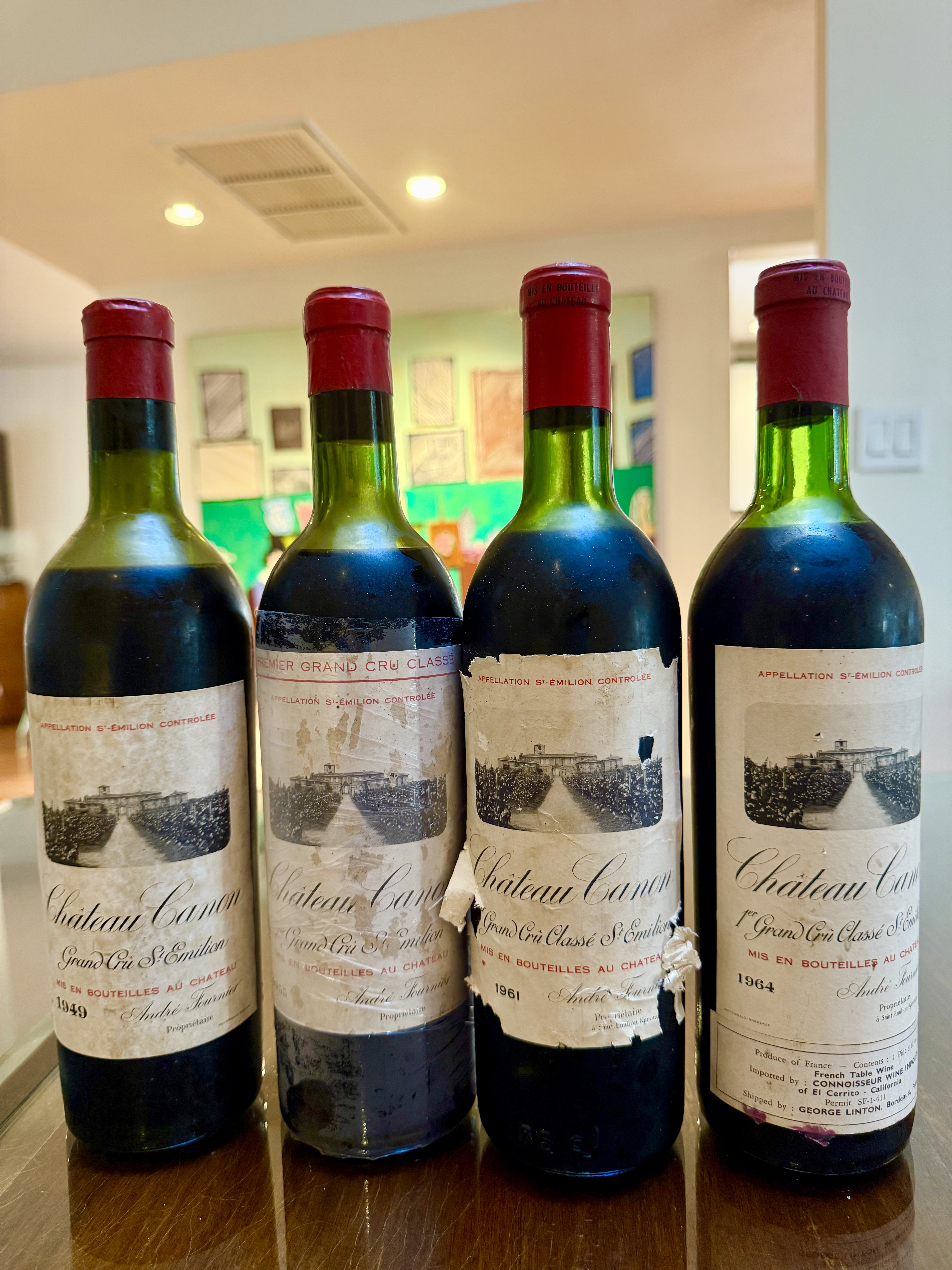
2015 Bordeaux Retrospective Tasting - 10 years on

Last week, Art of Cellaring (Houston’s finest wine shop/storage facility/wine school) put on its second annual 10-year Bordeaux retrospective (which I have lovingly dubbed “Southwold on the Bayou”). I know @RyanC was in attendance, if there were any other local Berserkers please tag in and share any thoughts.

This was my first real exposure to any material number of Bordeaux 2015s, as I was not paying attention to wine when they were released and have focused on 16 and 19 as backfill opportunities in the few recent years I’ve started paying attention and building a collection. I love that the shop has started putting these 10-year events on as it is a great opportunity to get a representative look at vintages that are at that midpoint where there is still some availability in the market, but the wines aren’t impossibly far from their drinking window (as it can feel on original release).

Brandon Kerne MS led around 30 attendees through a multi-hour, five-flight seated tasting featuring one full-blind flight and then four regional-focus flights poured nonblind. We tasted 18 wines in all. Brandon and the AOC team sourced the wines (I think mostly ex-chateau?) over the course of the past year, and he explained that they selected the specific wines and flights in an effort to tell the story of the vintage in the context of evolving trends in Bordeaux – the collision of a hot vintage with the tail end of the Parker era, with some chateaux still leaning into mid-2000s more-is-more and others starting to take their foot off the gas.

General Thoughts

It will come as no surprise that the contrast to the 2014 vintage tasting the year before was absolutely stark. Marathon tasting each vintage came with its own challenges. The 14s were very acidic and very tannic at the 10-year mark and some of the wines were fairly backward/closed; as a result it could be tough to get a read on the wines just due to the accumulated effect of tasting a bunch of tannic wines in succession. The 15s posed basically the opposite problem. The wines were almost uniformly open (though still pretty primary) but the hot vintage made for some pretty heavy going on some of the flights, with some wines showing very high alcohols, low acidities, and general weight contributing to a sense of fatigue.

Although I did not love the vintage on the whole after tasting through the examples offered—and still think 16 and 19 (and selected 14s) are the vintages to focus on for me—there were several wines that I’d be affirmatively glad to drink if put in front of me. The twin highlights of the tasting for me were Leoville-Barton and D’Issan, both of which stood out due to the fact that they were able to retain a fresh acid and mineral structure (and in the case of D’Issan some refreshing herbaceous/green pepper/green olive pyrazine character) from which to hang the ripe fruit that is the vintage hallmark. Immediately below those two were Brane-Cantenac and Haut-Bailly, both of which were just a tick behind the first pair in perceived acidity and freshness but which both maintained impeccable balance nonetheless. A bigger gap down to fifth place, but I also quite enjoyed Rauzan-Segla. Other than acidity/freshness, the common thread for the four wines I particularly enjoyed was that they all retained some savory character that was lacking in many of the others.

By contrast, the right bank was Not For Me. I found the right bank wines, on average, unpleasant, with minor exceptions for Canon and Conseillante (neither of which I especially enjoyed, but at least would have considered keeping if offered to trade my glass for a cold High Life). I am perfectly fine with high alcohol and ripe fruit – zin was my first love – if the wine has fresh acidity to balance things out, but I found these just absolutely fell flat on that score. Wine after wine showed sweet, ultra-ripe dark fruit with low acidity that offered nothing in the way of refreshment and made for flat and fatiguing wines. I am very open to the possibility that these are going to show better in another 10-15 years once the primary fruit recedes a little, but the acid levels are a big question mark. (The distance between the critical evaluations and my own thoughts also makes me wonder if this is a “me problem” and if I revisited some of the wines on a single-bottle basis with more time to spend with it I’d like them better.)

I’ll post my notes on the specific wines below as I finish typing up each flight – big grain of salt on these, please, as I am simply not that experienced of a taster in any arena and certainly not in Bordeaux, plus I find it pretty tough to accurately evaluate wine in large tastings. Nonetheless I find it useful to take rough notes and write them up because it forces me to be analytical about the wines as opposed to merely hitting a thumbs up-thumbs down. I was spitting a good amount but not all of the wine and so unsurprisingly the detail in my handwritten notes goes down over time as conversation at the table picked up and my analytical mind was suffused with benevolent good cheer, etc. etc.

22 Likes

Flight 1: Full Blind Vintage Overview

We kicked off with a full blind flight, where the wines could be from either bank and any commune. This flight was thoughtfully selected to show some of the highs of the vintage while making clear the variety of styles that came out of the year. This was accompanied by a per-table game to ID the commune/village that each wine was from, to be settled by discussion and voting at the table. As always, blind tasting is humbling; if my notes are accurate the winning table only got 2 of 4 villages correct, and won on a tiebreaker because they were closer on left bank/right bank calls.

Wine 1:
Nose: Bad start as there is some immediate ethanol apparent on the nose, perhaps this got a little warm as the flight was prepoured. Behind the booze the nose is enormous and shows sweet black cherry/dark berry fruit and menthol. Licorice. Decent whack of coffee-tinged oak.

Palate: Confirmed that the wine is just a touch past ideal service temp; this is immediately apparent as an enormous wine with a very full-bodied, thick, silky texture; the flavors are broad and show ripe dark sweet fruit; some spice/choco/coffee oak; a little orange peel. The tannins are fairly moderate and quite ‘expensive’/fine/plush; the finish is medium-long. Alcohol heat quite apparent. Acidity is medium minus. Balance is just there but only barely and the wine feels precariously fat.

Commentary: This screamed merlot to me and after discussion the table settled on Pomerol; in fact the wine was one of the vintage’s critical darlings, Chateau Canon from St. Em. This wine was my first indication that the critical praise lavished on the right bankers this vintage was not going to line up with my personal preferences. It was not bad per se; I would take a glass if offered; but this is not a wine I’d ever seek out even if money was no object. Perhaps this is a situation where age will right the ship by slimming down the baby fat. As of now the wine just struck me as too big and too hot.

Wine 2:
Nose: Cocoa cherries; dark fruit; tobacco; leather; pencil; dirt; this came across a bit on the softer side as far as the character of the scents.

Palate: Much better; there is serious structure and density; the wine has moderate-plus tanning and medium-plus acidity; the tannins are a touch more rustic and less expensive-feeling than Wine 1; the finish is moderately long. Fruit character blended red and black fruits and maintained a bit of snap as opposed to the lush compote flavors of the first wine. The palate is much more focused and structured than the nose suggested, which makes me think service temp on this first flight was a factor. A well-balanced wine that was immediately pleasing.

Commentary: I got off on the wrong track, and probably pulled the table after me, by focusing on the choco-cherry character on the nose as a merlot indicator and framing further analysis through that lens. The palate would be strange for a right-bank wine other than perhaps a St Em on limestone with a high proportion of cab franc, but that still did not make a ton of sense. Accordingly we landed in Pessac as a ‘merlot heavy left bank’ option, and were humiliatingly dead wrong as the wine was revealed to be none other than Leoville-Barton. As already noted, one of the wines of the night for me and certainly the wine of the flight.

Wine 3:
Nose: Immediately I was struck by the floral elegance of the nose; this was precise and fragrant with flowers and red fruit, with less ripe fruit character than the preceding two wines.

Palate: The wine was structurally similar to Wine 2 with a meaningful acid/tannin backbone; the fruit character was fresher and redder than Wine 1. The finish was moderate. Acid level medium to medium plus; tannin medium and neither particularly rustic nor particularly modern.

Commentary: On the nose my mind immediately went to Margaux due to the floral character which was quite distinctive. Others at the table pondered other Medoc villages but ultimately all agreed that the floral nose and elegance on the palate pointed to Margaux, and upon reveal indeed the wine was Rauzan-Segla. This was probably third place of the Margalais wines for me (though clustered much closer to the top with D’Issan and Brane-Cantenac than to the bottom with Malescot-St. Exupery).

Wine 4:
Nose: The wine showed a cherry/mint character that did not quite verge into cough syrup but the thought crossed my mind; it had some additional woodsmoke, cigar smoke, graphite character in addition to the ripe fruit profile. There was additionally some leafy earth.

Palate: Moderately structured with grippy tannins and medium to med-minus acidity; the wine showed some ripe fruit and leafy earth but was frankly pretty nondescript.

Commentary: I didn’t really have a view on this one, after discussion the table settled on St. Estephe. The wine was, in fact, Clarence de Haut-Brion. Pretty anonymous.

WOTF: Leo-B, with honorable mention to Rauzan-Segla.

8 Likes

Epic write up. I offloaded some 2015 troplong mondot this year that was pretty heavy but I’m sure many would enjoy it.

On a positive note, I deeply enjoyed the 2015 GPL - massively complex and enjoyable.

4 Likes

Justin,
I did not go to the primeur, but went to a couple of tastings soon after the wines had been bottled and shipped, as well as the UGC tasting.

It was a vintage I passed over, not liking the heaviness of the primary with little or no counterbalancing acidity, something that you noted. I bought a few bottles where I was building verticals, but the VCC and Canon had that same ponderous quality, with nothing to anchor them. Also in both cases, and something I noted with the earlier tastings, the finishes were a bit of a mess, no layering or precision.

The only exception I found, were from the northern Medoc, particularly Montrose and Ducru.

1 Like

Killer write-up Justin. As he mentioned, I was at the event as well. AOC, our favorite local storage/retailer operation, holds these yearly. They’re always super educational and also fun, and Brandon Kerne’s slideshow was excellent.

I had largely similar impressions to Justin, though I probably enjoyed the Conseillante more than he did and I liked the Canon too, although I’m not rushing out to buy either of them. The other right-bank wines were not my cup of tea (I particularly didn’t care for the three Pavie wines).

I liked the d’Issan and Haut-Bailly a lot and the Margaux wines a whole were probably the best of the bunch.

I’m really psyched for '16 next year.

3 Likes

Flight 2: Pomerol

I did not care for these; too little apparent acid and way too much dark sweet fruit and alcohol. The wines all felt pretty flat and boring due to the lack of freshness and acid. The Conseillante was the least worst but even that was not something I’d look for, particularly not at the going rate. I think the idea with the flight was to show one more old-school wine (Gazin), one bigger/more modern wine (L’Evangile) and one “middle of the road” in Conseillante, but I did not really experience them as being all that different from a gloss/polish point of view.

Wine 1: Gazin
Nose: Choco-cherry/black forest cake; licorice; syrupy dark fruit; alcohol heat.

Palate: Big layers of liqueur fruits; massive; round; darkly fruited with very ripe tones; low acidity; medium-minus tannins with a powdery plush texture; alcohol heat.

Wine 2: L’Evangile
Nose: Cocoa; leather; oak; leafy dirt; dark fruit.

Palate: Fat, syrupy dark fruit; low acidity; medium plush tannin; slick syrupy texture (“silky” or “velvety” I’m sure per the critics!); alcohol quite noticeable at a whopping 15.5%.

Wine 3: La Conseillante
Nose: Oak; big dark fruit; cocoa powder; coffee; spice.

Palate: Chocolate-covered plums and cherries; thick, round mouthfeel; alcohol warmish but less immediately aggressive than the prior two.

WOTF: Conseillante.

1 Like

Wonderful notes and observations. I mean, really keen and detailed, much appreciated

I am like Mark upstream, I don’t think I bought any 2015 other than to sample here and there. By contrast, I am very heavy in 2014 and 2016. I think the last 2015 I had was the Ausone, which was so opulent and over the top that I really just migrated to other stuff. These are the kind of vintages where I suspect the only ones that I really would probably appreciate would be wines like Montrose and Leoville Barton.

1 Like

Really hated to miss this one. Brandon is doing great things at AOC! Thanks for the detailed notes.

1 Like

Flight 3: St.-Emilion

Three Gerard Perse wines to illustrate the waning years of Peak Parker in a warm vintage. Quite educational though not particularly pleasant. These wines were odd in that they clearly had some attractive attributes by way of pleasantly ripe red fruit and floral aromas, but once the wine actually hit your mouth the elevated alcohol, thick texture, overripe fruit flavors, and lacking acidity left me cold.

Wine 1: Pavie-Decesse
Nose: Quite charming on the nose with some much-missed red fruit and flowers; spices; noticeable oak.

Palate: This could have been a very nice wine: there is some good tannin structure and a sense of minerality (limestone driven?); fine but firm tannin texture; ripe sweet red and black fruit. Unfortunately there’s just a gaping hole where moderate or moderate-plus acidity would make for an enjoyable wine and in its absence the wine falls flat on its face.

Wine 2: Bellevue Mondotte
Nose: Again an attractive start on the nose with high intensity florals and ripe red fruit; less pleasant is the wallop of new oak; some alcohol heat also making its presence known.

Palate: Huge, alcoholic, syrupy; moderate-plus tannins with some grain to them; warm; once more acidity is just basically absent.

Wine 3: Pavie
Nose: Coffee; oak; chocolate syrup; plum jam; blackberry/blueberry compote.

Palate: Oak all over the place; thick smooth texture (again, assume this is the “cashmere” that critics reference; go figure); powerful chalky tannins; big joocy froot; this had slightly better acid balance but the ‘more is more’ winemaking is just overbearing.

No WOTF for me, didn’t really care for any of these.

1 Like

Haha, those sound gross, as they always have been!

One of the most grotesque Bordeaux that I have ever had was the 2003 Bellevue Mondotte. Had a weird marzipan note, just totally candied.

@Jeff_Leve will be rolling over in this grave!

:sunglasses:

1 Like

Jeff might be taken aback at the report of his early demise…

These are concise and pointed notes, with no varnish applied. Well done! I avoided the St. Ems in 2015, with the exception of Canon which was pretty much irresistible at $91/bottle on release. I tried one in 2018 and found it modern, creamy, lush, and ripe but reasonably balanced. Might be time to try another.

The Left Bank notes are going to be more cheerful I promise :joy:

My note on the 2015 Canon:

And then my cleansing…

2 Likes

I didn’t get raisins, but the rest sounds familiar. Sounds like it will turn out to be another cocktail wine. A local store had it at well under half of the going rate at release. When they confirmed it was not mis-marked, I cleaned them out. It was a critic darling and CT seems to love it, so it shouldn’t be hard to unload.

We’re having Napa loving friends over for dinner this weekend. Looks like a 2015 Canon will be in the lineup.

2 Likes

They don’t get me wrong if I had some I would definitely keep them rather than ditching them. I often have friends over for dinner, or invited over for dinner, where the folks that will be joining me really have more of a Napa palate. That’s fine, it’s just a better one for them for me.

The news of my demise has been greatly exaggerated. In fact its news to me :rofl:

1 Like

I was beginning to get worried :joy:

@Robert.A.Jr yes I might almost agree with you on 03 Bellevue Mondotte. It aged poorly. They no longer make the wine, it’s now part of Pavie.

2015 is nothing like 2003. I like a lot of wines from 15. I tasted the 2015 canon recently and loved it! Yes, it’s deep, opulent, lush and sexy, but that’s why I love it. As it ages it will show more of its mineral character. Canon is a wine that ages quite well.

This is a flight I was privileged to taste a few weeks ago.

1 Like

I, too, have been disappointed with 2015 Bordeaux, as a whole, and have consumed most of it. What remains in my cellar is Latour a Pomerol, and I have no idea what it is like, but from the most recent note, sounds like more of the same with regards to my experiences with this region/vintage:

This wine took me for a ride. At first taste, imbalanced, alcoholic, and extremely tertiary. This was wine was very forward. Being 2015, I was expecting more fruit and vibrancy, but I got none. Dried and chocolate covered fruit. After a double decant and slow-ox for 2hrs+, fruit started to show, but not silky and bright like I was expecting from Pomerol. Still very tertiary, which is surprising. The colour as well is brick and looks like a wine of the 90s. I would not buy again, but it was interesting to see. Definitely needs more time for harmony, but I dont think the flavours will improve much

Sounds like I better open sooner than later

Me too, although I’m light on Bordeaux in general (~4% of my cellar) and it is mostly two producers (Magdelaine ~58%, L’Eglise Clinet ~27%), that being said, I’ve found Grand Puy Lacoste and Leoville Las Cases from 2015 to both be very good.

I’ll jump on the bandwagon and thank Justin for these unvarnished and informative notes.

1 Like

I don’t understand how you can be so sure it will evolve, as the 2015 bears absolutely no resemblance to the older Canons which have matured so beautifully. Much of the character has been lost to overripeness. There is no history of Canon with this degree of ripeness young taking on a “mineral character”

On the contrary, there is plenty of evidence that wines such as this, stay pretty simple. Pavie, for instance, in the Perse era have never shown much more complexity (apart from 1998) with age. These tertiary flavors tend to require acidity and balance to come through, and there is no precedent that the kind of wines that Canon is now making will end up with the same kind of complexity as the older wines.

2 Likes