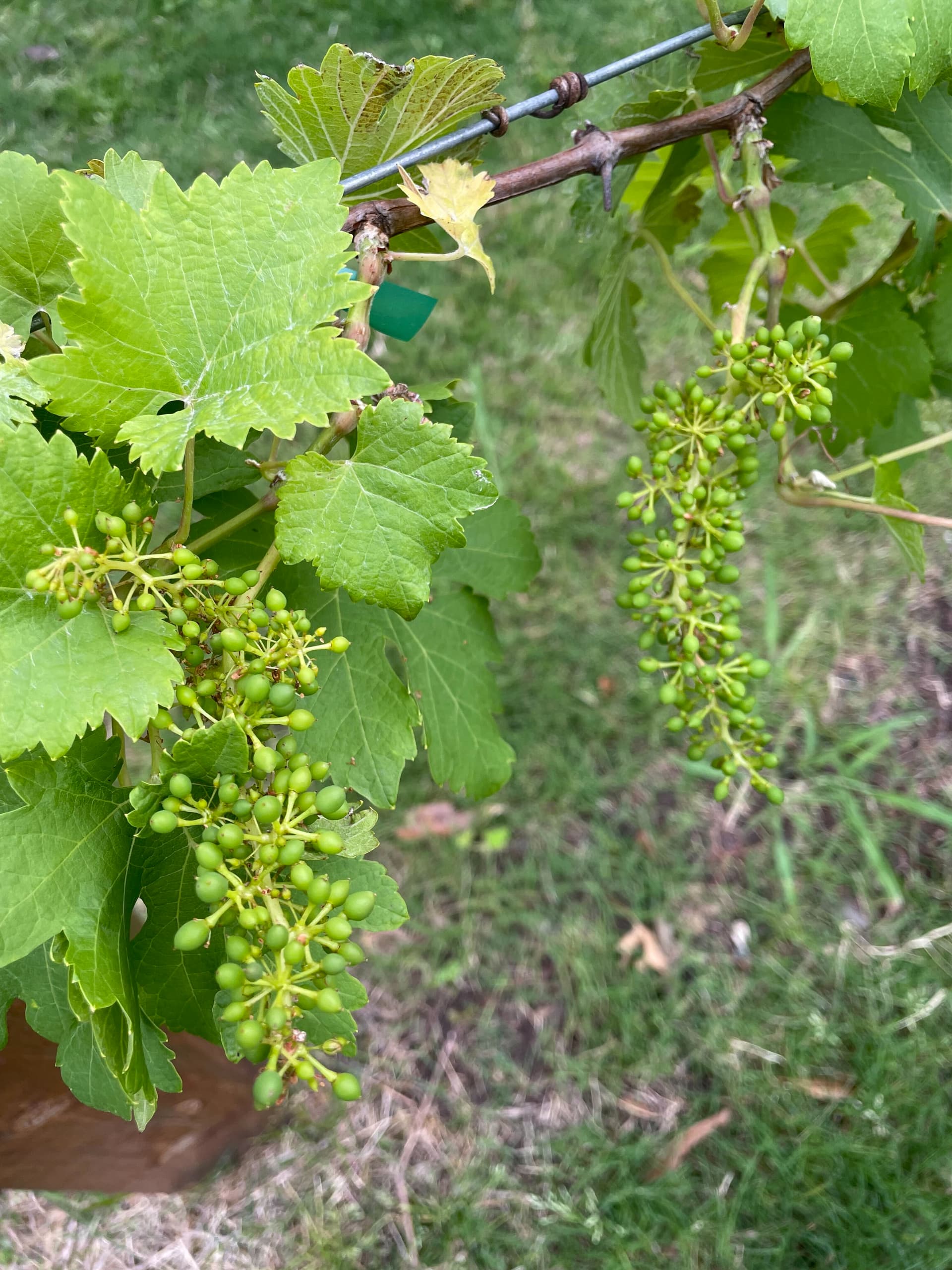
Starting to form grapes now, this is the part where I get nervous. I guess my next step should be to order some vineyard netting to protect these, any suggestions on what/where to get?
4 Likes
Netting can depend on the threat. In general, id look for nothing larger than 3/4 inch but that will still allow birds to push through and get some grapes. I also prefer full nets to side nets as i have squirrel problems and even some birds that will go under side nets. A heavier net is needed if squirrels are a threat as they will rip holes in lighter nets to get at the grapes. I found some cheap nets with snaller cross section and they are light. I like the smaller opening but ive ripped them during removal and know they wont last but a few years.
I have bought these (or an earlier version) and been happply with them. Lasted over 10 years when removed after harvest.
5 Likes
Thank You Brian, I used this same stuff to build a framed trellis in the garden next to the vineyard. Thanks for sending the website because I can’t buy these sizes at the big box home improvement store.
Are you using C clips with this netting? I was thinking that could be a good way to bunch up the bottom to keep the more persistent critters out.
1 Like
C clips work fine but are slow. Probably not an issue for 20 vines so if you got them already use them. What I do is buy cheap chopsticks from the restaurant supply store, which are much faster for clipping and unclipping.
2 Likes
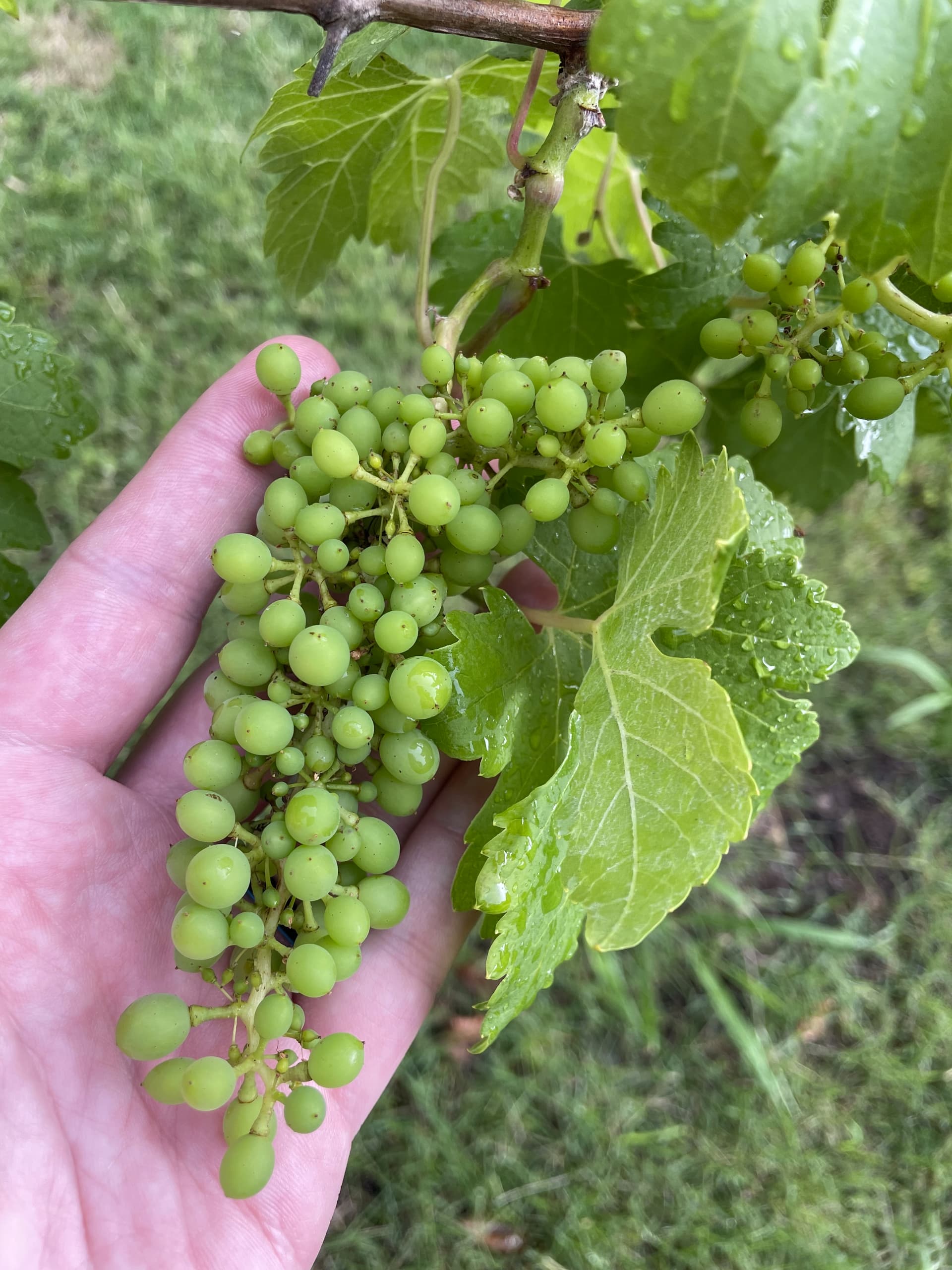
Here are two pictures of my Mourvedre taken yesterday. Shows just how far behind Texas we are in Maryland.
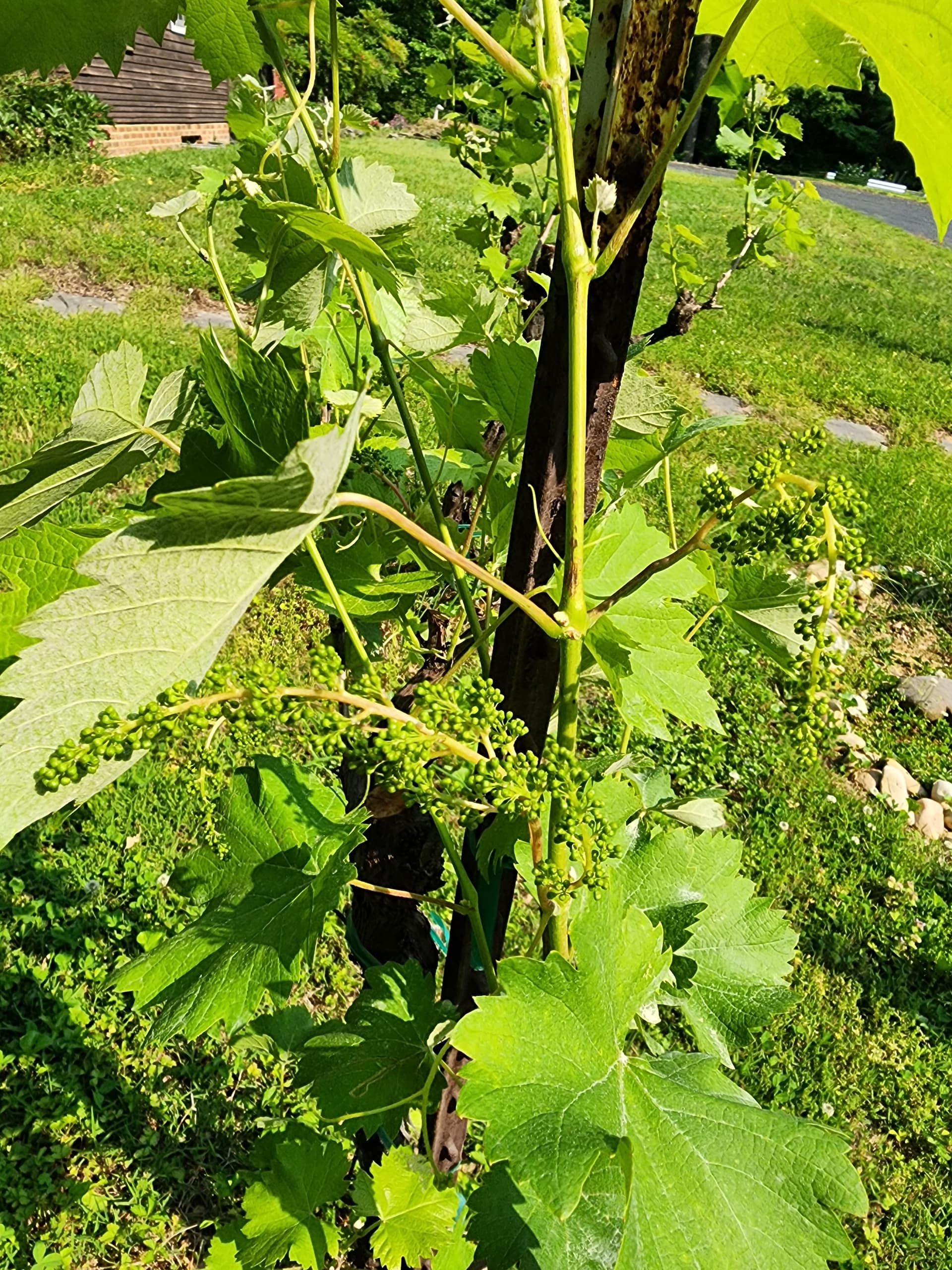
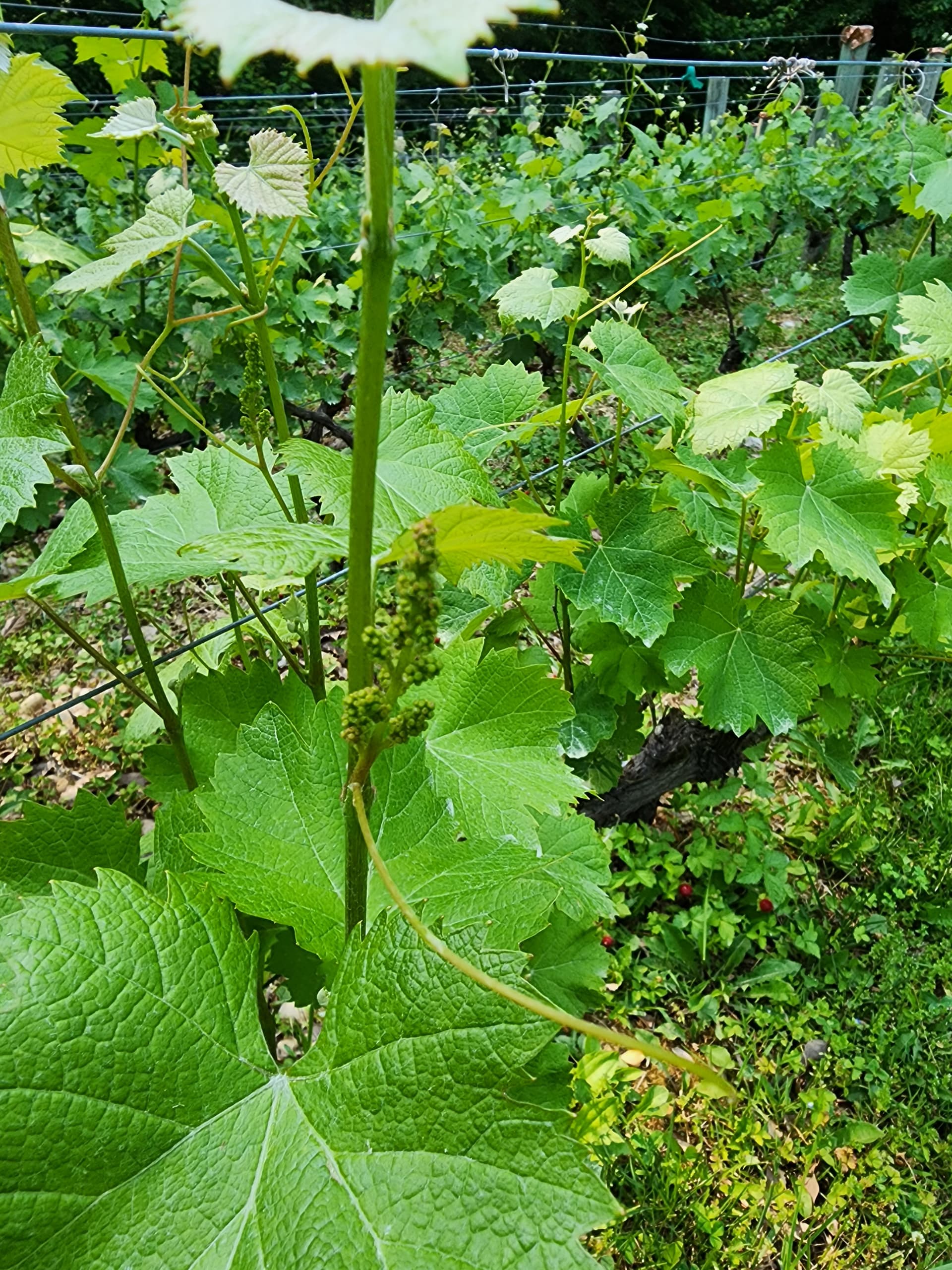
Not great pictures but hopefully you can see that we are prebloom but also the size difference in the two pictures. The first picture with the big cluster is on a head prunned vine spaced 5x6. The second pucture is VSP spaced 3x3 and even though it is in the first row so has more room for roots the cluster size is still much smaller.
Other than training methods and spacing, the vines are the same and within a short distance of each other. So soul, sun, and other variables should account for the difference.
4 Likes
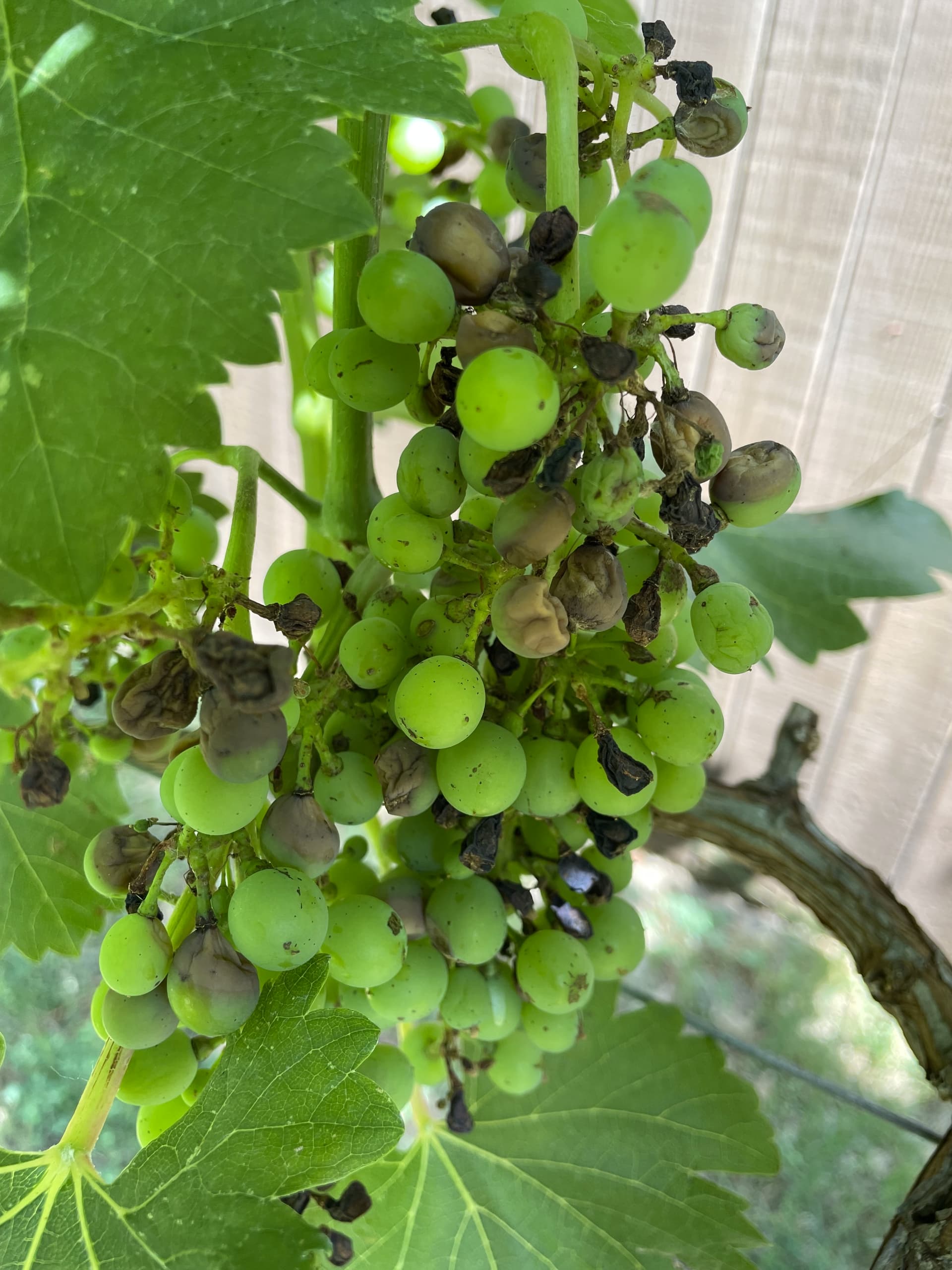
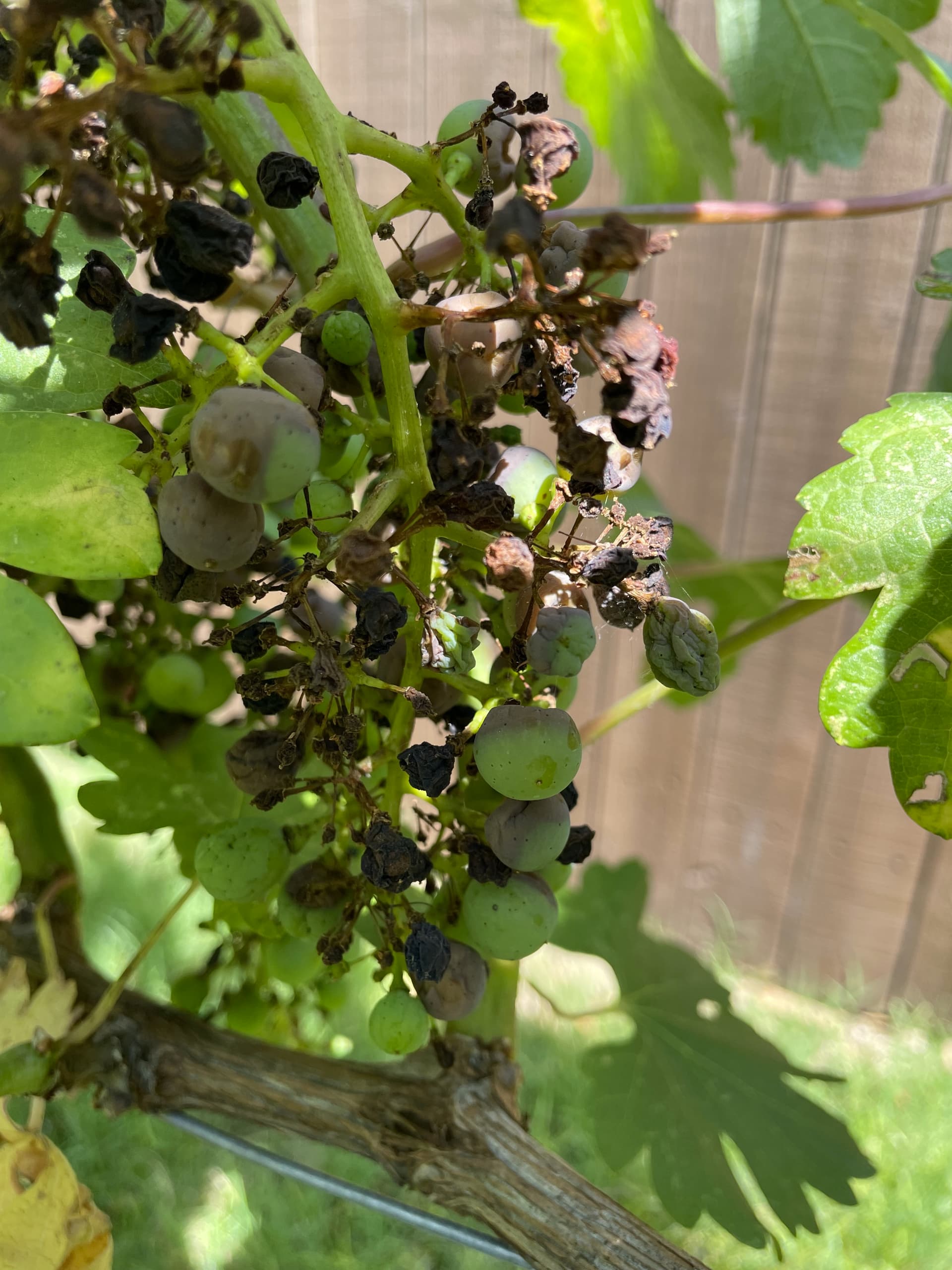
HELP!!!
Just came back from a long weekend away and something has happened with the grapes. For context it was very warm and humid and it also rained about .5 inch one day. This leads me to believe maybe this is some kind of mildew issue? I have no idea though, maybe it’s a pest of some sort?
Please tell me what I’m dealing with and how to mitigate it before it gets worse 

2 Likes
That’s black rot.
https://plantclinic.tamu.edu/calendar2020/bcg/
You are going to have to remove as much of the source as possible. If you can’t remove it, then bury or cover it. You are small enough in size that weed mat is a viable option but it wouldn’t be my first option. But it will work if other solutions fail. Then be sure your spray routine includes something for black rot control. Mancozeb works but has spray limits.
2 Likes
2 thoughts…
1: Thank You!
2: Oh Sh!t
2 Likes
Is that grass I see out of focus in your picture? If so, I have some experience, as my vines are just lined up along the fence line, close to grass that gets watered periodically. So you end up with a lot of moisture that both feeds the vines, and is a source for mold and rot of various kinds. Don’t remember where you’re located, but if it’s also humid in your climate, that exacerbates the problem.
1 Like
Exactly, it’s in my side yard area so it’s all grass there even though I have tilled the area directly underneath the vines and I add compost there and try to keep the grass out. Still sounds like not much I can do other than make it a best practice to pre-treat this time of year.
I have been doing a lot of canopy management too, but it sounds like I should also remove any leaves that are directly shading the grapes so that they will dry as quickly as possible.
I bought some fungicide and today I will be treating and then trying to remove all the “mummies” there are several hundred of those though, it’s going to take a lot of work.
1 Like
In my experience, fungicide only helps once the black rot pressure is minimized. This comes from vineyard sanitation and removing as much of the source as you can. Then fungicides help with control. I am using mainly mancozeb in early season then only captan post bloom. Not the greatest approach to be honest. But it has worked once I finally got the vineyard clear of the source material. Before that, the sprays didn’t matter even if I included some Rally (Nova).
I would be careful about leaf pulling until you understand how much sun your grapes can tolerate. Sun burn, while generally less destructive than black rot will still cause berry loss. Each variety seems to have different susceptibility and even the same variety may respond different in differing years due to other issues that may not be apparent.
1 Like
Brian, your insight has been invaluable here. I can’t Thank You enough for the guidance.
I got some fungicide concentrate and a pump sprayer this morning and I’m ready to go treat (after I remove all of the mummies). Do I spray the whole plant? Leaves, Grapes, Trunks, Ground?
I’m definitely going to have to make this standard practice moving forward, I’m reading you can start treating after bud break when the shoots are about 6 inches long.
1 Like
Leaves and bunches. No need for woody parts or ground.
Spray routine will differ based on your conditions. My site is bad for downy and I have high humidity and rain throughput the year. My spray concerns and schedule is likely to be different than yours. I would look to see if there is a local grape growers organization in your area that may have guidance more specific to your area. Or maybe a co-op extension or university program.
Do note that if you use sulfur, Mourvèdre is sensitive and you can burn it under high heat.
1 Like
Grapes can sunburn, so you want some shade. The best way for grapes to dry off is a breeze, so you want a canopy that air can easily flow through. Many grape varieties perform best with a little “dappled” sunlight. You also want to be sure you have enough leaves to get adequate photosynthesis. It’s a balance. A vine by vine puzzle.
Very light sunburn can impart a honeyed taste, but greater degrees give a baked taste to burnt raisin. Maybe you can look at that as the difference between a good tan and sunburn.
3 Likes
I wanted to provide an update here as I’m now at 15.5 Brix and coming down the home stretch.
This vintage has absolutely been a learning experience, I dealt with some extreme weather which really cut into the crop. The season started out really well as we we had even and moderate warming with now hot or cold spikes all the way through flowering and berry formation (as seen in pics above the size of some of the potential clusters was huge). That all changed though when we had a severe storm in May that brought golfball sized hail for a sustained 30 minutes, this event knocked about 20% of healthy clusters off the vines, but at the time I did not realize that things were about to get much worse. The period after that hailstorm saw a High Pressure system move over the are which stayed in place for 2 weeks, this created an environment that local meterologists referred to as a “heat dome” which lead to heat indices over 115 degrees for several days in a row (breaking 100 year old records for the area) with wickedly high dewpoints and humidity that wouldn’t quit day or night. I came to learn that these ingredients Hail Damage + Rain + Sustained High Humidty are the perfect ingredients for Black Rot to form and did it ever! The vineyard went from healthy and beautiful to being filled with grape “mummies” and speckled leaves seemingly overnight. This caused a significant amount of crop loss (estimating about 40% of the 80% that was still remaining) and taught me the necessity of a fungicide regimen which will now be implemented in perpetuity.
Fast forward to today - what remains on the vines looks quite healthy and the Brix is starting to show that a pick date is fast approaching. I think I would like to pick in the 20-22 range but if anyone has advice on other factors to consider for picking I’m open - one thought that comes to mind is phenolic ripeness, should I be looking at seed color? What do I do if most grapes on a cluster are ripe but some are lagging behind? Do I include those in the wine anyway?
I will have plenty more questions when it comes to the wine making process, but for now here are a few more pictures from today.
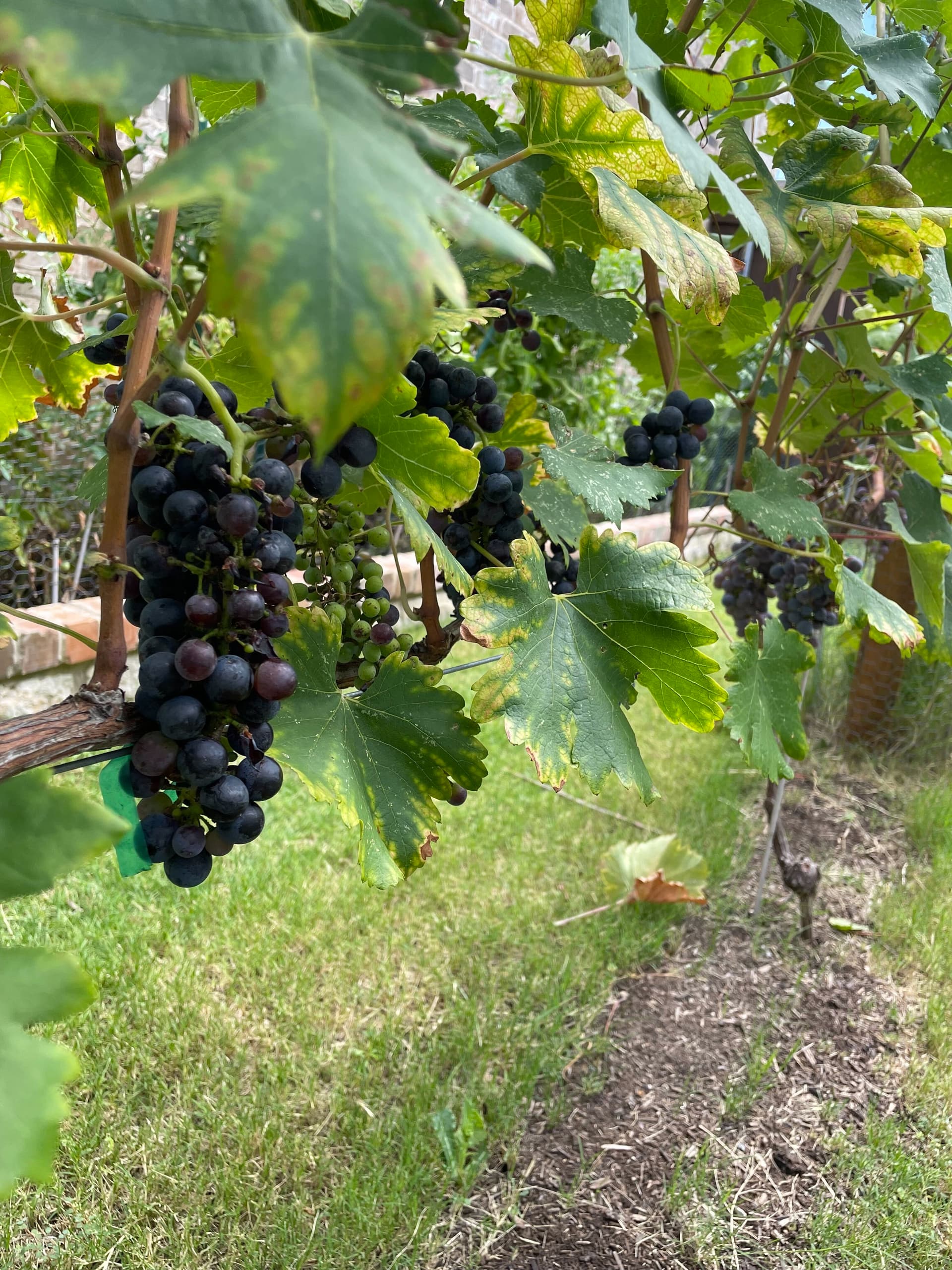
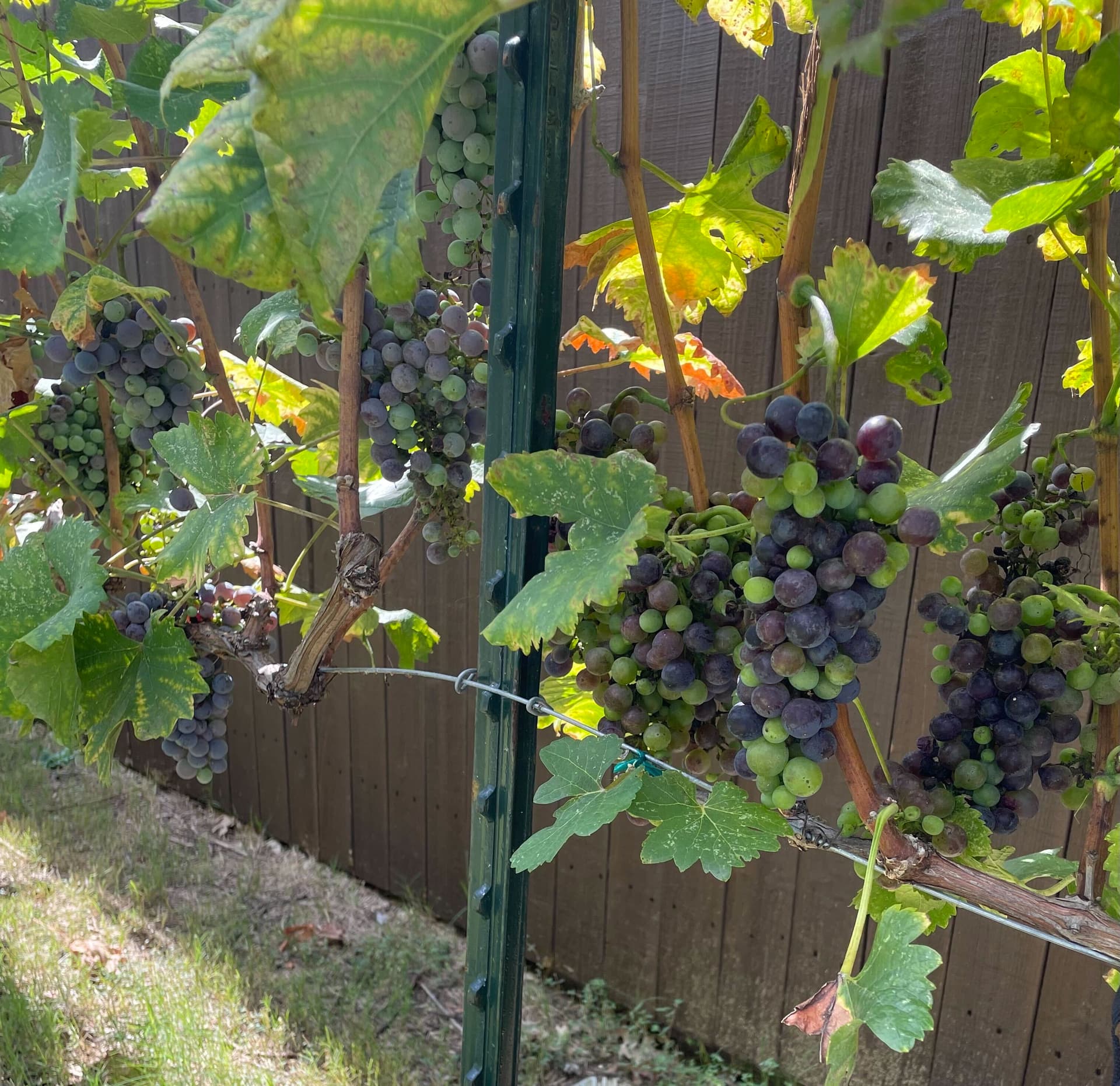
P.S. I put the nets up after these pictures, that was fun in 102 degree heat. Thanks to @Brian_Gilp for the recommendation and link to order those. Again, this experience has reinforced how much respect I have for the people who do this for a living and do it well.
4 Likes
What is your vine spacing? Sorry if I missed it in a prior post. I did a quick scan and didn’t see it
1 Like
What type of wine are you wanting to make? 20-22 brix is where I picked for rose. If I wanted a lighter bodied red, I was trying for 22.5-23.5 brix. I sort out any berries that are under ripe, rotten, or otherwise compromised. I won’t lie, it is a PITA and the worst part of harvest but I can’t imagine spending all that time and effort only to include those in the wine. Taste a few of those lagging grapes and you will understand.
1 Like
Brix is a crude semi-relevant metric. Seed color is also in that trivia realm. As in, if you know your site well, those can be helpful in a normal year, can be clues. But, if you’re using them to make your decisions, they can steer you very wrong. Phenolic ripeness is key, acidity is important. It’s not ideal, but you can adjust acidity easily. You can add sugar if you want more body and ethanol.
Think of having several ripening metric progressing independently as a factor of time. Site, training, vintage factors, etc. can effect the how they progress relative to each other. Wineries like Ridge Vineyards who pick by phenolic ripeness see an ABV range on a wine over vintages of around 2.5-3.0%.
In general, aromatics peak in grapes before they’re fully ripe, then begin dissipating, as they are volatile compounds (with the function of attracting birds to spread the seeds). So, picking at that maximal point can give you a wonderfully aromatic and undrinkable wine (shrill and astringent). Some varieties have unpleasant characteristics when underripe. Some varieties commonly have a big range of ripeness in clusters (Zin, Grenache, Nebbiolo to a lesser degree) and can be fine leaving the less ripe berries in the mix. A range of ripeness can add to complexity. Like, if you decide it’s time to pick, you can taste those less ripe berries. Maybe they’re around 5% of the grapes. You might notice some being too harsh or green or whatever in a way they would not be a good component in the wine. You might notice others that are visibly distinctive have some nice character to them, or they may be simply neutral in taste, but more acidic. “Free acid.” So, it might be fine or better to keep some or all of the less ripe berries. Folks who make overripe Zin freak out about them instead of thinking of them as a blending component,
3 Likes
I had to read your post twice as I missed this line the first time. Totally agree and I should have probably made that clear in my post as well. My noting of brix ranges is based on 15 harvests in my vineyard and may not apply elsewhere.
2 Likes