Anyone have the 2019 Vallana Gattinara or Colline Novaresi Spanna? Found some of both at good prices when factoring in some Black Friday/Cyber Monday deals (not that these aren’t cheap to begin with).
To be clear, this is a phenomenon that I observed prior to the most recent tariffs so that is definitely not the cause. The 2020 release of the Burlotto LN would be an example where I went to reload and found the offered pricing very high compared to what I originally paid. I already agreed it was probably as much importers as anything citing to the increased price of prearrivals. That said, when we say “things like Burlotto LN, which are few and far between,” this is exactly the type of wine I’m talking about. Burlotto, Calvallotto, and similarly sought after wines. It was by no means a wider comment on pricing across the board but more an agreement to the post above, that the entry level wines of the more sought after producers have accelerated pricing precipitously to the point where the value proposition can be difficult.
1 Like
I have not had the 2019 vintage, but had the 2014 Gattinara last year and thought it was exceptional, especially for the price. Found it to be a similar style/expression to Nervi.
2019 Spanna is excellent.
1 Like
You really can’t go wrong. I have never had a bad vintage of either, albeit buying mostly in vintages already considered good.
2 Likes
Two aged (not old) Nebbiolo (based) wines. No formal notes. Both were double decanted in the morning, served in the evening and the corked had held up quite well. Said my prayers but it was clear early on that that wasn’t necessary, or perhaps the prayers were heard.

1999 F. Nada Rombone
This was more directly on from the go. Delicious, very fresh fruit (red and dark) profile, floral, licorice, long finish and a quite velvety had some bite to the tannins. Good acidic drive.
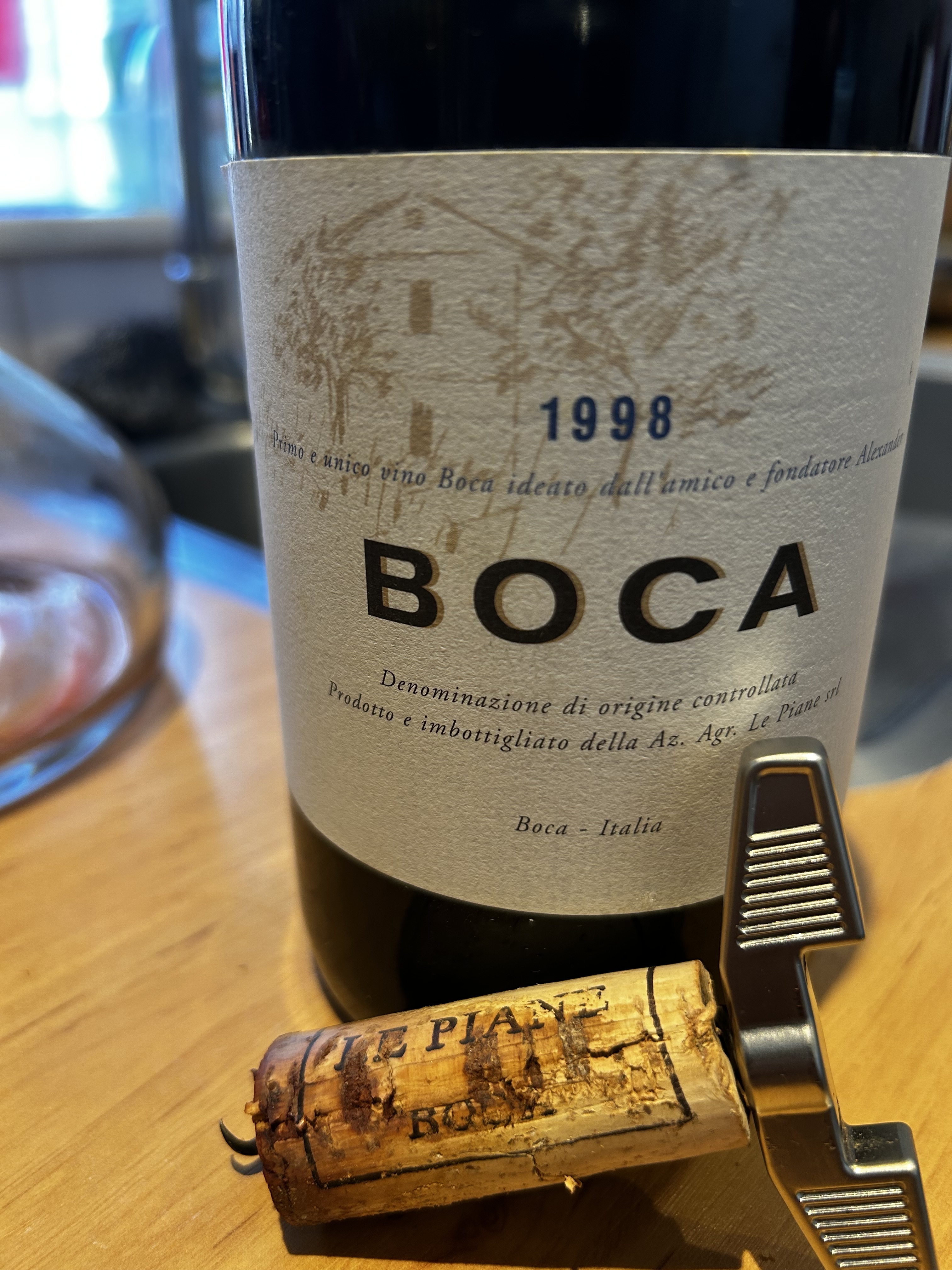
1998 Le Piane Boca
The 10th vintage under Christoph Kunzli.
Lovely and more complex nose than the Rombone, though required more time in the glass, and gained weight and complexity over time Menthol, licorice, cherries and ripe red berries. Really juicy and fresh texturally dancing on the palate (sneaky in the background tannins), lingering seductive finish.
7 Likes
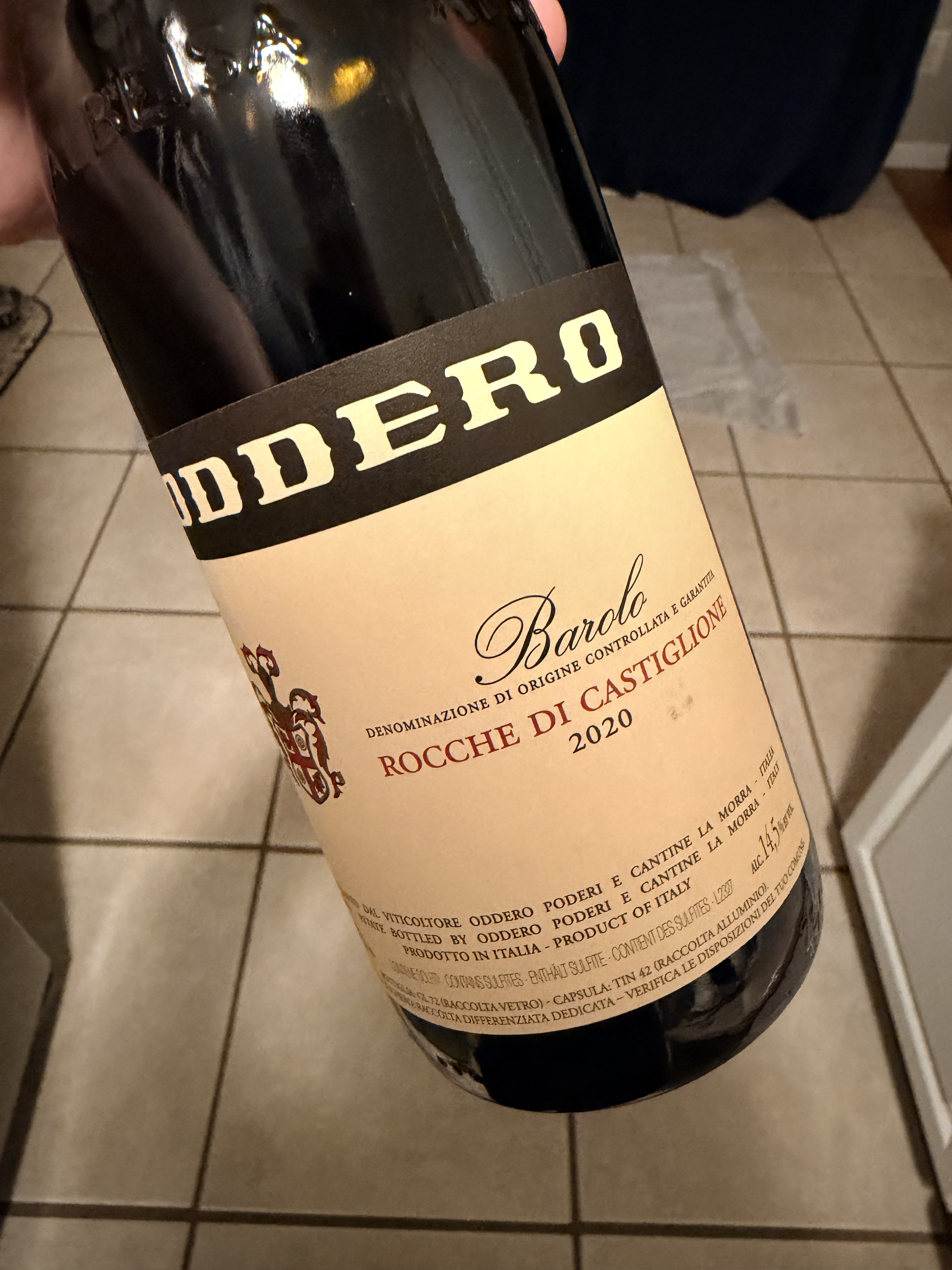
Somewhat restrained nose, this has cool black and blue fruit aromas with blood orange on its outer edges intermingling with violets and tar. Graceful on the initial sip, but with focus and power that intensifies on the back end revealing a lovely melange of plum, wild blueberry, menthol, dried herbs, petrichor, and leather flavors. Beneath the complex flavor profile there is a sturdy iron core that persists over its long finish. Very approachable now in keeping with the vintage but has a great backbone of refined, firm tannins and ripe acidity. Dark yet sophisticated, this is a pleasure to drink and should age nicely.
6 Likes
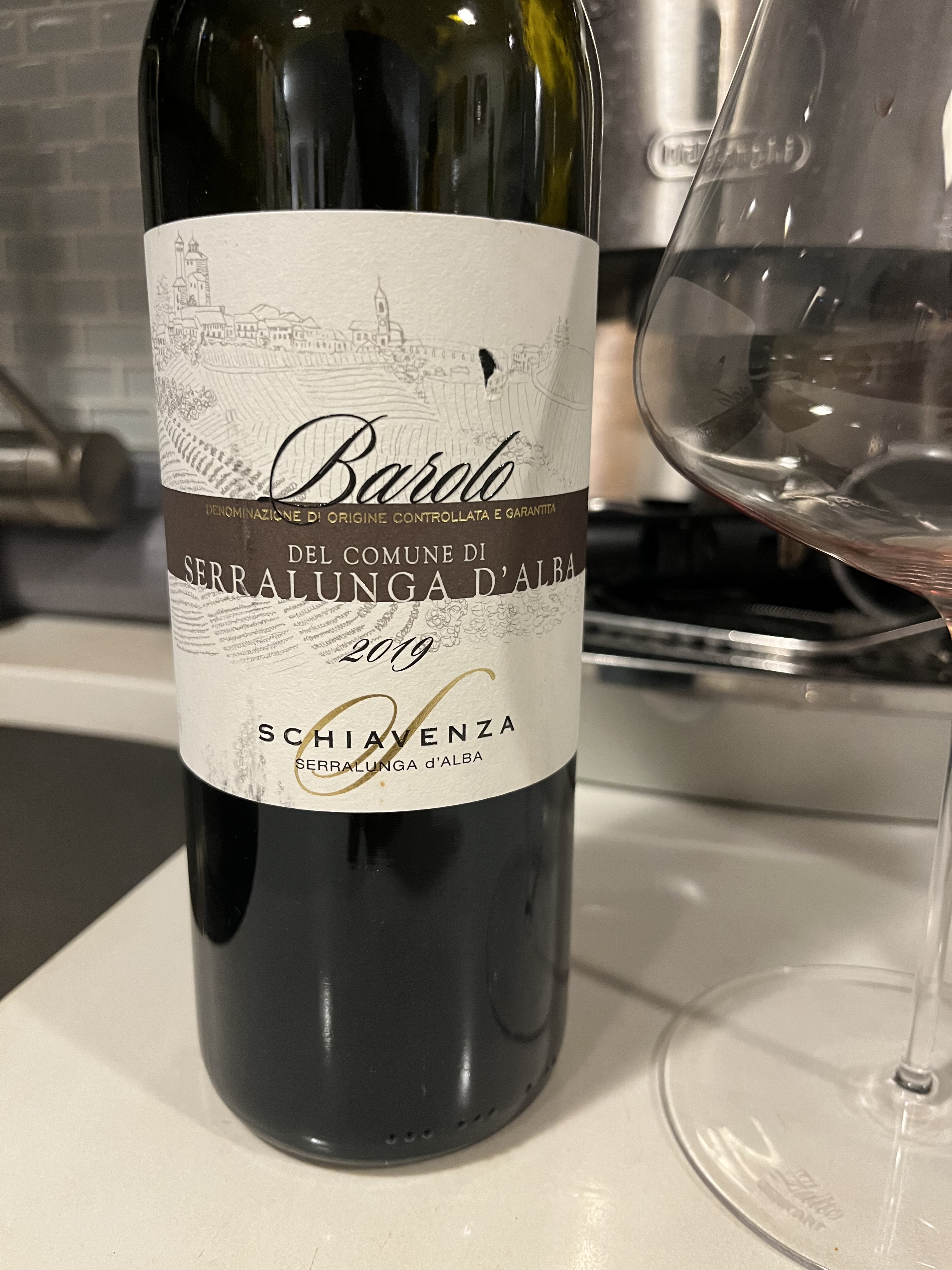
Bought a few of these for a song. Opened one up with pizza and was incredibly impressed. My Barolo experience is mixed. I’ve enjoyed bottles of sandrone with 30 years of age and bottles super young as well. I know this isn’t a top producer but I liked this quite a bit. Rose petals…tannins surely but enjoyable.
Is this a modern producer? Is this a facet of the 2019 vintage?
4 Likes
Yours sounds more delicate than mine!
1 Like
I have somewhat limited experience with Schiavenza but have a '64 on deck so they have been around for a while and I don’t think they ever went through a true modernist phase but I could be mistaken on that as I don’t remember having any from the 90s or early 00s. Open to correction on this but I believe they, like some others who have been considered pretty trad all along have started to work in whatever the current iteration of ‘modern’ is but going more gentle on extraction while staying away from small barrels of new wood.
1 Like
I have a good feeling it was as well!
On the other hand I have a hard time explaining it, because I recall reading your note and I popped a bottle about the same time as you. Not sure if it was before or after but didn’t take any notes and forgot to post about it here.
I the also felt the heat, a bit more alcohol coming through which I didn’t enjoy. This bottle now didn’t show that
Wouldn’t rule out me being the root cause. I drank both bottles over a couple of days so don’t think it was a cavity thing.
1 Like
No, and definitely no.
I believe Schiavenza is fairly traditional, though with macerations of 20-25 days they aren’t taking things to extremes. All botti, per importer website. I believe the reputation has been okay, but rather rustic and1 underperforming their sites. Galloni said in 2019 that the estate was improving. I have the '19 Perno and Prapo, bought as mysteries from Garagiste for under $30 each, so also for a song. My take on the Prapo was “his was far more generous and enjoyable than I expected given the highly structured 2019 vintage, but it did close up over the course of the evening.” I found it a bit rustic, which fits with the producer’s reputation. A number of notes on the '19s, presumably with many purchased from the Garagiste sales, note oxidation or greater-than-expected maturity. Perhaps you and I caught these with the beneficial aspects of advancement rather than the oxidized side of things.
I definitely don’t think early openness is a feature of 2019 as a vintage. I’ve enjoyed many 2019s on the young side, but it’s definitely a more traditional and less fleshy vintage than many other recent vintages. With 2019s I expect a good deal of tannin and acidity and also that they would close / have closed down rather early without that an excess of buffering fruit. With that in mind, I’d say your experience is not particularly indicative of the vintage
As Michael says, Schiavenza is a traditional estate. You can go to www.schiavenza.com and see photos of the cellar, all big barrels.
Bear in mind they are in Serralunga, which is the most backward of the Barolo villages, and '19 is a very good vintage, so you would expect the wine to take a while to come around.
I import a Prapò Barolo from another producer, Germano Ettore, I think the vineyard is outstanding. Ian d’Agata also singles out the cru for special mention (in his crazy Italian Wine Terroirs book, which is like drinking from a fire-hose).
3 Likes
Prapò has tickled my interest lately as a vineyard so close to Baudana and Cerretta. I’ve never had any Prapò, and in fact have had few Serralunga wines.
When you mention it as a great vineyard, do you say that to convey “a great vineyard that qualitatively stands above many others in Serralunga while retaining the same characteristics,” or, “a great vineyard that delivers high quality with slightly differentiated characteristics from the Serralunga norm”?
Thanks!
Also, I met someone who I think worked (or does work) for you at one point on a visit at Oddero in September. Of course by now I’ve forgotten his name… anyway!
Owen -
The Barolo MGA encyclopedia says:
Of the various MGAs [crus] which gravitate around the Cerretta hilltop, Prapo is certainly the best known, both because the grapes have been fermented on their own for many years and because many of the parcels are among the best exposed of the entire Eastern Slope of Serralunga d’Alba. As far as the style of the wines is concerned, one can say that they resemble, on the whole, the Barolo of Cerretta, though at times with a tannic character which is both more perceptible and more severe.
The Slow Food Wine Atlas of the Langhe also sings Prapo’s praises, calling it “tannin-rdich, with aromas that acquire classic notes of tar as they age in the cellar.” It says that Cappellano’s reputation was built originally on wines from Prapo, although their fruit now comes from Gabutti.
Having had some experience with both Schiavenza and Germano’s Prapos, I think that’s an apt description, though it could apply to a lot of Serralunga wine (e.g., the Baudana wines).
1 Like
Ceretto has long made a Prapo. I drank a fair amount of it from the 1980s many years ago as it was fairly available and relatively inexpensive. I don’t recall it ever coming across as modern.
3 Likes
Owen,
That’s a good question. I like Prapò because it is fairly typical of Serralunga Barolo in structure (on the beefier side) while still showing elegance and perfume. The neighboring Cerretta is bigger, chewier, less subtle, maybe more like the reputation of the village. I have had very few examples of Prapò other than Germano Ettore’s, which I have imported for more than 20 years. The earlier Cerretto examples were somewhat marked by their cellar treatment, so hard to judge.
When I started working with Sergio Germano he only had Cerretta and Prapò, now he is making Lazzarito and Vignarionda too, both of which are I think historically more highly regarded, but I still think Prapò holds its own with those ‘grand crus.’
Ian d’Agata says ‘Prapò is the cru on the eastern flank of Serralunga that I believe to be a grand cru for Nebbiolo.’ Now I see that d’Agata has co-authored a whole book on Barolo, curses.
3 Likes
According to the maps in the MGA book, Ceretto is the large landowner in Prapo, but I haven’t seen that bottling in a very long time. In fact, I rarely see their wines in the NY area.
2 Likes
Paolo Scavino has a Prapò and it’s one of my favorites in their lineup - always lots of dark/black fruit, iron, and mint. Super classic Serralunga.
1 Like
Ahh, of course! I hadn’t reached for my copy of Barolo MGA about this yet, but honestly I prefer your contextualized version of the information. The Slow Food Wine Atlas info is particularly interesting.
Makes sense to me, and Oliver below seems to be saying very similar things.
Thanks John!