The corks are generally sorted in bales and then bagged into quantities of a 1000/bag.
There isn’t really a correllation, in my experience, of one case having a higher incidence of TCA vs another. It tends to be pretty random.
The corks are generally sorted in bales and then bagged into quantities of a 1000/bag.
There isn’t really a correllation, in my experience, of one case having a higher incidence of TCA vs another. It tends to be pretty random.
Yes it was!
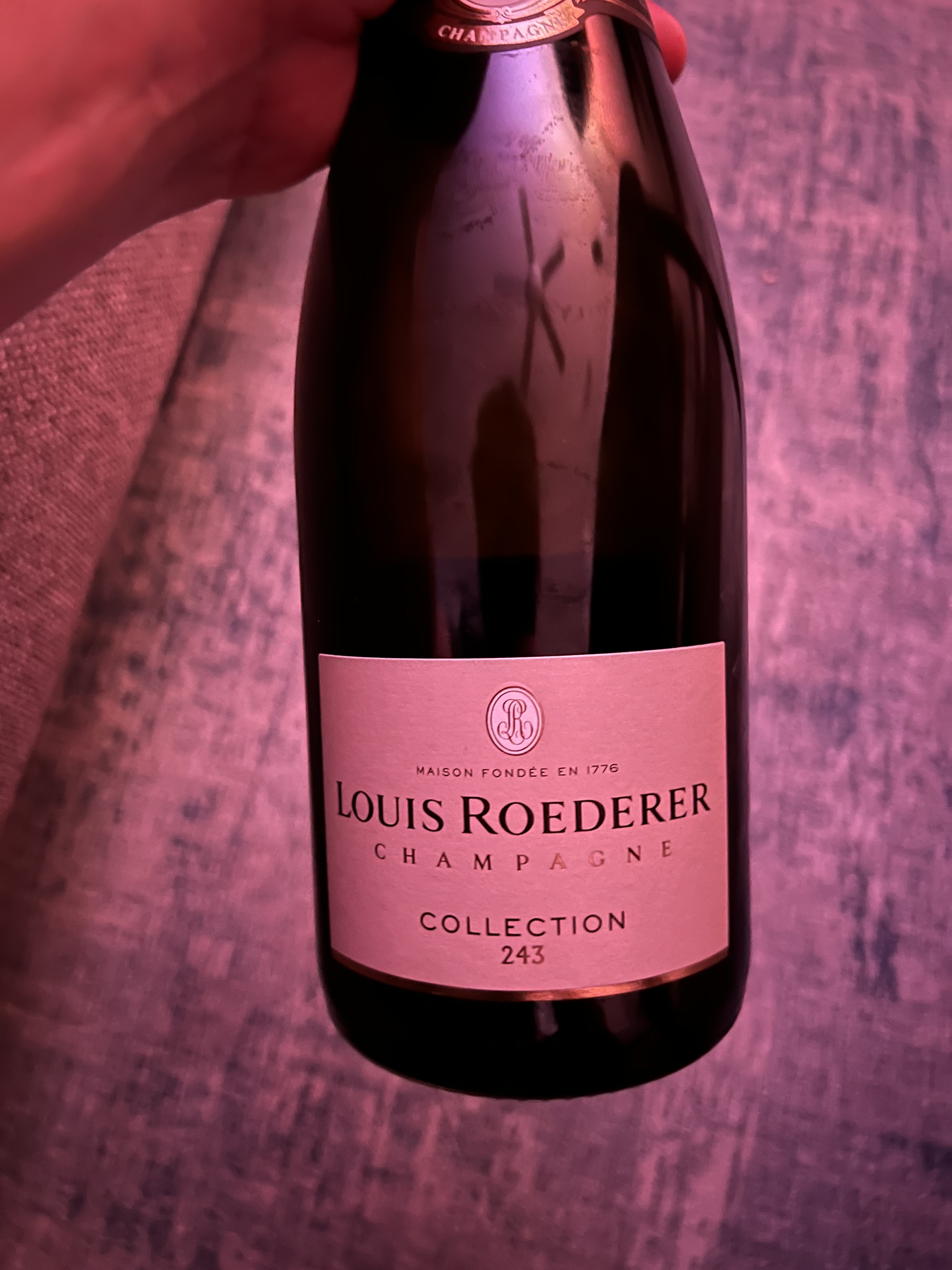
Roederer Collection 243
This was interesting, really good but an interesting texture, which I enjoyed. I called it lemon oil, kind of thin and watery on the palate. Super quaffable and fun to drink, but that was my overarching note, like a lemon citrus oil where it concentrates in one spot and the rest thins out over the rest of the palate.
I hadn’t given it any thought until Ben mentioned it, but after opening three bottles a week for two years, I haven’t had a single corked bottle. The only corked bottle of sparking wine I can recall ever tasting is a bottle of Prosecco 15 years ago. I am suddenly worried about a reversion to the mean.
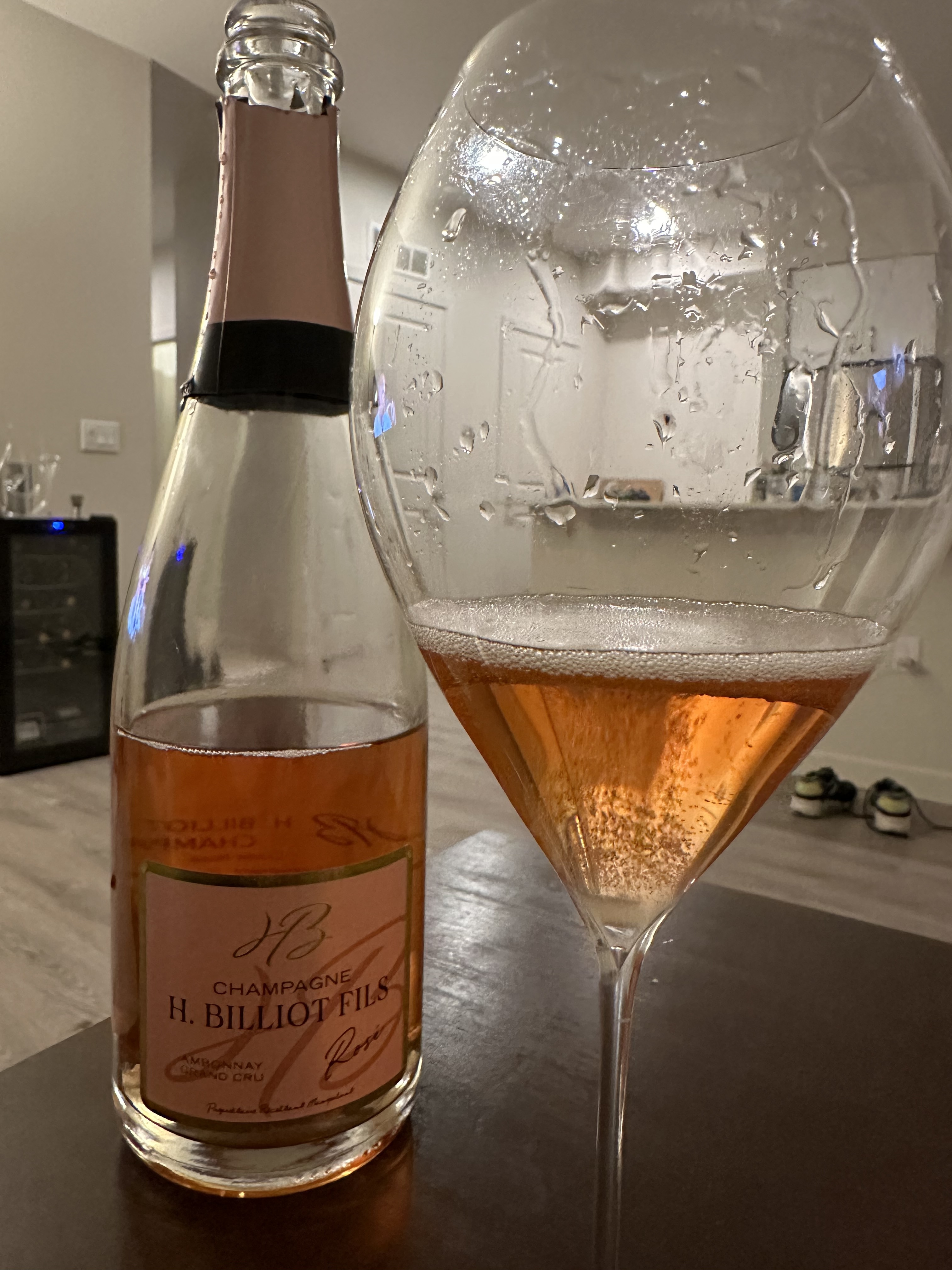
I enjoyed this bottle, more so than the previous one, which I also enjoyed. It is a rather dense Champagne with good purity of fruit, high acidity, mineral nuance, and a delightful ease of drinking. And yet, I find myself a little frustrated with it. Not because of any inherent deficit; it simply isn’t as good as the blanc. The blanc shares all the positive attributes and also possess significantly greater complexity and length. At least the lone bottle I drank did. That bottle also had nine years of post disgorgment age, so perhaps my expectations are distorted by the beauty of its emerging maturity, and it’s certainly not an apple to apples comparison, but I find myself wistful for that bottle as I sip this. With that having been said, I am happy to be in possession of another bottle.
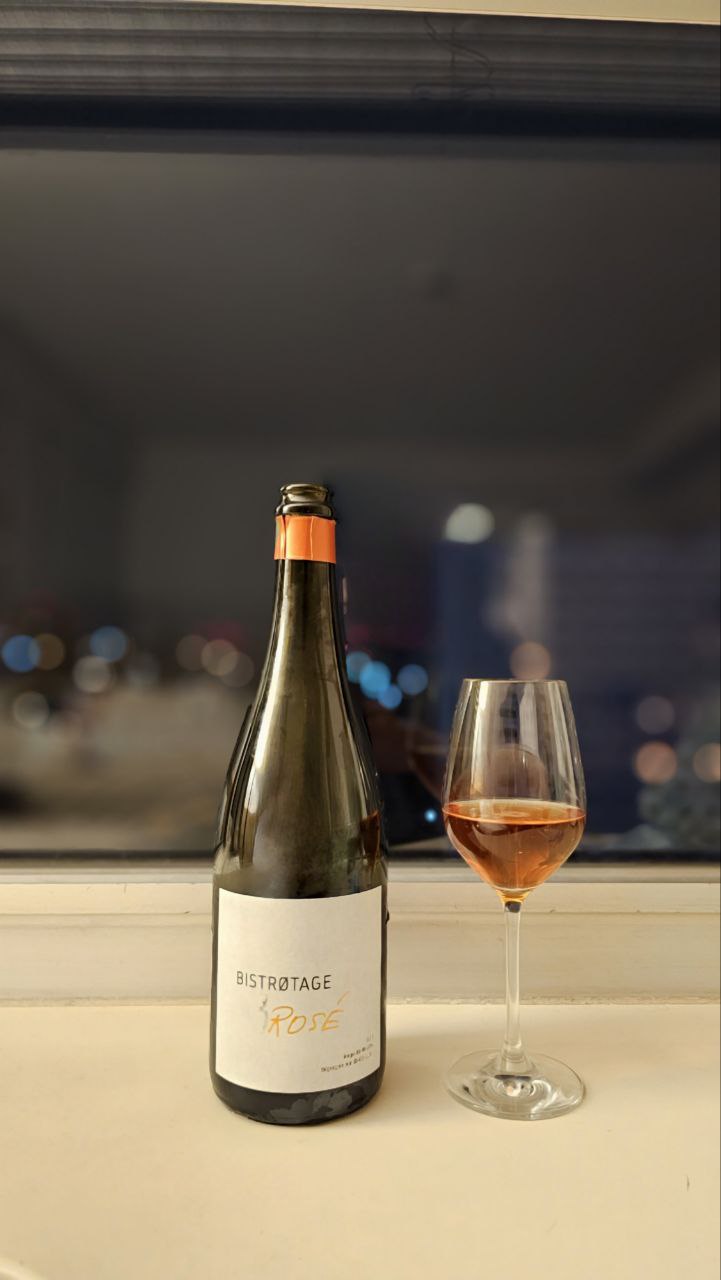
This is one of the best Rose bubbly I’ve ever tasted and is distinctly Selossian in style. Oxidative, a bit funky initially then the red fruits show up beautifully over time. Not at all natty like some of Dufour’s other cuvees. Honey and confectionary notes appear after some time in the glass. Drinks well as pnp but best drank over a few hours. Missing just a bit of that midpalate tension and spices to be truly great, but I can’t complain at the price I paid. The shopowner described this to be close to Prevost’s fac-simile in style, but it was a dead ringer for a young Selosse Rose IMO.
Extracted from a thread just posted regarding 3 champagnes, 4 white Burgundy and 9 red Burgundy:
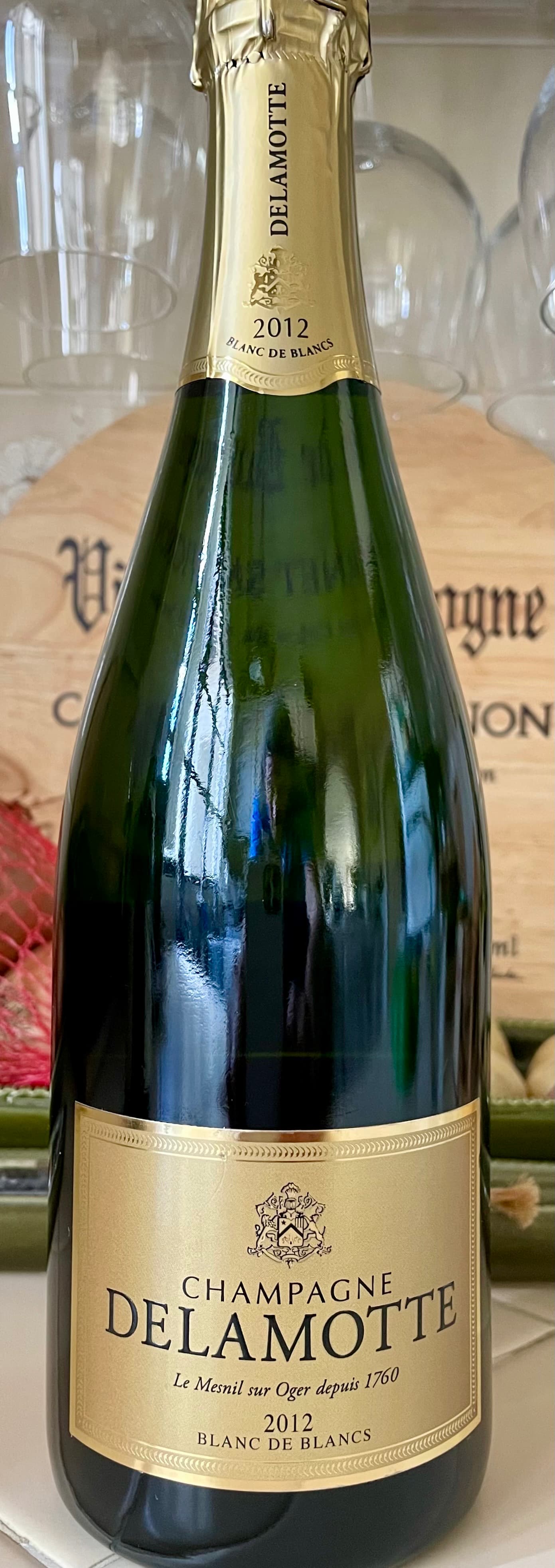
2012 DELAMOTTE les MESNIL sur OGER BLANC de BLANC- when this was first released, it was originally announced {and 2 years latter renounced} no Salon would be made for this vintage and I opted for a ton of it assuming most, if not all of the best fruit would be going into this release; whether that was true or not, every bottle has been stellar and even improving as was the case with this bottle bought abut 5 years ago; it had the usual yellow gold color and the hallmark rich and creamy texture to compliment the ginger and honey laced citrus and yellow apple, yellow peach fruit; our bottle was also in perfect balance and the whole package was very impressive.
While this was being passed around, some of us questioned how Salon and Delamotte came together and here’s a couple of links that provides some history of these sister houses and a little more:
“Salon is the most elusive of Champagne’s grand marques. Only made in what the house deems the very best years, Salon has been bottled just 38 times since 1905, its first vintage. Yet. Even when it is released, production is tiny. Consider that there are just 60,000 bottles (5,000 cases) of the 2002 for the entire world, a virtually insignificant amount by Champagne standards, while production numbers for other tête de cuvées range from a few times greater, as in the case with Taittinger’s Comtes to Champagne (also considered a small production Champagne), to about 100 times greater for Dom Perignon.”
“Salon is located in Le Mesnil-sur-Oger, in the heart of the Côtes des Blancs. The core of Salon emerges from a small vineyard that sits right behind the house. Salon is done entirely in steel, with no malolactic fermentation, one of the reasons the wines need extended time in bottle prior to release, and in most cases, several years on the cork before they start drinking well. In vintages in which Salon is not made, the fruit goes into Delamotte, Salon’s sister estate and neighbor. The Delamotte style is less severe, as malolactic fermentation is employed to give the wines softer contours and more immediate breadth.”
“Francois Delamotte founded his house in 1760 and the trade name Delamotte Père & Fils was adopted in 1786. For the next 100+ years, the house went though multiple changes. Eventually, both neighboring houses were co-owned by Laurent-Perrier in 1988 when Bernard de Nonancourt was to merge the family interests by taking over Champagne Delamotte, integrating it into the Laurent-Perrier group. Just a few months later, he was able to realize a long-held dream – an emotional milestone that merits a chapter of its own! – in acquiring at long last the tiny Champagne Salon, Delamotte’s neighbour in Le Mesnil-sur-Oger.
This is how the destinies of Champagne Delamotte and Champagne Salon came to be entwined. Today, these two exceptional producers operate as sister houses, sharing offices and facilities in the very same historic town house in Le Mesnil-sur-Oger, bought by the de Nonancourt family so many years before…”
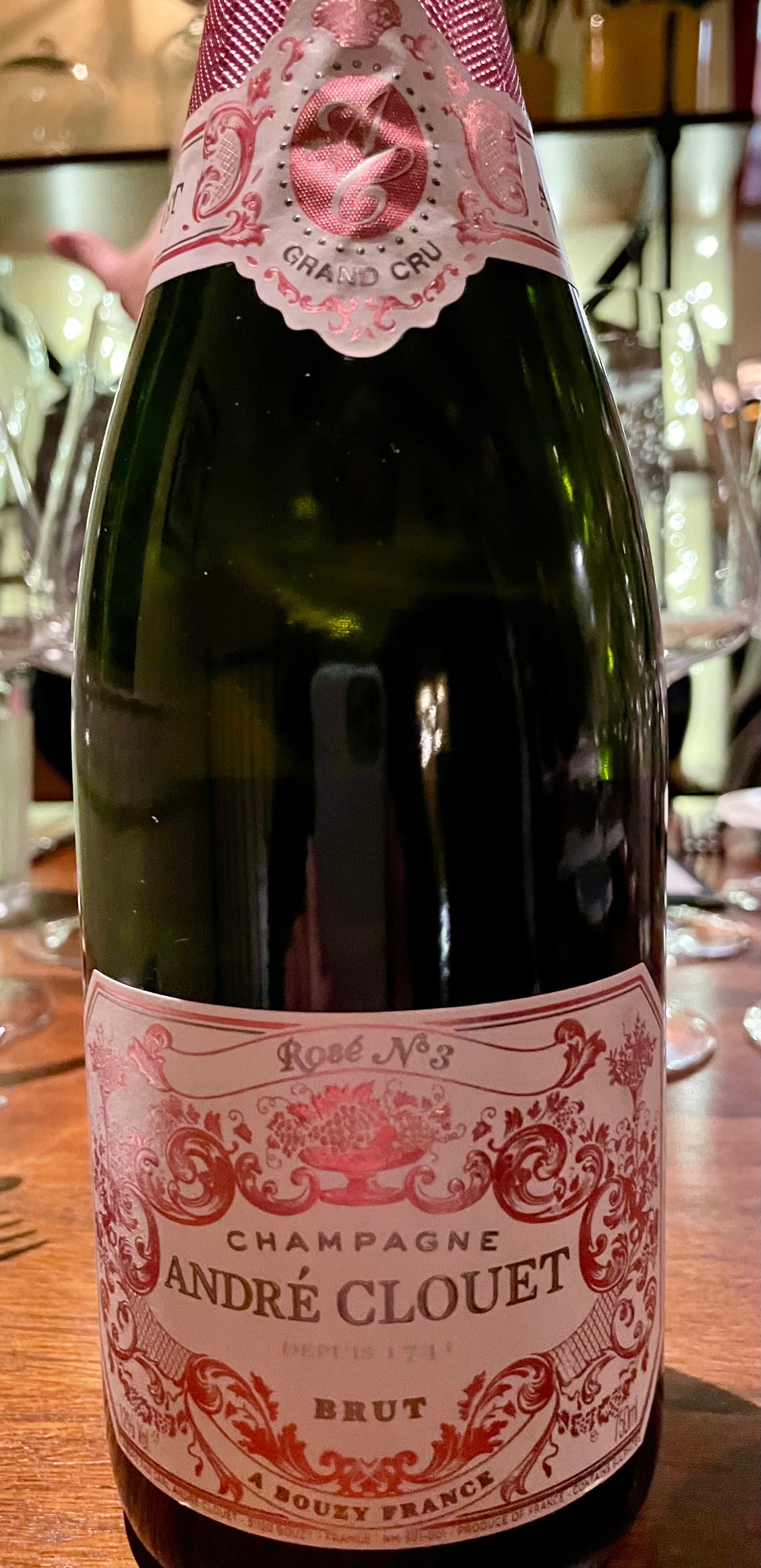
NV CHAMPAGNE ANDRE CLOUET BRUT ROSE NO. 3 GRAND CRU- this is 100% Pinot Noir sourced from Bouzy with 8% red wine added which was easily detected with the bright red color; as intense as the color was, the aromatics and tastes were the antithesis with lovely notes of strawberry, red raspberry and eventually red cherry with a slight smoky accent; it was full bodied and yet light and easy on the palate which added to its elegance and charm.
NV CHAMPAGNE BOLLINGER SPECIAL CUVEE- 60% Pinot Noir, 25% Chardonnay, 15% Pinot Meunier, with the base wine coming from the 2018 vintage and 15% from reserve; as always, this was so easily approachable and yet made a statement while delivering nice citrus fruit especially lemon and orange along with some apple and white peach, all with a coat of honey; it had bright acidity and a lovely soft mousse as well; if the 3 champagnes had arrived at the same time, the reverse order would have been suggested.
Cheers,
Blake
Anyone know if Diebolt Prestige available in the US as a Brut? CT suggests the bottling exists, but I’ve only seen Extra Brut.
Some of the Bruts that regularly clock in under 6g/l dosage end up getting labeled extra brut for what I assume are marketing purposes. Not sure if that’s the case for Diebolt, but I just ran into this on a couple other bottles recently.
https://www.wine-searcher.com/find/diebolt+vallois+blancdeblanc+brut+champagne+france/1/usa
Below is from the Wine-Searcher site.
“Depending on the release, this wine may be labelled as Extra Brut.”
Two more Chavost…
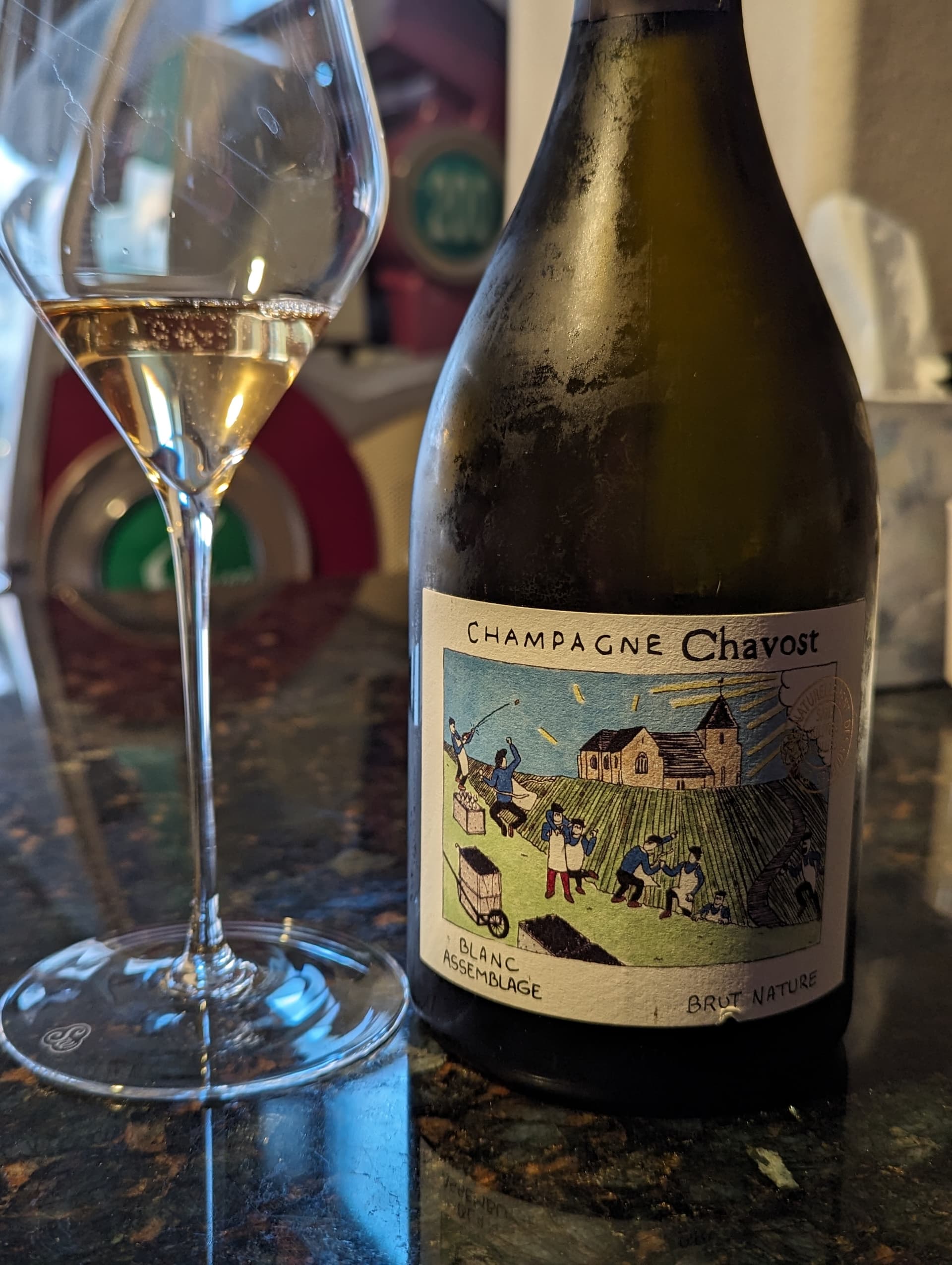
Chavost Blanc D’assemblage 50% Chard, 50% PM
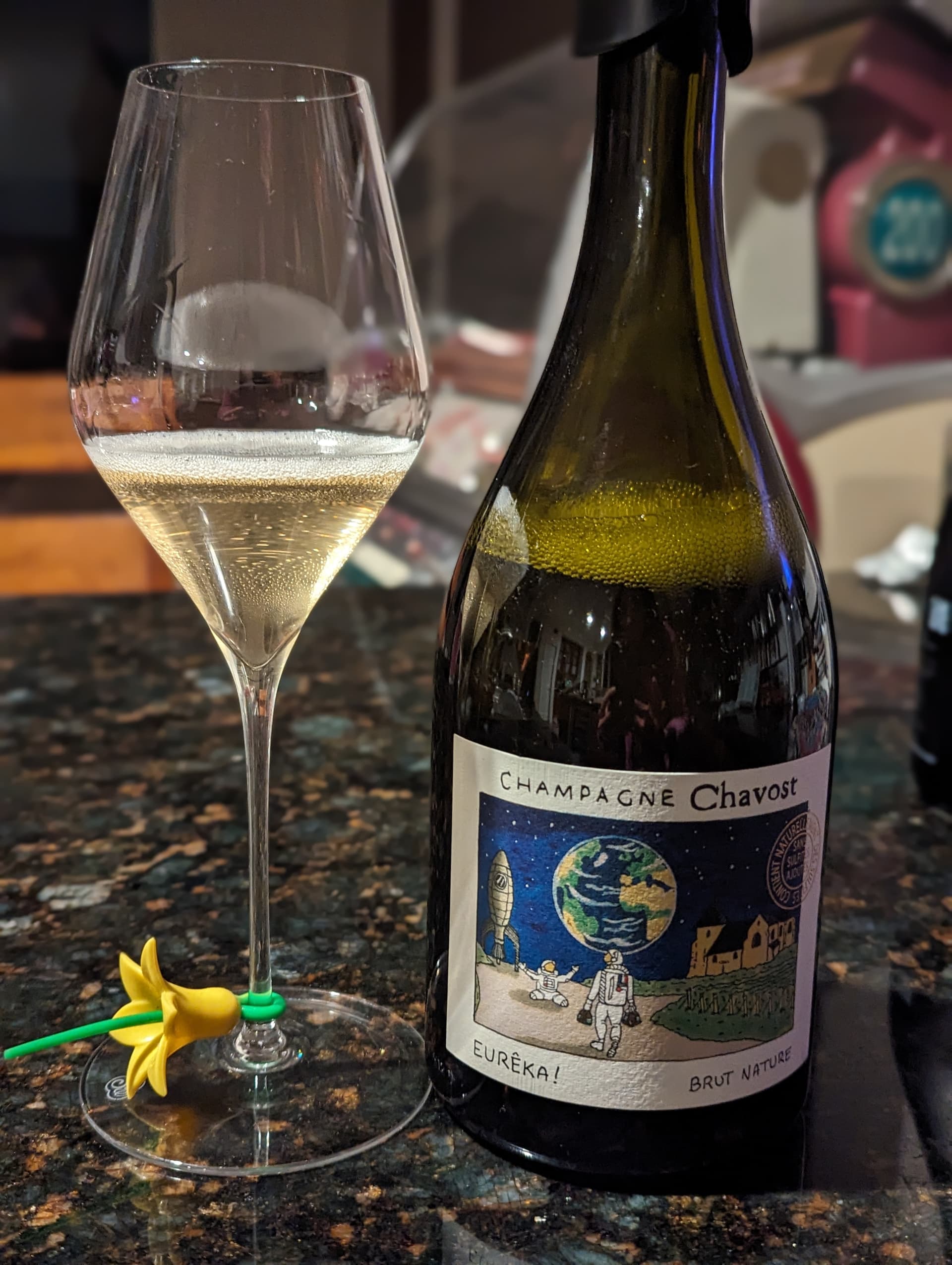
Chavost Eurêka 70% PN, 15% Chard, 15% PM
I need to get my hands on some. I love the labels.
The labels are adorable  . These are very much “natural wines” and are unsulphured, so if you’re not into that style, I would wait for a tasting or for someone else to buy them.
So these two weren’t any better, huh?
The blanc d’assemblage was the least worst so far. I forgot to take notes on it, but it didn’t go down the drain. The Eurêka ($110 approx) smelled metallic and like a rotting lemon, and tasted of lime pith, unripe green apple, and so so much acid. Next to the Eurêka, the so-called “dud” 2015 Vilmart Émotion tasted really good. People on CT report a much better experience and enjoy the Eurêka, so either this is an off bottle (tired of this excuse) or my palate is not suited or accustomed to this sort of wine.
I have 4 more bottles of Chavost, and am furious with myself for buying so much of the line blind.
I am sorry to read all of that, Astrid. And I definitely wouldn’t blame your palate over the wines. I’m at the point where I wish these natural wines had some sort of indication on their labels that that is what they are. Simply so I can avoid them. It’s a baby I’m willing to throw out with the bathwater because this bathwater is terrible! I know it likely comes as very little consolation to you, but there are folks out here, myself included, who are very appreciative of your posts on these wines, as this is a producer that was on my radar. You have definitely saved me money, and I bet I’m not the only one. Hopefully, you will similarly get to take a turn benefiting from bullets taken by others …
Hope your next bottle is a stunner!
Not sure I love the labels, but maybe I’m not the right audience for this type of label on Champagne.
-Al
Isn’t one indication (not a perfect one, but a guide) the absence of “Contains sulphites/sulfites” on the label?
I usually go off of the hand drawn illustrated art.
Kidding…sort of.
That never occurred to me to look for that, but it makes sense, I guess. (?)