This was another one of our blind tasting sessions. No theme whatsoever, just a random selection of wines from all over the world. Some were easier to pick out, some were much more difficult.
Nevertheless, for the most part, these were just terrific wines. I hope my TNs will speak for the wines better than this introduction.
This bottle came and went before any pictures were taken:
-
2017 Turley Zinfandel Ueberroth Vineyard - USA, California, Central Coast, Paso Robles (16.2.2021)
Fruit is sourced from a vineyard planted in 1885. Aged for 15 months in new (20%) and used (80%) barriques made from French (80%) and American (20%) oak. Fermented spontaneously with indigenous yeasts. 15,9% alcohol. Tasted blind.
Luminous, deep and moderately translucent garnet color. Very rich, open and expressive nose with fragrant aromas of ripe black raspberries, juicy boysenberries and fresh brambles, some sweet exotic spice, a little bit of sunny plummy fruit, light floral notes, a hint of strawberry jam and a lifted touch of nail polish VA. The alcohol shows a little. The wine is very ripe, somewhat warm and very expressive on the palate with a medium-to-moderately full body and intense flavors of ripe boysenberries, some plummy tones, a little bit of toasty oak spice, light brambly notes of blackberries, a hint of chocolatey oak and a candied touch of primary fruit reminding me of Bassett’s wine gums. The acidity feels relatively high - surprisingly high for such a ripe wine - whereas the medium-minus tannins come across as ripe as quite gentle. The finish is long, powerful and somewhat warm with vibrant, ripe flavors of sweet boysenberries and strawberry jam, some plummy notes, a little bit of mocha oak, light toasty wood tones and a hint of exotic spice.
A wonderfully expressive, characterful and balanced effort. The alcohol shows a little, but the intensity of the fruit carries the warmth surprisingly well, keeping it from coming across as too overwhelming. Although the wine feels a bit oaky, somewhat warm and has a slight crowdpleaser edge to it, it has enough intensity, character and sense of balance not to feel overdone. All in all, a very seductive Zinfandel and easily among the better Zins I’ve tasted. Perhaps a bit pricey for the quality at $50, but not overtly so. I guessed Californian Zinfandel that was 5 years old tops, and wasn’t wrong. (92 pts.)
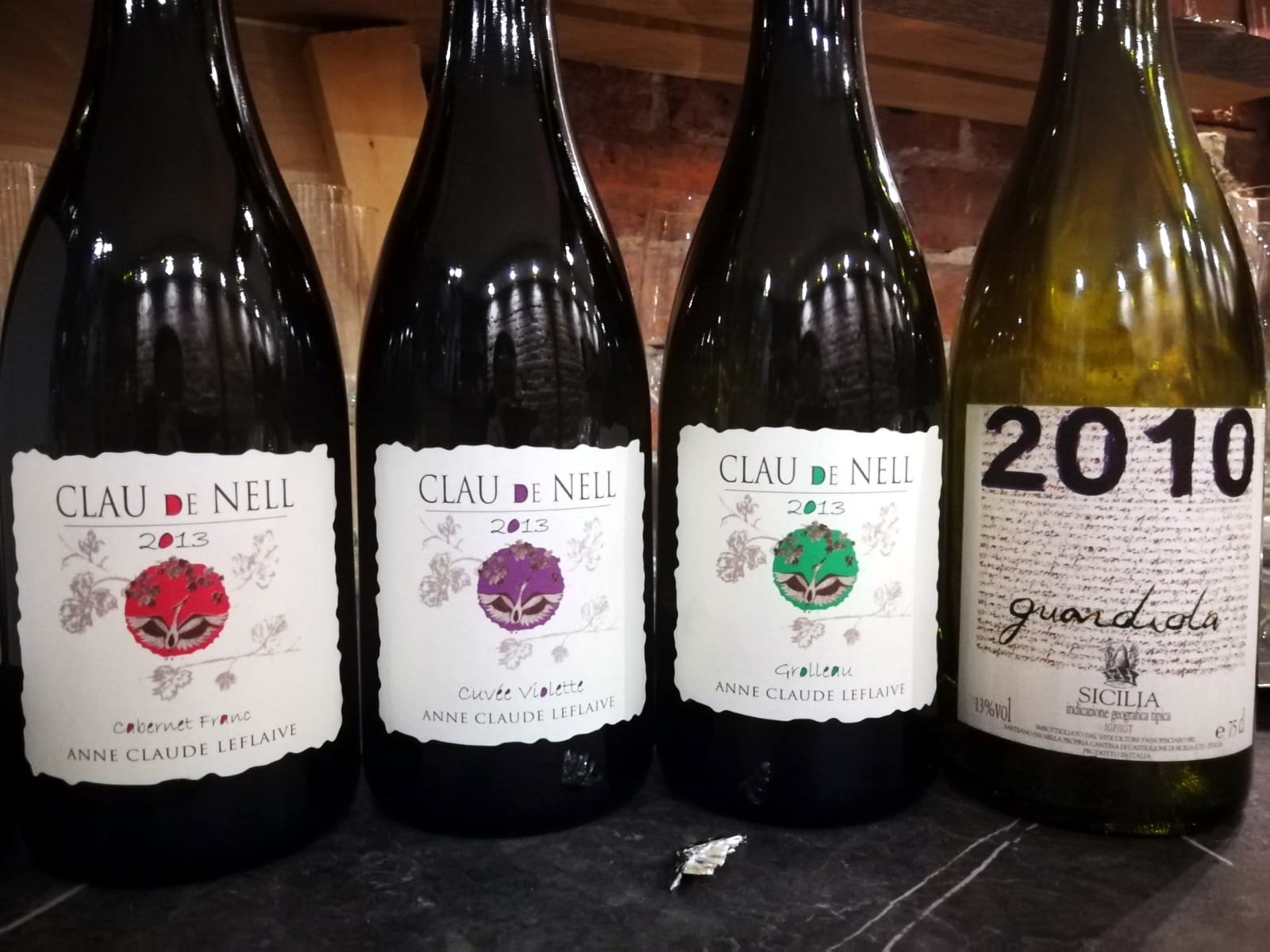
Flight 1, right to left:
-
2010 Passopisciaro Passopisciaro Bianco Guardiola - Italy, Sicily, Sicilia (16.2.2021)
100% Chardonnay from very densely-planted, 8 years old vineyard situated over 1000 meters above the sea level. Fermented in stainless steel, aged for some 12 months in glazed 5000-liter cement vats. Total production 20,000 bottles. 13% alcohol. Tasted blind.
Intense neon yellow-green color. The nose feels leesy and somewhat lactic with a whiff of sourmilk or yogurt, followed by aromas of white peach, some sappy herbal tones, a little bit of creaminess, light sweet notes of apple jam, a hint of nuttiness and a touch of woolly lanolin. The wine is round, moderately full-bodied and conspicuously sweet-toned on the palate, coming across as somewhat off-dry, perhaps even medium-dry? Flavors of honeydew melon, some woolly tones, a little bit of stony minerality, light steely tones, a hint of leesy yeast character almost reminiscent of Champagne and a touch of ripe pear. The overall feel is very rich and supple, the medium acidity keeping to the background - yet the overall feel is pleasant and balanced. The finish is rich and comes across as off-dry with quite long flavors of honey, some cantaloupe, light stony mineral notes, a little bit of creamy richness, a hint of nuttiness and a sweet touch of pear marmalade.
A tasty, harmonious and still surprisingly youthful Etna Chardonnay that was surprisingly sweet-toned - even slightly marmaladey - for the style. I wonder whether it was because of the combination of ripeness and modest acidity, or if the wine actually wasn’t fermented to full dryness? At least to me the wine didn’t feel technically dry, which made me automatically think of off-dry Chenin Blanc from Loire. Well, I was pretty wrong here. Live and learn. Nevertheless, this was enjoyable for the style, be it dry or off-dry. Most likely will keep if not improve for a good handful of years more. (89 pts.)
-
2013 Clau De Nell Grolleau - France, Loire Valley, Val de Loire (16.2.2021)
The fruit is sourced from biodynamically farmed centenarian Grolleau vineyards. Fermented spontaneously, macerated with the skins for approximately 3 weeks. Aged for 14 months in large oak foudres (70%) and used 228-liter pièces (30%). Tasted blind.
Pale, translucent and slightly hazy pomegranate color. Slightly restrained, somewhat understated yet pretty attractive nose with aromas of slightly leafy vegetal tones, some rustic notes of tobacco, leather and phenolic spice, a little bit of ripe redcurrants, light herbaceous nuances of cooked bell pepper, a possibly reductive hint of smoke and a floral touch of lifted violet nuances. The wine is dry, crunchy and slightly rustic on the palate with a medium body and layered flavors of tart cranberries, some herbaceous notes of cooked bell pepper, a little bit of tobacco, light greasy notes of Balkan sausage, a rustic hint of leathery funk and - especially after the wine has opened up for some time - a sweeter touch of ripe raspberries. The structure relies mainly on fresh, high acidity, not on the supple and very gentle tannins. The finish is dry, quite acid-driven and subtly grippy with bright yet slightly funky flavors of tobacco, crunchy redcurrants, some tart notes of lingonberries, light earthy tones, a little bit of leafy vegetal character, a hint of cooked bell pepper and a cooling touch of herbal greenness.
A very lovely, crunchy and lively little wine with lots of character and pleasantly unpolished edges. Not a big wine built to impress, but instead a seductive little wine brimming with freshness and character. It combines terrific purity of fruit and slightly rustic grit in a simply wonderful way. Based on its combination of herbaceous qualities and slightly rustic nature, I thought this was Cabernet Franc from Loire, and based on its freshness and relatively lithe body, I thought this was St. Nicholas de Bourgueil rather than Chinon or Saumur. Well, the wine turned out to be from Loire all right, but not made with Cab Franc, to my surprise. What surprised me even more was how youthful the wine was - I imagined the wine to be 4, maximum 5 years old. All in all, a very charming little red that drinks really well on its own but also works as a versatile food wine. Very nice. (91 pts.)
-
2013 Clau De Nell Anjou Cuvée Violette - France, Loire Valley, Anjou-Saumur, Anjou (16.2.2021)
The fruit is sourced from biodynamically farmed Cabernet Sauvignon (70 yo) and Cabernet Franc (50 yo) vineyards. Typically a blend of two-thirds of Cabernet Franc and a third of Cabernet Sauvignon. Fermented spontaneously, macerated with the skins for approximately a month. Aged for 12 months in used (6-7 yo) 228-liter pièces, followed by 6 months in a large tank. Tasted blind.
Translucent, deep and luminous cherry red color. Quite open and somewhat savory nose with aromas of tobacco, ripe blackcurrant, some fragrant notes of leather, light leafy notes, a little bit of animal funk and barnyard, a woody hint of old oak and a touch of fresh and crunchy red berries. The wine is dry, ripe yet crunchy and medium-bodied on the palate with quite intense flavors of tobacco and leather, some fresh dark plums, light phenolic notes of brett, a little bit of ripe blackcurrant, a hint of tart and slightly bitter lingonberry and a touch of barnyardy funk. The overall feel is enjoyably firm and structured, thanks to the bright, high acidity and enjoyably grippy medium-plus tannins. The finish is long, dry and slightly bitter with moderate tannic grip and savory flavors of tart lingonberries, fresh blackcurrants, some tobacco, light bretty notes of leathery funk and stable floor, a little bit of savory wood spice and a hint of sour cherry bitterness.
A beautiful, crunchy and somewhat - but not excessively - funky Loire red with good emphasis on freshness and relatively tightly-knit structure. The wine shows a little bit of aged character, but is nevertheless relatively youthful for its age. Has tons of that “proper claret” feel, which made me think this was an old-school Bordeaux red from the late 00’s, perhaps 2008. Feels like a missing link between Loire valley and Bordeaux. I guess I should start drinking these Clau de Nell wines instead of contemporary Bordeaux, since they offer me lots of that stuff I don’t seem to get from modern Bordeaux reds anymore. Terrific stuff, highly recommended. Will continue to improve from here. (93 pts.)
-
2013 Clau De Nell Cabernet Franc Anjou - France, Loire Valley, Anjou-Saumur, Anjou (16.2.2021)
The fruit is sourced from biodynamically farmed Cabernet Franc vineyards averaging 50 yo. Fermented spontaneously, macerated with the skins for approximately a month. Aged for 12 months in used (5-7 yo) 228-liter pièces, followed by 6 months in a large tank. Tasted blind.
Translucent, deep and luminous cherry red color. Savory and slightly phenolic nose that feels subtly more restrained than that of Clau de Nell Violette 2013 that was tasted alongside; aromas of dried old leather, some fresh blackcurrant, light savory notes of bretty funk, a little bit of cigar, a floral hint of violets and a herbaceous touch of leafy greenness. The wine feels lively, crunchy and relatively tightly-knit on the palate with a medium body and quite intense flavors of fresh redcurrants and red gooseberries, some tobacco, a little bit of bretty funk and leather, light ferrous notes of blood, tart hints of fresh red plums and sour cherry bitterness and a juicy touch of meaty umami. The overall impression is quite structure-driven - thanks to the high acidity and quite grippy tannins - and thus somewhat leaner compared to the Cuvée Violette. The finish is dry, long and rather grippy with focused, savory flavors of tart cranberries, fresh redcurrants and some sour cherry bitterness, a little bit of bretty leather, light smoky notes of phenolic spice, a hint of tobacco and a subtly woody touch of cedary old oak.
A beautifully serious, tightly-knit and unapologetic Loire Cab Franc. I thought this was very similar to the 2013 Cuvée Violette that was tasted alongside, but while Violette seemed slightly fruitier, more supple and a bit more approachable, this wine felt leaner and more structured in comparison. Although the wine showing a bit of aged qualities, I can imagine it will continue to improve for a long time. Most likely the fruit will fade before the tannins resolve. All in all, a very well-made, old-school Cab Franc. As I thought Cuvée Violette was a left bank Bordeaux and this was quite similar to it, my guess for this wine was a classicist right bank Bordeaux from the 2000’s with emphasis on Cabernet Franc. Well, my guess was rather wrong, but at least I recognized the grape variety! (94 pts.)
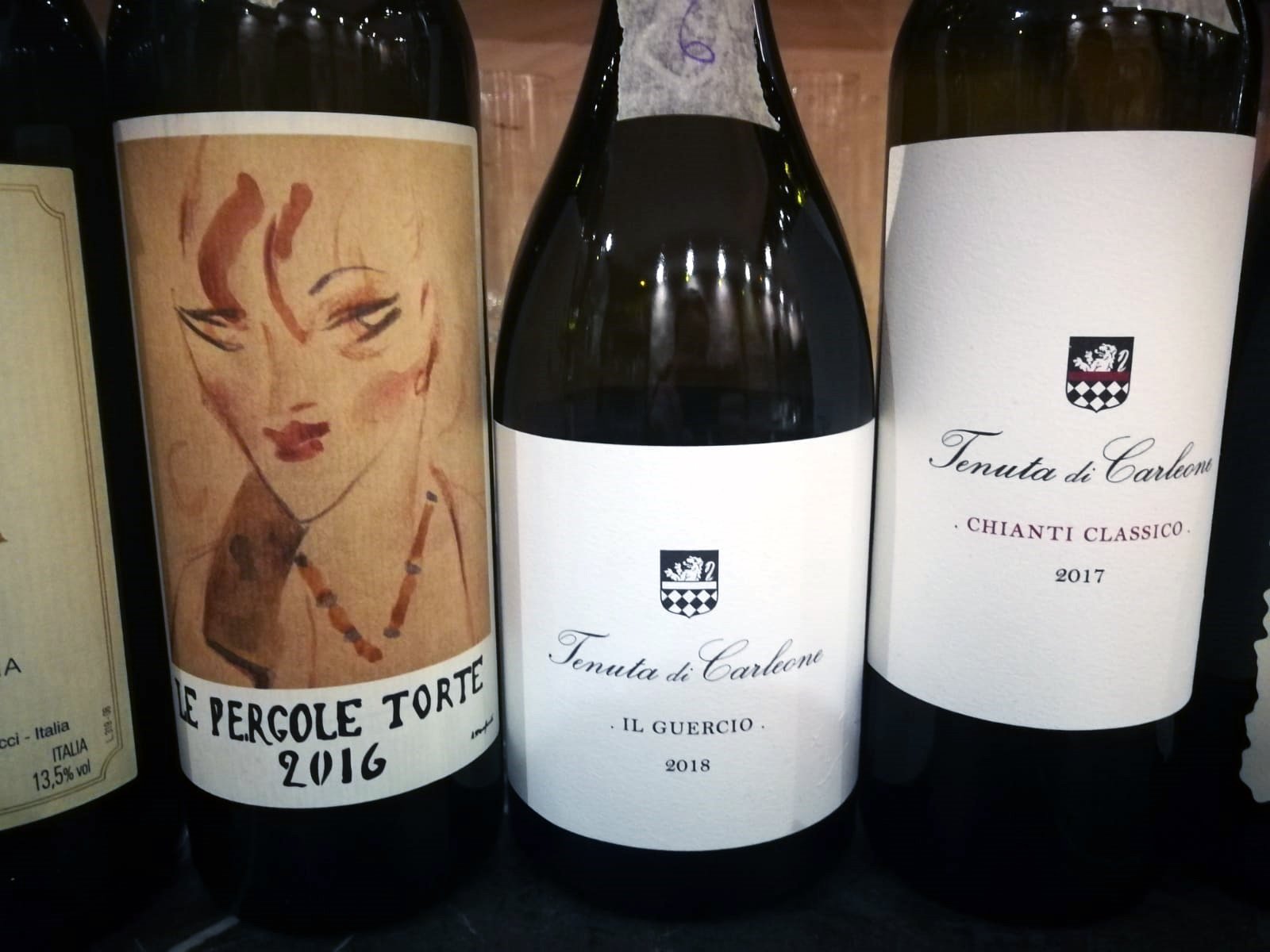
Flight 2, right to left:
-
2017 Tenuta di Carleone Chianti Classico - Italy, Tuscany, Chianti, Chianti Classico DOCG (16.2.2021)
100% Sangiovese from Radda in Chianti. Fermented in stainless steel and concrete tanks. Macerated with the skins for 40-60 days. Aged for 18 months in stainless steel and concrete tanks. Tasted blind.
Medium-to-moderately translucent pomegranate color. Fragrant, seductive and subtly sweet-toned nose with aromas of sun-baked sandy soil, ripe red cherries, some rose hips, a little bit of licorice, light notes of pipe tobacco and a sweeter hint of cranberry sauce. The wine feels ripe and sunny yet quite dry and savory on the palate with a medium body and vibrant flavors of juicy wild strawberries and sweet cherries, some raspberries, a little bit of gravelly minerality, light notes of earthy spice and licorice root, a fragrant hint of rose petals and a subtly rustic touch of something funky. Nice, balanced structure that relies on both the moderately high acidity and the ample, quite grippy tannins - although the fruit starts to overwhelm the acidity a little bit as the wine opens up, making it feel a bit softer. The finish is long, quite dry and moderately grippy with layered flavors of ripe cranberries, sour cherry bitterness, some sweet wild strawberries, light gravelly mineral tones, a little bit of tobacco, slightly funky hints of leather and barnyard and a touch of licorice root.
A lovely, pure and vibrant Chianti Classico - although my guess was a warm-year Langhe Nebbiolo or Barbaresco, due to the perfumed nature of the wine and its nuances of rose hips and rose petals! Although I got the variety wrong, I was immediately in Italy from the first sniff and sip - unlike many others who thought the wine was from Southern France! Nevertheless, the wine shows wonderful freshness and purity of fruit despite the warm Tuscan vintage. Although the solar vintage shows, the wine doesn’t come across as soft or sweet with candied or jammy fruit, but instead just very focused and wonderfully fragrant. If this is this good in warm vintages, I really need to find and taste some bottles from cooler vintages! All in all, terrific stuff. Drinks beautifully now, but will continue to improve nicely over at least medium-term, if not for longer. Recommended. (92 pts.)
-
2018 Tenuta di Carleone Il Guercio - Italy, Tuscany, Toscana IGT (16.2.2021)
100% single-vineyard Sangiovese from Mello vineyard located in Gaiole in Chianti, at the altitude of 700 m above sea level. Harvested only when the grapes have reached optimum ripeness, which can be very late in some vintages, due to the exceptionally high altitude of the vineyard. Fermented in concrete tanks (20% whole bunches). Macerated with the skins for 120 days (4 months)! Aged for 12 months in concrete tanks. Bottled unfiltered with minimum SO2. Tasted blind.
Exceptionally pale and fully translucent cherry red color - the wine looks more like a deep rosé than a red wine. Fragrant, somewhat phenolic and slightly sauvage nose with aromas of raspberry candies, some bretty funk, a little bit of ripe strawberry, light animale and burnt hair tones, an ethery hint of volatile lift and a touch of citrus zest. Has a somewhat naturalist feel to it. The wine is ripe, vibrant and medium-bodied on the body, but feels both more substantial than what you’d expect from the pale appearance and cleaner than what the funky nose led to believe. Juicy flavors of strawberries and raspberry juice, some ripe black cherries, a little bit of sweet volatile lift, light bretty notes of barnyard funk, a hint of sour cherry bitterness and a touch of new leather. The bright and fresh acidity lends good sense of focus to the wine, whereas the ripe and supple tannins contribute more to the texture than to the structure. The finish is long, quite savory and gently grippy with ripe flavors of sweet red-toned fruits, wild strawberries, some cherry notes, a little bit of raspberry candy, light lifted notes of ethery VA, a hint of animal funk and a touch of meaty umami.
At first the wine felt something of a generic natural wine - up until the taste. On the palate the wine improves from the first impression quite a bit and the overall feel is surprisingly substantial compared to the pale color that would’ve been more in place with a deeper rosé or a Poulsard from Jura. I was thrown off quite a bit by the wine, but its aromatics pointed me to Italy and my guess was a naturalist red blend from Piedmont. Never thought this was a Sangiovese due to its rather atypical nature, but I didn’t mind, as there was quite a bit of depth and understated nuance here, and while this isn’t a super-impressive effort, this is a lovely example of a high-altitude Sangiovese. Perhaps a bit pricey for the quality at approx. 40€, though. (89 pts.)
-
2016 Azienda Agricola Montevertine Le Pergole Torte Toscana IGT - Italy, Tuscany, Toscana IGT (16.2.2021)
100% Sangiovese from a vineyard planted in 1968. Fermented and macerated with the skins for 25 days. Aged for 12 months in French oak barriques, and for another 12 months in large Slavonian oak casks. 14% alcohol. Tasted blind.
Brooding, very dark and only slightly translucent blackish-red color with a subtly maroon hue towards the rim. Brooding, somewhat sweet-toned and slightly glossy nose with aromas of sunny dark plums, wizened boysenberries and fresh black cherries, some toasty oak spice, a little bit of cassis, light raisiny tones, a sweet hint of pruney fruit and a perfumed touch of dried flowers. This feels like a modern, somewhat oak-driven Bordeaux, but with a more southern, Italian twist to it. The wine is dry, medium-to-moderately full-bodied and rather concentrated on the palate with intense flavors of ripe sour cherries and lingonberries, savory spices, some sweet dark fruits, a little bit of sweet, toasty oak spice, light leathery tones, a hint of extracted woody bitterness and a sunny touch of raisiny fruit. The wine is suggestive of sweetness, but the rather high acidity and quite assertive and moderately grippy tannins keep the overall feel rather savory and tightly-knit. The finish is moderately grippy and slightly warm with long, intense flavors of sweet dark fruits, some sour cherry bitterness, a little bit of tobacco, light toasty oak tones, a hint of wizened forest fruits and a touch of leather.
After two un-oaked varietal Sangioveses from Chianti, this wine felt relatively modern and glossy with its rather pronounced - yet judicious and not overdone - oak influence. However, this wine also felt very impressive with its remarkable intensity, sense of concentration and muscular structure. The overall feel was surprisingly rich and sunny with its high alcohol and slightly pruney edge to the brooding, dark-toned fruit - I would’ve expected more brightness and freshness from a 2016 Sangiovese. I guessed Toscana IGT, but I expected something with at least a little bit of Cab in the mix, from the understated nuances of Cassis - surprised to learn this was actually Le Pergole Torte, which is a varietal Sangiovese wine. Nevertheless, an impressive powerhouse of a Sangiovese. Despite its somewhat solar nature, I can imagine this will continue to improve wonderfully in a cellar for a great number of years - it is obvious this wine is built for the long haul. I heartily recommend letting the wine age long enough for the oakier tones to integrate better with the concentrated fruit. Great stuff, but nevertheless feels rather expensive for the quality at 119€. (93 pts.)
Flight 3, right to left:
-
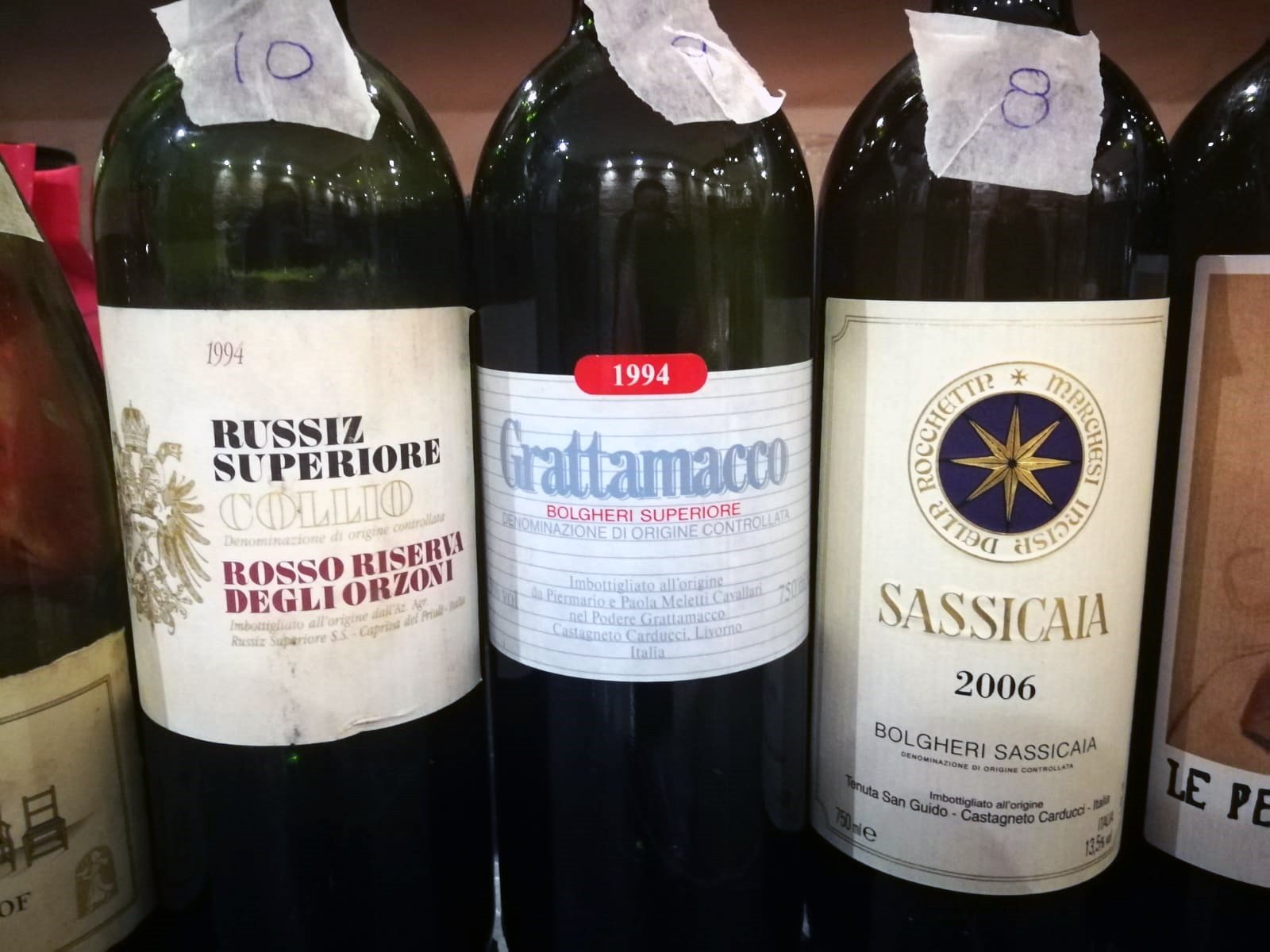
2006 Tenuta San Guido Bolgheri Sassicaia Sassicaia - Italy, Tuscany, Bolgheri, Bolgheri Sassicaia (16.2.2021)
A blend of Cabernet Sauvignon (85%) and Cabernet Franc (15%). Fermented in stainless steel. Macerated with the skins for 15 months. Aged for 24 months in French oak barriques. 13,5% alcohol.Tasted blind.
Slightly evolved and somewhat translucent cherry red color with a developed hint of maroon towards the rim. Savory, fragrant and somewhat evolved nose evocative of a developed Bordeaux. Aromas of wizened blackcurrants and juicy red cherries, some tobacco, a little bit of graphite, light autumnal notes of damp leaves, a hint of old leather and a touch of savory oak spice. Very attractive overall impression. The wine is ripe, juicy and somewhat evolved on the palate with a medium-to-moderately full body and quite intense flavors of ripe blackcurrants, some wizened red plums, a little bit of new leather (I wonder if there is a touch of brett here?), light leafy and slightly earthy notes of sous-bois, a hint of sour cherry bitterness and a touch of Oolong tea. The overall feel is balanced yet slightly soft with the relatively gentle medium-plus acidity, making the somewhat resolved yet still moderately grippy medium-plus tannins take care of the structure. The finish is structured, somewhat grippy and slightly warm with dry-ish flavors of ripe blackcurrants, some leathery tones, a little bit of tobacco, light nuances of savory wood spice, a hint of meaty umami and a sweet touch of wizened red fruits.
A juicy, harmonious and quite classically built effort that immediately takes me to Bordeaux - although the ripe, juicy fruit and quite gentle acidity make me think of a somewhat warmer vintage, or then a warmer location. My first guess was a 2005 left bank Bordeaux and second guess was a Cali Cabernet from the 00’s. Well, Cab / Bordeaux was quite correct, only I got the country completely wrong. All in all, this is a very enjoyable and harmonious effort, despite the somewhat mellow acidity. Although the age is starting to show a bit, the wine is still far from its peak - I can imagine this will continue to develop for another 10-15 years and keep for even longer. A well-made Bordeaux imitation - although I’m not sure if it’s really worth the +100€ price tag. After all, you can get tons of great mid-00’s Bordeaux wines at half the price. (94 pts.)
-
1994 Grattamacco Bolgheri Superiore - Italy, Tuscany, Bolgheri, Bolgheri Superiore (16.2.2021)
A blend of Cabernet Sauvignon (2/3), rounded out by Merlot and Sangiovese. Fermented and macerated in tronconical oak vats and aged for 18 months in French oak barriques. Tasted blind.
Evolved red color with a luminous ruby core that turns from maroon to yellow-orange to a completely colorless rim. Aged, savory and very tertiary nose with aromas of Madeirised smoky tones and nuttiness, some soy sauce, light dusty notes of sun-baked earth, a little bit of dried dates and a pruney hint of wizened red plums. The wine is dry, medium-bodied and tertiary on the palate with developed flavors of wizened cranberries and ripe red plums, some leathery tones, a little bit of oxidative nuttiness and soy sauce, light leathery tones, a hint of sour cherry bitterness and a touch of autumnal leaves. Moderately high in acidity with quite mellow medium-minus tannins. The finish is dry, light and medium in length with evolved flavors of ripe redcurrants, some leather, light notes of tobacco, a little bit of wizened blackcurrants and other dried fruits, a hint of nutty rancio and an oxidative touch of beef jerky.
A pleasant but somewhat over-aged Bolgheri red that is already somewhat over the hill, getting already a bit oxidized. The overall feel is still balanced and enjoyable, but the tertiary qualities and oxidized notes have already overwhelmed the fine nuances, making the wine feel it is already on a decline. Still a good wine for enjoying a nice old red, but a bit challenging wine for a blind tasting, as it’s quite impossible to get a good picture of the wine. My guess was a Bordeaux from the mid-80’s that is already getting over the hill. (87 pts.)
-
1994 Marco Felluga / Russiz Superiore Collio Rosso Riserva Degli Orzoni - Italy, Friuli-Venezia Giulia, Collio (16.2.2021)
A blend of Cabernet Sauvignon, Cabernet Franc and Merlot. Aged for 2 years in oak barriques. Tasted blind.
Somewhat translucent blackish cherry red color. Dry, savory and slightly stuffy nose with quite understated aromas of leather, some sandy soil, a little bit of ripe blackcurrant, light sweet notes of toasty oak spice, a hint of damp leaves and a touch of wizened, soft bell pepper. The wine feels somewhat understated, mellow and mild on the palate with a medium body and quite light flavors of ripe blackcurrants, some old leather, light juicy notes of dark plums and blueberries, a little bit of toasty oak spice, a hint of dusty, sandy soil and a vegetal touch of leafy greenness. Overall the wine feels enjoyably nuanced and fine-tuned, but also lacking in intensity, coming across as very light and somewhat dilute. Balanced structure with the moderately high acidity and somewhat grippy medium-plus tannins. The finish is juicy, dry-ish and somewhat round with quite light, medium-long flavors of ripe blackcurrants, some dusty earth, a little bit of leather and a hint of damp leaves and sous-bois.
An evolved and fine-tuned Bordeaux blend that shows nice sense of developed complexity, but is lacking intensity quite a bit, making the nose feel very understated and the taste feel rather mild and dilute. This would’ve been a pretty lovely wine had it shown the intensity the other wines showed in the tasting, but amidst all the wines, this came across as very light and dilute, like on the verge of fading away. There’s enough acidity to keep the overall feel in balance, but still not enough to lend intensity to the flavors. I guessed an older super-Tuscan red with some Cab in the blend. A pleasant old wine, but nothing particularly memorable. (85 pts.)
Flight 4, right to left:
-
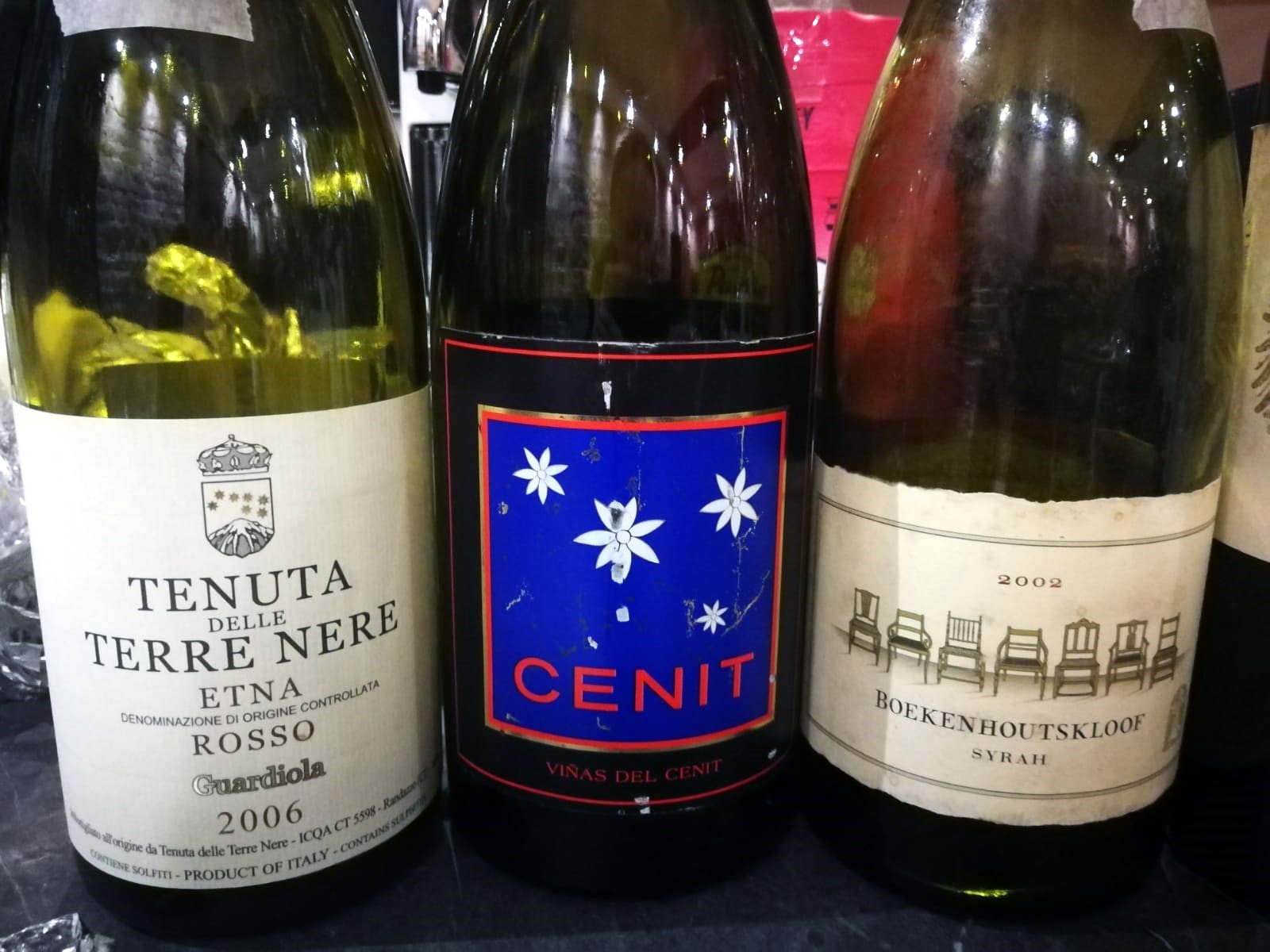
2002 Boekenhoutskloof Syrah - South Africa, Coastal Region, Franschhoek Valley (16.2.2021)
The harvested fruit is crushed into a concrete tank for a cold soak. After a few days the wine is fermented spontaneously with indigenous yeasts. Fermented and macerated for 2-3 weeks, followed by a week of post-fermentation maceration. Aged for 18 months in 2nd use barriques. 14,8% alcohol, 2,1 g/l residual sugar, 6,1 g/l acidity, pH 3,75, VA 0,85 g/l and 41 mg/l SO2. Tasted blind.
Evolved, very deep and only slightly translucent reddish maroon color. A very robust and striking nose with distinctive aromas of peat smoke, tomato stalk, some harissa, light tertiary notes of soy sauce, a little bit of roasted bell pepper, hints of tar and tobacco and a touch of tapenade. The wine is ripe, silky and moderately full-bodied on the palate with subtly sweet-toned flavors of juicy black cherries and blackberry marmalade, some weird notes of syrupy malt bread, a little bit of tomato stalk, light sweetish-umami notes of hoi sin, herbaceous hints of harissa and dank grassy character and a touch of sweet tar-flavored candy. The overall feel is quite high in acidity, but the fully resolved tannins feel mellow and velvety, contributing quite little to the texture and virtually nothing to the structure. The overall feel is weird, but despite the odd, somewhat tarry notes, not particularly unpleasant. The finish is moderately long, juicy and sweet-toned with ripe flavors of wizened black cherries, some tomato, a little bit of toasty pastry character or syrupy malt bread, light herbaceous notes of roasted bell pepper, a sweet hint of dried red berries and a touch of tar. The tannins lend a subtle hint of grip to the gums.
A weird, distinctive and somewhat tarry wine that wasn’t particularly varietally correct, but was nevertheless surprisingly enjoyable for what it was. It tasted more of old-school South African red than Syrah, although this wasn’t the worst offender in the genre. Quite pleasant for such a weird effort, although I can imagine the tolerance for this kind of smoky character might vary from person to person. Feels like the wine is peaking now and won’t continue to improve from here. Could’ve used a bit more tannic grip - starting to get a bit too soft and flabby, even though the acidity does its best to keep the wine balanced. Best drunk now or in the following few years. My guess was South African Pinotage with some age. (88 pts.)
-
2003 Viñas del Cenit Tempranillo Cenit - Spain, Castilla y León, Vino de la Tierra de Zamora (16.2.2021)
This is a weird case: according to the winery website, the winery was founded in 2006, the first vintage of this wine is 2004 and here I have drunk the vintage 2003. I have no idea what is going on here, but I suppose there seems to be a time-space anomaly in Castilla y León. The wine is made with fruit sourced from centenarian (120-150 yo), prephylloxeric vineyards - located next to DO Toro - and aged for 16 months in barriques (80% new). 14,5% alcohol. Tasted blind.
Very extracted and almost fully opaque black cherry color with a hint of dark reddish-brown towards the rim. Massively big, toasty and heavily oak-driven nose with opulent aromas of very ripe blackcurrants, some coffee chocolate, a little bit of blackberry jam, light lifted notes of minty greenness, a hint of cedary wood and a touch of prunes. The wine is full-bodied, rather extracted and heavily oaky on the palate with concentrated flavors of sweet black cherries, chocolatey mocha oak, some blackberry jam, a little bit of vanilla, light cedary oak tones, sweet hints of plums turning to prunes and a touch of lifted minty character. The acidity feels moderately high - which is surprisingly high for such a massively big wine - with very ripe and gentle tannins that slowly coat your gums and make the wine become somewhat grippy. The finish is long, rather warm and somewhat grippy with lush, powerful and somewhat sweet-toned flavors of woody oak, cocoa, some ripe blackberry tones, a little bit of cedar, light minty notes, a hint of overripe black cherry and a touch of crunchy mint chocolate.
A massively big, clumsy and markedly modern Tempranillo that really doesn’t show any distinctive varietal character or sense of terroir beneath all that oak, oak and more oak. This is just a huge and woody wine built around a massive, jammy core of concentrated fruit. It might come across as very impressive for people who prefer size and weight over finesse and nuance, but I find it very hard to get excited about a wine where it’s impossible to recognize any local flavor or varietal character. I guessed this was a 8-10 yo Shiraz from Barossa or South Australia in general. Seeing how relatively youthful the wine is for a +15 yo Tempranillo, I can imagine this will not only keep but develop for many more years, but I’m quite positive that no amount of aging will make this wine into something I would find particularly interesting. Not recommended if you are averse to heavy-handed use of oak or overripe fruit flavors. (83 pts.)
-
2006 Tenuta delle Terre Nere Etna Rosso Guardiola - Italy, Sicily, Etna DOC (16.2.2021)
The fruit is sourced from Contrada Guardiola, highest in elevation of all Terre Nere vineyards (from 800 to 1000 m above sea level). Mainly Nerello Mascalese with a dash of Nerello Cappuccio in the mix. Fermented spontaneously, aged for 16-18 months in French oak barriques and tonneaux, followed by a marrying period of 1 month in stainless steel tanks. Tasted blind.
Moderately translucent brick-red color with a luminous ruby core and an evolved orange rim. Aged, tertiary nose with pungent aromas of smoke, some wood bark, a little bit of pruney fruit, light oxidative notes of soy sauce and beef jerky, a nutty hint of rancio and a touch of raisiny fruit. The wine is dry-ish, medium-bodied and very tertiary on the palate with somewhat oxidative flavors of beef jerky, some nutty rancio, light bitter notes of dark chocolate, a little bit of dried sour cherry, an oxidative hint of soy sauce and a touch of wood bark. The overall feel is still somewhat tightly-knit, thanks to the moderately high acidity and still quite ample and somewhat grippy tannins. The finish is dry, moderately grippy and slightly warm with evolved, tertiary flavors of leather, beef jerky, some wood bark, a little bit of nutty rancio, light soy sauce tones, a hint of stony minerality and a sweet touch of raisins.
Either past its peak or then the cork had failed, letting the wine oxidize prematurely. Seeing how nicely Terre Nere wines can age, I’m pushed to think this was just an off bottle, so my TN is best to be taken with a pinch of salt. Completely impossible to guess where this would’ve been from, because you can’t really smell or taste any distinctive qualities beneath the oxidative tones. Disappointing. NR (flawed)
Flight 5, right to left:
-
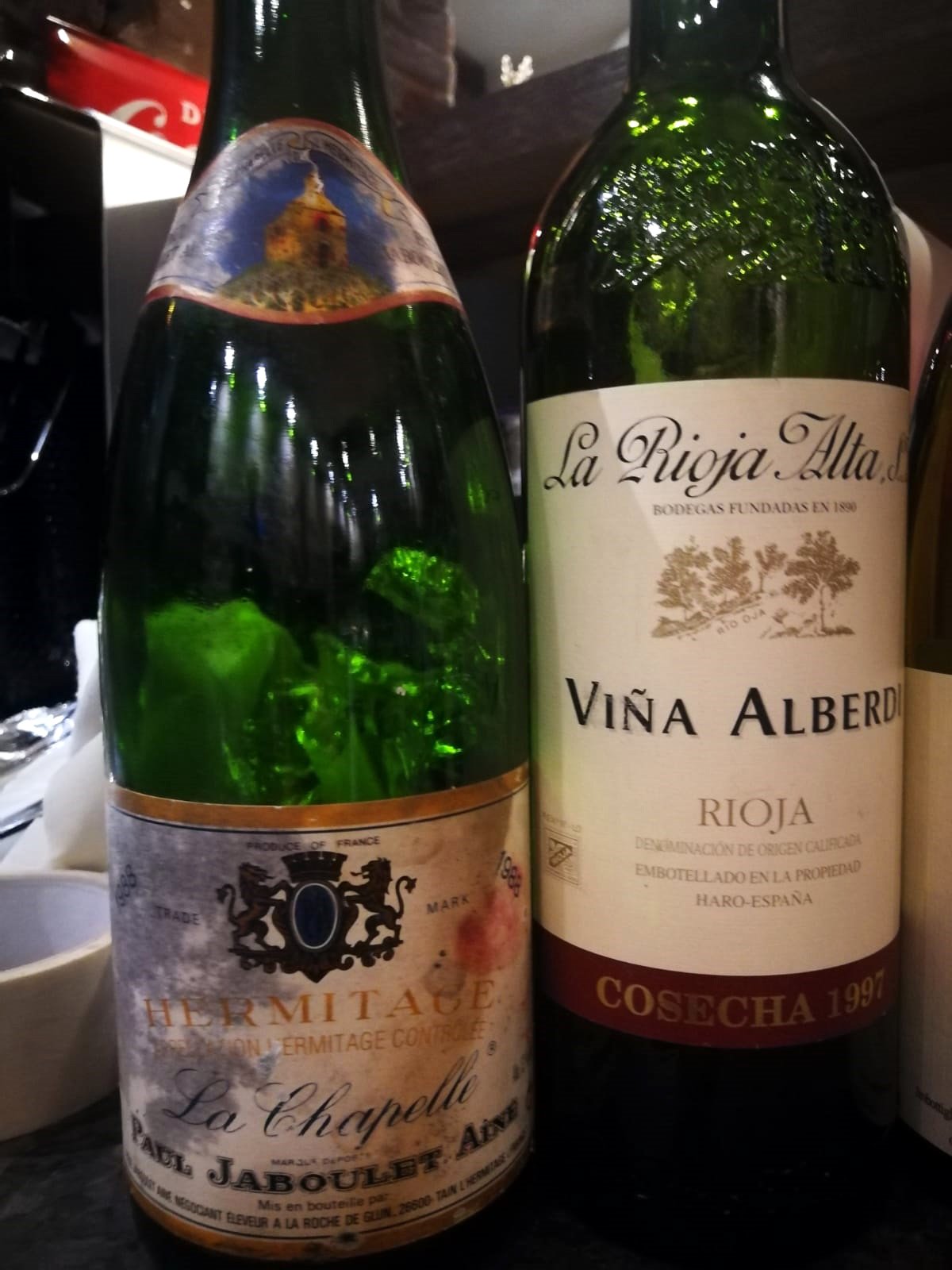
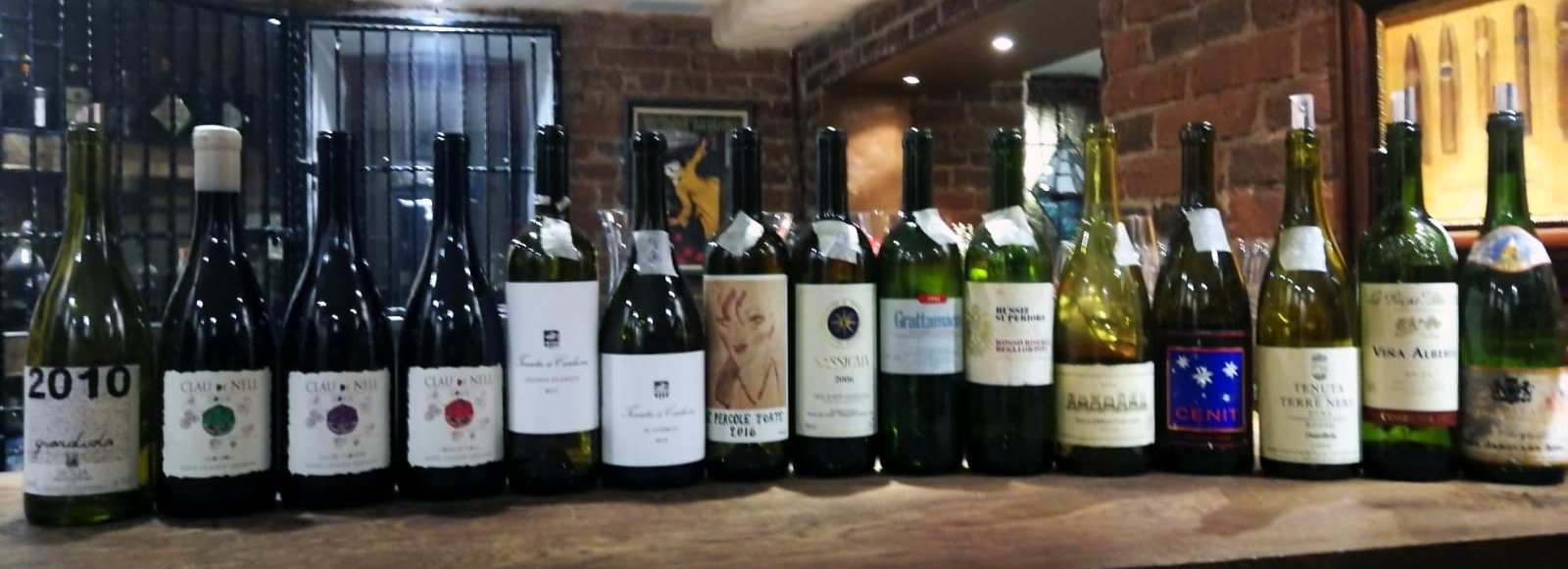
1997 La Rioja Alta Rioja Viña Alberdi Crianza - Spain, La Rioja, La Rioja Alta, Rioja (16.2.2021)
I’m not entirely sure which Alberdi this is, because the label clearly states “Cosecha 1997” in place of “Reserva 1997” and there is no mention of Reserva anywhere in the label. However, at least the LRA website doesn’t mention Alberdi Cosecha / Crianza 1997, only the Reserva. I don’t know if there are just two different labels for the same wine or if these are two different wines. Nevertheless, at least one of these wines ages for 2 years in oak barriques (50% new American oak, 50% old, neutral oak). 13% alcohol, 5,43 g/l acidity and 0,77 g/l VA. Tasted blind.
Translucent dark brick-red color with a pale brick-orange rim. A huge dose of very obvious dill character in the nose, followed by aromas of sweet red plums, some redcurrants, light leathery tones, a little bit of wild strawberry, a hint of vanilla and a touch of sun-dried tomato. The dill notes and a subtle undercurrent of vanilla point me immediately towards Rioja. The wine feels evolved, slightly tertiary and enjoyably complex on the palate with flavors of dill, wizened wild strawberries, some leather saddle tones, a little bit of earthy spice, light woody notes of oak spice and cigar box and a touch of dried cranberries. The structure relies mostly on the high acidity than on the ripe and quite textural tannins that have resolved with age. The finish is dry, long and rather mellow in grip with layered flavors of dill, dried cranberries, some sanguine notes of iron, a little bit of dried red fruits, light vanilla tones, a hint of sweet strawberry and a touch of smoke.
A balanced, sophisticated and tasty red with some age - with the caveat that you must tolerate dill in wine. I mean, there’s tons of it here. Not the fresh, green, herbal notes of fresh, chopped dill but instead that sweet, heady dill aroma you get when you cook with copious amounts of dill. Based on the dill and vanilla notes, my initial guess is a 1991 Rioja, probably LRA 904 or 890 and second guess is an American Cab from the late 1980’s. Turns out my first guess was quite close, although not a bullseye. All in all, an enjoyable effort in its genre with great intensity in acidity and delightful depth of flavor. Although the tannins have resolved almost fully and the wine is starting to thin out a bit with age, it is not lacking in intensity or complexity. Recommended. (92 pts.)
-
1988 Paul Jaboulet Aîné Hermitage La Chapelle - France, Rhône, Northern Rhône, Hermitage (16.2.2021)
Tasted blind.
Moderately translucent and rather evolved pomegranate red color with a thin, colorless rim. Savory, evolved and slightly pungent nose with slightly tertiary aromas of smoke, wizened forest fruits, some gamey tones, a little bit of tobacco, light nuances of kalamata olives and a hint of beef jerky. The wine is quite ripe and silky yet also dry and moderately grippy on the palate with a rather full body and savory flavors of charred game and meaty umami, some wizened dark fruits, a little bit of beef jerky, light notes of earthy garrigue or dried Provencal herbs, a hint of stony minerality and a touch of tart red berries. The overall balance is right on point, thanks to the rather high acidity and proportionate, somewhat grippy medium tannins. The finish is long, dry and somewhat grippy with savory flavors of wizened blackberries, some savory leather tones, a little bit of tar, light stony mineral tones, evolved hints of beef jerky and tobacco and a crunchy touch of tart lingonberries.
A very lovely Hermitage at its peak or inching beyond it. The overall feel is quite tertiary with an obviously aged character, but the wine is still very nuanced, structured and very much alive - not really going downhill yet. However, it is very hard to pinpoint where the wine is from (although, in retrospect, I should’ve picked up those hints from the notes of olive and game…) but I really don’t mind as the wine is drinking so well right now. My guess was a Tuscan red at or around 30 years of age. Well, I got the country completely wrong, but at least I was right on point with the age. I can imagine this might’ve been slightly better some years ago, and it won’t benefit from any further aging, but I doubt it is going to fall apart within the next few years. Drink now or in the near future. A lovely old Syrah. (93 pts.)
Posted from CellarTracker