This was a tasting I arranged in late 2024 for my friends, so the wines were not blind for me, but for the other attendees.
All information I had given beforehand was that the wines were going to be French and red in color. For the most part the wines seemed to be quite difficult, since basically the only ones that were identified with only a few guesses were the Northern Rhône Syrahs and the Madiran.
Although I’m not blaming them - I wasn’t going to make this an easy tasting, and I told them that it might take some time to identify some of the wines correctly!
We also had a few extras before and after the tasting - and most of them weren’t red or even French! Basically @AskoKassinen’s own private label WILIXL was the only extra bottle that fit the bill 100%.
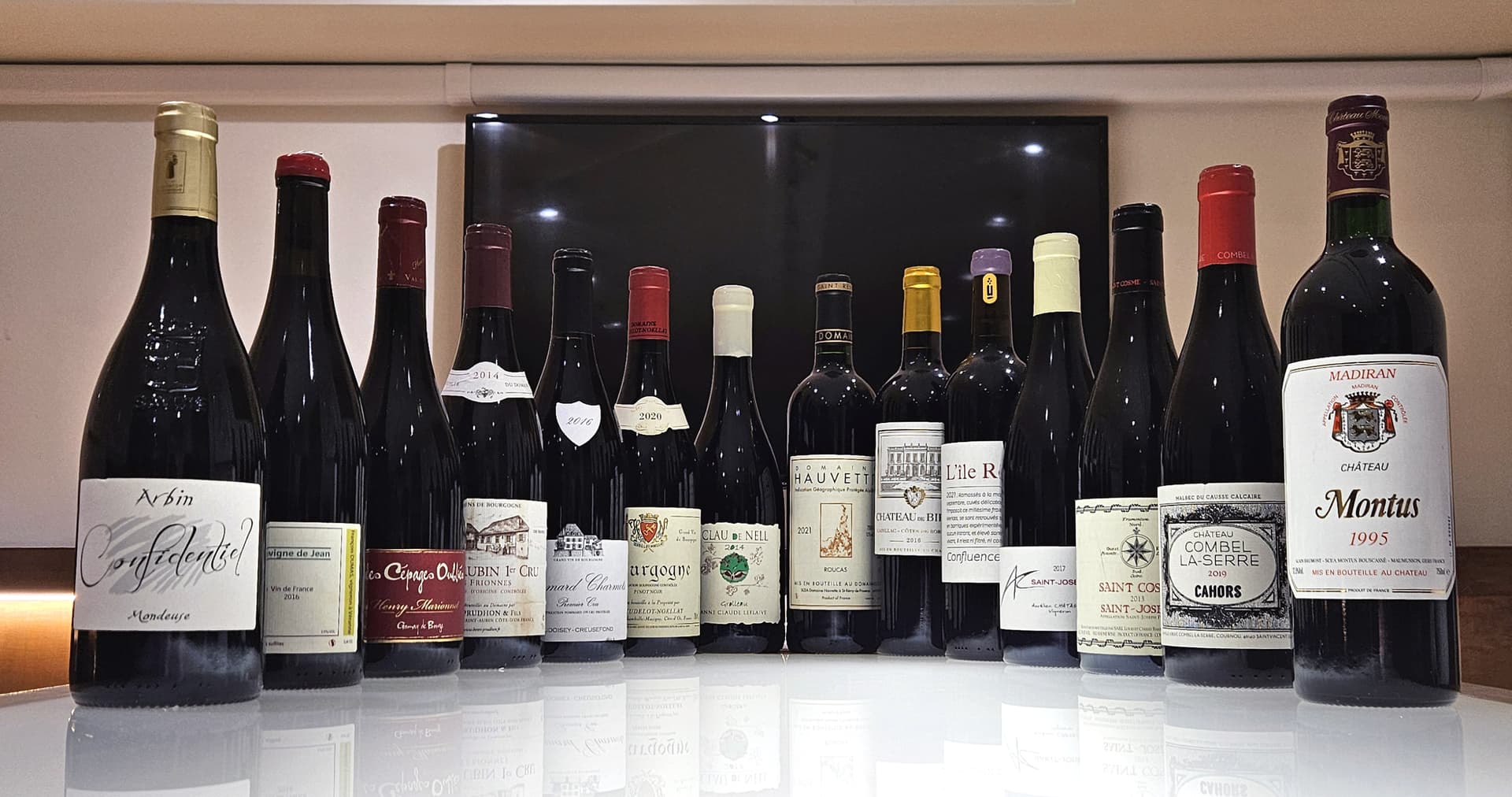
The random trio:
- 2019 Les Fils de Charles Trosset Vin de Savoie Arbin Cuvée Confidentiel - France, Savoie, Vin de Savoie Arbin (23.11.2024)
100% organically farmed Mondeuse from bushvine parcels in Arbin ranging between 20 and 80 years in age. Fermented spontaneously, macerated with the skins for 8-10 days. Aged in stainless steel and enameled tanks for 10 months. 12,5% alcohol.
Very deep, quite opaque and subtly hazy purplish-black color that doesn't look young nor old. The nose feels fragrant, quite youthful and slightly Syrah-like with expressive aromas of fresh bilberries and brambly black raspberries, some floral violet notes, a little bit of smoky reduction, light inky tones, a hint of crunchy lingonberry and a touch of herby greenness. The wine feels ripe and silky yet bone-dry and quite light-bodied on the palate with youthful, berry-driven flavors of bilberries and tart lingonberries, some stony mineral notes, a little bit of peppery spice, light inky tones, a hint of leafy greenness and a touch of sweet red cherry. The structure relies mostly on the bright, high acidity, but the medium tannins slowly pile up on the gums, adding some firmness to the overall feel. The finish is quite tart and crunchy with a little bit of tannic grip and a moderately long aftertaste of tart lingonberries and crunchy crowberries, some peppery tones, a little bit of stony minerality, light leafy green nuances, a hint of astringent chokeberry and a touch of ripe red cherry.
A very sophisticated, serious and balanced Mondeuse. I think it seems quite typical for this variety, but once again, had I tasted this wine blind, I would've said this is a Northern Rhône Syrah from a cooler vintage - the overall feel is remarkably similar with that deep, dark color, dark-toned fruit profile, peppery nuances and a subtle touch of reduction. The overall feel here is still very youthful and I can imagine the wine will not just keep, but also improve a little bit with additional aging. While drinking really well already now, I'd say the wine might reach its apogee in another 5 years or so. Good value at 25€.
(91 points) - 2016 François Dumas Vin de France La Vigne de Jean - France, Rhône, Vin de France (23.11.2024)
A special bottling of Dumas's Gamay, made with fruit sourced from an old - average vine age is 40 years - organically farmed vineyard in Saint-Joseph and bottled only in good enough vintages. Fermented spontaneously, aged for 22 months in old oak barriques, vinified with minimal or no sulfites. 13% alcohol.
Quite deep and moderately opaque plummy-violet color. The nose feels wild and noticeably volatile with aromas of blueberries, some sweet nail polish tones, a little bit of ripe blackberry, light plummy notes, a sharp hint of acetic VA and a touch of gravelly minerality. The wine feels dry, juicy and quite volatile on the palate with a light body and lifted flavors of cherries and juicy raspberries, some sharp acetic notes of VA, a little bit of tart lingonberry, light gravelly mineral tones, a sweeter hint of ripe blackberry and a touch of medicinal ether. The overall feel is pretty structure-driven with its high acidity and moderately grippy medium-plus tannins. The finish is wild, juicy and moderately grippy with a rather long aftertaste of brambly raspberries, some ripe cherries, light tart lingonberry tones, a little bit of crunchy crowberry, hints of ethery VA and acetic sharpness and a touch of juicy blackberry.
A guess this could've been a firm, balanced and quite serious Gamay, if it weren't for the excessively high VA. You can taste the sense of freshness, sinewy structure and good fruit intensity with ease - but it all gets overwhelmed by the sweet and sharp notes of VA. This is just getting too acetic for my preference - and I can tolerate some volatile qualities. I doubt any amount of aging will help the wine get any better from here. I guess the wine was priced more or less according to its quality at 17€.
(85 points) - 2018 Domaine de la Charmoise Gamay de Bouze Les Cépages Oubliés - France, Loire Valley, Val de Loire (23.11.2024)
100% organically farmed Gamay de Bouze, a teinturier variety. Fermented spontaneously, vinified without any SO2. 13% alcohol.
Quite deep and opaque black cherry color that doesn't appear young nor old. The nose feels brooding, mulchy and a bit leafy with slightly understated aromas of dark forest fruits, some forest floor, light inky tones and a hint of ripe blueberry. The wine feels brooding, rather ripe and quite juicy with a medium body and somewhat green-toned flavors of dark forest fruits, some tart lingonberries, a little bit of mulchy greenness, light sweeter nuances of ripe black cherries, a hint of sour cherry bitterness and a touch of earth. The wine is quite high in acidity with quite firm and moderately grippy medium-plus tannins. The finish is dark-toned, savory and rather grippy with a somewhat ripe aftertaste of dark forest fruits, some tart lingonberries, light green mulchy tones, a little bit of sweet black cherry and a hint of leafy greenness.
Unlike the more fruity and expressive 2016 vintage I had tasted some years ago, this 2018 vintage seemed somewhat tough and not that expressive with a slightly atypical and a bit green-toned, mulchy earthiness along with relatively ample and assertive tannins. I wonder if it had to do with the age difference; I had that 2016 when it was just 2 years old, whereas this wine was now 6 years old - I wonder if that much more age could diminish the fruit profile so considerably? Tasting this now makes you understand why this variety has normally been used a blending component to bring color and structure - not vinified on its own. This was still pretty enjoyable effort, although not nearly as delightful and expressive as the 2016 vintage. While not the most charming wine, this was still pretty good value at just 13,50€.
(89 points)
Burgundy:
- 2014 Henri Prudhon & Fils Saint-Aubin 1er Cru Les Frionnes - France, Burgundy, Côte de Beaune, Saint-Aubin 1er Cru (23.11.2024)
100% Pinot Noir from a 50-yo one-hectare plot the Prudhons own in Les Frionnes. Aged in used 228-liter oak pièces for 9-10 months. 13% alcohol.
Translucent and quite pale pomegranate color with a slightly evolved rusty hue. The nose feels a bit restrained and pleasantly fine-tuned with aromas of sweet dark berries, some brambly raspberry tones, a little bit of wild strawberry, light cherry nuances, a hint of licorice root, a touch of earthy Pinosity and a whiff of wood. The wine feels dry, crunchy and a bit lean on the palate with a light body and slightly evolved flavors of crunchy cranberries and brambly raspberries, some wild strawberries, light stony mineral notes, a little bit of forest floor, a savory, developed hint of meaty character and a touch of lingonberry. The wine is very high in acidity with very light and supple tannins. The finish is dry, crunchy and gently grippy with a long aftertaste of tart lingonberries and cranberries, some stony mineral notes, a little bit of wild strawberry, light woody nuances, a hint of earthy Pinosity and a touch of sour cherry bitterness.
A lovely, bright and quite delicate red Burgundy from the lighter end of the spectrum. The wine felt quite unchanged from the bottle I had 5 years earlier, but it is hard to assess if the wine is just at its peak, remaining like this until it starts to fade, or if it is actually evolving and improving at a glacial pace. While not a grand vin in any way, this was a lovely little 1er Cru from the normally quite overlooked part of Côte de Beaune. Good value at 23€.
(90 points) - 2016 Domaine Vaudoisey-Creusefond Pommard 1er Cru Les Charmots - France, Burgundy, Côte de Beaune, Pommard 1er Cru (23.11.2024)
100% Pinot Noir from a 0,58-hectare parcel in 1er Cru Les Charmots, planted in 1986 and 1991. The grapes are first partially destemmed, then cold-soaked for 3 days. Fermented spontaneously in oak vats. Aged in French oak pieces (15% new). 13% alcohol.
Medium-deep and moderately translucent dark ruby color. The nose feels somewhat savory yet enjoyably clean and fruit-forward with aromas of ripe dark forest fruits, some brambly blackberries, a little bit of sweet black cherry, light forest floor tones, a hint of licorice root and a touch of wood. The wine feels ripe and juicy but also enjoyably firm on the palate with a medium body and bright flavors of juicy cherries and sweet strawberries, some licorice tones, a little bit of brambly blackberry, light crunchy hints of tart red plums and lingonberries, a hint of dusty wood and a touch of boysenberry. The overall feel is quite structured with the rather high acidity and ripe medium tannins that slowly pile up on the gums. The finish is long, dark-toned and quite grippy with a vibrant, slightly sweetly-fruited aftertaste of ripe cherries and boysenberries, some licorice tones, a little bit of tart red plum, light woody nuances, a hint of wild strawberry and a touch of stony minerality.
An attractive, sophisticated and still quite youthful 1er Cru Pommard with lovely sense of structure and finesse. Definitely not a tough, clumsy and rustic Pommard! Thoroughly enjoyable already now, but will continue to evolve and improve for many years more. Priced according to its quality at 39€.
(92 points) - 2020 Alain Hudelot-Noëllat Bourgogne - France, Burgundy, Bourgogne (23.11.2024)
100% Pinot Noir sourced from 18 different parcels. Fully destemmed. Fermented spontaneously, aged for 16 months in used barrels ranging from 2 to 8 years old. Bottled unfined and unfiltered. 13% alcohol.
Luminous, very dark and more or less fully opaque black cherry color. The nose feels bold, dark-toned and quite noticeably ripe with aromas of juicy blackberries and black raspberries, some smoky tones, a little bit of peppery spice, light inky tones, a hint of savory wood and a faint touch of something meaty. The wine feels big, ripe and somewhat sweetly-fruited on the palate with a surprisingly full body and rich yet still dry flavors of blackberries and dark plummy fruit, some strawberry tones, a little bit of gravelly minerality, light juicy raspberry notes, a savory hint of meaty umami and a faint woody touch of savory oak spice. The overall feel is quite balanced despite the surprisingly big size, thanks to the moderately high acidity and balanced, black tea-like medium tannins. The finish is rich, juicy and slightly grippy with a ripe yet dry aftertaste of black raspberries, some dark plummy tones, a little bit of strawberry, light smoky nuances, a woody hint of savory oak spice and a touch of stony minerality.
A surprisingly ripe and voluminous effort for a Bourgogne - this was definitely a different beast compared to the slightly more rustic but also much more classically styled 2019 vintage. This was just remarkably big, dark and full-bodied effort for a Pinot Noir - appearance-wise, too! - and the sunny, dark-toned fruit profile wasn't maybe that typical of Burgundy Pinot Noir, either. I guess this is just a textbook example of 2020 red Burgundy: despite their often relatively reasonable levels of ABV and occasionally even surprisingly high levels of acidity, the wines still have almost invariably felt atypically deep and dark in color, big and full in body and very ripe and dark-toned in aromas and taste. This is a good and enjoyable wine, and I honestly can't describe the wine as "clumsy", as it definitely is anything but. However, compared to the ripe yet still lovely and harmonious 2019 vintage, this just feels a bit clumsy in comparison. I still enjoyed the wine in its own right - but it maybe isn't what I'm looking for in a Bourgogne Rouge. Perhaps getting a bit pricey for the quality at 37,20€.
(90 points)
Two naturalistas:
- 2014 Clau De Nell Grolleau - France, Loire Valley, Val de Loire (23.11.2024)
100% biodynamically farmed Grolleau from centenarian vineyards. Fermented spontaneously, macerated with the skins for approximately 3 weeks. Aged for 14 months in large oak foudres (70%) and used 228-liter pièces (30%). 12% alcohol.
Slightly translucent and somewhat evolved blackish-red color with a pale, translucent blood-red rim. The nose feels savory and somewhat funky with aromas of leathery brett and bitter almond oil, some fresh blackcurrant tones, a little bit of sweeter dark berries, light smoky phenolic notes, a hint of ripe cherry and a herbaceous touch of undergrowth. The wine feels dry, sinewy and even surprisingly stern on the palate with a medium body and crunchy flavors of redcurrants and dark forest fruits, some smoky and funky phenolic tones, a little bit of fresh red cherry, light brambly raspberry notes, a herby hint of greenness and a touch of bretty leather. The structure relies both on the high acidity and moderately grippy tannins. The finish is dry, phenolic and quite grippy with a rather long aftertaste of bretty leather and smoky phenolic notes, some crunchy redcurrants, a little bit of gravelly minerality, light sour cherry tones, a hint of tart dark forest fruit and a sweeter touch of ripe cherry.
A fun, tasty and at the same time surprisingly stern and angular Grolleau - definitely the most structured vintage of this label I've tasted! Stylistically this was quite similar to the 2013 vintage, only a bit more structured and slightly more intensely-flavored - and a polar opposite to the somewhat suppler, more fruit-driven 2015 that managed to combine depth of flavor and playful elegance to a more understated sense of sternness. I'd say that from quality perspective, this was on par with the 2013 vintage, not quite with the 2015. The wine is approaching its plateau of maturity and probably its potential for further development is somewhat limited, but I guess it could evolve and improve a little bit further from here. Good stuff and great value at 19,63€.
(91 points) - 2021 Domaine Hauvette Alpilles Roucas - France, Provence, Alpilles (23.11.2024)
A blend of biodynamically farmed Grenache (30%), Syrah (30%), Cabernet Sauvignon (20%) and Cinsaut (20%). All fruit destemmed. Fermented spontaneously, aged in concrete tanks. 12% alcohol.
Quite translucent blood-red color. The nose feels savory, somewhat smoky and a bit funky with characterful but also a bit reticent aromas of dark forest fruits and smoky reduction, some brambly raspberry notes, a little bit of leafy Cab character, light earthy tones, a hint of licorice root, a touch of loose tobacco and a bretty whiff of horse stables. While not that polished or expressive, the nose still feels pretty attractive with its rustic charms! The wine feels dry, harmonious and airy on the palate with a light-to-medium body and crunchy flavors of ripe raspberries and sweet cherries, some bretty barnyard funk, a little bit of fresh dark fruit, light smoky phenolic tones, a herbaceous hint of leafy greenness and a touch of licorice root. The overall feel is not tightly-knit or chewy, yet the wine shows good, sinewy sense of structure with its quite high acidity and moderately grippy tannins. The finish is rich, juicy and quite grippy with a dark-toned aftertaste of dark forest fruit and slightly lambic-like bretty leather, some smoky phenolic tones, a little bit of barnyard, light crunchy notes of fresh dark plums and cherries, a sweeter hint of ripe blackcurrants, and a touch of stony minerality.
A lovely, youthful and characterful Provencal red with good sense of structure and nice, somewhat rustic overall character. With the somewhat bretty flavor profile, you can easily see that the wine is from the less-interventionist end of the spectrum, but as the wine doesn't come across as one bit natty - there is no mousiness or obviously elevated levels of VA - I find it quite lovely and characterful. This is a wonderfully fresh and somewhat non-flashy wine with lots of understated complexity and sense of nuance that might not be obvious from the get-go. As the wine comes across as still very youthful, I can see this benefiting from additional age, although it is drinking really wonderfully already now - it just needs a little bit of air to blow off that reduction. Good value at 28,90€.
(92 points)
Bordeaux:
- 2016 Château de Birot Cadillac Côtes de Bordeaux - France, Bordeaux, Entre-Deux-Mers, Cadillac Côtes de Bordeaux (23.11.2024)
A blend of Merlot (76%), Cabernet Sauvignon (18%) and Cabernet Franc (6%) from +25 yo vineyards in Cadillac. Fermented and macerated for 15 days in stainless steel tanks. Aged in a combination of new French oak barriques (50%) and concrete tanks (50%) for 15 months. 13,6% alcohol.
Slightly translucent and a bit evolved blood-red color. The nose feels ripe, sweet-toned and a bit meaty with aromas of juicy dark plums, some vanilla oak, light evolved notes of wizened blackcurrants and savory meaty character, a little bit of woody oak spice, a hint of autumnal leaves and a touch of sweet oak spice. The wine feels dry, silky and slightly evolved on the palate with a medium-to-moderately full body and ripe yet savory and quite youthful flavors of red plums, some wizened blackcurrants, a little bit of creamy oak character, light vanilla tones, a hint of sweet oak spice and a touch of leafy character. The wine is quite high in acidity with moderately ample and relatively grippy tannins. The finish is long, savory and quite grippy with a dry aftertaste of crunchy red plums, some woody notes of savory oak, a little bit of sweet wizened blackcurrant, light meaty nuances, a hint of sweet, toasty oak and a touch of tobacco.
A nice, firm and balanced Bordeaux. The nose felt a bit more evolved, but on the palate the wine came across as pretty youthful and still very vibrant. As the wine is showing very little evolution - and the oaky qualities are still a bit to the fore - I'd say the wine could benefit from a handful of additional years in a cellar. The overall feel is a bit polished, but not too much - there is still great sense of freshness, structure and savory nuance to this wine. At just 9,30€, this has been terrific value.
(89 points) - 2021 Domaine L'Île Rouge Confluence - France, Vin de France (23.11.2024)
A blend of organically farmed Merlot (60%) and Castets (40%) from Entre-Deux-Mers, Bordeaux. Fermented spontaneously, aged in old French oak barrels. Bottled unfined, unfiltered and without any SO2. 12% alcohol.
Youthful, opaque black cherry color with a purplish hue. The nose feels youthful, characterful and dark-toned with quite classically styled aromas of fresh blackcurrants and bilberries, some leafy vegetal tones, a little bit of sauvage funk, light herbaceous notes of bell pepper, a hint of plummy Merlot fruit, a touch of bretty leather and a whiff of pipe tobacco. Lovely! The wine feels dry, pretty clean and somewhat herbaceous on the palate with a medium body and quite crunchy flavors of juicy blackcurrants, some plummy tones, a little bit of leafy greenness, light funky notes of leather saddle, crunchy hints of crowberries and redcurrants and an astringent touch of chokeberry. The overall feel is enjoyably firm and structured, thanks to the high acidity and moderately grippy tannins. The finish is savory, firm and quite grippy with a long, dry aftertaste of fresh blackcurrants and red plums, some leafy herbaceous notes, a little bit of tobacco, light crunchy crowberry tones, a hint of leathery funk and a touch of bell pepper.
A lovely, characterful and remarkably old-school Bordeaux - something I just can't remember tasting a single time from a wine made after the early 2000's! This feels like a classic, firm dry and a bit herbaceous Bordeaux from the 1980's or early 1990's - with the exception that the wine is still very youthful and vibrant with no signs of development whatsoever. While not a terribly complex wine, this is still very lovely and delicious with good sense of harmony and finesse. I'm not saying this is a grand vin but I'm diggin' this big time! A bargain at 16,90€. Recommended.
(91 points)
Northern Rhône Syrah:
- 2017 Aurélien Chatagnier Saint-Joseph - France, Rhône, Northern Rhône, Saint-Joseph (23.11.2024)
100% organically farmed Syrah from multiple parcels in the middle-to-northern part of the appellation, spread over multiple communes. Fully destemmed, fermented spontaneously, macerated with the skins for 3 weeks. Aged in used oak barrels for 12 months. 13,5% alcohol.
Very deep and quite opaque blackish-red color that doesn't appear young nor evolved. The nose feels a bit reticent but also quite classically styled with aromas of brambly blackberries and brooding spicy notes, a little bit of sunny dark fruit, light peppery tones, a hint of salty liquorice, a touch of olive and a whiff of gamey meat. The wine feels lively, vibrant and a bit sunny on the palate with a moderately full body and quite intense flavors of ripe dark berries, some spicy notes of cracked peppercorns, a little bit of extracted spice, light dark plummy tones, savory hints of game and olive and a touch of stony minerality. Surprisingly nice, fresh acidity for the warm vintage, supported by the somewhat grippy medium tannins. The finish is ripe and juicy yet dry with moderate tannic grip and a long aftertaste of juicy blackberries and brambly black raspberries, some gravelly mineral notes, a little bit of olive, light peppery tones, a savory hint of meaty umami and a touch of stony minerality.
A sophisticated and relatively fresh effort for the solar 2017 vintage. You can still taste the vintage in the overall ripeness and the somewhat brooding, extracted feel of the wine, but all things considered, the wine has handled the possible pitfalls of the vintage remarkably well. A fine and enjoyable wine that is very true to the variety and the appellation. Maybe not the most complex or memorable St Joe out there, but a lovely drop all the same. Superb value at 21€.
(92 points) - 2013 Saint Cosme Saint-Joseph - France, Rhône, Northern Rhône, Saint-Joseph (23.11.2024)
13% alcohol, 1,5 g/l residual sugar, pH 3,6. Made from 100% Serine (ancient Syrah) sourced from the northern reaches of St. Joseph, next to Condrieu vineyards. Fermented on indigenous yeasts in stainless steel and oak vats with whole clusters, aged for 12 months in 228-liter oak piéces (20% new).
Slightly translucent subtly hazy black cherry color with a faint, evolved dried-blood hue. The nose feels fragrant and expressive with aromas of sweet dark berries, some cassis, light peppery tones, a little bit of licorice, evolved hints of pipe tobacco and meaty character and a touch of brambly blackberry. The wine feels ripe, juicy and quite open-knit on the palate with a medium body and quite intense flavors of brambly blackberries and sweet strawberries, some fresh blackcurrant tones, a little bit of licorice root, light ferrous notes of blood, a hint of tobacco and a developed touch of gamey meat. The wine retains a surprisingly firm, structure-driven overall feel with its high acidity and still ample and relatively grippy tannins. The finish is dry, crunchy and quite grippy with a long and pretty intense aftertaste of brambly blackberries and fresh blackcurrants, some licorice root, light sweeter blueberry tones, a little bit of tobacco, a hint of savory wood spice and a touch of peppery spice.
I remember tasting this wine six years ago when it was much younger; back then it was dominated by this heady, sweet and quite atypical note of blackcurrant juice concentrate, which fortunately did blow off with some air. Today, however, the wine is much more balanced and harmonious in overall feel. There are still some cassis nuances, but they are much more down-toned and the wine shows more varietal typicity. Furthermore, the wine shows quite a bit more structure than your typical St. Joe, meaning probably that the wine is vinified more like a Southern Rhône red. Even then, the wine has evolved in the right direction from my previous taste, showing good sense of freshness and finesse. A terrific Northern Rhône Syrah from a Southern Rhône producer. This has been a great purchase at 22,50€.
(93 points)
Southwest France:
- 2019 Château Combel la Serre Cahors - France, Southwest France, Cahors (23.11.2024)
100% organically farmed Malbec. Half of the fruit is destemmed, half vinified in whole bunches. Fermented in stainless steel, macerated for 2-3 weeks. Aged for 12 months in used 225-liter barriques and 500-liter demi-muids. Minimal use of SO2. 12,5% alcohol.
Fully opaque purple color. The nose feels brooding, inky and a bit closed with slightly reticent aromas of juicy dark berries, some gravelly earth, light crunchy chokeberry tones, a little bit of fresh red damson, a hint of graphite and a touch of earth. The wine feels dry, silky and a bit primary on the palate with a medium-to-moderately full body and juicy flavors of dark forest fruits, some gravelly mineral tones, a little bit of graphite, light tart lingonberry notes, a hint of crowberry and a touch of chokeberry bitterness. The wine is high in acidity with moderately grippy tannins. The finish is lively, juicy and quite grippy with a rather long aftertaste of tart lingonberries and crowberries, some gravelly mineral tones, a little bit of graphite, light savory notes of meaty umami, a hint of chokeberry bitterness and a touch of earth.
This was quite similar to the Combel la Serre Les Peyres Levades I tasted some years ago - the style is somewhat understated and not particularly expressive, yet still pretty fresh and lively with a good amount of crunchy, somewhat tart fruit. And quite a bit of structure, too. It's hard to say if these wines just stay like this until they finally fade away, or if they actually evolve and unfurl into something more expressive, if given enough time. These are understated, finely-tuned wines that I enjoy, but never really get blown away by them. Enjoyable stuff all the same. They really do need some years first, but even then they tend to feel more like rustic weekday wines than anything particularly complex or that interesting. Whatever the case, this is definitely good value at 14€.
(90 points) - 1995 Château Montus Madiran - France, Southwest France, Madiran (23.11.2024)
12,5% alcohol.
Evolved, slightly translucent blackish-red color with a tertiary maroon hue. The nose feels expressive, quite evolved and pretty characterful with complex aromas of tobacco and old leather, some wizened blackcurrants, a little bit of smoke-cured meat, light pruney tones, hints of autumnal leaves and forest floor and a touch of earthy spices. The wine feels dry, dense and chewy on the palate with a full body and evolved, complex flavors of prunes and wizened blackcurrants, some leathery funk and smoke-cured meat, a little bit of tobacco, light autumnal notes of leafy forest floor, a hint of roasted bell pepper and a woody touch of pencil shavings. To be honest, the flavors remind me quite a bit of 1990's Bordeaux. The overall feel is quite sinewy and structure-driven, thanks to the high acidity and ample, grippy and assertive tannins. The finish is long, evolved and tannic with an intense and quite complex aftertaste of wizened blackcurrants and prunes, some leafy green tones, a little bit of gravelly minerality, light herbaceous notes of roasted bell pepper, a hint of smoke-cured meat and a touch of leathery funk.
Contrasting this bottle to the considerably more youthful - almost even backward - bottle we had three years earlier, it was obvious that this was more evolved in style. Even then, the wine was still far from falling apart and instead performing beautifully, like a wine on its plateau of maturity should. The overall feel was that of a 1990's Bordeaux, both in the nose and on the palate - maybe just showing a bit more tannic action, as Tannat is wont to do. All in all, this was a terrific Madiran at full maturity - drink now or within the next handful of years. A very complete wine and basically a steal at 24€.
(94 points)
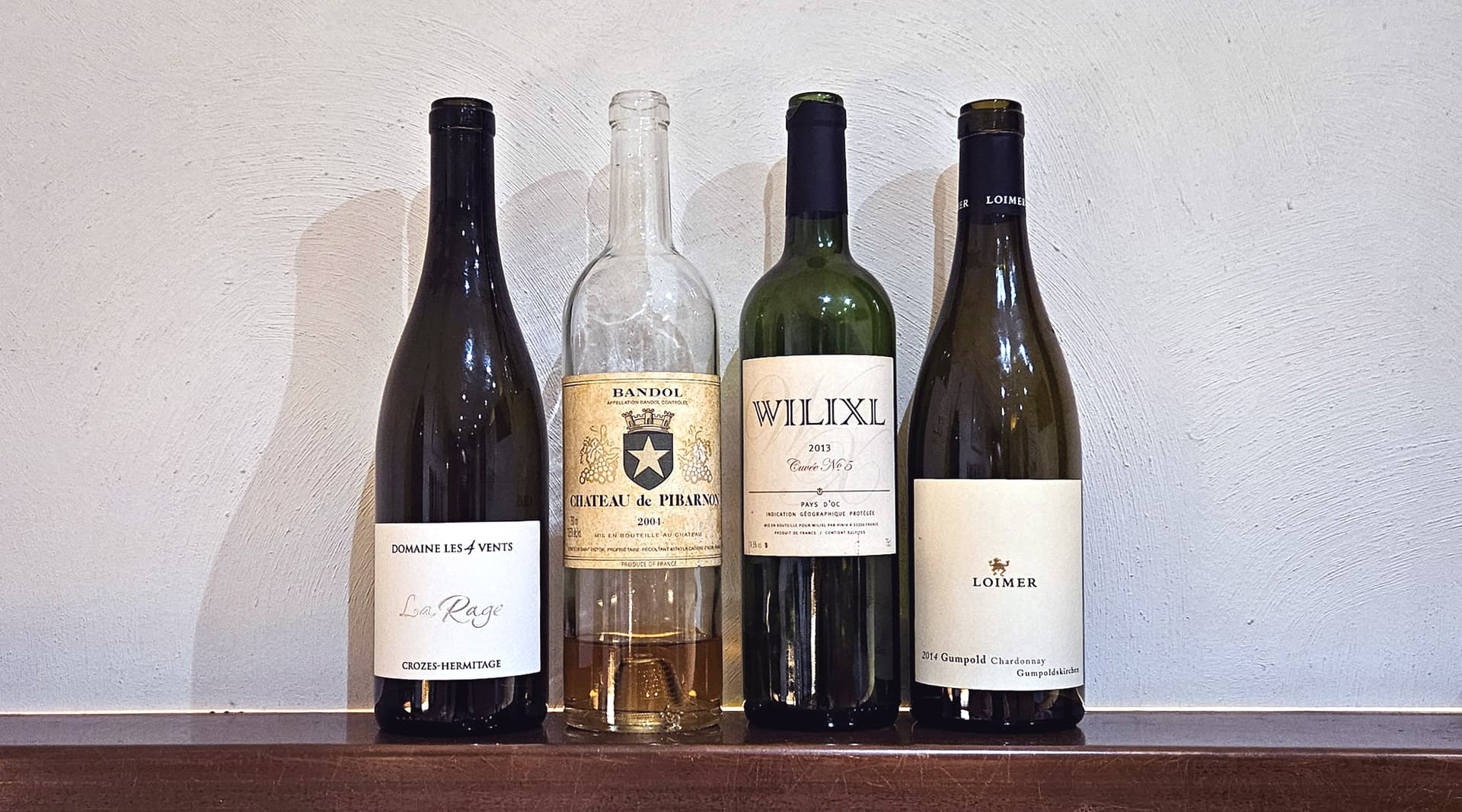
The extras:
- 2021 Domaine Les 4 Vents Crozes-Hermitage La Rage - France, Rhône, Northern Rhône, Crozes-Hermitage (23.11.2024)
100% organically farmed Marsanne from the 40-yo lieu-dit La Rage in La Roche-de-Glun, a hamlet in the southern part of Crozes-Hermitage. Fermented spontaneously in a demi-muid and vats. Aged in a demi-muid and vats for 10 months. 13,5% alcohol. Total production 1200-1500 bottles. Tasted blind.
Pale lemon-yellow color. The nose feels ripe and sweet-toned with quite fruit-forward aromas of peachy fruit, some pineapple, light creamy oak tones, a little bit of anise, a hint of toffee and a touch of floral spice. The wine feels broad, ripe and somewhat sweetly-fruited on the palate with a rather full body and spicy flavors of pineapple-driven tropical fruits, some floral tones, a little bit of savory wood spice, light quinine bitterness, a hint of savory Indian spices and a touch of creaminess. The moderately high acidity keeps the overall feel balanced, albeit not particularly fresh or zippy. The finish is ripe and quite sweet-toned with a long aftertaste of ripe exotic fruits, some fresh pineapple tones, a little bit of woody spice, light floral notes of lavender and spicy hops, a hint of quinine bitterness and a touch of creamy oak.
A pleasant but also very youthful and still a tad oaky white. The overall feel is very Rhône and that's where the guesses went more or less immediately - the wine is an obvious representative of the region and the only guessing was the age and the appellation. I'd say this wine could use a few more years and is probably peaking before its 10th birthday. Nice stuff, but ultimately nothing too memorable.
(89 points) - 2004 Château de Pibarnon Bandol Blanc - France, Provence, Bandol (23.11.2024)
Typically a blend of Clairette (close to 50%), Bourboulenc (about 30%) and other local white varieties (about 25%). Fermented slowly in tanks, aged for 6 months in tanks (in some vintage a small portion in old oak casks). 13,5% alcohol. Tasted blind.
Medium-deep peachy orange-yellow color with a deeper amber core. The nose feels old and quite noticeably oxidative with aromas of chopped nuts, some bruised apple tones, a little bit of acetaldehyde, light sweeter notes of ripe apricot, a hint of creaminess and a touch of sandy soil. The wine feels dry, broad and oxidative on the palate with a full body and quite tired flavors of oxidative nuttiness, some bruised apple tones, a little bit of hay, light tangy notes of aldehydic salinity and a hint of sandy soil. The medium acidity feels rather soft and modest. The finish is dry, tired and oxidative with a long aftertaste of walnuts and bruised apple, some ripe apricot, light aldehydic notes of green almonds, a little bit of hay and a touch of brown spices.
This was already past its peak. It was quite hard to identify it as a white Bandol as the wine was so evolved that very little sense of place remained.
(NR/flawed) - 2013 WILIXL Cuvée No. 5 - France, Languedoc Roussillon, Vin de Pays d'Oc (23.11.2024)
Supposedly a 100% Syrah from Minervois-La Livinière. 14,5% alcohol. Tasted blind.
Quite deep and rather opaque black cherry color with a slightly evolved dark blood-red hue. The nose feels dark-toned, ripe and quite sweetly-fruited with sunny aromas of juicy blackcurrants, some plummy tones, a little bit of toasty oak spice, light vanilla nuances, a spirituous hint of alcohol and a touch of sweet blueberry. The wine feels dry, ripe and slightly extracted on the palate with a moderately full body and quite bold flavors of dark plums and ripe blackcurrants, some toasty oak spice, a little bit of vanilla, light red-toned notes of strawberries and sour cherries, a hint of extracted woody bitterness and a touch of blueberry. The wine is quite high in acidity, which lends it good sense of balance, while the medium tannins lend some sense of firmness to the texture. The finish is dry, a bit warm and somewhat grippy with a long aftertaste of ripe blueberries and crunchy chokeberries, some toasty oak spice, a little bit of vanilla, light blackcurrant nuances, a hint of dark plummy fruit and a touch of sour cherry bitterness.
My guess was that this was an Californian Cab - just based on the rich, somewhat blackcurrant-driven fruit profile and moderately pronounced, vanilla-driven oak. Instead it turned out to be a vintage I had not tasted before of a familiar wine - this was so completely different from the much more sophisticated, less ripe and more savory 2012 vintage (Cuvée No. 3) that showed considerably lower ABV and not nearly as much oak as this did. Instead this was stylistically much closer to the similarly ripe and somewhat oaky 2014 vintage (Cuvée No. 6). To me, this didn't really feel like an old world Syrah - there is no real sense of place or varietal character. I hope age will help in toning the oak down a bit, but I'm not sure if it can do anything to the rather ripe and sweetly-fruited fruit profile. Well, at least the wine feels like it is built to age, so maybe we shall see.
(87 points) - 2014 Loimer Chardonnay Gumpold - Austria, Niederösterreich, Thermenregion (23.11.2024)
100% biodynamically farmed Chardonnay from Gumpoldskirchner Brindlbach. Macerated with the skins for 12 hours, then fermented spontaneously in oak barrels. Aged in 300-liter oak casks (25% new) for 12 months, then blended together and aged for another 8 months in stainless steel tanks. Bottled on May 19th, 2016. 13% alcohol, 1g/l residual sugar and 5,2 g/l acidity. Tasted blind.
Luminous, deep yellow-green color with evolved golden highlights. The nose feels woody, intense and slightly evolved with layered aromas of creamy oak and toasted oak spice, some peachy notes of ripe stone fruits, a little bit of bitter almond oil, light juicy Golden Apple tones, a hint of apricot marmalade and a woody touch of savory oak. The wine feels broad, layered and slightly evolved with a full body and moderately ripe flavors of sweet Golden Delicious apple, some stony mineral notes, a little bit of nutty oak, light sweeter notes of toasty oak spice, a hint of ripe pineapple and a touch of salinity. The moderately high acidity keeps the wine quite nicely in balance. The finish is rich, somewhat woody and quite lengthy with a complex aftertaste of pineapple, some nutty oak tones, a little bit of creamy oak and toasty oak spice, light sweeter notes of orange marmalade, a hint of smoke and a touch of fresh Golden Delicious apple.
I'm not usually the biggest fan of ripe and oaky Chardonnays, but I must admit this wine shows surprisingly nice sense of finesse and balance - I guess the 10 years of aging must've helped there. You can taste some of that oak impact, but it isn't in your face - instead it intermingles with the fruit quite nicely, and even though the level of acidity isn't that high, there is still enough acidity to keep things balanced and structure. Even if the wine doesn't feel young anymore, I'd say it comes across as surprisingly youthful for its age - I can imagine this wine can easily age, evolve and improve for another 10 years or so. Pretty nice stuff.
(92 points)
Posted from CellarTracker