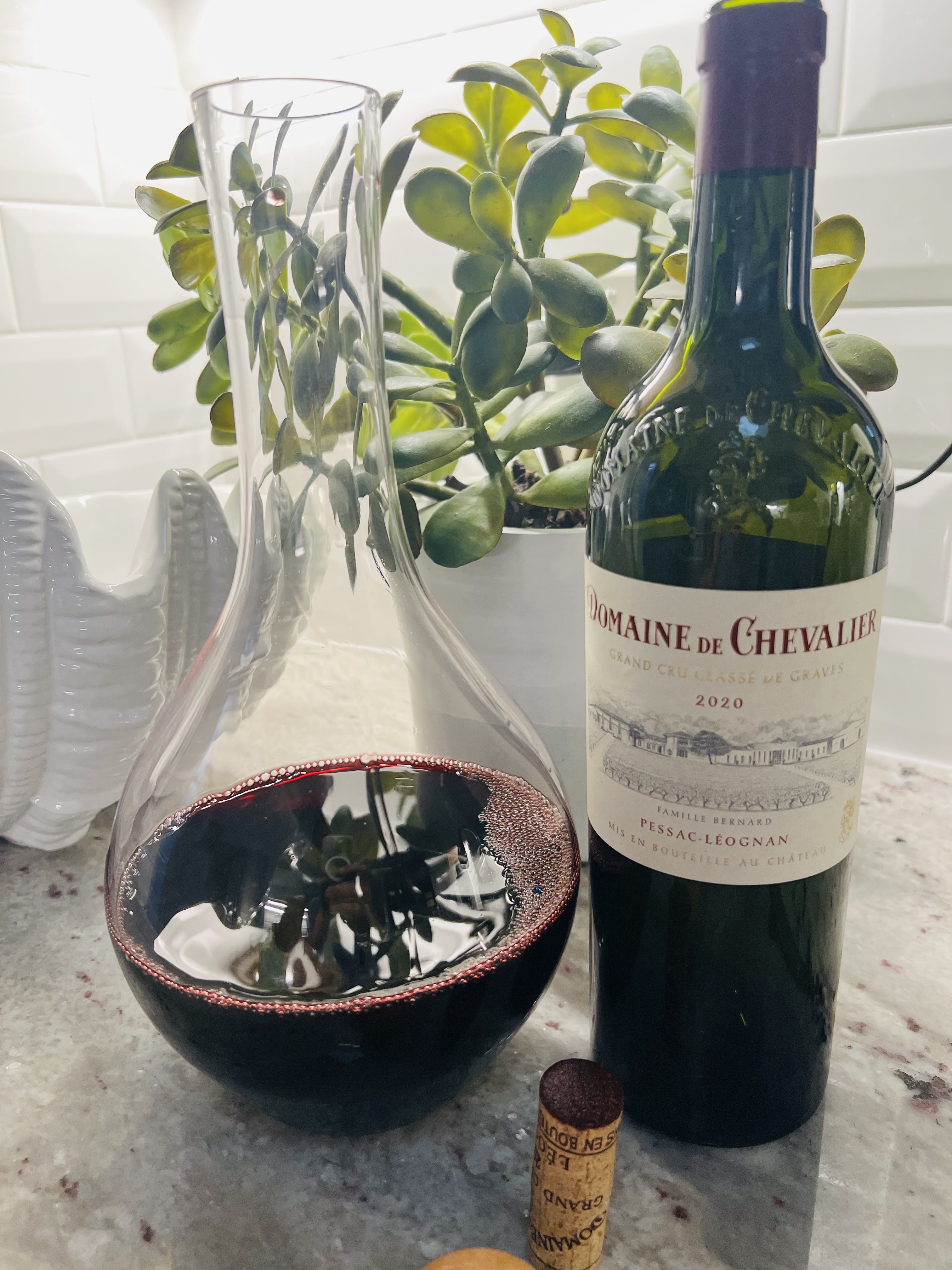
Opened a bottle of DDC 2019. It’s a huge improvement over many of their most recent wines. After 2000, there seemed to be a run of fairly dull vintages here that just went to be going through the motions. This proved to be fresher and easy to like.
There is the promise of complexity here, spices, anise and some floral elements. It is however quite rich and shows a fairly ripe profile. It had acidity though, and as I said freshness, but it does hearken back to the excellent 2000 rather than the older, lovely wines from thirty years ago and more.
Would I buy more? No. But I am certainly not going to sell the bottles I bought. It is a very nice wine, and given some age, will be a crowd pleaser. 93
Have you tried the 2016? I’m wondering how it might compare to the 2019. I’ve had the (nice) 2000 a couple times and really liked it. Thinking about dipping my toes back into the DDC waters. I don’t mind slightly riper wines, for what it’s worth…
Latching on to this thread to share in the pleasure with a tasting note of my own:
Domaine de Chevalier Rouge 2019:
Opened on a bit of a Father’s Day whim, and what a pleasure it was. Opened, initial nose of cherry, red currant, some small hint of earthiness. Decanted for 45 minutes, and then the honored guests arrived earlier than planned and it was time to pour no matter what.
So fresh and vivacious! Wonderfully juicy, red currants and red plum, with a quick transition to the distinct-but-not-unpleasant fine grain tannins.
At certain points it had difficulty dancing in tandem with the various cheeses, jams, fruits, and crackers that we sat with, but at the three hour mark the wine almost seemed to be revving it’s engine. All of the freshness increased without reducing the well-delineated structure, and the finish only seemed to prolong with each hour.
Others have mentioned anise, blood orange, etc, and I think those match up quite well to what we encountered, perhaps some of it lost in the creaminess of our Delice de Bourgogne or Roquefort.
I got a case from The Chicago Wine Company. They only listed a few bottles on their website. I called them up and asked if they could get me a case. Took about 6 months but they came through. Great service imo.
I am curious about this too. The post 2000 DDCs were definitely not my style, and I gather it changed back but I am not sure exactly when. I did enjoy the 2019, but it’s a far cry from the very austere style of the old wines. (They turned into swans after twenty years).
Picked up a case each of 1989 and 1990 from I assume the same source as Pat Martin’s, where the 1989 scored first place in their 1989 horizontal.
I have an old cache of them, and recently enjoyed the 1975 and 1981. They are still relatively inexpensive, certainly given the quality, and a good find for those looking for traditional slightly “austere” wines.
I think I should define what I mean by “austere” and others can chime in. It’s easier to define what it’s not. It doesn’t begin with everything hanging out like an overfriendly dog licking your face. It takes a while for everything to show, a wine that you will spend many minutes tracking as it unfolds in the glass. You should find nuance and complexity as the wine takes in air, and a finish that is in keeping with the quality of the wine. The better the wine, the more layers you will find, the more harmonious it is, and the longer the finish. That does not mean that a wine that a not austere cannot have some of these qualities, but this is what I would expect if somebody uses the word.
Prompted by Howard and Mark’s exchanges, I did a little research (not with the wine itself, unfortunately). According to the blurb in recent tasting notes in the Wine Advocate, penned by William I think, after purchasing DDC in 1983, the new owners extensively replanted the vineyard (finishing in 1993 according to Leve). The grapes deriving from the very young vines lacked sufficient material, so, according to William, DDC overcompensated in the “early 2000s” to add more concentration, i.e., they over-extracted. To Mark’s issue, William does not say when the “early 2000s” ended. I looked at Lisa Perotti-Brown’s and Neal Martin’s notes. Lisa’s notes, from 2009 through 2023, are remarkably consistent (with a downturn in 2011 through 2014, although I suspect the 2014 was a bad bottle): 95-96 points, mostly medium-bodied, with a few medium to full-bodied, with 13.5% alcohol, again with a few exceptions and fine- or very fine-grained tannins. Neal’s notes are also consistent and consistent with Lisa’s notes. Both described the 2010 as medium-bodied, which is quite an achievement in that vintage. I would note that Parker liked both the 2009 and 2010 quite a bit.
So my combined narrative is this: as the vines aged, DDC gradually backed off the extraction and appear to have dialed in what they wanted by 2009 or so and have stayed consistent to that approach ever since. They sound very different from wines made in the 1980s and 1990s, being more fruit-forward. To Howard’s specific question, the 2016 and 2019 should be quite similar.
N.B. I also read through Parker’s notes. He really slammed the wines after the Bernard family bought the estate in 1983. His persistent complaint is that the wines were too oaky, which I found amusing in this context. His notes beginning with the 1996 vintage did praise the estate for reducing the overt oak influences. He did not quite put it this way, but it might have been more accurate to say that they were increasing the fruit so that the oak wasn’t quite so dominant. Or maybe they just hadn’t had time to turn into swans.
First of all the Bernard family are some of the nicest people in the industry. I felt really bad that for some years I found so many wines anonymous.
As Chris says, there is a certain irony in Parker’s oak complaint. And equally ironic, is for me of all people saying it’s not a problem. I have done a number of verticals, and taste the wines frequently, and there is certainly no problem with oak.
Big brooding wine, lots of structure. Quite primary, as expected, but still showing some distinct Graves notes of smoke, earth and minerals. I put this a step behind 2019 and 2016, but also acknowledge, this wine will require more time than those vintages to fully evolve.
I appreciate you providing your definition, since it makes some of your other posts make more sense. Webster and I have defined austere to mean “stern and cold” or “markedly simple or unadorned.”