If anyone wants to dump their 01s I will be happy to take them off of your hands.
If you’d attended that tasting Greg ran, you might not extend that offer. One has to have faith…
Ohhhh I do. Barolo - Yesterday, Today and Forever.
Yup. More like 1996 than 2001, and we’ll have to wait for these wines to come around.
I guess that means old guys should go lite, with the 2010’s, right?
Who are you calling old? 
Seriously though. I’m closing in on fifty and while I’m going long on 2010s my enthusiasm for 2011 is precisely for that reason. I’ll enjoy the 2011s in my 50s. The 2010s in my 60s if i’m lucky but more likely in my fcking 70s and I doubt I’ll enjoy much in my fcking 70s. Except selling you kids my 2010s for multiples of what I paid for them.
skimming that line i thought you wrote “I doubt i’ll enjoy much f*cking in my 70s”…

Mark, we have plenty of regular customers who still enjoy wine well into their 70’s and one who’s 91.
Well I am just enjoying a 2015 Fratelli Alessandria San Lorenzo di Verduno and it fits the description
Painfully enjoyable
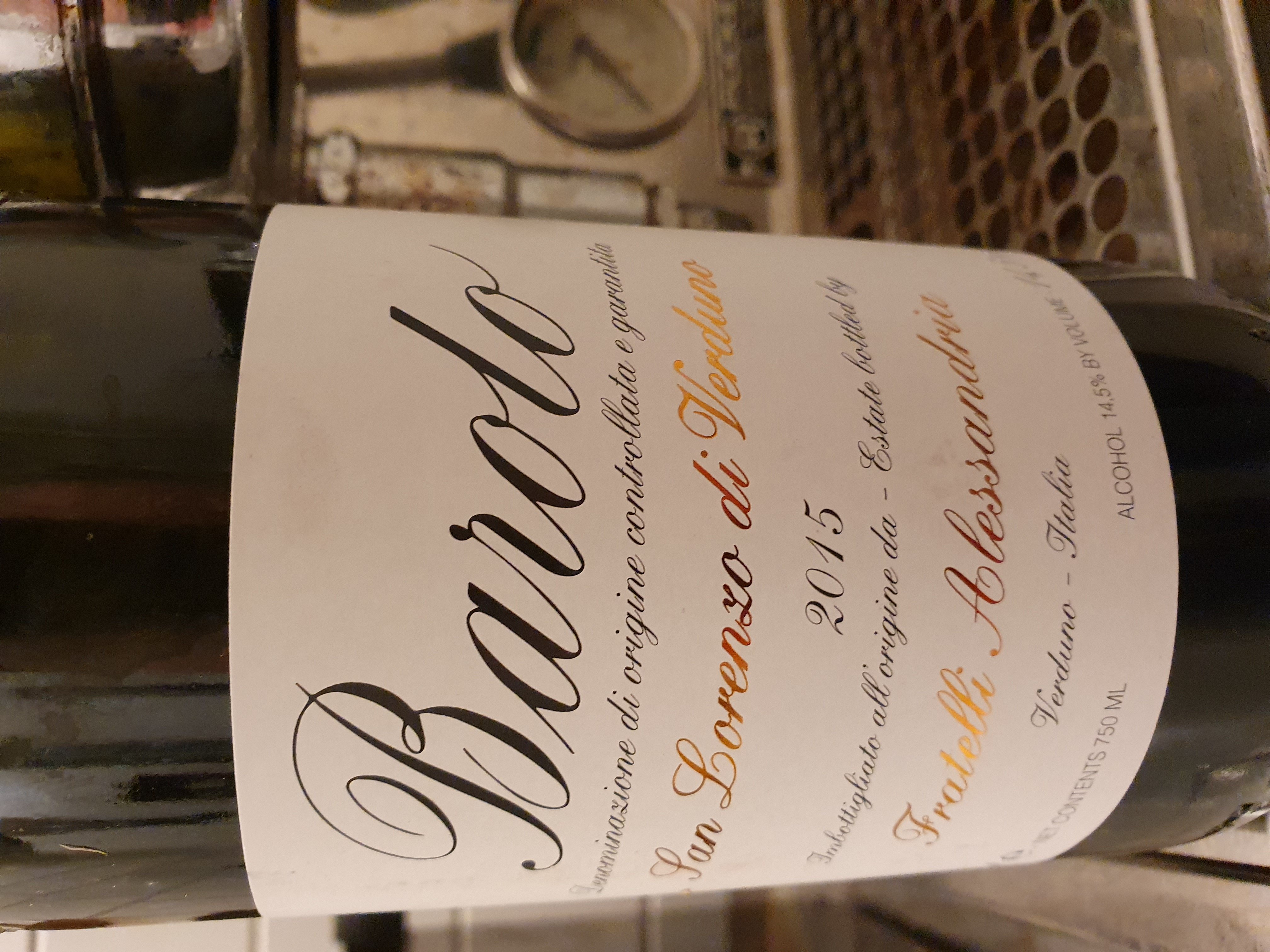
Very enjoyable wine. I have a half a case and am trying hard as possible to not buy another, instead saving for the 16s.
Anyone want to comment on how these are aging? Do you think the newer, smoother examples will hold up at 30+ years?
30 years is hard to predict, but I have been enjoying quite a few 2001/4/8 Barolos that have been in early maturity, showing well, but with plenty of life and structure to seem to go at least another decade. YMMV based on how much age fits your taste, but I’m in no hurry to drink these. Btw I left out 2006 because those seem the most structured of this group so I’m opening them less. For now.
2 Likes
I agree my recent experience has been that 2006 is the roughest bruiser in the 2000s. In some ways I like that kind of firm structure although I am starting to think this is a little bit of a junior 1996 that looks like it will be very promising in time and eventually just not pan out with much harmony across the board. It’s good or even very good, I just wonder if there is enough fruit to match the rough tannin for many.
But, specific to this thread and what some were/are calling the new paradigm, I think the broader turn to a relatively accessible style started to take hold somewhere around 2008-2010 even if some were working this direction earlier. I haven’t tasted much from the region since 2014.
07 seemed to be a bit of a watershed in that sense. It was a warm, riper year but has been fairly open to drink its entire life.
What I have found interesting is in talking to producers and importers is that many have said that the line between what was used to be considered modern started changing a good bit in 2013. Old modernistas started using more Botti and more gentle forms of winemaking while traditionalists did focus highly on meticulous farming/organics/biodynamics but also using more pump overs that would’ve previously been thought of as modern. Macerations have been cut down which can be a good thing to lessen the possibility of VA and other spoilage issues.
It certainly struck me when I visited Burzi that Alberto absolutely blends the two camps while still clearly doing what many would call traditional winemaking. Fenocchio was a very clean cellar with equipment that would have been called modern 20 years ago but is now just how they express things (whilst clearly using Botti). On the flip side, Enzo Boglietti made a major style shift in 2015 to focus more on what we consider traditional winemaking while still using some of his modernist techniques. Having tasted the wines from both eras, I personally feel that the new style is much superior to his old style. But that’s just my personal opinion.
This past december, I did a 2020 horizontal that had some classic arch-traditionalists and new producers that do things in a more traditional style but with modern techniques. The wines on the whole were very giving and open. Can they improve with age? Almost certainly. But would one be committing a cardinal sin by opening bottles now? I don’t think so.
These are just my experiences and feelings. But those experiences have been borne out of tasting loads of wines at trade tastings, on my own, and with friends.
4 Likes
I used to import Fenocchio through the 2010 vintage. Like many, he was always looking to make minor adjustments to do better. I would put him somewhere in between staunch traditionalists and more modern style but way more towards tradition. Not quite a true new paradigm-er (whatever that may be) but close. At that time he was just starting to play around with the 90 di, or 90 day macerations for that particular wine. I haven’t followed it and would be curious to how it’s working. I’ve been traveling up until recently and have been meaning to post notes on some Fenocchio 2008 and 2010. Will get those up soon.
1 Like
I’ve been interested in the new camp of producers, almost posted a few times but never quite sure who to include in the group. I believe from your prior notes we are talking about some of the same. Ca’ di Press, LaLu, Serafino Rivella, Philine Isabel, Penna-Currado, a few others I can be certain of, but then there are those for whom I’m less certain. Negri? Bondonio? Not sure exactly what modern techniques are involved though. Do you? New/small/French oak is pretty much the (only?) thing I want no part of in any percentage but also avoid particularly short macerations. I feel that many of these producers are achieving a more delicate, earlier drinking style without resorting to barrique to do it, but not sure what other differences are involved.
No one is going back to the methods of the 1970’s. Wines had ferocious tannins and super high acidity. Undrinkable even up to 20 years of age.
Obviously there’s been a lot of experimentation over the past couple of decades on both sides of the “line,” but I would have put that convergence a decade earlier. For example, Scavino cut back on barriques and started using more botte in the early 2000s.
Who among the traditionalists have shortened maceration times? I haven’t heard about that. I generally still see 21-30 days on the websites of producers viewed as traditional.
1 Like
I was at Scavino last week and they don’t even use barriques anymore for their Barolo.
They’re still doing 4-6 day maceration for their classic and 10 days for the single vineyards
Wow! That is still pretty extremely modern.
Yes, I had the impression that by at least '16 the barriques were gone. The wines seemed much more precise.
1 Like