Thanks. I thought that but I saw a thread here ‘down but not out’ on Harrington, so I was confused.
Bryan has indeed closed his winery but he still has some wine left to sell! He put together a few 6-pack options on that “down but not out” offering but he’s open to working with people if they’re interested in specific wines that he still has in stock. I do think he’s sold out of all the dry Mission wines but I think he still has some of the Mission Angelica sweet wines available.
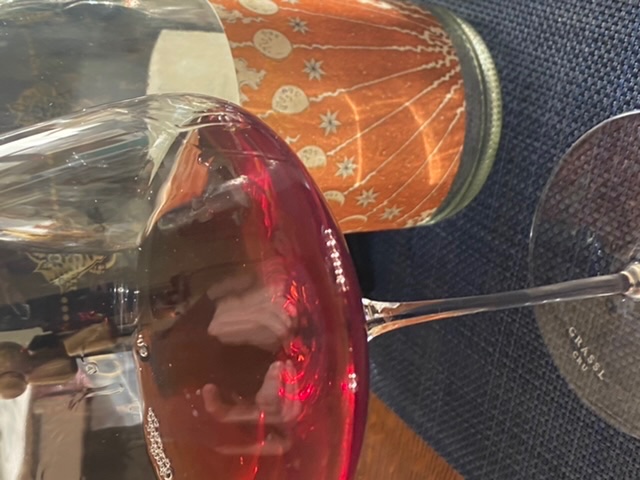
Pax is Definitely more glou glou, a light red my wife mistook for a rose. Served at 60F indoors.
Tried the 2019 Russack Mission in this thread. Loved it.
Okay, I typed up a response to a conversation about the use of “Rose of Peru” vs “Mission” on the “Saving Old Vineyards - Economics versus Heritage” thread, but decided that it best fit this thread instead.
I thought Rosa de Peru = Mission as well.
Wes’ statement has me intrigued, however. While I have not read much on the regional names for the Mission variety, it sounds logical.
If you want to rely on the Vitis International Variety Catalogue (VIVC), there are 45 alternative names for the winegrape variety known as Listan Prieto - including “Rose of Peru”. However, “Rose of Peru” also serves as a synonym for Black Prince, a different variety.
Just a random note: Sunce Winery currently offers a 2017 “Rosa del Peru” from the “Sandy Lane Vineyard” in Contra Costa County.
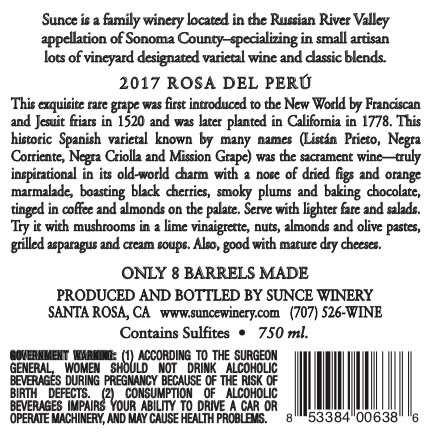
I am 99% certain that the usage of the name “Rosa del Peru” in this instance is poetic creativity on the part of the winery. In all of my previous experiences, references of this variety have read “Mission” (with regard to Contra Costa).
Sunce Winery website:
https://suncewinery.com
*** EDIT ***
Rose of Peru (aka, Rosa del Perú) is asserted by VIVC to be a cross between Listan Prieta and Muscat of Alexandria.
Depending on where a vine sample is found and upon which source of information one relies, Rose of Peru may serve as a synonym for other winegrapes: Mission in the United States or, in Australia, Cinsault .
In 2017, a TTB document asserted, “Rose of Peru is a red Vitis vinifera variety, long grown in California, that DNA evidence has disclosed to be identical to the Mission variety…”.
Black Prince is reported to be Rose of Peru, based on analysis of a sample taken from Merbein, in Victoria, Australia, per Wine Australia. However, a June 11, 1881, Pacific Rural Press article asserted that Black Prince is not Rose of Peru.
Moldova is an eastern European cross of Guzal Kara and Seiv Villar. It also is known as “Kodryanka Late” meaning “Black Prince”.
Salvador is a rupestris/vinifera hybrid, according to Foundation Plant Services and Vitis International Variety Catalogue (VIVC). It also is known as “Salvador noire”, “Seibel 128”, and “Seibel 123”. FPS also lists Salvador’s pedigree as “Munsen x vinifera”.
Thomas V. Minden was “the father of Texas wine grapes”.
It’s my understanding Rose of Peru is the Anglicized historic California name, from the Spanish Rosa de Peru, since the grape came to the missions from Peru. Seems like a more romantic, more marketable name. I’d guess Mission came naturally from people describing it as “the mission grape” rather than an intentional renaming.
Interesting Black Price is another Mission x Muscat of Alexandria, like (two of the white) “Torontes” varieties. It’d be interesting to try one, to contrast with Black Muscat and Bracchetto.
Drew, I know for a fact that the Sandy Lane Vineyards grow Mission, so like you say, this must be poetic creativity.
Funnily enough, I myself toyed with the idea in the early days to refer to it as “Listan Prieto”, to get away from the slightly mundane sounding Mission and the bad connotations the grape has here. But then I thought that would just ring false - better to own its name and try to improve it.
Adam, I believe that it’s still early days in establishing Mission in the public eye as a modern, legitimate variety. Now is not the time to confuse potential clients. Just my unsolicited opinion.
Having said that, the press has made a few minor efforts to revitalize interest in the grape:
San Francisco Chronicle
“Mission Revival: State’s First Wine Grape, Circa 1760, Rides Again”
by Esther Mobley
March 23, 2017
"…What makes Mission a risky planting decision? Simple. It doesn’t produce a very good wine. Though that, of course, is up for debate.
"…Others advocated the preservation of Mission. Julius Dresel, whose brother Emil planted the Sonoma Valley property where Scribe Winery now stands, wrote to the editors of the Daily Alta California in 1872 that the Mission wine from his brother’s estate was ‘pure of taste, ripe and unctuous’ and ‘of a marked Burgundy flavor’, praising its ‘sweetness and high percentage of genuine alcohol.’
"California Gov. John Downey took a strong stand, too. ‘We may and do want other varieties of vines, but be slow in your changes,’ Downey cautioned, as quoted in the Los Angeles Times in 1883. ‘Stick to your so-called Mission. We have not yet found its substitute, its equal, or peer. It is an old friend; cling to it with affection, and let our friends at the north follow that vagary of jumping from one thing to another.’
"Suffice it to say, Downey’s team lost. And that ‘vagary’ resulted in the California wine industry as we know it today, capable of producing long-lived Pinot Noirs, Chardonnays and Syrahs that rival the best in the world. Which is more than could be said for Mission, whose wines are light in color, low in acid and — it must be said — short on complexity.
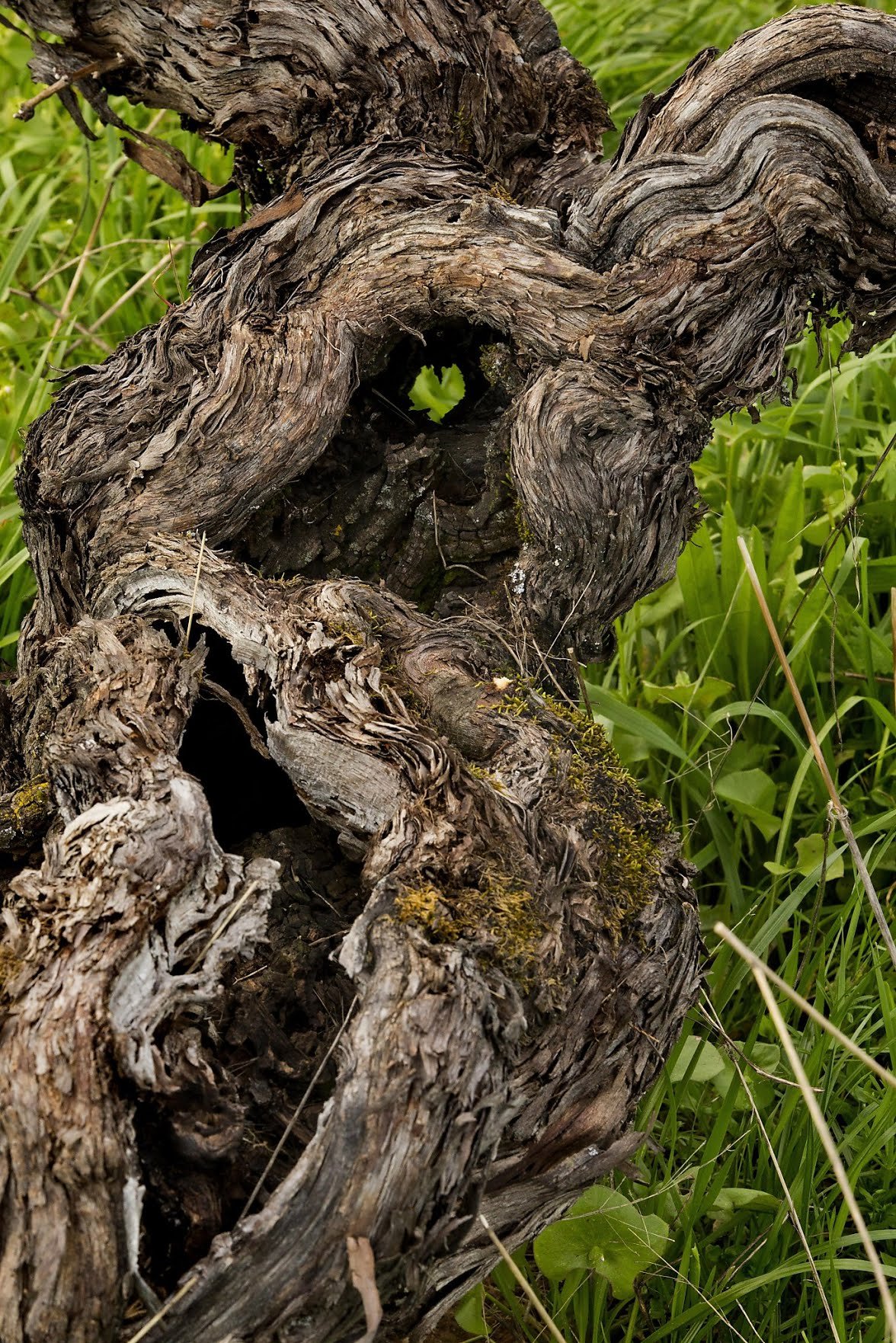
"Yet a number of wineries have started making Mission again in recent years, whether from ancient vineyards survived from the 19th century (sites like Deaver and Story in Amador County and Somers in Lodi) or — as at Rusack and Scribe — planting it anew.
“‘In the past five years, the interest in our Mission vines has skyrocketed,’ says Rob Campbell, whose Story Vineyard in Plymouth contains 1 acre of Mission planted in 1894. ‘Right around harvest I will get 10 to 20 calls from people saying, ‘hey, got any Mission to sell?’ Fifteen years ago, Campbell felt lucky if he could charge $500 per ton for his Mission fruit. Now the Amador County average is $2,300 — more than Zinfandel.
"As hardy as the settlers who brought it, the grape has obvious appeal for a less-advanced era of viticulture. ‘When you look at a vine, you see why the Spaniards brought it,’ says Brian Maloney, winemaker for Buena Vista, which — despite its founder’s anti-Mission position — has just released its first angelica. High-yielding and impervious to mold and mildew, as Maloney puts it, these are ‘big vigorous vines, with thick skins, big tannins, which I assume would make it resistant to bugs. It was able to thrive.’
"…Bizarrely, Mission’s thick skins do not translate to a darkly colored wine, as you’d expect. It’s so light and translucent that you might mistake it for rosé. Yet the wine is intensely bitter, as if from tannins, with a pithy orange-peel flavor and an oily, viscous texture.
"Some winemakers, like Bryan Harrington and Chris Brockway, like it for that light-bodied quaffability, and even emphasize that quality by fermenting it carbonically. Harrington, whose translucent, dry 2016 Somers Vineyard Mission tastes like raspberry candy and grapefruit, is drawn to Mission for the same reason he’s drawn to other earthy, light-bodied grapes like Trousseau, Corvina and Poulsard.
“‘It’s meant to be enjoyed young and with relish,’ Harrington says.
Other contemporary Mission makers dismiss its virtues as a dry wine, however, opting instead to focus on fortified angelica. ‘As a table wine, it’s pretty simple, I think,’ says Bill Wathen, who produces angelica at his Foxen Winery in Santa Maria (Santa Barbara County).
"…It all makes a good story, maybe too good of a story. The ur-vine, the parent of California viticulture — the history of the Mission grape calls irresistibly to our nostalgia. As a storyteller, I love imagining these bizarre, contorted frontier vines, stalwart counterparts to the California newcomers.
“But as a wine drinker, I fear that Mission wine, whether dry or fortified, delivers more pleasure from novelty than from taste. I can enjoy the treacle of an angelica or the arrestingly pithy bite of a Mission table wine. But there’s a limit to how much I’m willing to pay for nostalgic value…”.
Los Angeles has a strange commitment to embracing its historical connections with the Mission grape. On one hand, efforts have been made to create new plantings in vacant parcels of land in parts of the city. On the other, wines produced by the variety have received a lukewarm reception by the press.
LA Times
“The Mission Grape is Cool in LA Again, Thanks to the Natural Wine Movement”
by Richard Parks III
May 9, 2019
"…The Mission grape first came to the city from Spain, where it is known as listán prieto, with Father Junípero Serra, whose priests planted vines from New Mexico down to Baja; it is also grown in Peru and Chile, where it is known as criolla and pais. By 1850, the year California became a state, L.A. County was home to 100 vineyards and wineries.
"During Prohibition, the Tecate vineyards that Tellez farms today produced wine that was smuggled into America. As California became famous for wine, and Tecate became a beer town, the Mission grape all but disappeared from the region. The Mission’s ancestral relation, listán prieto, also nearly died out in Spain, and now is mostly grown in the Canary Islands.
"According to the Department of Agriculture, there are about 400 acres of Mission grapes statewide, compared with the 10,000 acres estimated in Santa Ana alone in the 1850s.
"Many vines are left uncultivated, or their grapes are blended for jug wine. Rarely, they are made into Angelica — a sweet fortified wine the mission priests made — notably by Santa Barbara’s Gypsy Canyon and San Francisco’s Harrington Wines, which also bottles a dry version. A Los Angeles city archivist named Michael Holland tends to two hybrid Mission grape plants growing behind the Avila Adobe, L.A.’s oldest structure, on Olvera Street, and makes wine from them.
"In the land of Cabernet, the Mission grape has its critics. A winemaker I spoke to called it ‘flabby, spineless’. It doesn’t age well; it isn’t a wine for the cellar. But even detractors see its value.
"Despite saying Mission grape wine tastes like ‘a wet hamster going down,’ local wine historian Ned Teitelbaum plans to plant Mission grapes in public spaces around the city. He hopes that the grape, which has survived across cultures and time periods and borders, can have a more permanent place in L.A., where once it was so prominent but now exists only as an import.
“‘The story behind the wine,’ he says, ‘has become more important than the wine.’
LA Times
“What to Do with Grapes from 150-Year-Old Vines at Olvera Street? Make Wine, of Course”
September 18, 2015
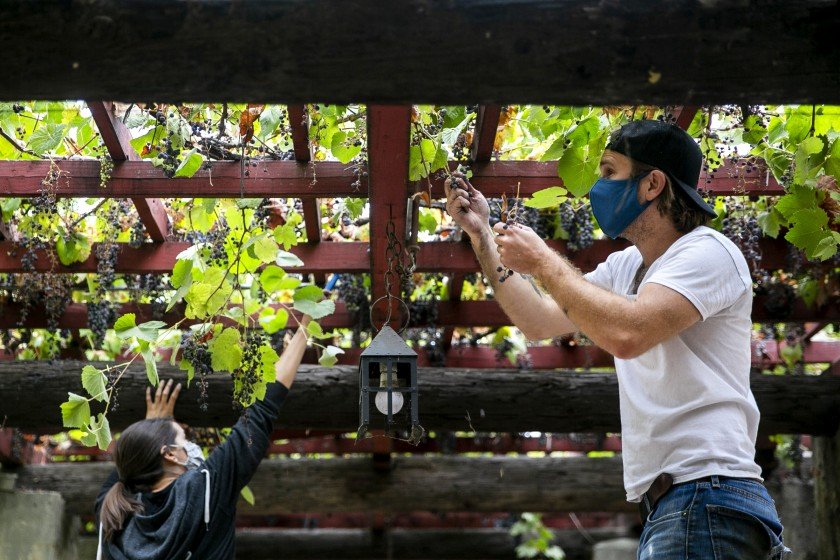
Okay, so the article below discusses the harvesting of grapes from an old Mission-hybrid vine (“Mother Vine”) at San Gabriel’s Mission. Nevertheless, the individuals involved are part of the effort to promote awareness of the Mission variety and its historic ties to California winemaking:
LA Times
“Wine from the ‘Mother Vine’: A Trio of L.A. Winemakers are Harvesting Historic Grapes at San Gabriel Mission”
by Garrett Snyder
October 9, 2020
"…A direct descendant of plantings made by Father Junipero Serra, the vines at San Gabriel Mission are something of an anomaly, viticulturally speaking.
“A DNA test performed by UC Davis researchers in 2014 found that they were a cross between Vitis girdiana, a wild grape native to Southern California, and Vitis vinifera, otherwise known as the Mission grape, a prolific varietal that was carried from Spain and planted across the Americas…”.
It feels to me that these articles are mostly regurgitating the old self-referential nonsense that has prevailed in book after book on American viticulture - and that is that Mission is not worthy of making wine from. That it’s a garbage grape. It’s in every book ever written here, but I doubt the writers came to that conclusion empirically - they just copied endlessly what previous books have said. I guess Bryan Harrington, Rajat Parr, Pax Mahle, Patrick Cappiello, Broc, Rusack, Envinante etc and numerous others are so clueless that someone must really save them from themselves? I mean, has nobody told them? ![[wink.gif]](/uploads/db3686/original/2X/0/04707e6a7bbb03e0153e349d8a9270d30e1e9525.gif "wink")
Here’s a few year old Decanter article on 5 Chilean Pais renditions. Not one below 90pts. Not one above $16 in price. Would we find as readily a Chard, Pinot or Cab in that price point that would even hit 90pts? I very much doubt it. So, objectively, and definitely, it’s not a garbage grape. And nor are any other grapes, conversely.
2 Likes
I was looking for some information on another topic when I rediscovered this archived article. Gentlemen like Harry Parducci, Joel Peterson, Sean Thackery, Gordon Binz, and Kent Rosenblum contributed their thoughts on historical wine grape farming practices and the importance of utilizing old plantings in modern winemaking. Below is an excerpt related to the Mission variety.
Metroactive Archives
Sonoma Independent
“Old-Vine Wines: In Praise of Reds: Savoring the Taste of Tradition Among Sonoma County’s Time-Honored Wines”
by Steve Bjerklie
February 29, 1996
“The first vineyard planted in the county was the planting of Mission grapes the Spanish friars at Mission San Francisco Solano de Sonoma put into the ground in the 1820s, and which later came under the ownership of Vallejo when Mexico secularized the mission properties in 1834. Across the street from the Sebastiani parking lot is a large Mission vine pruned into a huge canopy; this vine is a direct descendant of the original Sonoma mission’s grapes. A few old Mission grape vines may also exist in Bennett Valley.”
I wonder if, almost 25 years later, any of the Mission vines mentioned in the article remain. One would think a terribly vague statement like, “A few old Mission grape vines may also exist in Bennett Valley,” would not be merited unless there was some truth to it. The author’s piece focuses on viticultural survivors: vineyards that evaded the hazards of nature and mankind; vineyards that provide insight into the cultivation practices of times past.
An off-the-cuff inclusion of the supposed location of several Mission vines is most unusual, IMHO.
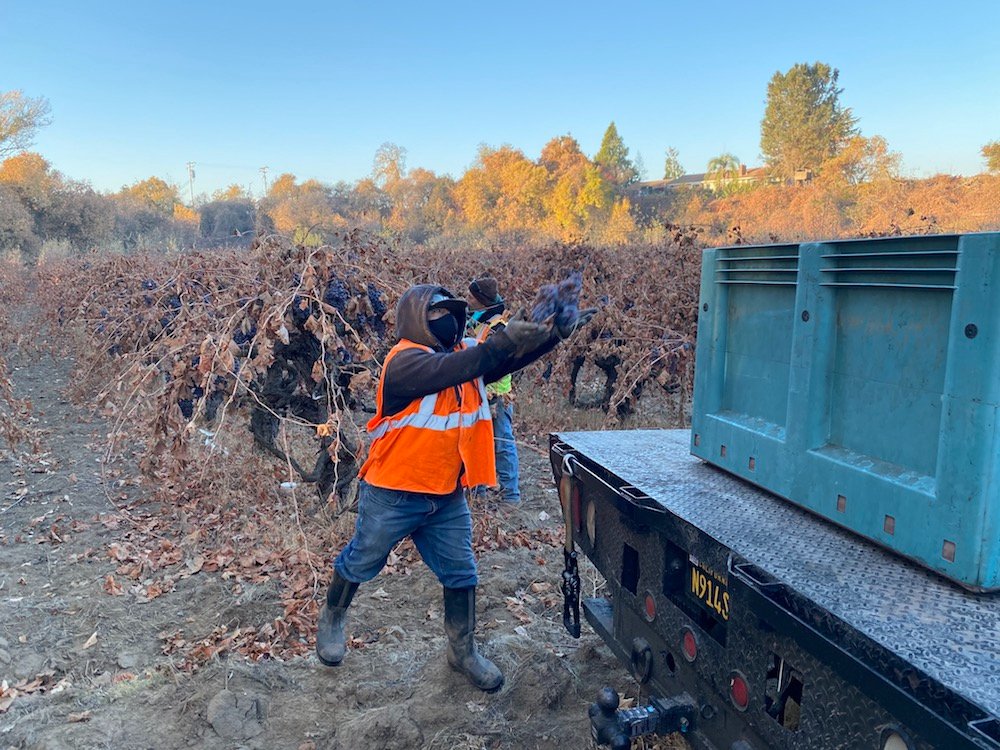
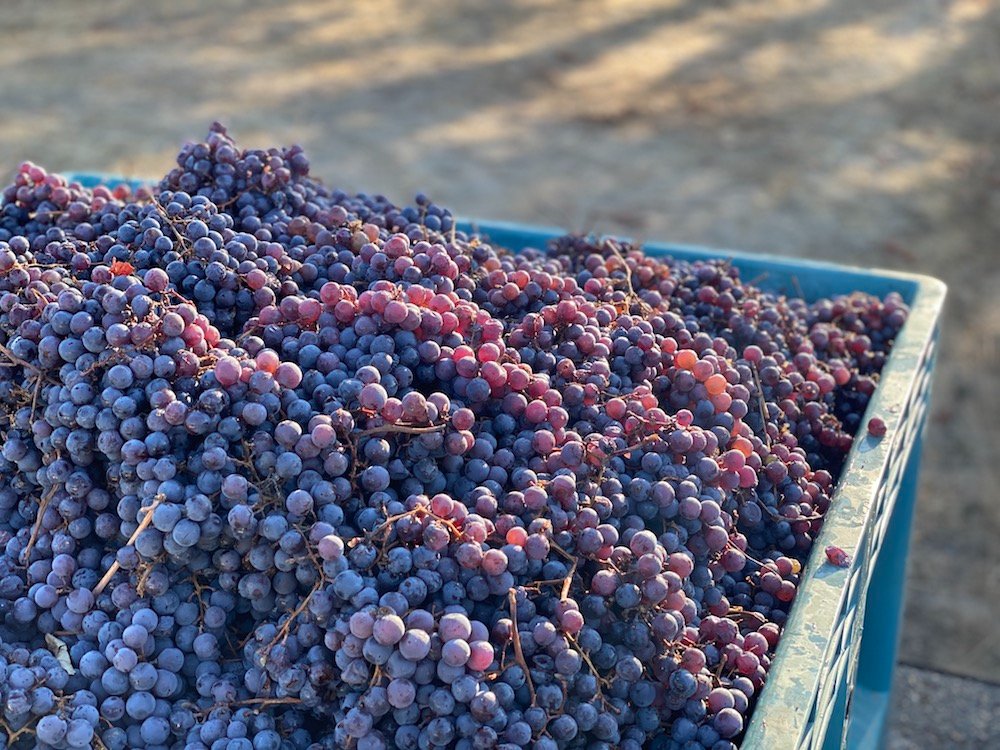
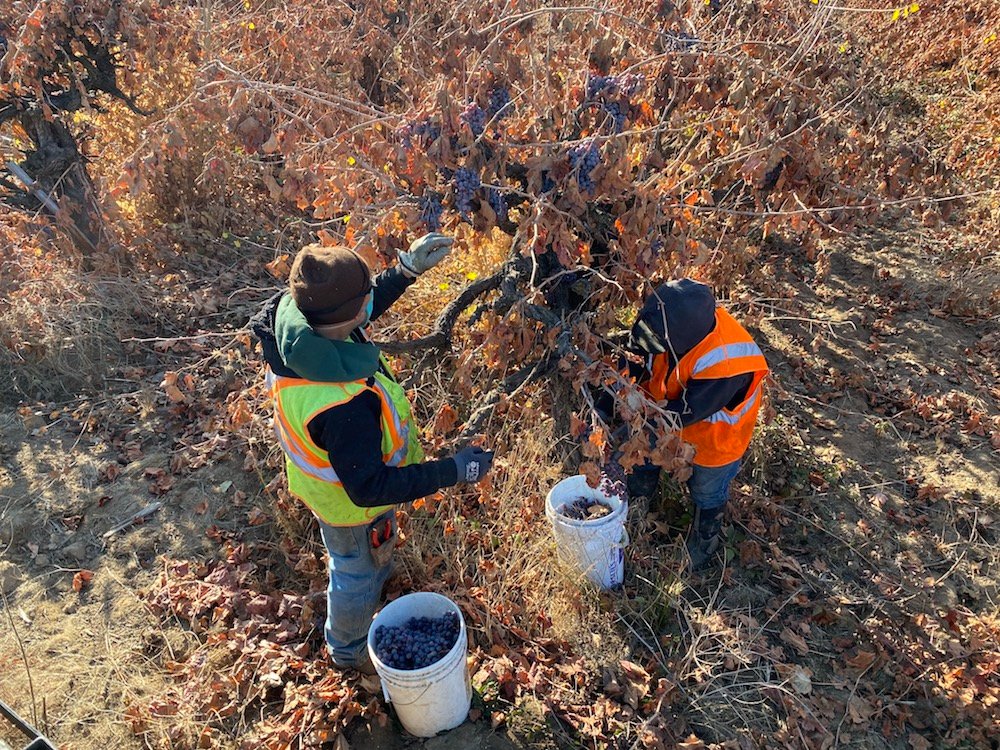
Some of us are still harvesting!
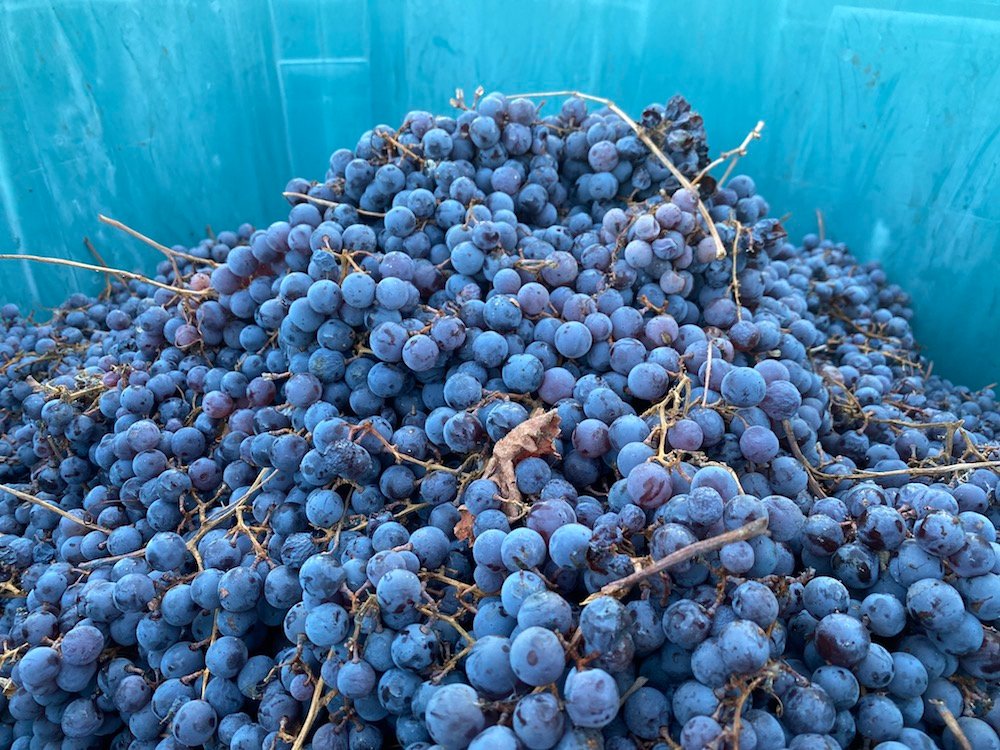
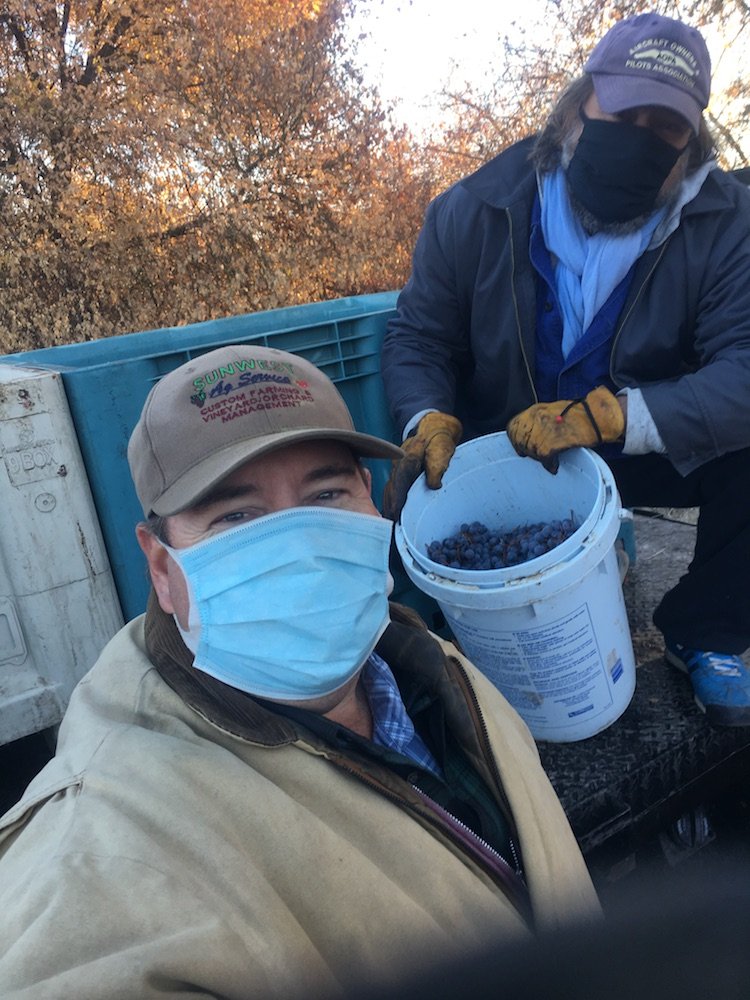
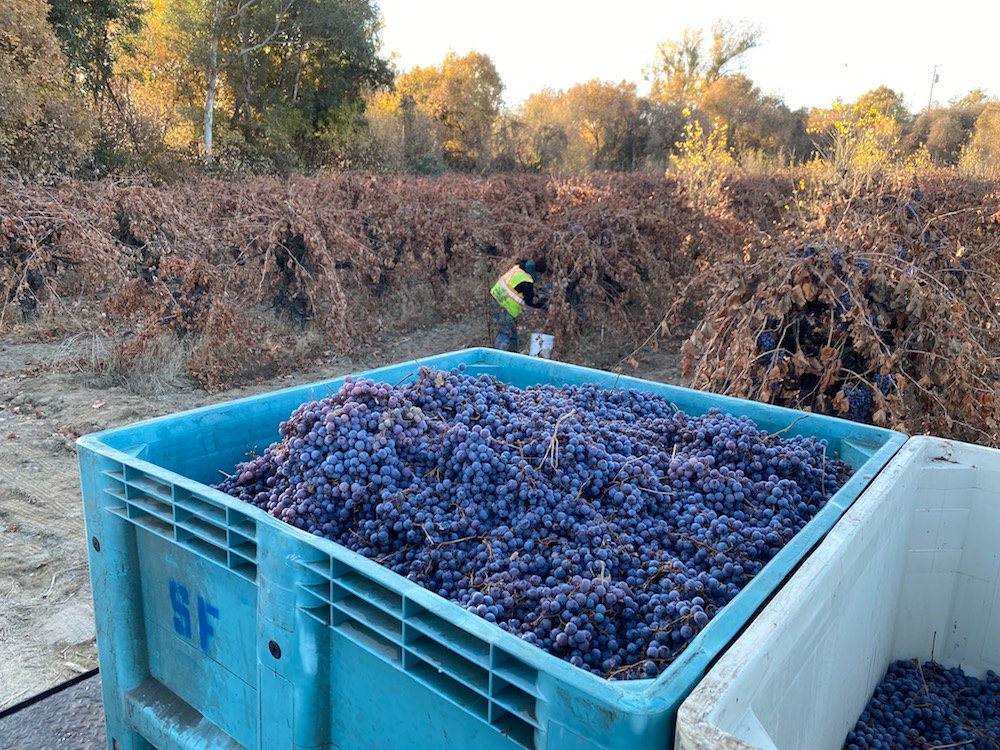
Took these last Missions from the Somers vineyard day before yesterday for an experimental wine I’m trying. See if it works.
I was surprised at how good of a shape they were in after hanging so long and experiencing first frost (harvest stopped about 1.5 month ago). Stems are fully lignified, but the clusters carry almost no raisins whatsoever - I had expected a lot more. I didn’t test the sugar levels when we picked them, but they were sticky as hell and the skins were slipping off. After crush it came in at 30.2 Brix, or a theoretical potential of 19.3% ABV!
But it once again convinces me that the Conquistadors and our old ancestors, knew how sturdy Mission was. And that it was probably the perfect candidate to bring across seas and into unknown lands. It’s almost perfectly designed for survival - it has loose clusters that don’t suffer bunch rot, it’s very vigorous and highly impervious to disease and viruses. It can’t just have been a fluke they chose this one. They also chose Muscat of Alexandria and Pedro Ximenez to make that journey and be planted in certain areas - and from what I hear, they’re also equally sturdy.
As for experiment: High sugar ferments are always a little risky, so this one I will use a commercial engineered yeast strand, rather than the native strain. These commercial yeasts can better deal with the high potential alcohol. It won’t manage to go to 19.3%, but maybe to 17%? And leave some RS in there - which is the plan for this style. Anyway, if I had lived closer by I’d love to go have a look at them on Jan 1 - I have a feeling they’d still have some juice in them and not be all dried up. So potentially, you could harvest 2021 vintage almost a year ahead of the real harvest!
1 Like
That’s awesome Adam, best of luck with the experiment.
Someone should make a Mission Ice Wine.
Give me to January!
Matt Kettmann of Wine Enthusiast reviewed the Harrington 2017 Mission Angelica and I believe it’s just recently been added to the WE website.
The 2019 Bichi “Listan” is really great. Super crunchy, but clean. A bit of funk. More acids than usual and really balanced. All the current release of Bichi are really good.
1 Like
Good to hear - I’ll keep an eye out for it. I’ve had such mixed experience with Bichi wines in the past - they’ve ranged from very good to undrinkable Brett bombs. Don’t mind a “bit of funk” but it can go too far. Thanks for posting the note.
1 Like
I forgot to add this back at the time. The Children’s Atlas of Wine (James Sligh) did an online session on Pais at the end of September. Wines from Chambers St. I was a lot of fun and he did a great job with some back story on the grape. I highly recommend his Zoom tastings both for the wines selected and for the value add James brings.
-
2019 Cara Sur Criolla Chica - Argentina, San Juan, Calingasta Valley (9/29/2020)
Beautiful glowy light red color. Cinnamon nose. Good texture. Amarena. Nano tannin + all fruit and acid structure. Compact and precise. Really bright and leading to floral. Slight bitters, more Amarena to finish. Lovely and lively.
-
2019 Cacique Maravilla Pipeño Pais - Chile, Bío-Bío Valley (9/29/2020)
Ethereal musty nose in a really sexy way - ghost bride. Light texture with light and lifting pippy tannins and hot grapes. Nice acids that then drop beat. Good balance and persistence. Lots of grape sweet tarts. Really nice.
-
2019 Envinate Benje - Spain, Canary Islands, Tenerife, Ycoden Daute Isora (9/29/2020)
Yukky. Has smoke/yeast death nose. Reductive matchstick and vent hole stink. (lol, volcano be cool now.) Saline and umami. Palate is far better with red currants and thyme. Good balance and fruit savory elements. A bit of paitan Has merits, but tough.
Posted from CellarTracker
(NB - I find this yeast death flaw in pretty all the Envinate wines from the Canary Islands. It has been argued this is ‘volcanic terroir’ but I think is house style/poor hygiene. )
Thanks Andrew. I was also really loving the Cara Sur. What a great little wine. Think I have a bottle left.