Santa Clara & San Benito Wine Heritage

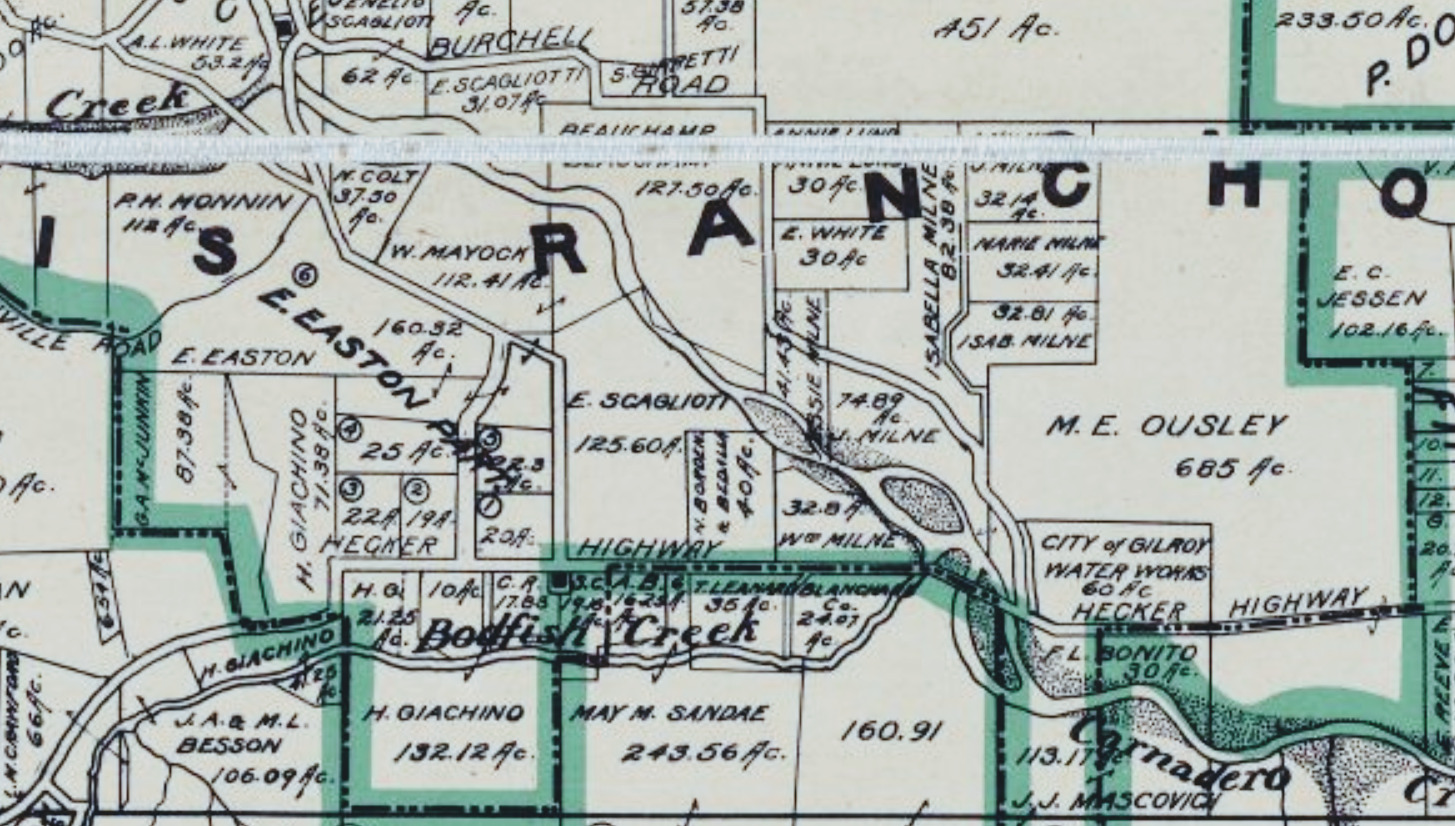
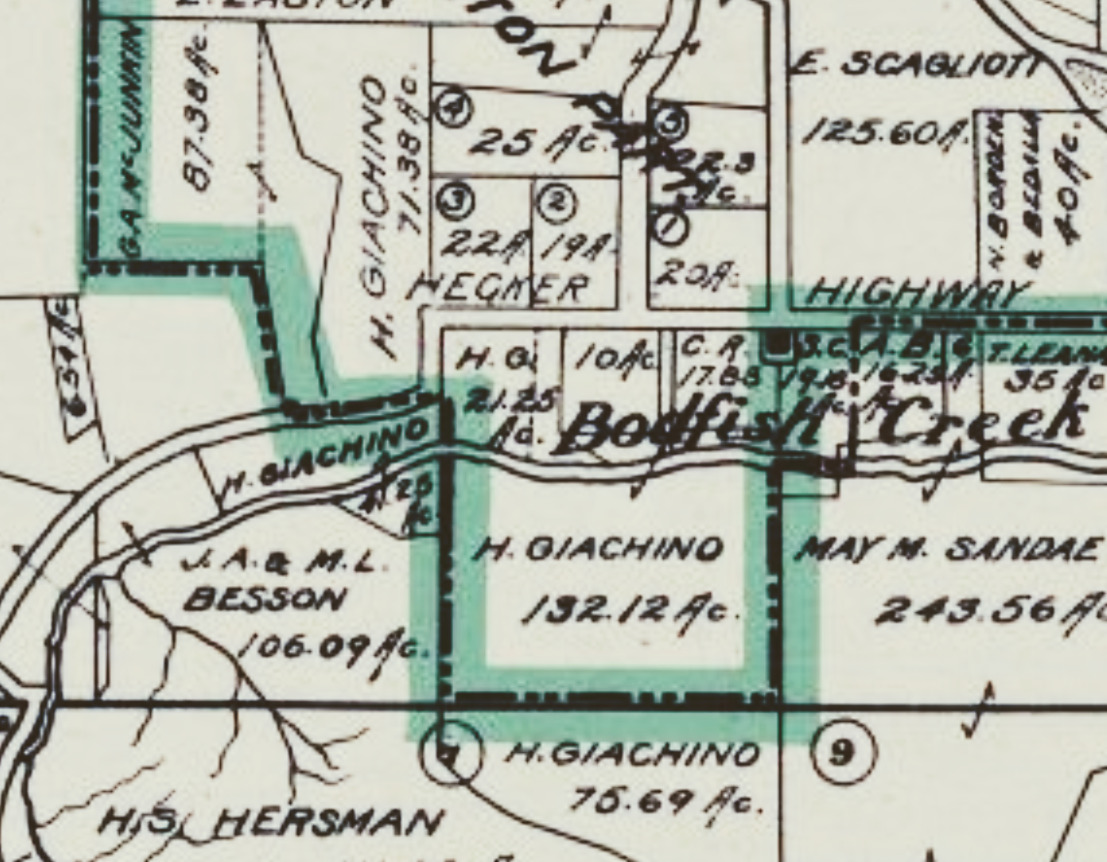
I have located the above-mentionedBesson Vineyard” on a 1929 map of Santa Clara County landowners. Jean Auguste Besson bought this parcel in 1925. Besson Family Vineyards currently grows 8 grape varieties on two vineyard locations. The better-recognized Grenache planting dates back to the 1910s. This vineyard is celebrated for its excellent fruit quality.

The old-growth Zinfandel vineyard rests on the South side of Hecker Pass Hwy as it curves North and to the East, parallel with Bodfish Creek, towards the city of Gilroy.


The Besson Family Vineyards website states: “…French Immigrant, Jean Auguste Besson wanted a better life in America. A local farmer and shoe salesman, Besson quite possibly never could have imagined the legacy he would leave behind. Five generations later, the family grows stronger roots and is proud of being Besson.”


McMillan & McMillan helped survey various locations along the West Coast in the early 20th Century. They drafted the meticulously detailed 4-page map from 1929 below.

Internet Archive
Official Map of Santa Clara County California
by McMillan & McMillan Civil Engineers (San Jose, Calif.), 1929

“Shows property owners, districts, railroads, roads, trails, schoolhouses. Index of roads, land grants, and subdivisions.”


Viewing this 1929 map detail depicting the western Hecker Pass corridor, it appears that the Besson old-vine Grenache planting rests on land once owned by the Milne family.

Sarah’s Vineyard and West Side Nursery are situated on a former Scagliotti family parcel. I could be wrong, however.

Randy Smith of The Wine Write interviewed winemaker and grower Michael Michaud. He and his wife Carol operate the Michaud Vineyard, located at the northern end of Chalone AVA.


The Wine Write
“Celebrating The Chalone AVA With Michael Michaud”

by Randy Smith
January 30, 2022


"…Michael Michaud was with Chalone during its salad days in the Eighties and Nineties. During that time Chalone was synonymous with wines of elegance and balance. Those bottles spoke of the granitic and limestone soils and the high desert conditions where they were grown.

“…He left Chalone Vineyard in 1997 to focus on his own brand. Michaud Vineyard is a jewel in the Chalone AVA. Its focus on the region has remained steadfast over the past quarter of a century. Michael Michaud simply wishes more of the wine world better appreciated his appellation’s history and ongoing contributions to California wine.”


"…The Wine Write: ‘Tell me about deciding to go out on your own.’

"Michael: 'I always wanted to have something of my own. In 1984 I tried to plant five acres of own-rooted Chardonnay on my property. It didn’t do too well. I think I had stored the cuttings for too long. In 1986 and 1988 I planted again. I did five acres each year. I did about three acres in 1990. It was almost all own-rooted. The last part was planted on St. George rootstock. When I had a lot of water to use, the vines did pretty well. It’s a harsh environment here. It freezes in the winter and gets really hot during the summer. It doesn’t rain much, and these soils don’t hold a lot of water. The vines began to decline. I replaced a lot of them in 2015. I also planted some different varieties.

"'At one time I was selling my Chardonnay to Chalone. This was before I planted my Pinot Noir. At the point in time when the check for selling my grapes was larger than my paycheck at Chalone, my work relationship changed. I think they began to look at me as a competitor. They complained about the acreage I had under vine. I was working at Chalone five thousand hours a year at that point, but felt like I had to justify my existence…

“‘I started my own thing and went my own way. Looking back, I might have done better by working at Chalone a few years more while I established my brand. That paycheck would have been nice, but I stuck to my principles. That’s how that went.’”
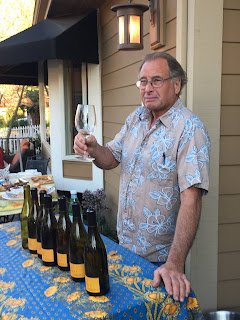
12961231_10153502513830770_7247100059054556147_o.jpg
"…The Wine Write: ‘What spurred you to plant different varieties?’

"Michael: 'What happens over time is that demand changes. At one time everyone wanted Chardonnay. Then there was too much Chardonnay. After people figured out how to grow Pinot Noir here and make wine, everyone wanted Pinot Noir. Then there was too much Pinot Noir. I changed what I was planting. I was interested in how other varieties would do here. I like to get plant material from vineyards that make wine I like. That eliminates some of the variables for me.

"‘I got cuttings from Jean-Louis Chave in the Northern Rhône. He actually worked a harvest for us one year at Chalone. I got Syrah, Marsanne, and Roussanne from him. I got Sangiovese from Marco Cappelli at Swanson. I got Pinot Noir material from Chalone. I got some Swan Pinot. I planted a number of Dijon clones of Pinot Noir with an intent to make those wines separately and evaluate them. That was a logistics problem, so it never happened. I just blend them together.’


"The Wine Write: ‘What makes the Chalone AVA special?’

"Michael: 'Several things. The exposure to the sun is a major factor. We’re up above fifteen hundred feet in elevation. The sun gets quite intense. Our soils are mostly granitic, but also have some limestone. The soils are loose, and they drain well. Our vines are the antithesis of the flat land Napa Valley vines that are growing in clay. Our soils tend to help concentrate the flavors. I think we are able to get closer here to what happens in Europe. The temperatures here can fluctuate more than sixty degrees from day to night. All those components help make us unique. We are a high desert region. Our annual rainfall average is less than ten inches. A few years ago, we only got five.

“‘There is a definite mineral-like characteristic to our wines. It’s a character of wet rock or crushed rock. It’s quite identifiable. As long as you don’t try to overextract these wines or get the fruit overripe, the wines come out really fabulous. They are also very long lived. The amount of tannins created, even in the white wines, is quite significant. That helps the wines age for quite a long time. Some of our white wines hold up well for over twenty years. The reds will go even longer.’”
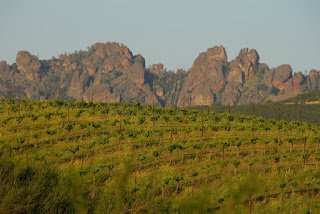
250957_10150838753950770_161710039_n.jpg
"The Wine Write: ‘Are you looking for a particular style of wine or simply looking to express your vineyard?’

"Michael: ‘I want to show what the vineyard gives me. If you want to describe my style, it’s more European. I want to make well balanced wines that are not overly alcoholic. I don’t want to make flabby wines, but also don’t want them overly acidic.’


“…The Chalone AVA needs to be on your bucket list. While you are thinking about a trip, there is wine to get you better acquainted with the appellation. Michael’s wines are top shelf examples of Chalone terroir, available and fairly priced at michaudvineyard.com. Other top winemakers in the region source fruit from him or from Rodnick Farm and do vineyard designated bottles. Seek those out. Chalone Vineyard itself is hopeful for a return to glory. You can check on their progress by sampling a few bottles from their website…”.

Read the entire interview of Michael Michaud on The Wine Write website: Link


Michaud Vineyard website:

The Wine Write website:

Resources on Chalone AVA:

Michaud Vineyard website:

· “Michaud Vineyard Blocks and Clones” (PDF)

· “The Chalone Viticultural Area” (PDF)


TTB
American Viticultural Area Reading Room: “Chalone”
· Petition (PDF)

· Public Comments (PDF)]
Luke Sykora spoke with several Santa Cruz Mountains growers and winemakers in his December, 2021, Wine & Spirits article.

The author visited Mt Eden , Ridge Vineyards, Thomas Fogerty, and the “Bates Ranch”, discussing the effects of drought and climate change with some of the region’s best-known personalities.


Wine & Spirits
“American Beauty: Savory Ripeness in Santa Cruz Mountain Cabernet”
by Luke Sykora
November 23, 2021

“…Even here, in California’s coolest major Cabernet region, climate change is posing new questions for growers and winemakers. (Spoiler alert: Yes, the Cabernet up in these hills is still great. But if you love the chiseled, maybe slightly masochistic beauty of a cool-vintage ‘Monte Bello’, those wines are probably going to be fewer and farther between.)”

2112-americanbeauty-batesranch-by-emma-morris.jpg


"…‘Bates Ranch’ is farther South than most other Cabernet vineyards in these mountains, at the base of Mount Madonna; the property is currently overseen by Charlie and Diane Bates. Since 2012, Santa Cruz Mountains grape guru Prudy Foxx has been their viticulturist.

"At ‘Bates’, Foxx farms a parcel of old-vine Cabernet Franc planted in 1972 as well as a number of Cabernet Sauvignon blocks planted in the past two decades. (Ashes & Diamonds sources some fruit from each of the parcels.) The changing climate likely contributes some of the open structure the vineyard displays, but Foxx also points to the new block of two French ENTAV clones she developed in 2014.

“‘They’re incredible,’ she says. ‘These big beautiful berries. They have enough room for very good juice in there. Deep berry flavors, classic cabernet flavors, great skin tannin, but also some real fruit character to it. Oftentimes our wines are thought of as having more olive and green-fruit character. And some people like that because it’s more of a Bordeaux style. But I think you can have that real fruit character and still be Santa Cruz Mountains in style.’

“A fan of the 2018 vintage, Foxx is also excited about the extraordinarily dry but fairly temperate 2021. ‘This year, the depth of the flavors and the balance—the flavonoids and the anthocyanins—had such a chance to evolve,’ she finds. ‘We have incredible flavors without super-high alcohols. The skins had a chance to grow in this very soft and supple way, without the harshness that a hot year brings. When I’m out there chewing the fruit, the skin is so thick, it just chews and chews and chews, almost like fruit leather, but rich—not dry at all’…”.

Wine & Spirits website:
https://www.wineandspiritsmagazine.com/


Mt Eden Vineyards website:
https://www.mounteden.com/

Ridge Vineyards website: “Monte Bello Vyd
https://www.ridgewine.com/visit/monte-bello/

Thomas Fogerty website: “Lexington Vyd
https://www.lexingtonwines.com/vineyard/

Janaca Vineyards website: “Bates Ranch
https://www.batesranch.com/pages/our-ranch

Foxx Viticulture website:
https://foxxviticulture.com/

I came across this article on Cabernet Pfeffer today. Of course it concerns primarily San Benito Co. vineyards. An Overlooked, Historic California Grape Gets a New Life | Wine Enthusiast

1 Like

Yikes! Someone would get a poor grade in journalism class. There’s debate whether it’s Mourtaou or Gros Verdot? No. Older, less accurate testing, with a smaller DNA database to compare results to, pointed to Gros Verdot. “The jury is out on whether this grape was brought to the United States or bred in California.” No, the old Ken Volk-UC Davis testing dispelled that myth. A couple producers persisted with the myth for awhile after that - perhaps not informed - but, no longer. Where the jury is out is the Volk-Davis testing was an extensive study that included a lot of the Bastardo (Trousseau) in other parts of the state (being used primarily as a Port component), showing a portion of it was a match to Gros Verdot. So, there may be more old vine Cab Pfeffer out there than people think.

1 Like

I wish I could find an academic paper or FPS newsletter that clearly identities Cabernet Pfeffer as Mourtaou. Perhaps that would end unnecessary confusion.


Mercury News
“Grape Tales: Cabernet Pfeffer”

by Mary Orlin
January 22, 2015

“…The facts surrounding the origin of Pfeffer are a bit conflicting. It was thought to be a cross of Cabernet Sauvignon and Trousseau. [Nicole] Walsh [of Ser Wines] had vines from the ‘Wirz Vineyard’ analyzed by Foundation Plant Services at UC Davis for DNA identification, which found that the Pfeffer vines she submitted are actually Mourtaou, an obscure French variety. The lab report states that Cabernet Pfeffer is used as ‘a synonym’ for both Mourtaou and Gros Verdot, another French variety, in the state of California, but there is no relation to Cabernet Sauvignon…”.


Betty’s Wine Musings
“Ready to Try a Cabernet That Isn’t a Cabernet?”

by Betty Kaufman
July 21, 2021

"…Is Cabernet Pfeffer a Cabernet?

"Story 1: The grape is a cross between Cabernet Sauvignon and a French varietal called Trousseau, which was created by a horticulturist named William Pfeffer.

"Story 2: The grape is Gros Verdot (no relation to Petit Verdot), a variety that was grown in Bordeaux in the 19th century. Some people confuse Gros Verdot with Trousseau, so Story 2 could be linked to Story 1.

Story 3: The grape is Mourtaou, an obscure French grape.

"Which story is right? UC Davis says it’s the third one.
So, Cabernet Pfeffer has no relation to Cabernet Sauvignon…”.

Online Wine Grape Cultivar Databases:

Foundation Plant Services
“Mourtaou”

"All Synonyms: Cabernet Pfeffer, Cauny, Cot a Queue Verte, Cot Vert, Coulant, Coulon Tilbre, Coulon Timbre, Mansain, Mansenc, Mansin, Maussein, Mourtau, Petit Fou, Pousse Debout, Tarnay, Tarnay Coulant, Tarnay Terny, Terny

“…Comments: Mourtaou is an old cultivar from the Bordeaux region of France. There are small plantings of the variety in California under the name Cabernet Pfeffer. This variety is not related to Cabernet Sauvignon or Trousseau.”


Vitis International Variety Catalog (VIVC)
“Mourtaou”

"Prime name of parent 1: Moural

“Prime name of parent 2: Plant de Pedebernade 4

Which story is right? What a steaming load of counter-productive bullshit! The answer is right there, so what add confusion and lend credibility to the myth and the obsolete best guess?

So, Nicole is the one who cleared this up SEVEN f’ing years ago, and we have an author and some two-bit blogger regurgitating falsehoods into the mindspace.

Maybe next we can clear up the mystery around the moon:

Story one: It’s actually a god.

Story two: It’s a somewhat different god than those people ^^^ think.

Story three: It’s made of cheese.

I completely understand what you’re saying.

Nevertheless, magazines continue to publish articles by journalists that are unfamiliar with Google’s existence.

Google can be part of the problem - and likely was here. It happens with subjects that actually matter. Obsolete data and myths are etched into place. Historians can dig up truths, or just take the time to read when intelligence/national security archives are opened. Greater, sometimes profound, knowledge is revealed and yields a few articles. That gets lost in the sea of results. (Not helping is, seemingly by design, Google results aren’t nearly as good as they used to be.) Anyway, these two likely used Google. They got the results. Simple logic should have made it clear to them there was no mystery or controversy. Good writing can present those historical factoids in a compelling way, but they instead chose to give weight to confusion and inaccuracy with clickbait-style writing.

2 Likes

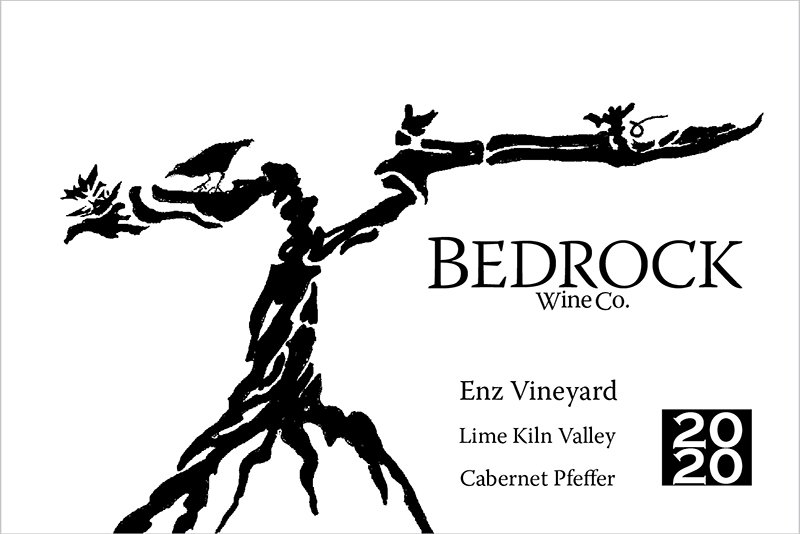
The 2022 Spring release from Bedrock Wine Co. includes a San Benito County single-vineyard Cabernet Pfeffer / Mourtaou from “Enz Vineyard”.

2020 ‘Enz Vineyard’ Cabernet Pfeffer, Lime Kiln Valley


"2020 was our final year working with ‘Enz Vineyard’, and we felt that we had no choice but to make a little bit of this quixotic and distinctly San Benito wine. Cabernet Pfeffer’s past has long been shrouded in veils of myth. Some say the variety was a cross created by William Pfeffer of Cabernet and Trousseau; others say the Pfeffer (German for pepper) refers to the pepperiness of the variety. All are lovely stories, but genetic analysis shows that Pfeffer is actually a relatively rare variety from the southwest or Aquitaine of France called Mourtaou. If this all sounds a ‘petit fou’ or a ‘little crazy’, that is fitting, as that is actually one of its regional names in France.

“Coming from centurion vines planted in limestone and decomposed granite, this shows off all the pepper and perfume the variety is known for. In terms of weight and color, this is much more in the vein of Trousseau or Gamay-- lightly colored and perfumed. In many ways, this is what makes it so compelling, as it withstands the warm sunlight of the Gabilan Range yet still makes for a wine of elegance. Petit fou, indeed.”


Bedrock Wine Conversations
Episode #26: “2022 Spring Release”

February 1, 2022

1:09:15 - 2020 “Enz Vineyard” Cabernet Pfeffer


Bedrock Wine Company website:
https://bedrockwineco.com/

Historic Vineyard Society Profile: “Enz Vineyard”

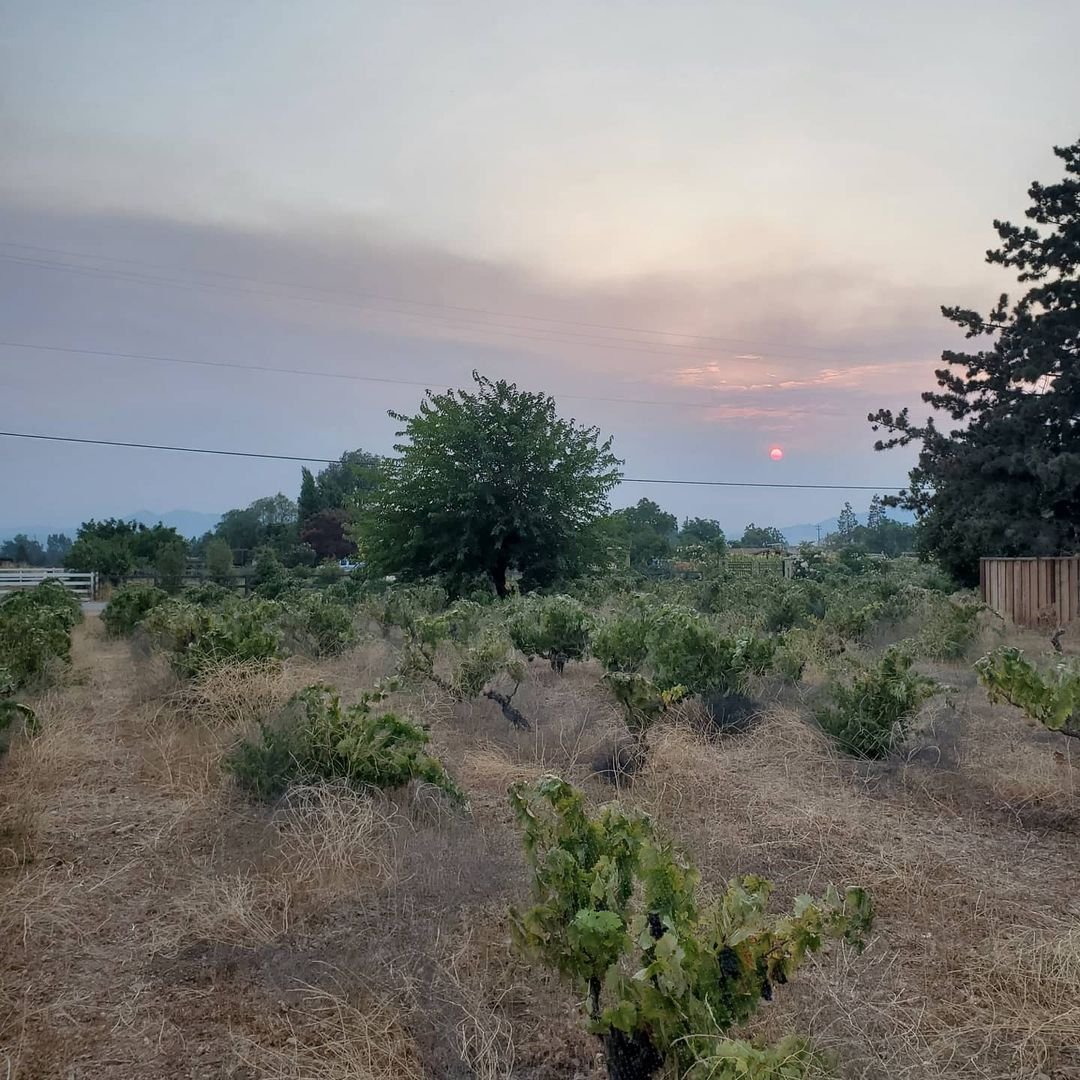
The following image from 2020 was posted by Brent Mayeaux of Stagiaire Wine, a small producer focusing on low-intervention, natural winemaking:


Stagiaire.Wine Instagram post:

“Picking the 1906 planting of Zin tomorrow that I’ve been rehabilitating this year(pruning by @lailamaghathe) Nice layer of ash and dust on the berries. I hear 2020 is going to be a great year for rosé. - Gilroy, Santa Clara County”

Medium
“San Francisco, Skaters and No Added Sulfur: Natural Winemaking in the Bay Area”

by Avery Wilcox
December 17, 2021

Stagiaire Wine website:
https://www.stagiairewine.com/


*** EDIT ***

I am 99% certain that the above vineyard is the “Wolfinbarger Vyd” in San Martin, a site previously mentioned in this thread post.

The “Wolfinbarger Vyd” previously was a source of old-vine Zinfandel and Mourvèdre grapes for Cronin Vineyards and Creekview Vineyards*.

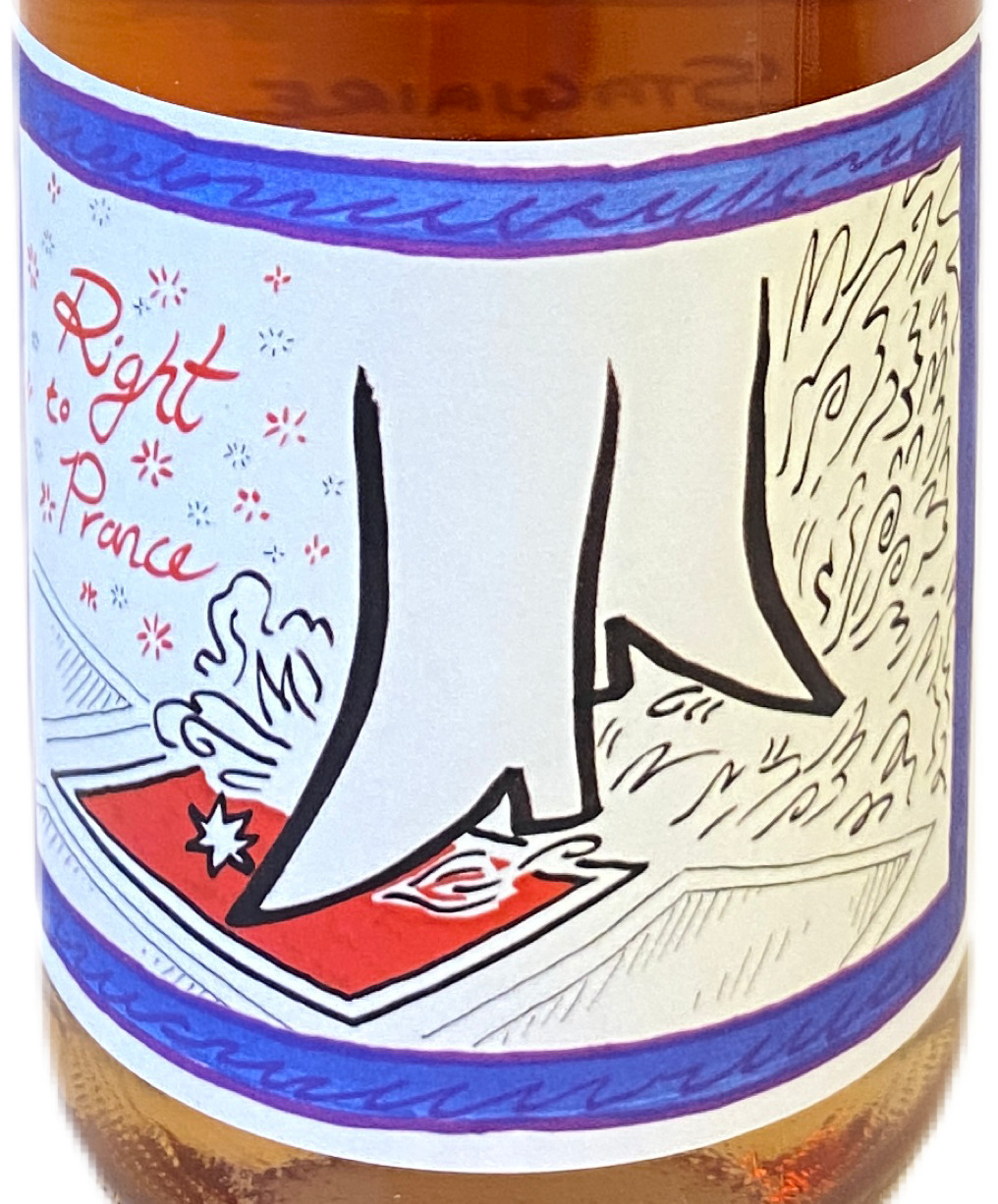
Per Brent Mayeaux’s description of Stagiaire’s “Right to Prance” Santa Clara County Rosé, this old-vine planting is owned by three separate people. The logistical challenges outweighed the fruits of his labor. Mayeaux will not be producing another wine from the “Wolfinbarger Vyd”.


Vineyard Gate retail website
“Santa Clara County Rosé ‘Right To Prance’, Stagiaire Wine 2020”

"Description: "'Zinfandel from a vineyard I was farming last year in San Martin. The vines were planted in 1906. Old, gnarled, each vine growing in a unique form absent the human restriction of trellising. It is warm and dry and windy every afternoon. The vines dont require any spraying.’

“‘My plan for this wine was always to make it into a serious rose wine, even before the fires forced that for all of my red grapes. Pressed, settled, then fermented and aged in lightly used Sloveniain Oak puncheon and handled a bit more oxidatively. It is wide and weighty beyond its modest alcohol. Complex and ever shifting aromatics. Very unlike any wine I’ve released before. The logistics of farming this vineyard and managing the THREE separate owners made it not realistic for me to farm this year, so this wine will be the first and last of its label. ~40 cases’ - Brent Mayeaux, Stagiaire.”


Image source: Heaven’s Market retail site


Mr Dave Tong’s old blogspot site includes a map of several Santa Clara vineyards, including the “Wolfenbarger (sic) Vyd” in San Martin, CA.


David Tong’s “Santa Clara Valley Vineyards Map”:
https://www.google.com/maps/d/viewer?ie=UTF8&hl=en&msa=0&ll=37.132403%2C-121.678391&spn=0.463665%2C1.056747&z=11&mid=1pbDRq2oLIE8avy2amagQpNxCPg4

In his blog’s 2009 Creekview Vineyards profile, David Tong reports the following:

“…2006 Syrah, Santa Clara Valley: Sourced from the ‘Dorcich’ and ‘Wolfenbarger Vineyards’, this also contains some estate Syrah and small amounts of Négrette and Mourvèdre…”.

I’m thinking about putting together a 2019 Enz Mourvedre horizontal and came across this thread. Any strong recommendations? I have the four below - not sure if it’s worth picking up others or if this is a good representation:

  • 2019 I. Brand & Family “Enz Vineyard - Old Vine” Lime Kiln Valley Mourvèdre
    2019 Dirty and Rowdy Mourvèdre Old Vine Enz Vineyard
    2019 Birichino Enz Vineyard Mourevedre
    2019 Tank Garange Winery Barn Dance, Mourvèdre, Lime Kiln Valley, Enz Vineyard
2 Likes

Looking at the Google Earth view for Wolfinbarger and it was plowed under. (Don’t know why you can’t click the earth view directly from Dave’s map.)

I believe that area is flat, so that OV Zin vineyard photo is probably somewhere else.

There used to be many old Zin vineyards down there generally (From Morgan Hill down to Gilroy), and especially in the Hecker Pass area. Some are still around, but I’m pretty clueless about most.

I should have posted this as the Google Maps location:

Link


Please disregard the site identified in Mr Tong’s map if it doesn’t match up, as I independently confirmed the “Wolfinbarger Vyd’s” location.

I thought I had checked to ensure that the spots were the same. I guess my brain failed me.

I was unaware that Tank Garage produced an “Enz Vyd” Mourvèdre from the 2019 vintage!

2019 Tank Garage Winery “Barn Dance”, Mourvèdre, Lime Kiln Valley, “Enz Vineyard”:

Your line-up is very impressive!

The I Brand and Dirty & Rowdy wines should be excellent. Of course, there’s nothing wrong with the Birichino or Tank Garage, either. Unless you feel a strong desire to add to the tasting, you’re good to go.

Bedrock Wine Co. and Sandlands are tip-top in quality if you wish to seek out other single-vineyard producers.


I would presume that many 2019 bottlings from “Enz Vineyard” fruit would need a little time in the cellar prior to reaching their apex, but I could be wrong.

1 Like

Cool. Looks head trained.

And jeez, Sycamore Dr. and Sycamore Ave. being parallel a block apart. Reminds me of trying to find my friend’s place in London back in the '80s.

1 Like

I was searching for information related to the 2019 vintage’s weather trends and overall fruit quality for San Benito County - specifically the Lime Kiln and Cienega Valleys.

Instead, I uncovered the following wine:


Delectable
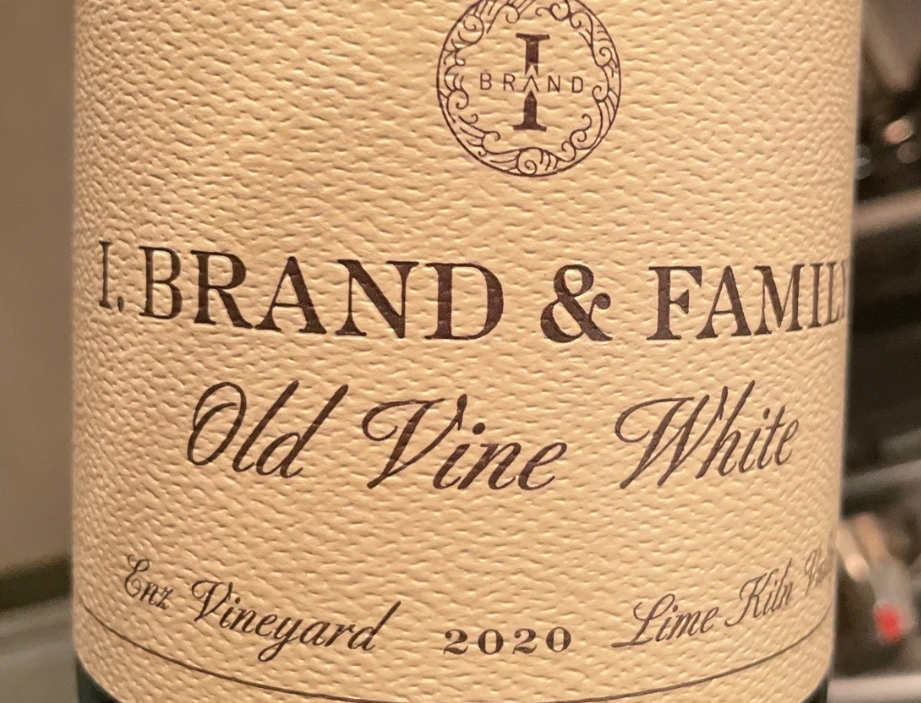
“I Brand & Family 2020 ‘Enz Vyd’ Old Vine White”

The brief tasting note and, presumably, the snapshot of the label were posted by user “Paco Suro”.


No additional details concerning the wine appear to be available at this time. Info about its fruit source might be useful in approximating the makeup of the I. Brand & Family “Old Vine” White.

The “Enz Vineyard” is best known for the unusual medley of ancient, own-rooted varieties planted in its limestone-rich soils. Many of the bush vines are basket-trained, a farming practice rarely seen in modern American vineyards.

Muscat, Palomino, Chasselas, Flame Tokay, and a few unidentified cultivars are interplanted in the Enz family’s oldest vineyard blocks.

While the “Enz Vyd” has gained notoriety for its Mourvèdre, Zinfandel, Cab Pfeffer/Mourtaou, etc, Ian Brand’s deft skills in the vineyard and cellar (more than likely) have resulted in another example of San Benito’s capacity for high quality wines.

I. Brand & Family Wine website:
https://www.ibrandwinery.com/i-brand


*** EDIT ***

I initially failed to login to my account on the winery website, where this bottling is listed.

The producer’s description of the I Brand & Family 2020 “Old Vine White” “Enz Vyd” states:

“‘Old Vine White’ field blend is a blend of 3 unusual varietals. Orange Muscat, Mission and Palamino.”

No Chasselas or Flame Tokay appears to compose this rare old-vine white blend from the Lime Kiln Valley AVA.

Hammerling Wines’ release of new wines includes a Pinot Noir from the “Enz Vineyard”. A 2020 vintage Cabernet Pfeffer, labelled “The Wild One”, was was produced from the same vineyard.


"2020 Pinot Noir, ‘Roadside Picnic’


"VINEYARDS: The ‘Enz Vineyard’ is located in the Lime Kiln AVA and was originally planted in the late 1800s along the San Andreas fault, making it among the oldest in the state. The vineyard is dry-farmed and organic.

"WINEMAKING: 100% whole cluster. Gently punched down twice a day. Long cool fermentation. We aged this wine for 10 months in neutral French Oak and 10 months in bottle prior to releasing. We produced 6 barrels. 13.1% Alc.Vol.

"TASTING NOTES: Black Raspberry, Dried Rose, Iron

WHY WE LIKE IT: The ‘Enz Vineyard’ always brings out the juicy, aromatic side of Pinot Noir, balanced by a savory edge from the inclusion of whole clusters.”


Hammerling Wines website:

I think the Enz vineyard is mainly decomposed granite with some limestone. The DG soils tend to give a distinctive signature to wines (not just in this appellation). Most Pinot Noir isn’t grown on decomposed granite (Gamay is more commonly planted in those soils in Burgundy), so it makes for a different expression.

-Al

1 Like

Thanks for chiming in, Al!

I opt to share the information provided directly from a winery website with respect to their relevant product. If a statement or detail appears of questionable accuracy, I try to make clear my thoughts on its validity. As I am no expert on geology, it’s easy for me to mess up.


Having said that, here are a few resources on the soil characteristics of the “Enz Vineyard” and Lime Kiln Valley.


Enz Vyd address: 1781, Limekiln Road, Hollister, San Benito County, California, 95023-9172


UC Davis
WebSoil Map
site:
https://casoilresource.lawr.ucdavis.edu/gmap/


Most of the land under vine appears to be marked with the following symbols: HaA, HaC:

“The Hanford series consists of very deep, well drained soils that formed in moderately coarse textured alluvium dominantly from granite. Hanford soils are on stream bottoms, floodplains and alluvial fans and have slopes of 0 to 15 percent…”.


USDA Natural Resource Conservation Service
National Cooperative Soil Survey
Web Soil Survey
website:

WSS “Enz Vineyard Soil Survey Map” (PDF)
20220212_19520207011_18_Soil_Map.pdf (938 KB)
WSS “Lime Kiln AVA Soil Survey Map” (PDF)
20220212_20323208759_1_Soil_Map.pdf (968 KB)
Capstone California
San Benito County “Local Terroir”
:
https://capstonecalifornia.com/study-guides/regions/central_coast/san_benito_county/local_terroir

“Lime Kiln Valley AVA”:

“Geology/Soil Composition: Granite and limestone”


Haithi Trust
US Dept of Agriculture
Soil Survey of San Benito County
(1969)
by Dan Isgrig