Otto's Madeira travelogue

Madeira has been on my bucket list for quite some time now and finally, last August-September, we managed to visit the island. We spent a nice week there and I managed to taste some 70-ish wines during the visit. I thought maybe these notes would be of some interest - and of course comments from people who have visited the island are welcomed, too!

We stayed at a lovely hotel that was located pretty much at the center of Funchal, basically right next door to Oliveiras! Nothing to complain there. The weather, too, was pretty much perfect - even when the top parts of the island were cloudy or even rainy, Funchal remained dry (yet moderately humid) throughout the week and although it wasn’t sunny all the time, we still had lots of sun and the temperatures were just very pleasant from midday to midnight, hovering between 15 and 25 degrees Celsius (60 to 75 Fahrenheit).

Day 1:

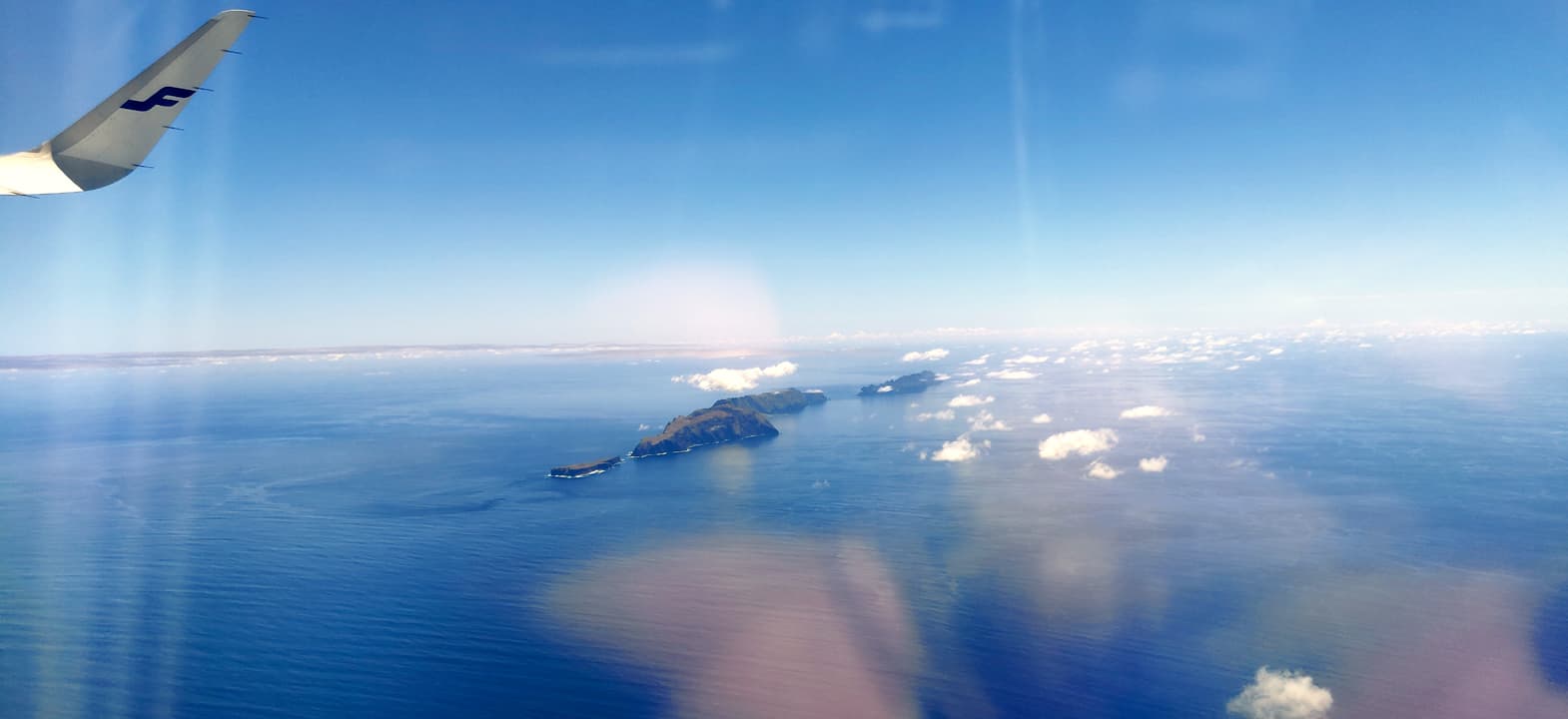
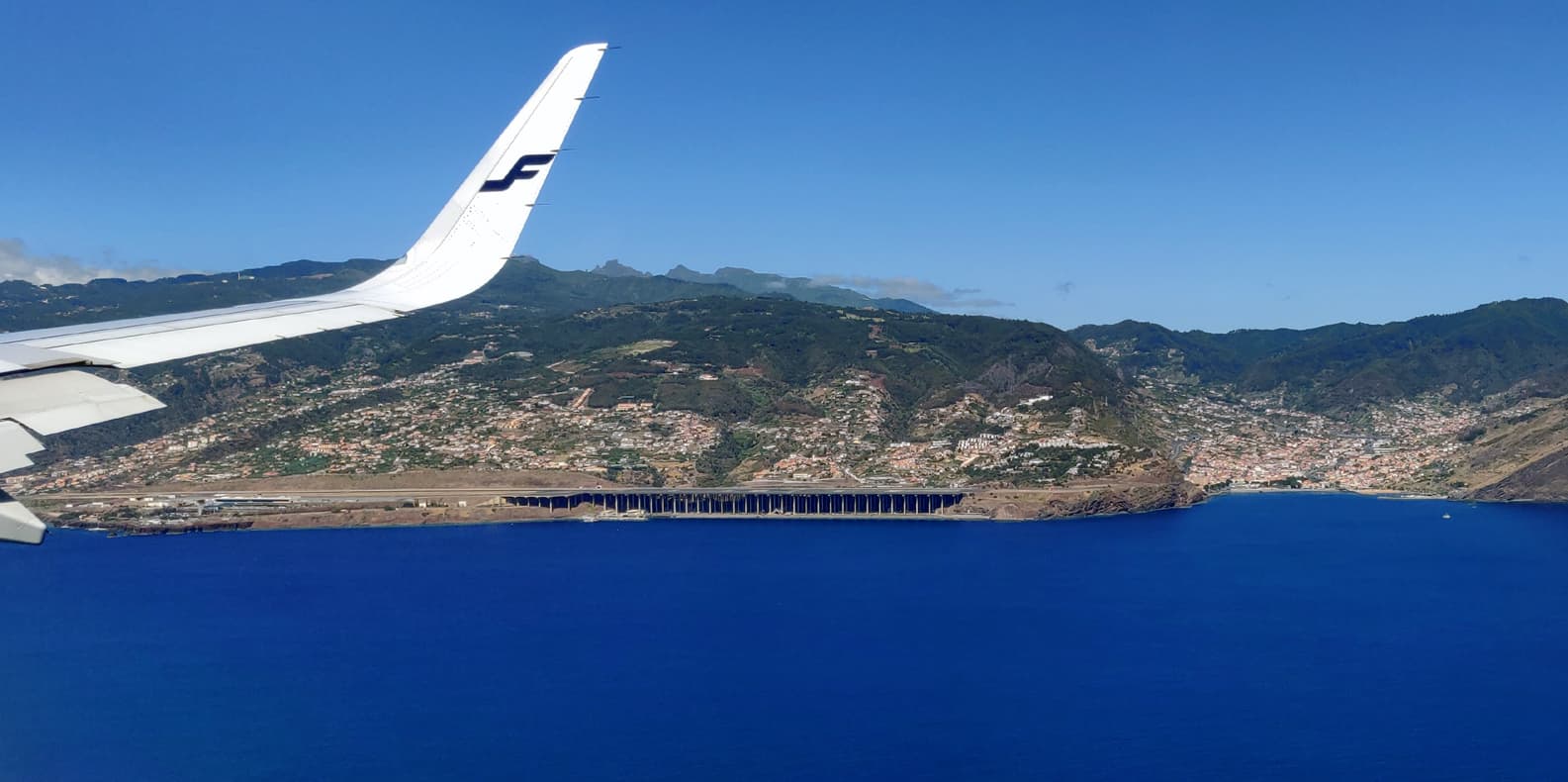
Arriving to Madeira - there’s the airstrip we’re about to land!
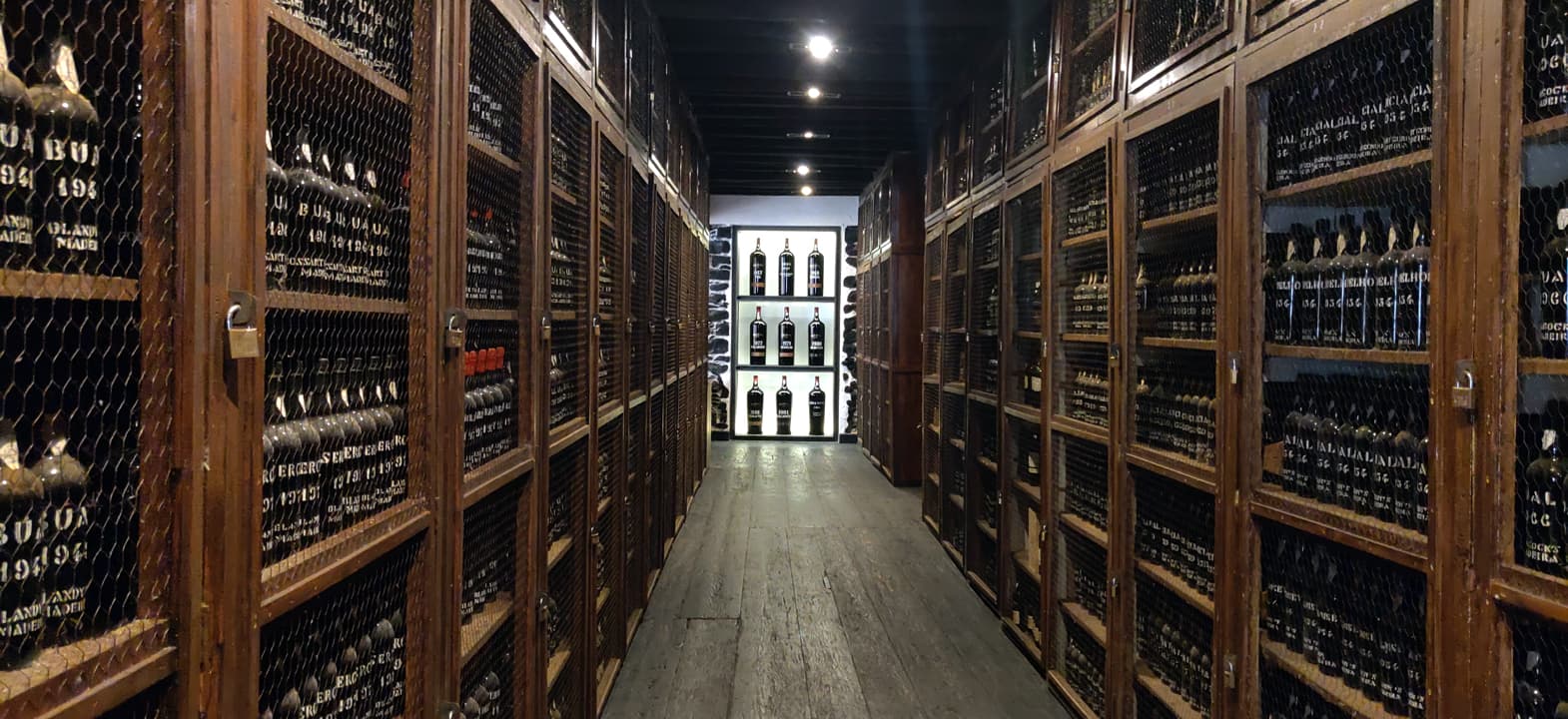
After we had dropped our baggages at our hotel, we headed for Madeira Wine Company / Blandy’s Wine Lodge. There we took a tour around the oldest parts of the winery, finishing off with a small tasting of two MWC Madeiras.

The Madeira Wine Company tasting room:
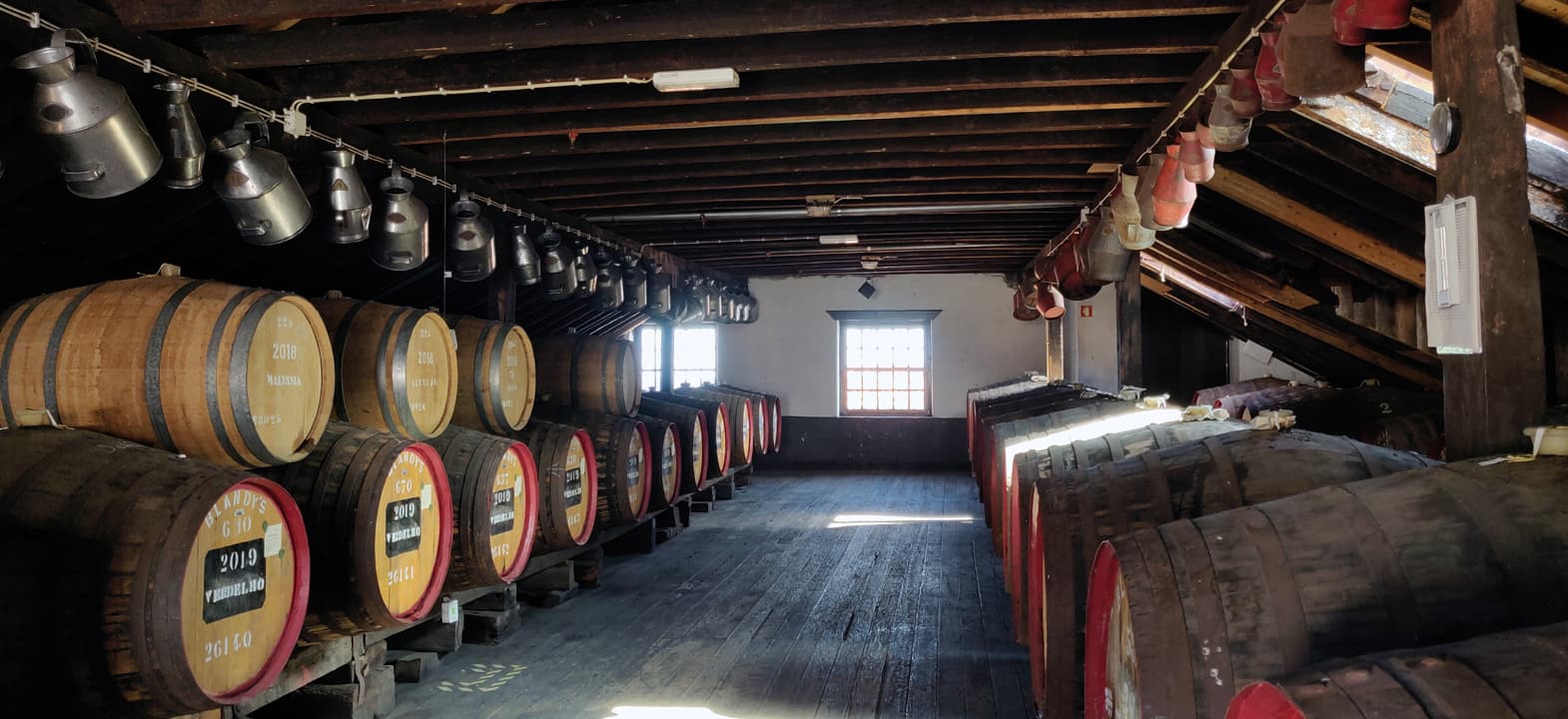
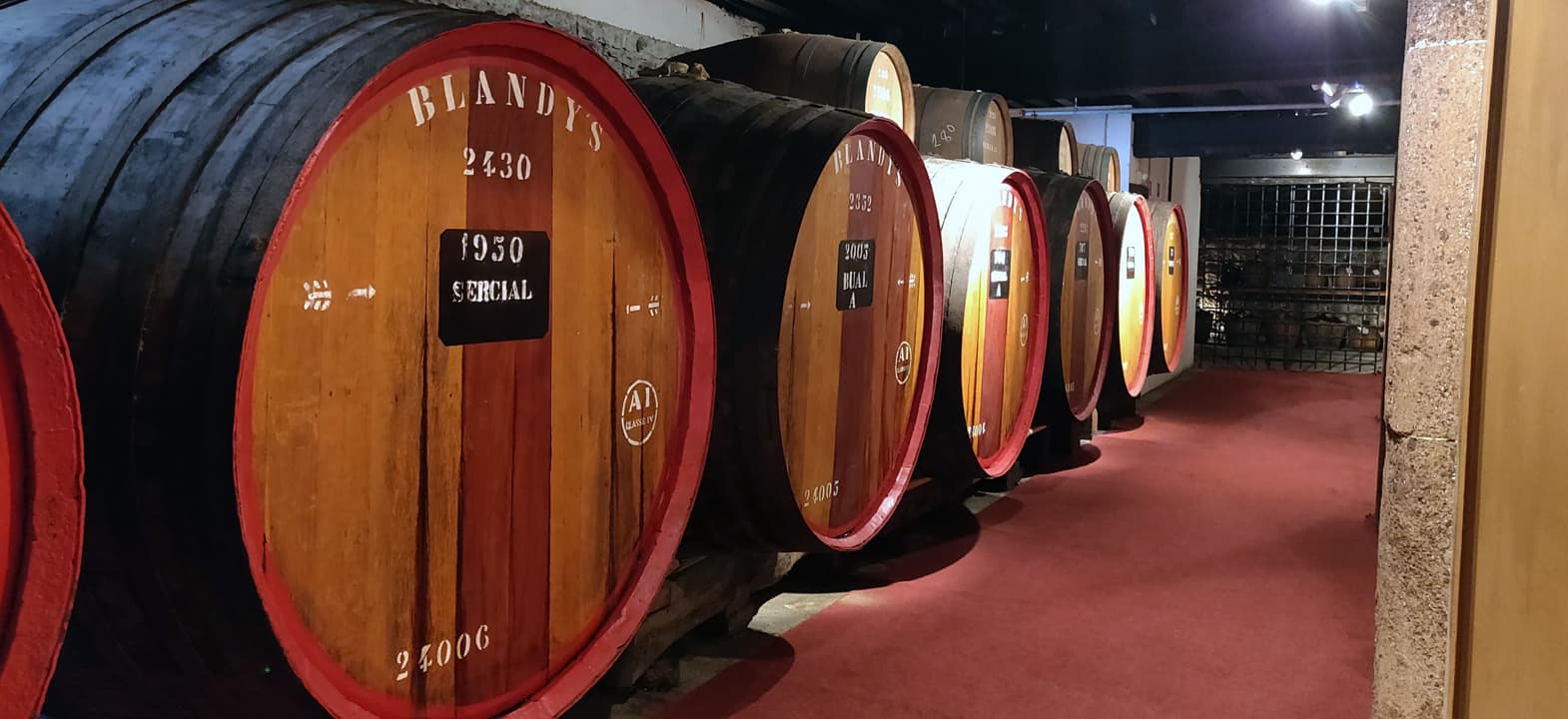
Some older casks laying on the canteiros at the lowest and coolest levels of the adega, ie. at the ground level. What surprised us was how even here the temperature was surprisingly high, ie. more or less at the room temperature. These older casks also still had lot numbers according to the old Madeirense system, but I can’t remember the logic behind it (the system was used to keep the vintages of the wines as a secret in the case pirates managed to get their hands on casks of Madeira). Nowadays they do mark the vintages and as well, mind you.
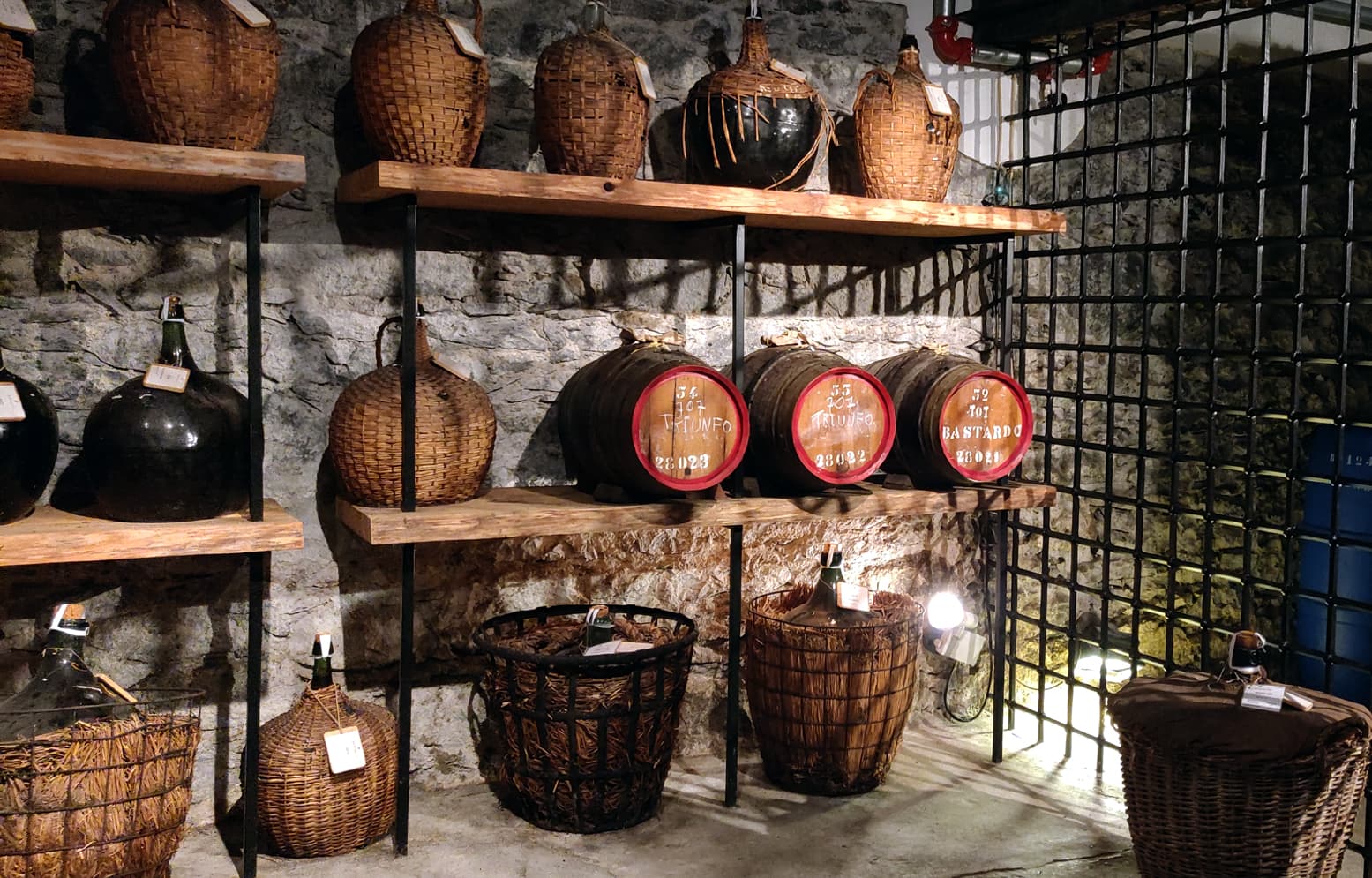
This little cavernous part was the coolest part of the adega used for the oldest unbottled lots at MWC. The wines that could be still aged further, were kept in smaller oak casks, whereas those bottles who were as ready as they’ll ever be, were kept in demijohns, waiting to be bottled:
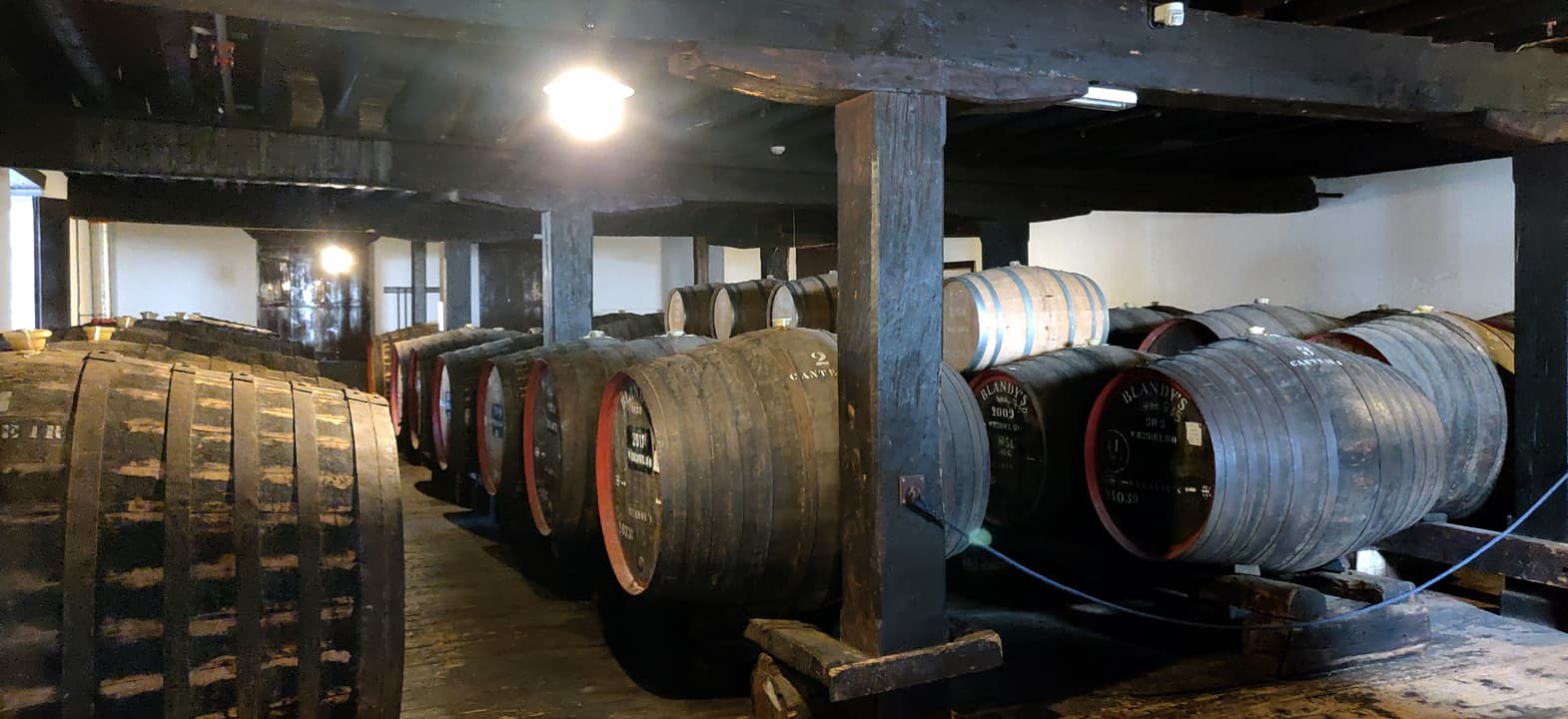
This is how the canteiros higher up looked like. There were three or four stories and both the temperature and the humidity went up with the elevation. It was starting to feel a little bit like a steam room already at the second floor!
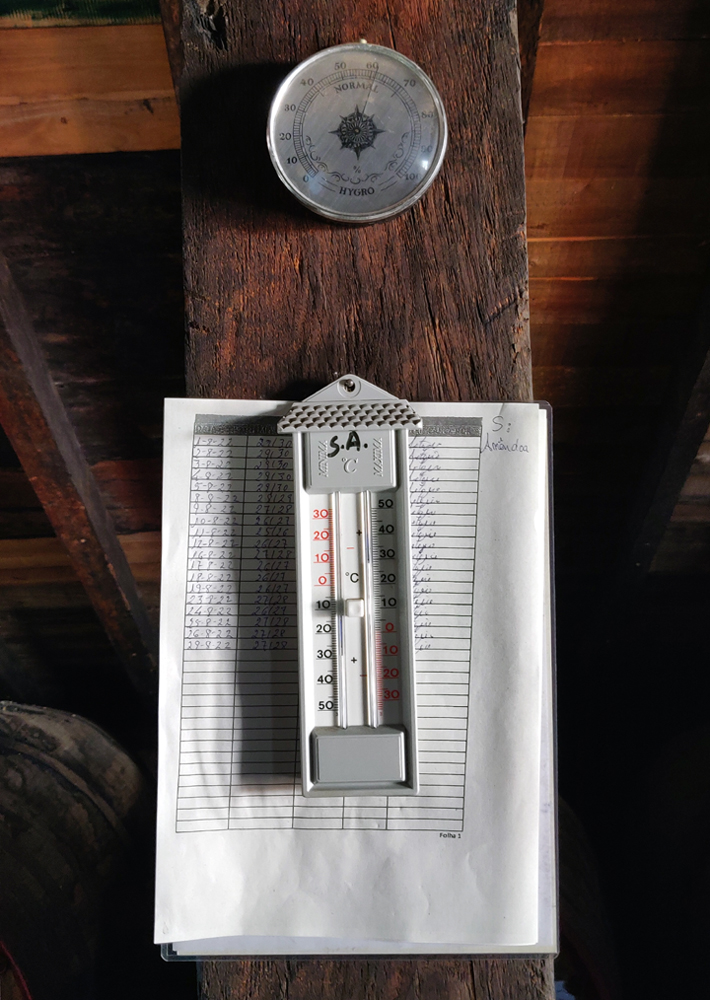
The temperature was at around 29°C (85°F) and the humidity 67% in the upper parts of the canteiro system:
This is how it looked at the top floor of the canteiro system. It was getting so hot and humid there that it wasn’t really that comfortable for a Finn to be there! :melting_face:

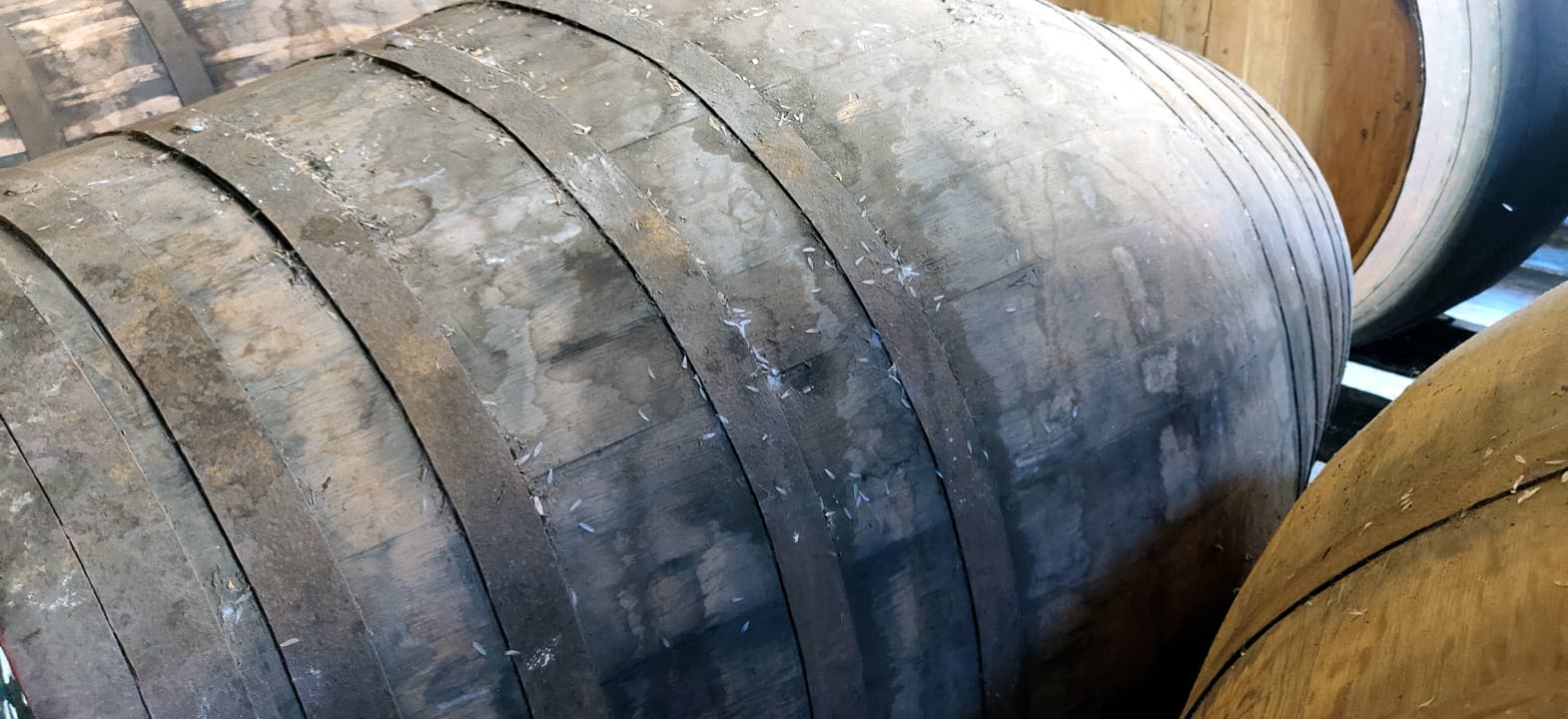
We were also told us that contrary to what one would think, it is actually more expensive to have the centuries-old adega than to tear it down and build a new winery! Just the upkeep alone is very expensive, as they try their best to keep it how it always has been, but that means constructing stuff like fire extinguishes, smoke detectors and other safety measures is very expensive. After I asked about small insect wings they seemed to have everywhere in the top floors, they told us how they also had problems with termites, which exacerbates the upkeep trouble and increases costs:
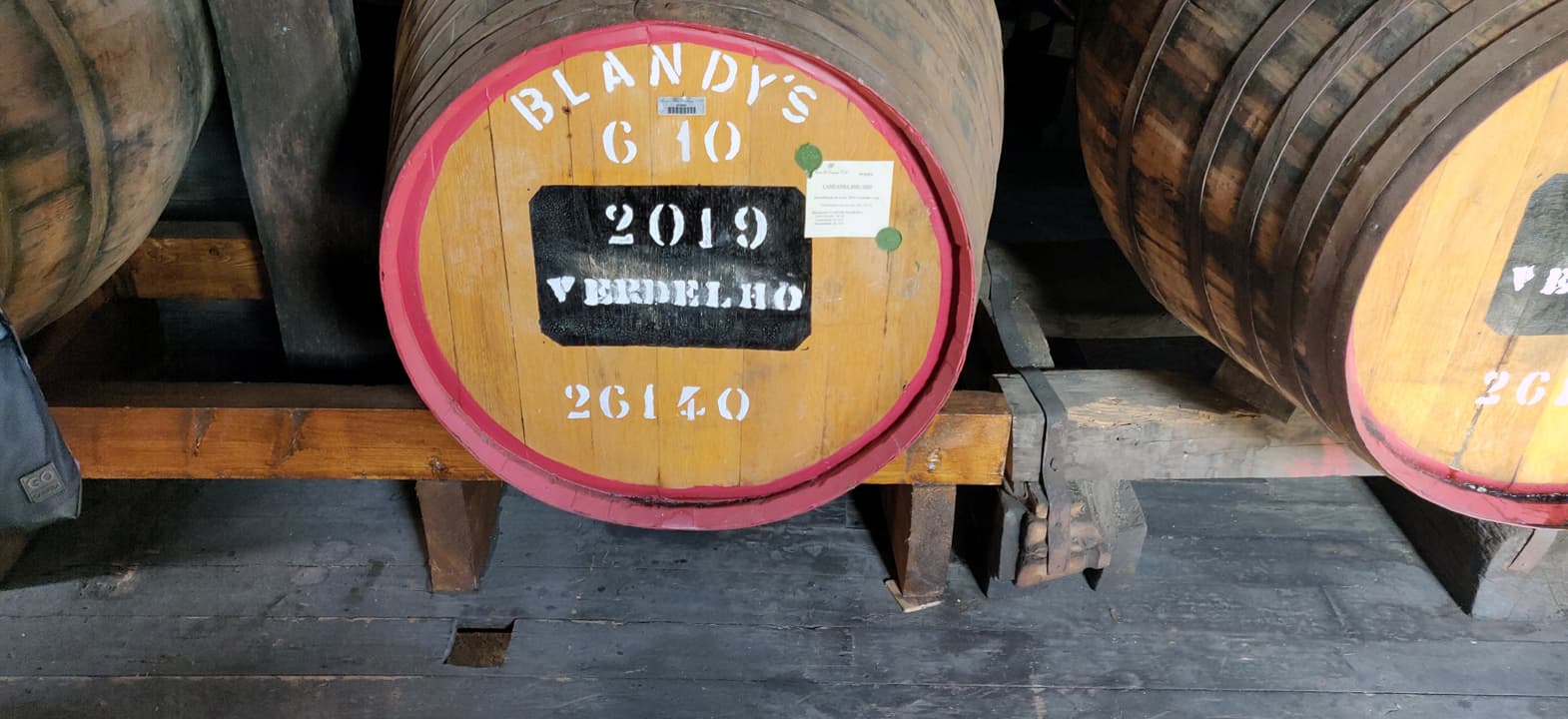
When we asked about the small holes they had in the floors, we were told that they try to move the wine without any mechanical means, if possible. As moving the barrels around the cramped adega, the wines are moved with pumps and hoses from one floor (and cask) to another, mainly with the help of gravity:
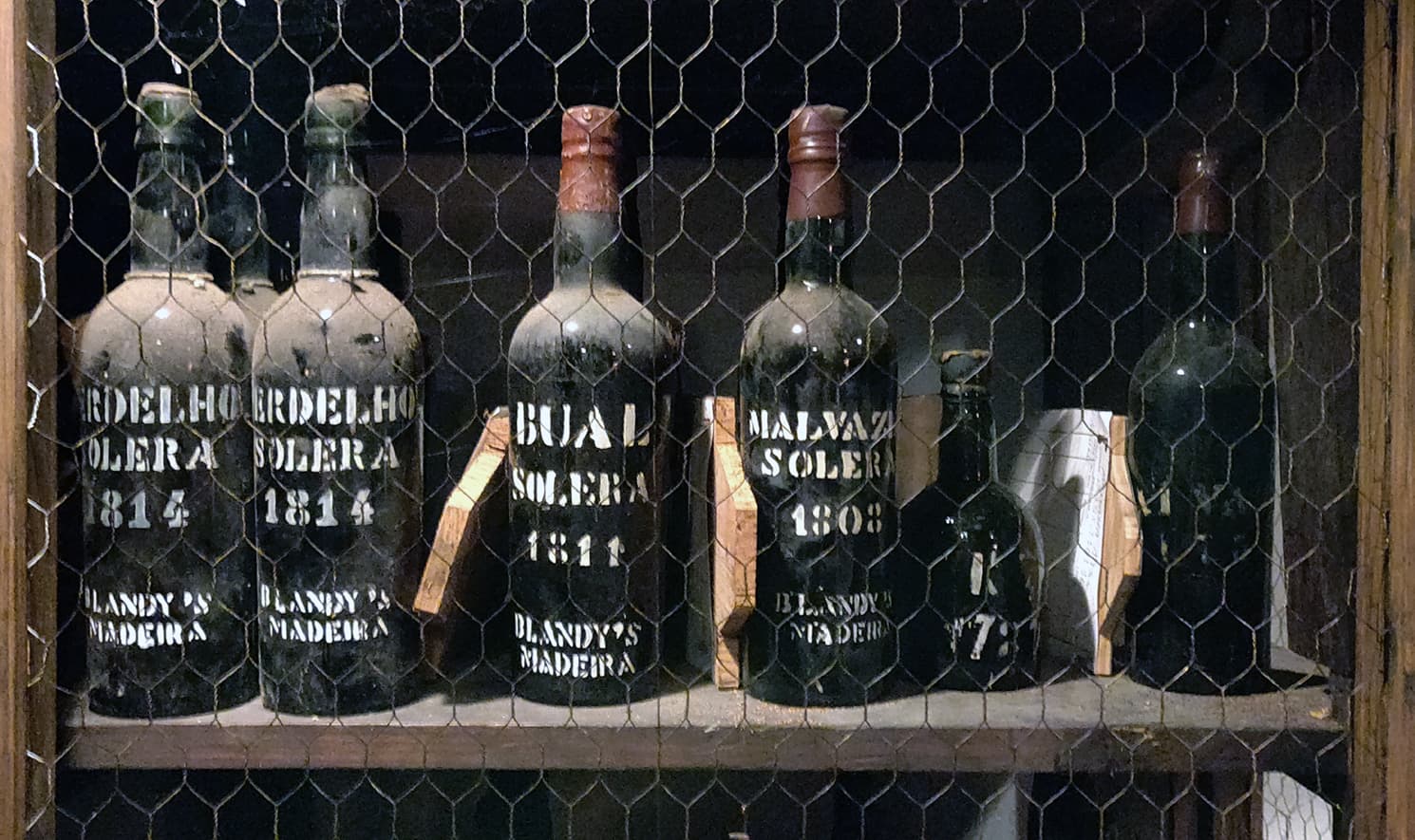
For the last portion of the tour, we got to see the small library cellar of MWC, where they kept their oldest bottles. There were probably a few hundred of bottles left (mainly from the early 1900’s to mid-1850’s) and these were the oldest bottles there - a few early 1800’s Soleras (don’t have any idea when they were bottled) and two bottles from the 1700’s:
Then, finally, a tasting of two Madeiras:
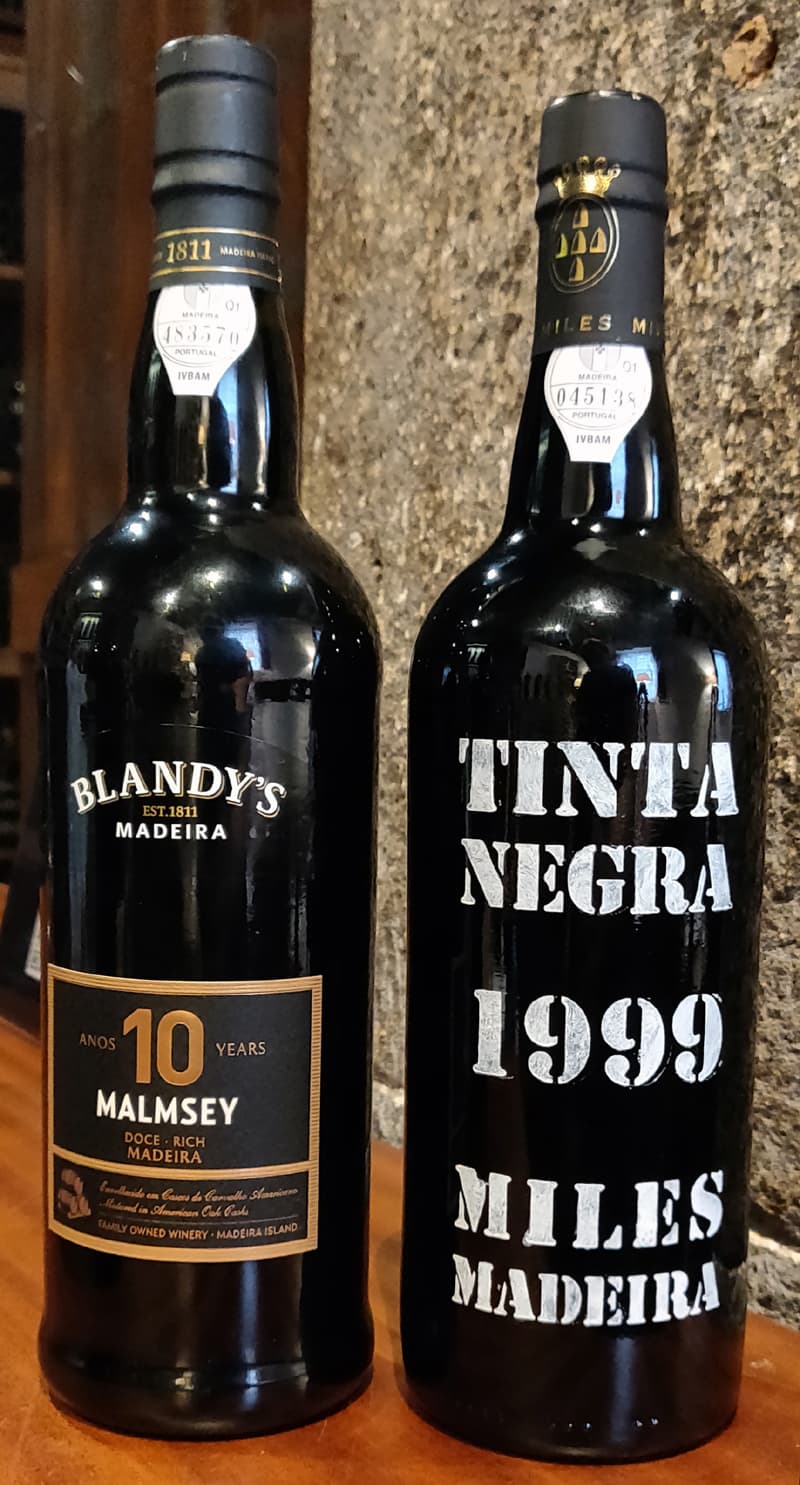
  • NV Blandy's Madeira Malmsey 10 Years Old - Portugal, Madeira (30.8.2022)
    100% Malvasia São Jorge. The grapes are first macerated with the skins, after which the fermentation starts in temperature controlled tanks. After 48 hours of fermentation, the must is rectified to approx. 20% ABV with 96% ABV grape spirit to halt the fermentation. The fortified wine is transferred to old oak casks which are moved to age in Canteiros, ie. in warm warehouses in which the wines age in casks that are never topped up. This wine is an indicative blend of multiple vintages, older and younger, with the aim of recreating a wine that has been aged for approximately 10 years in casks. 19% alcohol, 123 g/l residual sugar and approx. 6,5 g/l acidity.

    Clear and quite pale nutty-brown color - looks somewhat lighter than what I remembered. Sweet, oxidative aromas of caramel and maple syrup, some perfumed notes of dried flowers, a little bit of treacle, light smoky nuances, a hint of nutty rancio, a touch of dried figs and a whiff of cappuccino. The wine feels sweet and oily but also relatively fresh on the palate with a medium body and quite intense flavors of raisins and syrupy molasses, some oxidative notes of caramel, a little bit of dried figs, light pruney tones, a hint of nuttiness and a touch of Christmas spices. The alcohol lends a bit of warmth while the rather high acidity keeps the wine fresh and quite zippy. The finish is sweet, long and slightly syrupy with flavors of caramel, some raisiny tones, a little bit of burnt sugar bitterness, light notes of dried figs, a hint of floral lift and a touch of lemony tang.

    A lovely, tasty and harmonious Malmsey. Perhaps on the rich and syrupy end of the spectrum, rather than on the sweet-yet-brisk style of Malmsey where the sweetness is set off by the bracing acidity some Malmsey Madeiras can have. Definitely a dessert wine, but as is typical of the genre, the wine is wonderfully fresh, balanced and structured as well. Fine stuff.
    (90 points)

  • 1999 Miles Madeira Tinta Negra - Portugal, Madeira (30.8.2022)
    100% Tinta Negra made with fruit sourced from vineyards in Câmara de Lobos, west from Funchal. After approximately 48 hours of fermentation, the must is rectified to approx. 20% ABV with 96% ABV grape spirit to halt the fermentation. The fortified wine is transferred to old oak casks which are moved to age in Canteiros, ie. in warm warehouses in which the wines age in casks that are never topped up. The wine is aged for 20 years, first in the warehouses of Madeira Wine Company in Funchal, then in cellars in Caniçal. 20% alcohol, 130 g/l residual sugar, 8,73 g/l acidity, VA 0,66 g/l and pH 3,27. Total production 1317 bottles, 19 magnums, 16 double magnums and two 18-liter Solomon bottles.

    Quite deep syrupy-brown color with a reddish hue. The nose feels somewhat restrained with brooding, sweet-toned aromas of raisins, some figgy tones, a little bit of dried dark fruits, light old woody tones and a hint of savory, earthy spice. The wine is sweet, silky smooth and somewhat concentrated on the palate with a moderately full body and intense flavors of syrupy richness counterpointed by modest burnt sugar bitterness, some sharp lemony tones, a little bit of dried figs and raisiny dark fruit, light peppery nuances, a sweet hint of cloudberry jam and a touch of bruised green apple. The rather brisk and racy acidity lends the wine great sense of freshness and structure. The finish is long, sweet and somewhat oxidative with flavors of savory spices and tart lemony citrus fruits, some caramel tones, a little bit of smoke, light syrupy nuances, a hint of tobacco and a touch of salted nuts.

    A bright, zippy and lively Frasqueira that might not be made with the noble varieties, yet shows great sense of freshness and harmony - which is something Tinta Negra does not always show. Although the wine might be lacking a bit in complexity - as it is a Tinta Negra and quite young for a Frasqueira - there's lots of stuffing here, ranging from complex fruity notes to sweet-yet-savory oxidative nuances and tart, acid-driven notes of lemons and green apples. Delightful and thoroughly enjoyable stuff.
    (92 points)

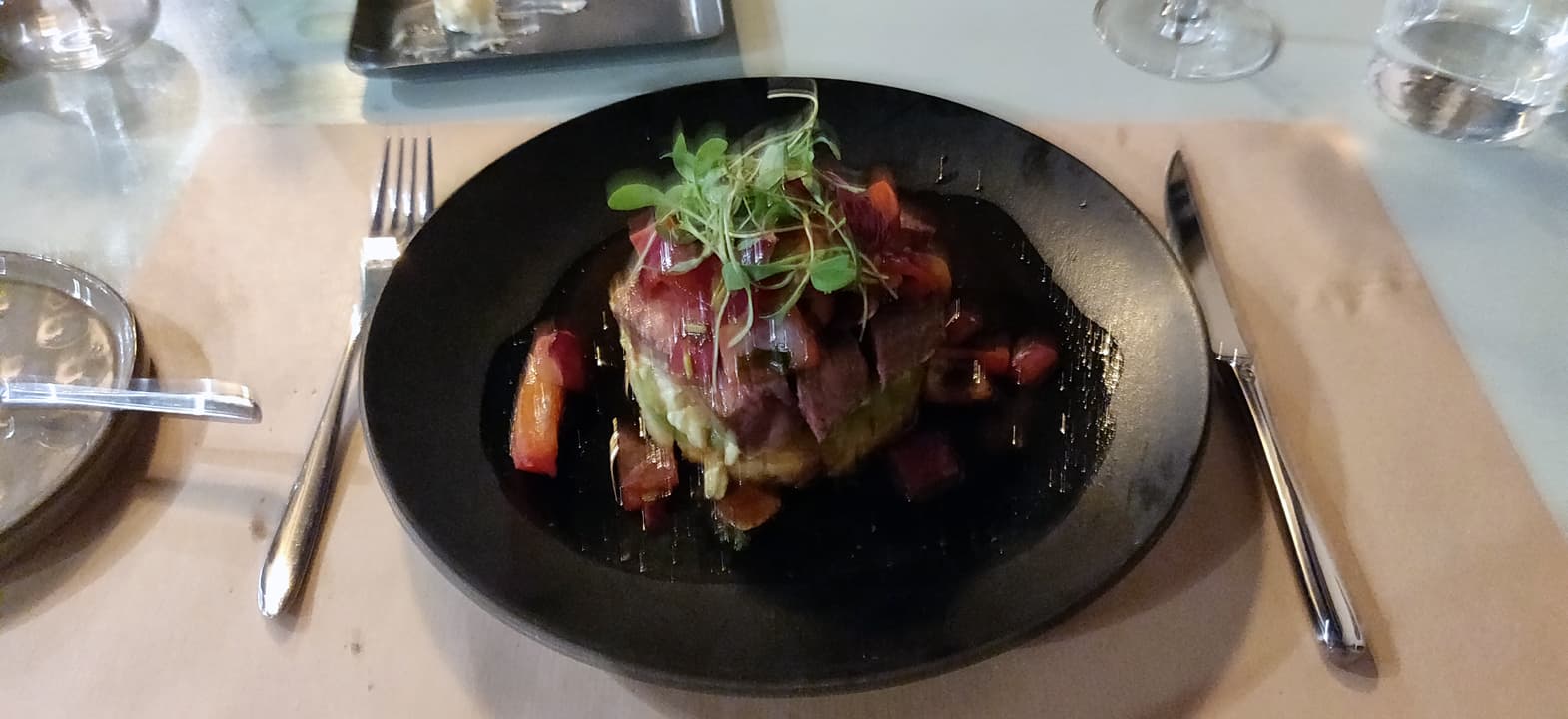
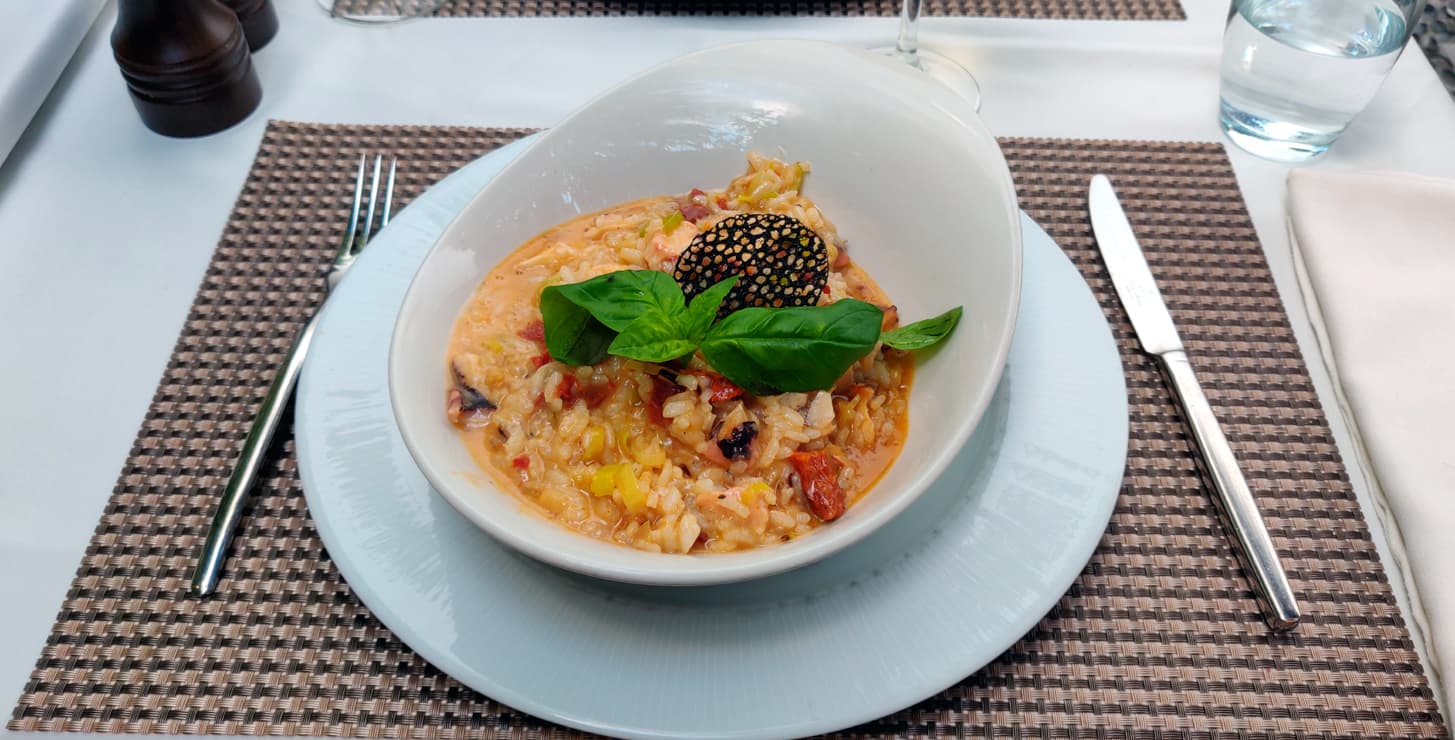
After the tour we grabbed a small bottle of Blandy’s Madeira from the lodge store to have something to sip on at the hotel. Then we went to a nearby restaurant, because it was high time to have something for a dinner - I had a seafood risotto. Not really up to Italian standards, but at least it drove the hunger away:
They didn’t have anything interesting to offer by the glass, so we just went for a half bottle of some random Douro Branco, which was the same stuff they had by the glass. Cue in disappointment.

  • NV Castello de Numão Douro Branco - Portugal, Douro (30.8.2022)
    A blend of Viosinho, Gouveio and Moscatel Galego. From a half bottle that didn't seem to have any indication of vintage. 13% alcohol.

    Somewhat evolved pale golden yellow color. Sweet, fragrant and rather perfumed nose with aromas of exotic fruits, some musky floral tones typical of Muscat, a little bit of peach and a hint of guava. The wine is dry, medium-bodied and quite crisp on the palate. However, the taste is odd - the wine starts off as ripe, tropical and even somewhat sweetly-fruited, then suddenly turns into quite dull and musty, making me wonder if the wine is corked, then flavors of juicy peaches and some floral notes of Muscat emerge. Really odd. The wine is high in acidity, lending good sense of freshness and focus to the wine. The finish is dry and quite crisp with flavors of peach, some guava and other exotic fruits, a little bit of perfumed floral character and a dull hint of dusty earth.

    A simple, exotic and floral little white that suffered from some weird, musty notes that made me think at first that the wine was corked. However, the wine didn't seem to get worse with air and aromatically it was quite sound - normally TCA mutes the wine, but there wasn't really anything muted here. Just some weird, musty flavors on the midpalate. I guess this is just cheap wine made with third-grade fruit or something. A decent, but very forgettable effort. Wasn't expensive at just 12€ for a half bottle in a restaurant, but hard to say if it was really worth it.
    (79 points)

After the small dinner we just walked around for a bit before heading back to our hotel. Took a sip of the Blandy’s Madeira for a nightcap:
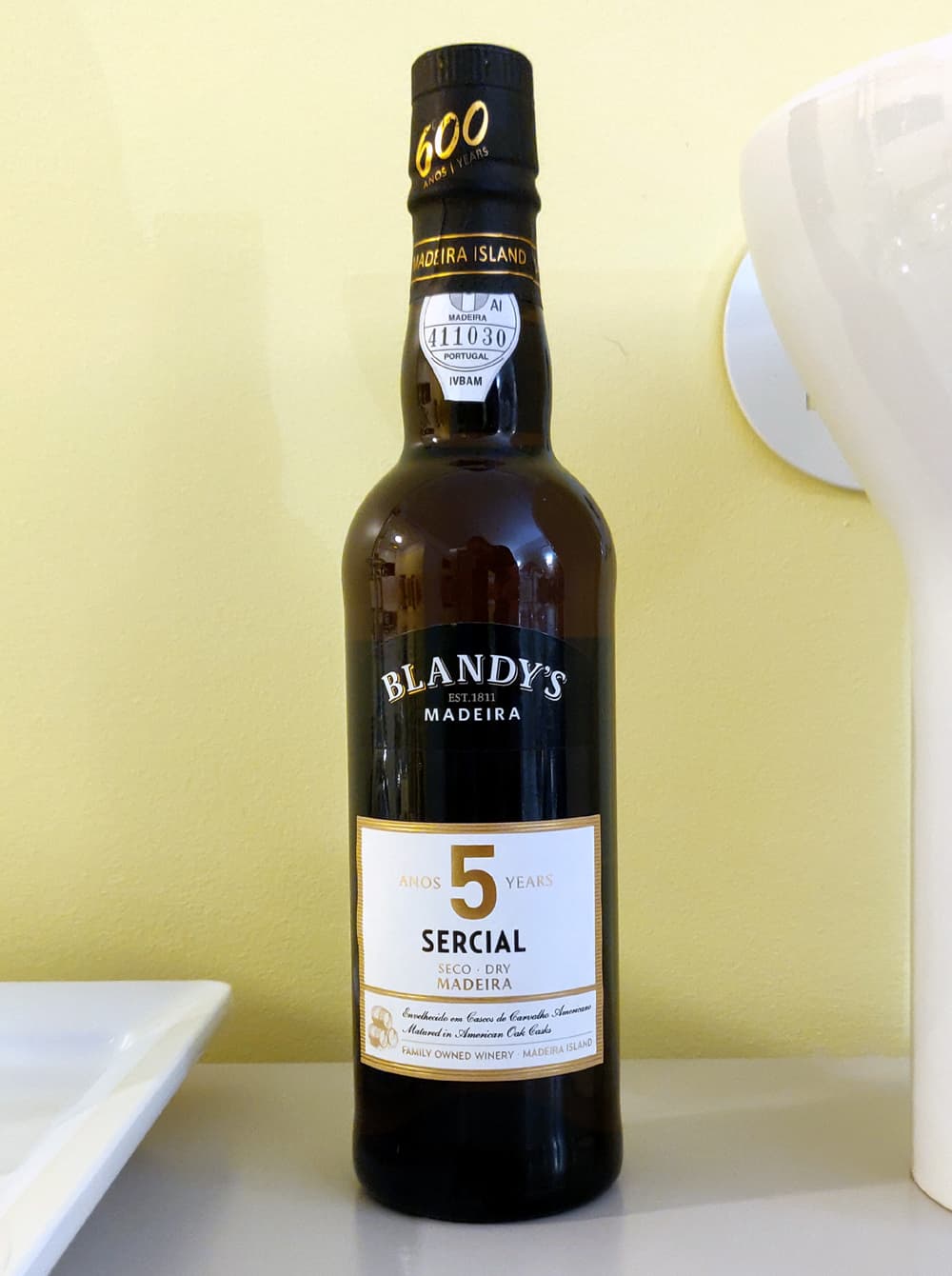
  • NV Blandy's Madeira Sercial 5 Years Old - Portugal, Madeira (30.8.2022)
    100% Sercial made with purchased fruit sourced from vineyardsin Porto Moniz, Seixal and Câmara de Lobos. The grapes fermented spontaneously starts in temperature controlled stainless steel tanks. After 5-6 days of fermentation, the must is rectified to approx. 20% ABV with 96% ABV grape spirit to halt the fermentation. The fortified wine is transferred to old American oak casks which are moved to age in Canteiros, ie. in warm warehouses in which the wines age in casks that are never topped up. This wine is an indicative blend of multiple vintages, older and younger, with the aim of recreating a wine that has been aged for approximately 5 years in casks. Bottled fined and lightly filtered. 19% alcohol, approx. 50 g/l residual sugar and approx. 6 g/l acidity.

    Luminous golden yellow color with a nutty-brown hue. The nose is somewhat oxidative with aromas of chopped walnuts, some bruised Granny Smith apple, a little bit of lemony citrus fruits, light grain whisky tones, a hint of caramel and a sharp touch of rancio. The wine is relatively mellow and gentle for a Sercial with some alcohol warmth, a medium body and medium-sweet flavors of orange, some oxidative notes of caramel and nutty rancio, a little bit of lemony citrus fruit, light bruised apple tones and a sweeter hint of dried fruits. Bright high acidity. The overall feel is harmonious, but also quite linear for a Madeira. The finish is quite long with medium-dry flavors of lemony citrus fruits, some caramel, a little bit of nutty rancio and roasted walnuts, light sharp notes of green apples, a hint of orange and a touch of bruised apple.

    An enjoyably fresh and complex but also a bit linear and mellow Sercial. Several sources say that the sweeter varieties work much better with younger Madeiras and drier styles (Sercial, Verdelho, Terrantez) start to really shine only with age (ie. +20 yo blends and Frasqueiras). The more I taste these younger Madeiras, the more I agree - while I do enjoy the freshness and zip Sercials normally show, these young wines come across as more linear and somewhat simple than the sweeter versions, which pack a bit more complexity already in their youth. Especially Sercial seems to develop more complexity only as it becomes more concentrated with extended aging. This was pretty lovely, but nothing special enough to make me seek it out specifically - at this age level (ie. price point) I'd go for the sweeter styles; if I wanted a Sercial, I'd pick something with more age. And do note that the wine does not develop any further in the bottle, so any further cellaring won't improve the wine from here - although the wine won't suffer from any cellaring either. Drink or keep. Priced according to its quality at 9,35€ for a half bottle.
    (88 points)

Posted from CellarTracker

22 Likes

There was an article in Bloomberg recently about Madeira, it was intriguing-
https://www.bloomberg.com/news/articles/2022-09-30/madeira-travel-guide-a-lush-ecosystem-adventure-wine-make-it-ripe-for-a-visit

2 Likes

Frankly, the history of Madeira Wine Company / Blandy’s is quite a confusing - and fascinating - one. These tidbits are from Liddell’s Madeira:

The Blandy family were originally not just Madeira shippers, but actually merchants and general traders operating different businesses (including shipping, banking, travel agency, etc.), beginning already in the early 1800’s. The wine business just slowly grew to be more important than the others. Blandy’s actually owned the famous Reid’s hotel until 1996.

In 1925 Blandy’s, Leacock & Co and Thomas Mullins joined together, forming a new company named Madeira Wine Association. The wine stocks of Blandy’s and Leacock’s were merged and Mullins operated as the director of the company. Little by little other producers joined Madeira Wine Association and eventually all the British Madeira shippers and several Portuguese shippers had joined the company.

MWA operated as a one single company and all the shippers ceased to be trading entities, instead becoming established brand names for the MWA lineup. All the wine stocks from the joining Madeira shippers were merged with MWA’s own and the shippers gained a share from the company.

By the 1950’s this had become a problem, as all the wines were produced from one single stock, but there were dozens and dozens of different company brand names, for all which all the different blends were supposed to be made, and on the perceived style of the original shipper. This was getting a task too arduous for MWA’s winemaker. What’s even more bewildering was that all the different brands acted as if they were still operating as seperate shippers, even if all the wines were made at the MWA premises.

After the 1974 revolution, most of the old shareholders left and eventually there were just a few left, Blandys and Leacocks remaining as the main equal shareholders. Blandy’s wanted to invest in the firm, whereas Leacocks were very hesitant during those tumultuous times and they did not. Finally, in the early 1980’s, Blandy’s ultimately acquired the Leacocks share of the company and could start making necessary changes.

It was also in the early 1980’s - in 1981 - when the name was changed from Madeira Wine Association to Madeira Wine Company - a name under which it still operates today - and the amount of brands with which they worked with were reduced to nine. Yet even then, making all the blends for all the different company brands was a dreary task.

In the late 1980’s Blandy’s had to look outside of Madeira for investors. During that time large companies were acquiring smaller wineries, but Blandy’s were very proud of their heritage and not looking a way to sell out. Thus, in 1988, Symington’s (of Port wine trade) became shareholders in MWC, taking a controlling interest in the firm. The Symigntons were quite shocked at the level of winemaking and viticulture at the island and immediately started modernizing things. The brand names were cut down to just four: Blandy’s, Leacock, Cossart Gordon and Miles - the ones with which MWC still operates today.

However, Port remained as a main focus for the Symignton family and they started to see Madeira as more of a distraction, which is why in 2011 they sold a majority of their shares back to Blandy’s, retaining just 10% of the company’s stock, enabling MWC to have access to Symington’s distribution network. At the moment MWC is basically a family company owned by the Blandys, which is the main reason why the difference between MWC and Blandy’s Madeira is a bit nebulous.

Today a large portion of their stock is at the historical São Francisco lodge (621,000 litres, virtually all in wood casks), where also their visitor center operates. The company operated at this lodge until 1961, but today the main operational center is located nearby, almost next to the Oliveiras lodge, where the company offices and main winery are located. Here the capacity is around 1,500,000 liters in concrete tanks, 1,500,000 in oak casks and 600,000 liters in stainless steel. Still a few decades ago MWC was Madeira’s largest producer, but today Justino’s is the largest one, MWC coming in at second place.

7 Likes

Awesome report Otto !

2 Likes

And this was only the day 1! :wink:

1 Like

Nice. Looking forward to the rest.
I generally pick restaurants on Madeira with one eye on the wine list. Otherwise, I drink Coral Beer. Better than Sagres or Super Bock IMO.
In the MWC tasting room, you can get wine by the glass. Some older versions as well.

Great report, Otto! I used to visit Madeira a lot when I worked in tourism. Sadly I never had the time to do proper winery visits and your report has made me wish that I had.

Madeira is especially popular as an alternative to Tenerife, etc as a winter destination, since the weather stays warm most of the winter, although there is a reason why it is all so green!

I hope your landing was trouble-free! Crosswinds can be really bad and at times, they only allow experienced pilots to fly there. I had quite a few “interesting” landings. I also hope you admired the two “tasteful” statues of Cristiano Ronaldo at the airport and in the centre of Funchal!

I look forward to the next chapter!

1 Like

Day 2:

We started off the day by going on a dolphin safari. These things are quite popular there, as the waters around Madeira are known to host over two dozen species of cetaceans, like the common dolphin, the spotted dolphin, the bottlenose dolphin and the sperm whale.

In Madeira these marine safaris are quite controlled: these safari firms can operate on a license only; just two boats or ships at a time can approach whales or a school of dolphins, and if there are more boats present, the others have to wait for their turn - whoever gets there first, gets to be there first; one ship is allowed to remain for 10 minutes with the dolphins, after which they have to leave; a ship can approach a whale or a school of dolphins, but if they decide to leave, they are not to be followed. There are rangers supervising the safari ships at all times and if they are witnessed to breach the rules, their license can be revoked.

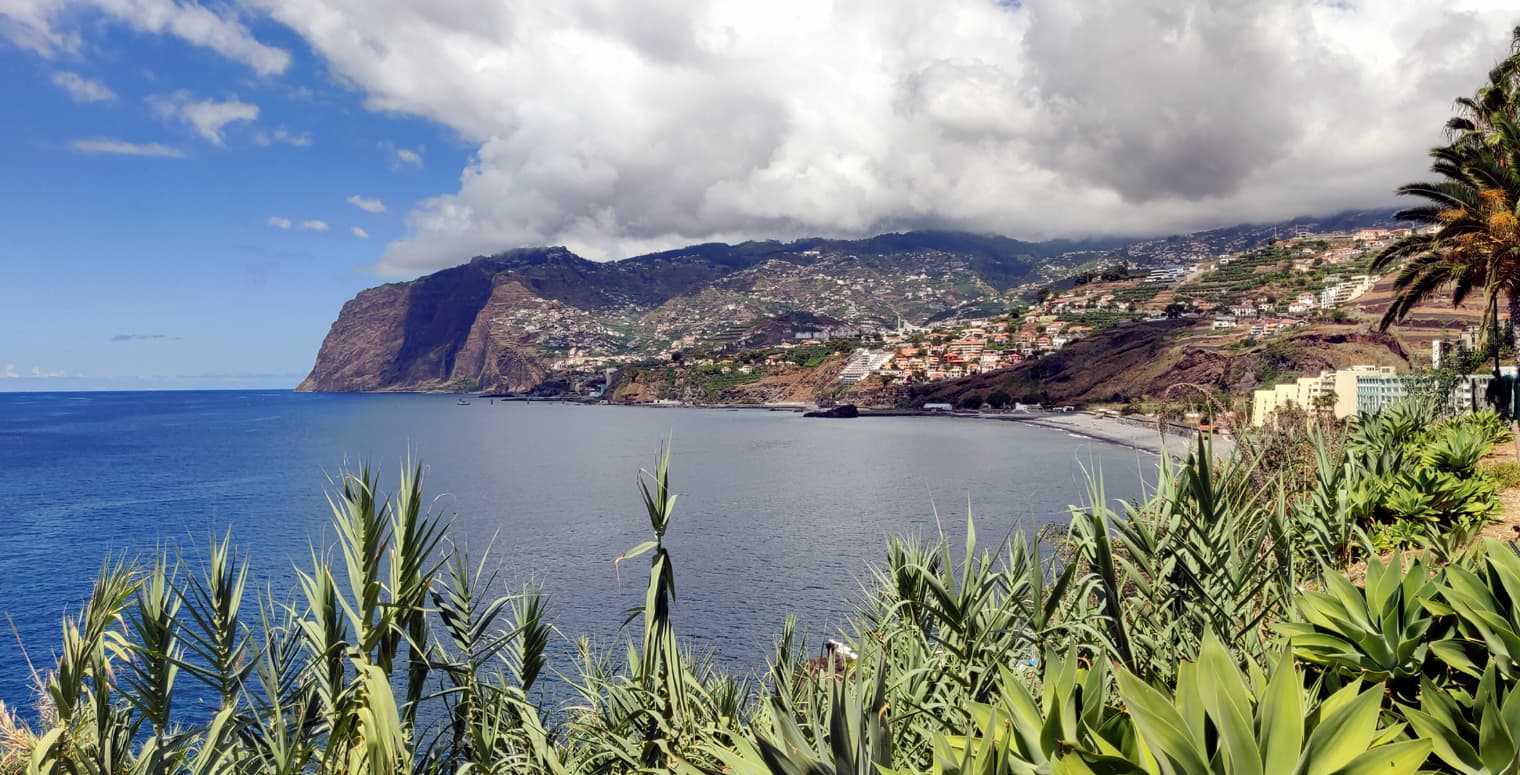
For the first hour or so, I thought we had just a bad day for dolphin spotting and were not going to see any, so I decided to just enjoy the views over Madeira, which were quite stunning from the sea. For example here you can see Cabo Girão, which at 589 metres (1,932 ft) is the highest seaside cliff in Europe and supposedly the second highest in the world:

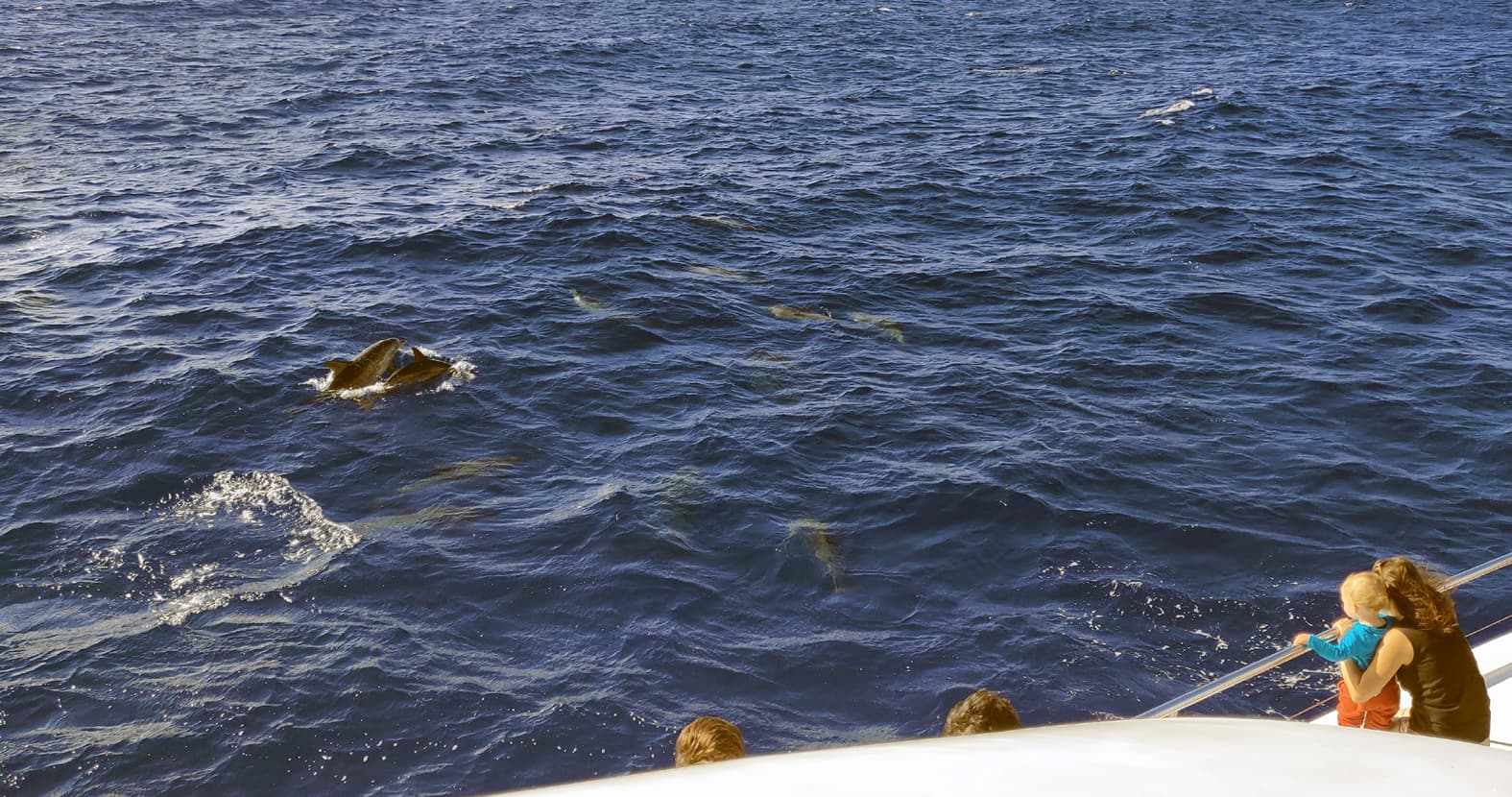
However, suddenly the ship spotter managed to spot a school of dolphins (he must’ve been doing constant scouting ceaselessly for an hour at that point!) and we took off instantly in their direction. A few minutes later we stopped nearby a school of spotted dolphins and instead of them speeding away, these creatures came to meet us and jump around our ship! Fantastic stuff.

After hanging around with the dolphins for that allotted 10 minutes, we started to head back to the Funchal port. However, on our way back, our spotter also saw a mother finback whale and her calf. Unfortunately we couldn’t get near them (or get any good photos), as all we managed saw were a huge water spout and then a smaller one close by, followed by two finned whale backs arching. This actually happened a few times - every 4-5 minutes - during the 15 minutes or so while we were sitting around nearby, waiting the whales to surface. If I learned something, whale breath smells quite nasty (we were downwind from the spouts and after a little while the whale had surfaced, a horrible, dead marine stench passed us by)!

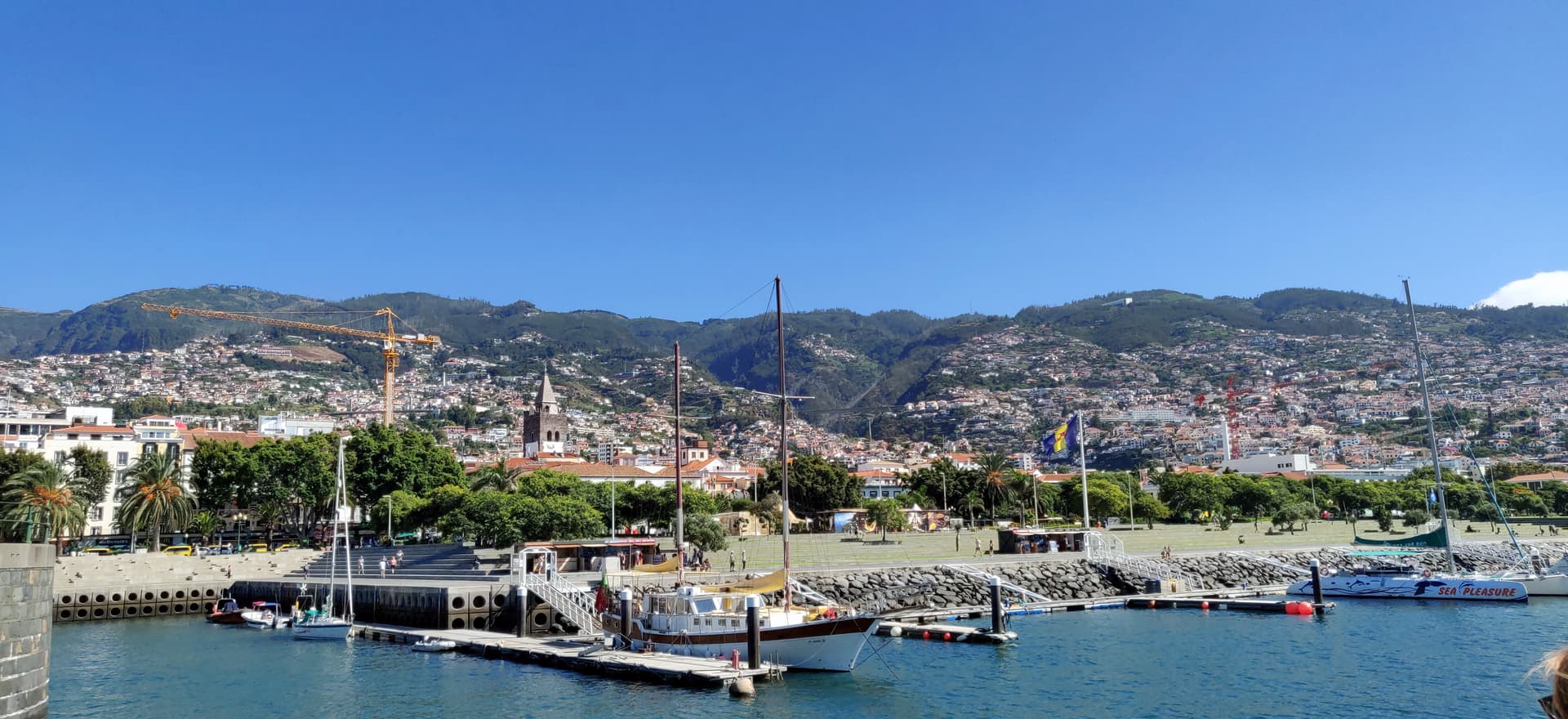
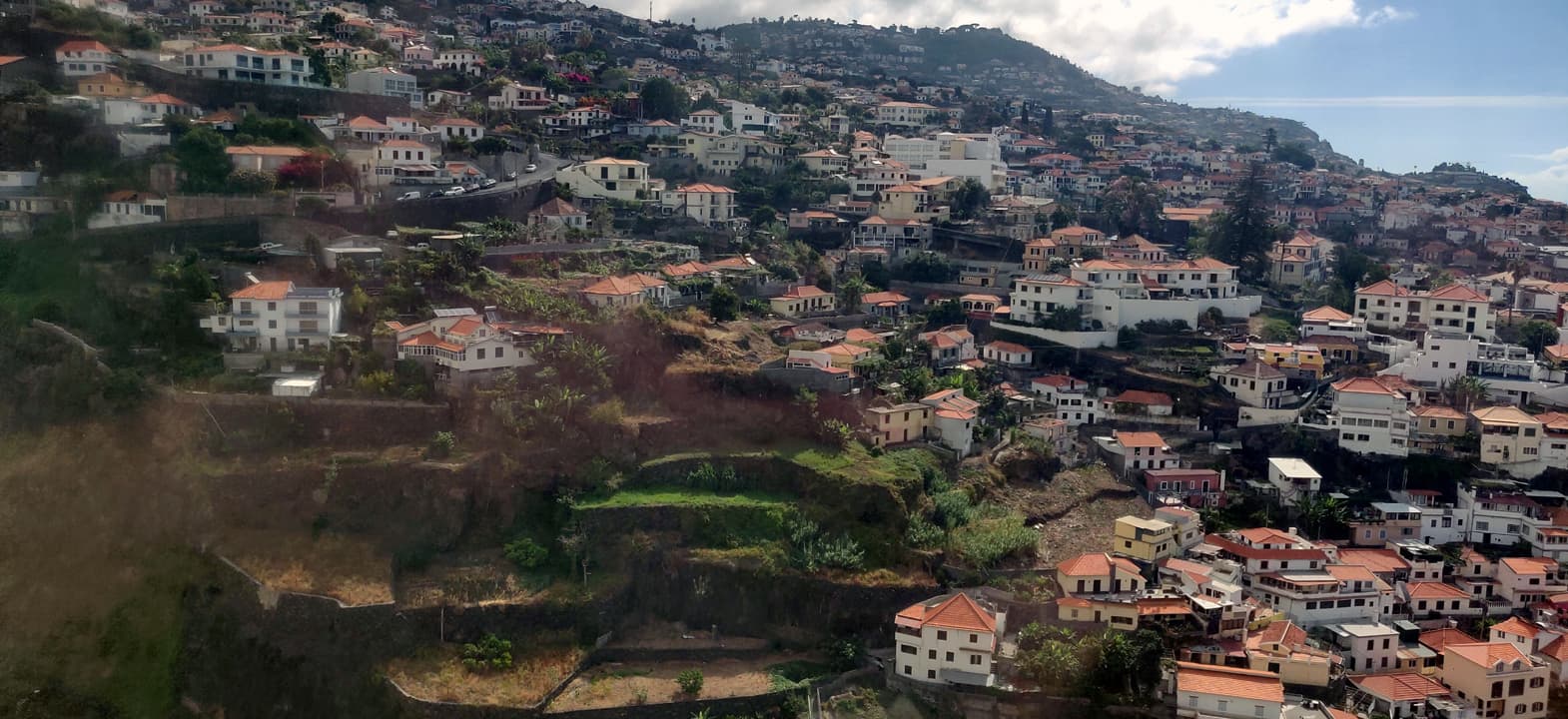
Here we are returning to the Funchal marina. It’s crazy how high up in the mountains Funchal and its suburbs really extend:

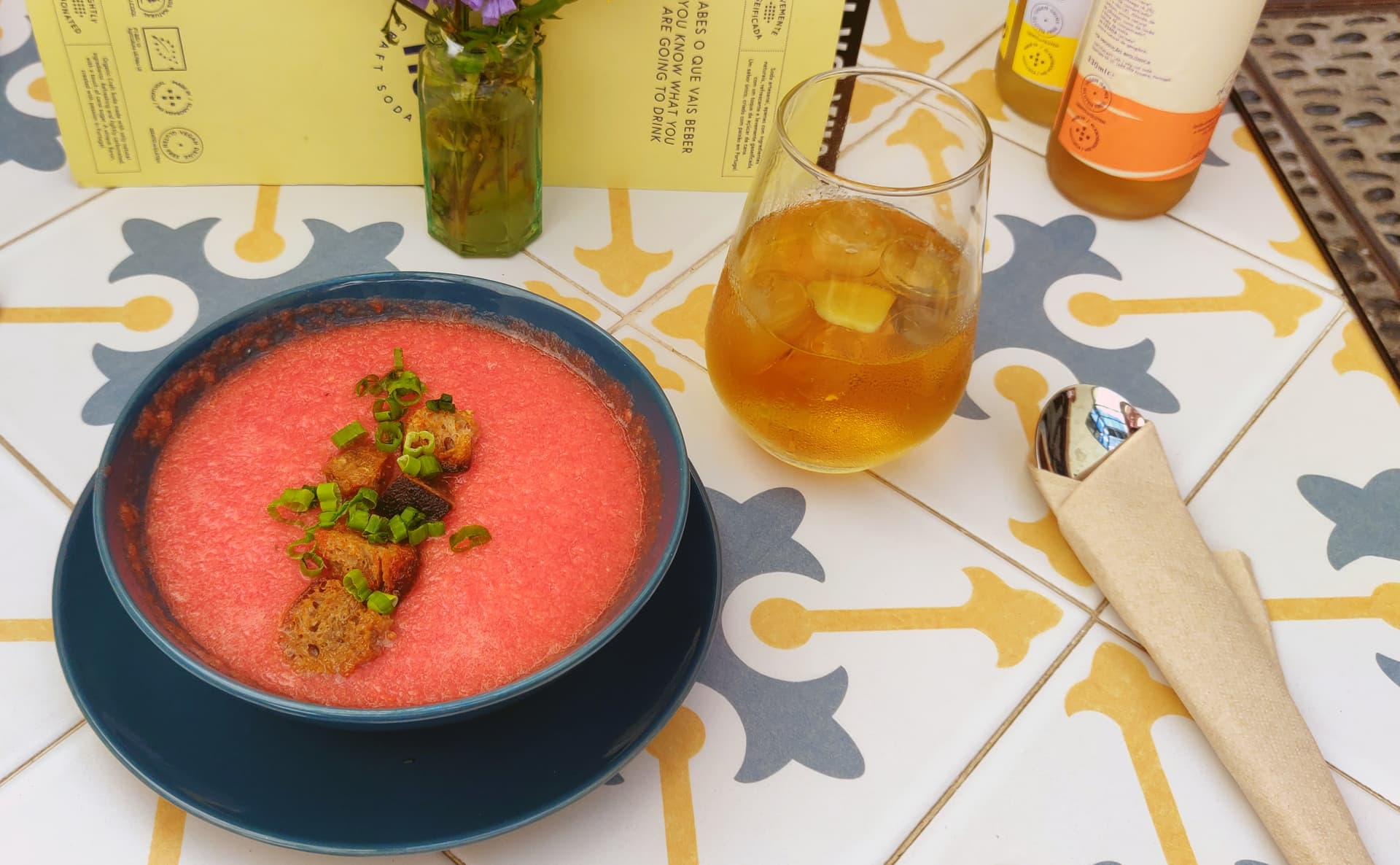
After the dolphin safari, we went for lunch - I had a refreshing cup of gazpacho:

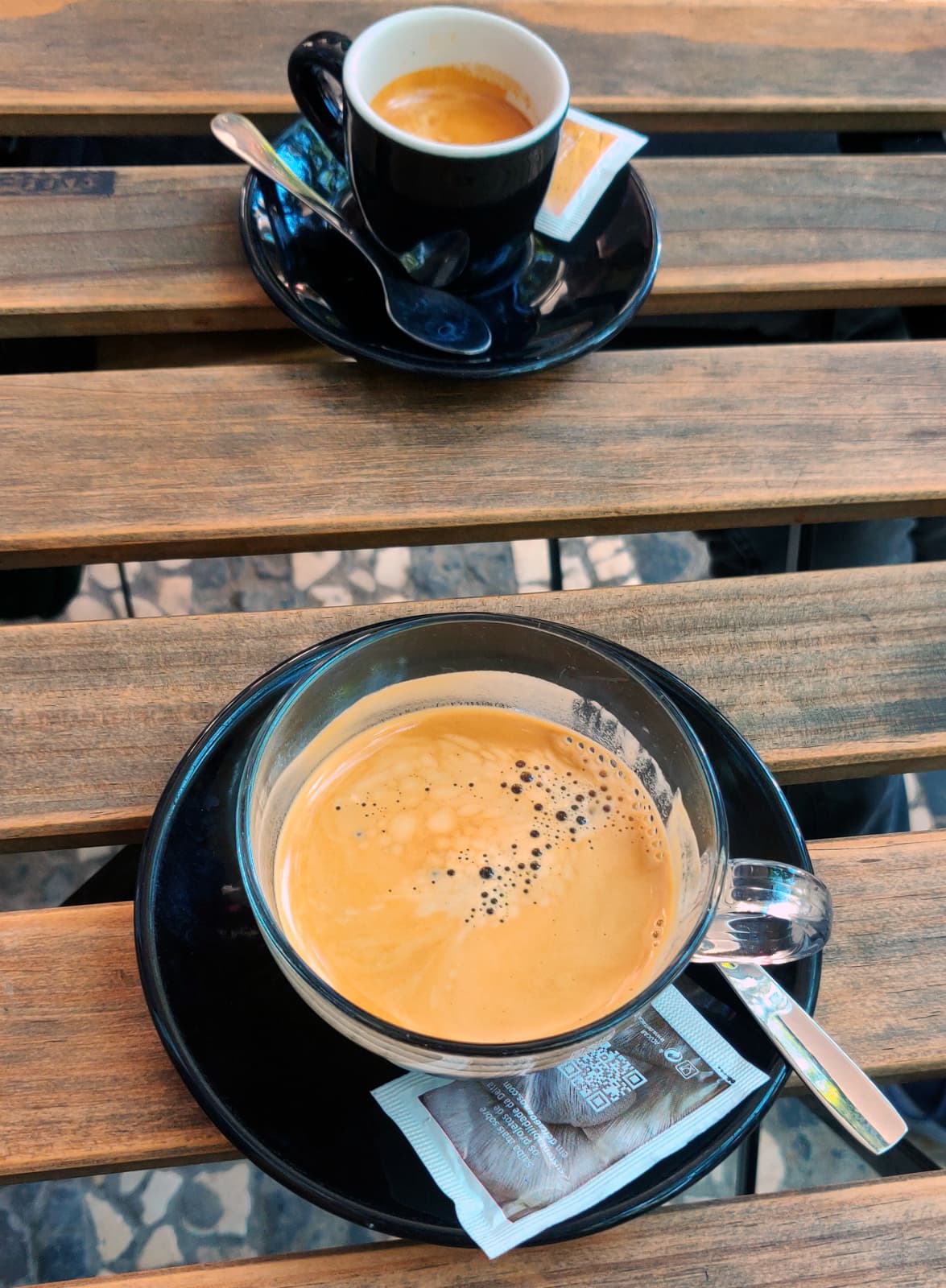
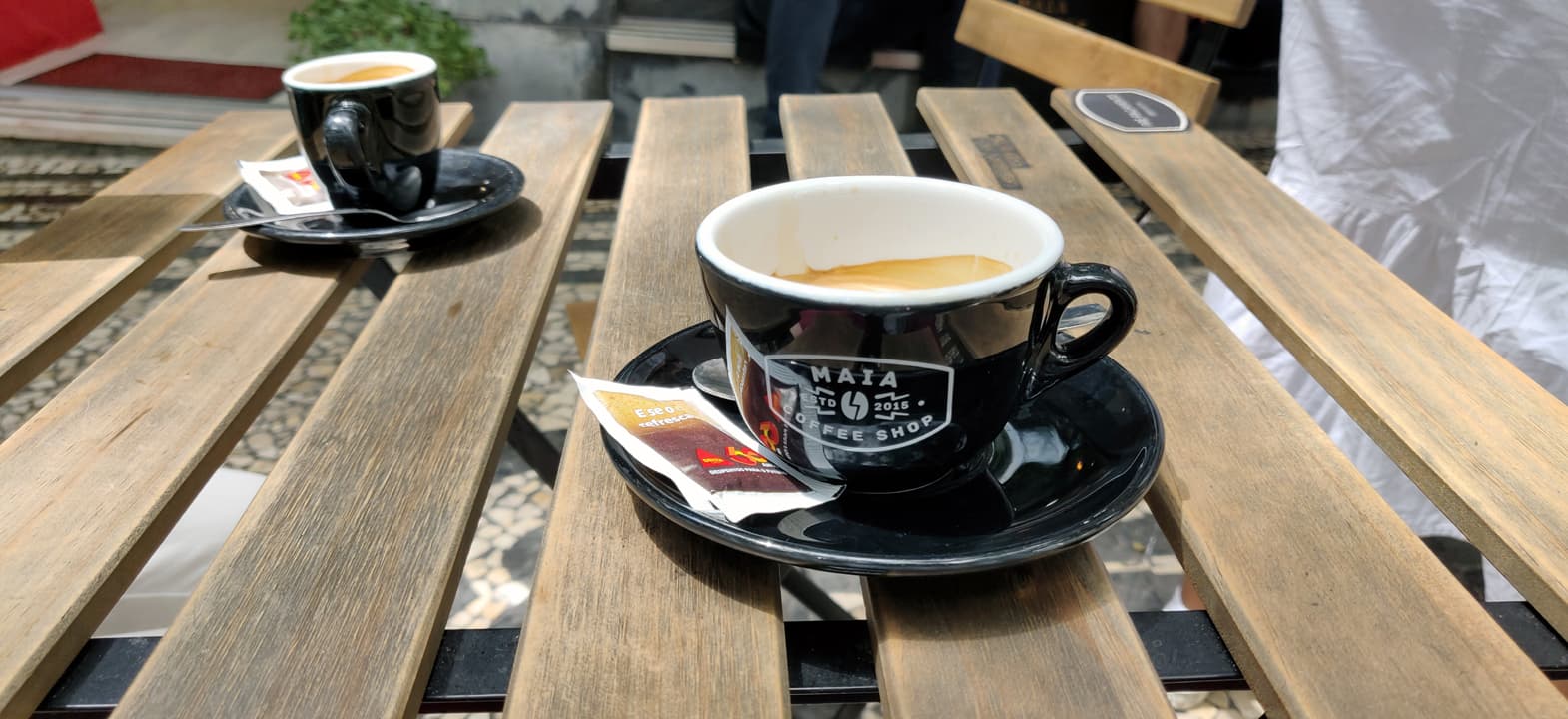
We also checked out the museum of photography nearby and then had some seriously tasty espressos afterwards:

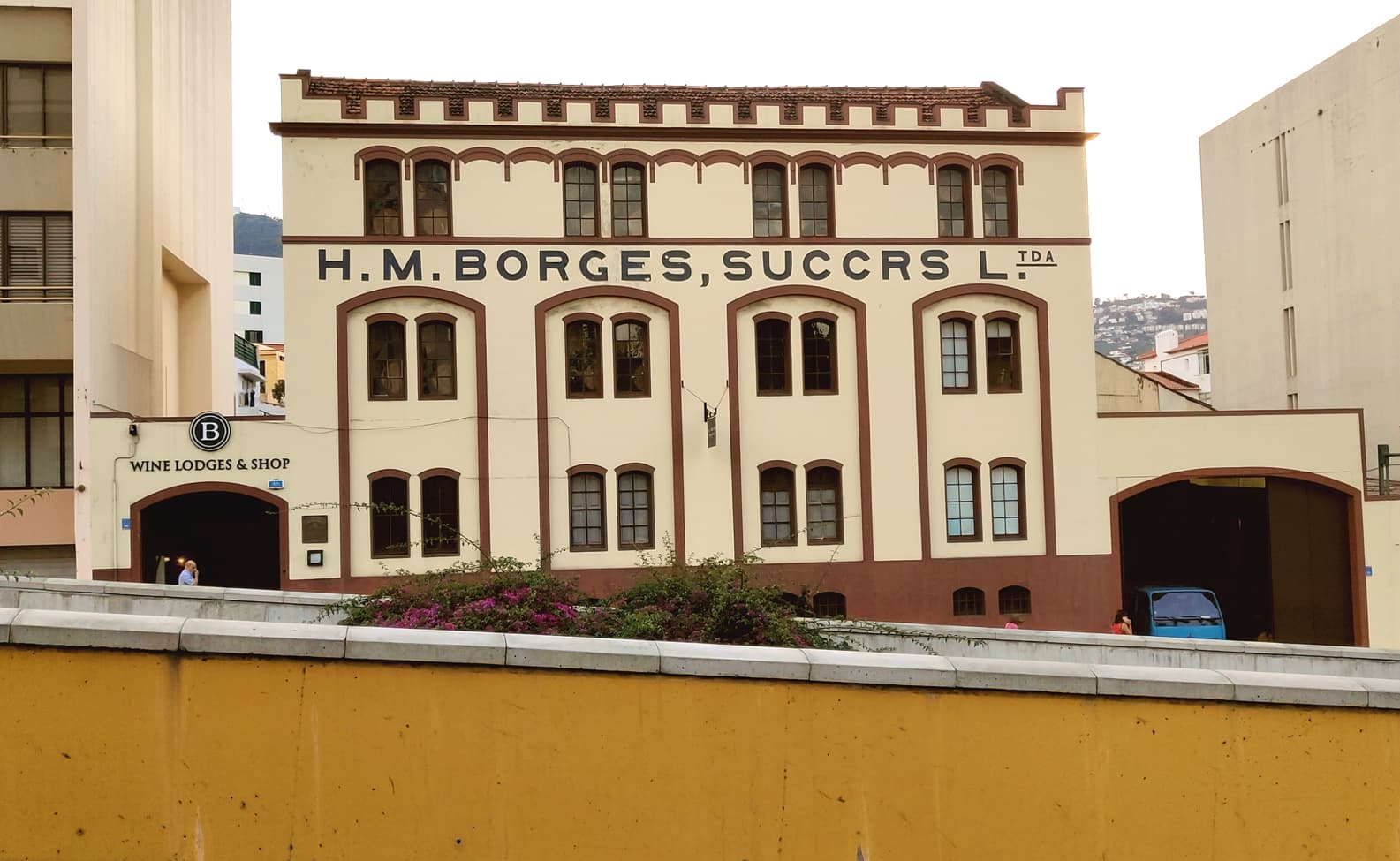
And then we went for the second winery visit of our trip! To Borges (I learned this is basically pronounced as borsh, just with a long ‘o’), which was just a few blocks away from our hotel!

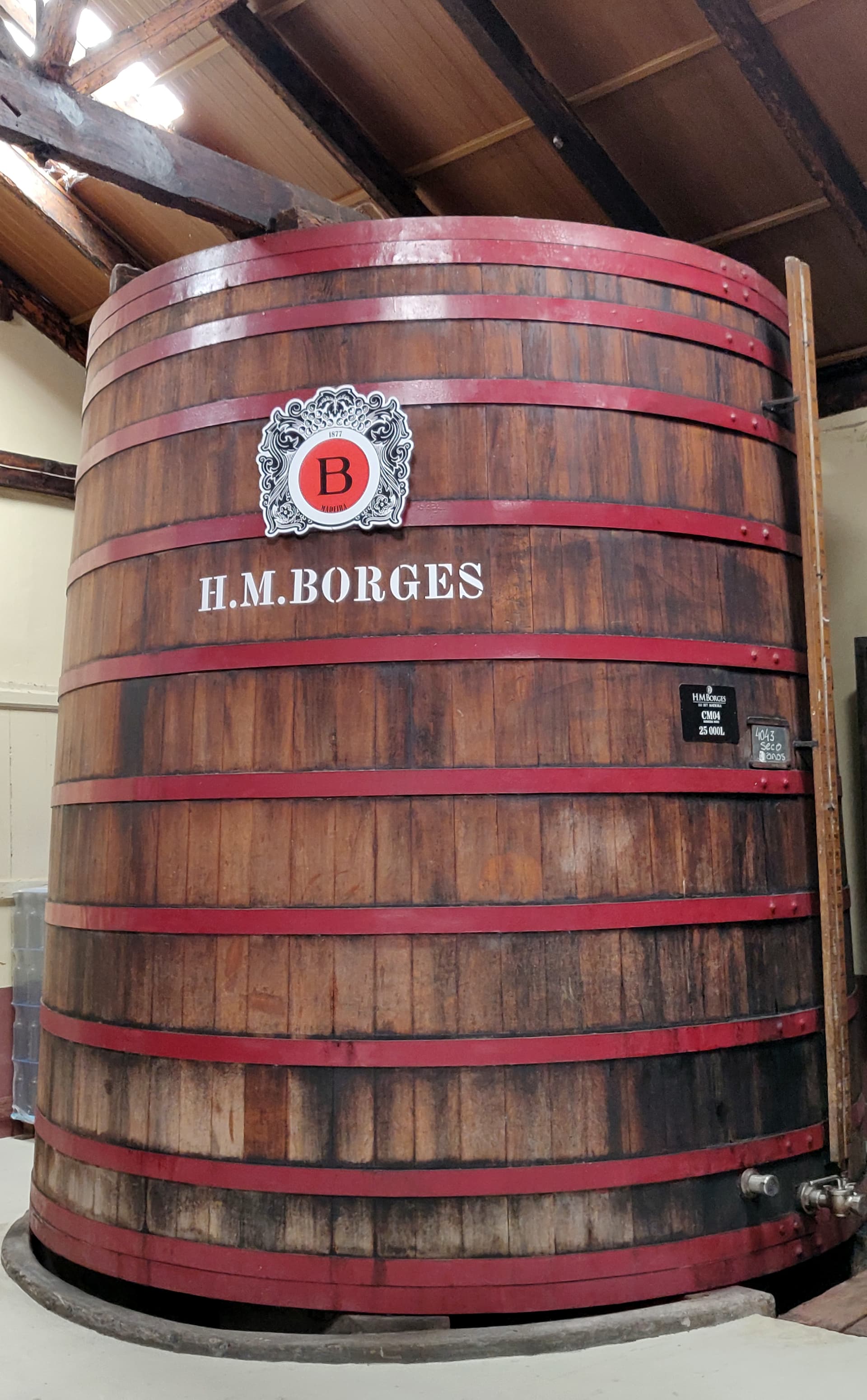
First we booked a tour around the winery, then we had a tasting of multiple wines. Here’s a humongous tronconic vat made of Brazilian satinwood and used for the cheapest 3 yo Madeiras - once a batch of Tinta Negra has been cooked for enough time in estufas, it is blended one of these vats, which hold 24-25,000 liters of wine each:

All the noble varieties (Sercial, Verdelho, Terrantez, Boal and Malvasia) are aged in casks and later on either blended into age-designated blends (10 yo, 15 yo, 20 yo and older) or bottled without any blending as either Colheitas or, in the case of exceptional wines, as Frasqueiras. That huge concrete drum in the background is an estufa, a “sauna” for heating up and cooking Tinta Negra wines that are blended into the cheaper blends. One estufa holds about 35,000 liters of wine:

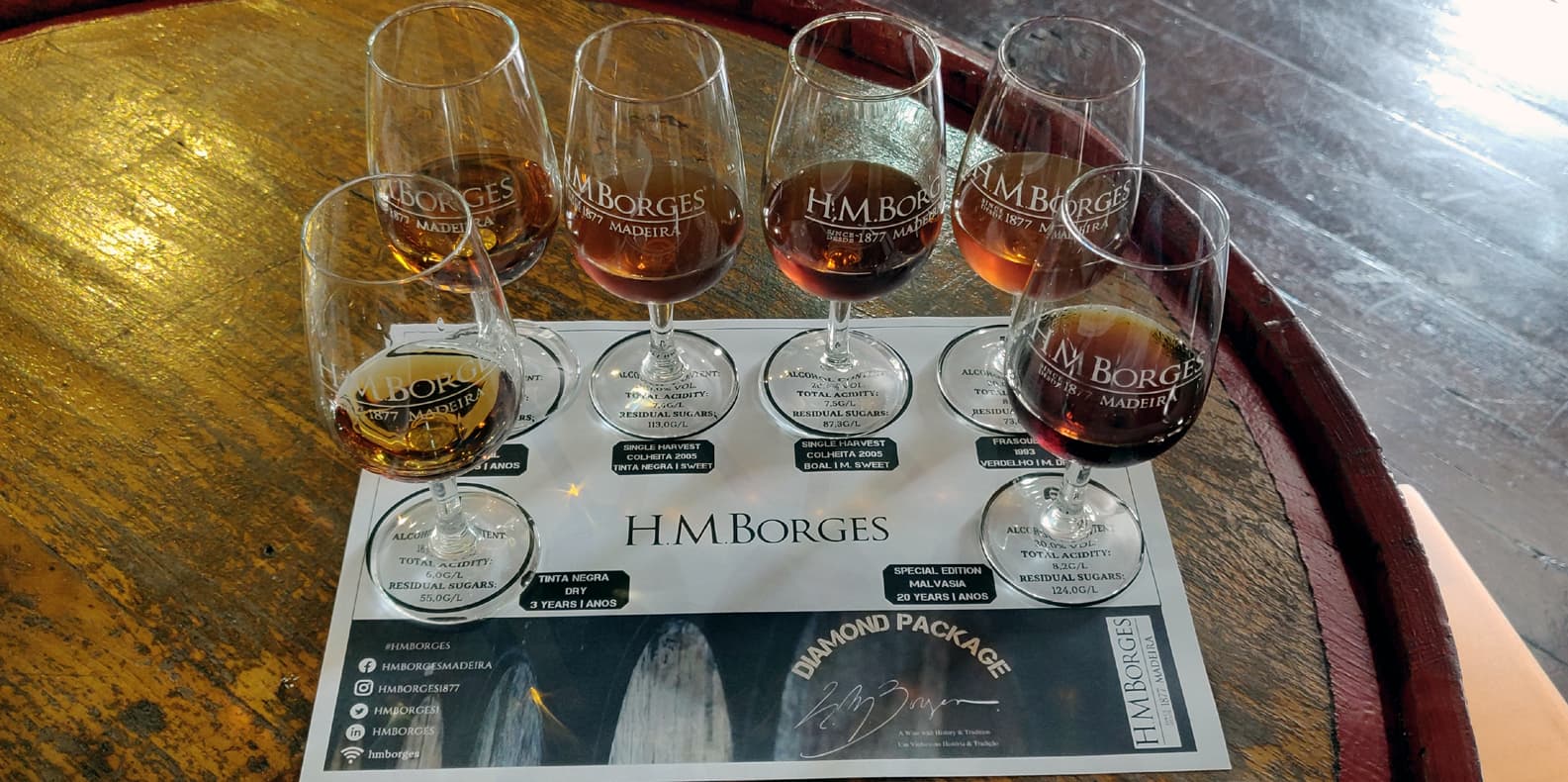
After the tour we had a nice sample of different Borges wines:

  • NV H.M. Borges Madeira 3 Years Old Dry - Portugal, Madeira (31.8.2022)
    Labeled only as "H.M. Borges Dry Madeira Wine", but is actually their 3 Years Old blend, as shown in their website. The wine is made with purchased Tinta Negra grapes that are first fermented and then, after two days of fermentation, fortified to approx. 20% ABV. The fortified wine is then fined, filtered and aged for a minimum of 90 days in epoxy-lined concrete estufas in which the wine is heated artificially to temperatures ranging from 40 to 45°C (104 to 113 °F). After the estufagem process, the wine is blended into large satinwood vats and stainless steel tanks. The wine is blended from different vats, resulting in a wine that is on average 3 years old. 18% alcohol, 55 g/l residual sugar and 6,0 g/l acidity.

    Deep, somewhat translucent syrupy-brown color with a reddish hue. The nose feels dull, dusty and somewhat stewed with slightly disagreeable aromas of musty old wood, some peanut skin, a little bit of dry leather, light earthy notes and a sweet hint of stewed red fruits. The wine feels somewhat dull on the palate with a medium-to-moderately full body and medium-dry to medium-sweet flavors of chopped nuts, pouch tobacco, some decomposing wood tones, a little bit of syrupy richness, light earthy tones, sweet hints of raisins and stewed dark fruits and a touch of of peanut skin. The wine is medium-to-moderately high in acidity - high enough to keep the wine in balance, but not high enough to lend the wine zippy freshness typical of Madeira. The finish is aged, long and rather oxidative with medium-dry flavors of chopped nuts, some earth, light malty tones, a little bit of raisin, a hint of pouch tobacco and a touch of stewed red fruits.

    Although I enjoy Borges Madeiras a lot, this wine was a very disappointing effort. It lacked the intensity and complexity of great Madeiras, coming across just as dull, soft and rather stewed - which seems to be quite typical of inexpensive wines aged in estufas. Although this is one step above cooking Madeira, I feel this wine is really suitable just for cooking purposes. I'm not saying it is undrinkable, because it's a perfectly fine cheap Madeira - it just doesn't have anything I look for in a Madeira. I guess the wine is priced according to its quality at 4,50€ for a full 0,75-liter bottle.
    (72 points)

  • NV H.M. Borges Madeira Sercial 15 Years Old - Portugal, Madeira (31.8.2022)
    The wine is made with purchased Sercial grapes from Jardim da Serra. The grapes are briefly macerated with the skins. After 5-6 days of fermentation, the must is rectified to approx. 20% ABV with 96% ABV grape spirit to halt the fermentation. The fortified wine is transferred to old 650-liter oak casks which are moved to age in Canteiros, ie. in warm warehouses in which the wines age in casks that are never topped up. This wine is an indicative blend of multiple vintages, older and younger, with the aim of recreating a wine that has been aged for approximately 15 years in casks. 19% alcohol, 53 g/l residual sugar and 7,6 g/l acidity.

    Pale golden-yellow color with an amber core. Nuanced, somewhat oxidative nose with aromas of caramel, some evolved smoky tones, a little bit of vanilla custard, light juicy notes of tangerine, a hint of marzipan and a touch of dried apricots. The wine feels medium dry to medium sweet on the palate with a medium body and intense flavors of caramel and syrupy treacle, some beeswax, light floral notes of dried flowers, a little bit of ripe tangerine and poached pear, aged hints of tobacco and old furniture and a touch of tangy salinity. The rather brisk and racy acidity makes the wine feel rather structured and lends great sense of intensity to the flavors. The finish is rich, subtly sweet and very intense with flavors of syrupy molasses and caramel, some burnt sugar bitterness, a little bit lemony citrus fruit, light smoky notes of cigar, a hint of bruised Granny Smith apple and a touch of dried apricot.

    A wonderfully fresh, zippy and nuanced Sercial that sits firmly between the 10 Years Old blend and a young Frasqueira wine. This feels a bit sweeter and more approachable than what I expected from a Sercial, but not really in a bad way - the wine is just lovely with its combination of tangy citric notes and syrupy richness. I guess the wine can feel quite rich if one is expecting a "dry" Sercial, but this is pretty darn terrific all the same. Terrific value at 24€.
    (91 points)

  • 2005 H.M. Borges Madeira Tinta Negra Colheita - Portugal, Madeira (31.8.2022)
    The wine is made with purchased Tinta Negra grapes from Estreito de Câmara de Lobos. The grapes are first macerated with the skins, followed by a brief fermentation of a few days. The must is rectified to approx. 20% ABV with 96% ABV grape spirit to halt the fermentation, after which the fortified wine is transferred to old 650-liter French oak casks. The wine is aged in Canteiros, ie. in warm warehouses, in which the wines age in casks that are never topped up. 20% alcohol, 113 g/l residual sugar and 7,4 g/l acidity.

    Pale, slightly hazy coppery color. The nose feels somewhat restrained and even a bit dull with aromas of boozy alcohol, some nutty rancio, a little bit of vanilla cigar, light figgy tones, a hint of dried flowers and a touch of chopped walnuts. The wine is sweet, hot and evolved on the palate with a full body and rich flavors of raisins and nutty rancio, peppery spice, some earthy tones, a little bit of leather, light sweet notes of apple jam and maple syrup, a hint of lemony zip and a touch of cigar. The rather high acidity lends good sense of focus and structure to the wine. The finish is hot, long and sweet yet savory with flavors of peppery spice and acid-driven lemony citrus fruit, some raisiny tones, a little bit of dried dates, light nutty notes of rancio, a hint of cigar and a touch of burnt sugar bitterness.

    A quite balanced but unfortunately somewhat unfocused Colheita that is lacking in depth and complexity to some degree. The balance between the body, the sweetness and the acidity is spot on here, but the fruit and other flavors seem a bit dull, lacking in freshness and brightness - a quality which becomes even more apparent when tasting 2005 Borges Boal Colheita alongside this wine. This is a thoroughly drinkable wine and definitely a curiosity, as a single-harvest Tinta Negra - a variety that normally disappears in generic Madeira blends - but I must confess this wine did leave me a bit cold. Nothing too bad, but definitely nothing special to write home about. I hope the 2013 vintage will be better. Feels a bit pricey at 20€ for a half-liter bottle, but not prohibitively so.
    (83 points)

  • 2005 H.M. Borges Madeira Boal Colheita - Portugal, Madeira (31.8.2022)
    The wine is made with purchased Boal that are briefly macerated with the skins. After 3-4 days of fermentation, the must is rectified to approx. 20% ABV with 96% ABV grape spirit to halt the fermentation. The fortified wine is transferred to old 650-liter oak casks which are moved to age in Canteiros, ie. in warm warehouses in which the wines age in casks that are never topped up. 20% alcohol, 87,3 g/l residual sugar and 7,5 g/l acidity.

    Medium-deep coppery color. Sweetish, nuanced nose with seductive aromas of raisins and black treacle, some apple jam, light dried-fruit notes of raisins and dried figs, a little bit of Christmas spices, a hint of oak smoke, a touch of something resinous and a whiff of bitter almond oil. Lovely! The wine feels rich, oily and very intense on the palate with a moderately full body and sweet flavors of syrupy treacle and raisins, some tangy lemony tones, a little bit of bruised apple, light caramel tones, a hint of oxidative nuttiness and a touch of dried dates. The bright, zippy acidity lends great sense of structure and freshness to the wine. The finish is sweet, brisk and moderately concentrated with a very long aftertaste of apple jam, some maple syrup, a little bit of burnt sugar bitterness, light lemony notes of tart citrus fruits, a hint of oak smoke and a touch of tangy salinity.

    A superb Colheita Madeira that is quite close to a young Garrafeira in quality. A great combination of concentrated, oxidative fruit character, syrupy sweetness and brisk, lemony acidity that wonderfully offsets most of the sweetness from the residual sugar without really negating any of that resulting richness. Tasting this alongside 2005 Borges Tinta Negra Colheita, this was simply miles and miles better. An excellent purchase at 22€ for a half-liter bottle.
    (92 points)

  • 1993 H.M. Borges Madeira Verdelho - Portugal, Madeira (31.8.2022)
    The wine is made with purchased Verdelho from Estreito de Câmara de Lobos. After 4-5 days of fermentation, the must is rectified to approx. 20% ABV with 96% ABV grape spirit to halt the fermentation. The fortified wine is transferred to old 650-liter oak casks which are moved to age in Canteiros, ie. in warm warehouses in which the wines age in casks that are never topped up. 20% alcohol, 73 g/l residual sugar and 8,9 g/l acidity.

    Somewhat deep coppery color that turns to luminous amber toward the rim. The wine has an attractive, fine-tuned nose with aromas of smoke, restrained nutty notes, some autumnal notes of leaves, a little bit of tropical fruit, light raisiny tones, sweeter hints of lime marmalade and cooked red fruits, a creamy touch of custard and a whiff of marzipan. The wine is ridiculously crisp, racy and intense on the palate with a medium body and concentrated, medium-dry to medium-sweet flavors of lemony citrus fruits and ripe Granny Smith apple, some key lime marmalade tones, a little bit of sweet cigar smoke, light oxidative notes of caramel, subtly bitter hints of apple peel and pithy grapefruit and a touch of passion fruit. The bracing acidity lends tremendous sense of structure and intensity to the wine. The finish is long, racy and very complex with intense, subtly sweet flavors of syrupy molasses and burnt sugar bitterness, some lemony citrus fruits, a little bit of bruised Granny Smith apple, light autumnal notes of damp leaves, a hint of nutty rancio and a touch of pithy grapefruit.

    A fantastic, immensely complex and remarkably intense Frasqueira Madeira with exceptional freshness, thanks to its incisive acidity and balanced bitterness that effortlessly offset most of the sweetness, making the wine feel much drier than it technically is. So much to love here. Superb stuff. Not particularly affordable at 120€, but I'd argue that the wine still delivers for the price. Highly recommended.
    (94 points)

  • NV H.M. Borges Madeira Malvasia 20 Years Old - Portugal, Madeira (31.8.2022)
    The wine is made with purchased Malvasia São Jorge grapes from São Jorge. The grapes are briefly macerated with the skins. After a few days of fermentation, the must is rectified to approx. 20% ABV with 96% ABV grape spirit to halt the fermentation. The fortified wine is transferred to old 650-liter French and American oak casks which are moved to age in Canteiros, ie. in warm warehouses in which the wines age in casks that are never topped up. This wine is an indicative blend of multiple vintages, older and younger, with the aim of recreating a wine that has been aged for approximately 20 years in casks. 20% alcohol, 124 g/l residual sugar and 8,2 g/l acidity.

    Quite deep and dark syrupy-brown color. Bold yet still somewhat shy nose with rich aromas of syrupy molasses and dried dark fruits, some raisiny tones, a little bit of caramel, light fragrant notes of dried flowers and Christmas spices, a hint of leather and a touch of anise. The wine feels firm, powerful and concentrated on the palate with a full body and intense, very sweet flavors of lemony citrus fruits and apple jam, peppery spice, some perfumed notes of dried flowers, a little bit of key lime, light notes of smoke and pipe tobacco, hints of prunes and raisins and a tangy, saline touch of nutty rancio. The wine is quite bold and voluminous, yet it doesn't come across as heavy or sticky, thanks to the bright, zippy acidity. The finish is rich, sweet and powerful with intense flavors of syrupy molasses and dried dates, some raisiny tones, a little bit of apple jam, light nutty notes of rancio, a hint of tobacco and a touch of saline tang.

    An exquisite, powerful and harmonious Madeira with lots of body, sweetness and intensity - but at the same time it manages to come across as bright, fresh and zippy, all thanks to the very focused, lemony acidity. Outstanding wine that can hold a candle to any young Frasqueira Malvasia - but at a much reasonable cost! At just 40€, this is a find. Highly recommended.
    (93 points)

Posted from CellarTracker
5 Likes

Wow what a thread!

Otto, hide somewhere behind a barrel, sneak in after-hours to get some of that 1700s! You’d become #Legend here. :wink:

Back in the day, we could still get pre-Civil War Madeira at Bern’s, but those days are long gone. Was always such an amazing treat.

Will you get a chance to taste really mature stuff?

1 Like

And again, some data from Liddell’s Madeira:

Henrique Menezes Borges founded his eponymous company in 1877. He began as a partidista ie. a middleman, who works with the small growers, buys grapes and wine from them, vinifies purchased grapes, ages wine in their own premises and sells finished wine to shippers who can bottle or sell the wines under their own name.

The company was renamed to H. M. Borges, Sucessors, Lda in 1916, when Henrique Menezes Borges died. After his father’s death, Maria da Conceição, the founder’s daughter, married João Henriques Gonçalves, whose own Madeira company was subsequently merged with Borges in 1926. Not soon after, in 1932, Gonçalves bought the company from Maria and his two brothers.

After Jõao’s death the company was managed by Jorge and Fernando Gonçalves, sons of João and Maria. Since 2011, Borges has been run and owned by the fourth generation of the family, Jorge’s daughter isabel Borges Gonçalves and Fernando’s daughter Helena Borges Fontes.

The winery is located right at the heart of Funchal - it used to be the biggest and tallest building around, but nowadays it is surrounded by larger, more modern buildings. They own no other premises, so everything - vinification, wine aging, management and even cellar door for tourists - happens right there. Most of the wines are aged in stainless steel tanks, which can hold a total of around 100,000 liters - although the wines destined for traditional cask aging in canteiros are already fermented in casks. In a typical year Borges buys around 200,000 kg of fruit and produces around 160,000 liters of wine. At the moment the sole focus of Borges is quality Madeira - they do not produce any unfortified still wines nor do they produce bulk cooking Madeira. Their main produce is 3-yo Tinta Negra and they bottle very few Frasqueiras, but they have a vast selection of high-quality blended wines made with the noble varieties, ranging from 10-yo to the exceptional (and expensive) 40-yo rarities.

Currently the style of Borges Madeira is marked by the use of continuous press, which allows for skins and even seeds and stalks to remain in contact with the wine. This yields wines that might not be as delicate or elegant as some, but lends robustness, character and good aging potential to the wines. However, only the sweeter wines (Boal, Malvasia and some Tinta Negras) see true skin maceration, whereas wines made in a drier style (Sercial, Verdelho, some Tinta Negras) are made with only the press juice. The wines are fermented in relatively warm temperatures (28–30ºC / 82–86ºF), which might make the younger wines less fruity and expressive, but also results in more firmness, extraction and aging potential.

The fortified Tinta Negra wines are filtered before they are heated in estufagem, as they believe heating the unfiltered wines results in more off aromas and development of VA. The wines are heated up and kept for 90 days at temperatures between 40ºC and 45ºC (104ºF and 113ºF) in the huge concrete estufas.

Interestingly, Borges is today the only Madeira producer who is managed by women!

When it comes to exceptional value, Borges’s 15 years olds are in a category of their own! At just 24€ each (all Sercial, Verdelho, Boal and Malvasia) they are very affordable, but all excellent in quality - more or less at the level of some of the youngest Frasqueiras, which usually cost 2-3 as much. I really can’t give enough praise to these fantastic wines!

1 Like

The problem is that most of the restaurants don’t have reasonable websites nor even wine lists outside the restaurant! You get to see what they have only once you’re already sitting at the table…

When you’re hungry and you want to get something from a place nearby, you really don’t start to browse which restaurants might have online wine lists! :sweat_smile:

I noticed, but most were getting quite prohibitively expensive. And having tasted some older Blandy’s Madeiras in the past, I didn’t feel like I was going to miss anything special.

Indeed it was! The takeoff, too. I talked with some young people from one winery about the airport, they said there were some problems with landings and takeoffs basically several times a week.

And so it happens that I missed out the Ronaldo statues! :sweat_smile: After all, my interest in anything sports-related is on the negative side of the spectrum, so this was something to be expected.

I will get back to this quite soon! :wink:

Phenomenal thread @Otto_Forsberg! Just two tiny language related corrections: ‘boorsh’ is not an accurate phonetic representation of ‘Borges’, assuming one should interpret that ‘oo’ as in English. The ‘o’ vowel here, in standard European Portuguese (which is traditionally said to be that of the Coimbra-Lisbon axis, for lack of a better or more accurate definition) is an open-mid back rounded vowel. I can’t vouch for how exactly it is spoken in Madeira’s rather wild and exotic accent(s), even though I have many Madeirense friends and acquaintances.

In the words ‘estufa’ or ‘estufagem’, ‘es’ is a voiceless postalveolar fricative (shtu-fa). In fact this is the case in all Portuguese words beginning with ‘es’ or ‘ex’. For that reason I found it unusual that you used the ‘an’ article before these words, as it implies an audible ‘e’ vowel - which in the case of Brazilian Portuguese, or at least many of its spoken varieties, would admittedly exist. There are two lines of thought, though not necessarily antagonistic ones, as to why Brazilian Portuguese has preserved what is, in many cases, a more accurate phonetic rendering of the written language. One belongs to the wider idea that New World representatives of Old World languages have preserved older aspects of these languages, aspects which dissipated and transformed through further development back in Europe; the other is that Brazilian Portuguese is essentially the product of a rapid and intensive spread of the Portuguese language in the then Portuguese colony after the Jesuits were expelled from Portugal by the Marquês de Pombal in the second half of the 18th century, thus dooming to extinction the ‘lingua geral’, a sort of Brazilian lingua franca devised by Jesuit missionaries from the native tupi language. The Portuguese language which then affirmed itself throughout Brazil was therefore very much the product of native and African phonetics. Since European and Brazilian Portuguese both have standardized, ‘accepted’ versions of the language, you could conceivably pronounce ‘estufagem’ the Brazilian way, which would make the use of the ‘an’ article logical.

1 Like

I can’t wait to see you use “whale breath” in an upcoming tasting note!

Excellent points, both of them!

Regarding the first one, I just went automatically how a Finnish would write it - our ‘o’ is the same as in European Portuguese, whereas in English it becomes something entirely different (and wrong). I guess bohrsh would get it wrong too, as it implies a diphthong - and isn’t any! Probably the most accurate would be bo:rsh, but I don’t know if laymen would “get” that kind of IPA-ish writing system. Anyways, I guess I should edit the pronunciation guide into a more correct form!

And yes, I actually am aware how estufa and estufagem are pronounced, but once again, I’ve been writing on an autopilot - ie. just thinking how these words are written, not actually reading stuff out loud (in my mind) while writing. I accidentally do these things with certain words starting with ‘y’ and ‘u’ in English as well - while these two are vowels, in English they can start with a consonant sound and it’s hard to remember these kinds of things because in Finnish there’s no way you could think those in any other way than as vowels. After all, in Finnish language, all letters are always pronounced and basically always the same way, so we don’t have to think about “silent h’s”, extra duplications or sudden omissions!

Anyways, I’ll try my best to keep in mind one should think of estufagem as a word beginning with a consonant, but until then you all should just think of these words I’ve written as words pronounced in the Brazilian way. :sweat_smile:

3 Likes

Finns are always ahead when it comes to language :slight_smile:

Rest of the world, here’s a pro tip re. silent letters: They are unnecessary.

5 Likes

I agree, love the dipftongs
And I dont see how the rest of the world can live without 15 cases in their languages :joy:

Prepositions are overrated! :smiley:

1 Like

Yes but easier to manage for us without SISU

Day 2, pt. II

The beautiful Madeira Wine Institute building is right across the street from H. M. Borges:

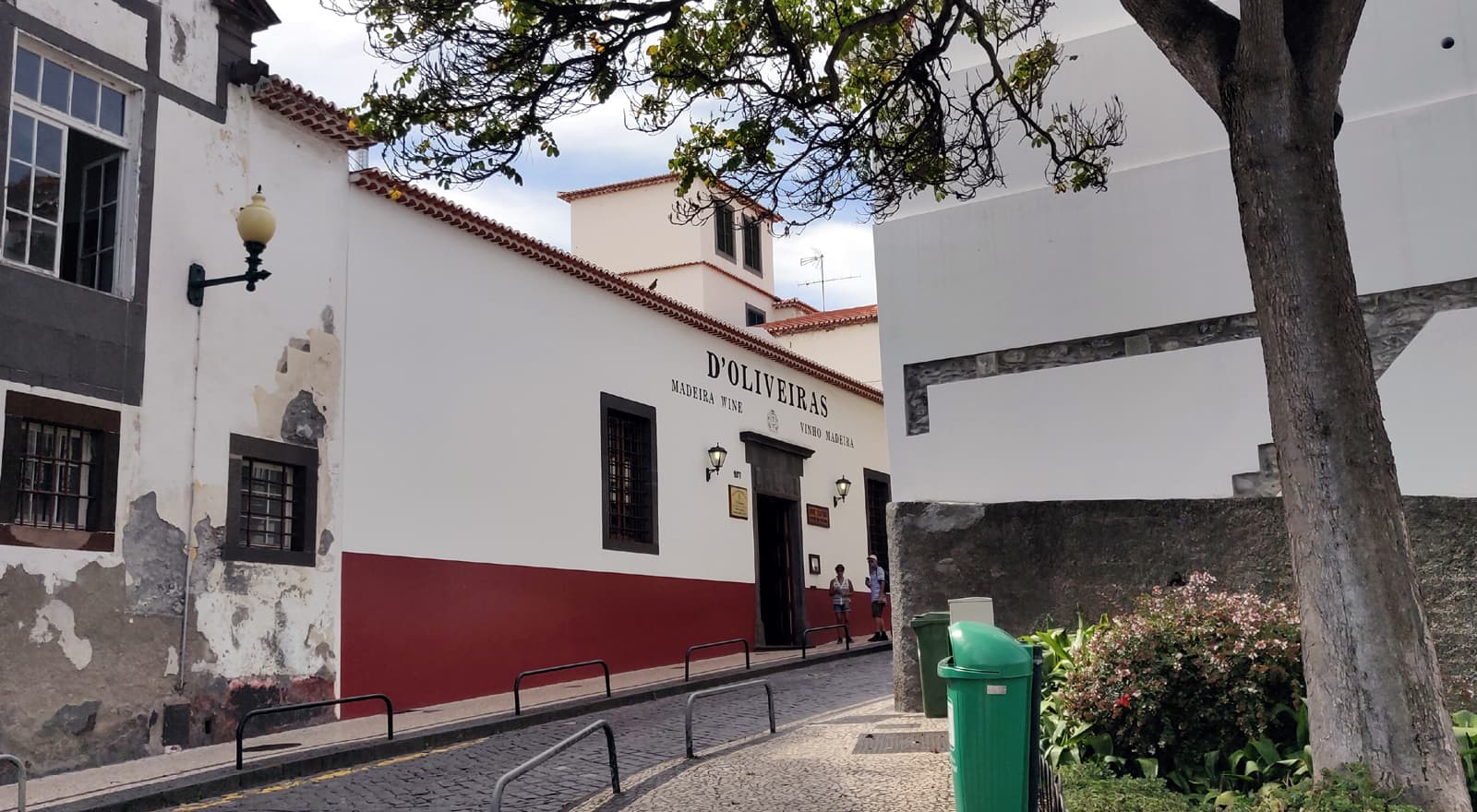
After our visit to Borges I wanted to go and visit Oliveiras next, whereas my SO thought one winery visit per day is enough for her. Since our hotel and adega d’Oliveiras were all but neighbors, we decided to go our own ways - she went to spend some time at the hotel spa, I headed to Oliveiras.

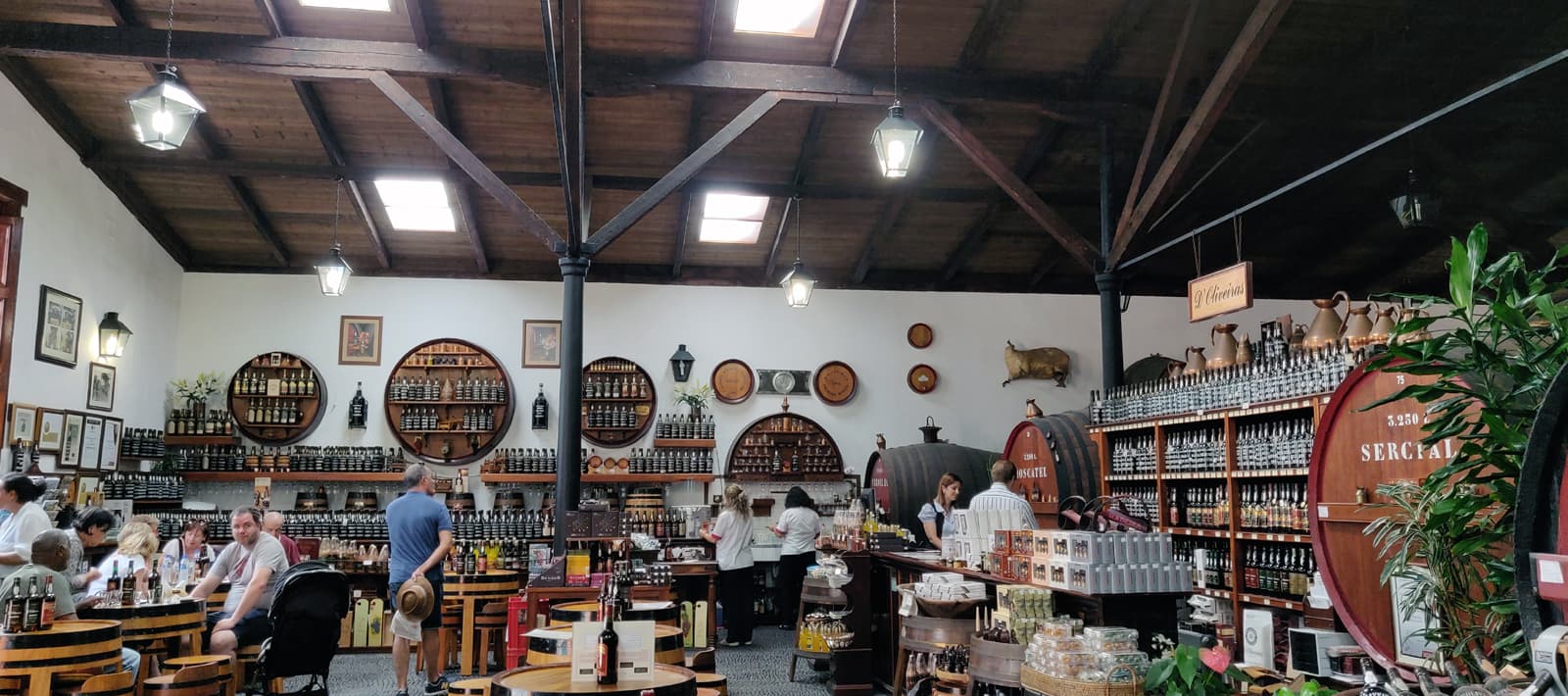
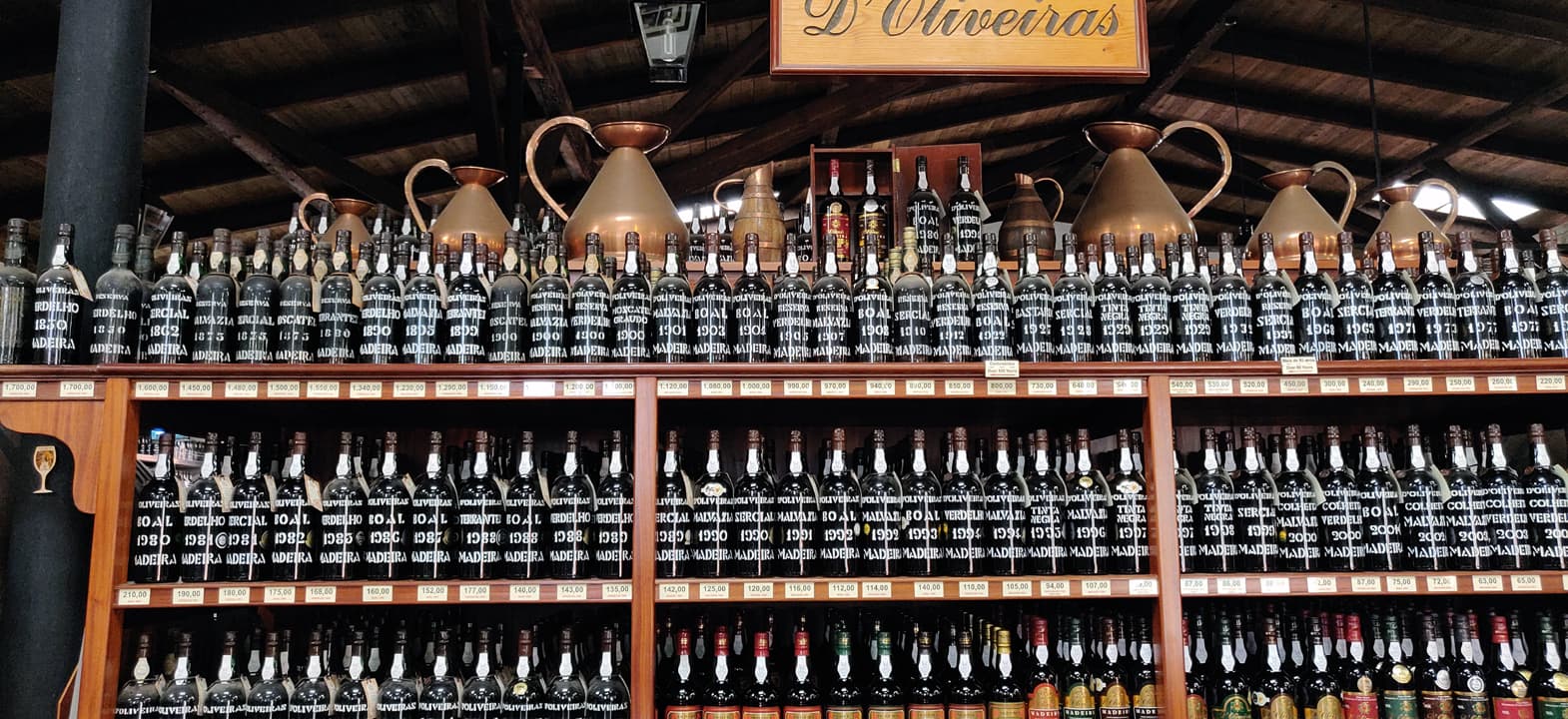
The interior of the Oliveiras tasting room was quite different from the other places: a large room surrounded by all kinds of Madeira products (including Frasqueiras ranging from 10 yo to 150 yo) and huge wine casks, with the middle of the room filled with barrels repurposed as tables and chairs:

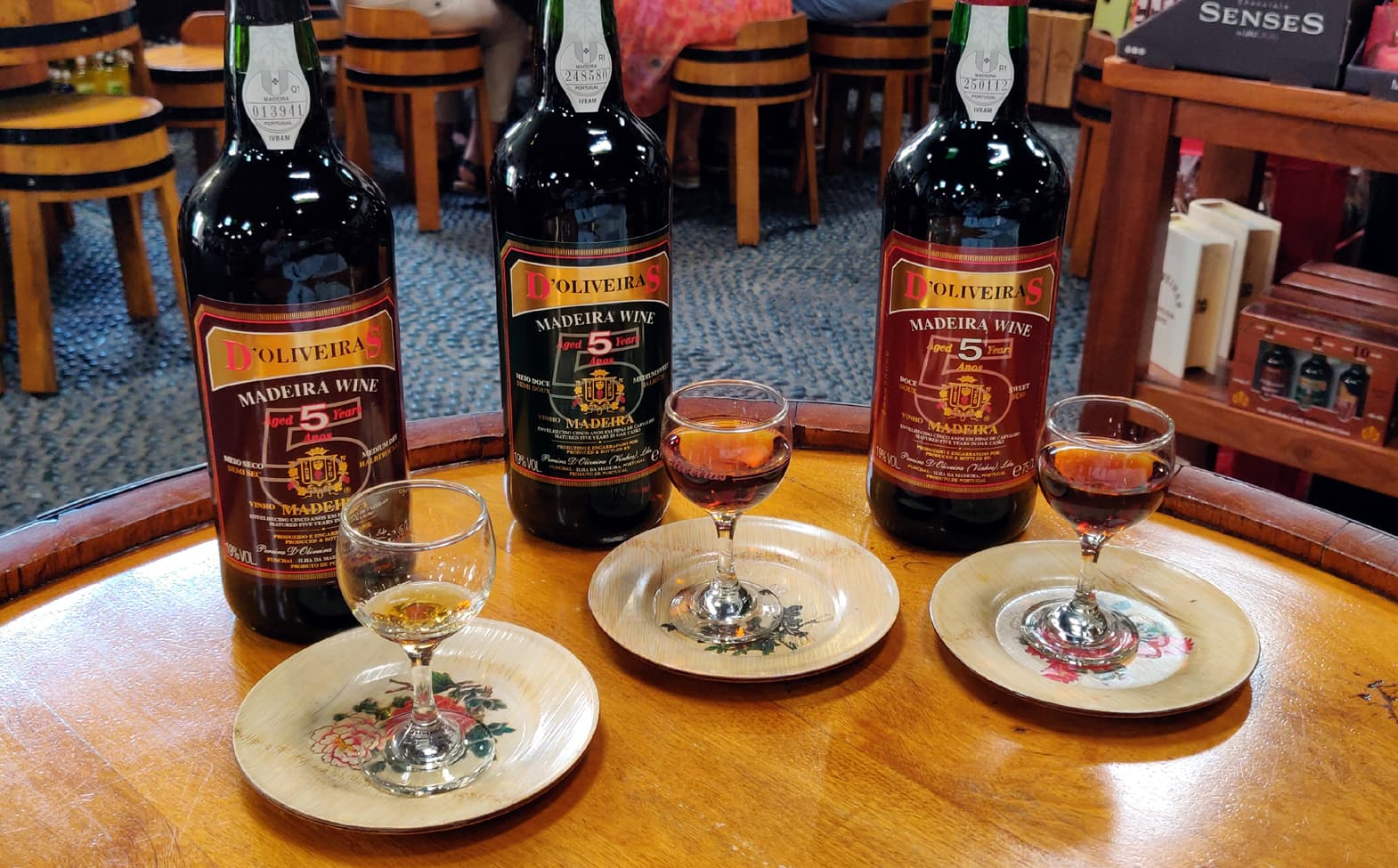
The whole tasting room is operated by a few somewhat elderly ladies who seem to be doing their work very efficiently, but maybe in not the most courteous manner, at least from the perspective of standard customer service. :sweat_smile: While I was checking out the wines at the desk, one of them came to me and said “Yes?”. When I told I’d like to taste some wines, she just exclaimed “Sit down!” and disappeared. I sat down at a table in the corner of the tasting room (as the room seemed to fill at random intervals with busloads of tourists who had one or two glasses of the inexpensive 3 yo Madeira). Not soon after, the lady appeared with three bottles and poured me samples, saying “Medium Dry, Medium Sweet, Sweet” and disappearing immediately. Quite a contrast after the fantastic, jovial service at Borges only moments ago!

  • NV D'Oliveiras Madeira 5 Years Medium Dry - Portugal, Madeira (31.8.2022)
    100% Tinta Negra made from purchased grapes. After 4-5 days of fermentation, once the wine has reached a "medium dry" level of residual sugar, the must is rectified to approx. 20% ABV with 96% ABV grape spirit to halt the fermentation. The fortified wine is then fined, filtered and aged for a minimum of 90 days in epoxy-lined concrete estufas in which the wine is heated artificially to temperatures ranging from 42 to 43°C (108 to 109 °F). After the estufagem process, the wine is blended into large oak casks. The wine is blended from different casks resulting in a wine that is on average 5 years old. 19% alcohol.

    Pale amber color; lighter than the Medium Sweet version. Aromas of caramel, some nutty rancio, a little bit of leather, light sweet smoky tones, a creamy hint of custard and a touch of oat biscuits. The wine feels medium-bodied, somewhat sticky and surprisingly intense flavors of grainy malt, some syrupy notes of molasses, a little bit of caramel, light dried-fruit notes of raisins and dried dates, a hint of smoke and touch of pipe tobacco. Rather high in acidity. The medium-sweet finish is quite intense with a somewhat musty aftertaste of smoke, some dusty notes of earth, a little bit of tobacco, light raisiny tones, a hint of dried dates and a touch of malt.

    A decent, but also a slightly rugged blended Madeira lacking a bit in focus and vibrancy. The wine does show good sense of freshness, thanks to its moderately high acidity, but - as seems typical of Tinta Negra - it otherwise falls a bit short on complexity, finesse and vibrancy - especially when compared to the d'Oliveiras 5 yo Medium Sweet that was tasted alongside. Drinkable, but nothing I would buy for myself. Somewhat priced according to its quality at 13,50€.
    (82 points)

  • NV D'Oliveiras Madeira 5 Years Medium Sweet - Portugal, Madeira (31.8.2022)
    100% Tinta Negra made from purchased grapes. After 3-4 days of fermentation, once the wine has reached a "medium sweet" level of residual sugar, the must is rectified to approx. 20% ABV with 96% ABV grape spirit to halt the fermentation. The fortified wine is then fined, filtered and aged for a minimum of 90 days in epoxy-lined concrete estufas in which the wine is heated artificially to temperatures ranging from 42 to 43°C (108 to 109 °F). After the estufagem process, the wine is blended into large oak casks. The wine is blended from different casks resulting in a wine that is on average 5 years old. 19% alcohol.

    Medium-deep syrupy brown color; darker than the Medium Dry version and lighter than the Sweet version. Sweetish and somewhat restrained nose with aromas of Sultana raisins, some syrupy tones, a little bit of creamy custard character, light leathery tones, a hint of dried dates, a perfumed touch of dried flowers and a whiff of bitter almond oil. The wine is moderately sweet, quite complex and pretty harmonious on the palate with a moderately full body and slightly stewed flavors of prunes and dried dates, some bitter almond oil, light sharp notes of lemony citrus fruits, a little bit of Sultana raisin, a hint of Christmas spices and a touch of burnt sugar bitterness. The wine is surprisingly high in acidity, which keeps the wine wonderfully fresh and structured. The finish is warm, quite long and somewhat sweet with a rather acid-driven aftertaste of lemony marmalade, some apple jam, light peppery tones, a little bit of oxidative nuttiness, a hint of bruised green apple and a salty touch of tangy rancio.

    A surprisingly nice, fresh and harmonious blended Madeira that might be a bit simple for a Madeira, but shows good complexity and great sense of purity and freshness for a Tinta Negra-based wine that has gone through the estufagem process. Quite rarely these inexpensive blended Tinta Negras offer anything interesting and I can't really say I'm a fan of the estufagem wines - this process seems to make the wines rather dull and stewed in character compared to wines that are aged only in canteiros. However, despite how this wine was made, this was pretty enjoyable an effort - easily the best bottling in the d'Oliveiras lineup of 5 Years Old wines. Solid value at 13,50€.
    (86 points)

  • NV D'Oliveiras Madeira 5 Years Sweet - Portugal, Madeira (31.8.2022)
    100% Tinta Negra made from purchased grapes. After 2-3 days of fermentation the must is rectified to approx. 20% ABV with 96% ABV grape spirit to halt the fermentation. The fortified wine is then fined, filtered and aged for a minimum of 90 days in epoxy-lined concrete estufas in which the wine is heated artificially to temperatures ranging from 42 to 43°C (108 to 109 °F). After the estufagem process, the wine is blended into large oak casks. The wine is blended from different casks resulting in a wine that is on average 5 years old. 19% alcohol.

    Deep syrupy brown color; even darker than the 5yo Medium Sweet. The nose feels sweet, perhaps a bit restrained but also quite concentrated with somewhat muddled aromas of syrupy treacle and raisiny dark fruits, some dusty old wood, a little bit of chopped nuts and light stewed notes of cooked dark fruits. The wine feels viscous, very sweet and surprisingly intense on the palate with flavors of raisins and dried dates, evolved volatile notes of balsamico, some dull notes of dried hay, a little bit of Christmas spice, light nutty notes of rancio, a hint of honey-and-oats biscuits and a touch of dried flowers. The rather high acidity keeps the wine in balance despite the rather noticeable sweetness. The finish is sweet, somewhat sticky and a bit dusty with flavors of raisins, some caramel tones, a little bit of dried dates, light balsamic tones, a hint of Christmas spice and a touch of nutty rancio.

    A quite pleasant but perhaps a bit muddy and unfocused sweet Madeira - something that seems to be quite typical of blended Tinta Negra Madeiras and wines aged in estufas. This is drinkable and not really bad in any way - the overall feel is actually quite balanced - but the wine doesn't really offer anything that would make me think of buying it. Doesn't really match the depth and vibrancy of the 5yo Medium Sweet version. Priced somewhat according to its quality at 13,50€.
    (84 points)

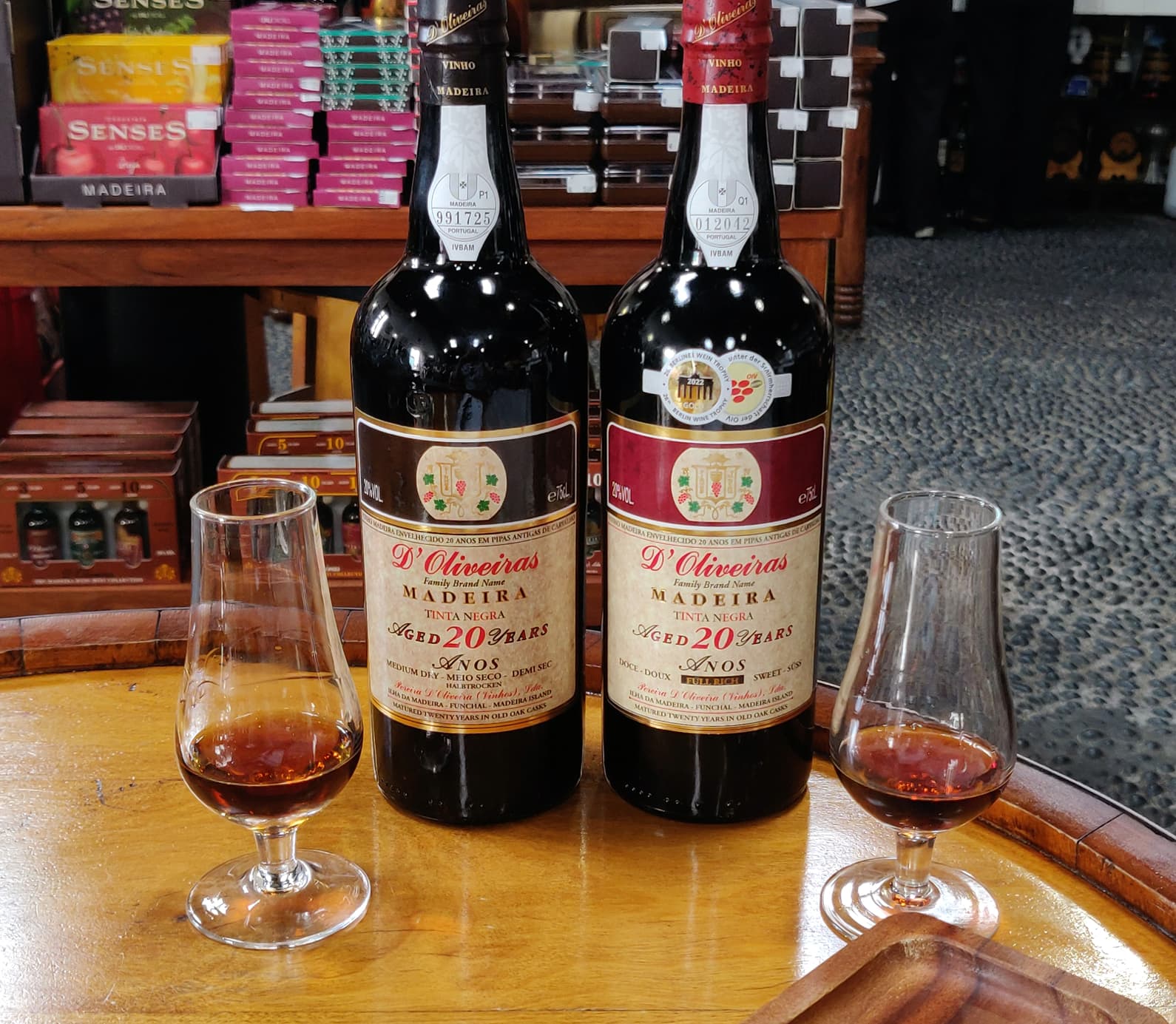
After some time, but before I had time to go through all of these wines, she returned with two more bottles:

  • NV D'Oliveiras Madeira Tinta Negra Aged 20 Years Medium Dry - Portugal, Madeira (31.8.2022)
    100% Tinta Negra made from purchased grapes. Fortified to approx. 20% ABV with 96% ABV grape spirit to halt the fermentation. Unlike the blended d'Oliveiras wines up to 10 Years Old, this is not aged in epoxy-lined concrete estufas, in which the wine is heated artificially to temperatures ranging from 42 to 43°C (108 to 109 °F), but in large oak casks in canteiros. The wine is blended from different casks resulting in a wine that is stylistically at least 20 years old. Bottled in 2021. 20% alcohol.

    Very deep and dark amber color with a reddish core. Sweet, complex nose with aromas of old cedar and creamy custard, some raisiny tones and nuances of dried figs, a little bit of maple syrup and molasses, light notes of cigar. oxidative hints of hay and nutty rancio, a touch of leather and a whiff of volatile lift. The wine is very concentrated, slightly oily and almost electric on the body with a medium-to-moderately high acidity and very intense medium-sweet flavors of tart lemony citrus fruits and Granny Smith apple, some apple peel bitterness, a little bit of burned sugar that trail of to slightly smoky tones, light nutty notes of rancio, a hint of quince jam and a touch of steely minerality. The bracing acidity lends tremendous sense of freshness and precision to the wine. The finish is crisp, firm and very intense on the palate with lengthy medium-dry flavors of lemon and quince, some syrupy notes of molasses, a little bit of smoke, light oxidative notes of hay and chopped nuts, a hint of bruised green apple and a touch of grapefruit juice.

    A very focused, structured and dead-serious effort for a blended Tinta Negra. This wine is very similar to a Frasqueira wine in quality, but in all likelihood this isn't "just" a generic 20 yo blend - in truth many shippers make their 20 yo blends from old casks of wine which they don't have the necessary documents (either lost or there never was any), which means these casks can't be bottled and sold as Frasqueiras that would fetch big money. Instead they need to be released as "blended wines", ie. in bottles with no vintage designation. Some producers use these barrels to add complexity to their other blends (like 3yo, 5yo, 10yo or 15yo), whereas other producers blend these older barrels together, labeling them as "20 yo", even if the actual blend might consist of wines much older than this. I have no idea how old the wines were that were used in making this wine, but based on the intensity, concentration and power here, there must be some older wines in the mix as well. A rare Tinta Negra that can hold a candle to a Frasqueira Madeira. Great stuff. Well worth its price at 46€.
    (91 points)

  • NV D'Oliveiras Madeira Tinta Negra Aged 20 Years Sweet - Portugal, Madeira (31.8.2022)
    100% Tinta Negra made from purchased grapes. Fortified to approx. 20% ABV with 96% ABV grape spirit to halt the fermentation. Unlike the blended d'Oliveiras wines up to 10 Years Old, this is not aged in epoxy-lined concrete estufas, in which the wine is heated artificially to temperatures ranging from 42 to 43°C (108 to 109 °F), but in large oak casks in canteiros. The wine is blended from different casks resulting in a wine that is stylistically at least 20 years old. Bottled in 2022. 20% alcohol.

    Deep and dark coppery-red color that turns slightly golden towards the rim. Somewhat restrained, sweetish and quite dark-toned nose with attractive, fine-tuned aromas of raisins, some syrupy notes of treacle, a little bit of mocha, light fragrant notes of nutmeg, a hint of dried dates and a touch of mahogany. The wine feels oily, rich and slightly sticky on the palate with a full body and very intense, sweet flavors of syrupy richness, some tangy lemony notes, a little bit of apple jam, light dried-fruit notes of raisins and dried dates, a hint of caramel and a touch of mocha. The high acidity lends great sense of freshness to the wine, balancing out quite a bit of that sugary sweetness. The finish is sweet, precise and remarkably long with flavors of syrupy molasses, some tangy sharp notes of green apples and lemony citrus fruits, light raisiny tones, a hint of coffee chocolate and a touch of dried dates.

    An excellent, complex and harmonious Tinta Negra that is quality-wise getting quite close to young Frasqueiras. Although the wine shows remarkable sense of balance, depth and complexity, it still doesn't reach the quality of the best 20 yo Madeiras made with any of the noble varieties - at best Tinta Negra can make some quite impressive wines, but it still fails a bit short compared to any of the white varieties. Furthermore, tasting these side-by-side, this wine feels a bit less complex and less intense compared to the Medium Dry version of the same wine. I wonder if it's just the level of residual sugar, or if that Medium Dry version was just blended from older wines than this one? Nevertheless, this is a terrific and delicious sweet Madeira, all the same. Priced more or less according to its quality at 42€.
    (89 points)

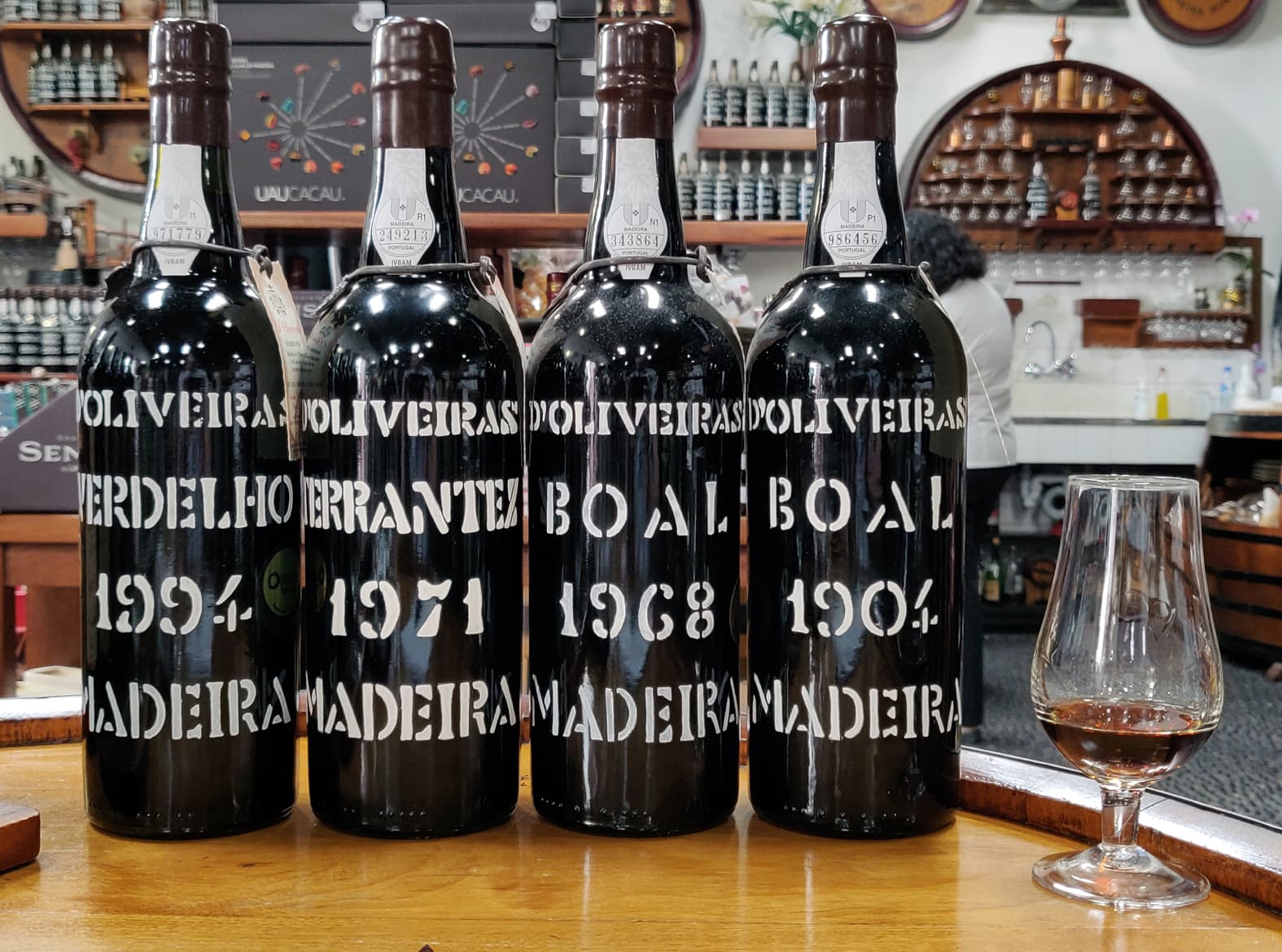
After I had tasted these wines, the lady came and asked “You like?” I told I enjoyed these wines quite a bit, especially the 20yo Medium Dry was a terrific wine. I also told I had arrived to Madeira because of the wines and had already visited some producers. These seemed to be some kind of magic words, because she said “Wait here.” and went off, only to return with a bottle of 1994 Verdelho Frasqueira. I chuckled in a surprise, but before I could immerse myself fully in this wine, she already returned with another wine. And then another. The other ladies also came asking what I thought of the wines and the place. They just seemed to be genuinely happy somebody actually came here in a genuine interest on the exceptional wines they had!

  • 1994 D'Oliveiras Madeira Verdelho - Portugal, Madeira (31.8.2022)
    The wine is made with purchased Verdelho. After 5-6 days of fermentation, the must is rectified to approx. 20% ABV with 96% ABV grape spirit to halt the fermentation. The fortified wine is transferred to old oak casks which are moved to age in Canteiros, ie. in warm warehouses in which the wines age in casks that are never topped up. 20% alcohol. Bottled in 2019, after 25 years of aging.

    Deep, slightly reddish amber color with a chestnut-brown hue. The nose feels fascinating, at once having this kind of dusty, dry and vaguely woody patina to it, yet at the same time having quite rich, sweet-toned overtones. There are aromas of creamy custard and peanut butter, some orange marmalade, light smoky tones, a little bit of slivered almonds, a hint of dried dates, an oxidative touch of roasted chestnuts and a whiff of marzipan. The wine feels quite concentrated, firm and incredibly piercing on the palate with a moderately full body and incisive, bracing acidity. There are medium-dry to medium-sweet flavors of caramel, lemony citrus fruits, some bruised Granny Smith apple, light pithy notes of grapefruit bitterness, a little bit of grape juice, a hint of oxidative nuttiness and a concentrated touch of creamy custard character. The racy acidity lends exceptional sense of structure and electric energy to the wine. The finish is crisp, very intense and noticeably drier than compared to the midpalate with very lengthy flavors of lemony citrus fruits, some caramel tones, a little bit of crunchy green apple and apple peel bitterness, light nutty notes of almonds and marzipan, a hint of steely minerality and a sweet touch of dried dates.

    An exceptional, precise and very tangy Frasqueira Verdelho that combines wonderfully rather modest levels of residual sugar sweetness and piercing, incisive acidity that is very typical of Madeira - even more so with Sercials and Verdelhos with some age! Although the wine says "Dry", technically it is far from it. However, it's stunning how that racy acidity offsets so much of that sweetness that the wine appears so much drier than it actually is - especially the aftertaste feels remarkably dry and palate-cleansing, even if this is a relatively sweet fortified wine. A beautiful wine where the brisk, lemony and appley qualities of a young Verdelho have not been completely overrun by the aged patina. Lovely stuff indeed and priced pretty much according to its quality at 110€.
    (93 points)

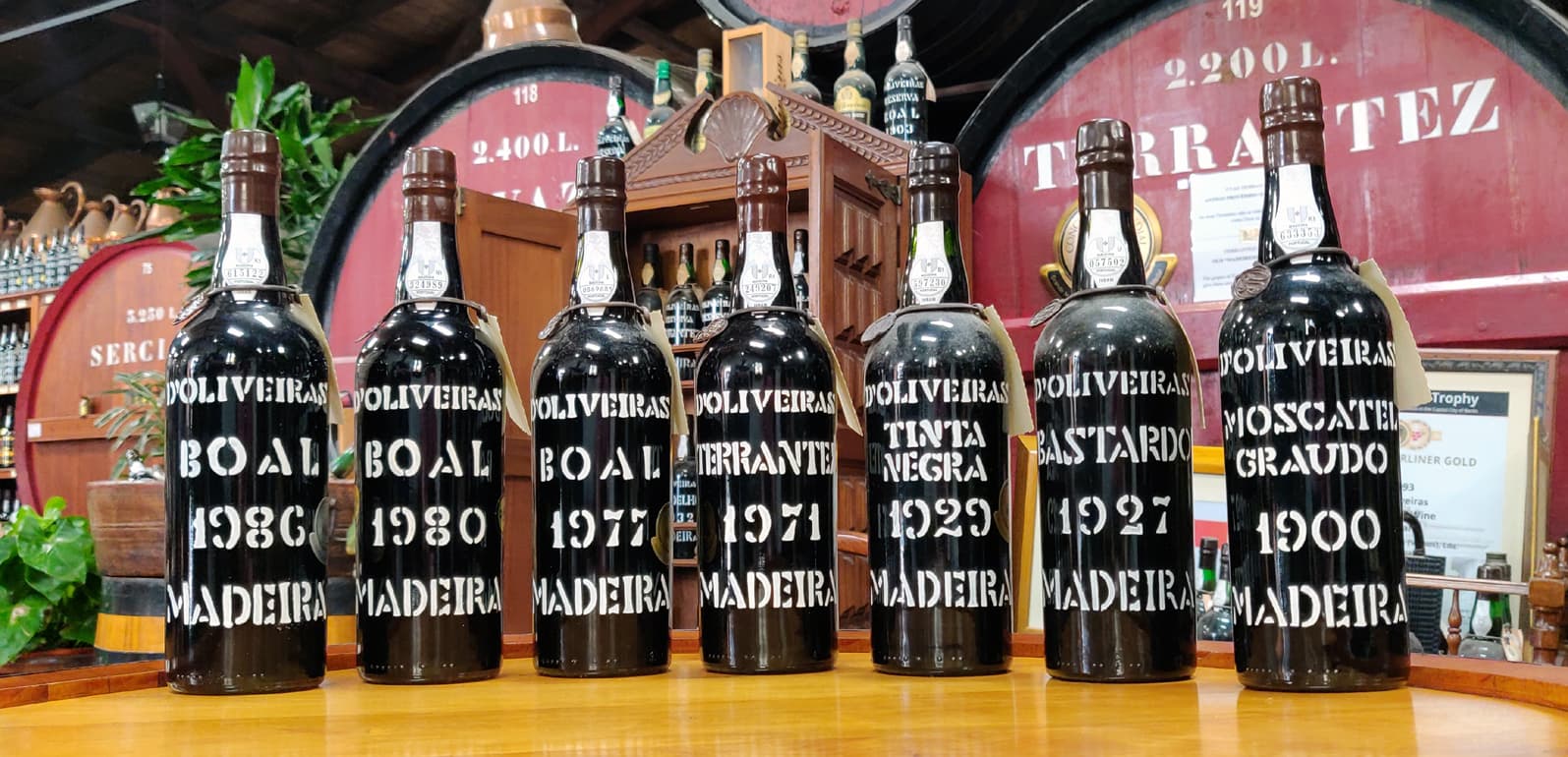
  • 1971 D'Oliveiras Madeira Terrantez - Portugal, Madeira (31.8.2022)
    The wine is made with purchased Terrantez grapes. After 4-5 days of fermentation, the must is rectified to approx. 20% ABV with 96% ABV grape spirit to halt the fermentation. The fortified wine is transferred to old oak casks which are moved to age in Canteiros, ie. in warm warehouses in which the wines age in casks that are never topped up. 20% alcohol. Bottled in 2022, after 51 years of aging in casks, labeled as "Medium Dry".

    Evolved bronze color with a somewhat reddish coppery hue. Slightly restrained but also wonderfully complex and attractively sweet nose with layered aromas of syrupy richness and white chocolate, even some sweet, volatile nail polish character, some dried-fruit aromas of raisins and dried dates, light caramel notes, a little bit of pipe tobacco, sweet hints of Christmas spices and dried flowers, a touch of cigar and a whiff of dried figs. The wine feels concentrated, very focused and just ridiculously racy on the palate with incredibly piercing, bracing acidity. There are slightly sweet flavors of lemony citrus fruits and key lime, bruised green apple tones, some rich notes of caramel and maple syrup intermingling with evolved creamy custard character, a little bit of dusty mahogany. light sweet nuances of cloudberry jam, a hint of steely minerality and a touch of crunchy quince. Although showing some oxidation, the wine shows relatively little oxidative character, emphasizing just some nutty and caramelized nuances. Although the acidity feels ridiculously high here, the wine still isn't austere or aggressively sharp, thanks to its balanced residual sugar and rich texture concentrated by the age. The finish is very long, zippy and remarkably fresh with intense, piercing flavors of lemony citrus fruits and Granny Smith apple, sweeter nuances of dried dates, some balsamic richness with a tiniest hint of acetic tang, a little bit of apple peel bitterness, light syrupy nuances, a woody hint of mahogany and a touch of crunchy quince.

    Just like the last time I tasted the wine five years ago (although that one was from a different lot bottled in 2017), this was just a stunning experience. The acidity here is through the roof, yet still the wine is wonderfully harmonious, rich and textural on the palate with simply exceptional flavor intensity. It's hard to compare these two wines because I have to rely just on my memory, but I felt this wine was even less oxidative than the wine I had tasted previously - and even that one wasn't particularly oxidative for a 46-yo Madeira. Outrageously good stuff. However, this kind of depth and intensity does not come cheap, as the wine costs 290€ today. However, seeing this is such singular stuff, it's nigh impossible to find this kind of wine at any lower prices today...
    (94 points)

  • 1968 D'Oliveiras Madeira Boal - Portugal, Madeira (31.8.2022)
    The wine is made with purchased Boal grapes. After 3-4 days of fermentation, the must is rectified to approx. 20% ABV with 96% ABV grape spirit to halt the fermentation. The fortified wine is transferred to old oak casks which are moved to age in Canteiros, ie. in warm warehouses in which the wines age in casks that are never topped up. 20% alcohol. Bottled in 2021, after 53 years of aging in casks, labeled as "Medium Sweet".

    Very deep, concentrated and dark mahogany brown color. Brooding, dark-toned and somewhat sweet nose with restrained, layered aromas of caramel and treacle, some raisiny tones, a little bit of dried dates, light smoky notes of cigar, a hint of Christmas spices, a touch of allspice and a whiff of bruised apple. The wine feels sweet, powerful and very intense on the palate with a moderately full body and concentrated flavors of lemony citrus fruits and sharp Granny Smith apple, caramel tones, some sweet nuances of quince jam, a little bit of burnt sugar bitterness, light balsamic undertones, dried-fruit hints of raisins and dried dates and a touch of tobacco. The very high acidity lends great sense of structure and freshness to the wine despite its quite noticeable residual sugar sweetness. The finish is crisp, lively and exceptionally persistent with intense, sweetish flavors of crunchy green apples, some pipe tobacco, a little bit of treacle, light notes of quince jam, a hint of raisiny dark fruits and a touch of burnt sugar bitterness.

    An outstanding, remarkably complex and so balanced Boal. The balance between the rather pronounced yet not noticeably high sweetness, the bright and almost lemony acidity and the concentrated yet not particularly heavy body is perfectly on point here. A riveting wine by all accounts. While the wine won't evolve any further from here, it won't fall apart either. Drink now or over the next two centuries. At 300€ this wine doesn't come cheap, but then again, it honestly offers something no other style of wine can.
    (96 points)

  • 1904 D'Oliveiras Madeira Boal - Portugal, Madeira (31.8.2022)
    The wine is made with purchased Boal grapes. After 3-4 days of fermentation, the must is rectified to approx. 20% ABV with 96% ABV grape spirit to halt the fermentation. The fortified wine is transferred to old oak casks which are moved to age in Canteiros, ie. in warm warehouses in which the wines age in casks that are never topped up. 20% alcohol. Bottled in 2021, after 114 years of aging in casks, labeled as "Medium Sweet".

    Very deep, clear and evolved syrupy-brown color with a reddish hue. The nose feels evolved, sweet and so complex with fine-tuned, nuanced aromas of raisins and dried dates, some pipe tobacco, a little bit of peppery spice, light pruney tones, a hint of dusty mahogany, a touch of maple syrup and a faint whiff of crème brûlée. The wine is so powerful, intense and just ridiculously concentrated on the palate. It is full in body with just otherworldly sense of concentration, yet it crisp, sharp and surprisingly light on its feet - all thanks to its bracing, zippy acidity. There are intense flavors of syrupy richness, dried figs, some butterscotch, a little bit of dried flowers, light notes of pipe tobacco, a hint of burnt sugar bitterness and a touch of lemon juice. The incisive acidity lends tremendous sense of structure, intensity and electric energy to the wine. The finish is sweet, very powerful and unbelievably long with intense flavors of lemon marmalade, caramel and syrupy molasses, some dried dates and raisiny tones, a little bit of smoke, light oxidative notes of nuttiness, a hint of quince jam and a touch of old, dusty mahogany.

    An otherworldly Boal. The structure, the intensity, the complexity and depth of flavor - they all are just beyond words here. I can repeatedly say the wine is exceptionally concentrated, but even then I don't think it's just possible to convey the sense of power and intensity one can find here. Oliveiras claims they never "freshen up" their old Madeiras with younger wines (unlike most other producers, who won't admit making this, yet are known to do it), which results in continuously increasing concentration of sugars, acidity, body and flavors as the wine ages and slowly evaporates in the casks in their Canteiros. It's hard to verify the veracity of d'Oliveiras claim, but tasting a wine this intense, it's quite easy to believe that what you're tasting is a wine that has been concentrated for more than a century, which explains the extraordinary complexity, intensity and lasting power. At 1000€ this wine is really expensive stuff, but then again, it's a singular wine - something that has been aged for more than a century and still is fully alive and kicking. Although the wine might not evolve any further from here, there's no hurries with it - it can be drunk now or within the next two to three centuries.
    (98 points)

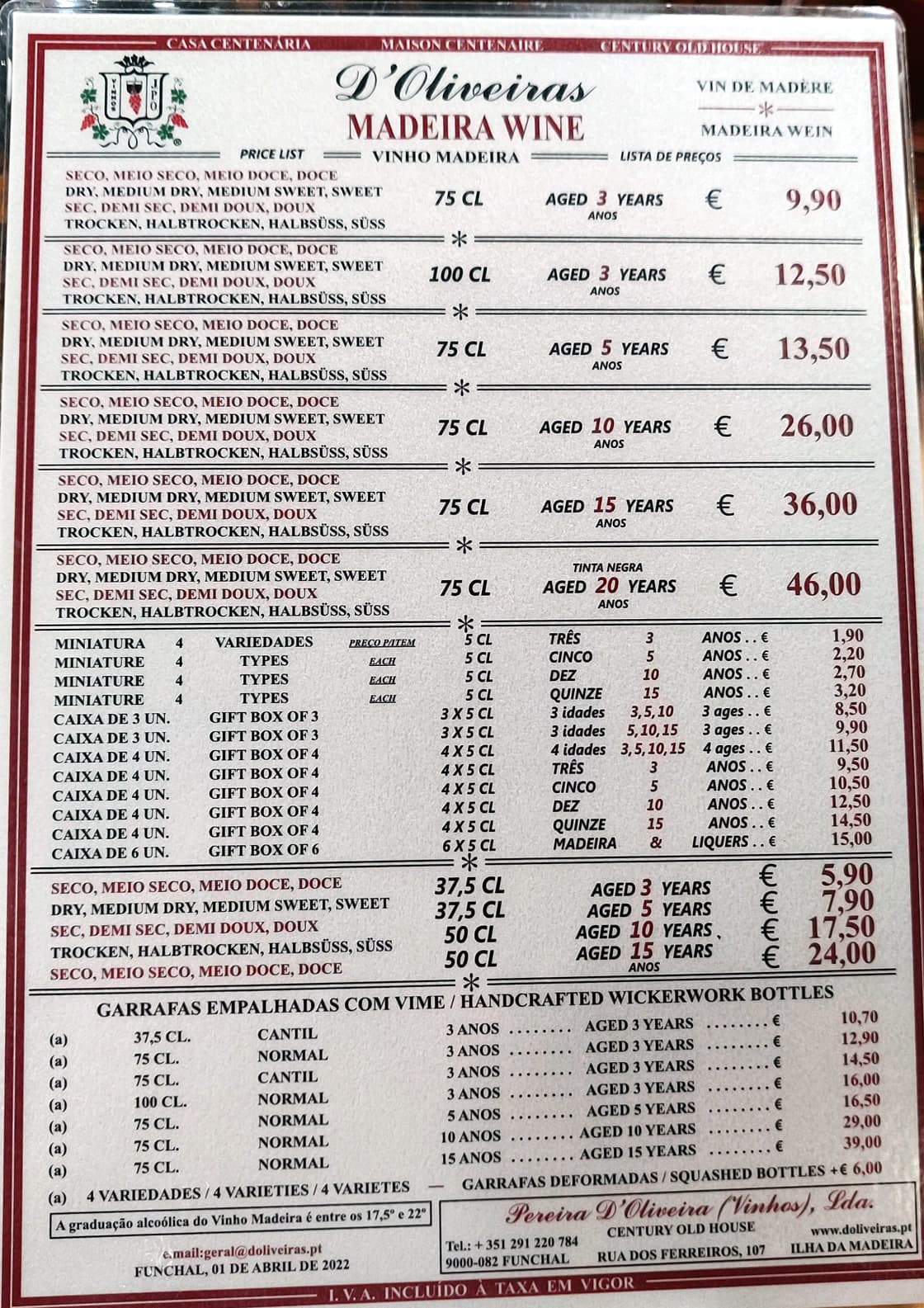
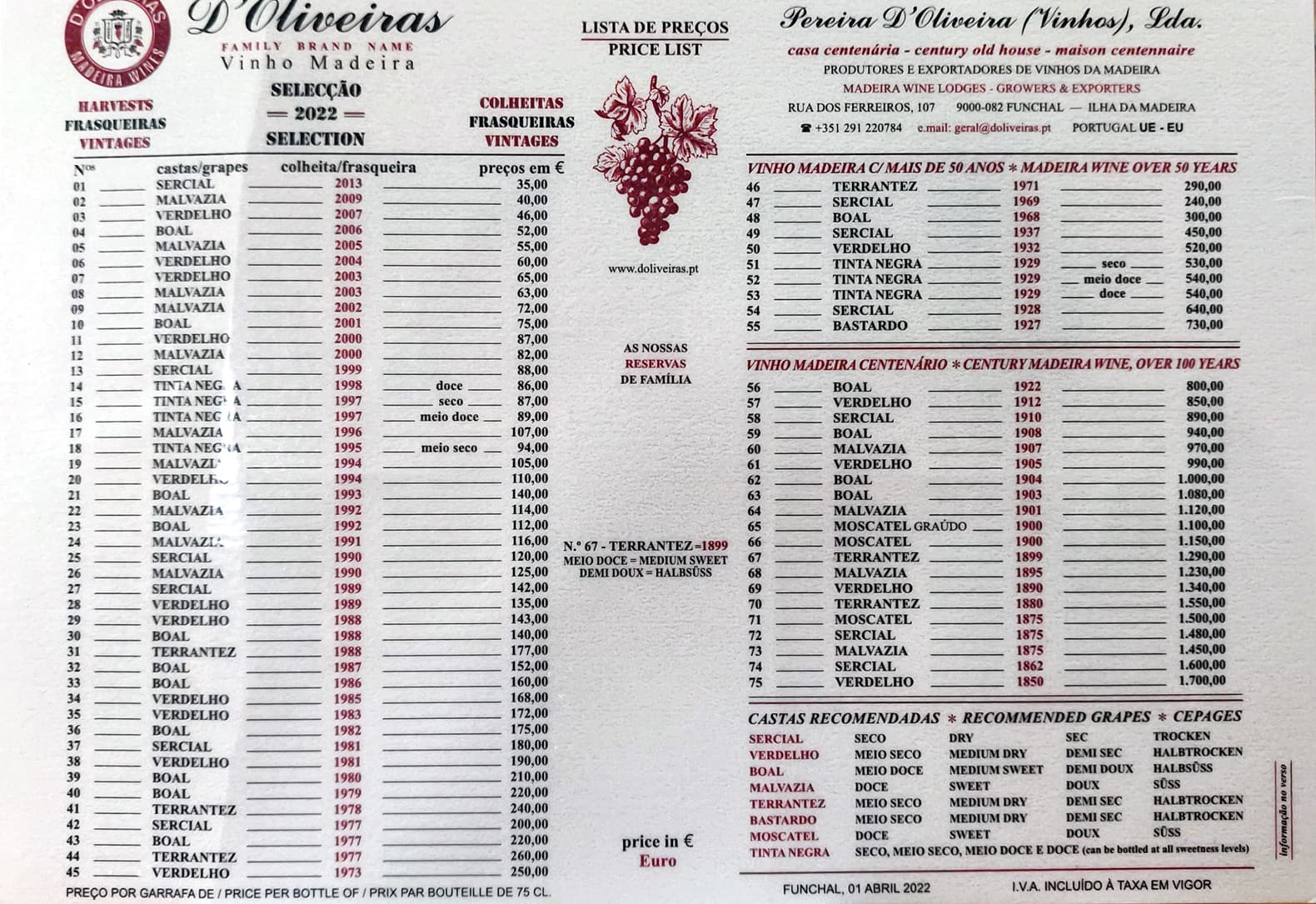
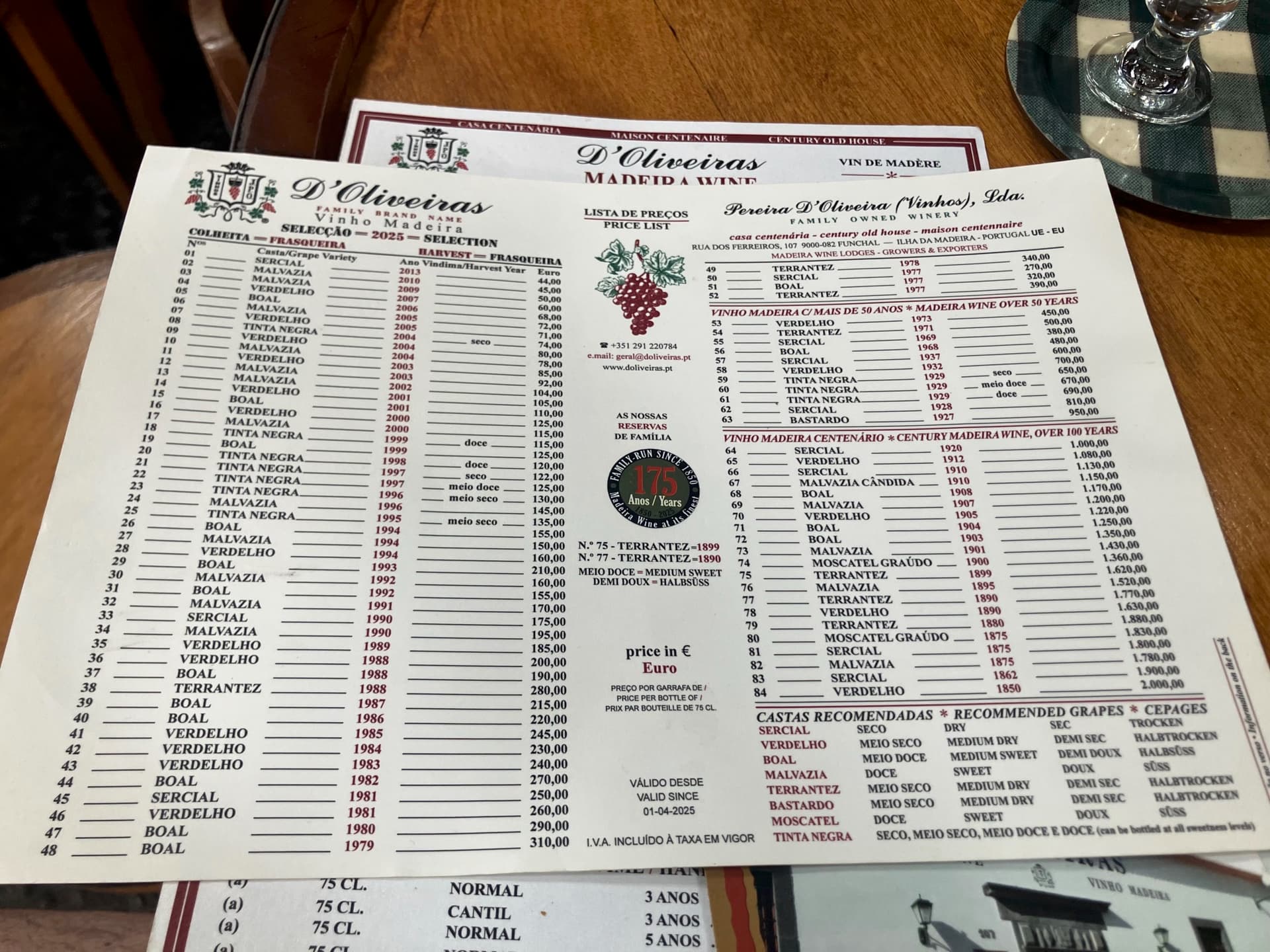
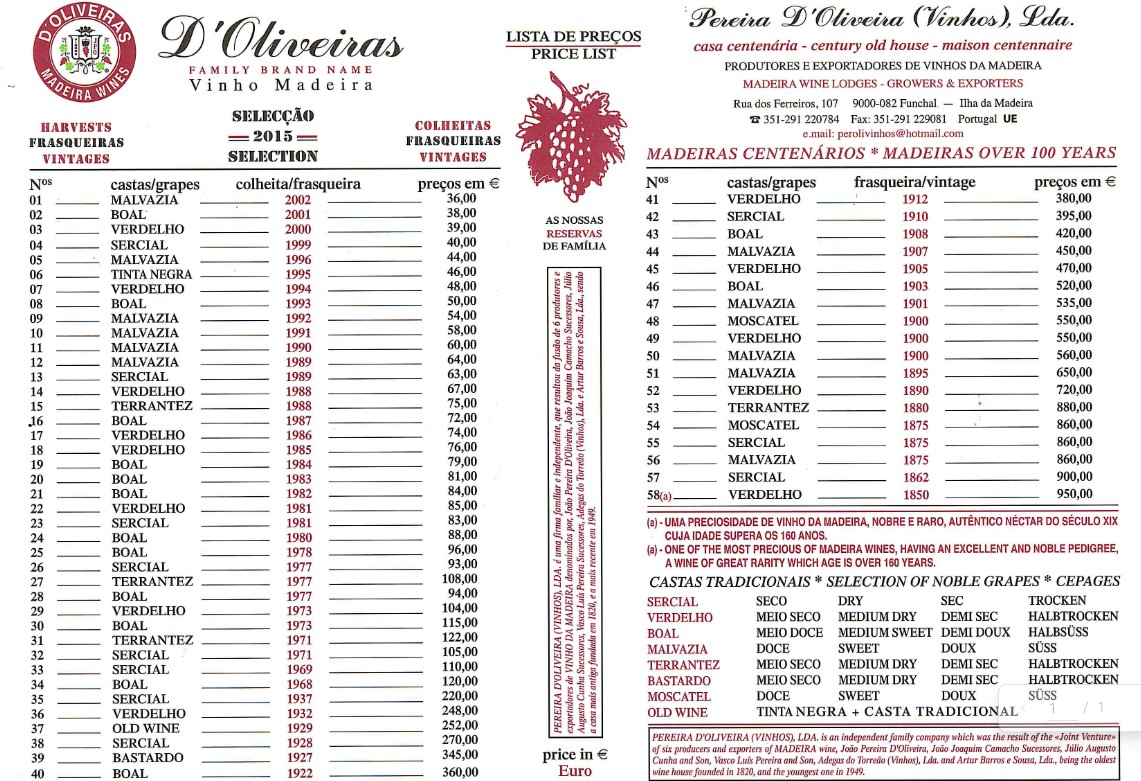
After these wines the place was starting to close up. I really had no intentions on buying any souvenirs yet, but I checked out the price list just to get something to sip at the hotel. For anyone interest, here are the 2022 price lists:

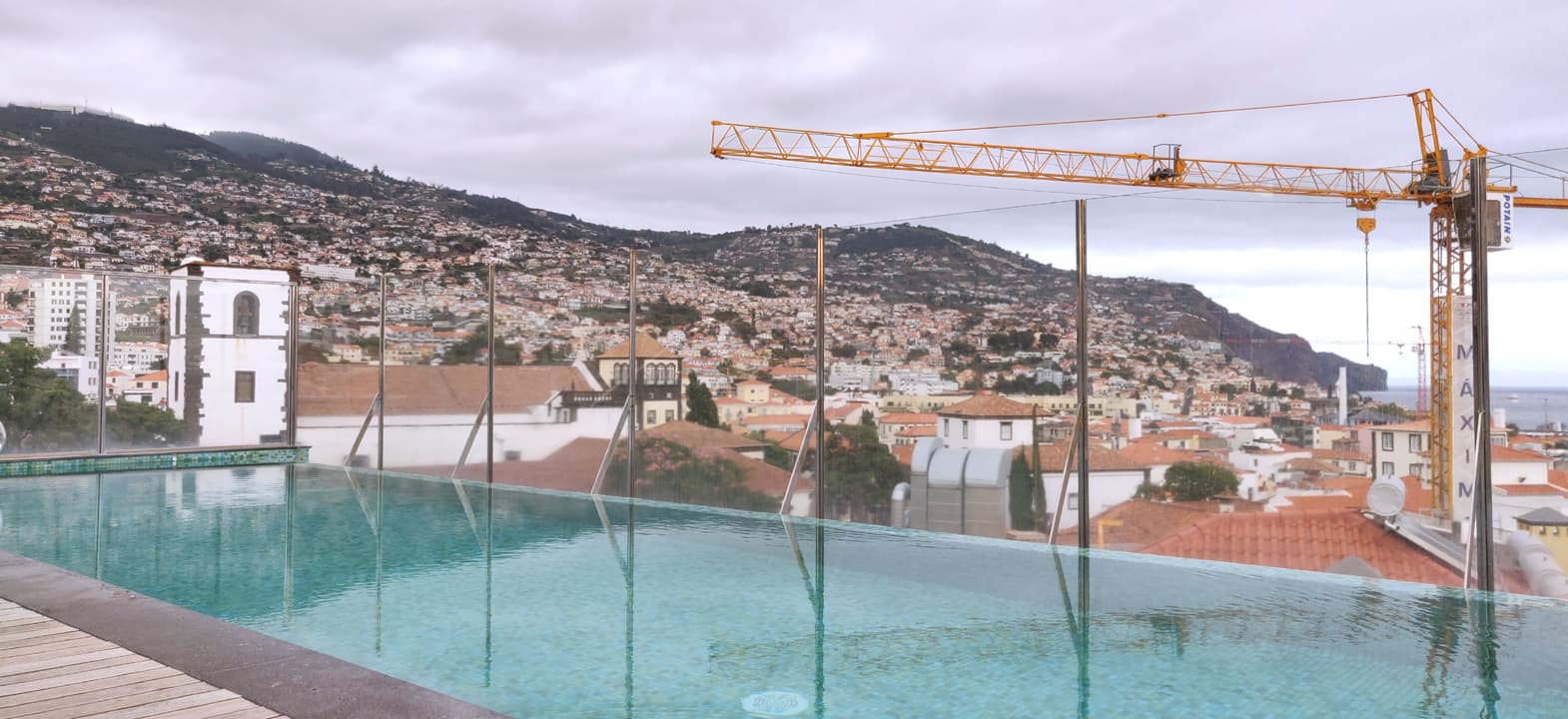
I went with the 2007 Verdelho Colheita, thanked the lovely ladies for the exceptional tasting (of which they don’t charge a dime!) and returned to the hotel, changing to my swimwear and joining my SO at the rooftop pool:

The overcast sky might look a bit cold, but believe me, it was warm and humid all the time we were in Funchal! I also grabbed a beer from the poolside bar, but wasn’t particularly thrilled by the quality.

  • NV Oitava Colina Vila María Blonde Ale - Portugal (31.8.2022)
    A Belgian-style blonde ale from Lisbon. The label is slightly damaged, so I can't make out if the beer is best before June 2022 or June 2023. 5% alcohol.

    Slightly hazy lemon-yellow color with a quite large white head. Somewhat lager-like and a bit dull nose with aromas of yeast and lemony citrus fruits, some pilsner-like herby notes of noble hops, a little bit of grassy greenness, light nuances of cardboard and a hint of dull spice. The beer is dry-ish and mellow on the palate with flavors of some yeasty tones, a little bit of herby pilsner-like hops, light grainy malt tones, a hint of hay and a touch of cardboard. The carbonation feels soft and hop bitterness quite modest. The finish is soft and medium in length with flavors of grainy malt, some herby notes of pilsner-like hops, a little bit of cardboard, light bready tones and a hint of grassy hop bitterness.

    Meh. A quite mediocre and dull "blonde ale" that tastes more like an underperforming lager that has been just fermented with a top-fermenting yeast. I don't know if the beer is past its prime (as I couldn't read the "best before" part in the label), but this didn't leave a lasting impression. Meh.
    (73 points)

After relaxing a bit in our room after hanging out in the jacuzzi, we headed out and walked around the nearby parts of Funchal, finally getting some dinner and a glass of local still red wine from a nearby restaurant:

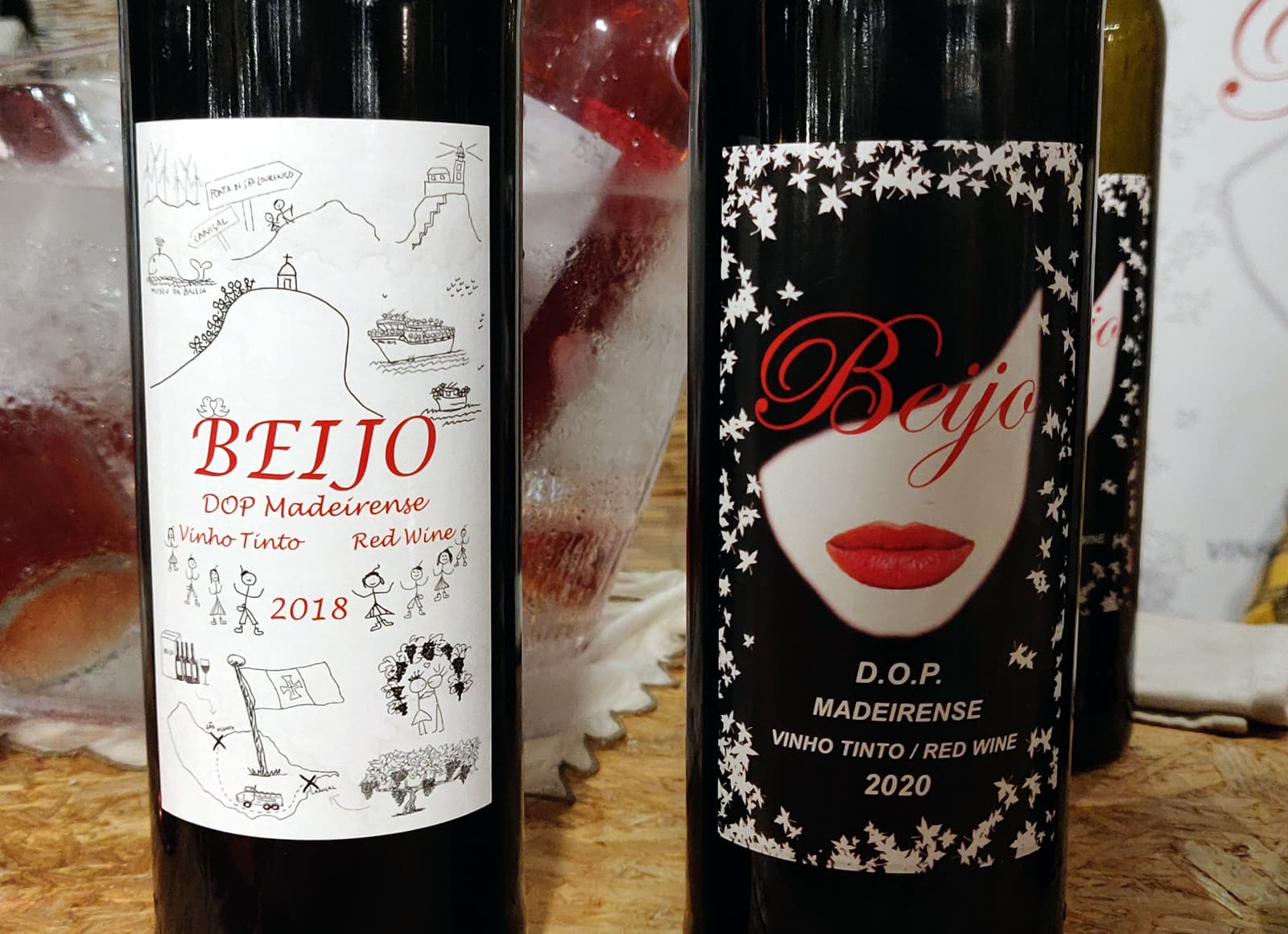
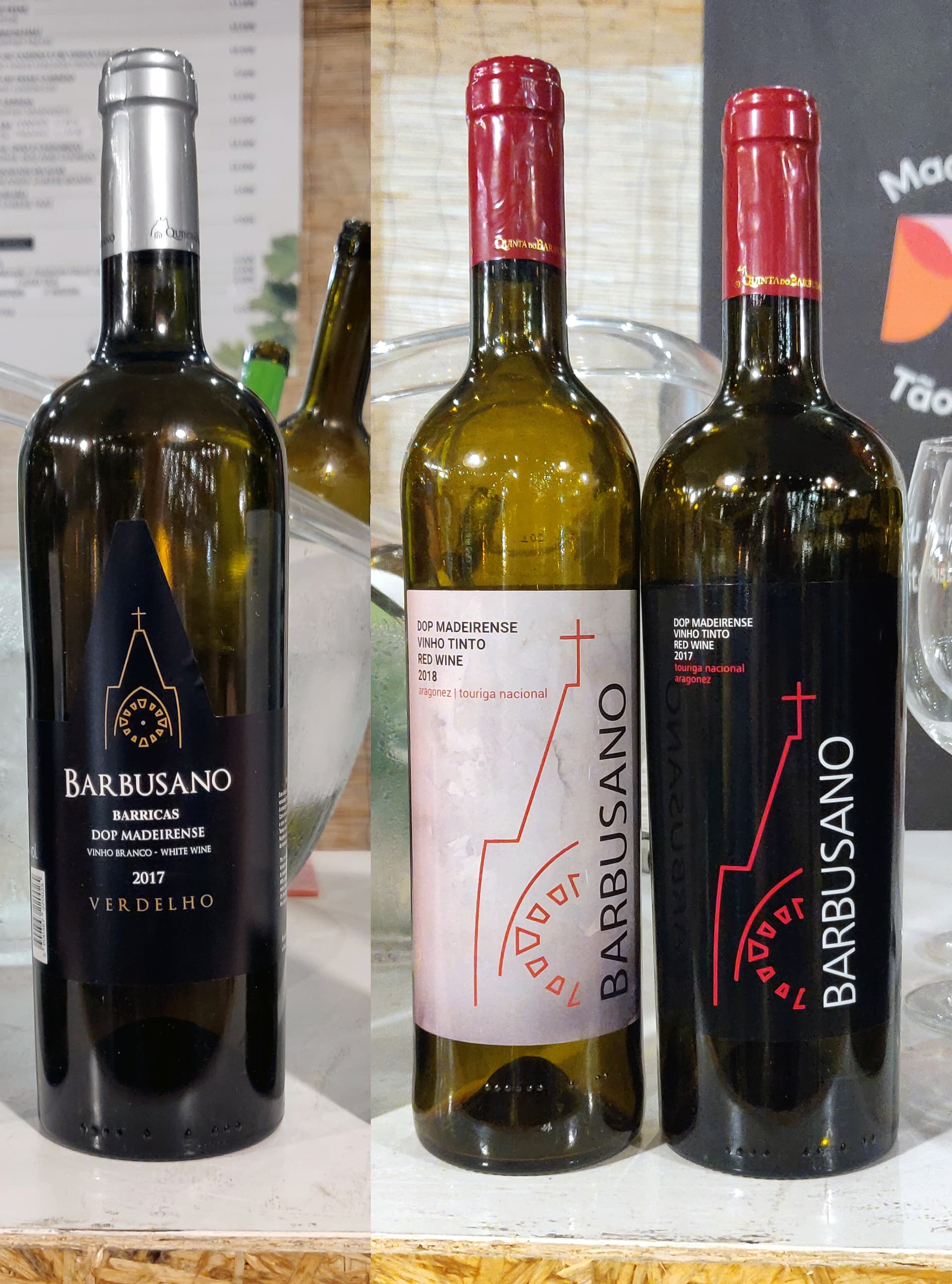
  • 2018 Barbusano Madeirense Aragonez - Touriga Nacional - Portugal, Madeira, Madeirense (31.8.2022)
    A wine made with a blend of Tempranillo and Touriga Nacional sourced from vineyards in São Vicente, located on the northern shore of Madeira. 13% alcohol.

    Translucent and somewhat youthful blackish-red appearance. The nose feels a bit odd and has a slightly home-made wine feel to it, although the overall feel is still pretty vinous. There are somewhat understated aromas of ripe dark fruits and slightly overripe dark berries, some brambly notes of black raspberries, a little bit of gamey meat, light inky tones and a hint of chokeberry jam, a stinky touch of reduction and a whiff of underripe dark fruit. The wine is dry, medium-bodied and somewhat dull on the palate with somewhat mild flavors of fresh forest fruits and borderline underripe dark berries, some inky tones, a little bit of game, light vaguely woody notes, a hint of something toasty and a touch of smoky reduction. The structure relies on the high acidity, although there's a little bit of tannic grip as well, bringing some welcome firmness to the mouthfeel. The finish is dry, woody and quite acid-driven with flavors of astringent chokeberries, some bitter and woody notes of cacao nibs, a little bit of something inky, a hint of ripe dark fruit and a touch of salinity.

    This was a bit odd - I've understood that this regular Barbusano Tinto does not see any oak, yet it had a somewhat dull and woody overall feel, which made the wine lack badly in freshness and vibrancy. I wonder if the producer uses oak chips or some other adjuncts, as this didn't really feel like a typical young red wine aged in stainless steel. Although it is certainly possible that this is just how a wine that has been made with Tempranillo and Touriga Nacional grapes that struggle to ripen tastes like - after all, Madeira really isn't prime terroir for these kinds of red varieties that thrive in much warmer climates. All in all, this is a combination of astringent, barely ripe dark berries, some overripe fruit tones and a smack of something dull and woody which might or might not be oak. Wasn't particularly impressed. However, at just 6€ for a glass of wine in a restaurant, the price wasn't particularly prohibitive.
    (79 points)
6 Likes

From what I’ve heard Danish, I’ve understood the whole language is constructed of just diphthongs, triphthong, polyphthongs, megaphthongs and n-phthongs. At least that is how it all sounds like to an untrained ear! :woozy_face:

1 Like

I am aware that the pronounciation of Danish is not as refined as other languages.
After all everything sound better in Italian
Thanks a lot for your travelogue
Looking forward to Olivieras

And then some more related data from Liddell’s Madeira:

João Pereira d’Oliveira founded the company in 1850 and it still remains in the family. The two brothers who run the firm - Aníbal and Luís - have been managing the company since 1988, when their father died. Aníbal, who joined the firm in 1958 used to be the winemaker, but Aníbal’s son, Filipe, has been working as the winemaker since 1998.

In the early 1900’s Aníbal’s and Luís’s grandfather bought and incorporated the Julio Augusto Cunha winery, that was founded already in 1820 but had run out of heirs to inherit the company. This way Oliveiras gained a sizeable stock of very old Madeira. Another company merge happened when Aníbal’s and Luís’s mother married their father, resulting in the merge of two family companies - Oliveiras and João Coaquim Camacho. Later on Oliveiras has purchased also three other wineries: Vasco Luís Pereira e Filhos, partidista Adegas de Torreão, Lda. and, finally, Arturo Barros & Sousa, which were the next-door neighbors of Oliveiras. All this means that not all of the Oliveiras wines are actually vinified by the Oliveiras winery, but they might be from old casks Oliveiras has acquired through company merges and purchases, and bottled under their own name. (I’ve heard how - unlike in the past - they might be actually planning on bottling the Barros wines with a special mention, as these old-school wines are stylistically quite different from those normally sold under the Oliveiras name, but then again, I’ve heard Oliveiras has already sold some Barros wines under their own name. There are so many stories going around in and of Madeira, but it’s hard to keep track of which are true and which are not!)

No other winery has similar stocks of old wines as Oliveiras. Most of these are not wines produced by the winery itself, but have come from company purchases. However, the main reason why they still have so much old Madeira was because Aníbal’s and Luís’s father Agostinho was dead-set against exporting wines, preferring to sell his wines only on the island to the locals and the tourists while letting the stocks of old wines just pile up. From the 1930s until the 1980’s Oliveiras didn’t export any bottles - all the bottles of Oliveiras Madeira were sold only on Madeira. Only for the past 40 years Oliveiras wines have been also exported, but they still retain an unrivaled stock of old wine. Wines up to 80 years old are still kept in large casks, whereas the older wines are transferred to glass demijohns and bottled only when the winery sees the time is right for them.

Originally the winery had a family farm at São Martinho, where they farmed sugar cane, bananas and grapes, and had an adega - a winery - which supplied a part of the company needs. However, due to labor shortage, the family were forced to sell of the 15 hectares of vineyards in the 1990’s, and now the old vineyards have been replaced with new houses. This means that today all of the Oliveiras wine is made with purchased fruit (just like with any other Madeira shipper apart from Henriques & Henriques, who still retain some estate vineyards) and the company works with around 100 small growers.

Oliveiras purchases around 150-280,000 kg of fruit annually and around 70-80% is Tinta Negra which is made into 3-, 5-, 10-, 15- and 20-yo blends. Curiously, Oliveiras reserves all of its noble varieties solely for Colheitas and Frasqueiras. The younger blended wines with age designation are aged in estufagem, where the wines are kept at between 42ºC and 43ºC between (107,5ºF and 109,5ºF) for 90 days.

While typically other shippers “freshen up” their oldest Madeiras - that can concentrate into quite viscous syrup with enough cask aging - with younger Madeiras, Oliveiras say they never freshen up any of their wines; if the wines start to feel too concentrated by the age, they are just transferred into glass demijohns. Tasting the ridiculous, otherworldly power, intensity and concentration in the oldest Oliveiras bottles, this is something that is quite easy to believe.

3 Likes

Those old old Madeiras sound epic. I love when the drinking window is measured not in years, but centuries :smiley:

hi Otto, thanks for great Travelogue. Really interested in your notes and background in d’Oliveiras. Great story with the women who work there who must be bored with tourists with no idea about wine. Really nice they served you some of the much older wines.

I was fascinated by the price list. It even had the 1912 Verdelho on it. I have a single bottle of this in the cellar. It was a gift from a dear friend who passed away after a heart transplant operation. It is a very special bottle as it holds his memory for me.

I thought that given the unique nature of the wines and their age and provenance that the pricing was high but not unreasonable.

On an unrelated matter: How do you find the time to write such excellent detailed notes while on holiday with your partner? Doesn’t your SO get impatient with you ? they must be very understanding!

Cheers and looking forward to more updates

Brodie

Madeira Vintners, the newest producer, is also run by women. Some of the best 5 year old blends IMO. They’re supposedly going to release some older wines soon.

2 Likes

One of my top 5 post WWII Madeira. To show how prices have increased, 10 years ago, this was on sale at the Funchal Airport for 80 euros.

2 Likes

Indeed!

My Madeira-obsessed acquaintance said that +15 years ago, soon after the turn of the millennium, the wines from the 1800’s could be had for just one or two hundred euros and while it was much harder to source bottles from the 1700’s, some could be had for around 1000 euros, can’t remember if some were even under 1000€!

Furthermore, we had a Madeira tasting only a handful of years ago; some of the wines we had there that cost 150-200€ were now 300€ and those that cost 250-300€ were now 400-500€. The stocks are dwindling and the prices are going up, fast.

Day III

No winery visits today - this day we went on a more touristy tour around the island. Maybe we could’ve rented a car ourselves, but to tell you the truth, the small streets, steep up-and-downhills and hairpin turns of Madeira didn’t really encourage any DIY approach here. Going on a tourist tour just took all the stress of planning and execution away, and I didn’t mind - after all, I was on my first vacation abroad since 2019! I’m more than allowed to be a tourist this time.

First, we visited Pico do Areeiro, Madeira’s third highest peak at 1,818 m (5,965 ft). You really can’t get the full sense of the elevation from these pictures, but I hope you realize how crazy up we were and how majestic the views were, thinking that those clouds were hanging at the elevation of 800-1000 m (2600-3000 ft), which means we’re almost a kilometer (half a mile) above the clouds! Here the sense of perspective really disappears and places that are really far away seem like much closer than they really are. Getting near the edges of these cliffs really made one’s legs quite shaky!

Yours truly, in his super cool tourist garb, checking out the surroundings:

After the visit to Pico do Areeiro, we went to see some of the famous levadas, ie. water channels. As the southern part of Madeira was pretty dry and drinking water was scarce, these hand-built water channels were used to supply the southern part of the island with drinking water for centuries. Hiking along these channels from one point to another is a very popular tourist activity in Madeira!

After hiking a bit along the levadas we were transported to the northern shores of Madeira. In the parish of Santana we got to see some of the casas típicas, ie. rural straw-roofed Madeirense houses the farmers used in the past. Today only a handful of houses remain and they are maintained as tourist attractions.

However, you could see the same, traditional color palette from these typical houses even in some modern houses there:

The landscape on the northern side of Madeira is noticeably more rugged, greener, cooler and more humid compared to the less steep southern side - the parish of Arco de São Jorge here is a great example of how the northern side of Madeira looks like:

What might be surprising in Madeira is that even if it might be famous for its wines, it is really hard to find any proper vineyards! Even though the grapes are farmed throughout the island, the vineyards are really, REALLY small on the southern side of the island - many “vineyards” there were nothing more than a bunch of vines in somebody’s back yard! Only on the northern side we could see some proper vineyards and this was probably the most vineyards I saw during the whole trip. Since we were on the northern side, I guess these vineyards must’ve been Malmsey aka. Malvasia Branca de São Jorge, but who knows. Take also note how the vines are trained here in traditional pergolas, not in trellised rows:

From Santana we went to have a small lunch at a local restaurant. Nothing special there, just simple fare for a group of tourists. After the lunch we went to see the peak that sits on the ridge that divides Madeira in two and from where on a clear day you can see the Atlantic on both the sides of the island. However, on this day the peak was in the clouds, so all we could see wast white mist.

The last stop before returning to Funchal was the sightseeing spot at Cabo Girão, where they had built a platform with a glass floor - 580 meters (1900 ft) above the shore:

Here is Funchal as seen from the Cabo Girão sightseeing platform:

When we returned to Funchal, it was getting pretty late, so we went to the hotel’s rooftop jacuzzi for a little break, then took off to the streets of Funchal for some dinner:

And only now did I realize that the wines that we had at the restaurant were those that I accidentally mentioned in yesterday’s post, so I’m moving them here! However, I also updated the wine for yesterday’s dinner accordingly, so anyone interested - check out that TN for the red Barbusano. Anyways, here are the notes for the wines we had at the restaurant (and the d’Oliveiras Colheita I bought the day before):

  • 2018 Barbeito Verdelho - Portugal, Madeira, Madeirense (1.9.2022)
    A blend of Verdelho (96%), sourced from Raposeira in the southwest corner in Madeira and Seixal and São Vicente in the north coast of Madeira, and Sercial (4%), sourced from Seixal. Verdelho was foot-crushed and left to macerate with the skins in cool temperatures for three days, whereas Sercial was directly pressed and moved into stainless steel tanks for fermentation. After three days of cold soak, Verdelho was moved into stainless steel tanks (50%) and oak barrels both old and new (50%) for fermentation. Aged in stainless steel and oak for six months. Blended and left to marry for another six months. Bottled unfiltered in November 2019. 11,5% alcohol, 1,4 g/l residual sugar, 7,34 g/l acidity and pH 3,11. Total production 3082 bottles.

    Medium-deep yellow green color. Fresh and slightly reductive nose with aromas of ripe lemony citrus fruits, some creamy notes of oak, a little bit of sweet yellow fruits, light leathery tones and a herby hint of greenness. The wine is dry and medium-bodied on the palate, but much softer than I expected it to be. The flavors are somewhat dilute and a bit underwhelming with some lemony citrus fruit tones, a little bit of creamy oak, light steely mineral notes, a hint of tangy salinity, sweeter nuances of ripe yellow apple and a touch of apple peel bitterness. You can taste the acidity is quite high, yet the overall feel is somewhat mellow and lacking the verve and zip I was expecting from a Verdelho. The finish is quite light with a medium-long aftertaste of fresh yellow apple, some lemony tones, a little bit of leathery funk, a hint of apple peel bitterness and a reductive touch of struck match.

    A pleasant but also surprisingly dilute and soft Madeirense white. Having read the specifications of the wine beforehand, I had expected it to be something akin to a Muscadet - a light wine with lithe body, refreshing acidic zip and bright flavors. However, the acidity here felt surprisingly soft despite the numbers, whereas the flavors were lacking depth and intensity - it felt as if the wine was made from grapes that hadn't attained enough ripeness to develop a good number of flavor precursors, making the wine feel a bit lacking in taste. While not a bad wine, I was expecting something of more depth, freshness and intensity. This was just a mild, simple and agreeable little white. Priced somewhat according to its quality at 7,50€ for a glass in a restaurant.
    (84 points)

  • 2020 Sem Igual Vinho Verde - Portugal, Minho, Vinho Verde (1.9.2022)
    There was no obvious vintage designation in the label, but the back label had lot numer "L20-09" which makes me think this is from 2020 vintage. A blend of Baga (45%), Touriga Nacional (45%) and Vinhão (10%). 12% alcohol.

    Slightly translucent blackish-red color with a subtly evolved maroon hue. The nose feels slightly funky or a bit odd with aromas of ripe cranberries, some sweet dark fruits, a little bit of leathery funk, light brambly notes of raspberries, a hint of lingonberry and a touch of pomegranate juice. The wine is light-bodied, crunchy and acid-driven on the palate with bright flavors of lingonberries and cranberries, some appley tones, a little bit of earth, light spicy notes reminiscent of Pinosity and a tart hint of pomegranate juice. The structure relies almost solely on the piercing acidity, as the tannins come across as quite easy and gentle. The finish is dry, crunchy and racy with intense flavors of cranberries, some tart lingonberries, a little bit of sour cherry bitterness, light tangy notes of Granny Smith apple, a hint of pomegranate and a touch of saline minerality.

    A nice, crisp and racy red that drinks almost like a mineral, acid-driven white wine. Probably too lean and tart if one prefers ripe and fruity reds, but if one is looking for something light, dry and refreshing, this is simply perfect stuff. It's hard to assess whether this kind of wine has enough substance for any serious evolution in a cellar, but for immediate consumption, this is terrific. Pair like you would pair a Riesling, an Albariño or some other acid-driven, mineral white. Priced according to its quality at 6,50€ for a glass in a restaurant.
    (88 points)

  • 2007 D'Oliveiras Madeira Verdelho Colheita - Portugal, Madeira (1.9.2022)
    The wine is made with purchased Verdelho. After 5-6 days of fermentation, the must is rectified to approx. 20% ABV with 96% ABV grape spirit to halt the fermentation. The fortified wine is transferred to old oak casks which are moved to age in Canteiros, ie. in warm warehouses in which the wines age in casks that are never topped up. 20% alcohol. Bottled in 2022, after 15 years of aging, labeled as "medium dry".

    Moderately deep mahogany color with a reddish, coppery core and pale golden-yellow rim. The nose feels sweet and, attractive and quite evolved yet not particularly oxidative with nuanced aromas of maple syrup and apple jam, some creamy custard notes, a little bit of clove-driven Christmas spice, light marzipan tones, a hint of Sultana raisins and a touch of butterscotch. Lovely! The wine feels quite sweet, intense and a bit hot on the palate with a medium-to-moderately full body and layered flavors of apple jam and tart, lemony citrus fruit, some Christmas spices like cinnamon and cloves, a little bit of maple syrup, light creamy notes of vanilla custard, a hint of burnt sugar bitterness and a sweet touch of Sultanas. The high acidity lends great sense of freshness and structure to the wine while at the same time letting the richness from the residual sugar lift the sweeter flavors. The finish is juicy, textural and quite acid-driven with a somewhat sweet and very lengthy aftertaste of butterscotch, some creamy custard tones, a little bit of lemony citrus fruit, light sweet notes of apple jam and Sultana raisins, a hint of cloves and a touch of peanut butter.

    A beautiful, harmonious and wonderfully textural Colheita. Stylistically the wine is quite close to the younger d'Oliveiras Frasqueiras, but compared to the older Frasqueiras, this is quite a different thing - the wine seems sweeter and more textural as the wine doesn't have any of the concentration that the older wines have developed. Especially the "lack" of acidity is quite apparent: while nobody in their right mind would say this wine is lacking in acidity, because it is actually very high in acidity, it is nowhere near as sharp and incisive as the old Frasqueiras can be with their piercing acidity. Furthermore, even if this wine shows some really lovely complexity and sense of development, the wine is still missing the concentrated mouthfeel and intensity in the flavors one can find in wines that have been aged in oak casks for a century or even more. I guess that might also explain why the alcohol shows here a bit more than in the older wines - in those wines the immeasurable flavor intensity just masks all the alcohol away. But even if this wine is a mere shadow of the best d'Oliveiras wines, it is still an excellent and immensely delicious fortified wine in its own right. Outstanding stuff, solid value at 46€.
    (93 points)
4 Likes

I was really grateful for the tasting and it really seemed they were happy that there was once again somebody who understood something about the wines and could appreciate what they were doing!

I’m very sorry to hear that + you lucky, lucky man! That bottle is going to be a stunner.

And you know what? It’s a Madeira! You could actually open it whenever you want to! The wine will keep fine for years after you have opened it, as long as you keep it closed with some kind of closure in a fridge / cellar temp.

I guess it must be an equal blend of understanding, habituation and frustration. :sweat_smile:

Although I admit I try to keep my notes as brief as possible in a restaurant setting. If I’m having just a wine or two, I can actually write down just the very basic skeleton of the TN in a minute or two and fill out the remainder later on, when I have more time.

1 Like

The 1912 D’Oliveiras Verdelho is a very great wine. Agree with Otto, open and drink at your leisure.
The average vineyard holding on the island is tiny. Something like half a hectare. Some of the producers have growers who show up with only a basket of grapes and are proud of it. Pergolas are traditional and help mitigate some of the disease pressure from the humidity.
Otto, I’m hoping you made it to Faja dos Padres!

3 Likes

Will return to this sooner than you think! :wink:

1 Like

This thread has given me a reason to open a 1912 Verdelho this holiday season. I have 3 bottles of it, so no season like the present.

2 Likes

You lucky son of a gun!

So here’s a question about Madeira. How long does a bottle keep after opening it? Is it something you can open and drink over a year or two, or is it more like so called normal wine where its best consumed within a few (or 3…) days?

1 Like

Well, they ruin the wine already during the vinification, so there’s really no way to spoil the wine any further - apart from cooking it, having TCA in it, and so forth.

So basically an opened Madeira stays more or less completely unmoved for months. It stays in top condition for a few years, although you might find some minor between a freshly opened bottle and a wine that has been kept open for a year or two. A little bit of deterioration starts to happen after several years and if you have some experience with Madeira, you can probably pick up hints that maybe this bottle has been open for a tad too long. But even then, Madeira is still pretty indestructible. I’ve had a taste of old Madeira that was opened almost 10 years ago and it was still a superb wine, full of depth and character.

But you have to remember that usually the older wines fare better against oxygen than younger wines. A 10 yo blend or a Colheita from a vintage 10 years ago will probably keep perfectly fine for months, maybe even a year, whereas a Frasqueira from a vintage 50-100 years ago is basically built to stand against the whole eternity, if need be.

2 Likes

Day 4, pt. I:

One of the things in my bucket list was seeing Fajã dos Padres. However, despite contacting them well beforehand and asking about multiple different dates, it seemed impossible to visit the place so that Mário Fernandes, the owner of the state, would be present, so it didn’t seem like it was possible to see the adega. Oh well, I wanted to see the place anyway, so we booked a tour around the fajã and grabbed a taxi to take us there on the 4th morning of our trip.

Those who do not know, a fajã is a flat, cultivable piece of land under a cliff by the sea, formed by landfall or volcanic flows. Fajã dos Padres, on the other hand, is not just any fajã - it is The Most Celebrated Vineyard in Madeira and has been known to produce some of the most exceptional wines over several centuries. In essence, it’s the Romanée-Conti or To Kalon of Madeira.

A short summary with data sourced from Liddell’s Madeira:

Throughout the history of Madeira, several kinds of varieties known as “Malvasia” (or “Malvazia”) have been cultivated on the island. Today the most cultivated Malvasia by far is Malvasia Branca de São Jorge, but it’s a recent cross introduced in the 1970’s. Some other varieties that are or have been cultivated include Malvasia Fina (aka. Boal), Malvasia di Lipari (aka. Malvasia Cândida), Malvasia Babosa and Malvasia Roxa. Even generic “Malvasia” and an unknown “Green Malvasia” have been mentioned in the past.

Of all the Malvasias, Malvasia Cândida has always been considered to be superior, and historically the best Malvasia Cândida grapes were grown at Fajã dos Padres - the oldest mentions of the extraordinary Malvasia Cândida from Fajã dos Padres go all the way to the 1600’s! In fact it is believed that even if was thought to be one of Madeira’s principal varieties, relatively little Malvasia Cândida was grown there and by 1680’s the Jesuits at Fajã dos Padres had a monopoly on the variety!

This fajã became the property of Jesuit monks in 1595 and soon it was the most important agricultural estate of the Jesuits. They had a chapel built there over the following decades (it has been standing there at least since 1626) and it is there even today - although repurposed as the Fajã dos Padres adega aka. winery.

The Jesuits were expelled from Madeira in 1759 and the property was auctioned off. Over the years its ownership changed and not all of it is quite clear anymore. After 1870 Fajã dos Padres was not a Malvasia vineyard anymore, but a mixed vineyard of several different varieties. After phylloxera hit Madeira, virtually all vineyards were wiped out and it became land for mixed agriculture.

In 1919, Joaquim Carlos de Mendonça, the grandfather of the current owner Mário Fernandes, purchased the property. By then very few vines survived and 1920 was said to be the final vintage of Malvasia Cândida in Madeira. However, in 1940 they found a single surviving vine at a remote part of the fajã and it was determined to be Malvasia Cândida. Some cuttings were taken, but none are thought to exist anymore. However, some new cuttings were taken in 1979 and propagated at the Gulbenkian Institute in Lisbon, resulting in clones that were planted at Fajã dos Padres. The original vine has since died, but at the moment they have a small vineyard that is probably the only and surely the largest vineyard of original Malvasia Cândida in Madeira.

Fajã dos Padres itself is a very remote place - the people at the fajã themselves say they are on an island in an island. It’s a natural veranda about a kilometer long, totaling to about 9 hectares (22 acres), sitting in front of a vertical cliff standing about 250 m (820 ft) high! Historically the fajã was only accessible either by a boat or climbing that vertical cliff. Only in 1984 the place became accessible from the mainland after Mário Fernandes installed a small vertical lift - a device that looked very iffy and perhaps even quite dangerous by today’s standards. Finally, in 1997, a panoramic cable railway was built and the place truly became accessible for tourists.

The place was planted with bananas around 1930 and soon afterwards the place was developed as a tropical fruit farm. Even today the place is mainly a certified organic farm for tropical fruits, and viticulture is only a very small part of what they do. They have around 2 ha (5 acres) of mangoes, 1,5 ha (3,75 acres) of bananas, 1 ha (2,5 acres) of avocado pears and smaller amounts of other fruits. Of grapes, they have only 1 ha (2,5 acres) of Malvasia Cândida and a tiny 0,025 ha (0,06 acres) parcel of Terrantez. Apart from growing fruit and making wine at the fajã, they also have a seaside restaurant, and they’ve also renovated old farmers’ cottages for rental cabins.

Although they make wine at Fajã dos Padres, they are not a licensed Madeira shipper, meaning that they cannot bottle and commercialize their own wine. However, since 2006 they’ve been collaborating with the neighboring Barbeitos winery so that Barbeitos bottles and sells the Madeira produced at the Fajã dos Padres under the estate name. (What was very interesting to learn during my trip to the fajã was that the wines are actually not 100% the vintage the bottle is labeled with. They operate more like they do in Champagne; as the annual production can vary wildly from bountiful to almost nonexistent, they prefer to make blends in which the labeled vintage plays the role of a base wine and other - both older and younger reserve wines - are used to fill out the remainder and keep the “house style” as consistent as possible.)

So, back to the travelogue! After 20 minutes (and 20€), we were at the Fajã dos Padres cable car - which is located a little bit west of the Cabo Girão sightseeing spot. Here’s the view over the fajã from the cable car platform:

And here’s the old lift built in 1984 (which we fortunately didn’t have to ride!) as viewed from the fajã:

After reaching the sea level, we went for an organized trip around the fajã, so be prepared for some fruity photos!

Mango trees to the left, banana trees to the right. The road is covered with a Malvasia Cândida pergola:

Although most of the Malvasias were already harvested, you could still see some unpicked, unripe bunches that remained on vine:

Some mangoes:

Unripe figs:

Even though the place is known for their wines, almost all of the Malvasia Cândida there is grown in pergolas amidst, between and around the tropical fruits! The closest thing to a vineyard I ever saw was this:

I suppose seeing a monarch butterfly isn’t anything special to you living in the US, but Madeira was the first place I’ve ever seen a monarch butterfly in wild - after all, they don’t live anywhere in mainland Europe. A small group of these (surprisingly big) butterflies seemed to follow us wherever we went in the fruit farm:

We actually spotted some monarch larvae, too:

Some bananas:

After the tour, we had a small tasting of fruits they grow at the fajã, including passion fruit:

Small araçal guavas:

Banana and some fruit I can’t even remember what it was:

Many different varieties of mangoes (all ridiculously tasty):

After the fruit tasting we spent some time walking around the pebbly beach, enjoying the warm sea air and admiring the imposing cliff towering over us. We were pondering whether we should’ve gone swimming, but ultimately we just decided to go have a lunch at the seaside restaurant. I ordered a tuna steak with some fries:

We had a bottle of local Arnsburger with the food and I ordered a glass of Fajã dos Padres Malvasia for the dessert:

  • 2020 Terrabona Madeirense Family Harvest - Portugal, Madeira, Madeirense (2.9.2022)
    100% Arnsburger (thought to be a Riesling x Riesling cross, but now believed to be a Müller-Thurgau x Chasselas cross) from Boaventura, a parish on the northern side of Madeira. 12% alcohol. Bottle #652 of total 2500 bottles.

    Pale, limpid lime-green color. Fresh, crisp and somewhat restrained nose with slightly Vinho Verde-like aromas of crunchy green apples, some fresh citrus fruit tones, a little bit of herby character, light floral tones and a sweet hint of ripe cantaloupe. The wine is fresh, lively and pretty tangy on the palate with a light body and relatively understated, somewhat neutral flavors of fresh white fruits, some waxy tones, a little bit of saline minerality, light woolly notes and a crunchy hint of whitecurrant. Despite its rather neutral, acid-driven overall feel, the wine comes across as quite balanced, not either watery or austere. The finish is light and quite neutral but also rather lengthy with a dry, understated aftertaste of fresh white fruits, some saline minerality, a little bit of woolly lanolin, light mineral water tones and a hint of crunch ywhitecurrant.

    A pleasant but also quite harmless little white. Feels like a missing link between an inexpensive, big-production Riesling and a simple, cheap Vinho Verde. Quite nondescript an effort on its own, but drinks quite nicely with light seafood dishes. OK stuff, priced according to its quality at 24€ for a bottle in a restaurant.
    (82 points)

  • 2005 Fajã dos Padres Madeira Malvasia - Portugal, Madeira (2.9.2022)
    A sample tasted at Fajã dos Padres. Unlike all the modern Malvasia / Malmsey Madeiras, which are produced from the modern Malvasia Branca de São Jorge, this wine is 100% Malvasia Cândida (aka. Malvasia di Lipari), the original, esteemed Malvasia introduced to Madeira in the late 15th century. Although never a widely-cultivated variety, the Malvasia Cândida acreage started to dwindle in the 1850's, after the introduction of oidium to the island, and by 1920's the variety was all but extinct - even at Fajã dos Padres, the site known for centuries as the single most exceptional vineyard in the whole Madeira, making the most exquisite Malvasia Madeiras. In 1979 the owners of Fajã dos Padres took cuttings from the last remaining Malvasia Cândida vine and started replanting the vineyards at the fajã, slowly bringing up the total vineyard size to approximately one hectare. As Fajã dos Padres is not a Madeira shipper, they can't commercialize the wines made at the adega - yet they do make their own wine, which they sell at the Fajã dos Padres restaurant. A small number of these wines are also bottled and commercialized by the neighboring winery Barbeitos, so in effect all the Barbeitos Malvasia Cândida bottles are made by Fajã dos Padres from the estate fruit. And while this wine might be labeled as a single vintage, it is typically only based on the vintage with some reserve wines blended in - just to even out the vintage variation in the quantity of production. The wines are aged in old French oak barrels and the typical annual production is just a few hundred bottles.

    Luminous, clear syrupy-brown color. Rich, sweet and very intense nose with immensely attractive aromas of raisins and mahogany, some alcohol heat, a little bit of syrupy molasses, light perfumed notes of fragrant flowers and vanilla blossom, a hint of dried dates, a touch of Christmas spice and a sweet whiff of VA. The wine feels intense, slightly hot and quite concentrated on the palate with sweet and surprisingly oxidative flavors of chopped walnuts, tangy rancio and toasted honey waffle, some lemony notes of citrus fruit, a little bit of mahogany, light rich notes of syrupy molasses and maple syrup, hints of Christmas spices and fragrant Asian spices and a slightly bittersweet touch of dark chocolate. The high acidity keeps the wine balanced and relatively airy. The finish is rather sweet, moderately oxidative and slightly warm with very lengthy and complex flavors of roasted walnuts and nutty rancio, some dried-fruit notes of raisins and dried dates, a little bit of crème brûlée, light lemony nuances, a hint of bruised apple and a touch of apple jam.

    A fascinating, complex and quite singular Madeira that is relatively airy and a bit less sweet than your typical Malmsey Madeira. However, the wine felt also surprisingly oxidative for its age - we tasted lots of much older Madeiras during our visit, most of which were noticeably less oxidative and nutty. While very distinctive and wonderfully complex, this wine didn't feel as precise, fresh and bracing as the 1996 vintage I had tasted before, instead showing a bit more richness, less acidity and more pronounced oxidative nuttiness and rancio. An immensely delicious wine in its own right, I was still a bit let down by this vintage - based on my experience with the older vintage a few years back. Still, a fantastic wine in its own right!
    (93 points)

So even if I couldn’t get to see the adega or get to taste any of the older or more recent wines, at least I got to taste a glass of the most recent release. Do note that this wine was still technically a barrel sample, as a Frasqueira can be bottled only after 20 years from the vintage - hence it name might not be technically correct. If the wine were to be bottled and commercialized now, it should be bottled as a Colheita, since it was only 17 years old at the time! And those who are interested; a small tasting glass at the restaurant cost 16€ - basically more or less as much as a bottle of table wine off the wine list!

This is how the seaside path from the restaurant back to the cable car looks like - all covered with Malvasia Cândida pergolas!

Returning to the cable car, I also spotted some Madeiran wall lizards hanging around on warm rocks. These skittish little creatures are endemic to Madeira and the only species in their genus:

Some more wildlife - while waiting for our taxi at the cable car station on top of the cliff, we saw these two very tired fellas hanging around:

10 Likes

I’ve gone down that original lift. It was definitely dangerous. You could see the bolts coming out of the rock face as you went. It was later replaced with the current newer elevator, but the cable car has rendered it moot.

3 Likes

Mario Fernandes likes his wines less sweet. He even has some Malvasia only meio seco, i.e. Verdelho sweetness. Of course since he doesn’t commercialize, he can get away with this. Ricardo Freitas of Barbeito says the adega at the Faja seems to age wines very quickly. The ones he sells with the Barbeito label are aged at the Barbeito adega.

1 Like

Great input, thanks! This was exactly the kind of stuff I would’ve loved to hear more only if I had had the opportunity to meet him!

Visiting the other producers, it was also interesting to hear how Instituto do Vinho da Madeira does not allow for making wines outside their mandated levels of residual sugar. For example at Borges they told they recently (some vintages back) received Sercial with atypically high levels of residual sugar. They told me they weren’t allowed to make sweeter Sercial than “dry”, despite the grapes being perfectly suited for making a richer-style Madeira that year, even if they wanted to. On the one hand, I understand how they want to keep the styles the same as they’ve always been, but on the other hand I’d love to see bracing varieties like Sercial made into with more sweetness, or have drier Malvasias or Boals that would be drier, showcasing more of their true varietal character!

Anyway, they told me the Sercial they made that vintage seemed very promising, because they needed to use a noticeably smaller amount of grape spirit for the fortification than normally, resulting in a wine with even more pronounced varietal qualities.

3 Likes

Very well done, Otto. :berserker:

1 Like

Day 4, pt. II:

After taking the taxi back to Funchal from Fajã dos Padres, my SO was starting to feel a bit under the weather as she had been a bit sick a bit before our vacation and wasn’t fully recovered yet. As she went back to the hotel to take a nap and then relax at the spa, I returned to H. M. Borges - I had told them earlier I’d return to taste the Frasqueiras I didn’t have time for when we visited them two days prior, and I was intent on keeping that promise sooner rather than later!

  • 1984 H.M. Borges Madeira Sercial - Portugal, Madeira (2.9.2022)
    The wine is made with purchased Sercial from Jardim da Serra in Câmara de Lobos. After approx. 2 days of fermentation, the must is rectified to approx. 20% ABV with 96% ABV grape spirit to halt the fermentation. The fortified wine is transferred to old 650-liter oak casks which are moved to age in Canteiros, ie. in warm warehouses in which the wines age in casks that are never topped up. Bottled in 2019, after 35 years of aging in oak. 20% alcohol. Total production 769 bottles.

    Very slightly hazy nutty-brown color with a pale yellow rim. The nose feels dry, moderately smoky and somewhat evolved with aromas of old decomposing wood, some burnt sugar tones, a little bit of orange marmalade, light cedary tones, a hint of bruised apple and a touch of honey cake. The wine feels crisp, quite direct and even somewhat mouth-puckering on the palate, yet not at all lean or austere in character. The wine feels moderately full in body with very intense medium-dry to medium-sweet flavors of salted lemon wedges, some chopped nuts, a little bit of woody mahogany, light bruised apple tones, a hint of hay and a touch of apple peel bitterness. The high acidity lends great sense of structure and electric energy to the wine. The finish is crisp, tangy and slightly warm with flavors of lemony citrus fruits and sharp saline minerality, some crunchy notes of Granny Smith apple, a little bit of old woody character, light nutty notes of rancio, a hint of hay and a touch of pithy pink grapefruit.

    A brisk, crisp and quite direct Frasqueira Sercial that must be the best 1984 wine I've ever tasted. Almost all the other European wines from 1984 that I've tasted have been either falling apart or already completely in pieces, but this wine is brimming with sharp, tangy Sercial energy. The style is relatively airy and somewhat oxidative for a Sercial, lacking the complexity and concentration the best examples of this variety can show, but still coming across as wonderfully complex and harmonious for the style. While a stunning wine in its own right, I feel this wasn't at the level of the other two Frasqueiras I tasted at Borges (1993 Verdelho and 1986 Bual) nor perhaps completely worth the price (190€).
    (93 points)

  • 1986 H.M. Borges Madeira Boal - Portugal, Madeira (2.9.2022)
    The wine is made with purchased Boal grapes. After approx. 4-5 days of fermentation, the must is rectified to approx. 20% ABV with 96% ABV grape spirit to halt the fermentation. The fortified wine is transferred to old 650-liter oak casks which are moved to age in Canteiros, ie. in warm warehouses in which the wines age in casks that are never topped up. Bottled in 2021, after 35 years of aging in oak. 20% alcohol. Bottle #1 of total 500 bottles.

    Clear, luminous and moderately pale reddish-coppery color. Rich, sweet and surprisingly red-toned nose with fragrant, marmaladey aromas of dried red plums, apple jam and some raisiny tones, light nutty notes of roasted chestnuts and hazelnuts, a little bit of maple syrup, a hint of dried figs and a touch of candied citrus fruits. The wine is concentrated, complex and slightly syrupy on the palate with a full body and rather sweet flavors of raisins and molasses, some oxidative notes of hazelnuts, a little bit of caramel, light sweet notes of pomelo marmalade and cranberry sauce, a hint of Christmas spice and a touch of dried figs. At first the wine feels very textural and even quite voluptuous for a Madeira, then the lemony acidity kicks in on the backbeat, suddenly increasing the intensity and energy of the wine and making it feel much more precise and structure than it initially came across as. The finish is rich and sweet yet very acid-driven and even slightly bitter with a complex and very lengthy aftertaste of sharp green apple tones, some raisiny dark fruits, a little bit of syrupy treacle, light oxidative notes of roasted nuts, a hint of Christmas spice and a touch of burnt sugar bitterness.

    A fantastic, complex and very characterful Boal Frasqueira that feels very textural and even surprisingly rich - almost Malmsey-like - at first, then suddenly takes a complete turn and "dries up" considerably into something drier, zippier and more focused. Although the wine shows some obvious oxidative character, the wine doesn't lean that heavy on the tangy and saline rancio side of oxidation, coming more across as nutty and syrupy with a somewhat Tawny Port-like overall character, further accentuated by the marmaladey and at times even slightly red-toned aromatics which one doesn't see that often in Boals. All in all, an excellent Frasqueira and hands down the best wine that was available at the H. M. Borges lodge at the this time. Unfortunately, at 200€, the wine was also the most expensive one as well. But still, I'd say this wine actually managed to deliver for the price. Fantastic stuff.
    (96 points)

I had noticed there was a Festa do Vinho Madeira at the Funchal waterfront and I wanted to check that place out before returning to our hotel. However, I had to wait for half an hour, because the gates opened only at 6 PM, so I decided against walking around Funchal or hanging next to the festival area and sat down in a nearby wine bar and ordered a glass of wine.

  • 2021 Adega de Monção Vinho Verde Muralhas de Monção - Portugal, Minho, Vinho Verde (2.9.2022)
    A blend of Alvarinho (85%) and Trajadura (15%) from the Monção and Melgaço region. Fermented in cold temperature. Aged for a short time in stainless steel, bottled lightly filtered. Annual production 3 million bottles. 12,5% alcohol.

    Pale yellow color with a subtly greenish hue. The nose feels fresh and youthful with almost primary aromas of sweet red apple, some candied pear tones, a little bit of guava, light floral nuances, a juicy hint of ripe yellow stone fruits and a touch of citrus rind. The wine feels lively, slightly sweetly-fruited and subtly fizzy on the palate with a light-to-medium body and bright flavors of yellow apple, some white peach, a little bit of ripe cantaloupe, light crunchy notes of whitecurrants, a primary hint of pear drops and a touch of stony minerality. The rather high acidity keeps the wine nicely in balance. The finish is fresh, lively and subtly fizzy with a moderately long, dry aftertaste of fresh pear, some herby tones, a little bit of cantaloupe, light crunchy notes of whitecurrants and a hint of stony minerality.

    A nice, balanced and tasty Vinho Verde that doesn't feel just like a thin and dilute white wine with some carbonation, but instead actually manages to bring some ripe Alvarinho character nicely to the fore. Although a light, young and quite direct wine, there's enough depth and substance here to keep things interesting. Nothing too serious or complex, but nothing to complain either - a nice and well-made weekday white.
    (88 points)

After I had emptied the glass and checked the news, it was past 6 PM and I headed for the wine festival.

The thing operated so that there was no entrance fee and you had to pay a deposit of 10€ for the glass, which was fully returned when you returned the glass. All you had to pay for was the wines - which were quite plentiful there, as most - if not all - wineries were represented there! I went for a glass of Henriques & Henriques Madeira first - and it turned out to be quite a wonderful wine indeed:

  • NV Henriques & Henriques Madeira Terrantez 20 Years Old - Portugal, Madeira (2.9.2022)
    As Henriques & Henriques is a rare Madeira shipper that still owns vineyards, it's possible that this is actually made with - at least partially - estate-owned Terrantez grapes. Aged in canteiros at the Henriques & Henriques lodge, blended from multiple lots of different vintages, older and younger, with the aim of recreating a wine that has been aged for approximately 20 years in casks. 20% alcohol, 75 g/l residual sugar, 7,1 g/l acidity and 1,25 g/l VA, labeled as "Meio Seco" aka. medium sweet.

    Luminous, moderately deep amber color. Fragrant, sweet-toned nose of roasted almonds, caramel and crème brûlée, some orange marmalade, light floral notes of dried flowers and exotic spices, a little bit of raisiny fruit, a woody hint of mahogany and a touch of cloudberry jam. Lovely! The wine feels rich, somewhat oily and complex on the palate with intense, moderately sweet flavors of grilled pineapple and somewhat oxidative notes of roasted nuts, some maple syrup and caramel tones, a little bit of burnt sugar bitterness, light creamy nuances of vanilla custard, a hint of Sultana raisins and a sharp touch of green apple. The racy acidity lends a tremendous amount of freshness and structure to the wine. The finish is firm, moderately sweet and very complex with a remarkably long aftertaste of tart lemony citrus fruits and tangy salinity, some sharp green apple tones, a little bit of caramel and crème brûlée, light smoky and spicy tones, a hint of apple peel bitterness and a touch of Sultana raisins.

    A wonderfully tangy, precise and remarkably complex Terrantez Madeira tiptoeing the fine line of being quite sweet and relatively dry for a fortified wine with quite a bit of residual sugar. You can definitely taste that the wine is quite sweet with a rather noticeable amount of residual sugar, but the tremendous acidic zip and slightly bitter undertones neutralize a considerable amount of that sweetness, making this wine feel drier, leaner and more refreshing that one would expect from a wine that is technically this sweet - and without compromising any of the flavor complexity in the process! As Terrantez wines are quite hard to come by due to their scarcity (and one might even question how much there actually is Terrantez in this particular wine, seeing how Terrantez has been all but extinct since the mid-1800's and even today comprises nothing more than 1,5 to 2 ha), it's always rewarding to try any Terrantez wines that might come by - and this wine was definitely worth it. Not particularly affordable at 78€, but then again, this has been one of the most exquisite blended 20 yo Madeiras I've tasted. Highly recommended.
    (94 points)

However, while sipping down the wine and writing down a note, I noticed two things. First: even though most of the producers were present, virtually none of them had any of the top-shelf stuff there. I didn’t see a single Frasqueira and even Colheitas were quite rare. I decided that I’d check out a few more Madeiras and then I’d dig deeper into the dry table wines of Madeira, of which I had very scant experience. Secondly: almost all the attendants seemed to pour ridiculous pours of wine - I’d either have to throw away most of the wine I bought or get completely smashed! I headed for the Justino’s stand and said I’d be interested to taste a bunch of their Colheitas, but rather have small sample pours of each rather than go for huge glasses. The lady at the stand said that’s perfectly fine and didn’t even charge a dime for the wines, but instead seemed very happy that someone there was actually interested in their wines and not just looking for the most effective way to get hammered! :sweat_smile:

  • 2003 Justino's Madeira Tinta Negra Colheita - Portugal, Madeira (2.9.2022)
    The wine is made with Tinta Negra grapes sourced from Estreito de Câmara de Lobos, Câmara de Lobos and São Vicente. The grapes are fermented and macerated with the skins over a handful of days. Then the must is rectified to approx. 20% ABV with 96% ABV grape spirit to halt the fermentation, after which the fortified wine is transferred to old French and American oak casks. The wine is aged in Canteiros, ie. in warm warehouses, in which the wines age in casks that are never topped up. Bottled in 2021, after 18 years of aging in casks. Curiously the winery website says the Tinta Negra Colheitas are made only in the sweet (rich) style, yet the back label says this wine is "medium sweet". 19% alcohol.

    Pale syrupy-brown color with a reddish core. The nose feels sweet and quite straightforward with aromas of Christmas spices and oxidative nuttiness, some dusty notes of old wood, a little bit of dried dates, light raisiny tones and a hint of fruit cake. The wine feels mellow, balanced and somewhat linear on the palate with a moderately full body and moderately sweet flavors of lemon marmalade and bruised apple, some oxidative notes of dusty old wood and roasted walnuts, a little bit of something smoky and a rich hint of treacle. The moderately high acidity keeps the wine nicely in balance and lends it some sense of structure. The finish is rich and quite mellow with rather long flavors of roasted nuts and dusty old wood, some syrupy tones, a little bit of oxidative malty character, light bruised apple tones and a hint of honey.

    A tasty but otherwise a bit simple and quite mellow Madeira that comes across as somewhat soft and foursquare. The flavors feel surprisingly oxidative for the relatively young age of the wine and the acidity comes across as surprisingly modest for a Madeira. The acidity is still high in the context of fortified wines, but it is nowhere near the incisive zip one can find in Madeiras made with the noble white varieties. This is a decent effort, but nothing particularly memorable. Priced somewhat according to its quality at 25€.
    (87 points)

  • 1997 Justino's Madeira Tinta Negra Colheita - Portugal, Madeira (2.9.2022)
    The wine is made with Tinta Negra grapes sourced from Estreito de Câmara de Lobos, Câmara de Lobos and São Vicente. The grapes are fermented and macerated with the skins for 2-3 days. Then the must is rectified to approx. 20% ABV with 96% ABV grape spirit to halt the fermentation, after which the fortified wine is transferred to old French and American oak casks. The wine is aged in Canteiros, ie. in warm warehouses, in which the wines age in casks that are never topped up. Labeled "fine rich" aka. sweet. 19% alcohol, 140 g/l residual sugar and 7,14 g/l acidity.

    Quite pale syrupy-brown color with a reddish core. The nose feels a bit restrained - slightly more reticent compared to the 2003 Tinta Negra Colheita that was tasted alongside - with aromas of dried yellow fruits, some Sultana raisins, a little bit of caramel character, light syrupy notes of molasses, a hint of dried dates and a touch of coffee. The wine is rich, balanced and slightly syrupy on the palate with noticeably sweet flavors of honey, sharp lemony citrus notes, some dried dates, a little bit of tangy salinity, light bit of syrupy richness and caramel, a hint of dark raisins and an oxidative touch of chopped walnuts. The rather high acidity keeps the wine balanced, quite structured and relatively fresh despite all the residual sugar. The finish is lively, sweet and slightly sticky with a moderately long aftertaste of syrupy molasses, some dried dates, a little bit of caramel, light raisiny tones, an oxidative hint of roasted nuts and a touch of smoke.

    A balanced, tasty and quite noticeably rich Madeira that feels a bit unctuous, lacking that verve and zip that is such a defining characteristic in Madeiras. While very enjoyable and harmonious, the overall feel is a bit generic and raisiny - making this feel more like a generic fortified wine with good spine of acidity rather than a great Madeira. While this wine shows a bit more depth and complexity than the 2003 Tinta Negra Colheita, this wine offers no real competition to the 1997 Verdelho Colheita - which is supposed to be a wine of similar quality, but is actually in a league of its own. I'd say this wine is priced somewhat according to its quality at 35€, but there are better Madeiras to be had at this price.
    (89 points)

  • 1997 Justino's Madeira Verdelho Colheita - Portugal, Madeira (2.9.2022)
    The wine is made with Verdelho grapes sourced from Seixal, Ponta Delgada, São Vicente on the northern side of Madeira and Estreito da Calheta on the southwestern shore. The grapes are fermented for approximately 4 days. Then the must is rectified to approx. 20% ABV with 96% ABV grape spirit to halt the fermentation, after which the fortified wine is transferred to old French and American oak casks. The wine is aged in Canteiros, ie. in warm warehouses, in which the wines age in casks that are never topped up. Bottled in October 2021, after 24 years of aging in casks (making this technically a Frasqueira - I have no idea why this is bottled as a Colheita instead). Labeled medium dry. 20% alcohol, 72 g/l residual sugar and 9,26 g/l acidity.

    Moderately pale amber color. Dry-ish, spicy and complex nose with quite intense aromas of slivered almonds and dried flowers, some creamy custard tones, a little bit of syrupy melasses, light sweet nuances of cinnamon and allspice, a hint of lemon marmalade and a touch of orange rind. The wine feels lively, remarkably brisk and medium-to-moderately full-bodied on the palate with very intense flavors of lemony citrus fruits and sharp Granny Smith apple tones, some apple peel bitterness, a little bit of burnt sugar bitterness, light sweet notes of honey and bitter orange marmalade, a developed hint of creaminess and an oxidative touch of chopped hazelnuts. The bracing acidity lends tremendous energy and sense of structure to the wine. The finish is lively, brisk and structured with an intense, medium-dry aftertaste of lemony citrus fruits, some burnt sugar bitterness, a little bit of crunchy green apple, light oxidative notes of roasted nuts and slivered almonds, hints of honey and syrupy melasses and a touch of bitter orange marmalade.

    A fantastic, fresh and concentrated Verdelho that punches way above its weight in the Colheita category - although it might explain something if the wine is aged for longer than what is the minimum for a Frasqueira! This wine shows excellent balance between the brisk, sharp and quite lemony notes typical of a great Verdelho Madeira and the sweeter, more concentrated honey and syrupy tones that come from the interplay of residual sugar and prolonged aging. The sense of structure, precision and electric energy here is simply exceptional - this wine can easily hold a candle to a great young Frasqueira. It's hard to say which one was better; this wine or Justino's 1996 Boal Colheita - they were both simply fantastic wines. At 35€ this was a steal.
    (94 points)

  • 1996 Justino's Madeira Boal Colheita - Portugal, Madeira (2.9.2022)
    The wine is made with Verdelho grapes sourced from Calheta, Estreito da Calheta, Arco da Calheta, Estreito de Câmara de Lobos and Campanário on the southern shore of the island. The grapes are fermented for approximately 3 days. Then the must is rectified to approx. 20% ABV with 96% ABV grape spirit to halt the fermentation, after which the fortified wine is transferred to old French and American oak casks. The wine is aged in Canteiros, ie. in warm warehouses, in which the wines age in casks that are never topped up. Bottled on 3rd of March, 2022, after 26 years of aging in casks (making this technically a Frasqueira - I have no idea why this is bottled as a Colheita instead). Labeled medium sweet. 20% alcohol, 88 g/l residual sugar and 7,61 g/l acidity.

    Medium-deep amber color with an evolved mahogany hue. The nose feels savory and somewhat restrained, but also wonderfully fine-tuned with complex aromas of syrupy molasses and dried dark fruits, some pruney tones, a little bit of honey-and-oats, light marzipan tones, a hint of caramel, a creamy touch of crème brûlée and a whiff of wizened figs. The wine feels sweet and quite full-bodied yet remarkably fresh and brisk on the palate with intense, sweet flavors of lemony citrus fruits and crunchy notes of green apples, syrupy notes of molasses, some bruised apple tones, light sweet nuances of caramel and acacia honey, a little bit of raisiny or pruney dark fruit, oxidative hints of hazelnuts and roasted malts and a touch of crème brûlée. The very high acidity lends the wine great sense of focus and structure. The finish is crisp, lively and structured with a long, sweet and complex aftertaste of lemony citrus fruits and tart green apple tones, some rowanberry jam, light oxidative notes of roasted hazelnuts, a little bit of molasses, a hint of apple jam and a touch of caramel or burnt sugar.

    A fantastic Colheita Boal that punches way above its weight - perhaps because the wine is much older than a typical Colheita and this could actually pass off legally as a Frasqueira. I have no clue why Justino's have chosen to bottle the wine as a Colheita and not as a more expensive Frasqueira, but I don't mind. This is just superlative stuff with excellent sense of concentration, depth, structure and complexity. The style here is more weighty and substantial compared to Justino's 1997 Verdelho Colheita, but qualitatively they are pretty much on par: this Boal is a sweeter and more syrupy expression, more like a very brisk and zippy dessert wine, whereas the Verdelho version is a lighter, less sweet and more tangy effort with less emphasis on power and complexity and more on freshness and finesse. All in all, this is a fantastic Colheita Boal that performs at least as well as many Frasqueira Boals of similar age. A real bargain at just 35€.
    (94 points)

After the Justino’s stand I headed for some still Madeirense wines, randomly picking the Terras do Avô stand:

  • 2018 Terras do Avô Madeirense Verdelho - Portugal, Madeira, Madeirense (2.9.2022)
    This is mainly Verdelho made with estate-grown and purchased fruit, but there can be 1-5% of Arnsburger in the blend in some vintages. Fermented and aged in stainless steel. 12% alcohol.

    Very neutral, almost colorless whitish-green color. Somewhat restrained and only borderline ripe nose with cool and somewhat linear aromas of herby and sappy green tones, some woolly nuances, a little bit of fresh green apples, light waxy tones and a hint of lemon juice. The wine feels fresh, lively and medium-bodied on the palate with fresh and linear flavors of crunchy green apples and herby tones, some leesy nuances, a little bit of lemony citrus fruit, light fresh white fruits, a hint of wool and a subtle touch of floral lift. Refreshing high acidity. The finish is lively, crisp and slightly woolly with flavors of tart green apple, some oceanic salty tones, a little bit of lemony citrus fruit, light steely mineral nuances and a hint of grapefruity bitterness.

    A refreshing but also quite simple and linear little white. Although the rather high acidity lends good sense of freshness and balance to the wine, I expected something more zippy, structured and intense. While pretty enjoyable, this is ultimately a quite pedestrian wine that offers very little beyond its bright, moderately acid-driven white-fruited overall character. Drinks like an inexpensive Muscadet. Priced somewhat according to its quality at 11€.
    (82 points)

  • 2017 Terras do Avô Madeirense - Portugal, Madeira, Madeirense (2.9.2022)
    This is a blend of Touriga Nacional, Syrah, Tinta Roriz, Merlot and Cabernet Sauvignon. Fermented in stainless steel, aged in French oak barrels. 12,5% alcohol.

    Translucent, somewhat evolved raspberry red color. Dark-toned, slightly toasty nose with aromas of vague, generic dark fruits, some sweet smoky tones, a little bit of something woody, light meaty tones and a hint of ripe red berry. The wine is lively, dry and quite acid-driven on the palate with a medium body and somewhat dull flavors of ripe dark berries, some woody tones, a little bit of licorice, light toasty nuances, a hint of fresh red plum and a touch of smoke. The overall feel is pretty balanced and structured, thanks to the fresh, high acidity and somewhat grippy medium tannins. The finish is dry, lively and gently grippy with a savory, medium-long aftertaste of earth, some toasty woody notes, a little bit of fresh forest fruits, light licorice nuances and a hint of sour dark plum.

    Meh. The overall feel is quite dull and mundane, lacking depth, length and complexity. I enjoyed the good sense of structure brought by the acidity and tannins, but flavor-wise the wine didn't leave a particularly lasting impression. It feels the wine is made from grape varieties that would produce bigger and heftier wines than this, but they would also require a climate much warmer than that Madeira has to offer, resulting in red wines that lack in depth and definition. I wonder why the producers in Madeira try their darndest to make big, ripe and chewy wines, when it seems obvious they really can't do that - instead they should embrace the light, fresh and crunchy style, plant varieties that would suit the Atlantic island climate much better and change their methods of vinification accordingly. This wine is a prime example of why their current way of making red wine fails. At just 13€ this wasn't expensive, but I still thought this wine didn't manage to deliver for the price.
    (81 points)

  • 2016 Terras do Avô Madeirense Grande Escolha - Portugal, Madeira, Madeirense (2.9.2022)
    The special reserve version of the normal Terras do Avô red, made only in good enough vintages when the grapes attain high enough ripeness. This is a blend of Touriga Nacional, Syrah, Tinta Roriz and Merlot. Fermented in stainless steel, aged for 8 months in American oak barrels. 13% alcohol.

    Deep, moderately translucent raspberry red color; the appearance is surprisingly slightly more youthful compared to the 2017 Tinto that was tasted alongside. The nose feels savory, somewhat restrained and a bit woody with aromas of fresh dark berries, some licorice, a little bit of something smoky, light leafy green notes, a hint of toasty mocha oak and a touch of ripe blackberry. The wine feels dry, fresh and quite full-bodied on the palate, yet still the flavor department feels a bit thin. The overall feel is a bit woody with notes of licorice, some toasty mocha tones, a little bit of crunchy chokeberry, light sweeter nuances of ripe blackberry and a hint of tart red plum. The wine feels pretty firm and sinewy with its quite noticeably high acidity and rather firm, moderately grippy tannins. The finish is woody, moderately grippy and quite savory with a long, dry aftertaste of woody oak, some saline mineral tones, a little bit of tart lingonberry, light licorice nuances, a hint of crunchy chokeberry and a sweeter, toasty touch of mocha oak.

    This felt somewhat similar to the regular Tinto bottling of Terras do Avô, only with a bit more structure and intensity. The wine doesn't feel so dull and underwhelming as the fruit seems to show a bit more concentration and flavor intensity, but I still can't get rid of the nagging feeling that this wine is attempting to be much bigger in size than it actually is. After all, Madeira doesn't have the ideal climate for big, ripe and fruity reds, but both the varietal blend and the style the wine is made into seem to say that this wine should be one as well. Well, it isn't. It doesn't have much ripeness, much body nor that much sense of weight. Furthermore, the oak use feels a bit excessive here, given the quite modest size of the wine. While this is relatively good effort for a Madeirense red, I really can't say this was a particularly impressive one. Feels a bit pricey for the quality at 20€.
    (85 points)

After these wines I called it a day and left the festival. As we had a long hike coming up the next day, I went to buy some bottled water, sandwiches and stuff like that from the nearby supermarket. As we were not planning on going out for a restaurant dinner this evening, I just stopped at a small grill restaurant on my way back to the hotel for a quick supper - the burger was nice, but unfortunately the fries were pretty meh:

4 Likes

Great stuff, Otto :+1:

My wife’s family is from Madeira - in fact, her Dad was born in Canico. We’ve been there six times over the years and generally stay at the Cliff Bay Hotel on the Avenida Monumental just down the road from Barbeito. One of my favorite vacation spots in the world.

1 Like

Day 5:

As I said in my post on day 4, we were going on a hike next day.

And it was quite a hike indeed! We made a walk of 10 km (6,2 miles) from Pico do Areeiro, Madeira’s third highest peak at 1,818 m (5,965 ft) that we visited earlier, to Pico Ruivo, the “red peak”, Madeira’s highest peak at 1,861 metres (6,106 ft). And although these peaks seem to be more or less at the same altitude, it doesn’t mean we would’ve remained at that level all the time!

The hike started off by making a small descent from the peak of Areeiro to a mountain ridge, on which we walked westward for some time. However, after an hour or so, we turned north and started to descend towards a lower valley, ultimately making a descent of about 300 meters (1000 ft). However, “valley” might not be an description of this part, because the valley floor was at times almost a kilometer (0,6 miles) below us!

After 1½ hours of walking on a trail going continuously up and down, it ceased going down, instead going only up and in just an hour we climbed about 400 meters (1300 ft) to the peak of Ruivo. On the top we had an hour of rest (which was really called-for) and from there we made a trek of approx. 3 km (2 miles) to a nearby restaurant, which is the closest spot cars can reach Pico Ruivo. This part of the hike was much easier, since it was only descent on a relatively wide and easily traversable path.

Since there is nothing vinous to tell here here, this part is going to be pretty much just pictures from the breathtaking views from this trek.

A view to the south from the sightseeing platform at Pico do Areeiro. You can see the uninhabited islas desertas on the left part of the horizon:

A photo from the same spot (you can see the same half-forested peak there), me just pointing the camera a little bit to the right and quite a bit down. The elevation is pretty crazy here, if you think I’m standing at the elevation of 1,8 km (5900 ft.) and the valley floor you can see here is at 800 m (2600 ft.) above sea level.

This is the mountain ridge trail we walked westward:

Approaching the part of the trail that has changed direction northward; if you look closely, you can see tiny pixels along that ridge left to the sharp peak in the middle - those are people hiking along the trail:

My final view back to Pico do Areeiro, the place where we set off:

Approaching a peak in the trail; it was like this all the time - even though walking along this trail was pretty straightforward, it was almost all the time just going up and down:

A view to the valley we were approaching:

However, we didn’t descend into the valley and cross it, but instead circled around it - you can see the trail that goes from the lower right corner towards the small cave entrance on the right side of that phallic rock formation in the dead center of the photo:

There wasn’t much room to wander around:

Here we are crossing a tunnel before the tunnel that appeared in an earlier photo:

A view from the tunnel exit; another tunnel coming up!

A view over the valley we were circling around:

Approaching the point midway between Pico do Areeiro and Pico Ruivo - a great place to catch your breath for a bit:

Our journey towards Pico Ruivo continues:

From this point we had to get down a steep descent just to reach those darn stairs that seemed to continue without end. We gained altitude ridiculously fast, but boy, was that torture!

After we had ascended the stairs, we were greeted by a completely different landscape; the clouds were swirling around us and there were dead trees everywhere. We were told they were burnt by a great bushfire in August 2010:

Everything looked pretty ghastly and surreal there:

I mean, the contrast between this part and the previous parts of the trek couldn’t be bigger:

A view from Pico Ruivo over the path in the middle of the clouds and the burned trees:

Somebody was actually camping here at Pico Ruivo:

A view from Pico Ruivo over the café next to the peak:

There’s the highest part of Pico Ruivo - and the whole Madeira:

And here is Pico Ruivo viewed from the path that leads to the restaurant 3 km away. Fortunately the rest of the hike was just gentle downhill on this kind of paved path, so the last final part was pretty easy:

Before we returned to Funchal, I spotted two curiosities. First, it seemed like dandelions don’t grow as flowers here, but as trees! So here’s Sonchus fruticosus, ie. Madeiran tree dandelion or shrubby sow thistle:

And also, contrasting with the small shrubs in which the bilberries (aka. European blueberries) we Finns are familiar with, the bilberries here grow in tall bushes:

Apart from the bush, these berries (Vaccinium padifolium) really turned out to be very similar to the Finnish bilberries (Vaccinium myrtillus) - the taste was more or less the same (ie. sweeter and more intense than the mildly-flavored North American blueberries that also grow in bushes) and the color of the juice was similarly very deeply reddish-blue-colored!

Anyways, that was my trip to the highest peak in Madeira. After tasting a few berries from that bush, we returned to Funchal. My SO was so beat from the hike (after all, she was still recovering from being sick the week before), so she decided to have a nap. However, I was still full of energy, and without anything more constructive to do, I decided to return to the Madeira wine festival:

I headed to Barbeito’s stand and went through these four Madeiras:

  • NV Barbeito Madeira Sercial Old Reserve 10 Years Old - Portugal, Madeira (3.9.2022)
    Made with Sercial grapes sourced from Jardim da Serra and Ribeira da Janela. The grapes are fermented for approximately 5-6 days. Then the must is rectified to approx. 20% ABV with 96% ABV grape spirit to halt the fermentation, after which the fortified wine is transferred to old French oak casks. The wine is aged in Canteiros, ie. in warm warehouses, in which the wines age in casks that are never topped up. The wine is blended from different casks resulting in a wine that is stylistically approximately 10 years old. Bottled filtered. Labeled dry. 19,22% alcohol, 45 g/l residual sugar, 7,45 g/l acidity, pH 3,52 and 0,78 g/l VA.

    Luminous golden-yellow color. Classic, savory Sercial nose of hay and slivered almonds, some smoky tones, a little bit of apple jam, light sharp notes of rancio, a hint of syrupy sweetness and a raisiny touch of Sultana. The wine feels slightly warm and somewhat mellow for a Sercial on the palate with a medium-to-moderately full body and medium-sweet flavors of hay, some crunchy Granny Smith apple, a little bit of caramel, light oxidative notes of mushroomy funk, a little bit of tangy salinity and a hint of ripe citrus fruits. The rather high acidity keeps the wine nicely in balance and offsets some of that sweetness. The finish is quite long and quite mellow with moderately sweet flavors of green apples, some lemon marmalade, a little bit of raisiny Sultana character, light crunchy notes of quince, a hint of hay and a touch of caramel.

    A nice, pleasant and tasty Sercial. Perhaps a bit sweet and mellow effort for a Sercial, but nothing overtly so. Curiously the wine seemed a bit more oxidative than many other Sercials of similar age, yet still felt maybe slightly lacking in depth and complexity. A pleasant, accessible and reliable 10 yo Sercial - no thrills, no frills. Priced somewhat according to its quality at 25€.
    (87 points)

  • NV Barbeito Madeira Boal Old Reserve 10 Years Old - Portugal, Madeira (3.9.2022)
    Made with Boal grapes sourced from Campanário, Estreito da Calheta and Prazeres. The grapes are fermented for approximately 3 days. Then the must is rectified to approx. 20% ABV with 96% ABV grape spirit to halt the fermentation, after which the fortified wine is transferred to old French oak casks. The wine is aged in Canteiros, ie. in warm warehouses, in which the wines age in casks that are never topped up. The wine is blended from different casks resulting in a wine that is stylistically approximately 10 years old. Bottled filtered. Labeled medium-sweet. 19,2% alcohol, 90 g/l residual sugar, 6,59 g/l acidity, pH 3,47 and 0,87 g/l VA.

    Luminous amber color. The nose feels surprisingly dry and oxidative for a 10 yo Boal with aromas of roasted nuts, some notes of slivered almonds, a little bit of cooked cream, light notes of hay, a sharp and salty hint of rancio and a touch of coffee. The wine feels much fruitier on the palate than how it did aromatically, although the overall feel is surprisingly fresh, lively and zippy despite the moderately full body and medium-sweet-to-sweet overall taste. There are rich flavors of apple jam, some creamy notes of panna cotta, a little bit of ripe nectarine, light raisiny nuances of Sultanas, a hint of honeyed richness and a nutty touch of rancio. The high acidity lends good sense of freshness and focus to the wine. The finish is lively and quite acid-driven on the palate with a rather lengthy aftertaste of lemony zip, some caramel tones, a little bit of honeyed richness, light grapey nuances, a hint of dried nectarine and an oxidative touch of walnuts.

    The nose didn't leave a particularly impressive impression, but on the palate the wine turned out to be a nice, balanced and rich Boal with good acidic zip. Perhaps the overall style is a bit light and straightforward for a 10 yo Boal, but not in a particularly bad way - the wine just feels somewhat linear compared to some other 10 yo Boals I've tasted. This is good, but I honestly think this wine doesn't offer anything that Barbeito's 10 yo Malvasia wouldn't do better - that's where my money's at. Nevertheless, at 25€ this wine is priced according to its quality.
    (89 points)

  • NV Barbeito Madeira Malvasia Old Reserve 10 Years Old - Portugal, Madeira (3.9.2022)
    Made with Malvasia Branca de São Jorge grapes sourced from São Jorge on the northern side of the island. The grapes are fermented for approximately 1-2 days. Then the must is rectified to approx. 20% ABV with 96% ABV grape spirit to halt the fermentation, after which the fortified wine is transferred to old French oak casks. The wine is aged in Canteiros, ie. in warm warehouses, in which the wines age in casks that are never topped up. The wine is blended from different casks resulting in a wine that is stylistically approximately 10 years old. Bottled filtered. Labeled medium-sweet. 19,17% alcohol, 101 g/l residual sugar, 6,85 g/l acidity, pH 3,48 and 0,87 g/l VA.

    Medium-deep amber color. Wonderfully fragrant and even subtly floral nose with layered aromas of orange blossom, some toffee, a little bit of roasted chestnut, light honeyed tones, a hint of crème brûlée and a touch of old wood. The wine feels rich, round and nuanced on the palate with a moderately full body and sweet flavors of caramel, some floral complexity, a little bit of dried apricot, light oxidative nuances of roasted walnuts, a hint of acacia honey and a touch of butterscotch. At first the wine feels a bit soft and only medium in acidity, but slowly the acidity comes to the fore, making the wine feel quite structured and less sweet than it initially came across as. The finish is rich, round and sweet with a lengthy aftertaste of caramel and dried apricot, some raisiny notes of Sultanas, a little bit of honeyed richness, light nutty notes of rancio and peanut bitter, a hint of orange marmalade and a lifted touch of sweet VA.

    On the nose this wine was so much more expressive and nuanced than the other Barbeito's 10 Years Olds I tasted, but on the palate this wine seemed at first to be lacking in freshness and zip compared to the other wines. Fortunately this feeling passed, as the bright, zippy acidity only took a bit of time to emerge from the rich, slightly viscous texture. I can imagine this wine might be a bit too rich and weighty for the fans of dried style of Madeira, but from the quality perspective this wine was simply the best out of the Barbeito's 10 Years Olds I tasted - no other wine showed similar level of vibrancy, depth and nuance. And even if I would've loved the wine to show more acidic verve and cut, this was still a wonderfully fresh and balanced effort with great sense of harmony between the body, the sweetness and the acidity. Fine stuff, solid value at 25€.
    (90 points)

  • 2008 Barbeito Madeira Tinta Negra Colheita - Portugal, Madeira (3.9.2022)
    Made with Tinta Negra grapes sourced from Estreito de Câmara de Lobos on the southern side of the island. Half of the grapes are harvested very early for the higher acidity, the remaining portion a week later at full ripeness. The partially fermented must is rectified to approx. 20% ABV with 96% ABV grape spirit to halt the fermentation. In march 2009 the fortified wine was transferred to old French oak casks and aged in Canteiros, ie. in warm warehouses, in which the wines age in casks that are never topped up. The wine was bottled filtered in march 2019, after ten years of aging. Labeled medium-dry. 19,2% alcohol, 62g/l residual sugar, 5,96 g/l acidity, pH 3,51 and 0,57 g/l VA. Total production 2986 half-liter bottles.

    Moderately deep, subtly reddish amber color. Somewhat restrained and rather nutty nose with aromas of dried peach, some savory notes of old wood, light oxidative notes of roasted walnuts, a little bit of burnt sugar and a hint of malted barley. The wine feels balanced, moderately sweet and somewhat linear on the palate with a rather full body and a bit straightforward flavors of ripe orange and sharp lemony citrus fruit, some bruised apple tones, a little bit of wildhoney, light pineapple tones, a hint of something smoky and a touch of malt. The overall feel is rather high in acidity, lending the wine some sense of freshness and structure. The finish is rather sweet and somewhat oxidative with a quite long aftertaste of apple jam and ripe Granny Smith apple, some oxidative notes of walnut, a little bit of tangy lemony citrus fruit, light honeyed notes, a malty hint of barley wine and a touch of old wood.

    A pleasant and tasty but ultimately a bit soft and quite simple Tinta Negra. Nothing wrong here, this wine just doesn't manage to create much excitement. It's just a decent, moderately sweet fortified wine with balanced acidity but relatively little in the way of complexity. Perhaps a bit on the pricey side for the quality at 21€ for a half-liter bottle.
    (86 points)

However, at that point my SO messaged me and told me she was getting hungry but too tired to go anywhere. I decided the best course of action was to check out some nearby takeaway pizzeria and grab a few pizzas we could dine at our hotel balcony. By some stroke of luck I managed to choose a pizza joint specializing probably the most calorie-dense pizzas I’ve ever seen:


(Btw, that was the smallest-size pizzas they had available. I probably would’ve just died if I would’ve taken a large-sized version! :melting_face:

So, all in all, quite a day!

5 Likes

Bob, that’s funny. My mother was born in the Canico. We have been a couple times and stay and Reid’s but love spending time at the Cliff Bay.

1 Like

I love the levada walks.

1 Like

Day 6:

This day we had a more leisurely day: all we were planning to do was to visit Monte a district of Funchal located about 4 km (2,5 miles) away (and some 500 m / 1600 ft. above) the city center. Although one could just go and walk there, we decided to go the easy way this time - after all, we were quite beat from yesterday’s hike - and took a gondola lift from the city center instead.

This is basically the first thing we always saw when we left our hotel: Praça do Município, the São João church on the left and the town hall on the front right; the Funchal court hall between them in the back:

Here we are on our way to the cable car, crossing Ribeira de Santa Luzia, one of the rivers flowing from the mountains, across Funchal:

We also saw some very relaxed doggos on the way:

Some colorful street art from Rua de Santa Maria, a street right next to the gondola lift:

Here’s the gondola lift and a view to Monte:

From the cable car you could see how these modern houses and dilapidated buildings really lived side-by-side in harmony in Funchal:

A view over the northern parts of Funchal, up in the mountains:

A view over Funchal from Monte - you could really see and feel how different the climate was here up in the mountains. Close to the sea the sun seemed to shine most of the time and it was really warm, whereas it was constantly pretty cloudy up here and the temperatures were much milder:

There is basically very little to do in Monte, apart from seeing Monte Palace Tropical Gardens, so that’s exactly what we came here to do!

And it was quite tropical, even in the Japanese part of the garden:

Very tropical indeed:

Greetings from the palace’s sightseeing terrace:

The Monte Palace itself wasn’t as showy as its gardens:

But the guards over there were definitely very exotic:

This ancient - at least 2300 years old - olive tree was standing next to the palace. Originally it grew in Alentejo, but the garden owner Joe Berardo had it transplanted to Madeira after a dam was built in the vicinity of the tree and it was at risk of getting drowned by an artificial lake:

Some petrified storks in the palace garden:

And some very stoned miniature lions:

I really don’t have any idea what is going on here:

But this little fella really sums up my feelings:

Igreja de Nossa Senhora do Monte, a church originally built in 1741:

And here’s the reason why we chose the gondola lift over walking - treading 4 km on an uphill like this doesn’t really sound like an attractive proposition:

Here we are back in Funchal downtown and the afternoon sun is getting pretty hot:

We went to a nearby seaside bar for some cocktails afternoon snacks. For some reason my bolo do caco (goddarn that is some ridiculously delicious stuff) arrived almost instantly but we had to wait for our drinks for much longer:

After the drinks we went to a supermarket to grab some water and a bottle of wine (we had run out of that d’Oliveiras Colheita I purchased earlier) for our hotel room. Once we arrived back at our hotel, we relaxed for a bit and I sampled the wine:

  • 2020 FitaPreta Vinho Regional Alentejano - Portugal, Alentejano, Vinho Regional Alentejano (4.9.2022)
    A blend of Tempranillo (40%), Alicante Bouschet (30%), Trincadeira (20%) and Castelão (10%). Fermented spontaneously, macerated with the skins for 15 days, aged for 9 months in old French oak barrels and tanks. 14,5% alcohol.

    Youthful, almost completely opaque blackish red color with a purplish hue. The nose feels sweetly-fruited and youthful with vibrant aromas of juicy dark plums, dark-toned berry character, a little bit of sun-baked earth, light blueberry tones, a hint of ripe cherry and a primary touch of almost doughey yeast. The wine feels ripe and juicy on the palate with a moderately full body and slightly sweet-toned flavors of juicy dark plums, some bilberry tones, a little bit of crunchy crowberry, light tart notes of lingonberries and fresh blackcurrants, a hint of stony minerality and a faint touch of savory old wood spice. The alcohol lends some noticeable warmth to the palate and the structure relies almost entirely on the acidity, as the tannins come across as very soft, ripe and gentle. The finish is juicy, soft and fruity with flavors of plums and dark forest fruits, some bilberry tones, a little bit of sweet, figgy fruit, light stony mineral notes, a hint of blackcurrant and a touch of alcohol warmth. The tannins lend a tiniest bit of grip to the aftertaste.

    A nice, pleasant and clean Alentejano red. Feels like a very well-executed but also quite polished and technical wine without much distinction. Furthermore, I would've enjoyed the wine more had it shown a bit more tannic grip and less alcohol heat - now it comes across as quite soft and fruity modern red, despite its bright and enjoyably high acidity. Good stuff, but nothing particularly memorable. Priced somewhat according to its quality at 11,89€.
    (87 points)

In the evening we went to eat at Kouve by Júlio Pereira, a vegetarian restaurant that seemed very promising when we walked past it earlier. And disappointment it wasn’t!

Bread and olives:

Beetroot carpaccio with two kinds of cheeses:

Watermelon sashimi:

I don’t have idea what these were - some kind of savory waffles or crackers with creamed cheese. Delicious!

A very meaty mushroom stew:

Can’t remember what these fried rolls were; they were good, but not as great as the other dishes:

We had a bottle of Alvarinho with the food:

  • 2021 Quinta do Regueiro Alvarinho Vinho Verde Primitivo - Portugal, Minho, Vinho Verde (4.9.2022)
    100% Alvarinho from 35 yo vineyards in the Monção and Melgaço region. 13% alcohol.

    A rather youthful, pale yellow-green color. Ripe, youthful nose with aromas of white peach, some pear tones, a little bit of stony minerality, light floral hints of apple blossom and a primary hint of grapey fruit. The wine feels fresh, bright and youthful on the palate with a tiniest bit of CO2 prickle. There are vibrant flavors of ripe lemony citrus fruits, some crunchy white currant tones, a little bit of saline tang, light stony mineral notes, a sappy hint of ripe green currant and a primary touch of sweet pear or even pear drops. At first the wine feels a bit soft, but the acidity joins in on the back beat, turning the wine more structured and precise with a little bit of delay. The finish is lively, crisp and rather lengthy with a youthful, dry-ish aftertaste of tart Granny Smith apple, some lemony citrus fruit, a little bit of stony minerality, light sweeter notes of white peach and a hint of tangy salinity.

    A bright, vibrant and sophisticated Alvarinho with good ripeness and sense of concentration counterpointed by bright acidity. It's funny how the wine felt relatively light-bodied yet somewhat soft at first, due to its CO2 prickle and integrated acidity. However, after the wine blow its CO2 off, it gained a bit more weight and heft, yet bright and incisive, as the acidity seemed to be there after all - just initially hidden beneath the vibrant, youthful fruit. All in all, this was a very enjoyable and balanced Vinho Verde that was maybe a bit too youthful and primary for its own good - I can see myself enjoying this wine even more after another one or two years of extra age. Priced according to its quality at 28,50€ in a restaurant.
    (89 points)
After the dinner we went to the Madeira Wine Festival to grab a few glasses of wine before calling it a day:
  • 2021 Justino's Arnsburger Reserva Colombo - Portugal, Madeira, Madeirense (4.9.2022)
    100% Arnsburger. 12% alcohol. Total production 1300 bottles.

    Youthful and quite neutral pale green color. Youthful, fresh and slightly green-toned nose with sappy yet somewhat neutral aromas of golden apples, some soapy tones, a little bit of peppermint and a floral hint of apple blossom. The wine feels ripe yet still somewhat dilute on the palate with a medium body and light, dry flavors of fresh apples, some crunchy notes of greencurrants, light herby green nuances, a little bit of something waxy and a hint of greengage. The wine seems to be quite high in acidity, yet still it feels it is lacking intensity and precision. The finish is sappy yet somewhat neutral with medium-long flavors of ripe green apples, some herby tones, a little bit of lemon-flavored mineral water and a hint of saline minerality.

    A pleasant, but also somewhat mild and harmless little white. Nothing wrong with the wine, it's just a bit neutral, mild and linear with very little in the way of depth or character. Perhaps a bit on the pricey side for the quality at 15€.
    (83 points)

  • 2018 Beijo Madeirense - Portugal, Madeira, Madeirense (4.9.2022)
    Made with Cabernet Sauvignon, Tinta Barroca and Touriga Franca sourced from Caniçal, located at the eastern corner of Madeira.13% alcohol.

    Quite translucent ruby-red color with a faint violet hue. Dark-toned and slightly reductive nose with brooding aromas of fresh blackcurrants, some smoky notes of reduction, a little bit of savory spices, light blueberry tones and a hint of brambly black raspberry. The wine is dry, fresh and crunchy on the palate with a light-to-medium body and somewhat sappy flavors of tart lingonberries and cranberries, some crunchy crowberry tones, a little bit of reductive funk, light sweeter notes of ripe dark berries and a hint of redcurrant. Nice, bright acidity and no tannins to speak of. The finish is dry, sappy and quite acid-driven with a medium-long aftertaste of tart lingonberries and some crunchy cranberries, a little bit of reductive funk, light smoky nuances and a hint of darker berry character.

    This wine felt very similar to the 2020 vintage, although - surprisingly - this older vintage showed a bit more reductive character. However, the wine had lost most - if not all - of its primary nuances, making the wine feel more enjoyable and interesting in style. That is not to say this wine was particularly interesting, though; this is a light, quite linear and a bit short cool-climate wine with a rather generic fruit profile and very little in the way of depth or substance. The high acidity is something I can enjoy here, but otherwise there is very little to keep me engaged. Feels a bit pricey for the quality at 12€.
    (84 points)

  • 2020 Beijo Madeirense - Portugal, Madeira, Madeirense (4.9.2022)
    Made with Cabernet Sauvignon, Tinta Barroca and Touriga Franca sourced from Caniçal, located at the eastern corner of Madeira.12,5% alcohol.

    Youthful, quite translucent ruby-red color with a purplish hue. Very youthful and somewhat primary nose with linear, purple-toned aromas of blackcurrants, some marmaladey boysenberry tones, a little bit of black raspberry, light inky tones, a hint of peppery spice and a touch of ripe plum. The wine feels dry, crunchy and lively but also somewhat watery on the palate with a relatively light body and sappy flavors of ripe cranberries, some tart lingonberries, a little bit of crowberry, light spicy tones and a hint of Granny Smith apple. The structure relies on the high acidity as the soft, gentle tannins do very little with the structure or the texture. The finish is dry, sappy and rather short with flavors of cranberries and tart lingonberries, some green apple tones and a little bit of crunchy crowberry.

    A youthful, primary and somewhat thin little red. Very linear in style, light in body and modest in flavor intensity. Might get a bit better over a year or two - in the hopes that the wine would lose its marmaladey primary fruit flavors - but otherwise doesn't feel like it is built to age. A rather mediocre effort, feels less interesting than the 2018 vintage that I tasted at the same time. Doesn't really feel the wine is worth its price at 12€.
    (80 points)

  • 2019 Madeira Wine Company Verdelho Atlantis Reserva - Portugal, Madeira, Madeirense (4.9.2022)
    100% Verdelho sourced from Fajã da Ovelha and Prazeres in Raposeira, a region in the southwest corner of Madeira. Aged for 9 months in a combination of 500-liter French oak barrels and stainless steel tanks. 12% alcohol, 0,6 g/l residual sugar, 7,28 g/l acidity, 0,37 g/l VA and pH 3,12. Total production 4000 bottles.

    Pale-to-medium-deep lime-green color. The nose feels fragrant and slightly floral with aromas of fresh Granny Smith apple and apple blossom, some woolly notes of lanolin and blossoming cow parsley, light sawdusty notes of untoasted wood, a little bit of creamy oak, a hint of pineapple or other ripe yellow fruit and a touch of salty ocean air. The wine feels dry, quite crunchy and moderately focused, even if the wine feels a bit dilute and watery on the palate with its light body and rather delicate flavors of fresh apple and slightly sawdusty notes of untoasted wood along with light nuances of wool, a little bit of creamy oak, mineral hints of wool and salty sea air and a sweeter touch of white peach. The high acidity lends good sense of freshness and structure to the wine. The finish is fresh, crunchy and quite lengthy with bright flavors of lemony citrus fruits and tart green apples, some woody notes of untoasted oak, light creamy nuances, a little bit of wool, a mineral hint of wet rocks and a touch of tangy salinity.

    A quite nice and surprisingly serious Madeirense white that is suffering a bit from its oak use. I believe the oak aging has actually benefited the wine by giving it some welcome breadth, creamy richness and sweet, exotic lift to the fruit, but at the same time it has made the flavors also a bit dull, making the wine taste somewhat woolly and sawdusty. Still, this is one of the best Madeirense whites I've tasted - although not particularly memorable now, the wine might actually continue to improve and evolve over the years. However, I must say the wine doesn't really feel worth its price at 27,50€... (87 points)
3 Likes

Day 7:

Our final day on Madeira was more about buying souvenirs, just hanging around in Funchal and stuff like that.

Most important things first - that is buying all the Madeira one needs! It made perfect sense to start off by going to the winery closest to us - d’Oliveiras.

But before we bought anything, I was asked if I wanted to taste something more. By all means, I said. We started with 1986 Boal, but we hadn’t managed to get even halfway through the tasting glass before the next bottle arrived. And the next. And the next. Before long, our table looked like this:

  • 1986 D'Oliveiras Madeira Boal - Portugal, Madeira (5.9.2022)
    The wine is made with purchased Boal grapes. After 3-4 days of fermentation, the must is rectified to approx. 20% ABV with 96% ABV grape spirit to halt the fermentation. The fortified wine is transferred to old oak casks which are moved to age in Canteiros, ie. in warm warehouses in which the wines age in casks that are never topped up. 20% alcohol. Bottled in 2019, after 33 years of aging in casks, labeled as "Medium Sweet".

    Deep, rather intensely reddish syrupy-brown color. Bold, sweet-toned nose with attractive aromas of raisiny dark fruit and woody notes of old mahogany, some dried dates, a little bit of syrupy richness, light lifted notes of sweet VA, a hint of dark, pruney fruit and a pungent touch of nutty rancio. The wine is rich, firm and intense on the palate with a rather full body and sweet flavors of syrupy molasses, sharp lemony citrus fruits and tangy salinity, some bruised green apple tones, a little bit of blood orange, light aldehydic notes of sorrel, a hint of caramel and a touch of dried dates. The mouthfeel is silky in texture, even if there's lots of citrussy acidity keeping the wine wonderfully fresh and structured despite its quite noticeable residual sugar. The remarkably persistent finish is sweet, bright and silky with rich, layered flavors of syrupy molasses and oxidative nuttiness, some dried-fruit notes of raisins and dried dates, a little bit of sharp, salty rancio, light bruised apple tones, a hint of blood orange and a touch of lemon marmalade.

    A fantastic, bold and zippy Boal with wonderful freshness, focus and sense of structure. The 1980 vintage that was tasted alongside felt slightly more complex than this, but also a bit softer and more unctuous, whereas this wine showed more freshness and zip - making it quite impossible to say which one is ultimately the better one. I'd say they were more or less similarly outstanding wines, just both in their own, different, unique way. This is a terrific and utterly delicious Boal that isn't particularly old yet, but has shifted its overall style from the more youthful, fruitier character to more developed complexity. A superb Frasqueira that effortlessly combines lemony freshness with evolved complexity and captivating richness. This is not an affordable wine at 160€, but still solid value for the quality.
    (94 points)

  • 1980 D'Oliveiras Madeira Boal - Portugal, Madeira (5.9.2022)
    The wine is made with purchased Boal grapes. After 3-4 days of fermentation, the must is rectified to approx. 20% ABV with 96% ABV grape spirit to halt the fermentation. The fortified wine is transferred to old oak casks which are moved to age in Canteiros, ie. in warm warehouses in which the wines age in casks that are never topped up. 20% alcohol. Bottled in 2021, after 41 years of aging in casks, labeled as "Medium Sweet".

    The coppery reddish-brown appearance is very similar to the 1986 vintage tasted at the same time, only slightly lighter and paler in hue. The nose feels somewhat restrained and a bit dusty with sweet and mellow aromas of treacle, some raisiny tones, a little bit of perfumed floral character, light sweet notes of volatile lift and a hint of nuttiness. The wine feels quite sweet, bold and intense on the palate with a silky texture, rather full body and rather concentrated flavors of raisiny dark fruit and zippy grapefruit-driven citrus character, dried exotic fruits, some oxidative nuances of caramel and nutty notes of rancio, a little bit of burnt sugar bitterness, light floral tones, a lifted hint of sweet VA and a touch of roasted malts. The high acidity lends great freshness and sense of structure to the wine, although the overall level of acidity doesn't feel as high as in the 1986 vintage. The finish is lively, sweet and complex with layered, evolved flavors of lemony citrus fruits, some bruised green apple, a little bit of maple syrup, light passion fruit tones, a hint of burnt sugar bitterness and a touch of dried figs.

    A fantastic, complex Madeira that is very similar to - yet still quite distinct from - the equally fantastic 1986 Boal. This wine feels more evolved, but normally older Madeiras tend to get sharper and "drier" as the wines (and their acidity) concentrate in barrels, this wine seemed silkier in texture and more mellow in character, showing more aged complexity and depth of flavor, whereas the 1986 packed more freshness, zip and structure in lieu of developed nuances. Both the wines were pretty amazing and I have really hard time saying which is better - they both are so fantastic. Nevertheless, this is an expensive wine at 210€, yet priced according to its quality. Singular stuff.
    (94 points)

  • 1977 D'Oliveiras Madeira Boal - Portugal, Madeira (5.9.2022)
    The wine is made with purchased Boal grapes. After 3-4 days of fermentation, the must is rectified to approx. 20% ABV with 96% ABV grape spirit to halt the fermentation. The fortified wine is transferred to old oak casks which are moved to age in Canteiros, ie. in warm warehouses in which the wines age in casks that are never topped up. 20% alcohol. Bottled in 2011, after 34 years of aging in casks, labeled as "Medium Sweet".

    Luminous and quite pale amber color. Sweet and concentrated nose with intense, somewhat aged aromas of Sultanas and dried dates, some caramel tones, a little bit of dusty old wood, light sweet notes of volatile lift, a hint of perfumed floral character and a touch of Christmas spices. The wine feels sweet, harmonious and quite intense on the palate with flavors of sharp lemony fruit and tart passion fruit, some aged dusty tones, a little bit of maple syrup, light oxidative notes of roasted hazelnuts, a hint of burnt sugar bitterness and a touch of Christmas spices. The high acidity lends great sense of structure and freshness to the wine. The finish is long, sharp and quite electric with rich, medium-sweet flavors of lemony citrus fruits and bruised quince, some caramel tones, a little bit of apple jam, light oxidative notes of nutty rancio, a hint of steely minerality and a touch of burnt sugar bitterness.

    A lovely, beautifully aged Boal with good sense of freshness and structure. However, the wine feels a bit more evolved and somewhat dusty after tasting it after the vintages 1986 and 1980, which seemed to show a bit more definition compared to this 1977. While this wine is almost identical to the other two vintages of Oliveiras Boal, I must say this wine was the least impressive of the three - but only by a tiniest margin. Still, if I had any say in the matter, I would go for 1986 or 1980 instead of this wine (and also save some money in the process, as this wine is the most expensive bottle of the three at 220€).
    (93 points)

  • 1971 D'Oliveiras Madeira Terrantez - Portugal, Madeira (5.9.2022)
    Consistent with my previous tasting note written a week ago - unsurprisingly.

    Great stuff.
    (94 points)

  • 1929 D'Oliveiras Madeira Tinta Negra Medium Sweet - Portugal, Madeira (5.9.2022)
    The fortified wine is aged in Canteiros, ie. in warm warehouses in which the wines age in casks that are never topped up. 20% alcohol. Bottled in 2016, after 87 years of aging in a cask. "Meio doce", (medium sweet) according to the bottle.

    Syrupy-brown color with a deep reddish hue. The nose feels evolved, tertiary and rather volatile with aromas of apple jam, treacle and dried dates, some lifted notes of nail polish, a little bit of old furniture, light fragrant notes of dried flowers, a hint of poached pear, a touch of raisiny dark fruit and a whiff of jammy redcurrants or blackcurrants. The wine feels aged, complex and surprisingly robust on the palate with some alcohol heat, a moderately full body and very intense medium-sweet flavors of peppery spice and nutty oxidation, some sweet-yet-tangy notes of lingonberry jam and redcurrant marmalade, a little bit of burnt sugar bitterness, light sharp notes of lemony citrus fruits, volatile hints of ethery nail polish and balsamico and a touch of maple syrup. The high acidity lends great focus and freshness to the wine, offsetting some of the residual sugar sweetness in the process. The finish is long, powerful and remarkably fresh - especially for the age - with an aftertaste of intense dried-fruit flavors like raisins and dried dates, some pink grapefruit tones, a little bit of savory spice, light sweet-yet-tangy notes of lingonberry jam, a hint of syrupy richness and a touch of bruised apple.

    A powerful, rich and characterful old Tinta Negra with a lot intensity, great freshness and still subtly red-toned flavors intermingling with the oxidative, madeirized tertiary nuances. Although the wine feels like it lacks a bit of the finesse, depth and simply extraordinary intensity of the old Oliveiras Madeiras made from the noble white varieties, this is still among the best Tinta Negras I know. The overall feel here is slightly more harmonious and composed than that of the bottle I tasted five years ago (also from the lot bottled in 2016), which was nice. Still, at 540€, this is not an affordable wine by any standards. At that price I'd go for the slightly younger bottlings made from the noble white varieties instead.
    (94 points)

  • 1927 D'Oliveiras Madeira Bastardo - Portugal, Madeira (5.9.2022)
    The wine is made with purchased Bastardo grapes. The fortified wine is transferred to old oak casks which are moved to age in Canteiros, ie. in warm warehouses in which the wines age in casks that are never topped up. 20% alcohol. Bottled in 2014, after 87 years of aging in casks.

    Deep, dark syrupy-brown color with a reddish mahogany hue. The nose feels aged, dusty and more tertiary than fruity with brooding, developed aromas of syrupy treacle, some cedary notes, a little bit of honeysuckle, light dried-fruit notes of raisins and treacle, a lifted hint of sweet balsamic character, a volatile touch of nail polish and a whiff of old attic. The wine feels silky smooth yet surprisingly firm and robust at the same time on the palate with complex, medium-dry to medium-sweet flavors of lemony citrus fruits, some oxidative notes of nutty rancio and sorrel, a little bit of bruised green apple, light dried-fruit notes of dried dates and raisins, a hint of roasted malts and a touch of peppery spice. The rather high acidity keeps the wine structured and lends it good sense of freshness and structure. The finish is sharp, nutty and quite tangy with a bright streak of lemony acidity, complemented by evolved flavors of bruised green apple and raisins, some caramel, light rancio notes of hay, sorrel and chopped nuts, a little bit of tangy salinity, a hint of old leather and a touch of peppery spice.

    A bright, structured and relatively dry Bastardo Madeira that had a bit more fruit intensity and freshness than the bottle I had tasted before, which was from a lot bottled in 2017. I expect both these bottles were the same wine, only bottled at different points of time, but apparently just the wine being from a different lot can mean a lot, since this wine came across as more expressive and focused, whereas the wine I tasted five years ago came across duller and less vibrant. Even if this wine didn't show as much acidic zip as the Frasqueiras made from the "noble varieties" of Madeira, it still felt more than high enough to keep this wine fresh and structured, offsetting a good deal of sweetness from the residual sugar. A fantastic wine, but I'm not sure if this really is worth its money at 730€ - this is a unique experience, but quality-wise it doesn't seem to offer anything that the Frasqueiras only half as old but made from the noble white varieties wouldn't.
    (94 points)

  • 1900 D'Oliveiras Madeira Moscatel Graúdo - Portugal, Madeira (5.9.2022)
    Unlike the 1900 d'Oliveiras Moscatel, which is made from Muscat Blanc, this is made from Moscatel Graúdo ("big Muscat") aka. Muscat of Alexandria - both varieties are exceedingly rare in Madeira and typically farmed for table grapes. Aged in Canteiros, ie. in warm warehouses in which the wines age in casks that are never topped up. 20% alcohol. Bottled in 2020, after a mind-boggling 120 years of aging in casks (although it might be possible that at some point the wine is moved to age in glass demijohns, in which the wine doesn't lose any more water to evaporation, ceasing to concentrate any further).

    Dark, almost fully opaque brown and somewhat viscous appearance. The node feels quite restrained, somewhat dusty and slightly volatile with aromas of old mahogany and cedar, some lifted notes of nail polish and medicinal ether, a little bit of maple syrup and molasses, light perfumed notes of dried flowers, a hint of nutty rancio, a touch of dried dates and a whiff of boozy alcohol. Contrasting the somewhat subdued nose, the wine is unbelievably intense on the palate. At first it feels very rich and sweet - almost unctuous compared to other, less sweet Oliveiras Madeiras - with an oily, viscous mouthfeel and somewhat mellow overall feel. Then the incisive, laser-sharp acidity kicks in, jacking up the freshness and flavor intensity into next gear like an electric jolt. There are complex and very powerful flavors of syrupy treacle and caramel, dried-fruit flavors of raisins and dried dates, some peppery spice, a somewhat noticeable streak of burnt sugar bitterness, a little bit of bitter orange marmalade, light balsamic nuances, a hint of Sultanas and a touch of juicy, overripe fig. Even if the wine feels more like a Madeira concentrate than a regular Frasqueira Madeira, the overall feel is still remarkably fresh and structured, all thanks to its bracing acidity. The finish is rich, powerful and intense with exceptionally persistent and concentrated flavors of treacle and syrupy richness with intermingling nuances of savory spices, some dried-fruit notes of Sultanas and dried dates, a little bit of tangy lemony character, light rich notes of bitter orange marmalade, a hint of sweet mocha coffee and a touch of pink grapefruit. The wine leaves a lasting, very rich and syrupy-sweet aftertaste that gets counterpointed by a quite pronounced streak of burnt sugar bitterness, offsetting nicely most of the sticky sweetness.

    An extraordinay Madeira with exceptional sense of power, concentration and intensity. It's obvious that this wine has been very sweet to begin with, and this quality has been only amplified over the years as the wine has aged in casks, losing its water content and concentrating its residual sugar and acidity (along with the volatile acidity as well). It's obvious that there must be quite a bit of VA here, but it's almost magical how the sheer power and intensity of the wine masks almost all of it away. Furthermore, even if the wine has been concentrated to an almost syrupy consistency, the exceptional, racy acidity manages to keep the wine from coming one bit unctuous - even if the wine seemed almost like cloyingly sweet motor oil with the first sip, before you had time to register the ridiculous acidity lingering beneath all the sugar. This is truly a magical wine and up there with the best Madeiras I've ever tasted along with the less sweet and unctuous but equally complex and electric 1895 Oliveiras Malvazia. At 1100€ this is not an affordable wine, but then again, is there any other wine that can give you a similar kind of experience at a lower price?
    (99 points)

After these bottles we finally had an opportunity to do some shopping:

After buying a few bottles at d’Oliveiras, we headed for the H. M. Borges winery next for some additional - and less pricey - bottles. We didn’t have any tastings there, though.

After we had bought all the souvenirs we had in mind, we dropped our purchases at our hotel and headed for a swim at doca do cavacas, an outdoor bathing complex built around natural lava rock pools in the São Martinho district of Funchal, next to the pebbly Praia Formosa beach:

And here you can see some of Praia Formosa with the neighboring municipality of Câmara de Lobos and the cliff of Cabo Girão in the distance:

Here’s probably the best picture of Madeiran wall lizard I’ve managed to take:

It was starting to get late by the time we arrived back to the hotel, so we decided to check out the restaurant our guide at the Pico Ruivo hike redommended to us - Three House:

Although nothing really special, the food was still really great and tasty and the service was super friendly here - we were really happy we checked out the place. I ordered some salmon carpaccio and tuna belly for me:

As the BTG wine list was a bit limited here, I just went with a glass of red Douro for the tuna belly.

  • 2020 Quinta Vale D. Maria Douro Superior - Portugal, Douro (5.9.2022)
    A blend of Touriga Franca, Touriga Nacional, Tinta Roriz and other local varieties from 20-35 yo vines, sourced exclusively from the vineyards located in the Douro Superior sub-region. Fermented and macerated with the skins in stainless vats for 1-2 weeks, aged for 6 months in used (2nd and 3rd use) French oak barriques, then blended together and aged for another 13 months in stainless steel tanks. 14% alcohol.

    Very deep, dense and quite opaque blackish-red color with a youthful, purplish hue. The nose feels rich, fragrant and quite fruit-driven with clean, youthful aromas of boysenberries and bilberries, some perfumed floral tones, a little bit of plum juice, light elderberry tones, a hint of sweet spices and a woody touch of savory old oak. The wine feels ripe, fruit-forward and very juicy yet wonderfully dry on the palate with vibrant flavors of boysenberries and blueberries, some stony mineral tones, a little bit of fresh and crunchy dark plum, light floral tones and a hint of fragrant spices. The overall feel is silky and quite dense, but not perhaps that firm - the wine is a bit on the mellow side with its medium-to-moderately high acidity and ripe, somewhat grippy tannins. The high alcohol lends a little bit of warmth to the palate. The finish is fruity, quite long and slightly warm with a dry and juicy aftertaste of bilberries and boysenberries, some perfumed floral nuances, a little bit of fresh dark plum, light stony mineral notes, a hint of chokeberry bitterness and a touch of savory old oak spice.

    A nice, balanced and wonderfully clean Douro red with a lot of emphasis on the beautifully perfumed and vibrant Touriga Nacional-driven fruti character. Although the wine is a bit more ripe than I'd like it to be - I'd love if the wine was a bit higher in acidity and lower in alcohol - this is still a very balanced, characterful and eminently tasty Douro that drinks mighty well despite its young age. However, I can expect this wine to continue to evolve and improve for a good number of years more. Terrific stuff and a great purchase at 4,80€ for a glass in a restaurant.
    (90 points)

The last thing we did before going back to the hotel was a yet another visit to the Madeira Wine Festival, where I checked a small sample of still table wines. Good thing I did, because this time I got to taste probably the best Madeirense table wines thus far!

  • 2021 Justino's Verdelho Reserva Colombo - Portugal, Madeira, Madeirense (5.9.2022)
    100% Verdelho. Aged partly in new oak. 12,5% alcohol. Total production 1300 bottles.

    Pale whitish-green color. Youthful, slightly primary nose of ripe pear, some floral tones, a little bit of candied ester-driven fermentation character and a hint of vanilla. The wine is fresh, very youthful and quite light in body with flavors of pear drops, some saline minerality, light sour apple candy tones, a little bit of stony minerality, a hint of vanilla and a lactic touch of pear-flavored yogurt. The racy acidity lends great, almost electric feel to the wine, making it come across very fresh and crunchy. The finish is dry, lively and quite lengthy with flavors of tangy salinity, some lemony citrus fruits, a little bit of stony minerality, light candied notes of sour apple candies and pear drops, an incisive hint of cool steel and a touch of vanilla.

    A pleasant, balanced and enjoyably acid-driven little white. Nothing too serious, but nothing disappointing either; although the wine is - typical of still Madeirense whites - quite light-bodied, it doesn't feel it is thin or insipid or lacking in substance. I'd say the biggest problem here is the wine's age: the candied fermentation notes still dominate the wine and the oaky notes of vanilla and lactic yogurt character are yet to integrate with the fruit. Still, even with its shortcomings, this was a better wine than the rather bland 2021 Colombo Reserva Arnsburger. Priced according to its quality at 15€.
    (85 points)

  • 2021 Casa do Caramanchão Boneca de Canudo Branco - Portugal, Madeira, Madeirense (5.9.2022)
    Mainly Verdelho with some other white varieties in minuscule amounts. Made with partially destemmed fruit sourced from Machico, a parish right next to the only airport in Madeira on the eastern side of the island. Fermented and aged in stainless steel. 12% alcohol.

    Youthful, very pale and almost neutral whitish-green color. Youthful and quite primary nose with aromas of ripe pear and pear drops, some tropical fruit jelly notes, a little bit of soft fruit candies and a hint of fresh red apple. The wine is youthful, dry and quite primary on the palate with a medium body and dry flavors of tart green apple, some tangy saline notes, a little bit of crunchy green currant, light candied primary notes of tropical fruit jellies and a hint of herby greenness. Wonderfully fresh high acidity that lends good sense of structure to the wine and intensity to the flavors. The finish is lively, fresh and acid-driven with a dry, lengthy aftertaste of lemony citrus fruit, saline minerality, some crunchy white currant, light herby notes and a slightly sweet and almost foxy hint of green currant jelly.

    A very nice, fresh and wonderfully structured Madeirense white with great flavor intensity. Unlike most of the still white wines of Madeira, which tend to be very acid-driven but also somewhat dull, listless, woolly and lacking in substance, this came across as a wonderfully bright and balanced cool-climate white with good sense of balance between the racy acidity and ripe enough fruit. The overall feel is still quite dominated by the candied primary flavors from the fermentation, but I can see them disappearing with another year or two of aging. While the primary ester flavors took a minor toll on the overall score - I'm not a fan of those youthful candied notes - it was still obvious that this wine was punching above its weight when it comes to the white wines of Madeira. Probably the best still white Madeira I've tasted thus far. Good value at just 13€.
    (88 points)

  • 2020 Casa do Caramanchão Boneca de Canudo Tinto - Portugal, Madeira, Madeirense (5.9.2022)
    A blend of Touriga Nacional, Merlot and Syrah sourced from Machico, a parish right next to the only airport in Madeira on the eastern side of the island. Fermented and aged in stainless steel. 12,5% alcohol.

    Translucent pomegranate red color. Spicy and slightly reduced nose with aromas of brambly raspberry, some smoky reduction, a little bit of something gamey, light leathery tones, a hint of Christmas spices, a touch of phenolic spice and a whiff of sweeter blackberry-driven dark fruit. The wine is bright, firm and moderately spicy on the palate with a medium body and a taste that is surprisingly full of Pinosity - considering how there is no Pinot Noir in the blend. There are flavors of earthy spice, some fresh cherry tones, a little bit of coniferous forest, light smoky notes of phenolic spice, a brambly hint of black raspberry and a touch of earth. The wine is medium-to-moderately high in acidity and the gentle tannins lend a little bit of firm grip to the mouthfeel. The finish is dry, quite long and gently grippy with crunchy flavors of cranberries and black raspberries, some toasted spicy tones, a little bit of smoky reduction, light cherry nuances, a hint of blueberry and a ferrous touch of blood.

    A nice, fresh and balanced red that doesn't come across as thin, dilute or excessively unripe - unlike so many Madeirense reds I've tasted. Instead this wine shows good sense of balance and harmony, coming across as surprisingly light and delicate - yet not underwhelming - considering the varietal blend here. As the wine feels a bit reduced now, some two years after the vintage, it's quite easy to see the wine still packs some potential for future development. Let the wine wait for another year or two - or if opened now, let the wine breathe for a few hours beforehand. A delightful little wine and hands down the best Madeirense red I've tasted thus far. A great purchase at 13€.
    (89 points)

The final wines I tasted were at the Barbusano stand:

  • 2017 Barbusano Madeirense Verdelho Barricas - Portugal, Madeira, Madeirense (5.9.2022)
    If I've understood correctly, despite its name, this is a 100% Verdelho aged in stainless steel tanks with toasted oak staves. 11,5% alcohol.

    Intense neon yellow-green color. Cool and herby yet slightly sweet nose with aromas of golden apples, some fresh Granny Smith apple tones, a little bit of herby character, light creamy oak tones and a hint of vanilla custard. The wine is light-bodied, thin and sappy on the palate with dry flavors of herby greenness and apple peel bitterness, some saline mineral notes, a little bit of crushed oyster shell, light crunchy yet exotic notes of unripe pineapple and grapefruit pith, a hint of creamy oak and a touch of greencurrant. The wine is lively but also rather thin, austere and unbalanced with its somewhat dilute fruit, pronounced acidity and light body. The finish is lively, dry and acid-driven with flavors of greencurrants and saline minerality, some pithy grapefruit bitterness, light herby tones, a hint of steely minerality and a touch of creamy oak.

    A somewhat thin, austere and slightly unbalanced white, but otherwise quite nice effort. This felt slightly better compared to the regular Barbusano Verdelho, but I'm not sure if better enough to justify the higher price tag. At 20€ this wine feels a bit too underwhelming in quality for the price - and I doubt any amount of aging can remedy that.
    (86 points)

  • 2018 Barbusano Madeirense Aragonez - Touriga Nacional - Portugal, Madeira, Madeirense (5.9.2022)
    Consistent with the previous note from a week ago. A disappointing (and somewhat unpleasantly reductive) wine that feels like it is made with fruit that struggles to ripen. The difference between this wine and the 2017 Barricas version is simply huge. At 15€ this wine is pretty much waste of money.
    (79 points)

  • 2017 Barbusano Madeirense Touriga Nacional - Aragonez Barricas - Portugal, Madeira, Madeirense (5.9.2022)
    The reserve version of Barbusano Tinto: here the blend contains more Touriga Nacional and the wine is aged for 9 months in "Barbusano barricas". 13% alcohol.

    Quite deep and moderately opaque blackish-red color. Savory, dark-toned and subtly stinky nose with aromas of fresh dark fruits, some inky tones, a little bit of ripe black raspberry, light woody notes, a reductive hint of smoke and a mineral touch of wet rocks. The wine feels dense, quite focused and rather crunchy on the palate with a medium body and somewhat linear but also enjoyably intense flavors of tart lingonberries and crunchy crowberries, some red currants, a little bit of ferrous blood, light savory notes of woody spice, a hint of fresh red plum and a touch of perhaps reductive smoke. The overall feel is nicely structured, thanks to the high acidity and somewhat grippy medium tannins. The dry finish is lively and crunchy with some tannic grip and a quite lengthy aftertaste of redcurrants, some saline mineral tones, a little bit of tart lingonberry and cranberry, light smoky notes and a woody hint of savory oak spice.

    A quite nice, pleasant and serious red wine from the lighter end. Considering how this wine showed more power and intensity than the rather disappointing Barbusano Tinto 2018 that was tasted alongside, I suppose the producer has attempted to make this wine as big and burly as possible. Well, no matter the intention, this is still a relatively light and enjoyably crunchy little cool-climate red. I guess there would be some better red varieties than Touriga Nacional or Tempranillo for these purposes but, hey, what do I know. All in all, an enjoyable effort and among the best Madeirense reds I've tasted - although feels a bit pricey for the quality at 30€. Needs some aeration to blow that reduction.
    (87 points)

That’s about it! I guess there’s nothing more to tell, at least wine-wise. Our next morning was quite uneventful as we just had a hearty hotel breakfast:

And then, an hour or two later, a cup of espresso at the local café to keep me from falling asleep (I’m not good with early wake-ups):

Here’s my last photo of Madeira - the neighboring islas desertas viewed from the airplane:

Although the views were pretty fantastic in the Finland end as well, here’s how it was above the clouds:

And this is just beneath the clouds:

It was beautiful and surreal, but at the same time it felt like I was returning back to the darkness of Mordor from my trip to a paradise island! :sweat_smile:

Anyways, that’s all I have for now. Thanks for all the comments, I hope it was a fun and interesting read!

9 Likes

Otto,

Thank you for the amazing notes and photographs. I learned a great deal from your travelogue and appreciate the effort that went into your notes!

Very cool, Otto. It’s been nice “traveling” along with you.

2 Likes

Dude: You should get either Gabriel Byrne or Nigella Lawson to read your tasting notes out loud, and put the recordings on a 1-900 number…

1 Like

If you can hook me up with either one of them, I’m sure we can come up with something! :crazy_face:

Man, what a freaking INCREDIBLE write up Otto! I literally felt like i was right there with you on the journey and could almost taste the wines you were posting notes on. I cant thank you enough for taking the time to write/post all of this, as i, sadly, don’t see myself visiting Madeira anytime soon!

I recently opened a bottle of 1860 Regional de Exportacao de Vinhos Da Madeira Madeira Boal and will pour a glass to you/this thread tonight :cheers:

1 Like

My pleasure!

@Otto_Forsberg and @Eric_Ifune - I keep meaning to ask. What type of wine glasses do most of these wineries use for their tastings? Or better yet, which glasses do you prefer for Madeira? I have a small cognac glass that i typically drink from but in the back of my mind I’m always thinking ‘there has to be a better option’.

Thanks in advance!

I like good white wine glasses. Gives the complex aromas space.

3 Likes

Gotcha! Very good to know - i will definitely try that next time! Thank you!

I think many wineries used ISO glasses with their logos.

D’Oliveiras had a glass that looked a bit like a Glencairn whisky glass with a narrow, extended mouth. I liked that one more than those ISO glasses.

But I’m with Eric here, I also prefer white wine glasses. Something like a small Riesling glass, not a big Burgundy bowl.

1 Like

Love it! Thank you Otto - really appreciate it!

1 Like

Btw, you can actually check out the glasses they used at Oliveiras from those photos I had in my report!

1 Like

Just saw them! Thank you!

Otto,
I really appreciate your trip report.
We’re going to Lisbon/Madiera/Porto next March.
We’ve been to Lisbon and Porto, but not Madiera.
Thank you for your detailed report. It will be quite helpful.
We’ve started drinking Madieras so we’ll know what to expect.
Regards

1 Like

Like this?

1 Like

Yes, very similar except normally the planes do actually land! It was a lot worse in the past, before they built a runway extension on concrete stilts because the runway was super short too.

1 Like

Try landing in St Barts!

It’s exhilarating.

I have spent a lot more on wine since then, but relative to income, in 1983, the most I ever spent was a bottle of Petrus 1971 at the Wauwinet restaurant in Nantucket for $275. We debated this for several minutes, as it was a huge amount at the time.

We gave the somm a taste, who then came back and asked for another for the chef, and then looked longingly at the bottle and asked for another taste. I didn’t endear myself to him when I asked if he wanted some for his mother-in-law.

3 Likes

I’m guessing you meant to put this in Your Most Expensive Bottle Purchase - #49 by Joe_G_a_l_e_w_s_k_i ?

1 Like

Otto, we may have been at d’Olivera’s at the same time. And a similar experience: bus loads of tourists coming and going while we slowly savored glasses of old vintages that were given just to us. Came home with two bottles, one from the early 20th century (not home as I write and not in my CT inventory, which I should correct). Loved Madeira the island, loved hilly Funchal, and developed a long term appreciation for this drink. Your notes are fantastic.

1 Like

This, or then it was the weirdest wine flex ever.

2 Likes

Getting old.

Thanks @Otto_Forsberg for all the incredible information in this thread. I just got back from a week in Madeira and found this thread very helpful in planning activities on the island.

This was a family trip, so unfortunately I couldn’t persuade people to do multiple tastings but my partner and I managed to get away for a few hours one afternoon to visit D’Oliveiras, and am I ever glad we did. The experience was exactly as Otto describes. You sit down to a few glasses of entry-level wine poured by the slightly surly older women who run the place and then upon showing the slightest interest in the wines get treated to an absolutely unbelievable and totally free tasting. The experience was a little frenetic, since they keep showing up with bottle after bottle, but I did my best to take some notes:

  • 2007 D'Oliveiras Madeira Verdelho Colheita - Portugal, Madeira (7/10/2025)
    Winery tasting. Beautiful aromatics as others have observed, with notes of almond, hazelnut, caramel, dried orange peel, and a hint of baking spice. Medium body, medium dry on the palate, this is lithe and lifted, with a long, tart, nutty finish.

Posted from CellarTracker

  • 2001 D'Oliveiras Madeira Boal - Portugal, Madeira (7/10/2025)
    Tasted at the winery. Butterscotch, caramel, spice, a kind of rich musky, amber perfume on the nose. Round and medium sweet on the palate, fans out with notes of sultana raisins, walnuts, and ginger cake. Maybe a little lacking in acid for my taste.

Posted from CellarTracker

  • 1994 D'Oliveiras Madeira Verdelho - Portugal, Madeira (7/10/2025)
    Winery tasting. More medicinal on the nose than others we’ve tried today, this smells like a vintage amaro with hints of herbs, spice, and a whiff of smoke. Similarly lightly medicinal on the palate, quite tightly wound as well with real alcoholic bite and acidity collectively balancing the medium plus sweetness.

Posted from CellarTracker

  • 1980 D'Oliveiras Madeira Boal - Portugal, Madeira (7/10/2025)
    Winery tasting. Slightly more herbal on the nose than prior wines with notes of grapefruit, raisin, and old leather. The most complete and complex of the tasting so far. Round, yet balanced on the palate, with notes of nuts, spice, and yet lively citrus notes that I wouldn’t expect given the wine’s age. Exceptionally fine.

Posted from CellarTracker
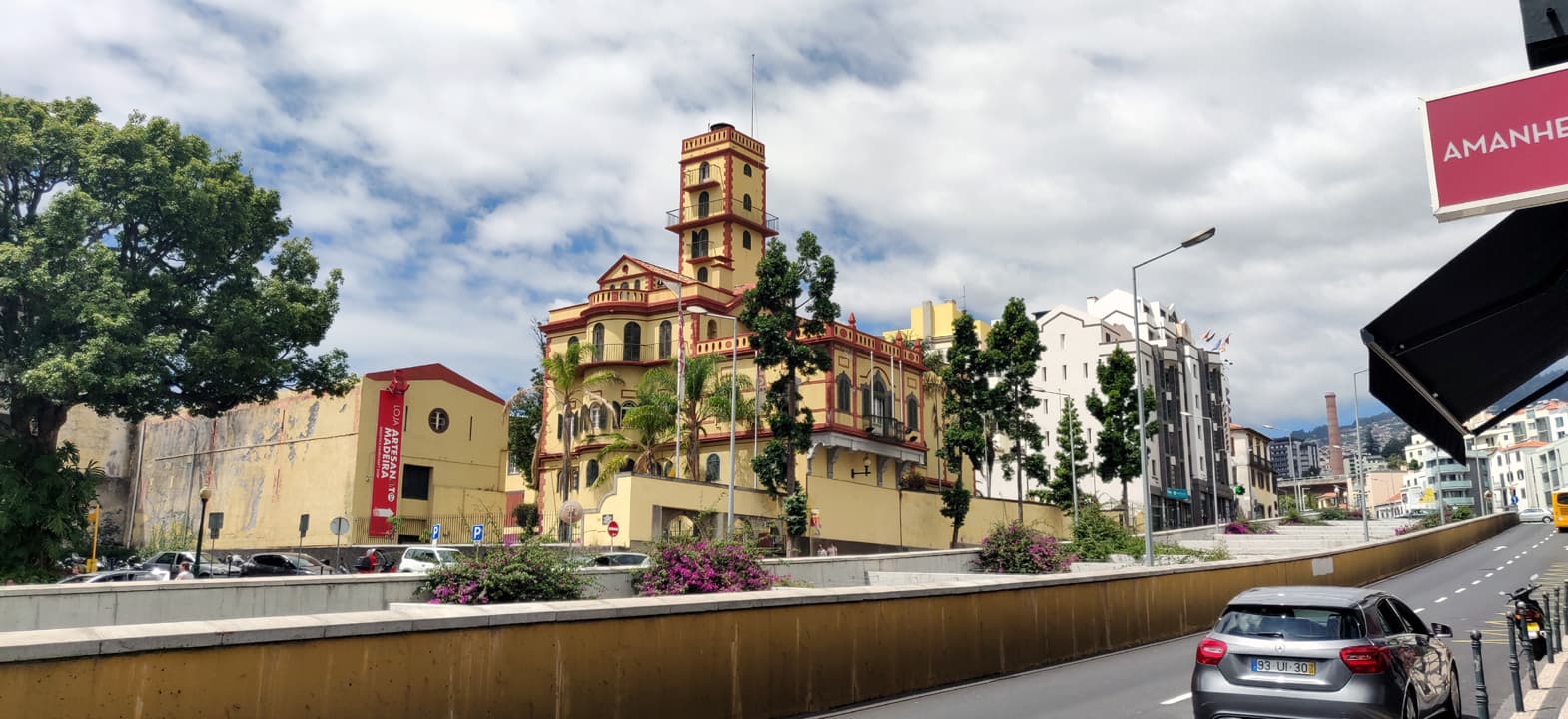
  • 1900 D'Oliveiras Madeira Moscatel Graúdo - Portugal, Madeira (7/10/2025)
    Just an incredible privilege to be served this at the winery. Broad shouldered nose that smells of old wood and books, medicinal aged amaro, molasses, ginger, and dark chocolate/coffee. Incredibly concentrated and explosive on the palate, somehow contains the alcohol almost completely, with flavors of chocolate, dried fruits, citrus zest, caramel. Kaleidoscopic, a moving experience.

I really couldn’t believe it when they brought out the 1900 since it is the oldest wine I’ve tasted by far, and since they charge absolutely nothing for the tasting aside from giving you a chance to tip. Needless to say, I did, and bought two bottles, 1990 Malvazia (my partner’s birth year) and 1988 Terrantez. For those interested in comparing the relentlessly rising prices, here’s a photo of the current version of the price sheet Otto posted earlier.

A few other parting thoughts. Our best meal on the island was at Desarma, which was substantially better in our view than the other Michelin-starred restaurant we visited, William. Both are incredibly expensive, but the dishes were simply more memorable and enjoyable at Desarma. Both wine lists are heavily focused on Portuguese wines (Desarma’s is exclusively Portuguese other than Champagne, William’s is a bit broader than that), but the markups were less egregious at Desarma as well. The only strange moment was serving a glass of 1994 Barbeito Verdelho from a Coravin, a choice I can’t understand at all since Madeiras are virtually indestructible and need air to show their best. Lunch at Jaket on Rua de Santa Maria was also enjoyable, though I thought the small plates were better than the mains. Maybe we ordered incorrectly, but dinner at Casal de Penha (which appears in the Michelin guide) was very underwhelming.
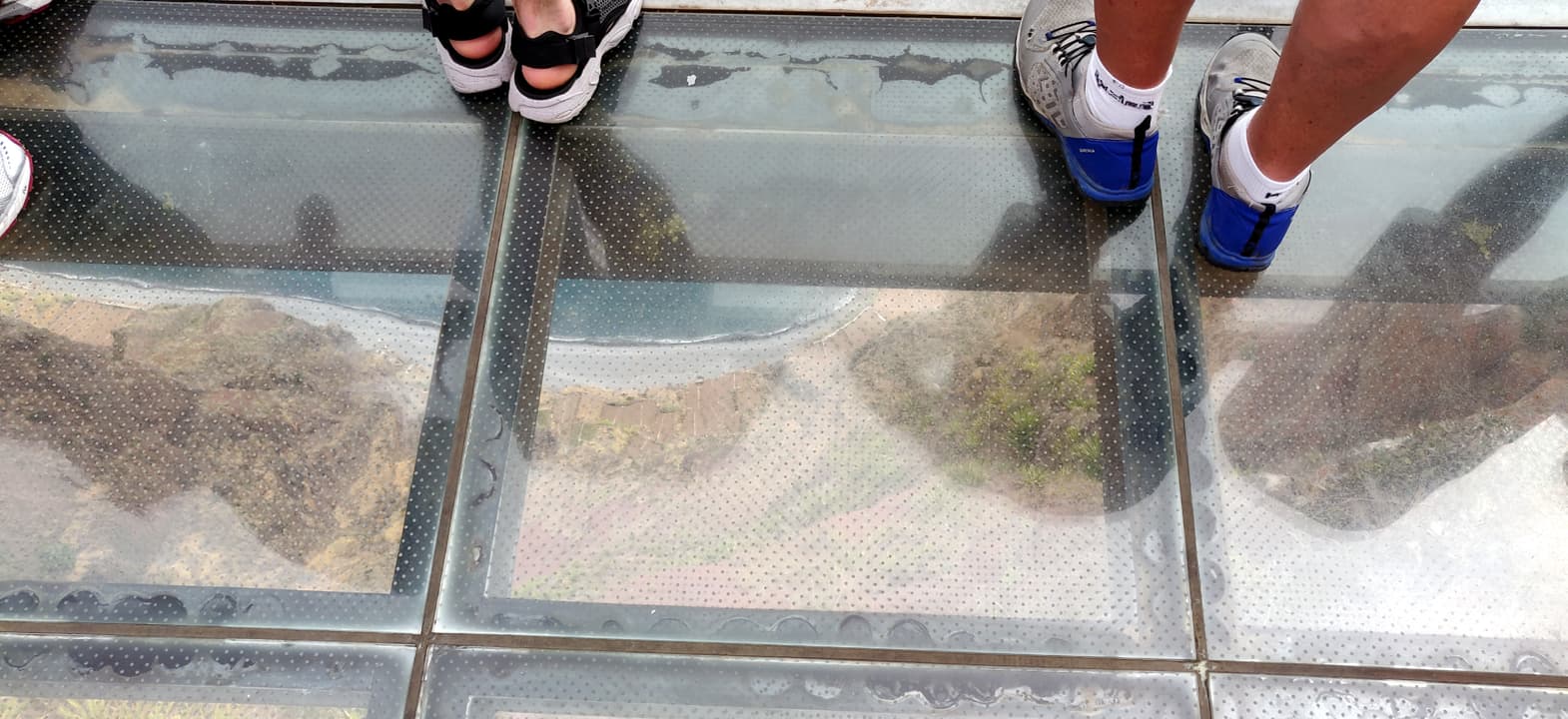
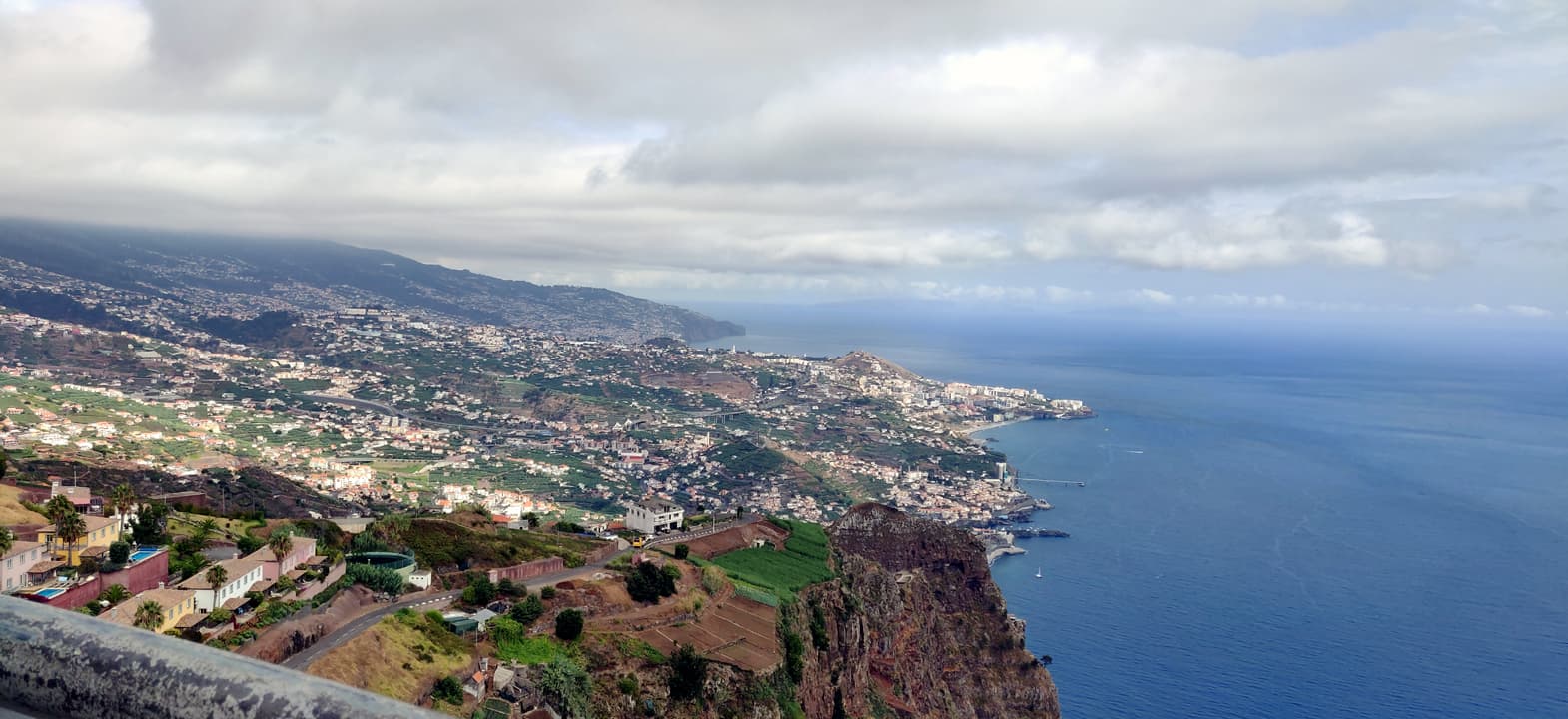
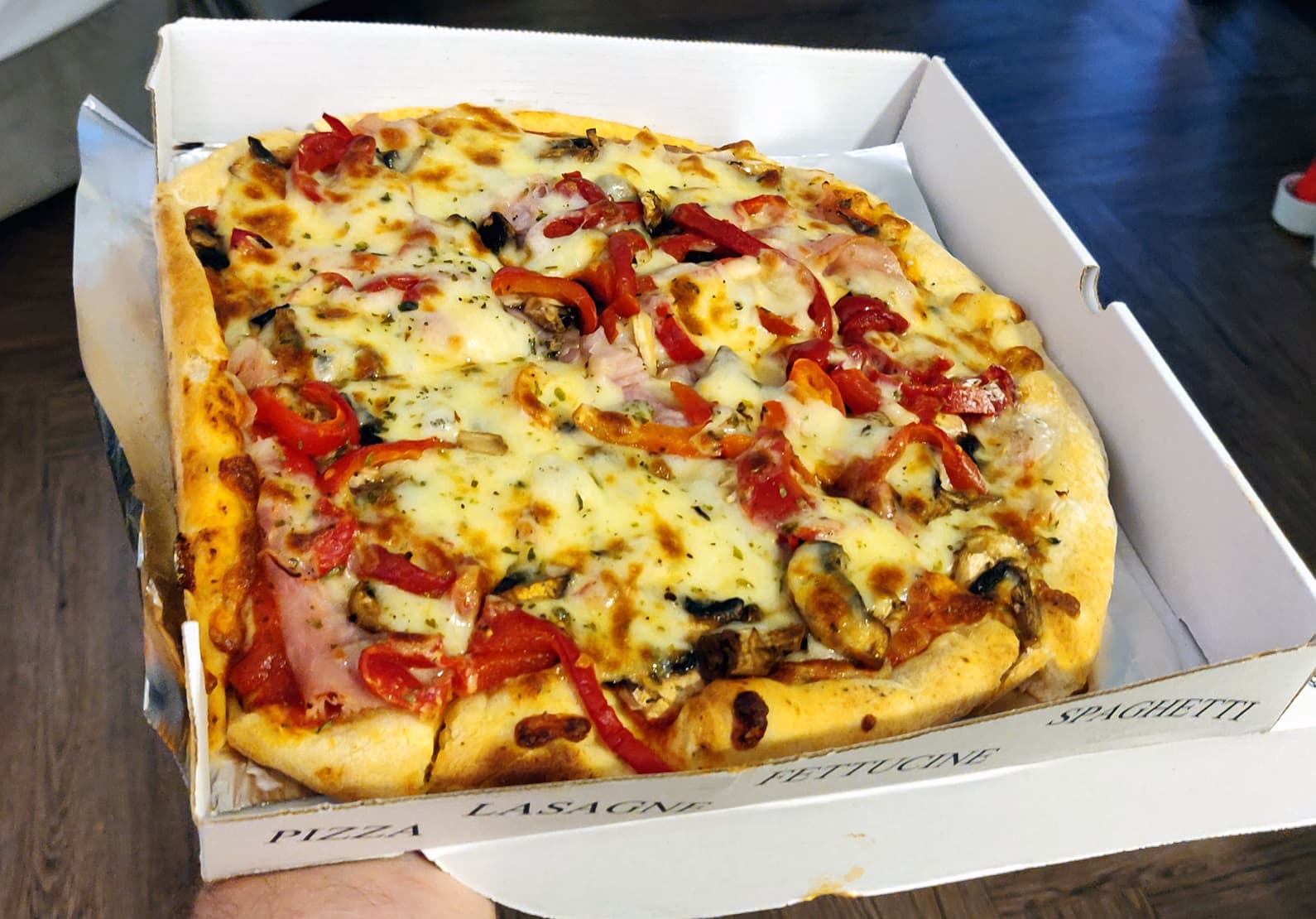
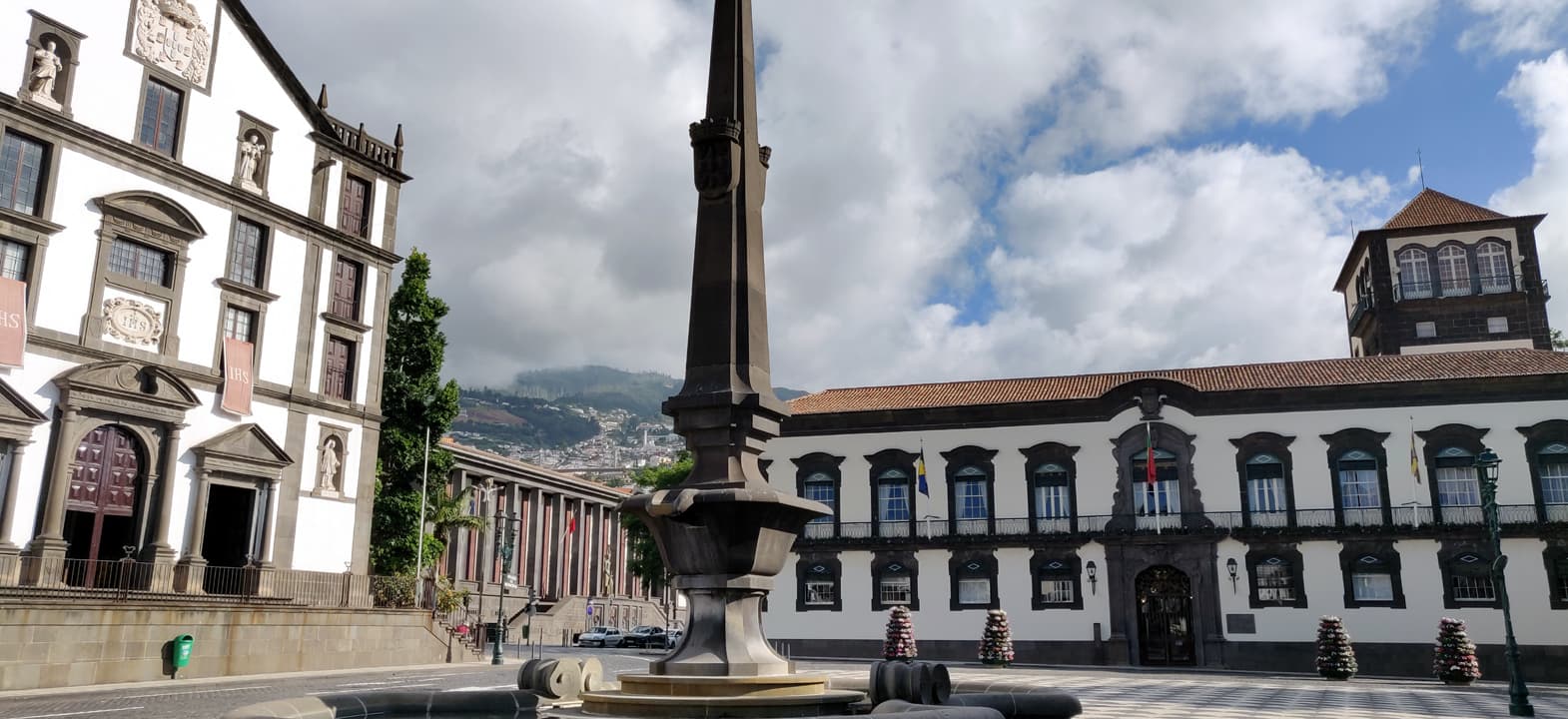
As far as activities go, we really enjoyed hiking along the Levadas and above the clouds on Pico de Arieero, and had a fabulous cruise seeing several species of dolphins. We also took a drive out to Porto Moniz and visited the natural pools there, which was also a good way to see some more of the island, especially the northern side where a lot of the vineyards are. Hopefully some of these thoughts are useful for people planning a trip to Madeira–we had a wonderful time and I’d warmly recommend a visit.

4 Likes

Thanks for posting that price list, @mattgw …

A few years back (well, at this point, maybe even 10 years ago), D’Oliveiras purchased the stock of their next door neighbor, Artur Barros. I visited Barros several times over the years, and one of their issues with the wine that their Dad had made was they didn’t have appropriate paperwork to document the actual grape composition for the EU when Portugal joined. So they took to just labeling their wines as Doce or Meio Doce in lieu of trying to identify grape. I wonder if the '29’s you show on that price list listed as Tinta Negra are based on those Barros wines? According to CT, I still have one bottle left of a Barros Meio Doce.

2 Likes

So, here goes: if my memory serves me right (and I am confident it does), the 1929 does NOT come from ABSL since the Barros Bros didn’t transfer very old wines when selling their company back in 2013 (reason was, there were no very old casks left and all the very old wines with vintage were in bottles already, and it simply was not part of the deal).

Until 2015 it was not allowed to put “Tinta Negra” on the bottle, so it was just “Old Wine”, but since TN is now a noble grape also, the labelling changed and it is now allowed to sell as TN, and due to this fact it has also been decided to sell accordingly since prices achievable for noble varieties are naturally better than for just “Old Wine”.

Also, the 1929 does not come from the Adegas de Torreao, it is a wine from the initial Oliveira family stock.

Attachted the 2015 list not yet showing TN.

D’Oliveiras kept the ABSL stocks separate from the D’Oliveiras stocks. As of a couple years ago, Luis Oliveiras hasn’t decided yet what to do with the ABSL wines. We hope they end up selling them under the ABLS label.

Thanks for the additional info, @Eric_Ifune and @A_Platt. I didn’t realize that Barros didn’t sell all the existing stock in the sale transaction. Did they keep the store open after the sale and continue to sell this through retail?

While I liked to visit both Barbeito and D’Oliveiras (and the Madeira Wine Company as well) when I was on island, I have to admit that I really enjoyed stopping in to the Barros place. That inner courtyard where they had one vine each of the Madeira grapes was always cool, and one of my most treasured bottles that I still have (more from the rarity as opposed to the quality perspective) is a bottle of their Bastardo.

1 Like

Hi Eric!

Which I highly doubt; also see the example with Torreao (where the 1927 Bastardo derives from).

It is ABSL not “ABLS”, but you know this and it was a typo.

Maybe in some explanation you could (not “will”) in the future find the ABSL origin, but for sure not on the bottle’s front, but I honestly even doubt this.

And as for the stocks of bottled wines from the 1980ies until 2010s I don’t think those will ever be sold as ABSL, and if remembering correctly, there were not myriads of those bottles left, anyways. The casks that were at ABSL didn’t hold century old wines neither, and my feeling is that D’Oliveira will use those wines as needed (blending, tasting, maybe bottling them under their name).

1 Like

Yes, that’s what we think. It’s just that everyone was so taken by the Olim brothers that we’d like more of a memento. I’ve only a few bottles.