Eimer (not Eimler) is still the German word for a bucket or pail. So, yes, 1000-Bucket-Hill.
2 Likes
Still have quite a few Hirtzbergers from 1998 to 2002. They have been aging well.
1 Like
I hear that! There are other Austrian producers I’d love to have more as well, but when it comes to Wachau, 90% of Nikolaihof doesn’t sound one bit bad.
Day 3 cont’d
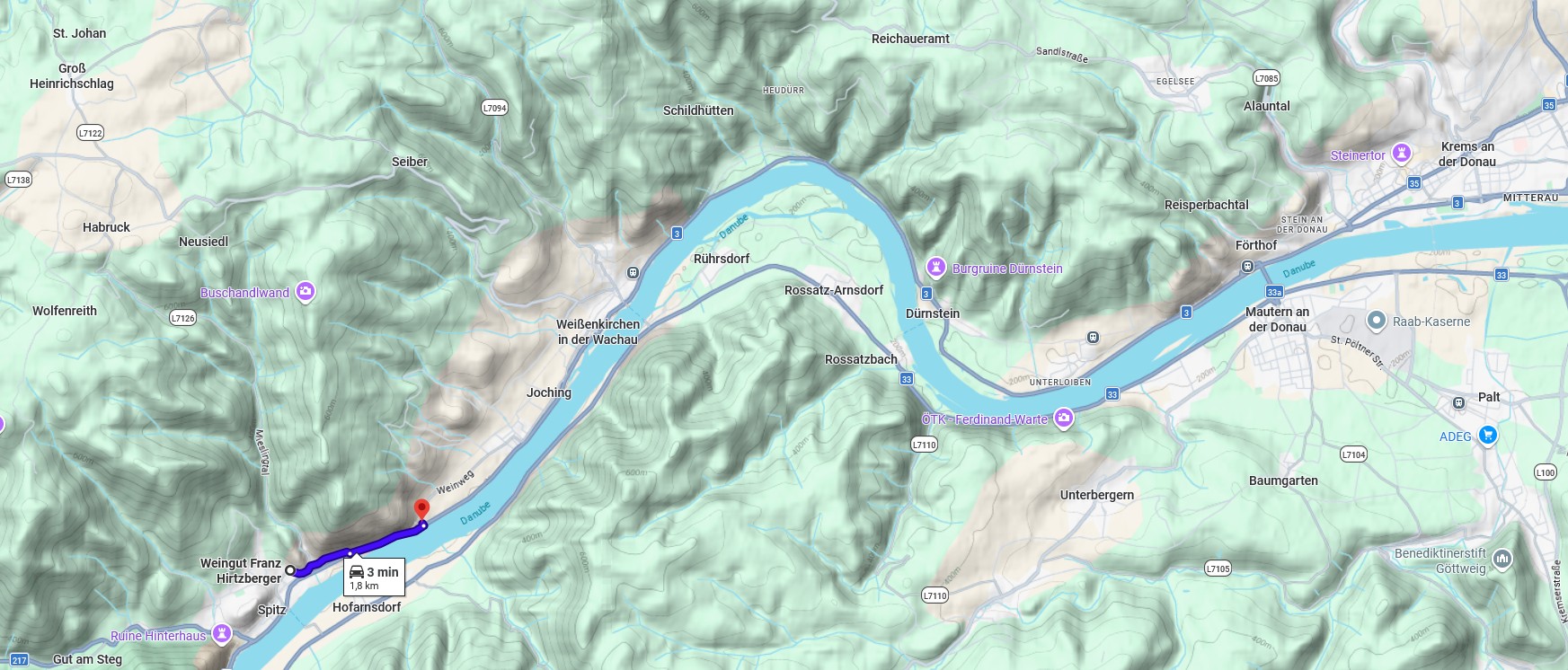
The trip to the next winery was exceptionally short. After we left Hirtzberger, I sent a message to Sabrina Skopek at Domäne Roland Chan that we’d be there in about five minutes - and that is more or less the time it took. All we had to do was walk to our cars, drive out from the village of Spitz and in a minute or two we arrived at the neighboring parish of St Michael. I wish all the transfers between wineries were this quick and easy!
Not a single person in our group had heard of Domäne Roland Chan before, but after @ChrisMyers suggested a visit to the winery after his own positive experiences, we decided to take a flier and asked for a visit. Unfortunately Roland Müksch himself was not going to be there, but a visit could nevertheless be arranged for us. This was more than fine for us!
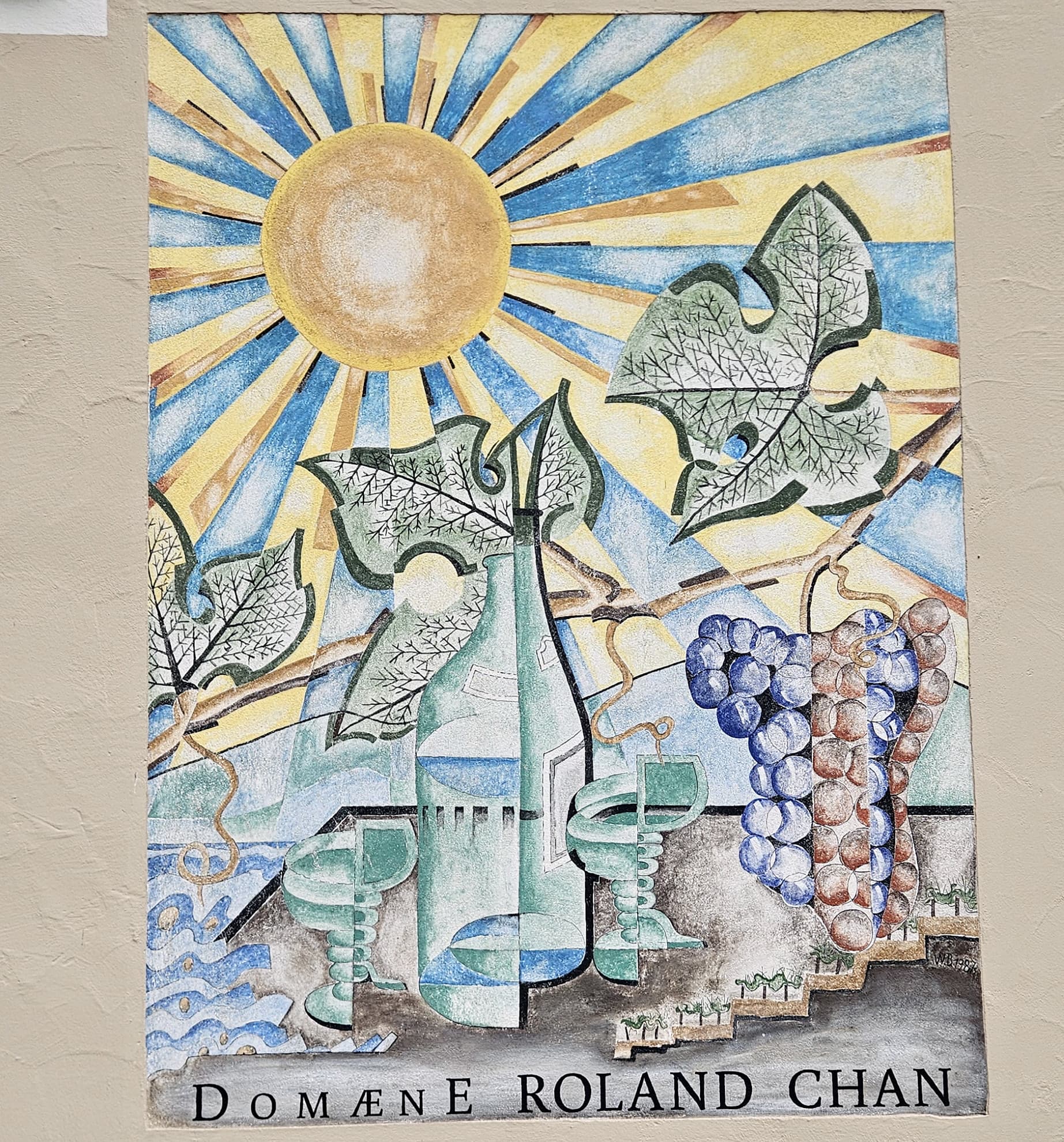
- Domäne Roland Chan is one of the most recent newcomers in the Wachau wine scene. It was founded in 2017 by *Roland Müksch’ and his wife Dr. Sharon Chan.
- Müksch is an Austrian private banker and wine enthusiast currently based in Singapore. He had been looking for a winery for some time, which is why he and his family bought a second home in Wösendorf, Wachau in 2013.
- In 2017 Müksch finally managed to purchase the first vineyards (some old vines in Ried Höll and *Ried Bach’, totaling to just 0,5 hectares), meaning that their debut vintage was in 2018.
- The winery facilities were moved from Wösendorf to the nearby hamlet of St. Michael as the production started to grow. The winery is located next to the fortified church of St. Michael, the oldest catholic church in Wachau - the oldest parts of the church date back to the 1350’s and the current church building was built in the 1500’s.
- As Müksch and his family split their time between Singapore and Austria, they can’t run the daily operations of the winery themselves. That’s why they have hired some locals to run the winery in their stead; Christoph Donabaum (of Weingut Donabaum) makes the wines, Markus Skopek takes care of the viticulture, and Markus’ wife Sabrina handles the office work and winery visits.
- From the beginning the aim was to make only top-tier wines from the best Wachau sites. That’s why Müksch hasn’t been interested in purchasing generic plots from the low-lying plains near Danube. Instead he has purchased solely some old-vine parcels from the best and most esteemed vineyards in Wachau whenever any vineyards are put to sale. Even the most affordable entry-level wines of the domaine are blends of fruit from some of the best vineyards in the whole Wachau.
- Currently the domaine encompasses approximately 3 hectares (7,5 acres) of vineyards - a considerable increase in a span of just a handful of years, but in terms of size the winery is still pretty small. The yields are kept very low and the annual production is approximately 10,000 bottles.
- Due to the steep vineyards, all harvest is done by hand. The grapes are harvested in three tries for the three different tiers of ripeness in the Wachau quality pyramid. The aim is to keep the wines are fresh and vibrant as possible, so in addition to removing diseased fruit, also any botrytis in the grapes is always avoided.
- Typically the wines are fermented spontaneously in stainless steel tanks, aged on the lees in stainless steel or large oak casks for 10 months, then bottled unfiltered, and finally released after another 12 months of aging in bottles. This means that the wines are aged for longer than the mandated minimum time (for example Smaragd wines can be released in May following the harvest at the earliest); when most other wineries are typically selling the last year’s vintage, the Roland Chan wines are always at least one year older.
- Domaine Roland Chan joined Vinea Wachau, the association of quality-oriented wine producers, in 2019.
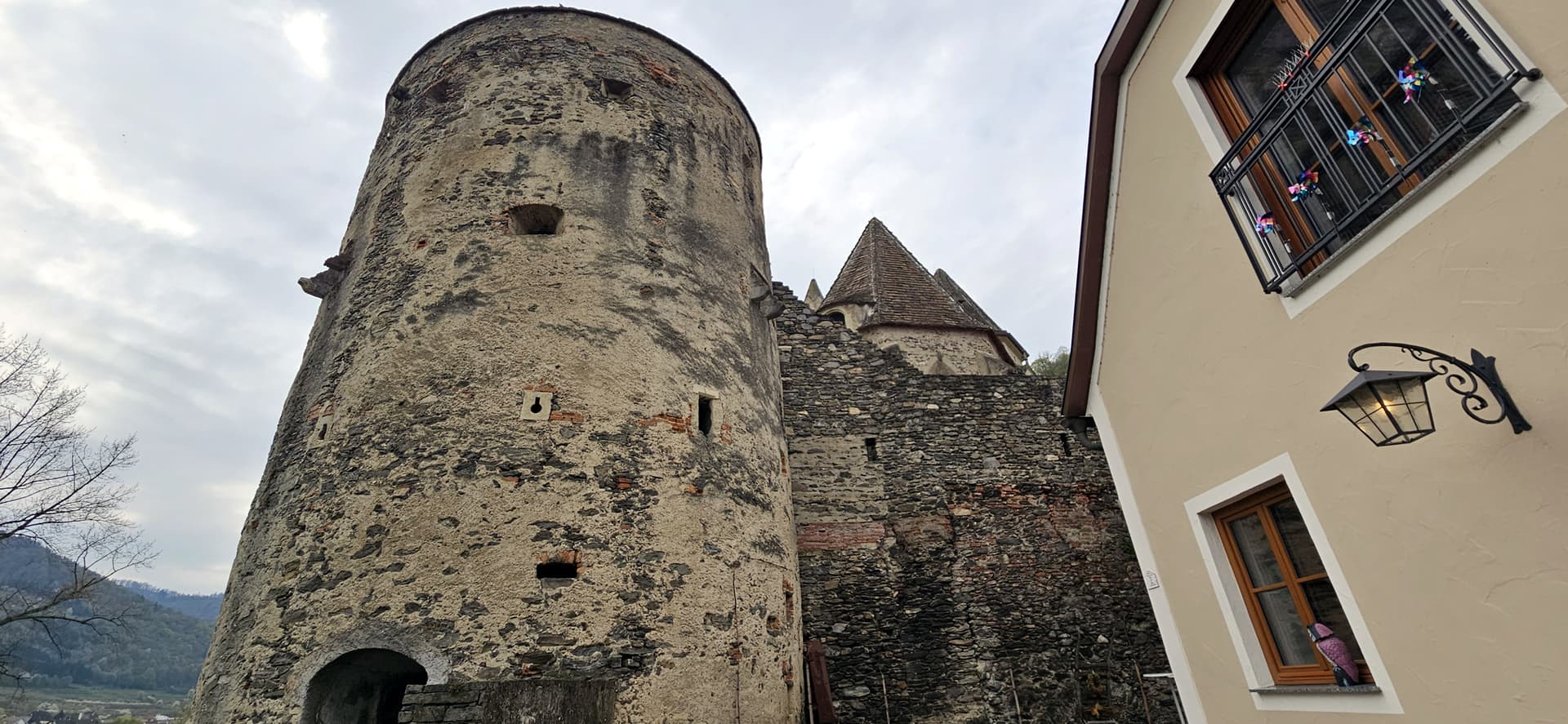
The old church next to which the winery building is located.
As it was raining more or less intermittently during our visit, we decided to skip visiting any vineyards and concentrated on tasting the wines. When Sabrina asked what we’d like to taste, our answer was “as many different wines as possible”, naturally. This request was handled with ease, as we did not only taste the most recent vintages, but also some older vintages - including one from 2019, Roland Chan’s sophomore vintage.
While tasting that 2019 vintage, it started to become into focus how young the winery was and how much had happened in such a short span of time. The younger vintages were clean, fresh and vibrant, often showing some sense of old-vine concentration and a certain air of seriousness. Pretty much as classic as you’d want your Wachau wines to be. The 2019, on the other hand, was heavy, clumsy and had a very atypical oak-heavy character, making it feel not only quite unusual for the region, but also a rather ponderous wine to drink. Although wines in that style might’ve been quite idiosyncratic and it would’ve been easy to stand apart from the other wines of Wachau, I’m more than happy that the wines made today feel very classically styled and true to the region.
While pouring us the wines, Sabrina also told us the difficulties they had faced. For example the weather patterns are becoming quite unpredictable and difficult in Wachau - for example in 2023 sudden hailstorms decimated approximately 30% of their production in an instant, which is quite a devastating loss for such a small winery.
I had read some background information on the winery before our visit, and with their background it is easy to be skeptical about the wine quality. However, all my worries were dispelled very soon after we had tasted a couple of wines - this winery didn’t turn out to be some Austrian banker’s vanity project! It seems pretty obvious that the wines are made today with the highest quality in mind - and this also really shows in how the domaine is purchasing land only from the most acclaimed vineyards, and how everything is made with estate-grown fruit, exclusively.
However, I couldn’t help but thinking if the Müksch-Chan family bet on the wrong horse. In a wine region as traditional as Wachau, it must be quite difficult being an outsider and making wines with a Chinese name and Chinese characters (“Chan”) in the label! I wonder if they had planned on entering the then-growing Chinese market, which has turned surprisingly dry in the recent years? It’s impossible to tell, but from an outsider’s perspective it does look so; with so small annual production, they shouldn’t have trouble selling everything out every vintage, yet they still have almost all the wines available from the most recent vintage, going back all the way to the 2019 vintage. However, having tasted the wines, selling them shouldn’t be a problem from the quality perspective! I guess it’s just very difficult for a new producer start making name and selling stuff so quickly. Well, I hope at least our contribution made a small impact, as most of us were so impressed by the wines that we bought about 1% of their annual production with us! 
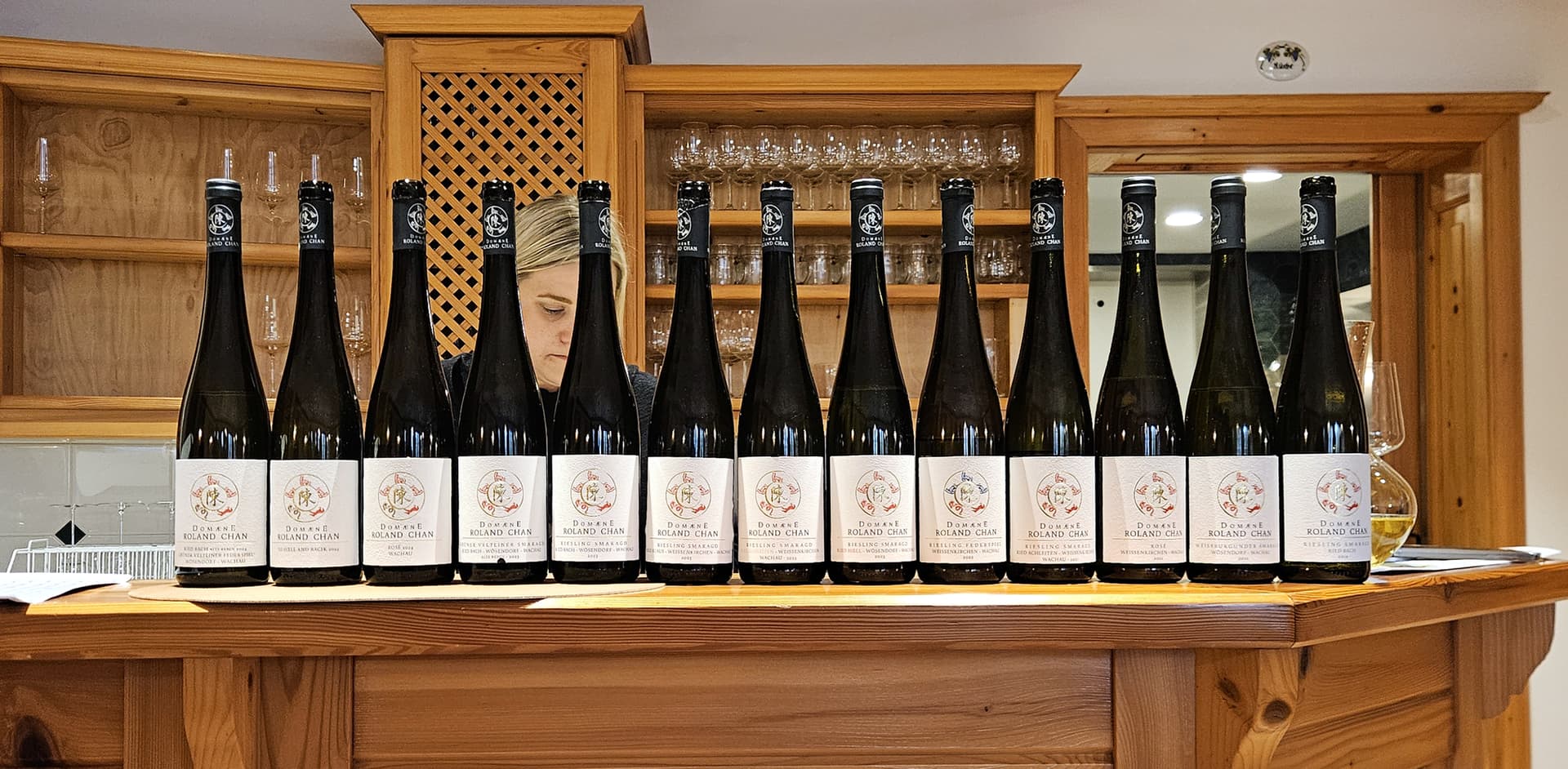
The wines we tasted and Sabrina preparing the papers for our wine order.
- 2024 Domæne Roland Chan Grüner Veltliner Federspiel Ried Bach - Austria, Niederösterreich, Wachau (14.4.2026)
100% Grüner Veltliner from 80-yo vines in Ried Bach, a steeply terraced amphitheater in Wösendorfer Gaisberg. 12,5% alcohol. Bottle #842 of total 853 bottles.
Pale whitish-green color. The nose feels a bit closed with aromas of smoky and slightly flatulent reduction, some fresh peachy tones, a little bit of ripe pear, light spicy notes and a hint of crunchy Golden Delicious apple. The wine feels clean, somewhat concentrated and ripe yet firm on the palate with a medium body and bright flavors of fresh white peach, some honeyed tones, a little bit of ripe pear, light spicy notes of white pepper, a hint of stony minerality and a touch of honeydew melon. The moderately high acidity keeps the overall feel fresh and sufficiently structured. The finish is juicy, quite ripe and slightly concentrated with a long aftertaste of honeydew melon, some sweet pear tones, a little bit of stony minerality, light spicy peppery notes and a hint of crunchy appley fruit.
A surprisingly ripe and concentrated effort for a Federspiel, yet showing great sense of freshness and firmness, coming across as quite light on its feet. I guess the old vines give the wine quite a bit of concentration and power without getting the alcohol that high, making the wine feel more like a Smaragd - only with a lower level of alcohol. A surprisingly serious effort, I actually enjoyed this more than the Smaragd version of the same vineyard! Solid value at 27€.
(92 points) - 2024 Domæne Roland Chan To Hell and Back - Austria, Niederösterreich, Wachau (14.4.2026)
100% Zweigelt from Ried Höll in Wösendorf and Ried Bach, a subparcel within Wösendorfer Gaisberg. The grapes are crushed, gently pressed and vinified as a blanc de noirs in stainless steel tanks. 13% alcohol. Bottle #691 of total 720 bottles.
Pale mirabelle-yellow color. The nose feels quite fruit-forward with aromas of ripe peaches and juicy pear, some spicy tones, a little bit of crunchy white fruit, light floral nuances and a mineral hint of wet rocks. The wine feels clean, juicy and vibrant on the palate with a medium body and dry but also somewhat atypical flavors (for a white wine) of ripe white fruits, some red-toned strawberry notes, a little bit of stony minerality, light floral nuances, a hint of juicy nectarine and a faint touch of mineral spice. The rather high acidity keeps the overall feel fresh and balanced. The finish is juicy, long and refreshing with a dry, fruit-forward aftertaste of nectarine, some stony mineral tones, a little bit of strawberry-driven red fruit, light floral notes of apple blossom, a hint of something spicy and a touch of ripe white peach.
A fun and quite distinctive little white. Usually I find still blanc de noirs either gimmicky, too soft or just bland or boring. Furthermore, I'm not the biggest fan of Zweigelt. However, this wine manages to avoid all the typical pitfalls of both blanc de noirs still wines and Zweigelts! The wine feels like a white wine, but with a twist; the flavors have a somewhat indistinct red-toned fruit component that just gets masked away by the other fruit flavors, but it definitely still is there, contributing to the depth of flavor. Furthermore, the wine shows enough minerality and freshness with the sufficiently high acidity that the wine comes across as very balanced and enjoyably structured, not too soft or round. Thoroughly enjoyable stuff, priced more or less according to its quality at 27€.
(91 points) - 2024 Domæne Roland Chan Rosé Klaus - Austria, Niederösterreich, Wachau (14.4.2026)
100% Zweigelt from 20-30 yo vines in the upper parts of Ried Klaus, one of the most famed (and steepest) vineyards in Wachau. Cold-soaked with the skins for 6 hours. Vinified in stainless steel. 12,5% alcohol. Bottle #698 of total 720 bottles.
Medium-deep salmon-red color. The nose feels juicy and youthful with aromas of melon, some leesy creaminess, light peachy tones ,a little bit of ripe cherry and a hint of savory spice. The wine feels clean, ripe and quite broad on the palate with a medium body and somewhat reticent and subtly sweetish flavors of white peach, some cantaloupe, light stony minerality, a little bit of leesy creaminess and a hint of spice. The wine is quite high in acidity with the tiniest bit of tannic tug on the gums. The finish is vibrant, quite acid-driven and subtly grippy with a rather long aftertaste of savory spice, some white peach, light strawberry-driven red-fruited notes and a hint of melon.
A nice and balanced Rosé. Maybe not that complex or particularly memorable, though. It's hard to assess whether this is a wine best drunk young, or if it might benefit from aging, but at least it seems to be drinking pretty nicely right now. Feels a tad pricey for the quality at 29€.
(89 points) - 2023 Domæne Roland Chan Grüner Veltliner Smaragd Alte Reben Ried Bach - Austria, Niederösterreich, Wachau (14.4.2026)
100% Grüner Veltliner from 80-yo vines in Ried Bach, a steeply terraced amphitheater in Wösendorfer Gaisberg. 13% alcohol. Bottle #517 of total 680 bottles.
Pale greenish color. The nose is slightly closed and reductive with aromas of white peach, some spicy notes, a little bit of flint smoke, light nuances of cantaloupe, hints of fresh pear and Fuji apple and a mineral touch of wet rocks. The wine feels youthful, a bit understated and structurally pretty open-knit on the palate with a medium body and a bit mellow flavors of ripe pear, some mineral notes of wet rocks and salinity, light cantaloupe tones, a little bit of spice, a faint smoky hint of reduction and a touch of pink grapefruit. The rather high acidity keeps the overall feel in balance and there is also a tiniest bit of phenolic grip on the gums. The finish is juicy, broad and a bit light with a long aftertaste of fresh pear, some salinity, a little bit of cantaloupe, light stony minerality, a hint of ripe grapefruit and a reductive touch of flint smoke.
A nice, youthful and balanced Grüner Veltliner, albeit a bit closed and understated one. I guess the wine might come across as a bit reticent due to the reduction that lends a little bit of smoky character to the overall feel - I'm sure it will blow off with some aeration. Most likely the wine will benefit from a handful of years of aging, but I have to admit that I found the differences between this wine and the Federspiel version of the same wine quite minuscule, and I actually preferred the slightly lighter and fresher expression of the Federspiel bottling. Priced somewhat according to its quality at 36€, but at that price I'd rather go with the Federspiel.
(90 points) - 2023 Domæne Roland Chan Riesling Smaragd Ried Bach - Austria, Niederösterreich, Wachau (14.4.2026)
100% Riesling from Ried Bach, a steeply terraced amphitheater in Wösendorfer Gaisberg. 13,5% alcohol. Bottle #858 of total 920 bottles.
Pale greenish color. The nose feels fragrant, floral and slightly primary with aromas of peachy stone fruits, some grapey tones, a little bit of rubbery reduction, light floral notes of apple blossom, a hint of pear drops and a touch of greengage. The wine feels ripe, broad and juicy on the palate with a medium-to-moderately full body and youthful flavors of white peach and stony minerality, some floral notes, a little bit of greengage, light youthful grapey tones, a hint of kiwi and a touch of creaminess - although it is difficult to tell if this is just leesy richness or if the wine has seen some oak. The moderately high acidity feels a bit modest for a Riesling, but still sufficiently high to keep the overall feel balanced and quite structured. The finish is youthful and juicy with a long aftertaste of white peach, some primary grapey tones, a little bit of greengage, light floral notes, a hint of kiwi and a faint touch of creaminess.
An attractive and sophisticated Riesling - maybe a tad on the broad and round side, but excessively so. I'd love the wine to show a bit more zip with a higher level of acidity, but this is pretty serious already now. Of Roland Chan's Smaragd wines from Ried Bach, I liked this Riesling version a bit more than the Grüner Veltilner iteration. As the wine is still very youthful and even a bit primary, I can see the wine benefiting from additional cellaring; expect the score to go up as the wine ages. Priced somewhat according to the quality at 37€.
(91 points) - 2023 Domæne Roland Chan Riesling Smaragd Ried Klaus - Austria, Niederösterreich, Wachau (14.4.2026)
100% Riesling from Ried Klaus, one of the most famed (and steepest) vineyards in Wachau. 14% alcohol. Bottle #512 of total 650 bottles.
Pale yellow-green color. The nose feels fresh, clean and fragrant with attractive aromas of youthful grapey fruit, some floral notes of apple blossom, a little bit of cantaloupe, light crunchy notes of Fuji apple, a sweeter hint of ripe greengage and a touch of stony minerality. The nose feels elegant and wonderfully focused on the palate with a sleek medium body and bright favors of steely minerality and almost primary grapey fruit, some ripe Granny Smith apple tones, a little bit of floral spice, light sharp notes of ripe key lime, a hint of ripe greengage and a touch of grapefruit zest. The brisk acidity lends a good amount of freshness and structure to the wine, but the wine also gets a tiny bit of additional firmness from the tiniest hint of tannic tug on the gums. The level of ABV might be high, but the alcohol stays wonderfully well out of the picture. The finish is crisp, fresh and lively with a long, dry aftertaste of ripe lemony citrus fruits, some floral tones, a little bit of steely minerality, light spicy notes, a hint of tart Granny Smith apple and a faint touch of alcohol warmth.
A wonderfully precise, intensely flavored and impressively structured Riesling. The wine might be a bit high in alcohol, but that definitely didn't translate to softness, sweetness of fruit or lack of precision. A terrific effort that is a joy to drink already now - however, as the wine feels so very youthful and at times even primary, I'm quite sure this wine will continue to evolve and improve for a good handful of years. One of my favorites among the dozen or so Roland Chan wines we tasted. Not maybe that affordable at 45€, but arguably delivers for the price. Highly recommended.
(93 points) - 2023 Domæne Roland Chan Riesling Smaragd Ried Achleiten - Austria, Niederösterreich, Wachau (14.4.2026)
100% Riesling from Ried Achleiten, one of the most famed and - with its imposing hillside terraces - immediately recognizable vineyards in Wachau. 13,5% alcohol. Bottle #495 of total 1250 bottles.
Youthful yellow-green color. The nose feels quite concentrated and somewhat sweet-toned with bold aromas of beeswax, some apricot, a little bit of cantaloupe, light crunchy notes of fresh Golden Delicious apple, a hint of stony minerality and a touch of herby spices. The wine feels ripe, rich and quite broad on the palate with a full body and moderately concentrated flavors of stony minerality and youthful grapey fruit, some ripe Golden Delicious apple, a little bit of apricot, light saline tones, a hint of floral spice and a touch of beeswax. The moderately high acidity keeps the wine quite nicely in balance, although as ripe and powerful Riesling as this could use a bit more acidity. The finish is juicy, slightly warm and a bit dark-toned with a long, bold aftertaste of ripe citrus fruits, some white peach, light honeyed tones, a little bit of stony minerality and a hint of savory spices.
A clean and surprisingly concentrated but also a bit round Riesling that packs quite a bit of ripeness and intensity. This Riesling is certainly bigger and more impactful than the Ried Klaus and Ried Hölle bottlings that we tasted next to it, but I have to admit that I found the sleeker and more acid-driven Ried Klaus more to my liking - even if it also showed higher alc%. This is a fine wine, but it feels like it is a better fit for people who love big and impressive Rieslings, whereas I favor freshness, precision and minerality. I hope the wine is just now in a youthful, big shape, and will drop its baby fat over the next 5 years or so. Feels a tad expensive for the quality at 43€.
(90 points) - 2023 Domæne Roland Chan Riesling Smaragd Ried Höll - Austria, Niederösterreich, Wachau (14.4.2026)
100% Riesling from Ried Höll in Wösendorf. 13,5% alcohol. Bottle #642 of total 1350 bottles.
Youthful yellow-green color. The nose feels sweet-toned, somewhat reductive and considerably primary with aromas of pear drops, some skunky flatulent notes of reduction, a little bit of cantaloupe, light crunchy Golden Delicious apple tones, a hint of stony minerality and a touch of ripe grapey fruit. The wine feels quite broad, round and open-knit on the palate with a full body and rather ripe flavors of greengage and juicy pear, some stony mineral notes, a little bit of cantaloupe, light saline undertones, a hint of white peach and a touch of crunchy appley fruit. The moderately high acidity feels a bit soft and mellow for a Riesling, but still sufficiently high to keep things in balance. The finish is youthful, juicy and quite fruit-driven with a rather long aftertaste of ripe white peach, some juicy Golden Delicious apple, light greengage notes, a little bit of saline minerality, primary hints of grapey fruit and pear drops and a perfumed touch of floral character.
A still super youthful but also somewhat unfocused Smaragd Riesling that lacks some of the focus the other Roland Chan Smaragd Rieslings showed. Pleasant, but a bit too soft and ripe for my preference. Not a bad wine in any way, but comes across as less interesting and more mundane than the other bottlings. Feels somewhat expensive for the quality at 35€.
(89 points) - 2022 Domæne Roland Chan Riesling Federspiel Weissenkirchen - Austria, Niederösterreich, Wachau (14.4.2026)
100% Riesling from multiple vineyards in the village of Weissenkirchen. 12,5% alcohol. Bottle #552 of total 700 bottles.
Youthful, light to medium-deep yellow-green color. The nose feels open, youthful and still slightly primary with aromas of sweet grapey fruit, some floral notes of apple blossom, a little bit of tinned peach, light stony mineral notes, a hint of ripe nectarine and a touch of ripe pineapple. The wine feels firm, lively and pretty steely on the palate with a medium body and focused flavors of lemony citrus fruits, some saline mineral notes, a little bit of tinned peach, light primary notes of sweet grapey fruit, a hint of pineapple and a touch of floral spice. The bright, zippy acidity lends a lovely sense of freshness and structure to the wine. The finish is crisp, lively and pretty acid-driven with a long aftertaste of lemony citrus fruits, some sharp Granny Smith apple notes, a little bit of steely minerality, light grapey notes of primary fruit character, a hint of tinned peach and a touch of tangy salinity.
A surprisingly serious, brisk and focused Federspiel that didn't suffer at all when tasted amidst the more esteemed Smaragd bottlings. The overall feel is still painfully young as the wine is still quite heavily dominated by the sweet, estery notes of grapey fruit, but even then the wine is surprisingly enjoyable and quite open for business. However, I would love to let the wine wait at least a handful of years more so that it would lose its most obvious primary qualities. A terrific effort with lots of upside. Delivers for the price at 29€.
(91 points) - 2021 Domæne Roland Chan Riesling Smaragd Ried Achleiten - Austria, Niederösterreich, Wachau (14.4.2026)
100% Riesling from Ried Achleiten, one of the most famed and - with its imposing hillside terraces - immediately recognizable vineyards in Wachau, harvested on October 31st. Cold-soaked with the skins for 24 hours, then fermented spontaneously in stainless steel. Aged on the lees for 9 months. Bottled unfined and unfiltered. 14,6% alcohol, 1,7 g/l residual sugar, 7,6 g/l acidity and total SO2 80 mg/l. Bottle #264 of total 1400 bottles.
Pale, luminous neon-green color. The nose feels very open, fragrant and attractive with aromas of ripe peach, some crunchy Golden Delicious apple, a little bit of fresh pineapple, light floral notes of apple blossom, a hint of stony minerality and a subtly primary touch of pear. The wine feels ripe, broad and lively on the palate with a rather full body and quite concentrated flavors of ripe pineapple and honeyed richness, some crunchy Golden Delicious apple tones, a little bit of extracted waxy character, light floral notes of orange blossom, a hint of poached pear and a touch of lemony citrus fruit. The high acidity lends a little bit of warmth to the palate, whereas the brisk, focused acidity lends a great amount of freshness, focus and incisive structure to the wine. The finish is ripe, broad and moderately warm with a long, bold aftertaste of lemony citrus fruits, some fresh pineapple tones, a little bit of sweet peachy fruit, light floral tones, a hint of extracted waxy character and a touch of honeyed richness.
A very impressive, structured and surprisingly complex powerhouse of a Riesling. The alcohol admittedly feels quite a bit too high in here, as it shows through both on the midpalate and in the aftertaste. However, that doesn't mean that the wine is too ripe and flabby - while the wine does show breadth and ripe fruit flavors, its acidity feels wonderfully high, making the wine surprisingly fresh and structured for such a big and concentrated Riesling. With lower ABV, this would've been easily the most impressive wine we tasted at the domaine, seeing how the wine showed remarkable sense of flavor intensity, complexity and structure. However, there's no denying that the high alcohol really takes a small toll on the drinkability. Even then, this is a great powerhouse of a Riesling. Remember to serve it sufficiently cool, just to push the sense of warmth from the alcohol down. Priced according to its quality at 45€.
(93 points) - 2021 Domæne Roland Chan Rosé Weissenkirchen - Austria, Niederösterreich, Wachau (14.4.2026)
100% Zweigelt from 20-30 yo vines in the upper parts of Ried Klaus, one of the most famed (and steepest) vineyards in Wachau. Cold-soaked with the skins for 6 hours. Vinified in stainless steel. 12,5% alcohol. Bottle #61 of total 600 bottles.
Pale salmon-pink color. The nose feels fresh and slightly spicy with aromas of peach, some ripe Golden Delicious apple, light strawberry notes, a little bit of herby spice and a hint of cantaloupe. The wine feels dry, crunchy and quite acid-driven on the palate with flavors of wild strawberries and cantaloupe, some saline notes, a little bit of tart Granny Smith apple, light stony mineral tones, a hint of ripe lemony citrus fruit and a touch of savory spices. The high acidity makes the overall feel brisk and fresh, and there's a tiny bit of tannic grip on the gums that adds to the sense of firmness. The finish is crisp, dry and subtly grippy with a long aftertaste of cantaloupe and salinity, some tart grapefruit, light sharp notes of Granny Smith apple, a little bit of strawberry-driven red fruit, a hint of stony minerality and a touch of herby spice.
A crisp, clean and quite characterful rosé that still manages to come across as surprisingly vibrant and youthful for its 4½ years of age; apparently these Roland Chan rosés can be kept for longer than your cheap run-of-the-mill rosé wines! With its good sense of freshness and cool mineral core, this is a lovely wine on its own, but can be easily paired with a wide variety of dishes that call for lighter, more acid-driven wines. It's hard to say whether the wine will only keep or actually improve with additional aging, but really don't see the wine falling apart in the near future. Good value at 29€. Recommended.
(92 points) - 2021 Domæne Roland Chan Weissburgunder Smaragd Höll - Austria, Niederösterreich, Wachau (14.4.2026)
100% Weissburgunder from very old vines in Ried Höll, Wösendorf. 13,5% alcohol. Bottle #41 of total 350 bottles.
Pale yellow-green color. The nose feels slightly reductive with aromas of fresh white peach, some sweeter notes of ripe nectarine and greengage, a little bit of stony minerality, light leesy notes of creaminess, a hint of pineapple, a touch of zesty citrus fruits and a whiff of sponti funk. The wine feels dry, balanced and quite focused with flavors of lemony citrus fruits and stony minerality, some fresh pineapple tones, a little bit of tangy salinity, light leesy notes of creaminess, tart hints of Granny Smith apple and key lime and a touch of apple peel bitterness. The high acidity lends a good deal of freshness and structure to the wine. The finish is crisp and lively with a dry and rather long aftertaste of key lime and ripe lemony citrus fruit, some leesy notes of creaminess, a little bit of apple peel bitterness, light stony mineral tones, a hint of sharp Granny Smith apple and a touch of crunchy pineapple.
A surprisingly nice, fresh and serious Pinot Blanc - most of the Wachau Weissburgunders I've tasted have not been anything particularly memorable, but this wine is a notch above them. Although not a super complex or that special wine in its own right, this is still a rather convincing effort for a Weissburgunder; I actually found the wine a tad better than even some of the Roland Chan Smaragd Rieslings and Weissburgunders we tasted. It is hard to say whether the wine will only keep, or if it also going to evolve and improve with additional aging, but at least it is drinking really well right now, at 4½ years of age. The wine might not be that affordable at 40€, but it arguably still manages to deliver for the price.
(91 points) - 2019 Domæne Roland Chan Riesling Smaragd Ried Bach - Austria, Niederösterreich, Wachau (14.4.2026)
100% Riesling from Ried Bach, a steeply terraced amphitheater in Wösendorfer Gaisberg. 13,5% alcohol, 5 g/l residual sugar, 4,5 g/l acidity and 109 mg/l SO2. Bottle #838 of total 1200 bottles.
Quite intense and moderately deep lime-green color. The nose feels quite distinctive and somewhat woody with a bit atypical aromas of creamy oak and toffee, some ripe lemony tones, a little bit of ripe Granny Smith apple, light sweeter notes of lime marmalade, a little bit of peachy stone fruit, a hint of sweet oak spice and a mineral touch of wet rocks. The wine feels surprisingly rich, broad and ponderous on the palate with a full body and bold, subtly sweet-toned flavors of creamy oak and ripe peach, some floral notes of rosewater, a little bit of saline minerality, light pineapple tones, a hint of sweet oak spice and a touch of lime marmalade. The wine is lacking freshness and coming across as somewhat heavy, thanks to the medium-plus acidity. The finish is ripe, juicy and lengthy with a round yet rather powerful aftertaste of peach and nectarine, some creamy oak, light saline notes, a little bit of pineapple, a hint of apple jam and a touch of stony minerality.
A characterful but also very atypical, heavy and ponderous Riesling that feels rather clumsy and ponderous due to the surprisingly pronounced oaky tones and relatively modest acidity that feels weirdly low for a Riesling. Seeing how this is Roland Chan's sophomore vintage, it feels quite obvious that it was still a work in progress back then; this is a blockbuster wine that feels like it is trying to make a statement, but it doesn't know how. The more recent vintages might not be as striking and idiosyncratic as this wine, but they feel considerably more sophisticated, harmonious and just simply drinkable. Seeing how ponderous the wine feels already now, I wonder if it can improve much with additional cellaring - even if aging might help the wine lose some of its more oaky notes. I have to admit I wasn't particularly enamored by this bottling. Feels somewhat expensive for its quality at 39€.
(88 points)
While we were tasting the wines, Sabrina’s husband Markus came to say hello. After we had tasted the wines and everyone had placed their orders for the wines, Markus took us downstairs to see the old, historical cellars of the building that they were restoring and renovating to increase the winery’s vinification facilities. Admittedly it was a bit hard to follow what Markus was telling us, since he didn’t speak any English, so we had to rely on the few of us who spoke some German. One of us actually spoke and understood local German quite well, having lived nearby for five years, yet even he said that he had trouble understanding what Markus was telling us due to his very thick local dialect!
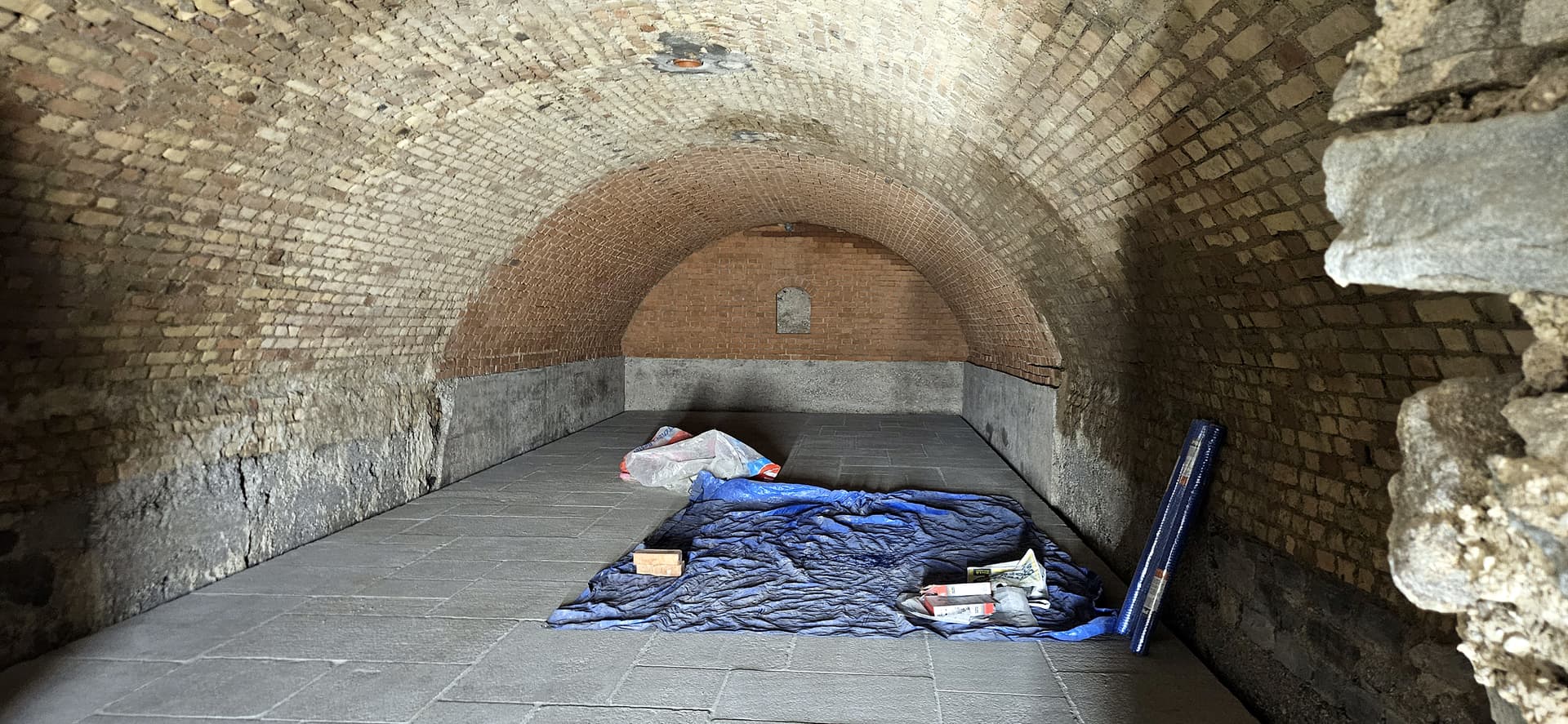
The cellars under restoration.
So that concludes our visit to Domäne Roland Chan. Next we had a table booked for lunch, so after our visit, we made a quick trip to the winery-restaurant Holzapfel in the nearby town of Joching.
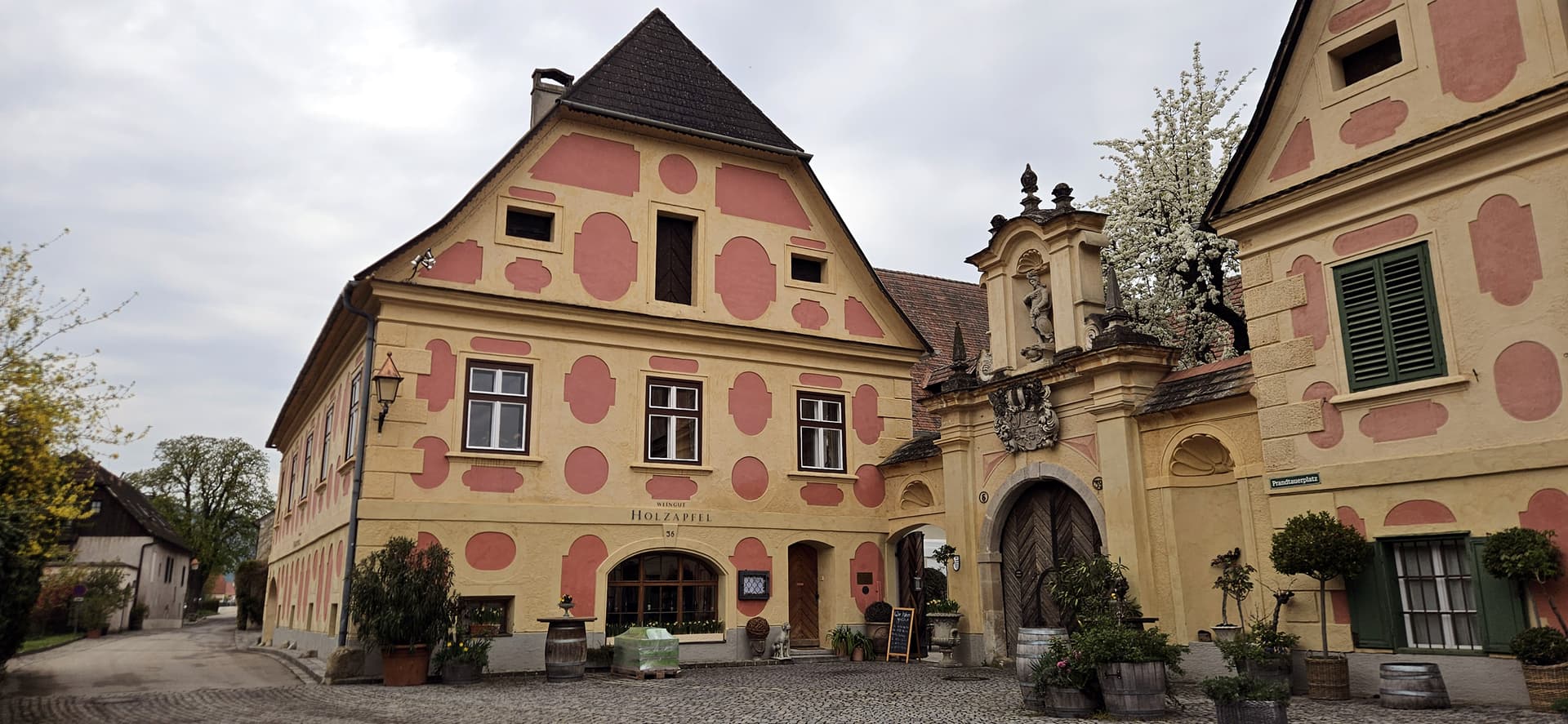
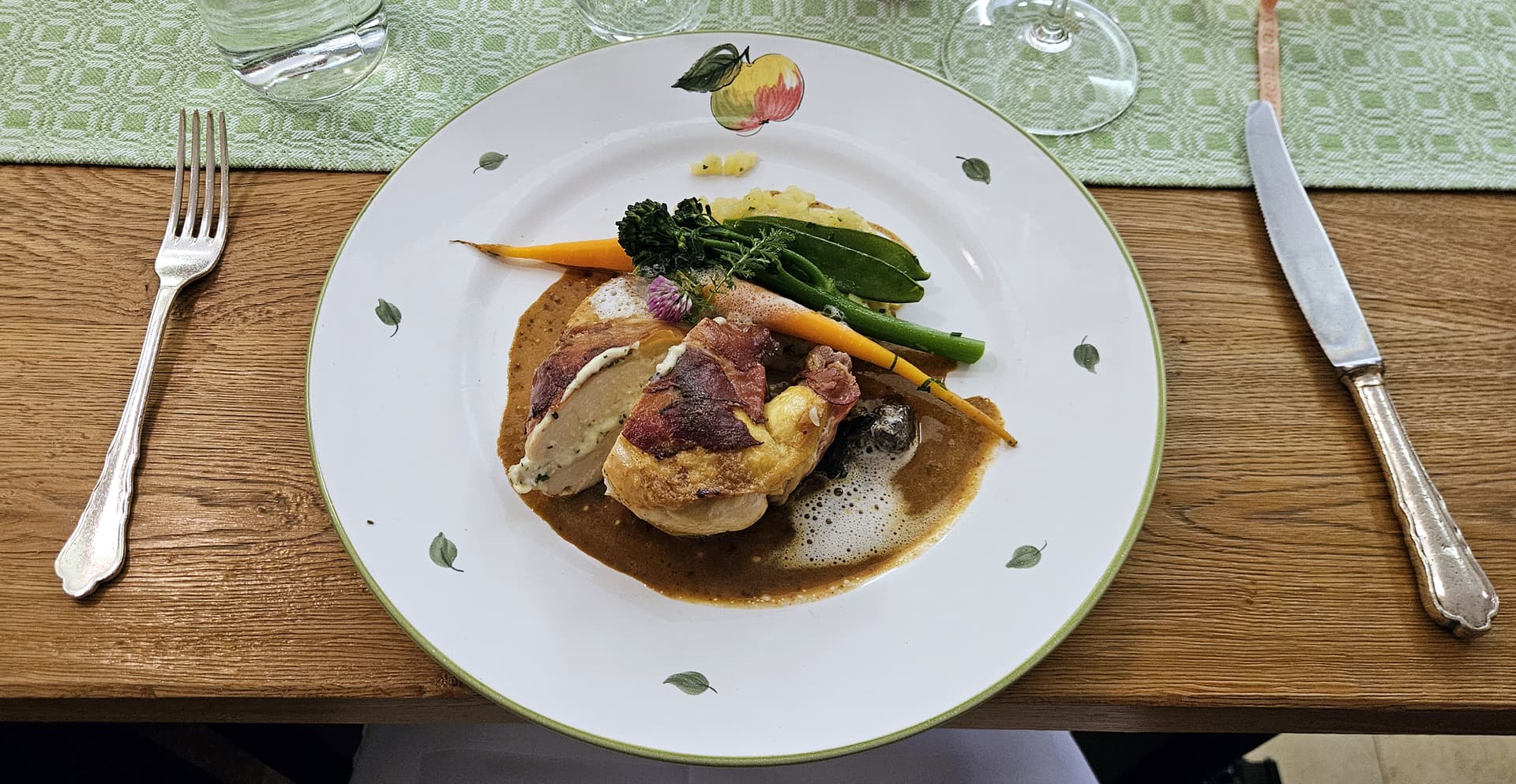
Landhendl
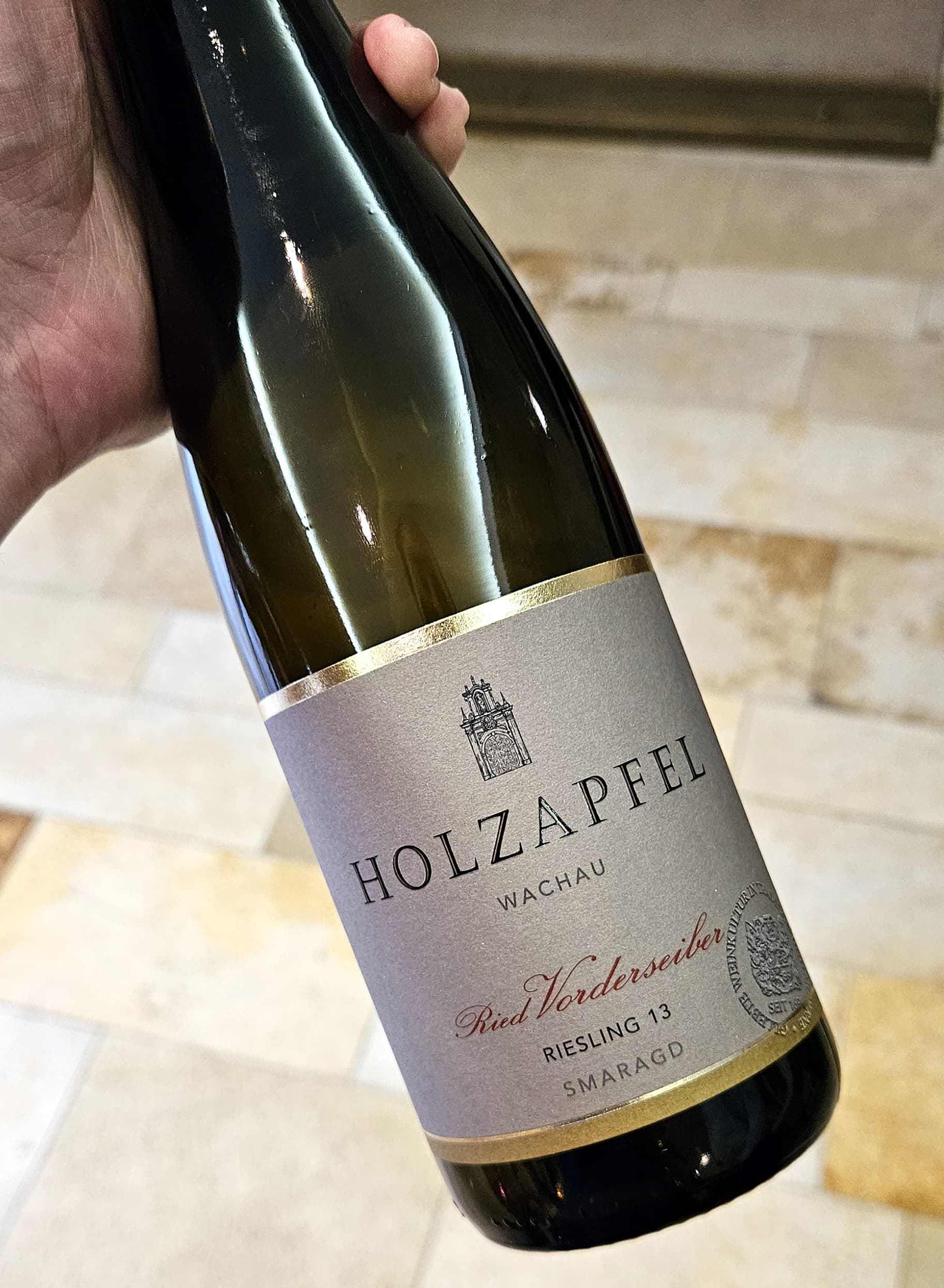
What we had with the food:
- 2013 Weingut Holzapfel Riesling Smaragd Vorderseiber - Austria, Niederösterreich, Wachau (14.4.2026)
100% Riesling from Ried Vorderseiber in Weissenkirchen. Cold-soaked with the skins for a few hours, then fermented in temperature-controlled tanks. Aged on the lees for half a year. 13% alcohol.
Medium-deep neon yellow-green color. The nose feels quite expressive and slightly evolved with aromas of ripe peach, some honeydew melon, light petrolly notes, a little bit of lemon marmalade, a hint of poached pear and a touch of stony minerality. The wine feels ripe yet dry and quite airy with a medium body and slightly evolved flavors of lemon marmalade, some petrolly notes, a little bit of honeydew melon, light crunchy notes of fresh nectarine, a hint of steely minerality and a touch of spicy red apple. The high acidity lends a good amount of freshness, balance and structure to the wine. The finish is ripe yet fresh and dry with a long, nuanced aftertaste of peachy stone fruits and beeswax, some stony mineral notes, a little bit of salinity, light petrolly tones, a hint of lemon marmalade and a touch floral spice.
A harmonious, attractive and pleasantly evolved Riesling. Not really a wine to blow your socks off, but a nice example of aged Smaragd that shows some ripeness, yet retains more than enough sense of freshness, focus and balance - something that does not seem given in the more recent - and somewhat warmer - vintages. Good stuff that is perfectly enjoyable already now, but will continue to develop and improve for at least a handful of years more. There are no hurries with this wine. Priced according to its quality at 85€ in a restaurant. (93 points)
5 Likes
Great to read that you and the group seemed to enjoy the visit and wines! I only tasted the more recent releases so the comparison with the ’19 was interesting to read. Like you, I thought the Klaus and Achleiten Rieslings in particular were very impressive. I’ll be back in the area in the Autumn so need to pick up some more…
1 Like
Nice! Any visits planned yet? And is it just a trip to visit wineries or for something else?
I’ll be working the harvest in the Kamptal this Autumn. I shall try to visit and taste as much as I can through the Niederösterreich regions just before and after that. Not sure where I’ll visit yet but shall certainly drop in at Roland Chan again.
Sounds excellent! Although Wachau was admittedly much more impressive place to see compared to the relatively flat Kamptal, I enjoyed wholeheartedly both our Kamptal visits and wished that we had had more visits there!
Birgit Eichinger is definitely worth a visit. Hands-down some of the best Grüner Veltliners on our trip, plus they make a terrific Roter Veltliner as well! Loved the visit and the vibe there.
Schloss Gobelsburg was a stunning place to see. They arrange only priced tours, but given the incredible premises and the breadth of the wines we got to taste, we all agreed it was really worth it. Easily among the best visits on our trip, if not the best. If you’re working the harvest in Kamptal, I can imagine the locals can talk you in so you don’t need to pay for the tour, though.
1 Like
Day 3 cont’d
After our lunch in Joching we had another very short transfer ahead: just a leisurely one-minute drive to the next town of Weißenkirchen in der Wachau, to check out how Weingut Prager was doing.

The Prager estate house in the back, the winery facilities to the right.
Almost immediately after we had parked our cars, Sophie Bodenstein arrived to welcome us like we were some old friends returning and not just a bunch of guys from half a Europe away, visiting the estate for the first time. She showed the winery courtyard a bit before taking us inside and leaving us in the hands of his husband, Robert Bodenstein, the youngest generation of Bodensteins now running the Prager winery.
Although the Prager name has always carried quite a bit of weight in Wachau - after all, they’ve been around for centuries, cultivating vines and making wine in Weißenkirchen, and Franz Prager was also one of the founders of Vinea Wachau in 1983 - I’ve felt that (at least in the circles I follow) they are not as talked about today than they used to be. I guess the same thing has happened to *Josef Jamek’ as well, another founding member of Vinea Wachau. I feel that of these Vinea Wachau founders, only Hirtzberger somehow has managed to remain quite relevant, but when it comes to Wachau as a whole, the focus has shifted to the other preeminent names like Knoll and FX Pichler, along with newcomers like Veyder-Malberg. Of course Domäne Wachau (whose then-director was one of Vinea Wachau’s founders) still remains one of the world’s best co-operatives.
However, even if the Prager name might not be that relevant today, I felt it was nevertheless important to check out how they were faring - and I’m more than glad we did! We did not have time for any vineyard tours (nor did we have weather on our side that day, either), but Robert Bodenstein still went through some history of the winery along with interesting tidbits and anecdotes about their winemaking and viticulture while letting us sample the newest vintages of Prager’s wines.
- The Prager estate was founded already in 1715 in Weißenkirchen - the very same town they are located even today. The estate itself is much older - believed to date from the 14th century.
- The last Prager to run the estate was Franz Prager, one of the founding members of Vinea Wachau. In the early 1990’s Prager retired, leaving the estate to the hands of his son-in-law, dr. Toni Bodenstein - although Prager’s daughter and Bodenstein’s wife, Ilse was naturally running the estate as well.
- Dr. Bodenstein is a trained geologist, and under his guidance, Prager expanded their holdings in some premium vineyards near Weißenkirchen. Today the estate covers around approximately 18 hectares (45 acres), mostly in prime high-altitude vineyards in and around Weißenkirchen.
- The vineyards are planted to only two local varieties: Riesling (60%) and Grüner Veltliner (40%). Most of the vineyards are planted to 5-10 different clones, but there is one exception - in 1997 dr. Bodenstein planted a very high-altitude vineyard (at approximately 450 m above sea level) with a massal selection of approximately 25 Riesling clones as a nursery vineyard. Later he planted another section of the vineyard to more than 110 (!) different clones of Grüner Veltliner, training the vines with the traditional stockkultur method, where the each vine is trained in a stake - quite similar to what you can see in Côte-Rôtie. The two wines made from these two varieties are bottled under the Wachstum Bodenstein label.
- Another distinctive vineyard with Prager holdings is the esteemed Achleiten vineyard; one of the parcels they own is located on the top of the vineyard, planted to very old stake-trained vines from 1938. In the mid 2000’s Bodenstein began to bottle this parcel separately under the Stockkultur label.
- The typical yield in these vineyards is approximately 4000 to 6000 kg / ha, depending on the vineyard and the vintage. However, the Stockkultur parcel averages at around 3500 to 5000 kg / ha. Although the harvest can occur quite late, their style is always very clean, fresh and mineral. The grapes are picked in multiple successive tries and any botrytis-infected grapes are eliminated.
- Typically the grapes are whole-bunch pressed, but normally earlier-harvested grapes destined for Federspiel and Steinfeder level wines are destemmed.
- Somewhere in the late 1990’s to early 2000’s Bodenstein made a switch to vinifying and aging the wines exclusively in stainless steel tanks. Traditionally the wines were fermented spontaneously, but since 2014 they have employed a method described as “controlled spontaneous fermentation” - meaning that the wines ferment spontaneously, but normally are inoculated with selected yeasts to ensure reliable ferments to full dryness. MLF is always blocked. The wines are not aged for particularly long in tanks, but instead are bottled approximately 6 to 9 months after the harvest.
- Robert Bodenstein, son of Toni and Ilse, has been responsible for the wines since 2019, along with his wife, Sophie.
- Approximately about half of Prager’s production is exported and half sold in Austria.
While discussing the wines and patiently listing their technical details to us, Robert told us lots of other interesting tidbits - such as how in 2002 Danube flooded, and the level of water rose so high that the tasting room we were in was filled with water!
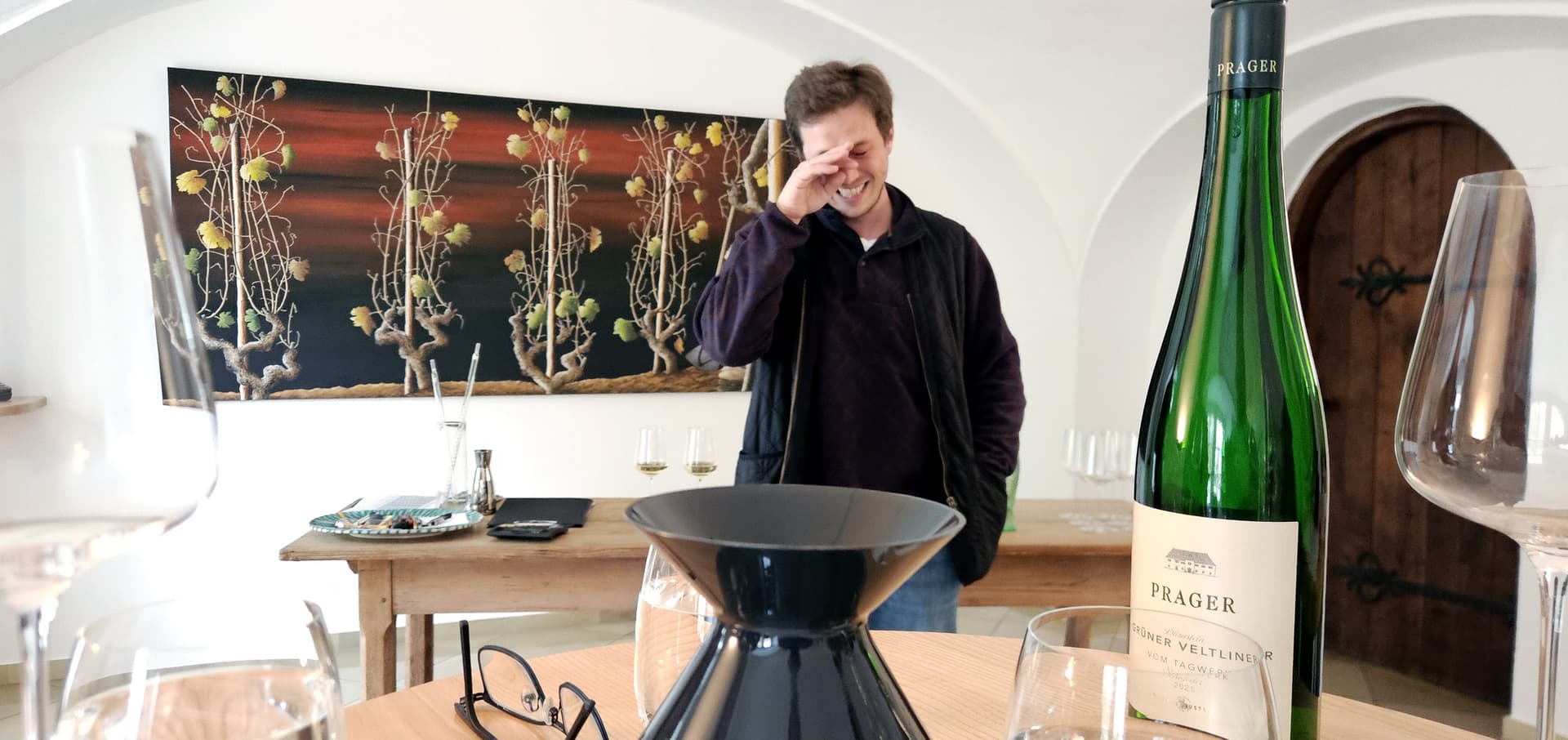
Robert Bodenstein going at it.
Robert also mentioned how he expects the 2021 vintage to be similarly exceptional vintage as 1990. When we asked why, he told us how after the crush they normally see must browning in the fermentation vats. However, his father told him that in 1990, the must didn’t turn brown at all - and it turned out to be an exceptional vintage. In 2021 that happened again - although they were expecting to see some must browning and letting these oxidized compounds fall out from the solution, nothing happened. The musts didn’t turn dark. But I guess only time will tell if this is going to be a coincidence, or if there is something behind all this!
Another interesting fact was that Weingut Prager actually produces all their energy needs with their solar panels. Not only that, but they actually produce double the energy than what they need!
And finally, the wines. Especially with the Rieslings, the style here was quite different from what we had at other wineries; the Prager style is definitely much leaner, more mineral and despite any late harvests, surprisingly modest in ripeness! Compared to the bolder fruit profiles seen at other wineries, these wines were less flashy and maybe even somewhat more neutral in character. The levels of alcohol stayed at quite modest levels in most wines - they had actually managed to make one Steinfeder in 2025 - and even in Smaragd Rieslings the acidities were wonderfully high! With Grüner Veltliner there seemed to be a bit more variation. However, I guess my biggest problem with the wines was that they are released so young; at this point the wines are still quite heavily dominated by those candied, estery fermentation aromas, so it was often quite difficult to see past it to get a full picture of the wine and its potential. But I tried my best!
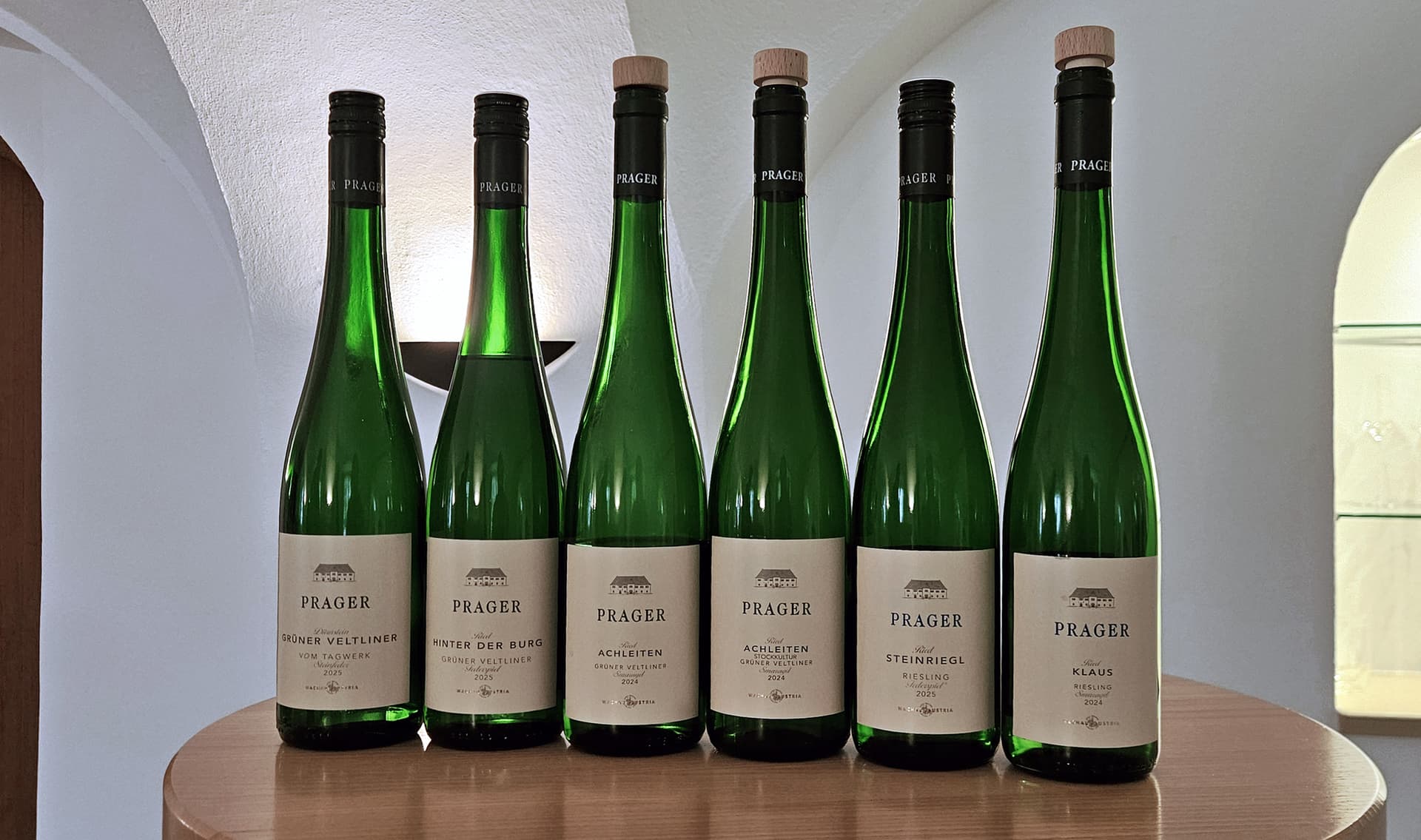
We also tasted one tank sample from a 2025 Smaragd after Robert told us how the 2025 vintage seemed very promising and the Smarags were showing tons of potential. However, tasting bottled Smaragds was impossible, since the law allows Smaragds to be bottled only after the 1st of May following the harvest - we were a few weeks too early to be able to sample these wines!
- 2025 Prager Grüner Veltliner Steinfeder vom Tagwerk - Austria, Niederösterreich, Wachau (14.4.2026)
100% Grüner Veltliner from hand-harvested parcels in Dürnstein. Harvested on October 10th. Fermented with inoculated yeast, aged in stainless steel tanks. 11% alcohol. Total production 5000 bottles.
Pale whitish-green color. The nose feels very youthful with expressive aromas of primary grapey fruit and sweet herby tones, some ripe Golden Delicious apple, a little bit of honeyed richness, light fermentation aromas of pear drops and a hint of fresh white peach. The wine feels clean, lively and playful on the palate with a light body and very youthful flavors of fresh pear and steely minerality, some crunchy Fuji apple, light stony mineral notes, a little bit of grapey primary fruit and pear drops and a herby hint of almost pilsner-like noble hops. The high acidity lends a good amount of freshness and energy to the wine. The finish is youthful, crisp and lively with a rather long aftertaste of steely minerality and ripe pear, some grapey primary notes, a little bit of hoppy herbal character, light pear drop tones and a hint of wet rocks.
A nice, fresh and clean little Grüner Veltliner with a very airy and playful overall feel. However, the wine is still dominated quite noticeably by the candied fermentation aromas of pear drops and sweet, grapey fruit, which seem to overwhelm most of the finer nuances. Although this is not a big and impressive wine meant for long-term cellaring, I think the wine could benefit a lot from additional 2 to 4 years of aging, so that it would lose those estery and rather in-your-face fermentation aromas and flavors. With its bright acidity, vibrant fruit and cool mineral core, I have no doubts the wine will not only keep, but also develop and improve for at least another 5 years or so. Expect the score to go up as the wine ages. Solid value at 16€.
(89 points) - 2025 Prager Grüner Veltliner Federspiel Hinter der Burg - Austria, Niederösterreich, Wachau (14.4.2026)
100% Grüner Veltliner hand-harvested from Ried Hinter der Burg, a rather large vineyard immediately next to the town of Weissenkirchen. Fermented with inoculated yeast, aged in stainless steel tanks. 12,5% alcohol.
Pale whitish-green color. The nose feels very youthful and a bit reductive with aromas of white peach, some sweet herbal notes, a little bit of rubbery reduction, light primary notes of pear drops, a hint of ripe red apple and a spicy touch of white pepper. The wine feels quite rich, moderately ripe and pretty harmonious on the palate with slightly sweetly-fruited flavors of peachy stone fruit, some honeydew melon, light mineral notes of wet rocks and salinity, a little bit of ripe pear and red apple, a hint of sweet herbs and a touch of floral spice. The high acidity lends a good amount of freshness, structure and precision to the wine. The finish is ripe, lively and quite crunchy with a juicy aftertaste of pear and herby spices, some ripe Granny Smith apple, light peppery tones, a little bit of honeydew melon, a hint of tangy salinity and a touch of steely minerality.
Although the wine seems to show quite a bit of ripeness and even some sense of concentration, the wine is - true to a proper Federspiel style - wonderfully fresh, lively and precise. Stylistically the wine feels very similar to Prager's 2025 Steinfeder GV we tasted right next to this wine, only showing a bit more ripeness, sense of weight and subtly more sweeter-toned fruit. However, the more important aspect was that the wine was not nearly as primary and candied in overall feel compared to the Steinfeder, which was still super primary in style. A well-made and harmonious Grüner Veltliner that is still very youthful and will definitely improve with additional aging. Priced according to its quality at 24€.
(91 points) - 2024 Prager Grüner Veltliner Smaragd Ried Achleiten - Austria, Niederösterreich, Wachau (14.4.2026)
100% Grüner Veltliner hand-harvested from Ried Achleiten, one of the most famed and - with its imposing hillside terraces - immediately recognizable vineyards in Wachau. Fermented with inoculated yeast, aged in stainless steel tanks. 13,5% alcohol.
Pale lime-green color. The nose feels juicy, moderately ripe and a bit reductive with aromas of white peach, some sweet Fuji apple, light gunpowdery notes of reduction, a little bit of honeydew melon and a hint of spice. The wine feels crisp and quite saline on the palate - although the crisp quality seems to fade away, suggesting the wine was bottled with a tiny dose of CO2 - with a rather full body and somewhat sweet-toned flavors of white peach and ripe pear, tangy salinity, some honeydew melon, light stony mineral notes, a little bit of spice, a primary hint of grapey fruit and a touch of smoky reduction. The medium-to-moderately high acidity manages to keep the wine is balance, but such a ripe wine could use a bit more freshness and structure. The finish is juicy, vibrant and rather long with a quite ripe aftertaste of stone fruits like fresh nectarine and white peach, some apple jam, light peppery notes of spices, a little bit of stony minerality, a youthful hint of pear and a touch of smoky reduction.
A rather big, bold and quite ripe Grüner Veltliner. Not much thrill of frill here, just quite a bit of fruit and a nice dose of saline minerality. Evolution-wise the wine seemed to be more or less at the same spot as the 2025 GV Federspiel Hinter der Burg, meaning that the wine is still very youthful and could use some aging. Admittedly the wine showed good sense of freshness and focus at first, but I think it was just an illusion from the tiniest bit of CO2 tingle on the tongue, as the wine turned rather big and ripe quite quickly in the glass - and it was not just from the wine warming up. An enjoyable effort, but I prefer wines with a bit more freshness and zip. Starting to feel rather pricey for the quality at 45€.
(91 points) - 2024 Prager Grüner Veltliner Stockkultur Smaragd Ried Achleiten - Austria, Niederösterreich, Wachau (14.4.2026)
100% Grüner Veltliner hand-harvested from the highest parts of the already steep Ried Achleiten, where Prager farms a parcel in the traditional way of training the vines on to single stakes ("stock"). Fermented with inoculated yeast, aged in stainless steel tanks. 14% alcohol.
Pale lime-green color. The nose feels quite ripe yet still pretty dry and slightly restrained with nuanced aromas of peppery spice, some smoky reductive notes, a little bit of chalky minerality, light sweeter notes of ripe pear, a hint of fresh nectarine and a touch of cantaloupe. The wine feels moderately crunchy, quite ripe and moderately concentrated on the palate with a rather full body and quite intense flavors of fresh Fuji apple, some saline mineral notes, a little bit of kiwifruit, light rubbery and smoky nuances of reduction, a hint of honeydew melon and a touch of peppery spice. The overall feel is harmonious and quite impressive - although the rather high alcohol does show a bit. The high acidity lends a good amount of freshness, structure and intensity to the wine. The finish is ripe, slightly warm and a bit sweetly-fruited with a long aftertaste of cantaloupe, some juicy Golden Delicious apple, a little bit of saline minerality, light youthful notes of ripe pear, a hint of kiwifruit and a touch of herby spice.
An impressive powerhouse of a Grüner Veltliner, showing great intensity and sense of concentration without coming across as soft and heavy as some Smaragds. The only downside here is the high alcohol that shows a little bit, especially as the wine warms up in the glass. Otherwise this is a delightful and serious effort that will most likely not just keep but also evolve and improve for another decade or even more. A considerable leap up from the similarly ripe but somewhat sweeter, softer and more fruit-forward "regular" Ried Achleiten Grüner Veltliner. Priced according to its quality at 47€.
(93 points) - 2025 Prager Riesling Federspiel Steinriegl - Austria, Niederösterreich, Wachau (14.4.2026)
100% Riesling hand-harvested from Ried Steinriegl looming above the town of Weissenkirchen. Fermented with inoculated yeast, aged in stainless steel tanks. 12% alcohol.
Pale yellow-green color. The nose feels very youthful and almost like a tank sample with its super-primary aromas of grapey fruit and estery fermentation notes reminiscent of pear drops, supported by lighter nuances of lemon curd and some appley fruit. The wine feels firm, lean and quite high-strung on the palate with a light body and bone-dry flavors of lemony citrus fruits, some sharp Granny Smith apple, a little bit of grapey fruit, light steely mineral notes, a hint of pithy grapefruit and a touch of apple peel bitterness. The brisk, incisive acidity lends a great amount of lively energy and structure to the wine. The finish is long, crisp and bone-dry with a rather long, palate-cleansing aftertaste of lemony citrus fruit, some primary notes of pear drops, a little bit of tart Granny Smith apple, light steely mineral notes and a hint of sweet grapey fruit.
A remarkably brisk, lean and incisive example of Wachau Riesling - I feel it has been harder and harder to find this kind of steely Riesling during the past ten years or so. This tastes more like the Wachau I used to know - apart from the super primary fruit aromas and flavors that honestly make the wine feel more like a tank sample rather than a ready, bottled wine. This Riesling shows lots of promise, but at the moment it feels so painfully young that I'd let the wine wait sideways for many years more. Expect the score to go up as the wine ages. Priced according to its quality at 24€.
(89 points) - 2024 Prager Riesling Smaragd Klaus - Austria, Niederösterreich, Wachau (14.4.2026)
100% Riesling from Ried Klaus, one of the most famed (and steepest) vineyards in Wachau. Fermented with inoculated yeast, aged in stainless steel tanks. 13% alcohol.
Medium-deep yellow-green color. The nose feels wonderfully fragrant and quite expressive with aromas of stony minerality and floral apple blossom tones, some grated lemon peel, a little bit of appley fruit, light notes of yuzu, a hint of chalk dust and a touch of fragrant spices. The wine feels moderately ripe but also surprisingly crisp, lean and high-strung on the palate with a medium body and intense, dry flavors of lemony citrus fruits and sharp Granny Smith apple, some pithy grapefruit bitterness, a little bit of stony and chalky minerality, light sweeter notes of lychee, a perfumed hint of apple blossom and a touch of tangy salinity. The brisk, racy acidity lends a great amount of freshness, structure and precision to the wine. The finish is crisp, dry and lively with a long aftertaste of ripe lemony citrus fruit and zesty grapefruit, some mineral notes of wet rocks, a little bit of apple peel bitterness, light notes of yuzu, a hint of floral spice and a touch of tangy salinity.
A very crisp, impressive and quite dead-serious Wachau Riesling that is wonderfully lean and precise for a Smaragd. The wine seems to show more ripeness than Prager's Federspiel Riesling, but in terms of overall feel, I've had a good number of Federspiel Rieslings from other producers that have shown more ripeness than this wine. And I love this wine for it; when I'm drinking a Riesling, I want zesty citrus fruits, minerality and piercing acidity - not elevated ripeness, rich fruit flavors and big body. The overall feel is still quite youthful, but fortunately not primary. Nevertheless, I feel the wine could benefit from at least a handful of years sideways. Fine stuff, priced according to its quality at 47€.
(93 points) - 2025 Prager Riesling Smaragd Ried Achleiten - Austria, Niederösterreich, Wachau (14.4.2026)
A tank sample - it is not allowed to bottle Smaragd wines before the 1st of May following the harvest. 100% Riesling hand-harvested from Ried Achleiten, one of the most famed and - with its imposing hillside terraces - immediately recognizable vineyards in Wachau. Fermented with inoculated yeast, aged in stainless steel tanks.
Pale whitish-green color. The nose feels leesy, grapey and super-youthful with some floral notes, a little bit of stony minerality, light estery notes of pear drops and a hint of spicy red apple. The wine feels crisp, lean and bone-dry on the palate with a medium body and primary flavors of leesy yeast, some key lime, a little bit of stony minerality, light primary notes of pear drops and sweet grapey fruit, a hint of apple peel bitterness and a touch of tangy salinity. The brisk, racy acidity lends a great amount of freshness, structure and focus to the wine. The finish is crisp, long and lean with a very dry aftertaste of sharp Granny Smith apple, some key lime, a little bit of leesy yeast, light lemony notes, a hint of stony minerality and a touch of pear drops.
A very brisk, youthful and classy Smaragd Riesling showing a tremendous amount of freshness and energy. The overall feel is still very primary, and I guess the leesy qualities come from the wine being a tank sample, not a finished wine. Even then, the wine shows lots of promise and 2025 seems to be a great vintage for fresh, acid-driven Smaragd Rieslings in Wachau. As usual, I don't rate tank samples, but based on this sample, I'd say that upon release, this would be 92-93 in my books - with lots of upside. A fine Smaragd Riesling with tons of potential. Recommended.
After the visit some of us purchased some wines - however, they were quite low on stock, since most wines were already sold out at the estate, and these were the last days before they would be able to bottle to bottle the newest vintage of Smaragd wines.
From Prager we returned to Krems to rest up a little bit before dinner. However, on our way back to Krems we did stop to admire the famous vineyards of Klaus and Achleiten for a bit.
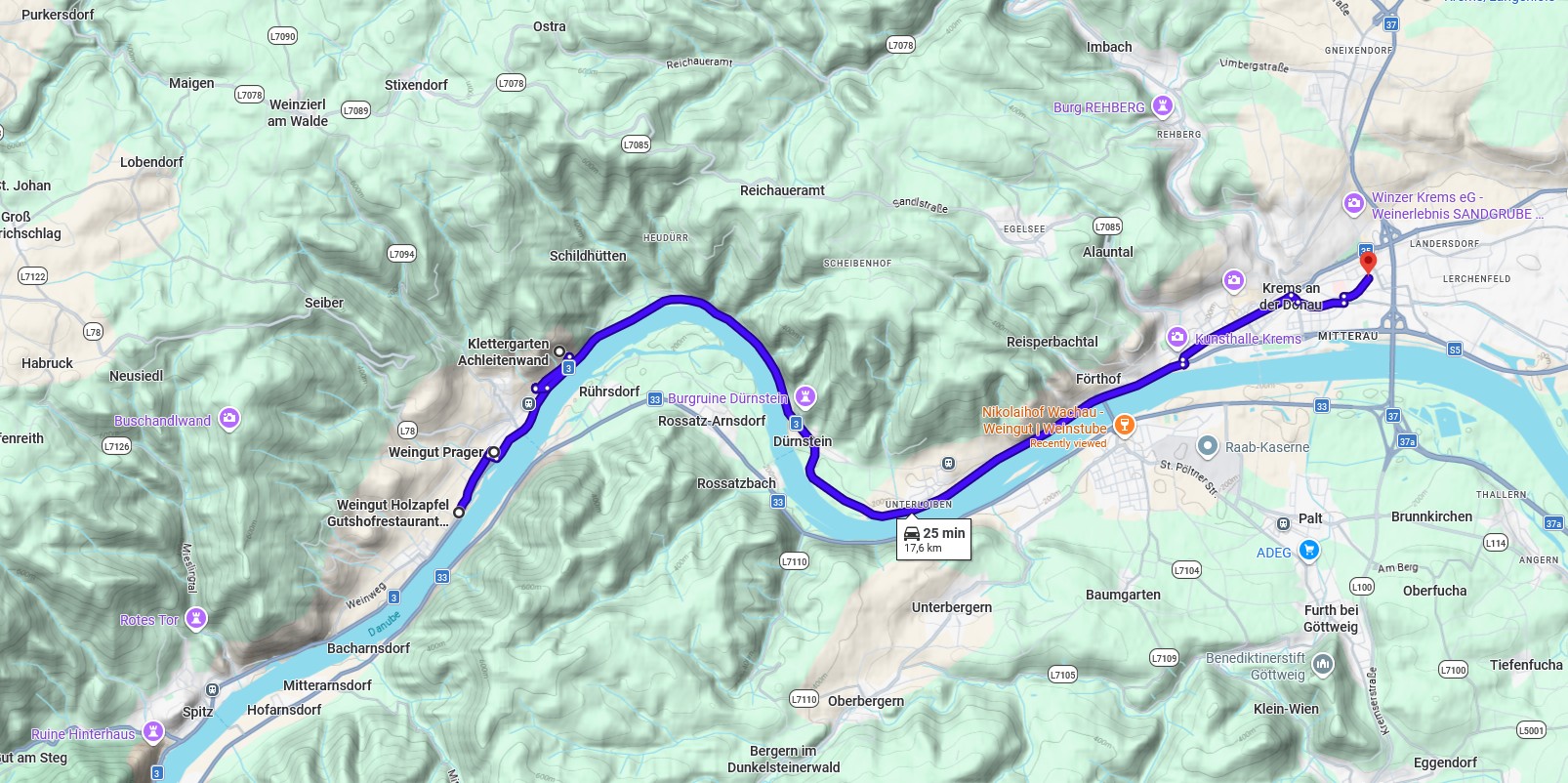
Our trip from Holzapfel to Prager, Ried Achleiten, and finally back to Krems.
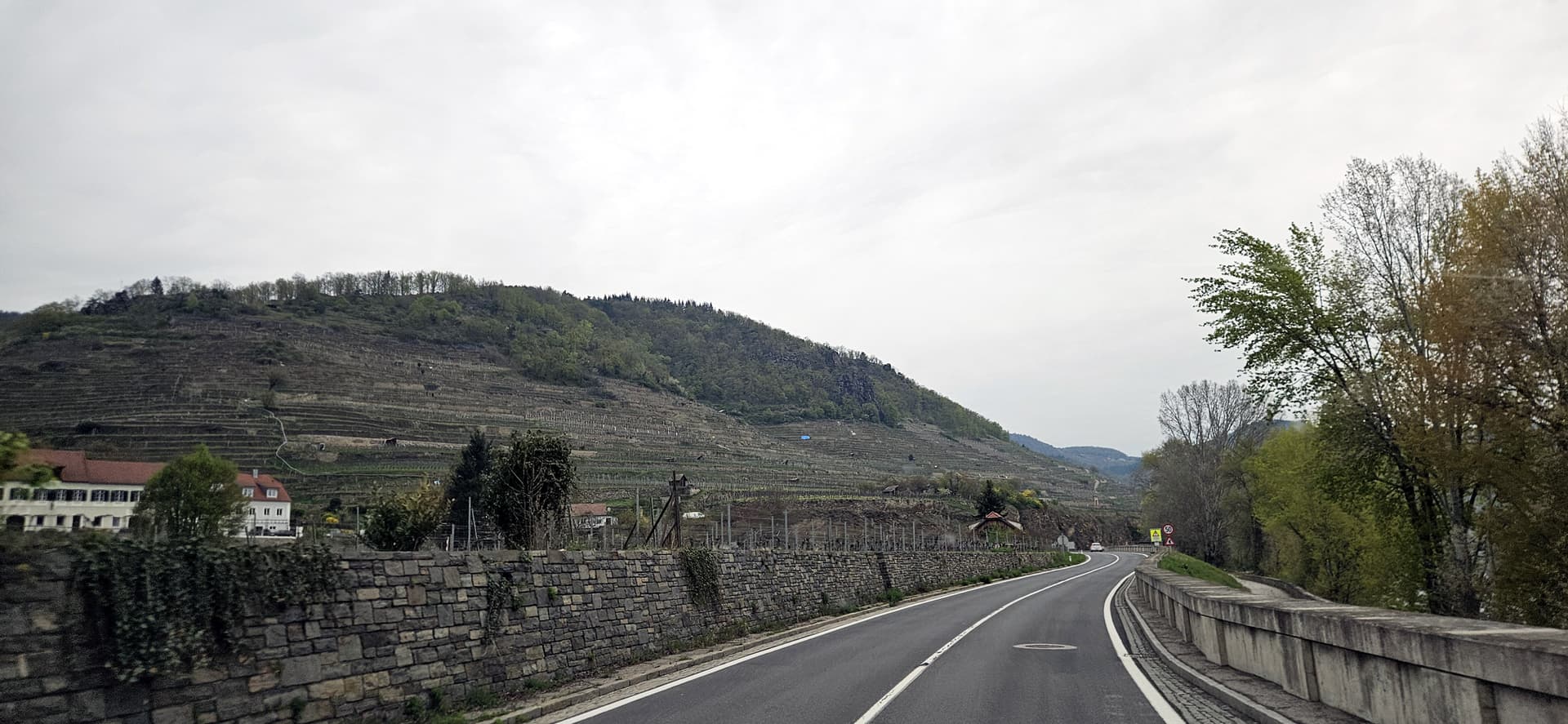
Ried Achleiten, as seen from Weißenkirchen.
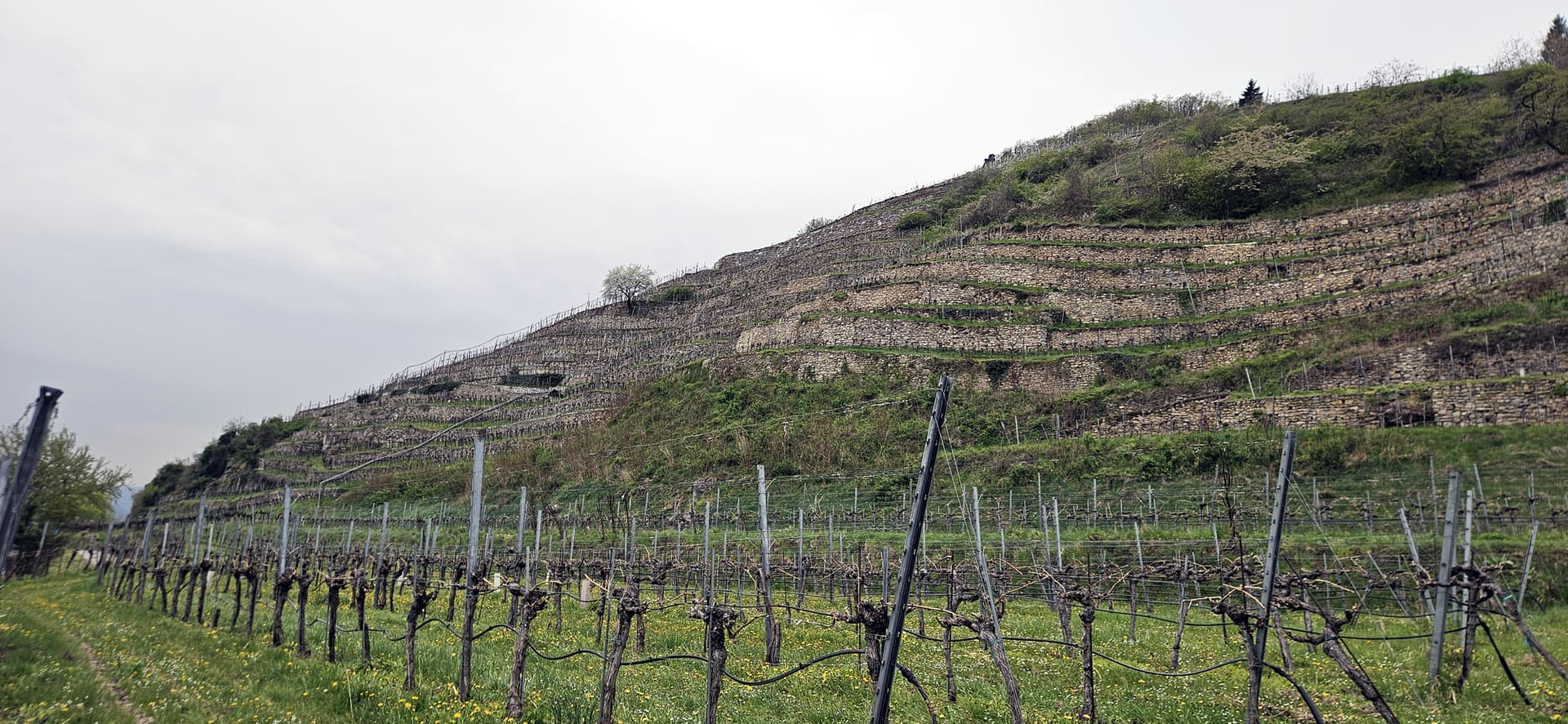
At the foot of Ried Klaus.
After chilling out a bit at the Aigner guesthouse, most of our group left on a small trek through the Krems suburbia to the city center, just to see if any restaurants were open on Tuesday evening. Fortunately we managed to find one that seemed quite promising - MarktSpiel.
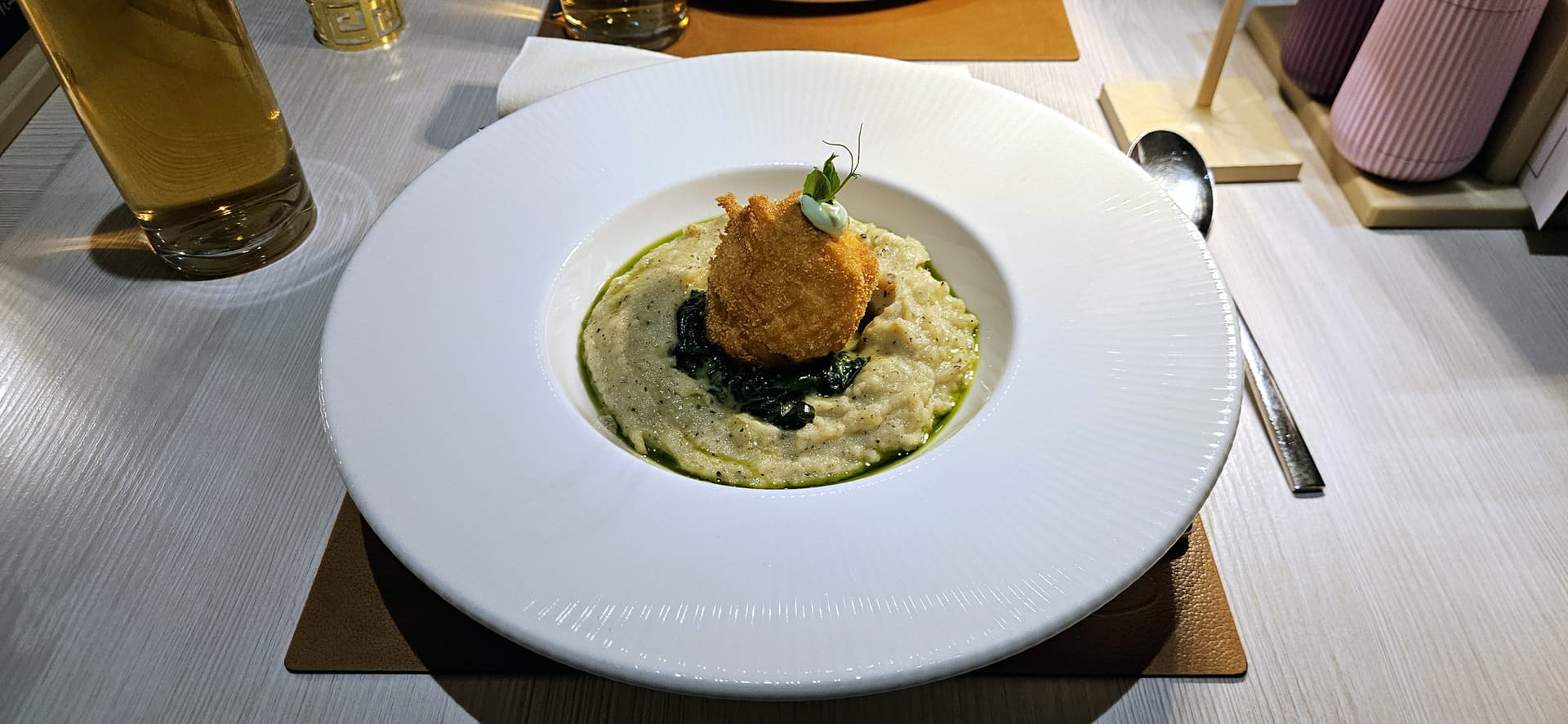
Baked egg.
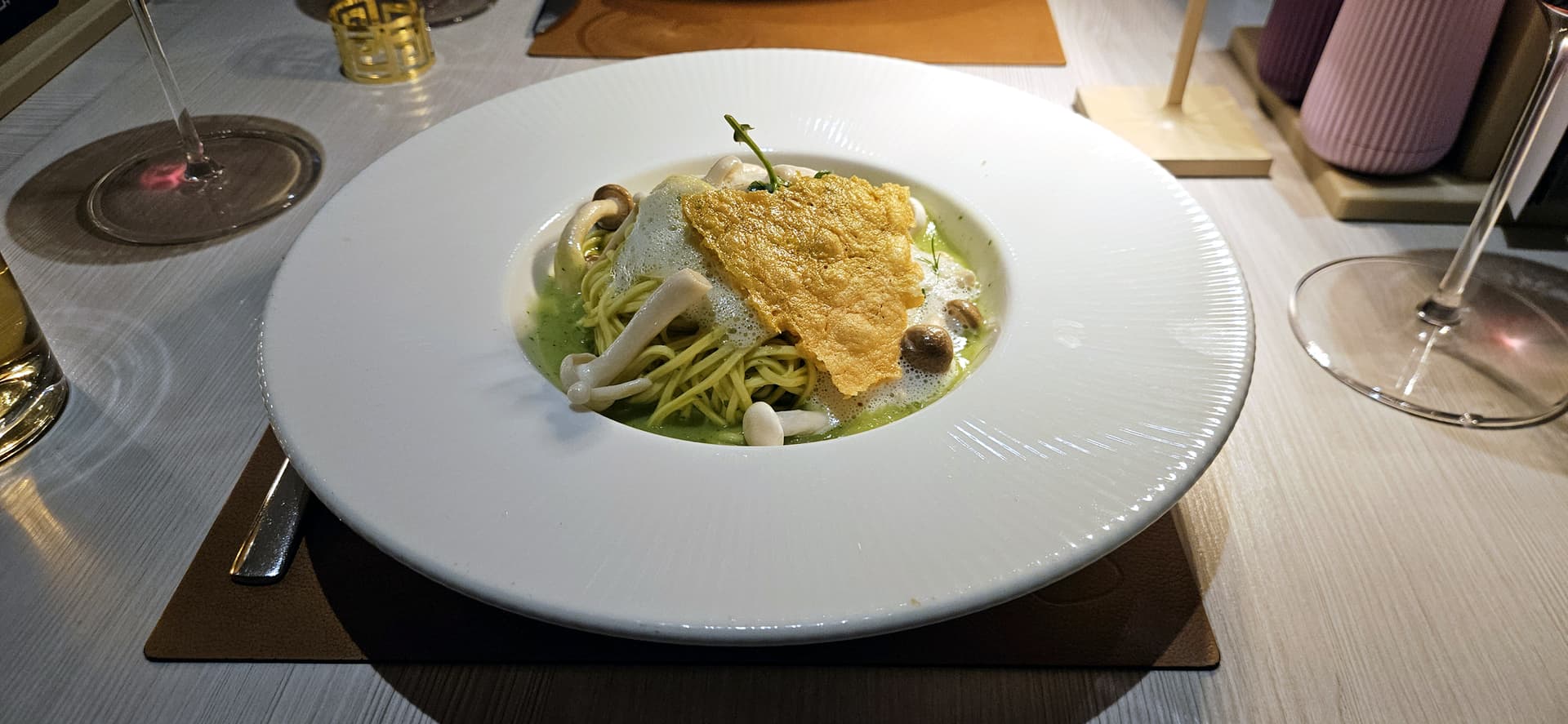
Wild garlic tagliolini with mushrooms.

One of our wines.
- 2021 Schloss Gobelsburg Cuvée Bertrand - Austria, Niederösterreich, Kamptal (14.4.2026)
A blend of Pinot Noir, St. Laurent and Zweigelt. The separately vinified wines are aged in 600-liter Austrian oak casks, then blended together and aged in an old 2500-liter oak fuder for another year. 13% alcohol.
Moderately translucent and rather deep cherry red color. The nose feels youthful and moderately dark-toned with aromas of ripe black cherries, some brambly black raspberry tones, a little bit of smoky spice - toasty oak? - and carob, light primary notes of sweet and almost candied red-toned fruits and a hint of peppery spice. The wine feels youthful and dark-toned on the palate with a medium body and vibrant flavors of ripe black cherries, some dark plummy tones, a little bit of dark-toned spice and smoke, light black raspberry notes and primary hints of blueberry juice and dark grapey fruit. The wine is quite high in acidity with balanced, round medium tannins. The finish is dark-toned, smoky and slightly sweet-toned with a quite long aftertaste of black raspberries, some black cherry tones, a little bit of dark plummy fruit, light notes of wood and roasted carob, a hint of smoke and a touch of peppery spice.
A youthful, a bit sweet-toned and slightly polished Austrian red wine. I wonder if the smoky and somewhat sweet-spiced notes were toasty oak tones - seeing how most Gobelsburg wines I've tasted have shown relatively little oak character - or if that was just spicy Pinot Noir and St Laurent character? Anyways, this was a pleasant effort, but nothing particularly thrilling or memorable. A nice little food wine, I'll give it that. Priced according to its quality at 5,70€ for a glass in a restaurant.
(88 points) - 2021 Nittnaus Pannobile - Austria, Burgenland, Neusiedlersee (14.4.2026)
A blend of biodynamically farmed Blaufränkisch (90%) from Ungerberg in Gols, and Zweigelt from Leithaberg (10%) in Jois. Fermented spontaneously. Aged for 22-23 months in 500-liter oak casks. 13,5% alcohol.
Deep, dark and moderately opaque blackish-red color. The nose feels dark-toned and rather savory with quite attractive aromas of blueberries, some ripe blackberries, a little bit of earth, light fragrant notes of chopped parsnip, a hint of fresh black cherry and a touch of strawberry. The wine feels ripe, succulent and subtly wild on the palate with a rather full body and vibrant flavors of sweet blackberries and juicy black cherries, some gravelly mineral tones, a little bit of earth, light lifted notes of nail polish VA, a hint of fresh bilberry and a subtle (and not green) touch of grated root vegetables. The wine is enjoyably firm and structured with its high acidity and moderately grippy medium-plus tannins. The finish is ripe, dark-toned and moderately grippy with a long aftertaste of black cherries, some gravelly mineral tones, a little bit of brambly black raspberry, light crunchy notes of red plums, a woody hint of old oak spice and a lifted touch of sweet VA.
A youthful, sophisticated and pretty serious Burgenland red with bright fruit flavors and good sense of structure. There's a little bit of funk that points out to the biodynamic upbringing of the wine, but the overall feel is nevertheless enjoyably clean and vibrant - even for people who don't like their wines particularly "natural". I guess the wine might evolve and improve with further cellaring, but I don't feel the wine necessarily calls for any additional aging - it is in a perfectly good spot already now. Solid value at 39€ in a restaurant.
(91 points)
9 Likes
Thanks for the excellent write up, Otto. It sounds like a great trip! When they are on, Nikolaihof’s wines are captivating. Stylistically, I prefer the lean style of Prager to any other Austrian producer.
2 Likes
I’m with you on both points - although there are so many great producers in Austria that I personally wouldn’t rank Prager over all the others! But definitely in the top echelon.
I’ve still a couple of Ried Achlieten and Klaus Riesling from 1993. These seem immortal.
1 Like
I have some 2000’s. The Klaus generally shows better than the Achleiten. Both are fully mature.
1 Like
appreciate the in-depth look at Prager, one of my favourite producers, really enjoyed the full read Otto. Many thanks.
1 Like
Day 4
As we were staying in the city of Krems, I thought it was only appropriate for us to check at least one winery in the namesake wine region, Kremstal, as well. We decided to go with Weingut Nigl, often considered to be in the top echelon of the region’s producers - if not even the number one.
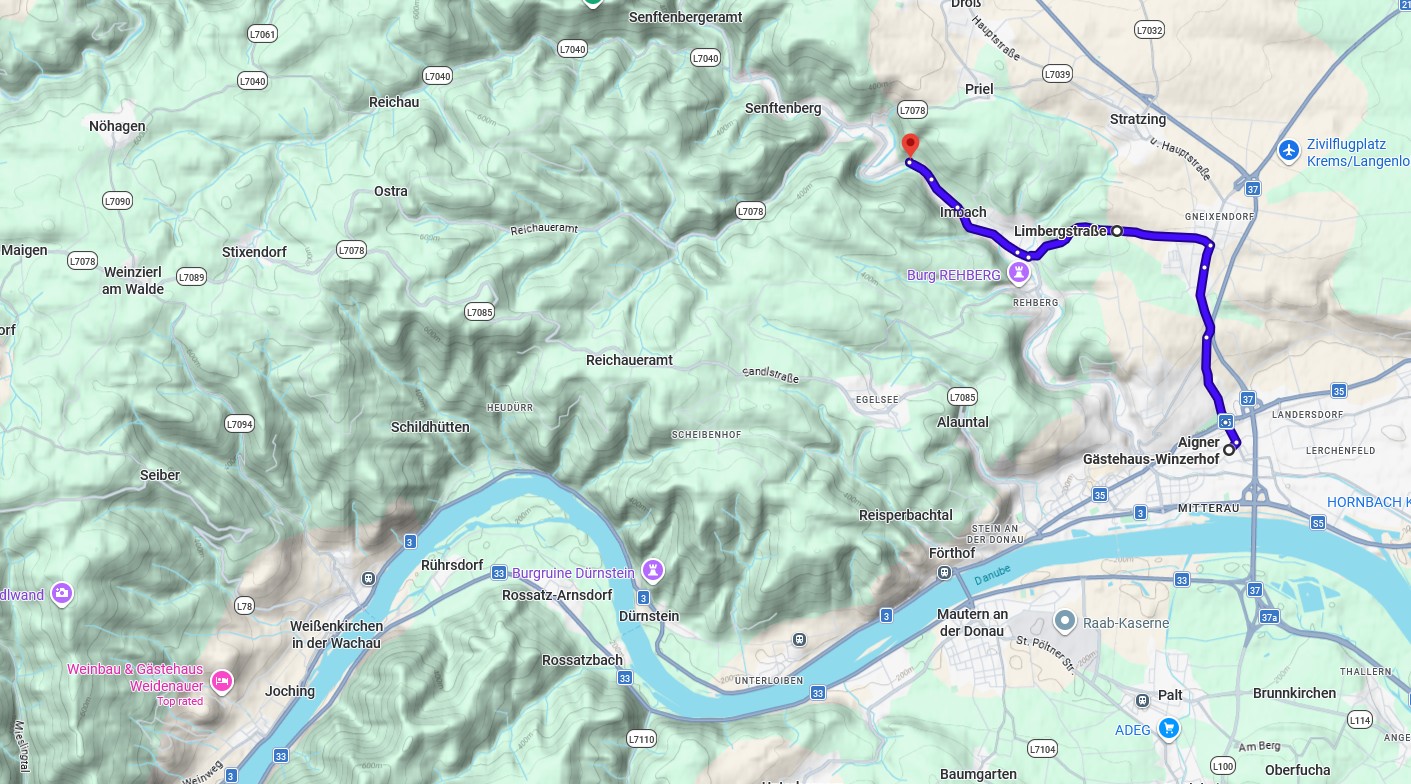
So, after our breakfast at our gasthaus in Krems, we once again boarded our vans and this time headed towards Senftenberg, a small town on the banks of river Krems - well, it’s more like a glorified stream, at least if compared to the mighty Danube, to which Krems flows into!
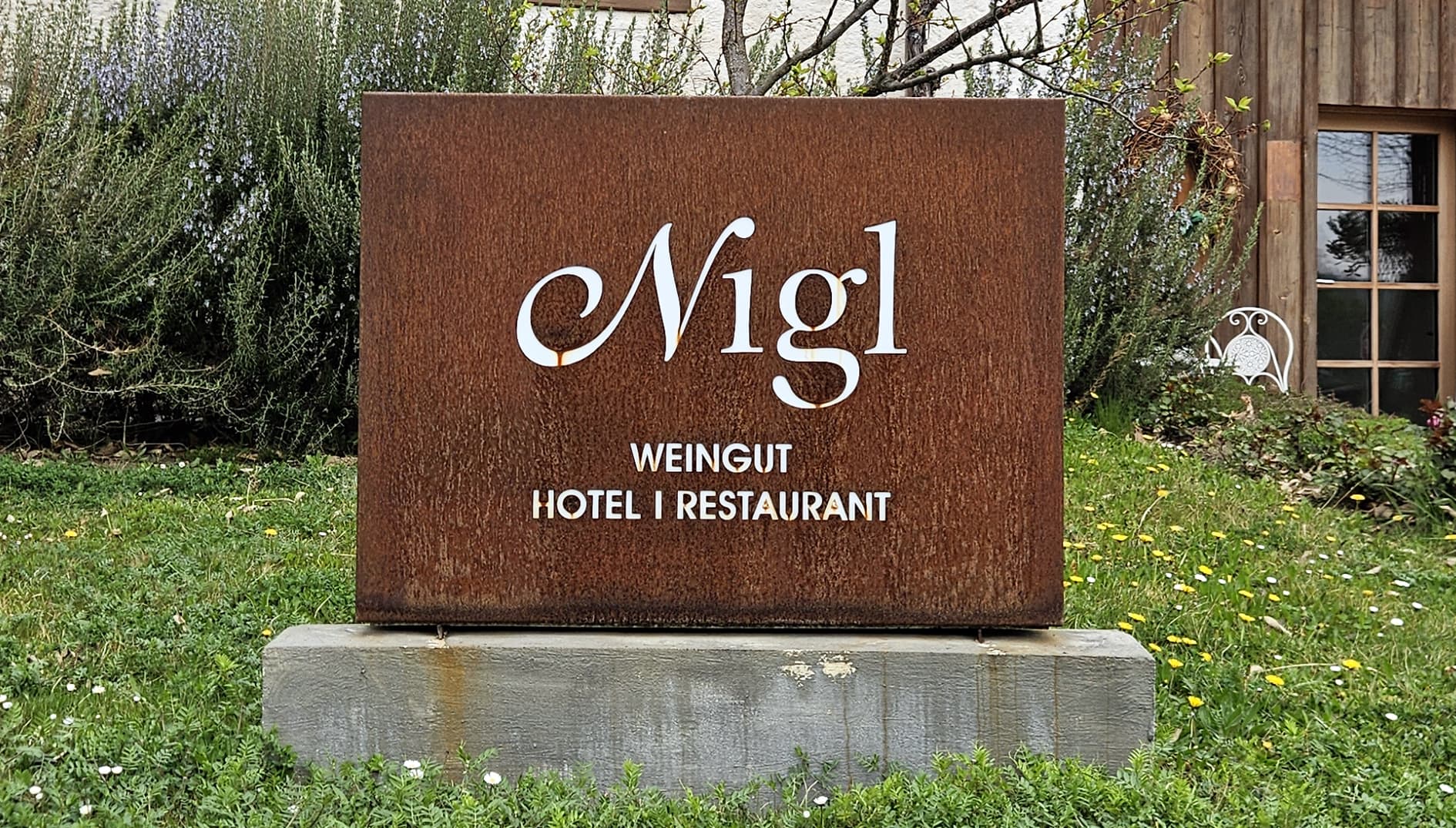
Anyways, moments before we’d reach the town of Senftenberg, we arrived at the hotel-restaurant of Nigl after about 10-15 minutes of driving to the north-northwest. The building is located immediately below the Burgruine Senftenberg, a 11th-century castle surrounded by steep vineyards that has been in ruins since 1645, when the Swedish forces sacked the castle and set it on fire.
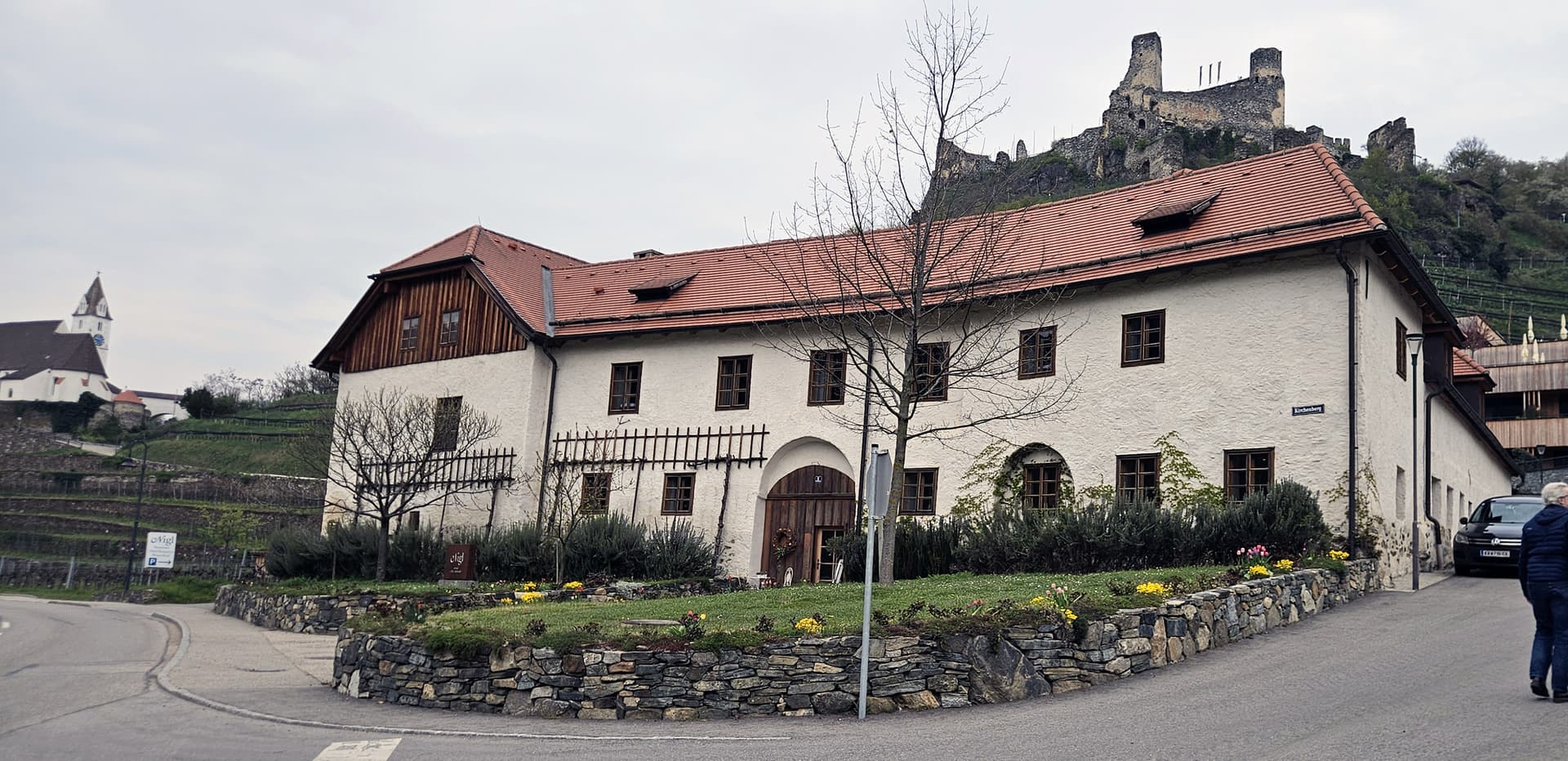
The Nigl winery-hotel-restaurant; castle ruins above, and the Senftenberg church to the left.
We were welcomed by Anna Nigl, a member of the youngest generation at the winery - and a most wonderful hostess for the tasting! I must admit that at many other, older wineries, many people have been a bit more serious and more self-conscious about their history. Anna, on the other hand, was the most un-serious hostess we had; whenever we cracked any jokes on Austria or on the local wines, she easily doubled down on us with japes of at least similar level! All in goodwill, naturally. Not only did we learn much about the wines and their winery, but had tons of fun, too!
Anyways, some details on the winery:
- The Nigl family has lived in the Krems valley for aproximately 200 years. However, they are relative newcomers in the local wine scene; the family lived had on mixed farming for generations, but it was in the 1960’s that the family decided to plant and farm some grapes as well.
- For a few decades viticulture was only a small part of the farm, and they didn’t make any wines either - the grapes were sold to Winzer Krems, the local co-operative.
- Martin Nigl, the current head of the winery, found winemaking interesting, so he obtained an oenology degree from the Klosterneuburg wine institute and in the 1980’s began convincing his father that instead of selling the fruit to the co-operative, they should make their own wines.
- In 1985 Martin Nigl obtained some stainless steel tanks and an ancient basket press, and began making and bottling wines under the Nigl name.
- In the 1990’s - after their wines began attracting some attention - the Nigl family committed fully to winemaking, expanding their vineyard holdings considerably. In 1994 they acquired the Lesehof - the old farm of the Senftenberg castle - which today operates as the winery, restaurant and hotel of the Nigl family. Additionally, in 2023 they finished a modern spa hotel extension right behind the main building.
- Today they own approximately 35 hectares (88 acres) of vineyards, consisting mainly of Grüner Veltliner (40%) and Riesling (40%) with about 10% of other white varieties and 10% of red varieties.
- The Nigls farm their vineyards sustainably without insecticides and pesticides. Typically the entry-level wines are fermented with inoculated yeasts, while the higher-tier wines are fermented spontaneously.
- Most of their production is sold in Austria - including their hotel-restaurant - while approximately 30% of the production is exported.
- The hotel-restaurant was operated with manned staff until 2016, but today Martin Nigl’s three children have joined the family business and take part in running the winery, the hotel and the restaurant.
When I was booking a visit to Nigl, I was told that we weren’t able to see the winery or the vineyards, but we could taste through the wines. Well, based on my experience with winery visits, I thought that about an hour to hour and a half should be sufficient. Well, quite soon after we started going through the wines, we told Anna about our schedule. She just told us that “That probably isn’t going to be enough. We’re going to taste everything!”
And everything we tasted. Unlike with most producers, where we tasted a handful of wines, we plowed through almost two dozen wines! So even when tasting at a painstakingly quick pace, our visit extended way beyond the time we had scheduled for the visit. At some point Anna’s father, Martin Nigl, also came to say a hello to us, but we were in such a hurry tasting the wines that we really didn’t have much time for any small talk at that point, so all most of us could do was a quick “hi”!
Anyways, I was a bit surprised by the wines we tasted. With my limited experience, I had always imagined Nigl wines to be very precise, focused and structured, and I had imagined the northern part of Kremstal deep in the valley to be cooler. However, most of these wines were surprisingly big and ripe with very rich fruit-forward overall feel! If people say Wachau has a ripeness problem with their warm summers, I felt most of the Wachau wines we had tasted less ripe than these!
The other surprise was the price. I mean, Wachau wines have always been on the pricey side, but they’ve gotten crazy expensive these last handful of years. But these wines? Most of the Wachau wines - that were supposedly expensive - were more affordable than these wines at their relative price points! I don’t know if these wines have been this pricey for some time and I’m just out of touch, or if this is a more recent phenomenon, but I must sadly admit that to me, very few wines showed value.
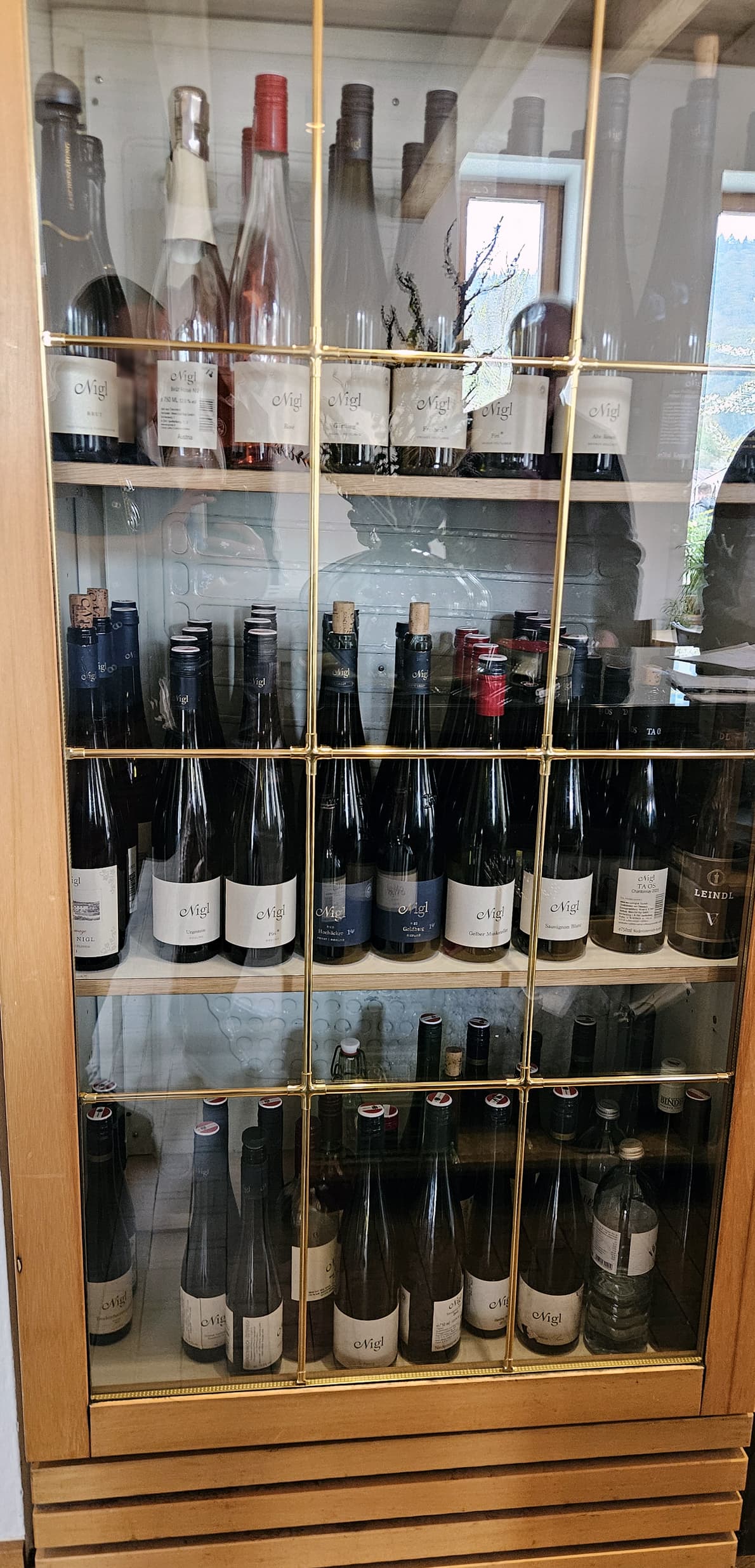
As we were in such a hurry, we didn’t have time for a proper lineup photo. This stand-in will do!
- NV Nigl Brut de Brut - Austria, Niederösterreich, Kremstal (15.4.2026)
A blend of mostly Chardonnay and a little bit of Grüner Veltliner from a few vintages. Vinified in stainless steel. Aged sur lattes for 3 years. 12% alcohol, 3 g/l residual sugar and approximately 7 g/l acidity.
The nose feels quite ripe and yellow-toned with a bit understated aromas of leesy yeast, some Golden Delicious apple notes, a little bit of fresh peachy fruit and a hint of lemony citrus fruit. The wine feels crisp and leesy on the palate with a medium body and dry flavors of ripe citrus fruits, some leesy yeast, a little bit of fresh peachy fruit, light stony mineral notes, a hint of crunchy appley fruit and a touch of salinity. The overall feel is balanced with the high acidity and rich, voluminous mousse. The finish is crisp and dry with a moderately long aftertaste of lemony citrus fruits, some ripe Granny Smith apple notes, light leesy tones and a hint of salinity.
A nice, fresh and dry sparkler. Quite simple and linear in style without much depth or complexity. It's quite surprising how the wine doesn't really show any toasty autolytic qualities if it has been aged for at least 3 years on the lees - maybe they emerge with additional bottle aging. At the moment the wine doesn't leave a particularly memorable impression and thus comes across as bit expensive for the quality at 23,70€.
(85 points) - 2025 Nigl Rosé - Austria, Niederösterreich, Kremstal (15.4.2026)
A blend of mainly Zweigelt and Merlot with a smaller portion (approximately 20%) of Pinot Noir. Vinified in stainless steel. 12% alcohol.
Pale salmon-red color. The nose feels sweet and fruit-forward with quite ripe aromas of strawberries, some peachy tones, a little bit of spice, light notes of melon and a hint of stony minerality. The wine feels somewhat round and quite ripe yet still pretty fresh on the palate with a rather light body and pretty linear flavors of savory spice, some brambly raspberry tones, a little bit of herby character, light mineral notes of wet rocks and a hint of fresh red plum. The moderately high acidity keeps the wine pretty nicely in balance, although the wine isn't particularly fresh or focused. The finish dry and juicy with a somewhat short aftertaste of appley fruit, some herby spice, a little bit of melon and a hint of ripe strawberry.
A pretty simple and linear little rosé. Nothing particularly memorable, but nothing to complain, either - at least at this price point. Worth the price at 8,90€.
(84 points) - 2025 Nigl Grüner Veltliner Piri - Austria, Niederösterreich, Kremstal (15.4.2026)
100% Grüner Veltliner. "Piri" refers to the "vine hill" of Senftenberg, where the winery is located. Vinified in stainless steel tanks. Bottled on February 12th, 2026. 12,5% alcohol.
Pale whitish-green color. The nose feels youthful and fruit-forward with quite primary aromas of pear drops, some crunchy red apple, light sweet grapey tones and a hint of herby spice. The wine feels youthful, round and accessible on the palate with a medium body and primary fruit-forward flavors of sweet Golden Delicious apple, some pear drops, light herbal spicy notes, a little bit of stony minerality and a hint of ripe grapey fruit. The medium acidity feels somewhat modest, making the overall feel rather soft and lacking in focus. The finish is juicy, round and quite youthful with a medium-long aftertaste of sweet grapey fruit, some Golden Delicious apple, light primary notes of pear drops, a little bit of herby spice and a mineral hint of wet rocks.
A soft, easy and accessible everyday Grüner Veltliner. I feel the wine is best on its own, as its rather modest structure doesn't make it feel like it could stand up to most dishes. As the wine is so super youthful and dominated by candied primary aromas and flavors, I have to admit I'm not the biggest fan of the wine. Feels somewhat expensive for the quality at 14,90€.
(83 points) - 2025 Nigl Grüner Veltliner Alte Reben - Austria, Niederösterreich, Kremstal (15.4.2026)
100% Grüner Veltliner from vineyards approximately 40 years old, plus a small parcel of 65 yo vines. Aged in an old, large fuder for 3 months. 13,5% alcohol.
Pale whitish-green color. The nose feels moderately rich and somewhat concentrated with aromas of peachy stone fruit, some crunchy appley notes, a little bit of ripe pear and a hint of herby spice. The wine feels dry, juicy and a bit round on the palate with a moderately full body and vibrant flavors of stony minerality, some ripe pear, light sweeter notes of greengage, a little bit of salinity, a hint of spicy red apple and a touch of fresh nectarine. The medium-plus acidity keeps the wine in balance, but doesn't lend much sense of freshness or structure. The finish is ripe, juicy and somewhat spicy with a medium-to-moderately long aftertaste of stone fruits, some saline mineral notes, a little bit of ripe pear, light herby nuances and a hint of spicy red apple.
A nice step up from the somewhat simple Piri Grüner Veltliner, but still lacking the freshness and energy I look for in a good GV. There's some nice old-vine richness and sense of concentration that makes the wine come across as vibrant and sufficiently interesting, but even then the wine is still lacking a bit in acidity and length. Feels rather pricey for the quality at 20,90€.
(87 points) - 2024 Nigl Grüner Veltliner 1ÖTW Privat Pellingen - Austria, Niederösterreich, Kremstal (15.4.2026)
100% Grüner Veltliner from 35 to 45 yo vines in Ried Pellingen. Vinified in stainless steel tanks and old, large fuders. 13,5% alcohol and 5,0 g/l acidity.
Light-to-medium deep yellow-green color. The nose feels a bit closed with some smoky reductive notes, a little bit of perfumed floral character, light juicy peachy tones, a hint of ripe pear and a faint touch of greengage. The wine feels broad, round and quite balanced on the palate with a rather full body and somewhat concentrated flavors of ripe pear, some perfumed floral notes of rosewater, light spicy tones, a little bit of juicy greengage, a primary hint of sweet grapey fruit and a touch of white peach. The moderately high acidity keeps the wine quite nicely in balance and lends some sense of freshness and structure to the wine. The finish is ripe, rich and somewhat primary with a long aftertaste of youthful grapey fruit, some perfumed notes of roses and floral spice, a little bit of greengage, light saline mineral notes, a hint of white peach and a touch of fresh pear.
A youthful, quite rich and surprisingly perfumed Grüner Veltliner that has an almost atypical floral overall character you normally don't see with this variety. The wine shows quite a bit of depth and fruit, but in the acid department the wine is somewhat lacking - there's enough acidity to give the wine a backbone of sorts, but to me, a rather big and ripe Grüner Veltliner like this could use a bit more acidity. This is a pretty serious effort, at least compared to the lower-tier Grüner Veltliners of Nigl, but even then the wine doesn't fully manage to win me over. I'd like it to show a bit more freshness and minerality instead of ripeness, overt fruit and those heady perfumed tones. Feels somewhat expensive for the quality at 38,50€.
(89 points) - 2009 Nigl Grüner Veltliner Privat Reserve Pellingen - Austria, Niederösterreich, Kremstal (15.4.2026)
100% Grüner Veltliner from 20 to 30 yo vines in Ried Pellingen. Vinified in stainless steel tanks and old, large fuders. 13,5% alcohol.
Luminous, medium-deep yellow-green color. The nose feels open and expressive with stone fruit-driven aromas of ripe apricot and fresh white peach, some developed honeyed tones, a little bit of perfumed floral character, light notes of apple jam and a hint of savory spices. The wine feels firm, mineral and slightly floral on the palate with a medium body and quite intense flavors of stony minerality and fresh apricot, some perfumed notes of roses, a little bit of poached pear, light evolved honeyed tones, a hint of white pepper and a touch of apple jam. The high acidity lends good sense of firmness and structure to the wine. The finish is long and fresh with an intense aftertaste of ripe pear, some spicy notes of white pepper, a little bit of stony minerality, light floral tones, developed hints of beeswax and honeyed richness and a touch of ripe apricot.
A serious, balanced and quite impressive single-vineyard Grüner Veltliner. This was considerably better than the 2024 vintage that we tasted right before - where the 2024 was considerably ripe and round, wanting for structure, this 2009 had all the pieces in right places, showing good sense of freshness and structure despite the richness from the maturity. The overall feel shows a good combination of vibrant fruit and more evolved complex nuances. Although the wine is in a great spot right now, I don't see it falling apart anytime soon - on the contrary, I think this wine could actually continue to improve with further aging. Terrific stuff, highly recommended.
(93 points) - 2023 Nigl Grüner Veltliner Herzstück vom Kirchenberg - Austria, Niederösterreich, Kremstal (15.4.2026)
100% Grüner Veltliner from Ried Kirchenberg, located next to the historic church in Senftenberg. About 5% of the fruit was botrytized. Vinified in stainless steel tanks and aged in old, large fuders for 6 months. 13,5% alcohol and 4,8 g/l acidity.
Medium-deep yellow-green color. The nose feels pretty closed and still rather reductive with aromas of smoke and skunky sulfurous character, some spicy notes of white pepper, a little bit of ripe Golden Delicious apple, light papaya tones, a hint of tropical fruits and a touch of ripe quince. The wine feels ripe, broad and concentrated on the palate with a full body and rich flavors of peach, some nectarine, light honeyed tones, a little bit of papaya and other exotic fruits, crunchy hints of ripe Golden Delicious apple and quince and a touch of smoky reduction. The medium-to-moderately high acidity keeps the wine somewhat balanced, but such a ripe and even somewhat viscous wine could use a bit more acidity and freshness. The finish is ripe, juicy and slightly warm with a long and powerful aftertaste of apricot, some nectarine, a little bit of peppery spice, light crunchy notes of Golden Delicious apple, hints of honey and orange marmalade and a touch of smoke.
A big, rich and powerful Grüner Veltliner with a lot of breadth and oomph. I feel the wine is a bit too big and ripe; it starts to feel quite monolithic, lacking sense of finesse and nuance. This is just gobs of ripe, powerful fruit at full blast. Impressive in its own right, sure, but I enjoy Grüner Veltliners with more sense of freshness and nuance. If they have to be powerful and concentrated like this wine, they need a lot more acidity, focus and minerality to keep it all together. Now this wine is a little bit all over the place. I hope additional aging would make some of that baby fat drop and help the wine get its game better together. This is good for sure, but a bit too ponderous to be great. Feels somewhat pricey for the quality at 48,50€.
(90 points) - 2021 Nigl Grüner Veltliner Hommage Josef Nigl - Austria, Niederösterreich (15.4.2026)
100% Grüner Veltliner from the original parcel in Ried Pellingen that was already planted by grandfather Josef Nigl in 1973 - hence the wine name. Vinified in stainless small oak casks. 14,5% alcohol. The debut vintage of this label.
Pale yellow-green color. The nose feels very rich and sweet-toned with bold aromas of pear jam, some creamy oak tones, a little bit of white peach, light notes of ripe greengage, a sweet hint of toasty oak spice and a touch of smoke. The wine feels rich, spicy and slightly warm on the palate with a full body and bold flavors of greengage and white pepper, some ripe Fuji apple notes, light salty liquorice notes, a little bit of smoke, a mineral hint of wet rocks and a touch of pear jam. The moderately high acidity manages to keep the wine quite nicely in balance despite the rich flavors and the broad overall feel. The finish is ripe, round and slightly warm with a juicy aftertaste of sweet tropical fruits, some ripe apricot tones, a little bit of creamy oak, light notes of greengage, a hint of butter and a toasty touch of smoke.
A very rich, bold and moderately heavy Grüner Veltliner that has a somewhat atypical feel due to the subtly toasty nuances you normally don't associate with the variety. Even then, I was surprised how balanced the wine came across despite the overall sense of richness, big body and high alcohol. With a little bit more acidity and a somewhat lower level of alcohol, this would've been quite a stunner. However, as the wine feels a bit too warm and ponderous, I'm not fully won over. This is a well-made wine for a blockbuster GV, but maybe a bit too overdone for my preference. Feels quite expensive for the quality at 79€.
(92 points) - 2025 Nigl Riesling Senftenberger Piri - Austria, Niederösterreich, Kremstal (15.4.2026)
100% Riesling. "Piri" refers to the "vine hill" of Senftenberg, where the winery is located. Vinified in stainless steel tanks. 13% alcohol.
Pale greenish color. The nose feels very youthful with sweet primary aromas of pear drops, some ripe grapey fruit, a little bit of crunchy red apple and a hint of stony minerality. The wine feels youthful and quite fresh on the palate with a light-to-medium body and somewhat linear flavors of pear drops, some saline mineral notes, a little bit of crunchy red apple and a primary hint of ripe grapey fruit. The rather high acidity keeps the overall feel quite fresh and moderately structured. The finish is juicy, youthful and somewhat linear with a medium-long aftertaste of grapey primary fruit, some stony mineral notes, a little bit of crunchy red apple and a hint of pear drops.
A pleasant but also very simple and linear entry-level Riesling. Nothing bad, but nothing particularly memorable, either. I hope the wine drops those dominant primary aromas and turns into something more interesting with age. The wine feels pretty expensive for the quality at 20,90€.
(85 points) - 2024 Nigl Riesling 1ÖTW Privat Hochäcker - Austria, Niederösterreich, Kremstal (15.4.2026)
100% Riesling from Ried Hochäcker, immediately next to Ried Pellingen. Vinified in stainless steel tanks. 13% alcohol and 5,6 g/l acidity.
Pale lime-green color. The nose feels a bit restrained and quite youthful with aromas of lemony citrus fruits, some primary notes of ripe grapey fruit, light honeyed notes, a little bit spicy minerality, a hint of wet rocks and a touch of fresh peachy fruit. The wine feels quite ripe yet still wonderfully fresh and crisp on the palate with a medium body and focused, youthful flavors of stony minerality, some ripe pear, light greengage tones, a little bit of primary grapey fruit, a hint of tart lemony citrus fruit and a touch of floral spice. The brisk acidity makes the wine feel lively, precise and quite structure-driven. The finish is ripe yet dry and acid-driven with a long, intense aftertaste of lemony citrus fruits, some stony mineral notes, a little bit of ripe greengage, light primary notes of pear and grapey fruit, a hint of tangy salinity and a touch of key lime.
A very fresh and precise Riesling that is still very youthful in character. However, despite its borderline primary qualities, the wine comes across as very impressive and quite chiseled with its firm acid backbone. At the moment the wine is a bit too youthful for its own good, but it nevertheless shows great promise and I can imagine this will perform much better with at least a few more years under its belt. I wouldn't be surprised if the wine continued to evolve and improve for the next decade or two. Perhaps a bit on the pricey side at 52€, but perhaps the wine will be worth the price with enough age.
(92 points) - 2023 Nigl Riesling Goldberg - Austria, Niederösterreich, Kremstal (15.4.2026)
100% Riesling from Rehberger Goldberg. Vinified in old oak casks. 14% alcohol and 7,0 g/l acidity.
Medium-deep yellow-green color. The nose feels fragrant and quite expressive with aromas of lemon marmalade, some greengage, light perfumed notes of orange blossom, a little bit of ripe Golden Delicious apple and a hint of stony minerality. The wine feels quite ripe and somewhat concentrated on the palate with a rather full body and quite dry flavors of greengage, some spicy mineral notes, a little bit of lemon marmalade, light apple jam tones, a hint of alcohol warmth and a touch of creaminess. The acidity feels sufficiently high to lend enough structure and freshness for such a ripe wine. The finish is long and somewhat concentrated with a focused aftertaste of greengage, some lemony citrus notes, a little bit of mineral spice, light sweeter apple jam tones, a hint of leesy creaminess and a touch floral nuance.
A rather ripe but also quite impressive and promising Riesling that comes across as pretty powerful and concentrated, yet not lacking in freshness or structure one bit. At times the relatively high alcohol shows a bit too much through for my preference, but otherwise this is a pretty terrific example of Kremstal Riesling. Although the wine doesn't come across as particularly primary anymore, the overall feel is still pretty youthful and I can imagine the wine will benefit from additional aging. Priced according to its quality at 38,50€.
(93 points) - 2013 Nigl Riesling 1ÖTW Privat Pellingen - Austria, Niederösterreich, Kremstal (15.4.2026)
100% Riesling from Ried Pellingen. 13,5% alcohol. Tasted from a 0,375-liter bottle.
Luminous, quite deep and moderately concentrated yellow-green color. The nose feels concentrated, attractive and somewhat developed with aromas of lemon marmalade, some honeyed tones, a little bit of beeswax, light candied ginger notes, a hint of mineral spice and a touch of fresh peachy fruit. The wine feels crisp, focused and quite electric on the palate with a medium body and concentrated flavors of lemon marmalade, some honeyed tones, a little bit of beeswax, light candied ginger notes, a hint of steely minerality and a touch of fresh white peach. The overall feel is wonderfully spry and structured, thanks to the incisive and quite bracing acidity. The finish is very focused and acid-driven with a dry, concentrated aftertaste of lemon marmalade, some honeyed tones, a little bit of candied ginger, light stony mineral notes, a hint of beeswax and a touch of ripe key lime.
An outstanding, wonderfully focused and impressively structured Riesling that combines electric acidity, cool minerality and somewhat concentrated fruit flavors effortlessly together. Although the wine is starting to show some developed qualities, I feel the wine is nevertheless relatively youthful and still on its way up - and this wine was from a half bottle! I can't imagine how brisk and fresh the wine from a standard-sized bottle would be! Easily the best Riesling - and, by extension, a dry wine from any grape variety - we tasted at the estate. Obviously built for the long haul. Highly recommended.
(94 points) - 2014 Nigl Riesling Goldberg - Austria, Niederösterreich, Kremstal (15.4.2026)
100% Riesling from Rehberger Goldberg. Vinified in old oak casks. 13% alcohol.
Medium-deep yellow-green color. The nose feels fragrant and slightly evolved with nuanced aromas of lemon zest and beeswax, some spicy red apple tones, a little bit of stony minerality, light lemon curd tones and a fragrant hint of white flowers. The wine feels crisp and vivacious on the palate with a medium body and dry flavors of lemony citrus fruits and tangy salinity, some beeswax, light steely mineral notes, a little bit of sharp Granny Smith apple and a hint of spice. For such a brisk and zippy wine, the acidity feels only moderately high - more than sufficient to lend the wine good sense of freshness and structure, yet still I admit I expected a bit more. The finish is pretty crisp with a long, dry aftertaste of tart Granny Smith apple, some saline mineral notes, a little bit of beeswax, light tart citrus notes of fresh lemon and key lime, a hint of floral spice and a touch of fresh peachy fruit.
A crisp and somewhat lean Riesling showing nice sense of maturity, yet with all the zippy freshness, I'd say the wine is still on its way up. Lacking a bit in depth and - surprisingly enough - a tiny bit in acidity, but I guess these might be the doings of the cooler 2014 vintage. All things considered, this was still a pretty lovely wine showing more sense of focus and freshness than most of the younger - and considerably more ripe - Nigl whites we tasted at the estate. Not on par with the 2013 Pellingen Riesling, and coming across as a bit underwhelming compared to the very youthful, but also quite ripe 2023 Goldberg; yet still, this was a lovely little drop all the same. Recommended.
(92 points) - 2025 Nigl Gelber Muskateller - Austria, Niederösterreich, Kremstal (15.4.2026)
100% Muscat Blanc. Vinified in stainless steel tanks. 11,5% alcohol.
Pale and rather neutral, almost colorless whitish-green color. The nose is laughably expressive and immediately identifiable as a Muscat with heady aromas of perfumed floral tones, some pear drops, a little bit of ripe grapey fruit, light fragrant rosewater notes and a hint of exotic fruit. The wine feels lively, dry and pretty linear on the palate with a light and a bit thin body and quite straightforward flavors of steely minerality and sweet grapey fruit, some greengage, a little bit of floral spice, light juicy notes of ripe pear and a hint of rosewater. The high acidity lends nice sense of freshness and structure to the wine. The finish is crisp, fresh and lively with a long, perfumed aftertaste of grapey primary fruit, some greengage, light floral notes of roses, a little bit of ripe pear and a hint of tart citrus fruits.
A nice, fresh and crisp little Muscat. Nothing impressive, complex or too serious - just a solid white with good, zippy acidity lots of floral aromatics that are very true to the variety. As the wine is rather light in body and straightforward in overall feel, it might not be the best food wine for anything else than quite delicate entrées. Most likely the wine is at home as a floral little sipper, served nicely chilled on its own. Solid value at 12,80€.
(88 points) - 2024 Nigl Sauvignon Blanc - Austria, Niederösterreich (15.4.2026)
100% Sauvignon Blanc. Vinified in stainless steel. 13% alcohol and 5,9 g/l acidity.
Pale greenish color. The nose feels surprisingly reticent for a Sauvignon Blanc with varietally correct aromas of ripe gooseberries, some vegetal asparagus tones, a little bit of passion fruit and a hint of blackcurrant leaves. The wine feels quite ripe and a bit round on the palate with a medium body and balanced flavors of passion fruit, some golden currants, a little bit of sweet exotic fruits, light vegetal notes of asparagus, a hint of crushed nettles and a touch of ripe gooseberry. The moderately high acidity keeps the wine pretty nicely in balance. The finish is juicy and varietally correct with a medium-long aftertaste of tart passion fruit, some vegetal asparagus tones, a little bit of ripe golden currant, light grassy nuances and a hint of zesty citrus fruits.
A nice but also somewhat simple and generic Sauvignon Blanc. The aromas and flavors are varietally correct and not as over-the-top as in some wines. However, the wine is lacking a bit in the acidity department that is typically very high in Sauvignon Blancs - although the acidity feels high enough here to keep it balanced and not come across as soft, I felt the wine was a tad too ripe and round for my preference. This is a pleasant and well-made Sauvignon Blanc, but not really a wine that would blow your socks off. Feels a tad pricey for the quality at 20,90€.
(89 points) - 2012 Nigl Sauvignon Blanc - Austria, Niederösterreich (15.4.2026)
100% Sauvignon Blanc. Vinified in stainless steel. 13% alcohol.
Quite pale greenish-yellow color. The nose feels somewhat reductive with aromas of passion fruit, some flatulent notes of reduction, a little bit of green asparagus, light appley notes and a hint of grassy herbal character. The wine feels rich, round and somewhat evolved on the palate with a medium body and nuanced flavors of salinity and steely minerality, some lemony citrus fruits, light flatulent notes of reductive skunk, a little bit of ripe Granny Smith apple, a vegetal hint of asparagus and a touch of ripe gooseberry. The medium-plus acidity feels a bit modest for a Sauvignon Blanc, making the wine come across as somewhat round. The finish is lively, dry and quite fresh with a somewhat evolved aftertaste of salinity, some ripe Granny Smith apple tones, a little bit of steely minerality, light vegetal notes of green asparagus and a hint of tart passion fruit.
After tasting the 2024 Nigl Sauvignon Blanc, this wine felt more or less the exact same wine, only with more age. The fruit ripeness, the somewhat modest level of acidity, the flavor intensity - more or less everything was the same. This wine just had a bit more developed overall feel, but I wouldn't say the wine was qualitatively any better. It had changed a bit, but not for the better - nor for the worse. Although the wine was drinking just fine at 13½ years of age, I wouldn't really encourage to age this wine; it seems the wine does age, but I really don't see any benefit with the additional age here.
(89 points) - 2023 Nigl Chardonnay TA OS - Austria, Niederösterreich, Kremstal (15.4.2026)
A rare Nigl Chardonnay made only in suitable vintages from a small, less-than-1 hectare parcel of Chardonnay. Aged in 225-liter barriques ranging from new to 5 years old. 14% alcohol.
Medium-deep lemon-yellow color. The nose feels big, powerful and woody with aromas of toasty oak spice and ripe apricot, some caramel tones, a little bit of creamy oak, light crunchy notes of Golden Delicious apple and a hint of honeydew melon. The wine feels ripe, rich and juicy on the palate with a full body and bold flavors of white peach and acacia honey, some pineapple tones, a little bit of toasty caramel oak and butter, light stony mineral notes, a hint of crunchy Golden Delicious apple and a touch of fresh nectarine. The high alcohol lends some warmth to the palate and the medium-plus acidity feels somewhat insufficient for such a big and ripe wine, making the wine feel a bit blowzy. The finish is rich, powerful and a bit warm with a long, toasty aftertaste of butter and creamy oak, some pineapple, light apricot tones, a little bit of honeyed richness, a hint of stony minerality and a touch of fresh appley fruit.
A very ripe, rather oaky and somewhat heavy Chardonnay made in a quite in-your-face new world style. Obviously built for the fans of big, ripe and fruit-forward wines who like noticeable oak over freshness and structure - ie. not for me. I hope the wine would get better with additional aging, but I wouldn't hold my breath. Feels expensive for the quality at 35€.
(86 points) - 2020 Nigl Pinot Noir - Austria, Niederösterreich, Kremstal (15.4.2026)
100% Pinot Noir from Ried Pfenningberg, a steep vineyard in Senftenberg. Aged in large American and French oak casks for 1½ years. 14% alcohol.
Translucent ruby-red color. The nose feels sweetish, spicy and somewhat meaty with aromas of ripe cranberries and strawberries, some pomegranate, light woody oak tones, a little bit of peppery spice, a hint of earthy Pinosity, a touch of cooked beet and a whiff of rainy forest air. The overall feel is quite similar to a German Spätburgunder, maybe with a bit more ripeness. The wine feels ripe, meaty and surprisingly serious on the palate with a medium body and quite savory flavors of game and pronounced meaty umami, some peppery spice, light woody notes of savory oak, a little bit of tobacco, crunchy hints of cranberries and tart lingonberries and a touch of sour cherry bitterness. The overall feel is rather stern and structured, thanks to the medium-to-moderately high acidity and ample, moderately grippy tannins. The finish is long, robust and quite tannic with a savory aftertaste of smoke and gamey meat, some tobacco, a little bit of sour cherry bitterness, light crunchy notes of ripe cranberries and brambly raspberries, hints of umami and earthy mushroom and a sweeter touch of toasty oak spice.
A rather ripe but also surprisingly robust and angular Pinot Noir that is more about structure, spice and savory umami than about finesse, perfumed aromas and silky textures. This is definitely a wine you could easily identify as a Pinot Noir in a blind tasting, but probably never confuse it with a Burgundy. I'd love to see the wine show a bit more acidity and lower levels of oak and alcohol, but this is nevertheless pretty terrific stuff all the same. At the moment the wine feels a tad awkward, but I hope it will get its game better together with some additional aging. This is definitely a Pinot Noir for the fans of German Spätburgunder and tannic Nebbiolo. Priced according to its quality at 28,50€.
(92 points) - 2021 Nigl Point - Austria, Niederösterreich, Kremstal (15.4.2026)
I couldn't find detailed information about this wine, but some sources say it is a blend of Zweigelt and Merlot. Macerated with the skins for 1½ days. Aged in old oak barrels for 2 years. 13,5% alcohol.
Youthful, pale and fully translucent cherry-red color. The nose feels surprisingly savory with aromas of earth, some loose tobacco, a little bit of smoke, light cherry tones, a hint of licorice root and a touch of dusty old wood. The wine feels savory, silky and surprisingly airy on the palate with a medium body and dry flavors of tobacco, some cherry tones, a little bit of licorice root, light smoky notes, a hint of meaty character and a touch of earth. The overall feel is surprisingly stern and tightly-knit with the moderately high acidity and rather grippy tannins. The finish is dry, quite crunchy and pretty grippy with an intense aftertaste of savory meaty umami, some woody tones, a little bit of smoke, light cherry-driven red fruit, a hint of earth and a touch of brambly black raspberry.
The rather pale appearance sort of makes you expect for a light, delicate and fruity wine, but on the palate the wine is anything but. Well, ok, it is relatively light in body, which is in line with the appearance, but the wine most definitely isn't delicate or fruity. I was very surprised to learn that the wine is macerated with the skins for such a brief time, considering how stern and tannic it feels on the palate. Furthermore, the relative lack of obvious fruit flavors is not something you'd expect either - and that is not to say the wine is lacking in taste! On the contrary, the wine shows quite a bit of intensity, but the flavors lean heavily on the non-fruit end of the spectrum. I really don't know what to think of it, but I sort of found myself enjoying the very anti-crowdpleaser attitude of the wine. It is hard to say if the wine will continue to evolve and improve with additional aging, but seeing how firm, tightly-knit and intensely-flavored the wine is now, I wouldn't be surprised if this wine continued to unwind and improve for a good handful of years. Distinctive stuff. Priced according to its quality at 20,90€.
(90 points) - 2018 Nigl Riesling Trockenbeerenauslese - Austria, Niederösterreich, Kremstal (15.4.2026)
100% Riesling made only in vintages that allow for making TBA. Vinified in stainless steel tanks. 7% alcohol.
Deep, luminous lemon-yellow color. The nose feels rich, dense and concentrated with sweet aromas of dried apricots, some pineapple tones, a little bit of acacia honey, light orange marmalade tones, a raisiny hint of Sultanas and a touch of stony minerality. The wine feels dense, broad and quite round on the palate with a full body and sweet, juicy flavors of tinned pineapple, some orange marmalade, light honeyed tones, a little bit of Sultana raisins, a hint of dried peachy fruit and a touch of mineral spice. The medium-plus acidity keeps the wine somewhat in balance, but feels a tad too modest for such a sweet and concentrated wine, making the overall feel somewhat soft and round. The finish is rich, sweet and quite concentrated with a long aftertaste of honeyed richness, some candied ginger, a little bit of orange marmalade, light pineapple tones, a hint of dried peach and a touch of Sultanas.
A tasty, rich and quite concentrated TBA with a lot of sweetness and good intensity of flavor, but perhaps a bit too little acidity. I love good TBAs, but a good TBA needs a great amount of acidity to keep all that sweetness and other elements in balance. Although this wine probably isn't particularly low in acidity, I feel the wine is still somewhat lacking in freshness and acidity as the overall feel is pretty much dominated by the high residual sugar, making the wine feel very sweet, somewhat soft and quite sticky. This is good by all accounts, but not as great as the price (98€ for a half bottle) makes you expect.
(91 points) - 2013 Nigl Grüner Veltliner Trockenbeerenauslese - Austria, Niederösterreich, Kremstal (15.4.2026)
100% Grüner Veltliner made only in vintages that allow for making TBA. Vinified in stainless steel tanks. 10,5% alcohol.
Deep, luminous burnished golden yellow color. The nose feels rich and spicy with aromas of overripe apricot and spicy wildhoney, some peppery tones, a little bit of tinned pineapple, light notes of beeswax, a raisiny hint of Sultanas and a touch of candied orange rind. The wine feels fresh, rich and structured on the palate with a full body and bold flavors of dried apricot, some peppery spice, light kiwfruit notes, a little bit of orange marmalade, a sweet lifted hint of nail polish VA and a touch of honeyed richness. The high acidity lends a good amount of freshness, focus and structure to the wine. The finish is long, rich and powerful with a sweet aftertaste of pineapple, some dried apricot, light saline mineral tones, a little bit of orange marmalade, a hint of kiwifruit and a touch of heather honey.
A wonderfully fresh, complex and structured TBA with intense fruit flavors, quite a bit of concentration and enough acidity to keep the wine from coming across as too soft or excessively sweet. It's hard to assess how much of those dried-fruit flavors have come from botrytis and how much from age, but even if the wine is starting to show some developed signs, I feel the wine is still on an upward journey and it is not going to be falling apart in a long while. Great now, but still has potential to develop something even better. A well-made and thoroughly delicious sweet wine, highly recommended. Terrific value at 27€ for a half bottle.
(94 points)
After we had tasted all the wines - and all those who wanted to buy wines had bought their wines - we thanked Anna for the tasting, and for being such a good sport with us and our lousy jokes! Our schedule was starting to get stretched thin, so we had to hurry back south for our lunch if we wanted to eat something before evening!
4 Likes
I have been a fan and a follower of Nigl since the 1990s, and there has always been this nagging feeling that the wines were “OK” until they got some bottle age. Then a transformation happened. There was a period where I mostly stopped buying other than a bottle or two here or there. Then I tasted those wines with 5-10 years of age. Holy cow! Now I just buy some on faith.
3 Likes
I see. That didn’t seem to be the universal cure for these wines, as we were graciously offered tastes of multiple +10 yo wines.
The 2009 GV Pellingen, 2013 Riesling Pellingen and 2013 GV TBA were amazing wines. However, I think the 2013 Riesling and 2013 TBA would’ve been stunning even young, as they were so impressively structured - a testament how amazing the 2013 vintage was in Austria. Basically only the 2009 GV Pellingen seemed to have gained something with bottle age and I’m not sure if it was that impressive in its youth.
The 2014 Riesling Goldberg and 2012 Sauvignon Blanc, on the other hand didn’t seem to have benefited much from bottle age. Not that cellaring the wines had hurt them in any way - they just didn’t seem to have turned into anything particularly interesting with additional age, but remained in that “OK” phase.
Well, that 2014 was better than just “OK”, but still nothing that special - and I found the 2023 vintage of the same wine more interesting!
Well Sauvignon Blanc sucks at any age, so it doesn’t count.
Ultimately it’s clear you and I have different tastes when it comes to Nigl.
For the most part, correct.
There are always a handful of SBs that don’t suck, but way too rare to come by more than occasionally.
It’s always possible. However, I’ve always thought our tastes are quite similar when it comes to Teutonic wines.
To me, most of these GVs and Rieslings were from the rather ripe, fruit-driven and at times even somewhat heavy end of the spectrum. While I can appreciate some hefty, big-boned Rieslings and GVs, my preferences lie more on the fresh, precise and mineral end of the spectrum. Most of these wines were definitely not in that kind of style.
NB: From my limited experience, I remembered Nigl being noticeably lighter and more fresh in style in the past. However, these were some time ago, so I don’t know if their style has changed in the recent vintages?
And I have always found Nigl to be on the lighter, brighter side, including most recently 2021. Haven’t had any 2022 or 2023 wines yet.
So I guess this will remain a mystery.