Day 4 cont’d
Alright, from Weingut Nigl we set our course to the town of Unterloiben - the easternmost village in the wine region of Wachau, before it changes to Kremstal - and Loibnerhof - a 400-yo restaurant that has been run for well over a century by one Knoll family - where we would have our lunch.
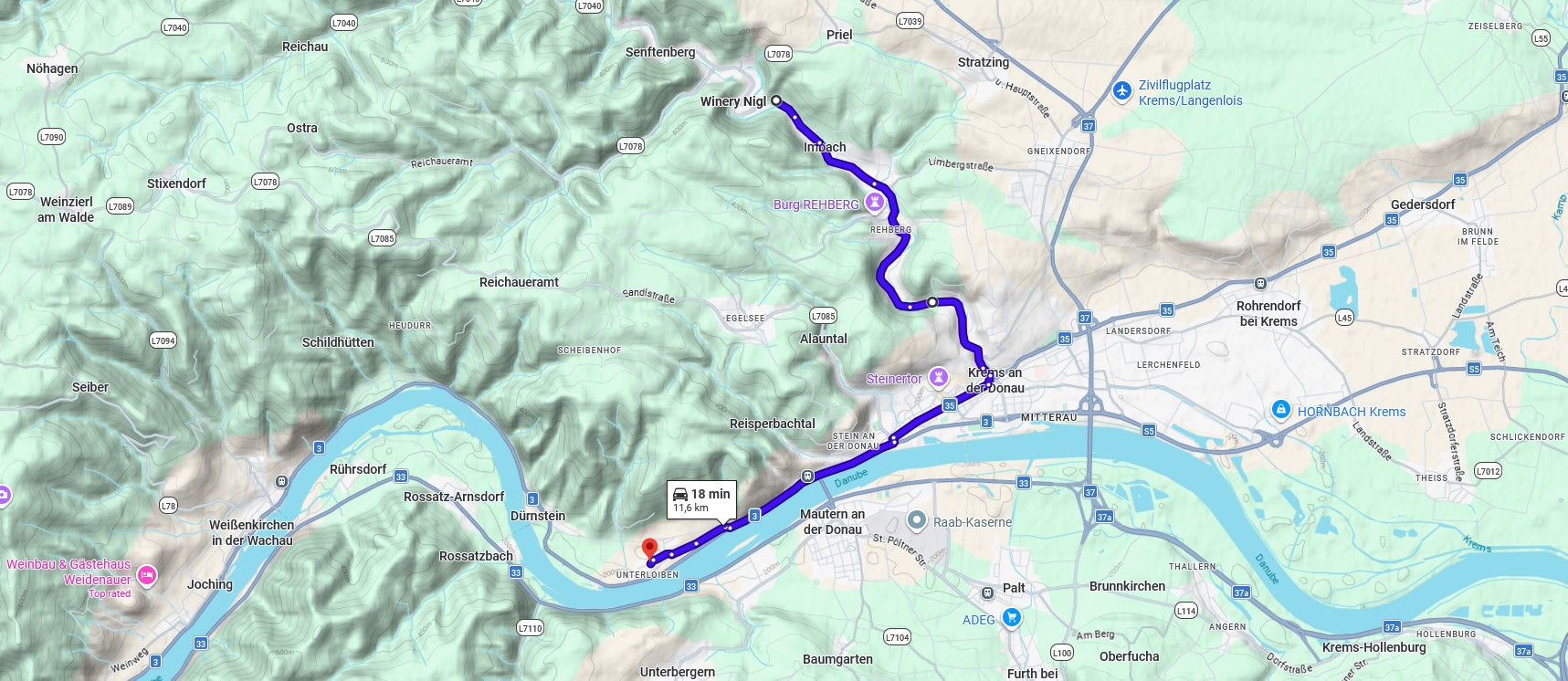
After a quick 20-minute drive down the meandering Krems valley down to the city of Krems, and then along the banks of Danube, we were there in Unterloiben.
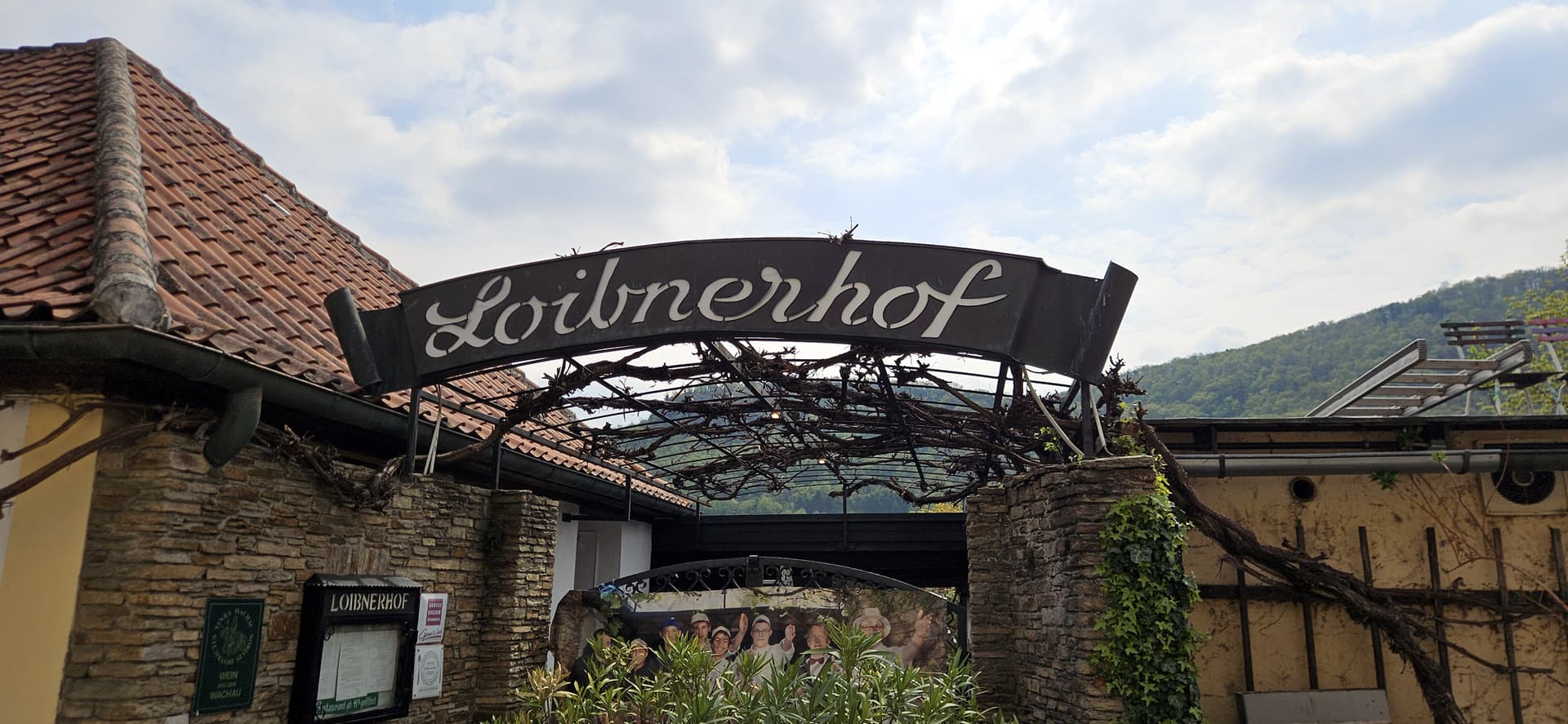
Here we are.
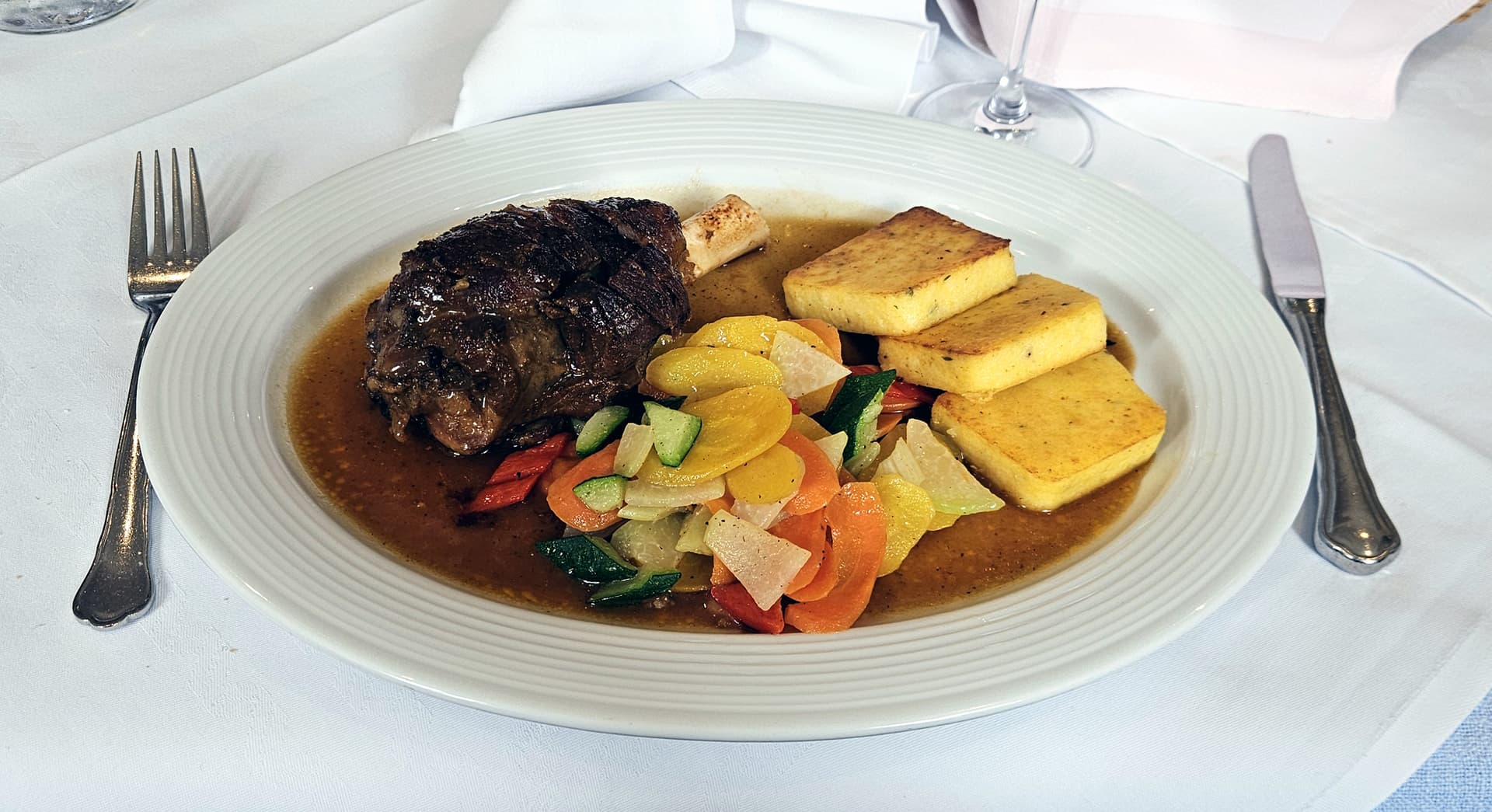
I went with milk lamb shoulder and polenta for lunch.
As we were eating, the clock was nearing 1 pm - the time of our scheduled visit at Weingut Knoll. Due to our slight schedular difficulties and failures at scheduling compression, it seemed we were starting to run a bit late. At about 10 minutes to 1, it seemed like not everyone was going to finish their lunch on time, so we called the winery to say that we’d probably be late about 5 to 10 minutes. By the sound of it, they didn’t seem so happy about it, so at that point those of us who were finished just set off for the winery and left the rest of the group to settle the bill and make it to the winery building as soon as they were finished!
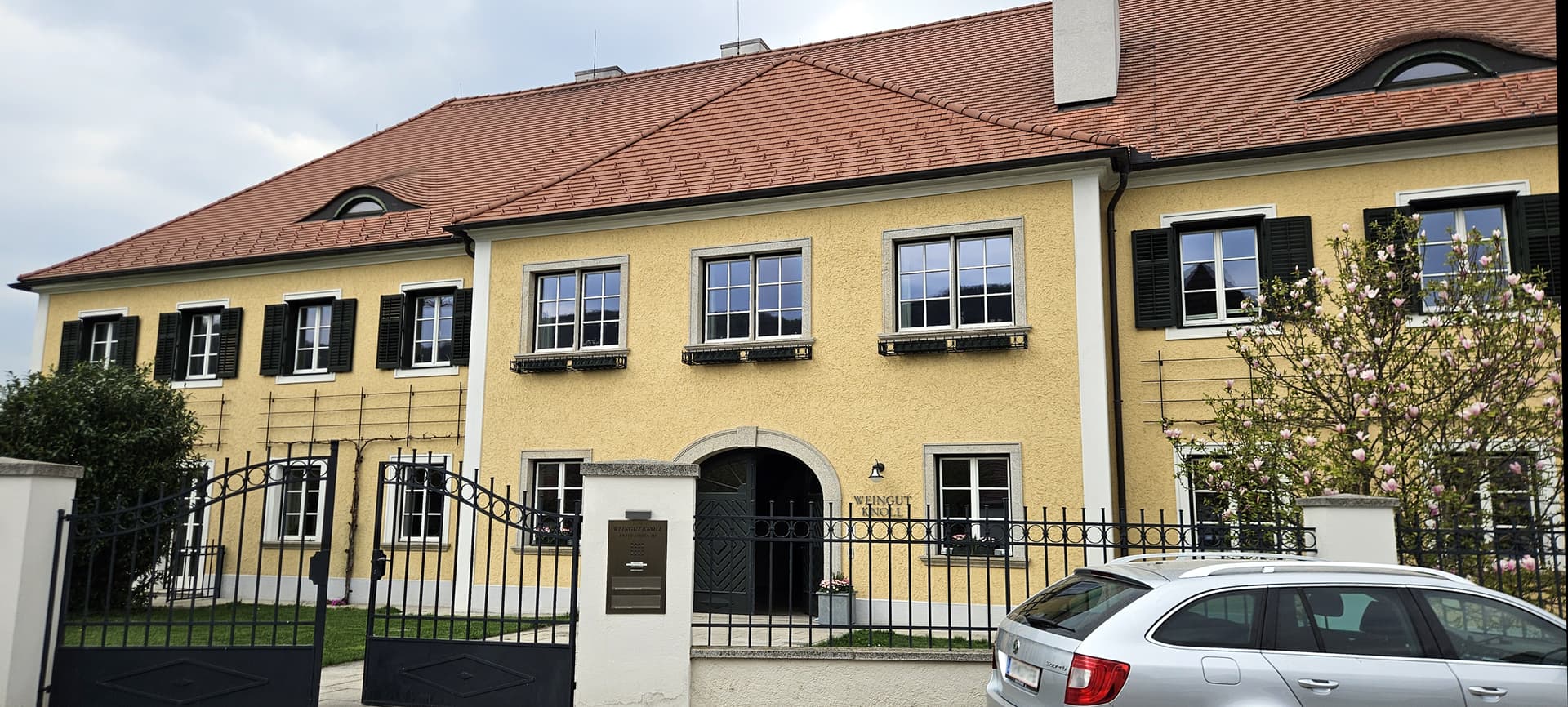
Fortunately getting to the winery from the Loibnerhof restaurant wasn’t a particularly daunting task, as the winery is situated right next to the restaurant.
The first of us got there about 2-3 minutes late, and only then we understood why people were upset about us getting late; we were not the only ones there, but there was also one other person doing the tasting at the same time with us - a sommelier from 67 Pall Mall, if I heard correctly. Of course it might’ve helped had we known we were not going to be the only ones there, so I don’t know why we weren’t told this beforehand!
So, Weingut Knoll probably needs no introductions, since they are considered to be one of the mavericks of Wachau. Stylistically they’ve always remained extremely traditional - even conservative - and somewhere in the middle ground. The wines aren’t super delicate, lean and airy, but they are also a far cry from the super-ripe, partially botrytized blockbusters.
- The Knoll family has been cultivating vines and running the Loibnerhof restaurant in Unterloiben for a century now. Before the Knolls began to commercialize and market their bottled wines, they sold their entire production in their restaurant in unlabeled bottles. They bottled their first own wines in 1947, and began bottling them in earnest as a winery in the 1950’s.
- The Knoll bottle labels have been adorned by a striking painting of Sankt Urban by Siegfried Stoitzner. This painting hangs on the wall of the Loibnerhof restaurant today.
- The winery is run today by Emmerich (Emmi) Knoll III and his wife Anja Knoll. As if to drive the point of traditionalism home, the winery is not only run by the third generation of Knolls, but also by an Emmerich Knoll for the third time. Maybe it comes off as no surprise that one of Anja’s and Emmi’s sons is named Emmerich IV!
- The Knolls farm approximately 18 hectares (45 acres) of vineyards, virtually all in and around the town of Unterloiben. The vineyards are farmed sustainably, and a great majority of their production is Grüner Veltliner and Riesling (approximately 45% and 45% of each). However, they also farm small amounts of Gelber Muskateller (aka. Muscat Blanc), Gelber Traminer (aka. Savagnin Muscaté, or a white-skinned Gewurztraminer), Chardonnay and Blauer Burgunder (aka. Pinot Noir).
- Aiming for high ripeness in their Smaragd wines has always been the defining style of Knoll - the grapes are definitely not harvested early. However, botrytized bunches are normally not used, and due to good vineyard holdings and their choices in viticulture, the Smaragd wines of Knoll are typically lighter-weight and more mineral compared to the Wachau producers who aim for a heftier and more concentrated, super-ripe style.
- The wines are fermented and aged in a combination of stainless steel tanks and old Austrian oak fuders. The Knolls employ both yeast inoculation and spontaneous fermentations in their winemaking. MLF is typically blocked to preserve the sense of freshness and structure.
- Unlike most producers, who release their Smaragds as early as possible - ie. on 1st of May following the harvest - Knolls think their wines need a lot more age to show well, so their Smaragd wines are typically aged for approximately 10 months before they are bottled. The wines are usually released after approximately a year of aging, around September following the harvest.
- Weingut Knoll is part of the Vinea Wachau organization, and Emmerich III has been the long-standing president of the organization since 2012.
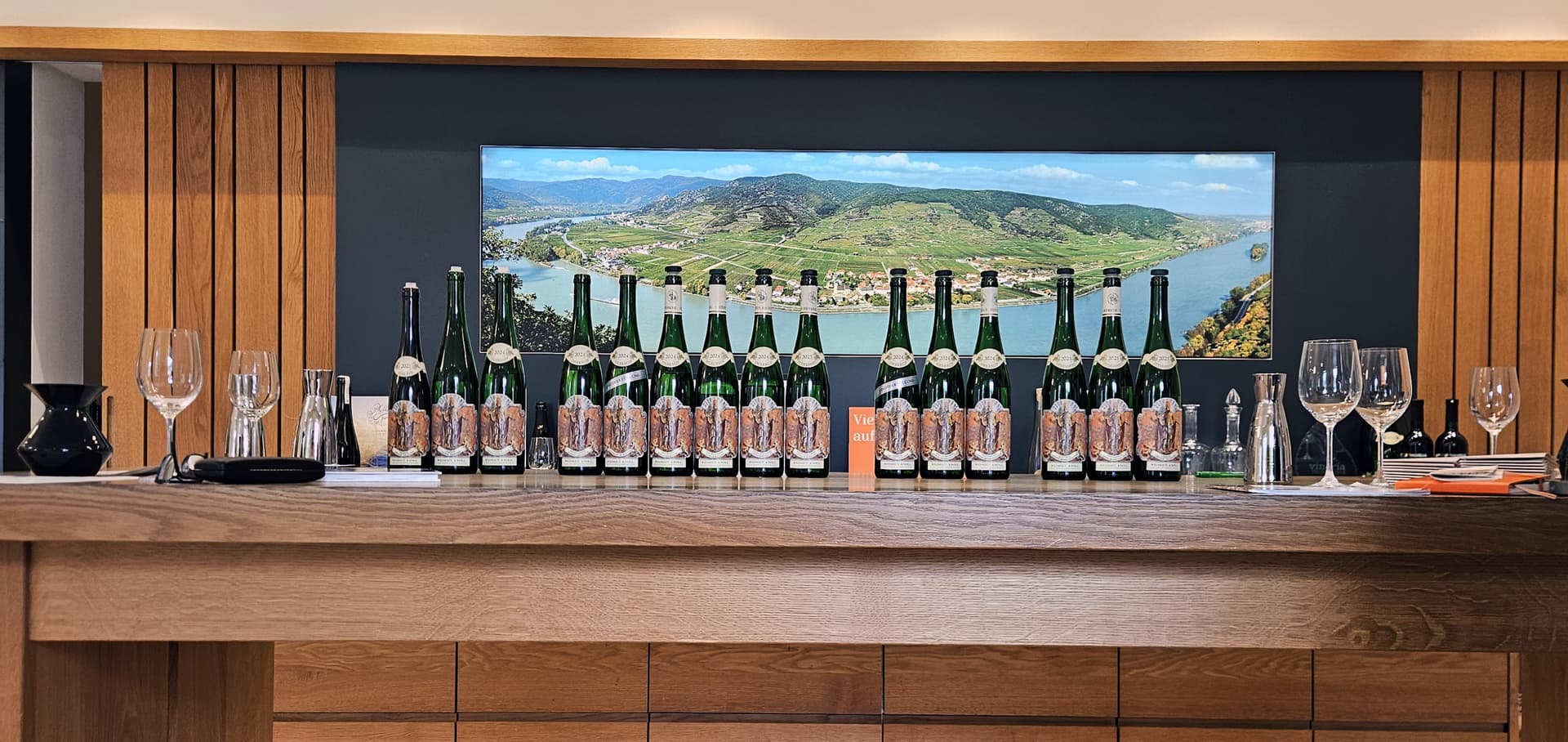
While we tasted the wines, Anja Knoll showed us from the large aerial photo of Unterloiben all the vineyards from which each wine came from.
It was interesting to hear how Knoll has never had any problems making Steinfeder wines - this was in stark contrast to media saying Wachau is getting too hot to produce Steinfeders that don’t taste under-ripe. Mrs. Knoll seemed even a bit surprised when we told her that some producers had been able to make their first Steinfeders in years in 2025!
When we got to the Pfaffenberg Smaragd wine, mrs. Knoll explained that even though Wachau producers who belong to the Vinea Wachau organization are not allowed to own vineyards outside the region, there are a few exceptions to allow the westernmost Kremstal vineyards that sit on the same continuous slope as the vineyards above Unterloiben. However, as Pfaffenberg is not part of the Wachau region, the wines can’t be bottled as Steinfeder, Federspiel or Smaragd - instead Knoll has opted to bottle their wines as Kabinett (Federspiel) and Selection (Smaragd).
While tasting the wines, we also got to meet the rest of the Knoll family: the kids Julian and Emmerich IV seemed to have something important to tell to their mom all the time, and also Emmi Knoll went quickly past saying a quick hello!
Anja Knoll also mentioned that they are well aware of their traditionalist image, and not having a website is also a part of that image. They have, however, made some concessions to the modern world by having a social media account - which has been entrusted to Julian Knoll, of the 4th generation.
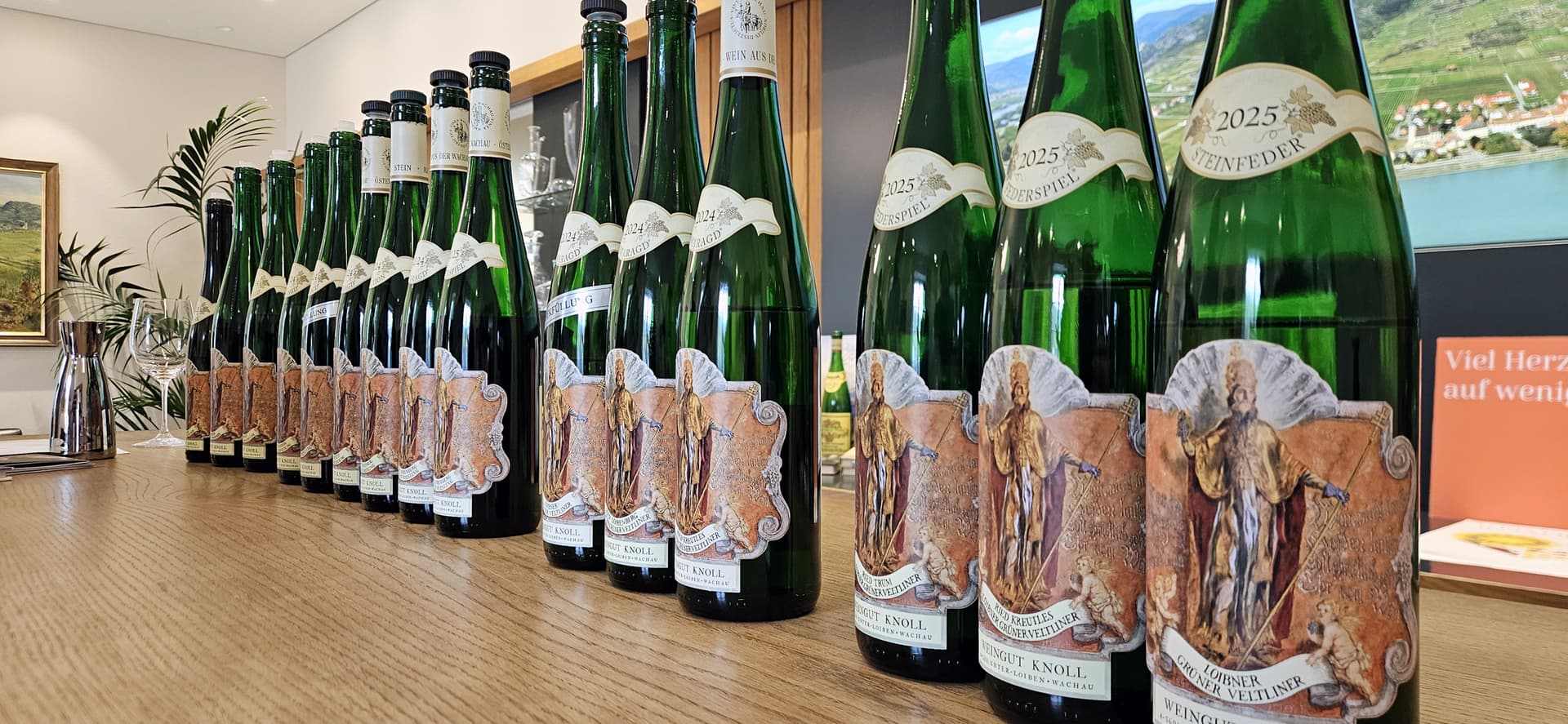
The lineup.
- 2025 Weingut Knoll Grüner Veltliner Steinfeder Loibner - Austria, Niederösterreich, Wachau (15.4.2026)
100% Grüner Veltliner from multiple vineyards in Loiben. Fermented and aged in stainless steel tanks and old fuders. 11% alcohol.
Limpid, pale greenish color. The nose feels fresh and youthful with aromas of ripe pear, some herby green tones, a little bit of ripe yellow apple, light spicy tones and a hint of crunchy white currant. The wine feels dry, light and airy on the palate with a light body and crisp flavors of fresh white peach, some primary notes of sweet pear, light steely mineral notes, a little bit of spicy red apple and a hint of tangy salinity. Nice high acidity. The finish is dry, crisp and lively with a rather long and crunchy aftertaste of sharp Granny Smith apple, some youthful pear notes, a little bit of steely minerality, light saline notes, a hint of fresh white peach and a touch of herby spice.
A super youthful but also wonderfully fresh and harmonious Grüner Veltliner with delightful minerality and firm, zippy acidity. Maybe feels a tiny bit thin and not just light-bodied, but there's enough drive and focus to keep things interesting. As the wine is still quite noticeably primary, I'd say it needs some more time before showing its best. A wine this light might not be built for the long haul, but I'd say the wine will benefit from another 2 to 3 years of aging, so I'd keep my hands off of any bottles for awhile now. Fine stuff, solid value at 16€.
(90 points) - 2025 Weingut Knoll Grüner Veltliner Federspiel Ried Kreutles - Austria, Niederösterreich, Wachau (15.4.2026)
100% Grüner Veltliner from Ried Kreutles in Loiben. Fermented and aged in stainless steel tanks and old fuders. 12% alcohol.
Clear, pale-to-medium deep greenish color. The nose feels quite ripe and pretty youthful with somewhat primary aromas of sweet pear-driven fruit, some crunchy red apple, light spicy notes of white pepper, a little bit of green herby character and a touch of stony minerality. Contrasting the ripe nose, the wine feels wonderfully crisp, fresh and steely on the palate with a medium body and bright flavors of sharp Granny Smith apple, some fresh pear, a little bit of stony minerality, light herby tones and a hint of sweeter grapey fruit. The high acidity makes the overall feel fresh, precise and quite structured. The finish is crisp, fresh and lively with a long aftertaste of sharp Granny Smith apple, some fresh pear, light lemony citrus fruit notes, a little bit of steely minerality, a hint of herby spices and a touch of wet rocks.
A delightfully refreshing, precise and mineral Grüner Veltliner that shows some ripeness, but where the emphasis is not on the ripe and impactful fruit, but on freshness, focus and elegance. The wine is still super youthful with some primary notes, so it might not be showing its best yet. However, the wine was pretty terrific for such a young Grüner Veltliner, showing good potential for additional aging. A very serious effort for a Federspiel. It's hard to say if I liked this of Federspiel Ried Trum more, since Trum showed more depth and intensity, but at the same time came across as a bit softer, emphasizing richness over minerality. Both these Federspiels were pretty lovely with quite distinct personalities, making it very hard to put one over another. This was solid value at 21€.
(91 points) - 2025 Weingut Knoll Grüner Veltliner Federspiel Ried Trum - Austria, Niederösterreich, Wachau (15.4.2026)
100% Grüner Veltliner from Ried Trum in Loiben. Fermented and aged in stainless steel tanks and old fuders. 12,5% alcohol.
Clear, pale-to-medium deep greenish color. The nose feels quite ripe, sweetly-fruited and somewhat yellow-toned with aromas of Golden Delicious apple and honeydew melon, some peachy fruit, a little bit of steely minerality, light primary notes of ripe pear, a spicy hint of white pepper and a touch of citrus zest. The wine feels ripe, juicy and balanced on the palate with a full body and vibrant flavors of zesty citrus fruits, some sweet greengage-driven stone fruits, a little bit of stony minerality, light crunchy notes of fresh nectarine, a hint of salinity and a touch of pear. The moderately high acidity keeps the overall feel firm and balanced. The finish is fresh and juicy with a long aftertaste of ripe Golden Delicious apple, some sweet greengage, a little bit of crunchy nectarine, light saline mineral notes, a hint of pear and a touch of cantaloupe.
Next to the more mineral and acid-driven Federspiel Ried Kreutles, this Ried Trum shows more richness, depth and fruit with great overall intensity - but also softness and roundness along with a slightly sweeter fruit profile. Both the wines have their own positive sides: Ried Kreutles is fresh, youthful and still pretty tightly-knit, coming across as a more serious and ageworthy Federspiel, whereas Ried Trum is a weightier and more fruit-driven Federspiel that is pretty delightful and accessible right now. I'd say this is a solid choice for a younger-drinking Federspiel that can be enjoyed while the Ried Kreutles evolves and unwinds in the cellar. Priced according to its quality at 25€.
(91 points) - 2024 Weingut Knoll Grüner Veltliner Smaragd Ried Kreutles - Austria, Niederösterreich, Wachau (15.4.2026)
100% Grüner Veltliner from Ried Kreutles in Loiben. Fermented and aged in old fuders for approximately 10 months. 13,5% alcohol.
Medium-deep yellow-green color. The nose feels clean and a bit restrained with aromas of fresh white peach and cantaloupe, some crunchy red apple tones, a little bit of nectarine, light mineral notes of wet rocks and a hint of dried savory herbs. The wine feels youthful and also a bit crisp at first with a tiniest bit of CO2 tingle, but it subsides and the wine softens a bit. The wine is medium in body with almost primary flavors of pear drops, some salty liquorice, a little bit of juicy white peach, light mineral notes of wet rocks and tangy salinity, a hint of fresh nectarine and a touch of sour apple candy. The rather high acidity keeps the wine effortlessly in balance, lending it some sense of freshness and good structural firmness. The finish is long and youthful with a vibrant aftertaste of salty liquorice and pear drops, some fresh white peach, light mineral notes of wet rocks and salinity, a little bit of crunchy red apple, a hint of cantaloupe and a touch of herby spice.
A very youthful but also elegant and harmonious Smaragd. The wine is perfectly open for business already now, but maybe the overall feel is just too candied and primary at the moment. I feel the wine lacks a bit of the intensity and precision the other two Smaragd GVs we tasted (Loibenberg and Vinothekfüllung) showed, but I guess that makes this bottling a good wine to drink in its youth while waiting the better ones are aging in the cellar? Even then, I'd let the wine age a bit longer, just to let those candied fermentation esters to disappear and let the terroir shine through a bit more. All in all, a nice and balanced Smaragd GV. Priced according to its quality at 34€.
(92 points) - 2024 Weingut Knoll Grüner Veltliner Smaragd Ried Loibenberg - Austria, Niederösterreich, Wachau (15.4.2026)
100% Grüner Veltliner from Ried Loibenberg in Loiben. Fermented and aged in old fuders for approximately 10 months. 13,5% alcohol.
Quite intense yellow-green color. A vibrant and focused nose of cantaloupe and fresh nectarine, some floral notes of apple blossom, a little bit of honeyed richness, light stony mineral notes and a hint or ripe pear. The wine feels broad, concentrated and quite dense on the palate with a full body and intense flavors of honeyed richness and fresh peachy fruit, some peppery spice, light creamy undertones, a little bit of stony minerality, a floral hint of apple blossom and a touch of beeswax. The quite high acidity makes the wine feel balanced and quite structured for such a bold and rather ripe Grüner Veltliner. The finish is juicy and rich yet fresh and focused with a long aftertaste of honey, some apricot, light floral tones, a little bit of leesy creaminess, light salty liquorice notes, a hint of crunchy appley fruit and a touch of saline minerality.
A youthful and rather big yet still very balanced and promising Grüner Veltliner - the best of its kind we tasted at the estate. The wine definitely shows power and concentration, but also enough freshness and structure to keep the wine from coming across as heavy or ponderous. True to the Knoll style, the wine is most likely going to take a lot of time before showing its best. It is pretty impressive already now, but I feel the wine is going to take another decade or two before reaching its apogee. A fine example of Knoll's Grüner Veltliner, priced according to its quality at 38€.
(94 points) - 2024 Weingut Knoll Grüner Veltliner Smaragd Vinothekfüllung - Austria, Niederösterreich, Wachau (15.4.2026)
100% Grüner Veltliner harvested late from multiple Rieden (vineyards), often with with some botrytis influence. Fermented and aged in old fuders for approximately 10 months. 13,5% alcohol.
Pale lemon-yellow color. The nose feels ripe, rich and quite aromatic with aromas of exotic spices and perfumed floral overtones, some ripe nectarine, a little bit of honeydew melon, light creamy notes, a hint of juicy orange-driven citrus fruit and a touch of sweet Nashi pear. The wine feels juicy, textural and even slightly oily on the palate with a full body and rich flavors of cantaloupe and stony minerality, some honeyed character, light spicy notes of white pepper, a little bit of ripe pear, a hint of sweet Golden Delicious apple and a touch of juicy stone fruits. The medium-plus acidity is slightly on the soft and round side, but sufficiently high to keep the wine balanced and firm enough. The finish is broad, rich and subtly sweet-toned with a concentrated aftertaste of honeyed richness, some floral spice, light stony mineral notes, a little bit of apricot, a hint of salinity and a touch of lemony citrus fruit.
A very broad, powerful and concentrated Grüner Veltliner from the big and impactful end of the spectrum. The wine is undeniably very impressive with its bold, ripe fruit and great flavor intensity, but I have to admit that I found 2024 Ries Loibenberg Smaragd more impressive and enjoyable in comparison. Both the wines are big and ripe, but this Vinothekfüllung seems to be big for the sake of size, whereas that Ried Loibenberg feels like a wine that just happens to be big and ripe naturally - while being surprisingly firm, fresh and mineral at the same time. Conversely, the elevated ripeness and sense of concentration that make this wine so impactful also make the overall feel lack some freshness and structure. There's no denying that this is a great Grüner Veltliner - and it was among the most impressive wines we tasted on our trip to Wachau - but I feel it would've been even better with a bit more acidity and not that much ripeness. I hope the wine gains a bit more sense of balance and harmony as it ages - at least the wine feels like it could age for another decade or even longer. Perhaps a bit pricey for the quality at 60€.
(93 points) - 2024 Weingut Knoll Riesling Federspiel Ried Loibenberg - Austria, Niederösterreich, Wachau (15.4.2026)
100% Riesling from Ried Loibenberg in Loiben. Fermented and aged in stainless steel tanks and old fuders. 12,5% alcohol.
Quite pale greenish color. The nose feels fresh, brisk and incisive with aromas of stony minerality and chopped herbs, some sweeter notes of ripe Golden Delicious apple, light cantaloupe tones, a little bit of cool steely minerality and a hint of zesty lemon. The wine feels youthful, crisp and quite primary on the palate with a medium body and dry yet also a bit mild flavors of lemony citrus fruits, some ripe Granny Smith apple, a little bit of cantaloupe, light primary notes of pear drops, a hint of saline minerality and a touch of sweet grapey fruit. The high acidity lends a good amount of freshness, structure and intensity to the wine. The finish is crisp, dry and focused with a long aftertaste of lemony citrus fruits, some ripe Granny Smith apple notes, a little bit of stony minerality, light youthful pear tones, a hint of cantaloupe and a floral touch of apple blossom.
A nice, fresh and youthful Riesling with a great sense of freshness and structure. The taste is a bit on the mild and understated side, but that might be just because the wine is still so youthful and at times even borderline primary, dominated by the sweet, candied fermentation aromas. With this much freshness and acidity, I feel the wine can age and evolve effortlessly at least over medium term, if not longer. I'd let the wine age for another 5 years or so, just to let it open and unwind a bit more. Priced somewhat according to its quality at 27€.
(90 points) - 2024 Weingut Knoll Riesling Smaragd Ried Loibenberg - Austria, Niederösterreich, Wachau (15.4.2026)
100% Riesling from Ried Loibenberg in Loiben. Fermented and aged in old fuders for approximately 10 months. 13% alcohol.
Quite pale greenish color. The nose feels moderately ripe and quite expressive with aromas of cantaloupe and sweet Golden Delicious apple, some floral notes of apple blossom, a little bit of fresh white peach, light stony mineral notes and a hint of chopped sweet herbs. The wine feels quite ripe, rather broad and somewhat round on the palate with a rather full body and dry yet somewhat sweetly-fruited flavors of juicy Golden Delicious apple, some youthful pear tones, a little bit of honeydew melon, light steely mineral notes, a hint of sweet citrus fruits and a touch of acacia honey. The rather high acidity lends enough freshness, focus and structure to the wine so that it manages to come across as balanced and not too soft or sweet-toned. The finish is rich, youthful and juicy with a long, bold aftertaste of peachy stone fruits, some honeyed richness, a little bit of cantaloupe, light stony mineral notes, a hint of zesty citrus fruits and a primary touch of ripe grapey fruit.
A rather ripe and rich but also pretty tasty and balanced Smaragd Riesling. Feels quite similar to the Federspiel version, only showing a bit more weight, ripeness and flavor intensity in exchange for somewhat lower acidity. Although the wine feels more impressive and nuanced than the slightly closed Federspiel, I wish the wine showed a bit more freshness and acidity - while a great wine in its own right, I feel this bottling was somewhat overshadowed by the more acid-driven Smaragd Rieslings of Knoll in this vintage. Perhaps a tad pricey for the quality at 45€, but not forbiddingly so.
(92 points) - 2024 Weingut Knoll Riesling Selection Ried Pfaffenberg Steiner - Austria, Niederösterreich, Kremstal (15.4.2026)
100% Riesling from Ried Pfaffenberg in Stein. Since Stein is located in Kremstal, not Wachau, the wine can't be labeled as Smaragd, even if it is virtually identical to Knoll Smaragds. Hence the "Selection" name. Fermented and aged in old fuders. 13% alcohol.
Pale, rather neutral whitish-green color. Contrasting the rather colorless appearance, the nose feels surprisingly ripe and expressive with aromas of sweet peachy stone fruit, some lemon marmalade, light creamy notes of vanilla custard, a little bit of mineral spice, a primary hint of pear drops and a touch of honeydew melon. The wine feels rich, juicy and expressive on the palate with a full body and bold flavors of ripe peach and honeyed richness, some stony mineral notes, a little bit of saline minerality, light sweet nuances of apple jam, a primary hint of ripe grapey fruit and a faint touch of vanilla custard. The moderately high acidity keeps the wine quite nicely in balance. The finish is ripe and juicy with a long, rich aftertaste of peach and nectarine, some sweet apple jam tones, a little bit of saline minerality, light primary notes of pear and ripe grapey fruit, a hint of sweet vanilla-ish spice and a touch of leesy creaminess.
This was a bit of an odd bird. First of all, the wine seemed bigger, heavier and more ripe than the Smaragd Rieslings we tasted; even if nobody had said that we aren't in Wachau anymore, you could taste the style was different enough from all the other wines. Furthermore, unlike any other Riesling we tasted at the estate, this wine seemed to have a faint yet somehow perceptible streak of sweet vanilla custard character that made me wonder if the wine had seen a little bit of new oak? Or if they had to recondition some of their old fuders recently? I don't know. While an impressive wine, I must admit I didn't find the heavier, more ripe-fruited style of this bottling as thrilling as the other Knoll Rieslings. Maybe a tad pricey for the quality at 45€.
(91 points) - 2024 Weingut Knoll Riesling Smaragd Dürnsteiner Schütt - Austria, Niederösterreich, Wachau (15.4.2026)
100% Riesling from Ried Schütt in Dürnstein. Fermented and aged in old fuders for approximately 10 months. 13% alcohol.
Medium-deep lime-green color. The nose feels surprisingly cool and fresh for a Smaragd with bright aromas of ripe Granny Smith apple, some crunchy nectarine notes, a little bit of stony minerality, light fragrant herby tones, a hint of cantaloupe and a touch of lemon zest. The wine feels youthful, sleek and structured on the palate with a medium body and youthful flavors of ripe Granny Smith apple, some stony mineral notes, a little bit of sweet honeydew melon, light lemony tones, a primary hint of ripe grapey fruit and a touch of herby spice. The brisk acidity lends a good amount of freshness, structure and intensity to the wine. The finish is firm, dry and youthful with a lengthy aftertaste of cantaloupe and crunchy Golden Delicious apple, some stony mineral notes, a little bit of ripe lemony citrus fruit, light primary grapey tones, a hint of cantaloupe and a touch of ripe nectarine.
A wonderfully crisp, focused and structured Smaragd Riesling that shows great sense of freshness and minerality. Many contemporary Wachau wines feel a bit too ripe and weighty for my preference, but this feels like a great, traditional Wachau Riesling. Stylistically this feels more like a fresh, brisk Federspiel Riesling with a tiny bit more ripeness and concentration. As the wine is still super youthful and at times even somewhat primary, I'd say the wine won't show its best before its 10th birthday. This is a classic Smaragd Riesling built for the long haul. My favorite Riesling of the ones we tasted at the estate, and while not particularly affordable at 55€, this arguably delivers for the price.
(94 points) - 2024 Weingut Knoll Riesling Smaragd Vinothekfüllung Loibner - Austria, Niederösterreich, Wachau (15.4.2026)
100% Riesling harvested late from multiple Rieden (vineyards), often with with some botrytis influence. Fermented and aged in old fuders for approximately 10 months. 13,5% alcohol.
Pale yellow-green color. The nose feels considerably ripe and more concentrated than any other Knoll Smaragd Riesling we tasted with aromas of peachy stone fruits and honeydew melon, some appley notes, a little bit of stony minerality, light floral apple blossom tones, a hint of sweet exotic fruits and a touch of beeswax. The wine feels broad, concentrated and quite hefty on the palate with a full body and youthful, sweetly-fruited flavors of heather honey and ripe white peach, some primary grapey notes, a little bit of dried apricot, light steely mineral notes, a hint of crunchy star fruit and a touch of pineapple. The rather high acidity keeps the wine pretty much in balance and lends a reasonable level of structure to the overall feel, although the elevated ripeness makes the wine lack a bit in freshness. The sweet-toned finish feels rich, juicy and powerful with a long, concentrated aftertaste of ripe apricots and heather honey, some stony mineral notes, a little bit of youthful grapey fruit, light dried-fruit nuances, a hint of star fruit and a touch of orange.
An impressively concentrated and big-boned Smaragd Riesling that is all about flavor intensity and richness; not finesse, freshness or minerality. Stylistically this is quite different from Knoll's single-vineyard Rieslings, compromising the sense of terroir and elegance for sheer power. The overall feel is a bit too ripe and heavy for my preference, but the wine is admittedly very impressive and surprisingly balanced all the same. I guess the wine might develop into a more elegant direction with additional aging, so perhaps letting the wine wait in a cellar for some years might not hurt. At 70€, the wine feels somewhat expensive for the quality, though.
(92 points) - 2024 Weingut Knoll Riesling Smaragd Ried Kellerberg - Austria, Niederösterreich, Wachau (15.4.2026)
100% Riesling from Ried Kellerberg in Dürnstein. Fermented and aged in old fuders for approximately 10 months. 13% alcohol.
Pale greenish color. The nose feels clean, fresh and a bit restrained with bright aromas of ripe yellow apples, some mineral notes of wet rocks, a little bit of cantaloupe, light zesty lemony notes and a crunchy hint of fresh white peach. The wine feels youthful, airy and precise on the palate with a medium body and dry-ish flavors of lemony citrus fruits, some honeyed richness, a little bit of ripe Golden Delicious apple, light steely mineral notes, a subtle hint of sweet floral spice and a touch of fresh nectarine. The high acidity makes the wine feel fresh and structured. The finish is long, dry and refreshing with a bright aftertaste of lemony citrus fruits, some stony mineral notes, a little bit of sweet floral spice, light saline nuances, a hint of fresh nectarine and a touch of honeyed richness.
After a few rather big and ripe Smaragd Rieslings, this was a very positive change in style; the wine does show the level of ripeness one can expect from a Smaragd, but the wine still comes across as surprisingly lithe and precise with a lovely sense of freshness. Stylistically the wine felt quite similar to the bright and precise 2024 Ried Schütt, only coming across as slightly less expressive in comparison. It's entirely possible that the wine is still just way too young and it will open up as it ages - although the wine didn't feel as youthful and primary (fortunately!) as many other 2024 Knoll Smaragd Rieslings we tasted. All in all, a delightful and very classically styled example of Wachau Riesling; most likely the wine will continue to evolve and improve for a good amount of years. I'd let the wine breathe a bit and open up, if opened now. Priced according to its quality at 45€.
(93 points) - 2024 Weingut Knoll Gelber Muskateller Smaragd Loibner - Austria, Niederösterreich, Wachau (15.4.2026)
100% Muscat Blanc from vineyards in Loiben. Fermented and aged in stainless steel tanks and old fuders for approximately 10 months. 13,5% alcohol.
Pale and quite neutral whitish-green color. The nose feels very fragrant with heady aromas of floral perfume, some ripe grapey tones, a little bit of ripe pear, light lemon-scented dish soap tones, a hint of grated citrus zest and a touch of mineral spice. The wine feels dry, broad and moderately oily on the palate with a full body and very expressive flavors of ripe grapey fruit, some lemon-scented soap tones, a little bit of apricot-driven stone fruit, light sweeter notes of honey and apple jam, a hint of juicy pear and a touch of grated lemon zest. The medium acidity feels a bit modest for such a rich wine, making the overall feel rather round and a bit blowzy. The finish is ripe, vibrant and floral with a moderately long aftertaste of ripe pear, some sweet grapey fruit, light honeyed notes, a little bit of rosewater and floral spice, a hint of pear jam and a touch of chalky mineral bitterness.
A youthful, round and a bit fat Muscat with a lot of ripeness, but relatively little structure to back it all up. To be frank, I do appreciate when a Muscat has enough body and fruit to taste as vibrant as the nose makes you expect; many dry Muscats can feel somewhat unbalanced if they have a huge, sweet and perfumed nose, but on the palate they feel dry and thin with lots of floral spice but very little fruit. This wine tastes as rich as the nose feels like. The only problem is the lack of acidity, which makes the wine come across as rather heavy and a bit tiring. If drunk on its own, the wine should be served quite cool, just to boost that modest level of acidity. Other than that, the wine is probably best paired with dishes that call for rich and floral yet very dry wines that don't have much acidity - basically the same niche occupied by Alsatian Gewurztraminer. This is an impressively rich and vibrant Muscat, but at 32€, the wine does feel a bit pricey for the quality.
(88 points) - 2024 Weingut Knoll Gelber Traminer Smaragd Loibner - Austria, Niederösterreich, Wachau (15.4.2026)
100% Gelber Traminer (aka. an aromatic mutation of Savagnin, or a yellow Gewurztraminer) from vineyards in Loiben. Fermented and aged in stainless steel tanks and old fuders for approximately 10 months. 13,5% alcohol.
Pale, rather neutral and almost colorless whitish-green color. The nose feels very floral and expressive with aromas of rosewater and heady exotic flowers, some ripe pear, a little bit of lychee, light fragrant spicy notes, a hint of grapey fruit and a touch of acacia honey. The wine feels youthful, broad and pretty oily on the palate with a full body and exuberant flavors of ripe pear and lychee, some sweet exotic spices, a little bit of rosewater, light sweet hints of greengage and apple jam, a primary hint of grapey fruit and a touch of extracted waxy character. The medium acidity doesn't really lend much freshness or precision to the wine, but it still feels sufficiently high to keep things more or less in balance. The finish is bold, long and a bit warm with an expressive, youthful aftertaste of ripe grapey fruit, some greengage, light floral notes of rosewater, a little bit of juicy apricot, a hint of crunchy cantaloupe and a touch of lychee.
A big, ripe and quite exuberant Smaragd that is more or less identical to a dry Grand Cru Gewurztraminer from Alsace. Compared to Knoll's Gelber Muskateller, this wine is strikingly similar, showing maybe a bit more floral qualities and a bit more oomph. Both the wines are pretty heavy-set with not much acidity, but I feel this wine carries that lower level of acidity and the resulting lack of freshness and zip maybe a bit better than the Muskateller bottling. Based on how the overall feel is still super youthful and showing some of those candied fermentation esters, most likely the wine is going to evolve and improve for at least a handful of years more - although I doubt this wine is going to be as long-lived as Knoll's Rieslings and Grüner Veltliners. This is a good - if not particularly fresh and delicate - aromatic white with a lot of emphasis on the body and the heady, perfumed qualities over freshness and structure. Maybe a tad expensive for the quality a t40€, but not prohibitively so.
(90 points) - 2021 Weingut Knoll Grüner Veltliner Auslese Loibner - Austria, Niederösterreich, Wachau (15.4.2026)
100% late-harvested Grüner Veltliner from vineyards in Loiben. 13,5% alcohol.
Medium-deep yellow-green color. The nose feels ripe, fragrant and sweet-toned with aromas of acacia honey, some juicy nectarine, a little bit of beeswax, light apple jam tones, a spicy hint of white pepper and a touch of orange marmalade. The wine feels concentrated and quite broad yet enjoyably fresh on the palate with a full body and sweet flavors of ripe lemony citrus fruits and stony minerality, some sharp Granny Smith apple notes, a little bit of kiwifruit, light spicy nuances, a hint of grape jelly and a touch of beeswax. The wine is surprisingly high in acidity for such a sweet and concentrated wine, lending it good sense of balance and freshness. The finish is long, fresh and quite intensely-flavored with a sweet aftertaste of honeydew melon, some nectarine, light honeyed notes, a little bit of apple jam, a hint of stony minerality and a touch of peppery spice.
A youthful but very impressive, attractive and promising sweet Grüner Veltliner that packs a surprisingly nice level of acidity for a sweet late-harvest wine. Honestly, this wine seemed more fresh and structured than some of the dry Smaragd Grüner Veltliners we tasted at the same time on our visit to the estate! The overall feel is still almost primary and a bit tightly-wound, but as the wine shows good potential for future development, I can see this wine evolving and improving wonderfully over medium-to-long term. I'd let the wine wait at least until its 10th birthday, if not for longer. A very complete sweet Wachau wine, very highly recommended. Great value at 28€ for a 500 ml bottle.
(93 points)
After we had tasted the wines - and bought some bottles - a few of us returned to the Loibnerhof restaurant to check out the original Sankt Urban painting.
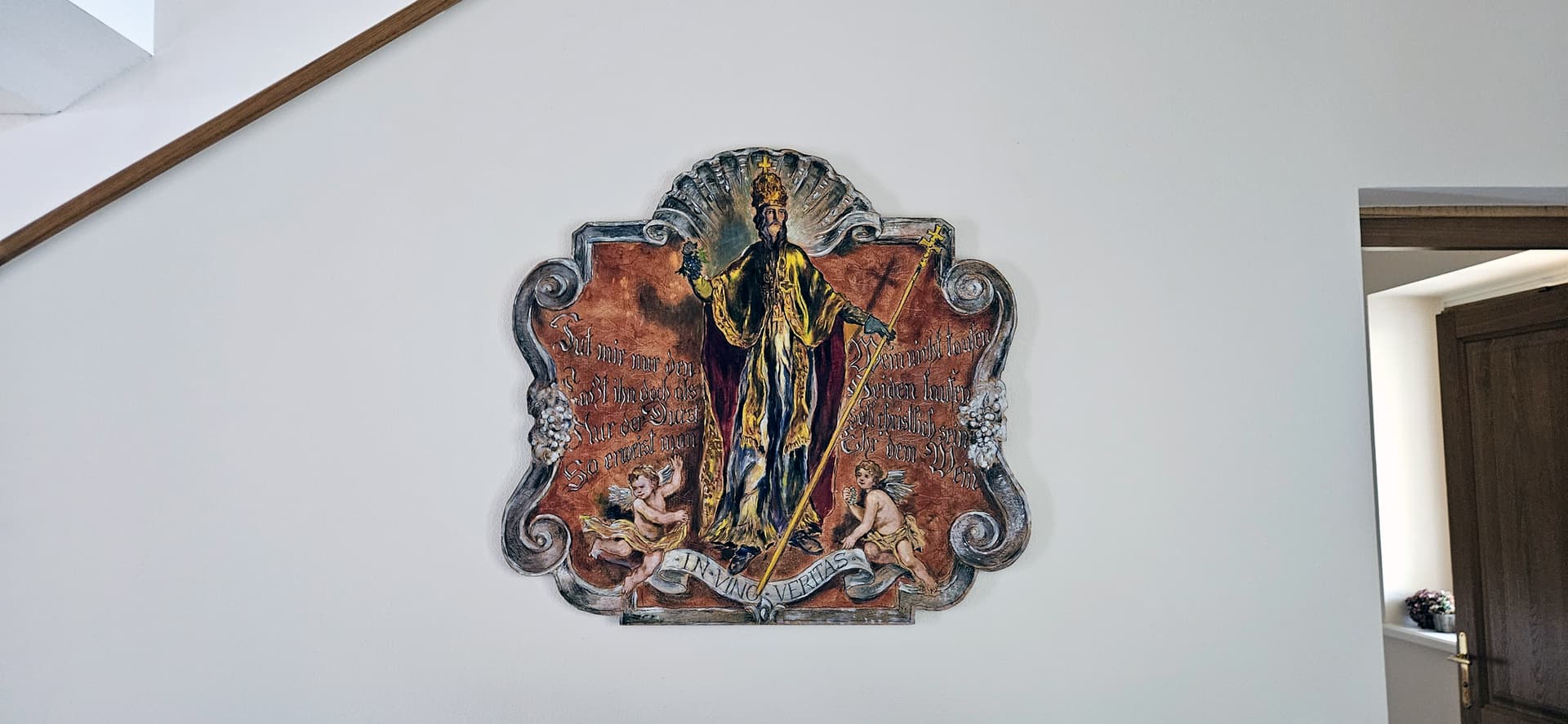
However, I was happy to just check out this replica that was hanging on the winery’s wall next to the tasting room.
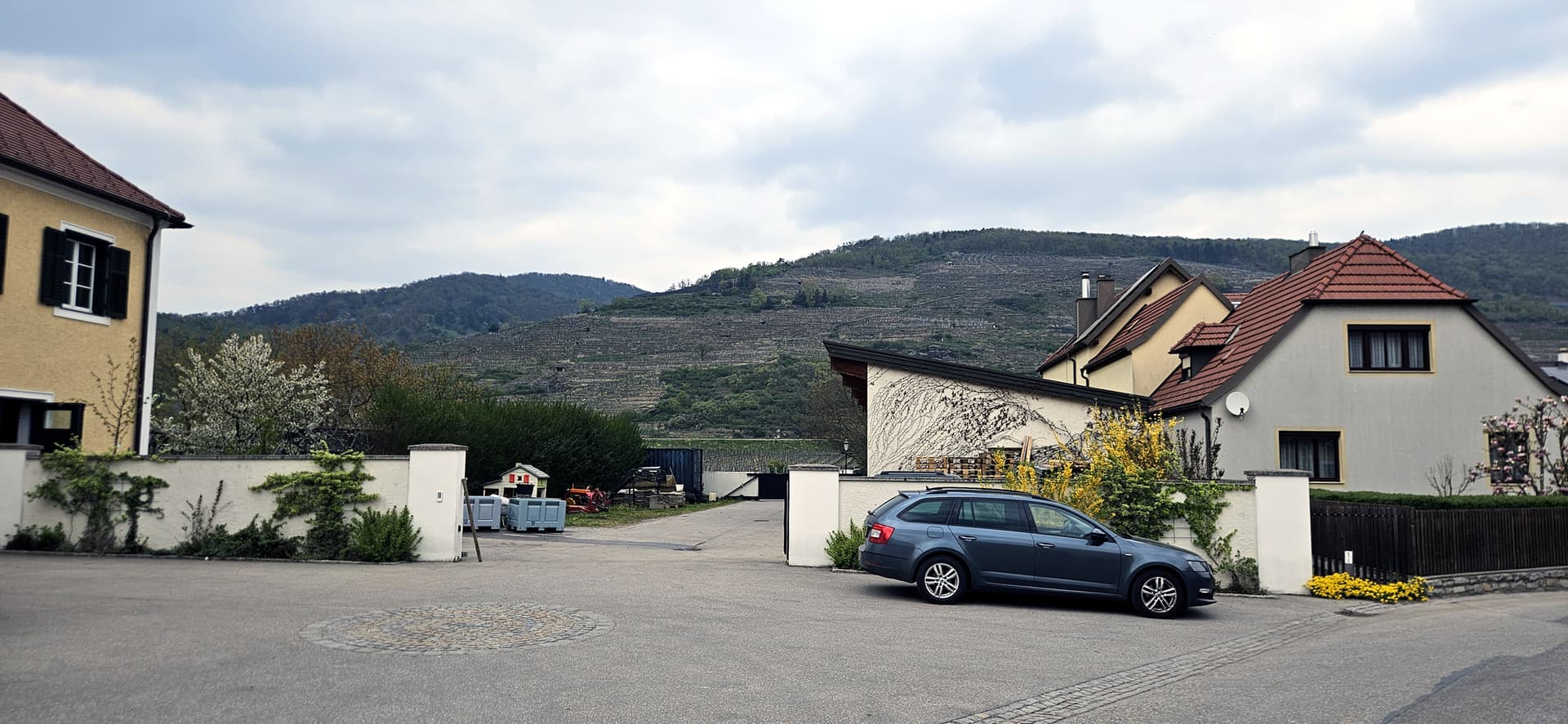
The impressively steep Loibner vineyards are located almost immediately behind the winery (ie. that yellow building on the left).
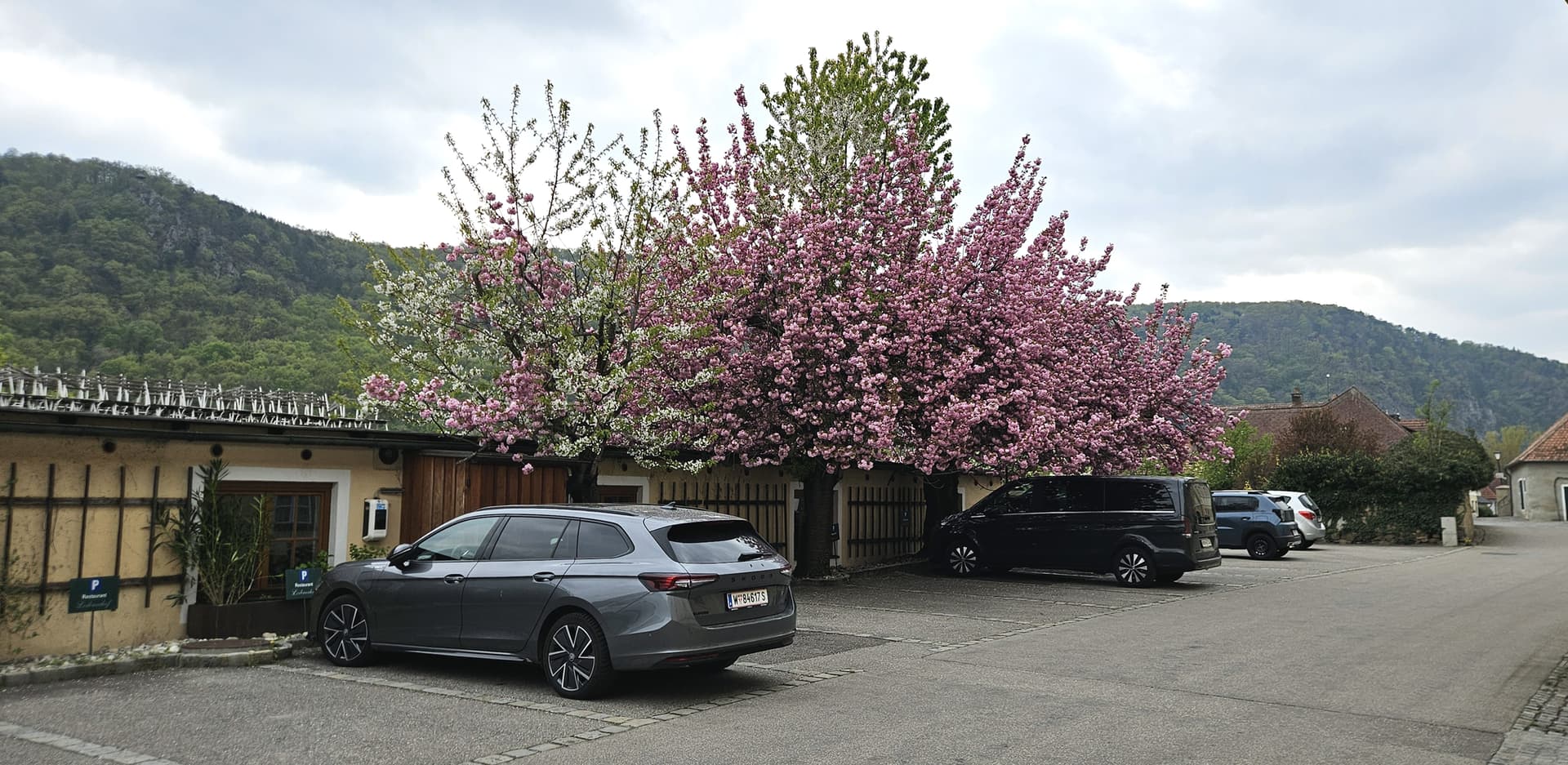
Back at the Loibnerhof parking lot, ready to depart for our next winery visit - and on schedule this time!