I, too, have some 2013 - although not from the visit, just stuff I’ve brought at some point. That’s a spectacular vintage.
Wonderful travelogue. I love Vienna. Enjoy Austria. A super nice place to travel.
1 Like
Not going to argue that! We loved how the wine regions were practically neighboring each other, taking us mere moments to get from one place to another.
1 Like
Sounds like a great visit indeed. And I like the way you give your QPR evaluations, especially given the context of the board, where some folks consider that level a casual daily drinker.
So glad you were able to visit Schloss Gobelsburg. The Grüner Veltliner Renner is my favorite Grüner Veltliner, and quite possibly my favorite Austrian wine. While Riesling is my favorite grape, the Renner is so consistently outstanding that it’s the one Austrian wine I do not think I can ever give up.
3 Likes
I’m loving this travelogue!
The tasting and presentation of Schloss Gobelsburg is wondrous! I’m simply going to make an effort to visit, perhaps as a forthcoming wedding anniversary?!
Impressive wines; frustratingly difficult to source particular selections from Sweden. I welcome the tasting notes for St. Laurent as well as all the others.
On a side note, whenever my wife asks why I have my head buried in my phone, what can be so interesting? - I just show her Otto’s post and she instantly shuts up! 
2 Likes
Day 5 cont’d
After our morning tour at Schloss Gobelsburg had come to an end, we finally left Kamptal - and the whole Niederösterreich (Lower Austria) - behind us as we began our Part 2 of our trip. The next couple of days we would spend on the easternmost edge of Austria, in Burgenland.
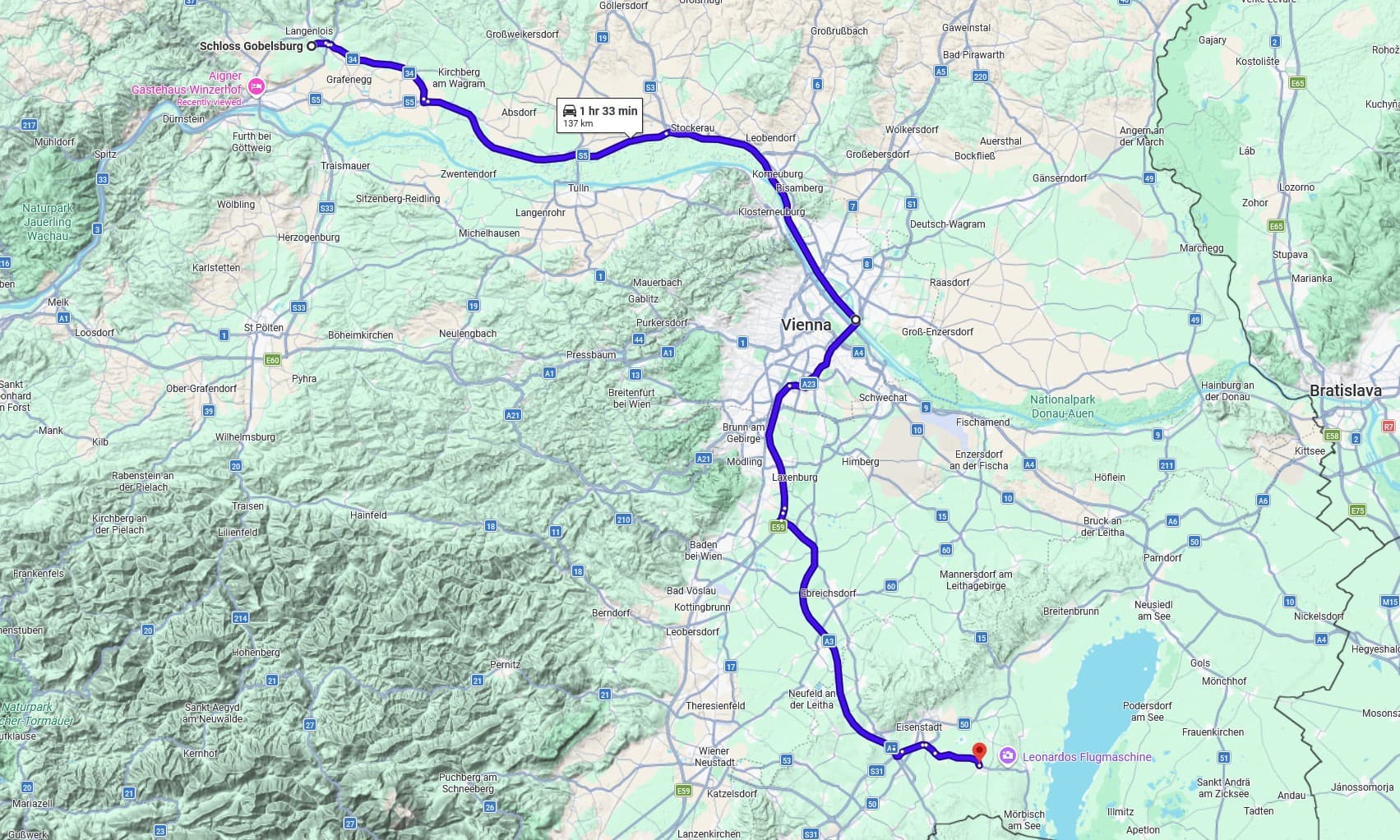
I sent a message to Hannes Schuster of Weingut Rosi Schuster saying we were now on our way, as we had scheduled a visit with him for the afternoon - or so I thought. His reply was short: “We had an appointment yesterday.”
You can’t imagine how my heart sank with this reply - apparently back in early 2026, when I was composing our schedule and contacting the wineries for the visits, I had been looking at the wrong column in our trip calendar, so I had accidentally scheduled this visit for the previous day, when we were still in Wachau and Kamptal!
Hannes Schuster told me how he had just thought we had ghosted him completely, so he had not even bothered to contact us when we failed to arrive at the scheduled time. This following day wasn’t as good for him as he had still some vineyard work to do in the evening. However, after a bit of messaging back and forth, he managed to find some time for us, so we rescheduled a quick new visit for the afternoon. Now we had time to go and grab a quick late afternoon lunch before the Schuster visit. I was honestly so happy how things turned out in the end, because I consider Schuster one of the best - if not The Best - producer of Blaufränkisch wines, and not just in Austria, but in the whole world! It would’ve been a big shame if we had missed this visit because of my unfortunate mistake.
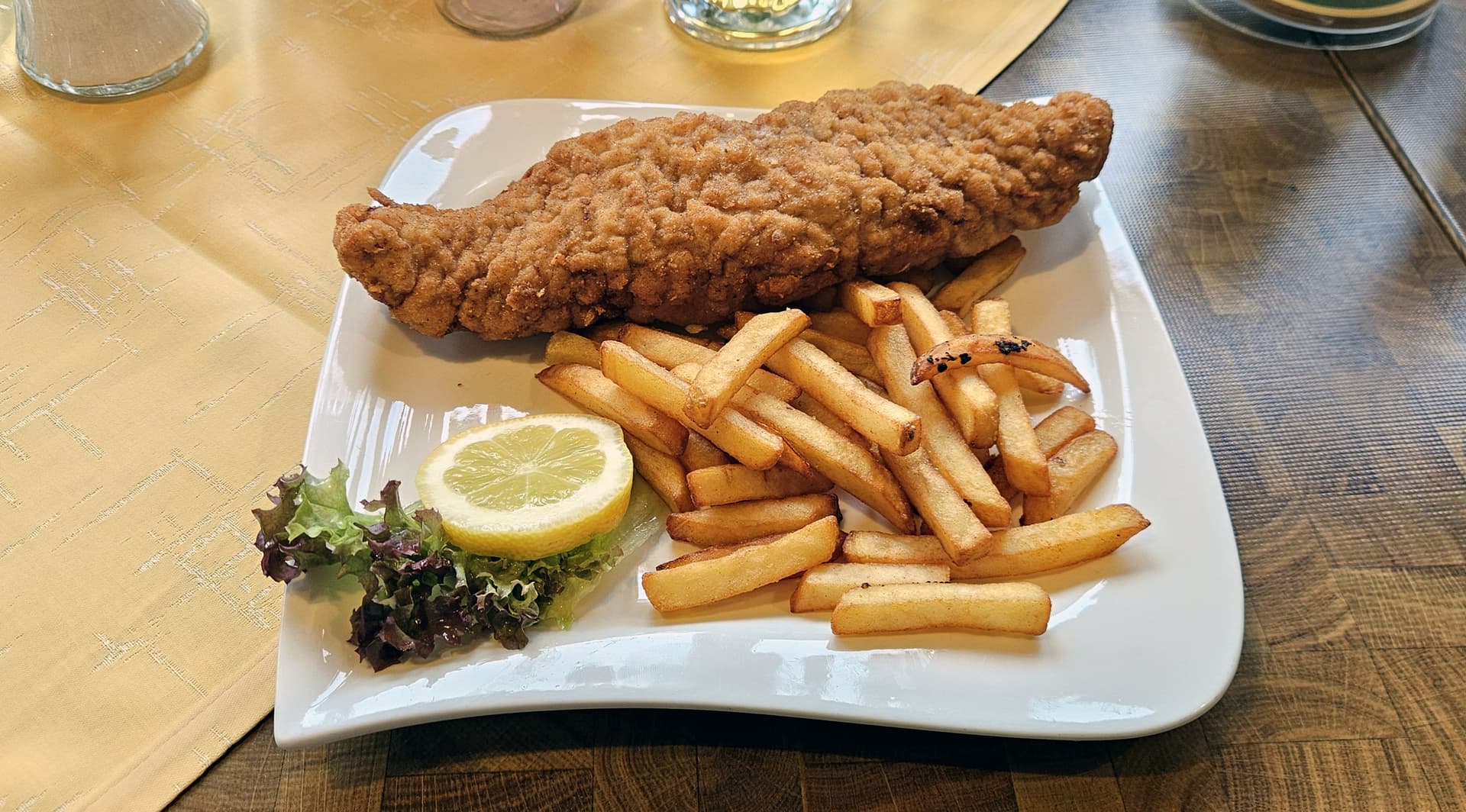
A local classic.
After our healthy and balanced lunch we made our way to the town of Sankt Margarethen where Hannes Schuster resides.
First some background and history:
- Before there was Weingut Rosi Schuster, there was one Rosi Schuster. She worked at her parents’ winery in the town of Sankt Margarethen, but when she finished her studies at the Eisenstadt wine school, she and her husband Franz founded Weingut Schuster in 1979 - the same year they married.
- Although Rosi and Franz founded the winery together, Franz had a full-day job as a teacher at the Eisenstandt wine school, so it was Rosi Schuster who actually run the winery - which is why the winery was soon renamed after her.
- The Schusters took over Rosi’s parents’ winery quite soon afterwards, which meant that their vineyard acreage grew and their formerly red wine-exclusive production expanded to white wines as well.
- As Franz Schuster had a preference for rich and powerful wines, their production emphasized international grape varieties, elevated ripeness and new oak.
- Rosi’s and Franz’s son Hannes Schuster had been making some experiments on his own since the early 2000’s. However it wasn’t until 2005, when Franz fell ill and couldn’t help Rosi with the daily work, that Hannes joined the winery to help out his mother.
- When Franz Schuster passed away in 2007, Rosi Schuster moved the ownership of the winery to her son. Hannes felt that his parents’ wines didn’t really represent Burgenland - or even Austria, for that matter - so he wanted to change the direction towards which his parents had steered the winery. With his mother’s blessings, Hannes began to rip out international varieties and replanting their vineyards with local varieties. Some of the vineyards planted with international varieties he managed to trade with other growers to vineyards planted with traditional Burgenland varieties. Other vineyards Schuster simply sold off.
- After Hannes took over, the new small oak barrels were replaced with bigger casks and fuders. Spontaneous ferments replaced cultivated yeasts and the use of SO2 was toned down considerably.
- The white wines are mainly vinified in whole bunches, while a small amount is destemmed. However, with the red wines, most of the production is destemmed - especially Blaufränkisch has a tendency for green notes, so they have to be careful with the stem inclusion. The wines are aged in oak casks that are replaced seldom, and when they are, the oak is normally very low-toast. The wines are never fined and only lightly filtered, if filtered at all.
- Today the vineyards cover approximately 13 hectares and they have been farmed organically since 2014. 75% of the production is Blaufränkisch and Sankt Laurent, and the remaining 25% portion is white (Chardonnay, Furmint, Grüner Veltliner, Welschriesling).
- As Schuster’s vineyards are spread sporadically in over 40 separate parcels, it usually doesn’t make sense to make single-vineyard cuvées. Today Schuster makes only a few rare single-vineyard bottlings, but most of the fruit is still bottled in village-level cuvées which highlight the regional terroir differences between the villages in which Schuster farms his vineyards.
- The annual production hovers around 60,000 bottles. Today his most important markets are Belgium, Sweden, Norway and Germany in Europe, plus USA and Japan.
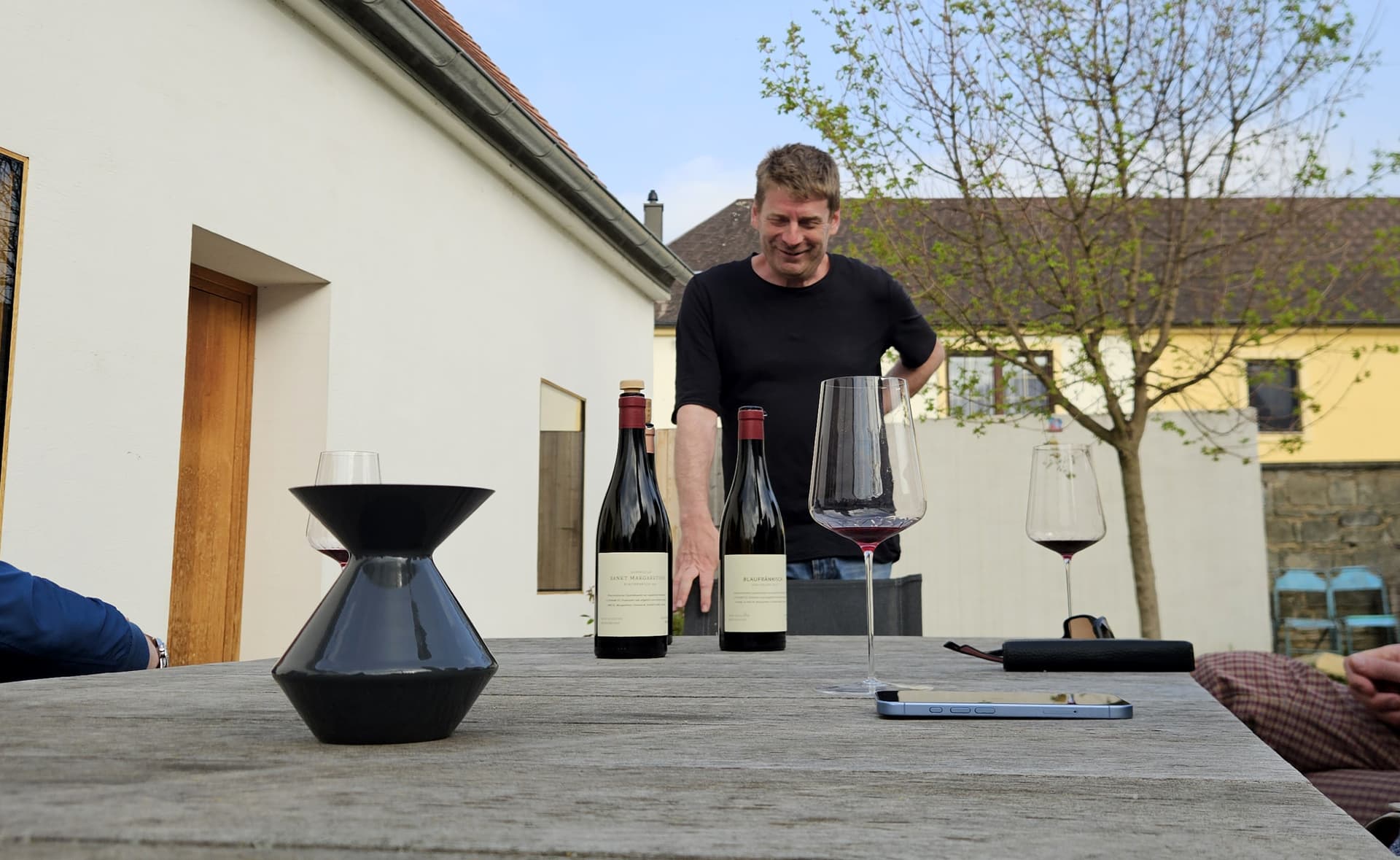
The master of Blaufränkisch himself.
So, arriving in St. Margarethen, we met with Hannes Schuster who took us to the patio on his backyard where we had a bunch of his wines while he explained his winemaking philosophy, the winery’s history and what kinds of differences there were between the villages - which was quite evident in the different Blaufränkisch cuvées we tasted. It was quite illuminating to see how the entry-level Blaufränkisch wines were quite light and playful, not unlike basic Beaujolais-level reds, whereas the wines became quickly rather stern and serious as we moved up the quality ladder to the village and single-vineyard cuvées. Finishing with the stunning 2013 Blaufränkisch - an impressive vintage I’ve had before some years ago - Schuster made a quiet yet compelling point on what kind of stuff Blaufränkisch can make in deft hands. These are truly remarkable, world-class reds - but it seems the world has caught up with these, as the single-vineyard Blaufränkisch wines are not particularly affordable anymore! Today these are among some of the most expensive Burgenland wines you can find.
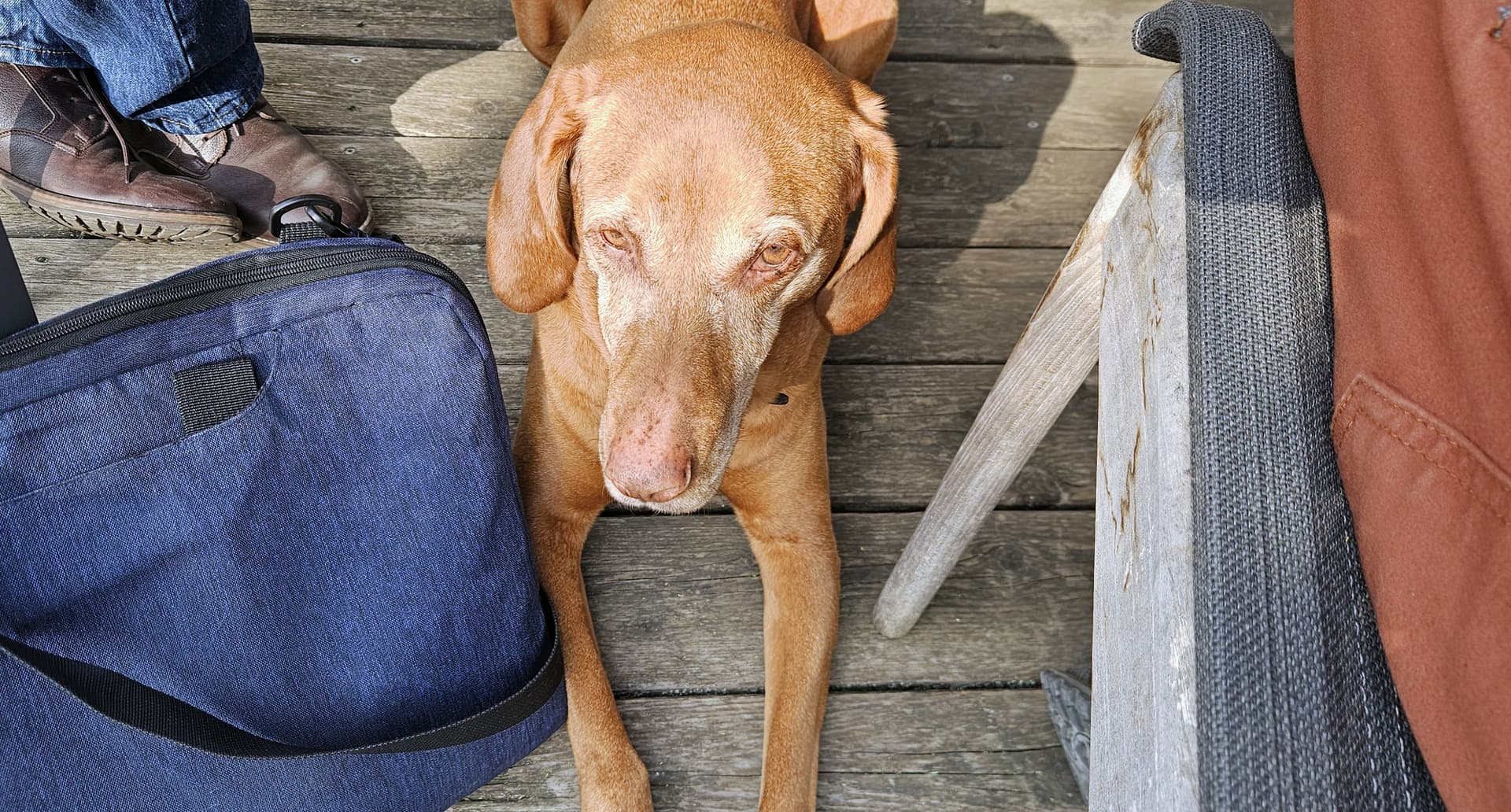
I had some company on the ground level as well! Luzi was the name, I believe.
It was super fun to also try out some of Schuster’s whites! I’ve never had any of them before, but I was thrilled to learn that he was making some Furmint these days! I’m a big fan of Hungarian Furmint, but I’m always excited to taste examples made outside Hungary. While not a particularly non-Hungarian Furmint (the fruit is sourced from only a few kilometers outside Hungary!), it was a very serious and delightful effort. The Welschriesling even more so - I’ve never been a big fan of this often bland, soft and uninteresting variety, but somehow Schuster had managed to transform this neutral grape variety into something remarkably serious and interesting! He really does seem to know his way around these local varieties.
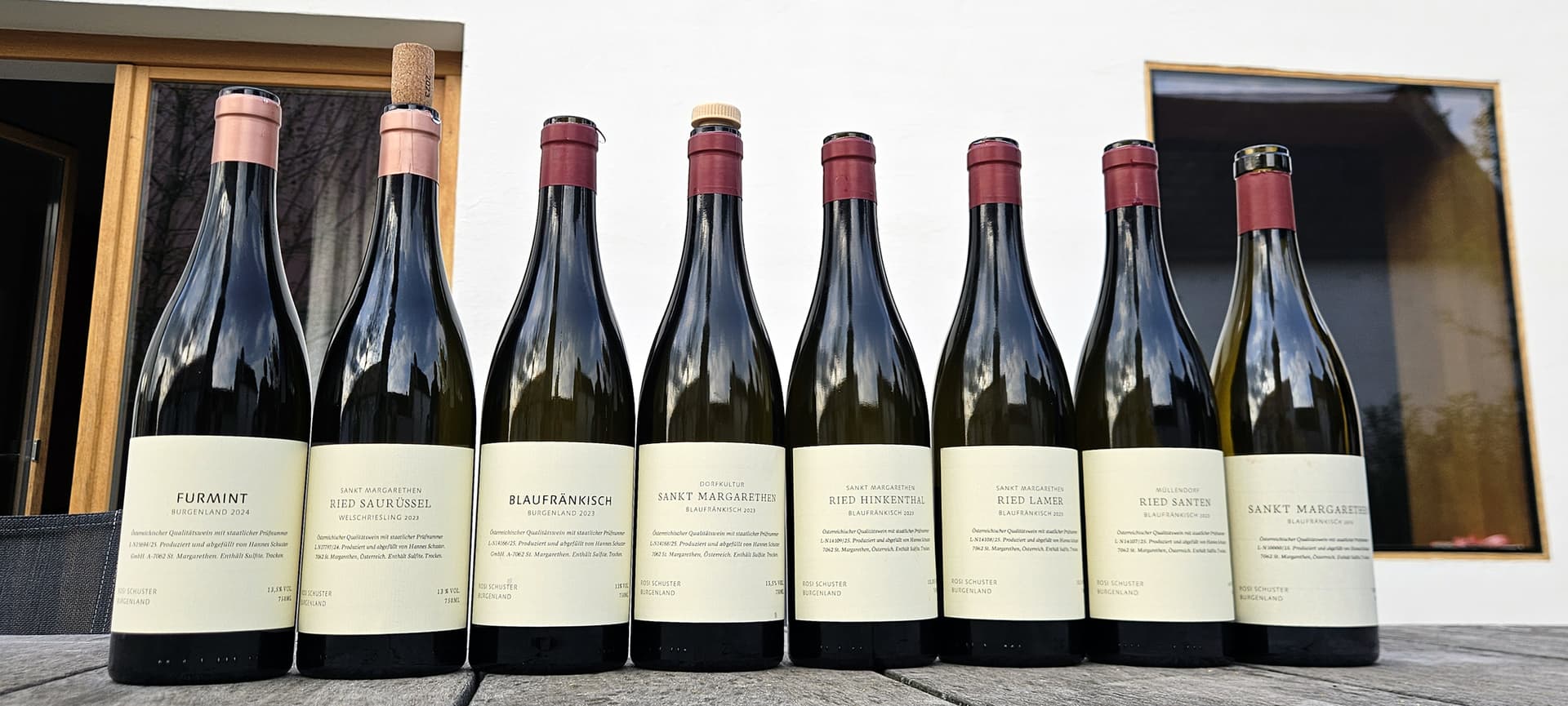
The lineup.
- 2024 Weingut Rosi Schuster Furmint - Austria, Burgenland, Neusiedlersee (16.4.2026)
100% organically farmed Furmint from a few parcels near the Austria-Hungary border. Fermented spontaneously, aged in old oak casks. 13,5% alcohol.
Clear yellow-green color. The nose feels somewhat wild and waxy yet very attractive with complex aromas of ripe yellow fruits, some leesy notes of years, a little bit of fresh Golden Delicious apple, light stony mineral notes, a hint of waxy funk and a touch of citrus rind. The wine feels juicy and firm on the palate with a medium body and bright flavors of stony minerality, some leesy tones, a little bit of waxy funk, light sweeter notes of ripe yellow fruits, a hint of tangy salinity and a touch of spicy red apple. The high acidity makes the overall feel wonderfully fresh and precise. The finish is long and quite rich yet dry with a vibrant aftertaste of stony minerality and waxy funk, some peachy tones, a little bit of salinity, light crunchy notes of Golden Delicious apple, a hint of ripe apricot and a touch of leesy creaminess.
A fresh, attractive and wonderfully serious Furmint with great sense of balance and flavor intensity. Although Furmint is primary considered a Hungarian variety - as plantings outside Hungary are quite meagre - it seems to perform really well in Austria. Schuster's Furmint is not only probably the best Austrian Furmint I've tasted, but it is also among some of the best Furmints I've tasted, full stop. This is a very impressive wine with good sense of substance without that much of weight. There are some subtly funky overtones, but the wine never once comes across as natty or weird. Although the wine is perfectly ready for business right now, I can see it evolving and improving for a good number of years more in a cellar. Highly recommended.
(93 points) - 2023 Weingut Rosi Schuster Welschriesling Sankt Margarethen Saurüssel - Austria, Burgenland (16.4.2026)
100% Welschriesling from Ried Saurüssel, where a small parcel of 60 years old Welschriesling vines grow amidst Blaufränkisch vines. Fermented spontaneously and aged in an old 500-liter oak barrel. 13% alcohol.
Luminous yellow-green color. The nose feels waxy and a bit restrained with nuanced aromas of ripe apples and white fruits, some white peach, light leesy tones, a little bit of creamy oak and a mineral hint of crushed rocks. The wine feels lively, firm and crunchy on the palate with a medium body and intense flavors of zesty citrus fruits, some crunchy notes fresh white peach, a little bit of leathery funk, light stony mineral notes, a hint of salinity and a touch of ripe Granny Smith apple. The wine feels structured and surprisingly acid-driven for a Welschriesling. The finish is clean, crisp and quite acid-driven with a long, dry aftertaste of lemony citrus fruits, some crunchy Granny Smith apple and white currant tones, a little bit of stony and saline minerality, light floral nuances, a hint of waxy funk and a touch of creamy oak.
A very impressive and serious effort for a Welschriesling, showing the kind of intensity and acidity you'd never associate with this typically rather mild variety often made into wines with quite low levels of acidity. The overall feel is vibrant and precise with the tiniest bit of waxy funk that doesn't really make the wine feel weird or natty, just adding a nice level of rustic complexity to those bright, acid-driven fruit flavors. The overall feel is still very youthful, but the wine is already very approachable and thoroughly enjoyable. However, if there ever was a Welschriesling you could age for a long time in a cellar, it is this wine. Highly recommended.
(93 points) - 2023 Weingut Rosi Schuster Blaufränkisch - Austria, Burgenland, Neusiedlersee (16.4.2026)
100% organically farmed Blaufränkisch sourced from multiple Schuster vineyards around multiple villages. Fermented spontaneously and macerated for 2-3 weeks in stainless steel tanks. Aged in old 1200 and 1300-liter oak casks. 13% alcohol.
Youthful, luminous and somewhat translucent raspberry-red color. The nose feels quite reductive with youthful aromas of brambly raspberries and flatulent notes of sulfury reduction, some juicy notes of dark forest fruits, a little bit of gunpowder smoke, light cherry tones and a hint of savory spices. The wine feels clean, youthful and a bit reductive on the palate with a medium body and bright flavors of fresh bilberries and brambly blackberries, some lactic MLF notes, a little bit of gravelly minerality, light tart lingonberry nuances, reduced hints of sulfur and gunpowder smoke and a touch of earthy spices. The wine is high in acidity with gentle, mellow tannins. The finish is long, crunchy and slightly grippy with a dry, nuanced aftertaste of brambly raspberries, some lactic MLF notes of blueberry yogurt, a little bit of ripe blackberry and black raspberry, light smoky nuances and a hint of tart red plum.
A nice, fresh and quite delicate Blaufränkisch. This variety can produce some very stern and muscular red wines, but this was a very bright and crunchy weekday wine with a very acid-driven overall feel - and, conversely, very light and mellow tannins. The wine probably isn't built for the long haul but instead for immediate consumption, but seeing as the wine is very youthful and quite noticeably reductive, I think the wine could really benefit from 1-2 years of additional aging. If opened now, the wine calls for some air to blow all that reduction off. Although not maybe on par with the better Blaufränkisch cuvées of Schuster, this is nevertheless a lovely, well-crafted example of the house style from the entry level. A terrific Austrian little red for people who are looking alternatives for a weekday Beaujolais or a light Pinot Noir.
(90 points) - 2023 Weingut Rosi Schuster Blaufränkisch Dorfkultur Sankt Margarethen - Austria, Burgenland (16.4.2026)
100% organically farmed Blaufränkisch from multiple vineyards in the village of St. Margarethen - many 45 to 55 years old. Fermented spontaneously and macerated for 2-3 weeks. Aged in old 500 and 1200-liter oak casks. 13,5% alcohol.
Youthful, deep, somewhat translucent black cherry color. The nose feels both somewhat reductive and funky with aromas of brambly black raspberries and flint smoke, some cherry tones, a little bit of ripe bilberry, light crunchy cranberry notes, a hint of farmhouse funk, a touch of dark plummy fruit and a skunky whiff of sulfur. The wine feels ripe, juicy and vibrant on the palate with a medium-to-moderately full body and quite intense flavors of tart lingonberries and sweeter bilberries, some peppery spice, a little bit of brambly raspberry, light stony mineral notes, a hint of gravelly minerality and a touch of red plummy fruit. The combination of rather high acidity and moderately grippy medium-plus tannins make the overall feel enjoyably firm and somewhat muscular. The finish is long, crunchy and somewhat grippy with a vibrant aftertaste of tart lingonberries and brambly raspberries, some juicy red plummy fruit, light gravelly minerality, a little bit of earth, a hint of fresh bilberry and a touch of peppery spice.
This was a nice jump up in quality from the basic-level Blaufränkisch. Although I liked the slightly leaner and a bit drier fruit profile and somewhat higher acidity of Schuster's entry-level Blaufränkisch, you start to feel the impact of the older vines in the depth of flavor and general sense of added concentration. The basic Blaufränkisch was a nice weekday wine, but this is a definitely more serious, less playful effort. And - is it is with many young Schuster wines - the wine is still somewhat reductive, so it really calls for some additional aging. I think some 4-6 extra years could really benefit the wine, but if opened now, an hour or two of aeration really helps in blowing off the reduction. A fine, serious Blaufränkisch with lots of upside. Recommended.
(91 points) - 2023 Weingut Rosi Schuster Blaufränkisch Sankt Margarethen Ried Hinkenthal - Austria, Burgenland, Neusiedlersee-Hügelland, Leithaberg (16.4.2026)
100% organically farmed Blaufränkisch from 65-yo vines Ried Hinkenthal in the village of St. Margarethen. Fermented spontaneously and macerated for 2-3 weeks. Aged in old 500-liter oak casks. 13,5% alcohol.
Youthful, deep, somewhat translucent black cherry color. The nose feels youthful, fragrant and somewhat reductive with dark-toned aromas of ripe bilberries, some tobacco, a little bit of black cherry, light floral notes of violets and a hint of rubbery reduction. The wine feels rather ripe and concentrated yet wonderfully lively on the palate with a moderately full body and juicy flavors of bilberries and other dark forest fruits, some stony mineral notes, a little bit of tart lingonberry, light brambly black raspberry notes, a hint of crunchy redcurrant and a reductive touch of rubbery character. The wine is firm and fresh with its high acidity and quite grippy tannins. The finish is long, crunchy and rather tannic with a somewhat concentrated aftertaste of tart lingonberries and crunchy cranberries, some farmhouse funk, a little bit of ripe blueberry, light smoky notes of reduction, a hint of fresh redcurrants and a touch of stony minerality.
The lower-tier Blaufränkisch wines of Schuster have felt more like Beaujolais (or Cru Beaujolais), but at this single-vineyard level the concentration jumps into play - these wines pack a bit more muscle and heft than most Cru Beaujolais wines. However, that ripeness and sense of concentration doesn't translate to softness, or sweetness of fruit; even though this was a bigger wine than the village-level Sankt Margarethen Blaufränkisch with a bit more ripeness, I still felt this wine felt more crunchy with a bit more freshness and sense of structure! All in all, this is a dead-serious and very ageworthy take on Blaufränkisch that is still quite far away from its peak. It is very impressive now, but I'd say the wine is now more about aging potential than immediate reward. Let these wait for another 7-10 years and concentrate on the older vintages - or younger lower-tier bottlings - in the meantime. Lovely stuff, highly recommended.
(92 points) - 2023 Weingut Rosi Schuster Blaufränkisch Sankt Margarethen Ried Lamer - Austria, Burgenland, Neusiedlersee (16.4.2026)
100% organically farmed Blaufränkisch from up to 70 yo vines Ried Lamer in the village of St. Margarethen. Fermented spontaneously and macerated for 2-3 weeks. Aged in old 500-liter oak casks. 13,5% alcohol.
Youthful, deep, somewhat translucent black cherry color. The nose feels open, quite ripe and rather sweet-toned with attractive aromas of ripe blueberries and brambly black raspberries, some peppery spice, a little bit of stony minerality, light juicy strawberry tones, a hint of black cherry and a touch of smoky reduction. The wine feels clean, pretty crunchy and slightly wild on the palate with a rather full body and layered flavors of brambly black raspberries, some licorice tones, a little bit of stony minerality, light sweet notes of ripe blueberries, a tart hint of crunchy red plum and a floral touch of violets. The combination of suave texture, rather high acidity and quite ripe, well-managed tannins make the overall feel pretty velvety yet enjoyably firm. The finish is lively, clean and crunchy with a long aftertaste of fresh blueberries, some tart lingonberries, a little bit of licorice, light crunchy notes of cranberries and red plums, mineral hints of gravel and tangy salinity and a touch of farmhouse funk.
A youthful, lively and wonderfully nuanced Blaufränkisch with a remarkable sense of finesse. Next to the sturdier, more structure-driven single-vineyard Blaufränkisch bottlings Hinkenthal and Santen - which felt like Blaufränkisch versions of Barolo and Bordeaux, respectively - this Lamer bottling came across as slightly lighter, open-knit and more delicate in nature. Quite Burgundian next to the other two single-vineyard wines, if you may. I guess this bottling is a more approachable take on Blaufränkisch that doesn't call for as much age as the Hinkenthal and Santen bottlings, since they felt still very stern and pretty tightly-knit. I'm sure this wine will also age gracefully for many years - most likely benefiting from them as well - but I feel this wine will reach its peak sooner than the other two. I'd let it age for at least another 5-7 years, but most likely the wine can age easily for much, much longer. Captivating, characterful and so harmonious stuff. Highly recommended.
(93 points) - 2023 Weingut Rosi Schuster Blaufränkisch Müllendorf Ried Santen - Austria, Burgenland, Neusiedlersee-Hügelland, Leithaberg (16.4.2026)
100% organically farmed Blaufränkisch from the chalky, high-altitude Ried Santen in the village of Müllendorf. Fermented spontaneously and macerated for 2-3 weeks. Aged in old 500-liter oak casks. 14% alcohol.
Quite opaque blackish-red color with a youthful purplish hue. The nose feels brooding, dark-toned and slightly fragrant with aromas of black raspberries and black cherries, some floral violet tones, a little bit of licorice, light earthy notes, a rubbery hint of reduction and a sweeter touch of ripe forest fruits. The wine feels silky, stern and a bit inky on the palate with a rather full body and intense flavors of fresh bilberries and ripe blueberries, some saline mineral notes, a little bit of licorice root, light floral nuances of violets, sweeter hints of dark plums and juicy blackberries and a reductive touch of smoke. The overall feel is quite muscular, thanks to the moderately high acidity and ample, grippy tannins. The finish is long, juicy and quite grippy with an intense aftertaste of fresh bilberries, some saline mineral tones, a little bit of licorice root, light crunchy redcurrant notes, a hint of ripe red plum and a touch of earth. The high alcohol makes the wine end on a slightly palate-warming note.
A very stern, powerful and impressive Blaufränkisch that is packed with bold, moderately ripe and quite dark-toned fruit and enough structure to keep all that framed in a firm, well-proportioned package. To me, Schuster's three single-vineyard bottlings - Hinkenthal, Lamer and Santen - were rather similar to each other, but still showing quite distinct personalities. If I had to describe them in perhaps more widely-understood counterparts, I'd say the more delicate and not that structured style of Lamer felt like Schuster's style taken into a Burgundy direction, whereas the somewhat leaner, crunchy and still quite structured style of Hinkenthal felt more like a Barolo. The ripe, dark-toned and very structured style of this Santen, on the other hand, felt like a Blaufränkisch made in a style that reminded me the most of Bordeaux. All these wines were very impressive and obviously very ageworthy, but perhaps this Santen might be the one that will age for the longest. At least if felt like the wine was built for the long haul, not for immediate drinking. Outstanding stuff, highly recommended.
(93 points) - 2013 Weingut Rosi Schuster Blaufränkisch Sankt Margarethen - Austria, Burgenland, Neusiedlersee (16.4.2026)
100% organically farmed, hand-picked Blaufränkisch from 45-65 yo vineyards surrounding the village of Sankt Margarethen im Burgenland. Fermented spontaneously, aged for 20 months in exclusively old and neutral large oak barrels. 13% alcohol.
Quite deep, dark and somewhat evolved black cherry color with a mature maroon hue. The nose feels very attractive and pleasantly evolved with seductive, layered aromas of wizened cherries, some earthy tones, light bretty notes of leather and barnyard, a little bit of ripe raspberry, a hint of pipe tobacco, a touch of peppery spice and a lifted whiff of sweet VA. The wine feels evolved, firm and crunchy on the palate with a medium body and complex flavors of wizened cherries and tart red plums, some leathery funk, a little bit of developed raisiny fruit, light juicy notes of ripe black raspberry, a hint of smoky reduction and a touch of earthy spices. The wine retains an impressive sense of structured with its high acidity and assertive, grippy tannins. The finish is long, stern and grippy with a complex aftertaste of wizened cherries and raisiny tones, some leathery and subtly animale notes of brett, a little bit of pruney dark fruit, light smoky tones, a hint of brambly black raspberry and a touch of sweet VA.
A fantastic, beautifully evolved and quite dead-serious example of Blaufränkisch. I had tasted this same vintage about 4 years earlier and back then the wine was still surprisingly tightly-knit and even somewhat closed due to its moderately reductive nature. However, this time the wine was just singing as it had lost most of its reduction, revealing more expressive and somewhat matured fruit flavors along with subtly funky nuances of brett and VA that only added to the rustic charm of the wine. Structurally the wine was as stern and tightly-knit as it was back then, showing very little resolution. Most likely this wine will continue to evolve and improve for another 5-10 years and perhaps keep for even longer. A fantastic village-level Blaufränkisch showing the power, elegance and cellar potential of Schuster's wines. Very highly recommended.
(94 points)
Unfortunately Schuster didn’t have any wines to sell for us, so in that regard we had to leave empty-handed. Nevertheless, we were very impressed by the wines we tasted and most of all extremely grateful for giving us some of his time!
From Sankt Margarethen we drove to Parndorf to check in to our hotel and leave our luggage in our rooms before hurrying off to the town of Gols for our dinner at Restaurant Heimlichwirt.
Gols is a rather small yet quite central town on the northern shore of the large yet shallow Neusiedler See, Lake Neusiedl. We went there because a sommelier-chef friend of ours told us that if we are going to be in those parts of Austria, we simply had to dine in Heimlichwirt. Naturally we had no alternatives but to book a table for seven.
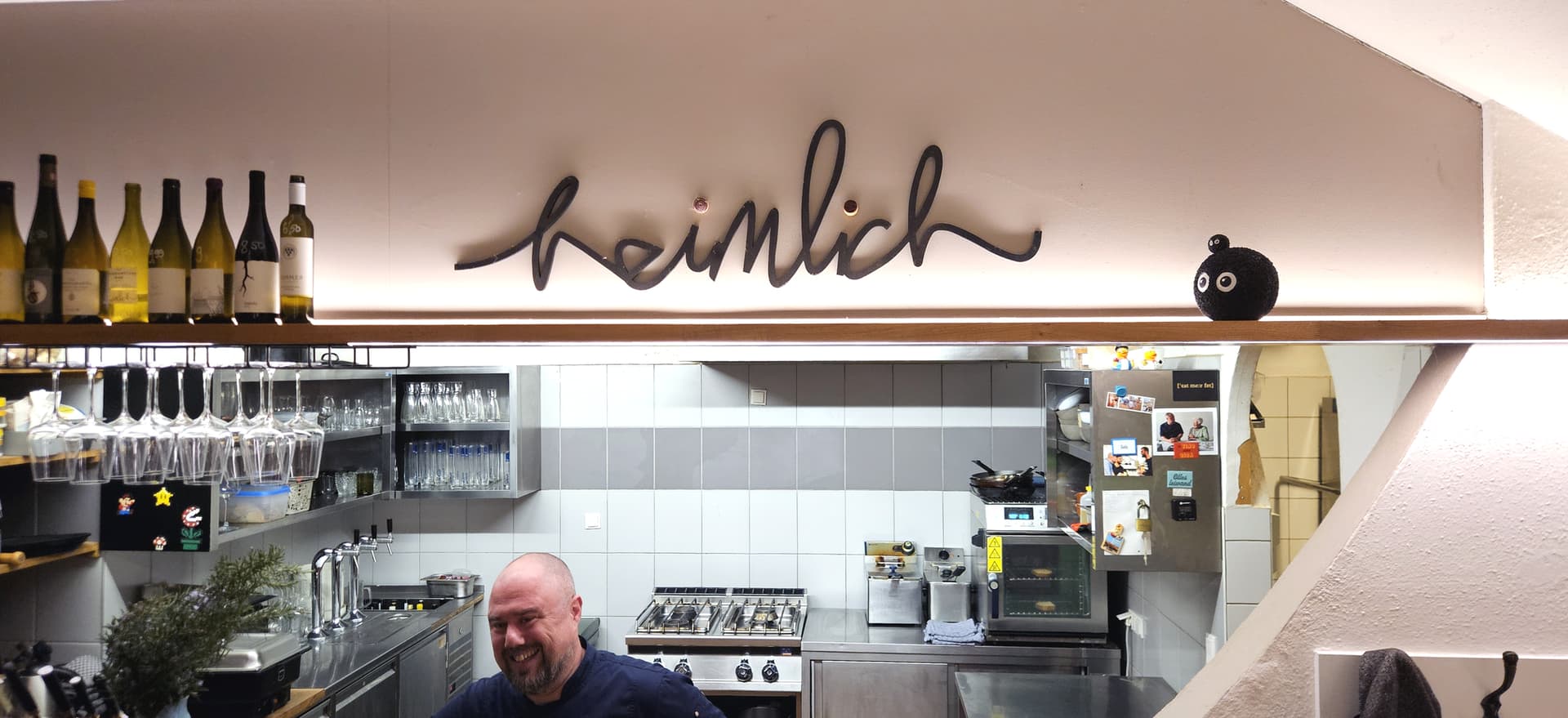
Mr. Müller in the kitchen.
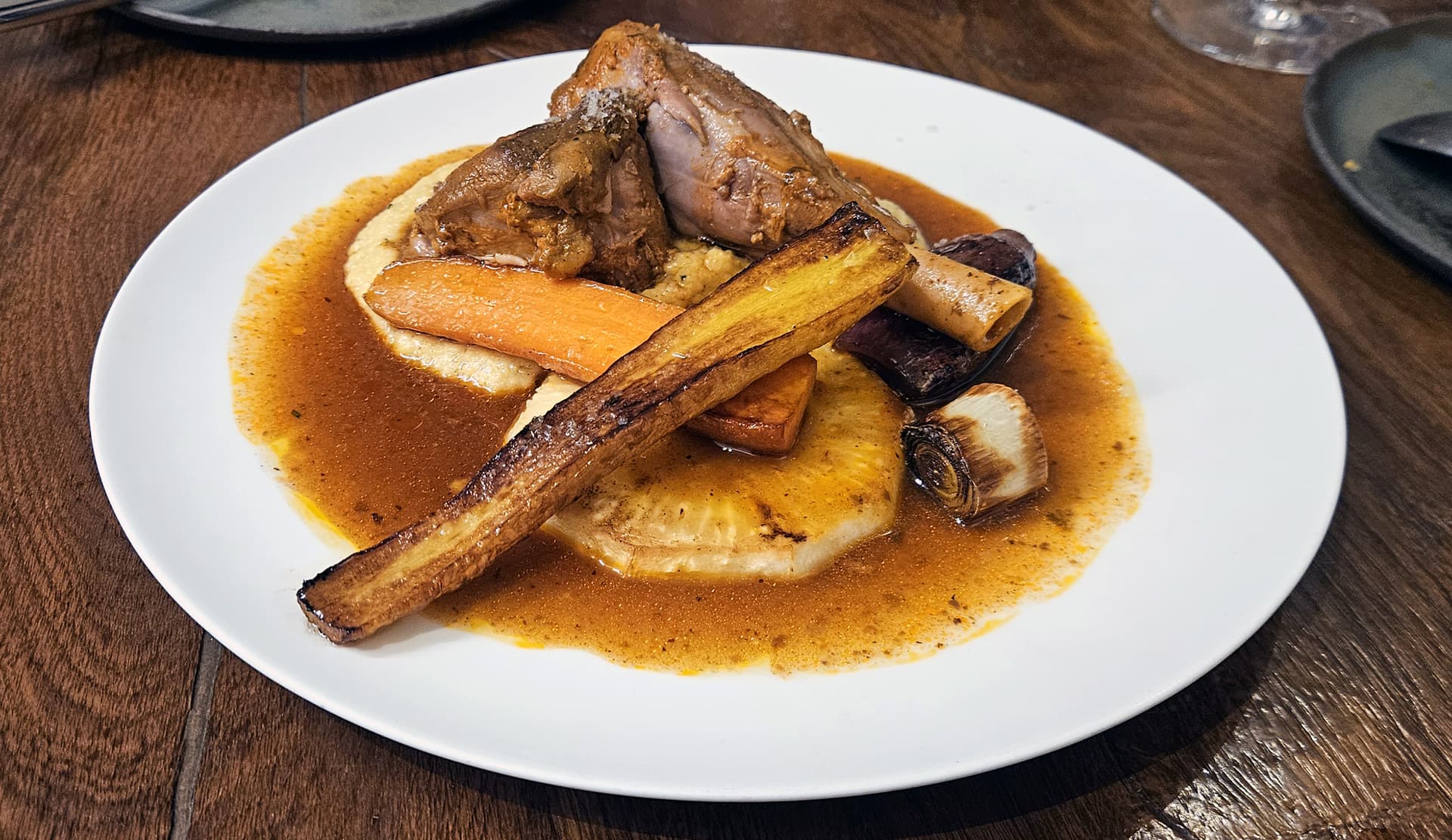
Heimlichwirt is run by Peter H. Müller, a sommelier-chef from southern Germany who relocated 10 years ago to Burgenland and opened his own restaurant in which he combines his local cuisine from Germany with local wines.
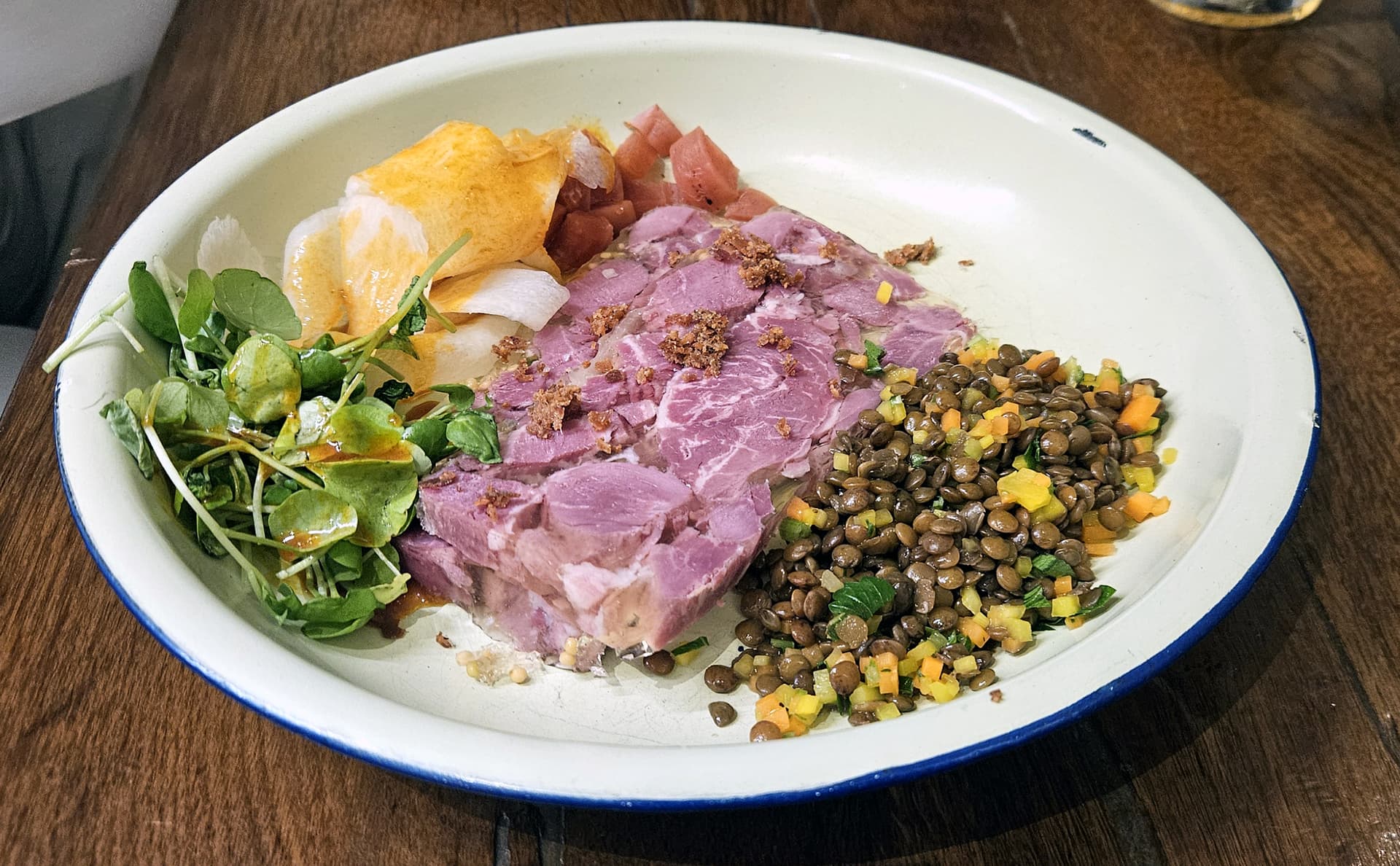
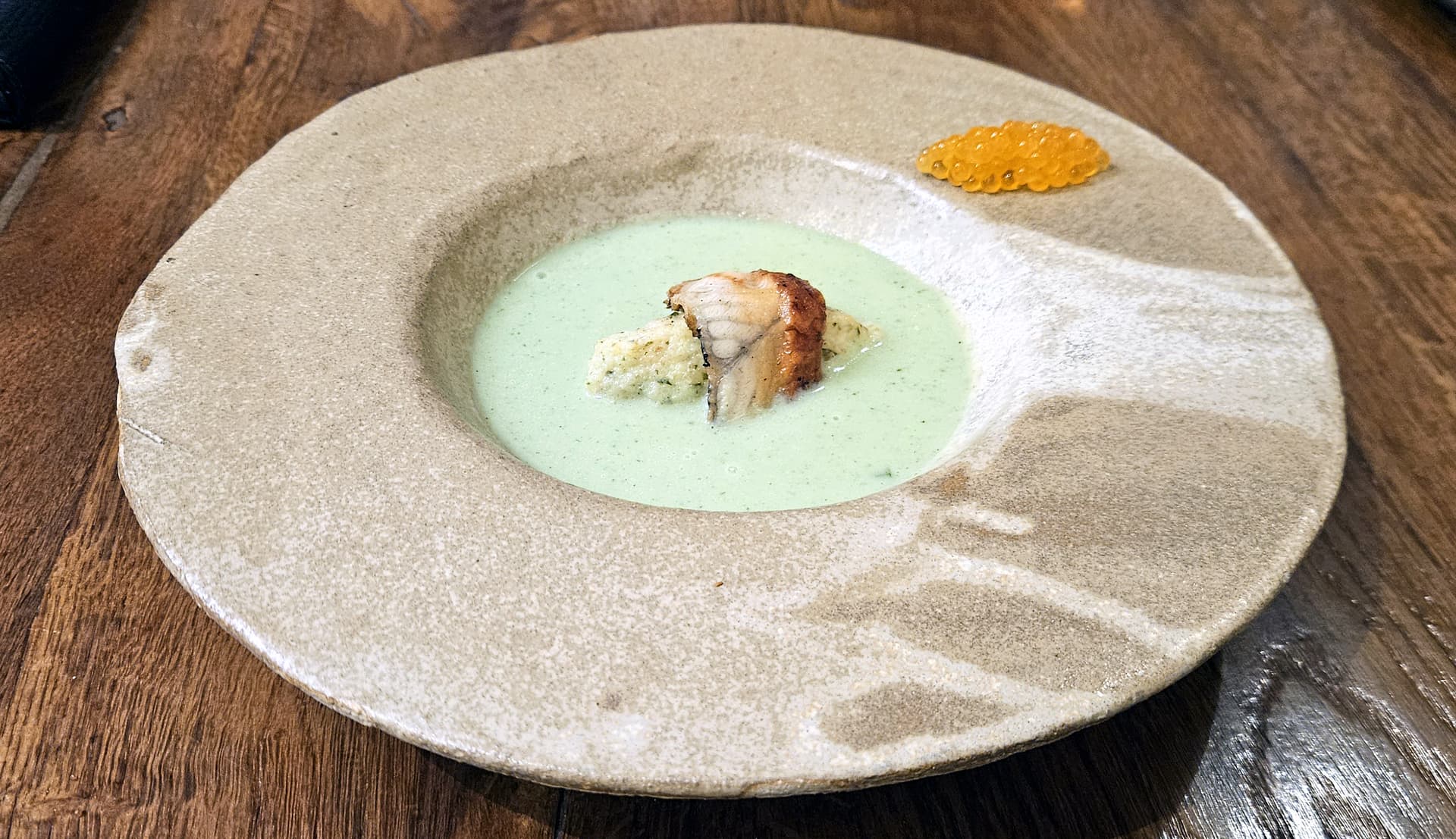
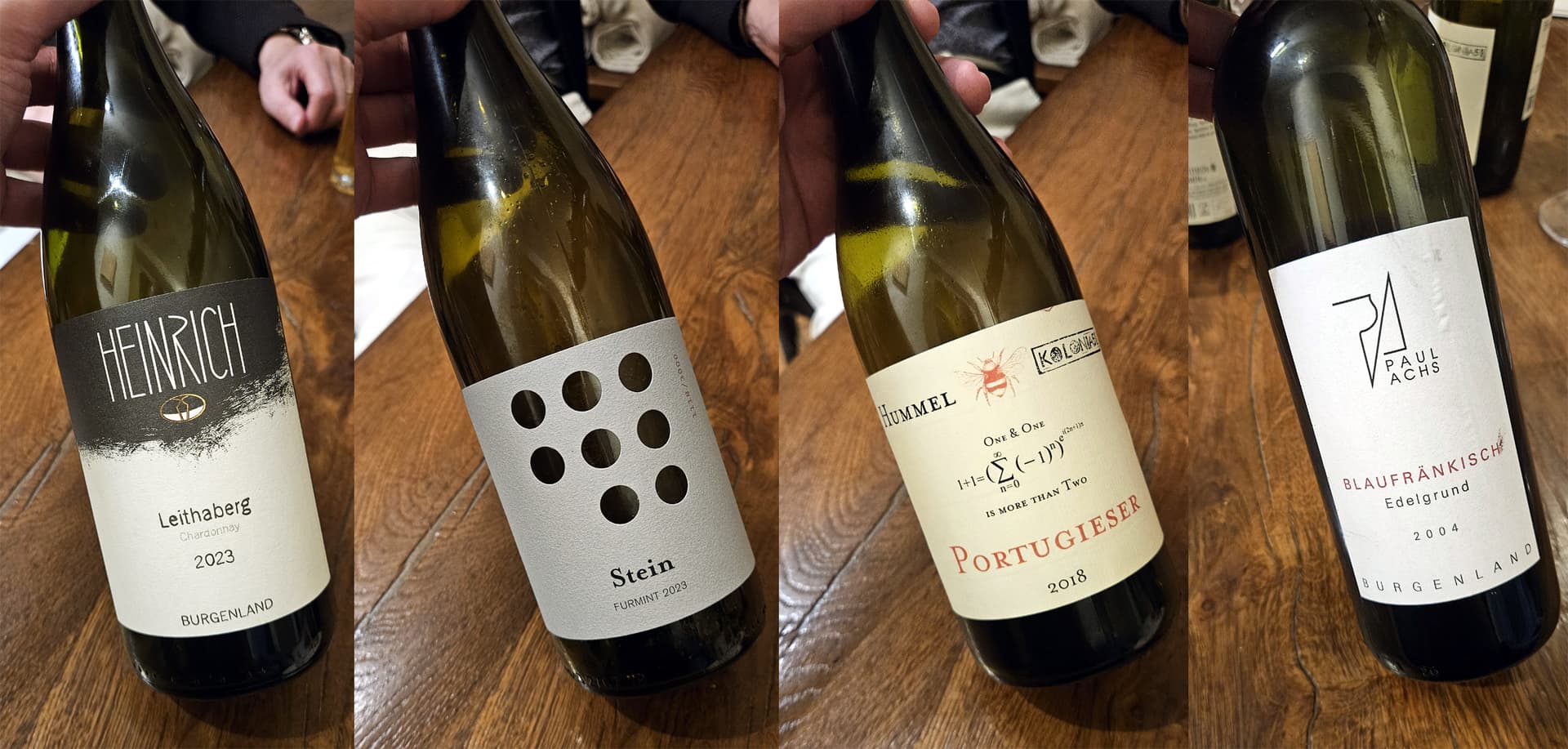
- 2023 Heinrich Chardonnay Leithaberg - Austria, Burgenland, Neusiedlersee-Hügelland (16.4.2026)
A biodynamic Chardonnay. Macerated for a few hours with the skins, fermented spontaneously with indigenous yeasts, aged on the lees for a year in 500-liter oak barrels. Bottled in October 2024. 13,3% alcohol, 1 g/l residual sugar and 6,3 g acidity.
Hazy lemon-yellow color. The nose feels expressive with aromas of ripe Golden Delicious apple, some creamy oak tones, a little bit of fresh peach, light pineapple notes, a hint of waxy funk and a mineral touch of wet rocks. The wine feels dry, firm and subtly wild on the palate with a medium-to-moderately full body and layered flavors of stony minerality, ripe Granny Smith apple, some creamy oak, a little bit of ripe lemony citrus fruits, light buttery tones, a lifted hint of sweet VA and an oceanic touch of salinity. The brisk, racy acidity lends a good amount of structure and energy to the wine. The finish is crisp, long and lively with a dry aftertaste of lemony citrus fruits and tart Granny Smith apple, some creamy oak tones, a little bit of waxy funk, light buttery notes, a hint of fresh peach and a touch of tangy salinity.
A wonderfully crisp, structured and lively Chardonnay showing great sense of intensity and energy. Not unlike an oak-aged Chablis with subtly funky undertones and an extra dose of salinity. A terrific white for the fans of zippy, acid-driven Chardonnay. Seeing how youthful the wine is, I would happily age the wine for at least a handful of years more, just to let the oak notes have enough time to integrate with the fruit department. Terrific stuff that is darn lovely already now, but showing great potential for future development. While the wine was more or less worth the price at 65€ in a restaurant, at its retail price (approximately 20€), this is a bargain. Recommended.
(92 points) - 2023 Weninger Furmint Stein - Hungary, Sopron, Soproni (16.4.2026)
A biodynamic Furmint from the stony Stein vineyard located in Sopron, just a stone's throw away from the Austrian border. The vine age is 25 years, but the vineyard was grafted to Furmint in 2017. Harvested in September, directly pressed into old 500-liter demi-muids. Fermented spontaneously with indigenous yeasts, spontaneous MLF, aged on the lees for 14 months in 500-liter oak barrels. Bottled unfiltered in December 2024. 12% alcohol, 0,7 g/l residual sugar and 5,3 g acidity. Total SO2 31 mg/l. Bottle #1118 of total 3000 bottles.
Pale lemon-yellow color. The nose feels rather ripe and somewhat sweet-toned with aromas of juicy nectarines, some ripe Golden Delicious apple, light creamy oak tones, a little bit of waxy funk and a hint of steely minerality. The wine feels firm, dry and subtly wild on the palate with a rather full body and nuanced flavors of ripe Granny Smith apple, some waxy funk, a little bit of stony minerality, light creamy oak tones, a hint of juicy citrus fruits and a crunchy touch of fresh nectarine. The overall feel is quite broad yet still firm and precise, thanks to the high acidity. The finish is dry, broad and juicy with a long aftertaste of ripe lemony citrus fruits, some stony mineral notes, a little bit of waxy funk, light crunchy notes of fresh nectarine, a lifted hint of floral spice and a touch of tangy salinity.
A nice, fresh and subtly wild Furmint - stylistically perhaps a bit closer to Burgenland whites than the leaner, more mineral Furmints you'd find in more easterly parts of Hungary. Not the most complex example of the variety, but the slightly sauvage nuances add nice sense of rustic depth to the wine. At the moment the wine is still pretty youthful, so I can imagine it will continue to evolve and improve over at least a handful of years from here. A pleasant and harmonious effort, although maybe a bit pricey for the quality at 69€ in a restaurant. Nevertheless, at its retail price of approximately 25€, this is solid value.
(90 points) - 2018 Hummel Portugieser Kolonia 52 - Hungary, Dél-Pannónia, Villányi (16.4.2026)
The front label says "One & One is More than Two". 100% organically farmed Portugieser from Villányi. Hnad-harvested, destemmed by hand. Fermented spontaneously. Bottled unfined and unfiltered. 11% alcohol.
Pale and quite translucent pomegranate color with a slightly evolved maroon hue. The nose feels rather fragrant, sweet and quite lifted with wild aromas of raspberry marmalade, some nail polish VA, a little bit of bitter almond and cherry pits, light blueberry tones, a hint of pomegranate juice and a floral touch of elderflowers. The wine feels wild, crunchy and quite noticeably tart on the palate with a light - almost thin - body and dry flavors of tart lingonberries and cranberries, some sour cherry bitterness, a little bit of nail polish VA, light bitter almond tones, hints of elderflowers and elderberries and a touch of tart pomegranate juice. The wine is very high in acidity with very light and gentle tannins. The finish is dry, wild and subtly grippy with a rather long and quite lifted aftertaste of tart lingonberries, some ripe cranberries, a little bit of crunchy red gooseberry, light lifted notes of nail polish VA and acetic sharpness, a hint of fresh redcurrants and a touch of cherry pits.
A quite wild and a bit unbalanced Portugieser that feels somewhat too high in acidity with too little body in relation to the zippy acidity and a bit too much VA for the light and borderline under-ripe fruit flavors. Although still somewhat drinkable, this was not at the level of the Hummel wines I've had before. I was honestly surprised how light, lean and tart the wine was - I thought 2018 was a rather warm vintage in those parts of Hungary, so I expected something with a bit more fruit and volume. Not really worth the price at 54€ in a restaurant.
(84 points) - 2004 Paul Achs Blaufränkisch Edelgrund - Austria, Burgenland, Neusiedlersee (16.4.2026)
100% Blaufränkisch from Ried Edelgrund. 13% alcohol.
Evolved, deep and moderately opaque black cherry color. The nose feels meaty and somewhat evolved with aromas of black cherries and licorice root, some meaty notes of game and bratwurst, some smoky tones, a little bit of ripe blueberry, light toasty notes of mocha, a hint of elderberry juice and a developed touch of dried dark fruits. The wine feels dry, firm and sinewy on the palate with a moderately full body and evolved flavors of ripe cherries and wizened blackcurrants, some gravelly mineral tones, a little bit of elderberry juice, light woody notes of savory oak spice along with some toasty nuances, a sweet hint of ripe dark plum and a touch of salinity. The wine is pretty structure-driven with its high acidity and still moderately grippy and rather unresolved tannins. The finish is firm, quite grippy and rather tightly-knit with a long aftertaste of moderately ripe black cherries, some wizened dark berries, a little bit of gravelly minerality, light oaky notes of toasty mocha character and savory wood spice, a hint of elderberry juice and a touch of licorice.
A stern, moderately evolved and relatively Bordeaux-ish Blaufränkisch. I guess the wine might've seen some new oak barrels in its youth as it is exhibiting some toasty qualities even at the age of +20 years - however, now they are quite subtle undertones beneath the quite savory and evolved fruit flavors and non-fruit nuances. I feel the wine is slowly approaching its plateau of maturity, or it is there already, but most likely it is not going to be falling apart anytime soon. Drink or keep. Quite impressive and serious stuff, but maybe a tad pricey at 111€ in a restaurant.
(93 points)
4 Likes
I have been to Wachau and Kamptal many times. You managed to visit 2 of my favourites - Gobelsburg and Eichinger. When I visited Eichinger it was still Birgit that was running the show, but she handed the tasting over to Gloria since Birgit didn’t speak English very well.
I still have some Eichinger and Gobelsburg wines, among others 2013 Gobelsburg GV Lamm.
1 Like
Happy to hear!
Gobelsburg is also one of my absolute favorites in Austria, whereas we had no previous experience on Eichinger’s wines. Both the visits were easily among some of the best on our trip!
Although it’s not Lamm, I’m nevertheless happy that I still have that one bottle of 2013 Gobelsburg GV Steinsetz in my cellar.
Otto,
Thanks for the incredible write-up!
We had a bottle of the 2020 Schütt this week while on vacation in Lake Louise, Alberta at a very reasonable price off the list (especially since the somm offered it for same price as the Loibenberg which was unavailable!). I found the weight perfect for the range of foods that it accompanied — both veal in a mushroom sauce and halibut. Sunshine and minerals in a bottle. Still youthful, but outstanding. My wife and I rarely finish a bottle so effortlessly.
Regards,
Peter
1 Like
Day 6
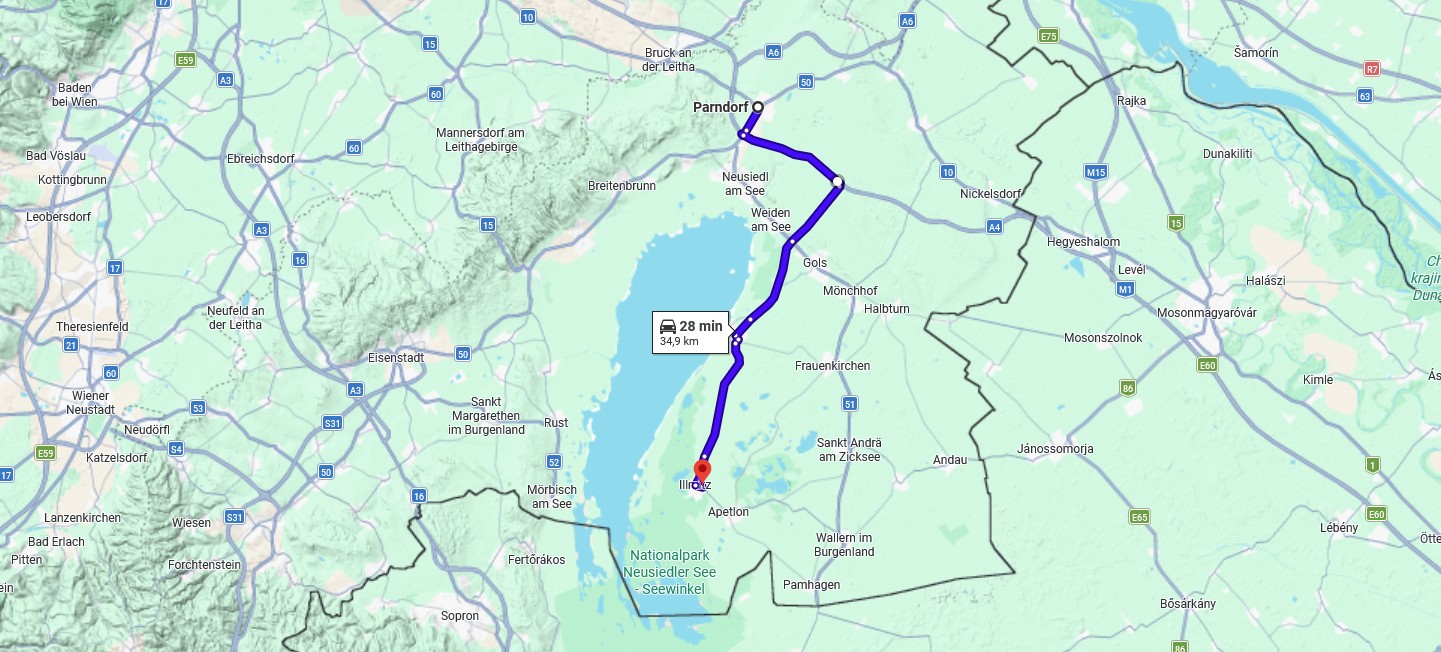
After we had made good use of our hotel’s pleasantly extensive breakfast buffet, we took off to south, towards the town of Illmitz that is located between Neusiedlersee and the Austria-Hungarian border.
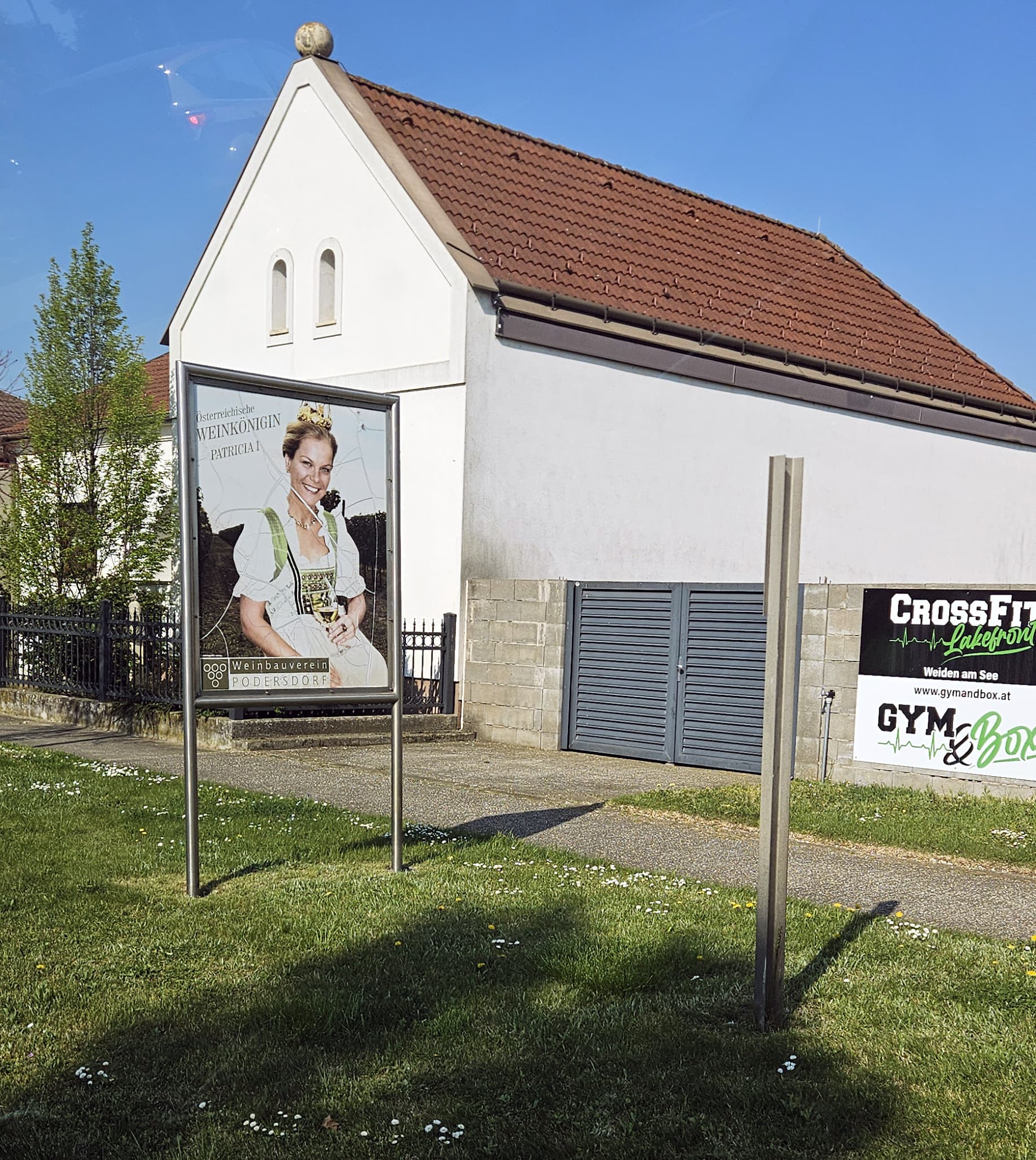
Around here you can see villages proudly touting their democratically elected Weinkönigin (wine queens) wherever you go.
Our scheduled visit for the morning was at Weinlaubenhof Kracher, one of the most prominent and important producers of sweet wines in Austria. Many of us were longtime fans of Kracher and had lots of their wines in our cellars, so we were really looking forward to this visit!
First, a little bit of winery background.
- The winery started to come to life when Alois Kracher (1928-2010) began to farm land in Illmitz in 1945, right after WWII. He cultivated some grapes, among other crops, but instead of making any wine, he sold all his fruit. For 15 years he dreamed of becoming a winemaker - mostly because he hated farming the other crops, but loved growing grapes.
- Finally, in 1959, he decided to make his dreams come true, putting all his focus on growing grapes so he could make enough wine instead of having to sell all of his harvest.
- Under Alois’s helm, the Kracher’s winery focused mostly on the traditional sweet botrytized wines typical of the Neusiedlersee region, which slowly helped the winery gain name and recognition.
- In 1981 Kracher’s son, Alois “Luis” Kracher Jr. (1959-2007) joined his father’s winery part-time, and in 1986 took the reins from his father while the old man semi-retired to do with what he really loved - tending the vineyards. When Luis Kracher started, the production was still very small - the estate vineyards covered only some 5 hectares - but under his leadership the vineyard holdings grew and the winery was modernized. Additionally, Luis Kracher introduced new categories of wines so that the focus wouldn’t be exclusively on the sweet botrytized wines anymore; several dry wines that would highlight different grape varieties and winemaking choices started appearing in their range of wines.
- As Alois Jr. was very skilled at marketing his wines, both in Austria and abroad, he managed to cement the winery’s reputation as the pre-eminent producer of Austrian sweet wines.
- Gerhard Kracher, representing the 3rd generation of Krachers, joined his father in the business in 2001. However, he was forced to take the helm quite soon afterwards when his father passed away quite suddenly in 2007.
- At approximately 70% of the total volume, the production is still quite focused on the sweet wines - which are made from a wide range of different varieties in many kinds of styles and sweetness levels - but the lineup also covers numerous dry wines.
- The estate owns 58 hectares (145 acres) of vineyards, but Kracher also purchases grapes from local growers. These 58 hectares are spread over a stretch of land near Neusiedlersee into almost 100 separate plots, most of which are much less than one hectare in size. Approximately 85% of the production is made with white grape varieties, 15% with red.
- The fermentations are always spontaneous, inoculations are not employed. The wines are aged in stainless steel tanks, smaller oak barriques - both new and old - and old, large oak fuders, depending on the style.
- Although the winery makes a wide range of sweet wines, the luscious Trockenbeerenausleses have always been the crown jewel of the winery. Apart from the generic, inexpensive NV TBA, all the TBAs are numbered starting from 1 and going up to the maximum number of cuvées they made that year. This number indicates the sweetness of the grapes, number 1 being the “driest” (or least sweet, typically still VERY sweet) and the highest number the sweetest. In a typical year, the numbers go up to ten, but depending on the vintage, there might be less or even more different cuvées. Additionally, the wines are labeled either Nouvelle Vague (if aged in oak, often in new barriques), or Zwischen den Seen (“between the lakes”, if aged in stainless steel tanks).
- Only 20% of the wines are sold locally, an impressive 80% of the production is exported.
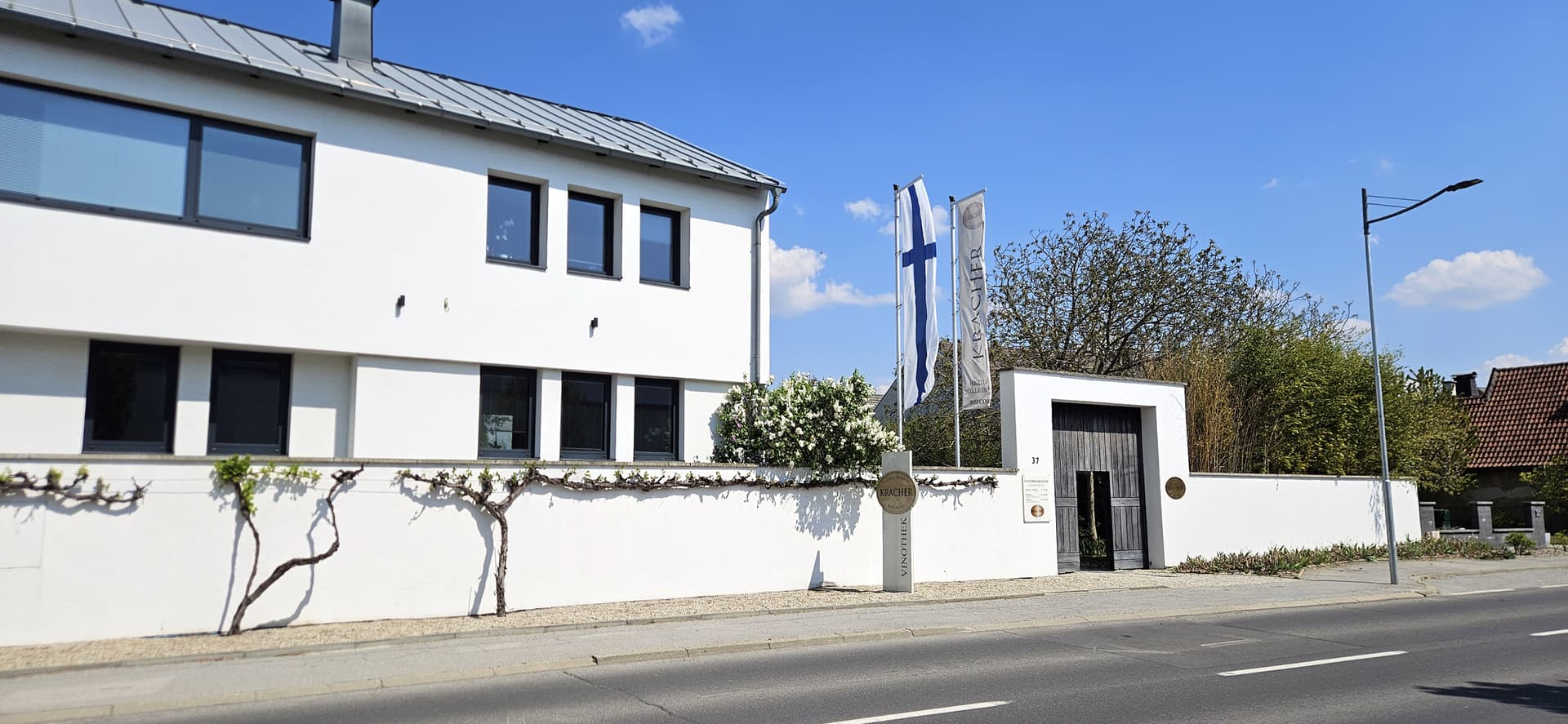
As we arrived at the winery, we were welcomed not only by the Kracher flag, but also a flag of Finland! Now that’s certainly one way to welcome the visitors.
Upon our arrival, we were greeted by Johanna Waibel, the sales export director of the winery, who also shepherded us to the table on the patio in the sunny courtyard of the winery. She told us that visiting the winery side wouldn’t be possible, but we could do one of the two tastings they had in their enotourism program: an affordable basic tasting, or a more extensive - and more expensive - tasting. Naturally we went with the latter one.
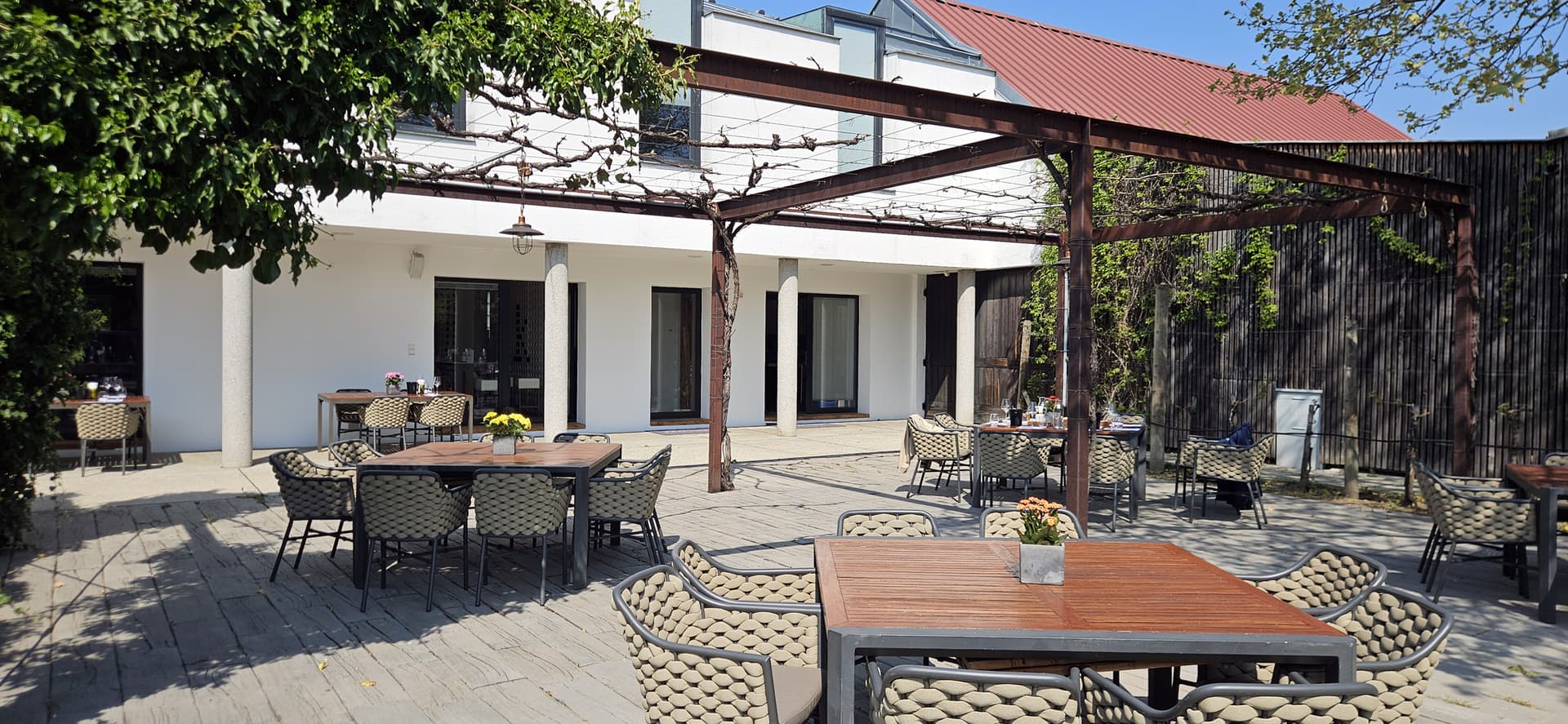
The patio.
Once the tasting began, we were told that “even though we are known for our sweet wines, few people know that we actually make quite a lot of different dry wines as well”. I’m pretty sure several in our group muttered under their breath that we do know, as many of us have followed the winery for a decade or two, and we have a good bunch of their sweet wines in our cellars - and those were the wines we actually came here for - but we held our tongues.

- 2024 Alois Kracher Welschriesling - Austria, Burgenland (17.4.2026)
100% Welschriesling. Fermented spontaneously and aged in stainless steel tanks for 5 months. 12% alcohol, 1,7 g/l residual sugar and 6,1 g/l acidity.
Pale lime-green color. The nose feels fresh and herby with aromas of Granny Smith apple, some leesy tones and a hint of ripe lemony citrus fruit. The wine feels fresh, crunchy and very slightly fizzy on the palate with a medium body and dry flavors of ripe Granny Smith apple, some leesy tones, a little bit of honeydew melon, light stony mineral notes and a hint of whitecurrant. The overall feel is quite high in acidity - surprisingly high for a Welschriesling. The finish is lively and crunchy with a medium-long aftertaste of tart Granny Smith apple, some lemony citrus fruit tones, a little bit of stony minerality and a hint of leesy character.
A fresh and straightforward little white. Surprisingly fresh and zippy for a Welschriesling, but not particularly interesting or memorable for a white wine. A pretty harmless weekday white. Priced somewhat according to its quality at 12€.
(84 points) - 2023 Alois Kracher Pinot Gris trocken - Austria, Burgenland (17.4.2026)
100% Pinot Gris. Fermented spontaneously and aged in stainless steel tanks for 12 months. 13% alcohol, 3 g/l residual sugar and 6,2 g/l acidity.
Quite pale yellow-green color. The nose feels rich and sweet-toned with ripe aromas of peach, some juicy Golden Delicious apple, a little bit of greengage, light honeyed notes and a hint of savory spice. The wine feels youthful, lively and balanced on the palate with a medium body and dry yet fruity flavors of white peach and ripe pear, some stony and saline mineral notes, a little bit of honeydew melon, light greengage tones, a hint of apple peel bitterness and a touch of savory spice. The fresh and quite structured acidity feels surprisingly high for a Pinot Gris. The finish is crisp, dry and lively with a long aftertaste of honeydew melon and ripe red apple, some herby spice, a little bit of saline minerality, light notes of pear and a hint of greengage.
A fresh and fruity Pinot Gris that is surprisingly firm and acid-driven for the variety, yet the wine doesn't feel like a simple and neutral Pinot Grigio, but a proper, ripe Pinot Gris. This could've been a nice and serious effort, if the overall style hadn't been so simple and straightforward. The wine shows good balance, but nevertheless the overall feel is that of a rather generic weekday white. Nothing bad in that style of wine, and for a simple weekday white, this is very good and thoroughly enjoyable stuff. I just maybe expected something more out of this. Pretty solid value at 13€, though.
(86 points) - 2021 Alois Kracher K Cuvée - Austria, Burgenland, Neusiedlersee (17.4.2026)
A blend of Chardonnay (50%), Scheurebe (25%) and Welschriesling (25%) harvested very late in October; about 20% of the grapes were botrytized but still not fully desiccated. Fermented spontaneously. Aged in new oak barriques for 3½ years, bottled in September 2025. 14% alcohol, 6,3 g/l residual sugar and 6,1 g/l acidity. Annual production 5000 bottles.
Pale honey-yellow color. The fragrant nose feels quite exuberant with bold aromas of banana and very ripe apricot, some creamy oak tones, a little bit of buttery diacetyl, light lemon marmalade notes, a hint of pineapple and a touch of sweet wood spice. The wine feels broad, rich and quite concentrated but also rather balanced with a full body and bold flavors of pineapple and pear jam, some stony mineral notes, a little bit of buttery diacetyl, light oaky notes of sweet wood spice and creaminess, hints of greengage and nectarine and a touch of salinity. The high acidity keeps the overall feel enjoyably firm and structured. The finish is rich and tropical with a somewhat off-dry aftertaste of juicy apricot and apple jam, some stony mineral notes, a little bit of greengage, light buttery and creamy tones, a hint of pineapple and a touch of sweet oak spice.
A very big, rich and modern blockbuster white. The overall feel is surprisingly balanced and structured for such a big, ripe and sweet-toned wine, but even then the wine doesn't really manage to impress. This is definitely very impactful in style, there is no question about it, but I find it hard to get thrilled about a wine this rich and heavily oaky. I guess this wine might evolve and improve into something very impressive and balanced with enough age, but I feel there is also a possibility that this develops into a clumsy, super-ripe and ponderous mess. For a big, powerful and heavily oak-driven white this is surprisingly good and balanced - this kind of very ripe and borderline off-dry style is just something I really don't enjoy. I guess this is priced somewhat according to its quality at 23€.
(88 points) - 2020 Alois Kracher Zweigelt - Austria, Burgenland, Neusiedlersee (17.4.2026)
100% Zweigelt. Fermented spontaneously in stainless steel tanks, aged in used, neutral barriques for 20-24 months. 14% alcohol, 2,9 g/l residual sugar and 4,9 g/l acidity.
Quite youthful and moderately translucent cherry-red color. The nose feels youthful and fragrant with somewhat sweet-toned aromas of blueberries, some cherry marmalade, light inky tones, a little bit of licorice and a woody hint of savory old oak spice. The wine feels dry, sinewy and a bit austere on the palate with a medium body and crunchy flavors of blueberries, some licorice, light stony mineral notes, a little bit of tobacco and woody oak spice, a hint of earth and a touch of tart crowberry. The wine is moderately high in acidity with quite grippy medium-plus tannins. The finish is dry, quite grippy and a bit warm with a moderately long aftertaste of tobacco and licorice, some blueberry tones, a little bit of earth, light woody notes of old oak and crunchy hints of crowberries and tart lingonberries.
A rather stern and a bit austere Zweigelt that shows good sense of structure, but the flavor department feels quite brooding and lacking depth. This can be a decent everyday red if paired with dishes that can coax out some fruit out from the wine, but otherwise the overall feel is a bit too sullen and aloof for my preference, even if I normally like stern and structured reds. On its own the wine just doesn't offer much of anything. I hope things get better as the wine ages and evolved. Priced somewhat according to its quality at 12€.
(87 points) - 2019 Alois Kracher Blend Eins - Austria, Burgenland, Neusiedlersee (17.4.2026)
100% Zweigelt from 45 yo vines planted on sandy soil. Fermented spontaneously and aged in oak barriques (old, according to the winery personnel; new, according to the winery website) for four years. 14% alcohol, 1,2 g/l residual sugar and 5,3 g/l acidity.
Somewhat evolved blood-red color with a thin, colorless rim. The nose feels somewhat evolved with aromas of blueberries, some raisiny tones, a little bit of gamey meat, light red-toned cherry notes and a hint of savory wood spice. The wine feels firm, savory and somewhat evolved on the palate with a medium body and developed flavors of raisiny fruit, some meaty and gamey tones, a little bit of ripe figs and dark plums, light notes of tobacco, a hint of elderberry jam and a touch of woody oak spice. The overall feel is pretty muscular with the moderately high acidity and ample yet pretty silky and not tough tannins. The finish is long, savory and moderately grippy with a rather evolved aftertaste of tobacco and gamey meat, some dried figs, a little bit of elderberry jam, light pruney notes, a hint of ripe black cherry and a touch of earth.
A firm and serious but also surprisingly evolved Zweigelt - especially if this is the most recent release. I don't know if the wine has been made from very late-harvested, partially desiccated grapes, or if the meaty and pruney flavors come from the excessively long barrel-aging, but I feel the end result is not that successful. The wine is balanced and complex, yes, but it also feels much older than you'd expect from a wine that's only 6½ years old. It's hard to say whether the wine will gain anything with additional aging as it feels this developed at release. Comes across as rather expensive for the quality at 37€.
(90 points) - 2024 Alois Kracher Spätlese Cuvée - Austria, Burgenland, Neusiedlersee (17.4.2026)
A blend of Welschriesling (60%), Chardonnay (30%) and Pinot Blanc (10%) harvested in mid-October, normally without any botrytis influence. Fermented spontaneously, aged in stainless steel tanks for 6 months. 8% alcohol, 96,7 g/l residual sugar and 6,2 g/l acidity.
Youthful, medium-deep lime-green color. The nose feels sweet and tropical with aromas of apple jam, some pineapple, light honeydew melon tones, a little bit of ripe kiwifruit, a hint of fresh star fruit and a faint touch of green currants. The wine feels crisp, lively and sweet on the palate with a light body and youthful flavors of green currants and greengage, some ripe kiwifruit, a little bit of peach marmalade, light honeydew melon notes and a hint of crunchy star fruit. The rather high acidity keeps the overall feel pretty fresh, even if it doesn't really offset any of the residual sugar sweetness. The finish is youthful, sweet and vibrant with a moderately long aftertaste of pineapple, some peachy tones, a little bit of greengage, light crunchy notes of star fruit and a hint of kiwifruit.
A nice, tasty and easy little dessert wine. The overall feel is very linear and straightforward with lots of youthful fruit flavors, but very little depth or complexity. Fortunately the acidity feels sufficiently high to keep things balanced. I guess the wine might develop some additional sense of nuance and complexity with further aging, but I'm not sure if this kind of simple, inexpensive dessert wine is something that one should age - the charm is in the youthful fruit character here. Priced according to its quality at 11€.
(89 points) - 2022 Alois Kracher Traminer Auslese - Austria, Burgenland, Neusiedlersee (17.4.2026)
100% Gewürztraminer, harvested with a minimum amount of 30% botrytis influence. Fermented spontaneously, aged in stainless steel tanks for 24 months. 10% alcohol, 116,7 g/l residual sugar and 5,9 g/l acidity.
Medium-deep golden yellow color. The nose feels youthful, fragrant and attractive with aromas of sweet grapey fruit, some perfumed notes of roses, a little bit of pineapple, light apricot tones, a hint of apple jam and a touch of grape marmalade. The wine feels sweet, rich and slightly sticky yet not heavy on the palate with a full body and expressive flavors of pineapple, some overripe apricot, light notes of pear jam, a little bit of rosewater, a hint of exotic spices and a touch of cola popsicle. The high acidity keeps the wine enjoyably balanced with some sense of structure. The finish is rich, long and slightly sticky with a long aftertaste of tropical fruits, some pear jam, light floral notes of rosewater, a little bit of overripe pineapple, a hint of cola popsicle and a touch of youthful grapey fruit.
A fun, rich and tasty dessert wine. Maybe a bit simple and linear, but nevertheless a step up in depth of flavor from the basic Spätlese Cuvée. Perhaps not a wine to be aged but to be drunk relatively young, while the wine is still exhibiting those exuberant, floral aromatics. Very enjoyable and balanced stuff for occasions that call for a sweet wine without that much complexity, just good flavor intensity and sense of balance. Good value at 12€ for a 0,375-liter bottle.
(91 points) - 2023 Alois Kracher Red Roses Rosenmuskateller Beerenauslese - Austria, Burgenland, Neusiedlersee (17.4.2026)
100% Rosenmuskateller, harvested with a minimum amount of 50% botrytis influence. Although the variety is thick-skinned, it is normally among the first varieties to get botrytized. Fermented spontaneously, macerated with the skins for 3-4 weeks, aged in old oak barrels for 24 months. 9,5% alcohol, 196 g/l residual sugar and 7,8 g/l acidity.
Luminous, clear cherry marmalade color. The nose feels sweet, youthful and very expressive with aromas of ripe grapey fruit, some floral spice, a little bit of stewed rose hips, light strawberry jam notes, a hint of cherry marmalade and a touch of poached red fruits. The wine feels very sweet, hedonistic and somewhat concentrated with a full body and intense flavors of strawberries and overripe pineapple, some cherry marmalade, light floral notes of rosewater, a little bit of stewed strawberry, a hint of grape jelly and a touch of exotic spices. The high acidity keeps the wine very nicely in balance despite the high level of residual sugar. The finish is juicy, sweet and grapey with a long, rich aftertaste of overripe pineapple, some rosewater, light strawberry tones, a little bit of floral spice, a hint of dried cherries and a touch of botrytis funk.
A very nice, tasty and impressively concentrated Beerenauslese that is still super youthful and could use a bit more age - although I do love the youthful, floral exuberance here. Even then, I think a bit of additional time might make things work a bit better together. Delicious stuff with good sense of balance; nice now and even better in the future. Recommended. Good value at 26€ for a 0,375-liter bottle.
(92 points) - 2022 Alois Kracher Grande Cuvée TBA #3 Nouvelle Vague - Austria, Burgenland, Neusiedlersee (17.4.2026)
A blend of Chardonnay (60%) and Welschriesing (40%), harvested at 100% botrytis influence. Fermented spontaneously, aged in 225-liter French oak barriques (Chardonnay) and in old 1000-liter oak casks (Welschriesling). Bottled after 28 months of oak aging. 10% alcohol. 181,7 g/l residual sugar and 6,2 g/l acidity.
Deep golden yellow color. The nose feels bold and sweet with intense aromas of Sultanas and creamy oak, some peach marmalade, light caramel tones, a little bit of apple jam, a hint of woody oak spice, a touch of dried nectarine and a whiff of tinned pineapple. The wine feels juicy, somewhat viscous and quite concentrated on the palate with a full body and intense, very sweet flavors of dried pineapple, some apricot jam, light raisiny notes of Sultanas, a little bit of apple jam, oaky hints of caramel and creaminess and a touch of brown syrup. The medium-to-moderately high acidity keeps the wine somehow in balance, but a wine this rich and powerful could use a bit more acidity. The finish is long, juicy and powerful with a very sweet aftertaste of youthful grapey fruit and dried pineapple, some grape jelly, light notes of caramel oak and savory oak spice, a little bit of tinned peach, a raisiny hint of Sultanas and a touch of creamy oak.
A rich, powerful and youthful TBA that is all about sweet fruit and sense of concentration. The young age of the wine is evident in the somewhat primary grapey fruit flavors and still somewhat unintegrated oak tones that stick out a bit. However, as the wine shows good sense of balance and flavor intensity, I can see this wine evolving wonderfully for several decades. Probably needs more than a dozen years in a cellar before coming fully together and integrating those woody notes with the fruit, and could have maybe used a bit more acidity, but this is pretty tasty stuff nevertheless. Starting to feel rather expensive at 76€ for a 0,375-liter bottle, though.
(93 points) - 2001 Alois Kracher Chardonnay TBA #3 Nouvelle Vague - Austria, Burgenland, Neusiedlersee (17.4.2026)
100% Chardonnay harvested at 100% botrytis influence. Fermented spontaneously, aged in new 225-liter French oak barriques for 18 months. 10,5% alcohol. 194 g/l residual sugar and 7,2 g/l acidity.
Deep browned butter color. The nose feels rich, evolved and quite powerful with complex aromas of raisiny fruits and roasted nuts, some dried pineapple, a little bit of sweet ethery VA, light juicy notes of ripe exotic fruits, a hint of savory spices and a touch of wood. The wine feels rich, lively and concentrated on the palate with a medium body and intense, very sweet and quite evolved flavors of apricot jam and raisiny fruit, some lifted notes of sweet, ethery VA, a little bit of ripe exotic fruits, light oxidative notes of roasted nuts, a hint of coffee and a touch of canned pineapple. The rather high acidity keeps the overall feel balanced and sufficiently structured. The long finish is rich, sweet and powerful with a complex aftertaste of apricot jam and raisiny fruit, some lifted notes of sweet VA, light grapey tones, a little bit of canned pineapple, a hint of orange marmalade and an touch of oxidative nuttiness.
A beautiful, harmonious and wonderfully evolved TBA showing great flavor intensity and a terrific combination of still youthful, vibrant fruit flavors and more developed notes of roasted nuts and coffee. Probably the wine is going to keep for many decades more, but most likely it is either close to its plateau of maturity, or it is already on it, so any additional aging isn't necessary - this is pretty superb right now. Not particularly affordable at 91€ for a 0,375-liter bottle, however.
(95 points)
The sweet wines were superb - as was to be expected - but most of the dry wines were pretty ho-hum and didn’t manage to leave a lasting impression. Not bad wines in any way, but nothing one would go and seek out specifically. I can understand this kind of enotourism program might be a good choice when you have tourists who don’t know much about the winery - or even wines, for that matter. But for people who have traveled a long way to be there, see the winery and taste the wines? This was quite the let-down. I’ve been to many events for professionals (and in one of which I originally arranged for this visit!) where I’ve met the Kracher people presenting their wines and normally they’ve always had a wide selection of their BAs and TBAs with different ages.
Now, being here and getting to taste just two TBAs and one BA from a winery was sort of a let-down. We looked forward to tasting the sweet wines from this master of Austrian TBAs, so a bunch of somewhat simple dry wines wasn’t met with great enthusiasm - especially when we had to pay for the visit, as opposed to almost any other visit on our trip (apart from the visit to Schloss Gobelsburg, which definitely was worth all the money!). As a whole, the visit left a rather lukewarm, distant and very commercial impression, in stark contrast to all the other, more personal and intimate visits we had before and after this!
And finally, I was quite shaken by the wine prices! I had a couple of friends who had encouraged me to go and visit Kracher because you could buy basically all their wines in their selection - including a good number of older TBA vintages - at great prices. You can imagine their bafflement when I told them that even the cheapest wines were 65-70€ per half bottle, and most were in the range of 90-100€! This is quite a price hike compared to how only some years ago we could buy the regular Beerenauslese for less than 10€ and the numbered TBAs were in the ballpark of 30-50€. At these prices there were no bargains to be had, so only a few of us bought one or two bottles and most in our group were happy to leave the winery empty-handed!
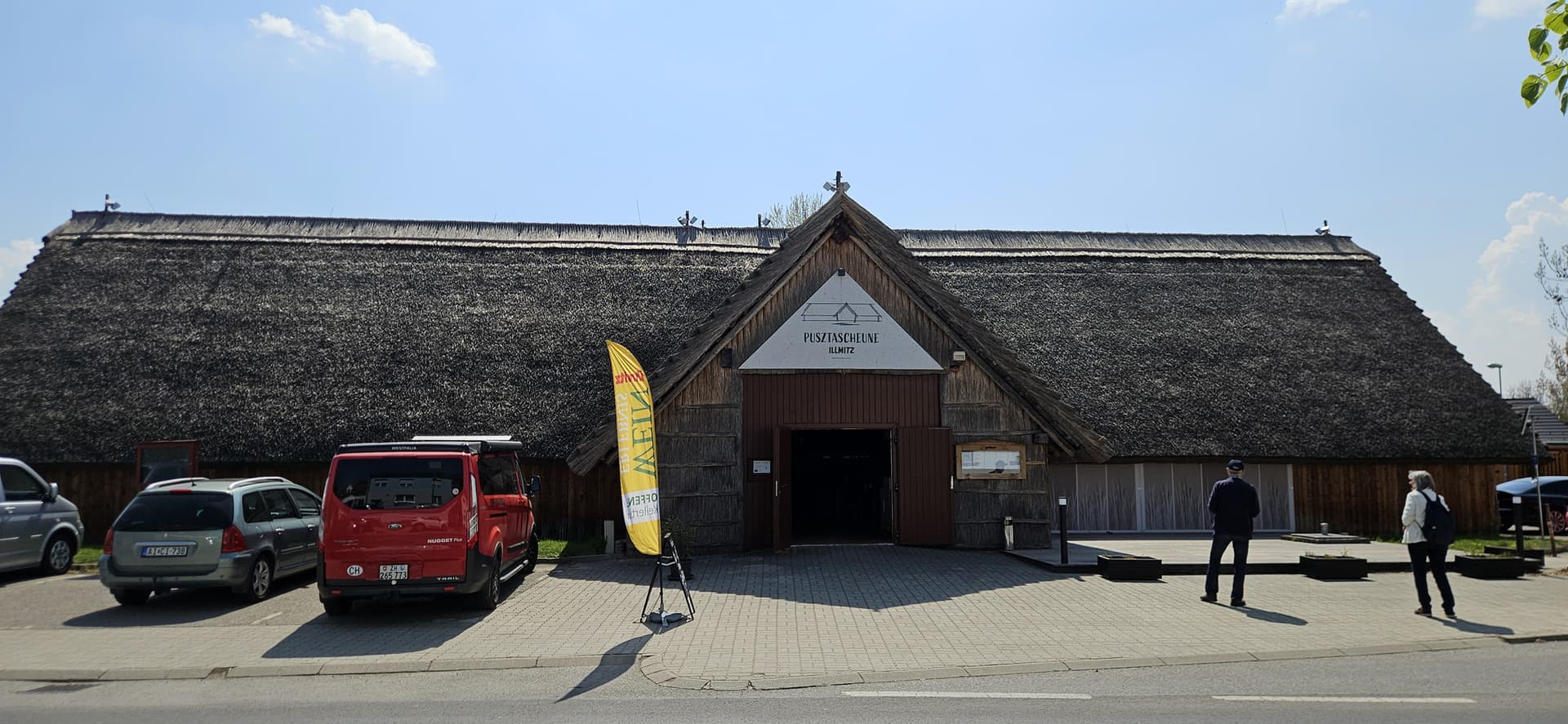
After the visit we went to have lunch at the local traditional restaurant Pusztascheune - on Waibel’s recommendation - that was a proper, rustic place located in an old building with a wonderful thatched roof! Exactly the kind of unfussy place we were looking for!
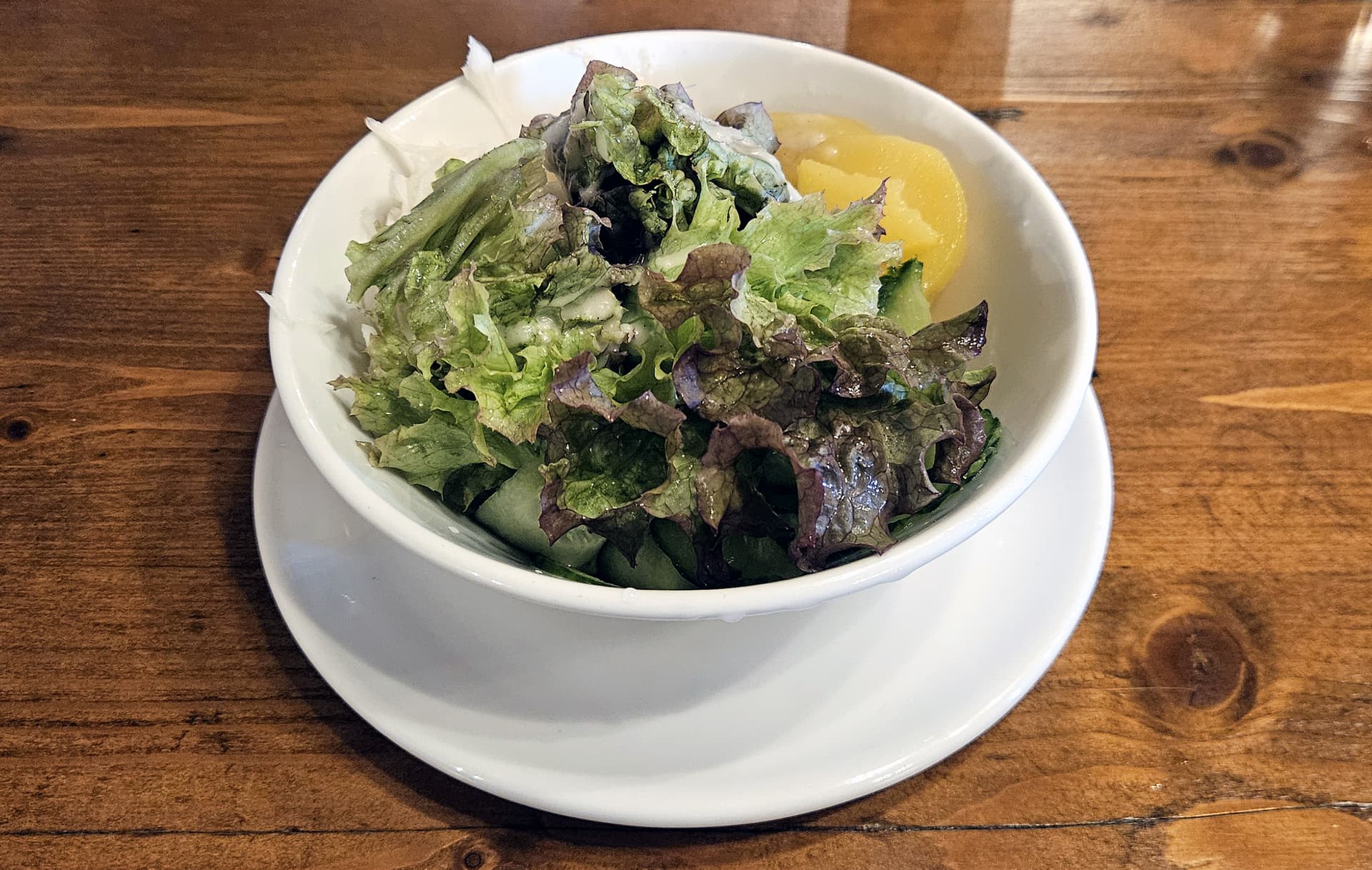
This was probably the only salad I’ve seen on this trip.
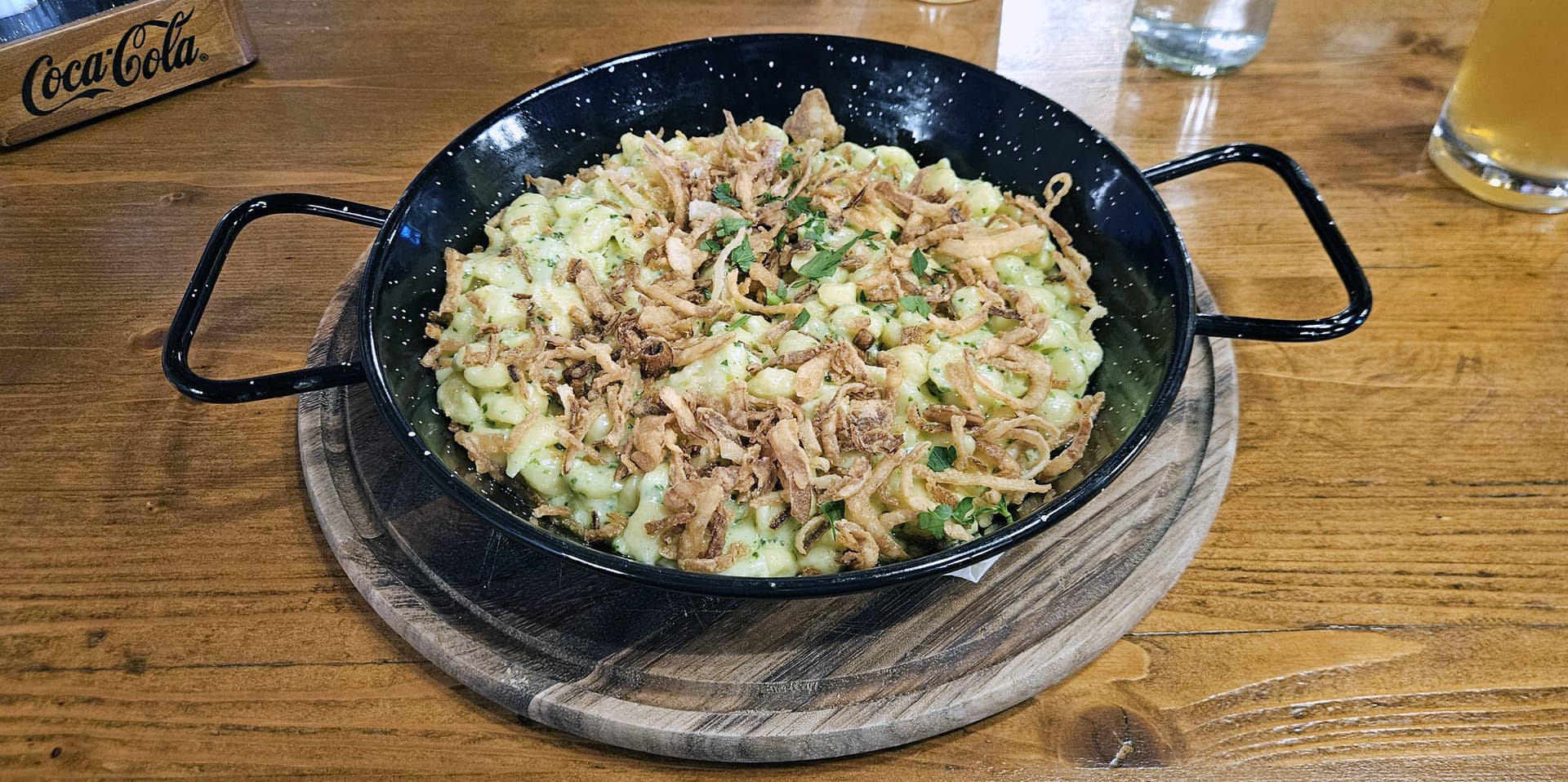
These Bärlauchspätzle were to-die-for! Even then, I just couldn’t finish the whole pan - this portion was just huge.
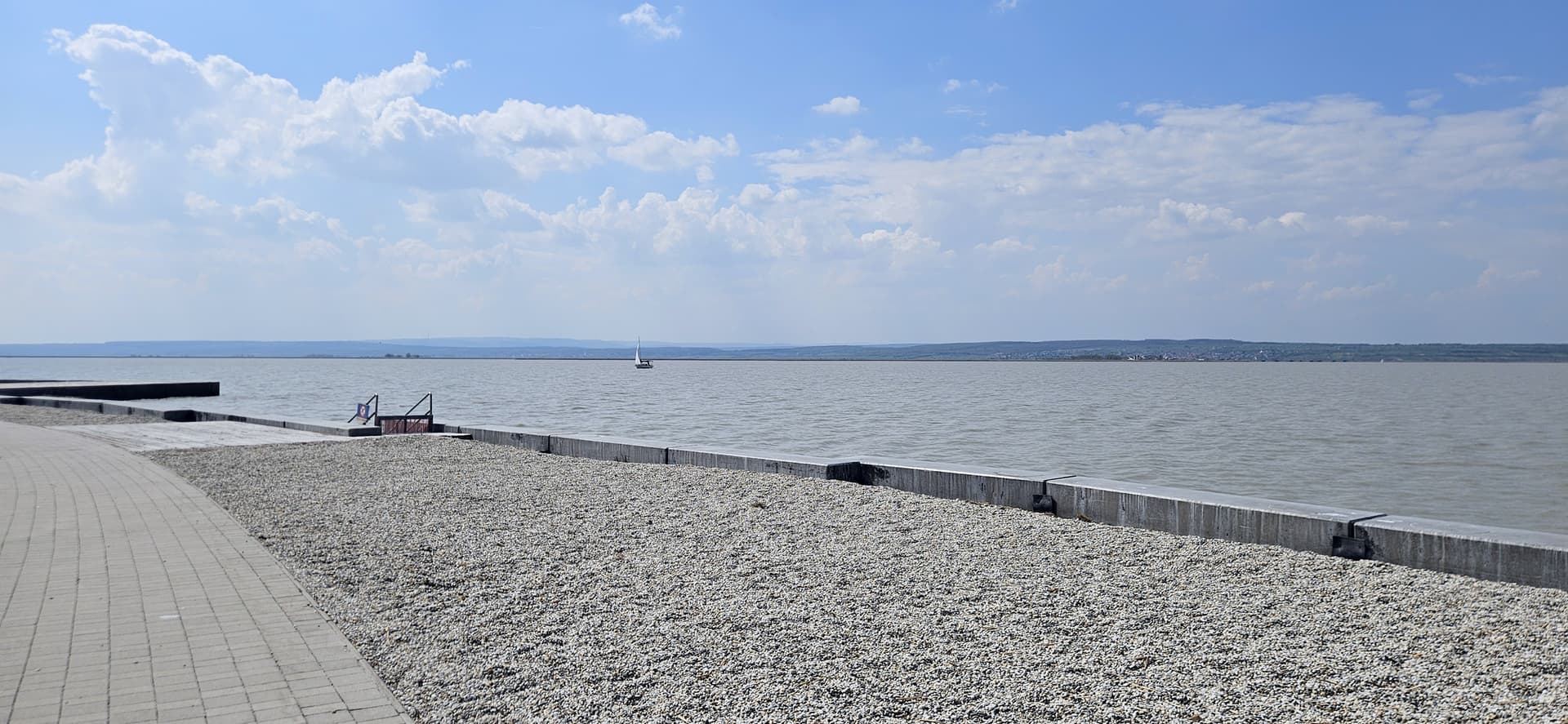
After our lunch we had about an hour of free time before our next visit, so we went to see the Neusiedlersee shoreline. Unlike in other parts of Austria we had seen over the previous week, the weather here was getting quite warm and - unsurprisingly - rather humid.
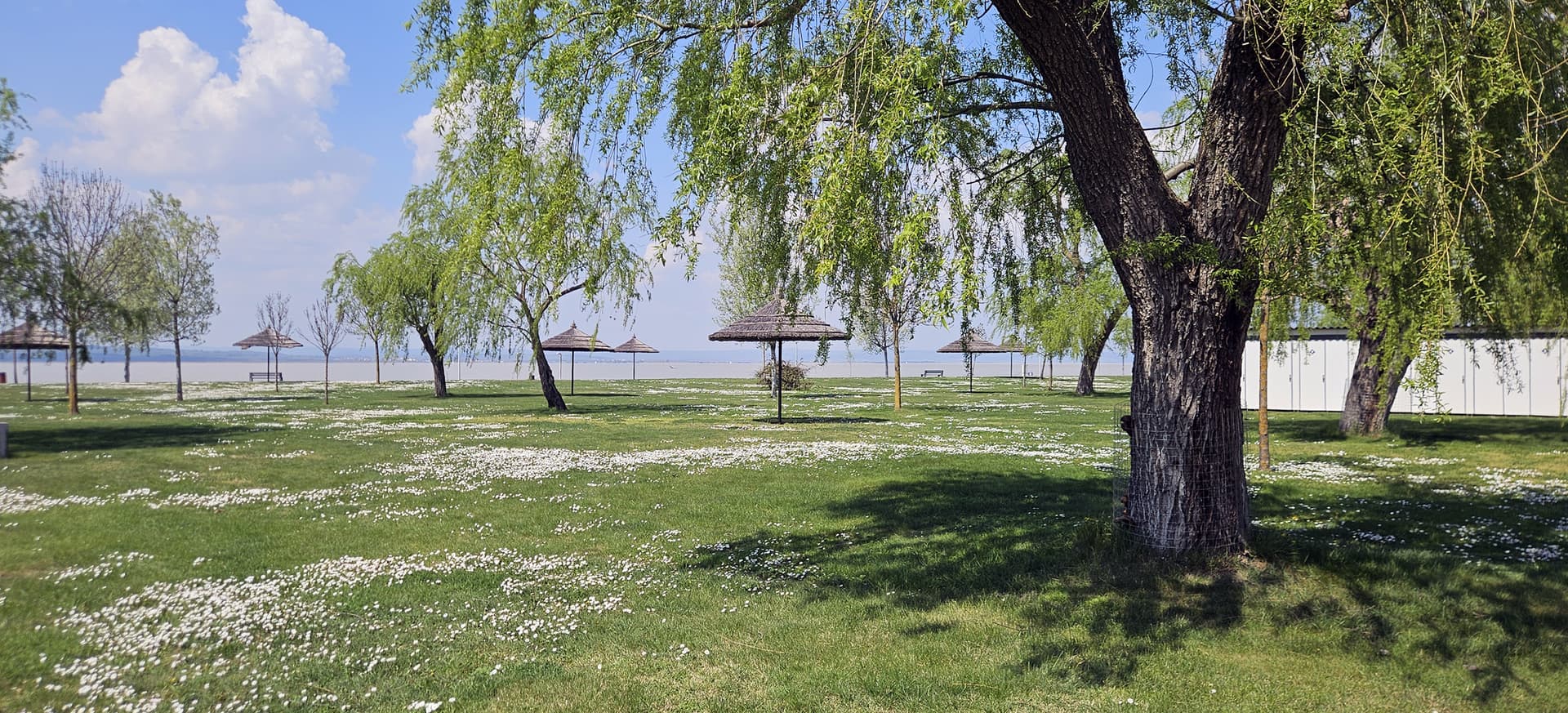
Had we had more time, I would’ve happily enjoyed my postprandial somnolence here!
4 Likes
Kracher also used to offer a back-vintage release of the entire lineup from 20 years prior for purchase and tasting at the domaine. Pricing for these library releases was around 40eur per 375.
Sad to hear they are no longer doing this.
Did you get some Schnaps to help with the digestion?
They still offer the wines for purchase, but there was no mention of any tastings besides these two pre-curated packages. Even after we had made clear that we have been collecting their sweet wines.
This indeed - and I’ve understood that the pricing was at this level only a handful of years ago. I know I have purchased these older TBAs from the internet at those prices. They have been superb purchases at 30-45€, but not anymore at around 100€.
With a dish this big, the amount I would’ve needed would’ve probably incapacitated me.
2 Likes
I’m sure your Science Mind knows that it doesn’t actually help with digestion, so you could have had as many glasses as you wanted. Although the polite fiction of ‘digestion’ does give the next round of shots a more presentable face!
1 Like
I know, but I don’t want to upset hundreds of years of European culinary tradition!
Amen!
If Schnaps is not the answer, at least it helps you to forget the question.
4 Likes
Theres never a bad time for Reisetbauer eau de vie!
Day 6 cont’d
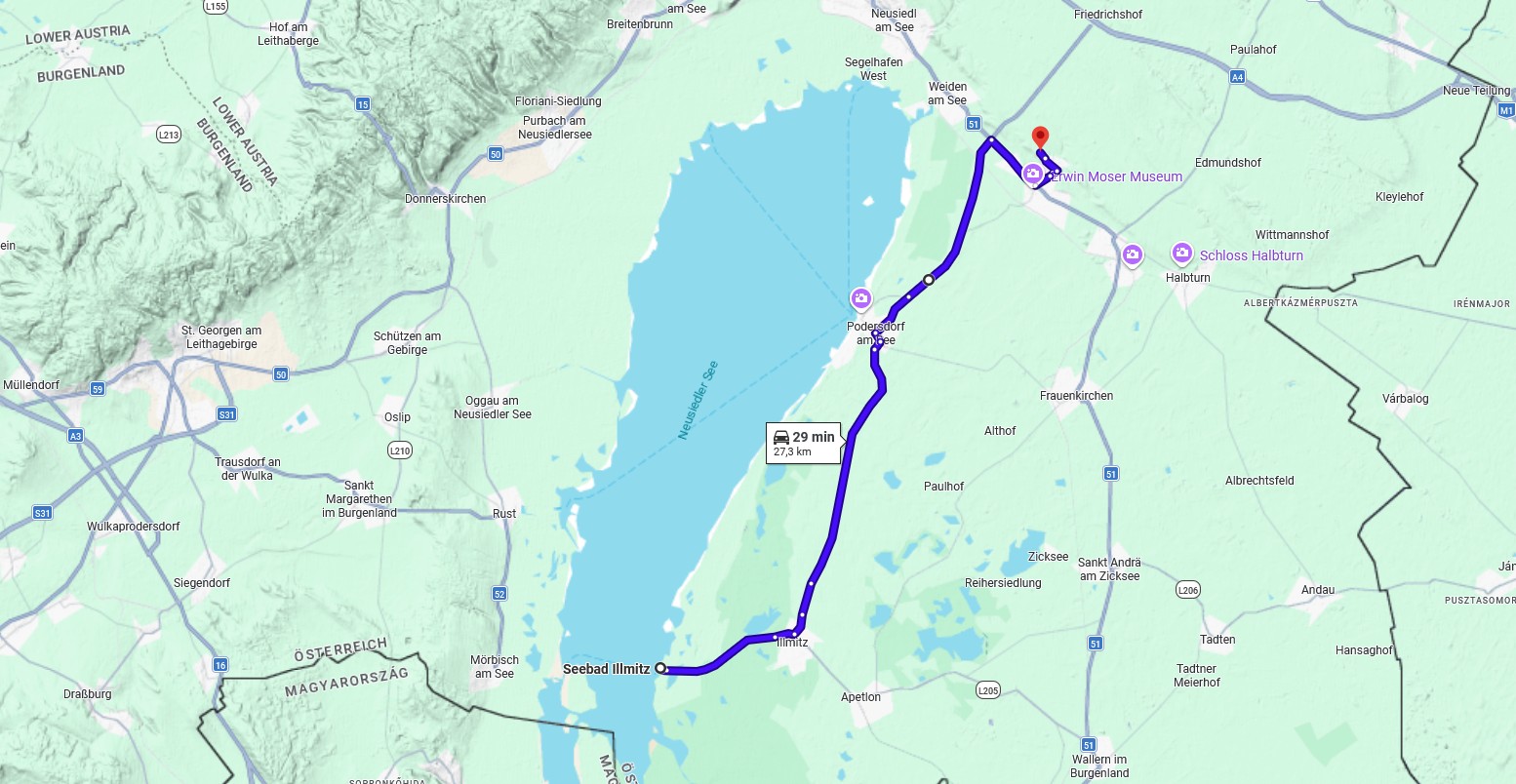
From the shores of Neusiedlersee we returned back to the town of Gols. Our next visit was scheduled at Claus Preisinger, one of the most celebrated natural wine producers in Burgenland - and perhaps in whole Austria.

Once we arrived at the concrete brutalist winery of Preisinger, a few of couldn’t help but crack jokes how apparently we had arrived to a secret hideout of a James Bond villain.
We were welcomed by Catherina Stabentheiner-Andert who is responsible for the sales at the winery. After quick introductions she took us to see the winemaking facilities while explaining some history and winemaking philosophy of Preisinger. Quite soon afterwards Preisinger himself joined us and took over.
A wild Preisinger appears.
- Originally Claus Preisinger worked at the Hans Nittnaus winery as an assistant winemaker. While he was working at Nittnaus, Preisinger also made some wines of his own at his parents’ winery in Gols.
- In the early 2000’s Preisinger gradually took over his parents’ winery and their 3 hectares of vineyard. Quite soon afterwards he started moving away from conventional winemaking, first opting spontaneous fermentations in lieu of inoculating the wines.
- Since 2004, Preisinger has been part of the Pannobile clique - an association of eight (nine before Paul Achs left the association) esteemed Burgenland wineries, centered around the town of Gols, and focusing on sustainable farming and terroir-driven approach to viticulture and winemaking.
- In 2006 Preisinger converted his production to biodynamics and today the holdings cover some 25 hectares (62 acres) of vineyards in over 60 parcels on both sides of Neusiedlersee.
- Preisinger considers Burgundy as his biggest stylistic influence, but even though approximately 90% of his production is red, Pinot Noir is not his main focus. Most of the production is Blaufränkisch, but there are parcels of Pinot Noir, Zweigelt, Merlot, Sankt Laurent and a few local white varieties.
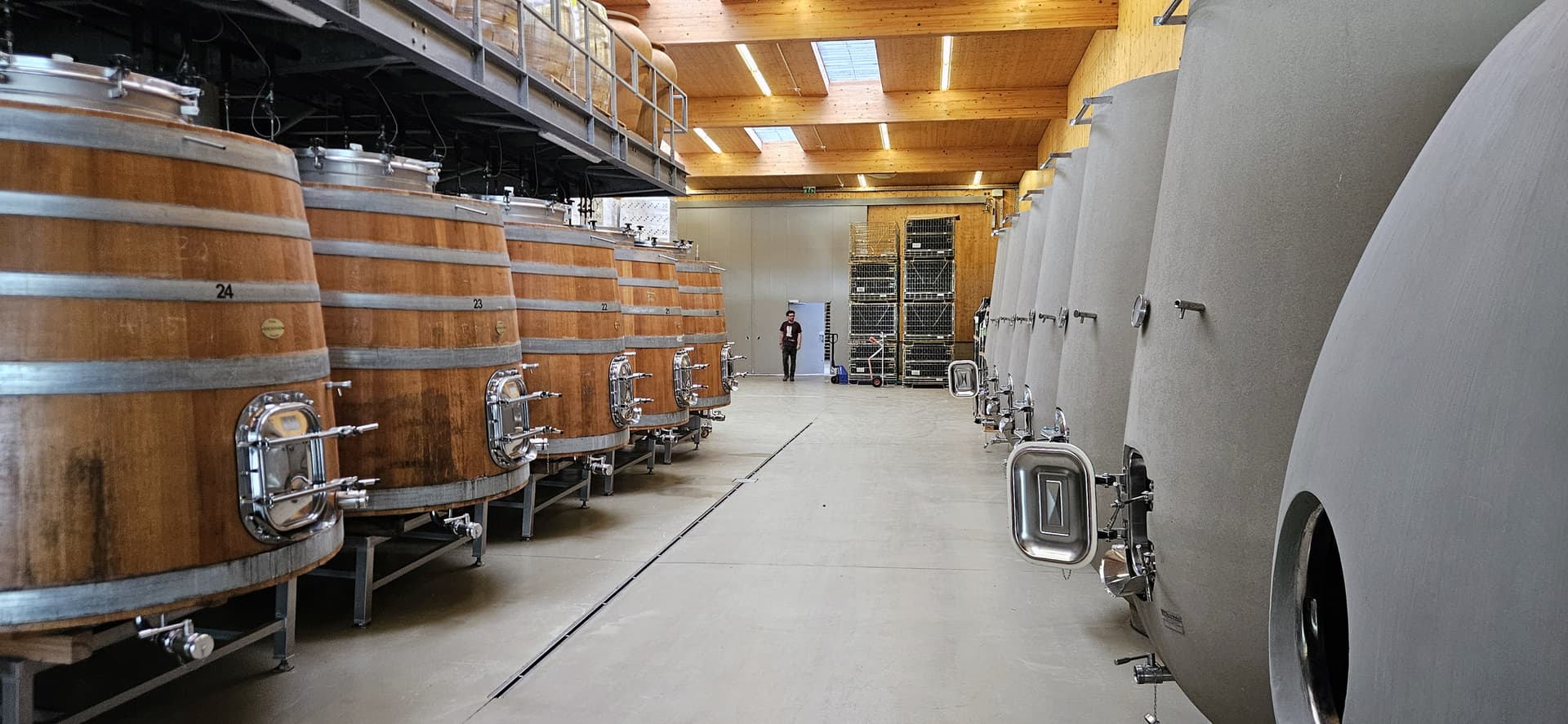
- Today Preisinger’s wines are made in a very minimal-interventionist style: the vineyards are farmed according to biodynamic principles and harvested relatively early; the wines are fermented spontaneously and without any additives; the wines are aged mainly in old, neutral oak casks (mostly Stockinger) and amphorae; the wines are typically bottled unfined and unfiltered; the use of SO2 is minimal (approximately 10 mg/l) and often eschewed entirely.
- Although Preisinger has holdings in some of the most esteemed Burgenland vineyards, he has had some problems in attaining the Prüfnummer (Austria’s AP number equivalent) - and not without the Prüfnummer you are not allowed to put the vineyard name on the label. That means Preisinger doesn’t bottle his wines anymore as Qualitätswein but instead basic table wine - something many other Pannobile members do as well. This also means that the vineyard names have been replaced with imaginary names on the wine labels.
- Preisinger’s new, futuristic winery building was built in 2009 on a hillock amidst the vineyard, overlooking the town of Gols with impressive views over the vineyards and Neusiedlersee. The winery was built as a multi-floor complex with the intent of making minimal-intervention winemaking as easy and effortless as possible.
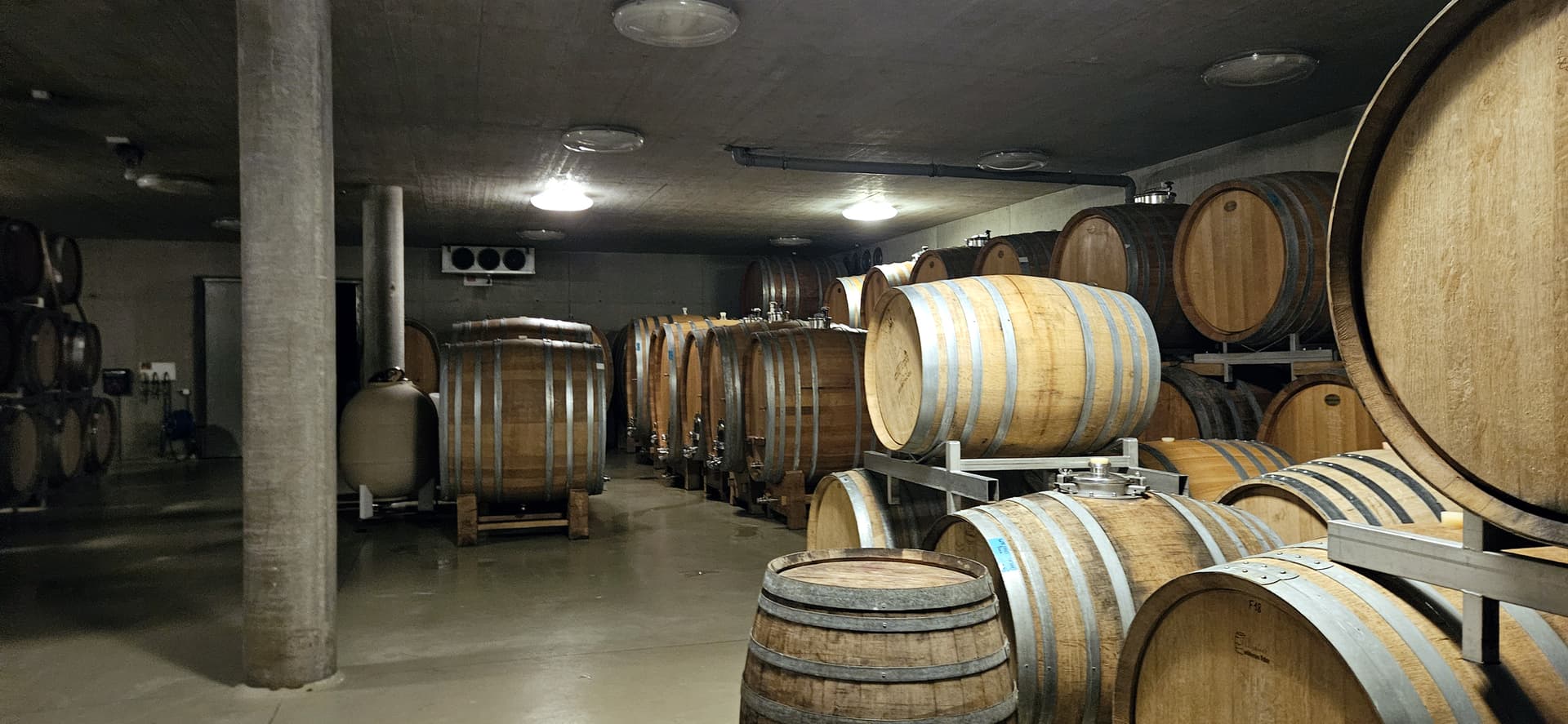
In the barrel room.
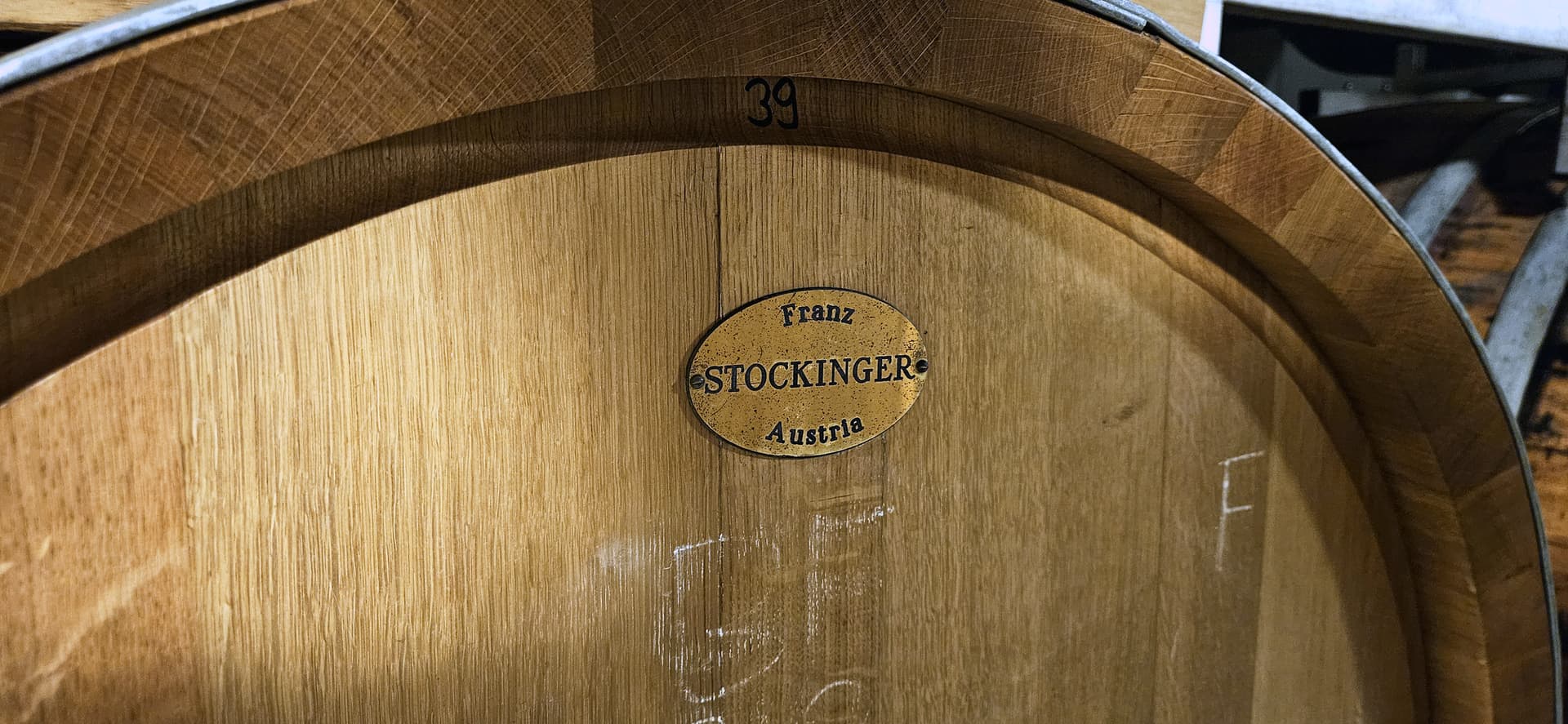
That’s the name.
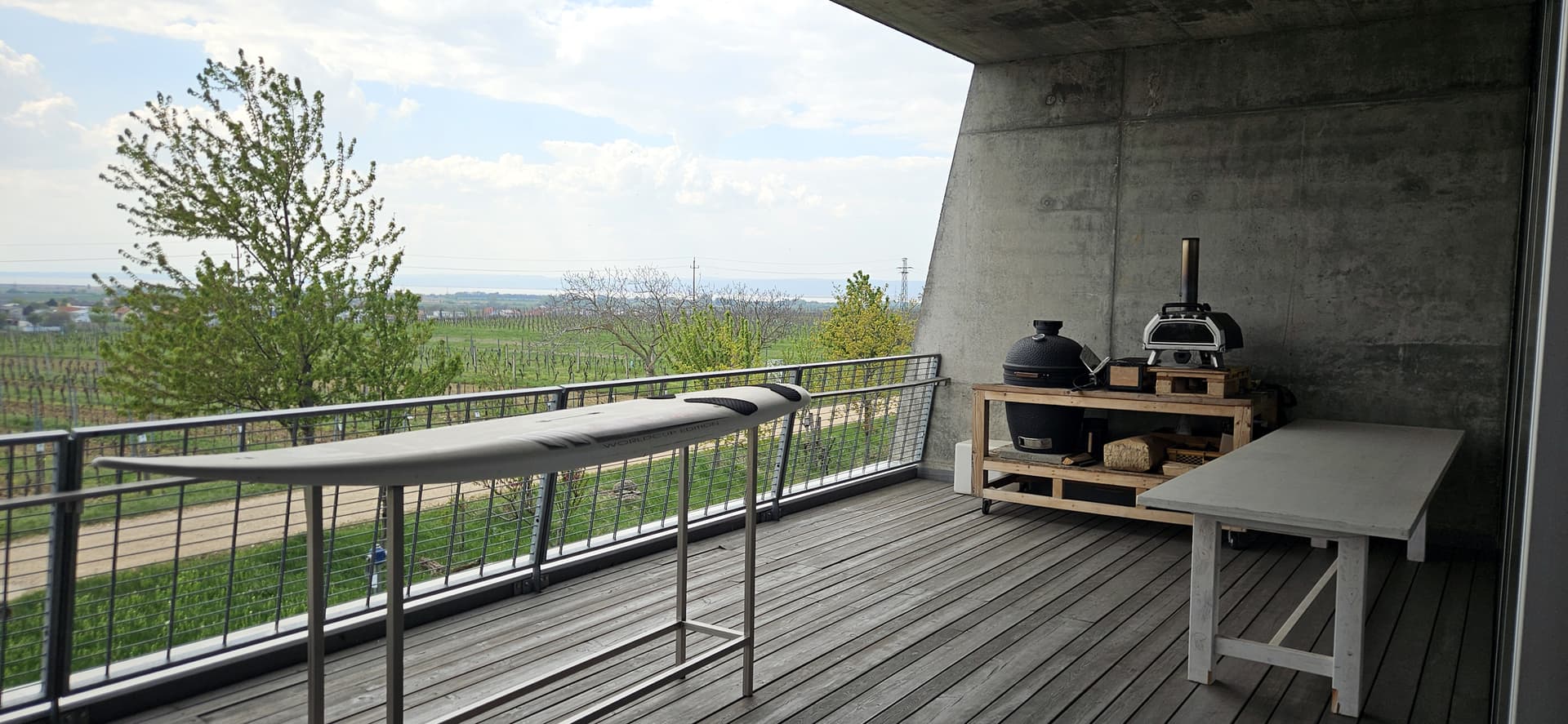
After we had toured above-and-underground in the barrel rooms and vinification facilities, Preisinger took us to his tasting room on the second floor that also sports a spacious balcony that had - among other things - a kamado grill, an Ooni oven, and a surf board that was situated on a stand which made it look like the board was floating on the surface of Neusiedlersee when you were sitting at the table inside, looking out to the lake!
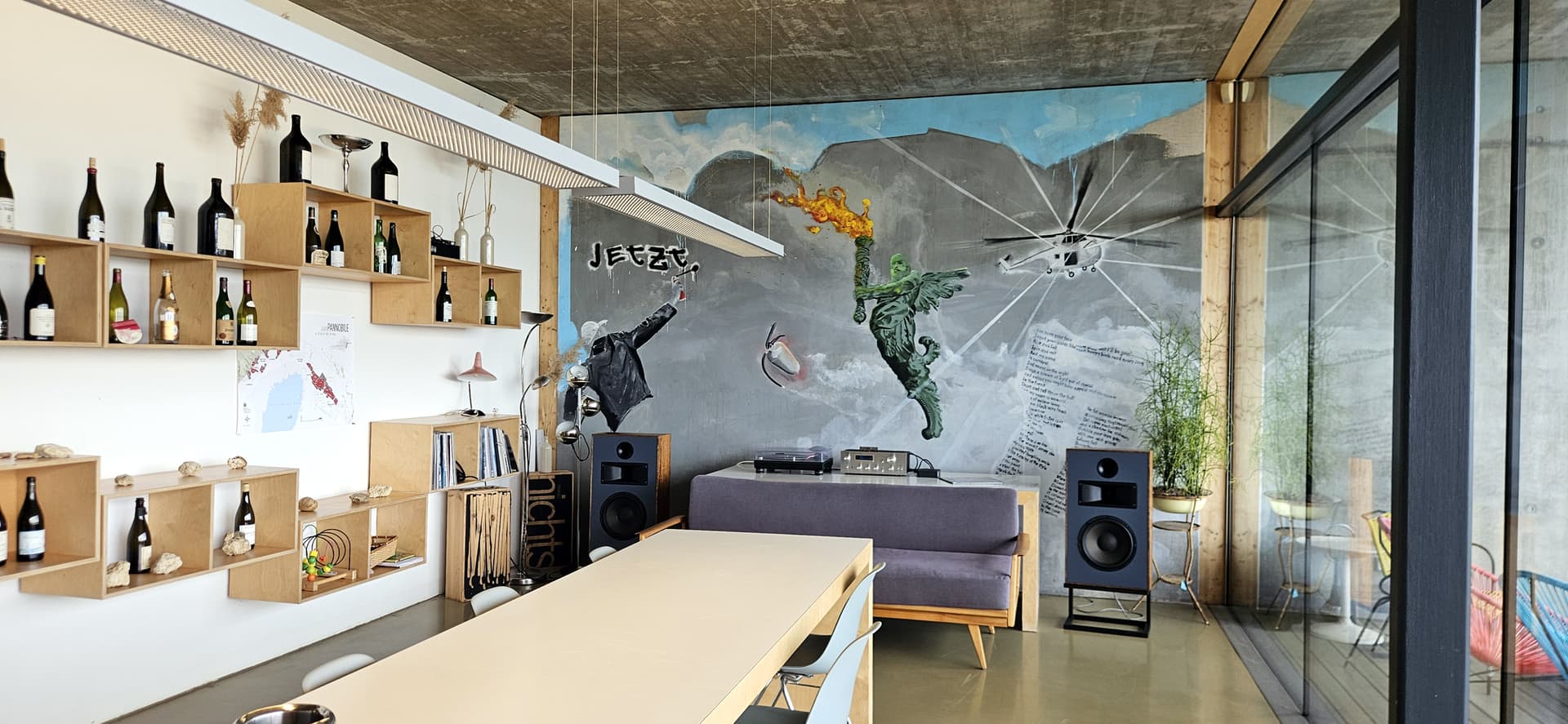
Preisinger’s funky tasting room.
Preisinger tasted a few wines with us, and we talked about some interesting points about the winery’s history and the viticulture in Burgenland. For example Preisinger mentioned that originally he made bigger and more “international” wines with a lot more new oak influence. He also told that he had had an “amphora phase” where he had made extensive use of these ceramic . However, he told us that he was growing out of this phase and he now thought that the best format for his wines was an old, neutral 600-liter demi-muid, and his main tools in vinification and élevage are the predominantly old oak casks that range from 300-liter barrels to 2000-liter fuders, but there’s a healthy amount of concrete tanks (including egg-shaped Nomblot tanks) and amphorae as well.
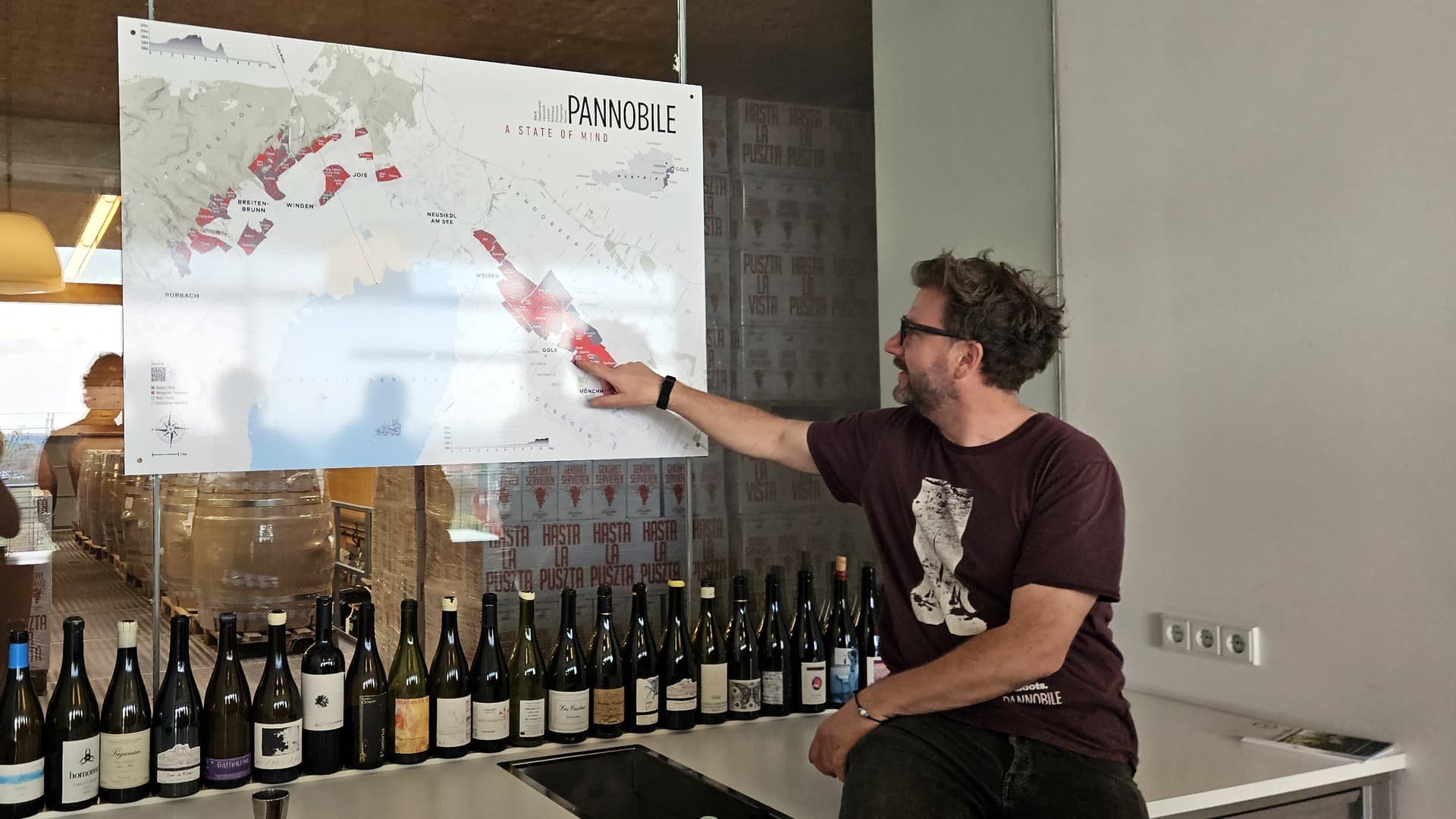
Preisinger showing the locations of his vineyards and explaining their differences.
We also asked about the fallow vineyards we had seen on our way to Gols. Preisinger explained to us that Burgenland doesn’t enjoy the same kind of prestige as, say, many regions in Niederösterreich. That means that many retired vine growers haven’t been able to find anyone to continue their work. For other producers the money you get from selling grapes - especially from the least esteemed vineyards - is so low that it isn’t economically viable to farm grapes, so many producers have just abandoned their vineyards. The end result is quite problematic: there are more than 100 hectares of abandoned vineyards in Burgenland scattered here and there. These serve as the perfect breeding ground for the Drosophila suzukii fly, which is a major pest in many parts of Europe - and a huge PitA especially for growers who are trying minimize the use of sprays. Preisinger told that he himself doesn’t understand why there are so many vineyards on the flat lands around the lake - to him, that land is suited mainly for growing grains and potatoes, and the land suitable for growing grapes is on the hills surrounding the lake - and the abandoned vineyards should be uprooted. However, since pulling the vines costs money, and nobody is paying the vineyard owners for this, it seems that there is no quick change in size.
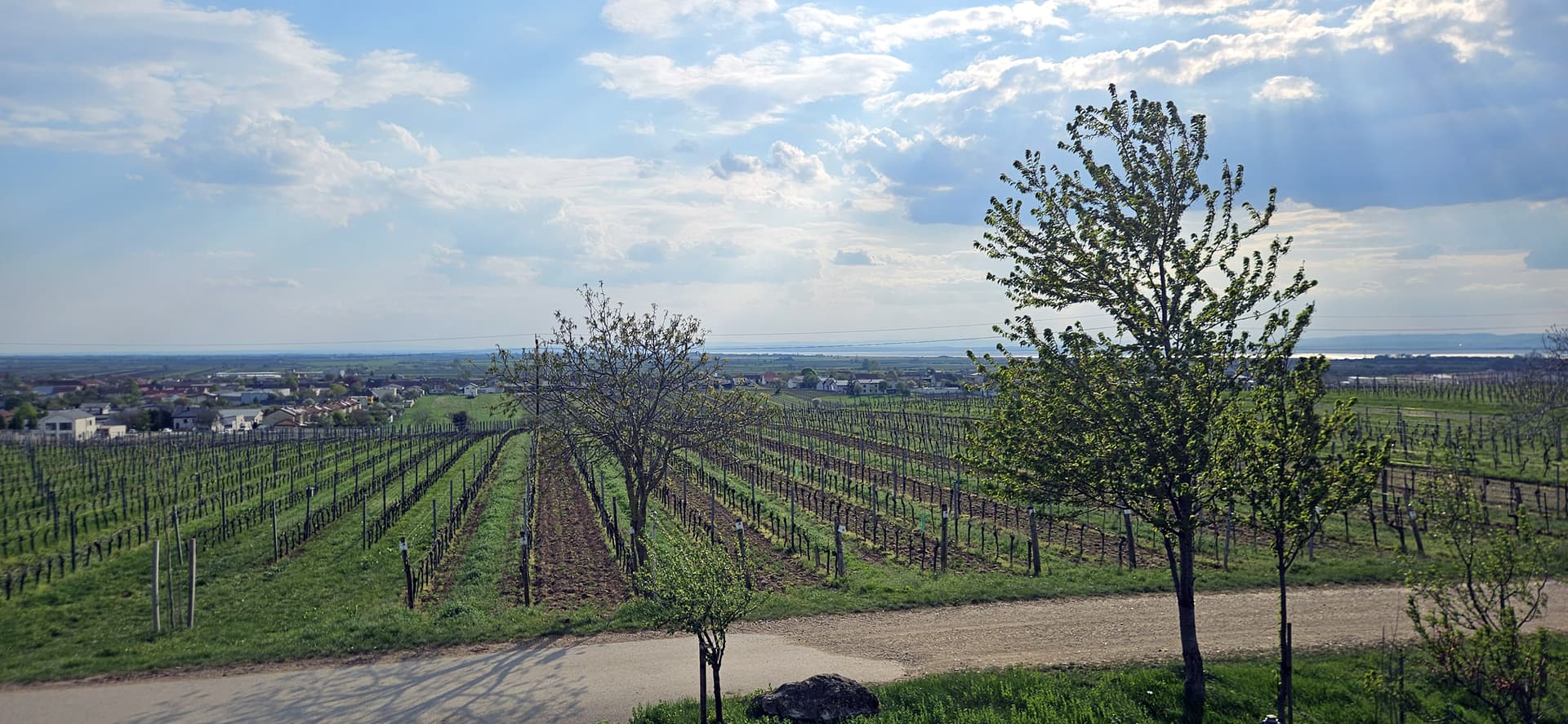
The views from the balcony over the vineyards and Gols to Neusiedlersee.
One other observation that had piqued our interested was how so many vineyards in Burgenland seemed to be surprisingly narrow - many were just a handful of rows wide - but very long. This was in stark contrast to the vineyards in Niederösterreich, where the vineyards seemed to be more square-shaped, if the topology only allowed this. Preisinger didn’t have a clear answer to give, guessing it might have to do with a combination of inheritance, taxation and tradition.
Yet another thing Preisinger mentioned was his dislike of Sankt Laurent. We discussed how a few of us thought it was a very lovely variety making interesting wines, whereas Preisinger thought it was a finicky variety that was susceptible to many kinds of problems both in the vineyard and in the winery, and at least in Burgenland mainly suitable for making just simple, unambitious wines. That’s why Preisinger had relegated his St. Laurent into making a simple, fizzy méthode ancestrale wine!
Anyways, midway through the tasting Preisinger had to leave us, as he had some commitments at home. However, this was no problem for us, as we had had enough time to hear about many things about the winery and the region - and as we were left in the capable hands of Catherina Stabentheiner-Andert, we weren’t left for wanting when it came to getting any information regarding the wines. If there was anything we could’ve asked from Preisinger, Stabentheiner-Andert had the same information for us in a blink of an eye!
It was very fun and enlightening to taste the wines right at the source! As the wines are very natural in style, they often don’t travel that well. This has been obvious when I’ve tasted some of Preisinger’s wines in the past - some have been amazing, but some have been quite natty and excessively volatile, and not nearly what one would expect from a producer of Preisinger’s caliber. At the winery, all the wines were performing beautifully - you could taste the natural upbringing in some of the wines, but many were just pure, pristine and delightfully delicious in style! Additionally I enjoyed the opportunity to taste the whites of Preisinger - they constitute such a small portion of Preisinger’s production that they are normally very hard to come by!
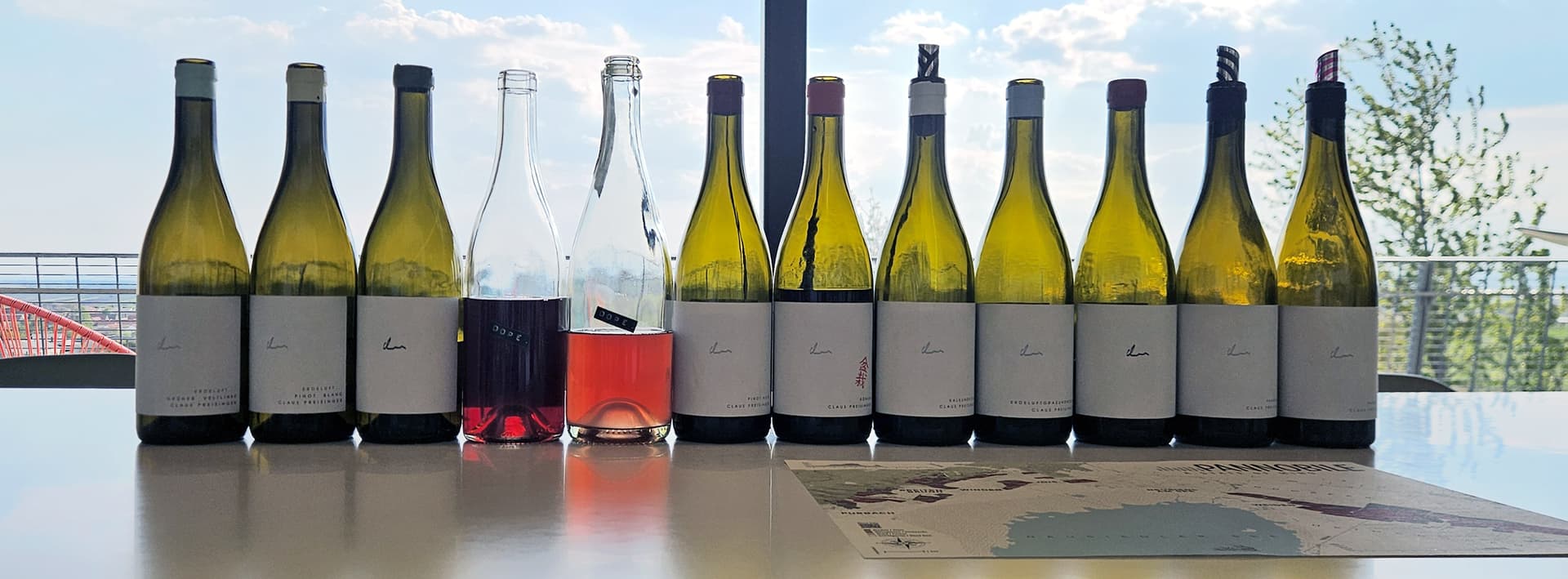
The lineup.
- 2025 Claus Preisinger Grüner Veltliner Erdeluft... - Austria, Burgenland, Neusiedlersee (17.4.2026)
100% biodynamically farmed Grüner Veltliner from Ried Edelgraben. As Preisinger was not allowed to put Edelgraben on the label, he labeled the wine as Erdeluftgrasundreben ("earth, air, grass and grapes"). However, after about 10 years of labeling the wine this way, he was told to cease it altogether. Thus, Preisinger's Edelgraben Grüner Veltliner is known as Erdeluft... today. The grapes are crushed and macerated for a few hours with the skins, then fermented spontaneously. Aged in 600 and 1200-liter old oak casks. Bottled with a minimal dose of SO2. 11% alcohol.
Pale, luminous neon-green color. The nose feels fragrant, leesy and quite attractive with aromas of white peach, some leesy creaminess, light juicy notes of ripe pear, light floral nuances and a hint of Golden Delicious apple. The wine feels lively, firm and crunchy on the palate with a light-to-medium body and bright flavors of fresh white peach, some stony minerality, light juicy notes of ripe pear, a little bit of Golden Delicious apple, a hint of waxy funk and a touch of creaminess. The wine shows good sense of substance for such a lightweight wine. The high acidity lends a good amount of freshness, structure and energy to the wine. The finish is long, crisp and crunchy with a refreshing aftertaste of white peach, some stony mineral notes, a little bit of waxy funk, light creamy tones, a hint of ripe pear and a touch of tangy salinity.
A crisp, fresh and very lightweight yet still relatively substantial Grüner Veltliner that is quite different from its Niederösterreichischer cousins. The style here is somewhat leaner and lighter-weight with less emphasis on the fruit flavors and more on the mineral side of things. In fact, to me, this feels more like an Austrian take on Burgundian Aligoté! The fruit profile is definitely more Grüner Veltliner than Aligoté, but the expression reminds me more of Burgundy Aligoté than the Grüner Veltliners of Niederösterreich. It's hard to tell if the wine can evolve and improve from here, or if it is supposed to be drunk in its youth, but this is very enjoyable stuff all the same. Priced according to its quality at 32€.
(92 points) - 2025 Claus Preisinger Weissburgunder Erdeluft... - Austria, Burgenland, Neusiedlersee (17.4.2026)
100% biodynamically farmed Pinot Blanc from Ried Edelgraben. As Preisinger was not allowed to put Edelgraben on the label, he labeled the wine as Erdeluftgrasundreben ("earth, air, grass and grapes"). However, after about 10 years of labeling the wine this way, he was told to cease it altogether. Thus, Preisinger's Edelgraben Weissburgunder is known as Erdeluft... today. The grapes are vinified in whole bunches, crushed and macerated for a few hours with the skins, stalks and all, then fermented spontaneously. Aged in 600 and 1200-liter old oak casks. Bottled with a minimal dose of SO2. 12,5% alcohol.
Luminous, medium-deep neon yellow-green color. The nose feels moderately ripe and quite sweet-toned with aromas of peachy stone fruit, some Golden Delicious apple, light notes of greengage, a little bit of leesy creaminess, a hint of exotic fruits and a touch of stony minerality. The wine feels broad and juicy yet fresh and balanced on the palate with a moderately full body and vibrant flavors of nectarine, some saline mineral notes, a little bit of crunchy Golden Delicious apple, a little bit of leesy creaminess, a hint of exotic fruits and a touch of wet rocks. The high acidity keeps the wine enjoyably balanced and refreshing despite the ripeness. The finish is ripe and long yet crunchy with a bright aftertaste of juicy white fruits, some leesy creaminess, light stony mineral notes, a little bit of spicy red apple, a hint of sweet tropical fruit and a touch of salinity.
A sophisticated, attractive and characterful Pinot Blanc with good sense of balance and lovely depth of flavor. There is quite a bit of ripeness here, yet the overall feel remains wonderfully fresh with a modest level of alcohol and good, bright acidity. This is a lovely effort that manages to retain good sense of freshness, balance and structure without coming across as bland or neutral - which is something many "fresh and brisk" Pinot Blancs often do. This is drinking might well right now - not even coming across as candied or too primary despite its young age - but I suspect the wine can also age and evolve from here, at least over a handful of years.
(93 points) - 2023 Claus Preisinger Furmint Attila - Austria, Burgenland, Neusiedlersee (17.4.2026)
100% biodynamically farmed Furmint from a vineyard in which Preisinger grafted Furmint vines from Attila Homonna to old Merlot vines. The vines were grafted in 2019, so the first vintage was in 2020. The grapes are fermented spontaneously, then aged in old Stockinger casks. Bottled with a minimal dose of SO2. 11,5% alcohol.
Medium-deep lemon-yellow color. The nose feels rich, sweet-toned and vibrant with characterful aromas of apricot, some honeydew melon, light apple jam tones, a little bit of beeswax, a mineral hint of wet rocks and a touch of leesy creaminess. The wine feels dry, characterful and airy on the palate with a medium body and bright flavors of fresh Golden Delicious apple, some waxy funk, a little bit of leesy creaminess, light notes of beeswax, bitter hints of grapefruit and apple peel and a touch of saline minerality. The high acidity makes the wine come across as fresh, focused and structured, and there seems to be also a tiniest bit of tannic grip, bringing and additional textural element to the mouthfeel. The finish is fresh, firm and expressive with a long, acid-driven aftertaste of ripe white peach, some beeswax, light saline mineral notes, a little bit of apple peel bitterness, a hint of creaminess and a touch of funky phenolics.
A crisp, attractive and characterful Furmint with good flavor intensity and relatively little weight. Despite its slightly funky and natural inflections, the wine comes across as pretty clean and vibrant, not natty. Maybe the wine feels more like a Burgenland white than similar to the Furmints made across the border in Hungary, but I guess that just means the wine exhibits good sense of place. A fun yet serious wine that drinks nicely now, but will probably continue to evolve and improve over medium term, if not even longer. Priced somewhat according to its quality at 38€.
(92 points) - 2024 Claus Preisinger Dope - Austria, Burgenland (17.4.2026)
100% biodynamically farmed Blaufränkisch. Fermented spontaneously, lightly macerated with the skins for a few days. Bottled with a minimal dose of SO2. 12% alcohol.
Surprisingly deep and dark cherry-red color for a rosé - this is almost like a red wine. The nose feels robust, fruit-forward and somewhat reductive with aromas of gunpowder smoke, some ripe black raspberry, light flatulent notes of reduction, a little bit of wild strawberry and a hint of juicy black cherry. The wine feels ripe yet dry on the palate with a moderately full body and a tiniest touch of tingly CO2. There are flavors of smoky reduction, some ripe raspberry, light tart cranberry tones, a little bit of stony minerality, light spicy notes of pepper and savory spices, a hint of wild strawberries and a touch of tangy salinity. The overall feel is quite firm, serious and muscular for a rosé with the high acidity and a tiniest bit of tannic grip on the gums. The finish is long, juicy and slightly grippy with a bold aftertaste of wild strawberries and cherries, some saline mineral notes, a little bit of peppery spice, light brambly raspberry tones, a lifted hint of sweet VA and a touch of tart cranberry.
A fun, enormously drinkable yet still surprisingly serious and also quite substantial rosé. Lots of fruit and power in a relatively well-behaved package, considering this is a natural wine. Pretty much a textbook definition of a crunchable brosé. I don't know if the wine can actually evolve and improve from here with additional aging, or if it is going to just keep, but at the moment this is pretty terrific stuff. Recommended. Good value at 22€.
(91 points) - 2022 Claus Preisinger Dope - Austria, Burgenland (17.4.2026)
100% biodynamically farmed Blaufränkisch. Fermented spontaneously, lightly macerated with the skins for a few days. Bottled with a minimal dose of SO2. 12% alcohol.
Quite dark brick-red color - surprisingly dark for a rosé. The nose feels savory and spicy with aromas of ripe cranberries, some smoky reductive notes, a little bit of fresh strawberry, light appley tones, a skunky hint of flatulent reduction and a touch of citrus fruits. The wine feels juicy, playful and slightly fizzy on the palate with a light-to-medium body and lively flavors of ripe cranberries, some brambly raspberries, light appley notes, a little bit of stony minerality, a hint of ripe citrus fruits and a touch of salinity. The wine is pleasantly firm and refreshing with its high acidity and a tiniest bit of tannic grip. The finish is fresh, lively and slightly grippy with a moderately long and crunchy aftertaste of ripe cranberries, some stony mineral notes, a little bit of appley fruit, light strawberry tones and a hint of salinity.
A fun, refreshing and playful wine that is somewhere between a naturalist rosé and a pét-nat. Compared to the more serious and slightly more "conventional" vintage 2024, this 2022 feels a bit simpler and more straightforward in style, working as a pleasant little sipper. However, simple and playful may the wine be, but it still isn't a pale and thin rosé - stylistically this is nevertheless closer to a light red wine than, say, a limpid Mediterranean rosé from Provence!
(90 points) - 2024 Claus Preisinger Pinot Noir - Austria, Burgenland, Neusiedlersee (17.4.2026)
100% biodynamically farmed Pinot Noir from four vineyards around the village of Mönchhof. Fermented spontaneously. Aged in two 1000-liter oak casks. 12% alcohol.
Translucent, subtly hazy pomegranate color. The nose feels wild, fragrant and slightly lifted with expressive aromas of crunchy cranberries and violets, some crushed raspberries, a little bit of pomegranate, light peppery notes, a hint of earth and a touch of roasted beet. The wine is brisk, dry and slightly wild on the palate with a light-to-medium body and crunchy flavors of brambly raspberries and ripe cranberries, some floral notes of violets, a little bit of wild strawberry, light wild lifted notes of nail polish VA, a hint of something smoky and a faint touch of pickle character. The structure relies mostly on the zippy acidity as the light and supple tannins lend just a little bit of grip and firmness to the palate. The finish is dry, crunchy and just barely grippy with a lively, moderately long aftertaste of tart lingonberries and ripe cranberries, some spicy Pinosity, a little bit of lifted VA, light smoky notes, a hint of tangy salinity and a touch of wild strawberry.
A fresh, delicate and a bit wild Pinot Noir. Fun, bright and crunchy in style, but maybe lacking the depth and intensity found in other Preisinger reds. Thoroughly enjoyable and showing nice varietal typicity, but I've had some older vintages that have shown a bit more substance without coming across as heavier or less fresh in overall feel. Delightful stuff, but maybe starting to feel a bit pricey for the quality at 32€.
(89 points) - 2025 Claus Preisinger Blaufränkisch Bonsai - Austria, Burgenland, Neusiedlersee (17.4.2026)
100% biodynamically farmed Blaufränkisch from a high-density vineyard planted in 2009. Fermented spontaneously, macerated with the skins only for a few hours. Aged in old oak casks, bottled with minimal sulfites in the spring of 2026. 11% alcohol.
Youthful, translucent raspberry-red color. The nose feels youthful, fragrant and fruit-forward with aromas of brambly raspberries, some cherries, light floral notes of violets, a little bit of ripe bilberry and a hint of cherry pits. The wine feels dry, delicate and airy on the palate with a light body and bright flavors of brambly raspberries and fresh red cherries, some wild strawberries, a little bit of earthy spice, light blueberry tones, a lifted hint of VA and a floral touch of violets. The overall feel is pretty supple and open-knit with the moderately high acidity and mellow, light tannins. The finish is juicy, a bit wild and moderately long with a youthful aftertaste of brambly raspberries, some cherries, light bilberry tones, a little bit of wild strawberry, a hint of earthy spice and a lifted touch of sweet VA.
A fun, straightforward and easy-drinking bistro-Blaufränkisch. Very playful and un-serious in style compared to the other, sturdier Blaufränkisch wines in the Preisinger range. Although the wine still feels super youthful and could use a year or two of additional aging, I feel this wine is not built to age and is probably best drunk in its youth. A fun little weekday red with subtly wild undertones. Priced according to its quality at 22€.
(88 points) - 2024 Claus Preisinger Blaufränkisch KalkundKiesel - Austria, Burgenland (17.4.2026)
100% biodynamically farmed Blaufränkisch from 10-25 yo vines. Fermented spontaneously in whole bunches, macerated with the skins for 5 days. 13% alcohol.
Quite dark and slightly translucent cherry-red color. The nose is very distinctive here: apart from the bilberry tones typical of the variety, there is a noticeable streak of currant leaves and blackcurrant juice reminiscent of a NZ Sauvignon Blanc! In addition to those aromas, there are also lighter nuances of ripe black cherries, a little bit of smoky reduction, a hint of sweet spices and a touch of brambly black raspberry. The wine feels ripe, youthful and very juicy on the palate with a medium body and vibrant flavors blueberry juice, some stony and saline mineral notes, a little bit of allspice, light cherry tones, a hint of ripe blackcurrant and a touch of currant leaves. The overall feel is pretty firm and structured with the high acidity and moderately grippy tannins. The finish is ripe, crunchy and somewhat grippy with a long aftertaste of blueberries, some stony mineral notes, a little bit of peppery spice, light cassis tones, a hint of juicy black cherry and a touch of salinity.
A fun, youthful and very distinctive Blaufränkisch that has a surprising streak of currant aromas in the nose - and they are so dominant that the overall impression is that of a New Zealand Sauvignon Blanc, not of a, say, Chilean Cab! I did not know that Blaufränkisch can do that. While that youthful, cassis-heavy note in the nose does lend a fun, un-serious feel to the wine, the currant flavors are much more subtle on the palate and the wine comes across as very harmonious and pleasantly serious - not in small part due to its firm structure. This is sort of in-between a fresh, easy-drinking bistro wine and a more serious red wine, not unlike a firmly structured Cru Beaujolais. Despite its atypical nose, this is great stuff and a great purchase at 20€. Recommended.
(92 points) - 2023 Claus Preisinger Blaufränkisch Erdeluftgrasundreben - Austria, Burgenland, Neusiedlersee (17.4.2026)
100% biodynamically farmed Blaufränkisch from Ried Edelgraben. As Preisinger was not allowed to put Edelgraben on the label, he labeled the wine as Erdeluftgrasundreben ("earth, air, grass and grapes"). Fermented spontaneously, macerated with the skins for 10 days. Aged in the oldest oak barrels of the winery for 18 months. Bottled with minimal SO2. 12% alcohol.
Quite dark and slightly translucent black cherry color. The nose feels youthful and slightly reductive with aromas of ripe blackcurrants, some slightly green stemmy notes, a little bit of flatulent reduction, light bilberry tones, a hint of tobacco, a touch of crunchy crowberry and a touch of fresh red cherry. The wine feels somewhat dense but also lively and crunchy on the palate with a medium body and somewhat reduced flavors of dark forest fruits, some reductive notes of gunpowder smoke, a little bit of stony minerality, light brambly raspberry tones, a hint of tart crowberry and a faint skunky touch of flatulent reduction. The overall feel is quite chewy and muscular due to the high acidity and quite grippy tannins. The finish is lively, firm and grippy with a long, crunchy aftertaste of dark forest fruits, some black cherries, a little bit of tobacco, light smoky reductive notes, a hint of stony minerality and a touch of ripe blackcurrants.
A nice, serious and very promising Blaufränkisch that is still quite youthful and also maybe a bit linear at the moment. However, with this fruit intensity and sense of structure, I can see the wine evolving wonderfully for a good number of years. Seeing how the wine still comes across as moderately reductive, I'm pretty sure it will benefit from aging quite a lot and most likely the wine will evolve into something more expressive with sufficient age. If opened now, I heartily recommend letting the wine breathe for an hour or two, just to blow off the reduction. Priced according to its quality at 32€.
(92 points) - 2023 Claus Preisinger Blaufränkisch Triple B - Austria, Burgenland (17.4.2026)
100% biodynamically farmed Blaufränkisch from 60 yo vines in Ried Bühl. As Preisinger has not been allowed to put the Bühl name on the label, he has labeled the wine as Triple B ("Blaufränkisch, Bühl, Burgenland") since the 2021 vintage. Fermented spontaneously. Aged in old oak barrels for 18 months. Bottled with minimal SO2 in the summer of 2025. 12% alcohol.
Deep, slightly translucent purplish-black color. The nose feels dark-toned and attractive with expressive, fragrant aromas of blackcurrant juice, some perfumed notes of violets, a little bit of licorice, light plummy tones, a hint of blackberry and a touch of fragrant spices. The wine feels firm, dry and crunchy on the palate with a medium body and vibrant, somewhat umami-driven flavors of brambly raspberries and blackberries, some cassis tones, a little bit of saline minerality, light floral notes of violets, a hint of blueberry juice and a touch of licorice. The overall feel is enjoyably structured - yet not too tightly-knit - with the high acidity and quite grippy tannins. The finish is firm, vibrant and somewhat grippy with a persistent aftertaste of ripe bilberries and blackcurrants, some savory notes of meaty umami, a little bit of stony minerality, light floral notes of violets, a hint of licorice root and a touch of salinity.
A nice, crisp and characterful Blaufränkisch with a surprisingly prominent streak of blackcurrant character that would be at home in a new world Cab, but was quite surprising in a Burgenland Blaufränkisch. Despite that cassis note, the wine is still very balanced, serious and moreish with great depth of flavor, a wonderfully firm yet not tough tannic backbone and a lovely streak of fresh acidity that lends a great amount of structure to the mouthfeel and good intensity to the flavors. The wine is very enjoyable already now, but it also feels like it is built for the long haul, so I can imagine the wine will continue to evolve and improve easily for another 10 years or so. Priced according to its quality at 38€.
(93 points) - 2023 Claus Preisinger Pannobile - Austria, Burgenland, Neusiedlersee (17.4.2026)
A blend of Blaufränkisch (60-40%) and Zweigelt (40-60%). Fermented spontaneously in open-top oak vats. Aged in old oak barrels. 12,5% alcohol.
Youthful, dark and moderately translucent purplish color. The nose feels fragrant and sweet-toned with expressive aromas of bilberries and blueberries, some inky tones, a little bit of blackcurrant, light licorice tones, a hint of brambly black raspberry and a touch of herby spice. The wine feels dry, firm and crunchy on the palate with a medium body and vibrant, youthful flavors of bilberries and black cherries, some gravelly mineral tones, light licorice tones, a little bit of wild strawberry, a hint of blueberry juice and a touch of savory old wood. The overall feel is firm and sinewy with its high acidity and moderately grippy medium-plus tannins. The finish is lively and quite grippy with a long, dry aftertaste of red plums, some crunchy cranberries, a little bit of licorice root, light gravelly mineral notes, a hint of smoky reduction and a touch of ripe bilberries.
An enjoyably vibrant, serious and intensely-flavored Pannobile red with lovely depth of flavor and great sense of structure. After a bunch of Preisinger's Blaufränkisch wines, you can really taste the presence of Zweigelt here as the boosted bilberry and blueberry flavors. This is a very convincing effort with good emphasis on freshness and structure instead of ripeness, yet the wine isn't lacking one bit in fruit department. This drinks wonderfully right now, but I can see the wine evolving and improving at least until its 10th birthday. A great purchase at 25€. Highly recommended.
(93 points) - 2023 Claus Preisinger Paradigma - Austria, Burgenland, Neusiedlersee (17.4.2026)
A blend of biodynamically farmed Blaufränkisch (70%) and old-vine Merlot (30%). Fermented spontaneously, macerated with the skins for 3-4 weeks. Aged in old oak barrels for 18 months. Bottled with minimal SO2. 13% alcohol.
Deep, dark and slightly translucent blackish-red color with a subtly blueish hue. The nose feels quite reductive with a strong hit of flatulent reduction that blows off to reveal nuanced aromas of fresh dark forest fruits and ripe bilberries, some tobacco, light blackcurrant tones, a little bit of meaty character, a reductive hint of smoke and a touch of savory wood spice. The wine feels ripe, juicy and quite chewy yet still relatively light-footed on the palate with a moderately full body and dark-toned flavors of fresh dark plums, some ripe red plums, a little bit of stony minerality, light savory notes of meaty umami, hints of earthy spices and sour cherry bitterness and a touch of wild strawberry. The overall feel is firm and structure-driven yet not tough with the quite high acidity and rather grippy yet silky, fine-grained tannins. The finish is dry, juicy and moderately grippy with a long aftertaste of ripe bilberries and tobacco, some strawberry, light crunchy notes of fresh red plums, a little bit of stony minerality, a hint of sour cherry bitterness and a touch of meaty character.
A quite impressive and rather stern yet very sophisticated Burgenland red with quite a bit of power and intensity but also good sense of finesse. The nose seemed still quite reductive, but after some aeration the wine started to open up and become more expressive. However, on the palate the wine seemed much more open and expressive, although the wine still seems to show a bit of sulky, youthful reservation. I feel this wine is not yet ready, but calls for at least a handful of years of additional aging in the cellar. Even then, this seemed the most impressive and most complete wine in the Preisinger range. Highly recommended, good value at 32€.
(94 points)
As we took our time tasting the wines, Preisinger still managed to make it back to the winery before we had finished, to bid us farewell - and help us with the purchases, as most of us wanted to buy a good bunch of souvenir bottles from the winery!
5 Likes