That could be the signature line for just about everyone on this forum, myself included.
4 Likes
I also enjoy solo drinking, which is a good thing as I am on my own at home for just over half the year (I live alone, my Friend Eileen visits regularly, I travel regularly, I have friends and family visit regularly… still… especially in the winter when Eileen prefers not to drive the mile of dirt roads and driveway).
I think about and plan my meals and my wines. I drink 3 - 4 glasses a day. It is rare for me to drink only one wine, as I prefer to start with white (or Rose, or bubbles) and then go to red. I choose wine by weather as much as food… today was a conundrum… I had smoked salmon with tzatziki to start, I had a Coteaux du Giennois, already open, no issues.
But my main course was Peking duck rolls from Empire in Portland. To me, duck demands Pinot Noir. But even though it’s warmed up to 17°F out there, I really prefer hearty reds when it’s this cool. Mediterranean grapes, or at least Cabernet.
For once, I let the food, not the weather decide.
2022 Domaine Goubard Bourgogne Rouge Cote Chalonnaise ‘Montavril’ -
From a half bottle (I actively seek half bottles for just this reason).
Ripe, rich vintage. Finesse and the flavor profile for the dish, but plenty of warmth.
4 Likes
Don’t want to hijack this thread, but I looked into it (without legal advice) and in the 9 community property states the “double step up” (100% step up] applies to real estate, financial and tangible/collectible assets, the exceptions being IRA’s/retirement accounts, annuities, inherited assets or assets brought into a marriage, and probably some others.
So things bought during the marriage as community property would get the double step up. Therefore, the sale of a home with a huge capital gains, or, for that matter, a large and valuable older wine cellar with a low cost basis, might be better sold after the first spouse passes. Or not. Unless you just gotta have that Faberge egg and need to unload the Rousseau’s.
1 Like
Yup, I do the same. Typically, it’s to accompany a meal with a protein that my wife isn’t fond of and she won’t be home for dinner. She doesn’t like gamey meat (including lamb) so that’s my usual go-to.
I agree but for me wine with dinner is so deeply ingrained in my life since my childhood Its just part of life, being retired I will start but always save some until my wife gets home if she’s working late. Which makes me think how can you guys do dry January? Maybe just don’t eat dinner for a month 
1 Like
That’s why this is the “Old Man’s (oops, Folk’s) Thread. The point is to talk about things relevant to older wine drinkers. If that includes wine, so much the better.
That’s honestly the only hard part of Dry January for me, not pairing a bottle with dinner many/most nights. We keep dinners pretty basic, avoiding dishes that just scream for wine - like we only do “B” steaks, since great meat demands wine in our house - and don’t go out at all. If it had no impact on my sleep and weight, I’d have wine with dinner every night of the year, and with a lot of lunches, too!
2 Likes
Shoot, that’s what “Dry January” means?
I thought it was to drink only wine but go the month without drinking water for hydration.
I was thirsty but quite happy all month.
1 Like
Oh, my goodness, I absolutely prefer 2016, though 2018 Bordeaux are pretty great, too (and I’ve been pleasantly surprised by several 2019s).
Does it count as drinking alone if I pour a glass (usually about a third of a bottle) around 8PM and sip it while watching TV with my wife? If so, I’m totally in favor.
No, but that’s a nice thing, too.
3 Likes
I was lucky enough to have the 1964 Lopez de Heredia Gran Reserve Blanco around 15 years ago. At more than 40 years old it was vibrantly fresh moving through flavors of meyer lemon and tangerine with phenomenal balance. It was an amazing wine, and I, like you, typically do not enjoy wines without freshness or that have become particularly oxidative.
I also. Am a big fan of 2016 Bordeaux, as our my wine geek friends. But my friends who are casual wine drinkers seem to prefer the 2018s. The 2016s have so much potential but need time to show it. The 2018s probably have less long term potential but have been more wide open.
I’m medical as well but my preference is Oregon wine so we have lots of that. Yeah, we have some great burgundies and a few Bordeaux but more Pinot than anythng else. I look for value in wines not to impress anyone with my cellar. Spain is also my go to and the expensive ones we have from there are Pingus and Vega Sicilia but usually their second wines.
1 Like
There is a fitness thread, but there has been no mention of fitness as you age and I think this thread is where that goes.
I worked out a lot when I was in my early twenties, but after 25, I was sendentary and did not start working out again until I was 42 (55 now). I started working out intensively at 42 (in the fitness thread there is much talk of repitition to muscle failure which is how I approached it). That was good to get back in shape, but over the last 7-8 years I have taken to a much more frequent, though moderated routine.
I do longer, low intensity workouts while lifting weights (but not to muscle failure) twice a week. I basically work out so that I can drink wine and work out in a way that allows me to do work at the same time. Although I substitute brisk walking (14.5 to 16.5 minute miles) for some of the workout when the weather is good and my task list is low, I mostly use a stationary bike with a hospital tray and laptop over it so that I can work and workout in 2 hour intervals 4 to 6 times a week.
4 x 2 hour stationary bike workouts minimum weekly and then on the weekends, it depends if I substitute a good long gardening workout for one of my 6 workouts. In the winter, it is more like 6 times a week on the bike due to the weather. I drink wine only on the weekends (Friday, Saturday, and leftovers on Sunday) and this has been a really good routine for me. I am probably in the best shape of my life and my numbers are good when I visit the doctor.
I doubt that this amount of workout is sustainable, it’s just a good spot for me now. I’d love to hear others thoughts as they age into their 60s and 70s because frankly, the routines in the fitness thread do not seem like they are sustainable in the long term or something that I NEED to do to maintain a healthly lifestyle (but if I am wrong, a response to this post is a good way to educate me).
Most of the workouts are perfectly sustainable into older age. You might need to dial down the weight a little bit, but weight training is one of the best ways to improve your quality of life and longevity. Also, training just typically needs to be within 3 reps of failure. There are quite a few people older than you posting in the fitness thread, which would be a better place to discuss fitness.
Fair. Thanks @MChang. I perused the first several dozen posts in the fitness and I was just curious relative to fitness and aging as to the specific workout. With regards to sustainability, I think my doubts do not lie in the ability to do the exercise, but the recovery and how you feel each day. I ache in ways that I did not in my 40s when I do more intensive workouts and fortunately, I have found a good lower intensity routine (that involves more time) that seems to be good for me at this stage in this life. If its better to post in the fitness work out, I’ll do that. I did not read the entire thread, but I really did want to hear how things change as people age as I am really not even sure that what I am doing now will be best for me 5 or 10 years from now.
It’s likely more relevant. Finding a sustainable and recoverable workout is important but focusing on sleep and recovery is in many ways even more important.
2 Likes
55? That’s young…
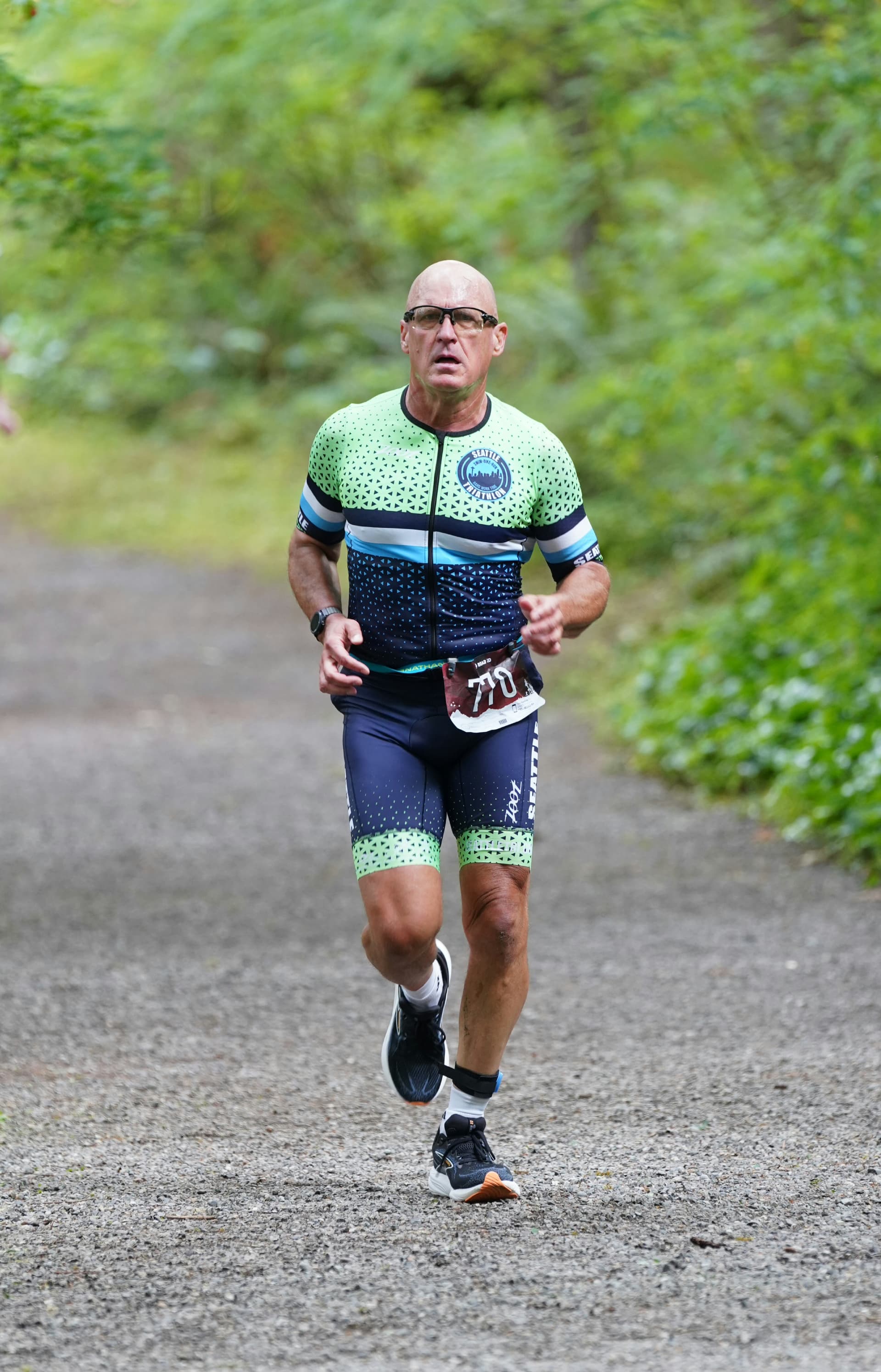
Seriously, that’s only a couple years of age after I started doing triathlons.
Wide cross training is your friend. Mobility/flexibility workouts, strength workouts, cycling days, running days, swimming days, etc. Throw in some yoga or pilates, and some circuit training/HIIT.
The wider you cross train, the more training load you can support. That being said, build in enough sleep and recovery days.
Here’s what 62 looked like last year…

4 Likes
This is an excellent topic, @Ravi_Raju, for this thread. I’ll comment in the morning. Midnight here now and sleep important.