Good to know about 2020.
I did like the 2010 from the current crop (Margaux generally seems to have put out great 2010s) and got some of the old character from the wine.
Good to know about 2020.
I did like the 2010 from the current crop (Margaux generally seems to have put out great 2010s) and got some of the old character from the wine.
Agree with @Mark_Golodetz - good to know. Discovering Giscours from the ‘64-79 was a great revelation about 20 years ago. I then the change you mentioned. I’m curious to revisit.
I found a bunch of 2004 Giscours in my dad’s cellar. Will check in on one the next time I visit my mom.
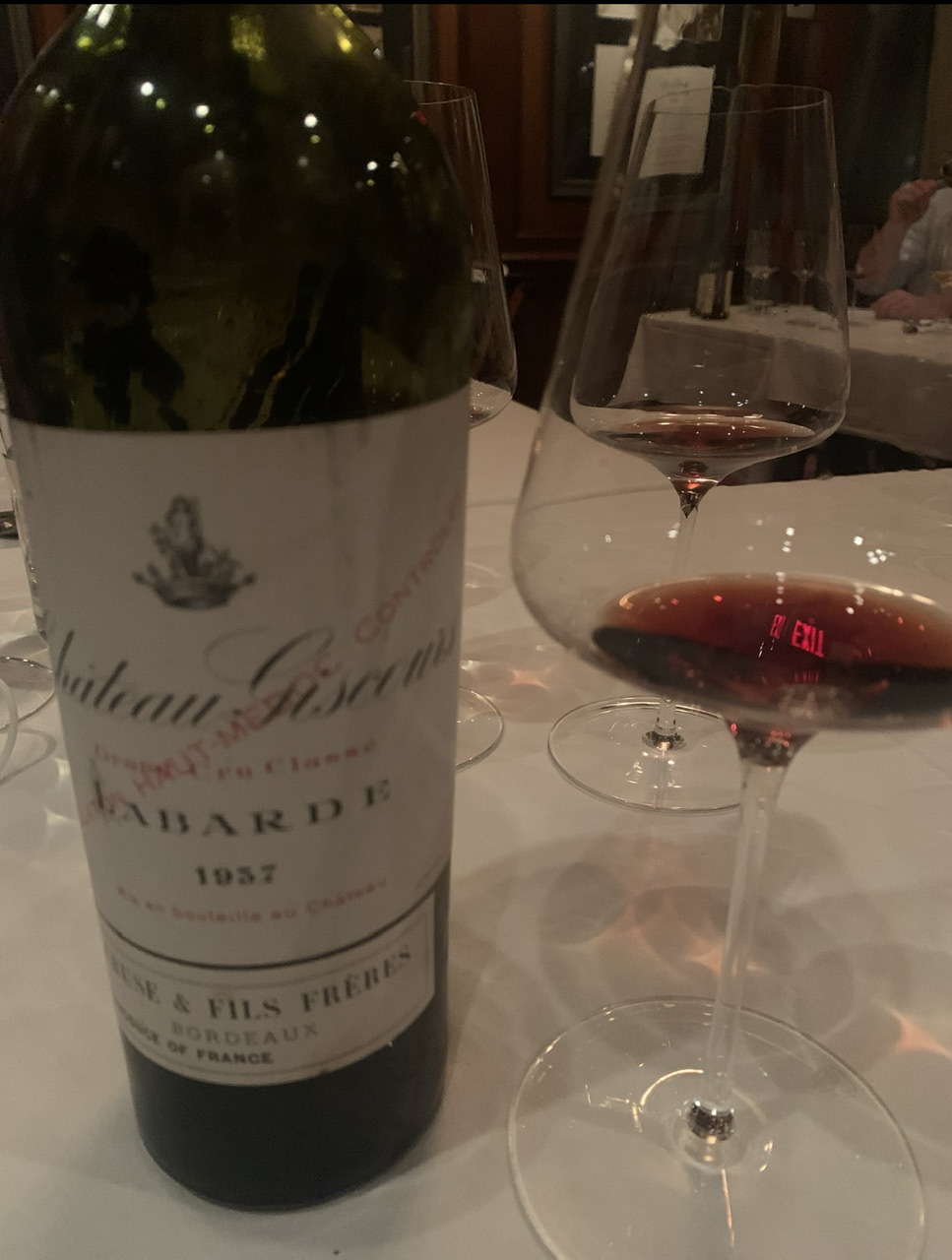
I guess you did not see my note on the 57… Or the 09 
Since we’re on the topic of Giscours 2020, this is something I’ve been thinking about for a while. As far as the wines in 2020 I was looking at, they generally fell into two categories: a) lower alcohol and higher pH (13% and 3.8+) and b) higher alcohol and lower pH (14% and 3.7 and below).
One that I did taste and like very much that represents the first category was Giscours and the second, Canon (3.53) or Pavie Macquin (3.4??). Even Brane Cantenac, which is about 3.7, showed a little more lift – and I understand that was the quickest of snapshots, but it did greatly affect what I chose to buy at this time. I was interested in Montrose (13.4%, 3.86), for example, but decided to hold off on buying a bottle until the wines are on the shelf.
Unsure if one approach is better, likely a mixture of the two, but like with anything, we’ll see how it goes 
I think I have a decent understanding of perceiving alcohol in wine, partly because its disclosed on labels and discussed very prominently. What benchmarks/information is out there for knowing the pH of a given wine, and what levels of pH correspond with wine tasting notes like “freshness”, “medium acidity”, “medium+ acidity”, “high acidity” etc. (if there is a correlation at all!).
At least for BDX, I was generally able to find most of the info on retail sites through posted reviews. I went into the UGC tasting not having looked up any information beforehand. When it came to buying, I looked up the wines I preferred and they were generally lower in pH.
14% doesn’t generally bother me, as I drink CA wines as well. I generally prefer wines with a good acid structure, however.
We tasted an excellent magnum of the ‘70 at Du Tertre, and I remember you disliking it.
Dude, no one talks about this but it is a real thing and an enduring bummer.
pH in this context is an index of soil type. Wines from limestone soils are low pH; wines from gravel soils are high pH. Beyond this, rootstock, climate and harvest date also play into the equation. You can pick very late on the limestone côtes of Saint-Émilion and still have a low pH, and pick very early in the Médoc and still have a rather high pH.
The du Tertre you really need to be drinking is the 1979.
Truly. I am quite sensitive to TCA (not as much as some friends but more than many critics I know), and the failure rate with 1980s Bordeaux is just painful. Often, of course, the lines are blurred, with the medicinal aromas of brett-derived volatile phenols making the TCA harder to differentiate.


Anyone tried the 18 Giscours? Was it made in the same way as the 2020?
FWIW I enjoyed an ‘82 du Tertre a couple of years back. Here is my rambling note on the experience.
Yes; we used to be able to pick it up for less than $30.
My birth year and my favorite Bordeaux. Where in the world did you get that wine!
Bern’s.
They must have had a lot of this as I went twice in a handful of months right before Covid, and the Somm brought it out to the group both times. Not sure if it was on the list.
Wasn’t that the major issue with Ducru from the 1980s? My miss rate with them was painful, especially with the 1986. I bought six from a close friend of mine about 12 or so years ago. Most tainted. I stopped buying Ducru for a very long time.