Yes and I: a) told you that this is what you should do, b) find a comparable part of Burgundy if the larger variation in Piedmont or Tuscany was a big problem for you!
To truly understand Brunello one must journey to Montalcino share meals with the locals, and spend time with the winemakers to experience the romance and soul behind each bottle. The same goes with Chianti as well.
2 Likes
The same goes with all wine. But only a lucky few get to do it.
I like SA Chenin. Never been to SA.
Same goes for Brunello.
4 Likes
Please explain to me the attraction of variety within a region? Certainly, I can understand having a variety of types of wines in a wine cellar. But, that can be had from buying wines from all over the world and buying from each region what it does very well (or at least what I like a lot). I can see caring about quality in a region and price in a region, but why do you view variety as a plus?
I wasn’t actually saying it was a plus.
Never really thought about it as a pro or a con.
I guess biodiversity would be good for sustainability in wine though, and limiting the impact of climate change on a particular region. Or other challenges like drought, or too much rain…
There also might be an interesting point about local cuisine and food pairing versatility.
My only other thought on first glance is that not everyone can afford to get wine from everywhere else like most of us can, so that diversity might be good to sustain a culture of wine in the particular region, and to help locals be able to enjoy some variability.
Just some quick speculation to why some might say that variety is beneficial within a region.
I agree that if I lived in Tuscany I would probably like the fact that there was some diversity of wine. Certainly, the same would be true if I lived in California. However, I live in the DC area and so have wines from all over the world that I can buy. So, I agree with you that I don’t think of it as a pro or a con.
The one disadvantage that I see when I visit a winery with too much diversity they may want me to taste a bunch of things I don’t want to try to get to try what I do want to try. I have had this happen in the past a couple of times at larger wineries in California (lesson - if I want to go to a large winery in California, go to Ridge where everything is good) and a couple of years ago when I was in Florence and went on a wine tour to Chianti and too many wines were too modern for me (lesson is next time go on a tour of Montelcino or find someone who will take me to wineries I want to visit in Chianti).
1 Like
That’s a good point. Most of the declassified Barolo and Barbaresco ends up as Langhe Nebbiolo, though the Nebbiolo d’Alba does take in a very small amount of territory at the edges of Barolo.
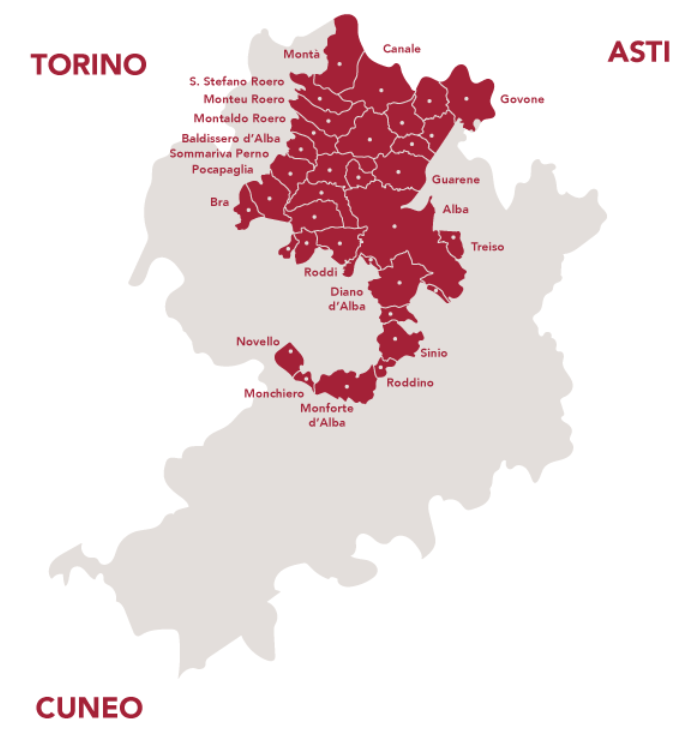
Still, I would guess that my original assertion is correct – that a higher proportion of Brunello fruit goes into RdM than Barolo/Barbaresco fruit ends up in Langhe Nebbiolo, particularly now that so many producers can divert lesser lots to their entry-level normale Barolo or Barbaresco.
I wish retailers were dumping 2019 Stella di Campalto or Soldera. Even Salvioni at a reasonable price would be great.
5 Likes
At the southern edge of Barbaresco (a tiny overlap in the comunes of Treiso and Alba), too.
Yes, I imagine that’s the case. That’s why Langhe Nebbiolo is in my books such a crapshoot. Other producers make excellent Langhe Nebbiolo from high-quality old-vine vineyards outside the Barolo and Barbaresco appellations; other producers use it as a dumping ground for Nebbiolo that’s too low quality to be used in their normale Barolo or Barbaresco.
One would imagine the same thing would apply to Montalcino, but for some reason I find the average quality of RdM much higher than that of an average Langhe Nebbiolo made with fruit mainly / only from Barolo or Barbaresco! I don’t know what they do with the garbage fruit that wouldn’t produce wine of any serious quality.
1 Like
a lot of it is dumped into IGT Toscana
I remember playing through superiore.de’s RdM section way back when and finding the category a total minefield. The average quality for Chianti Classico was definitely way higher.
And now also make a lot more rose toscana as well with it
That’s surprising. You would think that there is a lot of non Classico Chianti for that purpose. Aka the stuff in the wicker
Edit
I guess anyone that wants to make a decent IGT would go higher up the food chain.
It may be a bad sample, but I feel like large well known wineries that have more value priced offerings that are IGT Toscana have some level of Sangiovese in them
It’s kind of interesting, but took me a while to realize that you can make Chianti Colli Senesi all the way down in Montalcino if you wish. Castello Romitorio does or did (2022 is the last vintage I can find and the wine isn’t on their website) and so did Le Ragnaie, but they dropped the CCS in favor of Toscana IGT.
2 Likes
I think most of the cheaper IGT offerings would have sangio. Just surprised any of it would come out of Montelcino
it would make sense for the young vine fruit
1 Like
I’m a huge fan of Il Poggione and Col d’Orcia. I really have enjoyed the ‘18s an have found them to be drinking well right now. Sounds like I need to grab some ‘19s.
Please please sink the Soldera price so I can buy more 
I just had a 97 Lisini last weekend which was fantastic. I’m always nervous with BdM this old because as another user stated you can never tell when it’s going to fall off a cliff. But it was fantastic. I also had their 2010 Ugolaia a year ago which remains one of the best Brunello’s I’ve ever had
2 Likes