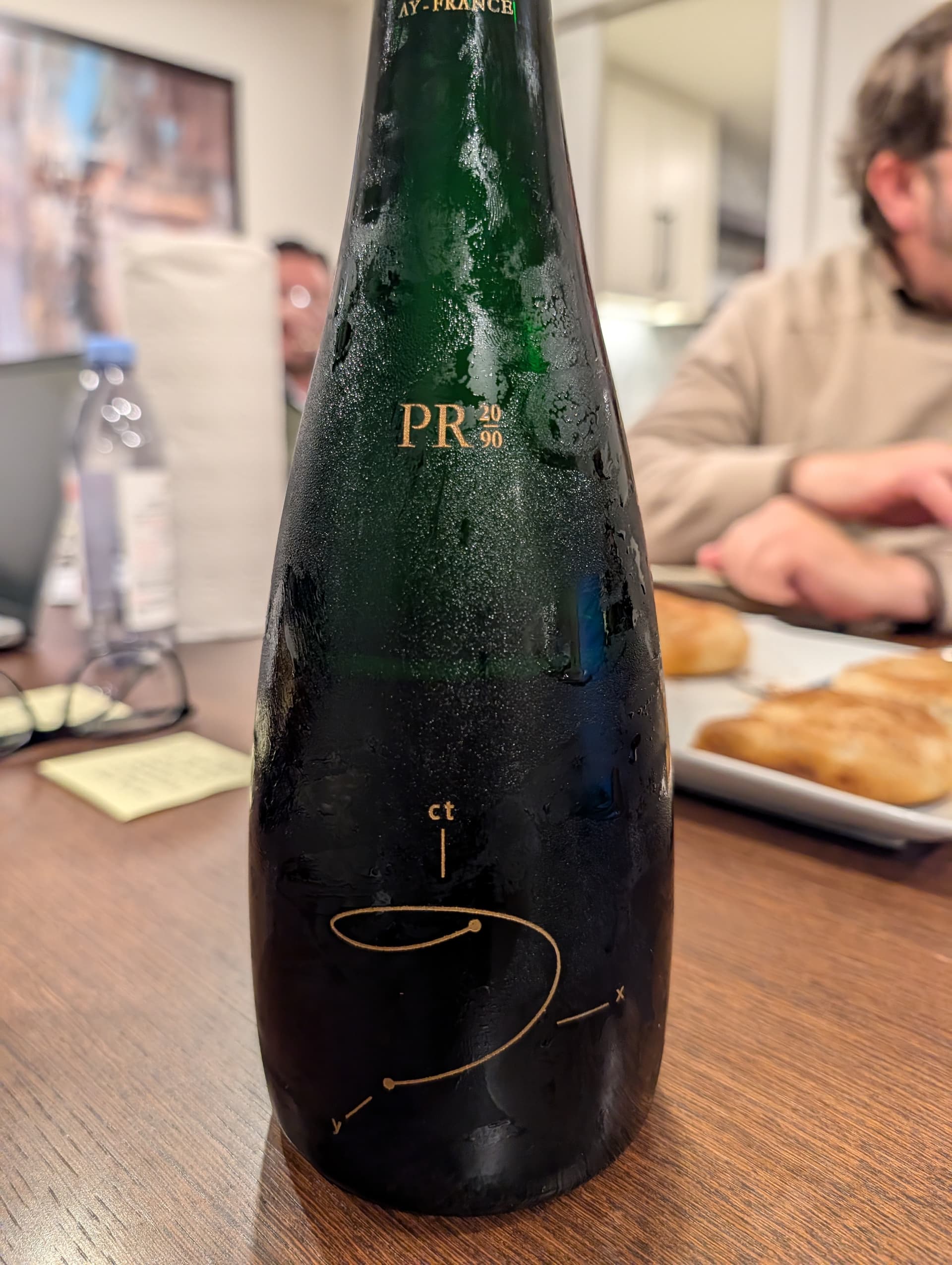
Fortunate to have my friend share his only bottle with us! Incredible. Has a little of that sherry/oxidation but felt so faint. This was incredible, rich, apple, honey, but if spice but not feeling like oak, almonds, cream, and a wonderful minerality
3 Likes
Thanks for posting this. I do enjoy Giraud’s bubbles, they’re more hedonistic than most of what we drink but have always been very good bottles. I’ve been looking for good examples of perpetual reserves as well.
Selosse does not have a Solera and other than experimentation never did; it has always been a perpetual reserve for use in the released wines. Demière is the only Champagne producer I know of who has a true solera and the results are less than stellar IMO (too much oak).
1 Like
Is that really so? I’ve never been to Selosse myself, so I don’t have any firsthand facts - just stuff I’ve read on how Selosse makes wines. And many internet sources say that Selosse is one of the few (or even the only one) to have an actual two-criadera solera system, and not just a perpetual reserve. For example this post (12 years old, and also sports your name somewhere there!) specifically says that Selosse’s system is a two-criadera solera and not a perpetual reserve.
But if that is not the case, nor has it ever been, I thank you for correcting me!
Otto,
It is a perpetual reserve. The base vintage ages in barrel and is then added to to the foudre/tank where the perpetual reserve ages. Is that considred a two step process? If so then most perpetual reserves fit this bill. In some cases, the wine may go from barrel to foudre to tank, but it is still a perpetual reserve.
The first time I visited with Anselme I wanted to see the criadera for Substance and Contraste. Anselme showed it to me. They were foudre. He then went into the thought process of blending and how much to add/remove.
Completely changing topics, the upcoming Selosse Coteaux Champenios Blanc which is also done via the perpetual reserve system is dynamite and an eye opener to me on what you can do with blending multiple vintages.
2 Likes
Gotcha! That definitely sounds like a perpetual reserve - and I did not have this kind of picture of Selosse’s process from any articles I had read. I had understood that there were actually two criaderas and some fractional blending involved, but if it just barrel-aged wines going into a blending foudre that holds the reserve, then that is definitely a perpetual reserve. Thanks for the clarification, this was news to me.
The perpetual 19/90 seems to stray away from the hedonistic style, probably due to the Esprit addition…it’s a cracker of a bottle
My bucket list champers🥂…cheers brother
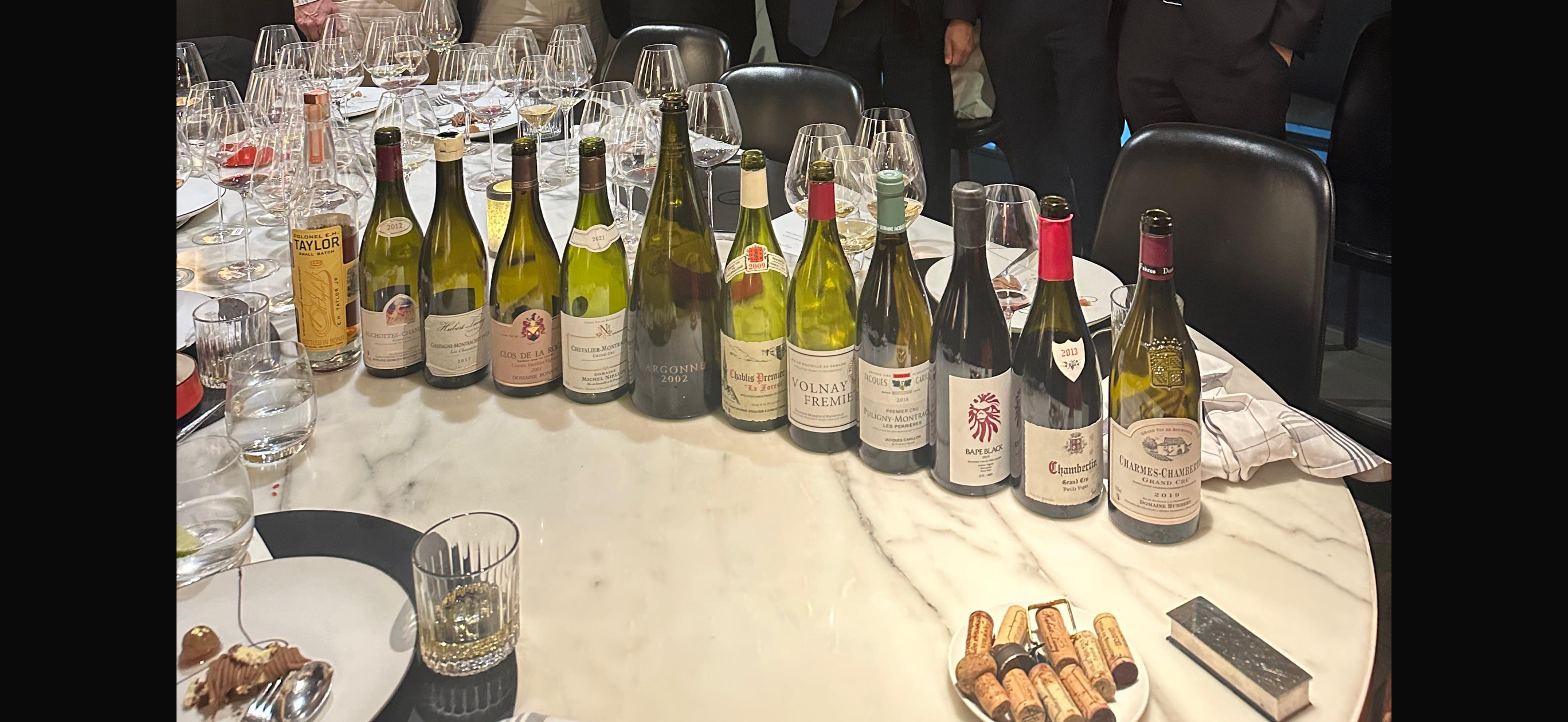
Strong line up sir 
Coming back to this old topic - I’d love to hear if you happened to know if Selosse actually ages the base wine in oak barrels and then empties them all completely to the perpetual reserve? Or if the barrels are emptied only partially to fill out the portion that has been bottled from the perpetual reserve and then filled up again with the base vintage with some of the older wine remaining in the barrels?
Because technically here is the difference between a solera system. If all the wines are first aged in oak barrels and then completely emptied into the perpetual reserve, that’s a perpetual reserve of oak-aged wines. However, if the barrels are first only partially emptied into a perpetual reserve tank, then filled again, we get some fractional blending, which is the defining feature of a solera system.
To my understanding all the producers that have perpetual reserve systems in which the wines are aged in oak employ the former process. However, I don’t know how they do the thing at Selosse - if they actually do it the latter way, the system can be described as a 2-criadera solera system!
Otto,
In general here is what happens - The base vintage or youngest vintage ages in small barrels. These barrels are then fully dumped into large oak foudres that contain the perpetual reserve. These oak foudres then see a portion drawn off and put into a very similar blend in steel tank to rest before bottling. It essentially works like this (going backwards):
- Stainless steel tanks (I believe two) of the 1986-2023 blend have about 25% drawn off and bottled
- Large oak foudres (I believe two) of 1986-2024 blend have about 25% drawn off and moved to the stainless steel tanks; this makes the new stainless steel blend a 1986-2024 blend
- Barrels of 2025 wines (let’s say ten on average) are emptied into the large oak foudres which makes the foudre a 1986-2025 blend
- Barrels are refilled with 2026 wines and we start all over again
I still see this as a perpetual reserve, but there is more blending than what most producers do and it isn’t just a full dump from foudre to steel. It still is not a solera in my eyes even though I agree there is some degree of fractional blending in what Selosse does.
4 Likes
Gotcha! This was the part of the process I did not have a clear picture of, as there doesn’t really seem to exist much detail about Selosse’s blending process in the internet. Great job explaining this in detail, thank you.
So, as the barrels are emptied completely into the foudres, that sort of eliminates the true fractional blending you’d get in a true solera system I was wondering about. However, even then there still exists the least possible amount of fractional blending as you don’t empty the foudres completely into the stainless steel tanks, but retain a good amount of wine behind. Furthermore, if the tanks are also cross-blended (ie. each tank is filled from both the foudres and not just one into one), there happens some additional fractional blending you’d see in a true solera, and at that point I wouldn’t hesitate to actually call Selosse’s configuration a solera system.
So, if there are actually two tanks and they are cross-filled from the two foudres, I’d say Selosse’s system will count as a true solera system - basically with the least amount of criaderas possible. Unlike you, I wouldn’t call this is a typical perpetual reserve, as normally producers have just one level of reserve filled either from tanks or from oak barrels. That tier you explained, in which there is a reserve that doesn’t yet contain the most recent vintage for a full year would make it basically the same thing as a solera.
If the tanks are not cross-blended, but just one foudre feeding into one tank, at that point we lose the final part of the fractional blending, but even then the system is more tiered than a normal perpetual reserve, so in my view it’d be some sort of hybrid existing between a perpetual reserve and a solera system.
1 Like
Otto,
You make good points. I will give that Selosse is kind of a gray area, since he does actively maintain two different perpetual reserve blends - one in foudre and one in tank.
I believe each foudre is only emptied into one steel tank and no cross-filling occurs. Ansleme and Guillaume never discussed taking one foudre and putting it in both tanks; the explanation they gave me was this foudre goes to this tank and this foudre goes to that tank. I don’t think there is any cross-filling during a single year, but it is possible that one foudre might go into one tank one year and then the other tank in a different year. I have never specifically asked. The Selosses do make an effort to keep each foudre and tank as similar as possible in terms of the blend and having multiple vessels for each step isn’t just due to size constraints, but also to not lose everything if something were to go wrong in one.
1 Like