I am still drunken from yesterday „Jungweinprobe“ barrel tasting and after-tasting at Bellas winebar. haha
Stay tuned…..
I am still drunken from yesterday „Jungweinprobe“ barrel tasting and after-tasting at Bellas winebar. haha
Stay tuned…..
Your fans are awaiting! I heard it went late into the night! Wish I could have made it.
„Riesling will always be King and Queen in Germany- but Chardonnay has great potential." Robert Dentice
Chardonnay
A few days before the tasting I spoke with a good friend about the upcoming „Jungweinprobe“ and I told him that for me one of the most important aspect of this tasting is to taste and observe the development/journey of the Chardonnays and Spätburgunder. It is such thrilling for me, as every vintage they are getting better and better.
Photo - courtesy of Kiwi Dan
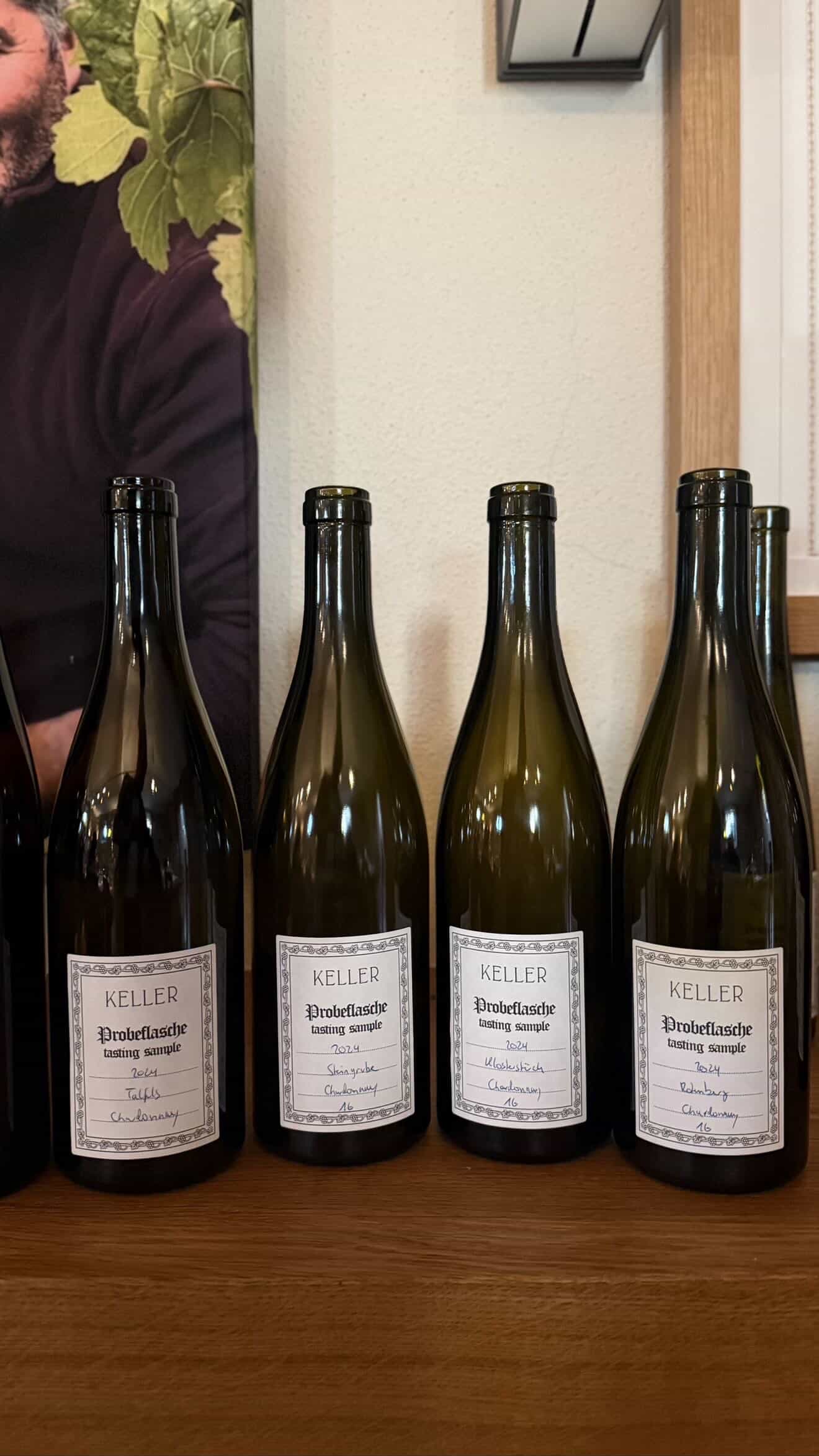
2024 „Talfels
Until the vintage 2022 it was called „Alte Reben“ Réserve. Wonderful start into the Chardonnay section. Good density „Schmelz“ and energy.
2024 Steingrube Erste Lage
Everyone was talking about the „Klosterstück“ and „Rotenberg“ Chardonnay, but don`t underestimate the „Steingrube“. It has a remarkable minerality, spice, freshness, finesse and most notably a fine acidity (!). If my memory is correct also a bit of reduction. Impressive Chardonnay. It is based on old Pinot Gris vines which was changed „Umveredelung“ to Chardonnay in 2022.
2024 Klosterstück Erste Lage - Pfalz region
Surprisingly I found no access to this pur, austere, mineral Chablis-like Chardonnay on saturday. But let me quote my friend Kiwi Dan:
„ Tasting these wines was an incredible experience highlighting the terroir of these great German vineyards. In particular the contrast between Klosterstück and Rotenberg, with the limestone driven Klosterstück presenting a racy mineral and floral expression versus the clay driven Rotenberg with density and powerful fruit (while still retaining incredible acidity). The Vinification being the same was proof of the greatness of these sites - and while comparisons were made to Le Clos Chablis and Batard-Montrachet, these wines deserve to be talked about as great German sites in their own right.“
2024 Rotenberg Erste Lage
Oh la la…….how seductive. I surrender……….
What a density, creaminess and power. And like Kiwi Dan said „ while still retaining incredible acidity“. Gorgeous
Thank you Martin! Can’t wait to try these.
I haven’t tasted these Kellers, but was in the region tasting a similar soil comparison of Chardonnays at AdamsWein on Monday. The 2024 Lohpfad was the clay-based bottling and was nice, easy but finely-knit, with some oak influence. I preferred the 2024 Auf dem Haun from the limestone soil, such great incisive structure while still holding a core of creamy fruit.
I would happily drink either and maybe in another world would have time to explore them in great detail (especially the Auf dem Haun). But I must admit that while I have tasted many nice wines, German Chardonnays still don’t edge their way into the top of my buying priorities.
As a German I see this differently, of course. I am thrilled about the development of German Chardonnay especially regarding the background that this happens in such a short time.
Sure, it’s great to have more delicious wine in the world! All good.
I just don’t have enough time to drink and follow all the delicious wine.
Jurgen, when I very unscientifically have happend to talk about wine with people I met who i didn’t takes as being passionate about wine like us here, almost everyone has mentioned grauburgunder as their favorite variety. When I mention that I myself prefer Riesling there’s sometime a bit of a oh look.
Very small sample and maybe not representative at all but it happened often enough for me to think about it.
No surprise, Grauburgunder is easy to access and a household variety for many ordinary german wine-consumer who rather buy wines in supermarkets.
Interesting, thanks. It chocked me when it kept being mentioned, as Riesling is one of my favorite varieties, and I was a bit in disbelief at first. I guess the easy drinking versions fits the bill better for the supermarket segment.
Grauburgunder has clearly less acidity and is in general quite round.
Sad but true. An average German will drink whatever Aldi puts up on the shelves, as long as it is cheap and neutral in taste. Pinot grigio is probably Germany’s most popular wine.
Has anyone had experience with yeast sediment in Jonas Dostert Chardonnays?
I set aside a bottle of 2021 to drink a couple of weeks ago, but noticed there was an sizable amount of yeasty sediment bobbing in the bottle. I stood it upright in the fridge for about a week to try to get it to settle out, but when I opened it the sediment was very fine and remained completely suspended in the wine.
The wine underneath was, of course, rather nice, but the bitterness from the yeast made it a bit unpleasant overall.
Unfortunately I don’t have many other bottles on hand to compare with, so I can’t assess whether this was just a one-off bottle or something that occurs more regularly. Has anyone else come across this?
I have a 2022 tonight. Great……no sediment.
From the Moritz and Jasmin Kissinger-Bähr LEI dinner last night. We had a trio of Chards. 2018 was Mortiz’s first vintage it was lights out fantastic. The 21 and 23 were also great maybe a tad more precise and focused. Great examples of why German Chardonnay is so exciting.
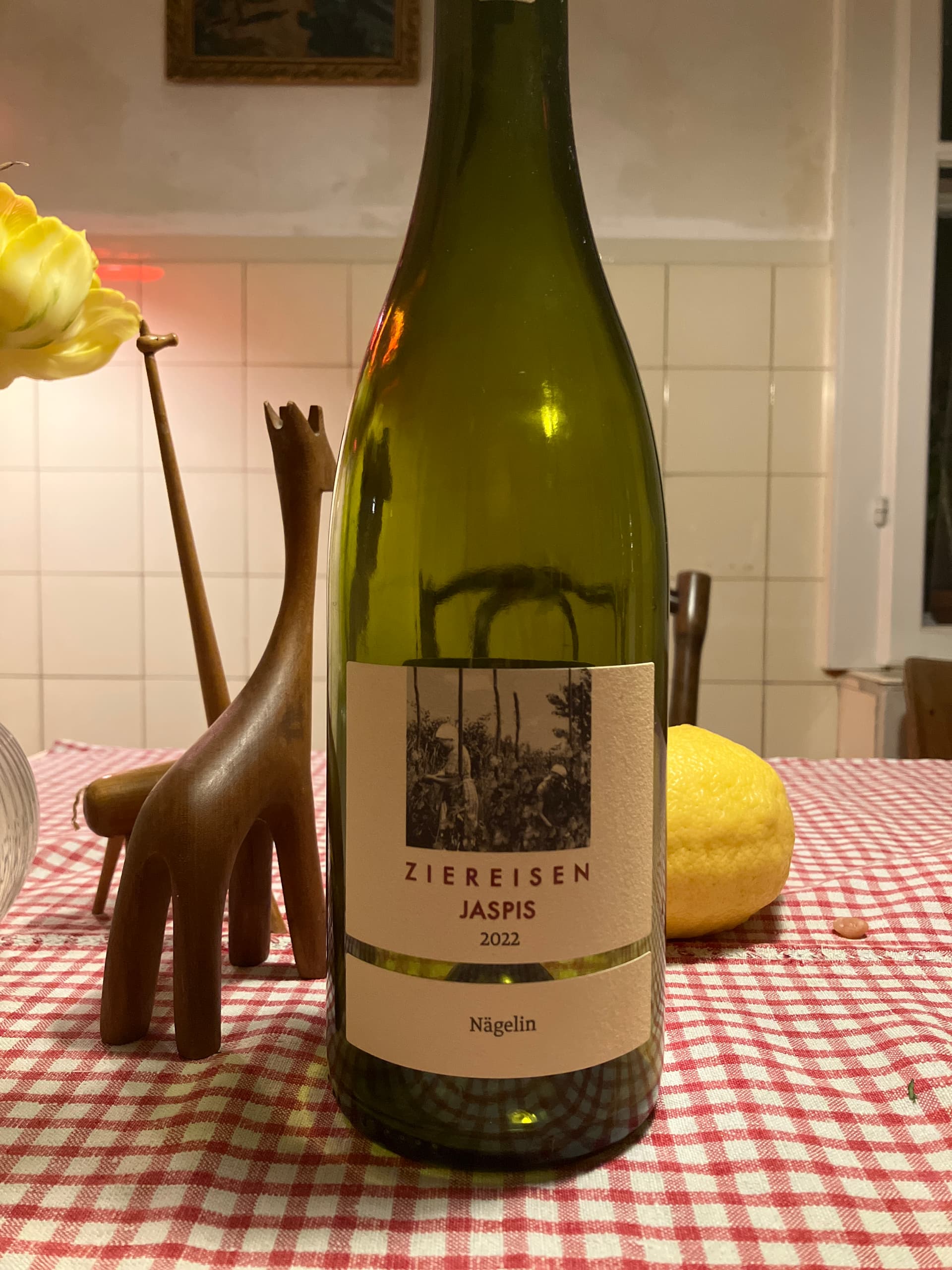
Ziereisen, Jaspis Nägelin, Chardonnay, 12,5% Alc.
I had this wine a couple times in the last month. Both times it showed beautifully (one time surpassing a 2022 Ravenau Chablis very easily) impressive on the nose, with gunpowder/sesame reduction. Smoke and herbs, citrus aromas and yellow apple. A hint of oak aging.
On the palate great tension and energy, lively acidity and long long finish. In my opinion one of the best Chardonnays in Germany at the moment.
Have’t tried 22 yet but I this is my fave German Chard, hands down. 20 and 21 are showing better than 19 at the moment.
I attended a wine dinner last year with Tobias Knewitz last year and I was extremely impressed with his entry-level chard. The 2022 Knewitz Chardonny. It has a little bit of reduction which is in vogue these days. I like this style to a point. In this one it was a component and not the dominate feature. The wine was extremely delicious, precise with lots of structure and depth. I was so taken by the wine and given my overall excitement with German Chardonnay I ordered a case. I opened my first bottle last night and wow what an enjoyable wine. We had it with the Nellie (Roasted shallot, pickled shallot, fried shallot) and the Old Town (Mushroom, pickled shallot, muenster, pumpernickel) pizzas from Wylie Dufresne’s Stretch!!
What a pairing!!!
And here is the beautiful part this wine is $35!!!
I would love to put this in a blind tasting with some of the hipster Burgundy or Oregon that sell for 4-5x the price!
The talk of some major critics (Sam Hofschuster comes to mind) in Germany is that the 2023 is at least equally impressive. I’m really looking forward to tasting it.
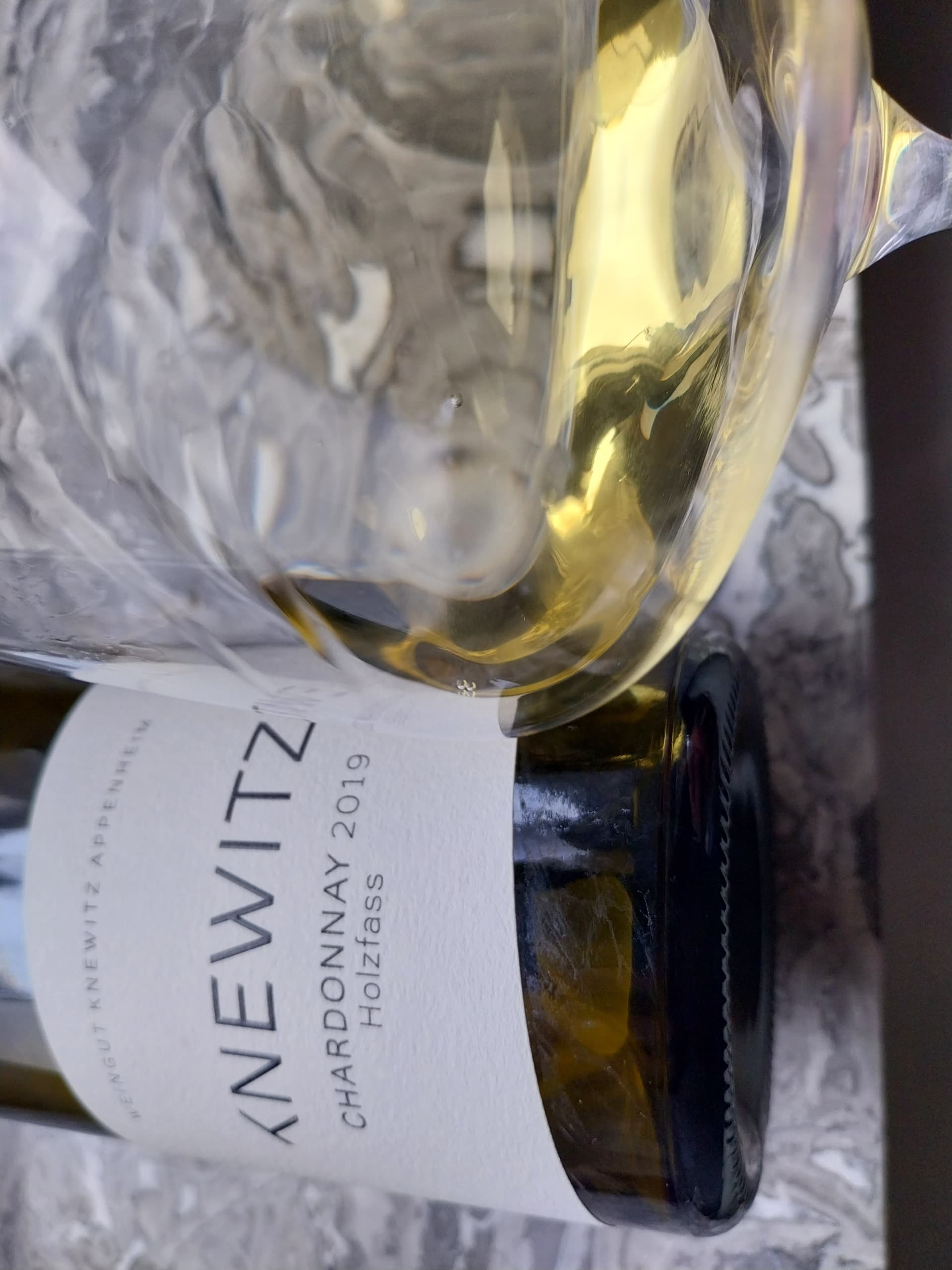
I opened the Knewitz 2019 Holzfass Chardonnay last night. It’s developed into a beautiful pale gold colour, and the reduction that once defined it has now completely blown off.
On the palate, there are notes of apple and tart lemon, alongside vanilla from the oak, plus a slight hint of resin. It’s in a nice place right now, and the acidity really carries it to a good length.
That said, I’m not entirely convinced this is one to hold onto for much longer and will look to drink the other bottles I have soon. The brighter fruit and reduction of its youth were perhaps a bit more compelling.