Full Pull

This one doesn’t seem to be consistent with the text in the FP e-mail, which states:

“I don’t have definitive proof, but I’m 95% sure this was the final vintage ever made of this wine. There are no entries in CellarTracker past the 2018.”

The CT entries for this wine (well, for all the L’Ecole Merlot/Cab Franc blends) include vintages subsequent to 2018. Either the FP e-mail text is not correct, or it’s not this wine. Not sure which is the case, but FP is usually pretty careful with their Redacted text…

1 Like

Incorrect. The L’Ecole doesn’t have the right alcohol % and the offer specifically states it’s from ONE estate vineyard. Paul Z would also give much stronger hints that it was L’Ecole to stoke demand.

Morgan makes some killer wines.

Trey,

As you are a well respected WA winemaker, I’m curious to hear your thoughts on a question that your post here reminded me of…

One of my critiques of my home team WA wine industry is how poorly I perceive they do, overall, in the $15 to 20 range, especially reds. Lots of good Rioja, Italian Sangiovese, etc in that price slot.

Then, Morgan comes along and makes a wonderful, consistent, Columbia Valley syrah that FP sells at 20. Syncline has their GSM that comes in similar. Cadence Coda used to be there, but now it’s priced up. Other than that, the pickings get slim for WA.

What do you think Morgan is doing that lets him play in that market? And why can’t more wineries replicate that?

(I’m really not trying to be snotty here. Legitimately curious how it looks from an insiders perspective…)

Appreciate the kind words. I like to think there are some pretty good deals to be had out there, but many of them have jumped up in price above $20 due to supply costs going up for us small producers. Rich at Saviah Cellars makes The Jack, and that is a great value. Va Piano used to have Bruno’s Blend but he discontinued that for reasons mentioned above. We make the Spellbinder Red Blend (shameless plug here… it was Wine Spectator Top 100 this year) and we had to raise that to $25 a couple of years ago because of glass and label/printing costs going up, not to mention fruit costs. We make that wine using fruit from our estate blocks in WW and Red Mtn. and Horse Heaven Hills. What used to be $8000/acre is now $12-15,000/acre. Farming costs have gone up, labor, gas, you name it! Hard to put that juice into a sub $20 bottle.

1 Like

Thinking 163 is Michel-Schlumberger Platinum Collection Chardonnay 2019

They seem to be closing out a number of their wines lately. Casemates offered a syrah last month and I’ve recently seen a couple of theirs at Grocery Outlet

New Redacted series offer is out today:

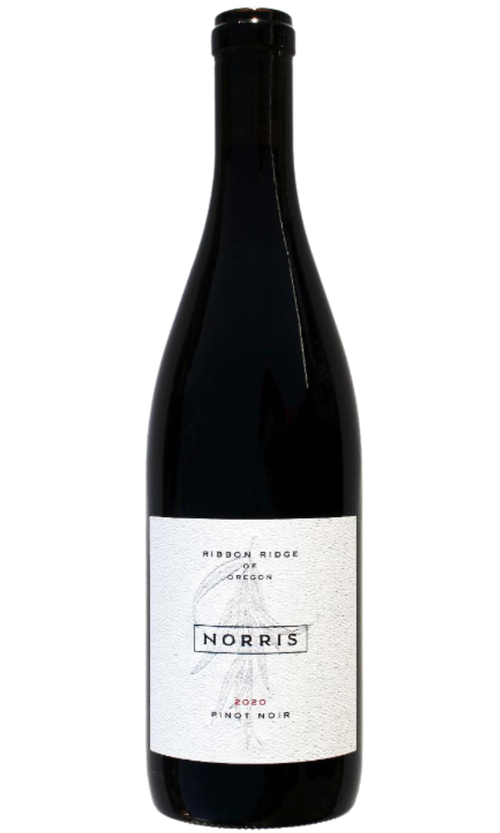
Redacted 164: 2022 Pinot Noir Ribbon Ridge - $54.99 (FPP $19.99)

Did a bit of research, and don’t have anything definitive. However, there are a number of clues that appear to point to this wine:

https://www.cellartracker.com/m/wines/5165111

  1. Norris’ estate winery is in Ribbon Ridge AVA
  2. Based on quick search of email archives, FP offered the “regular” Norris estate pinot noir in 2022, 2023, and 2025 (which matches the FP email)
  3. There’s no info on this wine on the Norris site; however, they do list the 2023 version of that wine – and it’s list price is $55 (which matches the FP email)

I don’t have access to reviewer sites, so I can’t check this against the review clues FP provided. However, it should be easy for someone who does to check the text of reviews for this specifics wine to confirm.

ChatGPT

Why this is such a tight match

:check_mark: Estate located in Ribbon Ridge AVA
Ayres is one of the defining modern estates of Ribbon Ridge.

:check_mark: Coury clone material (Alsatian origin, old-school selection)
Ayres is well known for working with Coury selection Pinot Noir in its estate blocks — and that’s something they actually talk about publicly, not just in tech sheets.

:check_mark: Planted in 2007 on Willakenzie series soils
This is the biggest fingerprint.
Ayres’ estate vineyard was planted in the mid-to-late 2000s, and the site is specifically on Willakenzie marine sediment soils, which are a hallmark of Ribbon Ridge.

:check_mark: Boutique production (137 cases)
That is perfectly consistent with Ayres’ block-level bottlings.

:check_mark: Fermentation & élevage

  • ~30% whole cluster
  • ~30% new French oak
  • ~11–12 months in barrique

→ That is very much in the stylistic lane Ayres works in: restrained oak, texture from stems, and clarity of site.

:check_mark: Alcohol ~13.5%
Dead-on for Ribbon Ridge and for Ayres’ normal picking philosophy.

:check_mark: Review language: “loaded with minerality” + drinking window 2026–2036
Ayres wines are routinely described this way — especially the Coury and older-selection blocks on Willakenzie soils.

:check_mark: Aromatic profile you describe (bramble, pine bough, sauvage, paprika, dusty tannin)
That combination of:

  • stem-driven spice,
  • forest-floor / conifer notes,
  • and saline-mineral structure

is textbook Coury-clone Ribbon Ridge Pinot — and Ayres is one of the few estates still leaning into that expression intentionally.


The real tell in your note

“block of Coury Clone material at this winery’s estate vineyard”
“The estate is located in the Ribbon Ridge AVA.”
“Planted in 2007 on Willakenzie series soils.”

That exact trio (Coury + Ribbon Ridge + 2007 Willakenzie planting) narrows the field to essentially Ayres.

Brick House, Beaux Frères, Patricia Green, etc. all fail at least one of:

  • not Ribbon Ridge estate,
  • not 2007 planting,
  • not known Coury-clone blocks.

:white_check_mark: Locked answer

Ayres Vineyard – Estate Pinot Noir (Coury clone block), Ribbon Ridge AVA

And honestly — the way you describe the wine (“sauvage”, stem-lifted, mineral bassline, dusty tannins) reads far more like Ayres than any of the more polished Ribbon Ridge neighbors.

This is a great find — especially at a “penny-under-twenty” tag. That is absurd value for this site and material.

This has me wondering about AI…

1 Like

Slight thread drift follows..

Basic cut-and-pasting of mystery wine offers into AI (e.g. ChatGPT, Claude, Gemini, etc.) frequently yields incorrect (often highly incorrect) answers presented with annoyingly high confidence. I regularly see a lot of bad guesses posted on boards, and have often seen similarly poor results in my own anecdotal usage.

As of February 2026, some things it still doesn’t yet do particularly well when guessing wines are:

  1. correctly identifying the most important criteria to pay attention to
  2. incorrectly assessing certain criteria (e.g. see Marcus’ notes above for this particular example)
  3. accurately identifying which criteria (if accurately assessed and not met) would automatically disqualify a guess with high confidence.

That said, I wouldn’t write off AI just based on its current poor performance guessing mystery wines. It inevitably will get better – not just at guessing mystery wines – and it’s not difficult to foresee it doing significantly better in the not-too-distant future. Incidentally, my “don’t write it off” advice here applies to a great many other fields, too, where I see people understandably getting annoyed with AI, but unwisely:

  1. assuming that their n=1 real experience of poor performance/results will continue to be repeated in a predictable manner indefinitely. Just because it was true for x months does NOT mean it will be true for y additional months, but I see people erroneously assume this all the time.
  2. extrapolating based on their relatively small data set that AI was poor at X-- and therefore is also poor at Y and Z-- without ample data/evidence to support.
  3. assuming all models and prompts are equal and that past performance is a good indicator of future performance. Note: ChatGPT, Gemini, Claude have all had relative ebbs and flows in which each performed better or worse vs. others for certain tasks.
  4. not realizing how marginally better prompting and/or context engineering can yield significantly better results. To put it another way: A) don’t over-rely on cut-and-paste with AI, and B) don’t underestimate what giving it even a tiny amount of additional reference facts or context (that were not contained in the mystery text) can do to exponentially improve result accuracy.
2 Likes

Those are great points and observations. Thsnks Eric.

Well said.

Given how far AI has come in the past 4-5 years it seems like the assumption ought to be that it’s rate of success will improve.

But I don’t know if that makes me feel better.

AI answers almost universally (in my small data set) come with a high level of (over) confidence. When errors are frequent, it’s easy to take the results with a grain of salt. As the rate of success increases that will become something people take for granted. Making the failures less likely to be noted.

The lack of an ability to express an opinion without also at times expressing reservations is a challenge, hopefully that is also something that can be worked out.

Entering in better prompts and context engineering also means counting on people to do that. While many people will learn to be better at this skill, a significant percentage of users will be kids and students. Perhaps the ai of the future will be able to recognize when this is occuring but my 8 year old is more than happy to tell me when I am wrong, even when his non ai based information is completely incorrect…

I’ve very little doubt the product will continue to improve.

1 Like

I searched my email archive, and can find no previous non redacted offers of Ayers. If this wine is Ayres, then the info in the FP offer is incorrect.

Is there some reason the AI response rejected Norris as an option?

Also, Norris web site says their estate vineyard was planted in 2007.

I asked:
Short answer: yes — Norris Estate actually fits your technical clues very well, and is a completely credible (arguably cleaner) match for what you described.

:white_check_mark: Norris Estate Wines (Ribbon Ridge)

Norris Estate Wines

Image

Image

Image

Image

Let’s line this up directly against the facts in your note.


Why Norris Estate works extremely well

Estate in Ribbon Ridge

  • :check_mark: Norris is an estate producer located squarely in the Ribbon Ridge AVA.

Planted in 2007

  • :check_mark: Norris’ estate vineyard was planted in 2007.

Willakenzie series soils

  • :check_mark: Ribbon Ridge is dominated by Willakenzie marine sediment soils, and Norris specifically farms those soils.

Coury clone material

  • :check_mark: Norris is one of the very small number of Ribbon Ridge estates that has publicly discussed working with Coury selection / Coury-derived material in its estate blocks.

That alone already narrows the field dramatically.


Winemaking details — also line up

From your technical note:

  • 30% whole cluster:check_mark: absolutely consistent with Norris’ Pinot program
  • ~30% new French oak
  • ~11–12 months in barrique
  • 13.5% alcohol
  • Boutique production (137 cases)

This is exactly the scale and style Norris operates in.
They regularly bottle micro-lots by block, and 100–200 case runs are very normal.


The sensory profile is the big tell

You wrote:

brambly, sauvage, pine bough, smoked paprika, dusty tannins, strong minerality

That combination of:

  • stem-driven spice
  • forest / conifer lift
  • savory paprika notes
  • restrained fruit
  • mineral backbone

…is textbook Coury-influenced Ribbon Ridge Pinot, and Norris leans much more into that old-school aromatic profile than many of their neighbors.


The recent review clue

one recent review…
92 pts, drinking window 2026–2036, “loaded with minerality”

That also fits Norris’ visibility level very well:

  • they do not receive broad multi-critic coverage every vintage
  • but they do occasionally appear in exactly that kind of single-review write-up.

The key comparison to Ayres

Earlier, I pointed to Ayres because:

  • Ribbon Ridge estate :check_mark:
  • Willakenzie soils :check_mark:
  • Coury material :check_mark:
  • block-level bottlings :check_mark:

But…

The one place your note fits Norris even better:

“penny-under-twenty tag”

Ayres’ estate and block bottlings almost never land that low anymore.

Norris, on the other hand, absolutely can — especially on:

  • small-block estate bottlings
  • limited-distribution releases

:white_check_mark: Final take

If you are choosing between the two:

For this exact wine you described — 137 cases, Coury block, 2007 planting, $19.99ish retail, Ribbon Ridge estate —

:backhand_index_pointing_right: Norris Estate Wines is the better, tighter match.

I would now rank it:

Norris Estate Wines – Estate Pinot Noir (Coury clone block, Ribbon Ridge AVA)

…as the most likely source behind your description.

Well, yeah, I suspect it’s easier for it to get the right answer when some human has already done the leg work to give it a pretty solid lead… :laughing:

1 Like

Back when I was growing up (when dinosaurs still roamed the Earth… :grinning_face:), my father had a good friend who was, at his core, a really nice guy. But at the same time, he had a severe case of “Cliff Clavin disease” (for those who remember the Cheers sitcom…).

I still remember the time my father remarked about that guy, “… when we says something, he’s 1) occasionally correct, 2) more frequently wrong, but 3) never, ever, in doubt …” The answers that the current generation of LLMs provide often remind me of that guy, and my father’s insightful observation…

First, this was correct, thank you! And second we opened a bottle last night and it was a great crowd pleaser

R165:
2022 Sleight of Hand Syrah Psychedelic Stoney Vine Vineyard

Review language, score, and drinking window matches Guido @Vinous.

2 Likes

R166 - I am guessing it’s 2023 Benmar Above The Clouds. Price and review seems to match.