It all comes down the the temps (and to a lesser degree humidity) which are in the space. Many of my European friends have asked the same thing.
As noted above the temps of these spaces in Europe are usually much better and well suited for LT wine storage than equivalent spaces in the US. There are many reasons this is the case but those spaces in the US can range from 40 to 80 degrees. To generalize basement spaces in the US are often not far below grade and the overall warmer climate we have is another factor. Many homes have furnaces and other heat producing appliance nearby which can be an other issue.
I’m also in NJ. Yes we have all the Seasons here and go from Hot humid Summers to cold Winters. That’s what I’m worried about. The vast swing in temps we have here.
I’m in a similar situation. I started collecting this year and am storing wine in my uninsulated walk out basement in the Catskills area of NY. We are monitoring and logging temperature and humidity to see how much it fluctuates over time.
Luckily it’s pretty cold here. In the summer temp peaked at around 70F air temp in the basement. With a few nights below freezing recently, it’s stayed at around 55F with the furnace on. Humidity above 60% most of the time - house is south facing on a slope and we get a lot of water and mild flooding.
Another option would be to rent a wine locker if there’s a facility nearby that offers this. They frequently start at 8 case capacity. You get constant temperature and humidity control. This is especially useful if you are buying young wine to store for many years (e.g. 2016 or 2019 Barolo/Barbaresco).
I store the majority of my wine at offsite wine lockers and keep a few cases at home for drinking in the immediate future.
Humidity control is important where the humidity is higher than 80% or where the dew point gets higher than your cellar temp (I see you in NJ where it’s going to be >85% relative humidity [RH] in the summer and easily has dew points 73F or higher). The temperature will not drop below the dew point naturally but it can happen when the air is chilled to less than the dew point. by a cooling unit. Mildew/mold can start to affect labels and grow on the outside of corks under those conditions.
But for those of us who have (or had in my case) cellars in dry environments (like in the SW US) it’s not absolutely essential to artificially control humidity. I kept wines over 20 years in a cellar in New Mexico without controlling humidity where RH in the early summer hits single digits and usually averaged about 40% in the winter without any observable problems with cork shrinkage from dry conditions. Same with friends cellars in that area too. Cheers.
Thank you Steve. I wasn’t going to take any chances and I found a Wine Storage facility nearby. Very lucky it’s in the neighboring town. If not for that the next closest is about 20 miles away. I have to pay monthly but I feel it’s worth the peace of mind.
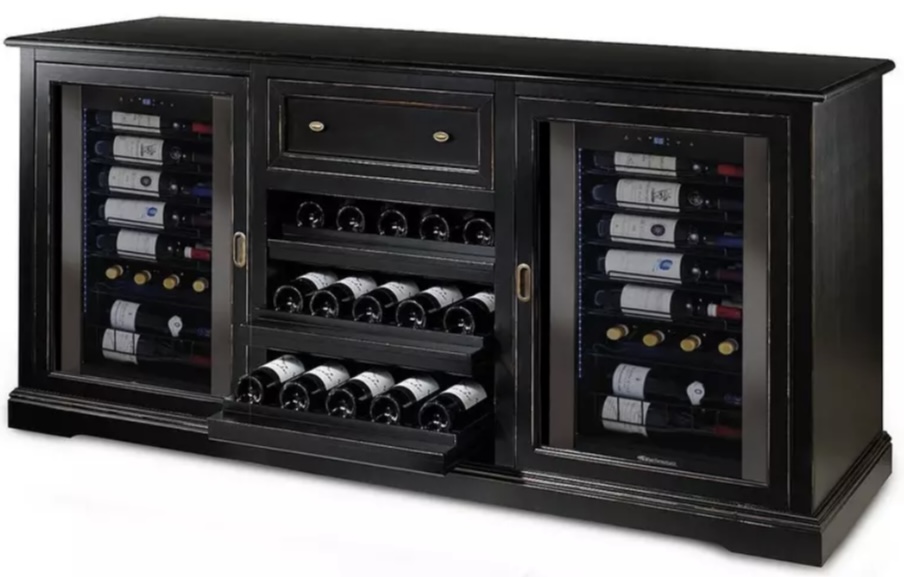
I wish I had a cellar like European cellars. In the US, basements are mostly finished, and even the unfinished basement is usually heated OR have heating ducts running through them to the upstairs rooms. Even though there are not heating vents open to the unfinished basement, mine stays about 70 degrees, the same as the rest of the house. Therefore all my wine is stored in wine refrigerators/coolers.
I’ll second the comments on temperature swings. While wine can handle temps between 60-70 degrees, and low temps just above freezing, I would be concerned with any large swings between those two ranges. That would likely be too much volatility.
Same with humidity - corks don’t like conditions that are too dry and they also aren’t going to react long term to wide swings in humidity
First… Francesco_D welcome to the forums. This is a great place to get access to lots of folks that have decades of wine experience. To your question about using passive storage. I live in Maine, my house is on a slab, and I keep wines that I intend to consume in the near term (1-3 years) under my stairs in a closet. The temperature in there is between 60 - 65 ten months of the year. In the hottest 4 weeks of the summer (late July early August) it can get as warm as 68 degrees for a few days. In the coldest 4 weeks of the year (late January early February) it can get as cold as 55 degrees for a few days but is typically between 58 - 60 degrees. My experience leads me to believe that if you are not storing wines that you plan to open in 10 - 20+ years in that space, your wines should be fine.