A clone is a distinct mutation and what’s propagated from it. Phenotype refers to observable similar characteristics (morphology, as William stated). You could imagine back in olden times a grower selecting for yield and ripening time. To plant new vines they’d take cuttings from the better performing vines by whatever metrics were important to them, avoiding the outliers. In areas focused on quality, over time selections can improve to being more and more the best and most suitable for a site.
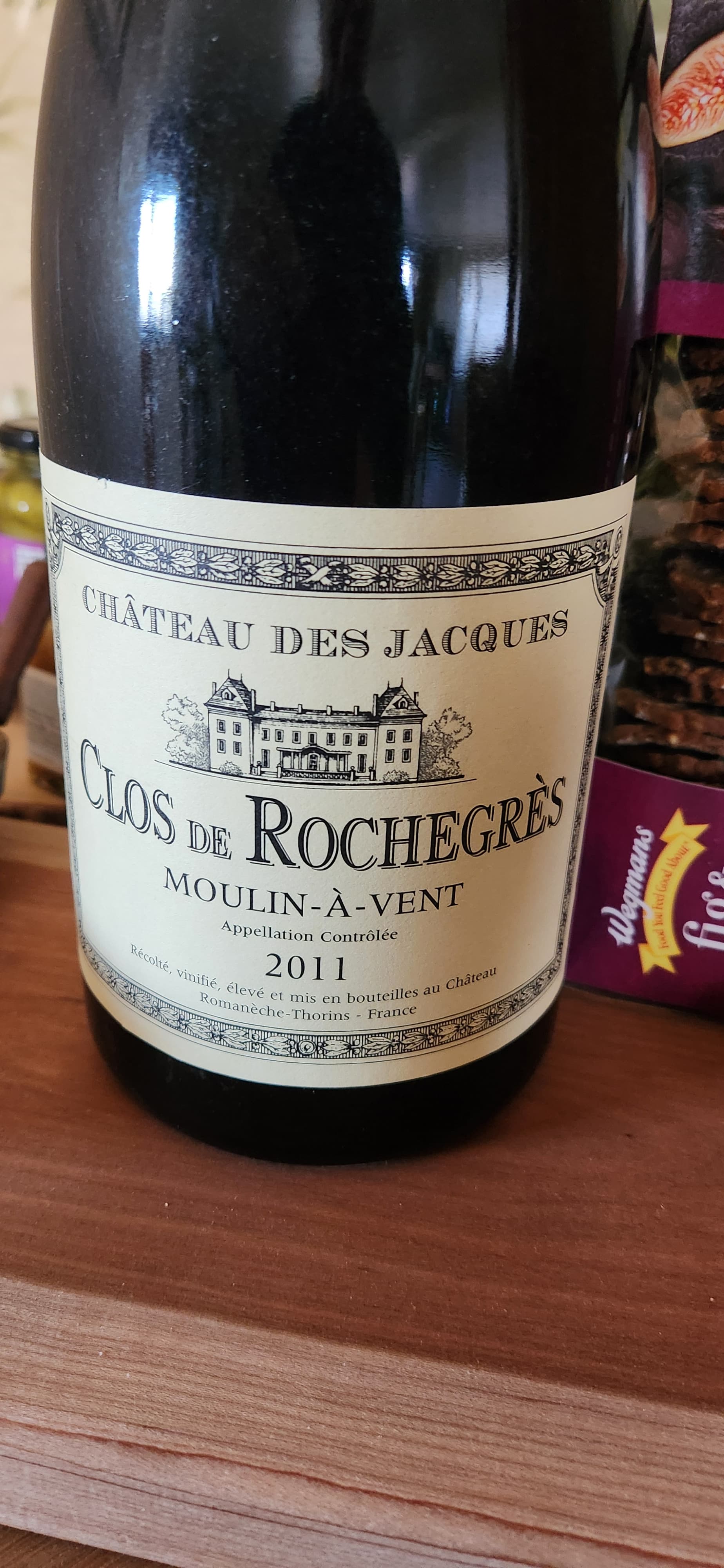
Wine books from the 1960s talk about how the best Cru Beaujolais can age to become indistinguishable from Grand Cru Burgundy. Peter’s except on Gamay indicates heavily cropped vines, and an extreme unscientific bias based on that. It seems Gamay does best on different soil than where Pinot Noir does best. That good quality selections of Gamay are well known. But, there’s also a massive ill-effect of the Nouveau era. Imo, a lot of the respectable Cru Beajolais is far from its potential. Part of that is likely the market and part an evolving knowledge.
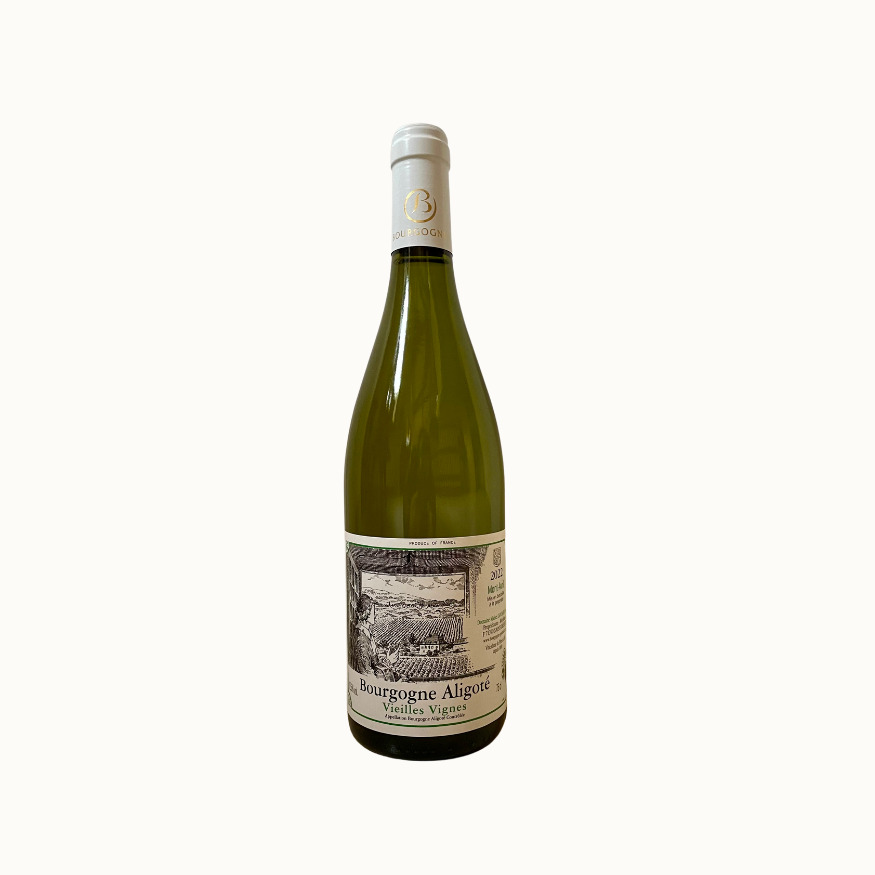
Aligote is much more on the cutting edge, with a few excellent producers in Burgundy and being newly planted in California and Oregon. What I’ve had from here is exciting. I assume there was some wisdom in selecting which clones to bring here and which to plant. That it’s not selected, grown and made with indifference. It’s people lured by a unique and compelling grape and working towards getting the best of it.
To my understanding, there is only the distinction between clones (different clones all have the same parents and thus their overall DNA makeup is always the same - there are just minor mutations that create the clonal differences) and varieties (different varieties have different DNA makeup, even when they have the same parents, as is the case with sibling varieties). Sometimes the mutations can result in quite huge variations within a single variety, ie. Pinot Noir and Pinot Gris are not different varieties, but instead clones - Pinot Gris has been just propagated from a cutting that had a color chimera mutation - and the same thing goes with Savagnin and Gewürztraminer (the latter being just an aromatic color mutation of Savagnin, yet they both have the same DNA).
This would mean that different phenotypes are just different clones of one variety. Of course there are commercial clones which are always the one and the same specific clone with a distinctive commercial name. However, that doesn’t mean that those clones that don’t have their own commercial clone name wouldn’t be clones as well.
I am deeply grateful for this thread. It may have saved me from some extremely serious consequences.
I have called my attorney. He is preparing release forms. Our dinner guests tonight will be required to sign them before they are poured any wine from tonight’s jug.
All grapes of a variety stem from a single vine. (Well, sort of, but generally.) Seeds of a parent vine will yield a great array of offspring, and that’s usually self-pollination. Cross-pollination happens in nature at a low rate, and of course is done on purpose. Basically, each offspring is an unstable cross and its own new variety.
From that single original vine of a new variety mutations happen in shoot growth (somatic mutation). Growth forward from that mutation is replicating the new mutated form. (So, you can have red and white grapes on the same vine, as a visible example.) Think of each shoot as a pathway of potential mutation. Many per vine multiplied by all the vines of that variety and there’s a lot of pathways. A significant mutation is a new clone, but there are also minor mutations within clones. But, if you consider millions of pathways progressing in parallel you have very different evolutions that can result similar looking and performing clones that have big qualitative differences.
An easy visual example is a gris mutation of Pinot Noir. A color mutation is a single gene getting toggled on or off. There have been countless gris mutations of Pinot Noir over the centuries (with most not propagated). Of what’s out there in production are Pinot Gris/Grigio that mutated for several distinct Pinot Noir clones. You wouldn’t turn around and call them all the same clone because they’re gris.
Phenotype is a crude means of differentiating broader characteristic. A clone is from a single unique path of propagation, which the term refers to. Most clones are not identified and named. But, obviously tracking the best performing vines, with their various purposes, is important.
And really, when you’re propagating vines to a new environment the vines will adapt, throwing in confusion. So, the same clone can perform quite differently from site to site, often predictably due to some site features. As an example, we took cuttings from our Corvina source and grafted them to a very different site we thought they’d do very well and grow thicker skins, which was the case. Anecdotally, according to some of the top Pinot Noir producers in my local region, some Pinot Noir clones that make exceptional wine at some low elevation sites make mediocre wine at some high elevation site, with the opposite true of other clones.
Why a significant one? If you have let’s say a vineyard plated to one single clone of one variety, and there happens just a very minor mutation in a single shoot and from that mutated shoot you start propagating a selection, to which you plant a new vineyard, basically you have already a vineyard planted to a different clone. Maybe a with a clone with a minor difference, but that would still technically be a new clone!
Indeed! Things can get quite quickly out of hand when you think of it. And this is in no conflict with anything I just said earlier.
No, definitely not. Never said that. All I said that Pinot Gris is not a different variety from Pinot Noir, just a color mutation, so basically it in effect becomes a new clone, if you start propagating new vines from it. Naturally you can have different clones of Pinot Gris, if they are borne of different mutations, or if further mutations happen later on. Gewurztraminer is a good example of this: there are different clones of this variety (that is also Savagnin) that at some point you really can’t tell whether to call it a Savagnin or Gewurztraminer - some clones are less aromatic, some are more; some are pink, some deep red, some white, some gray, some yellow; some have more acidity, some less so. All kinds of combinations! And naturally you can also have different kinds of clones of each combination.
This didn’t really explain what a phenotype is. For example I often see the term “phenotype” used in conjunction with Nebbiolo, but to my understanding, they are always actually talking about the different clones of Nebbiolo. So this throws in an additional layer of confusion - is the term phenotype correct here?
Yes indeed. This was no news for me, either. It’s quite interesting how a certain clone of one variety might make amazing wines in one place, then they don’t work at all in a different place, where a clone that might be considered inferior in another place might be much more successful! And even things like these might change later on as the vines adapt to their new site - and this, in turn, does not make them new clones, as no changes (mutations) occur in the DNA of the vine!
So, all in all, vines, crossings, clones and all that is a topic that is very fascinating for me!
But still my original question about the different clones of Aligoté remains open - are they now actually different clones or not? If they are not genetically identical, it very much sounds like they are different clones!
It’s definitional and practical. There is genetic variation within a clone. If a variant isn’t significant it’s just in the mix. Clone is just a useful means of categorizing and conceptualizing/organizing/understanding.
There are real world problems. Plants take cues from their environment. Adapting to site, reacting to what we’d call vintage variation, to a good degree without genetic mutation. But, environmental conditions can trigger genetic changes in plants and animals. So, propagating a clone from one vineyard to another to another to another, as well as just the variations that will occur over time even in vines planted at the same site, can see wholesale changes where different branches of what are still referred to as one clone should really be recategorized as more than one. But, if no single mutation was significant how would you do that with a gradual continuum of change between two distinct points?
Re Nebbiolo in Piemonte. That’s an issue with Pinot Noir in Burgundy. Phenotype as a cruder way of making sense of things. Or Tuscany. We’ve had threads where Italians and fans of Tuscan wines react to what is called here the Brunello clone. To them, there’s enough understanding of the great genetic diversity in Brunello, that there are a number of identified clones, that reducing a whole region to one clone is ridiculous. It wasn’t possible historically to understand Nebbiolo or any other grape on a clonal level. Phenotype would have been a large part of decision making historically. If you don’t do comprehensive testing, how would you know if it’s one clone or twenty? Or if two well performing vineyards in the same subregion have a similar mix of clones or not. Think two independent nearby sites selecting for what does best there of centuries, competing on the quality of the wines. They may be all the same phenotype, but dozens of clones in each with none in common between the two. The two terms are different tiers of catagorization. Like all squares are quadrilateral shapes. You can’t substitute quadrilateral for square.
There’s also a good argument having a whole vineyard monocropped to a single clone isn’t ideal for a litany of reasons.
That’s part of what Katie is asking. What exists here in California and Oregon is limited. I see UC Davis’ Foundation Plant Services has 4 options for Aligote. That might be all we have available. Just the selection process of what to bring here weeds out a lot of mediocrity, not that all are necessarily intended to make a quality 100% varietal wine. Some could be for an acidic blending component or some sort of research purpose.
Thanks for the information - Wes-Barton . If I understood some of the text as repeated above…for example : *****Wine books from the 1960s talk about how the best Cru Beaujolais can age to become indistinguishable from Grand Cru Burgundy. ******
A well craft Cru Beaujolais…with age… it would hard for wine drinker to distingish them from Grand Cru burgundy ?
No. It’s an old truism, which I’ve seen repeated often enough over the decades on wine forums, including here, and elsewhere. I’m not interested in wasting time looking through books to satisfy you, especially since i dont think I’d find a specific example, but rather anecdotes. Perhaps someone will chime in. On a more humble level, it’s not uncommon for people to confuse the two grapes in double blind tastings. Same general character from physiologically similar grapes. If varietal character isn’t showing…
A clone and its scion are genetically identical. A “family of selections” as I used the phrase refers to a group of different individuals that share some “family” resemblances, but which are not genetically identical. Given that clonal selection, and mono-clonal plantings, are widespread, the distinction is not purely academic. So no, neither so-called Aligoté Doré or Aligoté Vert are clones.
“Aligoté Vert”, which frankly I never heard anyone actually in Burgundy use as a term, is just used as a catch-all term to refer to modern (post-1971) clonal selections of Aligoté (there are several, not just one) that overcrop to such a degree that they do not really ripen, thus remaining green, expect perhaps in very warm, sunny seasons, and on the most sun-exposed parts of the bunches. Ripe aligoté grapes, whatever the selection, is golden.
That IDTT episode I mentioned above and that Uli linked features a couple of Burgundy producers explicitly using “aligote vert” and “aligote dore” as distinct things
Okay, I guess it is the ones who have the “Doré” who talk about the “Vert”, because it is not a hard sell
In terms of what exists concretely, there are ten certified clones of Aligoté: 263, 264, 402, 651, 920, 935, 936, 1400, 1401 and 1402. Then there are some proprietary and public massale selections. Some of these could be called golden, some of them green, as you like. 402 and 920 are the more productive ones I think.
Erin Scala actually covers this discrepancy in the Bouzeron part at about a half our in - she visits Pierre de Benoist at Domaine de Villaine, who makes the explicit distinction between Doré and Vert. Anne Morey, similar. Then she mentions that others seemed puzzled about it when she asked which one they were working with.
It doesn’t even have to be that old. At a recent blind tasting in Oslo, we were served a Metras L’Ultime 18 and everyone thought it was a Premier or Grand Cru from Gevrey-Chambertin. This was a table of very experienced wine-tasters (guesses ranged from Duroché Lavaut 18 (my guess) to Rousseau Mazy 14).
As to older Cru Beaujolais, I have been served 50+ year old Beaujolais and mistaken it for Pinot Noir at least a dozen times (from village to Grand Cru level). It’s the oldest trick in the book when you’re blind tasting older wines. People almost invariably end up placing it in the Côte d’Or.