100%!
To the extent there is a group of people out there who view LBVs and Tawnys as interchangeable in any way beyond “fortified wine from Portugal,” I am most definitely not part of that group.
100%!
To the extent there is a group of people out there who view LBVs and Tawnys as interchangeable in any way beyond “fortified wine from Portugal,” I am most definitely not part of that group.
Sounds like it didn’t just taste like old, tired, wood? At some point, the loss of freshness outweighs the gains in complexity elsewhere.
You all need to go one of Roy Hersh’s Port Harvest tours. I have had tawnies 100-150 years old that are profound. I agree that the jump from 10-20 is bigger than the next qualitative decade jumps. My purchases from this past September were 2 forty year old white Ports and the rest were 50-70 years old. I purposely saved room for 3 bottles of the DR Lot 70 based on what I heard and after tasting it at the winery, I didn’t hesitate to hand over my credit card. Roy has definitely moved the needle on my sweet spot after going on 4 of his tours.
I spent a few days in Porto in 2024. (Long-delayed trip report… still delayed.)
My sweet spot is 35 years, which only exists in my mind.
I also usually find 20 to be my sweet spot. And it’s 12 years for single malt and Irish whiskies. The commonality is that I generally prefer the deeper flavor rather than the extra smoothness.
Unlike vintage wines, tawny wines aren’t actually the age of the number designation.
“As with other Indication of Age Tawny Ports, the stated ‘80 Years’ refers to an average age, and the final wine is usually a blend of several very old casks, sometimes refreshed over time with small additions from younger, compatible lots.”
I’m not clear on whether the “refreshed” barrels count as the original barrel age or the average age of the resulting blend in the barrel.
I’ve also read that the age is a style designation, e.g.:
“They are average style profiles . A 20 year Tawny could contain wines older or younger, but the final blend must taste like the official 20 year profile as defined and approved by the IVDP.”
I had been under the impression that the “age” statement (scare quotes) is purely a style indicator, and has no necessary connection to the actual age or average age of the wines. IOW if a house manages to vinify its wine such that it “tastes” 20yo at 15yo, to the satisfaction of the regulators, that would be fair game to bottle as a 20yo tawny.
Others may have a better or more accurate understanding.
This is the case. However, the actual ages usually correspond to what the label says; I’ve had wines presented by the producer and when asked about specifics, they said something along the lines that “this is the most recent lot, so the 10 yo is something like 11 years on average and this 20 yo is closer to 18 years on average”. These were just some random numbers, but in the same ballpark.
Some producers are eliminating the 40 year old catagory and going with the new 50 year old catagory instead. The difference between 30 and 50 is more than 30 and 40. And you can sell 50 year old for far more than 40.
The new muitos velhos catagory is over 80 year old. Very, very expensive but they can be very profound.
I drink more 40 year old than any other, and more smaller Portugese firms because I think their wines show much more freshness while still with the complexity.
Throughout the ice fishing season, I’ve been drinking cases of Kopke Fine Tawnies, I’m going to have to up my game to the 20 year bottles. I also don’t care for the LBV’s, they are far too red for me.
Finally somebody mentions Kopke!
IMO they are not particularly good at red ports, but they do make darn fine Tawnies. There have been mamy great 20 yo Tawny producers mentioned here, but Kopke’s 20 yo is the standard-bearer for me.
And yes, I also think that the greatest jump in quality from one age designation to another is between 10 and 20 yo. Considering how the prices normally tend to double with every additional 10 years, the 20 yos are quite verifiably at the sweet spot when it comes to Tawnies.
Um. Hello!

And another 1965!
I mean in this thread! I know you - and lots of other people (yours truly included!) - have written many times about Kopke, but Mark was the first one to mention the shipper in this very thread!
And I meant Kopke’s 20 yo specifically, as the thread’s theme was around this specific style - not just any Kopke Port.
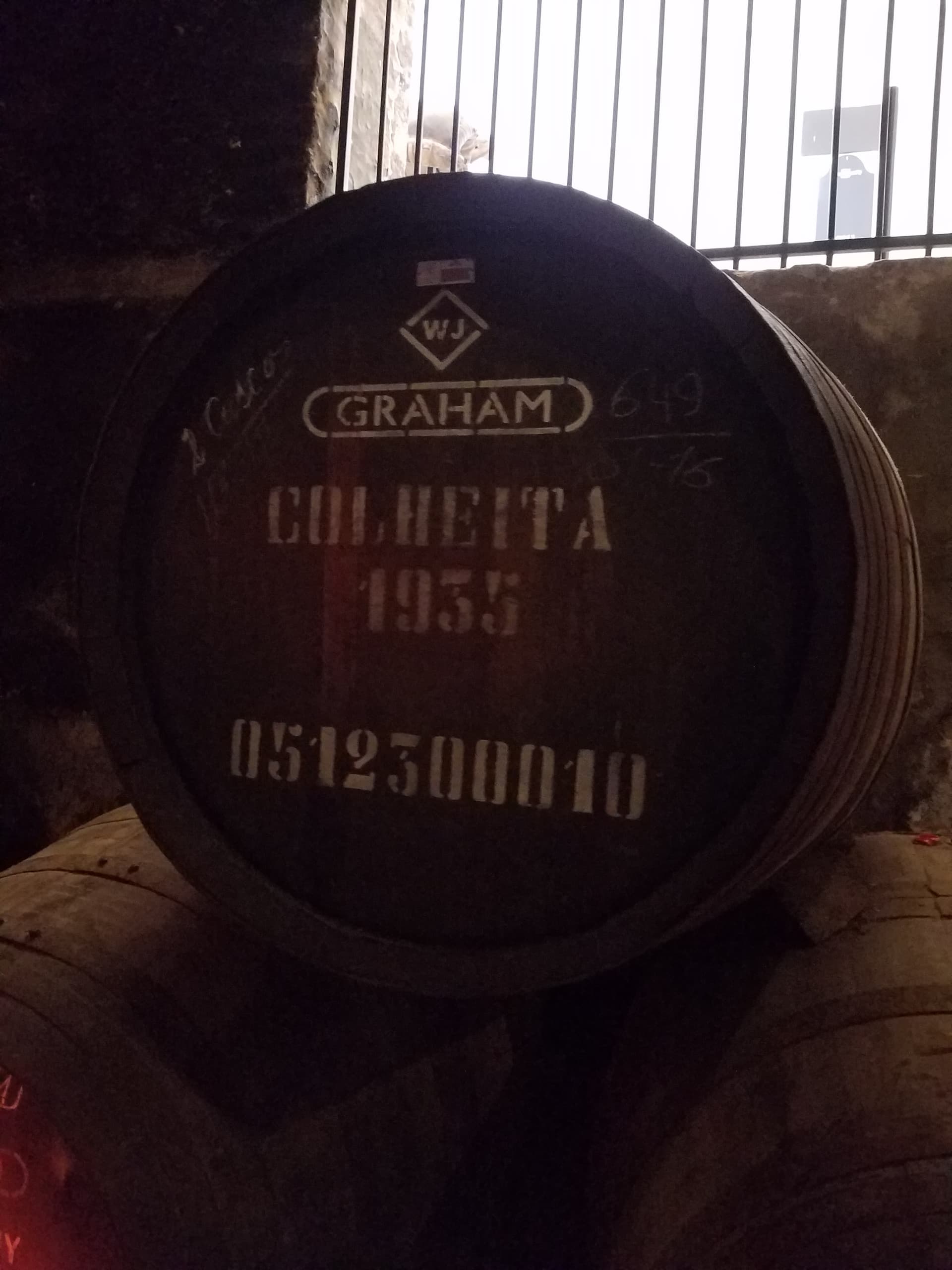
The 1975 colheita was drinking beautifully out of 375 recently
I hate to be a naysayer, but most tawnies are pretty boring, caramel, maple syrup, pleasant but uninspiring. If you have the chance to try some really old colheita, you’ll see the difference in complexity, and the fireworks of flavors. Frankly, there aren’t that many available, and you’ll have to pay for the experience.
I picked this up after seeing your notes for my wife’s 60th birthday a while back, much appreciated. So few exceptional wines from 1965.
The 2022 Kopke Sao Luiz Vintage Port is one of the best of the vintage. Better than most of the British houses.
Awesome pic! Man, that looks absolutley delicious! 
I am not a huge Port fan. There’s a place, time and dessert, but I LOVE tawny. 20 years and older is delicious. Love white tawny too, though have had much less.
In 2018 I bought a bottle of the 1968 Taylor Fladgate Very Old Single Harvest Port to celebrate my parents 50th anniversary. I do not say this lightly because I like variety and I can’t think of another wine, no matter how good, that I would say this about, but I would love to have a glass of that wine every day for the rest of my life.